World
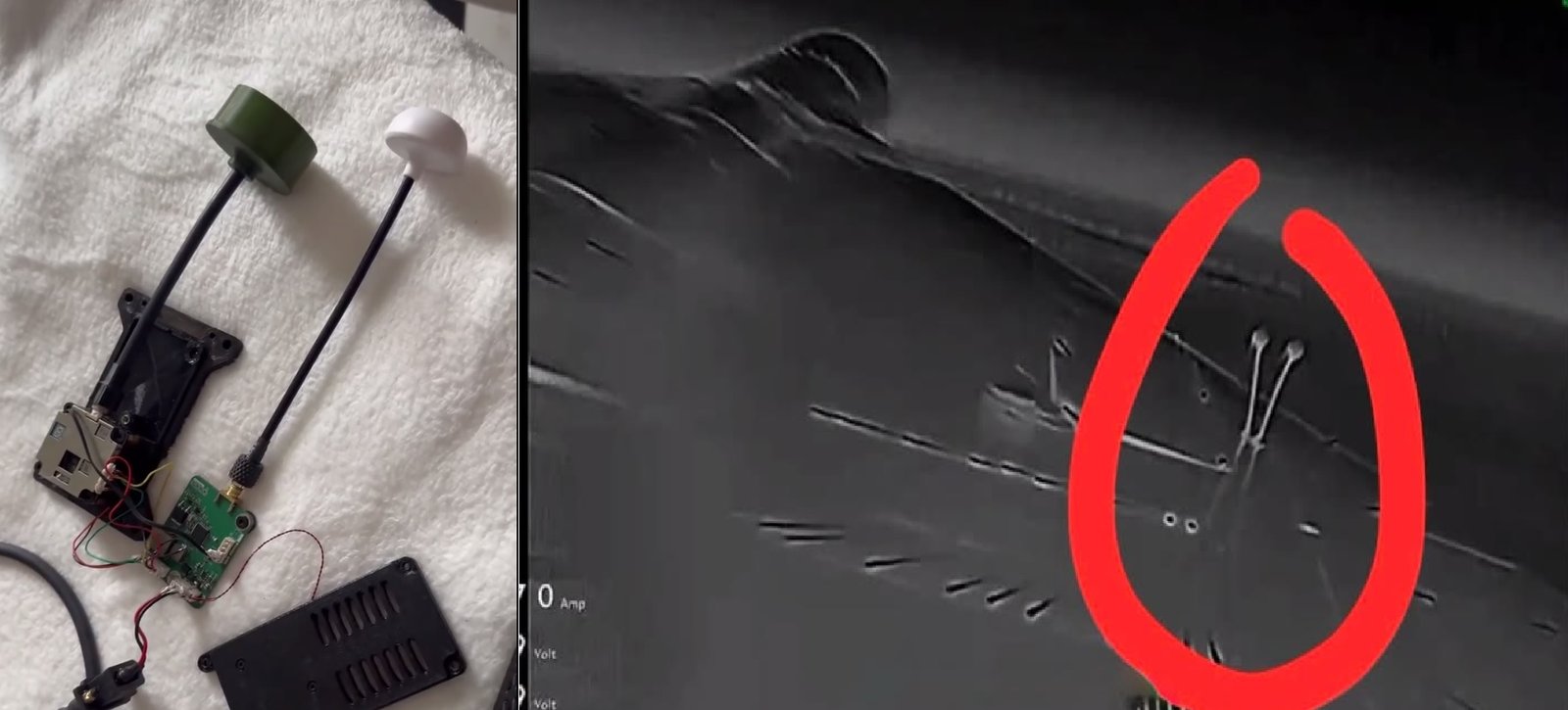
Kyiv — Russia has equipped some Geran-type, or Shahed-136, kamikaze drones with onboard electronic warfare (EW) systems designed to disrupt the analog video links used by Ukrainian interceptor drones. The system was identified after Ukrainian specialists examined equipment recovered from a downed Geran drone. Ukrainian defense technology adviser Serhii Beskrestnov, known as Serhii Flash, reported the finding and shared photographs of the recovered equipment, including antennas mounted on the drone's airframe. Russia has equipped some Geran/Shahed-136 drones with onboard EW systems to disrupt Ukrainian interceptor drone video links. The system targets 5.8 GHz analog signals and reportedly produces interference about 5× stronger than the interceptor’s transmitter. pic.twitter.com/77GxY9UfkU — The Defense News (@TheDefenseNews) August 25, 2026 How the system works The EW system is designed to detect the video signal of an approaching Ukrainian FPV interceptor. Its video receiver (VRX) identifies the interceptor's operating frequency, after which the video transmitter (VTX) generates interference on the same frequency band. A preliminary assessment found that the jammer's signal is about five times more powerful than the interceptor's video transmitter. The interference can cut the live video feed, preventing the ground operator from accurately guiding the interceptor during its final approach. The recovered system operates mainly in the 5.8 GHz band, which is commonly used for analog FPV video transmission. It consists of a VRX receiver, VTX transmitter and control electronics. Test results and power consumption During laboratory testing, the system detected a test video transmitter and activated its jammer after about three seconds, causing the analog video signal to disappear. After the test signal was switched off, the system returned to standby mode in approximately five seconds. The unit reportedly consumes about 2 watts in standby while scanning for signals and up to 33 watts when actively jamming. Earlier reports and possible countermeasures Ukraine had previously reported that Russia was adding EW equipment to some Shahed/Geran drones to counter interceptor UAVs. In May 2026, Ukrainian First Deputy Defense Minister Oleksii Vyskub said modified Shahed drones had been observed with frequency-suppression equipment, including systems fitted toward the rear of some drones. Footage from mid-August also showed cases in which an interceptor's video feed was disrupted as it approached a Geran. Possible countermeasures include terminal guidance systems that do not depend on continuous video, digital communication links, and video transmitters operating on non-standard frequencies. The Geran is Russia's version of the Iranian-designed Shahed-136 family of one-way attack drones. Russia has introduced other modifications to the series, including jet-powered variants and systems supporting real-time control. The addition of onboard EW against interceptor video links is part of the continuing development of the drones to counter Ukraine's increasing use of low-cost interceptor UAVs.
Read More → Posted on 2026-08-25 16:24:18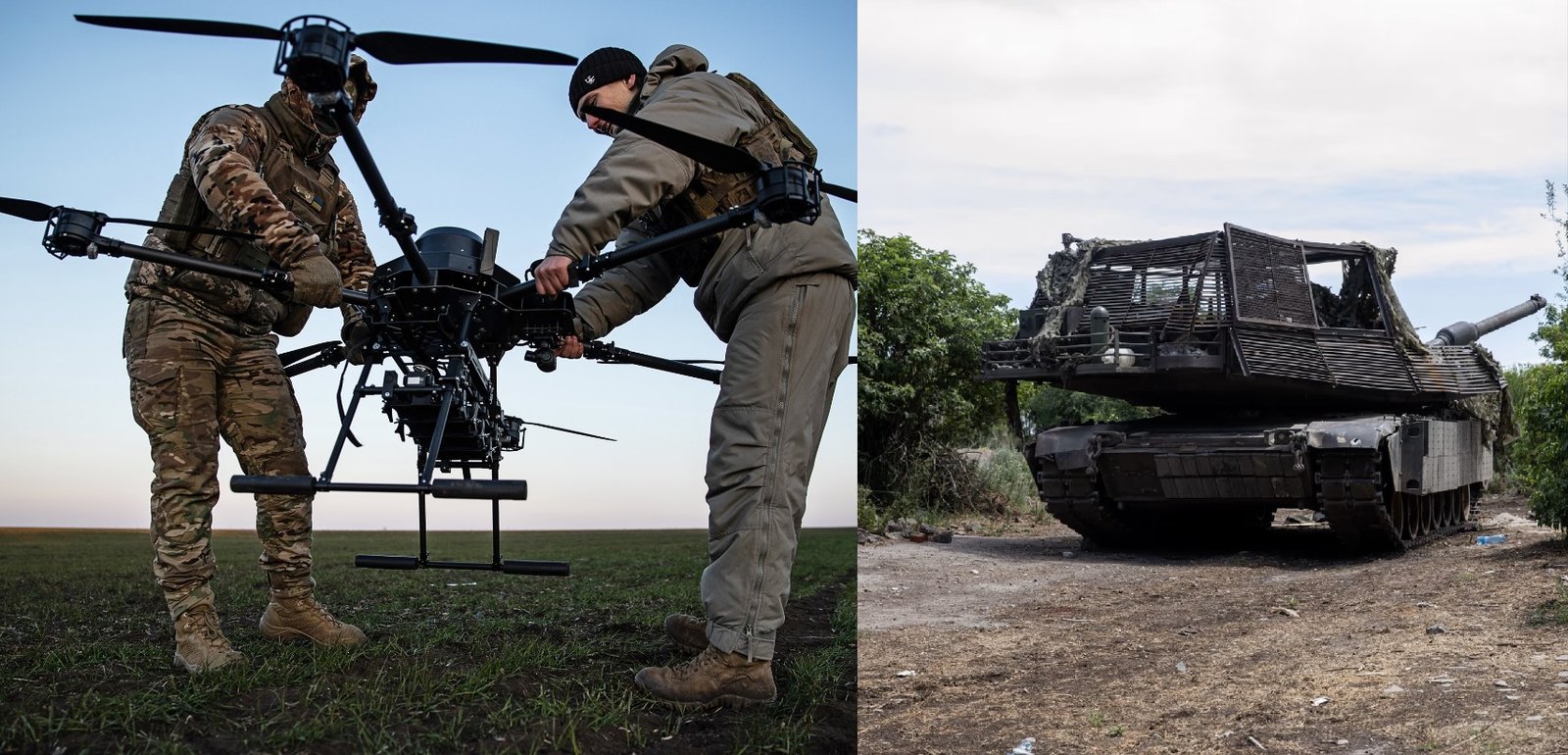
World
KHARKIV REGION, Ukraine — Western-supplied tanks that Ukraine sought after Russia’s full-scale invasion are now often kept under camouflage nets in forests, with some reportedly sitting idle as cheap drones have changed battlefield conditions. Ukraine began requesting Western tanks after Russia’s invasion in February 2022. Britain, Germany and the United States agreed to supply them in January 2023 after months of negotiations. The 33rd Separate Mechanized Brigade was formed in part to operate the Western vehicles, which cost around $10 million each. However, by the time many of the tanks entered combat in late spring 2023, inexpensive first-person-view (FPV) drones had become widely used against armored vehicles. The drones could target vulnerable areas of tanks, making their use in exposed frontline positions increasingly difficult. Oleksandr Syrskyi, who served as Ukraine’s top military commander until last month, said: “We’re making virtually no use of armored vehicles.” He also questioned how Ukraine could counter the advantage provided by drones and give its armored forces a new role. The issue was part of wider discussions about Ukraine’s military strategy around the time of his removal from command. In the 33rd Brigade, about half of one tank battalion has reportedly retrained as drone operators. Some remaining tanks are mainly used to tow damaged equipment and are more likely to operate during poor weather, when fewer drones are flying. Younger recruits are also being trained to operate ground drones and other unmanned systems. Open-source assessments indicate significant losses among Western tanks. Of about 82 Abrams tanks delivered to Ukraine, including vehicles supplied by the United States and Australia, around 25 have been hit, according to available figures. Sweden supplied 10 Stridsvagn 122 tanks, of which open-source analyses indicate about one remains in service after others were hit, damaged or otherwise affected. German Leopard tanks operated by Ukrainian units are also frequently kept under protective nets in rear areas, with some awaiting repairs or maintenance and others held in reserve. Both Russia and Ukraine have added anti-drone protection to tanks. Russian forces began using metal cages and meshes around armored vehicles, a modification Ukrainian soldiers initially compared to “barbecue grills.” Ukraine has since adopted similar nets and cages, along with other protective measures. Despite the reduced battlefield use, Ukraine continues to maintain its Western tanks and train crews. Members of the 33rd Brigade have conducted Leopard tank exercises and live-fire training in the Kharkiv region. The experience has pushed Ukrainian units to combine traditional armored forces with drones, ground robots and surveillance systems. Western tanks remain part of Ukraine’s military inventory, but their frontline role has been reduced as drone warfare has become a major factor in combat operations.
Read More → Posted on 2026-08-25 15:58:17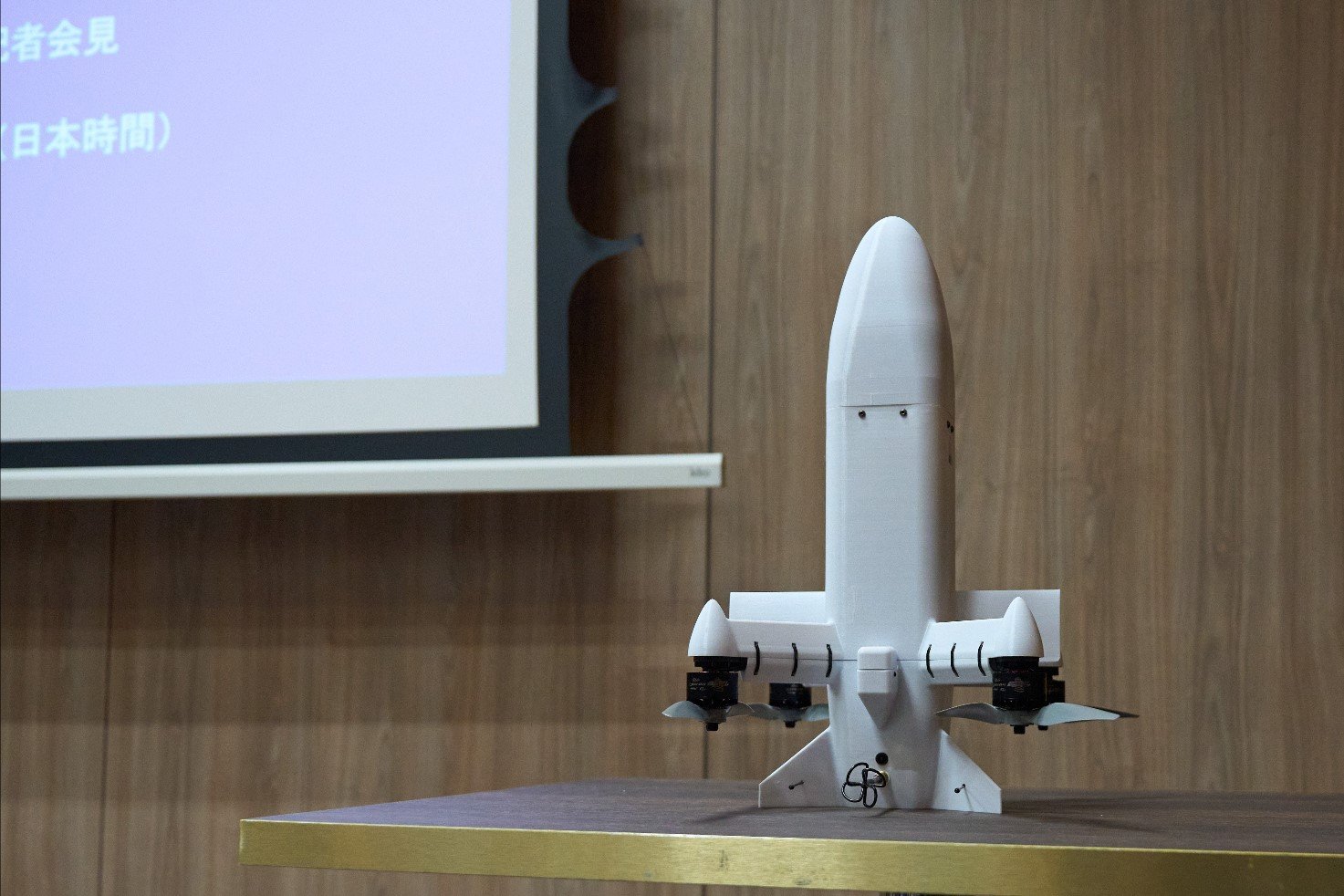
World
Tokyo — Japan’s Acquisition, Technology & Logistics Agency (ATLA) has signed a mass-production contract with Terra Drone Corporation for the Terra B1 interceptor UAV, under the country’s Interceptor Drone Rapid Acquisition Program. ATLA launched the program on June 5, 2026, to rapidly field low-cost interceptor UAVs against long-range, one-way attack drones, including systems similar to the Shahed type used in recent conflicts. The program aims to move from proposals to delivery in about three months, with the first deliveries expected around September 2026. ATLA received proposals from 38 companies, with four systems advancing to the demonstration stage. The Japan Maritime Self-Defense Force (JMSDF) conducted testing from July 15 to August 6. The Terra B1 was the only system among the four to pass the demonstration phase. The evaluation covered effective range, endurance, flight distance, maximum and cruising speed, guidance methods, simultaneous control of multiple UAVs, launch and recovery procedures, integration with other equipment, safety measures, operational records, and the time required from contract to delivery. The requirements also included domestic production capability, a domestic production base, a maximum speed of at least 250 km/h, and vertical takeoff and landing capability. Testing included operations at a JMSDF base and aboard a destroyer. Terra Drone will now begin mass production of the Terra B1 and establish domestic production and supply chains covering components, batteries, communications equipment and control systems. The company will also develop maintenance, replenishment and training support, along with system integration for deployment at bases, aboard vessels and at other facilities. Quality management and safety systems for defense use will also be strengthened. Initial deployment is planned for the JMSDF, while future use by the Japan Air Self-Defense Force and Japan Ground Self-Defense Force is being considered based on operational needs. The program draws on lessons from conflicts in Ukraine and the Middle East, where low-cost attack drones have created challenges for more expensive interceptor missiles. Japan is seeking a more cost-effective approach to protecting Self-Defense Force facilities and vessels. Terra Drone, based in Tokyo, has prior experience testing related interceptor UAVs in Ukraine and has been developing domestic production capabilities for defense drones. ATLA and Terra Drone have not disclosed the contract value or the number of Terra B1 units to be procured.
Read More → Posted on 2026-08-25 15:49:43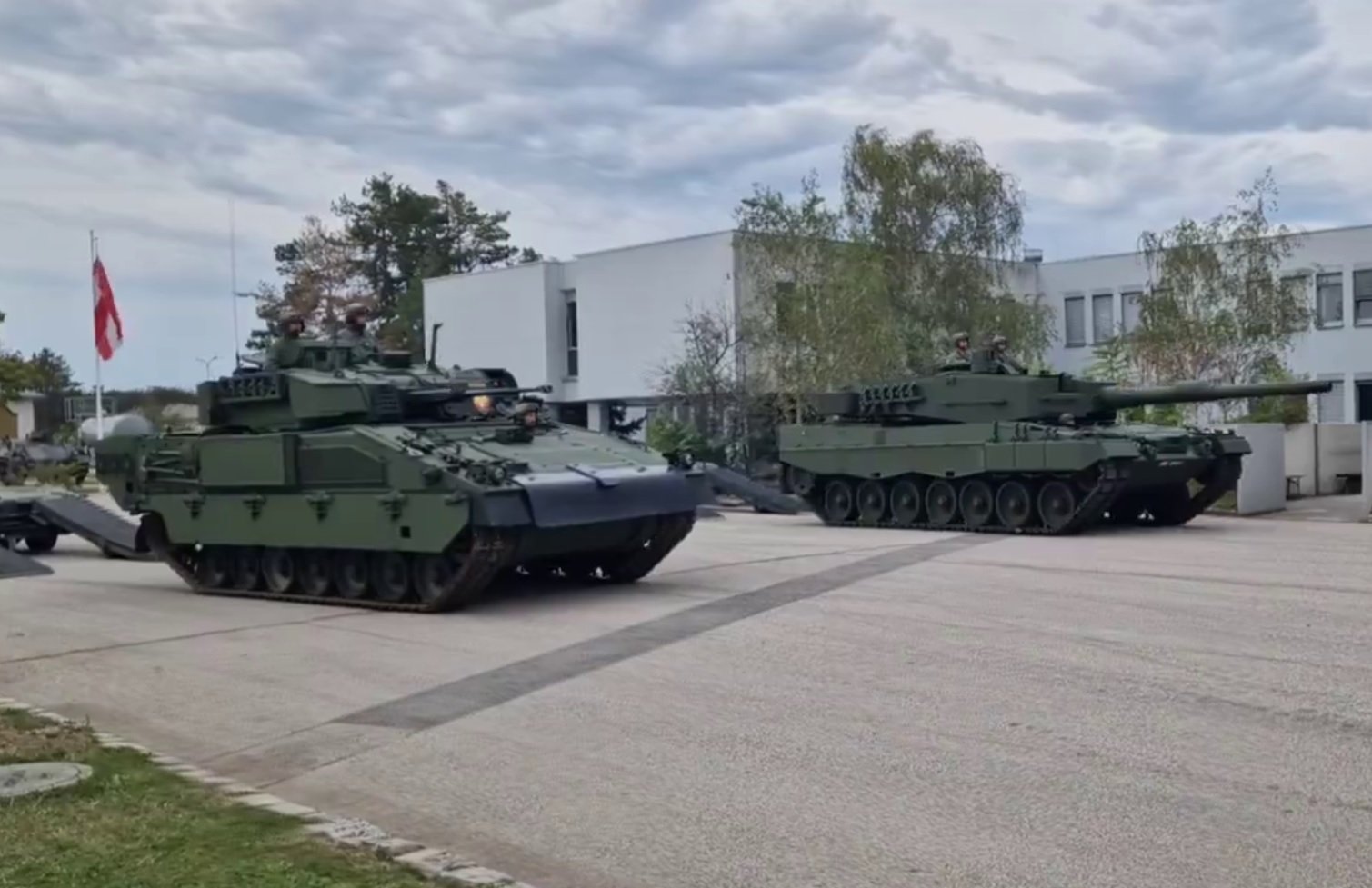
World
Großmittel, Austria — The Austrian Armed Forces (Bundesheer) have received their first modernized Leopard 2A4Ö main battle tank and Ulan NV infantry fighting vehicle (IFV). The handover ceremony was held at Jansa Barracks in Großmittel, Lower Austria, and was attended by Defense Minister Klaudia Tanner, Chief of Defense Procurement Lieutenant General Harald Vodosek, Colonel Michael Lex, commander of Panzergrenadier Battalion 35, and military and industry representatives. The vehicles are part of the “Mech Package”, a modernization program under Austria’s broader Aufbauplan ÖBH 2032+ force-development plan. The program began in 2023 and covers 170 tracked vehicles, including 58 Leopard 2A4 tanks and 112 Ulan IFVs. The total investment is about €765 million, including around €305 million for the Leopard modernization and €460 million for the Ulan program. Completion of the full fleet is planned for around 2029–2030. Leopard 2A4Ö Modernization The 58 Leopard 2A4 tanks are being modernized by KNDS Deutschland, formerly Krauss-Maffei Wegmann. Austria selected the upgrade program instead of purchasing new tanks because of budget considerations. The modernization brings the turret to a level comparable to the Leopard 2A7 standard. It includes new digital surveillance and sighting systems for the commander, gunner and driver, an updated electronic architecture, improved reconnaissance, night-fighting and fire-control capabilities, and replacement of the hydraulic turret drives with electric systems for improved aiming precision. The tank’s external appearance, armor protection and 120 mm L/44 main gun remain at the original A4 standard. Outdated components are replaced, while night-fighting capability is restored. The upgraded tanks will first go to the Army Logistics Center for final adaptation before entering full service. The package is intended to extend the fleet’s service life while retaining existing logistics support. Ulan NV Modernization Austria is modernizing all 112 Ulan (ASCOD) IFVs through a €460 million program conducted by GDELS-Steyr at its Vienna-Simmering facility. The Ulan NV service-life extension includes an overhaul of the electrical system, renewed optics and electronic components, replacement of drivetrain parts, updated turret-drive components, new driver-vision systems, an updated heating unit and a more advanced main sighting system. The rear stowage bin has also been reconfigured to increase capacity, while some vehicles receive improved air-conditioning and related systems. The first upgraded Ulan vehicles are being delivered directly to active troop units. The Leopard 2A4 remains Austria’s primary tank weapon system, while the Ulan is used by armored infantry. The Ulan is designed to operate alongside the Leopard, carrying a 30 mm cannon, an infantry squad and its crew. Austria considers the combination of tanks and armored infantry a central part of its conventional military defense. Defense Minister Tanner said the modernized tank fleet strengthens Austrian military capabilities for national defense and makes the objectives of the 2032+ development plan visible. The modernization program allows Austria to extend the service life of its existing heavy armored forces instead of replacing the vehicles with entirely new platforms. The vehicles are being modernized in stages, with Leopard tanks sent to the manufacturer in Munich and Ulan vehicles to Vienna. Austrian officials have also said that the Leopard upgrade package has attracted interest from other operators of similar vehicles.
Read More → Posted on 2026-08-25 15:33:35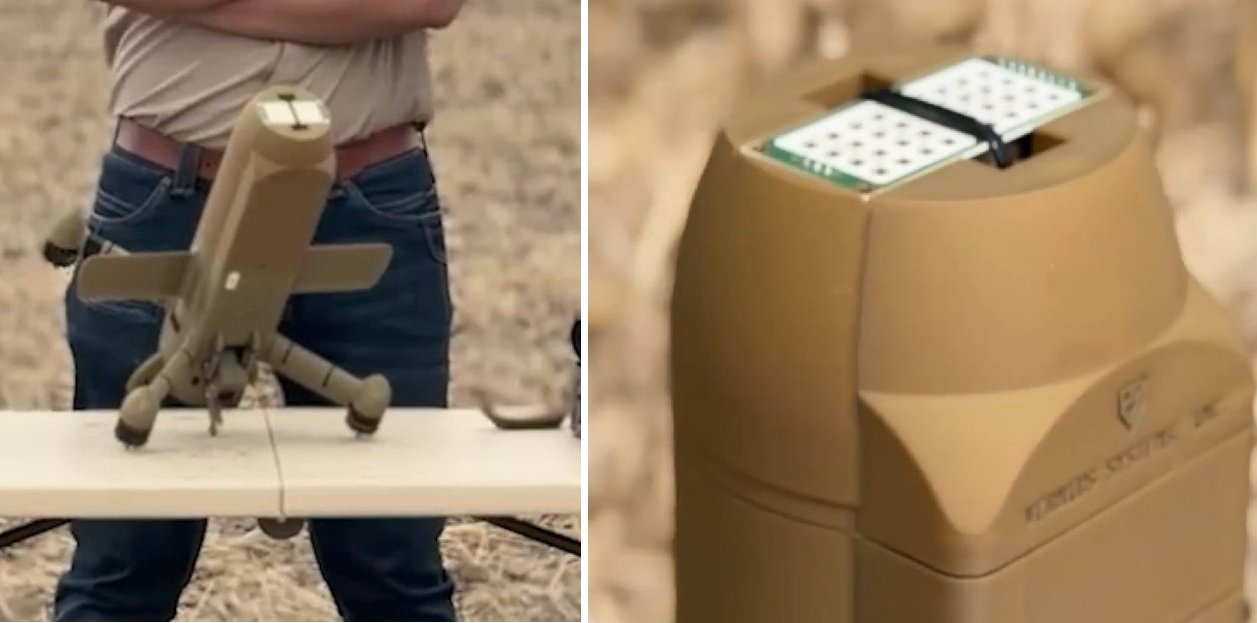
World
San Francisco — U.S. technology company Vernius Systems has unveiled the Archimedes 1A, an active radar seeker designed for unmanned aerial vehicle (UAV) interceptors. The company demonstrated the guidance head integrated with the STING interceptor UAV, developed by Ukrainian manufacturer Wild Hornets. The Archimedes 1A is an 80 mm active radar seeker operating at 24 GHz with a fixed beam. Vernius lists a 25° × 14° field of view and says it can detect Shahed-class targets at ranges exceeding 1 kilometre. The stated range is based on targets with a radar cross-section of approximately 0 dBsm. The unit costs around $4,000. The seeker is designed to support automated interception and operation in fog, smoke, rain and darkness. It has two operating modes. In fully autonomous interception, the interceptor receives a cue from a command-and-control network, uses radar for midcourse guidance beyond visual range, and then transfers to autonomous vision-based terminal guidance. In operator-assisted mode, the seeker provides live target range and bearing information to the pilot, allowing the target to be acquired before it becomes visible. Vernius Systems unveils the Archimedes 1A, an 80 mm, 24 GHz active radar seeker for UAV interceptors. Integrated with Ukraine’s STING, it detects Shahed-class targets beyond 1 km and costs around $4,000. pic.twitter.com/VwWOsE24H4 — The Defense News (@TheDefenseNews) August 25, 2026 Vernius says the system is designed to adapt to existing interceptor platforms and can also be integrated with jet-powered interceptor UAVs, including the Alexa Spatium system. The company says this could support automated guidance against faster jet-powered attack drones such as the Geran-3, Geran-4 and Geran-5. According to Vernius, more than 50 percent of Shahed-type attack drones operating over Ukraine are now jet-powered, making manual interception more difficult because of their higher speed and the limited reaction time available to operators. The company states that manual interception currently has a 20–50 percent kill probability, which it expects to decline further in poor visibility. Vernius Systems is based in San Francisco and develops low-cost radar seekers for counter-UAS applications. It was spun out of the volunteer nonprofit Defense Tech for Ukraine and is backed by Y Combinator. Its team includes personnel with experience in RF PCB engineering, software for the U.S. Navy's Tomahawk missile fleet, satellite systems and FPV hardware used by frontline operators. The company says its early investors include former U.S. National Security Advisor Lt. Gen. H.R. McMaster, Austin Howard, who is identified as the chief engineer behind VBAT, and Ukrainian military analyst Rob Lee. Vernius says it has secured $500 million in letters of intent for 2027 from defense manufacturers and military units across the United States, European Union and Ukraine. The company describes its broader objective as using compact radar technology to turn drones into autonomous interceptors and says its approach could reduce the cost per kill from around $4 million for Patriot-class missiles to less than $4,000. The STING interceptor, developed by Wild Hornets, is a Ukrainian FPV system used against Shahed-type and related drones. It has been used in operational conditions and can, in some cases, be controlled through the Hornet Vision system for remote operation over extended distances.
Read More → Posted on 2026-08-25 14:12:03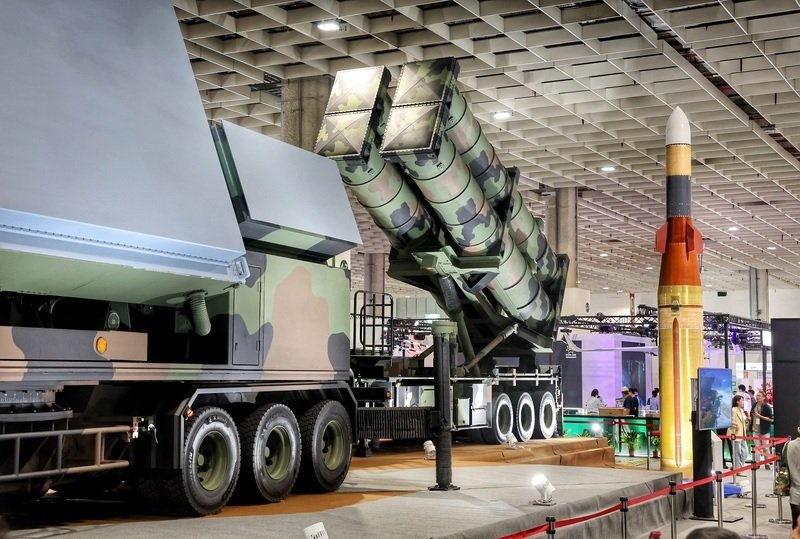
World
TAIPEI — Taiwan’s National Chung-Shan Institute of Science and Technology (NCSIST) has published new details on its domestically developed Strong Bow air defense missile system, also known as Chiang Kung or Sky Bow IV (Tien Kung IV). The land-based system is designed as a mid-tier interceptor against tactical ballistic missiles. NCSIST says the system is intended to intercept incoming tactical ballistic missiles at medium altitudes and operate with lower-layer air defense systems to create a layered defense network. Two-stage missile with thrust-vector control According to NCSIST, the Strong Bow missile uses a two-stage solid-fuel rocket motor and can reach hypersonic speeds. Its guidance system uses inertial navigation with radar uplink corrections during the midcourse phase before switching to an active seeker during the terminal phase. The missile also uses thrust-vector control during the terminal phase. NCSIST says this provides maneuverability in the thin atmosphere. The interceptor is equipped with precision guidance and a directional warhead, while its integrated composite rocket motor is intended to improve ease of production. The system has a reported interception altitude of about 70 kilometers. Taiwanese reporting has described this as a higher interception layer than the existing Sky Bow III system, which has a reported altitude of about 45 kilometers. AESA radar and mobile launch system The Strong Bow system includes the missile, a mobile vertical-launch transporter erector vehicle, tactical command vehicle and vehicle-mounted AESA radar. Each launcher can carry four missile canisters. NCSIST says the radar provides target classification and identification, high-precision tracking, electronic counter-countermeasures and the ability to engage multiple tactical ballistic-missile targets. The missile canister is about 7.61 meters long, compared with approximately 5.49 meters for the Sky Bow III canister, according to published details on the system. NCSIST’s seeker information also states that the Strong Bow seeker can actively search for and track targets and provide target information for missile guidance during interception. Planned deployment Taiwan plans to procure at least 128 Strong Bow interceptors. A funding proposal reported for the program includes about NT$36.1 billion for two systems and 128 missiles. The Strong Bow is planned as part of Taiwan’s T-Dome layered air defense network, operating alongside the existing Sky Bow III and U.S.-supplied Patriot Advanced Capability-3 (PAC-3) interceptors. Taiwan’s Ministry of National Defense has described the combination as providing multilayered defense against missile and aircraft threats. The Strong Bow system was publicly displayed at the 2025 Taipei Aerospace and Defense Technology Exhibition, after development and operational evaluation work had progressed. Taiwan’s NCSIST subsequently confirmed that the system had entered mass production. The latest NCSIST information provides further details of the missile’s propulsion, guidance, launcher and radar architecture, giving a clearer picture of how Strong Bow is intended to serve as a mid-tier component of Taiwan’s integrated air and missile defense network.
Read More → Posted on 2026-08-25 14:03:34
World
LONDON/KYIV — Russia has warned that British factories producing drones and missile-related components for Ukraine could face attacks from “unknown sources” after the UK agreed to share classified blueprints for British-made components of the Storm Shadow cruise missile with Kyiv. British Prime Minister Andy Burnham announced the decision during his first official international trip as prime minister. He visited Kyiv on August 24 to mark Ukraine’s 35th Independence Day, met President Volodymyr Zelenskyy and chaired a meeting of the Coalition of the Willing with French President Emmanuel Macron and German Chancellor Friedrich Merz. The UK has agreed to provide technical information on British-made components of the SCALP missile, the French version of Storm Shadow. The transfer removes a remaining restriction on UK components made by MBDA and is intended to support Ukraine’s plans to establish domestic production of the long-range missile with France. The Storm Shadow/SCALP family has a range of about 250–560 km depending on the variant and has been used by Ukraine against targets in occupied territories and inside Russia. Russia Issues Warning Andrei Fedorov, a former Russian deputy foreign minister and current Kremlin adviser, told BBC Newsnight that Moscow could not completely rule out a “semi-military” response against Britain. Asked what this could involve, Fedorov said British enterprises and factories producing drones or other components for Ukraine could be attacked. He said such action could come from “unknown sources” rather than directly from Russia and also referred to possible cyberattacks. Kremlin spokesman Dmitry Peskov separately criticised the British decision, accusing London of adding “fuel to the fire.” He said Russia was gathering information on missile production facilities so they could be targeted. Burnham rejected the criticism, responding to Peskov by asking: “Who started the fire?” Ukraine Seeks More Air Defence The dispute comes as Ukraine faces continuing pressure on its air-defence capabilities ahead of winter. Zelenskyy has said Kyiv wants to secure around 300 US-made Patriot interceptor missiles to protect critical infrastructure and the energy system. Ukraine has also sought the ability to manufacture Patriot interceptors domestically. US President Donald Trump previously discussed the possibility but later said no agreement had been reached, stressing that the technology required careful consideration. At the Kyiv meeting, Burnham, Macron and Merz said strengthening Ukraine’s air defences was an urgent priority. They also pledged continued support for Ukraine, further sanctions against Russia and measures targeting Russia’s shadow fleet. Burnham said he would travel to the United States next month with European leaders to discuss Ukraine’s defence requirements with Trump. Wider UK-Ukraine Defence Cooperation The UK and Ukraine are also expanding cooperation in defence technology. During the visit, Britain secured access for its researchers to Ukraine’s Avengers AI Labs, which uses battlefield data from cameras and sensors to develop artificial-intelligence systems. The UK and France hope to establish production lines for the SCALP/Storm Shadow family in Ukraine by the end of the year, although the exact timeline for full domestic production remains unclear. The latest agreement moves Britain beyond supplying finished weapons by helping Ukraine develop its own long-range missile production capability, while the Russian warnings have raised concerns over possible attacks or other forms of disruption involving British defence facilities.
Read More → Posted on 2026-08-25 13:57:34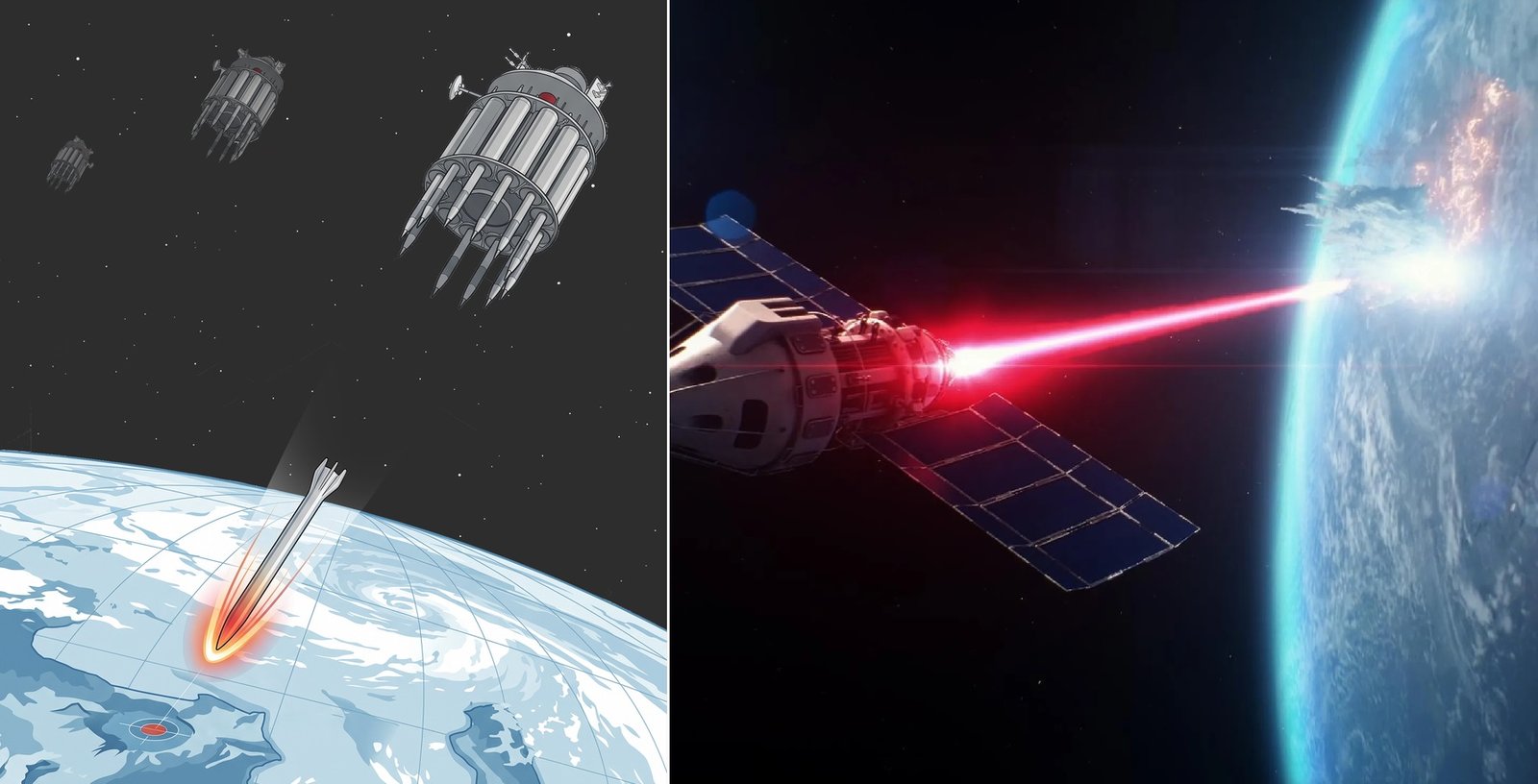
World
JERUSALEM — Israel is preparing a multiyear expansion of its military space capabilities, including upgraded satellite intelligence, resilient communications and the development of offensive space systems. The proposed plan includes systems to protect Israeli satellites from hostile spacecraft and concepts for striking targets on Earth from orbit. Defense Minister Israel Katz has said Israel aims to develop a true space-to-ground attack capability and become one of the world's leading space powers. Israel is considering roughly 16 billion shekels ($5.4 billion) over the next decade for space-related capabilities, although the funding has not yet been secured. The plan is part of wider discussions over increasing the defense budget, with the Finance Ministry raising questions about available resources. The program covers expanded intelligence collection through multiple satellite layers, continuous and resilient communications, highly encrypted links, cyber capabilities and contributions to missile defense. Planning involves the Directorate of Defense Research and Development (MAFAT), Israel Defense Forces (IDF) and Israeli defense industries. Offensive Space Systems The offensive element has two main objectives: developing weapons to defend Israeli satellites against hostile spacecraft and systems capable of striking targets on Earth. One concept under discussion is based on the theoretical U.S. “Rods from God” idea, in which satellites release large tungsten rods that strike the ground at extreme speed, using kinetic energy rather than nuclear explosives. The concept remains under study, with payload weight, launch costs and overall effectiveness among the major challenges. Concrete systems and development timelines have not yet been established. Katz has also discussed developing space-based laser capabilities for operations above Earth. Israel already operates ground-based laser systems, including Iron Beam. Satellite Intelligence The push has been accelerated by Operation Roaring Lion, during which Israeli forces expanded their use of satellites for intelligence collection and target development. Israeli satellites captured tens of thousands of images of relevant areas, providing day-and-night coverage. Avi Berger, head of the Defense Ministry's Space Directorate, described the operation as a major step forward in Israel's operational use of space. He received the Israel Defense Prize for technological projects connected with the Ofek 13 and Ofek 19 satellite programs. Ofek 13 and Ofek 19 use synthetic aperture radar (SAR) technology. Unlike electro-optical satellites that depend on sunlight, SAR satellites transmit electromagnetic energy toward the ground and use the returning signal to create imagery. This allows imaging during both day and night and through clouds, while providing additional high-resolution intelligence capabilities. Ofek 19, launched in September 2025, joined Israel's operational satellite constellation and supports Unit 9900. The proposed program is intended to provide Israel with a stronger and more continuous space-based intelligence, communications and defense network. Israeli officials have stressed that achieving security superiority in space is increasingly important for maintaining freedom of action for the IDF and defense establishment. The plans remain in the development and budgeting stage, with specific systems, timelines and final funding allocations still under discussion.
Read More → Posted on 2026-08-25 12:45:43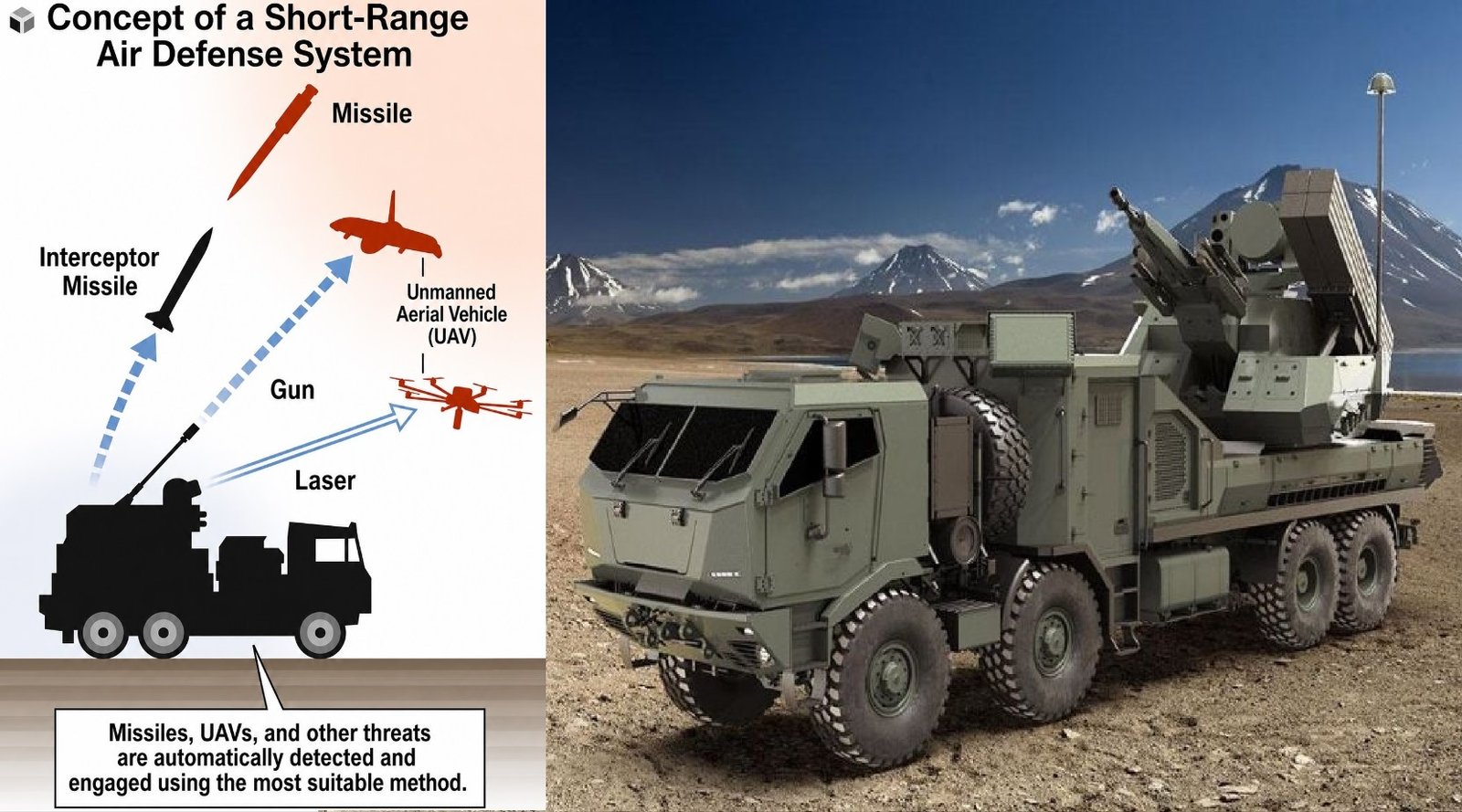
World
Tokyo — Japan’s Ministry of Defense has started planning a new close-range air defense system called the Close Range Air Defense System (CRADS) to counter large numbers of small drones and other airborne threats. According to a Ministry of Defense document reported by the Yomiuri Shimbun , CRADS will combine interceptor missiles, an automatic cannon and a laser weapon on a single self-propelled wheeled platform. The system is planned for the Japan Ground Self-Defense Force (JGSDF). The Ministry of Defense plans to include CRADS in its fiscal 2027 budget request as a “matter request,” meaning the specific funding amount has not yet been fixed. CRADS is designed to automatically identify incoming targets and select the most suitable weapon. Missiles would provide longer-range interception but are expensive and limited in number. The automatic cannon would provide a cheaper option with a larger ammunition supply but a shorter range. The laser would have an even shorter engagement range but would not require conventional ammunition, provided sufficient power is available. The combination is intended to help counter drone swarms and saturation attacks involving many missiles launched almost simultaneously, while reducing the use of expensive missiles against low-cost targets. The wheeled platform is intended to give CRADS greater mobility so it can move with ground forces. It is expected to initially complement the existing Type 93 short-range air defense system, which uses missiles based on the Type 91 MANPADS and is mounted on high-mobility vehicles. CRADS is part of Japan’s wider effort to modernize its short-range air defense. In parallel, the Ministry of Defense is developing another wheeled air defense system intended to eventually replace the Type 93. That program involves a surface-to-air missile based on an existing air-to-air missile design, with contracts awarded to Mitsubishi Heavy Industries and Toshiba. Available information points to the AAM-5 family as the likely basis, although the specific missile has not been officially identified in the information provided. Japan is also developing directed-energy weapons. The Ministry of Defense plans a fiscal 2027 demonstration project for a high-power microwave system designed to disrupt the electronic control systems of drones. Japan has also been developing vehicle-mounted high-power laser systems. Together, these programs are intended to provide the JGSDF with additional mobile and layered options against small drones, drone swarms and large-scale missile attacks.
Read More → Posted on 2026-08-25 12:25:10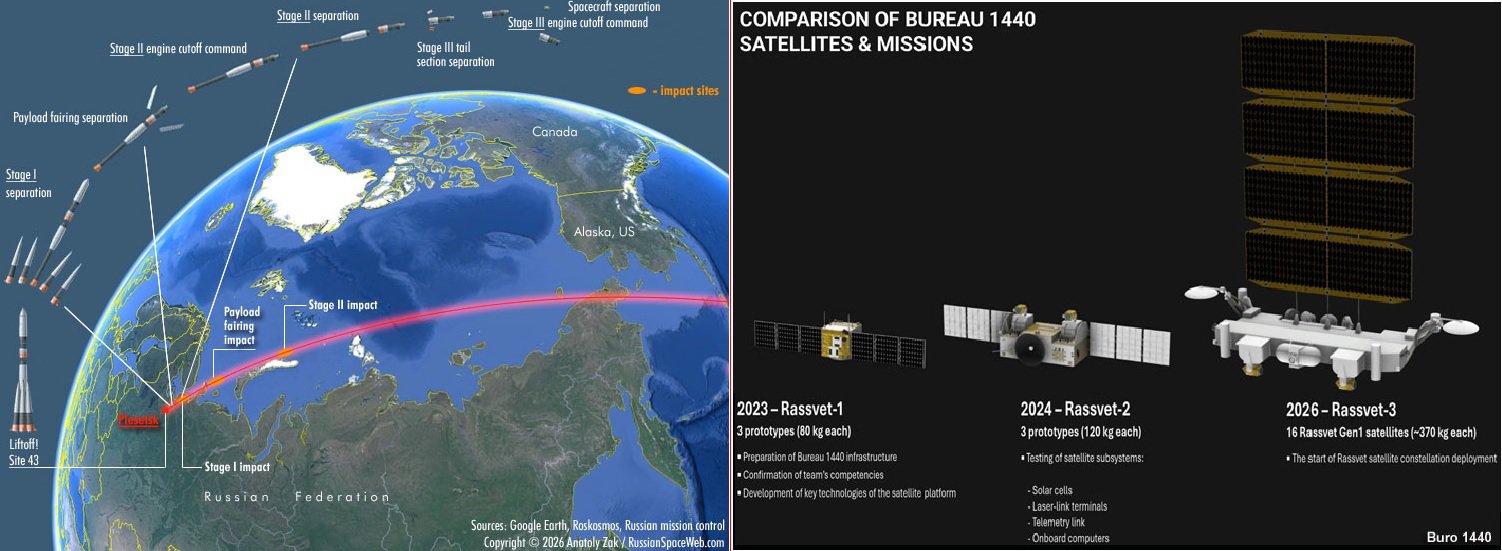
World
Moscow — Two satellites from Russia’s second Rassvet broadband constellation group are heading toward atmospheric reentry after failing to perform orbit-raising maneuvers, according to tracking data analyzed by Anatoly Zak of RussianSpaceWeb. The two satellites had fallen below 300 kilometers by late August and appear to be undergoing natural orbital decay caused by atmospheric drag. The development is another setback for Bureau 1440, the Russian company developing the Rassvet low Earth orbit (LEO) broadband network, which Russian officials have promoted as a domestic alternative to SpaceX’s Starlink. The affected spacecraft are part of 16 Rassvet-3 satellites launched on July 19 at approximately 17:51 UTC from the Plesetsk Cosmodrome aboard a Soyuz-2.1b rocket. The U.S. Space Force catalogued 17 objects from the mission — the 16 satellites and the rocket’s upper stage — in an initial orbit of about 289 by 327 kilometers with an inclination of 82.3 degrees. Bureau 1440 said on July 20 that all satellites had separated from the upper stage and established contact with mission control. The company said they would begin transferring to their target orbit after subsystem checks and activation. Neither Roscosmos nor Russia’s Ministry of Defense publicly acknowledged the July 19 launch. Tracking data showed that nine of the 16 satellites began orbit-raising maneuvers between late July and early August. By August 5, 11 satellites were climbing. However, by late August, three of those satellites had stopped maneuvering and began slowly losing altitude between 310 and 330 kilometers. None of the 16 satellites from the July batch had risen above 360 kilometers. Their altitudes were about 200 kilometers lower than those reached by surviving satellites from the March batch at a comparable point. The July group’s orbital plane is also more than 100 degrees different from that of the March group, based on their right ascension of the ascending node. The latest problem follows the loss of Object 4 from the first Rassvet batch. Launched on March 23, the satellite never performed an orbit-raising maneuver and reentered the atmosphere on June 6, after spending about 75 days in orbit. Rassvet is intended to provide Russia with an independent satellite broadband network. Bureau 1440 has stated plans to deploy about 250 satellites by 2027, when commercial service is planned to begin, and eventually expand the constellation to as many as 900 satellites by 2035. Other reports have cited a target of 292 satellites by the end of 2027. Each Rassvet-3 satellite has a mass of about 370 kilograms and is designed for near-polar orbits. The first Rassvet group is already providing limited coverage over Ukraine, according to Ukrainian satellite communications analysts. Volodymyr Stepanets told Militarnyi that the satellites provide at least two daily communications windows over Ukrainian territory, with each lasting more than an hour. Ukrainian adviser Serhii Beskrestnov, known as Flash, has estimated that Russia would need 200 to 250 satellites for stable, continuous coverage. The satellite problems have also coincided with security concerns around Plesetsk. Roscosmos Director General Dmitry Bakanov previously said Ukrainian forces attempted a drone attack on the facility during preparations for the March launch. Ukrainian drones were again detected in the surrounding Arkhangelsk region on August 23, one day before another classified Russian military satellite was launched from Plesetsk on August 24. As of August 25, Roscosmos, the Russian military and Bureau 1440 had not issued an official update on the status of the underperforming satellites from the July Rassvet launch.
Read More → Posted on 2026-08-25 12:05:42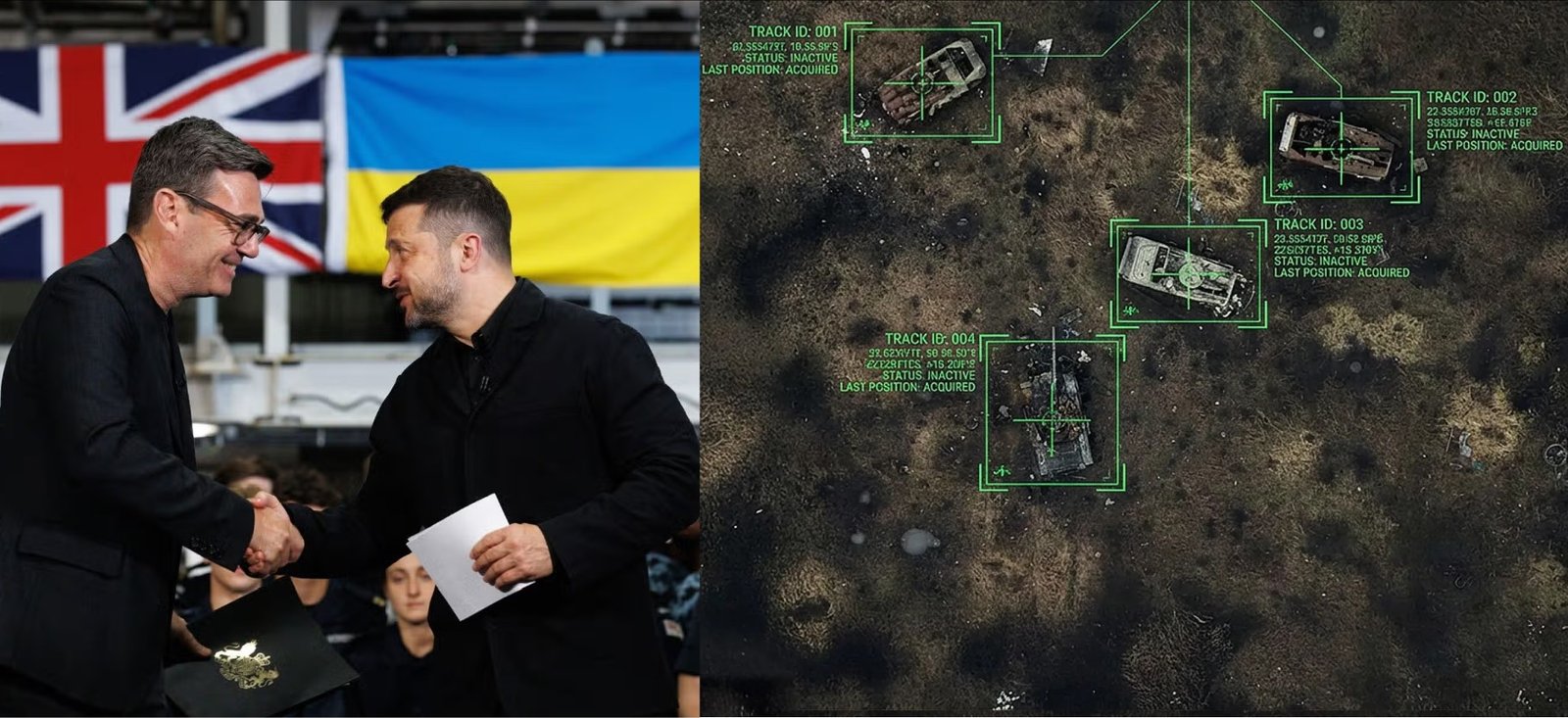
World
Kyiv / London — The United Kingdom and Ukraine have signed a new bilateral defence agreement giving Britain access to Ukraine’s Avengers AI Labs, making the UK the first international partner to gain access to the platform. The agreement was signed in Kyiv on August 24 by UK Prime Minister Andy Burnham and Ukrainian President Volodymyr Zelenskyy. It forms part of the broader UK-Ukraine 100 Year Partnership and initially focuses on defence and national security. The agreement will establish a joint AI cell bringing together engineers, academics, technology companies and military specialists from both countries. Britain will provide access to its universities, researchers and AI technology ecosystem, while Ukraine will contribute battlefield experience and operational datasets. Ukraine’s Battlefield AI Data Avengers AI Labs is built around Ukraine’s DELTA combat system and includes an annotated dataset of about 5 million real-world battlefield images. Data is collected by thousands of daylight cameras, acoustic sensors and infrared sensors operating across Ukraine’s battlefield. The system records and categorises objects including tanks, artillery, infantry, air defence systems, Shahed drones and reconnaissance aircraft. According to Ukraine’s Defence Ministry, AI models trained on the data support an automated target-detection system that analyses more than 100,000 drone video feeds each month and identifies about 70 percent of enemy targets in real time. British AI Projects Three British start-ups — Bristol-based Sintela, Oxford-based Mind Foundry and London-based Skyral — are already involved in pilot projects. One project is due to be deployed at a UK defence site. It combines Ukrainian data with British fibre-optic sensing technology to turn buried fibre-optic cables into an AI-enabled sensor network. The initial system is intended to help protect defence facilities from protesters and hostile actors seeking intelligence, with potential applications at airports, prisons, railways and energy facilities. A second project will focus on developing low-power AI chips for drones, robotics and autonomous systems. If successful, the technology could allow these systems to operate for longer and respond more quickly in difficult environments. SCALP Missile Production The UK government has also allowed defence company MBDA to release classified information on British-made components used in the SCALP long-range cruise missile. The decision supports plans to establish SCALP assembly lines in Ukraine. Burnham said the agreement would combine Ukraine’s operational experience with Britain’s AI expertise to develop technologies for battlefield and domestic security applications. Defence Secretary Wes Streeting said cooperation between British scientists, engineers and technology companies and Ukraine’s battlefield experience and data would strengthen both countries’ defence and security. AI Minister Kanishka Narayan described the partnership as “AI sovereignty in practice”, with frontline experience being used to develop systems for armed forces and critical infrastructure. Burnham’s Kyiv visit was his first overseas trip as prime minister. He also held talks with Zelenskyy and co-chaired a meeting of the Coalition of the Willing. The partnership covers government cooperation, industry projects linked to operational requirements and academic research into autonomy, AI assurance and cybersecurity. The declaration of intent is not legally binding, and further arrangements and additional areas of cooperation are expected in the coming months.
Read More → Posted on 2026-08-25 11:29:04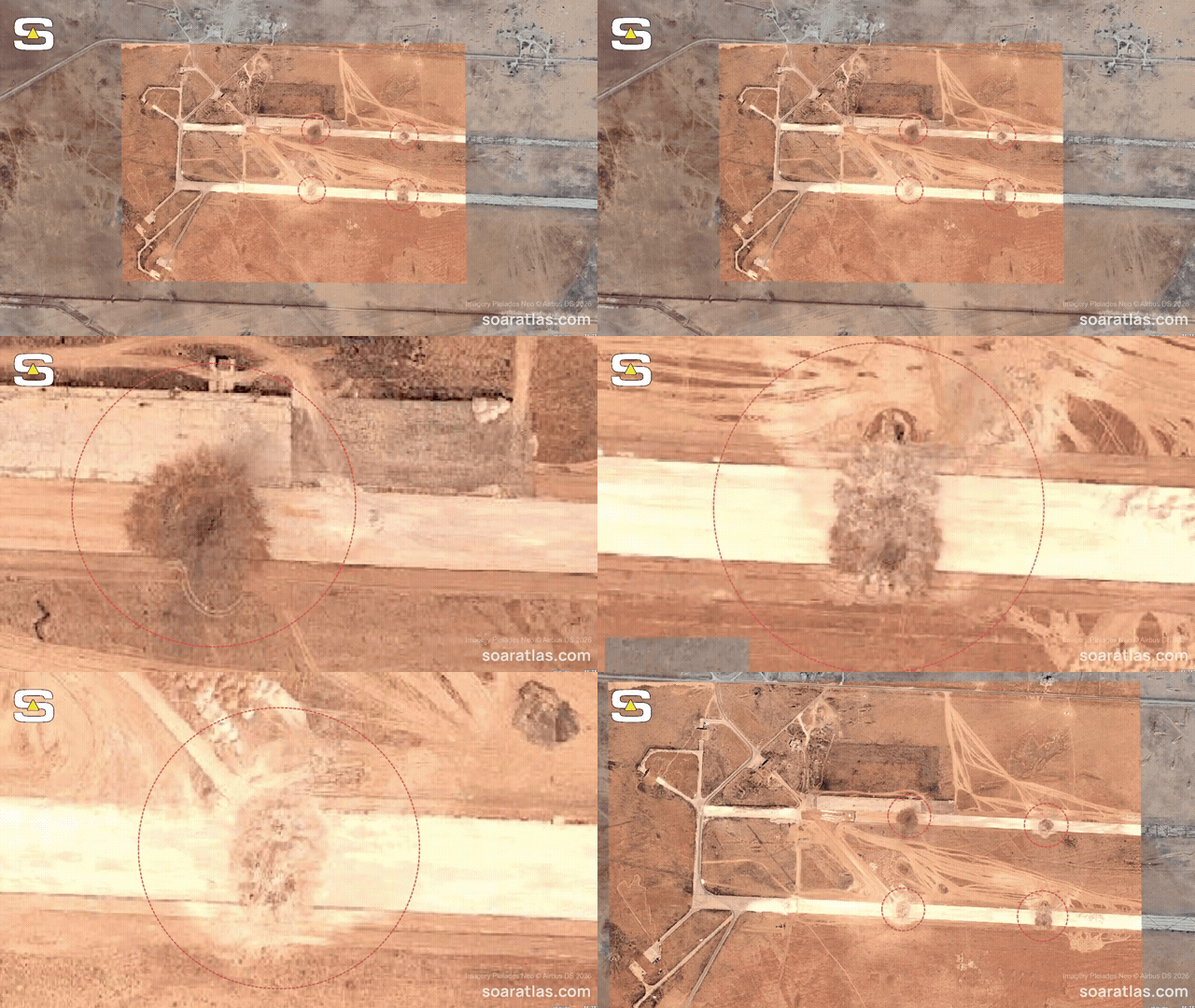
World
Idlib, Syria — High-resolution Airbus satellite imagery published by Soar Atlas shows damage caused by Israeli airstrikes on Syria’s Abu al-Duhur Military Airbase in northwestern Syria. The imagery shows several impact points along the recently renovated runway, confirming that the airfield infrastructure was among the main targets. The strikes took place in the early hours of August 18, when Syrian state media, citing a military source, reported eight separate Israeli attacks targeting the runway and storage facilities. No casualties were reported by Syrian military sources or residents living nearby. The base is located at approximately 35.734°N, 37.102°E in Idlib province, about 70 kilometers from the Turkish border and roughly 45 kilometers east of Idlib city. Satellite imagery shows at least five impact points on the runway, while some hangars, warehouses and other structures appeared intact. The facility had been out of service as a dedicated military airfield since around 2013, after changing hands several times during Syria’s civil war. Following the fall of Bashar al-Assad’s government in late 2024, Syrian authorities began rehabilitating the airfield and using it as a training centre. Israel Links Strikes to Turkish Military Plans Israel later confirmed that it carried out the strikes. Prime Minister Benjamin Netanyahu’s office said Syria was “on the verge of breaching” an agreed security status quo by allowing Turkish troops to deploy at an airbase near Aleppo. Israel said it had repeatedly warned Syria that such a deployment would threaten its security. Israeli officials said the operation was intended to prevent a planned Turkish military presence at the facility. Reports had indicated possible Turkish plans involving troops, radar systems or air-defense equipment. Netanyahu later said Israel’s message to Syria was clear: it should not allow a Turkish military presence there. Syria rejected Israel’s justification. Foreign Minister Asaad al-Shaibani told Axios that Damascus had assured Israel there were no plans for a Turkish military base or permanent Turkish forces at Abu al-Duhur. He said rehabilitation work was limited to restoring the airfield and facilities damaged during the war for use by the Syrian Air Force. Al-Shaibani confirmed that Turkish military officers had visited the base for training and military cooperation, but said the facility remained largely empty and was not fully operational. Turkey and U.S. Respond Turkey condemned the strikes as a violation of Syrian sovereignty and territorial integrity. The Turkish Foreign Ministry called for international action against what it described as Israel’s escalating aggression. Turkey’s Defense Ministry also said no Turkish military delegation was present at the base before or during the attack. Ankara has supported Syria’s efforts to rebuild its military capabilities since the fall of Assad’s government and has expanded military cooperation with the new Syrian authorities. U.S. special envoy for Syria and Iraq Tom Barrack, who also serves as ambassador to Turkey, described the Israeli operation as an “unnecessary escalation that does not advance regional stability.” He said the Syrian government under President Ahmed al-Sharaa had indicated a preference for de-escalation with Israel. Washington has been supporting regional dialogue and deconfliction efforts involving Israel, Syria and Turkey. The airstrikes were the first reported Israeli attack on Syrian government assets since March 2026. They have further increased tensions between Israel and Turkey, which both maintain significant security interests in Syria. Israel continues to maintain a security presence near its border with Syria, while Turkey maintains influence and military cooperation with the new Syrian authorities in the north.
Read More → Posted on 2026-08-24 15:56:44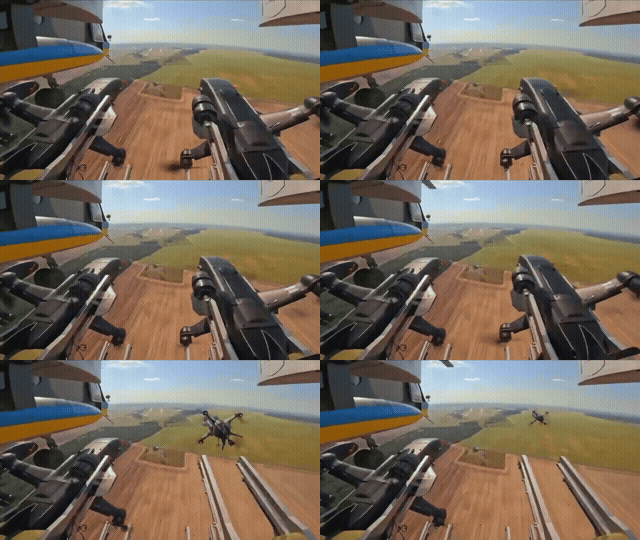
World
KYIV — Ukraine has integrated interceptor drones onto a Mi-8 multi-purpose helicopter to engage Russian unmanned aerial vehicles (UAVs). Footage of the modified helicopter was released during President Volodymyr Zelenskyy’s Independence Day address on August 24. The footage shows an interceptor drone being launched from a hardpoint beneath the helicopter’s external suspension assembly. The launchers use metal guide rails, with at least three mounted on each side of the Mi-8, giving the helicopter a capacity for up to six interceptor drones. The aircraft also appears to have an optical station for detecting and tracking aerial targets. Reports have suggested that the interceptors could be controlled from the helicopter or remotely through a Starlink connection, although the exact control arrangement has not been officially confirmed. Some reports have identified the interceptor as the F7 LITAVR produced by Ukrainian company F-Drones, but this identification has also not been officially confirmed. На український гелікоптер Ми-8 інтегрували дрони-перехоплювачі для збиття російських безпілотників.Джерело: Офіс Президента pic.twitter.com/fZgeSnDOSH — Владислав (@Vladislav110528) August 24, 2026 Similar System Used on An-28 The Mi-8 configuration follows Ukraine’s earlier use of a converted civilian An-28 aircraft as a dedicated Shahed hunter. The aircraft carries at least three interceptor launch points under each wing, allowing up to six drones to be carried, and is equipped with an optical system for locating targets. By May 2026, the An-28 crew had reported destroying 213 enemy drones. The aircraft has also been associated with P1-SUN interceptor drones, developed by Ukrainian company SkyFall. Ukrainian Mi-8 crews have previously engaged Shahed-type drones using machine guns, including 7.62 mm PKT weapons and, in some cases, U.S.-supplied M134 miniguns. The addition of interceptor drones gives the helicopter another method of engaging UAVs. The specific Ukrainian unit operating the modified Mi-8 and the exact date when the system entered service have not been publicly confirmed.
Read More → Posted on 2026-08-24 15:21:12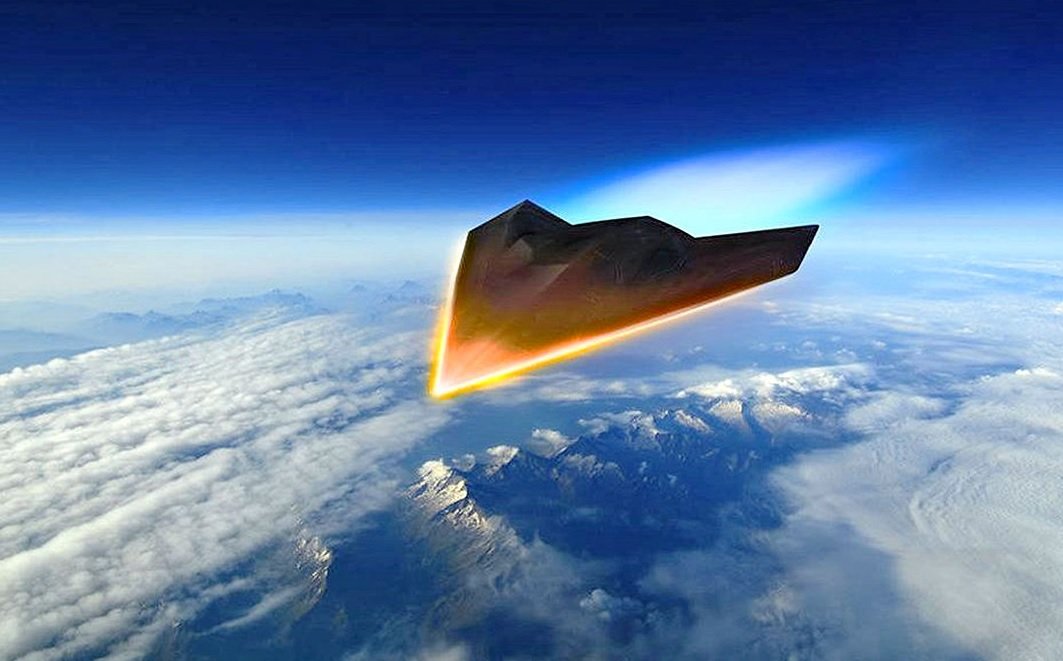
World
Beijing, — China has developed hypersonic glide vehicles (HGVs) capable of releasing air-to-air weapons during flight, according to a Bloomberg News report published on August 24. The reported capability is intended to target high-value airborne assets, including AWACS aircraft, aerial refueling tankers and command aircraft, at distances potentially measured in thousands of miles. The concept would allow China to threaten aircraft that support long-range U.S. and allied air operations without requiring Chinese fighters to enter contested airspace. These support aircraft normally operate farther from the front line because of their importance and vulnerability. Capability Builds on 2021 Test The development is linked to a July 2021 Chinese hypersonic weapons test over the South China Sea. During that test, a hypersonic vehicle reportedly released a secondary projectile while traveling at least five times the speed of sound. The Financial Times, citing U.S. intelligence sources, reported that the vehicle fired a separate missile as it approached its target. Some U.S. analysts assessed the projectile could have been an air-to-air missile, while others considered it a possible countermeasure. The test drew attention because the mid-flight release of a separate projectile from a hypersonic vehicle had not previously been publicly demonstrated under similar conditions. PL-17 and Hypersonic Reach China already operates the long-range PL-17 air-to-air missile, also referred to as the PL-20. Public assessments generally place its range in the 300–500 km class, and the weapon is intended primarily to engage high-value airborne targets rather than highly maneuverable fighters. The PL-17 has been associated with aircraft such as the J-16. An HGV-launched air-to-air weapon would move the launch point much farther from the target area than a conventional fighter-launched missile. China also fields the DF-17, a missile system designed to carry a hypersonic glide vehicle. The Pentagon has identified the DF-17 as an HGV-capable medium-range ballistic missile system. Hypersonic glide vehicles are boosted to high speed and altitude before gliding through the atmosphere at speeds above Mach 5 while retaining maneuverability. This combination can reduce defenders' reaction time and complicate interception. Broader Missile Modernization The reported development forms part of China's wider effort to expand the roles of its large missile inventory. Pentagon estimates cited in the Bloomberg report indicate that China had at least 3,150 ballistic missiles and 300 ground-launched cruise missiles in 2024. For the United States and its allies, the reported capability could increase the challenge of protecting AWACS aircraft, tankers and other airborne support platforms during operations across the Pacific. However, important details of the reported system remain undisclosed. China has not publicly released the exact range, guidance method, type of air-to-air weapon released, or operational status of the HGV-based system. The available information therefore confirms the reported development and its connection to China's earlier hypersonic testing, but does not establish the precise performance or deployment status of the new capability.
Read More → Posted on 2026-08-24 14:45:07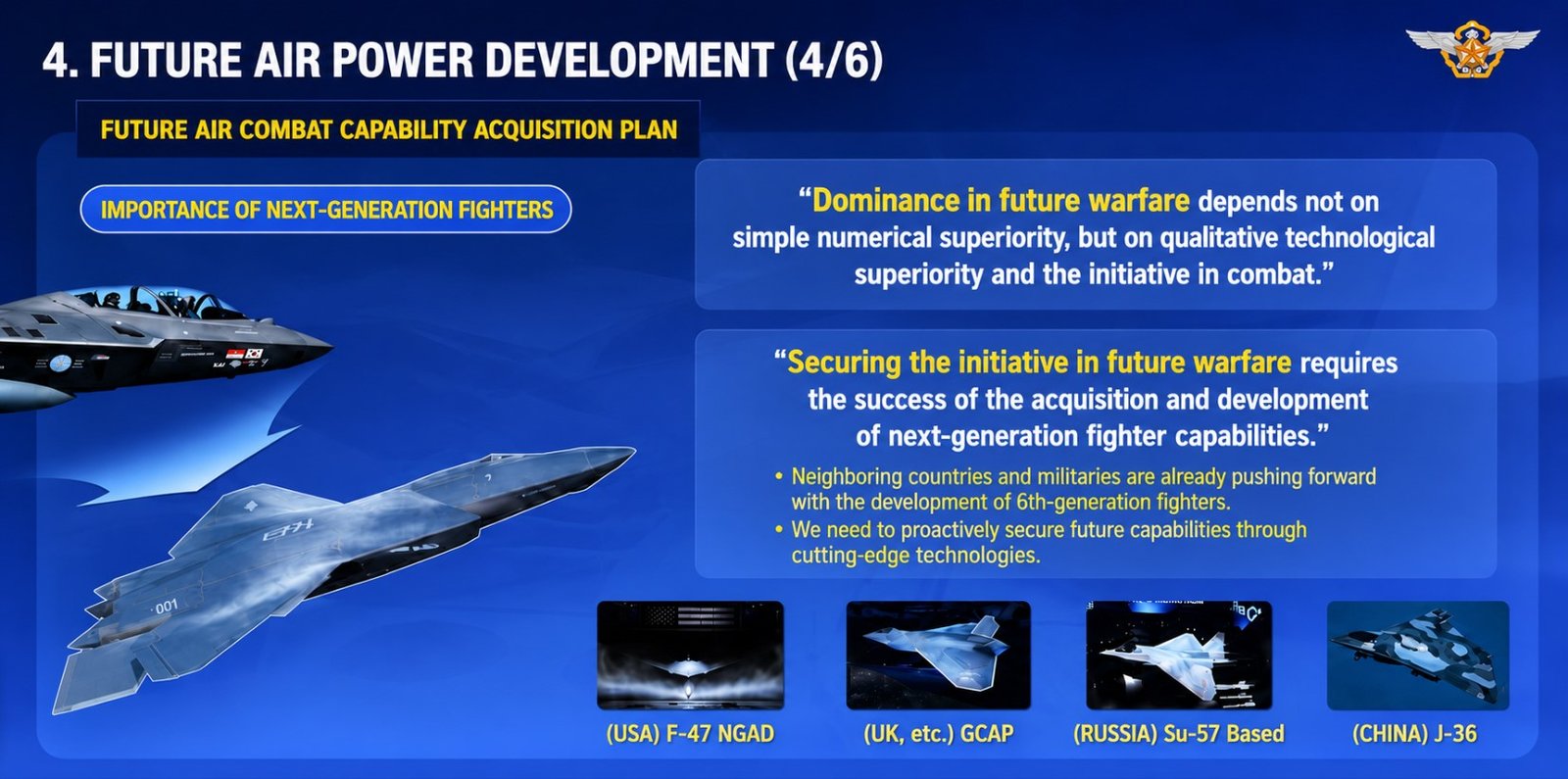
World
Seoul, — South Korea has launched a conceptual study for a next-generation fighter, with the Defense Acquisition Program Administration (DAPA) and Republic of Korea Air Force (ROKAF) issuing a tender on August 21, 2026. The study has a budget of KRW 900 million and will run for 14 months. It aims to define the operational concept and proposed Required Operational Capability (ROC) for a next-generation fighter by late 2027. The work will include aircraft configuration design and analysis, mission-effectiveness analysis and the establishment of a baseline fighter configuration. It will also develop short-, mid- and long-term technology acquisition roadmaps linked to defense technology planning. The study focuses on a future fighter based on manned-unmanned teaming (MUM-T), broadband stealth and artificial intelligence (AI). It will identify an aircraft configuration capable of meeting the proposed requirements. The resulting operational concepts, performance requirements and configuration proposals are expected to support future requirement proposals, preliminary studies and feasibility reviews. Stealth Technology Development The conceptual study will run alongside the Agency for Defense Development (ADD)’s Stealth Bridge Program, which is developing a full-scale testbed for integrating and demonstrating next-generation fighter structures, materials and sensor technologies. The Stealth Bridge Program covers stealth airframe structure design and core-area verification, aviation multifunctional composites and low-observable sensor technology, and technology for integrated radar cross-section control. Each element is planned to run for about 48 months, with the overall effort intended to support later fighter development through technology transfer to industry. Building on KF-21 Development South Korea's current fighter program, the KF-21 Boramae, provides the foundation for the next stage of fighter development. The 4.5-generation aircraft completed system development in 2026 and is entering ROKAF service, with initial Block I aircraft focused on air-to-air missions. Future KF-21 blocks are planned to add air-to-ground and other capabilities, while longer-term development includes stealth improvements, AI and MUM-T. The new conceptual study and Stealth Bridge Program are aimed at the step beyond the KF-21 toward a dedicated next-generation fighter design. The tender seeks qualified bidders to conduct the conceptual work under the stated budget and schedule. Its results are expected to provide foundational data for subsequent planning and development decisions on South Korea's next-generation fighter.
Read More → Posted on 2026-08-24 14:15:08Search
Top Trending in 24 Hours
-
 Japan Selects Terra Drone’s Terra B1 for Mass Production of Interceptor UAVs
-
 U.S. Signs Up to $131.23 Billion Framework Contract With Boeing for F-15 Production, Upgrades and Fleet Support
-
 Taiwan Unveils New Details of Strong Bow Air Defense Missile System
-
 Israel Plans Broad Expansion of Military Space Capabilities, Including Space-to-Ground Strike Concepts
-
 Japan Plans to Build CRADS Multi-Weapon Air Defense System to Counter Drone Swarms
-
 Netherlands Signs Deal with Destinus to Develop Hornet B2 Naval Counter-Drone System
-
 Russia Equips Shahed and Geran Drones With Electronic Warfare Systems to Jam Ukrainian Interceptor Video Links
-
 Vernius Systems Unveils Archimedes 1A Radar Seeker for Ukrainian STING Interceptor
Top Trending in 4 Days
-
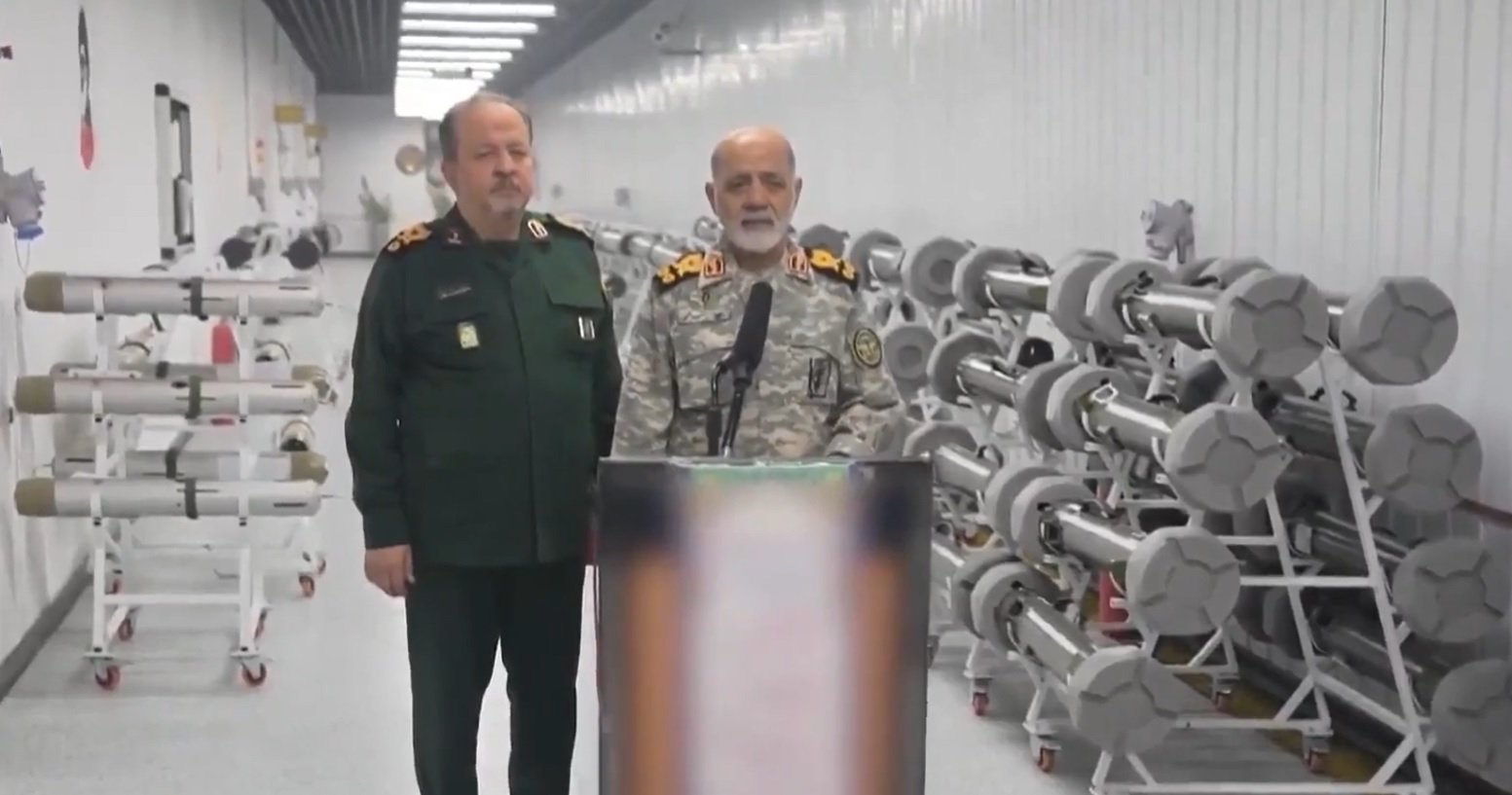 Iran Reveals Underground Weapons Manufacturing Facility for First Time on State TV
-
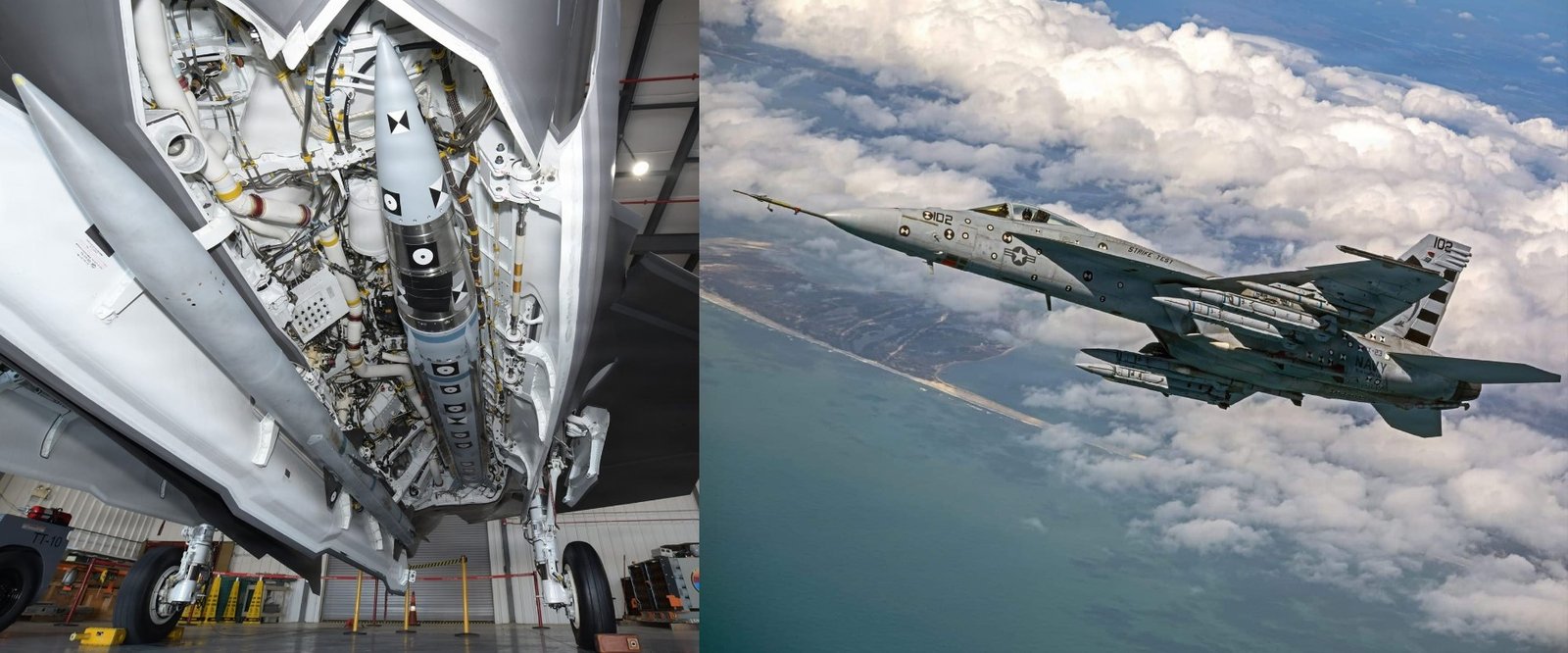 U.S. Navy Unveils New AIM-424 ‘Malice’ Air-to-Air Missile With 463+ km Range for F-35C, Super Hornet and F/A-XX
-
 China Develops Hypersonic Glide Vehicles Capable of Launching Air-to-Air Missiles Mid-Flight
-
 Israel Explores Potential Acquisition of U.S. F-47 Sixth-Generation Fighter
-
 Iran-Linked Hackers Shut Down UK Power Plant for Four Days in First Known Attack
-
 Satellite Imagery Shows Damage From Israeli Strikes on Turkey Military Occupied Syria’s Abu al-Duhur Airbase
-
 North Korea Deploys 400 Drone Operators to Russia Amid Expanding Military Support
-
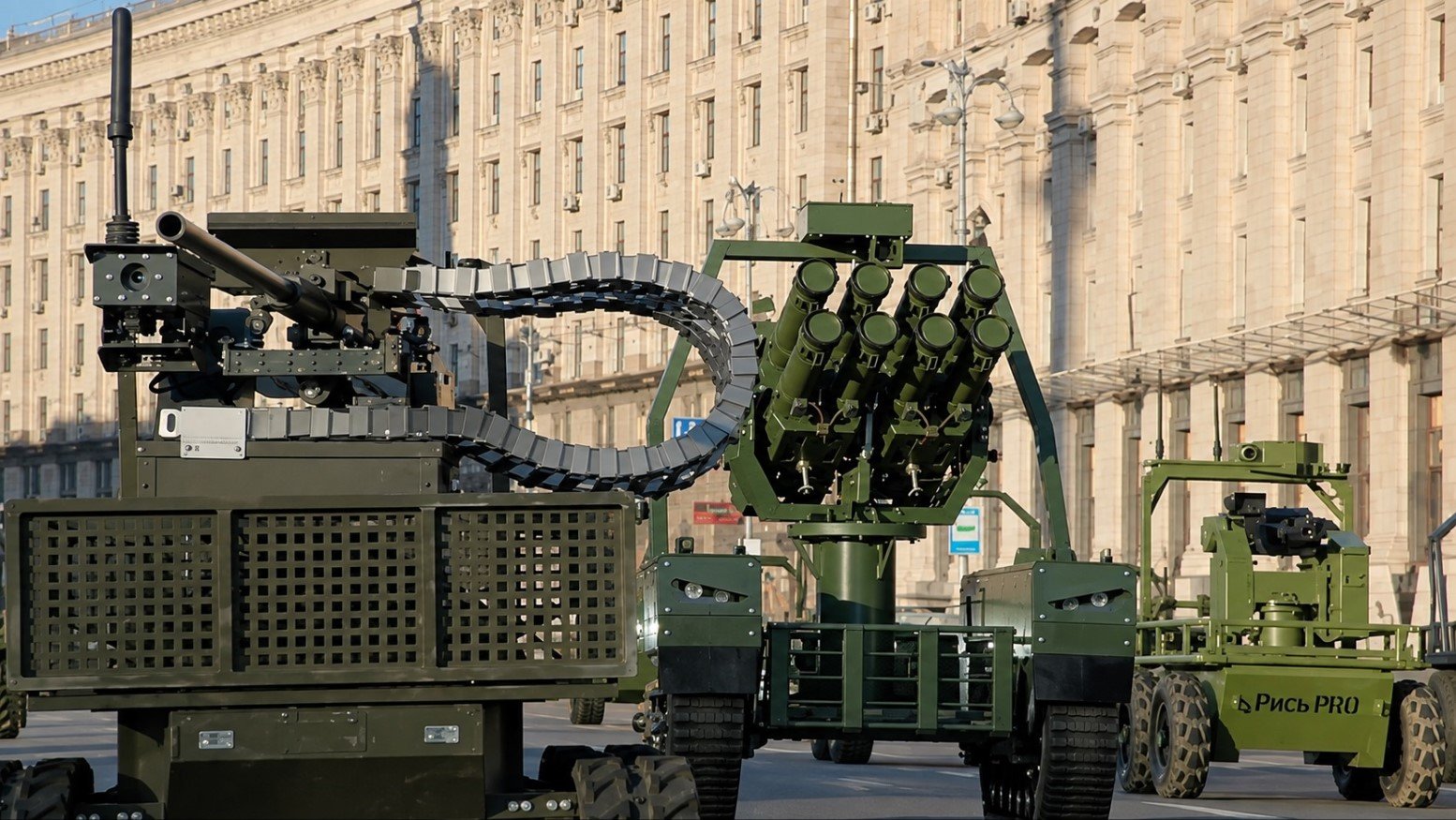 Ukraine Holds World’s First Unmanned Military Parade on 35th Independence Day