
World
Russian President Vladimir Putin issued one of his sharpest warnings to Europe in years, declaring that Moscow is “ready” for war if European nations choose confrontation over diplomacy. His remarks came on Tuesday during a tense day of negotiations in Moscow, where U.S. envoy Steve Witkoff and presidential adviser Jared Kushner arrived for critical talks aimed at finalizing a new American peace proposal to end the Ukraine conflict. The statement immediately reverberated across European capitals, deepening anxieties as the nearly four-year-long war enters a decisive phase. Putin’s Message: “We Are Ready Right Now” Speaking to reporters in Moscow, Putin insisted Russia does not seek war with Europe but emphasized that the country is fully prepared for one if provoked. “We are not planning to go to war with Europe, but if Europe wants to and starts, we are ready right now,” Putin said. He accused European governments of sabotaging U.S.-led peace efforts, claiming that their revised inputs to Washington’s 28-point peace plan were deliberately designed to block diplomatic progress. “They have no peaceful agenda, they are on the side of war,” he added, saying Europe’s proposed changes to the U.S. draft were “aimed solely at completely blocking the peace process and putting forward demands absolutely unacceptable for Russia.” U.S. Pushes a Controversial 28-Point Plan The United States, under President Donald Trump, has presented a 28-point peace draft aimed at ending the war. But the proposal—initially seen as leaning toward Russia’s strategic demands—triggered resistance from Kyiv and widespread skepticism in Europe, who felt the plan risked forcing Ukraine into concessions on territory and sovereignty. After criticism, Washington amended portions of the draft. The ongoing mission by Witkoff and Kushner aims to secure approval from both Moscow and Kyiv before the plan is publicly unveiled. European governments, meanwhile, insist that “no unfair peace should be imposed on Ukraine”, arguing that any agreement must not reward aggression. Why Europe and Russia Have Been in Conflict: A Historical Overview The tensions between Russia and Europe did not emerge overnight. They are rooted in centuries of political rivalry, territorial disputes, and competing visions of security. 1. Medieval and Imperial Rivalries The conflict goes back nearly 1,000 years, with early divisions between: Western Europe, shaped by the Catholic Church and later modern nation-states Russia, influenced by Orthodox civilization and later expanded into a vast Eurasian empire Competing cultural and political identities laid the foundation for mistrust. 2. The Napoleonic Wars (early 1800s) France’s invasion of Russia in 1812 cemented Russia’s deep suspicion of Western military ambitions. Europe saw Russia as a continental power to contain, while Russia saw Europe as a threat to its sovereignty. 3. The Crimean War (1853–56) Russia fought a coalition of Britain, France, and the Ottoman Empire. The war marked one of the first modern confrontations between Russia and Europe over: control of the Black Sea influence in Eastern Europe protection of Christian minorities 4. The World Wars Russia (later the Soviet Union) and Europe clashed in both wars: WWI: Russia fought against Germany and Austria-Hungary. WWII: Nazi Germany invaded the Soviet Union, killing nearly 27 million Soviet citizens.This trauma still shapes Russian strategic thinking. 5. The Cold War (1947–1991) Europe split into: NATO (Western Europe) backed by the U.S. The Warsaw Pact led by the Soviet Union This era solidified Europe-Russia rivalry over political systems, military blocs, and global influence. 6. NATO Expansion & Post-Soviet Tensions After the Soviet collapse: Many Eastern European countries joined NATO. Russia saw NATO’s eastward expansion as a direct threat. Europe viewed it as guaranteeing freedom for post-Soviet states. This disagreement forms the backbone of the modern conflict. 7. 2014 Crimea Annexation & Donbas War Russia’s annexation of Crimea and backing of separatists in eastern Ukraine created the most serious Europe-Russia crisis since the Cold War. 8. The 2022–2025 Ukraine War The current war, now nearing four years, is the culmination of decades of: NATO-Russia mistrust disputes over European security Ukraine’s struggle between Western integration and Russian influence Europe sees the war as a defense of international law.Russia sees it as protecting its security space from NATO. Why Europe Opposes the U.S. Plan European diplomats believe that the American proposal risks forcing Kyiv into territorial concessions, which would effectively legitimize Russia’s battlefield gains. They fear that Moscow could use such a settlement to rearm and later return with renewed pressure on Ukraine. For Europe, Ukraine’s survival and sovereignty are directly tied to the continent’s own security, a reality very different from that of the United States, which is geographically distant and far less vulnerable to Russian power projection. European officials also argue that the draft meets too many of Russia’s demands, especially on Crimea and the eastern territories. Accepting such conditions, they warn, would set a dangerous precedent, undermining international law and encouraging further aggression. Above all, Europe fears that any peace deal weakening Ukraine’s sovereignty could destabilize the continent for decades, triggering new cycles of conflict rather than ending the war. Moscow’s View: Europe Is Blocking Peace From Moscow’s perspective, the original U.S. peace proposal—before European governments amended it—represented the closest and most realistic path toward a ceasefire in Ukraine. Russian officials argue that Europe deliberately altered the plan to make it unacceptable for Moscow, acting not out of strategic reasoning but out of what the Kremlin describes as a long-standing anti-Russian political instinct. In the Russian view, Kyiv is not negotiating independently, and is instead being guided by European capitals unwilling to allow compromise, even if it could lead to a settlement. This, they claim, has left the peace process stalled and fragile. Putin’s latest comments appear designed to increase pressure on Europe, signaling that unless European leaders soften their position and support an agreement closer to Washington’s earlier draft, the risk of further escalation will continue to grow. What Happens Next The Witkoff-Kushner mission is expected to continue through the week.If Moscow and Kyiv reach preliminary agreement, the U.S. hopes to unveil the peace plan before year-end. Europe, however, is preparing for prolonged negotiations—and heavily reinforcing its defenses amid what some officials call the most dangerous moment in Euro-Russian relations since the 1980s. Whether Putin’s latest warning is a negotiating tactic or a signal of deeper confrontation remains uncertain. But the message was unmistakably clear: Russia is not seeking a war with Europe—but is prepared for one.
Read More → Posted on 2025-12-03 14:25:27
Space & Technology
In a significant leap for Britain’s space-based intelligence and surveillance infrastructure, a group of British-designed and built satellites has successfully entered low Earth orbit, giving the United Kingdom a new multi-sensor space capability for defence, security, and civilian applications. BAE Systems confirmed that three Azalea radio-frequency intelligence satellites lifted off on 28 November aboard SpaceX’s Transporter-15 rideshare mission, with communications established during all initial contact windows shortly after separation. A Self-Funded UK Constellation for Strategic Intelligence The launch marks a pivotal milestone in BAE Systems’ self-funded Azalea programme, an ambitious initiative aimed at demonstrating how AI-enabled satellites can provide near real-time intelligence directly from orbit. The three RF satellites will operate in coordinated formation around 350 miles (approximately 560 km) above Earth, using ultra-wideband sensors to detect, analyse, and geolocate radio signals over extremely long distances. Joining these spacecraft is an ICEYE synthetic-aperture radar (SAR) satellite, forming a four-satellite cluster capable of fusing radio-frequency data with high-resolution radar imaging—a combination that significantly enhances target identification, pattern-of-life monitoring, and all-weather reconnaissance. With sovereign countries increasing their investment in space intelligence, the Azalea cluster represents a move toward independent UK-owned orbital surveillance, reducing reliance on foreign systems while strengthening NATO-aligned situational awareness. Multi-Sensor Processing Conducted Directly in Orbit BAE Systems said the cluster will perform onboard processing of both RF and radar data, allowing compressed, machine-interpreted intelligence to be transmitted directly to users on the ground with minimal delay. The system will support decision-makers across land, sea, and air, providing rapidly refreshed information for missions such as: Battlespace awareness Maritime monitoring Border and airspace security Disaster response and humanitarian relief Tracking illegal activity such as smuggling, piracy, and unlicensed transmissions The company will now begin months of operational trials with UK and international customers to showcase how the combined system performs in real-world conditions. British Technology Built on AI-Driven Intelligence Each satellite weighs around 150 kg and carries the Azalea Enhanced Software-Defined Radio, fully developed and operated by BAE Systems in the UK. The radio uses onboard artificial intelligence algorithms to analyse electromagnetic signatures without needing to send raw, unprocessed data back to Earth. The company also highlighted that the system is reconfigurable in orbit, enabling updates and performance upgrades without requiring a new launch. With orbital speeds reaching 7.6 kilometres per second, the satellites will complete a full Earth orbit every 90 minutes, ensuring persistent revisit rates over key global regions. Industry Leaders Hail a New Era for UK Space Capability Andrea Thompson, Managing Director of BAE Systems’ Air Sector, underscored the strategic importance of the mission: “Building on decades of experience in defence, security and space innovation, our Azalea mission reflects the critical role space plays in national security. This cutting-edge technology is designed to deliver near real-time, space-based insights directly to users, empowering them to make informed decisions that help protect the UK and its allies.” Dr. Paul Bate, Chief Executive of the UK Space Agency, said the constellation will expand the availability of advanced orbital information and accelerate Britain’s role as a rising space intelligence player: “The new satellites, which use AI to convert raw data into actionable intelligence, represent a significant and welcome investment by BAE Systems in the UK space industry. This capability will help meet the growing global demand for space-derived information across civil and defence sectors.” A Strategic Asset for a Changing Geopolitical Environment The UK, like other NATO partners, has rapidly increased its investments in space-based ISR (Intelligence, Surveillance and Reconnaissance) amid rising global tensions, cyber threats, and hostile space activities from adversaries like Russia and China. The Azalea mission aligns with broader national efforts such as: The UK’s Defence Space Strategy (2022–2030) Growth of the Cornwall, Scotland, and Wales launch ecosystems Expansion of sovereign satellite manufacturing at BAE Systems, Airbus UK, and Surrey Satellite Technology Ltd By bringing together commercial innovation and defence-sector expertise, Azalea demonstrates a shift toward hybrid military-commercial space architectures, which NATO considers essential for maintaining situational awareness in contested environments. Positioning the UK as a Global Leader in Tactical Space Intelligence As trials begin, BAE Systems plans to expand Azalea into a larger operational constellation capable of global monitoring with wide-area coverage. Defence officials believe that a multi-sensor “cluster approach” could become a model for future European ISR systems. If successful, the Azalea constellation will give Britain one of the most advanced commercially owned tactical intelligence capabilities in Europe—providing significant strategic autonomy and a crucial edge in both defence and emergency-response missions.
Read More → Posted on 2025-12-03 13:54:21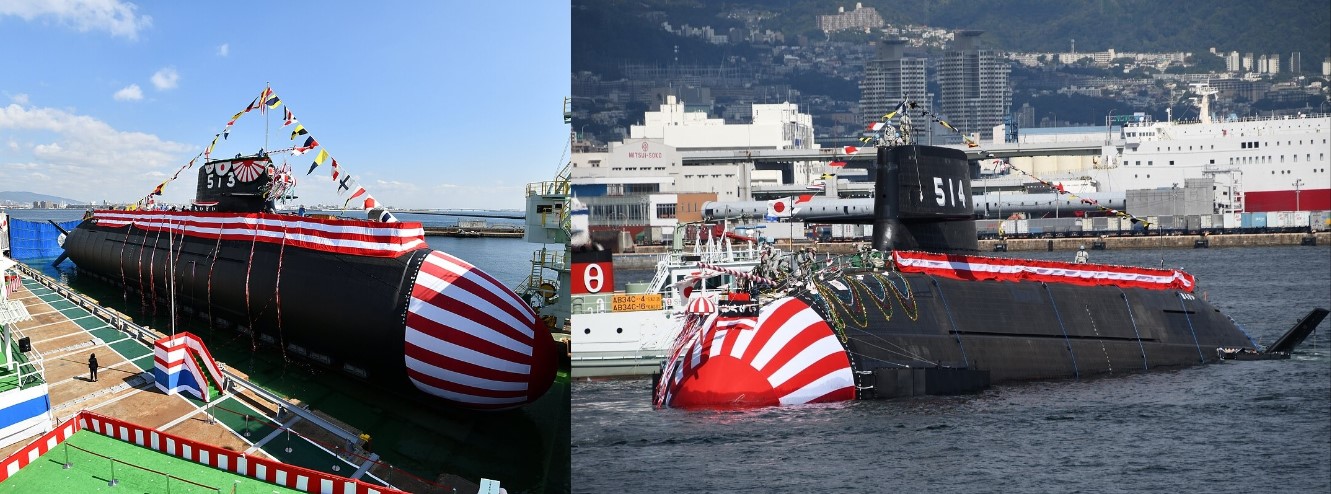
World
Japan has taken a decisive lead in submarine technology with its late-batch Sōryū-class and the next-generation Taigei-class, the world’s first operational combat submarines powered entirely by lithium-ion batteries. This propulsion revolution has reshaped everything from acoustic stealth to underwater endurance, placing these Japanese boats in a unique category where they can match — and under certain tactical conditions surpass — the quietness of nuclear-powered submarines. The achievement represents a milestone not only for Japan’s maritime forces but for submarine warfare as a whole. Lithium-Ion Propulsion as the Foundation of Silence The shift from lead-acid to lithium-ion power transformed Japan’s underwater operations. A lithium-ion battery can store several times more energy per unit weight than legacy cells, allowing the submarine to cruise underwater for far longer without surfacing. When operating in full battery mode, every major noise source inside the hull disappears. The diesel engines remain shut down. There is no need for a mechanical AIP engine, no rotating pistons, no fuel-cell compressors, and no intake or exhaust noises from frequent snorkel cycles. This creates a submarine that moves with only the soft electrical hum of a permanent-magnet propulsion motor, producing an acoustic signature so faint that it dissolves into the background noise of the sea. Unlike lead-acid batteries, lithium-ion cells maintain a high voltage throughout their discharge cycle, allowing the submarine to operate at higher speed without becoming louder. Why Lithium-Ion Silence Surpasses Nuclear Stealth Nuclear-powered submarines dominate long-range warfare, but they are permanently burdened by the machinery of atomic propulsion. A reactor must always run. Pumps circulate coolant. Steam systems drive turbines. Even when running at their quietest setting, nuclear submarines generate a detectable mechanical heartbeat. Japan’s lithium-ion boats do not have this problem. In low-speed patrols, ambush positions, or seabed listening missions, the submarine radiates almost no mechanical signature. The absence of reactor noise removes the constant low-frequency hum that nuclear boats cannot eliminate. This is why, in the tight waters of the East China Sea, Okinawa chain, and Luzon Strait, Japanese submarines can be harder to hear than nuclear fast-attack vessels from major powers. The Sōryū-Class Lithium-Ion Variants The breakthrough began with the final pair of Sōryū-class submarines, JS Ōryū and JS Tōryū. These 84-meter-long boats displace about 4,200 tons submerged, can exceed 20 knots underwater, and are equipped with a full array of flank, bow, and towed-array sonars. Their lithium-ion system replaced the earlier Stirling AIP engines, eliminating mechanical vibration and simplifying the submarine’s internal layout. The power density of the new batteries allowed longer silent running and reduced snorkel frequency, giving the submarine extended periods of near-complete invisibility. These submarines served as the operational testbed that validated Japan’s safety systems, including advanced thermal management, multi-layer fire isolation zones, and an unusually sophisticated battery management system derived from Japan’s consumer and automotive battery sectors. No other navy had attempted such a transition in an operational fleet before Japan did. The Taigei-Class: Japan’s First Purpose-Built Lithium-Ion Submarine The Taigei-class represents Japan’s full expression of lithium-ion submarine engineering. Also about 84 meters in length and displacing approximately 3,000 tons surfaced and 4,500 tons submerged, the Taigei features a hull sculpted specifically for quiet hydrodynamics. Its new permanent-magnet synchronous motor is even smoother and quieter than the Sōryū’s induction motor, producing remarkably low acoustic output at creeping speeds. Japanese engineers redesigned Taigei from the keel up to take advantage of lithium-ion power. The batteries are larger, arranged in more efficient blocks, and managed by a next-generation thermal system. The submarine dives beyond 300 meters and uses a full suite of Japanese-developed sensors with improved signal processing to detect low-frequency contacts at extended ranges. The interior machinery is raft-mounted on multi-layer dampers, while floating decks isolate vibrations. Even the coolant flows and pipe routing were reshaped to eliminate micro-vibrations that sonar arrays could detect. Why Japan’s Lithium-Ion Submarines Are More Advanced Than Other Nations’ Li-Ion Efforts Several countries now plan to adopt lithium-ion batteries, including South Korea and France. But Japan’s system is considered more advanced for three key reasons. Japan has far more operational experience. Its lithium-ion submarines have been deployed on real patrols for years, giving Japan data that no other navy possesses. This includes long-term battery degradation behavior under deep diving, high-speed discharge patterns, and the thermal characteristics of megawatt-hour battery packs under combat conditions. Japan also enjoys the world’s strongest industrial ecosystem for battery technology. Companies such as Panasonic and GS Yuasa have decades of experience in safe high-density cells, a capability absent in most other submarine builders. This depth allowed Japan to develop a battery chemistry with extremely high stability and a battery management system capable of monitoring thousands of cells simultaneously with millisecond reaction times. Finally, Japan designs the submarine as a complete acoustic system, not a platform with a new battery. Every part — from the propeller shape to the arrangement of cable ducts — is tuned for stealth. Other nations may adopt lithium-ion packs, but without Japan’s holistic quieting philosophy, their acoustic results will not reach the same level. What Makes Them Technically Special Even Compared to Nuclear Submarines Japan’s lithium-ion submarines are not nuclear boats, yet in certain missions, they outperform them in stealth because they remove the reactor as a noise source. Nuclear submarines cannot glide in total silence; their reactors and pumps generate a continuous, low-frequency signature that modern sonar arrays can detect at range. Japan’s lithium-ion boats do not suffer from this mechanical baseline. At slow speeds they produce almost no detectable emissions and can remain acoustically neutral for long periods. Their lithium-ion packs also allow high-speed dashes in near silence, something lead-acid batteries cannot support. Nuclear submarines can sprint indefinitely, but not quietly. Japan’s boats can sprint silently for tactical bursts without revealing their location, a unique advantage in shallow strategic waters. Strategic Significance in the First Island Chain The First Island Chain is defined by straits, shallow basins, and complex seabed acoustics. In these environments, silence is more valuable than unlimited endurance. Japan’s lithium-ion submarines can wait in near-motionless ambush, observe enemy movement with powerful passive sonar, and then reposition without revealing themselves. Their presence complicates Chinese naval operations and strengthens Japan’s deterrent posture without the political burden of acquiring nuclear submarines. As more Taigei-class submarines enter service, Japan is constructing one of the world’s most technologically advanced non-nuclear submarine fleets. It is a fleet that challenges long-held assumptions about what conventional submarines can do, and one that proves that silence — not size — remains the most decisive weapon beneath the waves.
Read More → Posted on 2025-12-03 13:36:10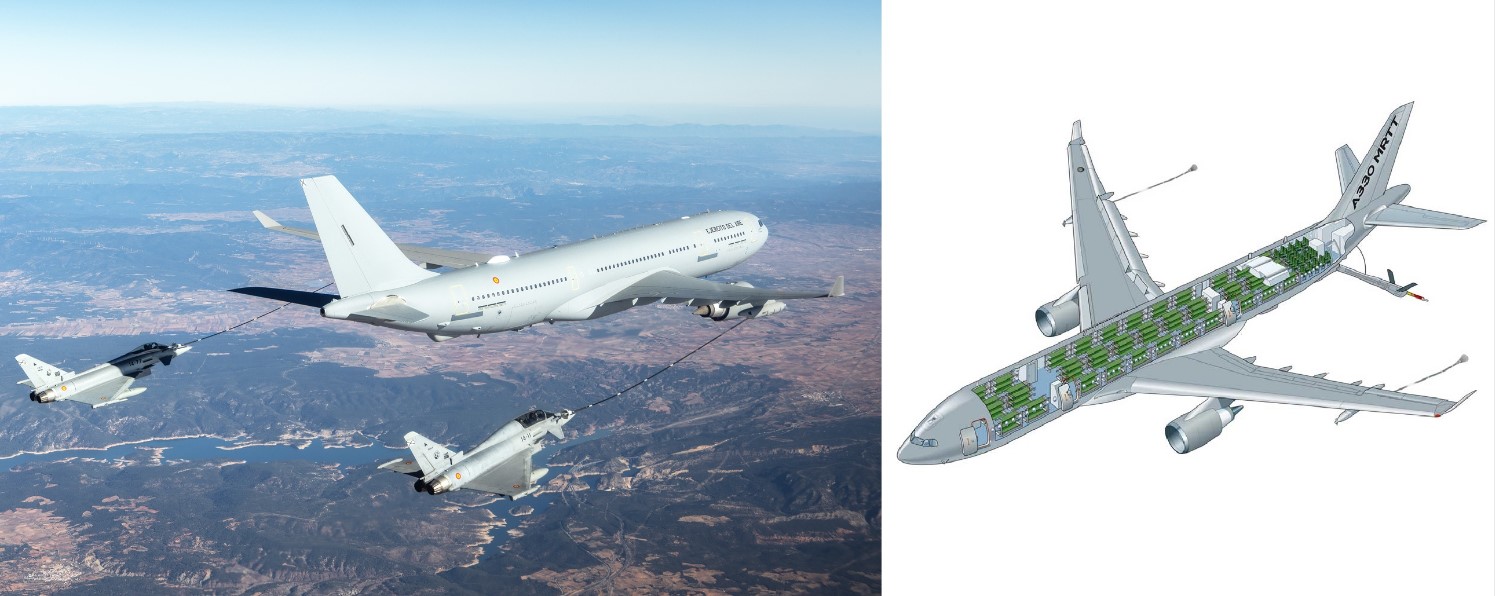
World
Poland has announced plans to acquire Multi-Role Tanker Transport (MRTT) aircraft, in what officials and analysts are calling one of the most important steps in the modernisation of the Polish Air Force since the decision to buy the F-35. Warsaw is expected to purchase three to four Airbus A330 MRTT aircraft from France in a deal worth more than €1 billion, giving Poland its first-ever national aerial refuelling capability for its F-35, F-16 and FA-50 fleets. A Billion-Euro Deal Built Around A330 MRTT According to Polish and European defence media, the government has decided to move ahead with the Karkonosze tanker/transport programme after nearly a decade of delays. The preferred solution is a small fleet of Airbus A330 MRTT aircraft sourced from France, which already operates the type and can offer training, maintenance cooperation and rapid integration into NATO refuelling networks. The purchase is expected to be co-financed under the European Commission’s EU SAFE defence investment facility, which offers low-interest loans for critical capability projects but requires that no more than 35% of the system’s value comes from non-EU components. That condition strongly favours the European-built A330 MRTT over US competitors and has been cited in Polish media as a key reason for the Airbus selection. While final contract details have not yet been published, officials in Warsaw say the goal is to have the first tankers in service before the end of this decade, in time to support a growing fleet of fifth-generation and upgraded fourth-generation fighters. From Zero Tankers To A National Capability Unlike many Western air forces, the Polish Air Force has never operated its own dedicated aerial refuelling tankers. Instead, Poland has relied on a network of NATO partners for inflight refuelling support during training and operations. French A330 MRTT tankers, for example, have recently refuelled Polish F-16s, while U.S. Air National Guard tanker wings have supported Polish fighters and the training of Polish F-35 crews. Earlier attempts to plug this gap repeatedly stalled: In 2008, Polish plans to acquire tankers were shelved amid budget pressures. In 2014, Warsaw joined a NATO Multinational MRTT Fleet (MMF) initiative but then withdrew in 2016, just days before signing, a decision retired Polish Air Force leaders later described as a “lost opportunity”. In the absence of tankers, Poland depended on its transport fleet—five C-130E Hercules, additional C-130H airframes being received from the United States, 16 Airbus C-295M, and smaller M28 Bryza aircraft—for strategic and tactical lift, medical evacuation and troop movements. These aircraft can move people and cargo but cannot refuel fighters in mid-air, forcing Polish jets to operate within range of ground bases or allied tankers. The planned A330 MRTT purchase therefore represents not a replacement of older Polish tankers – there were none – but the creation of an entirely new mission area inside the Polish Air Force. What The A330 MRTT Brings To Poland The Airbus A330 MRTT is widely regarded as the benchmark among new-generation tanker/transports. Based on the civilian A330-200 airliner, it combines a large fuel load with a wide-body cabin for cargo and passengers: It can carry around 111 tonnes of fuel in its wings and tanks without additional fuel cells. Airbus data shows it can offload up to 70 tonnes of fuel during a one-hour loiter mission 1,250 nautical miles from base—enough to keep a sizeable fighter package airborne. The aircraft can also transport up to about 300 troops or roughly 45 tonnes of cargo, and can be configured for aeromedical evacuation with intensive-care modules. For Poland, that means a single platform able to: Refuel F-35A, F-16C/D and future tanker-capable aircraft via boom or hose-and-drogue systems. Fly long-range strategic airlift missions, including deployments to the Middle East, Africa or the Indo-Pacific without relying on chartered civilian lift. Conduct mass medical evacuation or humanitarian relief flights, for example in support of operations in Ukraine or disaster response. Polish air commanders have publicly argued that having tankers can halve the number of fighters and crews needed to maintain long combat air patrols by allowing aircraft to refuel in the air rather than cycling back to base. Supporting A Rapidly Expanding Fighter Fleet The MRTT decision is closely tied to Poland’s rapidly growing fast-jet inventory. Warsaw is modernising and expanding its air force on several fronts: It operates 48 F-16C/D Jastrząb fighters, which are now being upgraded to the latest F-16V standard under a multibillion-dollar programme. It has ordered 32 F-35A Lightning II, with the first jets already delivered to a U.S. training base and Polish-based deliveries scheduled from 2026. It has contracted 48 FA-50 light combat aircraft from South Korea, 12 of which have already been delivered, with the remainder arriving through 2028. As these fleets enter service and legacy MiG-29 and Su-22 jets are phased out, Poland faces a simple problem: modern jets without a tanker are range-limited. A national MRTT fleet will allow: Deep-strike and patrol missions along NATO’s eastern flank and over the Baltic Sea. Long-endurance air policing and missile-defence patrols, which have become routine since Russia’s full-scale invasion of Ukraine. More realistic training for F-35 crews, who will rely heavily on tanker support in any high-intensity conflict. EU, NATO And Industrial Dimensions The choice of A330 MRTT also deepens Poland’s integration with wider European and NATO refuelling networks. Several European allies—including France, the Netherlands (through the Multinational MRTT Fleet), Spain and the UK—already operate the aircraft, enabling shared training, common logistics and pooled operations in crises. By tying the deal to the EU SAFE mechanism, Warsaw can offset part of the financial burden while supporting European industrial supply chains, particularly Airbus facilities in France, Spain and Germany. At the same time, Poland continues to explore separate deals for tactical transports like the Embraer C-390 Millennium, which can also be configured as a smaller tanker, suggesting that the A330 MRTT fleet could eventually be complemented by more agile tanker/transport platforms assembled partly in Poland. What Happens Next The next milestones will include the formal intergovernmental agreement with France, contract signature with Airbus, selection of a Polish base for the MRTT fleet, and detailed decisions on boom and hose-and-drogue fit, medical kits and communications systems. Once delivered, the aircraft will need a tailored training pipeline for pilots, boom operators and maintenance personnel. For Warsaw, however, the strategic direction is already clear. After years of relying on allied tankers and watching earlier initiatives fall through, the planned purchase of three to four Airbus A330 MRTT aircraft marks the moment when Poland finally couples its expanding fleet of modern combat aircraft with the long-range reach and endurance they were designed to deliver.
Read More → Posted on 2025-12-03 12:13:24
World
President Donald Trump is claiming that his new administration has unlocked an investment boom “never seen in history,” declaring that more than $18 trillion in investment commitments have been secured in just 10 months – compared with “just $1 trillion” over President Joe Biden’s four years. The dramatic comparison, repeated in a now-viral video and in a Cabinet meeting in Washington, has electrified Trump supporters and alarmed economists, who say the headline numbers mix very different kinds of promises and are not directly comparable. Where Trump’s $18 trillion number comes from Trump made the $18 trillion claim during an extended Cabinet session, describing what he called the “strongest economic turnaround in U.S. history.” He told his team that, in 10 months, the administration had “secured commitments of over $18 trillion” and argued that no country had ever attracted such investment before. Behind that figure is a mix of: Corporate investment announcements in the U.S. – especially in AI, data centers, chips, manufacturing and energy – listed on a new “US & Foreign Investments” page on the Trump White House website. The page showcases hundreds of billions of dollars in planned spending by companies such as Apple, Nvidia, Meta, TSMC, Micron, Google, Amazon, Eli Lilly, Ford, Hyundai, Nippon Steel and many others. Foreign-government pledges to invest in or buy from the U.S. The same White House list includes very large headline commitments such as: Qatar – $1.2 trillion United Arab Emirates – $1.4 trillion Japan – $1 trillion Saudi Arabia – $600 billion India – $500 billion Bahrain – $17 billion An additional $600 billion associated with EU firms under a trade deal. A separate $1 trillion Saudi pledge for AI-related investments with U.S. companies, highlighted during Saudi Crown Prince Mohammed bin Salman’s recent visit to Washington, where Trump framed AI and data centers as the core of his economic strategy. If you add together corporate factory and data-center plans, energy projects and these sovereign pledges, you can approach the kind of multitrillion-dollar totals Trump is now citing – at least on paper. But many of these are long-term, conditional or not yet financed, and some overlap with investments first developed under Biden-era industrial policies. Fact-check: What independent analysts say about Trump’s investment totals Trump’s newest $18 trillion boast didn’t appear out of nowhere. For months he has steadily escalated the figure: Earlier this year he talked about $10 trillion in investments; a detailed fact-check of that claim found that the White House’s own public lists added up to about $5.1 trillion in “promised” investments, of which only around $2.1–4.3 trillion could be reasonably treated as genuinely new – and even those were not guaranteed to materialise. By October, he was citing $17 trillion in new investments, a claim the Associated Press described as relying on announcements, foreign pledges, budget items and some double counting, concluding that the actual number of new, confirmed projects was “likely much less.” FactCheck.org has documented how Trump’s claimed totals have grown from $3 trillion to over $10 trillion over just a few months, even though the underlying published investment lists did not support those rapidly rising numbers. More recently, a Reuters review of the Trump White House “Trump Effect” investment website found that nearly half of the $2.6 trillion in projects listed at the time either began under Biden, pre-dated Trump’s return to office, or were routine corporate capital spending that would likely have happened anyway. Taken together, the independent assessments suggest: Many projects Trump counts as “his” were already in motion under Biden or earlier. Not all “commitments” are firm investments: some are memorandums of understanding, tentative pledges or marketing numbers that could be scaled back. The real, new capital actually being spent in the U.S. is significantly lower than the advertised $17–18 trillion. Economists also point out that $18 trillion is close to three-quarters of total annual U.S. GDP – making it implausible that such an amount of fresh, additional investment has truly been locked in over a few months. How Biden’s “$1 trillion” figure was calculated Trump contrasts his $18 trillion claim with “just $1 trillion” under Biden. That comparison is technically anchored in a real Biden-era figure – but it is narrower and more carefully defined than Trump suggests. In late 2024, the Biden White House announced that its “Investing in America” agenda – the Bipartisan Infrastructure Law, CHIPS and Science Act and Inflation Reduction Act – had catalyzed more than $1 trillion in private-sector investment announcements in the United States. That $1 trillion number: Covers specific sectors: semiconductors and electronics, clean energy, EVs and batteries, biomanufacturing, heavy industry and clean power. Comes from announced factory and project plans tracked on the public invest.gov database, not from global financial flows or foreign sovereign commitments. Is meant to show how Biden-era laws nudged private companies to build plants in the U.S., not to measure every dollar of investment in the wider economy. In other words, Biden’s $1 trillion refers to a narrow slice of domestic industrial investment, while Trump’s $18 trillion appears to mix global sovereign wealth pledges, long-term LNG purchase agreements, AI-infrastructure deals, data-center clusters, pharmaceutical expansions and more over an undefined time frame. Analysts therefore describe Trump’s comparison as “apples to oranges”: he is stacking a broad set of global, multi-year promises against a more conservative, sector-focused tally compiled by the previous administration. What kinds of investments are actually being discussed? The investments being discussed cover several major sectors of the U.S. economy. In advanced manufacturing and semiconductor production, companies such as TSMC, Micron, GlobalFoundries and Intel have announced massive factory and packaging projects across states including Arizona and New York. Many of these initiatives first emerged in response to Biden’s CHIPS Act subsidies, yet the Trump administration now points to later expansions, additional phases and renegotiated agreements as part of its investment totals. In the field of artificial intelligence and data infrastructure, companies like Nvidia, Google, Meta and Amazon are pursuing multi-billion-dollar plans to build AI super-computing hubs and large-scale data centers. These facilities require extraordinary amounts of power, which is why many of them are tied to long-term electricity supply arrangements and natural-gas contracts. Energy and LNG commitments add another layer to the numbers. Major U.S. LNG export projects and grid-modernization efforts are supported by long-term agreements from foreign buyers such as Japan’s JERA and major South Korean energy firms, whose purchase contracts help finance these large developments. There is also a significant category of foreign sovereign investment deals. Countries including Saudi Arabia, Qatar, the United Arab Emirates, Japan and India have announced large, long-term pledges—sometimes in the hundreds of billions or even over a trillion dollars—to invest in U.S. industries ranging from AI and energy to manufacturing and technology partnerships. These commitments are often connected to each nation’s own economic-transformation strategies. All of these investment areas involve genuinely large sums of planned spending. The real debate is not about whether the investments exist but about how they are counted, over what time period they apply, and which administration deserves credit for the commitments. The political stakes Trump’s message is clear: he wants voters to believe that massive investment commitments, lower inflation and tax cuts are proof that his second term is delivering an economic turnaround that “shocks the experts.” But independent fact-checkers and financial analysts are just as clear: The $18 trillion headline is not a verified, universally accepted economic statistic. It bundles together many different types of promises, some of which may never fully materialise, and some of which were seeded by Biden-era legislation or pre-existing corporate plans. For now, Trump’s dramatic line – “Four years, a trillion. Ten months, more than eighteen trillion” – functions more as campaign messaging than as a precise accounting of U.S. investment flows.
Read More → Posted on 2025-12-03 11:59:45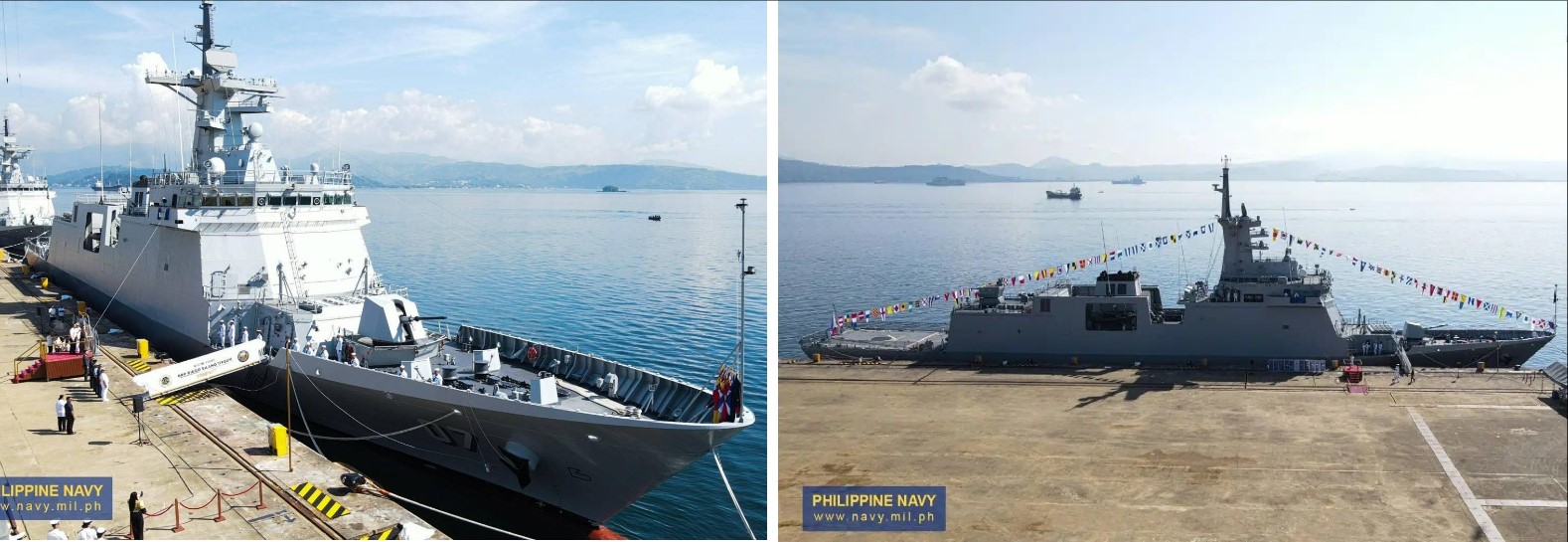
World
The BRP Diego Silang (FFG-07) — the second guided-missile frigate of the Miguel Malvar-class frigate — was officially commissioned into service on 2 December 2025 at Naval Operating Base Subic, marking a significant milestone in the ongoing modernization of the Philippine Navy (PN). Senior naval and defense officials present at the ceremony highlighted the arrival of the ship as a decisive step in boosting maritime domain awareness and deterrence — particularly in disputed waters of the West Philippine Sea, the Philippine EEZ in the broader South China Sea. “This will add to the capital ships of the PN that are capable of patrolling all the way up to our EEZ and even beyond,” said the Navy’s West Philippine Sea spokesperson during the press briefing, calling BRP Diego Silang “the most modern warship that we will have.” Defense Undersecretary for Acquisition and Resource Management said the commissioning “sends a clear message that the Philippines will keep investing in programs that bolster maritime domain awareness, strengthen deterrence, and reinforce our ability to uphold the rule of law.” From South Korea to Subic: Delivery and Arrival Built by South Korea's HD Hyundai Heavy Industries (HD HHI), the frigate was delivered to the Philippine Navy on 9 September 2025. The warship is based on HHI’s HDC-3200 design — a further-evolved variant of the hull used in the earlier Jose Rizal-class frigate. At arrival, the ship was formally welcomed by another Philippine naval vessel — the BRP Jose Rizal (FF-150) — marking a symbolic moment for the navy’s expanding surface fleet. During its voyage into Philippine waters, the frigate also conducted coordinated maneuvers with a coastal patrol vessel of the Philippine Coast Guard, reinforcing fleet interoperability. Soon after its arrival, the necessary acceptance procedures and final checks were completed to prepare for full commissioning — now formalized on 2 December 2025. What BRP Diego Silang brings: Capabilities & Strategic Value At around 3,200 tons displacement, approximately 116–118 meters in length, with a beam of 14.9 meters, BRP Diego Silang is powered by a Combined Diesel and Diesel (CODAD) propulsion system, enabling a top speed of about 25 knots and a cruising range of 4,500 nautical miles. The frigate is outfitted for multi-domain warfare — capable of addressing air, surface, and subsurface threats. Its weapons fit includes a 76 mm main naval gun, a 16-cell vertical launching system (VLS) for surface-to-air missiles, eight anti-ship missile launchers, a 35 mm Gökdeniz close-in weapon system (CIWS), and torpedo launchers for anti-submarine warfare. Beyond raw firepower, the vessel is equipped with modern sensors and electronics — including long-range radar, fire-control systems, sonar capability, and integrated combat management systems — allowing the Philippine Navy to track, detect and respond across multiple domains. Why the Commission Matters for Manila’s Maritime Strategy The commissioning of BRP Diego Silang underlines the broader intent of the Philippine government to strengthen maritime security, assert sovereignty, and deter incursions in its Exclusive Economic Zone. In recent years, tensions in the South China Sea — particularly the West Philippine Sea — have increased, with reports of foreign naval incursions probing Philippine maritime claims. Against that backdrop, a capable, modern frigate represents a valuable symbol and instrument of deterrence. Moreover, the ship enhances interoperability with allied navies, and signals Manila’s readiness to participate more robustly in joint maritime operations, patrols, and regional security cooperation. At the same time, the government — via the Department of National Defense (DND) — appears to be doubling down on modernization, with negotiations underway to acquire two additional Miguel Malvar-class frigates. What Comes Next With BRP Diego Silang now active, the Philippine Navy is better positioned to maintain a credible forward presence in its maritime zones. The planned additional frigates — once acquired — would further increase patrol coverage, surveillance, and deterrence capacity, enabling Manila to safeguard its maritime interests more confidently. Much will depend on how the Navy integrates these new ships operationally — through training, coordination with regional partners, and deployment strategies — to maximize impact. In commissioning its newest and most capable warship to date, Manila sends a clear message: it intends to assert and defend its maritime rights, and remains committed to modernizing its naval forces for the challenges ahead.
Read More → Posted on 2025-12-02 17:58:56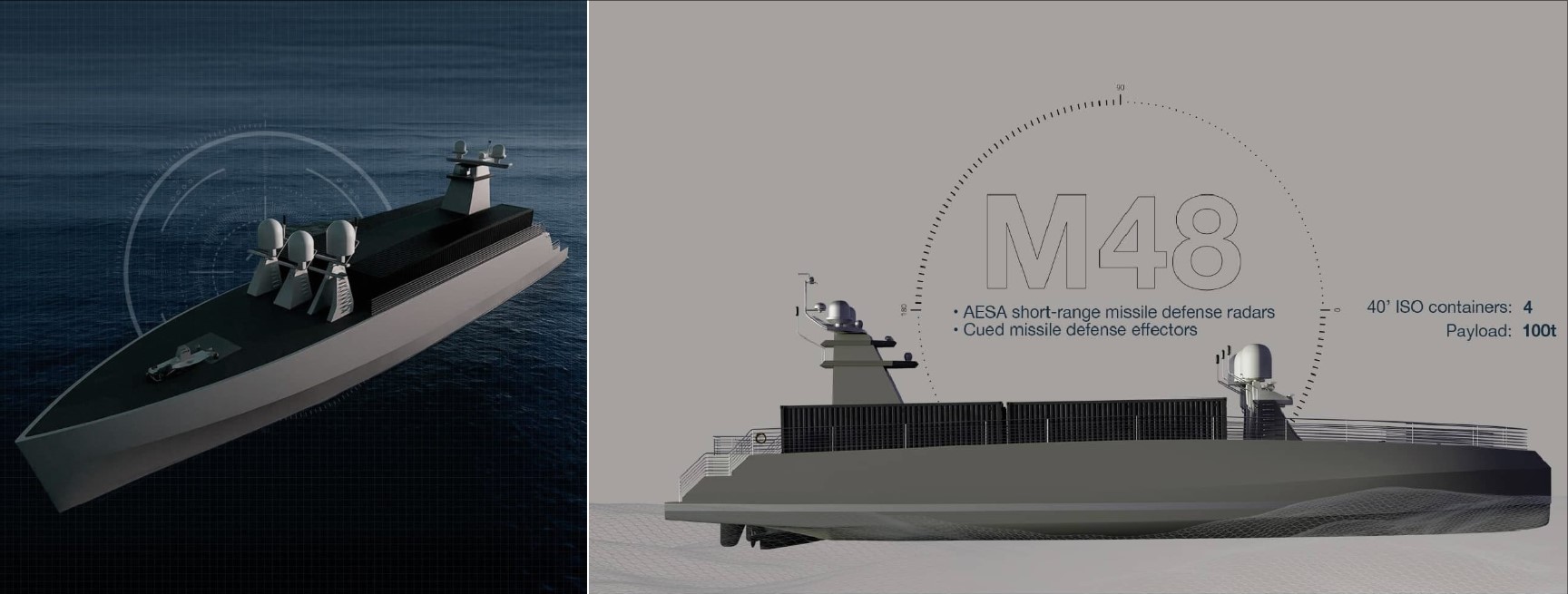
Magnet Defense Unveils M48: A $50 Million AI-Powered USV After 390 Days of Autonomous Sea Operations
World
After more than two years of quiet development, Magnet Defense LLC has formally stepped into the spotlight today with the public unveiling of its first autonomous maritime platform: the 48-metre M48 Large Uncrewed Surface Vessel (LUSV). The company said it invested over US$50 million into the design, build and validation of M48 — which has already logged a striking 32,000 nautical miles and 390 total days at sea under AI-enabled autonomous operation. Magnet Defense describes M48 as a flagship entry into a new generation of unmanned surface vessels (USVs), combining advanced autonomy, modular mission payloads and rugged seafaring endurance. The unveiling comes at a time when global strategic uncertainty is driving demand for unmanned maritime capabilities. According to the company, traditional manned multi-mission warships are increasingly seen as costly, limited in number, and too slow to scale for many modern defense needs — fueling a shift toward lower-cost, rapidly deployable autonomous platforms. What M48 brings: Capabilities, Design and Performance The M48 platform is designed to operate fully autonomously, even in high-risk or contested maritime zones. Magnet Defense says the vessel is configured to deliver a wide range of mission capabilities — from persistent intelligence, surveillance and reconnaissance (ISR), to missile defense, electronic warfare, anti-submarine warfare (ASW), logistics and other multi-domain tasks — all while minimizing risk to human personnel. A key differentiator is M48’s modular payload architecture. The vessel features containerized mission modules, allowing operators to quickly reconfigure the USV for different tasks. Its stable hull geometry and efficient design have reportedly enabled it to operate continuously for long durations: 390 days at sea, with successful navigation over 32,000 nautical miles; operations included sustained periods in Sea State 7, and surviving multi-hour exposures in Sea State 9. On the technological side, M48 leverages advanced machine learning, edge computing, and multi-sensor fusion to deliver rapid threat recognition, automated weapon pairing, and high-level autonomy — while still allowing for human-in-the-loop oversight when required. The system reportedly includes redundancies, failsafes, and design features enabling long unattended missions without maintenance. Why M48 Matters Now Unmanned surface vessels are not a new concept; over past decades, various navies and defence-industrial firms have experimented with USVs for surveillance, mine countermeasure, and reconnaissance missions. But according to defence-industry analysts, the rising demand for scalable, automated, low-cost maritime assets is reshaping naval procurement strategy — especially as navies look to modernize without committing vast resources to traditional crews and warships. In this environment, Magnet Defense aims to position M48 (and future USV variants) as a cost-effective yet highly capable alternative — one that can deliver long-endurance missions in contested or dangerous environments, reduce risk to human crews, and enable distributed maritime operations at scale. Moreover, modular payload architectures align with global trends in open-architecture naval design, allowing navies to integrate ISR, ASW, or electronic-warfare packages depending on operational needs. What’s Next While Magnet Defense’s public announcement paints an ambitious picture, several questions remain. Observers may be keen to see independent verification of performance claims — particularly endurance under severe sea states, autonomy performance in real-world contested zones, and reliability over multiple mission cycles. Moreover, the regulatory and geopolitical landscape for unmanned maritime systems is still evolving. As USVs scale up, navies may need to address issues such as command-and-control, rules of engagement, interoperability with manned fleets, and safety in international waters. It is also unclear how soon Magnet Defense — or any potential customers — might move from sea trials to operational deployment. Market demand seems favorable: many nations are accelerating interest in unmanned maritime capabilities, especially for persistent surveillance, maritime domain awareness, and force-multiplying effects at lower cost. With the unveiling of M48, Magnet Defense LLC has entered the growing arena of autonomous naval platforms. Backed by a substantial investment and a successful 390-day sea trial, M48 appears to represent a meaningful step toward full-scale adoption of AI-enabled unmanned maritime systems — combining long-range endurance, modular flexibility, and advanced autonomy. As global maritime security dynamics evolve, vessels like M48 could reshape how navies deploy force at sea — potentially redefining the balance between traditional manned fleets and distributed autonomous naval assets.
Read More → Posted on 2025-12-02 17:51:48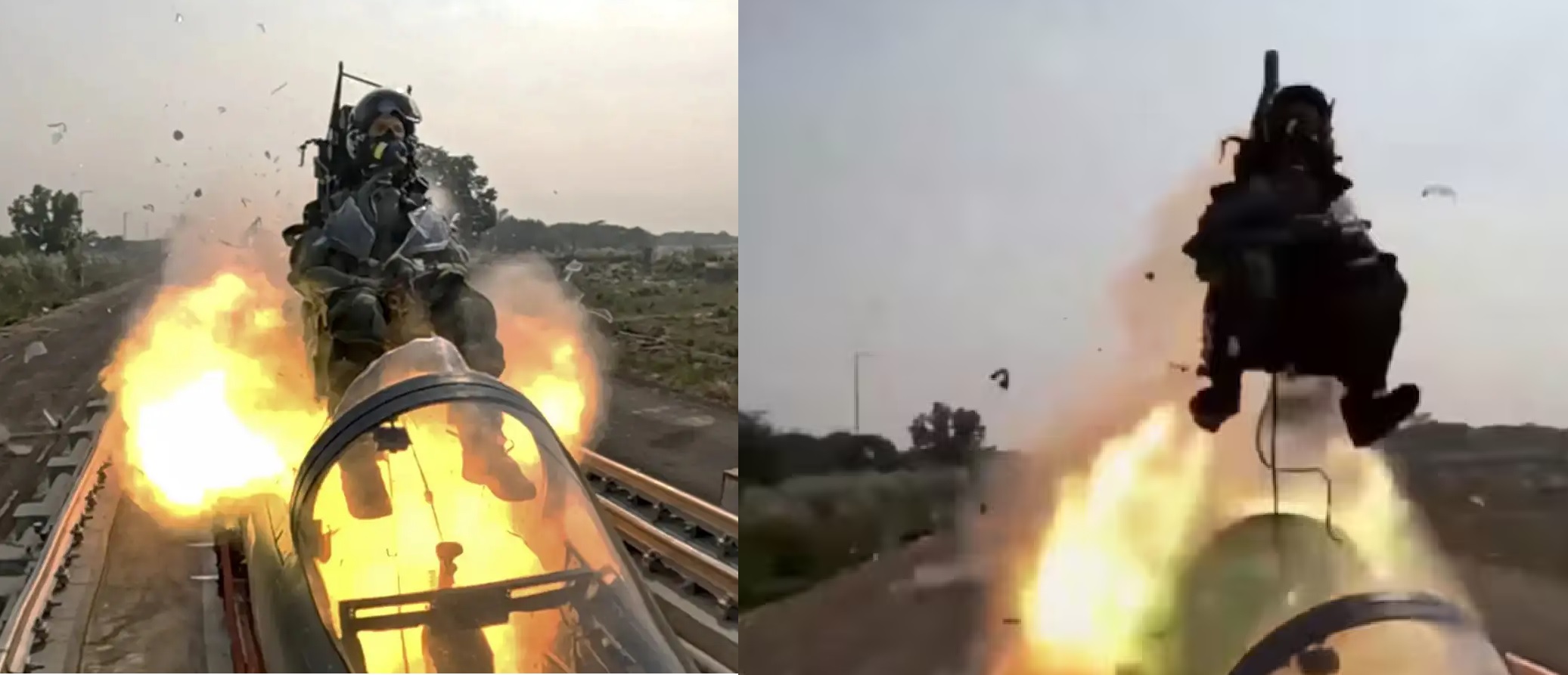
India
In a landmark achievement for India’s defence-engineering ambitions, the DRDO has successfully carried out a high-speed rocket-sled trial of a fighter-aircraft escape system at 800 km/h. The test was conducted at the Rail Track Rocket Sled (RTRS) facility of the Terminal Ballistics Research Laboratory (TBRL) in Chandigarh. The success signals a major step toward reducing India’s dependence on foreign ejection-seat systems — most notably built by legacy players such as Martin-Baker — and bolsters India’s credentials in indigenous safety-system development for future combat aircraft. What happened in the test and why it matters During the trial, engineers used a rocket-propelled sled to accelerate a test rig to a precisely controlled speed of 800 km/h. The test validated three critical elements of a modern fighter-jet escape system: canopy severance, correct ejection sequencing, and full aircrew recovery via parachute descent, as simulated by an instrumented anthropomorphic test dummy. Ground- and sled-based instrumentation recorded the loads, accelerations, and mechanical stresses that a real pilot would endure — data that will feed into final qualification, safety certification, and refinement of the system for real-world deployment. According to the defence ministry, the success of this trial puts India in an “elite club of nations” that possess advanced, in-house capability to test and validate fighter-jet escape systems under high-speed conditions. Why this is special for India The achievement holds importance on multiple fronts. First, it marks a concrete stride toward self-reliance in a critical — and life-saving — technology area. Historically, many of India’s combat aircraft have relied on foreign vendors for ejection seats and escape systems — notably the British company Martin-Baker. Second, by mastering this technology indigenously, India gains the freedom to develop customized escape systems tailored to its own future combat-jet designs, improving strategic autonomy and reducing long-term costs. This also enhances export potential for Indian-built fighter aircraft. Third, this milestone reinforces the broader push under indigenous defence-manufacturing frameworks to reduce dependence on foreign suppliers across weapons, avionics, and safety systems. Where India stands on the global map of escape-system capability Globally, only a handful of nations possess the capability to design, manufacture, and fully test advanced ejection seats and fighter escape systems. For decades, Martin-Baker of the United Kingdom has been the dominant leader in this field, alongside major developers such as Collins Aerospace in the United States, NPP Zvezda in Russia, and specialized aerospace groups in China. In reality, only five countries have developed complete, indigenous ejection-seat systems: the United Kingdom, the United States, Russia, China, and now India, which enters this elite group with its successful high-speed rocket-sled trials and expanding domestic capability. With the latest test validating critical escape-system functions, India effectively joins this exclusive global cohort, proving that it now possesses the engineering depth, advanced testing infrastructure, and technological maturity required to stand alongside the world’s established leaders. What’s Next While the 800 km/h rocket-sled success is a major milestone, experts caution it is only one step before the system can be certified for operational use. Data collected on canopy break patterns, ejection timing, g-forces, and parachute deployment will guide upcoming refinements. Further trials — including zero-zero ejections, high-altitude simulations, and potentially full-scale live ejections — will be conducted before integration into real aircraft. Nevertheless, the road has begun. Officials from the Ministry of Defence, IAF, ADA, and HAL have welcomed the test as a “significant milestone” for India’s indigenous aerospace development. What this could mean for future Indian jets — and exports For upcoming indigenous combat aircraft, having an in-house escape system reduces reliance on foreign vendors and sidesteps export restrictions. It also allows customization for Indian pilots and mission requirements. As India seeks to export aircraft to friendly nations, offering a domestically developed ejection system could become a major selling point, strengthening India’s defence-export profile. A leap toward self-reliance in pilot safety The DRDO’s successful rocket-sled test at 800 km/h marks a turning point for India. By mastering critical escape-system technologies — canopy separation, ejection sequencing, and aircrew recovery — India moves closer to reducing dependence on foreign suppliers like Martin-Baker. This achievement proves India can design and validate complex aerospace safety systems to global standards. As more tests follow, the path toward self-reliance and aerospace export capability grows stronger.
Read More → Posted on 2025-12-02 17:38:59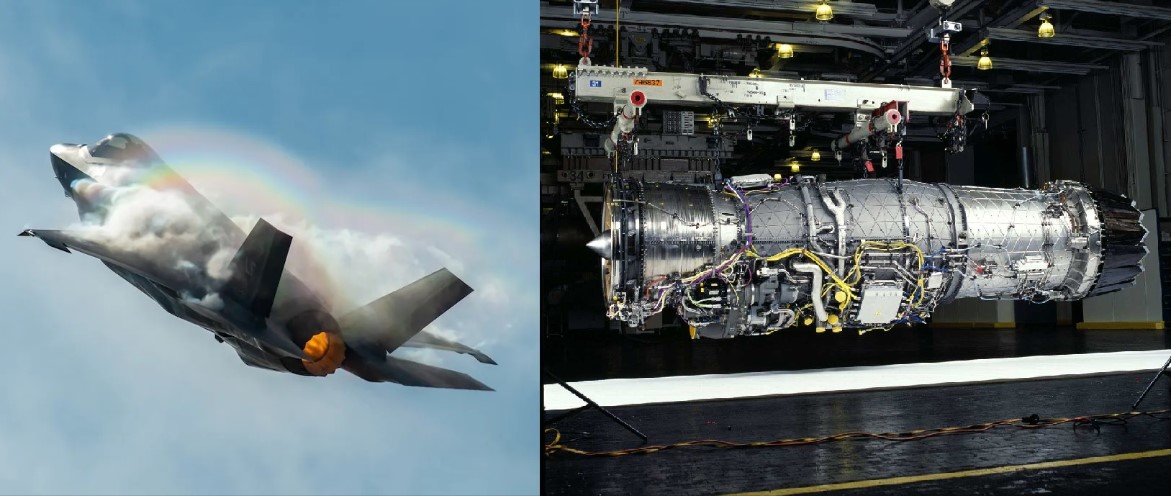
World
Pratt & Whitney, an RTX business, has been awarded a $1.6 billion undefinitised contract action (UCA) to continue sustaining the F135 engines that power all three variants of the F-35 Lightning II, the world’s largest and most internationally connected fifth-generation fighter program. The new award ensures continued engine readiness for both U.S. operators and international customers across the 20-nation F-35 partnership. A Comprehensive Sustainment Package The contract funds a wide spectrum of sustainment activities essential to keeping the global F-35 fleet mission-ready. It covers depot-level maintenance and repair, replenishment of spare parts and material management, as well as propulsion system integration and engineering support. It also provides for software sustainment, including updates to the engine’s health-monitoring tools and performance algorithms. This comprehensive support package is especially important as the global F-35 fleet continues to expand—now numbering more than 1,000 aircraft—ensuring that squadrons maintain high mission-capable rates despite increasing operational demands. Pratt & Whitney: Sustaining Global Readiness “Investing in F135 sustainment keeps allied forces ready to meet current and future threats,” said Kinda Eastwood, vice president of F135 Sustainment at Pratt & Whitney. She added that air forces worldwide rely on the engine’s power and performance for a wide range of operational missions, from deterrence patrols and expeditionary deployments to strike missions and homeland defense. The F135, recognized as the most powerful fighter engine ever fielded, delivers 40,000+ pounds of thrust, advanced thermal management, and high-efficiency performance—all essential for the F-35’s stealth and sensor-fusion capabilities. A Global Sustainment Footprint Pratt & Whitney’s F135 sustainment network is one of the most distributed and complex engine-support infrastructures in the world. It spans: Multiple depot facilities across the United States, Europe and Asia 39 operating bases 12 aircraft carriers and amphibious assault ships equipped for F-35B and F-35C operations This global footprint allows rapid deployment of parts, tools, and technical expertise, enabling high aircraft availability across theaters such as Europe, the Indo-Pacific, and the Middle East. Officials say the distributed model enhances agility, resilience and response time, ensuring that F-35 units remain combat-ready under all conditions. A Growing Fleet and Future Upgrades Pratt & Whitney has already delivered more than 1,300 F135 production engines. With the F-35 program projected to exceed 3,000 aircraft, sustainment costs and reliability upgrades remain politically and strategically important. The company emphasized that the upcoming F135 Engine Core Upgrade (ECU)—a modernization package scheduled to begin entering service later this decade—will be fully compatible with existing sustainment infrastructure. The ECU aims to improve: Thrust performance Thermal management (critical as F-35s gain new sensors and weapons) Fuel efficiency Lifecycle cost reduction Partner nations have welcomed the ECU as a cost-effective and low-risk path to maintain engine performance without pursuing a completely new propulsion system. Why This Contract Matters The sustainment UCA comes at a time when global F-35 deployments are expanding rapidly. Nations such as Japan, the U.K., Australia, Norway, the Netherlands, Italy, Finland, South Korea and others rely heavily on the aircraft’s operational availability to deter regional threats. For the U.S., the F-35 remains the backbone of tactical airpower across the Air Force, Navy, and Marine Corps, making engine support essential for forward operations, carrier deployments, and homeland defense missions. The new contract ensures the stability of the sustainment pipeline, secures spare-part inventories, and supports the transition to next-generation upgrades—all crucial as worldwide demand for F-35 missions intensifies.
Read More → Posted on 2025-12-02 17:04:36
World
Ukraine is confronting a dangerous new escalation in aerial warfare after Russian forces modified Shahed/Geran-2 drones to carry and potentially fire R-60 (AA-8 “Aphid”) air-to-air missiles, a capability never before seen in any modern conflict. The discovery marks the world’s first documented instance of a disposable kamikaze drone being adapted to threaten fighter jets and helicopters. The development underscores how rapidly Russia has advanced its drone program—once considered far behind Ukraine’s—into one of the most aggressive and experimental unmanned warfare systems on the battlefield. Evidence From Wreckage Confirms R-60 Missile Integration The breakthrough emerged when Ukrainian forces examined wreckage from several downed Geran-2 drones.A detailed video released by the Darknode Battalion of the 412th Nemesis Brigade, part of Ukraine’s Unmanned Systems Forces, revealed: A custom launch rail mounted atop the drone A fully integrated R-60 missile Modified wiring and stabilizers to support guided weapon release The R-60 missile—introduced in the 1970s—is a compact, highly maneuverable infrared-guided weapon capable of: Mach 2+ speeds 200–300 m engagement range 3-kg fragmentation warhead Although designed for dogfights between jets, even a single R-60 is deadly enough to destroy helicopters, low-flying aircraft, and slow-moving interceptors. Ukraine Intercepted the Drones — But Calls the Threat Serious Ukraine confirmed that the modified Shahed drones carrying R-60 air-to-air missiles were brought down by Sting interceptor UAVs, a counter-drone system developed by the Ukrainian company Wild Hornets. Despite these successful interceptions, officials warn the development represents a serious and escalating threat. If the Russian modifications prove fully functional, the drones could endanger incoming F-16s, Mirage 2000 fighters, and frontline helicopter units such as the Mi-8 and Mi-24, along with Ukraine’s specialized drone-hunter helicopters. Even if the R-60 cannot reliably lock onto fast jets, the mere presence of a missile-armed drone forces Ukrainian aircraft to fly higher, avoid frontline zones, and operate at larger standoff distances, reducing their tactical flexibility—an outcome that clearly serves Russian interests. Is the System Fully Operational? Experts Divided Although the presence of the R-60 missile on the modified Geran-2 has been confirmed, analysts remain divided about its true operational readiness. The R-60 typically requires precise heat-lock capability, something extremely difficult for a Shahed drone to achieve due to its lack of targeting sensors, radar, or infrared tracking systems. Launching a supersonic weapon from a slow, propeller-driven drone also poses major technical risks, with experts warning that the force of separation could destabilize or destroy the drone. Some analysts believe the modification is intended primarily as a psychological weapon, compelling Ukraine to change its flight patterns. Others argue that Russia may be testing early prototypes aimed at creating drone-based air-defense interceptors or anti-helicopter loitering traps. Regardless of functionality, the adaptation demonstrates Russia’s clear intent to expand drone warfare into air-to-air roles. Ukraine Did It First — And Russia Followed Ukraine itself pioneered missile-armed drones earlier in the war, when its Magura V5 naval drones were equipped with R-73 heat-seeking missiles and later AIM-9 Sidewinders. These armed drones achieved several confirmed kills, bringing down Russian Mi-8 helicopters and Su-30 fighters over the Black Sea during 2023 and 2024. Russia’s decision to adapt its Geran drones with R-60 missiles may be a direct response to Ukraine’s earlier successes, as both sides continue to escalate their technological race. Rapid Russian Drone Evolution: From Weakness to Dominance At the beginning of the invasion, Russia suffered heavy battlefield losses due to Ukraine’s superior drone tactics. Kyiv’s quadcopters, strike drones, and naval drones destroyed armored columns, artillery sites, and supply convoys, giving Ukraine a clear technological lead. But by 2023–2025, Russia launched one of the fastest drone expansion programs in the world, rapidly shifting from vulnerability to dominance. The Kremlin invested massively in the mass production of Geran-2 drones, deployed Lancet loitering munitions, rolled out long-range Italmas and Privet-82 UAVs, built FPV strike swarms with thermal imaging, fielded anti-drone drones, and created a growing fleet of electronic-warfare-resistant UAVs. The introduction of an R-60-equipped Shahed now adds a new anti-air capability to Russia’s expanding unmanned arsenal. A Turning Point in Drone Warfare The appearance of a kamikaze drone carrying an air-to-air missile marks a historic turning point in modern aerial warfare. For the first time, a cheap, expendable UAV could potentially threaten multi-million-dollar fighter jets. Suicide drones, once used mainly for ground strikes, are evolving into multi-role aerial combat platforms. Drone-versus-aircraft engagements, once considered theoretical, are now becoming a real possibility on the Ukrainian battlefield. Both nations already rely heavily on UAVs for reconnaissance, deep strikes, artillery guidance, and maritime operations, but the ability to fire an air-to-air missile pushes drone warfare into a new, more complex and dangerous phase. Analysts warn that future drones may carry miniaturized air-defense systems, anti-helicopter weapons, small radar seekers, electronic-warfare emitters, and even coordinated swarm interceptors. With every new innovation, Ukraine becomes the world’s most active testing ground for next-generation aerial robotics, and the consequences are likely to reshape global air warfare for years to come.
Read More → Posted on 2025-12-02 16:30:30
World
Ukraine’s political environment has entered a period of intense internal strain after MP Artem Dmitruk claimed that President Volodymyr Zelensky has been “ordered to resign within the coming days.” The allegation remains unverified, but it has drawn attention because it comes during a phase in which the government is dealing with corruption investigations, party disputes, and a delayed 2026 budget, creating a climate of administrative difficulty during wartime. Dmitruk, who was expelled from Zelensky’s Servant of the People party earlier in the president’s term, stated that he had received information about a supposed resignation demand and suggested that Zelensky would “wait until the last moment.” He did not specify who allegedly issued this request or present evidence. Because of his political conflicts with the current government and past controversies, analysts have treated his claim as politically motivated. Even so, it has circulated widely because it aligns with Ukraine’s current governance challenges. One of the main issues confronting the administration is the fallout from the Mindich tapes corruption case. The investigation centers on businessman Timur Mindich, formerly connected to Zelensky’s entertainment company, and involves allegations of improper influence over state contracts in the energy and defense sectors. As part of the expanding inquiry, authorities conducted searches at the home of Andriy Yermak, the president’s chief of staff. Yermak later resigned, marking a significant shift within the leadership team responsible for coordinating wartime decision-making and diplomacy. The probe has grown to include multiple layers of suspected financial misconduct, including kickback arrangements and procurement irregularities. Mindich left Ukraine before the searches and has since been listed as wanted by authorities. These developments have increased public scrutiny over government operations and raised expectations for stronger accountability. Parallel to the corruption issues, Zelensky’s governing faction, Servant of the People, is facing internal disagreements. MPs have expressed differing views on policy, appointments, and the handling of corruption cases. This fragmentation has reduced the administration’s ability to reliably pass legislation. The impact is particularly visible in the difficulty surrounding the approval of the 2026 state budget. Although the draft budget passed its initial stage, final approval has been delayed due to disagreements within the ruling faction and demands from opposition parties for adjustments to funding priorities and oversight mechanisms. Officials have emphasized that timely approval is necessary to maintain defense spending and essential government functions. Another contributing factor to the tense atmosphere is the legal status of the presidency. Zelensky’s regular five-year term ended in May 2024, but Ukraine’s constitution does not allow national elections during martial law. As a result, he remains in office until elections can legally be held. While this arrangement follows constitutional requirements, it has still become a point of debate among political opponents, adding to the broader context of criticism and speculation. Together, these developments explain why Dmitruk’s statement has received visibility despite the absence of supporting evidence. The presidency is currently navigating corruption investigations, leadership changes, parliamentary disputes, and budget delays, creating a period of administrative pressure. Government representatives have dismissed rumors about a planned resignation, noting that Zelensky continues his duties and maintains regular engagement with domestic institutions and international partners. The coming weeks are expected to focus on whether the government can finalize the 2026 budget, appoint a new chief of staff, and manage the ongoing investigations effectively. While the claim that Zelensky has been ordered to resign remains unconfirmed, the circumstances that allowed such statements to gain attention reflect the governance challenges Ukraine is working to address.
Read More → Posted on 2025-12-02 16:07:25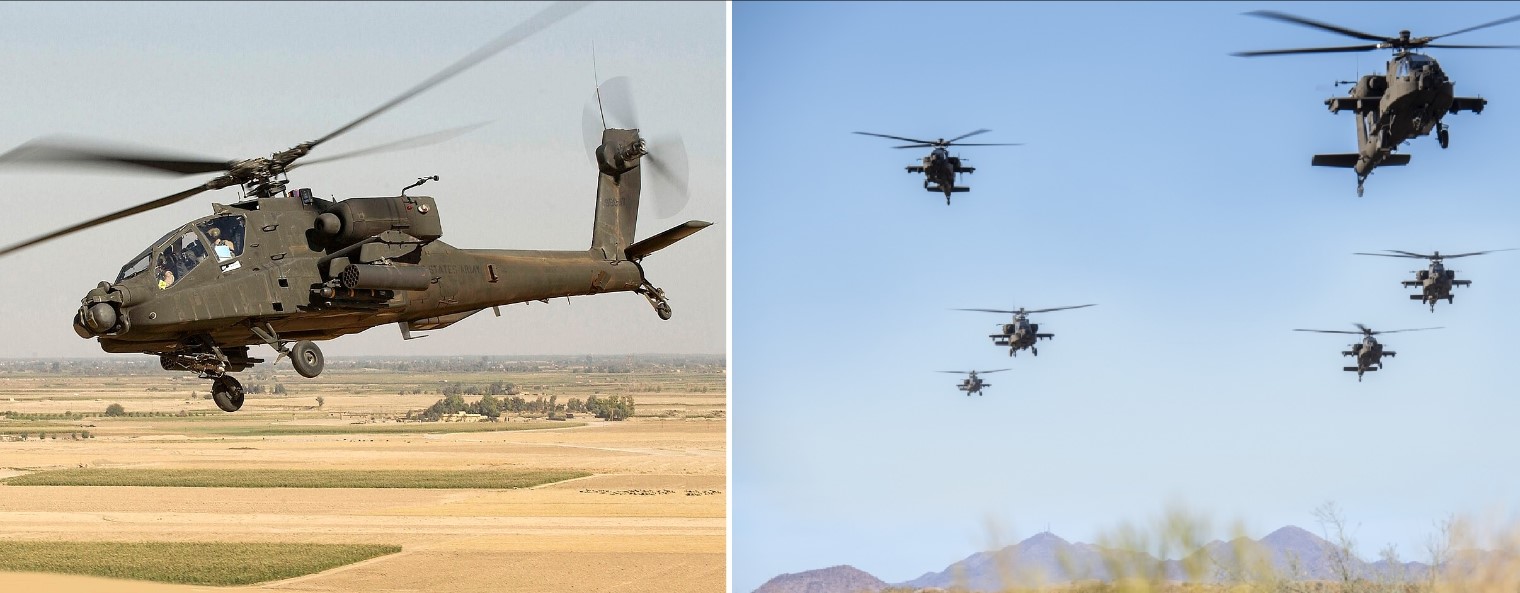
World
Poland has formally locked in a massive production contract for 96 AH-64E Apache Guardian attack helicopters, cementing its place as the largest Apache operator outside the United States and one of NATO’s most heavily armed land forces. The deal, worth about $10 billion when weapons, training, and support are included, is a cornerstone in Warsaw’s fast-tracked military buildup following Russia’s full-scale invasion of Ukraine in 2022. From US Approval To Signed Contract The Apache story for Poland began in August 2023, when the US State Department approved a potential Foreign Military Sales (FMS) package including 96 AH-64E Apaches and a full ecosystem of radars, engines, weapons, training, and logistics, with an estimated value of $12 billion . This cleared the political and legal path in Washington for the helicopter sale. On 13 August 2024, Poland’s Deputy Prime Minister and Defence Minister Władysław Kosiniak-Kamysz announced that Warsaw had signed the Letter of Offer and Acceptance (LOA) for 96 AH-64E Apache Guardians, describing it as a transformative step for the Polish Armed Forces. The deal was publicized at the 56th Inowrocław-Latkowo Air Base, headquarters of the 1st Land Forces Aviation Brigade, which is expected to become one of the key Apache hubs. The US Army then awarded Boeing a foreign military sales production contract in late November 2025, valued at nearly $4.7 billion, covering Apache helicopters for several international customers, including the full batch of 96 for Poland. This production contract translates the earlier political approvals into firm manufacturing orders. Delivery Timeline: 2028 And Beyond According to Polish government statements and Boeing’s official release, deliveries are scheduled to begin in 2028 and are expected to continue into the early 2030s, with some Polish sources indicating a working window of 2028–2032 for the full fleet to arrive. To avoid a capability gap and accelerate training, Poland has already signed a separate lease deal for eight AH-64D Apache helicopters from the US Army. That lease, reportedly worth about $300 million, was concluded in early 2025 and allows Polish pilots, ground crews, and commanders to gain hands-on experience with the Apache platform years before the first new-build AH-64E is delivered. Boeing notes that Poland has already started to train pilots and maintainers and is integrating Apache-related infrastructure into its air bases and logistics system, ensuring that the aircraft can enter service with minimal delay once they arrive from the production line in Mesa, Arizona. Why The AH-64E Matters For Poland The AH-64E Apache Guardian is the latest and most advanced variant of the iconic Apache family. Compared to older models, the E-version features upgraded GE T700-701D engines, new composite main rotor blades, and a fully modernized digital architecture. These upgrades improve hot-and-high performance, flight range, and payload, while also enabling faster data processing and integration with other platforms. The Polish Apaches will be equipped with the standard US-export suite of sensors and weapons, including the mast-mounted Longbow fire control radar, advanced electro-optical systems, and the ability to fire AGM-114 Hellfire or AGM-179 JAGM precision missiles, unguided and guided rockets, and the 30 mm chain gun. In addition, the AH-64E is designed for network-centric warfare: it can share target data over tactical datalinks and cooperate with unmanned aerial vehicles, allowing the helicopter to direct strikes without exposing itself directly. For Poland, these capabilities are intended to mesh with other new acquisitions such as M1A2 Abrams and K2 Black Panther main battle tanks, HIMARS and K239 Chunmoo rocket artillery, and new air-defence systems like Patriot and Narew. Together, they are meant to create a layered, mobile, high-firepower deterrent along NATO’s eastern flank. Largest Apache Operator Outside The US Once the 96 helicopters are delivered, Poland will become the largest Apache operator outside the United States, surpassing long-time users such as the United Kingdom, Israel, and Japan. With this fleet size, Poland will also rank as the second-largest Apache user overall, behind only the US Army. This scale matters for several reasons. First, it allows Warsaw to distribute Apaches across multiple brigades and regions, while maintaining training, test, and reserve pools. Second, it creates an economic case for deeper industrial cooperation, including potential Polish participation in maintenance, repair, and overhaul (MRO) activities and supply-chain work related to Apache components. Boeing has already highlighted Poland as the 19th global operator and has signalled interest in expanding partnerships with Polish industry as part of the wider deal. Strategic Signal To Moscow And NATO Beyond the technical and financial details, the Apache contract sends a clear political message. Since 2022, Poland has positioned itself as one of Ukraine’s most vocal supporters and as a frontline state preparing for high-intensity conflict with Russia should deterrence fail. Large-scale purchases of tanks, artillery, air-defence systems, and now advanced attack helicopters are intended both to bolster Poland’s own security and to reassure NATO allies that the eastern flank will be heavily defended. At the same time, the deal underlines the deepening defence-industrial ties between Warsaw and Washington. By choosing the AH-64E Apache Guardian and integrating it with US-origin tanks, air-defence batteries, and command-and-control networks, Poland is binding its military future ever more tightly to US technology and logistics. For the United States, the contract reinforces a key NATO partner, expands the global Apache community, and sustains production lines that are vital to American and allied aviation. With deliveries starting in 2028 and running into the next decade, the Apache fleet will form a central pillar of Poland’s land-attack and anti-armour capability for many years to come — a long-term investment in deterrence at a time when Europe’s security environment remains highly unstable.
Read More → Posted on 2025-12-02 15:51:15
World
Islamabad — Former Pakistani Prime Minister Imran Khan remains alive, according to his sister Uzma Khanum, who visited him on Tuesday at Adiala Jail in Rawalpindi. After a rare 20-minute meeting, she told reporters that Mr. Khan appeared physically fine — “Alhamdulillah … he is all right” — but he was visibly angry and distressed due to what she described as “mental torture.” He is reportedly confined to his cell almost all day, is allowed outside only briefly, and is denied any communication with family or aides. Uzma Khanum blamed the alleged mistreatment on Asim Munir, Pakistan’s Army Chief, asserting that the harsh conditions within the jail are being imposed under his orders. What Sparked the Rumours and Why They Spread Globally In recent days, widespread rumours circulated on social media and some foreign media outlets claiming that Imran Khan had died inside custody. These claims gained traction because his family had not seen or spoken to him for several weeks, fueling fears over his safety and sparking speculation. The unverified reports began — according to media sources — after a post by a handle named “Afghanistan Times” claiming that Khan had been “murdered” in jail and his body moved out of Adiala. The absence of verifiable evidence, combined with a strict ban on family visits and lawyer access, created an “information vacuum.” This vacuum became fertile ground for rumours, amplified by anxious supporters and international attention. Some supporters even claimed the jail had placed Khan in a so-called “death cell,” raising fears that a possible assassination was being covered up. As the rumours spread internationally, images and videos — some unverified — reportedly showing a man on a stretcher circulated online, further fuelling panic. Official Response & Conflicting Claims While rumours of death and disappearance circulated, officials at Adiala Jail rejected the claims as “baseless.” They affirmed that Imran Khan was still in the facility, in good health, and receiving medical care. They denied any transfer or secret removal from the jail. Officials also claimed that the reports about his deteriorating health or death were unfounded, and stressed that since being jailed in August 2023, Khan has continued to receive regular checkups. On the political side, his party, Pakistan Tehreek-e-Insaf (PTI), had repeatedly demanded court-ordered weekly meetings and access to his personal physician. They accused prison authorities of deliberately blocking these rights, intensifying fears that Khan’s detention conditions were designed to isolate and possibly harm him. Reaction in Pakistan : Protests, Demands, and a Surge in Public Anxiety The rumours and prolonged lack of clarity triggered immediate public backlash. Massive protests erupted in Islamabad and Rawalpindi, demanding proof of life and transparency about Khan’s condition. Supporters and party members criticised the authorities for what they call “disappearance tactics.” Ahead of the sister’s visit, the streets near Adiala Jail were sealed, and local authorities imposed restrictions to prevent large gatherings. Demonstrations continued nonetheless, with protestors demanding an independent investigation into his detention conditions and calling for his release. Meanwhile, international human-rights observers and rights groups expressed deep concern over the lack of transparency and prolonged solitary confinement, urging authorities to allow immediate family and legal access to Khan. Political Fallout and Questions About Rule of Law Imran Khan — once a globally recognised cricket icon who led Pakistan to a World Cup victory and later served as Prime Minister — remains a central figure in Pakistan’s political landscape. His supporters view his imprisonment as politically motivated, designed to sideline dissent against the military and ruling establishment. The conflicting narratives — “he is alive and in good health” vs. “he is isolated, tortured, and maybe worse” — have eroded public trust in official statements and amplified fear that the country’s democratic institutions may be under strain. Given the widespread international attention and domestic unrest, how the state handles Khan’s custody, transparency demands, and the ongoing protests could shape Pakistan’s political trajectory. The rare visit by Uzma Khanum has confirmed that former PM Imran Khan is alive, but serious allegations of mental torture, isolation, and denial of basic rights in custody have surfaced. The whirlwind of death rumours, social-media panic, and protests shows how fragile trust has grown between citizens and institutions. With both the government and Khan’s camp issuing starkly different accounts, the crisis underscores deeper tensions in Pakistan — between power, accountability, and the fundamental right to humane treatment under the law.
Read More → Posted on 2025-12-02 15:03:44
Science
Australia has issued an urgent safety alert over widely-used weight-loss injections such as Ozempic and Mounjaro, after regulators linked the medications to depression, unusual mood changes and suicidal thoughts. The warning comes amid claims on social media that more than 5 lakh Australians who used these jabs are now considered “at risk,” prompting public anxiety even though official case numbers are far smaller. At the same time, the very same drugs have become the highest-selling weight-loss medicines in India, generating nearly ₹100 crore in sales in October alone — underscoring the scale of global dependence on GLP-1-based injections. Australia Tightens Safety Rules After Suicidal-Risk Reports The alert was issued by Australia’s Therapeutic Goods Administration (TGA), which has added new mental-health warnings to Ozempic, Wegovy, Saxenda, Trulicity and Mounjaro — all part of a rapidly growing class of diabetes and obesity medicines. According to the TGA’s own monitoring system, Australia has recorded a small but concerning series of cases among GLP-1 drug users, including: Reports of suicidal thoughts A few suicide attempts A handful of completed suicides Although these numbers are limited when compared to the hundreds of thousands of Australians using the drugs, authorities say even rare signs of self-harm require immediate caution. Doctors in Australia have been instructed to watch patients closely for sudden mood changes, depression or suicidal ideation, especially when increasing doses or when prescribing the injections to people with existing mental-health conditions. India Becomes a Hotspot: How These Drugs Are Sold Here India has seen an unprecedented surge in demand for the same medicines now under scrutiny abroad. Market trackers report that: Mounjaro became India’s highest-selling drug by value in October, crossing ₹100 crore in a single month. India’s anti-obesity drug market is expanding rapidly and is expected to cross ₹2,000–3,000 crore within the next two years. In India, these drugs are available under the following names: Semaglutide Brands (Ozempic/Wegovy family) Ozempic – Injected weekly for diabetes Wegovy – For obesity and weight management Rybelsus – Oral semaglutide tablets Tirzepatide Brands (Mounjaro family) Mounjaro KwikPen – Weekly injection Yurpeak – Indian-market brand under Eli Lilly–Cipla partnership India’s approvals for these drugs come from the Central Drugs Standard Control Organisation (CDSCO), which has permitted their use for diabetes and medically supervised weight-loss. Major pharmaceutical companies involved include Novo Nordisk (makers of Ozempic, Wegovy, Rybelsus) and Eli Lilly (makers of Mounjaro and distributor of Yurpeak via Cipla). How These Drugs Can Harm Human Health Doctors caution that although GLP-1 and dual-hormone weight-loss drugs are medically effective, they also carry significant health risks, particularly when used without proper supervision. The most common problems begin in the digestive system, where patients frequently experience nausea, vomiting, diarrhoea, constipation, stomach pain and a sharp loss of appetite. These symptoms can lead to dehydration, which places additional stress on the kidneys. International regulators have also recorded more serious complications involving the pancreas and gallbladder. Cases of acute pancreatitis, gallbladder infections and gallstone formation have been reported in multiple countries, with some patients requiring hospital treatment. Alongside this, medical guidance highlights the potential for acute kidney injury, worsening diabetic retinopathy and a possible thyroid-tumour signal observed in laboratory animals. Because of this, people with a personal or family history of thyroid cancer are advised to avoid these medicines altogether. Another growing concern is the loss of muscle mass and essential nutrients. Since these drugs sharply reduce appetite, rapid weight loss can lead to physical weakness, fatigue and nutritional deficiencies unless users follow a monitored diet and exercise plan. The most sensitive issue now emerging involves mental health. Reports from Australia, the United States and Europe have prompted regulators to monitor for depression, sudden mood changes and suicidal thoughts. Although no health authority has confirmed that the drugs directly cause suicidal behaviour, the pattern of real-world cases has led to strict precautionary warnings. Experts suggest that mood disturbances may occur in people with underlying depression, anxiety disorders, body-image issues, eating-disorder histories, or individuals undergoing the hormonal and psychological stress of rapid weight loss. As of now, the position of Australia’s TGA, the U.S. FDA and Europe’s EMA remains consistent: there is no proven causal link between GLP-1 drugs and suicidal behaviour, but the need for close monitoring, early detection and immediate reporting of any mental-health changes is essential. Who Allowed These Drugs to Be Sold? In Australia, these weight-loss and diabetes drugs are approved and monitored by the Therapeutic Goods Administration (TGA), which has recently added updated warnings addressing potential mental-health risks and, in the case of Mounjaro, concerns about reduced contraceptive effectiveness due to delayed gastric emptying. In India, the medicines fall under the oversight of the Central Drugs Standard Control Organisation (CDSCO), which operates within the Union Health Ministry. The agency has authorised several brands for medical use, including Ozempic, Wegovy, Rybelsus, Saxenda, Trulicity, Mounjaro and Yurpeak, covering both semaglutide-based and tirzepatide-based treatments. These products are manufactured by major global pharmaceutical companies. Novo Nordisk produces the semaglutide family of drugs, while Eli Lilly is responsible for the tirzepatide range. In India, Cipla partners with Eli Lilly to distribute tirzepatide under the brand Yurpeak. Across all markets, these medications remain strictly prescription-only, requiring proper medical supervision and regular monitoring to ensure safe and appropriate use. A Growing Global Debate The explosive rise of weight-loss injections has created a global dilemma: Millions are turning to these drugs for rapid transformation. Regulators are scrambling to keep up with real-world safety data. Doctors warn against “cosmetic misuse” without proper monitoring. For now, health authorities worldwide — including India’s — urge users to immediately report any mood changes, depression or suicidal thoughts, and to seek emergency help if needed. These medicines, experts emphasise, are powerful metabolic drugs, not lifestyle products.
Read More → Posted on 2025-12-02 14:43:10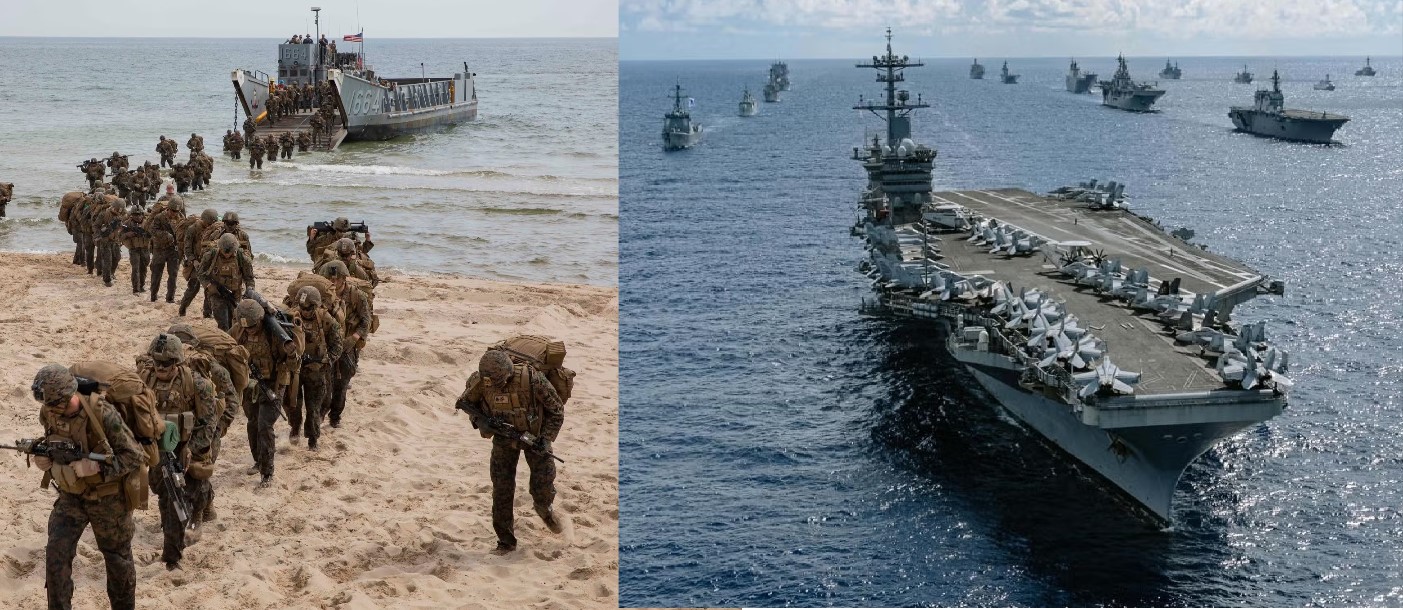
World
The United States has sent 11 warships, about 15,000 troops, and the aircraft carrier USS Gerald R. Ford to the waters near Venezuela, according to a December 1 Newsmax report. This large movement marks a serious increase in U.S. naval activity in the Caribbean and has raised concern in Venezuela and across the region. What’s in the Water The central element of the deployment is the USS Gerald R. Ford, the most advanced and powerful aircraft carrier in the U.S. Navy. According to publicly available details, the Ford strike group includes more than 4,000 sailors and carries a full complement of aircraft — over 100 tactical jets and support planes — giving the U.S. the capacity for rapid air operations. In addition to the carrier, the broader fleet reportedly includes multiple destroyers, cruisers, amphibious ships, and support vessels, creating a formidable naval presence. Satellite imagery shows the Ford strike group operating in Caribbean waters close to the U.S. Virgin Islands, putting it well within reach of Venezuelan coastlines. The roughly 15,000 troops include marines embarked on ships, personnel at nearby bases (including a reactivated Roosevelt Roads base in Puerto Rico), and support staff. The U.S. has also reactivated Roosevelt Roads Naval Station in Puerto Rico as part of the logistics backbone for ongoing operations. Official Justification: Counter-Narcotics, Regional Security The U.S. government frames this build-up largely as part of a broad campaign to target drug trafficking from Venezuelan waters and “transnational criminal organisations.” The deployment is said to bolster the capacity to monitor maritime traffic, intercept narcotics shipments, and carry out operations against suspected trafficking vessels. This campaign is officially designated Operation Southern Spear. According to public documents, it aims to “crush the cartels, stop the poison and keep America safe.” As part of the operation, the U.S. Navy, Coast Guard, and other agencies are coordinating surveillance, interdiction, and — when deemed necessary — lethal force against boats suspected of carrying illicit drugs. Strategic Undertones : A Posture with Broader Implications Although U.S. officials emphasize counter-narcotics, analysts and critics argue that the scale and proximity of the deployment signal broader strategic aims, potentially including pressure on the Venezuelan government led by Nicolás Maduro. The carrier’s capacity to launch sustained air operations, combined with the support fleet and ground forces, gives the U.S. the option for rapid military strikes. Observers note that this is the largest U.S. naval presence in the Western Hemisphere in decades — with some comparing it to the scale of Cold War-era deployments. Moreover, the rapid reactivation of military infrastructure such as Roosevelt Roads in Puerto Rico suggests the U.S. is establishing a semi-permanent staging ground — not simply a temporary mission — hinting at long-term geopolitical intent. Response from Venezuela and Regional Fallout The government in Caracas has sharply condemned the deployment, viewing it as a provocation and potential prelude to aggression. Venezuelan officials have accused the U.S. of preparing a “maritime siege” and indicated readiness for retaliation if sovereignty is violated. Regional actors have also expressed concern. The presence of U.S. warships and marines near islands and nations in the Caribbean has ignited diplomatic unease. Some countries fear being drawn into an escalating confrontation, potentially undermining regional stability. What’s Next U.S. military and political authorities have not ruled out further actions. According to recent reporting, the U.S. is “preparing additional operations” in the coming days, possibly including covert actions or strikes should Washington decide to escalate. Yet the human, political, and legal risks are substantial. Any miscalculation — whether a maritime confrontation, accidental strike, or broader intervention — could trigger a wider conflict in the region, drawing in not only Venezuela but neighboring Caribbean nations. For now, the world watches as the largest U.S. naval force in decades looms near Venezuela — its intentions proclaimed as anti-narcotics and regional security, but its presence raising fundamental questions about sovereignty, intervention, and the future of American influence in Latin America.
Read More → Posted on 2025-12-02 14:08:08
India
India’s state-run refiners – Indian Oil Corporation (IOC) and Bharat Petroleum Corporation Ltd (BPCL) – have resumed buying non-sanctioned Russian crude for January 2026 delivery, taking advantage of widening discounts even as U.S. sanctions squeeze Moscow’s major oil companies and banking channels. According to industry sources, IOC and BPCL have secured several January cargoes from new, non-sanctioned trading entities at about $5 per barrel below Dated Brent, compared with a discount of roughly $3 per barrel a month earlier. The step-up in discounts, combined with ample availability of non-sanctioned barrels, has made Russian crude attractive again despite growing geopolitical risk. At the same time, India’s overall Russian oil intake is expected to remain capped at under 600,000 barrels per day, roughly one-third of the volumes it was regularly importing earlier this year. That reflects a cautious recalibration rather than a full return to the earlier dependence on Russian crude. India’s shift after U.S. sanctions on Rosneft and Lukoil The latest move comes in the wake of new U.S. sanctions imposed in October 2025 on Russian oil giants Rosneft and Lukoil – companies that previously supplied a large share of India’s Russian imports. In response, Indian refiners sharply reviewed and cut their purchases, fearing that any direct linkage to sanctioned entities could trigger financial penalties or disrupt shipping, insurance and payments. Before these sanctions, India had become the biggest buyer of seaborne Russian crude, importing around 1.7 million barrels per day in the first nine months of 2025, mostly on the back of deep discounts after the Ukraine war. As Washington tied part of its 50% tariffs on Indian exports explicitly to India’s continued purchases of Russian oil, New Delhi faced growing pressure to scale down direct exposure to sanctioned Russian firms as part of broader trade negotiations with the United States. IOC leads the way via non-sanctioned entities IOC, India’s largest refiner, has been the first to test a new path: buying Russian crude only from non-sanctioned entities. At the end of October, IOC quietly bought five cargoes of Russian oil for December arrival from such intermediaries, after earlier cancelling seven or eight cargoes that were linked to subsidiaries of sanctioned companies. The new January deals deepen that strategy. IOC has continued to pick up non-sanctioned Russian barrels for December and January, while BPCL – which had stayed away from Russian oil in recent weeks – has now secured January cargoes too, signaling a limited but coordinated state-sector comeback to Russian crude. Other refiners remain more cautious. Mangalore Refinery and Petrochemicals (MRPL) and HPCL-Mittal Energy are still avoiding Russian crude altogether, while Reliance Industries has said Russian oil processed after 20 November 2025 will be directed to the domestic market only, not exports – a move widely read as an effort to minimize sanctions exposure. Nayara Energy, part-owned by Rosneft, continues to focus heavily on Russian feedstock. How the discounts and payments work The latest Russian barrels have been booked at about $5 per barrel below Dated Brent, a wider discount than last month and a crucial cushion for Indian refiners facing volatile global prices and higher export tariffs into the U.S. After factoring in freight, Russia is estimated to net roughly $40–$45 per barrel on these sales, well below pre-war levels but still enough to keep flows going. Payments are being structured through UAE dirhams and U.S. dollars, using banking channels that are comfortable clearing transactions involving non-sanctioned sellers and vessels that pass India’s tightened compliance checks. For Indian refiners, the combination of discounted crude and manageable compliance risk helps protect refining margins and, indirectly, domestic fuel prices. For Russia, the arrangement preserves a key outlet for its crude, though at the cost of steep price discounts and more complex logistics. Ports, insurance scrutiny and the “shadow fleet” Even with non-sanctioned sellers, operational risk has risen. At the end of November, a cargo of Russian ESPO crude destined for IOC on the tanker Tiger 6 was delayed off Paradip port because Indian authorities had to verify insurance documents from Russian insurer Soglasie, which is outside the traditional International Group of P&I Clubs but is on India’s approved list. The delay highlighted New Delhi’s stricter checks on older “shadow fleet” tankers and non-standard insurers, introduced earlier this year to prevent forged documents and reduce environmental and sanctions-related risk. These rules now apply equally to non-sanctioned Russian cargoes, adding another layer of caution to every deal. Balancing Washington, Moscow and energy security The Trump administration has repeatedly criticized India’s Russian oil purchases and tied part of the broader U.S.–India trade negotiation to how quickly New Delhi winds down its dependence on Moscow. Russian crude remains a “pain point” in talks, even as Washington sees India as a key strategic partner in the Indo-Pacific. From Moscow’s side, the Kremlin insists that the recent decline in India’s Russian oil imports is “temporary”, and has signalled that Russia will work to keep India as a top customer by offering discounts, flexible payment options and alternative shipping and insurance arrangements. Caught between these pressures, New Delhi is trying to strike a middle path: Comply with the letter of U.S. sanctions by avoiding direct deals with blacklisted companies, Keep Russian barrels in the mix via non-sanctioned intermediaries to safeguard energy security and price stability, and Gradually diversify back towards Middle Eastern suppliers like Saudi Arabia as sanctions tighten and discounts shrink. What this means going forward For now, India’s decision to pick up non-sanctioned Russian oil for January at wider discounts signals a pragmatic, limited comeback rather than a full reversal of earlier cuts. Indian consumers benefit from cheaper crude that helps contain pump prices and inflation. Russia retains a vital outlet for its oil, but at lower netbacks and under more complex, risk-laden trade structures. The U.S. and its allies face a more complicated enforcement landscape, where the focus shifts from headline bans on certain companies to the murky world of intermediaries, shipping and insurance. How long this delicate balance holds will depend on future U.S. sanctions decisions, the depth of Russian discounts, and India’s success in diversifying supplies without sacrificing its core priority: secure, affordable energy for a fast-growing economy.
Read More → Posted on 2025-12-02 13:22:35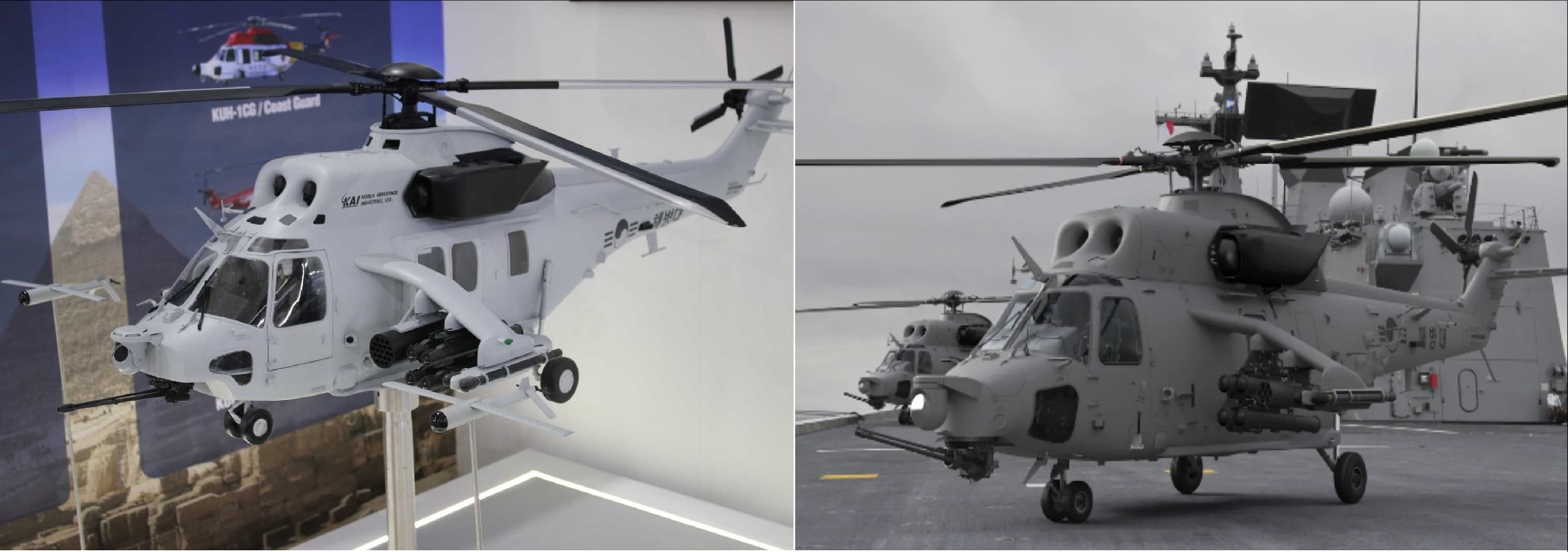
World
Korea Aerospace Industries (KAI) used the stage of EDEX 2025 to unveil, for the first time in a unified public display, the MAH-1 Marine Attack Helicopter integrated with its Air Launched Effect (ALE) drone concept. The demonstration reflected a significant shift in South Korea’s approach to manned-unmanned teaming (MUM-T) as the Marine Corps moves toward a more independent, network-centric aviation force tailored for naval and amphibious warfare. A New MUM-T Capability for Amphibious Warfare KAI’s presentation showed the MAH-1 and ALE as a combined operational package—an approach increasingly adopted by the United States, Japan, and NATO forces to counter coastal air-defense systems and threats in island chains or littoral chokepoints. The ALE drone, launched directly from the helicopter and controlled by the crew, extends reconnaissance and strike reach without exposing the manned aircraft to front-line fire. With a 2 km operating altitude, 200 km/h speed, nearly two-hour endurance, and compact 1.20 m × 2.50 m × 0.50 m dimensions, it can scout ahead of the formation, conduct real-time target confirmation, and perform swarm-enabled surveillance or kinetic tasks.Interactive diagrams at the booth illustrated bidirectional data links, enabling the ALE to feed sensor data back to the MAH-1 for faster threat detection, landing zone identification, and maritime target acquisition. This pairing is particularly relevant as the South Korean Marine Corps prepares for ship-to-shore movement, contested landings, and coastal security missions from platforms like the Dokdo-class amphibious assault ships. MAH-1: A Heavily Modified Marineon Optimized for Attack Missions The MAH-1 Marine Attack Helicopter is derived from the KUH-1 Surion family—South Korea’s first domestically developed utility helicopter program, launched in 2006 with Airbus cooperation. Drawing on this lineage, the MAH-1 features: Crashworthy airframe and self-sealing fuel tanks Digital glass cockpit and four-axis automatic flight control system Integrated Health Usage Monitoring System (HUMS) Twin T700-701K engines, each producing over 1,800 shp with Full Authority Digital Engine Control (FADEC) Salt-resistant surface treatments and folding main rotor for shipboard deployment Survivability systems including ballistic protection, IR-suppressed exhausts, missile/laser/radar warning receivers, and countermeasure dispensers Maritime adaptations such as flotation equipment and corrosion-resistant components In terms of weapons, the MAH-1 is outfitted with: Chin-mounted turreted three-barrel 20 mm gun Air-to-air missiles (e.g., Mistral) Air-to-ground precision missiles (e.g., Cheongeom) 2.75-inch guided or unguided rockets Six wing stations for diverse load configurations The helicopter features a maximum takeoff weight of 8.7 tons, total length 19 m, width 6.1 m, and height 5 m, making it one of the largest Marine Corps-oriented attack helicopters currently in development outside the U.S. and China. From Concept to Flight: A Rapid Development Timeline Momentum accelerated in October 2022, when the South Korean Defense Acquisition Program Administration (DAPA) awarded KAI a formal contract to build an armed Marineon derivative. Key development milestones include: 2024 – First prototype completion December 2024 – Maiden flight lasting roughly 20 minutes, validating basic handling 2025 – Day and night firing tests with Cheongeom anti-tank missiles, Mistral air-to-air missiles, unguided rockets, and the 20 mm gun 2025–2026 – Ongoing maritime environmental trials, expanded weapons integration, hot/cold-weather tests Late 2026 – Target date for development completion The pace mirrors South Korea’s urgency to equip its Marine Corps with platforms suitable for rapid island reinforcement, amphibious assault escort, and shipborne close air support. Strengthening South Korea’s Independent Marine Aviation Arm For decades, the Republic of Korea Marine Corps relied on Army or Navy aviation assets. That changed in the 2010s with the introduction of the MUH-1 Marineon transport helicopter, 30 of which have already been delivered. The Marineon provides the lift capability; the MAH-1 now forms the dedicated attack squadron, with a planned fleet of 24 aircraft. This structure—two assault helicopter squadrons supported by one attack squadron—aligns with Seoul’s long-term plan for a self-sufficient Marine Corps aviation brigade. Interestingly, the MAH-1 retains a modified cabin derived from the Surion’s utility design, providing limited secondary troop transport or light cargo capability—an unusual but strategically helpful trait for expeditionary scenarios. The introduction of ALE drones adds another layer of capability, offering deep reconnaissance, electronic sensing, and distributed lethality across maritime approaches. Strategic Context: South Korea’s Push for Littoral Dominance The MAH-1 and its Air Launched Effect drone form part of a broader South Korean strategy aimed at strengthening control over its littoral environment and ensuring rapid response capabilities in contested coastal regions. A key priority is countering North Korean coastal missile batteries and infiltration units, which pose persistent threats along narrow maritime approaches. The system also supports the urgent requirement to reinforce offshore islands such as Baengnyeong-do and Yeonpyeong-do, where the Marine Corps must be able to deploy combat aviation assets quickly during crises. The MAH-1/ALE combination is being developed to operate seamlessly with future South Korean LPH-II amphibious ships, giving the Marine Corps a more potent aviation arm for ship-to-shore operations. At the same time, the program advances Seoul’s long-term push to build indigenous aerospace capabilities and reduce dependence on foreign suppliers for critical defense technologies. Globally, only a handful of countries—including the United States, the United Kingdom, and China—are pursuing comparable helicopter-launched unmanned systems. With the MAH-1 and ALE, Korea Aerospace Industries is positioning South Korea among the emerging leaders in next-generation amphibious assault aviation, marking a significant step forward in the country’s maritime defense posture. A Major Step Toward Future Naval Aviation The public unveiling of the MAH-1 and ALE drone at EDEX 2025 underscores South Korea’s evolution toward a modern, highly networked Marine Corps capable of conducting complex littoral operations. By merging a robust attack helicopter with forward-deployed unmanned systems, KAI has introduced a capability that could reshape the tactical playbook for shipborne aviation, coastal strike, and amphibious warfare in East Asia. As testing continues through 2026, the MAH-1 is set to become one of the most advanced indigenous attack helicopters tailored specifically for maritime missions—an asset designed not merely to support amphibious forces, but to extend their reach, survivability, and operational autonomy in contested environments.
Read More → Posted on 2025-12-02 12:27:25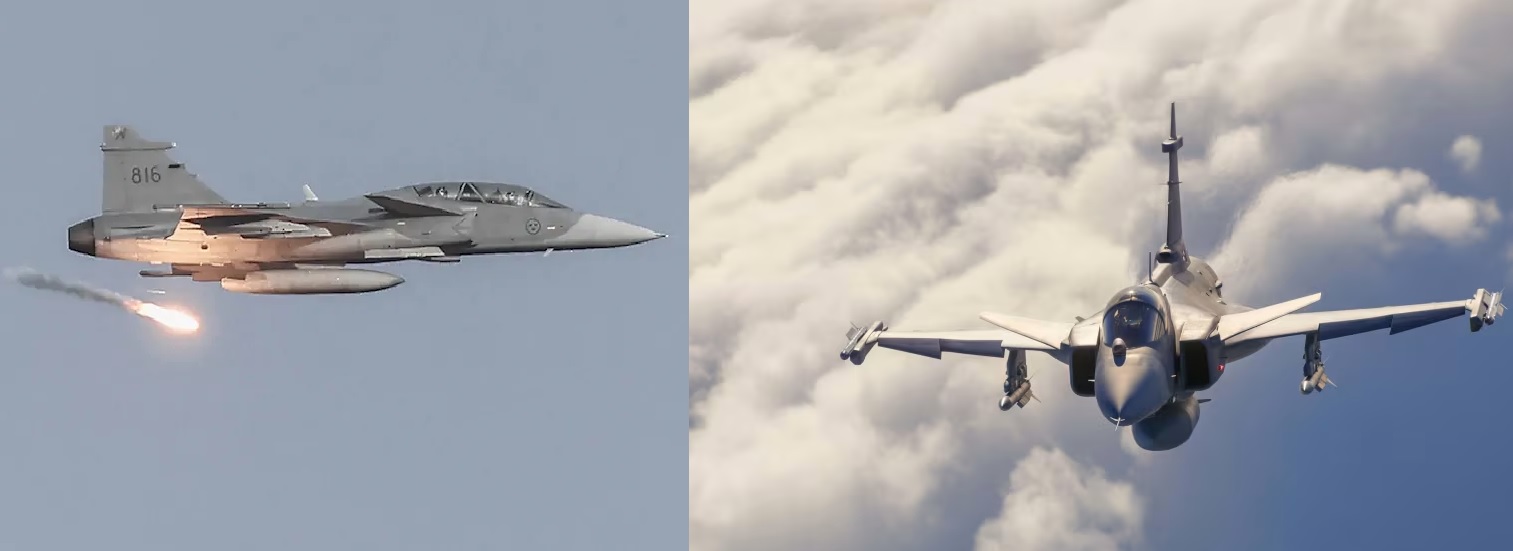
World
Sweden’s Defence Materiel Administration (FMV), in coordination with UK defence authorities, has concluded an intensive weeklong evaluation of next-generation fighter self-protection systems under the Viking Flame campaign. Conducted in mid-November at RAF Coningsby and surrounding test ranges, the trials marked a major joint push by European partners to gather high-fidelity data on emerging electronic-warfare (EW) and countermeasure technologies. A Key Step in Preparing NATO Fighters for High-Intensity Threats Officials described Viking Flame as a significant data-gathering mission, blending radar testing, electronic-attack scenarios, expendable decoy assessments, and simulated near-peer missile threats. The effort aims to strengthen NATO’s preparedness against growing challenges from advanced surface-to-air missile (SAM) systems, long-range radars, and modern infrared-guided weapons. The campaign is embedded within Project Easyrider, a classified, fast-track survivability initiative led by the UK’s Air and Space Warfare Centre (ASWC) and the Defence Science and Technology Laboratory (DSTL). Easyrider focuses on accelerating the development and validation of aircraft protection systems outside traditional, slow procurement cycles — enabling rapid testing, modification, and integration through modular testbeds and coalition participation. Gripen Fighters Take Lead Role in Countermeasure Testing Central to the Viking Flame campaign were two Saab JAS 39 Gripen aircraft from FMV Test & Evaluation (FMV T&E Luft). Operating out of RAF Coningsby, the Gripens served as high-flexibility test platforms due to their modular avionics design, open architecture, and compatibility with advanced EW payloads. Across the five-day window, the aircraft flew six fully instrumented sorties, each designed to simulate realistic engagement conditions. These included: Radar-guided missile tracking and evasion Electronic attack and jamming maneuvers Live deployment of expendable countermeasures Sensor-fusion and digital warfare software evaluations Tests against ground-based threat emitters replicating near-peer A2/AD networks Despite adverse weather conditions, all key objectives were met. The resulting data — covering system performance, threat-recognition algorithms, and countermeasure effectiveness — will now serve as a baseline for future NATO-wide survivability upgrades. Project Easyrider: A New Model for Rapid Air-Defense Development Project Easyrider is regarded as one of the United Kingdom’s most forward-leaning and progressive defense innovation initiatives. Operating within a classified framework, the program brings together operational fighter pilots, electronic-warfare specialists, software engineers, defence scientists, and international partner nations in a single, fast-moving development ecosystem. Unlike traditional programs bound by long and rigid procurement cycles, Easyrider employs a rapid-iteration model, integrating experimental systems directly onto frontline aircraft such as the Gripen, the Eurofighter Typhoon, and future combat platforms. Through this approach, the project evaluates a wide spectrum of next-generation survivability technologies, including advanced expendables, Digital RF Memory (DRFM) jammers, new towed-decoy systems, enhanced sensor-fusion algorithms, upgraded threat-recognition software, and sophisticated electronic counter-countermeasure (ECCM) tools. The Viking Flame campaign stands out as one of the most significant multinational demonstrations conducted under Project Easyrider, underscoring its growing role as a critical testbed for accelerating aircraft protection capabilities across NATO and partner air forces. A Demonstration of Swedish–British Interoperability Planning and execution were jointly managed by ASWC, DSTL, FMV, the Swedish Defence Research Institute (FOI), and the Swedish Air Force. The operation highlighted seamless cooperation between Sweden and the UK — especially important as Sweden integrates further into NATO operational frameworks following its move toward full alliance membership. Officials emphasized that the trials not only tested technology but also validated combined tactical procedures, data-sharing methods, and EW coordination between air forces. Strengthening NATO’s Edge Amid Expanding A2/AD Challenges The urgency behind the Viking Flame campaign reflects a shifting security environment. As near-peer adversaries deploy denser radar networks, long-range missile systems, and modern electronic-attack capabilities, NATO air forces face increasing difficulty operating safely across contested airspace. Validating new self-protection technologies on the Gripen — a combat-proven, NATO-compatible aircraft — provides a powerful foundation for upcoming upgrades across: Eurofighter Typhoon F-35 Lightning II Gripen C/D and Gripen E Future Combat Air Systems (FCAS/GCAP) The data from Viking Flame may directly influence how these fleets evolve their survivability suites over the coming decade. A Milestone for Future Air Combat Readiness The Viking Flame campaign stands as a clear example of how multinational collaboration, rapid engineering cycles, and realistic testing environments can accelerate air-defense modernization. The findings will shape NATO doctrine, improve allied EW coordination, and help ensure air superiority against increasingly complex missile and radar threats. As one program official noted, the exercise represents “a crucial step toward future-proofing NATO’s air forces for the threat environment of tomorrow.”
Read More → Posted on 2025-12-01 16:23:44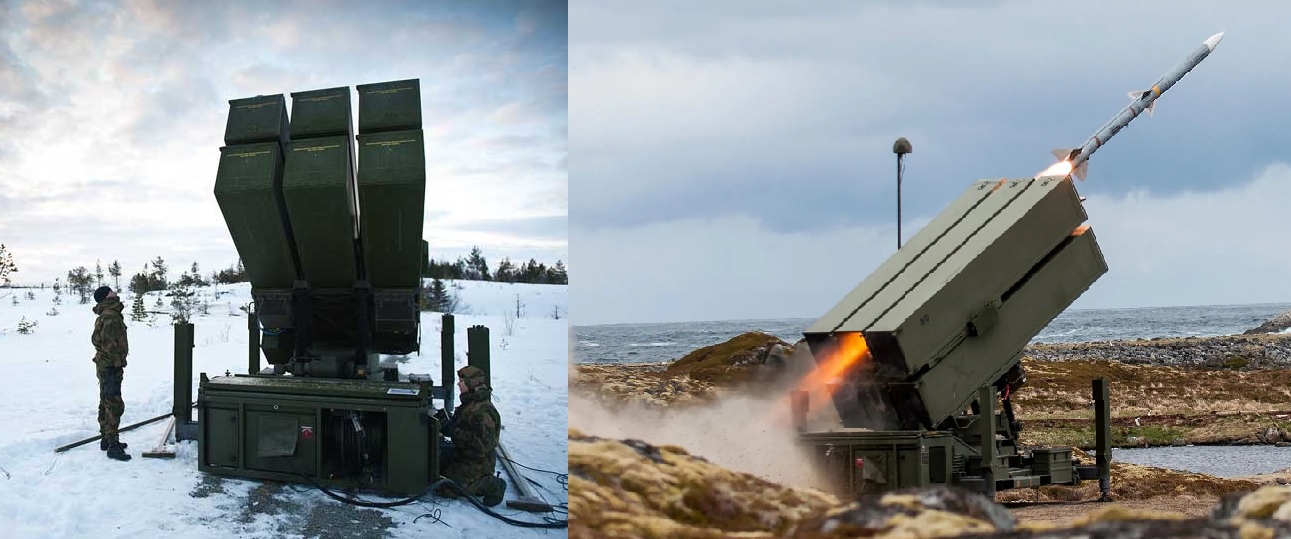
World
Denmark has signed a €500 million ($580 million) contract with Norway’s Kongsberg Defence & Aerospace to procure the NASAMS (National Advanced Surface-to-Air Missile System), a major step in building a modern, layered shield against missiles, drones, and hostile aircraft over Danish territory. The agreement, announced on 27 November 2025, is one of the first concrete purchases under Copenhagen’s record-breaking plan to spend 58 billion Danish kroner (about €9.1 billion) on European-made air and missile defence systems amid a sharply deteriorating security environment in Europe. A €500 Million Deal with Norway’s Kongsberg Under the new contract, Kongsberg will supply Denmark with NASAMS batteries that provide medium-range, ground-based air defence. The package includes launchers, command-and-control elements and associated radar and support systems, though neither Copenhagen nor Kongsberg has disclosed the exact number of fire units or delivery schedule. Kongsberg describes NASAMS as “the most modern and advanced air defence capability in the world,” emphasizing its modular, networked design and ability to counter a wide spectrum of air threats. The system typically uses AIM-120 AMRAAM and related missiles to engage targets at medium ranges, and has already been adopted by more than a dozen countries, including Norway, the United States, Finland, Lithuania, the Netherlands, Qatar and Ukraine For Kongsberg, the Danish order further consolidates NASAMS’ position in Northern Europe, where Norway and several NATO partners are building a common architecture for integrated air and missile defence. Part of Denmark’s Record €9 Billion Air-Defence Overhaul The NASAMS deal is not an isolated purchase; it is one building block in Denmark’s largest arms acquisition in history. In September 2025, the Danish government approved a plan to invest 58 billion kroner (about $9.1 billion) in eight medium- and long-range ground-based air-defence systems, all sourced from European suppliers. Key elements of this broader package include: Long-range layer: Denmark has selected the Franco-Italian SAMP/T system, built by Eurosam and firing Aster missiles, as the long-range backbone capable of defending cities and critical infrastructure and providing limited anti-ballistic missile capability. Medium-range layer: NASAMS is one of the chosen medium-range systems, alongside other European solutions such as IRIS-T SLM and VL MICA, giving Denmark a mix of batteries sourced from Norway, Germany and France. Very short-range and mobile defence: Denmark is also fielding Skyranger 30 turrets with Mistral 3 missiles on Piranha V armoured vehicles, designed to protect manoeuvre forces and key sites against drones, helicopters and low-flying aircraft. Together, these purchases form a layered air-defence architecture reaching from very short range up to long-range, area-defence systems. The investments are being coordinated through the newly created Air Defence Wing, established in March 2025 to manage Denmark’s ground-based air and missile defence build-up. Danish officials have stressed that experience from Russia’s war in Ukraine, particularly the mass use of cruise missiles and drones against cities and energy infrastructure, has made robust ground-based air defence an “absolute top priority.” Why Denmark Is Rushing to Build an Air Shield Copenhagen’s push is driven by several overlapping concerns: Russian military pressure and Baltic security : Danish leaders openly link the 58-billion-kroner plan to rising tensions with Russia, including repeated airspace incidents in the Baltic region and concern that a future escalation could reach Denmark or its neighbours. Protection of critical infrastructure and population centres : With major ports, energy hubs and NATO facilities on its territory – and key sea lanes passing through the Danish Straits – Denmark wants the ability to protect cities, ports, air bases and critical infrastructure from missile and drone attacks, rather than relying almost entirely on allied assets. European defence autonomy and industrial logic : Denmark explicitly chose European systems over U.S. Patriot batteries, citing the higher cost and longer delivery times of the American system. Officials also argue that buying from European suppliers strengthens industrial capacity on the continent and ensures faster delivery at a moment when Patriot production is heavily backlogged. Integration with NATO and Nordic partners : Denmark’s choice of NASAMS, SAMP/T, IRIS-T and MICA mirrors systems being fielded by Norway, Germany, Italy, France and other NATO allies, easing integration into a common radar and command network. In the Nordic region, the Danish NASAMS order in particular deepens longstanding Norwegian-Danish defence cooperation and supports a more unified Nordic air defence posture. What NASAMS Brings to Denmark’s Air Defence Although Denmark has not yet disclosed the exact configuration it will receive, the NASAMS system stands out for several capabilities that closely match Copenhagen’s operational needs. Its modular architecture allows each battery to be configured for different missions, whether defending the capital region, safeguarding military bases, or protecting critical national infrastructure. Another major strength is its networked command-and-control capability. NASAMS can fully integrate with Danish and NATO air-defence networks, enabling operators to pull in targeting data from allied radars, aircraft and sensors while also contributing their own real-time information to the wider battlespace picture. This creates a more unified and resilient air-defence environment. The system also benefits from proven missile technology, using the AIM-120 AMRAAM family—an extensively tested and continuously upgraded missile with a strong global production base. This ensures long-term reliability, modernization potential and sustained availability. NASAMS has also demonstrated a credible combat record, with Ukrainian-operated batteries successfully intercepting Russian cruise missiles and drones. These real-world engagements provide clear evidence of the system’s effectiveness against the same categories of threats Denmark is preparing to counter. By incorporating NASAMS into its defence structure, Denmark gains a medium-range protective “wall” positioned between its short-range point-defence assets such as Skyranger/Mistral and its long-range SAMP/T batteries. This layered setup gives Danish commanders multiple opportunities to detect, track and neutralize aerial threats before they reach critical targets. Building a European Layered Air-Defence Network The Danish NASAMS contract is also part of a wider European trend: accelerated investment in a continent-wide air and missile defence network in response to the war in Ukraine and uncertainty about long-term U.S. security guarantees. Denmark’s €9 billion plan dovetails with broader EU-level efforts such as Germany’s European Sky Shield Initiative and the European Commission’s wider Readiness 2030 / “ReArm Europe” defence push, which aims to mobilize hundreds of billions of euros for new capabilities and joint procurement. By opting decisively for European suppliers and rapidly contracting systems like NASAMS, Copenhagen is positioning itself not just as a consumer, but as a front-line contributor to this emerging networked shield protecting European airspace. What Happens Next Although a precise delivery schedule has not been published, Danish officials have repeatedly stressed that initial air-defence capabilities must be operational before the end of the decade, with some systems arriving earlier as “interim” solutions. Over the coming years, Denmark will: Stand up and expand its Air Defence Wing, Integrate NASAMS batteries with SAMP/T, IRIS-T, MICA and short-range systems, and Link its national network more deeply into NATO’s integrated air and missile defence architecture. The €500 million NASAMS order is therefore best seen not as a one-off purchase, but as a crucial building block in a new Danish – and European – air-defence era, shaped by the hard lessons of Ukraine and the return of high-intensity military competition in Europe.
Read More → Posted on 2025-12-01 16:16:33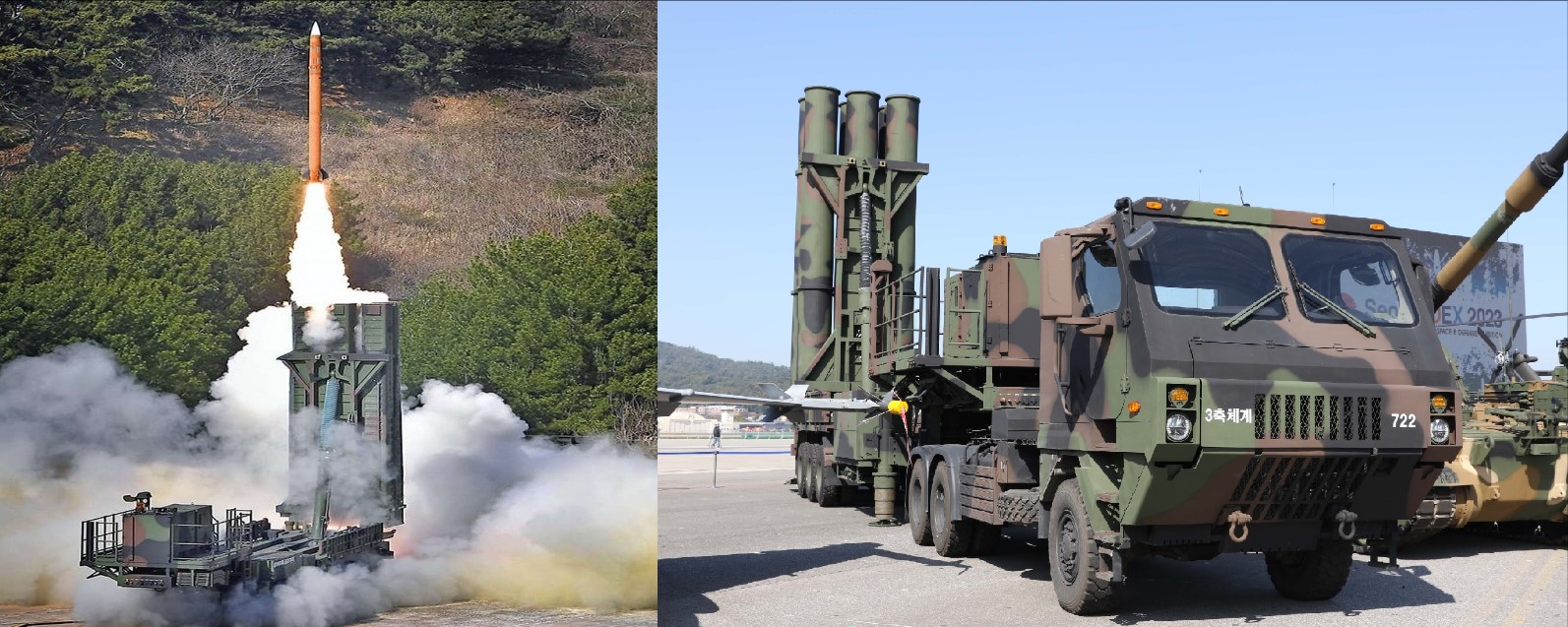
World
SEOUL — On the heels of years of development, South Korea has officially contracted for mass production of its indigenous long-range surface-to-air / anti-ballistic missile system — L-SAM — a major milestone that positions the system as the backbone of the country’s upper-tier air and missile defense shield. The contract, awarded to Hanwha Aerospace, marks a turning point for domestic missile-defense capability just in time for the anticipated wave of global interest in region-wide defense systems this holiday season. A new layer in a multi-tiered shield The L-SAM is designed as the uppermost layer in the Korean Air and Missile Defense (KAMD) architecture — an indigenous, multi-layer missile defense framework developed to counter the growing ballistic and aerial threats facing the Korean Peninsula. Built by South Korea’s own defense-industrial base (led by Hanwha and LIG Nex1 under the coordination of the Agency for Defense Development (ADD)), the system closes a crucial gap: intercepting high-altitude ballistic missiles during their terminal descent — a phase earlier systems struggle with. A single L-SAM battery comprises a truck-mounted S-band AESA radar, a command-and-control centre, a combat control station, and four mobile launchers. Each launcher carries a mix of missiles optimized for both ballistic missile and conventional aerial threats. Cutting-edge technology: speed, altitude, precision The L-SAM system uses advanced technologies previously rare in Korean defense: a Divert and Attitude Control System (DACS) and dual-pulse propulsion. These enable the missiles to maneuver and intercept hostile ballistic threats in the thin upper atmosphere. Its anti-ballistic variant (ABM) uses a hit-to-kill approach — relying on an imaging infrared seeker and fine control of trajectory to strike incoming missiles directly. According to available data, L-SAM Block 1 interceptors have a nominal range of up to 150 km and can engage targets at altitudes in the ballpark of 50–60 km. Its speed and design make it suitable not only against ballistic missiles like the North Korean KN-23 and KN-24, but also against high-speed air and cruise missiles. L-SAM has already undergone live-fire testing between 2022 and 2023 — reportedly intercepting incoming targets successfully. Timeline: from concept to contract The development of L-SAM began in the mid-2010s under ADD, in response to evolving missile threats from the north. The project entered a decisive phase around 2019, when ADD teamed with Hanwha Aerospace and LIG Nex1 for missile production and system integration. By May 2024, L-SAM Block 1 development was completed and the system was declared combat-ready by military acquisition authorities. Following that, in late November 2025, Hanwha Aerospace signed a contract worth approximately KRW 705 billion (roughly US $482 million) to begin full-scale production of launchers and ABM missiles through 2030. L-SAM-II, exports, and strategic ripples The success of L-SAM Block 1 has laid the foundation for an enhanced successor — L-SAM II, which is expected to push interception altitudes much higher — up to 180 km — and integrate glide-phase interceptors, enabling it to counter future hypersonic and advanced ballistic missiles. This expanded capability aligns with South Korea’s broader defense posture: a mix of offensive missile strike systems and robust multi-layered defenses under KAMD, aiming for autonomy and strategic deterrence. Moreover, with the L-SAM now moving into mass production, its radar and interceptor technologies could make the system attractive to other nations, especially in the Middle East and Europe. Significance: a model for rapid defence-system development The relatively swift path of L-SAM — from formal development in 2015 to mass-production contract by 2025 — presents a blueprint for future domestic defense programs. For a program involving advanced technologies such as multi-stage interceptors, AESA radar, hit-to-kill ABMs, and high-altitude ballistic interceptors, such rapid progress underscores both industrial maturity and institutional commitment. As the global strategic landscape grows more complex — with ballistic, cruise, and hypersonic threats proliferating — the successful deployment of L-SAM may influence other nations to accelerate their own layered defense architectures. With the new contract in hand, L-SAM is becoming a tangible pillar of South Korea’s sovereign air and missile defense. Its advanced technologies, layered-defense integration, and rapid development set a high bar in regional defense. As L-SAM moves into production and eventual deployment, and as L-SAM II advances, South Korea’s long-term ambition for a self-reliant, export-ready missile-defense industry appears increasingly within reach.
Read More → Posted on 2025-12-01 15:36:51Search
Top Trending in 24 Hours
-
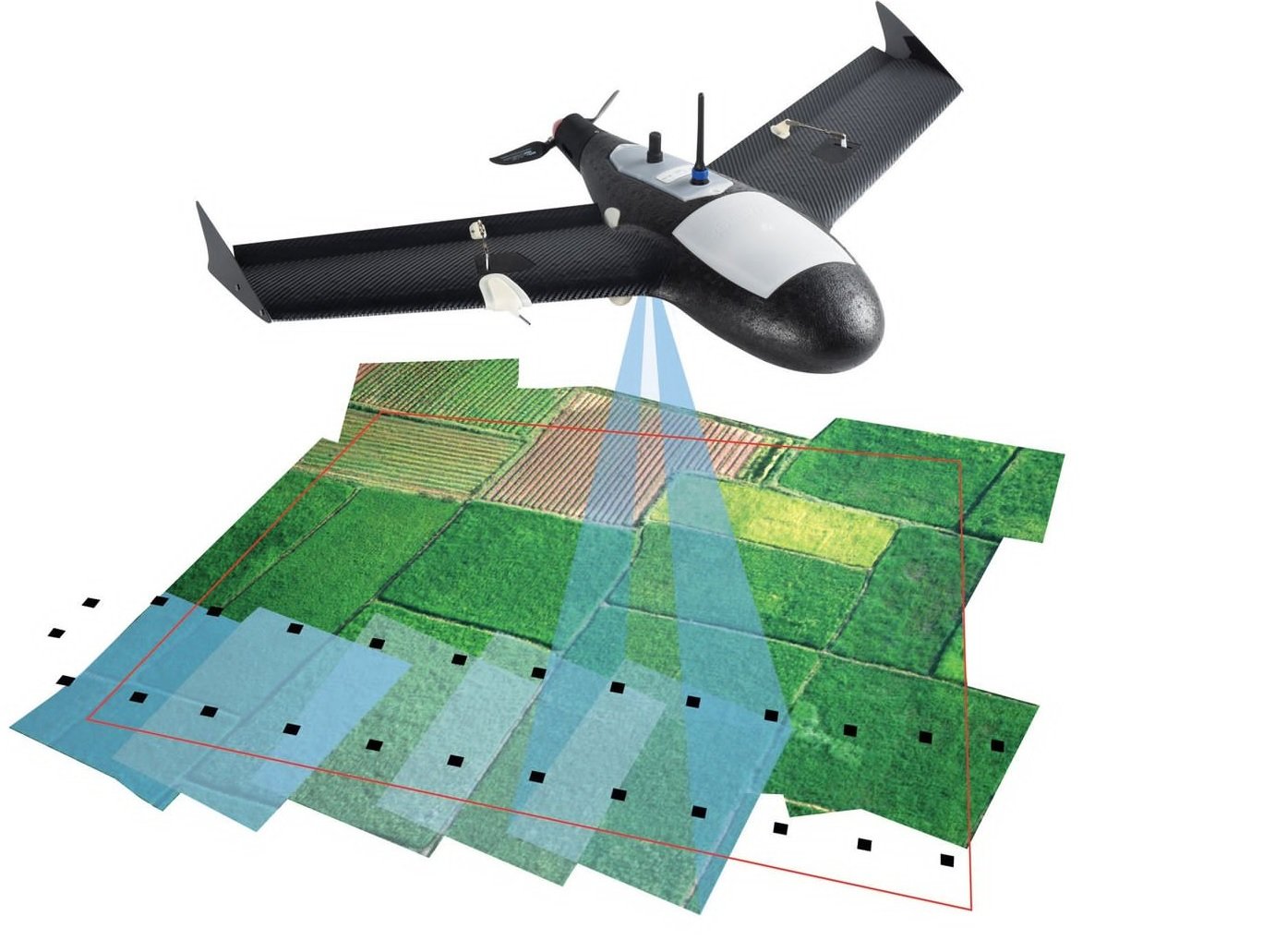 Russia Develops 'Martian' Camera-Based Navigation Independent of GPS and Radio Signals for Drones
-
 Red Cat’s Blue Ops and Havoc Partner to Integrate Collaborative Autonomy on Uncrewed Surface Vessels
-
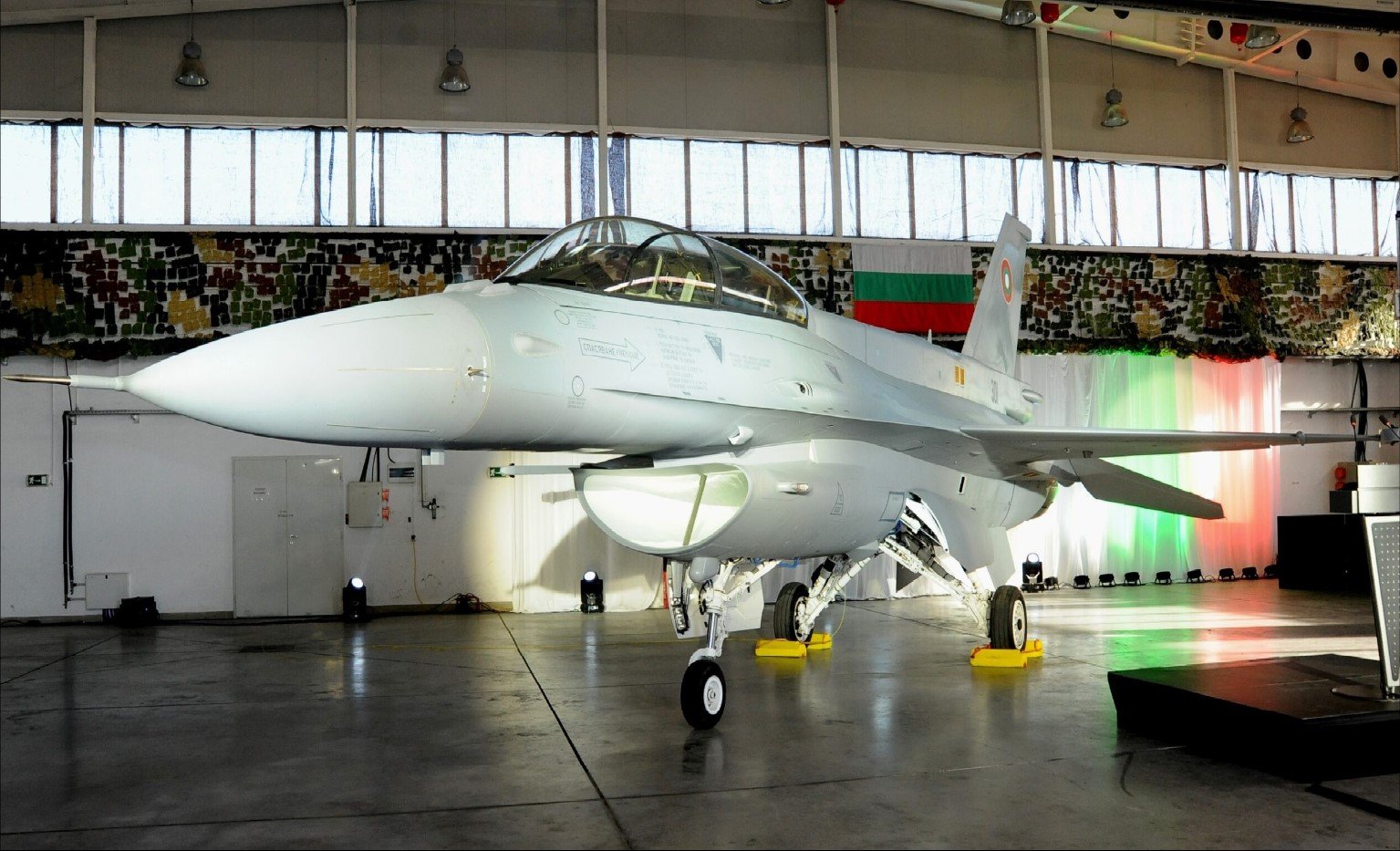 Lockheed Martin Production Issues Push Bulgaria’s Second Batch of F-16s to Q2 2030
-
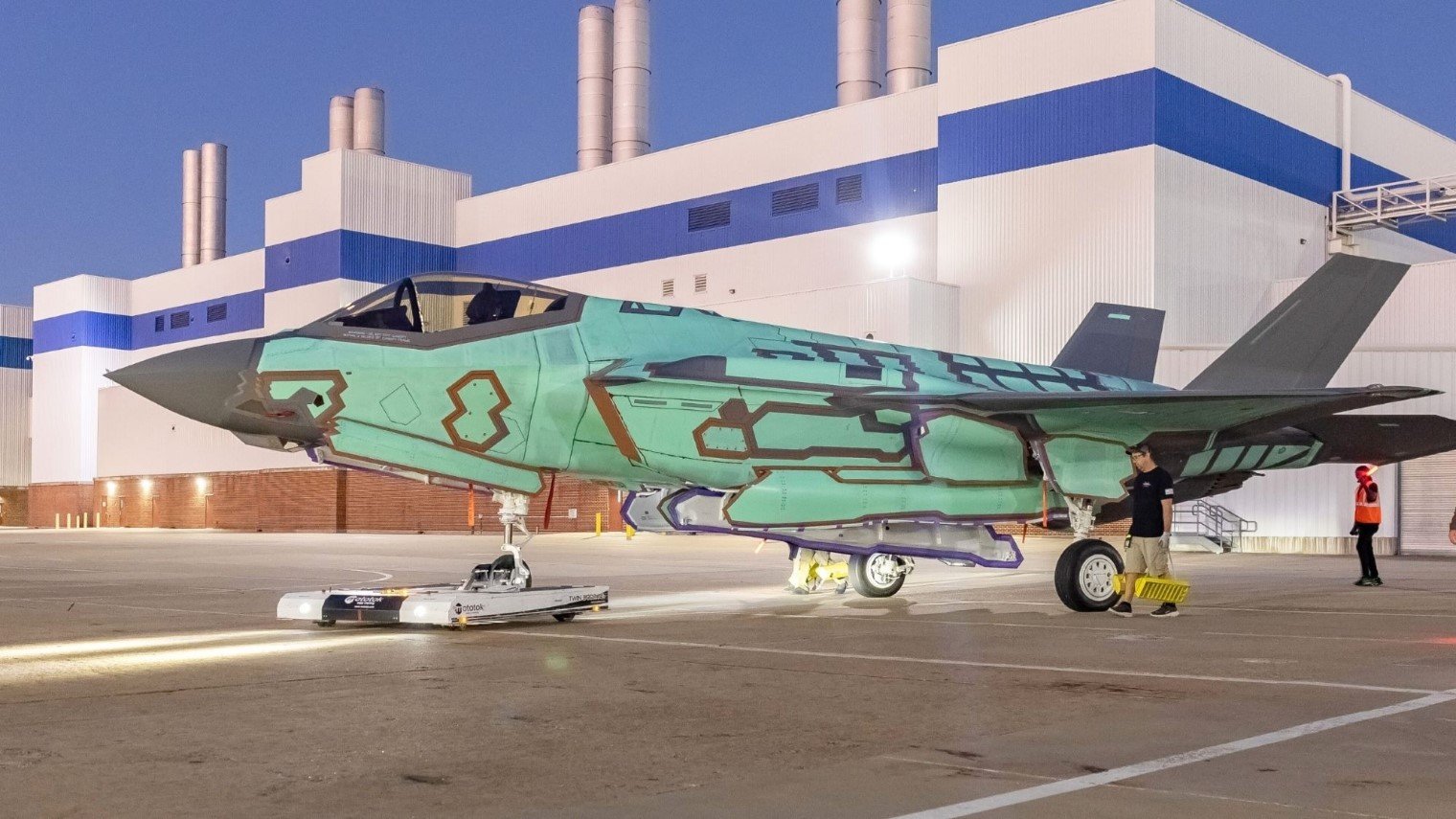 Lockheed Martin Completes Final Assembly of Germany’s First F-35A Ahead of September Rollout
-
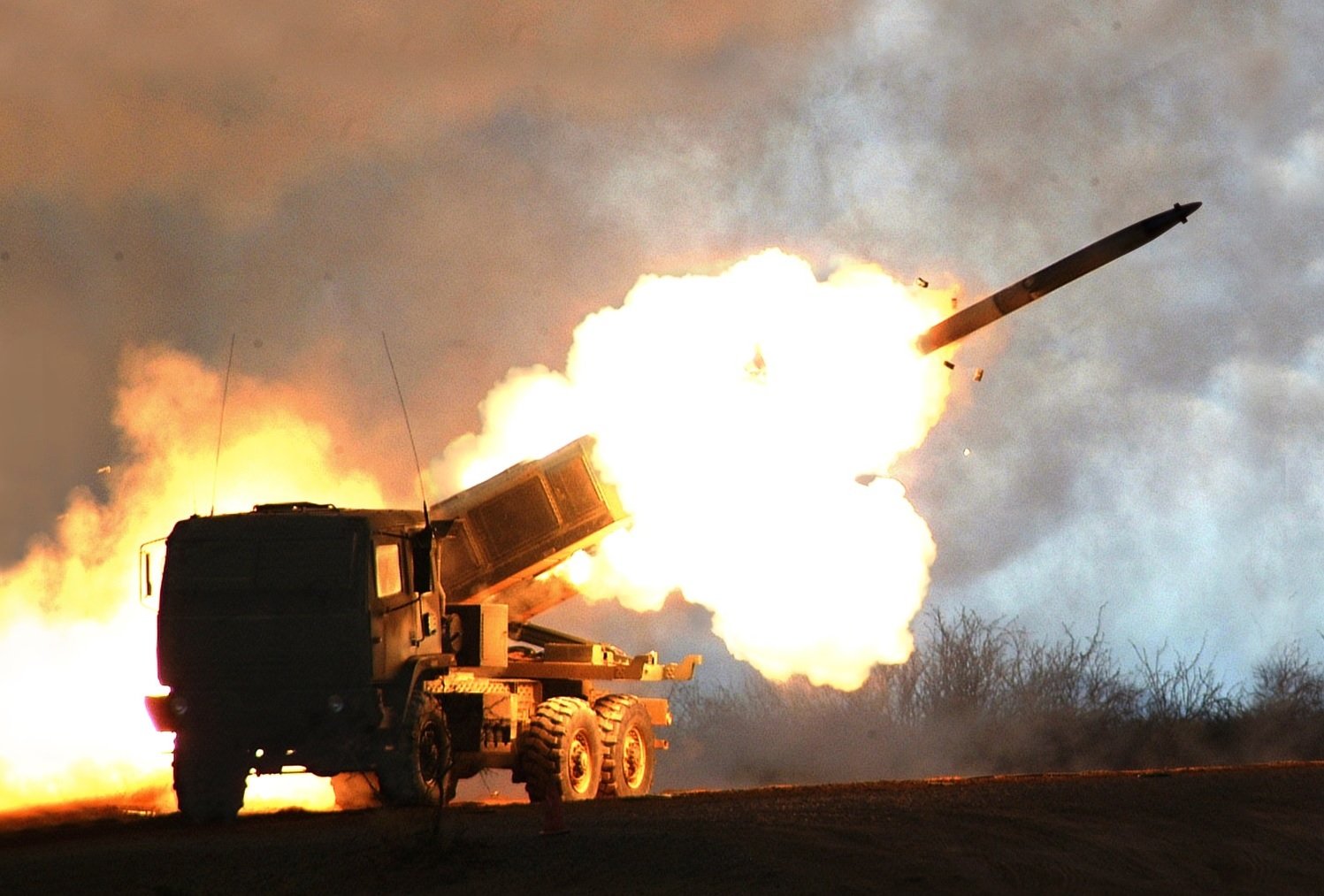 U.S. Army Seeks Industry Plans to Produce 133,014 GMLRS Rockets by 2034
-
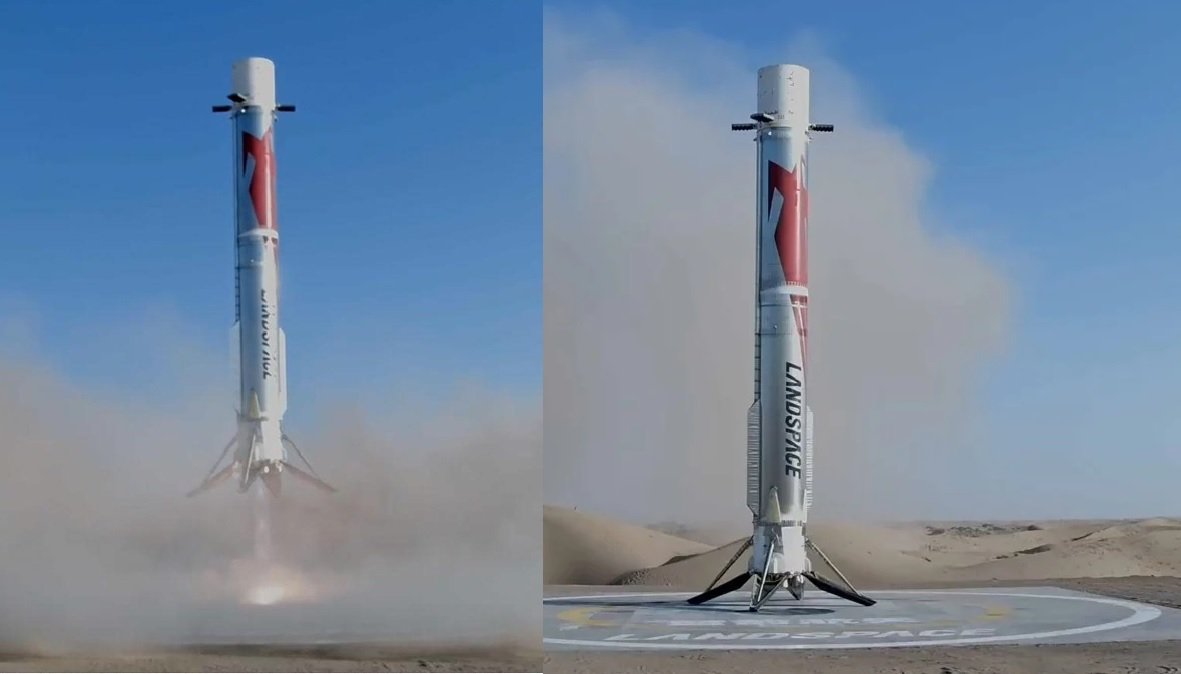 China Successfully Launches Zhuque-3 Rocket and Recovers Booster on Land After Orbital Launch
-
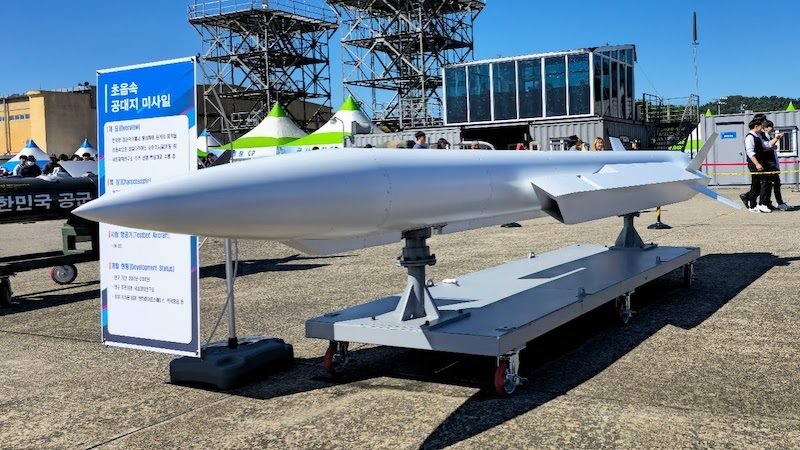 South Korea Approves Development of Next-Generation SSM-II Anti-Ship Missile and K2 Tank Upgrade
-
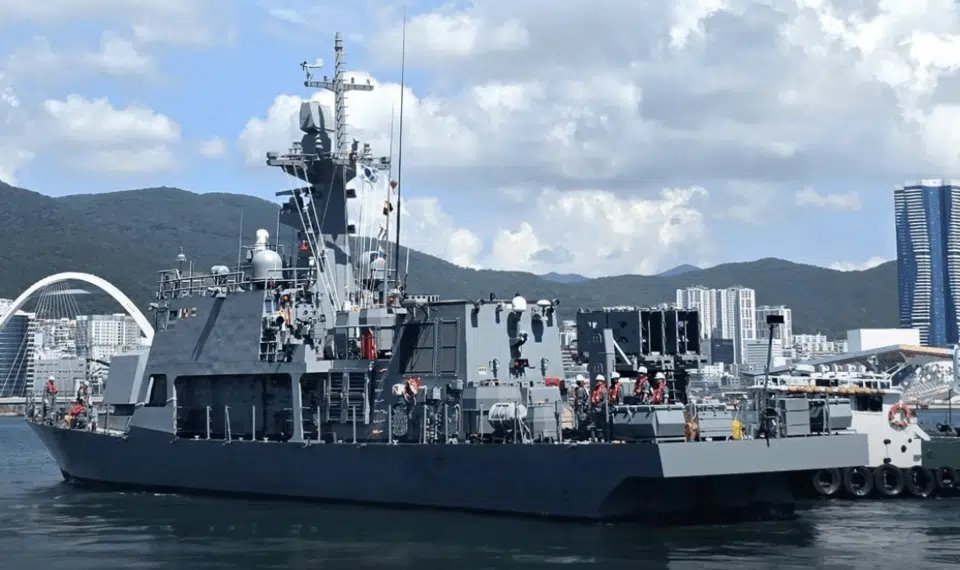 South Korea Delivers First PKX-B Batch-II Fast Patrol Craft to Navy
Top Trending in 4 Days
-
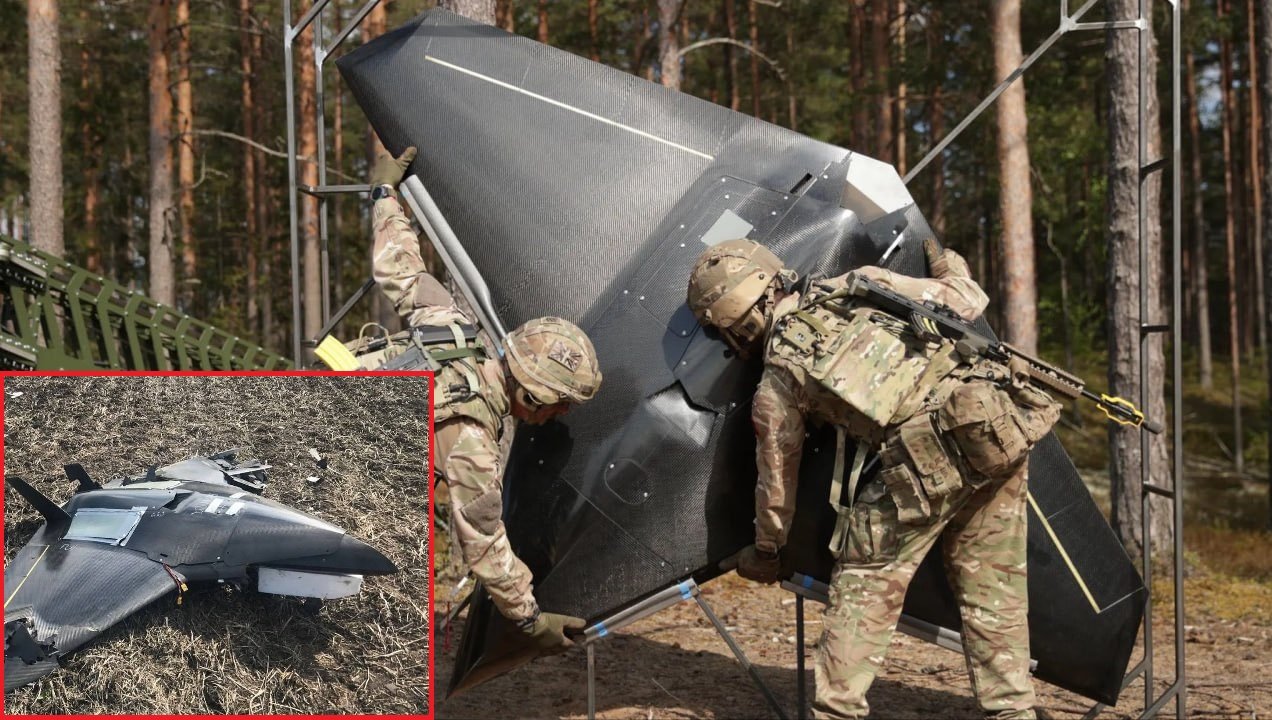 Ukraine Uses British-Made Nyan Drones in Deep Strikes Against Russian Targets
-
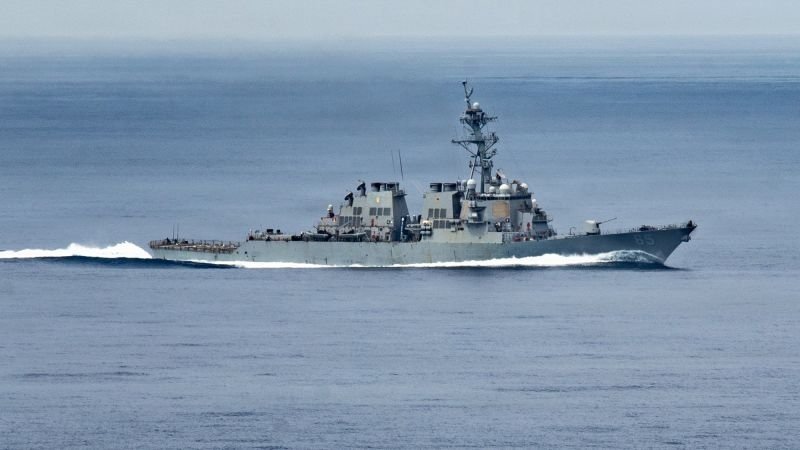 U.S. Navy Destroyer USS Benfold Spent Four Days Without Power in South China Sea After Generator Failure
-
 U.S. Navy Reviews Ford-Class Carrier Redesign as $275 Billion Trump-Class Battleship Program Advances
-
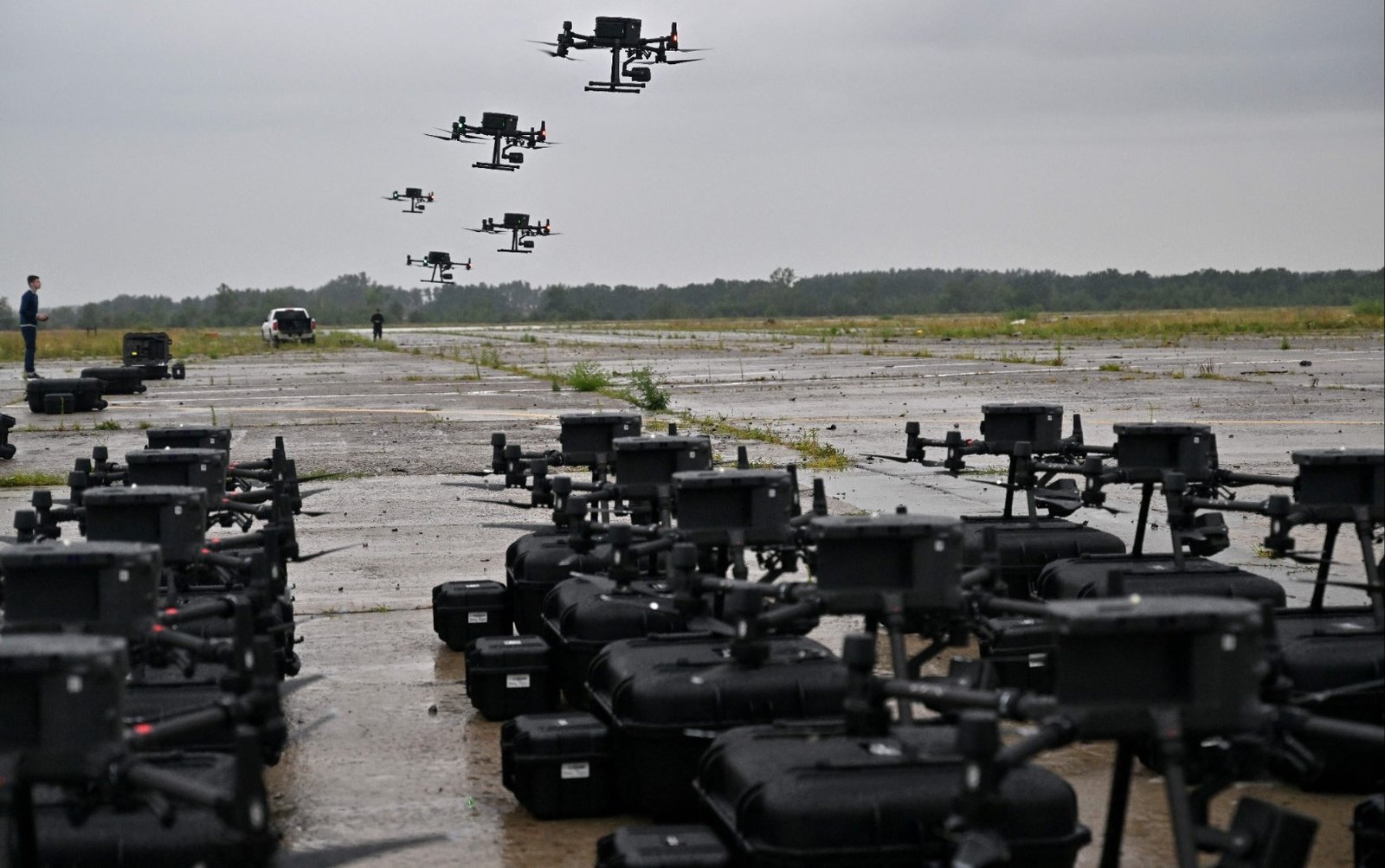 U.S. Air Force to Buy Chinese DJI Drones for Counter-Drone Training at Nuclear Missile Base
-
 Iran May Be Using Data From Fitness Apps to Track U.S. Military Personnel in the Middle East
-
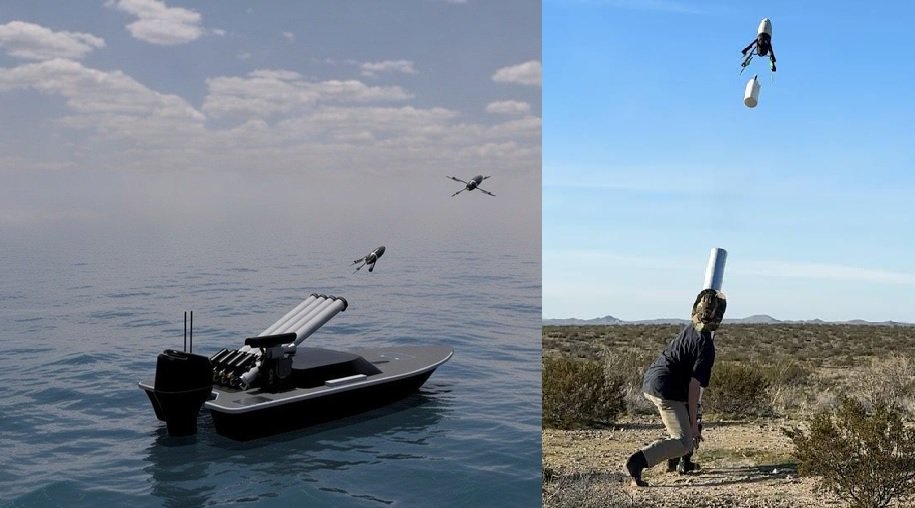 Thermopylae Aerospace Unveils SPART Tube-Launched Drone Interceptor for Group 2-3 and Turbojet UAS Threats
-
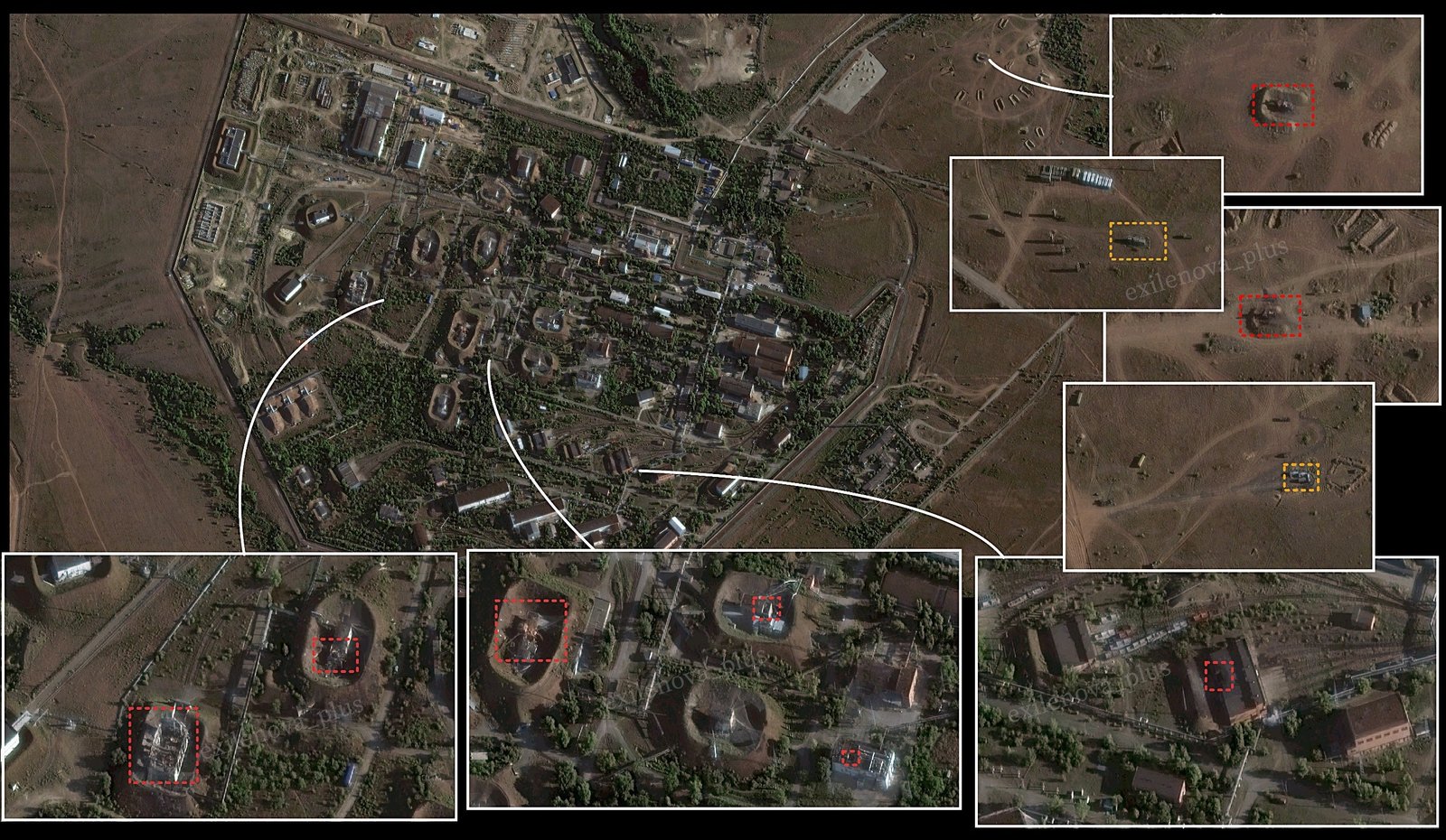 Satellite Images Show Ukrainian Drone Strike Hits Russian Rocket Fuel Plant and Air Defense Systems in Rostov Region
-
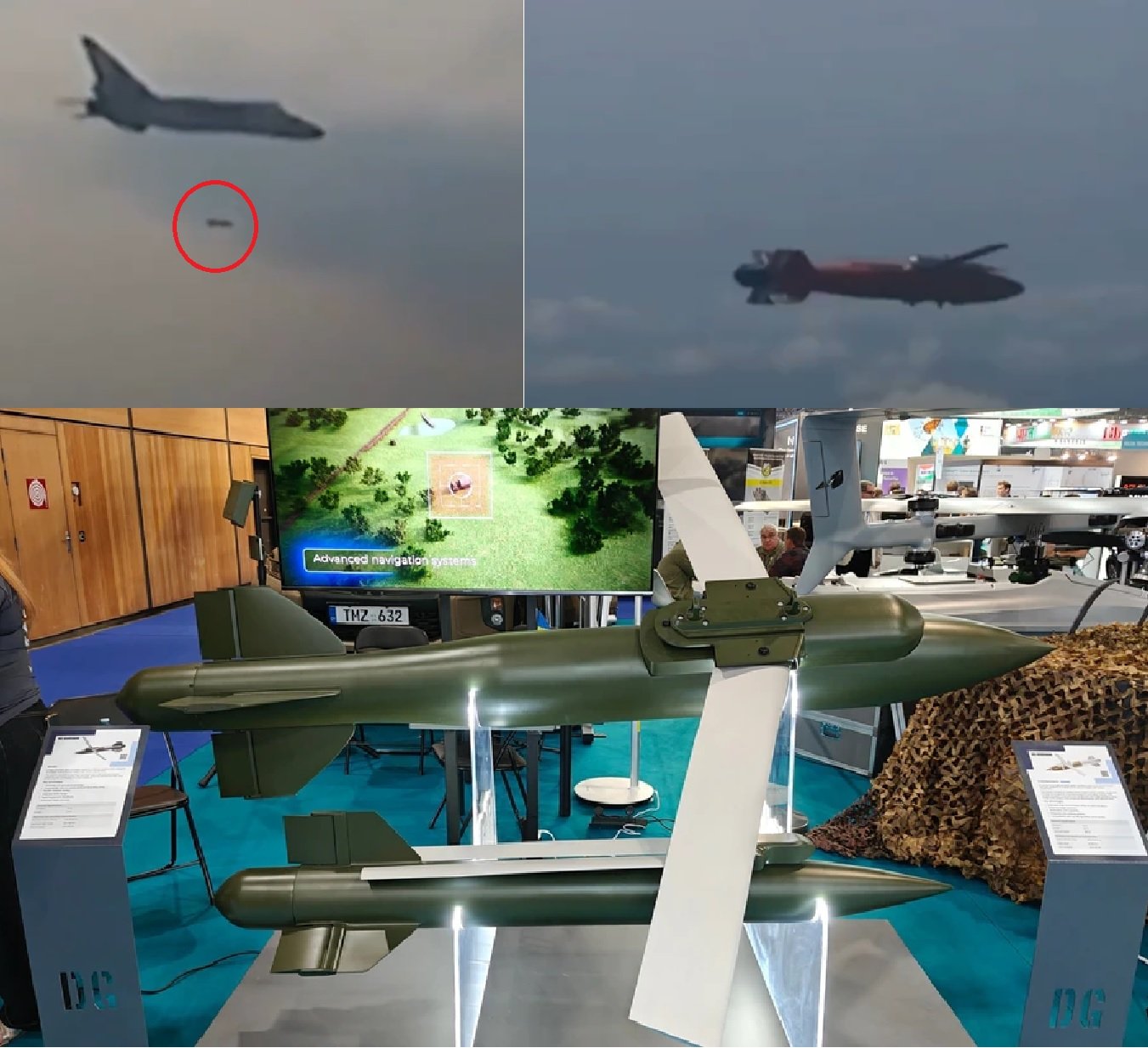 Ukraine Begins Procurement of Vyrivniuvach Guided Aerial Bomb
