Washington, D.C. — The U.S. Army is seeking industry proposals for a major increase in Guided Multiple Launch Rocket System (GMLRS) production, with a requirement for 133,014 rockets from FY2028 through FY2034.
The Army Contracting Command–Redstone Arsenal published the Sources Sought notice on August 17, 2026, under Notice ID PANRSA-25-P-7693. Companies have until September 1, 2026, at 4 p.m. CDT to submit capability statements.
The Army is seeking an annual production rate of 19,002 GMLRS rockets in each fiscal year from FY2028 through FY2034. The first deliveries are scheduled to begin in February 2030.
The requirement covers GMLRS unitary, alternative warhead (AW) and extended-range (ER) variants, as well as production tooling, engineering change proposals and other supporting activities.
GMLRS Production Requirement
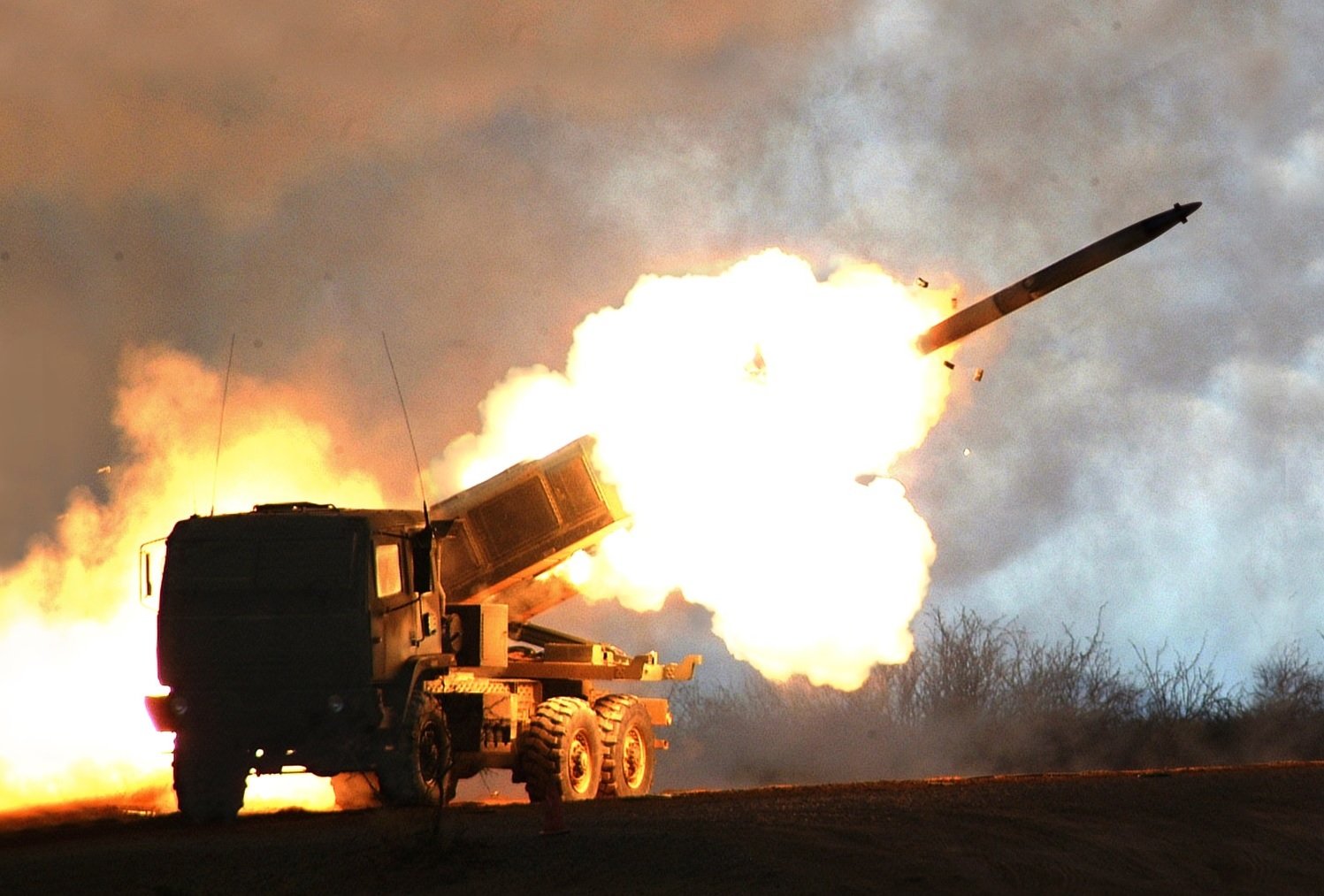
GMLRS provides U.S. Army field artillery units with precision surface-to-surface fires against point and area targets. The rockets are launched from the M270-series Multiple Launch Rocket System and M142 High Mobility Artillery Rocket System (HIMARS).
The GMLRS Unitary uses a 200-pound-class payload and is available in two primary configurations. The unitary warhead is intended for precision strikes with minimal collateral damage, while the alternative warhead uses pre-formed penetrators to provide area effects in accordance with current cluster-munition policies.
The Extended-Range GMLRS (ER-GMLRS) increases the system's maximum range while carrying either the unitary or alternative warhead payload.
Army Requests Detailed Industrial Plans
The Army is asking companies to submit white papers explaining their capability, previous experience and technical approach for producing 19,002 rockets per year.
Companies must explain how they would achieve the required production rate in the most efficient and cost-effective way. They are also asked to identify the risks and benefits of different production approaches and recommend contracting strategies that provide value to the government while reducing contractor cost risk.
The capability statements must also address previous experience with similar work, technical skills, subcontractor management, facility and safeguarding requirements, and proposed facilities and supply-chain partners capable of supporting production beginning in FY2028.
Companies must provide a tier-one schedule in Microsoft Project format showing the activities from contract award through delivery of the first GMLRS munitions to the Army.
Seven-Year Production Target
The Army's maximum production quantities are:
| Fiscal Year | GMLRS Rockets |
|---|---|
| FY2028 | 19,002 |
| FY2029 | 19,002 |
| FY2030 | 19,002 |
| FY2031 | 19,002 |
| FY2032 | 19,002 |
| FY2033 | 19,002 |
| FY2034 | 19,002 |
| Total | 133,014 |
Respondents must also provide a development and qualification plan for the system and its subcomponents to meet the Army's technical data package, specifications and drawing requirements.
The government may provide integrator-level technical data packages and drawings, subject to the required security approval. Companies would be responsible for developing or obtaining technical data packages at the subsystem level and below.
Broader Manufacturing Support
The planned effort extends beyond recurring rocket production. The Army lists obsolescence management, engineering changes, systems engineering, program management, integrated logistics support, training data, support equipment and production tooling among the additional activities that may be required.
Companies must also demonstrate that they can meet applicable facility and safeguarding requirements and identify qualified supply-chain partners with available capacity.
The Army is conducting the notice as market research, not as a contract solicitation. The Sources Sought notice is not a Request for Proposal, Invitation for Bid or Request for Quote, and the government is not obligated to award a contract based on the responses.
All responses must be unclassified. The Army said corporate or proprietary information properly identified by respondents will be protected from release outside the U.S. government.
The deadline for submissions is September 1, 2026, at 4 p.m. CDT. Responses are to be sent to Army Contract Specialist Kyle Teegarden and Contracting Officer Mόnica Clemons.
——— End of Article ———