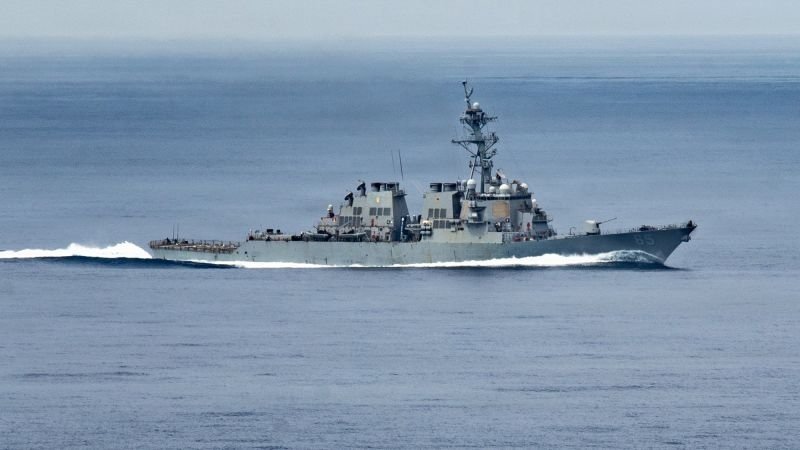
South China Sea — The U.S. Navy guided-missile destroyer USS Benfold (DDG-65) spent four days without electrical power in the South China Sea last month after an engineering casualty involving its generators, according to the U.S. 7th Fleet.
The Arleigh Burke-class destroyer was conducting routine operations in the Indo-Pacific on July 24, 2026, when an “engineering casualty involving its generators” occurred, according to Navy Cmdr. Matthew Comer, spokesperson for the 7th Fleet.
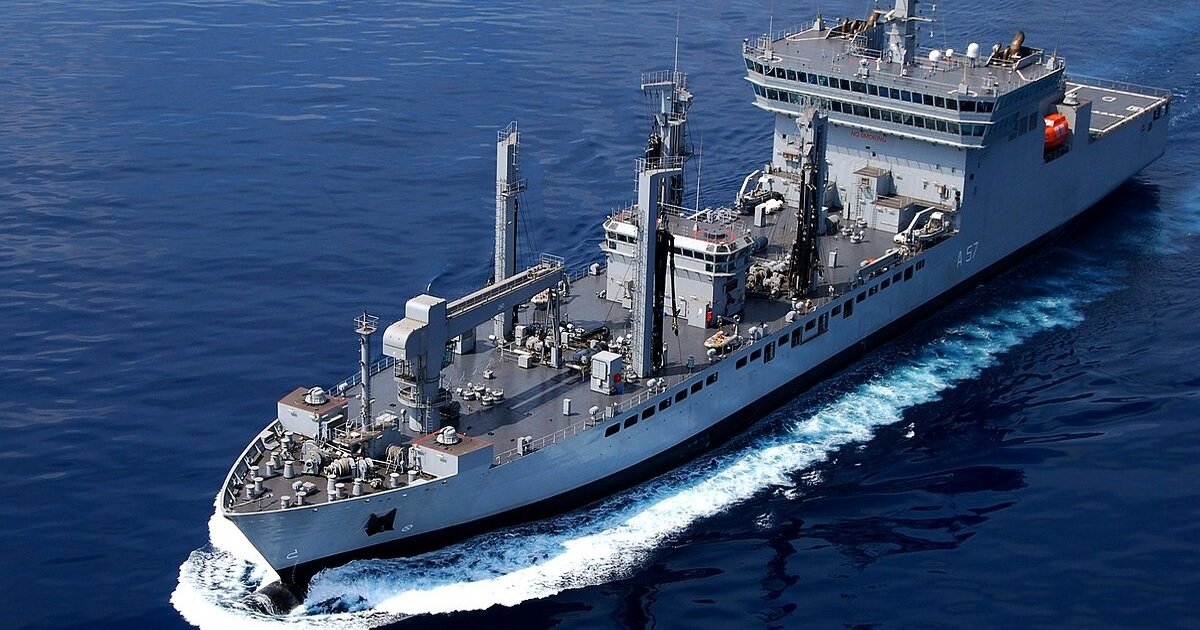
A U.S. Navy photograph shows Benfold conducting routine operations while underway in the South China Sea on July 23, 2026. The photograph was taken by Mass Communication Specialist Seaman Apprentice Andrew Novak.
The generator failure caused a complete loss of electrical power, leaving the nearly 10,000-ton warship unable to maneuver on its own.
The Benfold is often part of the strike group accompanying the USS George Washington (CVN-73). The carrier is currently heading toward the Middle East to relieve the USS Abraham Lincoln, although Benfold appears to have remained in Asia.
Four Days Without Power
The power failure affected several basic services aboard Benfold, including galley services, toilets, air conditioning and potable water.
The crew, numbering roughly 329 to 359 sailors depending on the ship's configuration, remained aboard the destroyer while the engineering problem was addressed.
Daytime temperatures in the South China Sea during late July averaged between 89°F and 98°F (32°C to 37°C), according to weather records.
No injuries were reported among the crew.
Cmdr. Matthew Comer said the sailors demonstrated “resilience, grit, professionalism, and unwavering steadiness” in their response to the incident.
The Navy said the cause of the power outage is under investigation.
Other Ships Provided Assistance
Benfold received assistance from other ships in the Japan-based USS George Washington Carrier Strike Group during the four-day outage.
The guided-missile cruiser USS Robert Smalls provided cooked meals to the Benfold crew. Other ships in the strike group also provided assistance.
The destroyer was later towed to Subic Bay in the Philippines for repairs.
The Navy said the repairs were completed by August 8, and the ship returned to duty. Ship spotters in Japan subsequently reported that Benfold had arrived there, according to USNI News.
The Navy has not said whether Benfold was sent along with the George Washington Carrier Strike Group toward the waters off Iran.
What a Prolonged Power Loss Means for a Destroyer
Former U.S. Navy captain Carl Schuster, who said he once spent about four hours aboard a destroyer without power near Puerto Rico, described the challenges of such an incident.
He said operations officers would be concerned about crew morale and operational issues, while engineers would focus on resolving the failure. The navigator would have to monitor the ship's direction of drift and approaching weather, while the crew would be concerned about weather, food and what would happen next.
The commanding officer and executive officer would have to manage those concerns while also determining when assistance would arrive.
Schuster said that four hours without power near Puerto Rico was not nearly as stressful as four days in the South China Sea.
Wider Pressure on the U.S. Navy
The Benfold incident comes as the U.S. Navy faces increasing scrutiny over the demands placed on its forces by the Iran war and global commitments.
Reports have also raised concerns about low morale and mental health aboard the USS Abraham Lincoln in the Middle East after the carrier spent more than 200 days without a port call during operations against Iran.
Analysts and Democratic lawmakers have said the Navy is being stretched by the demands of the Iran war and its worldwide commitments.
The George Washington Carrier Strike Group is now heading toward the Middle East to relieve the Abraham Lincoln and its carrier strike group, according to a Navy official. The Navy has not said whether Benfold is accompanying the group.
Second Power-Related Incident Involving a U.S. Destroyer
The Benfold incident is the second reported loss of power involving a U.S. Navy destroyer in the U.S. Pacific Command area of responsibility this year.
The area covers waters from off the U.S. West Coast to the western border of India, and from the North Pole to Antarctica.
In May, the Arleigh Burke-class destroyer USS Higgins (DDG-76) lost power and propulsion for several hours in the Indo-Pacific region after suffering what the Navy described as an “engineering casualty” involving its electrical system. The Navy did not specify where the Higgins incident occurred.
Arleigh Burke-class destroyers such as Benfold and Higgins form a major part of the U.S. Navy's surface fleet, with more than 70 ships in service.
The ships are approximately 500 feet long and have a displacement of nearly 10,000 tons. Depending on configuration, they carry crews of approximately 329 to 359 sailors.
The Navy has not publicly identified the specific cause of Benfold's generator failure, and the investigation remains ongoing.
Source : CNN
——— End of Article ———