World
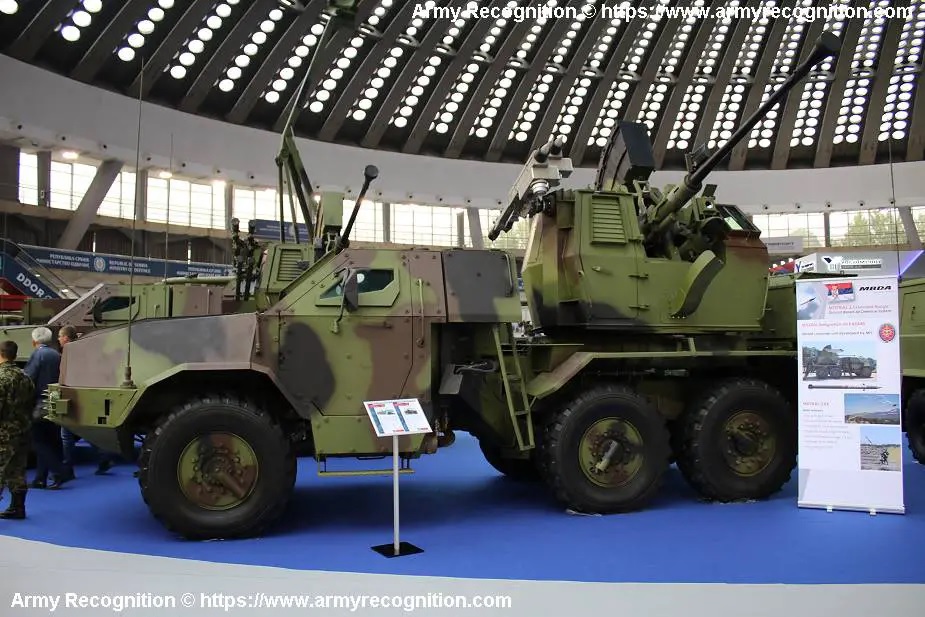
Serbia has showcased a modernized version of its PASARS mobile short-range air defence system at the PARTNER 2025 exhibition in Belgrade. The upgrades are aimed at improving protection against low-altitude threats including UAVs, helicopters, fixed-wing aircraft, and even cruise missiles. Below is a clear explanation of the system and what’s new, using simple terms and highlighting the main features. What is PASARS? The PASARS (also known as PASARS-16) is a self-propelled air-defence system developed by Serbia. It combines a 40 mm autocannon (Bofors L/70) with various surface-to-air missiles, radar, and other sensors. It is built on a high-mobility 6×6 truck chassis (models like FAP 2026 or FAP 2228) so it can keep up with moving forces. It has an armoured cab (light armour, enough to stop small arms fire and shell fragments). Crew: 3 people. Mobility: road speed up to about 100 km/h, off-road slower. Operational range is hundreds of kilometers. What’s New in the Upgraded Version? The version displayed at PARTNER 2025 includes several enhancements to make PASARS more versatile and capable of dealing with modern threats, especially drones: Missile Configurations One configuration uses a four-tube silo launcher for Strela-2M missiles. Another configuration combines the 40 mm gun with missiles that include Mistral 3+, Strela-2M or Strela-2MA, and Malyutka 2T5. These give the system different engagement ranges and performance levels for different target types. Radar & Electronic Warfare (EW) It features the RPS-42 hemispheric radar, which enhances detection and tracking of several threat types, including low-flying aircraft and drones. It now also has a counter-UAV jammer / EW suite which can disrupt unmanned aerial systems by interfering with their communications or navigation. Layered Protection With both gun and missile options, plus radar and jamming, the PASARS can engage threats at different ranges and use different methods. This gives a multi-layered defence: for example, jamming might disable or confuse a drone; missiles can destroy targets at longer ranges; the autocannon handles close targets. Enhanced Mobility and Deployment The system is designed to protect land forces while moving (on march), during active combat, and to secure fixed installations. It can transition fairly quickly between march, deployment, and combat positions. Technical The autocannon has a vertical firing range up to several thousand meters; useful against low-altitude aircraft and rockets/missiles in certain trajectories. Rate of fire of the gun is high, allowing it to suppress or destroy fast and small threats (like drones) with airburst or programmable ammunition. The missiles (Mistral, Strela, etc.) give flexibility: some are shorter-range but cheaper, others have better seekers (infrared, dual-mode), better warheads, and greater speed/maneuverability. The EW / jamming functions operate over a broad frequency range to counter various types of drones. Why This Matters In today’s battlefields, drones are everywhere, and they’re only getting more dangerous. Having a system like PASARS that can detect, jam, and shoot them down is a big deal because it gives armies a real edge against an increasingly common threat. What really makes PASARS stand out is its layered defence. Relying on just one method—like radar or missiles—can leave weak spots. But by combining radar, jamming, missiles, and a rapid-firing gun, the chances of actually stopping incoming threats go way up. Another important point is mobility. Unlike fixed defence systems that stay in one place, PASARS can move with troops, set up quickly, and protect both soldiers and critical infrastructure wherever needed. That flexibility is crucial in modern warfare. Finally, there’s the matter of self-reliance. Because PASARS is largely developed in Serbia, it means the country isn’t as dependent on outside suppliers for such an important piece of military technology. That’s a significant step in strengthening national defence capabilities. The upgraded PASARS shown at PARTNER 2025 is not just another air defence truck—it’s a modern, flexible shield against a wide mix of threats. With its combination of autocannon, multiple missile options, advanced radar, and anti-drone jamming, it provides a layered umbrella of protection that works both on the move and while guarding fixed sites.
Read More → Posted on 2025-09-25 14:58:32
India
In a landmark achievement, India has successfully carried out the first test launch of the Agni-Prime missile from a rail-based mobile launcher. The announcement was made by Defence Minister Rajnath Singh, who congratulated the Defence Research and Development Organisation (DRDO), the Strategic Forces Command (SFC), and the Armed Forces for the breakthrough. The Intermediate Range Agni-Prime Missile, with a strike capability of up to 2,000 kilometres, was launched on 24 September 2025 under a full operational scenario. The test was monitored by radars, sensors, and ground stations, and all mission objectives were successfully met. According to officials, the rail-based launcher is a first-of-its-kind system that can move freely across India’s vast railway network without special requirements. This gives the Armed Forces the ability to deploy missiles rapidly, maintain high mobility, and reduce visibility, making the system more difficult for adversaries to track or target. The Agni-Prime, also known as Agni-P, is part of India’s new generation of ballistic missiles. It is canisterised, making it easier to transport and launch, and comes equipped with advanced guidance and precision technologies. The missile adds to India’s growing arsenal by providing both road- and rail-based launch options. Experts believe this development places India in the elite group of nations with the capability to deploy rail-based ballistic missile launch systems, a technology mastered by only a handful of countries. It also strengthens India’s nuclear deterrence posture by improving survivability and second-strike capability. Defence Minister Rajnath Singh said the test was a reflection of Prime Minister Narendra Modi’s vision of Aatmanirbharta (self-reliance) in defence. He described the success as a “significant milestone” in India’s pursuit of advanced strategic technologies and a stronger national security framework.
Read More → Posted on 2025-09-25 14:50:46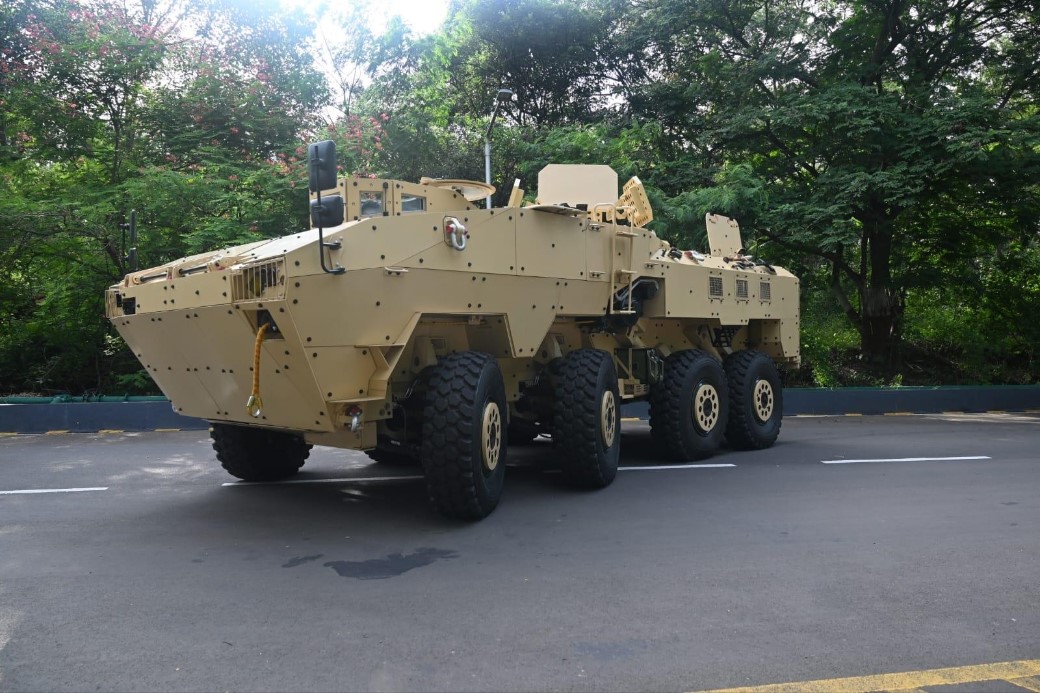
India
Morocco and India have recently taken a historic step in defence cooperation. Morocco has begun trials and local production of the Wheeled Armoured Platform (WhAP) 8×8, a modern armoured vehicle developed by Tata Advanced Systems in collaboration with India’s DRDO. This marks the first time an Indian private company has established a defence manufacturing facility abroad, signalling a new era for both Indian exports and Moroccan defence industry. What is WhAP 8×8? The WhAP 8×8 is a modular, multi-role armoured vehicle designed for modern battlefield needs. Built with adaptability in mind, it can be configured as an Infantry Fighting Vehicle (IFV), Armoured Personnel Carrier (APC), Reconnaissance Vehicle, Command Post, Mortar Carrier, or even an Armoured Ambulance. The vehicle features an 8×8 wheeled drive system, giving it excellent mobility across rough terrains. Select variants also retain amphibious capability, allowing it to cross rivers and water obstacles. Its armour is modular and scalable, ensuring protection against both ballistic threats and landmine explosions. The Deal Between India and Morocco Morocco has placed an order for 150 WhAP 8×8 vehicles, which will be delivered over the next three years. A brand-new facility covering 20,000 square metres has been established in Berrechid, near Casablanca. This is Tata’s first overseas defence manufacturing unit, built ahead of schedule and already operational. Production will begin with about 35% local Moroccan content, gradually increasing to 50%. The facility is not just for Morocco’s Royal Armed Forces but also aimed at becoming an export hub for Africa, positioning Morocco as a rising player in regional defence manufacturing. Specifications and Features Weight: Ranges between 20 and 27 tonnes, depending on the variant. Lighter versions maintain amphibious capability. Mobility: Equipped with a high-power engine, automatic transmission, independent suspension, and a central tyre inflation system. These features ensure performance in desert and rugged terrain. Protection: A survivable monocoque hull combined with modular armour that can be upgraded over time. Designed to withstand both small arms fire and mine blasts. Armament: Standard configuration includes a 30 mm autocannon and a 7.62 mm coaxial machine gun, but Morocco may also integrate advanced turrets, remote weapon stations, and possibly anti-tank guided missiles. Variants: IFV, APC, command post, ambulance, reconnaissance vehicle, and mortar carrier, with the flexibility to support specialised missions like CBRN reconnaissance. Trials and Performance The WhAP 8×8 has been undergoing extensive field trials in Morocco. These trials are assessing its desert mobility, firing accuracy, survivability, and endurance under local conditions. Reports suggest that it has performed better than some rival armoured vehicles, with strong results in terms of engine power, suspension, and adaptability. Strategic Significance For India, this deal is a major achievement under the “Make in India, Make for the World” initiative, demonstrating that Indian defence products are now competitive on the international stage. It highlights India’s growing ability not just to export hardware but to set up complete production ecosystems abroad. For Morocco, the benefits are equally important. By establishing local production, the country reduces reliance on foreign suppliers, builds technical expertise, creates jobs, and positions itself as a regional defence hub for Africa. Economically, the project supports Morocco’s push to strengthen its industrial base while also attracting future opportunities in defence exports. The WhAP 8×8 programme in Morocco is more than just a defence contract—it is a partnership that strengthens both nations strategically and industrially. With trials already underway and the first deliveries expected soon, Morocco is on the path to fielding one of the most versatile wheeled armoured vehicles in the world. India, meanwhile, cements its status as a credible global defence exporter with ambitions far beyond its borders.
Read More → Posted on 2025-09-24 16:06:29
Space & Technology
India is preparing to take a major leap in space security with the development of “bodyguard satellites”—special spacecraft designed to protect the nation’s critical satellites from threats in orbit. These protective companions will not perform communication or imaging tasks, but instead will act as guards in space, monitoring and defending valuable assets against collisions, interference, or hostile actions. Why Bodyguard Satellites Are Needed In 2024, an Indian satellite had a close call when a foreign spacecraft came dangerously near—within just 1 kilometre. Although there was no collision, the incident highlighted how vulnerable India’s space infrastructure is. With the increasing number of satellites in orbit and the growing competition among nations, the need for active protection has become urgent. India relies heavily on satellites for communication, navigation (NavIC), weather forecasting, military surveillance, and disaster management. Any disruption or damage could paralyze vital services on the ground, making it clear why a dedicated protection system is essential. How Bodyguard Satellites Work A bodyguard satellite will orbit close to a high-value satellite, constantly scanning the surrounding space. Using sensors, cameras, radars, and infrared detectors, it can spot approaching objects—whether space debris or a suspicious foreign satellite. Possible functions may include: Surveillance & detection – keeping watch on nearby space activity. Tracking & identification – distinguishing between harmless debris and potential threats. Early warning – alerting ground stations and the protected satellite about approaching dangers. Defensive action – maneuvering to block or distract a hostile satellite, or helping its companion move away from danger. The biggest challenge lies in precision maneuvering. The bodyguard must stay close enough to react quickly but not so close that it risks collision itself. India’s Larger Space Security Vision The bodyguard satellites are expected to be part of a broader multi-layer defense system. India is already running programs like Project NETRA, which tracks space debris, and IS4OM, which manages safe satellite operations. Alongside these, India plans to build a network of nearly 50 surveillance satellites to watch over its orbital assets. This plan could involve an investment of more than ₹27,000 crore, reflecting the government’s recognition that space is no longer just for science—it is a strategic battlefield where power and security go hand in hand. Developing and operating bodyguard satellites will not be easy. India will need to overcome: Collision risks during close-proximity operations. Accurate sensors to avoid false alarms. Fuel and energy limits, since maneuvering in orbit consumes significant resources. International laws, because active space defense may raise diplomatic questions. Still, the importance of protecting satellites outweighs these hurdles. A Step Toward Resilient Space Power The creation of bodyguard satellites would place India among the few nations capable of active satellite defense. It strengthens deterrence, ensuring that any adversary will think twice before attempting to interfere with India’s orbital assets. As the global race for space dominance intensifies, India’s move signals its determination to safeguard its satellites—the invisible backbone of modern life. With this bold step, the country is transforming from being just a spacefaring nation to becoming a space-secure nation.
Read More → Posted on 2025-09-24 15:43:26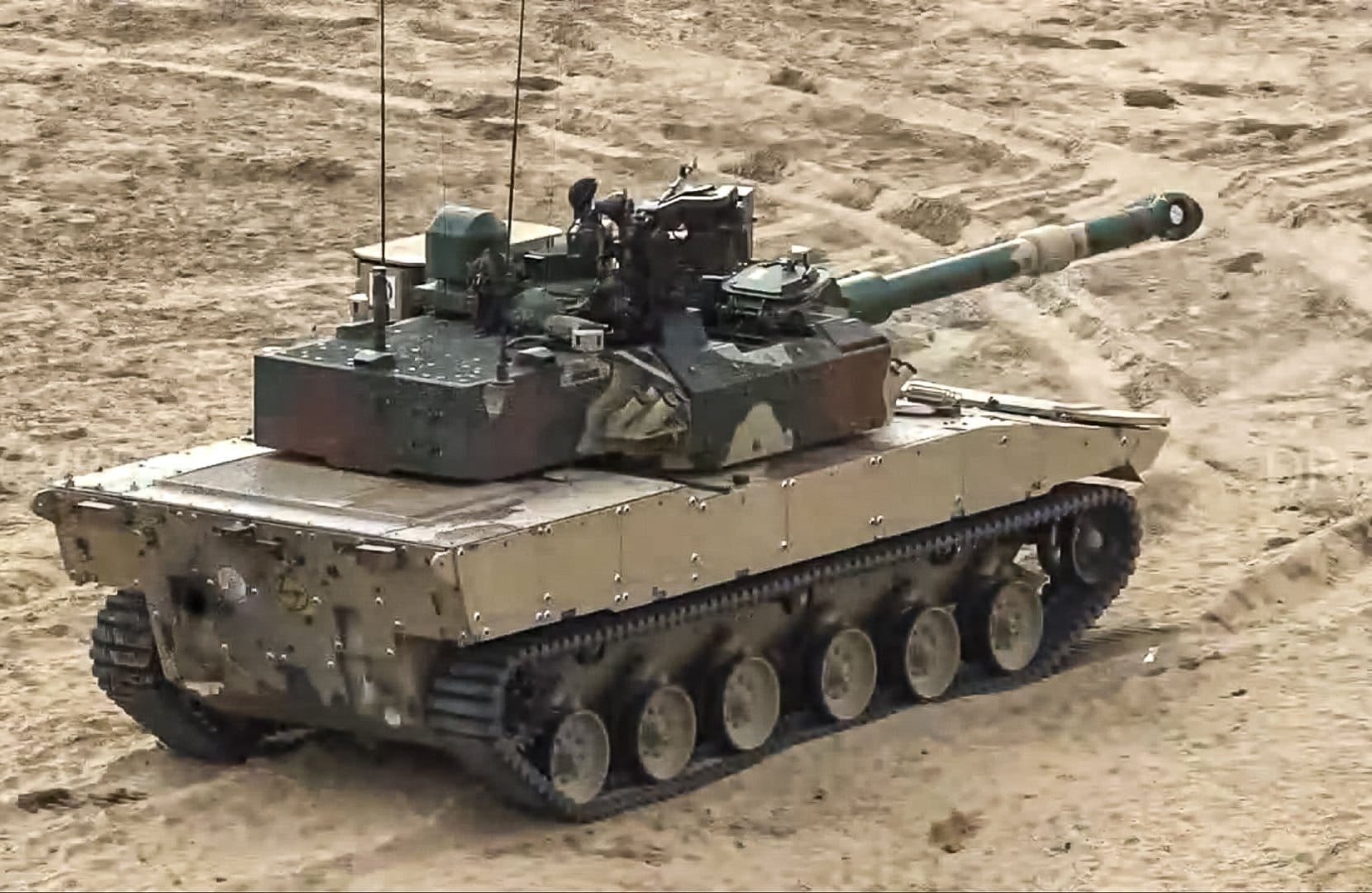
India
The Defence Research and Development Organisation (DRDO) is developing an indigenous turret for the Zorawar light tank, aiming for completion within two years. This initiative is part of India's broader efforts to enhance self-reliance in defense technology. Current Turret: Cockerill 3105 Presently, the Zorawar light tank is equipped with a modified Cockerill 3105 turret, a Belgian design. This turret features a 105mm high-pressure rifled gun, capable of firing NATO-standard ammunition. Modifications include the relocation of sights, integration of a local 12.7mm NSV remote-controlled weapon station (RCWS), and the addition of a twin anti-tank guided missile (ATGM) launcher on the turret's side. These adjustments tailor the turret to meet the specific requirements of the Indian Army. Indigenous Turret Development The DRDO, in collaboration with Larsen & Toubro (L&T), is developing an indigenous turret for the Zorawar light tank. This effort is part of Project Zorawar, which aims to produce a 25-tonne light tank optimized for high-altitude and mountainous operations. The indigenous turret is expected to integrate advanced technologies, including artificial intelligence, surveillance drones, and loitering munitions, to enhance the tank's firepower, protection, and situational awareness. Significance of Indigenous Development The development of an indigenous turret aligns with India's "Aatmanirbhar Bharat" (self-reliant India) initiative, reducing dependence on foreign defense technology. By producing critical components domestically, India aims to bolster its defense capabilities and ensure timely availability of spare parts and upgrades. This move also supports the growth of the domestic defense industry, creating employment opportunities and fostering technological innovation. The DRDO's initiative to develop an indigenous turret for the Zorawar light tank marks a significant step towards enhancing India's defense self-reliance. Upon completion, the indigenous turret is expected to offer improved performance and adaptability, reinforcing the Zorawar's role in modernizing India's armored forces.
Read More → Posted on 2025-09-24 15:37:23
Space & Technology
A Russian biological research satellite, Bion-M No. 2, has successfully returned to Earth after spending 30 days in orbit. The spacecraft, often called a “Noah’s Ark” because of the wide variety of life it carried, landed on September 19 in the Orenburg region steppes. It was launched on August 20 aboard a Soyuz-2.1b rocket from the Baikonur Cosmodrome. The Mini-Ark in Orbit Bion-M No. 2 carried a rich collection of living specimens and scientific experiments, including: 75 mice, specially selected to test sensitivity to space radiation. More than 1,500 fruit flies, ideal for studying nervous system health and reproduction. Plant seeds from various species to explore how they respond to cosmic radiation. Microorganisms and cell cultures to see how space affects tiny life forms. Samples embedded in rocks, part of an experiment called “Meteorite” to test whether microbes could survive the intense heat of reentry — supporting or challenging the theory of panspermia, the idea that life may have come to Earth from space. The spacecraft orbited at an altitude of 370 to 380 kilometers, at an inclination of about 97 degrees, exposing its passengers to higher levels of cosmic radiation than astronauts usually face on the International Space Station. The Landing and First Examinations When the capsule touched down, a small brush fire broke out near the site but was quickly extinguished. Recovery teams, supported by helicopters, rushed to retrieve the capsule and began immediate checks on the animals. Out of the 75 mice, 65 survived. Experts explained that the loss of 10 mice was mostly due to intra-group aggression among the males rather than purely the effects of space conditions. Scientists on-site examined the fruit flies, checking their motor activity to identify any nervous system problems. A medical tent was set up at the landing site for initial tests. Later, the biological samples were transported to the Institute of Biomedical Problems in Moscow for detailed laboratory studies. What Scientists Want to Learn The mission included over 30 experiments, divided into 10 main research sections: Studying gravitational physiology in animals to improve life support technologies for astronauts. Understanding how plants, microbes, and their communities adapt to space conditions. Conducting biotechnological and technical experiments for future spacecraft systems. Performing radiobiological and dosimetric experiments to improve astronaut radiation safety. Involving students from Russia and Belarus with experiments designed for education and training. Why This Matters The Bion-M No. 2 mission is more than just a biological flight — it’s a crucial step in preparing for long-duration human missions to the Moon and Mars. Key insights include: How radiation and weightlessness together affect living beings. The genetic factors that make some organisms more resilient or vulnerable. How seeds and plants cope with space conditions, supporting the idea of space farming. Whether microbes can survive extreme conditions, linking to theories of life spreading across the universe. Despite some challenges, including the death of a few mice, the mission was largely successful. The data collected will help scientists design safer spacecraft, radiation protection methods, and sustainable habitats for astronauts. In many ways, Bion-M No. 2 shows us that life — in all its forms — can endure beyond Earth. It is a reminder that every step we take in space brings us closer to understanding both our future in the cosmos and the very origins of life itself.
Read More → Posted on 2025-09-24 15:27:31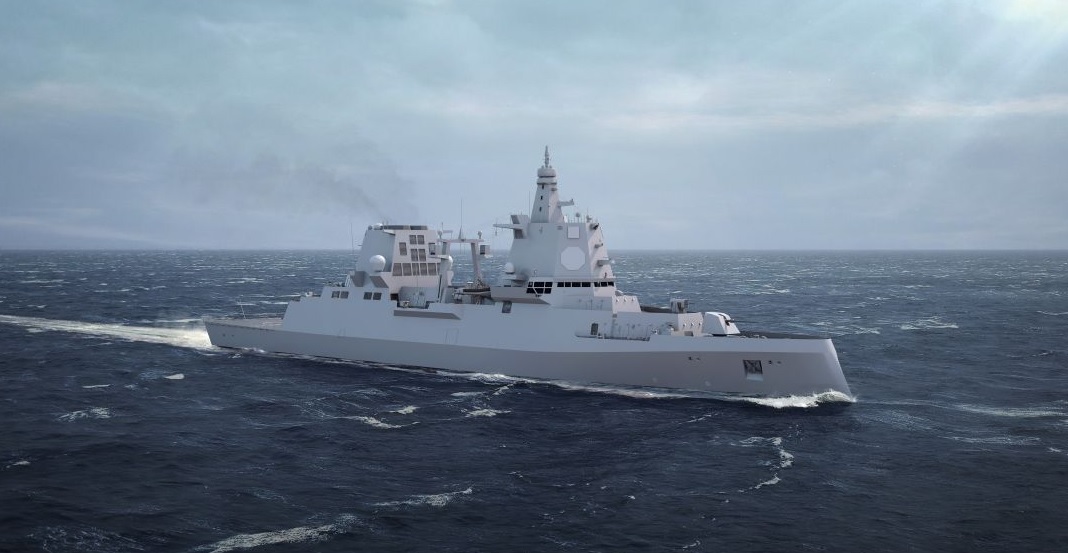
World
Germany is preparing to significantly expand its future fleet of F127-class frigates, moving beyond earlier plans for five ships with an option for a sixth. Now, discussions point toward acquiring as many as eight vessels to strengthen the German Navy. A Major Upgrade for the German Navy The F127-class is designed as a next-generation air-defence frigate, giving Germany the ability to counter not only aircraft and cruise missiles but also ballistic missile threats for the first time. This will mark a major leap in capability compared to the current Sachsen-class (F124) frigates, which the new ships will eventually replace. The frigates will be based on the MEKO A-400 AMD design by thyssenkrupp Marine Systems (TKMS), which has teamed up with NVL in a joint venture. TKMS will hold the majority stake in the project. The ships will be fitted with the U.S. Aegis Combat System as their command and control core. For radar, the German Navy is leaning toward the advanced Raytheon SPY-6, although the Bundeswehr’s Inspector General will make the final decision. Funding and Delivery The expanded plan for up to eight ships comes with a price tag of around €26 billion (over $30 billion), covering not just construction but also weapons and sensor systems. According to current planning, the first F127 could join the fleet in the early 2030s, with full delivery stretching into the mid-2030s. Industrial and Political Factors This expansion would give momentum to both German shipbuilders. TKMS is in the process of separating from thyssenkrupp ahead of a stock market listing, while NVL is being acquired by Rheinmetall. Securing a large, long-term project like the F127 would stabilize both companies and support German shipbuilding jobs. The F126 Problem Meanwhile, the parallel F126-class frigate programme—focused on anti-submarine warfare—has been delayed by technical and software issues with the Dutch prime contractor Damen. The problems involve transferring design data to German shipyards. Berlin is now weighing several options: Continue with Damen as prime contractor, Cancel the F126 outright, Transfer leadership to a German yard like NVL, Or pursue an interim solution while keeping the F126 alive. One interim option being discussed is to build a number of MEKO 200-class frigates. These ships are proven in service, adaptable for anti-submarine operations, and could be built relatively quickly using existing supply chains. Analysts suggest that four MEKO 200s could be delivered for only slightly more cost than two F126s, with the first ship potentially arriving as soon as 2029. Strategic Urgency Germany’s Defence Ministry faces pressure to act quickly. The Russian threat has been described as the decisive factor, making time—rather than money—the key constraint. Parts of the shipbuilding industry are already on short-time work while awaiting contracts, adding further urgency to Berlin’s decision-making. Germany’s choice to expand the F127 fleet underlines its intent to modernize the Navy with stronger air and missile defence capabilities, while simultaneously trying to resolve setbacks with the F126 programme. The outcome will shape not just Germany’s naval power, but also the future of its entire shipbuilding industry.
Read More → Posted on 2025-09-24 15:17:35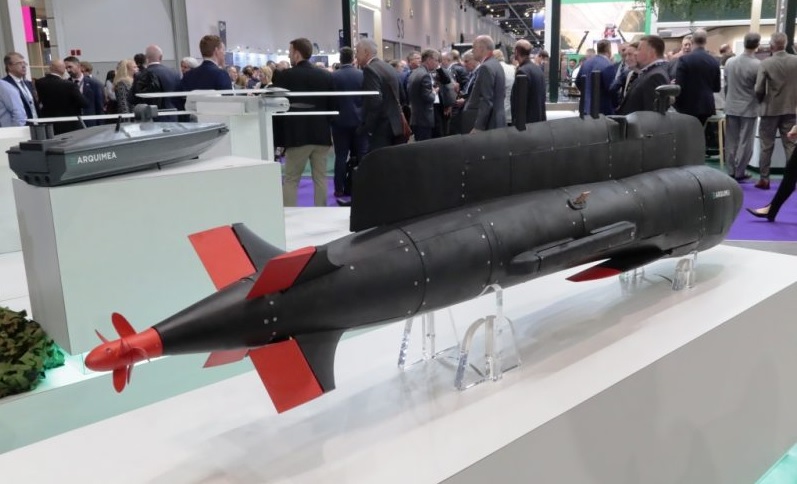
World
Arquimea of Spain has expanded into the naval loitering munition field with the acquisition of Perseo Techworks, bringing the S-Wise underwater system into its catalogue. This new platform was recently presented at the DSEI exhibition in London after earlier appearances at defense shows in Madrid. A Multirole Platform Calling the S-Wise just a loitering munition would be too narrow. It is a multirole underwater vehicle capable of working in: Loitering munition (LM/ISR) mode – carrying a warhead for strike missions while also collecting intelligence. Mine countermeasure (MCM/ISR) mode – using advanced sonars to locate and track underwater threats. Its design allows operators to swap the front section: either a 5 kg warhead (single or tandem shaped charge) or a forward-looking sonar. Design and Build Length: 2.23 metres Diameter: 0.245 metres Weight: 50 kg plus more than 30 kg payload capacity Payload volume: over 30 litres The body is hydrodynamically shaped, with deployable wings for maneuverability and an X-shaped rudder system at the rear. The hull is produced using additive manufacturing and acoustically transparent plastics, which reduces cost and makes it easier to repair or manufacture parts even aboard ships. Propulsion and Endurance The S-Wise can be fitted with either dual counter-rotating propellers for stealth or a single propeller for speed. It uses electric motors (3 kW continuous, 6 kW in boost mode) powered by Li-Ion batteries with in-house management systems. Top speed: over 8 knots Range surfaced: 85 NM at 2.75 knots Range submerged: 80 NM at 3 knots, or 30 NM at 5.2 knots Operational depth: up to 50 m with additive parts, up to 300 m with conventional housings It can operate in sea states 4–5, with launch and recovery possible up to sea state 3–4. Brains and Sensors At its core, the S-Wise uses a Perseo ORA onboard computer with a dedicated GPU optimized for artificial intelligence. This supports automatic target recognition, object tracking, obstacle avoidance, and real-time mapping. Navigation tools include an inertial measurement unit, geomagnetic device, static and dynamic pressure sensors, GNSS, and optionally a Doppler velocity log. In MCM/ISR mode, it can carry Arc Scout MK II side-scan sonar and Ranger synthetic aperture sonar. In LM/ISR mode, additional explosive wings can be fitted, raising destructive potential. Operations and Control The system maintains a man-in-the-loop approach. Operators can control it via: WiFi, LTE/5G, or long-range links when surfaced Optional USBL underwater communication when submerged The package also includes mission planning tools and a training simulator, allowing crews to rehearse missions in synthetic environments before real operations. Why It Matters The S-Wise is one of the first compact underwater systems that combines strike, reconnaissance, and mine countermeasure roles in a single, modular design. With its AI-based autonomy, low-cost production methods, and flexible payloads, it represents a new generation of naval unmanned systems ready for real-world deployment.
Read More → Posted on 2025-09-24 15:12:58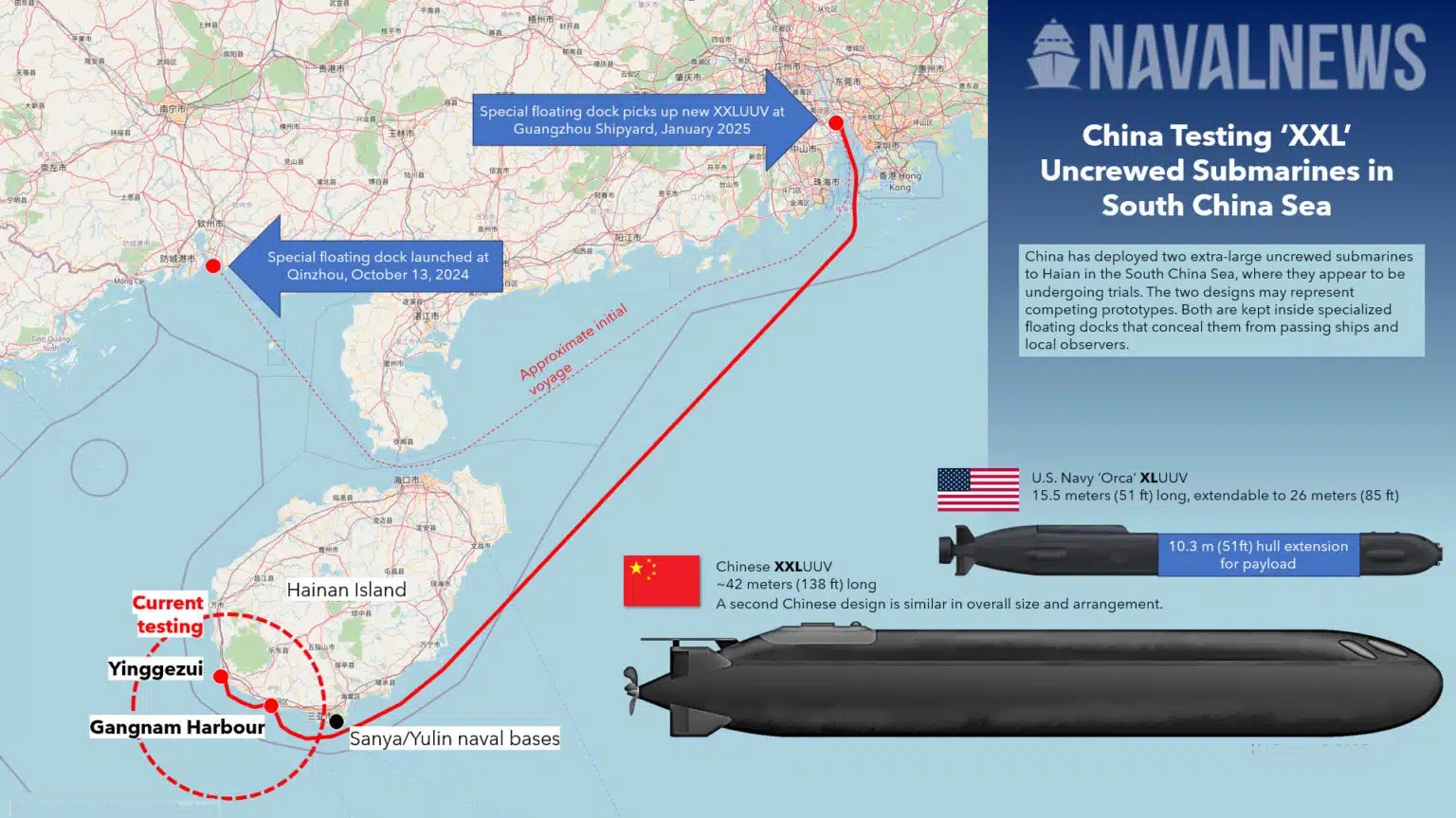
World
In recent weeks, evidence has emerged that the Chinese Navy (PLAN) is conducting secret trials of two enormous uncrewed submarines near Hainan Island, in the South China Sea. These underwater drones are far larger than what most navies currently operate, and their deployment signals a bold leap in undersea warfare. Here is a clearer, up-to-date look at what is known so far — and why it matters. What is happening? China is testing two giant underwater drones of approximately 40–42 meters in length, placing them in the same size class as many crewed attack submarines. These vessels are uncrewed — that is, autonomous or remotely operated — rather than conventional manned submarines. They are being stationed in floating docks rather than in conventional submarine pens or on quay walls. One dock, named Zhuan Yong Fu Chuan Wu 001 (Special Floating Dock 001), was completed in 2024 and has already been used to move one of the new underwater drones. The floating docks allow the drones to be launched, recovered, hidden, or transported away from busy ports, reducing detection risk and logistical constraints. The drones are currently test-operating in waters off Gangmen Harbour and Yinggezui, on the western coast of Hainan near Sanya. These new vessels appear to lack a traditional sail (conning tower) and feature X-shaped rudders at the stern — design features more akin to advanced submarine hulls than small underwater drones. The 705 Research Institute (part of China Shipbuilding Industry Corporation, CSSC) is believed to be involved in their development. Why is this significant? 1. A new class beyond ‘XLUUV’ Navies in the West currently use or explore XLUUVs (extra-large uncrewed underwater vehicles). But at this scale — some 10–20 times the size of those — China’s vessels challenge the limits of what “XL” implies. Some analysts propose new labels such as XXLUUV or Ultra-Large UUV to reflect their scale and capabilities. Because they are so big, their roles are expected to be richer and more complex than those of standard underwater drones: They may carry large payloads of weapons (torpedoes, mines, missiles) or specialized sensors. Their sensor suites may approach the strength of manned submarines, with more powerful sonar or intelligence equipment. Without the constraints of space and life support for a crew, their volume can be dedicated more fully to payloads, energy storage, and autonomy systems. 2. Stealth, surprise, and strategic flexibility By using floating docks, China can conceal operations, appear to shift the docks away from port when needed, and avoid interference with normal shipping and port traffic. It’s a way to maintain operational secrecy and flexible deployment. China’s experiment may stretch how navies think about unmanned submarine warfare: large-scale drones functioning as force multipliers in the undersea domain, operating alongside conventional submarines, surface ships, and drones. 3. China is moving fast — and at scale While many Western navies and defense firms are only now ramping efforts to field large underwater drones, China appears significantly ahead in both ambition and investment. The appearance of two large prototypes (or competing designs) shows China is not just experimenting, but entering a serious contested domain in underwater robotics. Moreover, China already has a spectrum of XLUUV programs known or inferred from open sources, possibly five or more types under development. The new vessels seem to represent a higher, more ambitious tier in that hierarchy. 4. Strategic implications for regional and global navies These drones could complicate surveillance, anti-submarine warfare, and undersea domain control for rival powers in the region. They raise the bar for counter-drone and detection systems: dealing with an ever larger, more stealthy, and potentially armed drone submarine is far more demanding than countering small UUVs. In strategic hotspots like the Taiwan Strait or the South China Sea, they could be used to lay mines, conduct covert surveillance, or interdict undersea communications — without risking a human crew. Western navies will likely feel pressure to accelerate their own programs for large underwater drones, invest more in detection and countermeasures, and rethink submarine fleet structure and tactics. What is still uncertain (and what to watch) Propulsion: It is unclear whether these vessels use diesel engines, large battery systems, fuel cells, or hybrid systems. There is currently no credible evidence they are nuclear-powered. Autonomy and control: The AI, autonomy, navigation, and decision systems must be highly advanced to allow them to operate reliably undersea. Exact payloads: While torpedoes, mines or missiles are plausible, how many and what kind remain speculative. Operational patterns: How far they will patrol, whether they will launch from mother ships or from coastal facilities, and how they integrate with manned assets remain to be seen. Public reveal: China may reveal these or similar drones in future parades or defense expos. Observers are also watching if more floating dock assets appear at Hainan or elsewhere. China’s testing of these giant uncrewed submarines signals a potential shift in undersea warfare. Rather than simply scaling up existing drone designs, China seems to be creating a new class of vessel — one that blurs the line between autonomous underwater vehicle and full-fledged submarine. If they become operational, these drones could change how navies project undersea power, structure their fleets, and defend sea lanes. The world is entering a new era where uncrewed platforms may become peer competitors in the deep.
Read More → Posted on 2025-09-24 15:06:50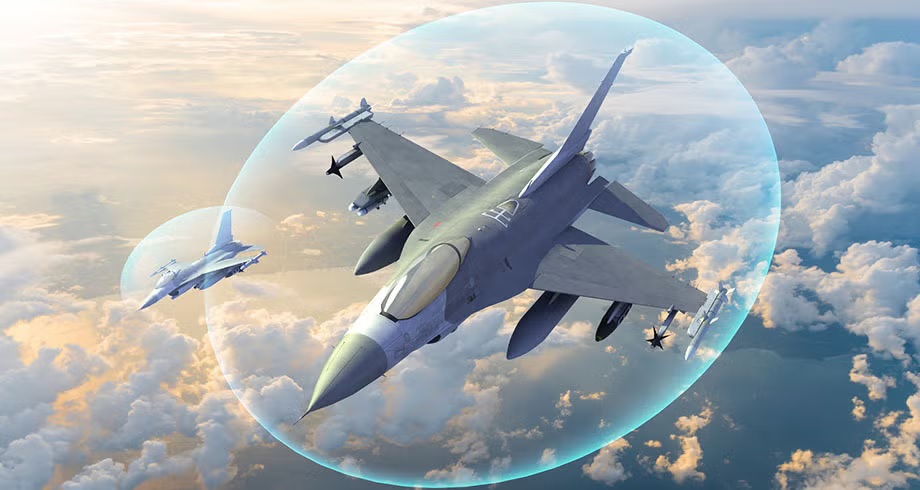
World
L3Harris has unveiled a podded variant of its Viper Shield electronic warfare system, giving nations operating the F-16 fighter jet greater freedom in how they modernize and protect their aircraft. The new version offers the same level of protection as the internally mounted system but allows operators to move the equipment between jets depending on mission needs. According to the company, seven U.S. partner nations have already chosen Viper Shield, with Poland being the most recent customer. For air forces flying older F-16s, especially Block 50 and earlier, the pod option provides an easier path to upgrade, avoiding extensive airframe modifications while still enhancing survivability. The podded system and the internal version are built around identical components. This ensures full interoperability among coalition partners and simplifies logistics. Because the pod can be removed and maintained separately from the aircraft, it also reduces downtime and streamlines servicing. Viper Shield’s design reflects decades of electronic warfare experience. It is lighter, smaller, and more modular than previous F-16 systems, making it suitable across all F-16 blocks. The system incorporates advanced features such as a digital radar warning receiver, digital radio frequency memory jamming, and seamless integration with modern AESA radars. Its software-defined architecture allows future technologies—like advanced situational awareness tools and radar countermeasures—to be integrated without major redesigns. The affordability of Viper Shield is another advantage. With an active production line, combined with partner nation funding and company investment, the system can be produced at scale. Since the pod can serve multiple aircraft, fewer units are required, which further reduces acquisition costs. For countries upgrading their F-16 fleets, the choice between internal installation, podded variant, or a mix of both offers unmatched flexibility. With both systems sharing the same backbone, upgrades and enhancements can be applied universally. As L3Harris notes, the goal is clear: extend the operational life of the F-16, ensure it can survive modern battlefields, and most importantly, bring pilots home safely.
Read More → Posted on 2025-09-24 14:59:03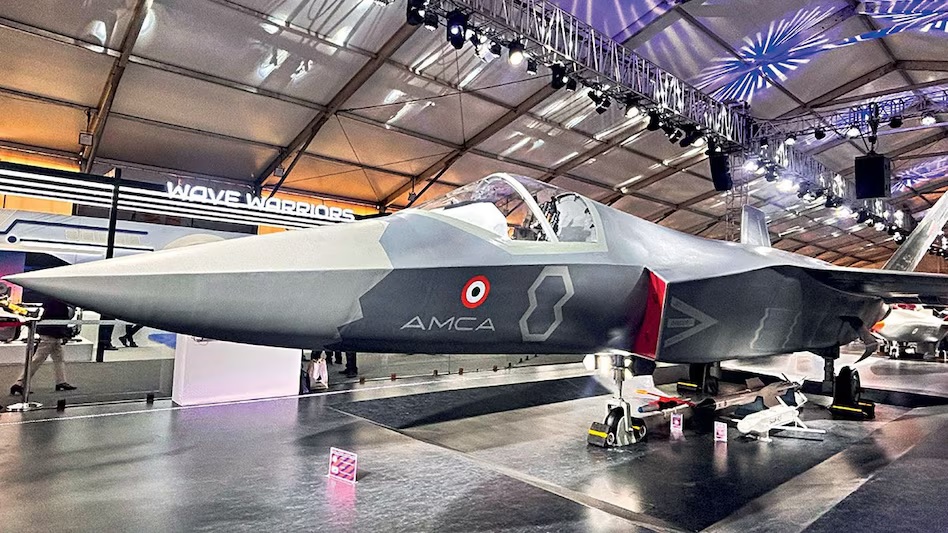
India
In a major boost to India’s defence capabilities, Larsen & Toubro (L&T) has joined hands with Bharat Electronics Limited (BEL) to support the Advanced Medium Combat Aircraft (AMCA) programme, the country’s indigenous fifth-generation fighter jet project for the Indian Air Force (IAF). The consortium is set to respond to the Government of India’s Expression of Interest (EoI) in the coming weeks. This partnership brings together L&T’s expertise in defence and aerospace platforms with BEL’s strengths in defence electronics and systems, aligning with the vision of an ‘Atmanirbhar Bharat’ (self-reliant India). Both companies have previously played key roles in India’s Light Combat Aircraft (LCA) programme, with L&T supplying major aero-structure modules and BEL developing critical avionics and electronic systems. The new collaboration aims to deliver a world-class, high-tech solution for the IAF. S N Subrahmanyan, Chairman & Managing Director of L&T, said, “This partnership marks a significant leap in modernising India’s defence capabilities. Together, we will strengthen national security and advance self-reliance in defence technologies.” Manoj Jain, Chairman & Managing Director of BEL, added, “The AMCA project showcases India’s growing technological capabilities in defence. Our collaboration with L&T will ensure the IAF receives a state-of-the-art aircraft that will serve the nation for decades.” The AMCA is a twin-engine stealth fighter developed by the Aeronautical Development Agency (ADA) and the Defence Research and Development Organisation (DRDO). The first prototype is expected by 2028, with the first flight anticipated in 2029 and series production by 2035. The aircraft is a key part of India’s push for defence self-reliance under the ‘Make in India’ initiative. The L&T-BEL partnership underscores a major step forward in indigenous defence manufacturing and strengthens India’s technological edge in modern warfare.
Read More → Posted on 2025-09-24 14:53:28
History
The story of how the U.S. dollar became the world’s most powerful currency is a long journey that begins in the early 20th century and spans wars, economic shifts, and global agreements. Its rise was not automatic but was shaped by historic events that altered the balance of global finance and politics forever. The Early Beginnings Before the dollar gained prominence, the global financial world was dominated by the British pound sterling, which had been the primary international currency during the 19th century. Britain’s vast empire, powerful navy, and control of global trade routes allowed the pound to hold this dominant position. The U.S. dollar was officially created in 1792 with the passage of the Coinage Act, which established the U.S. Mint. Initially, the dollar was backed by gold and silver, making it a stable medium of exchange but not yet a global power. For more than a century, America’s economy was still growing, and the pound remained the world’s leader. World War I: The Turning Point The first major shift came with World War I (1914–1918). European powers, especially Britain, France, and Germany, spent enormous amounts of money on the war. To finance it, they borrowed heavily from the United States, which had stayed out of the conflict until 1917. By the end of the war, the U.S. had transformed from a debtor nation to the world’s largest creditor nation, holding huge reserves of gold. This meant the dollar was increasingly seen as more stable than the weakened pound, which had been drained by wartime expenses. The Gold Standard and Interwar Years In the 1920s, the world attempted to return to the Gold Standard, where currencies were directly tied to gold. The U.S. possessed most of the world’s gold reserves, giving the dollar immense strength. However, the Great Depression in the 1930s shook global economies, leading many nations to abandon the gold standard. The U.S., under President Franklin D. Roosevelt, officially suspended gold convertibility for domestic citizens in 1933, but the dollar was still partly tied to gold for international trade. This period marked a struggle for dominance between the pound and the dollar. World War II and Bretton Woods Agreement The decisive moment came during World War II (1939–1945). Once again, European nations were forced to borrow massive sums from the U.S., while their economies and infrastructures were devastated by war. By contrast, the American homeland was untouched, and its economy surged due to wartime production. In July 1944, the world gathered at the Bretton Woods Conference in New Hampshire, where 44 nations agreed to a new global financial system. The key decision was that the U.S. dollar would be tied to gold (at $35 per ounce), while all other currencies would be pegged to the dollar. This effectively made the dollar the world’s reserve currency, replacing the pound. The Post-War Era and Dollar Dominance After 1945, the U.S. was the only nation with both strong industrial output and massive gold reserves. The Marshall Plan spread dollars across Europe to rebuild war-torn economies, while international institutions like the International Monetary Fund (IMF) and World Bank were created with the dollar at their core. The Cold War further expanded the dollar’s influence, as American allies relied on U.S. aid, trade, and military protection. The dollar had now become not just a currency but a symbol of global stability. The Nixon Shock and Petrodollar System By the late 1960s, America’s spending on the Vietnam War and domestic programs caused financial strain. Foreign nations, especially France, began demanding gold in exchange for dollars, draining U.S. reserves. In response, President Richard Nixon announced in 1971 that the U.S. would no longer convert dollars into gold—this became known as the Nixon Shock. Although the Bretton Woods system collapsed, the dollar retained its dominance because of a new arrangement: the Petrodollar system. In the 1970s, the U.S. struck a deal with Saudi Arabia and other oil-producing nations that oil would only be sold in dollars. This meant that countries around the world needed dollars to buy oil, ensuring continuous global demand. Globalization and Financial Power Through the 1980s and 1990s, the U.S. dollar became the backbone of international finance, trade, and investment. It was the currency used for global commodities, foreign reserves, and international loans. The rise of globalization, coupled with Wall Street’s influence, cemented the dollar’s role. The fall of the Soviet Union in 1991 further boosted U.S. dominance, leaving the dollar as the unchallenged global standard. The Dollar Today In the 21st century, the dollar still accounts for over 60% of global foreign exchange reserves and dominates international trade. Even with challenges from the euro and Chinese yuan, the dollar’s deep financial markets, global trust, and political-military backing make it unrivaled. Every crisis—from the 2008 financial crash to the COVID-19 pandemic—has only strengthened the dollar’s role as the world’s safe haven. The rise of the U.S. dollar to global supremacy was not by chance but by a chain of historic events—World Wars, the Bretton Woods Agreement, the Nixon Shock, and the Petrodollar system. Backed by America’s economic strength, military power, and global influence, the dollar transformed from a national currency into the backbone of the world economy. It remains the most powerful financial tool ever created, shaping geopolitics and trade in ways that continue to define our modern world.
Read More → Posted on 2025-09-24 14:28:55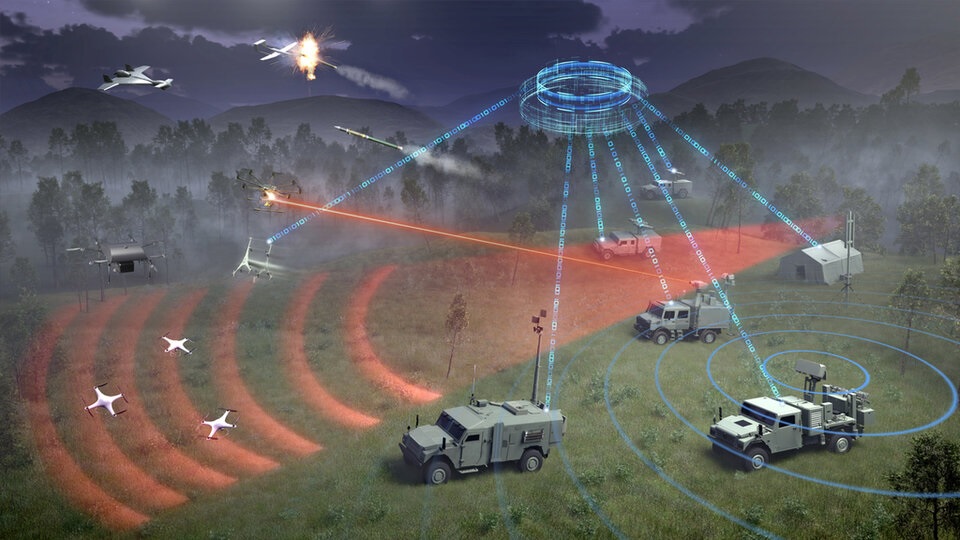
India
India has set its sights on creating one of the world’s most advanced protective shields, called Sudarshan Chakra. This ambitious project, announced by Prime Minister Narendra Modi as a 10-year mission, is being described by top defence officials as the “mother of all air defence systems”. It will combine multiple layers of defence technology, from counter-drone weapons to anti-hypersonic systems, making it one of the most comprehensive projects India has ever attempted in air defence. What is Sudarshan Chakra? The Sudarshan Chakra air defence system is being designed to protect India from every kind of aerial threat. It will include: Counter-Drone and Counter-UAV Systems – to detect, jam, and neutralise hostile drones and swarms. Counter-Hypersonic Defences – to intercept extremely fast hypersonic missiles. Layered Missile Interceptors – with ranges of about 150 km, 250 km, and 350 km, ensuring threats can be destroyed at different distances. Integrated Sensors and AI-driven Surveillance – combining radars, satellites, and artificial intelligence to track and respond in real time. Soft Kill and Hard Kill Capabilities – meaning the system will both electronically disable enemy weapons and physically destroy them if required. Officials say the vision is for Sudarshan Chakra to act not only as a shield but also as a sword, deterring attacks and giving India the option to strike back if necessary. Why is it Needed? Recent conflicts worldwide have shown the devastating impact of cheap drones and loitering munitions on expensive defence assets. In wars such as Russia-Ukraine and Azerbaijan-Armenia, drones have changed the battlefield by striking high-value targets at very low cost. Closer to home, during Operation Sindoor earlier this year, India successfully defended against drone intrusions using counter-drone and GPS-jamming systems. However, some hostile drones used artificial intelligence and visual navigation to bypass GPS jamming, proving that adversaries are also becoming smarter. Air Marshal Ashutosh Dixit, Chief of Integrated Defence Staff, explained that India must always stay “two steps ahead” of its rivals, as war is like a game of chess where the opponent constantly adapts. Lessons from Operation Sindoor From my perspective, Operation Sindoor was a turning point for India’s defence preparedness. The fact that most hostile drones were neutralised shows that our counter-drone and GPS-jamming systems are already quite effective. Yet, I believe this success cannot lull us into complacency. The adversary is watching, learning, and preparing. The next wave of drones or loitering munitions will almost certainly be more advanced—smarter, faster, and harder to stop. That is why the Sudarshan Chakra project feels so crucial. It isn’t just about repeating old successes, but about staying unpredictable, always surprising the enemy with something they didn’t anticipate. Challenges In my view, the challenges before Sudarshan Chakra are immense. To begin with, integration will be the toughest task—bringing together radars, satellites, missiles, AI, and surveillance into a single, seamless shield is no small feat. Then there’s the issue of costs. Building a system of this scale demands massive financial resources, and India will have to carefully balance defence spending with other national priorities. What worries me most is the pace of evolving threats. Every time we innovate, our adversaries also upgrade. The race is constant, and there’s no finish line. Finally, the technological demands—especially developing hypersonic interceptors and dependable AI-powered defences—are at the cutting edge of science. These are not easy achievements, but India has shown resilience in turning ambitious visions into reality. Timeline Looking ahead, I see the journey of Sudarshan Chakra unfolding in phases. The first real steps will be the trials of long-range missile interceptors, expected around 2026. If all goes well, early deployment could happen by 2030, with full nationwide coverage only by 2035. This means Sudarshan Chakra is not a short-term fix but a long-term shield, one that will grow and evolve over the next decade. Patience, persistence, and constant upgrades will be the keys to its success. To me, Sudarshan Chakra represents more than just another defence project—it is a statement of intent. It signals that India is ready to create an indigenous system on par with the world’s most advanced shields like Israel’s Iron Dome and Russia’s S-400, but designed uniquely for India’s security environment. As Air Marshal Dixit wisely pointed out, future wars will not be won by bravery alone. They will be won by innovation, speed, and foresight. And that is exactly what Sudarshan Chakra is meant to embody: India’s determination to stay one step ahead, no matter how fast the threats evolve.
Read More → Posted on 2025-09-24 14:23:22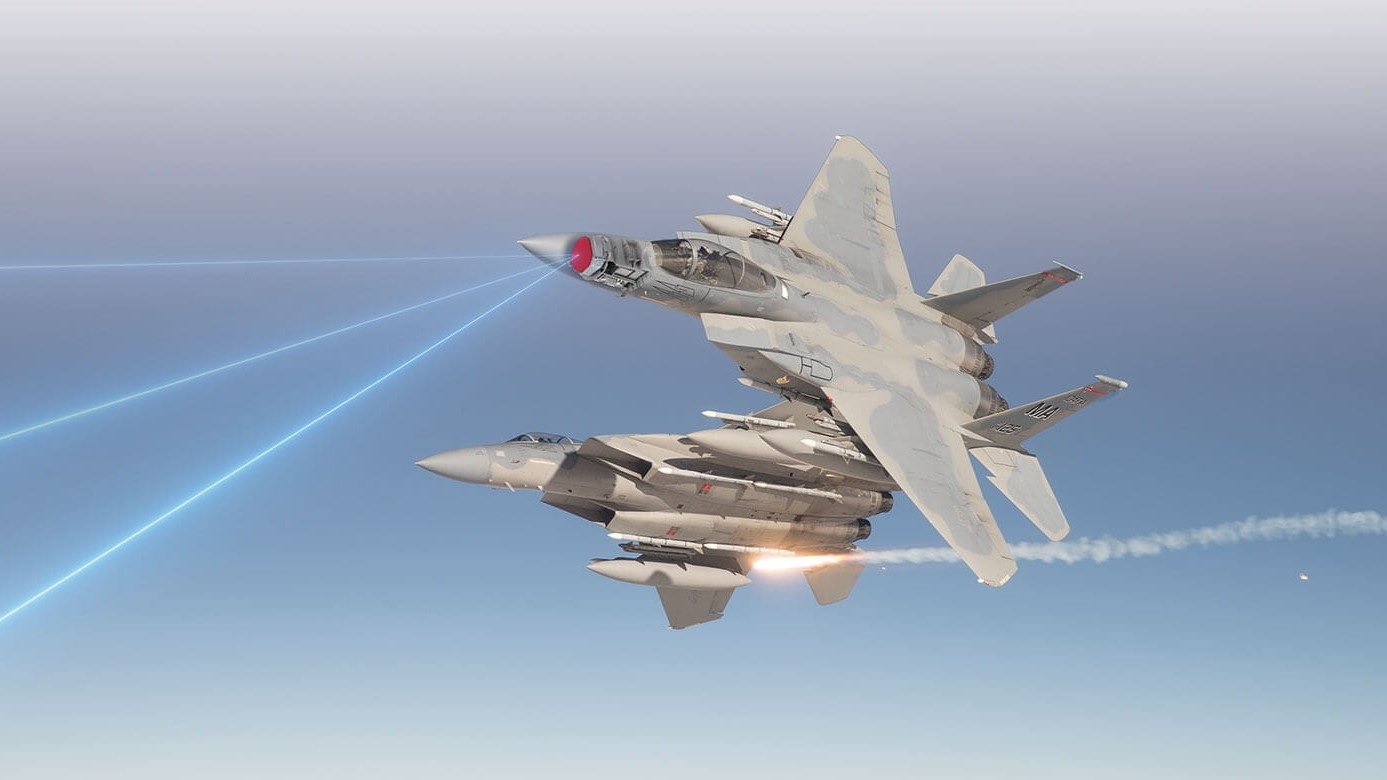
World
Raytheon, an RTX business, has officially unveiled the APG-82(V)X, the latest version of its combat-proven APG-82 radar family. This advanced system integrates gallium nitride (GaN) technology, offering greater range, higher efficiency, and stronger performance in air-to-air, air-to-ground, and electronic warfare missions. What is the APG-82(V)X? The APG-82(V)X is an Active Electronically Scanned Array (AESA) radar. Unlike older mechanically scanned radars, AESA radars use thousands of transmit/receive (T/R) modules to electronically steer radar beams. The upgrade to GaN modules allows higher power density, better heat handling, and longer range — all without requiring more energy. The radar is fully multi-functional. It can track aircraft, map terrain, and conduct electronic warfare such as jamming or countering enemy radars. Its open architecture and scalable design ensure it can be upgraded as threats evolve. Raytheon highlights its ability to provide a “first-look, first-shoot” advantage, meaning aircraft equipped with the radar can detect threats earlier and engage them before being targeted themselves. Which Aircraft Will Use It? The primary aircraft for the APG-82(V)X is the F-15EX Eagle II, the U.S. Air Force’s latest F-15 variant. The current APG-82(V)1 already equips the F-15EX, and the new (V)X version is being developed as its successor. The radar is also a strong retrofit option for the F-15E Strike Eagle fleet. Because it matches the size and weight of earlier versions, it can be installed without major structural changes. International operators of F-15 variants that currently use earlier APG-82 radars may also be offered upgrades in the future. Key Technical Advantages GaN T/R Modules: Higher output power and thermal efficiency, extending range. Larger Array: More elements within the same footprint, providing stronger detection capability. Faster Processing: New processors allow multiple functions at once with lower latency. Wider Frequency Agility: Operates across broader bands, making it harder to jam. Low Probability of Intercept: Agile beam steering and frequency hopping make the radar harder to detect by enemies. Modular Upgrades: Components like processors can be backfitted into existing APG-82(V)1 radars. Simple Understanding In simple terms, the APG-82(V)X is like giving the F-15 a sharper, smarter, and more powerful “eye.” It can see farther, react faster, and operate in multiple roles at once — from spotting enemy fighters and cruise missiles to scanning the ground and jamming threats. Thanks to GaN technology, it can do all this without demanding more power from the aircraft. For pilots, this means earlier warning, quicker engagement, and better chances of survival in contested environments.
Read More → Posted on 2025-09-24 14:15:42
World
On Tuesday, September 23, 2025, the Spanish government approved a “total” arms embargo on Israel. The measure is part of a wider nine-point package proposed by Prime Minister Pedro Sánchez to respond to the military conflict in Gaza, which he described as “genocide.” What the Embargo Does Under the new decree: All exports from Spain to Israel of defense equipment, dual-use goods or technologies (products that can be used for civilian or military ends) are banned. All imports into Spain of defense or dual-use goods from Israel are also prohibited. The decree blocks the transit of aircraft fuel through Spain if that fuel could have military applications. It bans imports, sales, and even advertising of goods originating from Israeli settlements in occupied Palestinian territories. Spain will also refuse Spanish ports or airspace access for arms shipments bound for Israel. Although the decree takes effect immediately, it must be ratified by Spain’s parliament within 30 days to remain valid. Some observers note that the text allows “exceptions in exceptional cases of national interest,” which could be politically contested. Why Spain Did It Spain says the embargo is a way to legislate what it says had been a de facto ban since the start of Israel’s recent military actions in Gaza. The government frames it as a moral and diplomatic step in defense of international humanitarian law, human rights, and in protest against civilian suffering in Gaza. By making the embargo more robust and legally binding, Spain is also signaling to other European nations and the global community that it expects stronger action against arms flows in conflict zones. How Much, and How Big an Effect on Israel? Past Arms Exports from Spain to Israel According to data from the United Nations COMTRADE, Spain’s exports of arms, ammunition, parts, and accessories to Israel in 2024 were just about USD 553 (i.e., negligible). A Spanish government report, however, shows that between January 2023 and June 2024, Spain sold nearly €50 million of “non-lethal” defense items to Israel (mostly before the full Gaza war intensified). The Spanish research group Delàs claims that from October 2023 to March 2024, there were 88 shipments from Spain to Israel, valued at €5.3 million, mostly in ammunition/munitions. Spain also had approved contracts with Israeli defense firms: for example, a contract with Rafael (an Israeli defense company) to provide a laser guidance system for Spanish Eurofighter jets was cancelled after rising controversy and the new embargo. Thus, Spain’s direct military exports to Israel in recent years have been quite limited. Most of what was exported was either non-lethal or pre-approved before the October 2023 war escalation. Will It Hurt Israel? In my view, the Spanish embargo is not going to deal a major blow to Israel’s military strength. Spain was never one of Israel’s big suppliers; that role is mainly played by the United States, Germany, and Israel’s own powerful domestic industry. The items that did come from Spain were mostly non-lethal equipment and spare parts, not the kind of offensive weapons that Israel depends on in war. That’s why the embargo feels more like a political message than a military threat. Spain is saying: “We refuse to contribute even indirectly to this conflict.” And that matters diplomatically, because it can pressure other countries in Europe and beyond to consider similar steps. That said, some disruptions may happen. For example, contracts with Israeli firms like Rafael or agreements involving Spike anti-tank systems could get complicated. Such cancellations won’t cripple Israel, but they could make cooperation harder in the short term. So, in the end, the embargo won’t starve Israel of weapons, but it closes a door and sends a strong signal — one that strengthens Spain’s moral and legal position. Challenges & Political Risks Here, Spain is not free from problems either. The government itself is a minority coalition, so getting parliamentary approval will be tricky. Opposition parties or even allies might demand to water down the “exceptions” clause, making the decree less strict. On the business side, Spanish companies tied to Israel may lose contracts and money, and they might even push back legally. Also, Spain’s own military could feel some pain if it has to replace Israeli components or technology that it had been using. That could mean higher costs and engineering headaches down the road. And of course, critics are already saying this is just symbolic — a gesture that doesn’t really change anything on the battlefield. To me, Spain’s embargo looks like a bold diplomatic gesture rather than a practical military sanction. It may not weaken Israel’s arsenal in any serious way, but it does put Spain on record as one of the strongest critics of the Gaza war in Europe. That symbolism carries weight — it spotlights arms flows in conflict zones and may inspire other countries to follow Spain’s example.
Read More → Posted on 2025-09-24 14:05:00
India
Raipur — Special Blasts Limited (SBL) is set to increase production of military-grade explosives from 3,000 to 8,000 metric tonnes per annum (MTPA). The move is part of a major expansion that includes new lines for TNT as well as high-energy materials such as RDX and HMX, and the company is preparing to make fully integrated ammunition (including 155 mm artillery shells) at the enlarged site. This article explains, in simple terms, what the announced rise to 8,000 MTPA means — and gives a practical estimate of how many rounds that volume of explosive could fill. (Numbers below are estimates based on typical explosive-filler weights; actual final outputs will vary with product mix, manufacturing losses, allocation to propellants vs. bursters, and government contracts.) What the expansion covers SBL will boost capacity at its plant to 8,000 MTPA (up from 3,000). The expansion reportedly includes increased TNT output and new production for HMX/RDX, and the company intends to move into integrated ammunition production (not just explosive filler). The project involves significant capital expenditure and land approvals; SBL has sought additional land to house the expanded units and related infrastructure. How we estimate “how much ammunition” 8,000 MTPA could make Assumption used: 8,000 metric tonnes = 8,000,000 kilograms of explosive filler per year.Below are example calculations using typical explosive filling weights for common munitions. These are illustrative only — the real mix (TNT, RDX, HMX, Comp B, burster/booster charges, fuzes, propellant, casing, waste) will change the outcome. Representative explosive-filler weights used for examples: 155 mm (M107-type) — about 6.6–6.9 kg of explosive filler per shell. 155 mm (M795-type / higher-energy designs) — around 10.8 kg of explosive filler per shell. 122 mm artillery — roughly ~3.4 kg of explosive filler. 81 mm mortar — roughly 0.7 kg of explosive filler per round. 120 mm mortar — roughly 1.5–2.0 kg of explosive filler per round. Using those typical filler weights and 8,000,000 kg of explosive per year, the estimated number of filled warheads (rounded down) is: 155 mm (M107, ~6.86 kg filler): ≈ 1,166,180 shells per year. 155 mm (M795, ~10.8 kg filler): ≈ 740,740 shells per year. 122 mm (~3.46 kg filler): ≈ 2,312,138 shells per year. 81 mm mortar (~0.7 kg filler): ≈ 11,428,571 mortar bombs per year. 120 mm mortar (~2.0 kg filler): ≈ 4,000,000 mortar bombs per year. (These calculations divide 8,000,000 kg by the listed filler weight and round down to whole rounds — they show order of magnitude, not the precise production plan.) What the numbers mean, in plain language Scale: 8,000 MTPA of explosive filler is a very large annual output for a private-sector plant and would let SBL supply millions of small mortar rounds or hundreds of thousands of artillery shells, depending on how the explosives are allocated. Product mix matters: If SBL dedicates more output to high-energy explosives (RDX/HMX) or to sophisticated warheads/loitering munitions, the number of finished rounds will drop (because those warheads often use different formulations or more mass goes to casings and electronics). If the focus is bulk TNT filler for conventional HE shells, the numerical counts above are more applicable. Other uses: Not all explosive output becomes filled artillery shells. Some goes to boosters, shaped charges, propellant charges, demolition charges, training/industrial explosives, or is set aside as stock. Manufacturing yield losses and quality-control rejects also reduce the final count. Strategic effect: For the defence industrial base, a big private expansion can help replenish stocks more quickly, support export opportunities, and reduce pressure on public munitions factories — but it also requires rigorous licensing, safety, and environmental oversight. SBL’s jump to 8,000 MTPA is a major scale-up: in straight-fill terms it could translate to hundreds of thousands of artillery shells or millions of mortar bombs per year, depending on the type of ammunition produced. These are estimates to help understand scale — actual outputs will depend on SBL’s product mix, how much is used for propellants or non-munition purposes, and contract priorities set by defence customers.
Read More → Posted on 2025-09-24 07:53:34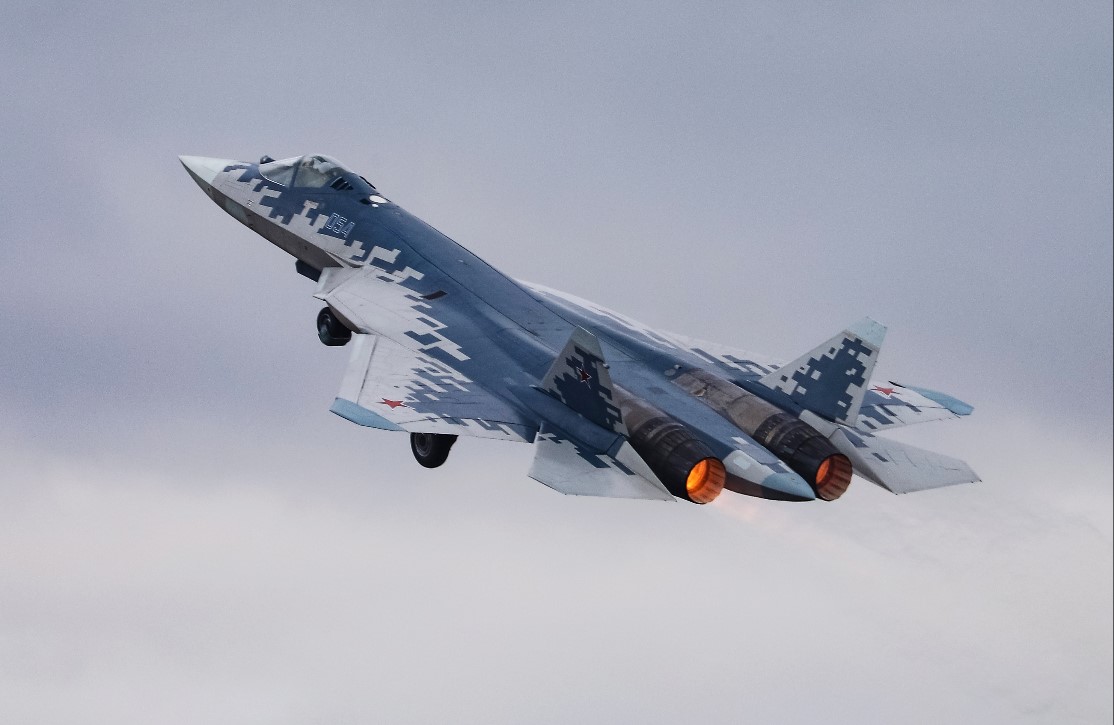
India
Su-57: India is reported to be examining the purchase of two squadrons of Russia’s Su-57 fifth-generation fighter in fly-away condition, while exploring local assembly/production for another 3–5 squadrons under a Make-in-India arrangement. This move is being discussed as a way to quickly boost IAF fifth-generation capability while building local industry capacity over the next few years. What the Su-57 offers The Su-57 is Russia’s answer to a modern, multi-role, low-observable fighter: sensor fusion, internal weapons bays, advanced avionics and aircraft shaping that reduces radar returns compared with older fighters. For India, buying a small number of finished jets (fly-away) plus assembling others locally would give a faster operational edge while transferring manufacturing know-how. Engines and why that matters for stealth Two engines commonly discussed around the Su-57 are: AL-41F1 / Product 117 — the interim engine derived from the AL-31 family. It has powered early Su-57 prototypes and initial production jets but was always considered a stopgap. Izdeliye-30 / AL-51 (Product 30) — the next-generation “clean-sheet” engine being developed to replace the interim powerplant. It promises higher thrust, better fuel efficiency, lower maintenance and design features that reduce signatures. Why the engine affects stealth in practice: Nozzle shape and materials: A round, exposed afterburner nozzle reflects radar and emits a strong infrared (IR) signature. Newer engine designs for stealth fighters use nozzle geometries and serrated/treated surfaces to lower radar returns and scatter heat — for example, recent Su-57 prototypes have been seen testing flatter, 2-D thrust-vectoring nozzles which improve stealth compared with older round nozzles. Heat and IR: Engines are the hottest part of a jet. Even if the airframe shape is low observable, a hot exhaust makes detection by IR sensors easier. New engine tech aims to manage exhaust temperature and flow to make the aircraft harder to spot with IR seekers. Because the Su-57 initially flew with an interim engine, its early stealth performance has been considered less complete than Western fifth-generation jets that were designed from day-one around specific low-observable engines and exhaust treatments. That’s why Indian and other analysts describe some aspects of the Su-57 as “partially stealthy” rather than fully stealth-optimized yet. Can India “fit” better engines or finish stealth upgrades locally? In principle, yes — Russia’s development path for the Su-57 already plans the newer Izdeliye-30 engine as a drop-in replacement for production aircraft. A production/assembly arrangement with technology transfer could allow India to fit later-generation engines and nozzle treatments on locally assembled airframes as those upgrades mature. But there are real caveats: Technology and timelines: Product-30 development has had delays; full series production and mature reliability take time. India would need to coordinate delivery schedules and likely accept a phased introduction (interim jets first, upgraded engines later). Industrial readiness: Local assembly of a fifth-generation fighter requires deep industrial capability — not just final assembly but supply chains, composite manufacturing, precision systems and avionics integration. HAL and Indian industry know how to assemble complex aircraft, but full tech transfer for engines/nozzles is a separate, sensitive domain. Why India might still find the Su-57 attractive Faster squadron build-up: Buying a small number of finished jets gets capability into service faster than waiting for domestic AMCA to mature. Make-in-India potential: A local assembly line for Su-57 components would boost domestic jobs and give HAL experience with 5th-gen manufacturing under license. Operational pairing with S-400: India already operates the S-400 long-range surface-to-air missile system. The Su-57’s sensors and datalinks can benefit from integration with ground-based radars and command systems (shared situational awareness, queued targeting and layered defence). In simple terms: a long-range S-400 radar can see targets at very long ranges and share cues with fighters, helping them survive and operate more effectively in contested airspace. That networked approach is a practical force multiplier. Straight talk: limitations and the tradeoffs Not “invisible” — even modern stealth fighters are not literally invisible; they reduce detection ranges and signatures in certain bands and angles. The Su-57’s early engine/nozzle choices meant compromises between raw maneuverability, thrust-vectoring and some aspects of low observability. Upgrade path matters: If India wants the most mature stealth performance, it will depend on timelines for engine upgrades (Izdeliye-30 / AL-51 family) and nose/skin/IR suppression technologies — and on how much of that technology Russia is willing to transfer. India’s interest in two fly-away Su-57 squadrons plus local assembly of several more is a pragmatic mix: quick capability now, manufacturing buildup later. Engines and exhaust treatment are the key technical reasons the Su-57 today is not the “perfect” stealth jet — but planned engine upgrades (Izdeliye-30 / AL-51 family) and nozzle redesigns are intended to close that gap. Paired with India’s S-400 and Indian-built infrastructure, a Su-57 fleet (especially one that is upgraded over time) could be a meaningful addition to the IAF — provided timelines, technology transfer and local industry readiness line up.
Read More → Posted on 2025-09-24 07:39:49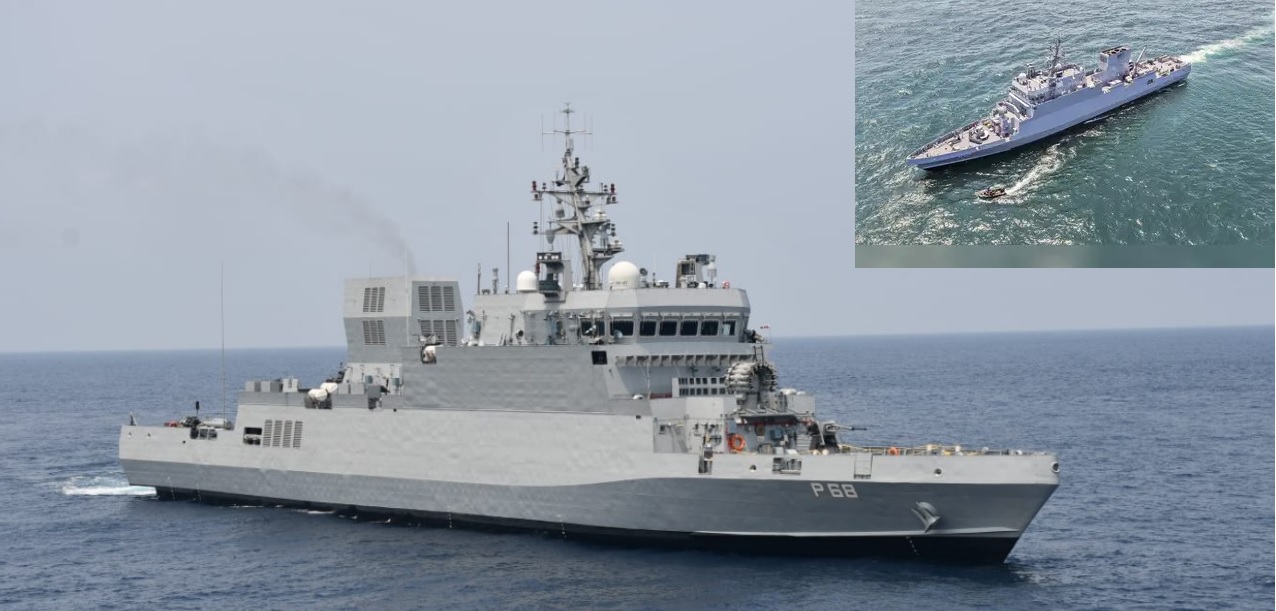
India
The Indian Navy is poised to commission INS Androth, the second ship of the Arnala-class corvettes, at Visakhapatnam Naval Dockyard on October 6. This marks another leap forward in India’s efforts to strengthen its anti-submarine warfare capabilities in coastal waters. After the induction of INS Arnala in June 2025, the commissioning of INS Androth will bring the Navy closer to its goal of operating 16 advanced anti-submarine warfare shallow water craft (ASW-SWC). These vessels are specially designed for operations in littoral zones—the coastal areas where larger warships often struggle to operate effectively. The ceremony will be presided over by Vice Admiral Rajesh Pendharkar, Flag Officer Commanding-in-Chief, Eastern Naval Command. What Makes INS Androth Special High Indigenous Content: The ship is built by Garden Reach Shipbuilders & Engineers (GRSE), Kolkata, with over 80 % domestic components—a strong stride in India’s quest for self-reliance. Modern Propulsion: It is powered by a diesel engine–waterjet system, enabling agile manoeuvres in shallow waters. Dimensions & Range: The vessel is about 77.6 meters long, displaces around 900 tonnes, and can operate up to 1,800 nautical miles at cruising speeds. Weapons & Sensors: • A forward RBU-6000 anti-submarine rocket launcher • Twin triple 324 mm lightweight torpedo tubes • Anti-torpedo decoy launchers • Hull-mounted and variable-depth sonar systems to detect, track, and classify underwater threats Versatile Roles: While its main mission is submarine hunting in shallow seas, it can also conduct surveillance, mine laying, search & rescue, and coastal defence tasks. Strategic Significance The induction of INS Androth comes at a time when submarine proliferation is increasing in the Indian Ocean Region. Countries like China and Pakistan are expanding underwater fleets, making it imperative for India to bolster its undersea vigilance. These Arnala-class ships are intended to replace the aging Abhay-class corvettes and plug gaps in India’s coastal defence shield. The new vessels, built under a public–private partnership, also support the “Make in India” vision by involving many Indian firms across the supply chain. With INS Androth joining the fleet, India strengthens its frontline in underwater warfare—guarding coastlines, protecting strategic assets, and ensuring safer seas for its naval forces.
Read More → Posted on 2025-09-24 07:30:57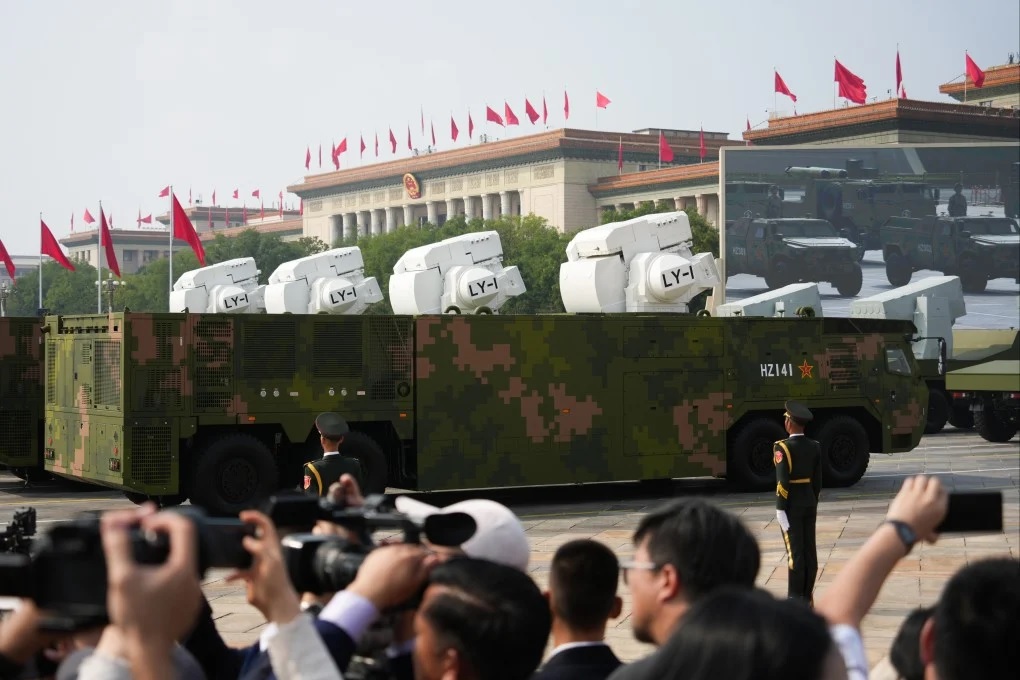
World
Pakistan is showing strong interest in integrating China's advanced laser weaponry into its military systems, aiming to strengthen its naval defense amid rising regional tensions. This was highlighted by Vice-Admiral (Retd.) Ahmed Saeed, President of the National Institute of Maritime Affairs, at Beijing’s Xiangshan Forum. He stated that high-energy directed weapons are becoming a major part of modern warfare and Pakistan seeks closer integration with China in this field. China’s LY-1 Laser Weapon One of China’s latest developments is the LY-1 shipborne laser weapon, showcased during the 80th-anniversary Victory Day Parade. This system is designed to shoot down drones, blind sensors, and disable electronics, providing a modern alternative to conventional projectiles. The LY-1 represents a technological leap in high-energy laser weapons, capable of being deployed on naval platforms, though the exact ships remain undisclosed. The LY-1 complements China’s existing shipborne air defense systems, forming a multi-layered defense network that can protect maritime assets against both traditional and advanced aerial threats. It is seen as China’s answer to the U.S. High-Energy Laser with Integrated Optical Dazzler and Surveillance (HELIOS) deployed on Arleigh Burke-class destroyers. Pakistan’s Strategic Goals Pakistan’s interest in Chinese laser weapons is consistent with its long-term defense strategy. The country is the largest importer of Chinese military equipment, accounting for a significant share of China’s arms exports from 2020 to 2024. This partnership has included fighter jets, submarines, and air defense systems, and now Pakistan seeks more integrated weapons systems, including both hardware and software, to enhance interoperability with China. The integration of directed energy weapons like the LY-1 could give Pakistan an edge in countering drones, missiles, and other emerging threats, ensuring a modern and responsive defense posture. Pakistan is also aiming to combine experiences with both Beijing and Washington for technology and intelligence sharing in counter-terrorism operations. Regional Implications The potential deployment of Chinese laser weapons in Pakistan could shift regional security dynamics. While Pakistan views this as strengthening its defense, neighboring countries may see it as a challenge to the balance of power, possibly prompting accelerated defense modernization programs and creating a new strategic environment in South Asia. In conclusion, Pakistan’s pursuit of Chinese high-energy laser technology reflects its goal to modernize its defense systems and strengthen naval and aerial security. As directed energy weapons become a key element in modern warfare, Pakistan’s collaboration with China could play a pivotal role in shaping future regional defense strategies.
Read More → Posted on 2025-09-23 17:33:57
World
China’s newest and most advanced aircraft carrier, Fujian, has crossed a critical milestone in its development. Official Chinese military media has released extensive footage showing fixed-wing aircraft launching and landing aboard the carrier using its electromagnetic catapult system (EMALS). The release confirms that China has entered the era of catapult-assisted carrier operations, a capability that dramatically increases the flexibility and reach of its naval aviation. Fujian’s Flight Operations The newly released imagery shows catapult launches and arrested recoveries of three types of aircraft: the J-15T fighter jet, the next-generation J-35 stealth fighter, and the KJ-600 airborne early warning and control (AEW&C) aircraft. The footage also highlighted Z-9 utility helicopters and extensive flight deck activity, with aircraft being moved by elevators and tractors, as well as coordinated operations by deck crews. One of the most striking details is the presence of three KJ-600 aircraft on the deck, carrying serial numbers 7103, 7104, and 7106. This underlines the importance China places on deploying fixed-wing early warning aircraft, a feature that sets Fujian apart from its predecessors Liaoning and Shandong, both of which lack catapults and are therefore unable to support such heavy aircraft. Why the Catapult Matters The introduction of EMALS is a technological breakthrough. Unlike ski-jump carriers, which limit aircraft to lighter take-off weights, Fujian’s catapults allow planes to launch with full fuel and heavy weapons loads. This means greater combat range, higher sortie rates, and the ability to field specialized support aircraft such as AEW&C and possibly future carrier-borne refueling aircraft. This capability is central to transforming the People’s Liberation Army Navy (PLAN) into a blue-water force capable of projecting power far beyond China’s immediate coastline. With the KJ-600 providing radar coverage and the J-35 offering stealth capability, Fujian dramatically enhances China’s maritime surveillance and strike potential. Key Observations from the Footage Several details in the released material offer insight into Fujian’s progress: Catapult Preference: All observed launches appear to come from the forward portside catapult. It is unclear whether this is due to selective editing of the footage or differences in readiness between the three EMALS catapults. Flight Deck Crew: Personnel are seen in color-coded jackets similar to the U.S. Navy system. Yellow denotes plane directors and catapult crew, blue covers aircraft handling and tractor drivers, and white indicates safety and quality control officers. Interestingly, fueling personnel wear blue jackets, differing from the American purple standard. Timeline Clues: Some scenes date back to earlier trials, particularly March 2025, when Fujian’s sensor mast was still covered in black draping before later maintenance returned it to grey. Strategic and Technological Significance The J-35 taking off from Fujian is especially notable. Ironically, while China’s new carrier has now launched a stealth fighter from an EMALS system, the U.S. Navy’s first EMALS-equipped supercarrier, USS Gerald R. Ford, has yet to achieve the same milestone with its F-35C due to program delays and budget restrictions. That said, Fujian still faces challenges. It is conventionally powered, unlike U.S. nuclear carriers, which gives it more limited endurance. With only three catapults compared to the four on American carriers, its launch capacity per cycle may also be lower. Furthermore, years of additional testing and crew training will be required before Fujian reaches full operational capability. Fujian is currently in the midst of its ninth sea trial, the longest yet and the first to extend into the South China Sea. Analysts suggest the carrier could be commissioned into active service after this trial, possibly at Sanya Naval Base on Hainan Island. Even after commissioning, the vessel will primarily focus on testing, aircraft qualifications, and training for several years before achieving true combat readiness. Meanwhile, China is quietly advancing work on a fourth carrier, believed to also be a catapult-equipped design, with early construction activity spotted at Dalian shipyard. Additionally, progress is reported on a naval nuclear reactor, potentially laying the groundwork for China’s first nuclear-powered carrier in the future. A Rapid Transformation In just two decades, China has moved from refurbishing an ex-Soviet carrier to fielding three carriers of its own, with Fujian standing among the largest and most advanced carriers in the world. The successful demonstration of catapult-assisted fixed-wing operations highlights both the speed and determination with which China is modernizing its navy. While challenges remain, the debut of Fujian’s flight operations is a historic moment—one that signals China’s arrival as a true carrier power, reshaping the naval balance in the Asia-Pacific and beyond.
Read More → Posted on 2025-09-23 17:26:56Search
Top Trending in 24 Hours
-
 U.S. Awards Bell Textron $33.64 Million Contract for Next Phase of Marine Corps AH-1Z and UH-1Y Helicopter Upgrades
-
 U.S. Military Selectively Intercepts Iranian Missiles to Preserve Shrinking Air Defense Stocks : Report
-
 Russia Unveils Experimental Plot-40 Floating Defense Platform to Counter Drone and USV Threats
-
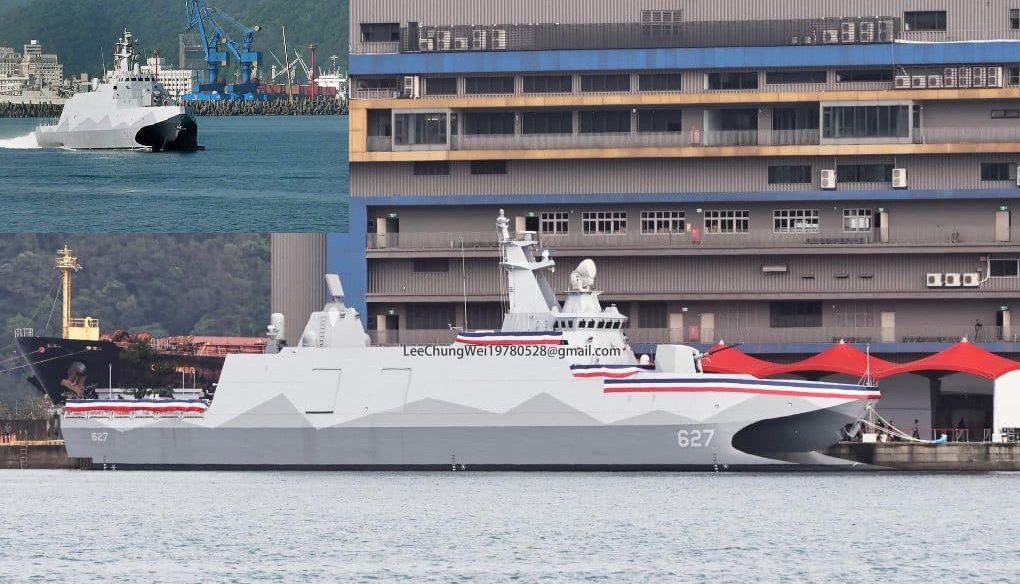 Taiwan Commissions First Batch 2 Tuo Chiang-Class Corvette with New Leonardo Radar
-
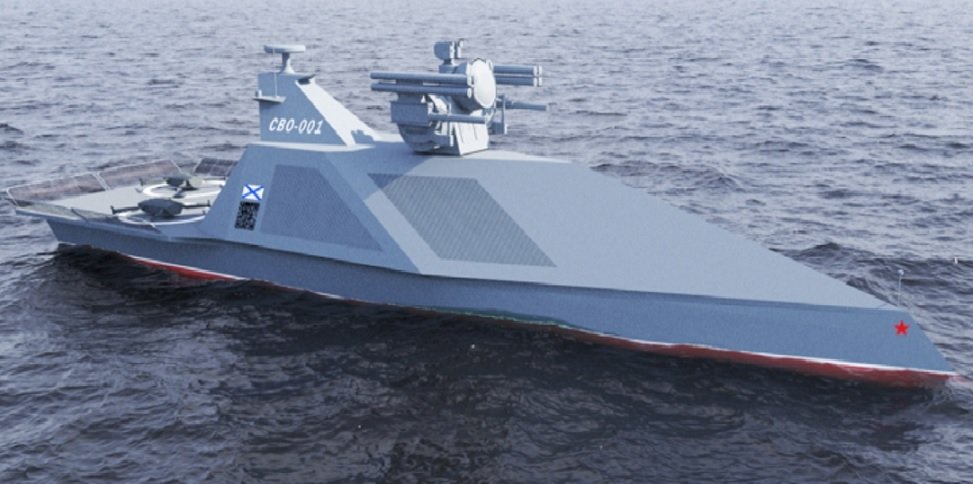 Russia Builds 500-Ton Unmanned Warship For Anti-Submarine Warfare, Plans New 9,500-Ton Warship, Navy Chief Says
-
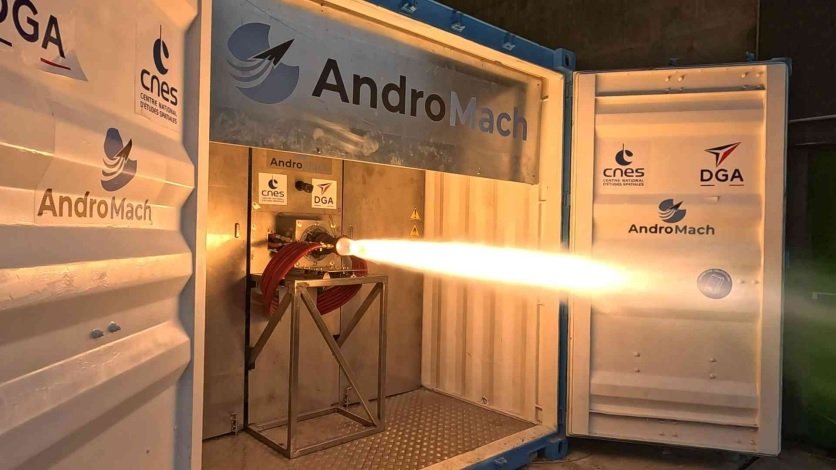 French Startup AndroMach Successfully Tests Reusable Rocket Engine 21 Times for Hypersonic Drone
-
 Unreleased Footage Reveals Why Lindsey Graham Dropped Plan to Push Trump on Hezbollah Strikes
-
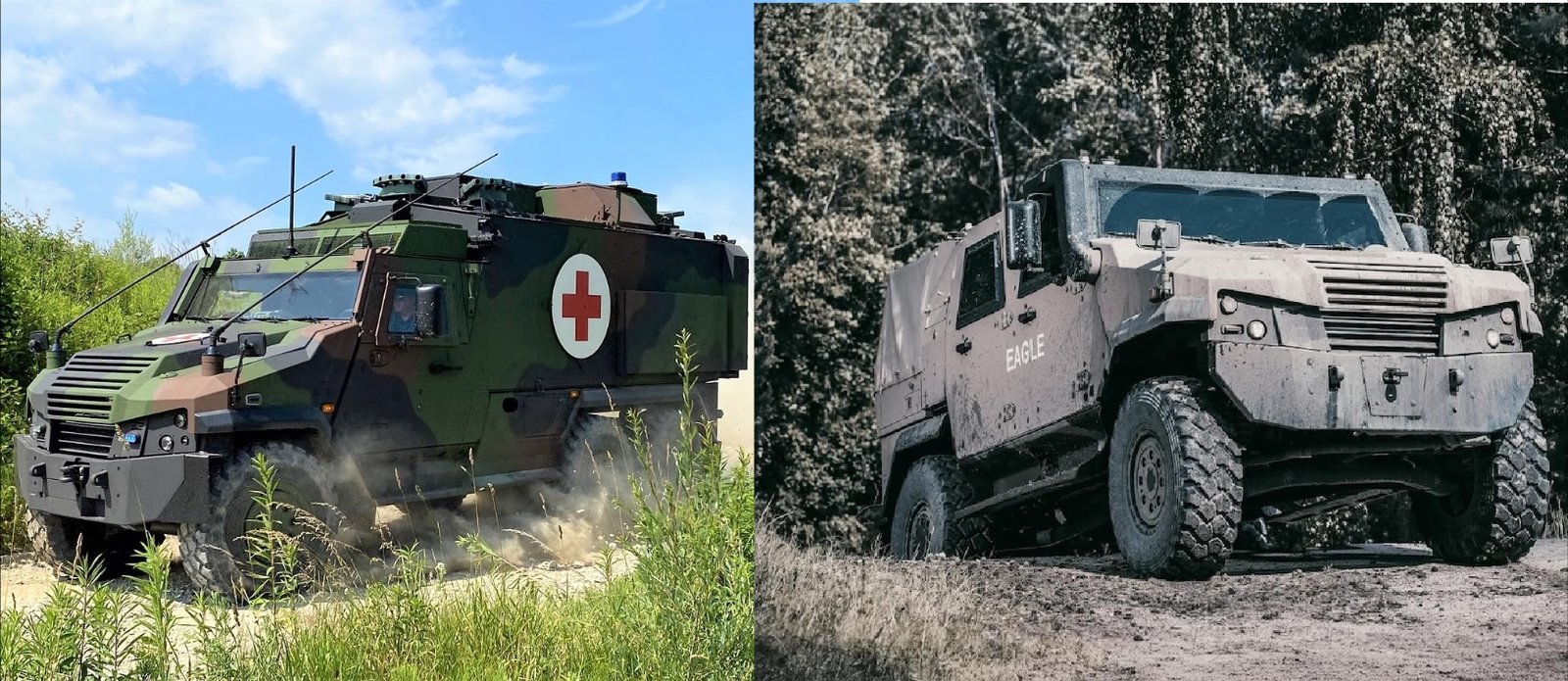 Allison Transmission to Supply Automatic Transmissions for Nearly 3,000 German EAGLE V Armored Vehicles Ordered by Germany
Top Trending in 4 Days
-
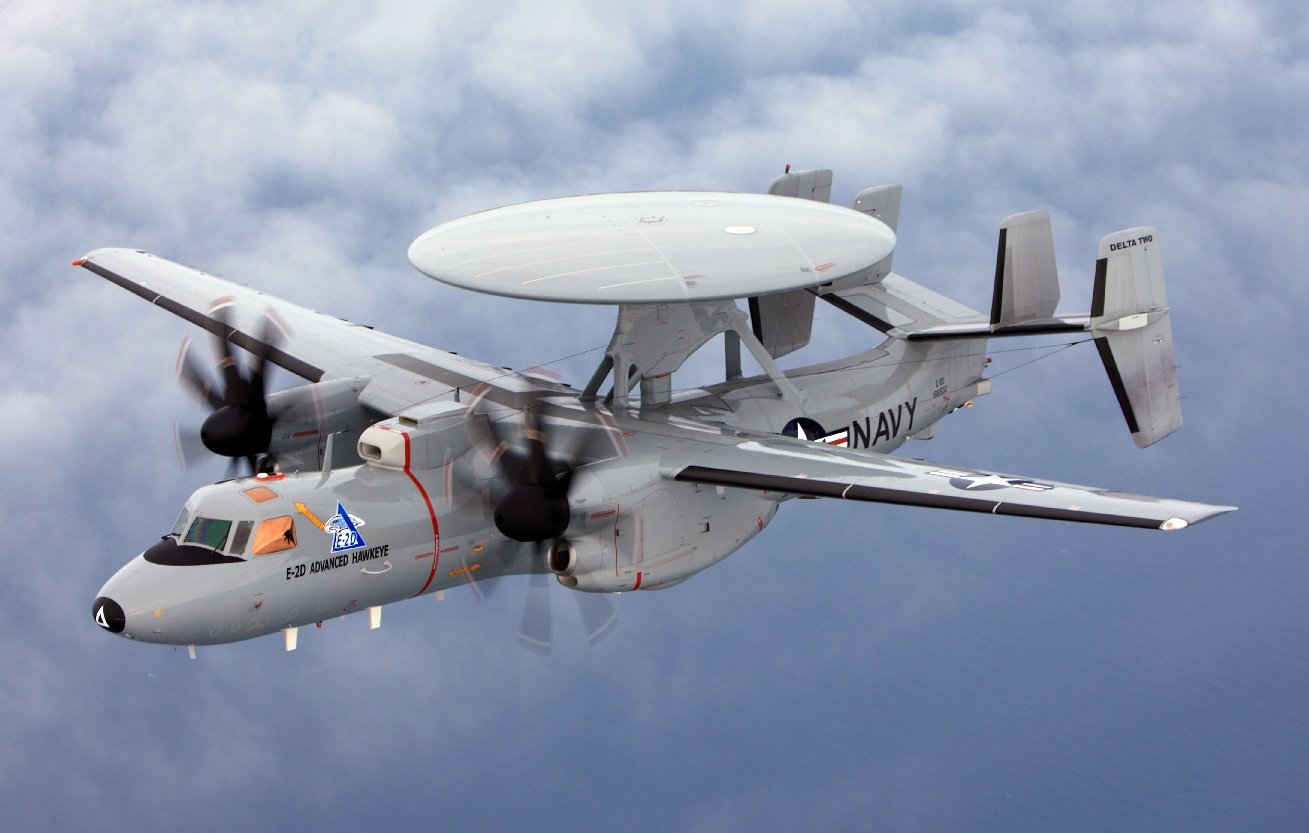 U.S. Navy Awards Northrop Grumman $1.2 Billion Deal for Three New E-2D Advanced Hawkeyes
-
 U.S. Airstrikes Target IRGC Missile Base Near Taft as Overnight Strikes Hit Central Iran
-
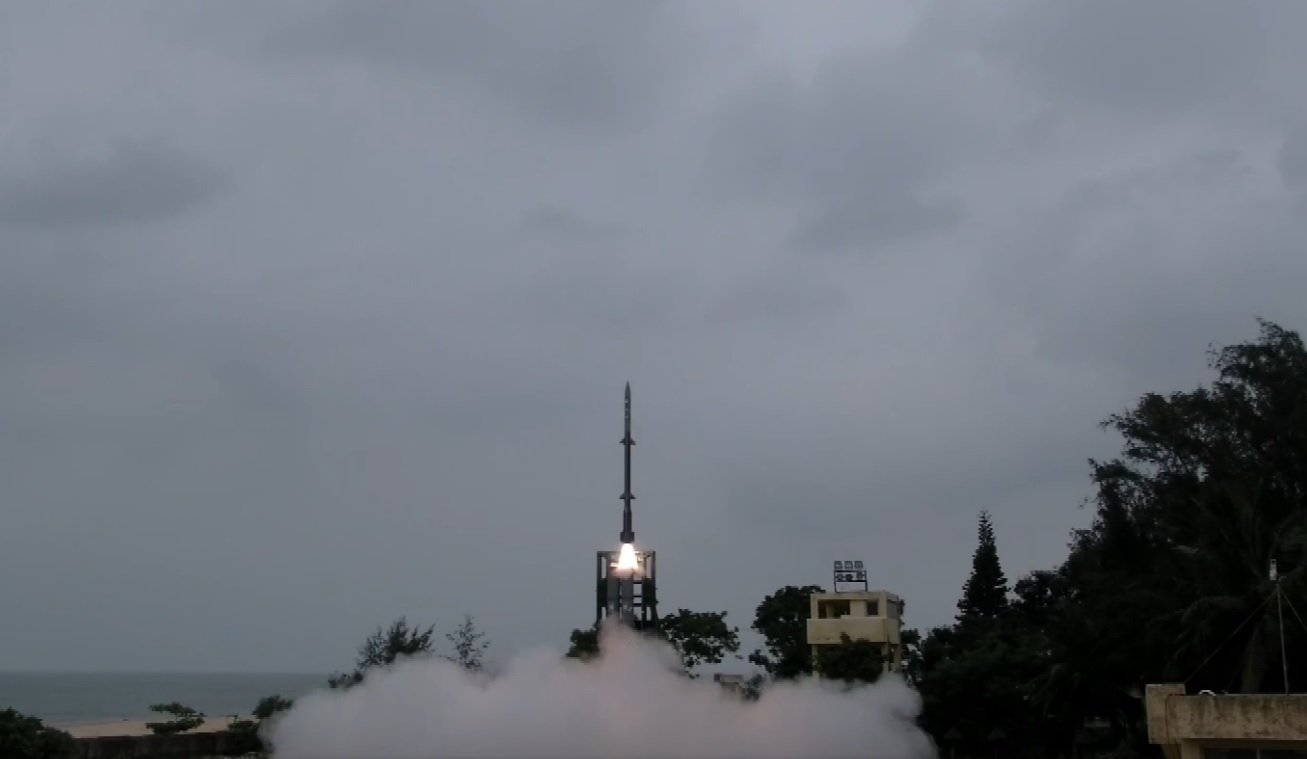 DRDO Successfully Conducts Maiden Flight Test of 150-km-Range Kusha M1 Air Defence Missile
-
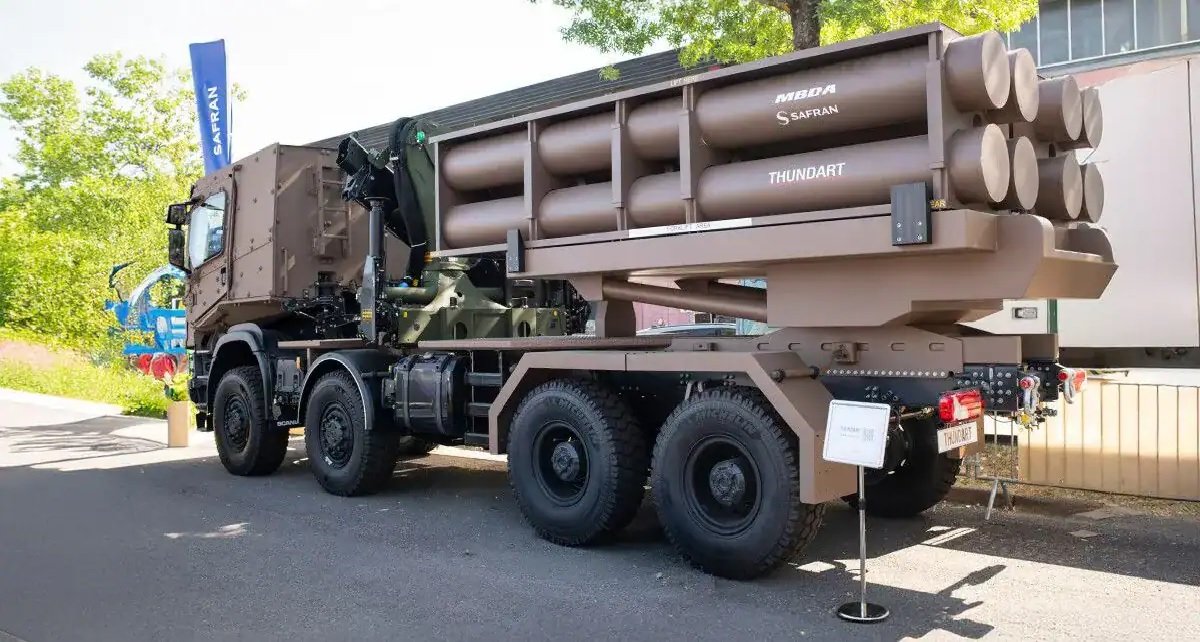 France's THUNDART Long-Range Rocket System May Undergo Prototype Combat Testing in Ukraine
-
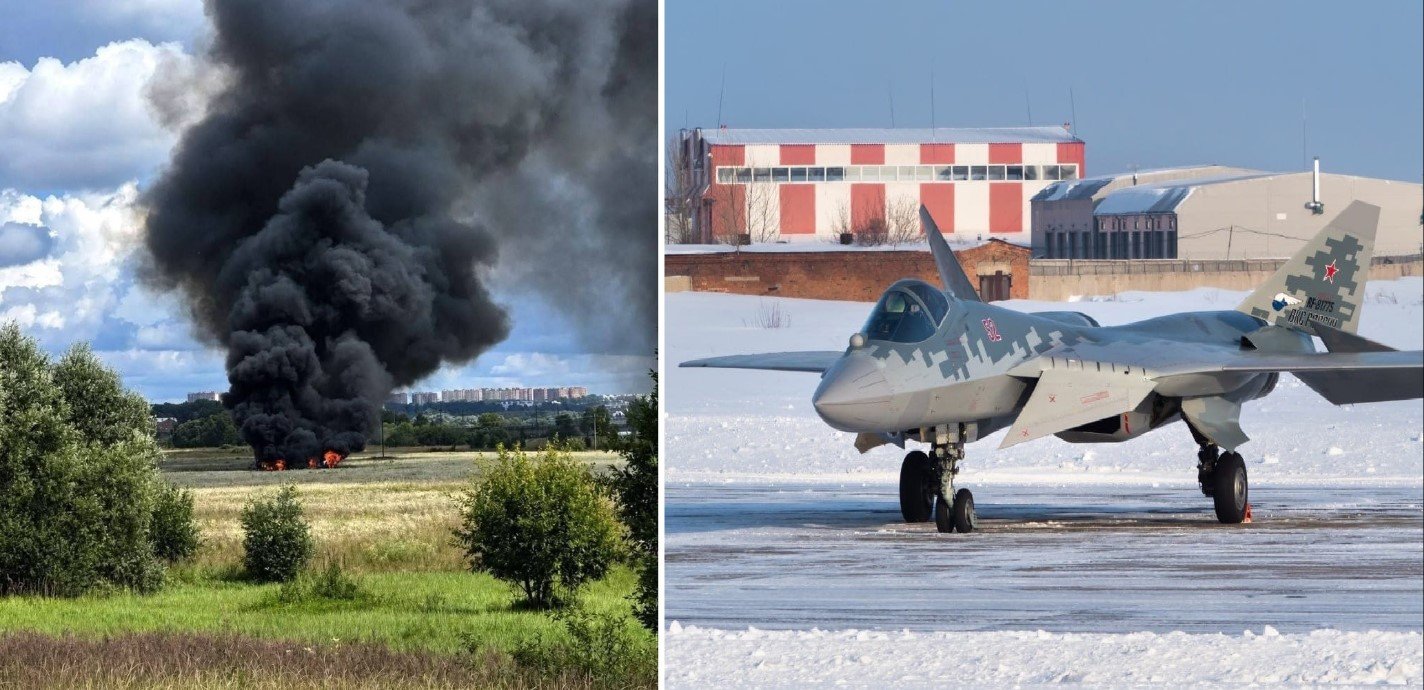 Russian Su-57 Stealth Fighter Crashes During Training Flight Near Moscow, Pilot Ejects Safely
-
 Kuwait and Bahrain Reportedly Launch First Joint Direct Airstrikes on Iran Since War Began : Report
-
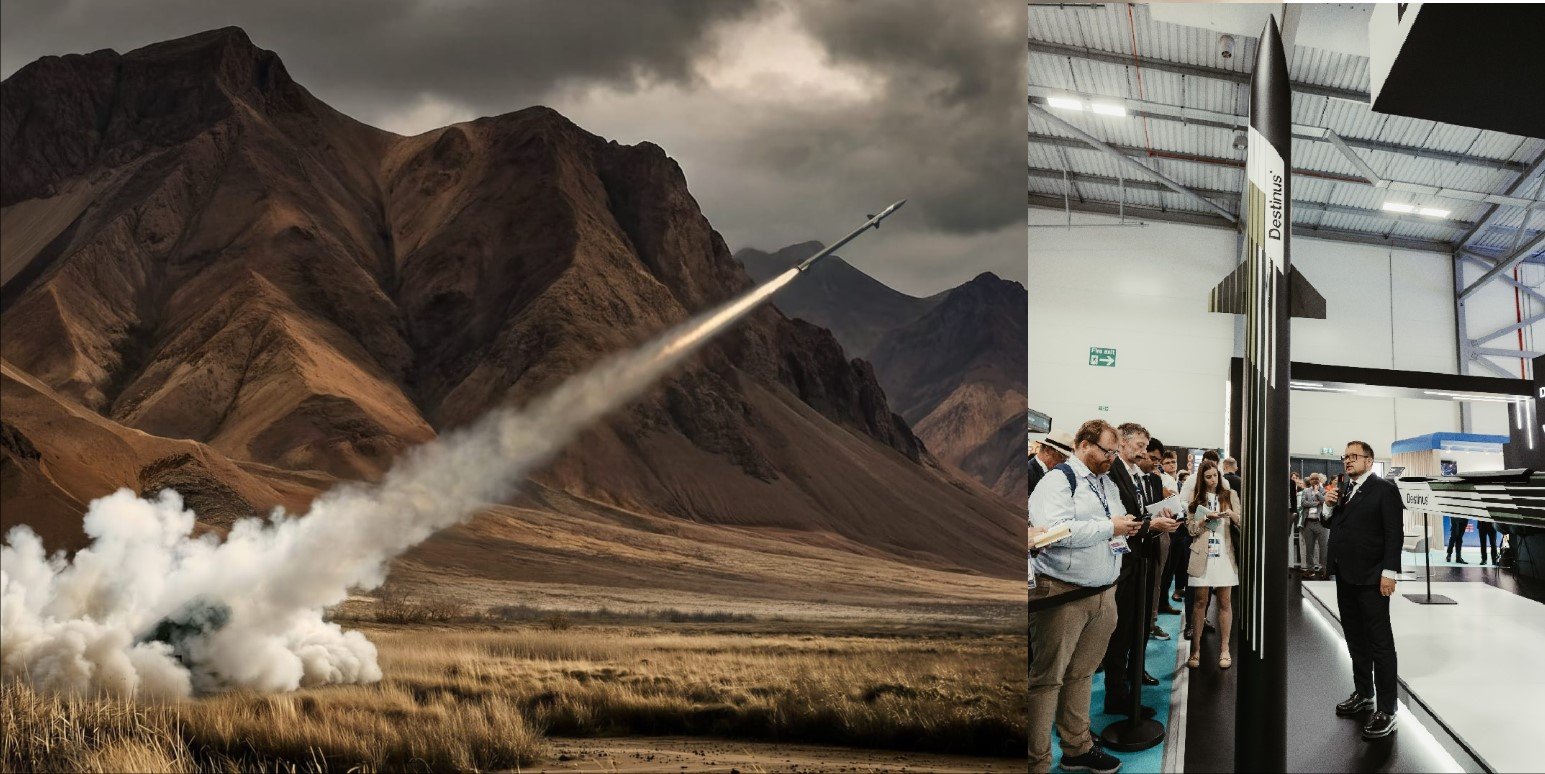 Destinus Unveils Vorexon Interceptor Concept to Defend Critical Sites from Artillery Threats
-
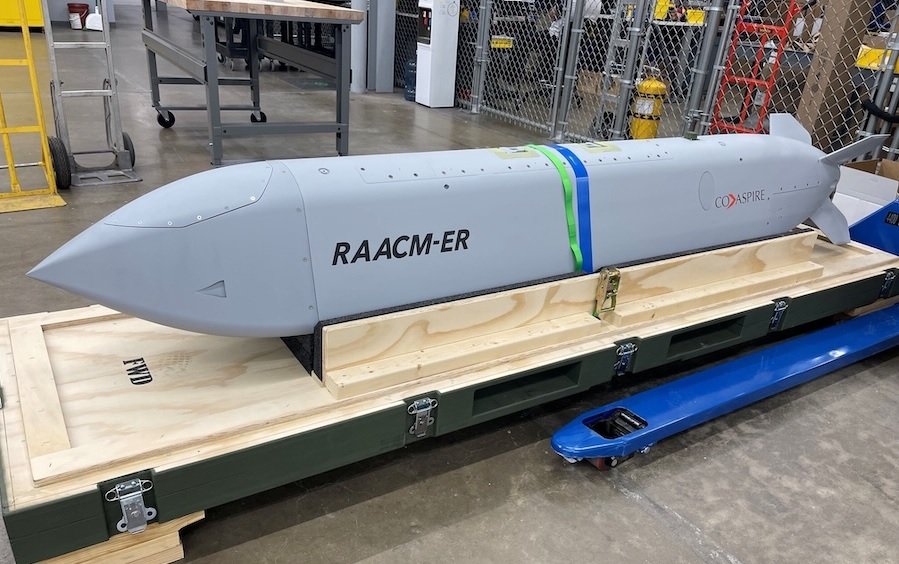 U.S. Navy Selects CoAspire to Build Ground-Launched CHAOS Cruise Missile Under $70 Million Program
