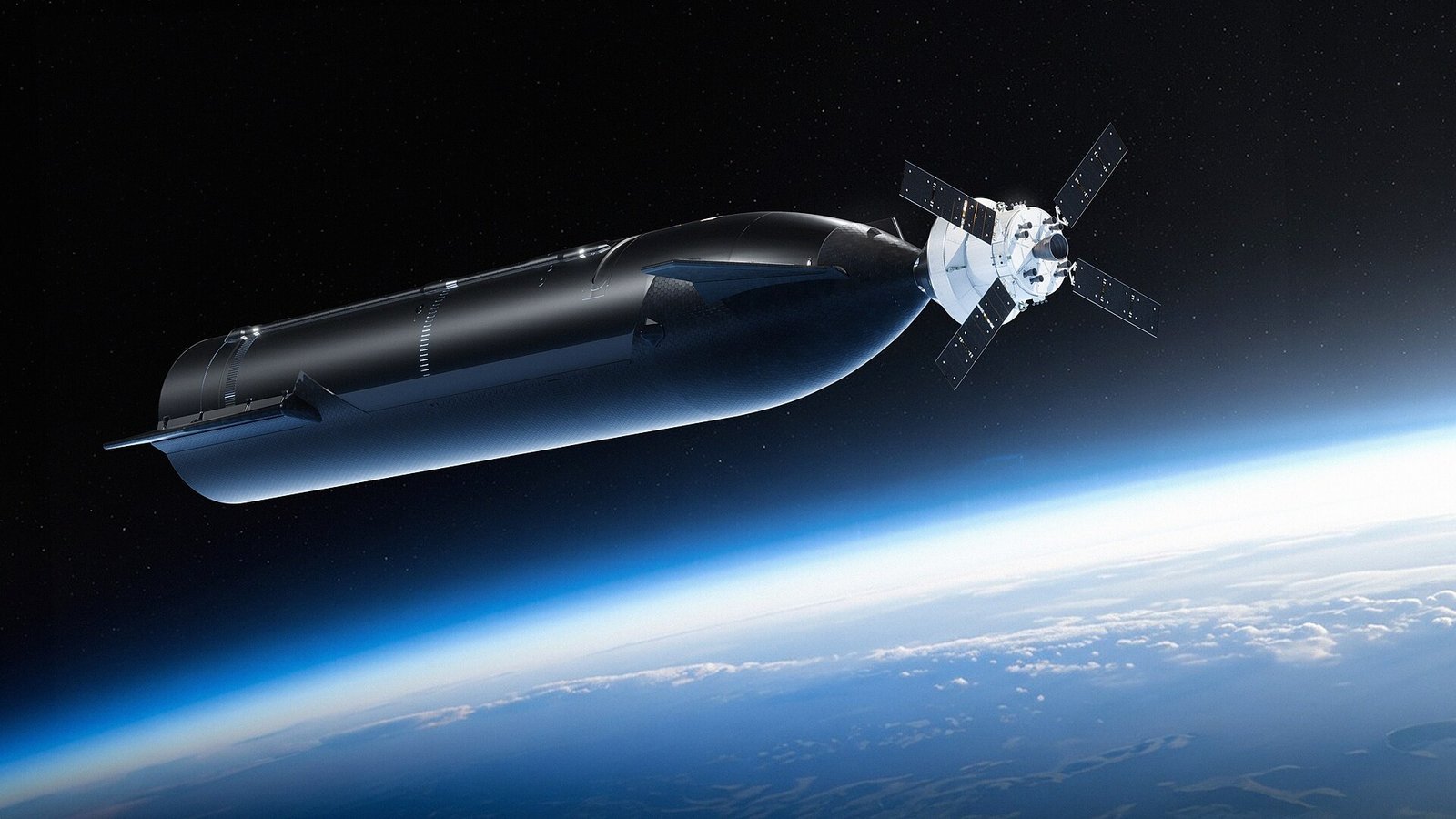
Washington, — NASA's revised Artemis architecture will require major modifications to its Orion spacecraft for future Moon missions. Orion will travel in a reversed orientation when docked with SpaceX's Starship lunar lander, creating new challenges for its fuel tanks, propulsion system and structure.
Under the updated plan, Starship will be refuelled in low Earth orbit before moving to high Earth orbit to dock nose-to-nose with Orion. Starship will then propel both spacecraft towards the Moon, with Orion's European Service Module facing forward. Two astronauts will later transfer to Starship for the lunar landing, while Blue Origin's Blue Moon lander will follow a separate route to rendezvous with Orion in low lunar orbit.
Orion Requires Fuel Tank and Structural Changes
The reversed orientation creates a problem for Orion's propulsion system. Its European Service Module, developed by Airbus for the European Space Agency (ESA), has propellant tanks designed for a different direction of acceleration.
When Starship pushes the combined spacecraft towards the Moon, liquid propellant could move towards the gas inlet side instead of the tank outlets. ESA and Airbus are modifying the tanks to ensure proper propellant management during the new flight profile.
Orion must also withstand higher acceleration forces. Its original design anticipated approximately 0.1–0.15 g during the translunar injection burn. With Starship providing propulsion, acceleration could reach 0.8–1 g in the opposite direction. NASA and Lockheed Martin are assessing the structural changes and certification requirements.
Artemis III to Test Docking in Low Earth Orbit
NASA has removed the planned lunar landing from Artemis III and changed it into a two-week demonstration mission in low Earth orbit. Targeted for summer or fall 2027, the mission will test Orion's rendezvous and docking operations with test versions of Starship and Blue Moon at an altitude of approximately 430 kilometres.
The four-person crew will include NASA astronauts Randy Bresnik, Frank Rubio and Andre Douglas, alongside ESA astronaut Luca Parmitano. The mission will help prepare for Artemis IV, which is intended to support a crewed lunar landing as early as 2028.
The extended stay near Earth introduces additional challenges. Orion was designed for deep-space conditions, so engineers are reviewing thermal management, electrical loads and avionics protection. Some of its silver-coloured exterior thermal tape may also be removed to address heating conditions in low Earth orbit.
The spacecraft will also face greater micrometeoroid and orbital debris risks. NASA and Lockheed Martin are assessing the threat, with the review expected to finish by January. Depending on the findings, Orion's planned orbit could be adjusted.
Docking Tests and Tight Development Schedule
Engineers must also verify mechanical docking connections, including hooks, connectors and pins. Other assessments cover the effects of lander thruster exhaust on Orion's exterior and the performance of its laser navigation sensors near the reflective surfaces of both landers.
Meanwhile, Lockheed Martin is working in three shifts to meet NASA's 2027 launch target. Orion's hardware had previously been tracking towards an internal readiness date of January 2028. Compressing the schedule into mid-to-late 2027 leaves little room for delays.
Lockheed Martin Orion programme manager Kirk Shireman has described the schedule as having zero margin, highlighting the need to complete the modifications without compromising crew safety.
The revised architecture gives SpaceX and Blue Origin greater flexibility to develop their lunar landers. However, it also requires additional work to adapt Orion's original design for new docking, propulsion and orbital operations.
——— End of Article ———