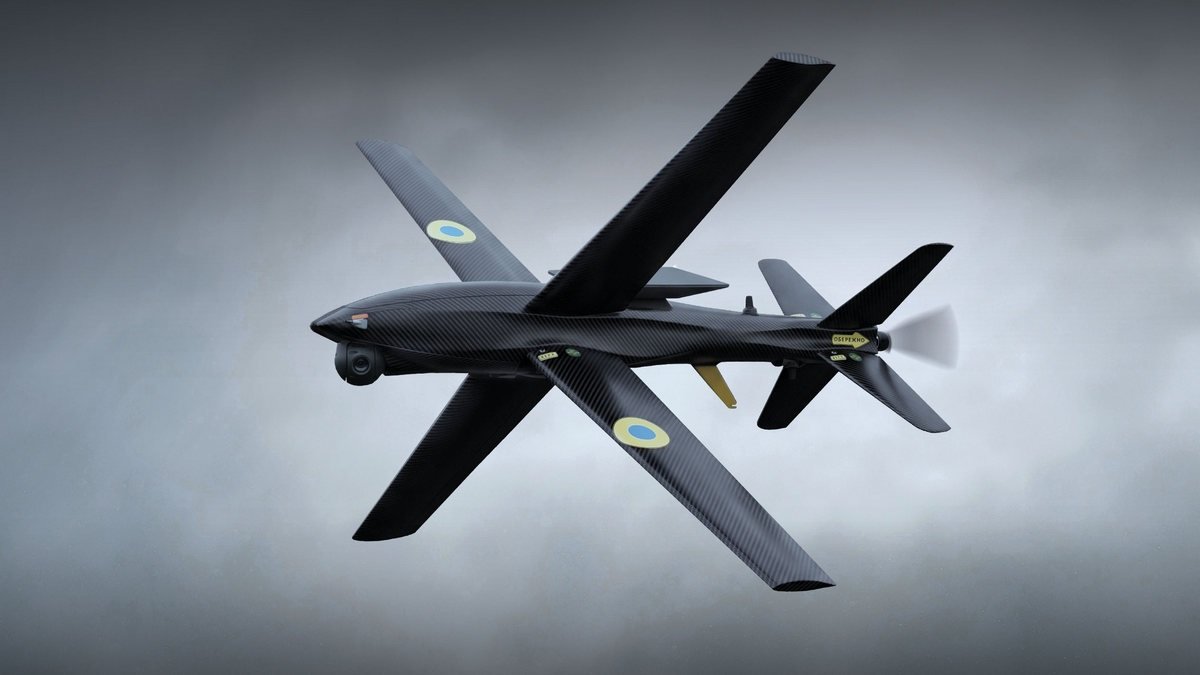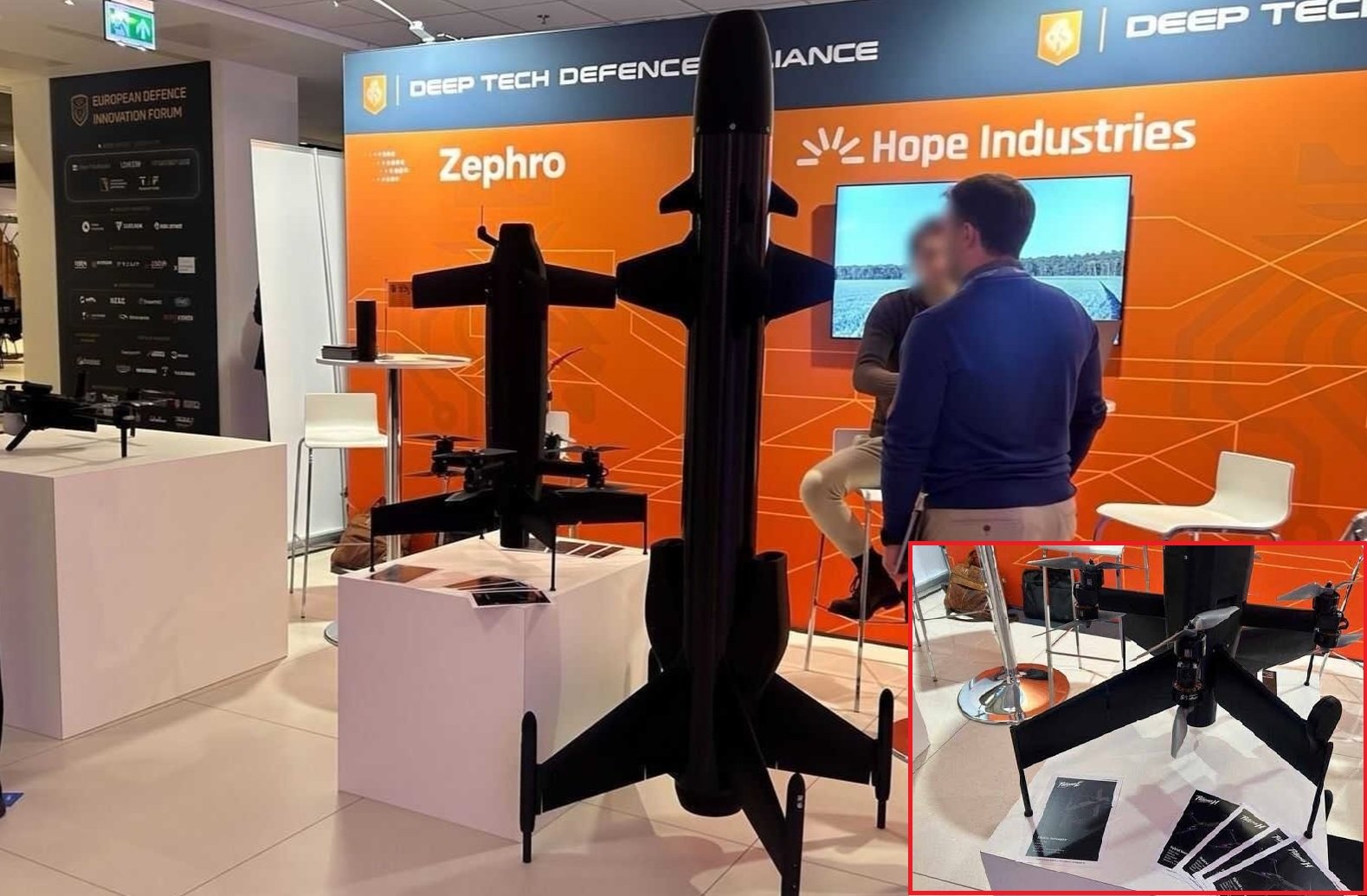
The Hague, Netherlands — Dutch defence company Hope Industries has unveiled two reusable interceptor drones, Patronus E and Patronus H, designed to counter high-speed attack drones such as the Shahed. The systems were presented at the European Defence Innovation Forum (EDIF) 2026, held on November 11–12 in The Hague.
Both drones feature modular vertical take-off and landing (VTOL) designs, allowing deployment without conventional runways or extensive launch equipment.
Patronus H: Jet-Powered Interceptor
Development of the Patronus H began three months ago in response to a Dutch Ministry of Defence challenge to counter faster, second-class aerial threats. These include jet-powered Shahed-type drones flying at around 600 km/h, altitudes of up to 5 km, and within a 30 km protection radius.
The Patronus H has a claimed range of 80 km, maximum speed of 800 km/h and a 2 kg payload. It is approximately twice as large, fast and heavy as the electric model and carries twice its payload.
The production version will use a turbojet engine from Dutch company HTF. Its first flight tests are scheduled for December 2026.
Patronus E: Electric Interceptor
The electric Patronus E has been under development for approximately 18 months and serves as the foundation for the jet-powered version. It offers a claimed range of 35 km, maximum speed of 400 km/h and a 1 kg payload.
Hope Industries says the system has reached approximately Technology Readiness Level 8 (TRL 8). It already operates autonomously at speeds up to 300 km/h, while engineers are working to ensure stable flight between 300 and 400 km/h.
Radar Detection and Autonomous Guidance
Both models use Hope Industries' proprietary software. Ground-based radar first detects and tracks incoming drones, directing the interceptor towards the target area. After an operator confirms the target, onboard computer vision takes over for autonomous optical tracking and terminal guidance.
The system's training data comes from open sources, real interception footage and videos of company-built target drones designed to resemble Shahed-type aircraft in silhouette and aerodynamics.
Current flight trials use no live warheads. Once the onboard camera locks onto a target, operators issue a last-second abort command, allowing the interceptor to avoid collision and be recovered. The same detection and guidance technology is planned for the Patronus H.
Cooperation with Ukraine
Hope Industries has confirmed cooperation with a Ukrainian defence company, but has not disclosed its identity or details of the joint project.
The second European Defence Innovation Forum brought together more than 1,000 participants, including defence officials, investors and representatives of over 50 European and Ukrainian defence companies. Participants included representatives from Ukraine, the Netherlands, the United Kingdom, Latvia and other European NATO and partner countries. The event focused on defence innovation, industrial cooperation and battlefield lessons from Ukraine.
——— End of Article ———