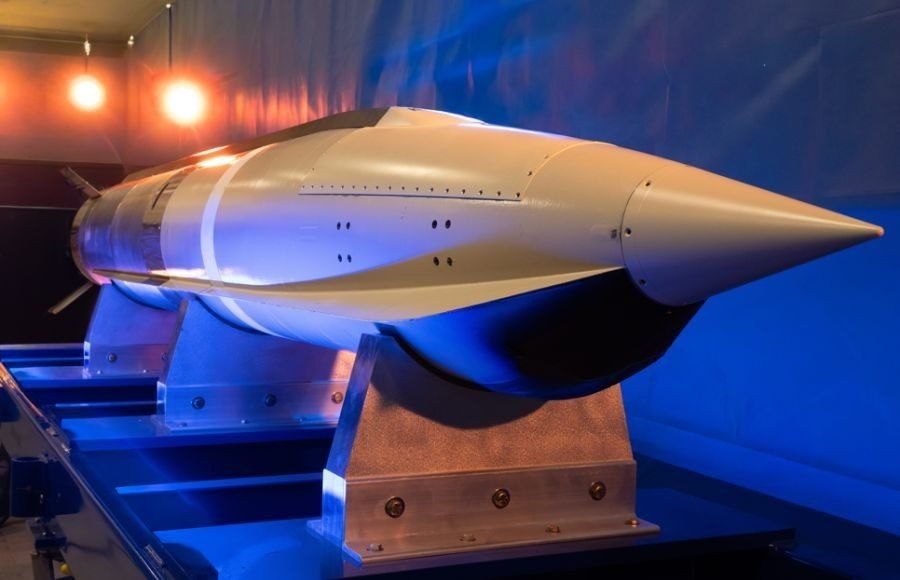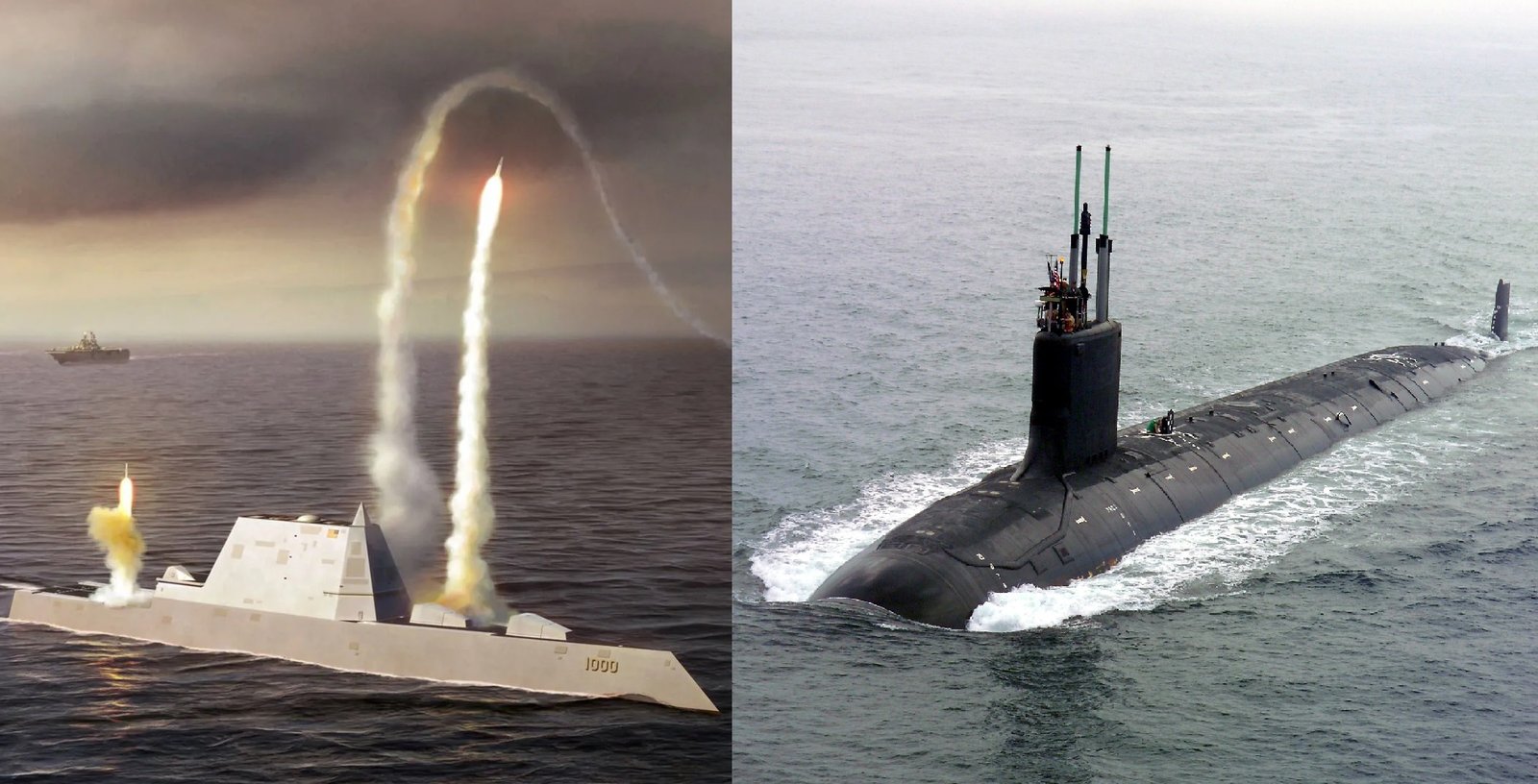
YORKTOWN, Va. — The U.S. Navy is planning a specialised hypersonic missile storage and maintenance facility at Naval Weapons Station (NWS) Yorktown, Virginia, to support its Conventional Prompt Strike (CPS) weapon system. The Naval Facilities Engineering Systems Command (NAVFAC) Mid-Atlantic has released project requirements for the facility, which will support CPS-equipped Zumwalt-class destroyers and Block V and Block VI Virginia-class submarines.
The CPS is a conventional boost-glide hypersonic weapon. Its larger size and diameter require specialised storage, handling equipment and temperature- and humidity-controlled conditions that existing Navy magazines cannot adequately provide. Yorktown's location north of Newport News Shipbuilding and the Naval Station Norfolk complex will support CPS-equipped vessels operating in the Atlantic. It also aligns with the expected basing of Virginia Payload Module (VPM)-equipped submarines near Norfolk and the possibility of a Zumwalt-class destroyer moving its home port to the East Coast.
Facility Design and Construction
The project combines two efforts: P-1417, a Containerized Long Weapons Storage Magazine, also called Containerized Large Weapons Storage (CLWS), and P-1418, a CPS Weapons Maintenance and Storage Facility.
A sources-sought notice published in late October 2026 under solicitation N4008527R0019 estimates construction costs at $100 million to $250 million. Responses are due by November 6, 2026, with a contract award anticipated around April 2027.
P-1417 includes a two-bay, earth-covered magazine designed to store up to 28 CPS All-Up Rounds (AURs) in shipping canisters. Each bay will have a 25-ton overhead bridge crane, while two mechanical buildings will provide climate control and electricity. A dedicated emergency generator facility will provide backup power.
P-1418 includes a high-bay maintenance and storage building with reinforced mat foundations, structural steel framing, a 50-ton bridge crane, compressed-air systems and a photovoltaic system.
The projects also include reinforced concrete structures and loading aprons where specified, ordnance bonding and grounding, lightning protection, cybersecurity, physical security, Department of Defense antiterrorism measures, ground improvements, civil and utility infrastructure, and Low Impact Development practices.
Zumwalt-Class Destroyer Modernisation
All three Zumwalt-class destroyers must undergo modernisation before carrying CPS missiles. The work involves removing their Advanced Gun System (AGS) mounts and installing Advanced Payload Modules for the hypersonic weapons.
A July 2026 Government Accountability Office (GAO) report stated that DDG-1000 programme modernisation costs had increased by approximately $200 million to around $2 billion. Unplanned work and specialised equipment requirements have contributed to delays.
USS Zumwalt (DDG-1000) faces a 10-month delay and is expected to return to service later in 2026. The first CPS flight test from a Zumwalt-class destroyer is planned for 2027, about two years later than originally scheduled.
USS Lyndon B. Johnson (DDG-1002) is expected to complete its Mission Systems Activation period in the fourth quarter of fiscal year 2028, following a 12-to-15-month delay. USS Michael Monsoor (DDG-1001) is scheduled to begin conversion in early 2027 and return to service in the third quarter of fiscal year 2029.
Virginia-Class Submarine Integration
The Navy will also deploy CPS on Block V and Block VI Virginia-class submarines equipped with the Virginia Payload Module (VPM). The module adds an 84-foot mid-body section containing four large-diameter vertical-launch canisters. Each canister can hold seven standard Tomahawk cruise missiles or three CPS rounds, providing a total capacity of 12 hypersonic missiles per submarine.
VPM-equipped submarines have been redesignated as nuclear-powered guided-missile submarines (SSGNs) to reflect their expanded conventional strike capability. The Navy views the Zumwalt conversions as a risk-reduction step because the surface and submarine payload modules share significant design commonality.
Recent photographs showed the first VPM structure being transported to General Dynamics Electric Boat's facility in Groton, Connecticut, for final assembly.
The Navy plans to induct the first of nine VPM-equipped Block V submarines in 2028. The first Block V boat, USS Oklahoma (SSN-802), will not receive the module. The future USS Arizona (SSN-803) will be the first VPM-equipped submarine and is expected to be commissioned in 2029.
The Navy plans to operate 19 VPM-equipped Virginia-class submarines, comprising nine Block V and ten Block VI boats. The Yorktown facility will provide the specialised storage, maintenance and handling infrastructure needed to support CPS deployment across the Navy's surface and submarine fleets.
——— End of Article ———