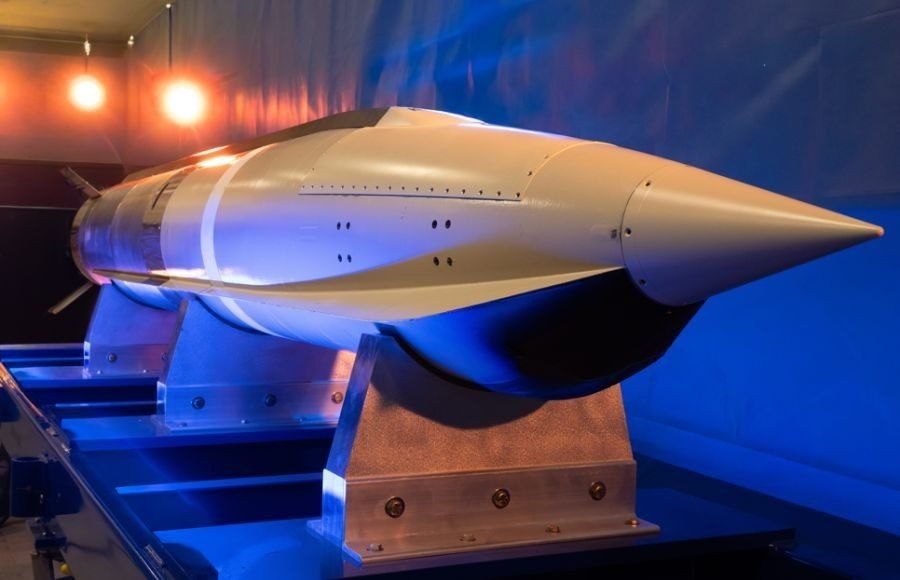
WASHINGTON, — Lockheed Martin has been selected to develop and test prototypes for the U.S. Army’s Precision Strike Missile (PrSM) Increment 4, a next-generation missile designed to strike targets at least 1,000 kilometres (621 miles) away. The company is developing a ramjet-powered version intended to roughly double the range of the baseline PrSM.
The Increment 4 variant is being designed to engage both moving maritime targets, including warships, and relocatable land targets. Its extended range could give the U.S. Army additional options for striking targets from greater distances.
Compatibility with Existing Launchers
A key feature of Lockheed Martin’s design is its compatibility with existing Army launch systems. The missile is designed to use the same transport container and fire-control interface as earlier PrSM variants.
This would allow it to be launched from the M142 High Mobility Artillery Rocket System (HIMARS) and the M270A2 Multiple Launch Rocket System (MLRS) without requiring new launch platforms.
The approach is intended to simplify integration with existing Army equipment and reduce the need for additional launcher-related changes. It could also support deployment from dispersed coastal positions for missions against maritime targets.
Ramjet Propulsion and L3Harris Partnership
To achieve the targeted range of 1,000 kilometres, Lockheed Martin is incorporating an advanced air-breathing ramjet propulsion system supplied by L3Harris.
A ramjet uses the missile’s forward motion to compress incoming air, supporting sustained high-speed flight during the powered phase. The technology is intended to provide the propulsion performance needed for the extended-range missile.
In June 2026, Lockheed Martin and L3Harris successfully demonstrated a booster-to-ramjet handoff during advanced ground testing at a specialised high-speed propulsion facility. This test addressed the transition between the booster phase and ramjet-powered flight.
Lockheed Martin Invests in Development and Production
Lockheed Martin is competing for the final PrSM Increment 4 production contract against a joint team formed by Raytheon and Northrop Grumman.
To advance its proposal, Lockheed Martin has invested more than $300 million, alongside industry partners, to mature the missile’s propulsion system, sensor suite and manufacturing technologies. The company is also developing the factory capacity required to support future production.
The investment is intended to advance the technologies needed for prototype development and demonstrate the missile’s readiness for the Army’s evaluation process.
Flight Tests Planned for 2027 and 2028
The U.S. Army plans to evaluate the competing designs through flight tests and fly-off competitions scheduled for 2027 and 2028. These evaluations will help determine which design progresses towards the final production contract.
Randy Crites, vice president of Lockheed Martin Advanced Programs, said the company was combining an established missile foundation with its industrial base to develop and demonstrate prototypes.
“Warfighters need precision strike capabilities that can reach farther and give them more options when the mission demands it,” Crites said.
He added that Lockheed Martin was working to develop and demonstrate prototypes that meet the Army’s requirements.
The PrSM Increment 4 programme aims to extend the missile’s reach while retaining compatibility with existing launch systems. The upcoming competitions will assess the competing designs before the Army makes its production decision.
——— End of Article ———