History
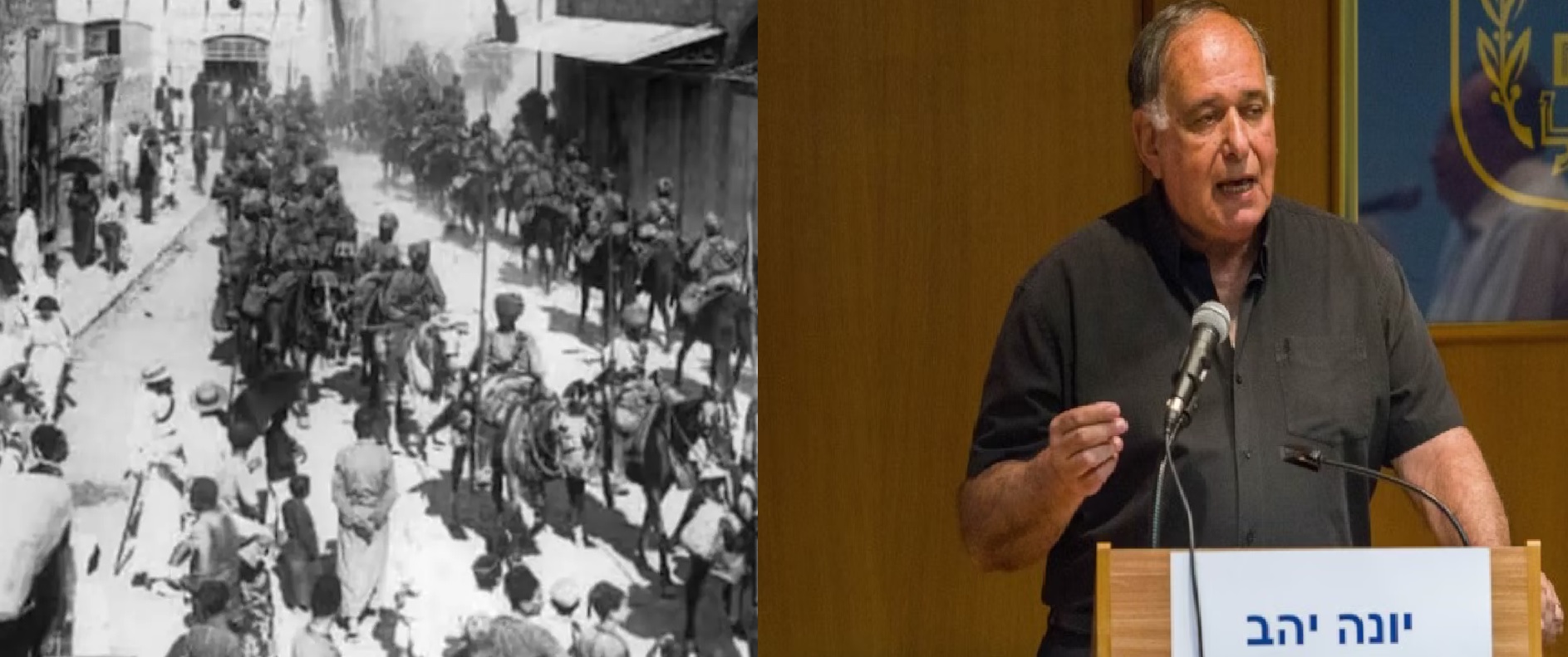
On September 29, 2025, Haifa, Israel, commemorated a historic moment by honoring Indian soldiers who played a pivotal role in liberating the city from Ottoman rule during World War I. The city's Mayor Yona Yahav announced that history textbooks in Haifa would be revised to correctly acknowledge that it was Indian troops, not the British, who liberated the city. He stated, "In every school, we are changing the texts and saying that it wasn't the British but the Indians who liberated us." The Battle of Haifa: A Turning Point in World War I The Battle of Haifa, fought on September 23, 1918, was a significant cavalry engagement during World War I. The 15th (Imperial Service) Cavalry Brigade, comprising Indian regiments from the princely states of Jodhpur, Mysore, and Hyderabad, alongside British units, launched a daring attack on the Ottoman forces occupying Haifa. The Indian cavalry, including the Jodhpur Lancers, played a crucial role in the assault, leading to the city's liberation. Strategic Importance of Haifa Haifa was a strategic port city on the eastern Mediterranean coast, vital for controlling the region's maritime routes and supply lines. Its capture was essential for the Allied forces to disrupt the Ottoman Empire's control over the area and to facilitate further military operations in the Middle East. The Assault on Haifa The 15th Cavalry Brigade was tasked with capturing Haifa from the Ottoman defenders. The Jodhpur Lancers led the mounted assault, charging through Ottoman defenses. Simultaneously, the Mysore Lancers and British artillery units provided support by silencing enemy gun positions and clearing obstacles. Despite facing intense machine gun and artillery fire, the cavalry units pressed forward, demonstrating exceptional bravery and determination. The battle culminated in the capture of Haifa, with the Allied forces taking approximately 1,350 prisoners, including German and Ottoman soldiers, and seizing 17 artillery guns, 11 machine guns, and a 6-inch naval gun. The Jodhpur Lancers suffered casualties, with 8 killed and 34 wounded, along with 60 horses killed and 83 injured. Major Thakur Dalpat Singh: The Hero of Haifa Major Thakur Dalpat Singh of the Jodhpur Lancers emerged as a prominent figure during this battle. His leadership and bravery were instrumental in the success of the operation. Tragically, he was killed in action during the battle and was posthumously awarded the Military Cross. He is remembered as the "Hero of Haifa" for his exemplary courage and sacrifice. Dalpat Singh was born into a noble family in Jodhpur, Rajasthan. He joined the Jodhpur Lancers and served with distinction in various campaigns. At the time of the Battle of Haifa, he was leading his regiment in the assault on the city. His actions during the battle exemplified the valor and commitment of the Indian cavalry units in World War I. Legacy and Commemoration The bravery of the Indian soldiers, particularly the Jodhpur Lancers, in the Battle of Haifa has been commemorated in both Israel and India. In Israel, the city's history textbooks have been revised to acknowledge that it was Indian soldiers, not the British, who liberated Haifa from Ottoman rule. The city honors the Indian heroes for their sacrifice, with plaques and memorials dedicated to their memory. In India, the Battle of Haifa is celebrated as Haifa Day on September 23 each year. The Jodhpur and Mysore Lancers, now represented by the 61st Cavalry Regiment in the Indian Army, continue to commemorate the battle, honoring the legacy of their predecessors. Recognition and Revision of History For many years, history incorrectly credited the British forces with Haifa's liberation. Recent research highlighted the Indian soldiers’ central role in this victory. Mayor Yahav emphasized that acknowledging their contribution is a matter of historical justice. The revision of textbooks aims to honor these unsung heroes and educate future generations about their sacrifice and courage. This acknowledgment also strengthens the historical and diplomatic bond between Israel and India, reflecting mutual respect and shared heritage. Indian Soldiers in World War I The contribution of Indian soldiers in World War I was extensive but often overlooked. Around 1.5 million Indian men served in various theaters of war, including Europe, Africa, and the Middle East. Over 74,000 soldiers lost their lives, and many were decorated for their bravery. Their role in the Battle of Haifa is a shining example of their dedication and heroism, showing how Indian troops were crucial to Allied victories in key battles. The decision by Haifa to revise its history textbooks is a powerful gesture of recognition for the Indian soldiers who liberated the city. It not only corrects historical inaccuracies but also honors the bravery, sacrifice, and dedication of these soldiers. The story of the Battle of Haifa stands as a lasting testament to the courage of Indian troops in World War I and their enduring legacy.
Read More → Posted on 2025-09-30 16:04:43
History
The story of how the U.S. dollar became the world’s most powerful currency is a long journey that begins in the early 20th century and spans wars, economic shifts, and global agreements. Its rise was not automatic but was shaped by historic events that altered the balance of global finance and politics forever. The Early Beginnings Before the dollar gained prominence, the global financial world was dominated by the British pound sterling, which had been the primary international currency during the 19th century. Britain’s vast empire, powerful navy, and control of global trade routes allowed the pound to hold this dominant position. The U.S. dollar was officially created in 1792 with the passage of the Coinage Act, which established the U.S. Mint. Initially, the dollar was backed by gold and silver, making it a stable medium of exchange but not yet a global power. For more than a century, America’s economy was still growing, and the pound remained the world’s leader. World War I: The Turning Point The first major shift came with World War I (1914–1918). European powers, especially Britain, France, and Germany, spent enormous amounts of money on the war. To finance it, they borrowed heavily from the United States, which had stayed out of the conflict until 1917. By the end of the war, the U.S. had transformed from a debtor nation to the world’s largest creditor nation, holding huge reserves of gold. This meant the dollar was increasingly seen as more stable than the weakened pound, which had been drained by wartime expenses. The Gold Standard and Interwar Years In the 1920s, the world attempted to return to the Gold Standard, where currencies were directly tied to gold. The U.S. possessed most of the world’s gold reserves, giving the dollar immense strength. However, the Great Depression in the 1930s shook global economies, leading many nations to abandon the gold standard. The U.S., under President Franklin D. Roosevelt, officially suspended gold convertibility for domestic citizens in 1933, but the dollar was still partly tied to gold for international trade. This period marked a struggle for dominance between the pound and the dollar. World War II and Bretton Woods Agreement The decisive moment came during World War II (1939–1945). Once again, European nations were forced to borrow massive sums from the U.S., while their economies and infrastructures were devastated by war. By contrast, the American homeland was untouched, and its economy surged due to wartime production. In July 1944, the world gathered at the Bretton Woods Conference in New Hampshire, where 44 nations agreed to a new global financial system. The key decision was that the U.S. dollar would be tied to gold (at $35 per ounce), while all other currencies would be pegged to the dollar. This effectively made the dollar the world’s reserve currency, replacing the pound. The Post-War Era and Dollar Dominance After 1945, the U.S. was the only nation with both strong industrial output and massive gold reserves. The Marshall Plan spread dollars across Europe to rebuild war-torn economies, while international institutions like the International Monetary Fund (IMF) and World Bank were created with the dollar at their core. The Cold War further expanded the dollar’s influence, as American allies relied on U.S. aid, trade, and military protection. The dollar had now become not just a currency but a symbol of global stability. The Nixon Shock and Petrodollar System By the late 1960s, America’s spending on the Vietnam War and domestic programs caused financial strain. Foreign nations, especially France, began demanding gold in exchange for dollars, draining U.S. reserves. In response, President Richard Nixon announced in 1971 that the U.S. would no longer convert dollars into gold—this became known as the Nixon Shock. Although the Bretton Woods system collapsed, the dollar retained its dominance because of a new arrangement: the Petrodollar system. In the 1970s, the U.S. struck a deal with Saudi Arabia and other oil-producing nations that oil would only be sold in dollars. This meant that countries around the world needed dollars to buy oil, ensuring continuous global demand. Globalization and Financial Power Through the 1980s and 1990s, the U.S. dollar became the backbone of international finance, trade, and investment. It was the currency used for global commodities, foreign reserves, and international loans. The rise of globalization, coupled with Wall Street’s influence, cemented the dollar’s role. The fall of the Soviet Union in 1991 further boosted U.S. dominance, leaving the dollar as the unchallenged global standard. The Dollar Today In the 21st century, the dollar still accounts for over 60% of global foreign exchange reserves and dominates international trade. Even with challenges from the euro and Chinese yuan, the dollar’s deep financial markets, global trust, and political-military backing make it unrivaled. Every crisis—from the 2008 financial crash to the COVID-19 pandemic—has only strengthened the dollar’s role as the world’s safe haven. The rise of the U.S. dollar to global supremacy was not by chance but by a chain of historic events—World Wars, the Bretton Woods Agreement, the Nixon Shock, and the Petrodollar system. Backed by America’s economic strength, military power, and global influence, the dollar transformed from a national currency into the backbone of the world economy. It remains the most powerful financial tool ever created, shaping geopolitics and trade in ways that continue to define our modern world.
Read More → Posted on 2025-09-24 14:28:55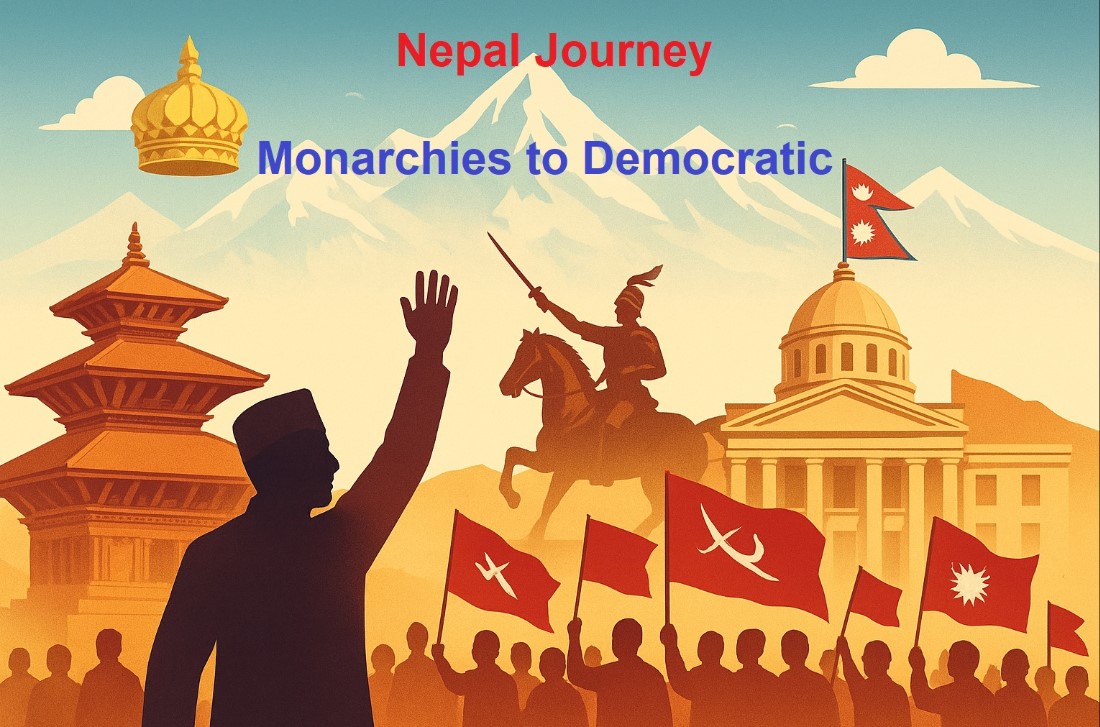
History
From Monarchy to Democracy: The Political Journey of Nepal Nepal, the Himalayan nation known for its unique geography and cultural heritage, has also witnessed one of the most dramatic political transformations in South Asia. Its political history is a tale of monarchy, revolutions, and democratic struggles that shaped the modern state. To understand the evolution of Nepal’s governance, one must look back at the long lineage of rulers, the rise and fall of dynasties, and the eventual transition into a republic. The Beginning of Monarchy in Nepal Ancient Period and Early Dynasties The origins of monarchy in Nepal can be traced back thousands of years. According to legend, the Gopal and Mahishpal dynasties were the earliest rulers of the Kathmandu Valley, followed by the Kirata dynasty (around 800 BCE). Later, the Licchavi dynasty rose to prominence in the 4th century CE, establishing organized governance and developing art, architecture, and trade. By the Malla period (1200–1768 CE), Nepal was divided into several small kingdoms and principalities, each ruled by independent monarchs. The Mallas contributed greatly to Nepal’s cultural identity, but their fragmentation left the region vulnerable to unification under a stronger leader. Unification Under the Shah Dynasty (1768) The foundation of modern Nepal’s monarchy began with King Prithvi Narayan Shah, ruler of Gorkha, who launched a military campaign to unify the fractured kingdoms of the Himalayas. By 1768, he successfully captured Kathmandu and established the Shah dynasty as rulers of a united Nepal. Prithvi Narayan Shah emphasized a "yam between two boulders" policy, recognizing Nepal’s delicate position between China and India. His successors expanded Nepal’s territory until the Anglo-Nepalese War (1814–1816), after which the Sugauli Treaty forced Nepal to cede large territories to the British East India Company. The Rise of the Rana Regime (1846–1951) In 1846, the Kot Massacre paved the way for Jung Bahadur Rana to establish a hereditary Rana autocracy, reducing the Shah kings to ceremonial figures. Under the Rana regime, power remained in the hands of the prime ministers, and the monarchy was sidelined. For over a century, Nepal remained closed to the outside world, and modernization was severely restricted. Education, political freedoms, and public participation were tightly controlled. However, discontent began to grow among intellectuals and revolutionaries. Democratic Awakening and End of Rana Rule (1951) Inspired by India’s independence in 1947, Nepalese activists began pushing for democratic reforms. The Nepali Congress, along with exiled revolutionaries, launched the Revolution of 1950–1951 against the Ranas. With support from King Tribhuvan, who opposed the Rana system, the movement succeeded in ending Rana rule. In 1951, Nepal entered a new era with the restoration of monarchy and the introduction of a parliamentary democracy. King Tribhuvan promised a democratic system, though it faced many struggles in implementation. The Panchayat System (1960–1990) The first democratic experiment was short-lived. In 1960, King Mahendra dissolved parliament, banned political parties, and introduced the Panchayat system, a party-less political structure. Under Panchayat rule, power was centralized in the monarchy. Citizens could elect representatives, but political parties were outlawed. While some development projects took place, political repression continued. The Panchayat period lasted three decades, but opposition gradually gained momentum, especially among students, workers, and intellectuals. People’s Movement and Multiparty Democracy (1990) In 1990, a mass uprising known as the Jana Andolan (People’s Movement) broke out. Protests and strikes across the country forced King Birendra to accept reforms. The result was the restoration of multiparty democracy under a constitutional monarchy. The 1990 Constitution of Nepal guaranteed fundamental rights, multiparty elections, and a more open society, while the king retained symbolic power. For a brief period, Nepal seemed to be on the path to stable democracy. The Maoist Insurgency (1996–2006) In 1996, a new chapter of turmoil began when the Communist Party of Nepal (Maoist) launched a “People’s War” against the state, demanding the abolition of monarchy and establishment of a republic. The civil war lasted a decade, claiming over 17,000 lives. Villages became battlegrounds between Maoists and government forces. Political instability grew as governments changed frequently. The insurgency weakened the monarchy’s legitimacy and strengthened republican sentiment. Royal Massacre and Absolute Monarchy (2001–2005) In 2001, the Royal Palace Massacre shocked the nation. King Birendra and much of the royal family were killed, and Gyanendra became king. King Gyanendra attempted to reassert absolute monarchy by dismissing parliament and taking full control in 2005. However, his authoritarian approach backfired and fueled mass protests. People’s Movement II and End of Monarchy (2006–2008) In April 2006, the Second People’s Movement (Jana Andolan II) forced King Gyanendra to restore parliament. A peace deal was signed between the government and Maoists, ending the civil war. In 2008, the Constituent Assembly formally abolished the monarchy, declaring Nepal a Federal Democratic Republic. This ended 240 years of Shah dynasty rule. Democracy and Federalism (2015 Constitution) After years of debate and political deadlock, Nepal adopted its new constitution in 2015, which established the country as a secular, federal democratic republic with seven provinces. Key features of modern Nepal’s system include: Multiparty democracy with periodic elections. Separation of powers between legislature, judiciary, and executive. Provincial governments with significant autonomy. Secularism, guaranteeing freedom of religion. Nepal After the 2015 Constitution: Challenges and Progress The promulgation of the 2015 Constitution of Nepal was a landmark event, but the years that followed were filled with new political, social, and economic challenges. Madhes and Ethnic Protests (2015–2016) Soon after the constitution was announced, several groups, particularly the Madhesi and Tharu communities, protested against what they perceived as unfair provincial boundaries and lack of representation. These protests turned violent in some regions and led to the India-Nepal border blockade (2015–2016), which caused severe shortages of fuel, medicine, and essential goods. Federal Implementation (2017 Elections) In 2017, Nepal held its first-ever local, provincial, and federal elections under the new constitution. The elections were historic because they completed the federal restructuring of the state, creating seven provinces with their own governments. The Communist Party of Nepal (UML) and Maoist Centre alliance won a sweeping majority, and KP Sharma Oli became Prime Minister in 2018. Political Instability Returns (2020–2021) Despite the initial stability, Nepal once again fell into political turmoil: In 2020, PM Oli dissolved parliament amid power struggles inside the ruling party. The Supreme Court in 2021 declared his move unconstitutional, reinstating parliament. Frequent changes in leadership followed, with Sher Bahadur Deuba taking office in July 2021. This period highlighted the persistent challenge of coalition politics and fragile party unity. Republic Consolidation and Foreign Policy Post-2015, Nepal has tried to balance relations between India and China, both of whom seek influence in the region. Nepal also became more active in the Belt and Road Initiative (BRI) with China, though implementation has been slow. Relations with India have fluctuated, sometimes strained by border disputes, such as the Kalapani-Lipulekh issue in 2020. Economic and Social Challenges The 2015 earthquake reconstruction has been a slow process, though progress continues. The COVID-19 pandemic hit Nepal hard, exposing weaknesses in its healthcare system. Remittances from Nepali workers abroad remain a lifeline for the economy, but youth unemployment and migration remain pressing issues. Recent Elections and Current System (2022–2023) In the 2022 general elections, no party gained an outright majority, leading to another coalition government. Pushpa Kamal Dahal ‘Prachanda’, leader of the Maoist Centre, became Prime Minister in December 2022 with support from multiple parties. Nepal today continues as a Federal Democratic Republic with: Seven provinces functioning with local governments. Multiparty system dominated by Nepali Congress, CPN-UML, and Maoist Centre. A largely ceremonial president, with the executive power vested in the Prime Minister. Rising Demand for Monarchy Restoration (2023–2025) Despite nearly two decades since the abolition of monarchy, a section of Nepalese society has begun demanding the restoration of the Shah monarchy and a Hindu state. Mass rallies and protests organized by royalist groups and former King Gyanendra’s supporters gained momentum after 2023, especially in Kathmandu, Pokhara, and the Terai region. Protesters argue that political instability, corruption, and frequent changes in government under the republican model have weakened Nepal’s governance. Slogans such as “Bring back the King” and calls to return to a constitutional monarchy have become louder. While mainstream political parties officially remain committed to the republic, the revival of monarchist sentiment shows that Nepal’s democratic journey is still contested. Nepal in 2024–2025: Current Developments As of 2025, Nepal stands at a critical juncture: Coalition Fragility: Political instability continues, with fragile alliances often collapsing, leaving governments struggling to complete full terms. Economic Pressures: Inflation, unemployment, and dependence on remittances remain pressing issues. Youth migration has reached record highs, draining Nepal’s workforce. Foreign Relations: Nepal continues to balance ties between India and China, while also engaging more with the United States and global partners. Border disputes with India occasionally flare up, while China pushes infrastructure investments under the Belt and Road Initiative. Natural Disasters and Climate Change: Nepal, being highly vulnerable to earthquakes and floods, faces growing challenges in disaster management and climate adaptation. Royalist Movement: Monarchist groups are expected to push for a referendum or wider public debate in the coming years. Though not dominant yet, their influence is steadily growing. Timeline of Nepal’s Political Systems 800 BCE (approx.) – Kirata rule in Kathmandu Valley. 4th Century CE – Licchavi dynasty strengthens monarchy. 1200–1768 CE – Malla kings rule divided kingdoms. 1768 – Prithvi Narayan Shah unifies Nepal under Shah monarchy. 1846 – Kot Massacre; Rana regime begins. 1951 – End of Rana rule; restoration of monarchy and parliamentary democracy. 1960 – King Mahendra introduces Panchayat party-less system. 1990 – Jana Andolan restores multiparty democracy under constitutional monarchy. 1996–2006 – Maoist insurgency. 2001 – Royal massacre; King Gyanendra takes throne. 2005 – Absolute monarchy attempted. 2006 – People’s Movement II restores parliament. 2008 – Monarchy abolished; Nepal declared a republic. 2015 – New constitution enacts federal democratic system. 2015–2016 – Madhesi protests and India-Nepal blockade. 2017 – First local, provincial, and federal elections under the new constitution. 2018 – KP Sharma Oli forms majority government. 2020–2021 – Parliament dissolution crisis; Supreme Court restores parliament. 2021 – Sher Bahadur Deuba becomes Prime Minister. 2022 – General elections; Prachanda becomes Prime Minister in coalition. 2023 – Royalist movements gain strength, demanding monarchy restoration. 2024–2025 – Nepal faces coalition instability, economic challenges, and rising calls for a return to monarchy alongside debates on strengthening the federal republic.
Read More → Posted on 2025-09-10 14:04:39
History
A remarkable chapter of India’s ancient history has emerged from the soil of Rajasthan. In an extraordinary discovery, the Archaeological Survey of India (ASI) has unearthed the remains of a 4500-year-old civilization in Bahaj village of Deeg district, revealing a site that bridges the Vedic, Mahabharata, and Mauryan eras. This finding could potentially reshape the historical and cultural understanding of ancient India’s heartland. A Civilization Lost in Time The excavation, which began several months ago under the supervision of ASI's Jaipur Circle, uncovered evidence of continuous human settlement from around 3500 BC to 600 AD. The site revealed a fascinating sequence of cultural layers spanning several important phases of Indian history — from the Post-Harappan period to the Mauryan and Gupta empires. One of the most astonishing aspects of this discovery is the presence of an ancient river system found deep beneath the site. Geologists and archaeologists believe this to be a paleo-channel of the long-lost Saraswati River, often mentioned in the Rigveda. If confirmed, this would be one of the most compelling pieces of evidence for the existence and route of the Saraswati, a river central to ancient Indian civilization narratives. Finds from the Mahabharata and Maurya Periods Among the thousands of artefacts recovered are sculptures linked to the Mahabharata era, including idols of Shiva and Parvati, terracotta figurines, and ritual structures like yajna kundas (sacrificial fire pits). These findings hint at an established tradition of Vedic worship and ritualism that may have continued unbroken for centuries in this region. Moving forward in time, the excavations also brought to light artefacts from the Maurya and Shunga periods. This includes sculptures from the Mauryan era, coins of the Shunga dynasty, and several seals bearing inscriptions in early Brahmi script. These relics provide valuable insight into the religious, economic, and administrative practices of ancient Indian kingdoms. Urban Life and Craftsmanship Archaeologists have uncovered buildings made of clay pillars, extensive drainage systems, furnaces, and even bone tools such as needles and combs — signs of a sophisticated urban settlement. The presence of semi-precious stone beads, metal artefacts, and shell bangles indicates that Bahaj was not just a religious center, but also a thriving hub of craft and trade. Significantly, over 800 artefacts have been unearthed so far, ranging from pottery and weapons to decorative ornaments and ritual installations. Silver and copper coins discovered in miniature earthen pots point towards an organized system of trade and commerce, possibly stretching across the broader Indo-Gangetic plains. A Window to the Saraswati Civilization Perhaps the most historically significant aspect of the Bahaj excavations is the 23-meter-deep paleo-channel found beneath the site, believed to be part of the ancient Saraswati River system. Experts from the Geological Survey of India and ASI suggest that this river would have supported early agricultural settlements in the region, connecting Bahaj to other ancient cities of the Saraswati basin. This discovery adds to growing archaeological evidence that several ancient settlements across Rajasthan, Haryana, and Gujarat may have once thrived along the banks of a mighty river system that dried up thousands of years ago. A Treasure Trove for History The remains of five continuous civilizations — from the Post-Harappan and Vedic periods to the Mauryan, Shunga, Kushan, and Gupta dynasties — have been unearthed here. Among the most important finds are: Seals with Brahmi inscriptions 15 yajna kundas (ritual fire pits) Terracotta idols of Shiva-Parvati and fertility goddesses Iron and copper tools and weapons Bone tools and needles Semi-precious stone beads and ornaments A 1700-year-old human skeleton, now undergoing scientific analysis for age verification and genetic study The Bahaj excavation site in Deeg district isn’t just another archaeological dig — it’s a time capsule buried under layers of earth, preserving within it the echoes of India’s earliest civilizations. From the fabled river Saraswati to the epic age of Mahabharata, from the might of the Mauryan empire to the intellectual brilliance of the Gupta age, this single site offers a rare, continuous narrative of India’s ancient history. As experts continue to study the findings, Bahaj promises to become one of the most important archaeological discoveries in India’s history, helping scholars piece together the mysteries of a past both rich and profound.
Read More → Posted on 2025-07-04 15:40:56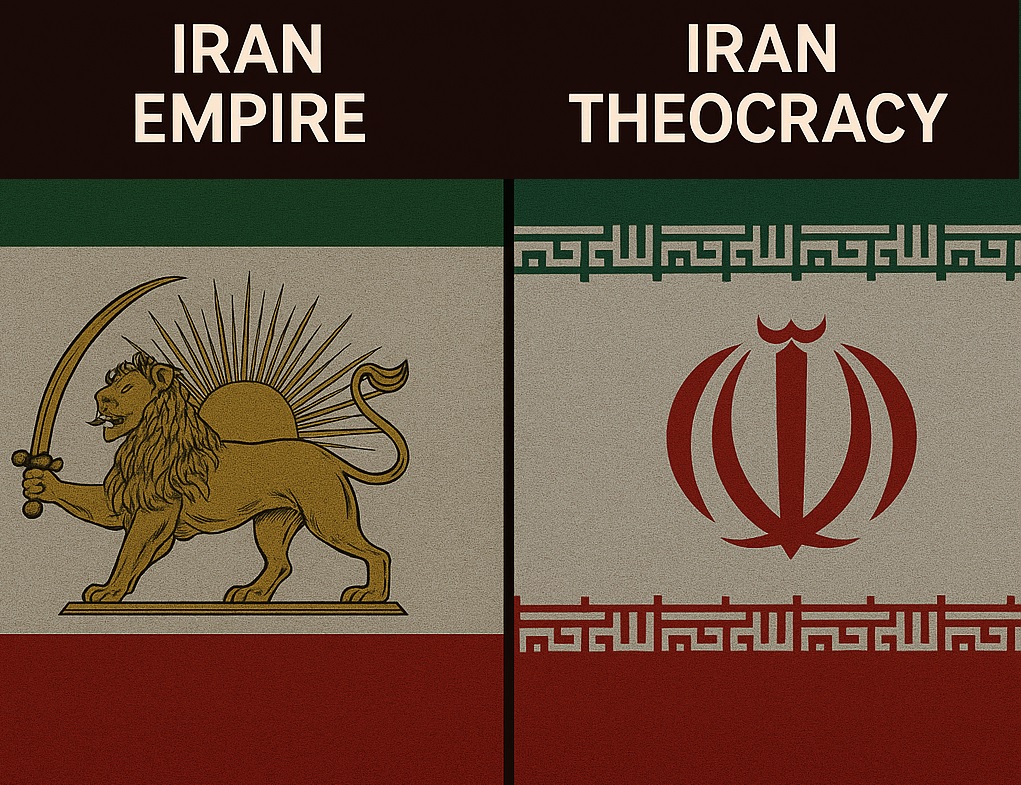
History
Once a beacon of modernization in the Middle East, Iran today stands as a deeply religious, politically isolated nation under clerical rule. How did this transformation take place? Who ruled before the current regime? Could the old order ever return? And what has been the price—particularly for women? The Shah’s Iran: A Modernizing Monarchy Before 1979, Iran was ruled by the Pahlavi dynasty, first under Reza Shah Pahlavi (1925–1941), and later his son, Mohammad Reza Shah Pahlavi (1941–1979). The monarchy was deeply focused on modernization, centralization, and secularization. The Shah’s most ambitious initiative—the White Revolution (1963)—ushered in land reforms, women’s suffrage, industrialization, and education programs. During the 1960s and 70s, Iran experienced an economic boom. Western fashion, cinema, music, and liberal values flourished in Tehran and other cities. Women were among the greatest beneficiaries: they could vote, hold office, become judges, and dress freely. Iran appointed its first female minister, Farrokhroo Parsa, in 1968—something unthinkable in today’s regime. Iran’s capital was sometimes referred to as the “Paris of the Middle East,” and despite criticisms of autocracy, corruption, and inequality, the country was widely seen as an emerging modern state. The Islamic Revolution: Collapse of the Old Order In 1979, following years of political repression, widening inequality, and backlash from the religious clergy, Iran erupted in protest. Leading the revolution was Ayatollah Ruhollah Khomeini, an exiled Shia cleric who galvanized a coalition of Islamists, leftists, students, and traditionalists. On February 11, 1979, the monarchy collapsed. The Shah fled to Egypt; Khomeini returned from exile to Tehran, declaring the birth of an Islamic Republic. Shortly after, a national referendum overwhelmingly backed the formation of this new theocratic system, replacing monarchy with “Velayat-e Faqih”—rule by Islamic jurists. The new constitution gave ultimate power to the Supreme Leader (Khomeini, and later Ali Khamenei), whose word overrides even that of the president or parliament. The revolution also resulted in brutal purges of monarchists, liberals, and secularists. The Family Protection Law was repealed. Veiling became mandatory. Political dissent was silenced. And the once-Western-aligned Iran turned radically anti-American and anti-Israel. Women’s Freedoms: Then and Now Under the Shah (Pre-1979): Women had the right to vote (since 1963) and run for office. Female ministers and judges were common in the late 1970s. Women wore Western clothes freely in public. The marriage age was raised, and women had improved divorce and custody rights. Under the Islamic Republic (Post-1979): Hijab became compulsory. Veil-police monitor public behavior. Women cannot sing publicly, and are banned from certain sports stadiums. Family law reverted to Sharia-based rules, disadvantaging women in divorce, custody, and inheritance. Yet paradoxically, female literacy and education soared—today, over 60% of university students are women. In recent years, women like Mahsa Amini (whose death in 2022 sparked nationwide protests) became symbols of a generation demanding reform. The Islamic Republic Today Iran is currently ruled by Supreme Leader Ayatollah Ali Khamenei (in power since 1989), and President Ebrahim Raisi, a hardliner elected in 2021. Institutions like the Revolutionary Guard (IRGC) wield massive influence, and elections are tightly controlled by the Guardian Council, which filters out reformist candidates. The system is rigid, but it faces growing pressure from a restless population, especially among youth and women, who seek more freedoms and economic opportunities. What Happened to the Old Regime? Crown Prince Reza Pahlavi, son of the late Shah, now lives in exile in the U.S. He has no formal political power, but remains a symbol of opposition. In 2023–24, protests inside Iran saw chants like “Reza Shah, bless your soul!”, especially among young people who never lived under the monarchy but idolize its modern image. While monarchist sentiment is rising among exiles and some inside Iran, there is no serious path to restoration under current conditions. The Islamic Republic’s power structure—anchored in the IRGC, clergy, and security forces—is deeply entrenched. Who Comes After Khamenei? At 85, Ali Khamenei’s death will trigger a major power transition. A body called the Assembly of Experts is tasked with selecting the next Supreme Leader, though insiders believe the IRGC will heavily influence the decision. Some say Mojtaba Khamenei (Ali’s son) could succeed him, suggesting dynastic ambitions within the clerical framework. Others advocate for reform from within. A monarchist restoration would require not only regime collapse but mass domestic and elite support, which currently does not exist. Conclusion Iran’s journey from a modern monarchy to an Islamic theocracy reshaped its identity, international standing, and social fabric. While the Islamic Republic has achieved ideological durability, it has come at the cost of personal freedoms—especially for women—and international isolation. The old regime lives on in memory, particularly in the voices of younger Iranians yearning for a freer, more open society. But barring a political earthquake, the return of the Shah remains more nostalgic dream than imminent reality.
Read More → Posted on 2025-06-22 12:29:52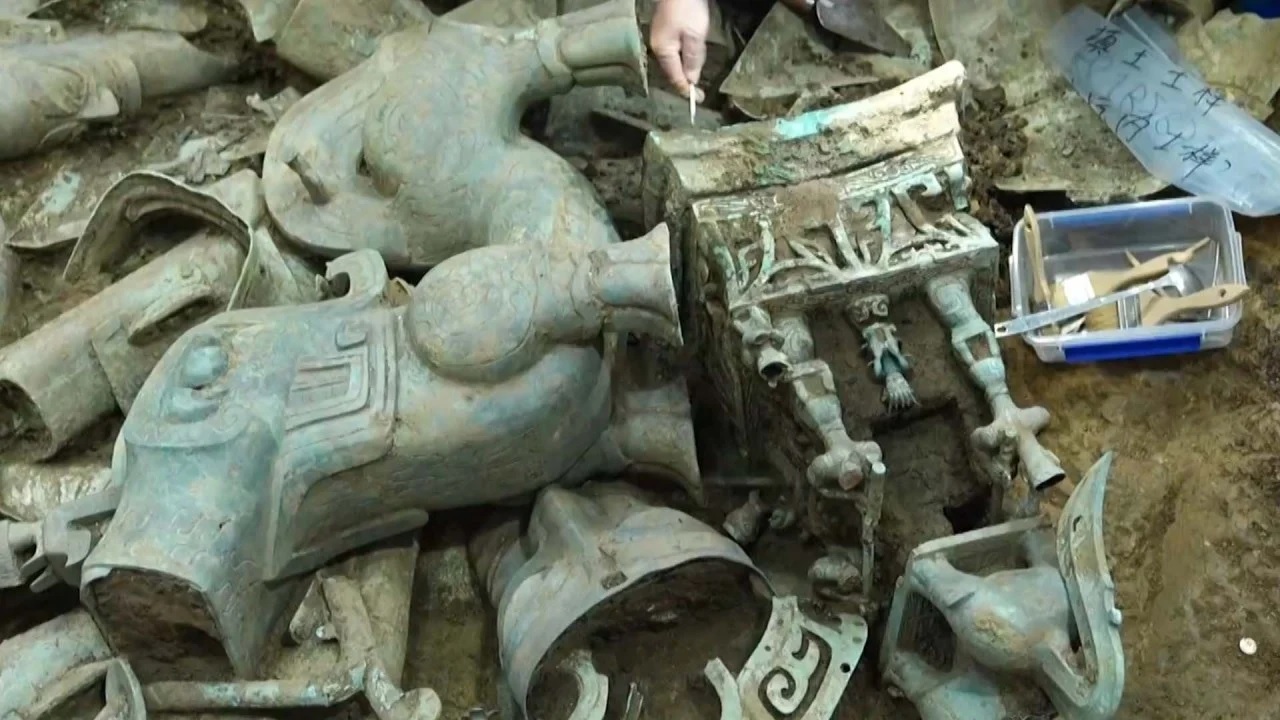
History
Chinese archaeologists have unearthed silk remnants at the enigmatic Sanxingdui ruins, a groundbreaking discovery that dates back over 3,000 years. This finding, heralded as the first evidence of silk at the site, sheds new light on the cultural and spiritual practices of the ancient Shu civilization in Sichuan province. The research team, comprising experts from the China National Silk Museum, the Sanxingdui Research Institute, and the Sanxingdui Museum, published their findings in the peer-reviewed journal Scientific Reports. Their work not only deepens our understanding of the origins of silk but also underscores its profound role in early religious and economic practices. Silk and the Spiritual Realm: A Link Between Heaven and Earth The Sanxingdui site is renowned for its sacrificial pits, which have yielded a treasure trove of artifacts, including bronze masks, jade objects, and gold ornaments. Among these relics, traces of incinerated silk were discovered adhering to the surfaces of bronze and jade items. The researchers propose that silk was an integral element in the Shu people's rituals, symbolizing a medium for communication between the human and divine realms. One particularly intriguing find was a grid-like silk-covered object, reminiscent of descriptions in ancient Chinese texts. According to legend, Emperor Yao, who ruled 5,000 years ago, passed his throne to Emperor Shun through a divine turtle bearing a message. This narrative aligns with the grid-like silk object, suggesting its use as a ceremonial artifact linked to heavenly mandates. Sericulture and the Economy of the Shu State The ancient Shu state, with Sanxingdui as its capital, was a hub of sericulture and silk weaving. Historical accounts frequently highlight the region's expertise in silk production, which played a pivotal role in the local economy. Despite this, pinpointing the exact origins of silk production in ancient China has been challenging due to the material's perishable nature. The innovative techniques developed by the researchers to identify mineralized textiles now open new avenues for investigating ancient sericulture across China. Silk as a Burial Custom and its Symbolism The researchers drew connections between their findings and the Book of Rites (Liji), an ancient Confucian text, which describes the use of silk as burial clothing. Wrapping the deceased in silk was believed to form an artificial cocoon, aiding the soul's journey to heaven. The sacrificial pits at Sanxingdui, filled with silk-covered objects, highlight the spiritual significance of this practice and the Shu people's belief in an afterlife. Innovative Methods: Unveiling Hidden Histories To uncover these silk residues, the team employed a novel technique that enriched archaeological samples with substances enhancing fiber visibility. This breakthrough allowed them to detect previously invisible remains of silk, even in highly degraded conditions. Such methods could revolutionize archaeological studies, enabling the identification of other ancient materials like fur, which often vanish over millennia. A Connection to the Southwest Silk Road The discovery also provides concrete evidence of the Southwest Silk Road's existence over 3,000 years ago. This ancient trade network connected the Shu state with other regions, facilitating the exchange of goods, ideas, and culture. Silk, being a prized commodity, was central to these interactions and laid the groundwork for what would later become the famed Silk Road. Sanxingdui: A Portal to the Past Sanxingdui continues to astonish the world with its wealth of artifacts and the glimpses it offers into a sophisticated and enigmatic civilization. The discovery of silk adds a new dimension to our understanding of the Shu people's spiritual and economic life, affirming their advanced practices in sericulture and their deep connection to spiritual beliefs. As archaeologists and historians delve deeper into the mysteries of Sanxingdui, each new find reinforces the site's significance in the tapestry of human history. The ancient Shu people's legacy, woven with silk threads, continues to captivate the modern world, offering invaluable insights into China's rich cultural heritage.
Read More → Posted on 2024-12-10 17:07:30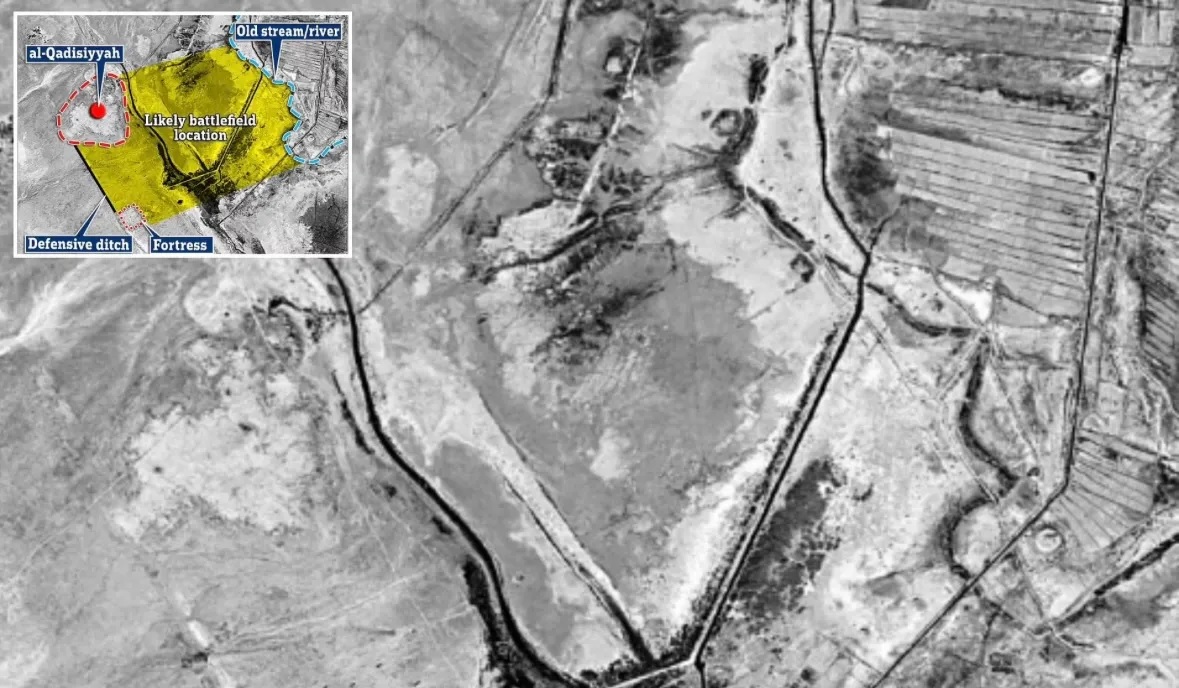
History
In an extraordinary confluence of modern technology and ancient history, declassified spy satellite images have led to the discovery of the long-lost site of the Battle of al-Qadisiyyah, a pivotal moment in the Muslim conquest of Persia. The discovery, detailed in the journal Antiquity, reveals how U.S. Cold War-era surveillance unintentionally preserved clues to a battlefield that shaped the course of Islamic history. A Window into the Past The story begins with satellite imagery captured in 1973 by the KH-9 "Hexagon" reconnaissance program, a cutting-edge spy tool of its time. The KH-9, often referred to as "Big Bird," was part of an advanced U.S. system designed to monitor geopolitical developments during the Cold War. Decades later, these images, declassified in 2011, became a treasure trove for archaeologists looking to explore ancient landscapes. A team led by William Deadman, an archaeologist at Durham University, stumbled upon the battlefield while analyzing these images. Their primary focus was the Darb Zubaydah, a historic Hajj pilgrimage route stretching from Kufa in Iraq to Mecca in Saudi Arabia. The route, prominent during the Abbasid Caliphate (A.D. 750–850), was under review for potential UNESCO World Heritage Site designation. However, the high-resolution imagery unveiled something even more remarkable—a site that matched the historical records of the Battle of al-Qadisiyyah. The Historical Context The Battle of al-Qadisiyyah, fought in A.D. 636 or 637, was a decisive confrontation between the Arab Muslim forces and the Sasanian Empire, which then dominated the region of present-day Iran. The battle not only marked the fall of Sasanian power but also set the stage for the rapid spread of Islam across Persia and Central Asia. According to historical accounts, the battlefield was characterized by a 6-mile-long wall, a moat, and its proximity to a body of water and a bridged stream. Pinpointing the Site Using the declassified KH-9 images, the research team identified a modern agricultural field in Iraq that corresponded with these descriptions. Ground surveys further confirmed the presence of the 6-mile-long wall and the moat referenced in historical texts. The precise location had remained elusive for centuries, but this combination of satellite imagery and archaeological expertise provided a breakthrough. "This discovery provides a tangible geographical context to one of the founding stories of Islamic history," Deadman remarked. The battlefield is more than just a historical site—it is a symbol of cultural transformation and the expansion of Islam into Iraq, Iran, and beyond. From Surveillance to Scholarship The rediscovery of the Battle of al-Qadisiyyah underscores the unexpected ways in which Cold War technology has been repurposed for academic and cultural advancements. The KH-9 imagery, originally intended for espionage, is now helping scholars reconstruct lost landscapes and unearth forgotten chapters of human history. This find also highlights the evolving role of satellite archaeology, which combines historical research with state-of-the-art technology to solve mysteries that traditional methods cannot. From identifying ancient pilgrimage routes to pinpointing battlefields, the possibilities are vast and transformative. As the story of al-Qadisiyyah emerges from the shadows of history, it serves as a reminder of how past events, no matter how distant, continue to shape the cultural and political landscapes of today.
Read More → Posted on 2024-12-01 15:22:35
History
The Titanic Disaster: A Tragic Tale of Hubris and Heroism In the annals of maritime history, few events loom as large as the sinking of the RMS Titanic. This magnificent ocean liner, touted as unsinkable, met its tragic fate on the night of April 14-15, 1912, resulting in the loss of over 1,500 lives. The Titanic's demise shocked the world and sparked an enduring fascination with the ship and its ill-fated maiden voyage. In this article, we delve into the captivating story of the Titanic disaster, exploring its origins, the events leading up to the tragedy, the heroic efforts of passengers and crew, the aftermath, and its enduring legacy. Origins of the TitanicThe origins of the Titanic can be traced back to the competitive atmosphere of the early 20th-century transatlantic passenger trade. In the wake of the White Star Line's rival, Cunard, launching the impressive Lusitania and Mauretania, White Star sought to regain prominence by constructing a trio of luxury liners: Olympic, Titanic, and Britannic. Designed by renowned naval architect Thomas Andrews, the Titanic was envisioned as the pinnacle of maritime engineering, boasting unparalleled luxury and safety features.Construction of the Titanic began in March 1909 at the Harland and Wolff shipyard in Belfast, Northern Ireland. The ship's design incorporated advanced safety features, including watertight compartments and a double hull, intended to ensure its buoyancy and stability. However, despite these innovations, the Titanic's fate would ultimately be sealed by a fatal combination of human error, design flaws, and sheer misfortune. The Maiden VoyageAfter years of anticipation and hype, the Titanic set sail on its maiden voyage from Southampton, England, to New York City on April 10, 1912. On board were over 2,200 passengers and crew, including some of the wealthiest and most prominent individuals of the era. The atmosphere on the ship was one of excitement and opulence, with passengers marveling at the ship's luxurious amenities, fine dining, and state-of-the-art facilities.As the Titanic embarked on its transatlantic journey, it attracted widespread attention and media coverage, with newspapers hailing it as a triumph of human ingenuity and engineering. However, lurking beneath the surface of this grandeur was a sense of overconfidence and complacency among the ship's crew and passengers. The prevailing belief in the Titanic's invincibility would soon be put to the ultimate test. The Tragedy UnfoldsOn the night of April 14, 1912, the Titanic struck an iceberg in the North Atlantic Ocean, approximately 400 miles south of Newfoundland. The collision tore a series of large gashes in the ship's hull, compromising multiple watertight compartments and causing the Titanic to rapidly take on water. Despite the severity of the damage, many passengers initially remained unaware of the gravity of the situation, believing the ship to be unsinkable.As the reality of the disaster became apparent, chaos ensued aboard the Titanic. Lifeboats were launched, but in a staggeringly inadequate manner, with many launching only partially filled. The shortage of lifeboats, coupled with a lack of emergency preparedness and coordination, exacerbated the loss of life. Women and children were given priority access to the lifeboats, while many men were left behind to face the sinking ship. Acts of Heroism and SacrificeAmidst the chaos and confusion, acts of heroism and selflessness emerged among both passengers and crew. Stories abound of individuals sacrificing their own safety to help others, whether by assisting fellow passengers into lifeboats, searching for loved ones, or offering comfort and reassurance in the face of impending disaster. The bravery of the Titanic's musicians, who continued to play music to calm passengers as the ship sank, became emblematic of the human spirit in the face of tragedy.One notable example of heroism was that of the ship's captain, Edward Smith, who remained on the bridge until the last moments, directing efforts to evacuate passengers and maintain order. Smith's actions, while commendable, were ultimately insufficient to avert the catastrophe, and he went down with the ship. Aftermath and LegacyThe sinking of the Titanic sent shockwaves around the world and prompted widespread scrutiny of maritime safety regulations. Investigations into the disaster revealed a litany of shortcomings, including inadequate lifeboat capacity, insufficient training of crew members, and a lack of effective communication and coordination procedures. In response to these findings, significant reforms were implemented in the shipping industry, leading to the establishment of stricter safety standards and the creation of international maritime regulations.The Titanic disaster also had profound social and cultural repercussions, symbolizing the hubris of the industrial age and the fragility of human ambition. The sinking of the Titanic shattered the prevailing belief in technological invincibility and highlighted the need for humility and caution in the face of nature's power. The tragedy sparked a wave of mourning and commemoration, with memorials erected in honor of the victims and survivors. Investigations and InquiriesIn the wake of the Titanic disaster, multiple investigations and inquiries were launched to ascertain the causes of the tragedy and to assign responsibility for the loss of life. The United States Senate convened a special subcommittee to investigate the circumstances surrounding the sinking, leading to a series of hearings that scrutinized the actions of the White Star Line, the ship's crew, and the adequacy of maritime safety regulations.Similarly, the British Board of Trade conducted its own inquiry into the disaster, led by Lord Mersey. The inquiry examined testimony from survivors, witnesses, and experts in maritime safety, ultimately producing a comprehensive report that outlined the contributing factors to the Titanic's sinking and made recommendations for improving maritime safety standards. Survivors and Their StoriesAmong the most compelling aspects of the Titanic disaster are the stories of the survivors, whose firsthand accounts provide invaluable insights into the events of that fateful night. Survivors' testimonies offer vivid descriptions of the chaos and confusion aboard the sinking ship, as well as the courage and resilience displayed by individuals in the face of unimaginable adversity.One of the most famous survivors of the Titanic was Margaret "Molly" Brown, whose actions during the evacuation earned her the nickname "The Unsinkable Molly Brown." Brown played a prominent role in assisting fellow passengers into lifeboats and organizing relief efforts aboard the rescue ship Carpathia. Her bravery and compassion made her a symbol of hope and resilience in the aftermath of the disaster. The Wreck of the TitanicFor decades after its sinking, the Titanic lay undisturbed at the bottom of the North Atlantic, its resting place shrouded in mystery and speculation. In 1985, a joint American-French expedition led by Dr. Robert Ballard discovered the wreck of the Titanic, resting nearly 12,500 feet below the ocean's surface. The discovery of the Titanic's remains reignited public interest in the disaster and provided researchers with valuable insights into the ship's final moments.Subsequent expeditions to the Titanic wreck have yielded a wealth of artifacts and evidence, shedding light on the conditions aboard the ship at the time of its sinking and the impact of the disaster on its passengers and crew. The wreck site has become a protected maritime memorial, visited by researchers, explorers, and tourists seeking to pay their respects to the victims of the Titanic disaster. Editor’s Thoughts: The sinking of the Titanic remains one of the most enduring and poignant tragedies in maritime history, serving as a stark reminder of the fragility of human life and the consequences of overconfidence. The loss of over 1,500 souls aboard the "unsinkable" ship shocked the world and sparked a legacy of remembrance and reflection. The Titanic disaster continues to captivate the public imagination, inspiring countless books, films, and documentaries, and serving as a timeless testament to the indomitable spirit of those who perished and those who survived.
Read More → Posted on 2024-05-11 16:00:14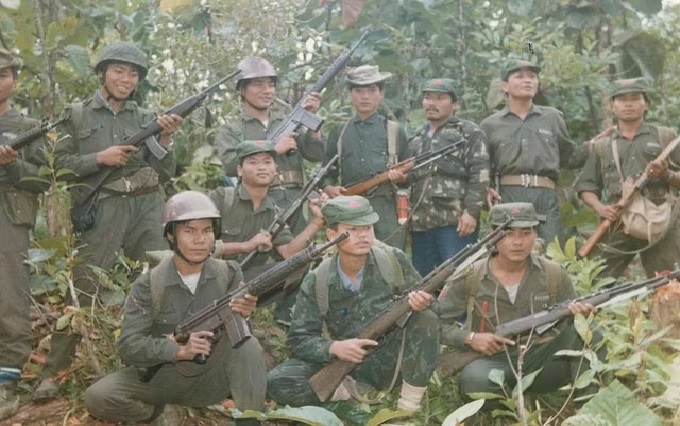
History
History of Kuki Zo Militancy in Northeast IndiaThe verdant hills of Northeast India have been a stage for complex ethnic narratives, and the story of the Kuki Zo militants is a thread woven into this rich tapestry. Their struggle for identity and self-determination has manifested in armed movements, leaving an indelible mark on the region's history.Who are the Kuki Zo?Understanding the Kuki Zo necessitates recognizing the concept of "Zomia" - a proposed homeland encompassing the Kuki-Chin people spread across Northeast India and Myanmar's Chin State. While the Kuki moniker refers to various tribes under this umbrella, the "Zo" identity emerged in the mid-20th century, unifying these communities under a common banner.Seeds of DiscontentThe roots of Kuki Zo militancy can be traced back to British colonialism. The demarcation of arbitrary borders fragmented Zomia, separating families and disrupting traditional ways of life. Colonial policies favoring dominant ethnicities further marginalized the Kuki Zo people.Post-Independence StrugglesIndia's independence in 1947 brought new hope but also fresh challenges. The formation of Mizoram, a state carved out for the Mizo people (closely related to the Kuki), left other Kuki groups scattered across Manipur, Assam, and Nagaland feeling excluded.The 1960s and 1970s witnessed a rise in Kuki ethnonationalist movements. Groups like the United Zomi Organisation and the Zomi National Congress advocated for a separate Zomi state. However, these aspirations were met with resistance, leading to the emergence of armed groups.The Kuki National Army (KNA)Formed in 1988, the KNA became a prominent voice of Kuki discontent. It aimed to establish an independent state for the Kuki people across India and Myanmar. The KNA engaged in armed clashes with the Indian security forces and the Burmese military (Tatmadaw).The Zomi Revolutionary Army (ZRA)The ZRA, formed in 1997, emerged out of ethnic tensions between the Kuki and Paites tribes in Manipur. It shared a common goal of a Zomi homeland with the KNA but operated primarily within Manipur's borders.Peace Accords and FragmentationThe turn of the millennium saw a shift towards peace initiatives. The KNA signed ceasefires with the Indian government in the early 2000s. The ZRA followed suit in 2008.Fragile Peace, Renewed ClashesWhile several Kuki Zo militant groups signed ceasefire agreements with the Indian government in the early 2000s, a sense of lasting peace remains elusive. Reports suggest that some groups continue operating along the porous India-Myanmar border, allegedly training and collaborating with "Kuki volunteers"A key factor behind the resurgence of violence is the unresolved question of Kuki identity and aspirations. Organizations like Zo United advocate for the withdrawal of state police from Kuki-dominated areas, citing distrust and fear Gain Support From Myanmar and ChinaMyanmar:Porous Border: The India-Myanmar border is long and porous, making it easier for Kuki Zo militants to operate on both sides. Myanmar's ongoing internal conflict creates a situation where the government may not have full control over its bordersHistorical Ties: Some Kuki Zo groups have ethnic kin residing in Myanmar. This can provide a potential support base and access to resources.However, there's little concrete evidence of direct military aid or training provided by Myanmar to Kuki Zo militants. Myanmar itself is grappling with numerous ethnic insurgencies, and actively supporting one across the border could destabilize the region further.China:Geopolitical Concerns: China has a strategic interest in a stable Myanmar to counter India's influence in the region. Instability in Manipur due to Kuki Zo militancy could indirectly benefit China.Accusations: Indian security officials have sometimes alleged that China provides indirect support to insurgent groups in Northeast India, including the Kuki Zo.Impact of Kuki Zo militant on Locals LifesKuki Zo militant activity can disrupt and threaten the lives of Meitei people in Manipur in several ways:Direct Violence: Clashes between Kuki Zo militants and security forces can lead to civilian casualties, including Meitei people caught in the crossfire.Fear and Insecurity: The presence of an armed insurgency creates a climate of fear and insecurity. Meitei people living in areas affected by militancy may be afraid to travel freely or engage in daily activities.Economic Disruption: Violence and instability can hurt the local economy, impacting businesses and livelihoods. Tourism, a significant source of income in Manipur, can be adversely affected.Communal Tensions: Cow killings, even if not directly linked to Kuki Zo militants, can inflame religious tensions between the Meitei and Kuki Zo communities. This can lead to social unrest and violence.Psychological Impact: The ongoing conflict can create a sense of unease and psychological stress for the Meitei population.Here are some specific examples:Targeted Attacks: There have been instances of alleged targeted killings of Meitei people by suspected Kuki Zo militants in the past.Extortion: Businesses owned by Meitei people may be pressured to pay extortion money to militant groups.It's important to remember that the situation is complex:Not All Kuki Zo Support Militancy: The vast majority of Kuki Zo people have no desire for violence and simply want to live peacefully.Cycle of Violence: Attacks on Meitei people can provoke retaliation, leading to a dangerous cycle of violence.Looking Ahead:Peace Process: The success of the ongoing peace process between the Indian government and Kuki Zo groups is crucial for ensuring the safety and security of the Meitei community.Inter-communal Dialogue: Encouraging dialogue and understanding between Meitei and Kuki Zo communities can help break down stereotypes and build trust.Addressing Grievances: Finding solutions to the underlying grievances of the Kuki Zo people is essential for long-term peace and stability in Manipur.By working towards these goals, it's possible to create a safer and more peaceful environment for all communities in Manipur, including the Meitei people.
Read More → Posted on 2024-05-08 16:08:17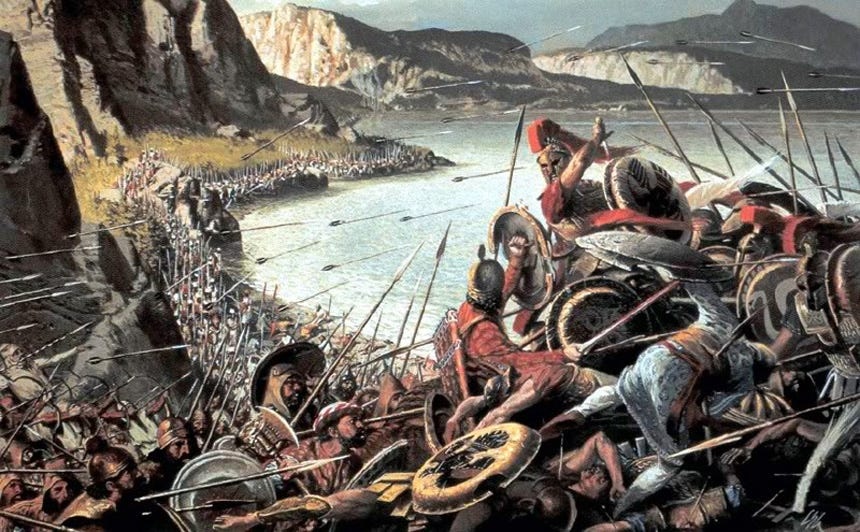
History
The Battle of Thermopylae: An Epic Stand for GloryThe Battle of Thermopylae stands as one of the most iconic clashes in ancient military history, immortalized through tales of valor, sacrifice, and the clash of civilizations. Fought in 480 BCE between the Greek city-states, led by a small force from Sparta, and the invading Persian Empire under King Xerxes I, Thermopylae represents a defining moment in the struggle for Greek independence and the defense of Western civilization against Eastern conquest. In this comprehensive exploration, we delve into the background, key players, strategic significance, unfolding of events, and enduring legacy of this legendary engagement. Context and Background The Persian ExpansionTo understand the significance of the Battle of Thermopylae, it's crucial to grasp the broader historical context. By the early 5th century BCE, the Persian Empire, under the rule of Darius I and later his son Xerxes I, had expanded to become the dominant power in the ancient world. Having conquered vast territories stretching from Anatolia to Egypt, Persia set its sights on further expansion into Europe, aiming to subjugate the independent Greek city-states.Greek City-States and the Delian LeagueContrary to the centralized authority of Persia, Greece comprised numerous independent city-states, each with its own government, laws, and military. Among these, Athens and Sparta emerged as the most prominent powers. Recognizing the imminent threat posed by Persian aggression, these city-states formed alliances, most notably the Delian League, to coordinate their defenses and resist the Persian advance.Prelude to Conflict Ionian RevoltThe conflict between Greece and Persia was catalyzed by the Ionian Revolt of 499-493 BCE, where Greek city-states in Anatolia rose against Persian rule. Although ultimately crushed by the Persians, the revolt drew the attention of Athens, which provided support to the Ionian rebels, thus antagonizing the Persian Empire.Persian Invasion of GreeceIn 490 BCE, Darius I launched the first Persian invasion of Greece, aiming to punish Athens for its role in the Ionian Revolt. The Battle of Marathon ensued, where Athenian forces achieved a stunning victory against the much larger Persian army, effectively thwarting the invasion and earning Athens a place of prominence among the Greek city-states. The Rise of Xerxes and Preparation for War Succession of Xerxes IFollowing the death of Darius I in 486 BCE, his son Xerxes I ascended to the Persian throne. Determined to avenge his father's defeat at Marathon and fulfill his ambition of conquering Greece, Xerxes spent several years assembling a massive invasion force, amassing troops and naval vessels from across the empire.Greek Defensive StrategyAnticipating the Persian onslaught, Greek city-states, led by Athens and Sparta, undertook preparations to defend their homeland. Recognizing the strategic importance of Thermopylae, a narrow coastal pass in central Greece, the Greeks decided to make a stand there, hoping to delay the Persian advance and buy time for further preparations. The Battle of Thermopylae Terrain and Strategic SignificanceSituated between the mountains and the sea, Thermopylae offered a natural chokepoint, where a small force could effectively impede the progress of a larger army. The Greeks, under the command of the Spartan king Leonidas, recognized the tactical advantage offered by the pass and chose it as the site for their defense.Composition of ForcesThe Greek force at Thermopylae consisted of approximately 7,000 troops, drawn primarily from the city-states of Sparta, Thespiae, Thebes, and others. Among these, the most renowned were the 300 elite Spartan warriors, accompanied by their helot servants, who formed the core of the Greek defense.Persian InvasionIn August 480 BCE, the Persian army, estimated to number in the hundreds of thousands, crossed the Hellespont and advanced towards Greece. Xerxes, confident of victory, marched at the head of his forces, accompanied by a vast array of infantry, cavalry, and naval support.Standoff at ThermopylaeAs the Persian army approached Thermopylae, Leonidas and his Greek defenders prepared for the impending confrontation. Despite being vastly outnumbered, the Greeks were determined to hold their ground and defy the Persian advance. For several days, the two sides engaged in skirmishes and maneuvering, with neither able to gain a decisive advantage.The Last StandOn the third day of the battle, a local resident named Ephialtes betrayed the Greeks, revealing a mountain path that allowed the Persians to outflank their position. Realizing the perilous situation, Leonidas ordered the majority of his forces to withdraw, while he and his Spartan contingent remained behind to cover their retreat.Heroic SacrificeIn a display of unparalleled courage and devotion to duty, the Spartans, aware of their impending fate, resolved to make their last stand at Thermopylae. Facing overwhelming odds, they fought ferociously, inflicting heavy losses on the Persian forces before finally being overwhelmed and slain to the last man. Aftermath and Legacy Impact on the Persian InvasionAlthough the Battle of Thermopylae ended in defeat for the Greeks, it proved to be a strategic victory in the broader context of the war. By delaying the Persian advance and inflicting significant casualties, the Greeks bought crucial time to reinforce their defenses and rally support from other city-states.Naval Battle of SalamisFollowing the fall of Thermopylae, the Persian army continued its march southward, ravaging the Greek countryside. However, the tide of war would soon turn in favor of the Greeks with the decisive naval victory at Salamis in September 480 BCE. Led by Themistocles, the Athenian fleet routed the Persian navy, dealing a severe blow to Xerxes' ambitions of conquest.Battle of Plataea and Greek VictoryThe Persian defeat at Salamis precipitated the retreat of Xerxes' forces from Greece. In 479 BCE, the Greeks, under the leadership of Sparta, achieved a decisive victory over the remaining Persian army at the Battle of Plataea, effectively ending the Persian invasion and securing Greek independence.Cultural and Historical ImpactThe Battle of Thermopylae has left an indelible mark on Western civilization, inspiring countless works of art, literature, and popular culture. From ancient Greek poetry and drama to modern films and novels, the story of the 300 Spartans and their stand against tyranny continues to captivate the imagination of people around the world.Symbol of Courage and SacrificeAbove all, Thermopylae symbolizes the timeless values of courage, sacrifice, and resilience in the face of overwhelming odds. The heroism of Leonidas and his men serves as a testament to the enduring spirit of human defiance against tyranny and oppression, inspiring future generations to stand firm in defense of freedom and justice. Editor’s Thoughts: The Battle of Thermopylae remains etched in the annals of history as a testament to the power of the human spirit and the enduring struggle for liberty. Against all odds, a small band of Greek warriors stood their ground and faced the might of an empire, leaving an enduring legacy that continues to inspire and resonate with people across the ages. As long as there are those who cherish the values of freedom and dignity, the story of Thermopylae will endure as a beacon of hope and inspiration for generations to come.
Read More → Posted on 2024-05-06 16:15:19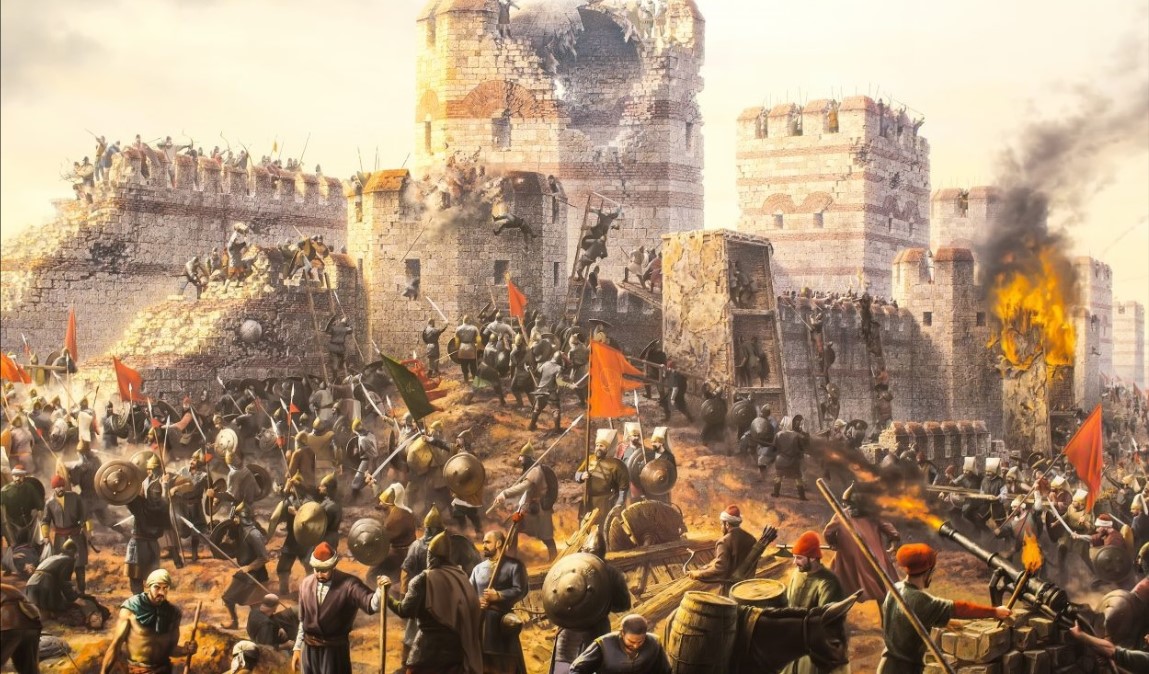
History
The Fall of Constantinople: A Turning Point in HistoryThe Fall of Constantinople in 1453 stands as a watershed moment in history, marking the end of the Byzantine Empire and the dawn of a new era. This monumental event, which saw the conquest of one of the most illustrious cities in the world by the Ottoman Turks, reshaped the geopolitical landscape of Europe and Asia Minor and altered the course of Western civilization. In this comprehensive exploration, we embark on a journey through the origins, causes, key players, military tactics, impact, and legacy of the Fall of Constantinople, unraveling the complexities of this pivotal moment in human history. Origins and ContextTo understand the Fall of Constantinople, it is essential to examine the historical context in which it occurred. The Byzantine Empire, successor to the Roman Empire in the East, had endured for over a millennium, serving as a bastion of Christian civilization in the face of successive waves of invaders. Constantinople, the empire's capital and a beacon of culture and learning, was renowned for its strategic location, formidable defenses, and opulent architecture.Constantinople's strategic significance lay in its location at the crossroads of Europe and Asia, straddling the Bosphorus Strait and controlling access between the Mediterranean and Black Seas. This made it a vital hub for trade and commerce, as well as a key military stronghold for defending against incursions from both east and west.However, by the 15th century, the Byzantine Empire had been reduced to a mere shadow of its former glory. Decades of internal strife, external threats, and economic decline had weakened the empire's power and prestige, leaving it vulnerable to conquest by ambitious neighboring states. At the same time, the rise of the Ottoman Empire under the leadership of Sultan Mehmed II posed a formidable challenge to Byzantine sovereignty, as the Ottomans sought to expand their influence and territory at the expense of their Christian neighbors. Sultan Mehmed IIKey Players and Military LeadersThe Fall of Constantinople was precipitated by the ambitions of two towering figures: Sultan Mehmed II, the youthful and ambitious ruler of the Ottoman Empire, and Emperor Constantine XI Palaiologos, the valiant but beleaguered defender of Byzantium. Mehmed II, known as Mehmed the Conqueror, was determined to fulfill his dream of capturing Constantinople and establishing himself as the rightful heir to the Roman Empire. Constantine XI, the last Byzantine emperor, faced the daunting task of defending his city against overwhelming odds, rallying his people to resist the impending Ottoman onslaught.On the Ottoman side, Mehmed II assembled a formidable army and navy, drawing upon the resources of his vast empire to lay siege to Constantinople. He employed innovative military tactics, including the use of massive cannons and siege engines, to breach the city's formidable walls and fortifications. Mehmed's military genius and strategic acumen earned him a reputation as one of history's greatest conquerors, while his ruthless determination to achieve victory at any cost fueled his relentless pursuit of Constantinople.In contrast, Constantine XI struggled to muster sufficient resources and manpower to defend his city against the Ottoman onslaught. Despite his efforts to bolster the city's defenses and rally support from Western powers, including the Papacy and European monarchs, Constantine faced formidable obstacles in his quest to repel the Ottoman invaders. His army, depleted by years of war and neglect, was no match for the disciplined and well-equipped forces of Mehmed II, leaving Constantinople vulnerable to capture. Siege and ConquestThe siege of Constantinople began in earnest in April 1453, as Mehmed II's army encircled the city and commenced a relentless bombardment of its walls and fortifications. For weeks, the defenders of Constantinople held out against the Ottoman onslaught, repelling wave after wave of attacks with unparalleled courage and determination. Despite their heroic efforts, however, the Byzantine defenders were unable to withstand the sheer force of Mehmed's assault, as the Ottomans breached the city's defenses and launched a final, desperate assault on its gates.On May 29, 1453, after a siege lasting over seven weeks, Constantinople fell to the Ottoman Turks, marking the end of an era and the beginning of a new chapter in world history. The city's capture was a moment of triumph for Mehmed II and his forces, who celebrated their victory with feasting, revelry, and plunder. For the people of Constantinople, however, the fall of their beloved city was a moment of unparalleled tragedy, as they faced the prospect of enslavement, exile, or death at the hands of their conquerors. Impact and LegacyThe Fall of Constantinople had far-reaching implications for the course of world history, reshaping the geopolitical landscape of Europe and Asia Minor and heralding the rise of the Ottoman Empire as a dominant force in the Mediterranean world. The conquest of Constantinople dealt a devastating blow to Christendom, depriving Europe of its last major Christian outpost in the East and opening the door to Ottoman expansion into the heart of Europe.Moreover, the fall of Constantinople had profound cultural, economic, and intellectual consequences, as the city's rich heritage and legacy were preserved and absorbed by its Ottoman conquerors. Mehmed II, recognizing the strategic and symbolic importance of Constantinople, sought to transform the city into a showcase of Ottoman power and grandeur, renaming it Istanbul and transforming its churches and palaces into mosques and administrative buildings.The legacy of the Fall of Constantinople endures to this day, as Istanbul remains a vibrant and cosmopolitan city, blending elements of East and West in a unique fusion of cultures and traditions. The city's iconic landmarks, including the Hagia Sophia and Topkapi Palace, bear witness to its storied past and enduring legacy as a crossroads of civilizations. Editor’s Thoughts: The Fall of Constantinople in 1453 was a pivotal moment in history, marking the end of the Byzantine Empire and the beginning of a new era dominated by the Ottoman Turks. This monumental event, which saw the conquest of one of the most illustrious cities in the world, reshaped the geopolitical landscape of Europe and Asia Minor and altered the course of Western civilization. From its origins and key players to its military tactics, impact, and legacy, the Fall of Constantinople remains a subject of fascination and study, as scholars and historians continue to unravel its complexities and significance in the tapestry of human history.
Read More → Posted on 2024-05-05 16:30:22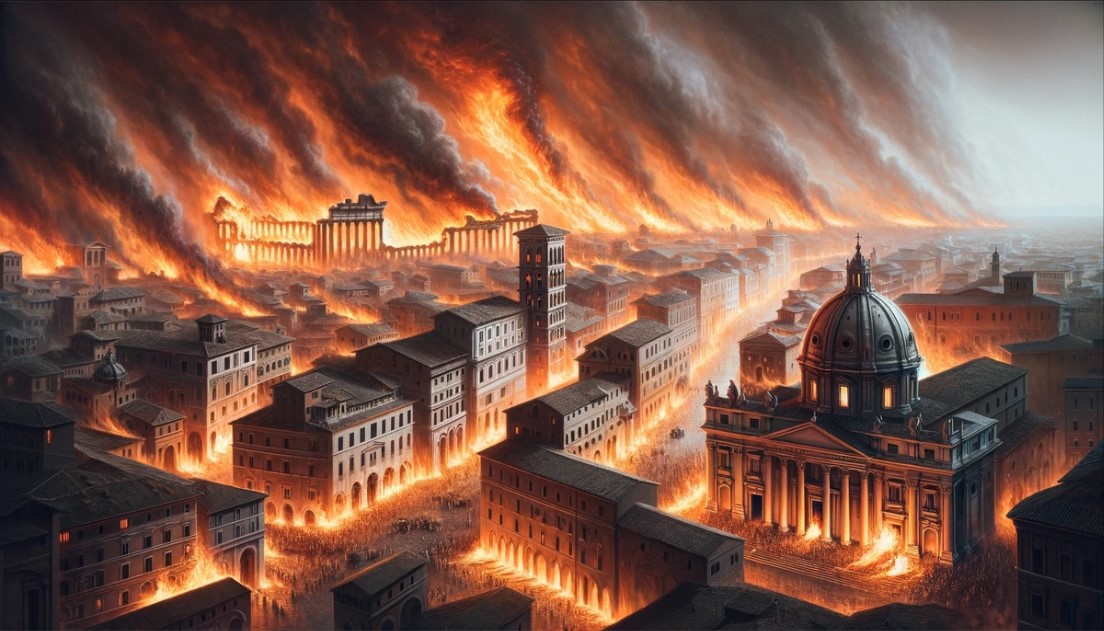
History
The Great Fire of RomeThe Great Fire of Rome remains an enigmatic and tragic event in the annals of history, leaving an indelible mark on the ancient city and its inhabitants. Spanning six days and seven nights in July of 64 AD, this catastrophic inferno reshaped the urban landscape of Rome and reverberated throughout the Roman Empire. In this comprehensive exploration, we embark on a journey through the origins, causes, impact, aftermath, and lasting legacy of the Great Fire, shedding light on its significance in the tapestry of human history. Origins and CauseThe precise origins of the Great Fire of Rome remain obscured by the mists of time, leaving historians to grapple with competing theories and conjectures. According to contemporary accounts, the fire erupted in the bustling commercial district of Rome on the night of July 18 or 19, during the reign of Emperor Nero. While the exact cause of the fire remains a subject of debate, several factors likely contributed to its rapid spread and devastating impact.Urban overcrowding and inadequate infrastructure exacerbated the risk of fire in ancient Rome, where densely packed tenements and narrow streets created ideal conditions for conflagrations to take hold. The city's labyrinthine alleys and tightly clustered buildings hindered firefighting efforts, allowing flames to leap from one structure to the next with alarming speed. Additionally, the predominance of wooden construction materials and the absence of effective fire prevention measures heightened the vulnerability of Rome to catastrophic blazes.Among the various theories proposed to explain the origin of the fire, one of the most enduring is the notion of accidental ignition. Scholars speculate that the fire may have been sparked by a combination of factors, including a stray ember from a household hearth, a malfunctioning oil lamp, or even a lightning strike during a summer storm. Alternatively, some historians suggest that the fire may have been deliberately set by arsonists or saboteurs seeking to sow chaos and discord in the city. Impact and DestructionThe Great Fire of Rome unleashed a torrent of destruction unparalleled in the city's history, laying waste to homes, temples, civic buildings, and cultural landmarks with ferocious intensity. As flames roared through the crowded streets of Rome, panic and chaos gripped the populace, sending residents fleeing for their lives amidst the choking smoke and searing heat. The fire's voracious appetite spared neither the humblest dwellings nor the grandest monuments, reducing centuries of architectural splendor to smoldering ruins.Among the many casualties of the fire were some of Rome's most iconic structures, whose loss dealt a devastating blow to the city's cultural heritage. The majestic Circus Maximus, where chariot races and spectacles once enthralled the masses, was reduced to a charred wasteland devoid of life. The sprawling Palatine Hill, home to emperors and aristocrats, lay in ruins, its once opulent palaces reduced to rubble. The venerable Temple of Jupiter Optimus Maximus, guardian of the Roman state, stood as a blackened shell, a haunting testament to the fire's destructive power.Yet, perhaps the most tragic aspect of the fire was its human toll, as countless lives were lost or forever changed by the flames. Families were torn apart, livelihoods were destroyed, and communities were shattered in an instant, leaving behind a trail of grief and devastation that would linger for generations to come. The survivors of the fire, bereft of homes and possessions, faced an uncertain future fraught with hardship and despair. Aftermath and ReconstructionIn the wake of the Great Fire, Rome lay smoldering and desolate, its once vibrant streets now silent and still. Emperor Nero, faced with the monumental task of rebuilding the city and restoring public confidence, embarked on a ambitious program of reconstruction and renewal. Under Nero's direction, vast swaths of charred debris were cleared away to make room for grandiose new structures and public amenities, transforming the scarred landscape of Rome into a showcase of imperial magnificence.The centerpiece of Nero's reconstruction efforts was the Domus Aurea, or Golden House, a sprawling palace complex that epitomized the emperor's extravagant tastes and megalomaniacal ambitions. Stretching across acres of prime real estate in the heart of Rome, the Domus Aurea boasted opulent gardens, lavishly decorated chambers, and a vast artificial lake, all designed to showcase Nero's wealth and power. Yet, for all its grandeur, the Domus Aurea would ultimately become a symbol of Nero's excesses and tyranny, fueling resentment and rebellion among his subjects.Despite Nero's efforts to rebuild and revitalize Rome, the scars of the Great Fire ran deep, casting a long shadow over the city's psyche. The trauma of the fire lingered in the collective memory of the Roman people, serving as a grim reminder of the fragility of human civilization and the capriciousness of fate. In the years that followed, Rome would endure further trials and tribulations, from civil unrest and political upheaval to invasion and conquest. Yet, through it all, the spirit of Rome endured, resilient and unyielding in the face of adversity. Legacy and Historical SignificanceThe Great Fire of Rome occupies a prominent place in the annals of history, serving as a cautionary tale of the destructive power of fire and the vulnerability of urban centers to catastrophe. Its impact reverberated far beyond the borders of Rome, shaping the course of Western civilization and influencing the trajectory of human events for centuries to come. In the centuries that followed, artists, writers, and thinkers would continue to draw inspiration from the tragic events of that fateful summer night, using the fire as a metaphor for the fragility of human existence and the transience of earthly power.The legacy of the Great Fire endures in the collective memory of humanity, a reminder of the enduring power of resilience and renewal in the face of adversity. As Rome rose from the ashes of destruction, rebuilt and rejuvenated by the indomitable spirit of its people, it served as a testament to the triumph of the human spirit over adversity and the enduring resilience of civilization. Rebuilding Efforts and Urban Planning InitiativesEmperor Nero's response to the Great Fire of Rome extended beyond mere reconstruction; it encompassed an ambitious vision for the revitalization and modernization of the city. Nero seized the opportunity presented by the fire to implement sweeping urban planning initiatives aimed at transforming Rome into a model metropolis of the ancient world.Central to Nero's urban renewal efforts was the Domus Aurea, a sprawling palace complex that epitomized the emperor's grandiose ambitions. Situated on the ruins of the devastated city, the Domus Aurea boasted extravagant features such as vast gardens, ornate frescoes, and opulent banquet halls. However, the construction of the Domus Aurea necessitated the clearance of large swathes of residential areas, displacing thousands of residents and exacerbating social tensions.In addition to the Domus Aurea, Nero undertook numerous other building projects designed to beautify and modernize Rome. He constructed new aqueducts to ensure a reliable water supply for the city's residents, as well as public baths, temples, and theaters to enhance the quality of life in Rome. Nero also expanded and renovated existing structures, such as the Colosseum, which was originally commissioned by his predecessor, Emperor Vespasian.Despite Nero's grand ambitions, his urban planning initiatives were not without controversy and opposition. The exorbitant cost of construction, coupled with heavy taxation and forced labor, fueled resentment among the Roman populace, leading to widespread unrest and dissent. Moreover, Nero's penchant for extravagance and self-aggrandizement only served to alienate him further from his subjects, ultimately contributing to his downfall.In the aftermath of Nero's reign, subsequent emperors sought to distance themselves from his legacy, dismantling or repurposing many of his grandiose projects. The Domus Aurea, once a symbol of imperial opulence, was partially demolished and buried beneath the earth, its magnificent halls and gardens consigned to oblivion. However, traces of Nero's influence endured in the architectural and cultural landscape of Rome, leaving an indelible imprint on the city's identity. Editor’s Thoughts:The Great Fire of Rome stands as a pivotal moment in the history of the ancient world, a cataclysmic event that forever altered the course of Roman civilization. From its mysterious origins to its far-reaching consequences, the fire encapsulates the triumphs and tragedies of a bygone era, serving as a testament to the resilience of the human spirit in the face of adversity.While the exact cause of the fire remains shrouded in mystery, its impact on the city of Rome and its inhabitants was undeniable. The flames consumed homes, temples, and monuments with relentless fury, leaving behind a landscape of devastation and despair. Yet, amidst the ruins, the seeds of renewal were sown, as Emperor Nero and subsequent rulers sought to rebuild and rejuvenate the city, transforming it into a symbol of imperial power and prestige.The legacy of the Great Fire endures in the collective memory of humanity, a reminder of the fragility of civilization and the enduring resilience of the human spirit. From the ashes of destruction rose a new Rome, rebuilt and revitalized by the indomitable spirit of its people. Though the scars of the fire may have faded with time, its lessons continue to resonate through the ages, inspiring awe and reverence for the enduring legacy of one of history's greatest tragedies. As we reflect on the events of that fateful summer night, let us not forget the lessons of the Great Fire of Rome: the importance of preparedness, the power of community, and the resilience of the human spirit in the face of unimaginable adversity. May we draw strength from the ashes of the past as we chart a course towards a brighter and more resilient future, mindful of the enduring legacy of one of history's most defining moments.
Read More → Posted on 2024-05-04 16:15:38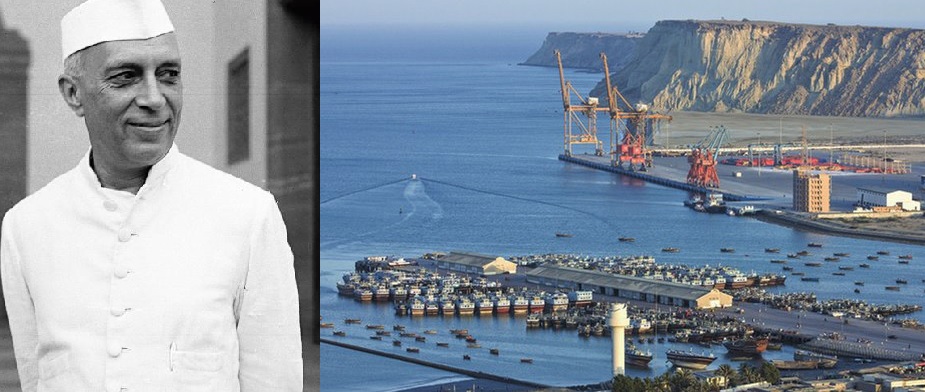
History
History News IndiaGwadar, a small coastal town nestled along the Makran coast of Pakistan's Balochistan province, has emerged as a focal point of regional and global geopolitics. Its transformation from a sleepy fishing village to a strategic port city reflects a complex tapestry of history, diplomacy, and missed opportunities. This comprehensive exploration aims to unravel the layers of Gwadar's past, examining its origins, the dynamics of its transfer between powers, and the far-reaching implications of decisions made by key actors on the international stage.Chapter 1: The Origins of GwadarGwadar's history dates back to ancient times, with evidence of human habitation found in the region dating back thousands of years. Early settlers, drawn to the fertile coastal plains and abundant marine resources, established thriving communities along the coastline. These early settlements laid the foundation for Gwadar's development as a hub of maritime trade and cultural exchange.The rise of Gwadar as a strategic outpost can be traced to its location along key maritime trade routes, connecting the Arabian Sea to the Persian Gulf and beyond. The town's natural harbor provided shelter for ships traversing the treacherous waters of the Arabian Sea, facilitating trade between the Indian subcontinent, the Middle East, and beyond.Chapter 2: Gwadar under Omani RuleIn the 18th century, Gwadar came under the rule of the Sultanate of Oman, marking the beginning of a new chapter in its history. The Khan of Kalat, Mir Noori Naseer Khan Baloch, gifted the town to the Sultan of Oman, Sultan bin Ahmad, in 1783. This transfer of ownership cemented Gwadar's position as a key strategic asset for the Omani empire, enabling it to expand its maritime influence in the region.Under Omani rule, Gwadar flourished as a center of maritime commerce and cultural exchange. The town's strategic location made it an ideal base for Omani naval expeditions and trade ventures, further enhancing its importance in the eyes of regional powers.Chapter 3: The Offer to India and Nehru's DecisionIn the mid-20th century, Gwadar emerged as a point of contention between regional powers, with the Sultanate of Oman offering to sell the town to India. Prime Minister Jawaharlal Nehru was faced with a momentous decision that would shape the course of South Asian geopolitics for decades to come.Nehru's decision to decline the offer, influenced by strategic considerations and logistical challenges, had far-reaching implications. While some viewed it as a missed opportunity, others saw it as a prudent move to avoid unnecessary conflict and maintain regional stability.Chapter 4: The Strategic Significance of GwadarGwadar's strategic importance has only grown in the modern era, with its transformation into a major port city and hub of international trade. Situated at the mouth of the Gulf of Oman, Gwadar serves as a gateway to the Arabian Sea and beyond, offering unparalleled access to energy resources and maritime trade routes.The development of Gwadar as a deepwater port and the integration of the China-Pakistan Economic Corridor (CPEC) have further enhanced its strategic significance. The port's proximity to key shipping lanes and its potential as a hub for transnational infrastructure projects have attracted significant investment from regional and global players.Chapter 5: Missed Opportunities and Unforeseen ConsequencesThe decision to decline the offer to acquire Gwadar continues to be a topic of debate among historians, policymakers, and scholars. While some argue that it was a missed opportunity to secure a valuable strategic asset, others contend that it was a prudent decision given the logistical challenges and geopolitical realities of the time.The consequences of Nehru's decision are difficult to quantify, but it undoubtedly had far-reaching implications for South Asian geopolitics. Gwadar's subsequent transfer to Pakistan and its integration into the CPEC have reshaped regional dynamics, altering the balance of power and influencing the strategic calculus of neighboring countries.Chapter 6: Balancing Act: Challenges and OpportunitiesNavigating the complexities of South Asian geopolitics requires a delicate balancing act between competing interests and strategic imperatives. The challenges and opportunities facing policymakers in the region are manifold, from managing territorial disputes to fostering economic cooperation and regional integration.Gwadar's emergence as a linchpin of regional connectivity presents both opportunities and challenges for the countries of South Asia and beyond. Balancing competing interests and leveraging Gwadar's potential as a catalyst for peace, prosperity, and stability will require creative thinking, diplomatic finesse, and strategic vision.Chapter 7: Looking Ahead: Lessons Learned and Paths ForwardAs Gwadar continues to evolve as a nexus of regional and global trade, it is essential to reflect on the lessons learned from its past and chart a course for the future. Drawing on historical precedents, strategic analysis, and forward-looking perspectives, policymakers, stakeholders, and scholars can work together to harness Gwadar's potential as a force for positive change in the region.Conclusion:Gwadar's journey from obscurity to prominence encapsulates the complexities of South Asian geopolitics and the enduring power of strategic decision-making. As we reflect on its storied past and contemplate its future trajectory, we are reminded of the importance of foresight, diplomacy, and cooperation in shaping the destiny of nations and the course of history. In the years to come, Gwadar will continue to serve as a beacon of hope and opportunity in an ever-changing world.
Read More → Posted on 2024-04-09 16:47:48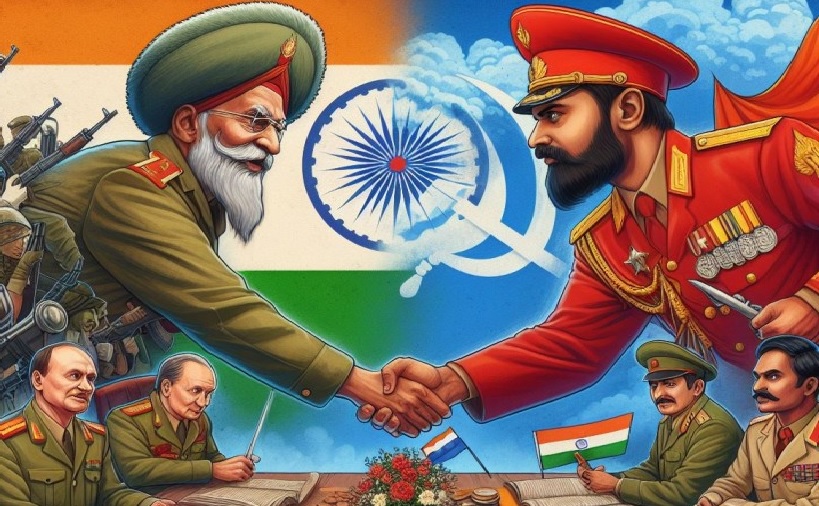
History
Relation Between India And Soviet UnionThe relationship between India and the Soviet Union has been one of the most significant bilateral partnerships in the post-World War II era. Spanning several decades, this alliance shaped India's socio-economic, political, and strategic landscape. From the early years of independence to the dissolution of the Soviet Union, the ties between the two nations evolved through various phases, leaving an indelible mark on India's trajectory. This article delves into the multifaceted relationship between India and the Soviet Union, examining key events, milestones, and their lasting implications.1947-1960: Formative Years of FriendshipIn the aftermath of independence in 1947, India faced numerous challenges, including economic reconstruction and geopolitical uncertainties. The Soviet Union emerged as a staunch supporter of India's nation-building efforts. One of the earliest manifestations of this support was the signing of the Treaty of Friendship between India and the USSR in 1971, which laid the foundation for future cooperation.The Soviet Union extended significant assistance to India's industrialization and infrastructure development projects during this period. Notable projects include the Bhilai Steel Plant, the Hindustan Aeronautics Limited (HAL), and the establishment of the Indian Institutes of Technology (IITs). Additionally, the USSR provided crucial military aid to India, particularly during the 1962 Sino-Indian War and the 1965 Indo-Pakistani War, further cementing the strategic partnership between the two nations.1961-1971: Strengthening Ties Amidst Global TurmoilThe 1960s witnessed a deepening of Indo-Soviet cooperation, characterized by increased economic assistance and technological collaboration. Soviet support played a pivotal role in India's Green Revolution, aimed at achieving self-sufficiency in food production. Moreover, the USSR became a key supplier of defense equipment to India, including aircraft, tanks, and submarines.During the Indo-Pakistani War of 1971, the Soviet Union unequivocally supported India's stance on the Bangladesh Liberation War, providing diplomatic backing and military assistance. The signing of the Indo-Soviet Treaty of Peace, Friendship, and Cooperation in August 1971 further solidified the alliance, marking a significant milestone in bilateral relations.1972-1985: The Golden Era of CooperationThe 1970s and 1980s marked a period of unparalleled cooperation between India and the Soviet Union, characterized by extensive economic, military, and technological collaboration. The signing of the Treaty of Peace, Friendship, and Cooperation laid the groundwork for enhanced strategic ties and mutual support on regional and global platforms.Economic assistance from the Soviet Union bolstered India's industrial sector, with the establishment of heavy industries, infrastructure projects, and scientific research institutions. The Soviet Union also provided crucial support to India's space program, culminating in the launch of the Aryabhata satellite in 1975.On the defense front, the Soviet Union emerged as India's principal arms supplier, accounting for a significant portion of India's defense acquisitions. Joint defense production ventures, such as the manufacture of MiG aircraft and T-72 tanks, underscored the depth of military cooperation between the two nations.1986-1991: Winds of Change and New RealitiesThe late 1980s witnessed a shifting geopolitical landscape, marked by the onset of perestroika and glasnost in the Soviet Union under the leadership of Mikhail Gorbachev. The winds of change in Moscow reverberated across the globe, impacting the dynamics of Indo-Soviet relations.Despite the domestic upheavals in the Soviet Union, India and the USSR continued their strategic partnership, albeit amidst evolving challenges. Economic reforms in India and the collapse of the Soviet Union in 1991 ushered in a new phase in bilateral relations, characterized by adjustments to the changing global order.Post-1991: Transition and ContinuityThe disintegration of the Soviet Union posed significant challenges for India, necessitating a recalibration of its foreign policy priorities. While the demise of the USSR marked the end of an era in Indo-Soviet relations, it also paved the way for the transformation of the bilateral partnership into a more diversified and pragmatic engagement.India's engagement with Russia, the successor state of the Soviet Union, has remained steadfast, albeit within the context of a rapidly evolving global landscape. Strategic cooperation in defense and energy sectors continues to form the bedrock of Indo-Russian relations, with both countries exploring new avenues for collaboration in emerging domains such as cybersecurity, space exploration, and nuclear energy.Conclusion:The relationship between India and the Soviet Union, spanning several decades, stands as a testament to the enduring bonds of friendship and cooperation between the two nations. From the formative years of independence to the contemporary era of strategic partnership, Indo-Soviet relations have weathered numerous challenges and transitions, leaving an indelible imprint on India's socio-economic, political, and strategic landscape. As India navigates the complexities of the 21st century, the legacy of the Indo-Soviet alliance continues to shape its foreign policy outlook and global aspirations.
Read More → Posted on 2024-04-09 06:16:12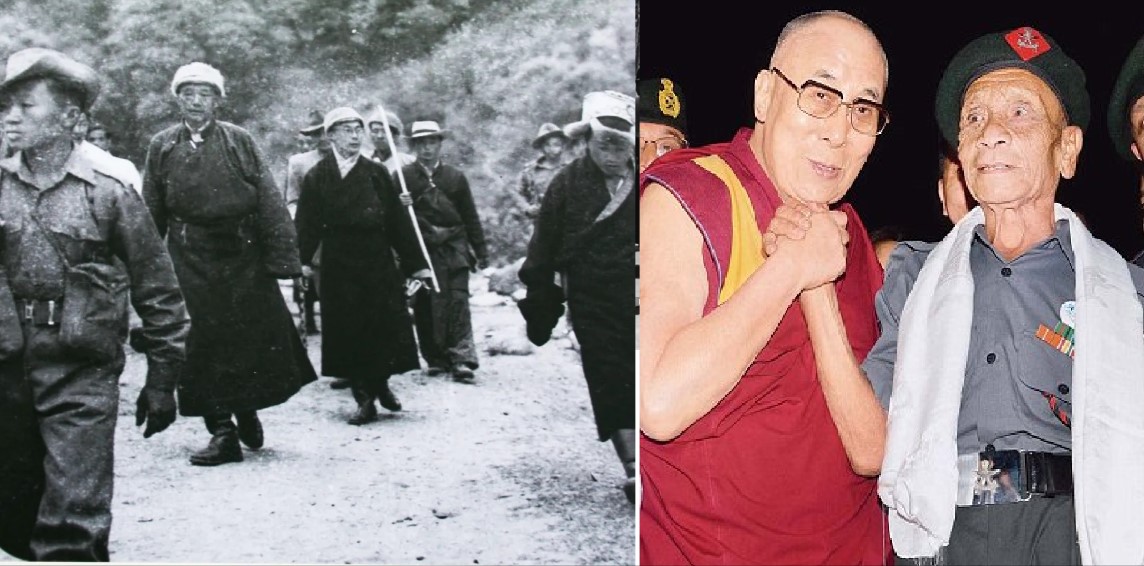
History
History News ,India ,Tibet :- In the mid-20th century, Tibet faced a dire situation with the encroachment of the People's Republic of China. Amidst this backdrop, the 14th Dalai Lama, spiritual leader of Tibet, found himself in grave peril as tensions escalated between his homeland and the Chinese forces. The escape of the Dalai Lama from Tibet to seek refuge in India in 1959 was a critical moment in history, facilitated by the courageous efforts of the 5th Battalion of the Assam Rifles.The conflict between Tibet and China had been escalating since the 1950s when the Chinese People's Liberation Army invaded Tibet, leading to unrest and resistance among the Tibetan people. The Dalai Lama, revered as both a spiritual and political leader, faced increasing pressure as Chinese influence grew stronger in Tibet.In March 1959, protests erupted in Lhasa, the capital of Tibet, against Chinese rule. The Chinese response was swift and harsh, prompting the Dalai Lama to make the perilous decision to flee his homeland. Disguised as a soldier, he left Lhasa with a small group of officials and bodyguards, embarking on a treacherous journey through the Himalayas.The journey to India was fraught with danger, with the group facing harsh weather conditions and the constant threat of apprehension by Chinese forces. However, amidst the peril, a glimmer of hope emerged in the form of the 5th Battalion of the Assam Rifles.The Assam Rifles, a paramilitary force of the Indian Army, had been tasked with securing the Indo-Tibetan border. When news of the Dalai Lama's escape reached the Indian government, the Assam Rifles were swiftly mobilized to ensure his safe passage into India.Deploying their expertise in mountain warfare and border surveillance, the Assam Rifles played a crucial role in guiding the Dalai Lama and his retinue through the treacherous terrain of the Himalayas. They provided logistical support and protection, shielding the fleeing Tibetans from the dangers that lurked along the route.On March 31, 1959, after weeks of arduous travel, the Dalai Lama and his entourage finally crossed into Indian territory, greeted by the reassuring presence of the Assam Rifles. Their safe arrival in India marked the culmination of a daring rescue mission, made possible by the bravery and dedication of the Assam Rifles.The escape of the Dalai Lama from Tibet to India not only ensured his safety but also drew international attention to the plight of Tibet under Chinese occupation. It served as a poignant reminder of the enduring spirit of courage and resilience in the face of adversity.In the annals of history, the role played by the 5th Battalion of the Assam Rifles in the escape of the 14th Dalai Lama from Tibet remains a testament to their unwavering commitment to duty and honor. Their actions exemplify the finest traditions of the Indian armed forces, embodying the spirit of solidarity and compassion in the service of humanity.
Read More → Posted on 2024-03-31 07:25:27Search
Top Trending in 24 Hours
-
 South Korean Air Force Downs 50 Drones in First Live-Fire Counter-Swarm Exercise Using Vulcan Cannons and Lasers
-
 U.S. Successfully Conducts First Live Intercept Test of Golden Dome Missile Defense System
-
 Lockheed Martin Unveils Next-Generation NXGB Hypersonic Glide Body, Flight Test Set for 2027
-
 Pentagon Redirects $1.55 Billion to Revive E-7 Wedgetail Program After Cancellation Push
-
 India-US GE F414 Engine Deal Stalls as Cost Surge Prompts DRDO to Explore Alternatives
-
 MQ-28 Ghost Bat Begins Operations with U.S. and Allied Forces During Valiant Shield 2026
-
 RAND Report Warns U.S. Navy May Struggle to Repair Warships During Conflict With China
-
 U.S. Air Force’s 91st Missile Wing Successfully Completes Minuteman III Nuclear Readiness Test at Minot Air Force Base
Top Trending in 4 Days
-
 Anthropic Shuts Down Mythos and Fable AI Models After AI Nearly Breached All NSA Classified Systems in Hours
-
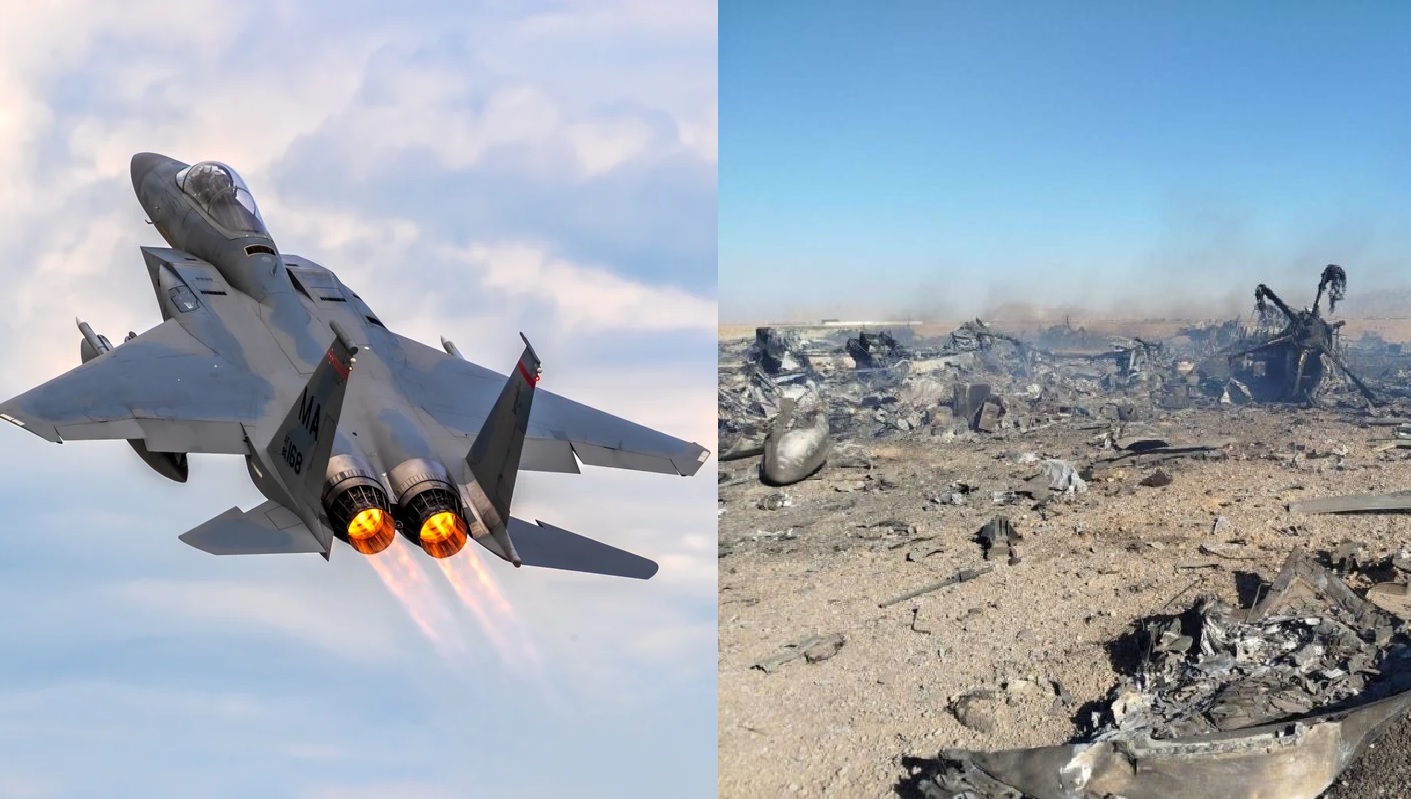 U.S. Pilot Described ‘Jellyfish’ Drone Formation Before F-15E Was Downed Over Iran
-
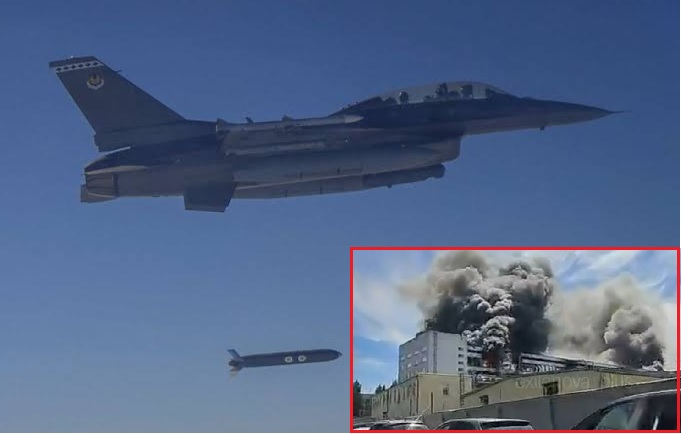 Russian Sources Claim Ukraine Used New U.S. AGM-188A Rusty Dagger Missile in Voronezh Strike
-
 Trump Signs Executive Orders to Advance U.S. Quantum Computing, Sets 2031 Post-Quantum Security Deadline
-
 Ukrainian Cruise Missiles Strike Key Russian Semiconductor Plant in Voronezh
-
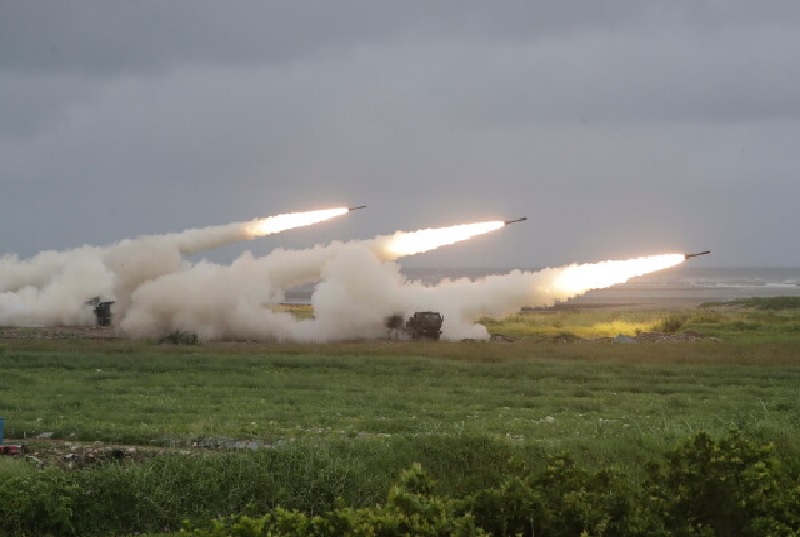 Taiwan Launches Five-Day Combat Readiness Drill to Prepare for Potential China Attack
-
 Russian Su-34 Fighters Strike Ukrainian Drone Control Centers with FAB-500 and FAB-1500 Bombs
-
 Russia Unveils Molniya-13 Heavy-Class Drone with 13kg Payload and Enhanced Survivability