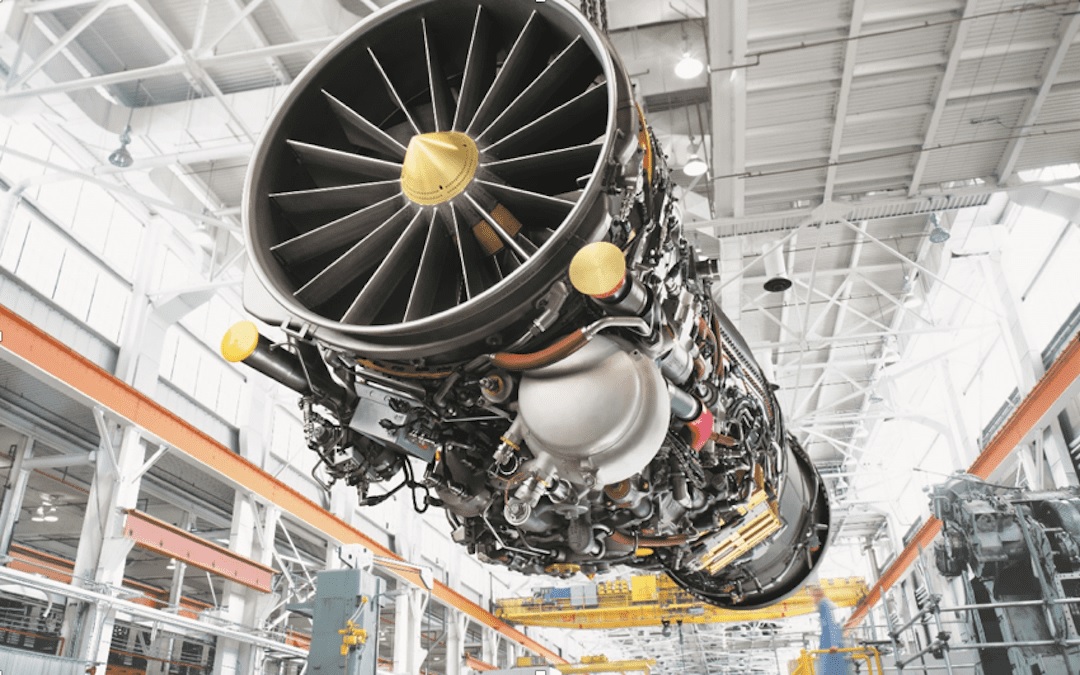
NEW DELHI, June 24, 2026 — Negotiations between India and the United States for the co-production of General Electric (GE) F414 fighter jet engines have encountered a major obstacle after a sharp increase in proposed costs stalled commercial discussions between Hindustan Aeronautics Limited (HAL) and GE Aerospace. The development has prompted the Defence Research and Development Organisation (DRDO) and the Aeronautical Development Agency (ADA) to evaluate alternative engine suppliers as India seeks to secure powerplants for its future combat aircraft programmes.
The GE F414-INS6 engine was selected to power the Light Combat Aircraft (LCA) Tejas Mk2, the initial variants of the Advanced Medium Combat Aircraft (AMCA Mk1), and the Indian Navy's Twin Engine Deck-Based Fighter (TEDBF). The proposed agreement, first announced during Prime Minister Narendra Modi's visit to the United States in 2023, was intended to establish local manufacturing of the engine in India with substantial technology transfer.
While technical discussions between HAL and GE have largely been completed, including plans for technology transfer reportedly reaching up to 80 percent in phases, commercial negotiations have stalled over pricing.
Sharp Increase in Engine Costs
Initial estimates placed the cost of each GE F414-INS6 engine at approximately ₹70 crore to ₹80 crore. However, during recent commercial negotiations, GE reportedly revised its pricing to more than ₹200 crore per engine, representing an increase of nearly 300 percent.
In addition to the higher per-unit cost, GE has reportedly sought an investment of around ₹6,000 crore (approximately $800 million) to establish a dedicated assembly and manufacturing line in India.
According to industry sources, the company has cited global supply chain disruptions, inflation, shortages of aerospace-grade materials, and broader geopolitical pressures affecting production as factors behind the increased costs.
HAL and GE had originally aimed to finalize the agreement by March 2026, with local production expected to begin within two years of contract signing and the first Indian-manufactured engines entering production around 2029.
Impact on India's Fighter Aircraft Programmes
The F414 engine forms a critical part of India's fighter aircraft modernization plans. The engine was selected as the primary powerplant for the Tejas Mk2 and as an interim solution for the AMCA Mk1 until a future higher-thrust engine becomes available.
The AMCA prototype programme alone is expected to require approximately 15 engines to support five flying prototypes.
India's long-term requirement is projected to exceed 200 engines across multiple programmes.
| Aircraft Programme | Thrust Category | Intended Powerplant |
|---|---|---|
| LCA Tejas Mk2 | 95–100 kN | GE F414 |
| AMCA Mk1 | 95–100 kN | GE F414 (interim solution) |
| TEDBF | 95–100 kN | GE F414 |
The F414 is a further development of the F404 engine currently powering Tejas aircraft. It provides higher thrust, improved fuel efficiency, greater reliability, and increased electrical power generation for advanced avionics and mission systems.
DRDO Reviews Alternative Options
The pricing dispute has led DRDO and ADA to begin assessing alternative engine options for both immediate and long-term requirements.
Although the Tejas Mk2, AMCA Mk1, and TEDBF designs are currently based around the F414's dimensions and performance characteristics, Indian officials are exploring alternative partnerships to reduce dependence on a single supplier and ensure programme timelines remain on track.
The current situation has also renewed interest in European engine manufacturers, particularly France's Safran and the United Kingdom's Rolls-Royce.
Safran has been engaged in discussions with India regarding future combat engine cooperation and potential joint development efforts involving DRDO's Gas Turbine Research Establishment (GTRE).
Rolls-Royce has proposed a new-generation combat engine programme for India, including technology transfer, local manufacturing, and joint development arrangements aimed at meeting future Indian fighter aircraft requirements.
Renewed Attention on the EJ200 Family
The ongoing negotiations have also brought renewed attention to the Eurofighter Typhoon's EJ200 engine family, which previously competed against the F414 during India's fighter engine evaluations.
The EJ200 currently produces around 90 kN of afterburning thrust. However, the engine's long-term EJ2x0 growth roadmap envisioned substantial performance improvements.
Under the first stage of the roadmap, thrust was expected to increase to approximately 103 kN with around 72 kN dry thrust. A second-stage growth version targeted approximately 120 kN of afterburning thrust and around 78 kN of dry thrust.
These projected figures place advanced EJ200-derived concepts close to the thrust requirements sought by India for current and future combat aircraft programmes. However, such upgraded variants remain developmental concepts and would require significant investment, testing, certification, and production commitments before entering service.
Strategic Significance
The F414 co-production initiative remains one of the most important defence-industrial projects under the broader India-US strategic partnership. The programme was expected to strengthen India's aerospace manufacturing base while providing access to advanced fighter engine technologies.
At the same time, the current negotiations reflect India's broader objective of balancing foreign technology acquisition with indigenous capability development and long-term self-reliance in critical defence technologies.
Sources indicate that discussions with GE Aerospace continue, while parallel assessments of alternative options are underway. Any eventual resolution—whether through revised commercial terms with GE or the selection of alternative partners—will have significant implications for the timelines and future development of the Tejas Mk2, AMCA, and TEDBF programmes.
For now, the F414 remains the planned engine for India's next generation of indigenous fighter aircraft, but the ongoing pricing dispute has opened the door for competing international proposals as India evaluates the most cost-effective path forward.
——— End of Article ———