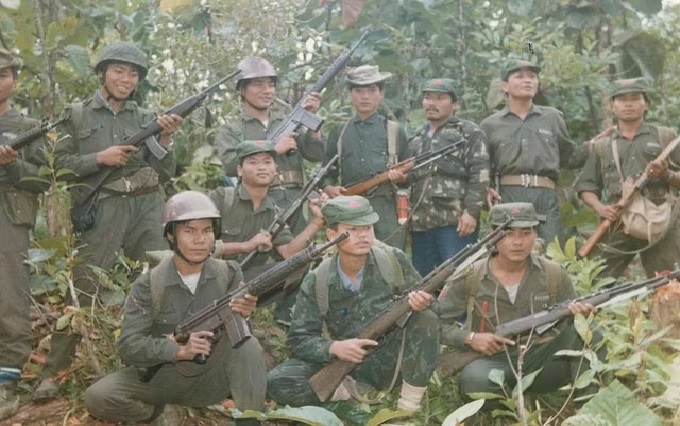
History of Kuki Zo Militancy in Northeast India
The verdant hills of
Northeast India have been a stage for complex ethnic narratives, and the story
of the Kuki Zo militants is a thread woven into this rich tapestry. Their
struggle for identity and self-determination has manifested in armed movements,
leaving an indelible mark on the region's history.
Who
are the Kuki Zo?
Understanding the Kuki
Zo necessitates recognizing the concept of "Zomia" - a proposed
homeland encompassing the Kuki-Chin people spread across Northeast India and
Myanmar's Chin State. While the Kuki moniker refers to various tribes under
this umbrella, the "Zo" identity emerged in the mid-20th century,
unifying these communities under a common banner.
Seeds
of Discontent
The roots of Kuki Zo
militancy can be traced back to British colonialism. The demarcation of
arbitrary borders fragmented Zomia, separating families and disrupting
traditional ways of life. Colonial policies favoring dominant ethnicities
further marginalized the Kuki Zo people.
Post-Independence
Struggles
India's independence in
1947 brought new hope but also fresh challenges. The formation of Mizoram, a
state carved out for the Mizo people (closely related to the Kuki), left other
Kuki groups scattered across Manipur, Assam, and Nagaland feeling excluded.
The 1960s and 1970s
witnessed a rise in Kuki ethnonationalist movements. Groups like the United
Zomi Organisation and the Zomi National Congress advocated for a separate Zomi
state. However, these aspirations were met with resistance, leading to the emergence
of armed groups.
The
Kuki National Army (KNA)
Formed in 1988, the KNA
became a prominent voice of Kuki discontent. It aimed to establish an
independent state for the Kuki people across India and Myanmar. The KNA engaged
in armed clashes with the Indian security forces and the Burmese military
(Tatmadaw).
The
Zomi Revolutionary Army (ZRA)
The ZRA, formed in 1997,
emerged out of ethnic tensions between the Kuki and Paites tribes in Manipur.
It shared a common goal of a Zomi homeland with the KNA but operated primarily
within Manipur's borders.
Peace
Accords and Fragmentation
The turn of the millennium saw a shift towards peace initiatives. The KNA signed ceasefires with the Indian government in the early 2000s. The ZRA followed suit in 2008.
Fragile Peace, Renewed Clashes
While several Kuki Zo militant groups signed ceasefire agreements with the Indian government in the early 2000s, a sense of lasting peace remains elusive. Reports suggest that some groups continue operating along the porous India-Myanmar border, allegedly training and collaborating with "Kuki volunteers"
A key factor behind the resurgence of violence is the
unresolved question of Kuki identity and aspirations. Organizations like
Zo United advocate for the withdrawal of state police from Kuki-dominated
areas, citing distrust and fear
Gain Support From Myanmar and China
Myanmar:
- Porous Border: The India-Myanmar border is long and porous, making it easier for Kuki Zo militants to operate on both sides. Myanmar's ongoing internal conflict creates a situation where the government may not have full control over its borders
- Historical Ties: Some Kuki Zo groups have ethnic kin residing in Myanmar. This can provide a potential support base and access to resources.
However, there's little concrete evidence of direct military aid or training provided by Myanmar to Kuki Zo militants. Myanmar itself is grappling with numerous ethnic insurgencies, and actively supporting one across the border could destabilize the region further.
China:
- Geopolitical Concerns: China has a strategic interest in a stable Myanmar to counter India's influence in the region. Instability in Manipur due to Kuki Zo militancy could indirectly benefit China.
- Accusations: Indian security officials have sometimes alleged that China provides indirect support to insurgent groups in Northeast India, including the Kuki Zo.
Impact of Kuki Zo militant on Locals Lifes
Kuki Zo militant activity can disrupt and threaten the lives of Meitei people in Manipur in several ways:
- Direct Violence: Clashes between Kuki Zo militants and security forces can
lead to civilian casualties, including Meitei people caught in the
crossfire.
- Fear and Insecurity: The presence of an armed insurgency creates a climate of
fear and insecurity. Meitei people living in areas affected by militancy
may be afraid to travel freely or engage in daily activities.
- Economic Disruption: Violence and instability can hurt the local
economy, impacting businesses and livelihoods. Tourism, a
significant source of income in Manipur, can be adversely affected.
- Communal Tensions: Cow killings, even if not directly linked to Kuki Zo
militants, can inflame religious tensions between the Meitei and Kuki Zo
communities. This can lead to social unrest and violence.
- Psychological Impact: The ongoing conflict can create a sense of unease and psychological stress for the Meitei population.
Here are some specific examples:
- Targeted Attacks: There have been instances of alleged targeted killings of
Meitei people by suspected Kuki Zo militants in the past.
- Extortion: Businesses owned by Meitei people may be pressured to pay extortion money to militant groups.
It's important to remember that the situation is complex:
- Not All Kuki Zo Support Militancy: The vast majority of Kuki Zo people have no desire for
violence and simply want to live peacefully.
- Cycle of Violence: Attacks on Meitei people can provoke retaliation, leading to a dangerous cycle of violence.
Looking Ahead:
- Peace Process: The success of the ongoing peace process between the Indian
government and Kuki Zo groups is crucial for ensuring the safety and security
of the Meitei community.
- Inter-communal Dialogue: Encouraging dialogue and understanding between Meitei and
Kuki Zo communities can help break down stereotypes and build trust.
- Addressing Grievances: Finding solutions to the underlying grievances of the Kuki
Zo people is essential for long-term peace and stability in Manipur.
By working towards these goals, it's
possible to create a safer and more peaceful environment for all communities in
Manipur, including the Meitei people.
——— End of Article ———