TAIPEI, — June 21, 2026 : Taiwan’s Ministry of National Defense (MND) announced that its armed forces will begin a five-day “Immediate Combat Readiness Exercise” on Monday, marking a major shift toward more realistic military training aimed at preparing troops for the possibility of a sudden escalation in cross-strait tensions.
The exercise comes as Taiwan continues to monitor increased Chinese military activity around the island. On Sunday, Taiwanese authorities detected 21 Chinese military aircraft and multiple naval vessels operating near Taiwan during what Beijing described as a “combat readiness patrol.”
Realistic Combat Training
According to the Ministry of National Defense, the exercise will be conducted using “actual troops, on actual terrain, in real time, using actual equipment, and through actual implementation.” The training is designed to evaluate how Taiwan’s military would respond if the Chinese People's Liberation Army (PLA) rapidly transformed a routine military exercise into an actual military operation.
The drills reflect Taiwan’s effort to move away from heavily scripted training events and toward more realistic battlefield scenarios. Military planners have increasingly focused on countering “gray zone” activities, where military pressure is applied below the threshold of open conflict and where peacetime exercises could quickly transition into combat operations.
Key Objectives
The five-day readiness exercise will focus on several operational goals, including:
- Familiarizing military units with battlefield conditions during rapid deployment phases.
- Evaluating the speed and effectiveness of transitioning from peacetime operations to wartime mobilization.
- Testing joint command-and-control systems across the Army, Navy, and Air Force.
- Assessing logistics support, battlefield preparation, and sustainment capabilities.
- Strengthening coordination between frontline units and higher command structures.
Military officials said the exercise will place personnel in realistic operational environments to identify potential weaknesses in readiness, communications, and support systems before a real crisis occurs.
Chinese Aircraft Activity Near Taiwan
The announcement coincided with renewed Chinese military activity around the island.
Taiwan’s defense ministry reported tracking 21 Chinese military aircraft, including J-16 fighter jets, KJ-500 airborne early warning and control aircraft, and Y-20 aerial refueling aircraft. According to the ministry, 19 of the aircraft entered Taiwan’s southwestern Air Defense Identification Zone (ADIZ) before continuing into the Western Pacific for long-distance open-sea training missions.
Taiwan responded by deploying surveillance assets and implementing appropriate defense measures to monitor the movements of the Chinese aircraft and naval vessels.
Chinese military operations around Taiwan have become increasingly frequent in recent years, with aircraft and naval deployments regularly testing Taiwan’s air defense and monitoring capabilities.
Modernized Defense Framework
The readiness drills are also part of a broader modernization effort within Taiwan’s military planning system.
To improve responsiveness during potential crises, Taiwan has streamlined its operational framework from a three-stage structure into a two-phase model.
The first phase, known as the Routine Combat Readiness Period, introduces new alert levels, including combat preparation deployments and heightened readiness conditions. The second phase, the Defense Operations Period, focuses on joint counter-landing operations, coastal strike missions, beachhead defense, and sustained deep-defense operations.
Defense officials believe the revised framework will allow military units to react more quickly to rapidly changing security situations.
Preparation for Larger Military Exercises
The Immediate Combat Readiness Exercise serves as a precursor to a series of larger military activities scheduled for later this summer.
Taiwan’s armed forces will conduct a one-week joint defense exercise beginning on July 13, which will act as a final preparation phase before the start of Han Kuang Exercise No. 42 on August 5. The annual Han Kuang exercises represent Taiwan’s largest military training event and will include significant civil defense participation, reserve force mobilization, and whole-of-society resilience testing.
The upcoming exercises are expected to examine military and civilian coordination during emergency situations and evaluate the island’s ability to sustain operations during prolonged crises.
Continued Focus on Combat Readiness
Taiwan has steadily expanded the realism and duration of its military training programs. Recent initiatives, including Combat Training Center Rotation 2.0 exercises, have extended some training periods to 10 consecutive days to simulate sustained combat conditions more effectively.
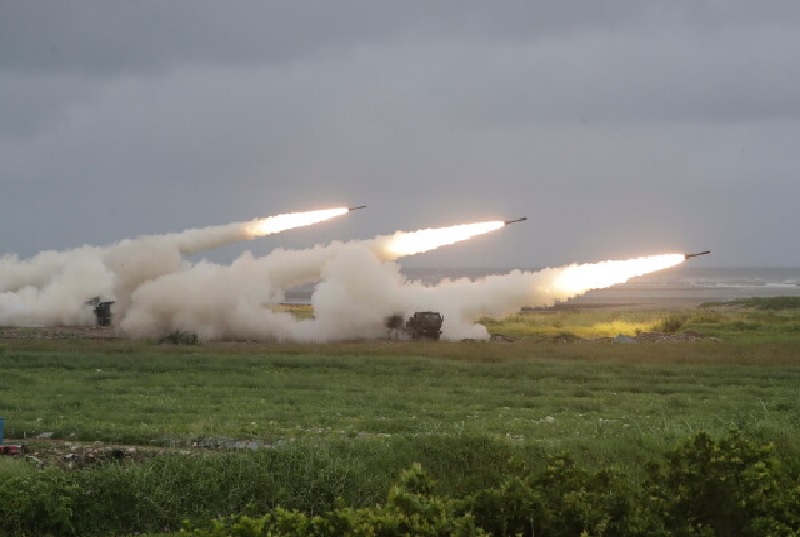
Earlier this month, Taiwan also conducted live-fire drills using newly acquired U.S.-made High Mobility Artillery Rocket Systems (HIMARS) alongside domestically produced Thunderbolt-2000 multiple rocket launchers. The exercises focused on dispersed operations, rapid battlefield movement, and flexible firepower deployment rather than traditional fixed-position bombardment tactics.
Taiwan maintains that its military exercises are defensive in nature and intended to ensure the island’s security and readiness. The latest combat readiness drills highlight the military’s ongoing efforts to improve rapid-response capabilities, strengthen joint-force coordination, and prepare for a wide range of potential security scenarios amid continued activity across the Taiwan Strait.
——— End of Article ———