Europe
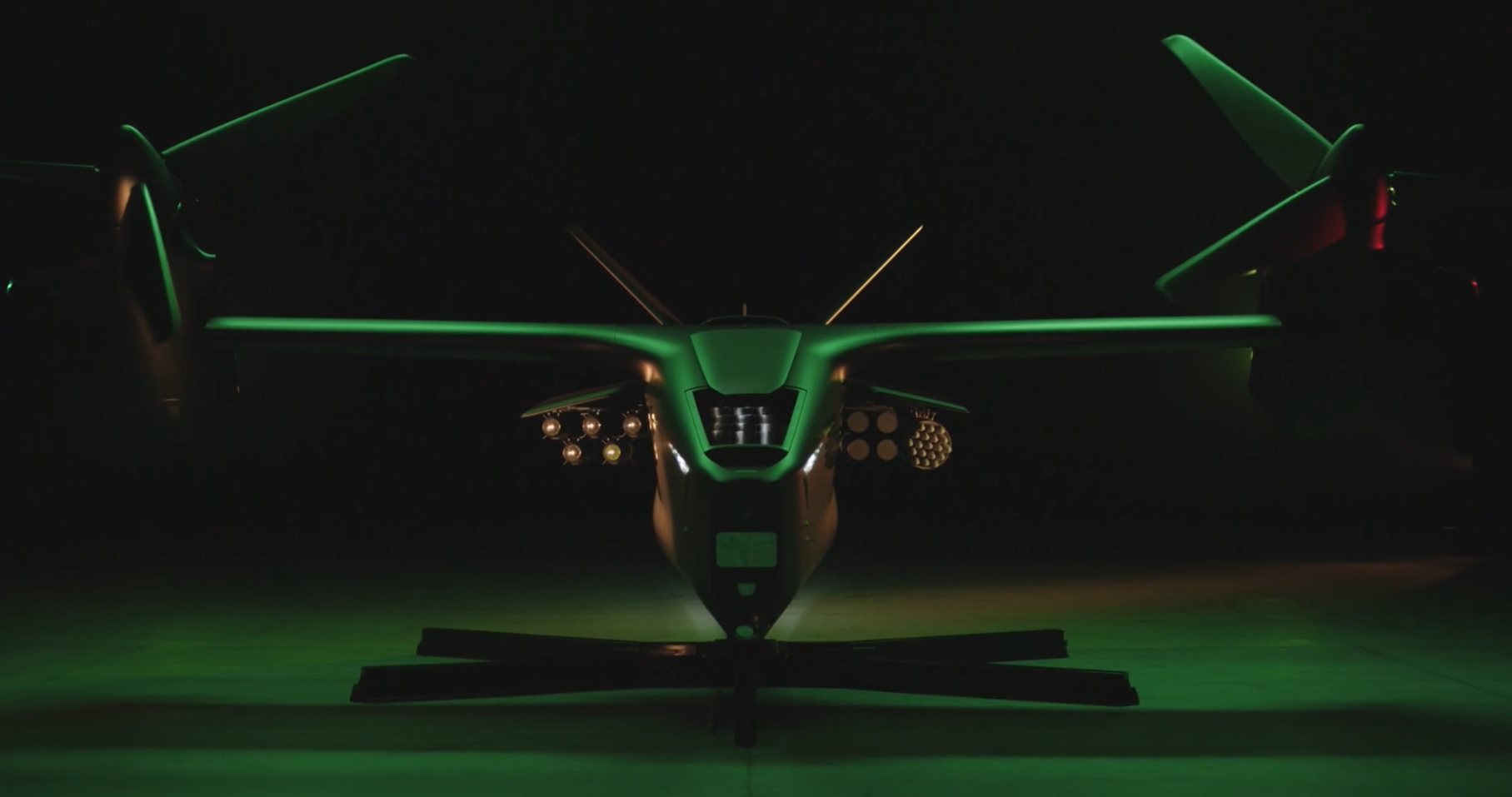
FARNBOROUGH, England, July 20, 2026 — Anduril Industries and Archer Aviation (NYSE: ACHR) on Monday unveiled Thunder, a Group 5 Autonomous Air Vehicle (AAV) designed to operate alongside crewed attack and assault helicopters, increasing combat capability while reducing risk to pilots in contested environments. The aircraft was introduced at the Farnborough International Airshow as part of a strategic partnership between Anduril and Archer Aviation that combines Archer's electric vertical takeoff and landing (VTOL) technology with Anduril's autonomous mission systems. The companies said Thunder is a dual-use platform that brings commercial VTOL technology into military applications while sharing a common development baseline for both defense and commercial variants. The modern battlefield is a robotic kill zone. Attack helicopters and their crews face more sophisticated threats than ever before. In this new era of maneuver warfare, we need eyes for what’s ahead and a shield for what we can’t afford to lose. Thunder is a Group 5… pic.twitter.com/0gWwAKZFJC — Anduril Industries (@anduriltech) July 20, 2026 Built as a New Military Platform According to the companies, Thunder has been under development since 2024 and was designed from the ground up rather than adapted from Archer's commercial air taxi aircraft. Archer Aviation CEO Adam Goldstein said the program followed a "first principles" approach to develop a purpose-built vertical lift aircraft capable of meeting military operational requirements. The aircraft uses a series hybrid-electric powertrain combined with Optimum Speed Tiltrotor (OSTR) technology, allowing its rotors to adjust rotational speed for improved efficiency during different phases of flight. This enables Thunder to perform vertical takeoffs and landings like a helicopter while transitioning to efficient wingborne forward flight, providing greater speed, range and endurance. The hybrid-electric propulsion system is designed to provide sufficient range for long-distance self-deployment. For transport, Thunder can also be packed into a standard shipping container, allowing movement by air, road, rail or sea into operational areas. Designed for Multiple Mission Types Thunder is intended to operate as an autonomous attack rotorcraft that supports crewed helicopters such as the AH-64 Apache or flies independently in autonomous formations. The aircraft features modular internal payload bays in both the main fuselage and nose section, allowing operators to configure it for different mission requirements. These payloads include precision-guided weapons, rockets, launched effects, electronic warfare systems, counter-unmanned aerial system (counter-UAS) equipment and standard cargo. According to Anduril, the main payload module can be configured to carry: Up to 10 air-to-ground missiles, including AGM-114 Hellfire, AGM-179 JAGM or Anduril's Barracuda-100M Up to 16 launched effects, including the Altius-600 Up to 76 individual 70mm rockets In addition, the nose payload module can simultaneously carry 12 counter-UAS effectors, enabling the aircraft to engage aerial threats while carrying weapons for ground attack missions. The company said the platform's open architecture allows future mission systems and payloads to be integrated as operational requirements evolve. Supporting Crewed Aviation Anduril said Thunder is designed to complement, rather than replace, existing crewed aircraft. The company said pairing multiple Thunder aircraft with platforms such as the Apache could significantly increase available firepower without requiring additional pilots while helping crews operate at greater stand-off distances. Its autonomous software is designed to enable coordinated operations between crewed and uncrewed aircraft while providing a shared tactical picture across formations. Developed for Contested Environments The companies said the platform was developed in response to changing battlefield conditions, where the widespread use of drones, loitering munitions, persistent intelligence, surveillance and reconnaissance (ISR) systems, and low-cost air defense systems has increased the risks faced by conventional attack helicopters. Thunder is intended to provide additional combat effects in these contested environments by combining autonomous operation with a large payload capacity, extended range and vertical lift capability. Testing and Future Plans Anduril and Archer said they have completed multiple test flights using full-scale surrogate aircraft to validate the platform's core technologies. The first flight of the production Thunder aircraft is planned for 2027. Alongside the defense-focused Thunder program, Archer Aviation said it plans to announce a commercial version of the platform, known as Halo, along with its first commercial launch partners later this week. Following the announcement, Archer Aviation shares rose more than 14% in Monday morning trading, reflecting investor interest in the company's expansion into the defense sector.
Read More → Posted on 2026-07-20 15:57:46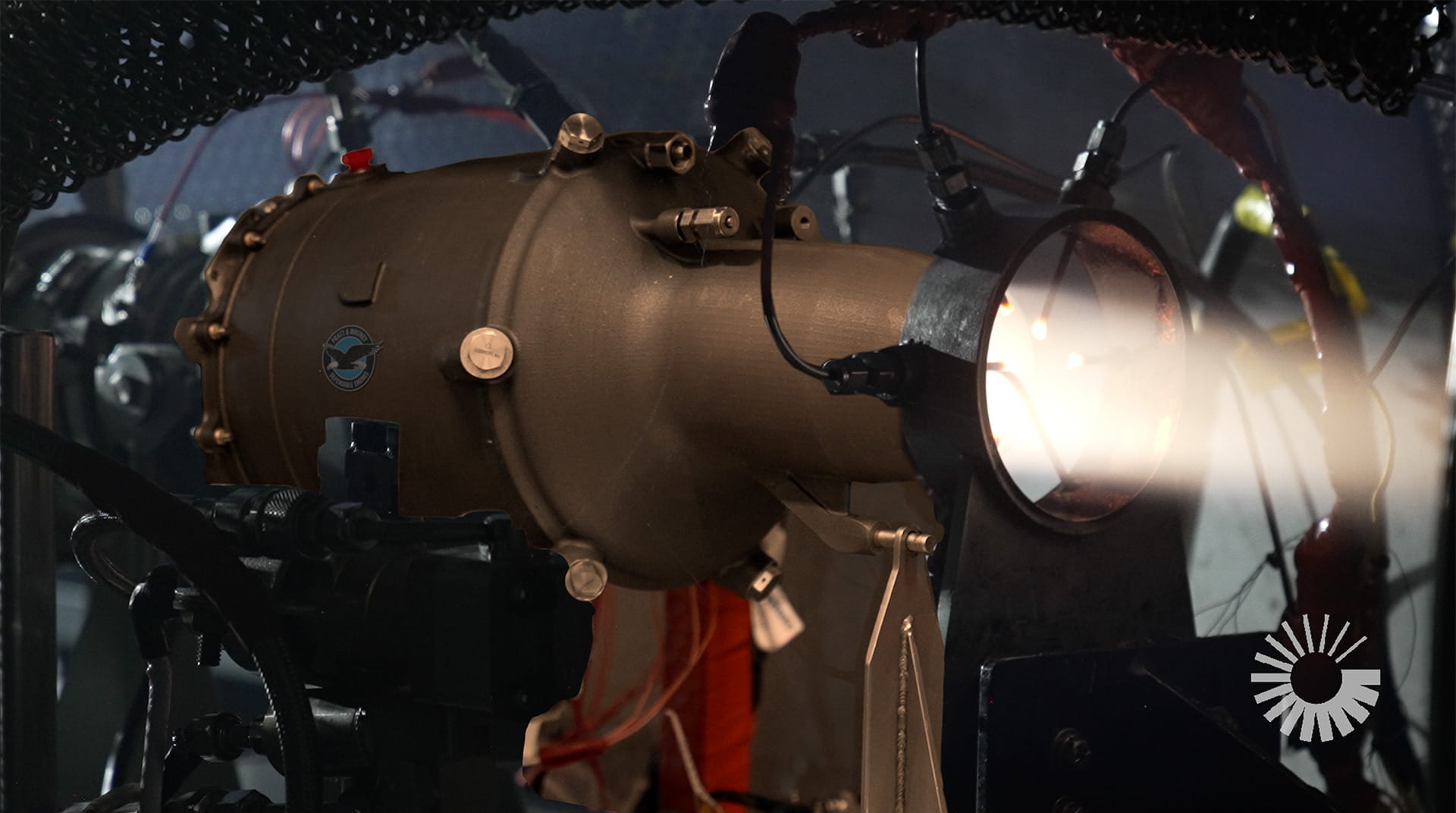
U.S
LONDON — Pratt & Whitney, an RTX business, announced at the Farnborough International Airshow that it has successfully completed demonstration testing of its additively manufactured TJ150 turbojet engine, marking an important step in the company's use of 3D printing technology for military propulsion systems. The TJ150 is a compact turbojet engine developed for expendable applications, including certain autonomous systems and weapons. These systems are typically designed for missions lasting only minutes or hours, making simplified designs and faster production an important requirement. According to Pratt & Whitney, nearly 60% of the TJ150 engine by volume was produced using additive manufacturing, commonly known as 3D printing. The additively manufactured sections include major static components as well as rotating hardware, demonstrating the use of the technology across critical parts of the engine. The demonstration testing evaluated the performance of the 3D-printed materials under realistic operating conditions. The company said the tests confirmed that the engine meets the durability requirements for its intended military missions while providing valuable data on the use of additive manufacturing in propulsion systems. As part of the TJ150 program, Pratt & Whitney invested in additive manufacturing capabilities to support future production and scalability. Engineers consolidated more than 50 individual hot-section components into a small number of additively manufactured parts, reducing assembly complexity. The company also successfully tested a 3D-printed rotating turbine wheel, one of the key components operating under high temperatures and rotational loads. Jill Albertelli, President of Military Engines at Pratt & Whitney, said additive manufacturing allows the company to move more quickly from concept to operational capability. She added that the experience gained from the TJ150 program is already being applied to other propulsion projects, including the Pratt & Whitney Valox engine family. The company's production strategy focuses on improving manufacturing speed and flexibility, particularly as demand increases for propulsion systems intended for short-duration missions. By reducing the number of individual components and simplifying production, additive manufacturing can help shorten manufacturing timelines while supporting higher production rates. Additive manufacturing builds components layer by layer from digital designs instead of using conventional machining or casting methods. The process provides greater design flexibility, reduces the total number of parts required, and can lower production time and manufacturing costs compared with traditional production methods. Pratt & Whitney said the successful TJ150 demonstration expands its experience with advanced manufacturing technologies and supports its broader efforts to modernize military engine production. As of July 20, 2026, the company is evaluating the next phase of the TJ150 program based on the results of the demonstration testing. Source : prnewswire
Read More → Posted on 2026-07-20 15:49:34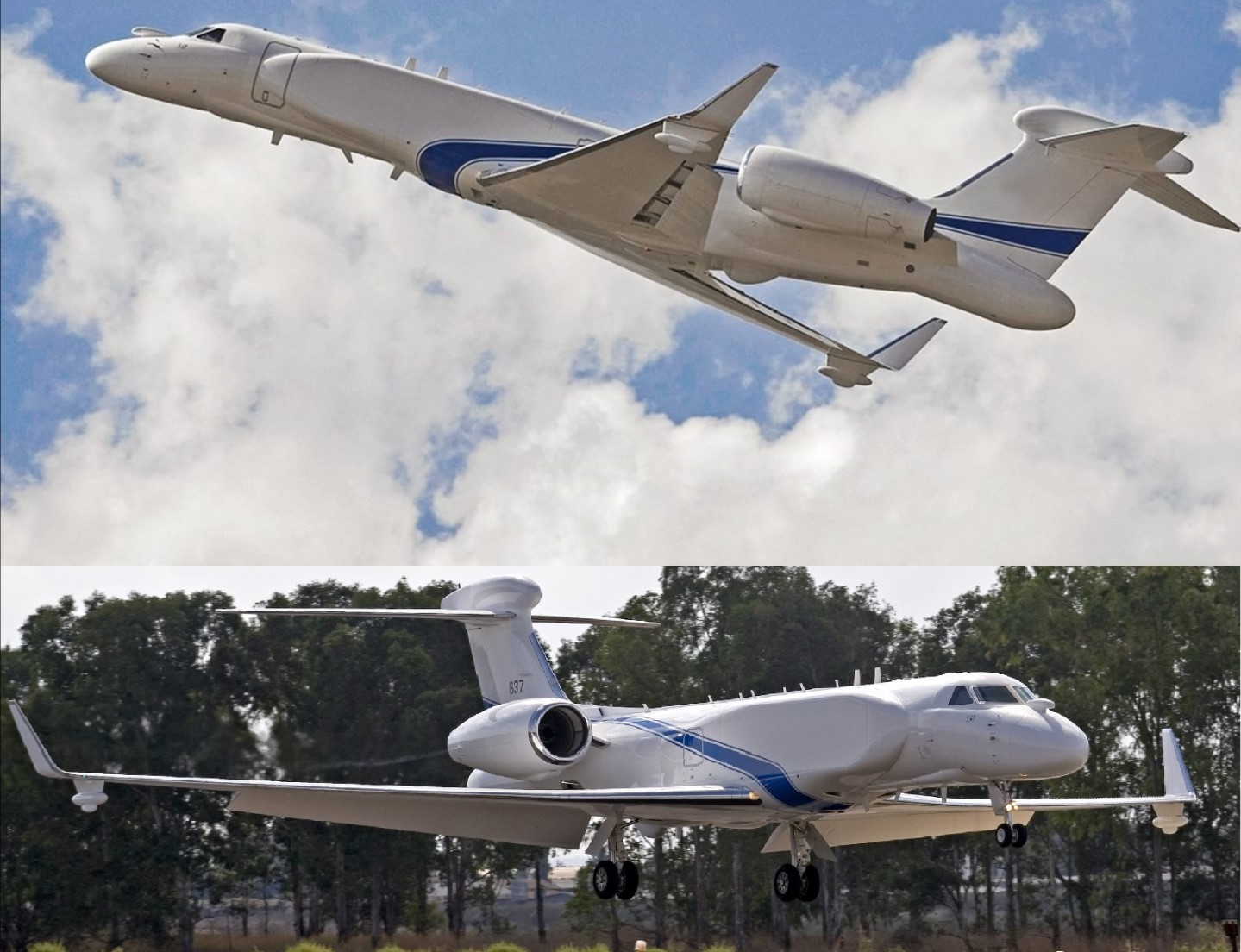
World
TEL AVIV — Israel Aerospace Industries (IAI) has officially unveiled ELLYON, a new multi-mission aircraft that combines advanced electronic attack (EA) capabilities with intelligence, surveillance, target acquisition, and reconnaissance (ISTAR) into a single airborne platform. Presented in Tel Aviv on July 20, ELLYON is designed to provide military operators with one aircraft capable of conducting intelligence collection, electronic warfare, and real-time mission coordination. By combining capabilities that traditionally require multiple specialized aircraft, the platform is intended to shorten the intelligence-to-action cycle while supporting stand-off operations from hundreds of kilometers away, reducing exposure to hostile threats. Integrated Intelligence and Mission System ELLYON features an integrated suite of sensors and communication systems, including: Long-range Synthetic Aperture Radar (SAR) with Ground Moving Target Indication (GMTI) Signals Intelligence (SIGINT) Electro-optical and infrared sensors Wide-band satellite communications (SATCOM) An AI-based mission management system processes data from these sensors, generates actionable intelligence, and rapidly shares it with command centers, ground control stations, and other aircraft operating in the mission area. Electronic Attack Capabilities The aircraft is designed to conduct electronic attack missions across the electromagnetic spectrum. According to IAI, it can perform radar jamming and communications jamming simultaneously during a single mission, enabling it to disrupt both airborne threats and ground-based integrated air defense systems. ELLYON also includes a self-protection suite with automated threat detection, early warning systems, and electronic countermeasures to enhance survivability during operations. Flexible Aircraft Integration IAI developed ELLYON as a platform-agnostic system that can be integrated onto various large commercial business jet airframes based on customer requirements. The platform also incorporates technologies from IAI ELTA's existing airborne intelligence and electronic warfare programs, including sensor miniaturization, advanced algorithms, and AI-based software. Statements from IAI Boaz Levy, Chairman of the Board at IAI, said the company has long experience in developing intelligence aircraft and that ELLYON brings together intelligence collection, electronic attack, and AI-driven mission management in a single platform. "IAI has been at the forefront of developing advanced intelligence aircraft, combining technological innovation and operational expertise. ELLYON continues this legacy by integrating advanced intelligence collection, Electronic Attack and AI-driven mission management into a single platform, providing a decisive operational advantage in evolving battlespace." Dror Bar, CEO of ELTA Systems and Executive Vice President at IAI, said the aircraft combines stand-off operations with the ability to sense, understand, and influence the electromagnetic environment. "ELLYON represents a technological leap forward, combining stand-off operations with the ability to sense, understand and shape the electromagnetic battlespace. ELLYON shortens intelligence-to-action cycles and enhances freedom of action in the most demanding operational environments." ELLYON joins IAI ELTA's family of special-mission intelligence aircraft, which the company said have accumulated extensive operational experience supporting air defense and intelligence missions with the Israel Defense Forces (IDF) and international partners.
Read More → Posted on 2026-07-20 15:39:12
U.S
FARNBOROUGH, England — Lockheed Martin has introduced the MORFIUS X-Rotor, a reusable airborne counter-drone system designed to defeat large groups of unmanned aerial vehicles (UAVs) using high-power microwave (HPM) technology. The system was unveiled at the 2026 Farnborough International Airshow as the company expands its counter-unmanned aerial systems (C-UAS) portfolio to address the increasing use of drone swarms on modern battlefields. According to Lockheed Martin, the ground-launched MORFIUS X-Rotor can neutralize more than 50 enemy drones during a single flight by emitting bursts of high-power microwave energy that disrupt or disable the electronics of multiple UAVs simultaneously. Unlike conventional air defense systems that rely on single-use interceptor missiles, the MORFIUS X-Rotor is designed to be recovered after a mission and reused, reducing the cost of countering low-cost drone threats. The MORFIUS™ X-Rotor is a portable, cost‑effective counter‑drone system that can neutralize up to 50 enemy drones in a single mission. Designed for rapid reuse and rapid deployment. pic.twitter.com/J3tvFrgkuf — Lockheed Martin (@LockheedMartin) July 20, 2026 The company said the system follows a "one-to-many" engagement approach, allowing a single platform to engage multiple drones in one mission instead of using individual interceptors against each target. This is intended to help military forces respond more efficiently to large drone swarms while lowering the cost per engagement. High-Power Microwave Counter-Drone Capability The MORFIUS X-Rotor carries a lightweight high-power microwave payload that is activated once the system reaches its target area. The microwave energy disables the electronic systems of multiple drones without relying on explosive warheads or kinetic interceptors. Lockheed Martin said the system is designed to be sensor and command-and-control agnostic, allowing it to integrate with a wide range of existing military sensors and command networks. It does not require dedicated fire-control radars or proprietary guidance systems, making it compatible with existing air defense architectures. "MORFIUS sets a new benchmark for counter-drone capability—delivering a high kill rate while keeping the cost per kill low," said Randy Crites, Vice President and General Manager of Advanced Programs at Lockheed Martin Missiles and Fire Control. "By leveraging a lightweight, field-reusable high-power microwave architecture, we provide the most effective, low-cost solution on the market today," he added. Built on Years of Development The MORFIUS X-Rotor is the latest version of Lockheed Martin's MORFIUS high-power microwave program, which the company has been developing and testing since 2017. The X-Rotor builds on earlier MORFIUS variants while introducing an updated design focused on improving performance against drone swarms. Lockheed Martin said the microwave technology is intended to disable hardened electronic targets while minimizing collateral damage, providing a non-kinetic option for countering unmanned aerial threats. Testing and Prototype Production The company has completed a series of demonstrations and evaluations in Arizona, California, and Oklahoma, where the system's flight performance, target interception capability, and overall effectiveness were assessed. Lockheed Martin is now accelerating prototype production of both the MORFIUS X-Rotor platform and its high-power microwave payload. Additional flight tests are planned as the company continues development toward operational deployment. Supporting Counter-Drone Requirements Lockheed Martin said the MORFIUS X-Rotor aligns with the U.S. Department of Defense's 2025–2028 Rapid Response Counter-UAS Roadmap, which emphasizes affordable, scalable, and rapidly deployable solutions to counter increasingly capable drone threats. The company also released demonstration videos showing the MORFIUS X-Rotor engaging simulated drone swarms. As drone technology continues to evolve, the reusable high-power microwave system is intended to complement existing layered air defense systems by providing a non-kinetic capability against multiple unmanned aerial threats in a single mission.
Read More → Posted on 2026-07-20 15:24:13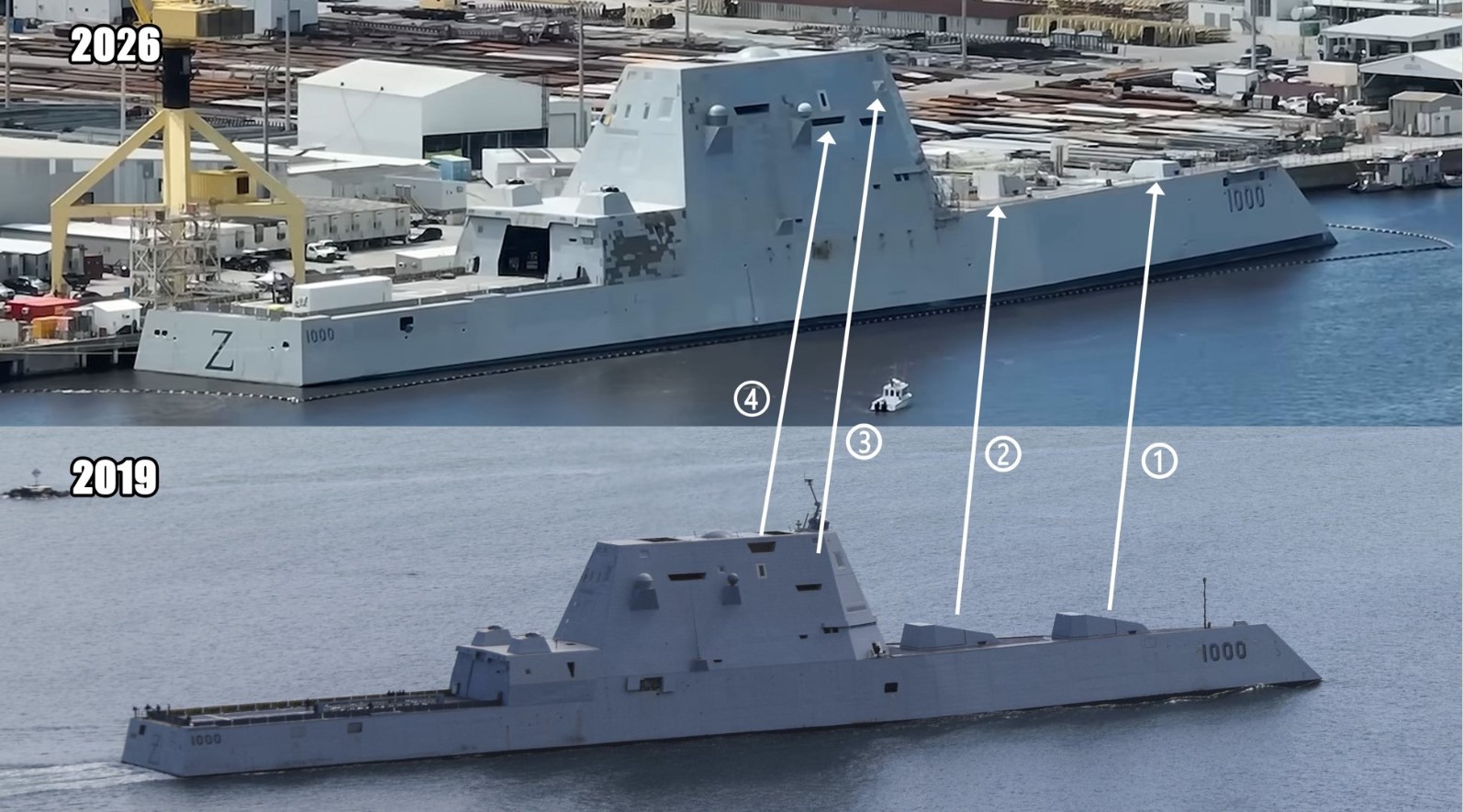
U.S
PASCAGOULA, Miss. — The U.S. Navy's stealth destroyer USS Zumwalt (DDG-1000) is in the final stages of a major modernization program that will transform the ship into a platform for long-range hypersonic weapons. Recent images from Bloomberg Television's YouTube video published on July 18, 2026, and analyzed by X account @lfx160219, show several visible external modifications made during the ship's refit at Huntington Ingalls Industries' Ingalls Shipbuilding facility in Pascagoula, Mississippi. The Navy expects USS Zumwalt to officially return to service in September 2026 after completing its modernization work. Major External Changes Visible The latest images highlight several significant structural modifications made to prepare the destroyer for its new role with the Intermediate-Range Conventional Prompt Strike (IR CPS) hypersonic missile system. The most noticeable change is the removal of the ship's forward 155mm Advanced Gun System (AGS) turret. In its place, engineers have installed four large missile launch tubes protected by a newly designed wave-deflector structure. The ship's No. 2 AGS turret at the aft has also been removed, leaving only the stealth gun housing in its original position. Another visible modification is the addition of a new mounting base for the FLIR 380HD electro-optical/infrared (EO/IR) sensor system, which is expected to improve the ship's surveillance and targeting capabilities. Engineers have also relocated the gas turbine air intakes lower on the hull to help prevent the engines from drawing in exhaust gases from the ship's funnels. From Naval Gunfire Support to Hypersonic Strike The modernization represents a major shift in the Zumwalt class's mission. The destroyers were originally designed around two 155mm Advanced Gun Systems to provide long-range naval gunfire support during amphibious operations. However, the program faced a major setback after the specialized Long-Range Land Attack Projectile (LRLAP) became too expensive for operational use, with each round costing approximately $800,000. To address this issue, the Navy removed the AGS mounts and installed Advanced Payload Modules, allowing the space previously occupied by the gun magazines to be used for the IR CPS hypersonic missile system. Each Zumwalt-class destroyer is planned to carry 12 Conventional Prompt Strike (CPS) missiles. Modernization Program and Delays The Navy's Build Yard Modernization Period (BYMP) for USS Zumwalt began in 2023 and is currently running about 10 months behind its original schedule. According to government oversight reports and program officials, much of the delay resulted from additional work required during installation of the new missile launch system. Contractors had to remove significantly more cabling than originally expected from the ship's forward section before the new launch tubes could be installed. The complexity of the destroyer's 78-megawatt Integrated Power System also contributed to the engineering challenges during the refit. A July 2026 Government Accountability Office (GAO) report also stated that the broader program to equip the Navy's three Zumwalt-class destroyers with hypersonic weapons is running about two years behind schedule, citing integration challenges, additional cabling work, reliability concerns, and missile production timelines. Hypersonic Missile Testing Ahead Following its expected return to service in September 2026, USS Zumwalt will serve as the U.S. Navy's primary sea-based test platform for the Intermediate-Range Conventional Prompt Strike weapon. The ship is expected to conduct the first at-sea test launch of the baseline IR CPS hypersonic missile system by June 2027. The missile uses a two-stage rocket booster to deploy an unpowered hypersonic glide vehicle capable of traveling at speeds above Mach 5. An enhanced version of the IR CPS featuring anti-ship capability is planned for testing before September 2030, further expanding the Zumwalt's long-range maritime strike role. Wider Zumwalt-Class Modernization Modernization work is also planned or underway for the Navy's other two Zumwalt-class destroyers—USS Michael Monsoor (DDG-1001) and USS Lyndon B. Johnson (DDG-1002). In addition to integrating hypersonic weapons, the Navy is making other modifications to the class, including converting ballast tanks into additional fuel storage to increase operational range and endurance for longer deployments. With its expected return to service in September 2026, USS Zumwalt will become the first U.S. Navy surface combatant prepared to support operational testing of the Conventional Prompt Strike hypersonic missile system, marking the next phase of the Navy's effort to field long-range hypersonic strike capability at sea.
Read More → Posted on 2026-07-20 15:13:36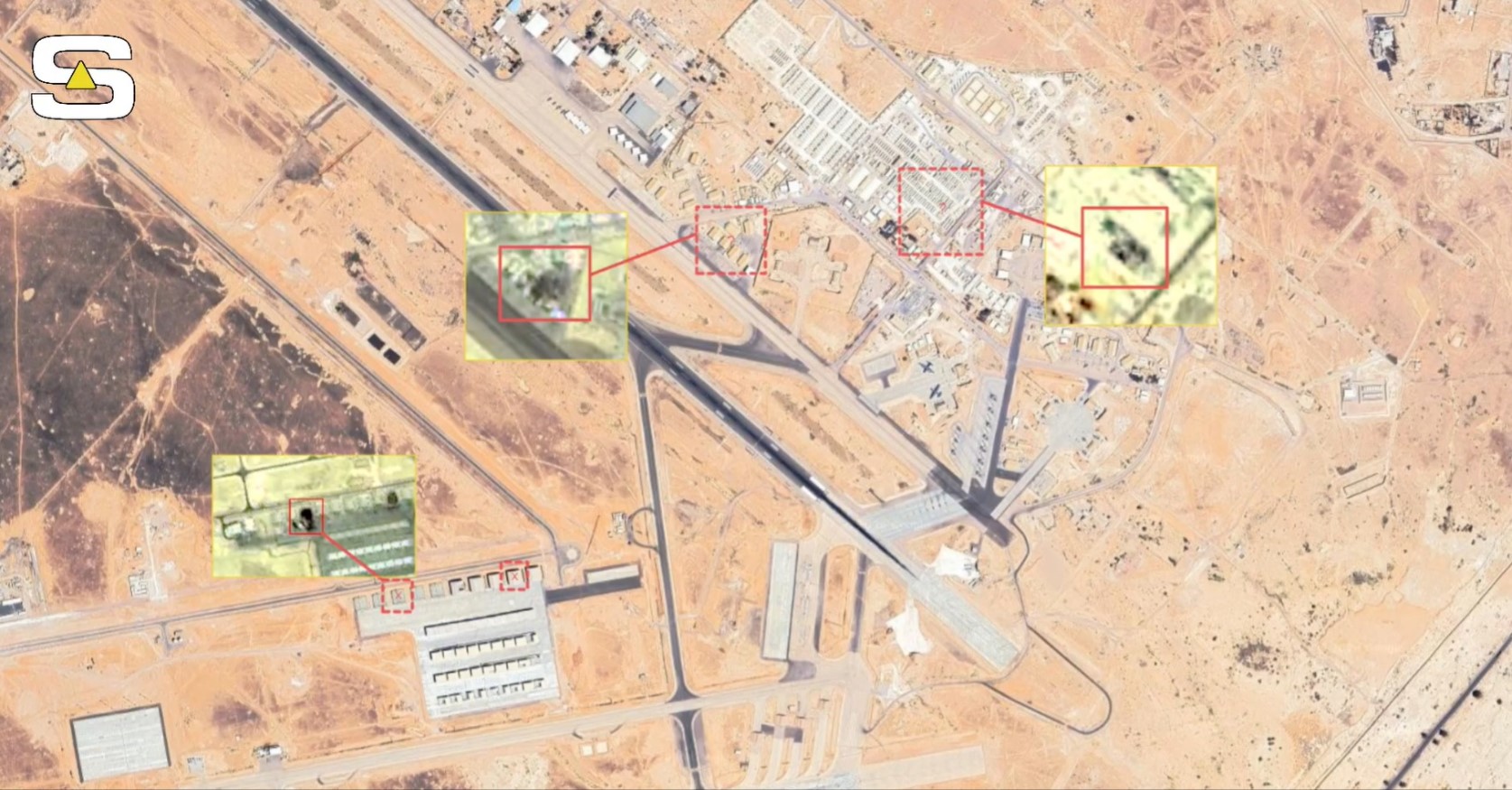
World
AMMAN, Jordan — Newly released commercial satellite imagery has provided a clearer picture of the damage at Jordan's Muwaffaq al-Salti Air Base, indicating that the Iranian missile strike caused more extensive damage than initially reported. 🚨Satellite imagery gives us a better look of the full damage at Muwaffaq al-Salti Air Base, Jordan.Low-res previews from July 19 (SV NEO-1) show the base was hit again. Two hangars struck, a major impact is visible in the housing area, and multiple shelters were destroyed. pic.twitter.com/vNZ9Z1M1Ju — Soar (@SoarAtlas) July 20, 2026 Satellite imagery published by Solar Atlas and captured by the SV NEO-1 commercial satellite on July 19 shows multiple impact sites across the air base, including aircraft hangars, drone facilities and troop housing. The imagery provides one of the clearest publicly available views of the strike and its effects on the installation. Satellite Imagery Shows Multiple Impact Areas The July 19 imagery shows that the base was struck in several locations. At least two aircraft hangars were hit, while multiple aircraft and drone shelters across the installation appear to have been destroyed. The imagery also shows a major impact in the U.S. troop housing area, where American service members were killed during the attack. 🛰 Significantly more damage is visible at Muwaffaq al-Salti Air Base in Jordan.The base was not struck by a single missile but by what appears to have been a large, highly accurate salvo.Another hangar on the ISR/CAS apron was hit, while a major impact is visible in the… https://t.co/d7wUGImjxL pic.twitter.com/QM5U6LnHjV — Egypt's Intel Observer (@EGYOSINT) July 20, 2026 Independent open-source intelligence group Egypt's Intel Observer (EGYOSINT), which reviewed the imagery, assessed that the pattern of impacts indicates the base was struck by what appears to have been a large, highly accurate missile salvo rather than a single missile. According to the group, another hangar on the base's Intelligence, Surveillance and Reconnaissance/Close Air Support (ISR/CAS) apron was also hit, suggesting multiple operational areas were targeted during the strike. Drone Hangars Sustain Heavy Damage EGYOSINT's assessment identified extensive damage around 31°49'53"N, 36°47'29"E, where three drone hangars previously associated with U.S. MQ-9 Reaper operations appear to have been heavily damaged or destroyed. 🛰 🇯🇴🇺🇸 Before-and-after GIF of Iranian satellite imagery provides a closer look at the extensive damage to three drone hangars (31°49'53"N, 36°47'29"E) at Muwaffaq al-Salti AB.At least one U.S. MQ-9 Reaper drone also appears to have been damaged by missile shrapnel. https://t.co/dIvYfKxc4Q pic.twitter.com/nzmQvr4CsM — Egypt's Intel Observer (@EGYOSINT) July 20, 2026 The imagery also indicates that at least one U.S. MQ-9 Reaper drone appears to have sustained missile shrapnel damage. The assessment is based on commercially available satellite imagery and remains part of ongoing open-source analysis. Earlier commercial satellite imagery captured around July 10 had already shown damage to newly constructed hangars within the U.S.-operated section of the base. The latest imagery provides a more complete assessment of the strike's impact across the installation. U.S. Casualties Confirmed The satellite imagery also shows severe damage in the troop housing area, consistent with official casualty reports released after the attack. According to U.S. Central Command (CENTCOM), Iranian ballistic missiles and drones targeted Muwaffaq al-Salti Air Base on July 17. The attack killed two U.S. service members, while another service member was initially reported missing. Four additional U.S. personnel were injured and later discharged from Jordanian hospitals after receiving treatment. U.S. officials also confirmed that unidentified remains were recovered from the site. Strategic Role of Muwaffaq al-Salti Air Base Located approximately 100 kilometers east of Amman, Muwaffaq al-Salti Air Base serves as a key hub for U.S. and coalition air operations in the Middle East. The base supports intelligence, surveillance and reconnaissance missions, drone operations, logistics and fighter aircraft deployments, including MQ-9 Reaper drones and aircraft such as the F-15E Strike Eagle and F-16 Fighting Falcon. Iranian Claims and Ongoing Assessment The Islamic Revolutionary Guard Corps (IRGC) claimed responsibility for the strike, stating that it used precision ballistic missiles, including the Khyber-Shakan, to target U.S. command-and-control facilities and aircraft storage areas. Jordanian authorities initially reported that air defense systems intercepted several incoming missiles. However, the latest commercial satellite imagery published by Solar Atlas, together with independent analysis by EGYOSINT, indicates that multiple projectiles reached the base and struck military infrastructure. Open-source analysts continue to examine newly available imagery to determine the full extent of the damage. Additional high-resolution commercial satellite imagery may provide further confirmation of damaged facilities and equipment. As of July 20, 2026, assessments remain ongoing. The latest satellite imagery provides the clearest publicly available visual evidence of the strike, allowing independent observers to compare the physical damage with official statements and better understand the impact on one of the region's most important U.S.-supported air bases.
Read More → Posted on 2026-07-20 14:40:07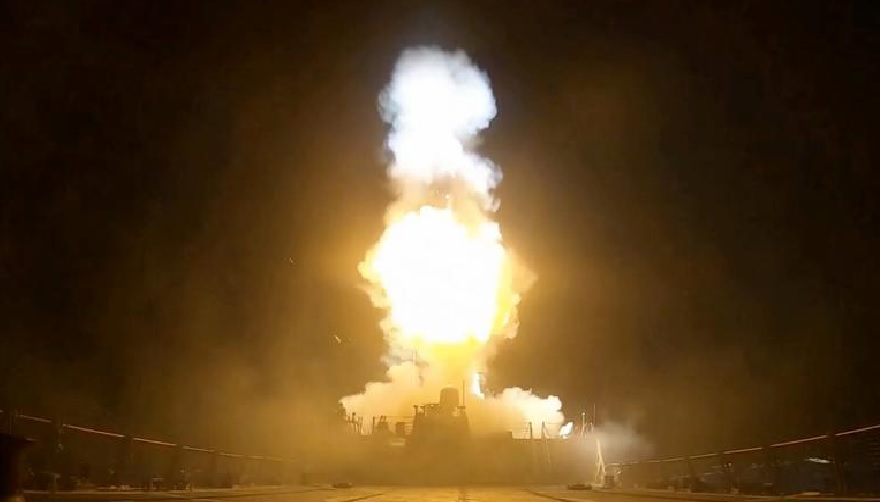
U.S
WASHINGTON / DUBAI — The United States carried out a ninth consecutive night of airstrikes against Iranian military installations, continuing its campaign to reduce Iran's ability to threaten commercial shipping in the Strait of Hormuz as regional tensions continue to escalate. U.S. Central Command (CENTCOM) said it successfully completed the ninth consecutive evening of strikes at 10 p.m. ET on July 19. According to U.S. Central Command (CENTCOM), the three-hour operation targeted military command centers, integrated air defense systems, coastal surveillance sites, communications networks, maritime capabilities, and missile and drone launch positions in southern Iran. CENTCOM said the strikes were intended to reduce Iran's capability to attack commercial vessels and civilian mariners transiting the Strait of Hormuz. The operation is part of a broader U.S. air and maritime campaign that has struck more than 140 Iranian military targets since the latest phase of the conflict began. It also supports the renewed U.S. naval blockade of Iranian ports following the collapse of a 60-day interim cessation arrangement reached in June. Campaign Targets Command Network The U.S. campaign is focused on disrupting the command-and-control network that coordinates attacks on merchant shipping rather than targeting only individual missile launchers or drones. Military targets have included communications centers, command headquarters, coastal observation posts, radar systems, IRGC naval infrastructure, and facilities supporting missile and drone operations. Explosions were reported in several Iranian locations, including Tabriz, Bushehr, Chabahar, and Bandar Mahshahr. Coastal military facilities around Bandar Abbas, Jask, Konarak, Abu Musa, and Greater Tunb have also been targeted to reduce radar coverage and anti-ship missile capabilities. The operations rely on surveillance aircraft, satellites, and electronic intelligence systems to identify military targets and assess strike results. The sustained campaign has reportedly forced Iranian units to relocate launch systems more frequently and reduce radio communications. Strait of Hormuz Remains the Focus The Strait of Hormuz, about 34 kilometers wide at its narrowest point, carries around 20 percent of global oil shipments and a significant share of Qatar's liquefied natural gas exports. To support maritime security, the U.S. has expanded its naval presence in the region. During the first blockade from April 13 to June 18, U.S. forces redirected more than 140 vessels and disabled nine. Since the blockade resumed, CENTCOM said that by July 19 it had redirected six commercial vessels and disabled one. Operations are supported by the destroyers USS John Finn and USS Donald Cook, while Marines from the 11th Marine Expeditionary Unit have conducted inspections of commercial vessels. On July 15 near Kharg Island, U.S. forces used Hellfire missiles to disable the tanker M/T Belma by striking its smokestack, stopping the vessel without damaging its cargo tanks. On July 20, the United Kingdom Maritime Trade Operations (UKMTO) reported that a vessel caught fire and drifted about eight nautical miles northwest of Kumzar, Oman, after being struck by an unidentified projectile. The crew abandoned the ship and was rescued by a tug. Iran's Islamic Revolutionary Guard Corps (IRGC) also claimed that two oil tankers attempting to use the southern shipping route were immobilized after explosions. Regional Attacks Continue Iran has continued missile and drone attacks against U.S. positions and partner nations across the region. The United States has confirmed that 17 service members have been killed since the conflict escalated. On July 17, an Iranian ballistic missile and drone attack in Jordan killed two U.S. service members. The remains of a third service member, previously reported missing, were later recovered. On July 18, another U.S. service member was killed and one was injured in northern Iraq during the controlled disposal of an unexploded Iranian drone. Iranian attacks have also prompted missile interceptions over Jordan, while Kuwait activated its air defense systems following drone attacks on a power generation and desalination facility. In Bahrain, home to the U.S. Fifth Fleet, warning sirens sounded after the U.S. Embassy warned of potential Iranian strikes near central Manama. Oil Prices Rise The conflict has continued to affect global energy markets. Brent crude oil rose above $91 per barrel, while the average price of regular gasoline in the United States returned to about $4 per gallon. U.S. Secretary of State Marco Rubio said Iran was attempting to use the Strait of Hormuz as leverage and called on international partners to help protect freedom of navigation. U.S. Energy Secretary Chris Wright said maintaining the uninterrupted flow of oil and natural gas through the strait remains a key U.S. objective. Military operations continue as the United States seeks to reduce Iran's ability to threaten commercial shipping through one of the world's most important maritime trade routes, while Iran continues to rely on dispersed mobile missile and drone systems to sustain its operations. Source : CENTCOM
Read More → Posted on 2026-07-20 14:05:18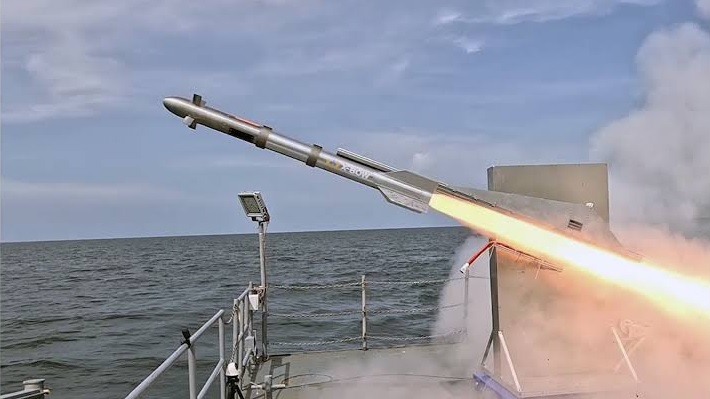
U.S
FARNBOROUGH, England — U.S. defense technology company X-Bow Systems has introduced Buckler, a new low-cost interceptor designed to defeat Group 3 drones at supersonic speeds. Unveiled at the 2026 Farnborough International Airshow, the company said the system is intended to provide an affordable and scalable air defense option as militaries face increasing drone threats. According to X-Bow Systems, Buckler is priced at less than US$100,000 per interceptor, making it significantly less expensive than many traditional air defense interceptors. The company said the system is designed to help address the growing challenge of countering large numbers of lower-cost drones and cruise missiles without relying on high-cost interceptors for every engagement. The interceptor is based on an in-house developed airframe and propulsion system, with X-Bow manufacturing its airframe, solid rocket motor, and propellant internally. The company said this vertically integrated production approach provides greater control over costs, product quality, and manufacturing capacity while reducing dependence on external suppliers. X-Bow founder and Chief Executive Officer Jason Hundley said the system was developed to address the changing economics of modern air defense. "You can't win a war of attrition trading million-dollar interceptors against thousand-dollar threats," Hundley said. "Buckler has flown, it comes in under US$100,000, and we build its airframe and propulsion ourselves — the part of the industrial base that is so stressed by today's munitions demands. This is our answer to the call from the U.S. and its allies: affordable capability, at scale." Focus on Affordable Air Defense The company said Buckler is intended to provide armed forces with a practical option for defending against Group 3 unmanned aerial systems (UAS), which are larger drones capable of carrying heavier payloads and operating at greater ranges than smaller tactical drones. The growing use of relatively inexpensive drones in recent conflicts has highlighted the high cost of using advanced interceptors against low-cost aerial threats. X-Bow said Buckler is designed to help reduce this cost imbalance by enabling forces to deploy larger numbers of interceptors while managing defense budgets more effectively. A key part of the program is X-Bow's in-house production of solid rocket motors (SRMs), which the company identified as one of the main bottlenecks in the current defense industrial supply chain. By manufacturing the critical propulsion components internally, X-Bow said it can increase production more rapidly when required. The company added that its manufacturing network includes both fixed production facilities and deployable manufacturing units. According to X-Bow, these production methods are already being used across several other defense programs, demonstrating their ability to support larger-scale manufacturing. Flight Testing Completed The launch of Buckler follows a successful flight test that validated the interceptor's propulsion system and overall flight performance. X-Bow said the flight demonstration was supported by earlier ground testing, including motor static-fire and igniter tests. According to the company, these milestones indicate that Buckler has progressed beyond the concept stage and is now a flight-tested system. X-Bow is presenting Buckler to the U.S. military and allied nations seeking cost-effective ways to strengthen air defenses against increasing drone and cruise missile threats. The company said the interceptor is designed to be produced in larger quantities to meet operational requirements while maintaining a lower unit cost. Source : prnewswire
Read More → Posted on 2026-07-20 13:54:01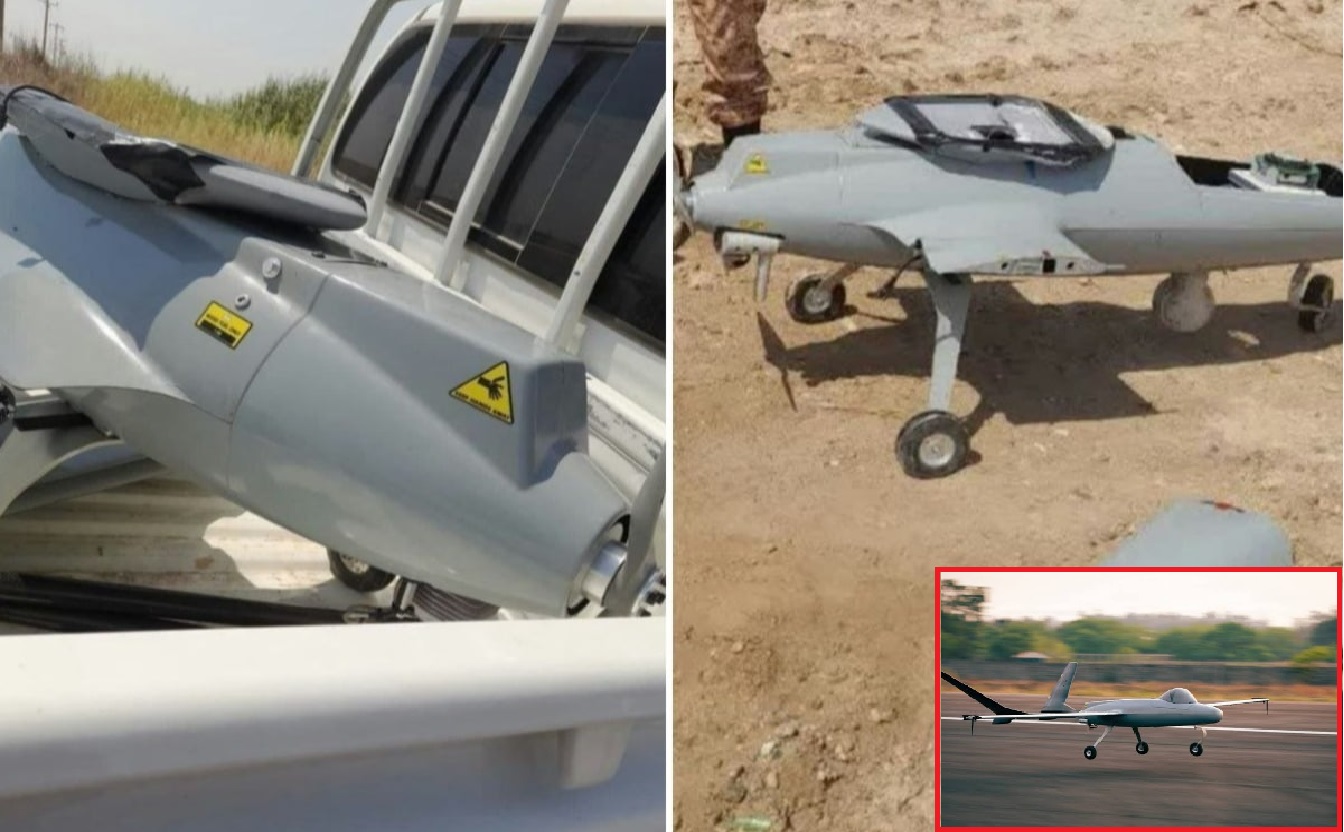
World
TEHRAN / WASHINGTON — Iran's Islamic Revolutionary Guard Corps (IRGC) has claimed it recovered a Polish-built Tiguar-M tactical unmanned aerial vehicle (UAV) after it was allegedly shot down over southern Iran. Images released by the IRGC Ground Forces' 48th Fath Brigade show the recovered aircraft in Kohgiluyeh and Boyer-Ahmad Province. According to Iranian officials, the drone was operated by the U.S. Army. However, neither the U.S. Department of Defense nor independent Western sources have confirmed the claim, and the exact operator of the aircraft has not been independently verified. The drone shown in the released photographs has been identified as the Tiguar-M, a tactical UAV developed by Warsaw-based uAvionics. The platform received wider public attention earlier this year after it was used by U.S. Army Special Forces during Exercise Balikatan 2026 in the Philippines. Between April 20 and 24, soldiers from the U.S. Army's 1st Special Forces Group (Green Berets) tested the Tiguar-M in Laoag, Philippines, with the exercise focusing on the drone's long-range communication capabilities in areas with limited infrastructure. Images from that exercise showed at least one aircraft equipped with a modified satellite communication system similar to the configuration seen on the recovered drone displayed by the IRGC. Photographs released by Iranian authorities appear to show the UAV fitted with an improvised Starlink or Starshield satellite communications terminal mounted on the fuselage. The field modification would allow beyond-line-of-sight communications over long distances. Standard production versions of the Tiguar-M are equipped with a conventional SATCOM antenna. The Tiguar-M is designed as a long-endurance tactical reconnaissance platform. It measures approximately 2.32 meters in length, has a 4.1-meter wingspan, and a maximum takeoff weight of 25 kilograms. Powered by a hybrid propulsion system, the drone has a claimed endurance of more than 20 hours and a maximum range of up to 1,800 kilometers. It can carry up to 11 kilograms of intelligence, surveillance, and reconnaissance (ISR) payloads, including electro-optical and infrared sensors for day and night operations. The platform also features a triple-redundant flight controller, a recovery parachute, and a modular design that allows it to be transported in compact cases for rapid deployment. According to the manufacturer, it complies with civil aviation standards in Poland and the United States for drones in its weight category and is not subject to certain U.S. export restrictions. Open-source defense analyst Babak Taghvaee of The Crisis Watch has reported on the IRGC's identification of the recovered aircraft as a Tiguar-M. However, visual identification of the drone model alone does not confirm who was operating it at the time it was brought down. BREAKING: The IRGC has released images of a Polish-built Tiguar M UAV allegedly operated by the U.S. Army and shot down over southern Iran by the IRGC Ground Forces' 48th Fath Brigade in Kohgiluyeh and Boyer-Ahmad Province.The Tiguar M is the military version of the… pic.twitter.com/reYaF53PJ6 — Babak Taghvaee - The Crisis Watch (@BabakTaghvaee1) July 19, 2026 If the aircraft was operated by U.S. forces, it would indicate the use of small, relatively low-cost ISR drones for missions such as intelligence gathering, target support, and battle damage assessment. Compared with larger reconnaissance aircraft, platforms such as the Tiguar-M are less expensive to operate and easier to replace while providing persistent surveillance capabilities. The claim comes amid continuing military operations between the United States and Iran. The United States resumed military strikes against Iran on July 8, and by July 17, U.S. Central Command (CENTCOM) said it had completed a seventh consecutive night of strikes targeting Iranian surveillance facilities, military logistics sites, underground weapons storage locations, and maritime infrastructure using fighter aircraft, drones, warships, and naval forces. Iran has also announced several claimed drone interceptions during the past two weeks. Iranian state media, including IRNA and Tasnim, previously reported that the IRGC Aerospace Force had shot down a U.S. MQ-9 Reaper over the Ahvaz and Persian Gulf region using a newly deployed air defense system. Those claims have likewise not been confirmed by U.S. officials. At present, the circumstances surrounding the reported recovery of the Tiguar-M remain unverified outside Iranian statements. While the released images appear to show a Tiguar-M UAV, they do not independently establish who operated the aircraft or the circumstances under which it was recovered. Further confirmation from official sources has not yet been provided.
Read More → Posted on 2026-07-20 12:32:33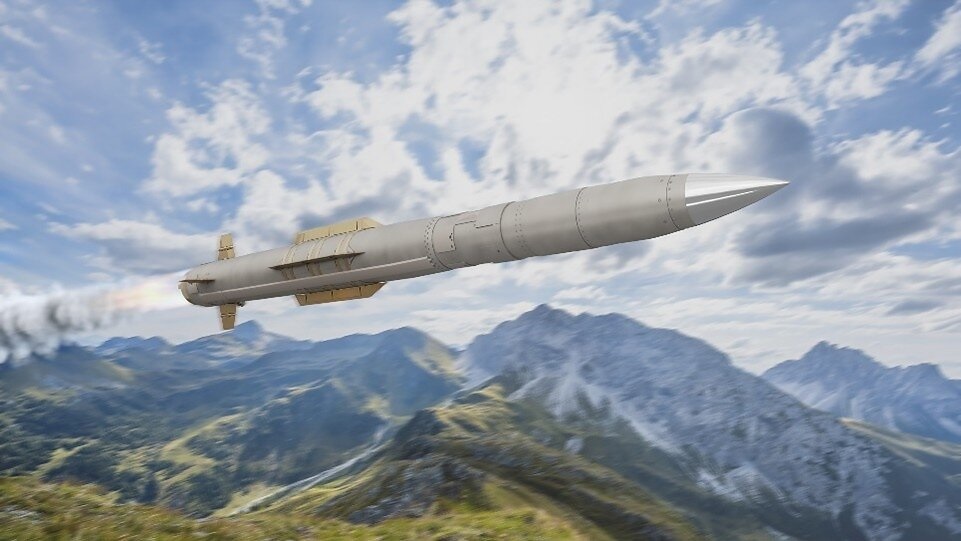
U.S
FARNBOROUGH, England — On July 20, 2026, Lockheed Martin has announced the development of the PAC-3 Adapted Capability Effector (PAC-3 ACE), a new lower-cost interceptor designed for the Patriot air and missile defense system. The announcement was made on Monday during the Farnborough International Airshow, with the company saying the new missile is intended to help the United States and allied nations strengthen their air defense capabilities while reducing interceptor costs. According to Lockheed Martin, the PAC-3 ACE will cost less than half the price of the company's current PAC-3 Missile Segment Enhancement (MSE) interceptor. U.S. Army budget documents estimate that a single PAC-3 MSE missile costs about $4 million. The lower-cost design is intended to allow military operators to procure larger numbers of interceptors without significantly increasing defense spending. Lockheed Martin expects the PAC-3 ACE to reach initial production within approximately 36 months, a relatively short timeline for a major missile defense program. The company said the accelerated schedule is possible because the interceptor is built using existing Patriot technologies and infrastructure rather than being developed as an entirely new system. Designed to Increase Interceptor Availability The new interceptor has been developed in response to lessons from recent conflicts, where military forces have faced large-scale attacks involving inexpensive drones, rockets, and missiles. Such attacks can force air defense units to use costly interceptors against relatively low-cost threats, creating a significant cost imbalance. The PAC-3 ACE is designed to improve "magazine depth," referring to the number of interceptors that can be purchased, stockpiled, and deployed within available budgets. By lowering the cost of each interceptor, military operators can maintain larger inventories to support sustained air defense operations. Compatible with Existing Patriot Systems The PAC-3 ACE is designed to integrate directly with the existing Patriot weapon system and uses the current PAC-3 fire control system and software. It will also be compatible with the U.S. Army's Integrated Battle Command System (IBCS), allowing it to operate within the same digital command network already used by Patriot batteries. Because it relies on existing command-and-control architecture, the interceptor can be introduced without requiring entirely new training programs or logistics systems. This approach is also intended to reduce research and development costs while speeding deployment. Like the PAC-3 MSE, the PAC-3 ACE uses hit-to-kill technology, destroying incoming targets through direct impact instead of using an explosive warhead. According to the company, the interceptor is designed to engage multiple types of aerial threats, including: Air-breathing aircraft Cruise missiles Close-range ballistic missiles Short-range ballistic missiles Production to Include European Partners Lockheed Martin also announced that the PAC-3 ACE will be jointly developed and produced with European industry partners rather than relying solely on U.S.-based manufacturing. The company said this production strategy is intended to strengthen the transatlantic defense industrial base, improve interoperability among NATO allies, and enable partner nations to build interceptor stockpiles closer to home. Distributed manufacturing is also expected to help improve supply chain resilience as demand for air defense systems continues to increase. The announcement follows a broader trend among defense companies to expand munitions production across Europe in cooperation with allied industries. Expanding Air Defense Options The Patriot air defense system has served as a key ground-based air and missile defense platform for the United States and numerous allied nations for decades. While the PAC-3 MSE remains the system's most advanced interceptor, its cost has increased interest in more affordable options that can complement existing capabilities during high-volume engagements. Lockheed Martin has not disclosed the exact unit price of the PAC-3 ACE or the specific engineering changes that enable its lower cost. However, the company said the interceptor's use of proven Patriot technology and existing infrastructure is expected to reduce development costs while allowing production to begin within about three years. The introduction of the PAC-3 ACE reflects growing international demand for cost-effective air defense solutions that can expand interceptor inventories while maintaining compatibility with existing Patriot systems. Source : lockheedmartin
Read More → Posted on 2026-07-20 11:42:29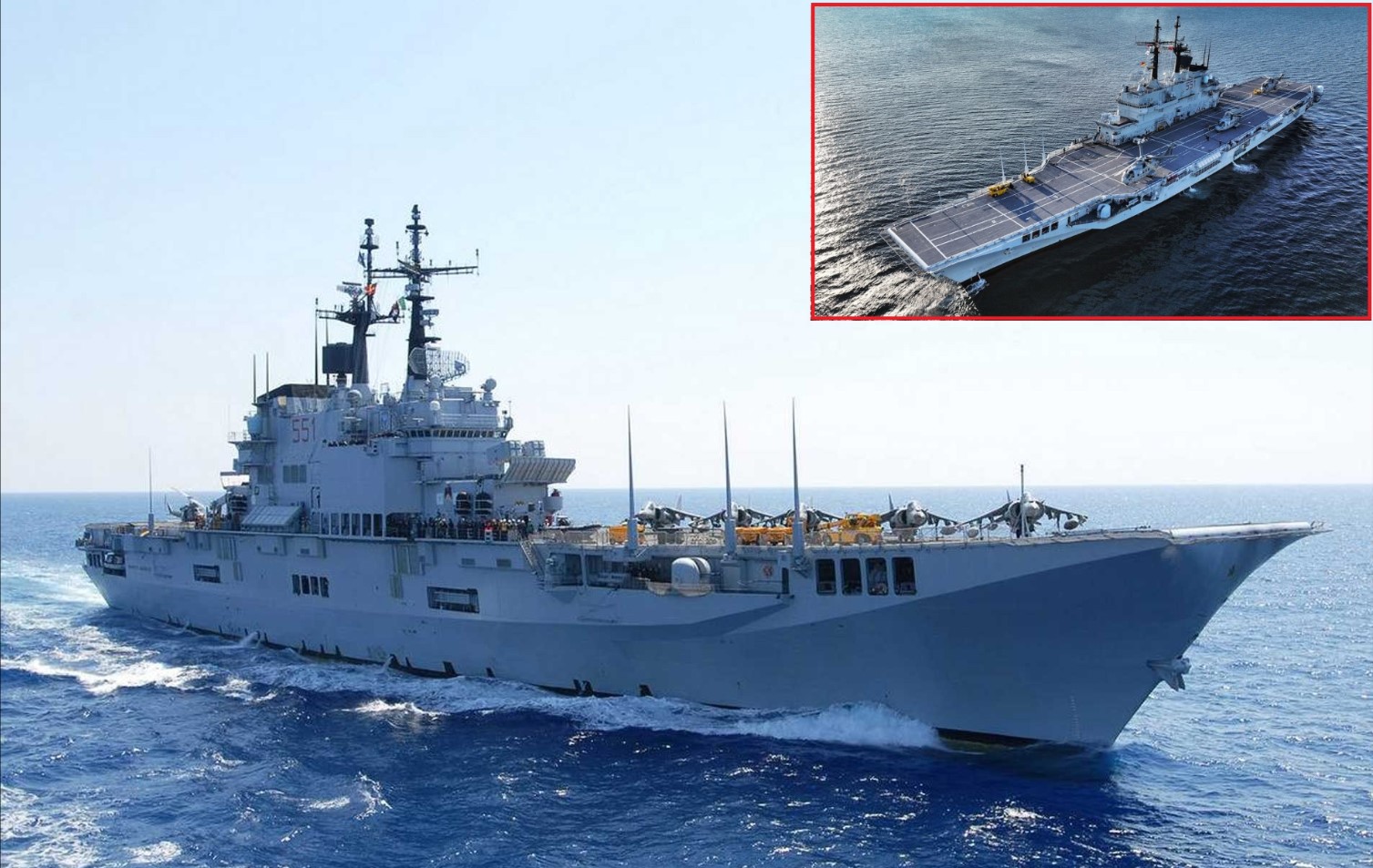
World
JAKARTA — Indonesia's Ministry of Defence has confirmed that the former Italian Navy aircraft carrier Giuseppe Garibaldi is scheduled to arrive in Indonesian waters on September 20, 2026, marking a major step in the country's naval modernization efforts. The timeline was announced during a meeting with Commission I of the Indonesian House of Representatives on July 20. The government aims to have the carrier in Indonesia before October 5, allowing it to take part in celebrations marking the anniversary of the Indonesian National Armed Forces (TNI). Lampung Selected as Home Port The 180-meter-long carrier will be based at Ratai Bay in Lampung, located at the southern tip of Sumatra facing the strategic Sunda Strait. While the Ministry of Defence and the Indonesian Navy (TNI AL) have not publicly explained why Lampung was selected over other naval bases, preparations at the site are progressing. Construction work to support the vessel's arrival is underway, including upgrades to berthing and mooring facilities, dredging to provide sufficient water depth, and improvements to electrical infrastructure. According to the ministry, work on the carrier's berthing area has reached 76% completion. To prepare for the ship's delivery, the Indonesian Navy has also sent 100 personnel to Italy for technical and operational training before they crew the vessel during its voyage to Indonesia. In addition, the navy has established a simulated flight deck at Juanda Naval Air Station in Surabaya to train pilots and flight deck crews. Transfer and Modernization Costs The Giuseppe Garibaldi, which was decommissioned by the Italian Navy in late 2024, is being transferred to Indonesia as a grant under a free cession arrangement approved by the Italian Parliament earlier this year. The transfer is intended to strengthen defence cooperation between Italy and Indonesia. According to the Ministry of Defence, acquiring a used aircraft carrier offers a faster and more affordable option than building a new vessel. The ministry estimates the cost of transporting the ship from Italy to Indonesia at €54 million (around Rp900 billion). However, the refurbishment and modernization program will require a much larger investment. During the parliamentary meeting, Commission I member Tubagus Hasanuddin said upgrade costs could range between Rp7.2 trillion and Rp16.8 trillion (approximately €350 million to €818 million), depending on the combat systems and modernization package selected by the Indonesian Navy. The Ministry of Defence said Indonesian defence companies and domestic shipyards will participate in the retrofit work, with PT PAL Indonesia expected to play a major role. Additional funding has also been approved for helicopters and related support systems. Delivered Without Offensive Weapons Before its transfer, the carrier will have its offensive weapon systems removed. It will retain only the essential propulsion, safety, and habitability systems required for the voyage to Indonesia. After arriving, the vessel is expected to undergo an extensive modernization program, including conversion for helicopter and unmanned aerial vehicle (UAV) operations, upgraded command-and-control systems, and other mission equipment. The ship is also expected to receive a new Indonesian Navy name after entering service. Parliamentary Support and Operational Challenges All political parties represented in Commission I expressed support for the acquisition during the July 20 meeting. At the same time, lawmakers highlighted several issues that will require careful planning, including securing long-term funding for maintenance and operations, adapting Indonesia's naval and defence doctrine to operate an aircraft carrier, and ensuring domestic defence industries gain meaningful technology transfer and industrial experience through the modernization program. Expanding Indonesia's Maritime Capabilities Once modernization is complete, the Giuseppe Garibaldi is expected to serve primarily as a command headquarters ship capable of supporting helicopter and UAV operations. The vessel is also planned to support maritime security missions, joint military operations, humanitarian assistance, disaster relief, and logistics across Indonesia's archipelago. The acquisition forms part of Indonesia's broader naval modernization program and closer defence cooperation with Italy. When it enters service, Indonesia is expected to become the second Southeast Asian country to operate a flat-deck aircraft carrier platform after Thailand's HTMS Chakri Naruebet. Source : navalnews
Read More → Posted on 2026-07-20 11:31:26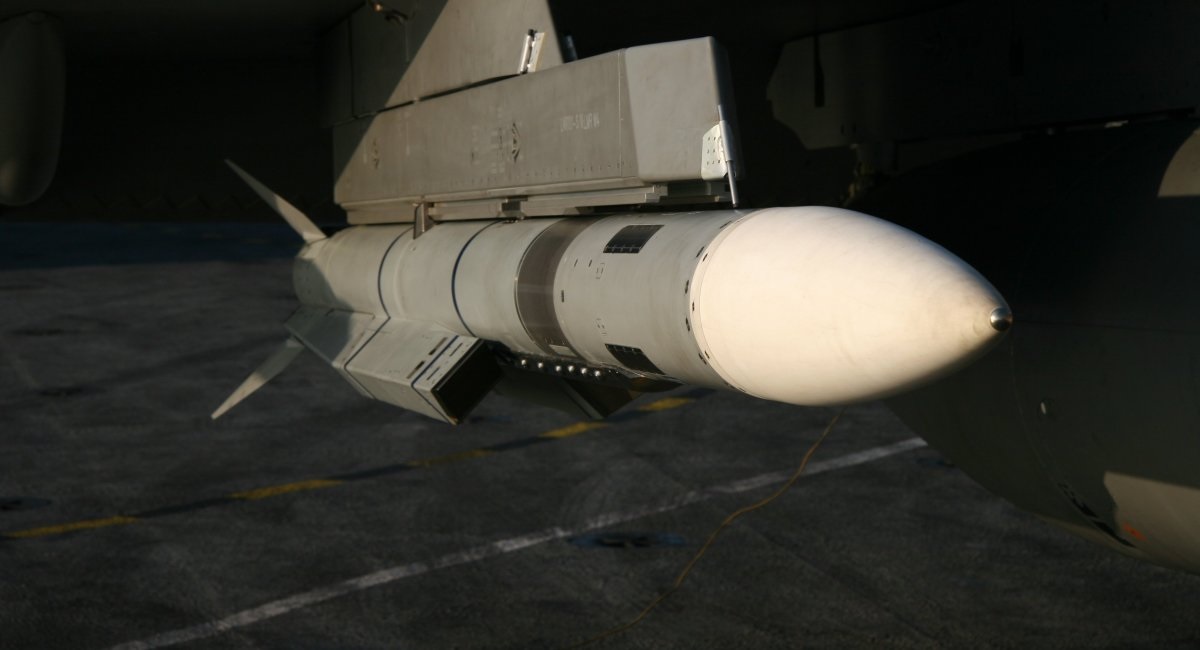
Europe
LONDON — The United Kingdom has decided not to proceed with a mid-life upgrade of its Meteor beyond-visual-range (BVRAAM) air-to-air missile, choosing instead to direct investment toward the development of its next-generation Future Air Superiority Effectors (FASE) programme. According to information from the British Ministry of Defence, the Meteor missile will remain in its current configuration and continue in service through routine maintenance rather than undergoing a major modernization programme. The missile is expected to remain operational with the Royal Air Force (RAF) into the 2040s. The decision reflects the UK's strategy of prioritizing future air combat capabilities over incremental upgrades to existing weapons. UK Shifts Investment to Future Air Combat Capabilities On July 3, 2026, UK Minister for Defence Readiness and Industry Luke Pollard confirmed that the government would not continue with the Meteor mid-life upgrade programme. "We are not continuing with the mid-life upgrade of the Meteor. We want to invest in the next generation of capabilities faster than the previous generation of capabilities," Pollard said. Instead of upgrading the current missile, funding is being redirected to the Future Air Superiority Effectors (FASE) programme, which is currently in its pre-concept phase. FASE aims to develop a family of advanced air combat effectors, including a new long-range air-to-air missile capable of engaging targets from extended stand-off distances. The future weapons are expected to be compatible with both manned combat aircraft and future uncrewed air platforms. To support the programme, the United Kingdom and France signed a memorandum of understanding (MoU) on April 1, 2026, launching a 12-month joint study. The study will examine future air combat threats, evaluate emerging missile technologies, and establish a roadmap for the development of a successor to the Meteor missile. Meteor to Remain in RAF Service into the 2040s Although the mid-life upgrade has been cancelled, the Meteor missile will continue to play a key role in the RAF's air combat capability. The missile entered RAF service in 2018 on the Eurofighter Typhoon, where it serves as the service's primary beyond-visual-range air-to-air missile. Production of the missile is expected to continue to meet operational requirements, while support will focus on routine maintenance rather than extensive modernization. The F-35B Lightning II is expected to become the second RAF aircraft equipped with the Meteor under the fighter's Block 4 upgrade programme, with integration expected in the early 2030s. The missile has already completed successful flight tests on the F-35B, while ground integration work is continuing for the F-35A variant. Meteor Programme and Technical Features The Meteor missile is developed by MBDA through a multinational European programme involving the United Kingdom, Germany, Italy, France, Sweden, and Spain. It is currently in operational service with partner nations on the Eurofighter Typhoon, Dassault Rafale, and Saab Gripen, while integration is also underway for the F-35A, F-35B, and South Korea's KF-21 fighter aircraft. One of the Meteor's defining features is its solid-fuel variable-flow ducted rocket (ramjet) propulsion system. Unlike conventional rocket motors that provide thrust only during the initial phase of flight, the ramjet delivers controlled thrust throughout the missile's flight, enabling it to maintain energy until interception and providing a large no-escape zone against maneuvering targets. The missile uses an active radio-frequency (RF) seeker for all-weather engagements and combines inertial mid-course guidance with autonomous terminal guidance. A two-way data link allows it to receive updated target information during flight, including data from third-party platforms, supporting network-enabled air combat operations. Meteor carries a blast-fragmentation warhead equipped with both impact and RF proximity fuses to increase the probability of destroying its target. The missile weighs approximately 190 kilograms, measures 3.7 metres in length, has a 178-millimetre diameter, and supports both rail and ejection launch methods, allowing integration across multiple fighter aircraft. Focus Turns to the FASE Programme The Future Air Superiority Effectors (FASE) programme is intended to deliver a new generation of air-to-air weapons capable of addressing future threats, including advanced combat aircraft, increasingly sophisticated missiles, and evolving electronic warfare systems. The ongoing UK-France study will help define future operational requirements, assess enabling technologies, and establish a development roadmap for the new missile family. While some Meteor partner nations, including Germany, have expressed interest in pursuing modernization of the existing missile, the United Kingdom has chosen to concentrate its resources on developing a successor alongside France. For the foreseeable future, the Meteor will continue to meet the RAF's long-range air combat requirements while the FASE programme advances toward the next generation of air superiority weapons for the Eurofighter Typhoon, F-35B, and future combat aircraft. Source : militarywatchmagazine
Read More → Posted on 2026-07-19 16:39:03
Space & Technology
NEW DELHI — Bharat Heavy Electricals Limited (BHEL) has successfully designed, manufactured, and tested India's first indigenous 1200 kV Ultra High Voltage Alternating Current (UHVAC) transformer, marking a significant milestone in the country's power transmission sector and supporting the government's "Make in India" initiative. The newly developed single-phase auto transformer has a capacity of 333 MVA with a voltage rating of 1150/400/33 kV. BHEL said the transformer was designed and manufactured entirely using its in-house research and development capabilities. Following successful type testing to international standards, India has joined a small group of countries with the capability to manufacture equipment for the 1200 kV AC transmission class. Developed Using Indigenous Technology According to BHEL, the project was completed after nearly two years of engineering design optimization, material evaluation, and testing to meet global performance and reliability standards. The company noted that design parameters and manufacturing technologies for 1200 kV transmission equipment are among the most closely guarded in the global power equipment industry, with very limited technology transfer available internationally. To meet the stringent quality requirements, the transformer was manufactured in a dust-free, climate-controlled transformer production facility at BHEL's plant in Bhopal, ensuring structural precision and electrical reliability. To Be Installed at India's 1200 kV National Test Station The transformer was developed under a collaborative program with the Power Grid Corporation of India (PowerGrid) and is scheduled for installation at the 1200 kV National Test Station in Bina, Madhya Pradesh. The test station was established by PowerGrid to evaluate domestically developed ultra-high-voltage transmission equipment under real operating conditions before potential commercial deployment. At present, India's highest commercial AC transmission voltage is 765 kV. The introduction of 1200 kV transmission technology represents the next stage of grid development, enabling the transfer of significantly larger amounts of electricity over long distances with lower transmission losses. Such ultra-high-voltage transmission systems are designed to transport electricity efficiently from large power generation centers to major demand regions while improving overall grid efficiency. Comparison with Global UHVAC Transformer Programs Although India's new transformer operates at the 1200 kV voltage class, the highest AC transmission voltage level tested globally, several countries have developed higher-capacity transformers for their ultra-high-voltage transmission networks. Japan Japan's Tokyo Electric Power Company (TEPCO) was among the earliest organizations to develop ultra-high-voltage AC technology through its 1100 kV UHVAC program. The project used a 3000 MVA transformer bank, consisting of three individual 1000 MVA single-phase auto transformers, for experimental high-capacity transmission. China China operates the world's largest commercial 1000 kV UHVAC transmission network. Manufacturers including China XD Group and SPECO-Toshiba have developed ultra-high-voltage transformers with capacities ranging from 1000 MVA to 1200 MVA per unit, supporting long-distance transmission across multiple provinces. Russia (Former USSR) The former Soviet Union was an early pioneer in ultra-high-voltage AC transmission, constructing more than 2,300 kilometers of 1150 kV transmission lines. The program demonstrated the technical feasibility of long-distance ultra-high-voltage power transmission using specially designed high-capacity single-phase transformers. BHEL's Transformer in Global Context BHEL's newly developed transformer is rated at 333 MVA per single-phase unit. In a standard three-phase substation configuration, three such transformers would operate together as a transformer bank with a combined capacity of approximately 1000 MVA, placing India's overall system capacity in line with comparable ultra-high-voltage installations used internationally. Technical Comparison Country AC Voltage Level Transformer Capacity Status India (BHEL) 1200 kV 333 MVA per phase (~1000 MVA three-phase bank) Successfully tested; scheduled for installation China 1000 kV 1000–1200 MVA per unit Commercially deployed Japan 1100 kV 1000 MVA per phase (3000 MVA bank) Experimental development Russia (Former USSR) 1150 kV High-capacity custom single-phase transformers Historical deployment Strengthening India's Power Equipment Capability The successful development of the indigenous 1200 kV UHVAC transformer expands India's domestic manufacturing capability for advanced power transmission infrastructure. The achievement reduces dependence on imported ultra-high-voltage equipment and provides an indigenous technological foundation for future expansion of next-generation transmission systems if higher-voltage networks are adopted in the country. With successful testing completed, the transformer's installation at the National Test Station in Bina will support further evaluation of India's domestically developed 1200 kV transmission technology under field conditions.
Read More → Posted on 2026-07-19 16:30:54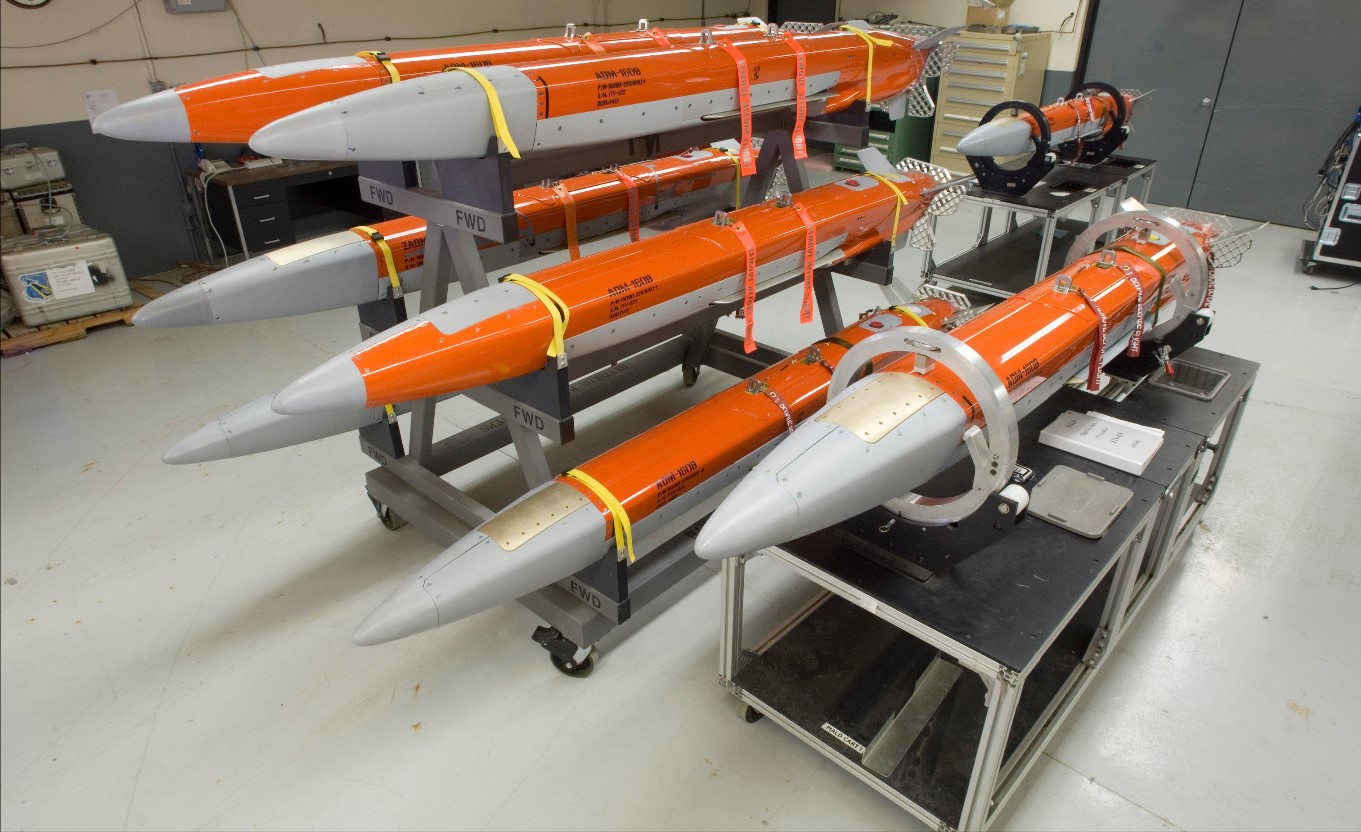
U.S
TUCSON, Arizona — Raytheon, an RTX business, is preparing to restart full-scale production of the ADM-160 Miniature Air-Launched Decoy (MALD) to meet increasing demand from the United States and NATO allies for systems designed to improve aircraft survivability in contested airspace. The company said it could begin delivering new MALD systems within two years of receiving a production contract, supported by its existing production line in Tucson, Arizona, where sustainment, assembly, and testing activities have continued, allowing for a faster production restart. The renewed effort comes as the United States and its allies seek to replenish stocks of decoy systems following lessons from recent conflicts, including the war in Ukraine, where advanced integrated air defense systems and drone threats have highlighted the need for expendable decoys to protect crewed aircraft, unmanned systems, and long-range strike weapons. Existing Production Line Supports Faster Restart Raytheon said the Tucson facility already has the tooling, manufacturing equipment, and testing infrastructure needed to resume production. “Every piece of major tooling is in place. We're not rebuilding a line; we're re-energizing it,” said Justin Jenia, Vice President of Strike Initiatives for Raytheon's Air & Space Defense Systems. According to the company, many engineers and technicians who have supported the MALD program for more than two decades remain involved in sustainment and modernization work. Raytheon has also invested internal research and development funding over the past two years to improve manufacturing efficiency and modernize production. How the MALD System Works The ADM-160 MALD is a lightweight, jet-powered, air-launched decoy designed to replicate the radar signature and flight profile of U.S. and allied combat aircraft. The baseline version carries no explosive warhead. Instead, it is intended to draw enemy radar attention and interceptors away from high-value aircraft and weapons. Weighing less than 300 pounds and offering a range of approximately 500 nautical miles, MALD flies into contested airspace, prompting enemy air defense systems to detect, track, and potentially engage the decoy instead of operational aircraft or strike weapons. Its modular design allows the nose section to be changed for different missions, including: MALD-J electronic warfare and radar jamming variant. Configurations carrying kinetic warheads. Future sensor or mission payloads. The system received wider public attention in May 2023 after it was first reported to have been used by the Ukrainian Air Force to support long-range strike operations against Russian air defenses. Manufacturing Improvements Raytheon said it has introduced several manufacturing upgrades to support future production. The company has qualified 3D-printed (additively manufactured) airframes, reducing production time while making it easier to adapt the decoy for different payloads. Raytheon has also successfully demonstrated launching MALD from cargo aircraft, allowing large numbers of decoys to be deployed without relying on fighter aircraft. Initial production will continue using the Pratt & Whitney TJ150 turbojet engine, while the company is evaluating 3D-printed engines for future versions to reduce manufacturing costs and shorten production timelines. European Production Plans Alongside production in Arizona, Raytheon plans to establish a second manufacturing line in Europe, subject to regulatory approvals. The proposed facility would support a "built in Europe, for Europe" approach aimed at increasing industrial capacity and supplying NATO allies more efficiently. Supporting "Affordable Mass" The production restart aligns with the military concept of "affordable mass," which focuses on deploying larger numbers of lower-cost systems that can complicate enemy defenses. “Affordable mass means fielding weapons in large numbers that the enemy still has to take seriously,” said J.D. Word, Director of Tactical Strike Requirements and Capabilities at Raytheon. “MALD delivers that – a proven, modular, lower-cost system that soaks up enemy fire and protects the assets that truly matter.” Operational Background Raytheon assumed responsibility for the MALD program after its initial development by Northrop Grumman. The ADM-160B entered U.S. service around 2009–2010, followed by the ADM-160C MALD-J electronic attack variant. According to the company, the combination of an active industrial base, experienced workforce, and existing production infrastructure enables a faster restart than establishing a new manufacturing line. Production quantities and delivery schedules will depend on future contract awards from the United States and allied nations.
Read More → Posted on 2026-07-19 15:52:57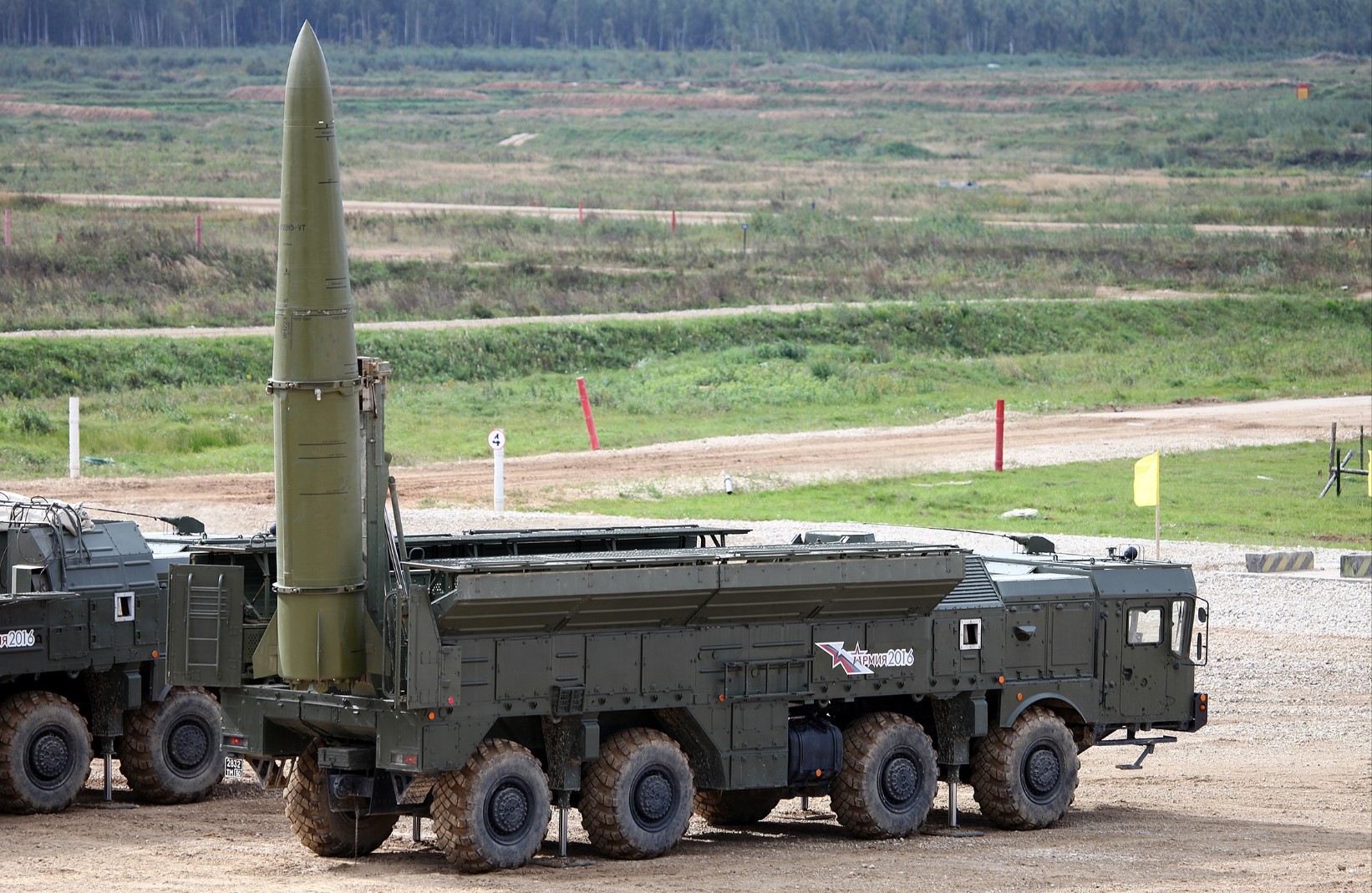
World
KYIV — Russian forces have launched more ballistic missiles during the first 19 days of July than the country's defense industry is estimated to produce in an entire month, according to an analysis by Ukrainian defense outlet Militarnyi based on reports from the Ukrainian Air Force and regional air commands. The analysis indicates that Russia has also used about two-thirds of its planned annual production of the 3M22 Zircon missile in less than three weeks, highlighting the high pace of missile strikes against Ukraine during July. Missile Usage Exceeds Monthly Production According to the analysis, Russian forces launched 107 ballistic missiles and 20 3M22 Zircon missiles between July 1 and July 19. The total includes the large-scale overnight attack on Kyiv on July 19, during which Iskander, Zircon, and RM-48U ballistic missiles were reportedly used, based on Monitorwar tracking data. The launch rate marks a noticeable increase compared with June. During the entire month of June 2026, Russia fired 102 Iskander-M and S-400 ballistic missiles, along with two Kh-47M2 Kinzhal missiles and 15 Zircon missiles. The Defense Intelligence of Ukraine (DIU) estimates that Russia's defense industry manufactures around 100 ballistic missiles per month, including approximately 60 9M723 missiles for the Iskander-M system and 40 RM-48U missiles for the S-400 system. With 107 ballistic missiles launched in the first 19 days of July, Russian missile usage has already exceeded its estimated monthly production capacity. Zircon Missile Use Reaches Two-Thirds of Annual Production Plan The pace of Zircon missile use has also drawn attention. According to DIU estimates cited by Militarnyi, Russia plans to manufacture 30 Zircon missiles during 2026. By launching 20 Zircon missiles since the beginning of July, Russian forces have already used roughly 67% of the planned annual production. The figures suggest that operational use of the missile is significantly outpacing its estimated manufacturing rate. Stockpiles Remain but Some Inventories Have Declined Before the July 19 attack, DIU assessed that Russia possessed more than 100 Iskander-M (9M723) missiles, over 400 RM-48U missiles, and more than 120 Zircon missiles. Although these reserves remain substantial, some missile inventories have declined over time. DIU estimates indicate that Russia held around 200 Iskander-M missiles in December 2025, suggesting a reduction in available stock over recent months. Military analysts cited by Militarnyi say the current rate of missile use may reflect an effort to place sustained pressure on Ukraine's air defense network by conducting large, concentrated missile strikes. At the same time, continued launches at the current pace would gradually reduce missile inventories faster than they can be replaced through production. Analysis Questions Zircon's Flight Characteristics The increasing combat use of the 3M22 Zircon, which has an estimated unit cost of about $5 million, has led researchers to examine its technical characteristics more closely. Independent missile technology analyst Fabian Hinz assessed available launch footage, missile debris and other open-source information, concluding that the Zircon appears to operate as a quasi-ballistic missile rather than a scramjet-powered hypersonic cruise missile. According to Hinz, the missile uses a solid-fuel rocket engine rather than a scramjet propulsion system. He also argues that available evidence does not show the air intake that would normally be expected on a scramjet-powered hypersonic cruise missile. Instead of following a conventional ballistic trajectory, the Zircon is assessed to fly along a quasi-ballistic flight path, combining a gliding phase with atmospheric maneuvers. Further analysis by the Kyiv Scientific Research Institute of Forensic Expertise, based on recovered missile debris, suggests the Zircon travels at approximately Mach 5.5 during most of its flight, briefly accelerates, and slows to around Mach 4.5 during the terminal phase before impact. Hinz noted that hypersonic weapons represent a range of capabilities rather than a single category and that the Zircon's maneuvering characteristics continue to present a difficult target for air defense systems. Air Defense Interceptions Despite its speed and maneuverability, Ukrainian Air Force reports state that Western-supplied air defense systems, including the Patriot, have intercepted a number of Zircon missiles during the conflict. The July launch figures underline the high operational tempo of Russian long-range missile strikes while also highlighting the gap between estimated missile production and current usage. Whether Russia can sustain this level of missile expenditure over a longer period will depend on future production rates, existing stockpiles, and operational requirements. Source : militarnyi
Read More → Posted on 2026-07-19 15:16:51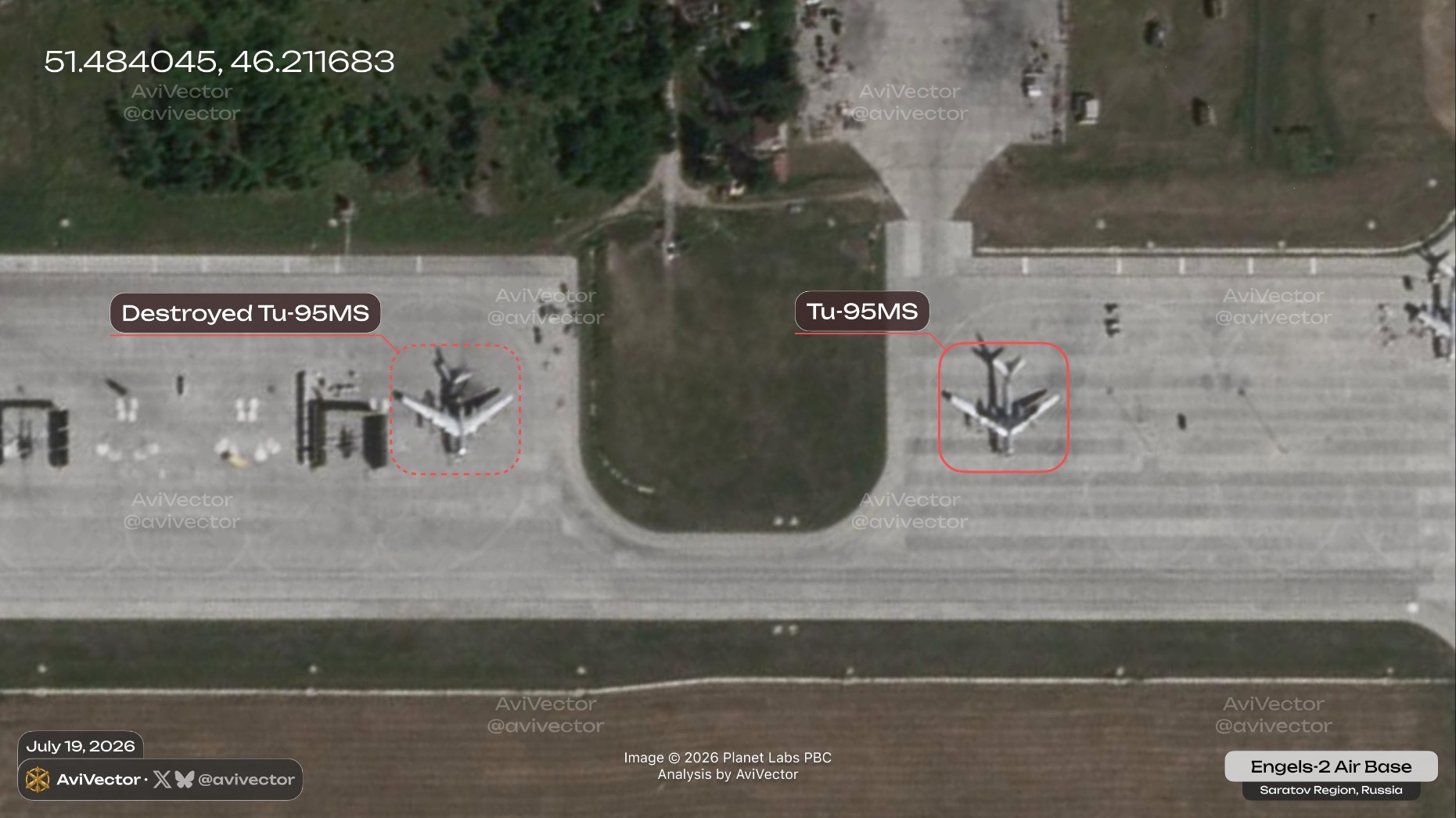
World
SARATOV REGION, Russia — Commercial satellite imagery released on Saturday appears to confirm the destruction of a Russian Tu-95MS strategic bomber at Engels-2 Air Base following a Ukrainian drone strike carried out earlier this week. The images, published by open-source intelligence group AviVector using Planet Labs satellite imagery, show a Tu-95MS bomber on the tarmac with severe structural damage. The aircraft's tail section appears to have been completely separated from the fuselage, while damage extends into the internal weapons bay. 🔻 Satellite images of 🇷🇺 Engels-2 Air Base as of July 19, 05:10 UTCOn the night of July 16, the Security Service of Ukraine destroyed a Tu-95MS strategic bomber at Engels-2 Air Base.Two Tu-95MS were at Engels Air Base for a long period of time and conducted rotations,… pic.twitter.com/60707jLmGj — AviVector (@avivector) July 19, 2026 According to AviVector and analysis by investigative project Skhemy, part of Radio Free Europe/Radio Liberty, the drone strike triggered a fire that destroyed the rear section of the aircraft. Analysts assessed that the extent of the damage makes the bomber beyond repair. AviVector also noted that two Tu-95MS bombers had been stationed at Engels-2 for an extended period for routine maintenance, crew rotations, and training. Drone Strike Reported on July 16 The attack took place in the early hours of July 16. Saratov Region Governor Roman Busargin reported a drone threat at approximately 1:47 a.m. local time. Around 2:30 a.m., residents began reporting explosions and multiple drones over the area on social media, followed by a large fire at the Engels-2 military airfield. On July 17, Ukrainian President Volodymyr Zelenskyy said the operation was carried out by the Security Service of Ukraine (SBU). He stated that Engels-2 Air Base, located about 800 kilometers from the Ukrainian border, is one of Russia's main bases used to launch long-range cruise missile attacks against Ukrainian cities. The SBU also said its drones traveled approximately 800 kilometers to reach the target. If confirmed, the satellite imagery would provide the first independent visual evidence indicating the destruction of an aircraft rather than damage limited to airfield infrastructure. Importance of the Tu-95MS Fleet The Tu-95MS is a modernized version of the Soviet-era Tu-95 strategic bomber and is used to carry Kh-101, Kh-555, and Kh-55 long-range cruise missiles. Although the original Tu-95 first flew in 1952, the Tu-95MS variant remains one of Russia's primary long-range missile carriers. Production of new Tu-95 aircraft ended in August 1992, meaning destroyed airframes cannot be directly replaced. Some aircraft have since been upgraded to the Tu-95MSM standard with improved engines, navigation systems, and increased missile-carrying capability. Before the latest strike, Russia was reported to operate around 31 Tu-95MS bombers and 27 Tu-95MSM aircraft. Open-source monitoring project Oryx, which documents equipment losses based on photographic evidence, has previously recorded at least 10 Tu-95MS losses since the start of the full-scale war, most of them while parked at Russian air bases. The Engels incident had not yet been added to its verified count at the time of publication. Engels-2 Remains a Key Strategic Air Base Engels-2 Air Base hosts Russia's 184th Heavy Bomber Aviation Regiment and the 121st Guards Heavy Bomber Aviation Regiment, making it one of the country's most important bases for long-range aviation. Following previous Ukrainian drone attacks, Russia strengthened defenses at the base by constructing at least 17 hardened aircraft shelters designed for the large Tu-95 and Tu-160 bombers. Ground crews also painted two-dimensional aircraft decoys on the tarmac in an effort to complicate drone targeting and satellite observation. Despite these protective measures, the July 16 strike appears to have successfully reached the airfield. Bombers Relocated to Russia's Far East The attack follows a series of Ukrainian long-range operations targeting Russia's strategic aviation fleet. After earlier attacks, including Operation Spiderweb in June 2025, Russian military commanders relocated a number of strategic bombers to Ukrainka Air Base in Russia's Far East to reduce their exposure to Ukrainian drone strikes. Operating bombers from the Far East significantly increases mission distances. A Tu-95MS based at Ukrainka must fly roughly 7,000 kilometers to reach the launch area near Saratov before returning approximately 5,400 kilometers, resulting in a round trip of up to 12,400 kilometers and nearly 23 hours of flight time. While relocating aircraft reduces the risk of attacks on the ground, the longer missions increase fuel consumption, maintenance requirements, airframe wear, and the workload on flight crews. The newly released satellite imagery provides additional visual evidence supporting Ukrainian claims that a Tu-95MS bomber was destroyed during the July 16 strike. Further independent analysis and any future official statements may provide additional confirmation regarding the full extent of the damage.
Read More → Posted on 2026-07-19 14:22:47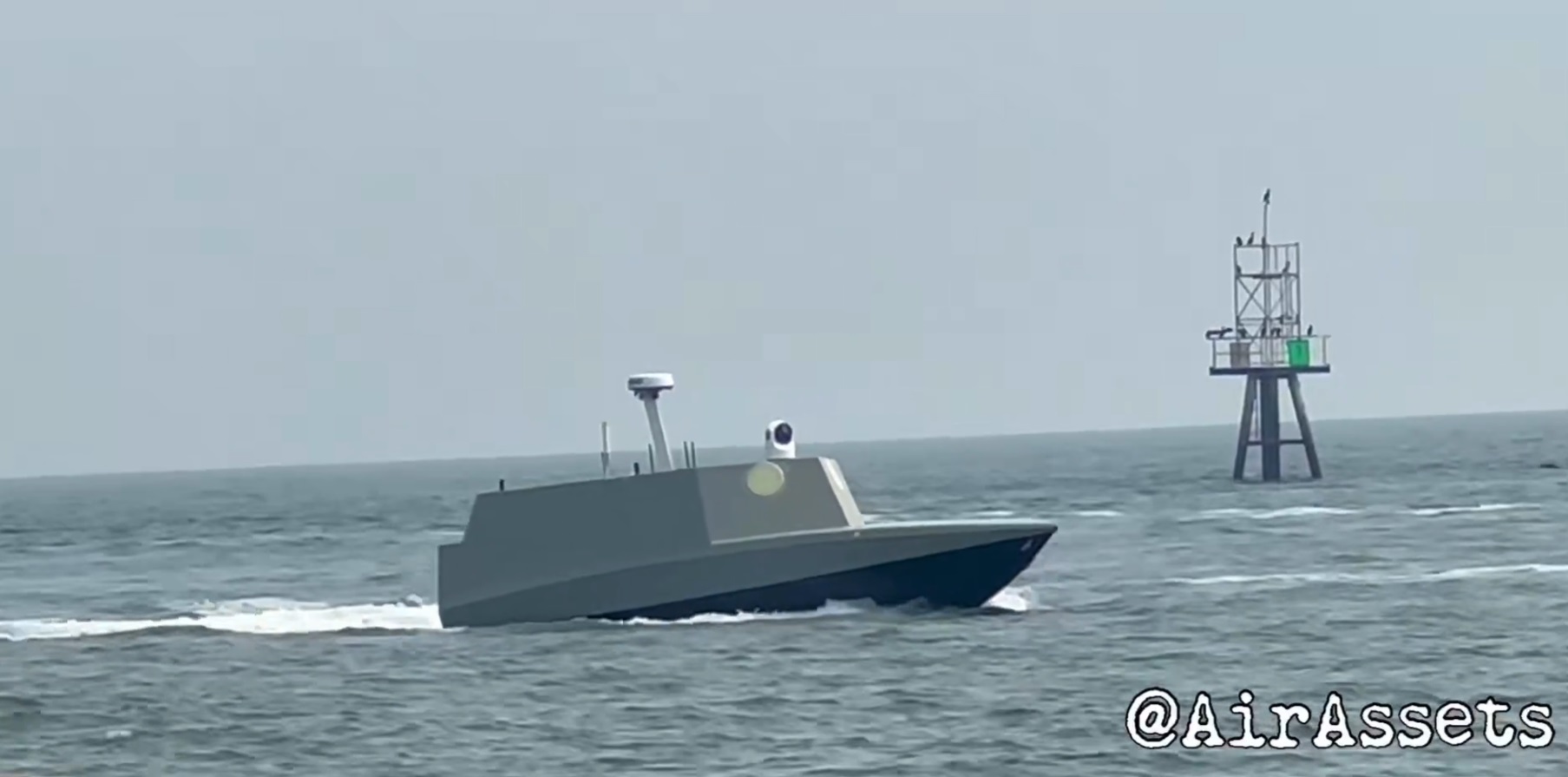
U.S
VIRGINIA BEACH, Va., July 19, 2026 — An unidentified uncrewed surface vessel (USV) was recently spotted departing Naval Amphibious Base Little Creek under the escort of a U.S. Navy security boat. Images shared by the open-source military tracking account Aviation and Naval Assets show a vessel that does not match any publicly known U.S. Navy unmanned surface vessel currently in service. The sighting, reported on July 18 or 19, occurred as the vessel departed the Virginia Beach installation, which serves as the home of the U.S. Navy's Atlantic Fleet amphibious forces and a major center for Naval Special Warfare training. The base's focus on amphibious and special operations makes it a logical location for testing emerging maritime technologies. Vessel Equipped With Multiple Sensors Published images indicate the vessel carries a commercial marine radar similar to Simrad navigation systems used for navigation and collision avoidance. It is also fitted with a rotating electro-optical turret combining daylight and thermal imaging cameras for surveillance and navigation in low-visibility conditions. Hull-mounted mesh networking antennas are visible, allowing unmanned platforms to exchange data directly with one another during coordinated operations. According to Aviation and Naval Assets, the vessel also appears to carry two synthetic aperture radar (SAR) antennas mounted at the rear. SAR technology creates high-resolution images by combining radar data collected while the platform is moving, enabling detailed surface mapping, target identification, and detection of objects in complex maritime environments. At the front, the vessel appears to feature millimeter-wave radar or collision-avoidance sensors to help it safely navigate around other vessels, buoys, and floating debris during autonomous operations. The rear deck includes a structure resembling a landing or deployment platform. While its purpose has not been confirmed, it could support the launch and recovery of smaller payloads such as aerial drones, underwater inspection systems, or other mission equipment. Navy Has Not Identified the Platform The U.S. Navy has not publicly identified the vessel, its manufacturer, or the program it belongs to, which is common during the early stages of prototype testing. The sighting comes as the Navy advances its Medium Unmanned Surface Vessel (MUSV) program. In late May 2026, the service awarded $15 million contracts to Sea Machines, Leidos, Saronic Technologies, Galliano Marine Services, PacMar Technologies, Birdon, and Huntington Ingalls Industries to develop prototype vessels. Sea trials began in June and will continue through October 2026. Each prototype is required to autonomously travel 2,500 nautical miles while carrying a 25-ton payload. The Navy plans to procure 81 MUSVs by fiscal year 2031, although it remains unclear whether the vessel seen at Little Creek is part of the MUSV competition, a Naval Special Warfare project, or another testing program. Autonomous Maritime Programs Continue to Expand The U.S. Navy is increasing the use of uncrewed surface vessels for missions including surveillance, intelligence collection, maritime monitoring, and fleet support. Recent examples include the Saildrone Surveyor, which expanded its role during the RIMPAC exercise, and Textron Systems' TSUNAMI family of USVs, demonstrated during the Navy's Fleet Experimentation (FLEX) event in May 2026 and currently used for missions such as counter-narcotics and search-and-rescue operations. Autonomous naval technology is also advancing internationally. In March 2026, China demonstrated a swarm of L30 uncrewed surface vessels near Zhuhai, highlighting the continued global development of autonomous maritime systems. The U.S. Navy has not released additional information about the unidentified vessel, and its role remains unknown. However, the sighting reflects ongoing efforts to evaluate new autonomous technologies for future naval operations.
Read More → Posted on 2026-07-19 11:14:59
India
NEW DELHI — Chennai-based defence technology company Data Patterns has unveiled the Hawk-I 900, an indigenous Gallium Nitride (GaN)-based Active Electronically Scanned Array (AESA) radar prototype designed for lightweight fighter aircraft. The radar is intended for integration into the Indian Air Force's MiG-29UPG, the Indian Navy's MiG-29K, and future upgrades of the LCA Tejas Mk1. The Hawk-I 900 expands India's indigenous fighter radar portfolio and is being developed as a modern replacement for ageing imported radar systems used on legacy fighter aircraft. Designed for Multi-Role Operations The Hawk-I 900 is an X-band AESA radar equipped with approximately 876 Transmit/Receive Modules (TRMs). According to Data Patterns, it can detect fighter-sized targets at ranges exceeding 150–200 kilometres, while simultaneously tracking and engaging more than 20 targets. The radar supports air-to-air, air-to-surface, and maritime missions and is designed for all-weather operations. It also incorporates a swashplate mechanical repositioner, combining mechanical and electronic steering to provide wider scanning coverage. Data Patterns has positioned the Hawk-I 900 as a plug-and-play replacement for the Russian-origin Zhuk-ME radar used on India's MiG-29UPG and MiG-29K fleets. The older radar has faced reported reliability issues, including overheating, lower mean time between failures (MTBF), and reduced performance in hot and humid maritime conditions. GaN Technology The Hawk-I 900 uses Gallium Nitride (GaN) semiconductor technology instead of the older Gallium Arsenide (GaAs) technology found in many legacy radar systems. GaN technology enables higher power output from each Transmit/Receive Module (TRM), improving detection range and target resolution. It also offers better thermal management, allowing the radar to operate more efficiently under demanding conditions while requiring less cooling. In addition, the radar is designed with Low Probability of Intercept (LPI) capability, advanced frequency hopping, and improved resistance to electronic jamming. As an AESA radar, it also eliminates mechanically moving antenna components, improving reliability and reducing maintenance requirements. Part of a Broader Indigenous Radar Family The Hawk-I 900 has been developed alongside the larger Hawk-I 2700 AESA radar, which features approximately 2,400–2,700 TRMs and a reported detection range of around 350 kilometres. The larger system is being positioned for the Indian Air Force's Su-30MKI Super Sukhoi upgrade programme. Together, the two radars provide indigenous AESA solutions for both lightweight and heavy fighter aircraft, supporting India's efforts to expand domestic defence manufacturing and reduce dependence on imported combat sensors. The Hawk-I 900 is also being considered as a domestic radar option for future LCA Tejas Mk1 upgrades alongside the DRDO Uttam AESA radar. Ground Testing Completed Data Patterns has completed ground testing of the Hawk-I series, including evaluations of signal processing, thermal management, and electromagnetic compatibility. The company has requested aircraft from the Indian armed forces, including a MiG-29K, to begin airborne trials. These flight tests will assess the radar's performance during real-world operations, including high-G manoeuvres. According to industry estimates, an indigenous radar solution could reduce fighter upgrade costs by 30–40% compared with imported alternatives while reducing dependence on foreign spare parts. If flight testing is successful, the Hawk-I 900 could support the continued modernisation of India's MiG-29 fleet and strengthen indigenous capabilities in airborne radar technology.
Read More → Posted on 2026-07-19 11:03:34
Russian Scientists Develop Bacteria-Based ‘Biocement’ Technology to Strengthen Arctic Infrastructure
Space & Technology
MOSCOW — Researchers at Russia's Far Eastern Federal University (FEFU) have developed a bacteria-based soil stabilization technology that converts loose sand into a solid, stone-like material, offering a new approach to building roads, pipelines, and industrial infrastructure in the Russian Arctic. The technology is based on Microbial-Induced Calcite Precipitation (MICP), also known as biocementation, a process that uses naturally occurring bacteria to produce calcium carbonate (calcite)—the mineral found in limestone, chalk, and seashells. The calcite binds sand grains together, creating a strong, load-bearing foundation without using conventional cement-based materials. How the Technology Works Scientists isolate naturally occurring bacteria from coastal soils and combine them with a specially prepared nutrient solution before applying the mixture to sandy ground. As the bacteria consume nutrients, they trigger a biochemical reaction that forms calcium carbonate crystals. These crystals fill the gaps between sand particles and act as a natural cement, binding the grains into a dense, stone-like structure. Researchers say the level of soil strengthening can be adjusted by controlling factors such as bacterial concentration, nutrient supply, and treatment time, allowing the process to be adapted for different engineering needs. Addressing Arctic Construction Challenges The Russian Arctic presents significant construction challenges because repeated freeze-thaw cycles can weaken road foundations and damage pipelines and industrial infrastructure. Conventional asphalt and concrete surfaces often crack, shift, or deform under these conditions. Laboratory tests have shown that soil treated through the MICP process gains higher mechanical strength and improved resistance to water erosion, creating a more stable foundation for infrastructure. The method could be used beneath roads, railways, pipelines, storage facilities, industrial platforms, and other structures built on sandy ground. Environmental Benefits Researchers say the biological approach offers environmental advantages over traditional soil stabilization methods. Unlike conventional cement production and some chemical grouting techniques, the process uses naturally occurring microorganisms and does not produce harmful by-products during soil strengthening. The technology may also help clean contaminated sites. According to the researchers, the bacteria can bind heavy metals and radioactive elements by converting them into water-insoluble mineral forms, helping reduce the movement of pollutants through soil and groundwater. Potential Applications The technology could support infrastructure projects in remote Arctic regions, including oil and gas operations, by reinforcing foundations for wells, pipelines, processing facilities, and transport infrastructure. Using locally available sandy soils may also reduce the need to transport large volumes of conventional construction materials to isolated locations. MICP has been studied internationally for applications such as soil stabilization, erosion control, foundation improvement, and concrete crack repair. The FEFU research focuses on adapting the technology for Arctic conditions, where stable ground is critical for long-term infrastructure performance. Scientists continue laboratory and field testing to evaluate the long-term durability of the treated soil under Arctic conditions. If larger-scale trials are successful, the technology could provide a more sustainable option for strengthening infrastructure in northern regions.
Read More → Posted on 2026-07-19 10:52:56
World
MIKHAILOVSK, Russia — Ukrainian Defense Forces launched coordinated drone strikes against three oil storage facilities in Russia's Stavropol Krai during the night of July 18–19, targeting fuel infrastructure located about 600 kilometers from the Ukrainian border, according to Ukrainian and Russian reports. The operation was carried out by the Security Service of Ukraine (SBU) and focused on oil depots in and around the city of Mikhailovsk. According to the independent Russian Telegram channel Astra, local residents reported hearing gunfire and drones flying overhead before a large explosion and a fire broke out at one of the targeted facilities. Photos and videos shared online showed flames rising from the industrial area. Stavropol Krai Governor Vladimir Vladimirov confirmed that emergency services responded to the incident. He said firefighters were dealing with two separate fire hotspots in the industrial zone of the Vyazniki settlement, along with a third fire in the northern part of the city of Stavropol. He added that flammable materials were detonating at the affected industrial facilities as crews worked to contain the fires. Open-source intelligence (OSINT) analysis conducted by Astra, using publicly available photos, videos, and location data, identified the affected sites as several major fuel storage depots. One of the facilities in the village of Vyazniki is owned by Russia's state-controlled oil company Rosneft. A second fire was reported at an industrial site located at 1 Promyslovaya Street, where the companies Korona and MK-Nefteprodukt operate. The analysis also indicated that the Stavropol oil depot at 19 Kolomiytseva Street, operated by LUKOIL-Yugnefteprodukt LLC, was among the facilities hit. According to publicly available information, the LUKOIL-operated depot is a major fuel logistics hub. It contains 42 storage tanks with a combined capacity of approximately 57,600 cubic meters and is used for the receipt, storage, and distribution of automotive gasoline, diesel fuel, and lubricants. The latest strike marks the third reported Ukrainian drone attack on the LUKOIL-Yugnefteprodukt facility within the past two weeks. The depot was first targeted on July 9, followed by another strike on the night of July 13, which also caused a fire at the site. The SBU has previously stated that repeated attacks on Russian fuel infrastructure are intended to disrupt fuel supplies supporting Russian military operations and reduce oil revenues that finance the country's war effort. In a separate incident reported by the Ukrainian military outlet Militarnyi, Ukrainian strike drones also hit an oil depot in Noginsk, in Russia's Moscow region. The facility reportedly contains 24 storage tanks with a combined storage capacity of approximately 11,500 cubic meters. The attacks on fuel infrastructure coincided with Ukrainian maritime operations in the Black Sea. On the same day, the SBU said its "Mamai" maritime drone struck the Avero, a Suezmax-class tanker that Ukraine says is part of Russia's so-called "shadow fleet." According to the SBU, the vessel was transporting crude oil to countries including China and India in violation of international oil embargo restrictions. Russian authorities confirmed the fires and the deployment of emergency response teams but did not provide detailed information on the extent of the damage or the operational impact of the strikes. Firefighting operations were continuing at the affected facilities.
Read More → Posted on 2026-07-19 10:41:44Search
Top Trending in 24 Hours
-
 Chinese Hackers Impersonate U.S. AI Experts to Target Policy Specialists
-
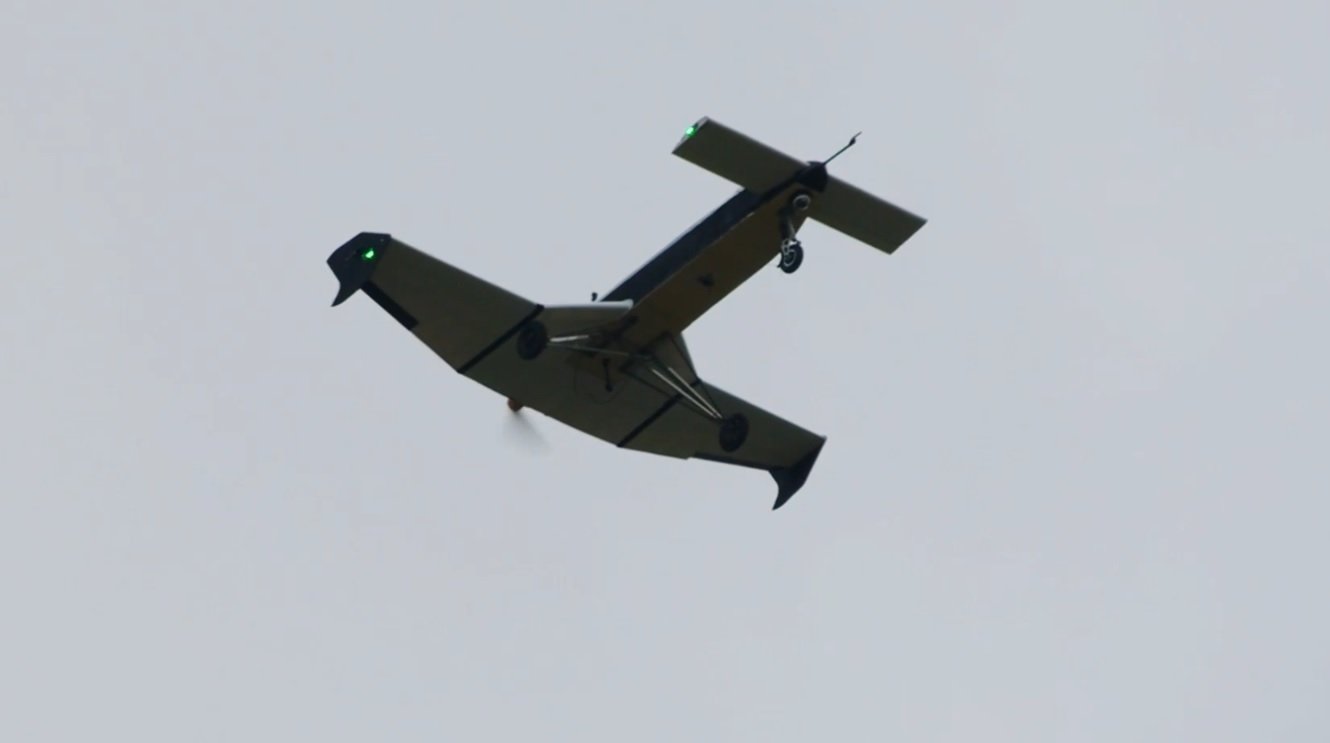 Ukraine’s SkyFall Unveils Thor Hammer Strike UAV With Up to 600-Km Range
-
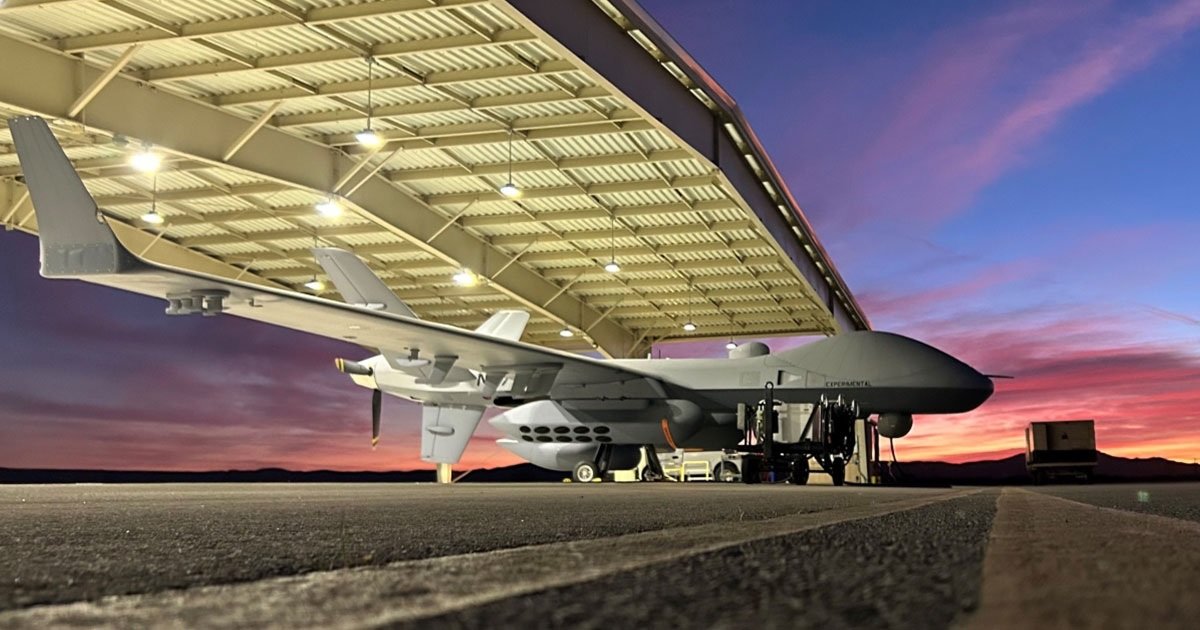 U.S. Navy Evaluates MQ-9B SeaGuardian as Uncrewed Force Multiplier at Whidbey Island
-
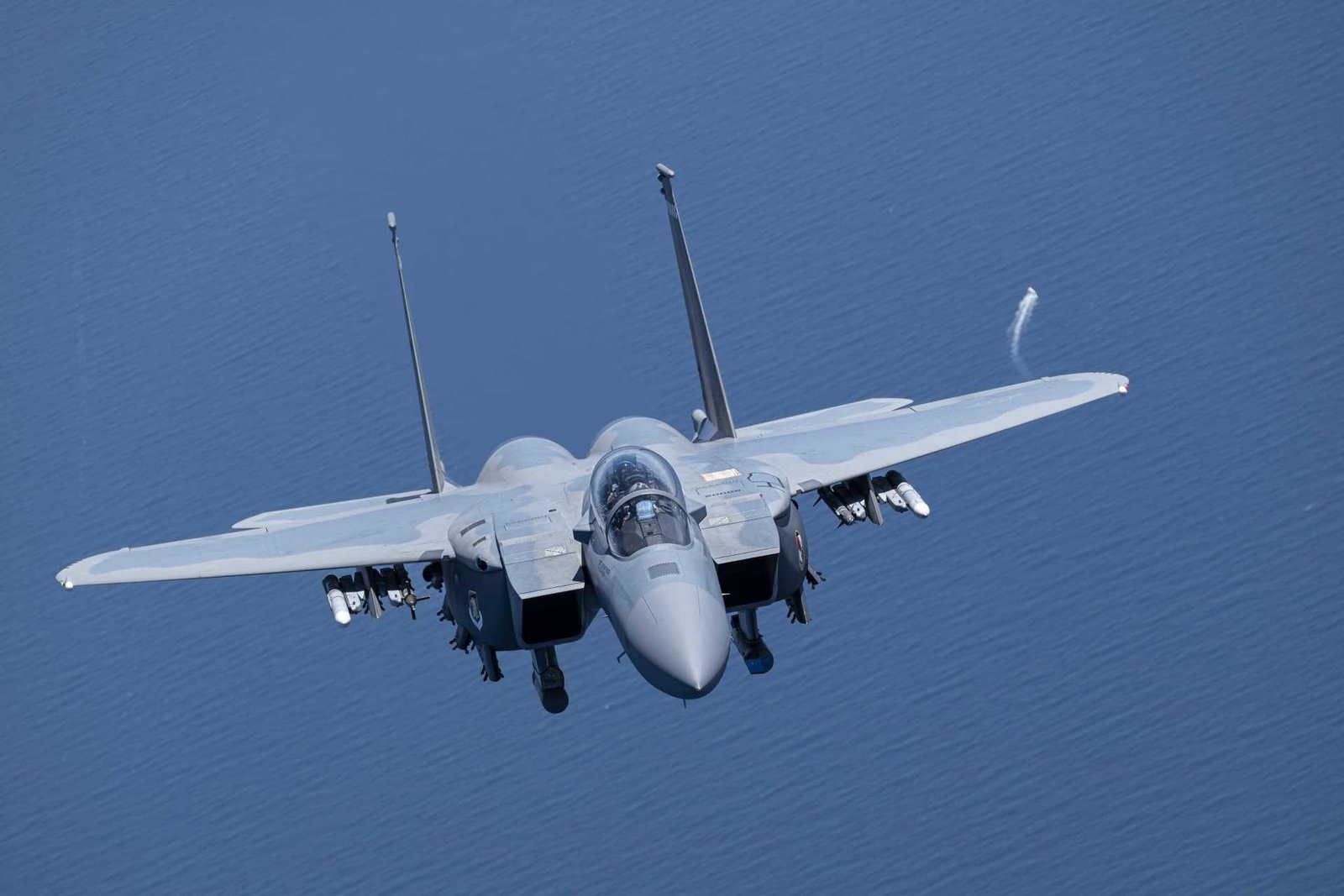 U.S. Air Force Seeks Missile Warning System for F-15EX Fleet
-
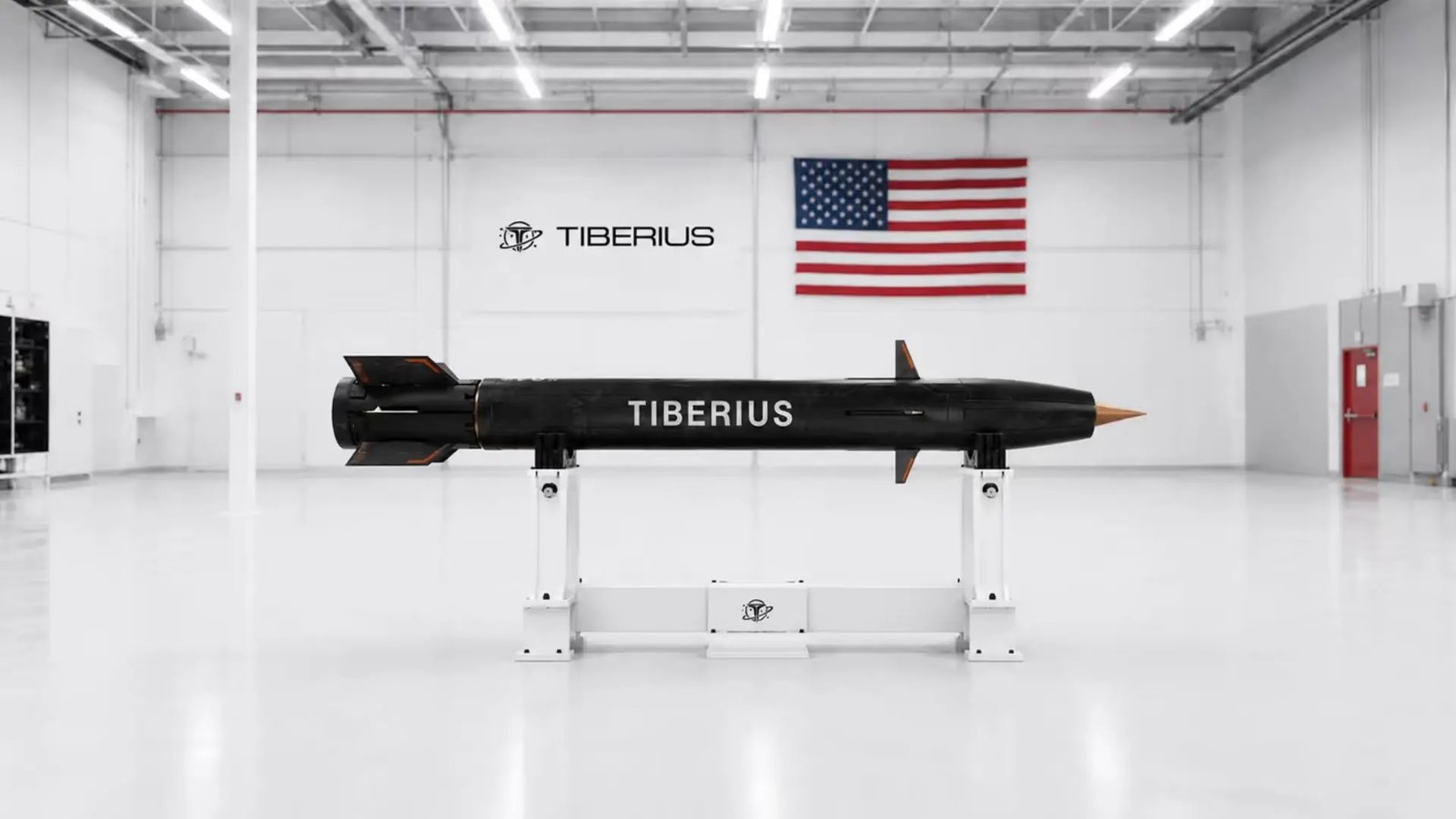 Tiberius Aerospace Secures $500 Million Contract for Sceptre Ramjet Artillery Munition
-
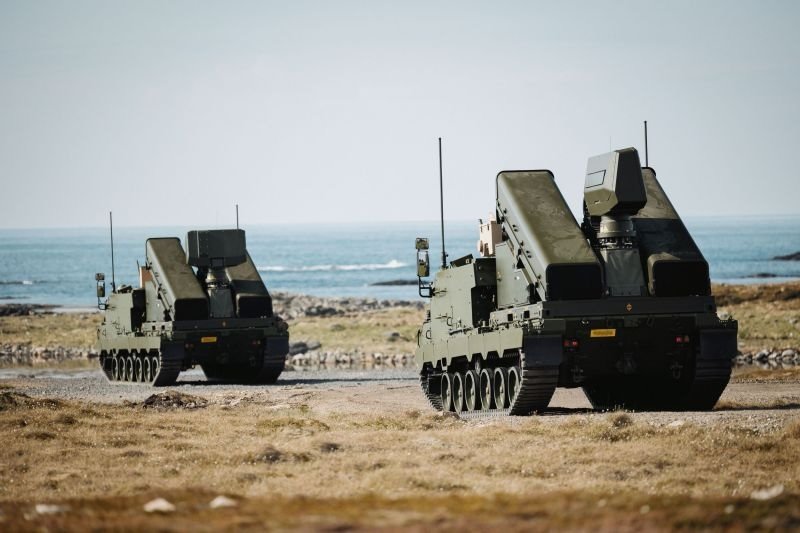 Netherlands Orders More NOMADS and NASAMS in NOK 1.5 Billion Kongsberg Deal
-
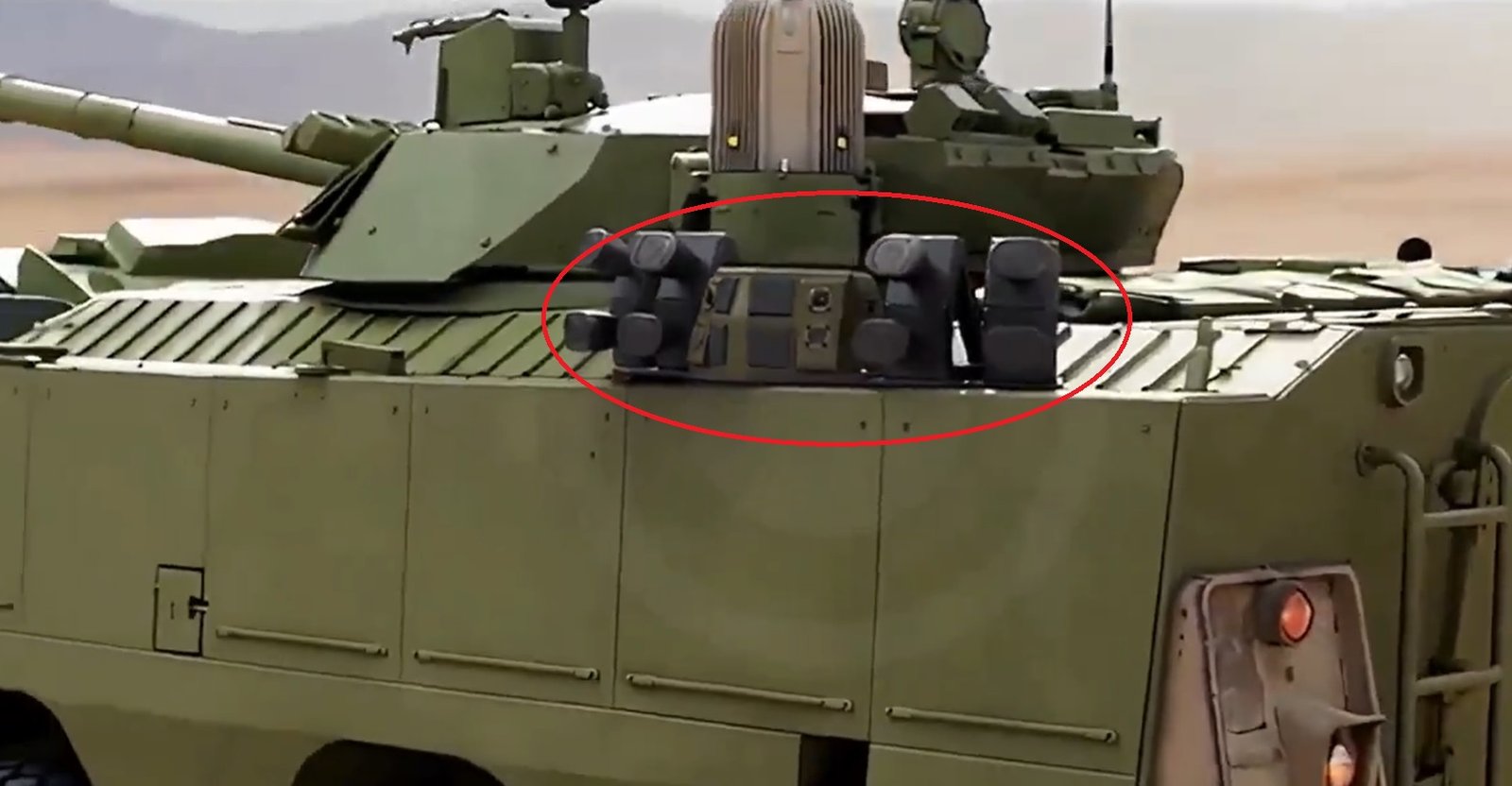 ThirdEye Systems Unveils IronWeb FPV Drone Protection System for Armored Vehicles at ADEX 2026
-
 NASA Awards Modulate Space $38 Million Contract to Develop Lunar 5G and Wi-Fi Network
Top Trending in 4 Days
-
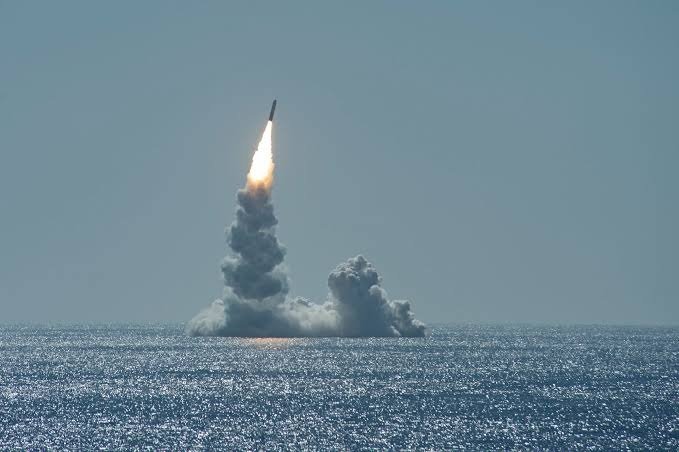 UK Offers Nuclear Deterrence for Its Northern European Defence Partners
-
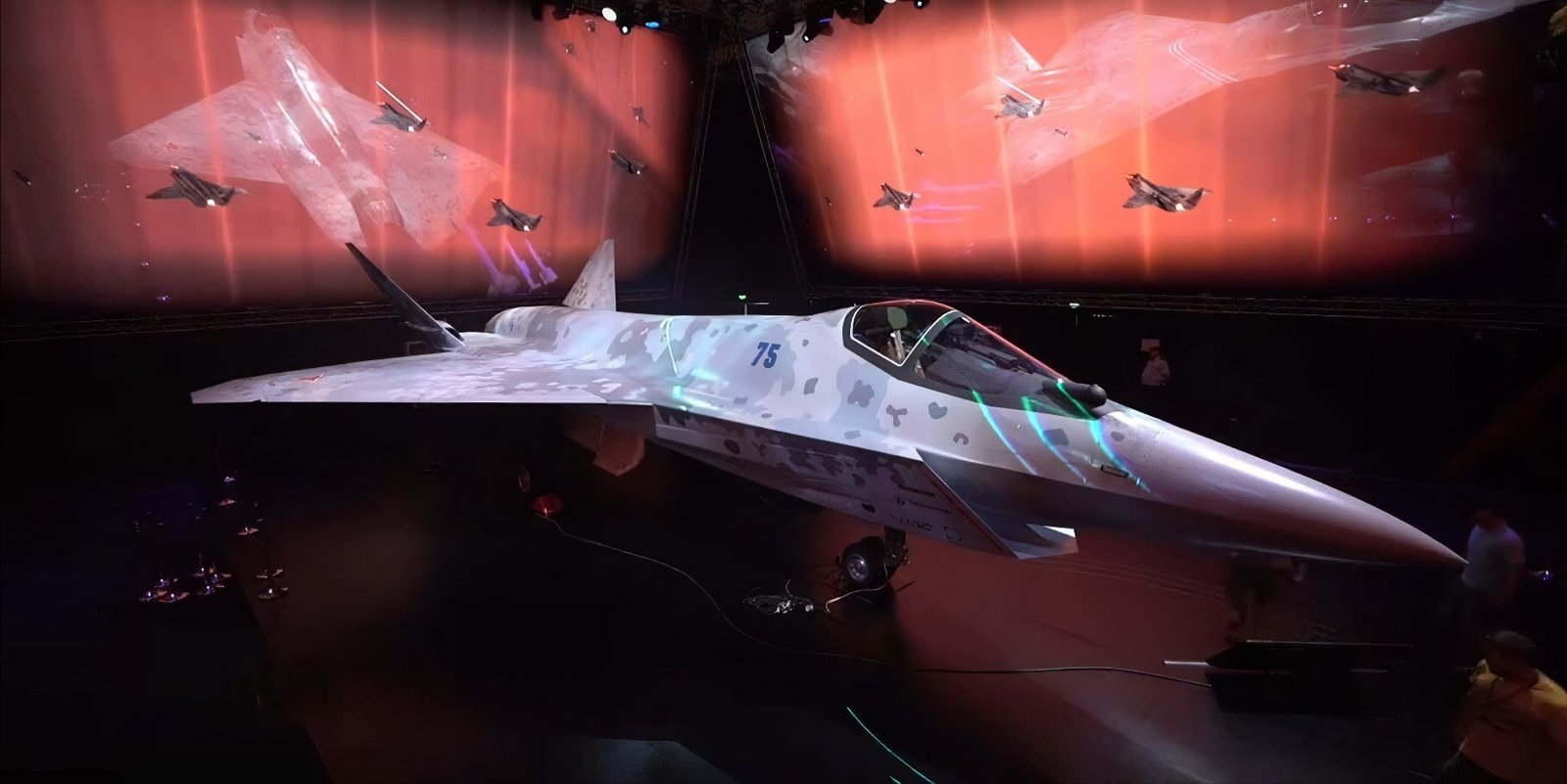 Russia Says Su-75 Checkmate Could Cost Just $25–30 Million, Flight-Hour Costs 6 Times Lower Than F-35
-
 Eight U.S. Marines Injured in Iranian Missile Strike on U.S Vessel in Strait of Hormuz
-
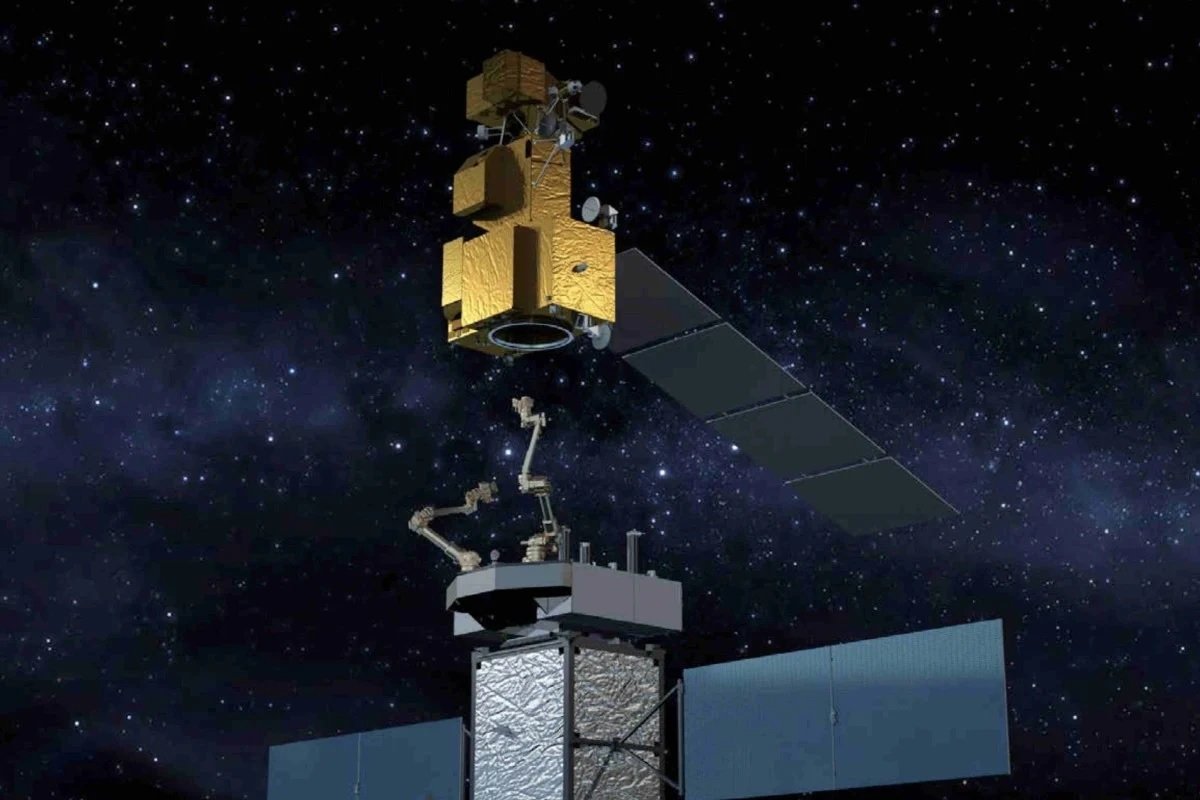 China Reports First High-Orbit Refueling of BeiDou Satellite, but Tracking Data Raise Questions
-
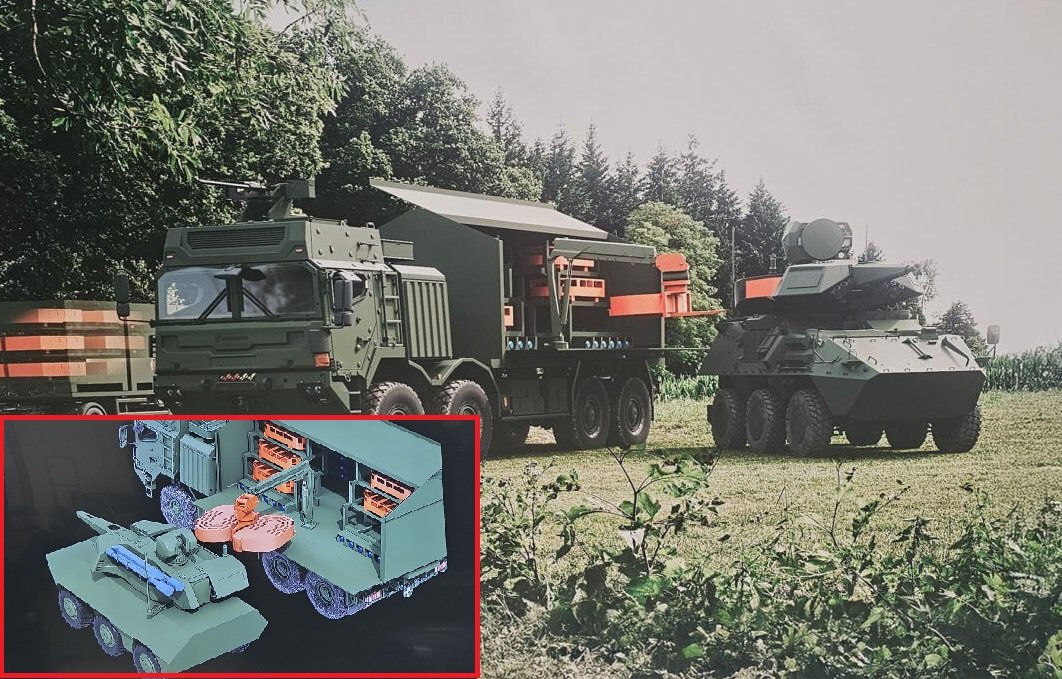 Rheinmetall Develops Automated Reloader for Austrian Skyranger Air Defense System
-
 U.S. Department of War Awards Raytheon Up to $20.7 Billion Multi-Year Contract for AMRAAM Missiles
-
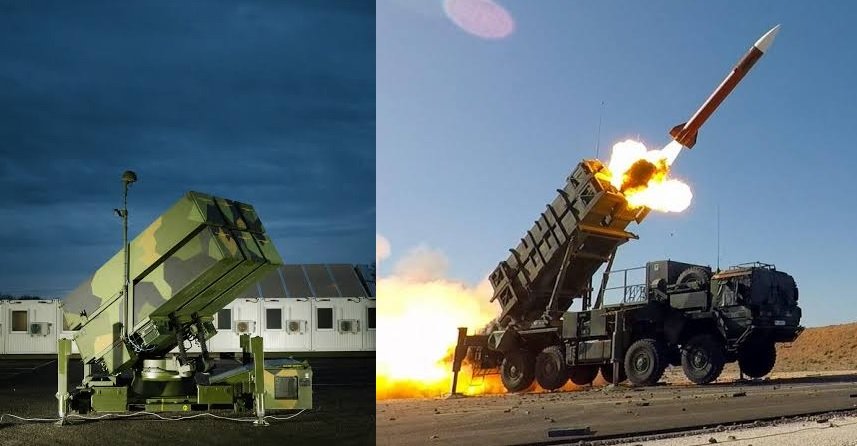 Ukraine Receives New NASAMS Air Defense System and Interceptor Missiles From U.S. and Norway
-
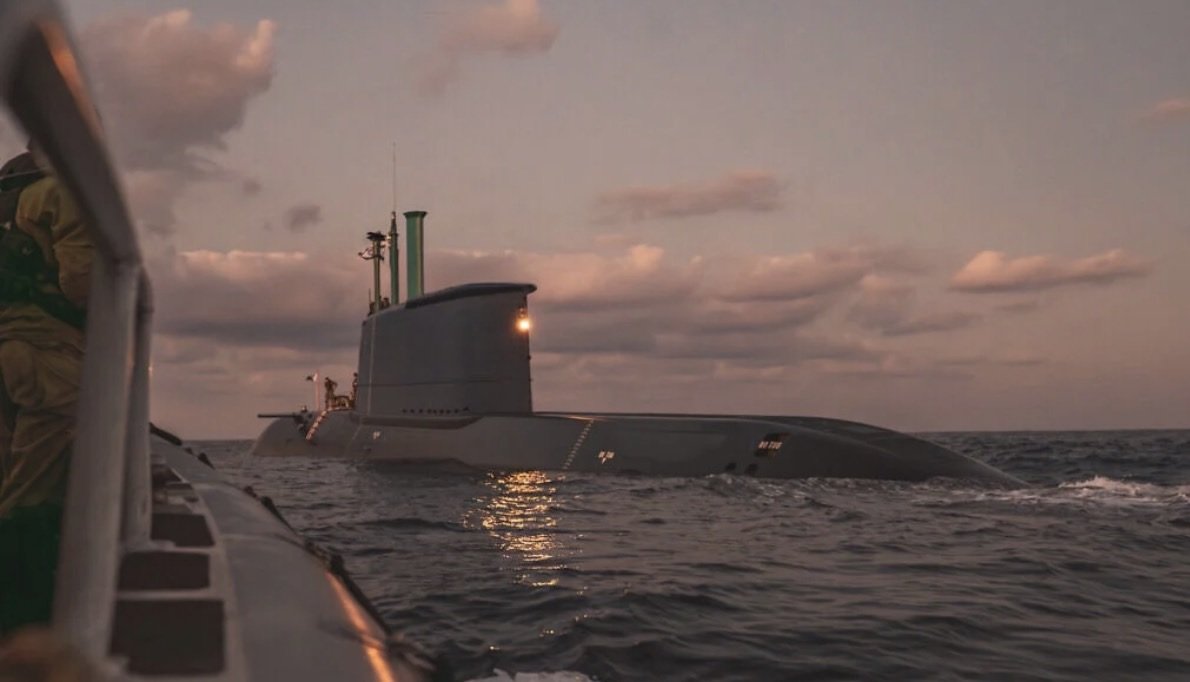 Israel’s Largest Submarine, INS Drakon, Arrives in Haifa After 23-Day Voyage From Germany
