In a development with global reverberations, the Pentagon has reportedly informed the White House that transferring Tomahawk cruise missiles to Ukraine poses no operational risk, according to multiple sources cited by CNN. The report, published on October 31, 2025, marks a potentially pivotal step in Washington’s long-running debate over arming Kyiv with true deep-strike capabilities — and, by extension, redefining the scope of U.S. involvement in the ongoing war with Russia.
Pentagon’s Assessment and Political Crossroads
According to the report, the Joint Chiefs of Staff have concluded that U.S. stockpiles would not be jeopardized by a limited transfer of Tomahawks to Ukraine. The decision now rests entirely on President Donald Trump, who has previously cautioned against “giving away” systems that the U.S. “may need later.” This assessment was reportedly finalized shortly before Trump’s October 17 meeting with President Volodymyr Zelensky, where the Ukrainian leader once again pressed for long-range strike weapons capable of reaching deep into Russian territory.
For months, Ukraine has argued that only a weapon with the reach of the Tomahawk — roughly 1,000 miles (1,600 km in Block V configuration) — can effectively threaten Russia’s key logistical hubs, refineries, and command centers. Current Western systems in Ukraine’s arsenal, such as the ATACMS and Storm Shadow, fall short of that range, limiting Kyiv’s ability to disrupt Russia’s war economy.
While the Pentagon’s green light does not automatically mean a transfer will occur, it removes one of the last technical obstacles standing between Ukraine and access to the most advanced Western cruise missiles ever considered for a non-NATO country.
Tomahawk’s Capabilities and Possible Deployment
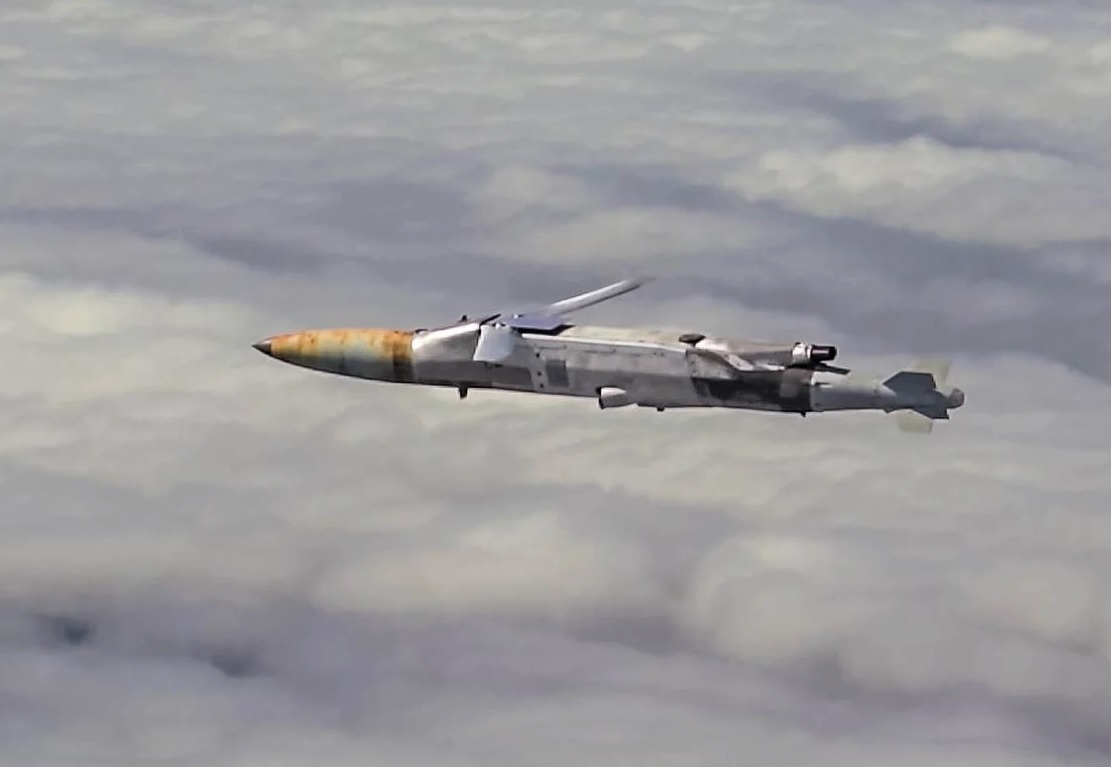
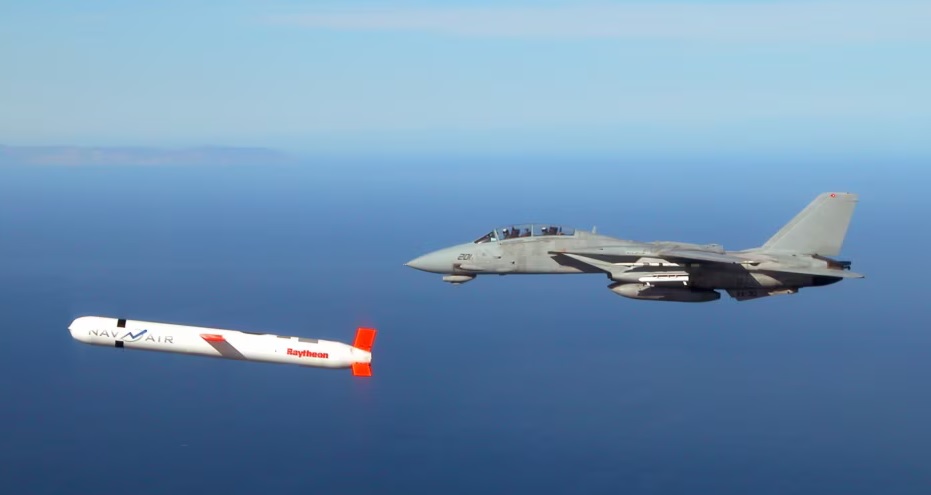
The Tomahawk cruise missile, built by Raytheon, is a precision-guided, long-range strike weapon capable of carrying either conventional or nuclear warheads. Traditionally launched from U.S. Navy ships and submarines, the Tomahawk has proven its reliability across multiple U.S. campaigns, from Iraq to Syria. However, recent American experiments have shown that the missile can be effectively launched from land-based platforms.
At the AUSA 2025 defense exhibition, Oshkosh Defense unveiled the X-MAV, a mobile launcher capable of firing four Tomahawks from an off-road chassis — a system that could easily be adapted for Ukrainian use. Additionally, the U.S. Army’s Typhon system, already deployed in Japan and Australia, uses containerized Mk 41–derived launchers for Tomahawks, demonstrating operational feasibility without naval assets.
This growing ecosystem of mobile launchers gives Washington flexibility to supply Ukraine without directly transferring sensitive naval systems — an option politically easier to justify and logistically faster to implement.
Challenges Ahead for Ukraine
Even if approval is granted, several layers of preparation remain. Ukrainian forces would require extensive training in mission planning, integration, and targeting coordination. U.S. officials note that Washington might not send dedicated launchers, forcing Ukraine to either develop its own platform or adapt existing ones, as it did with British Storm Shadow missiles on ageing Soviet-era aircraft.
Analysts and Western officials say Ukraine would likely need about one year of sustained training to bring crews and support personnel to operational proficiency with Tomahawk systems — covering launcher operation, mission planning, maintenance, secure communications, and integration into existing command-and-control and deconfliction frameworks.
Nevertheless, Kyiv appears to be preparing. President Zelensky recently stated that Ukraine aims to “expand its long-range strike portfolio before the year’s end,” suggesting that intelligence and targeting frameworks are already being adapted for potential Tomahawk integration.
Strategic Consequences — From Moscow to Caracas
Should Tomahawks enter Ukrainian service, the implications would be profound. A 1,000-mile missile fired from western Ukraine could reach Moscow, St. Petersburg, or critical Russian energy infrastructure deep inside the country — a scenario that Russian President Vladimir Putin warned would cross a red line.
Moscow has already hinted at retaliatory measures, not only in Eastern Europe but across regions where it seeks to counter U.S. influence. One such front is Venezuela, where President Nicolás Maduro has reportedly requested urgent Russian military support, including missile systems, radar overhauls, and aircraft maintenance, in direct response to increasing U.S. military activity near Venezuela’s coast.
If the U.S. arms Ukraine with Tomahawks, analysts believe Russia may accelerate weapons transfers to Venezuela, effectively creating a strategic counterbalance in the Western Hemisphere. Moscow could view the Caribbean as an ideal location to project deterrence against Washington — much like the U.S. uses Eastern Europe to pressure Russia.
This evolving triangle — Ukraine, Russia, and Venezuela — illustrates how one regional conflict’s escalation can ripple across the globe, potentially opening a new front in the U.S.-Russia confrontation.
Europe’s Dilemma and the Global Balance
In Europe, the Pentagon’s risk-free assessment removes a key justification for restraint. Several European governments now see a U.S. refusal to arm Ukraine with longer-range weapons as a political, not logistical, choice. Many argue that Tomahawks would “rebalance” the battlefield, especially given Russia’s use of 9M729 ground-launched cruise missiles, which Kyiv claims have already struck Ukrainian cities.
However, this step would also compel NATO states to enhance air defense coverage across the continent, as Russia could respond by targeting potential Tomahawk storage or launch sites near NATO borders. The fear of escalation remains, but so does the recognition that deterrence is a two-way street.
The Pentagon’s assessment may appear technical, but its strategic significance is enormous. It effectively declares that the United States can arm Ukraine with one of its most formidable long-range strike systems without weakening its own readiness — shifting the question from “can we?” to “should we?”
If President Trump authorizes the transfer, Ukraine will gain a weapon capable of reshaping the battlefield and testing Russia’s defensive depth. If he refuses, it will signal caution in Washington — but also invite Moscow to expand its global footprint, possibly through partners like Venezuela, in ways unseen since the Cold War.
In either case, the era of geographical containment is fading fast. What began as a war for Donbas may now determine the next balance of power between the U.S., Russia, and their respective allies — from Kyiv to Caracas.
——— End of Article ———