World
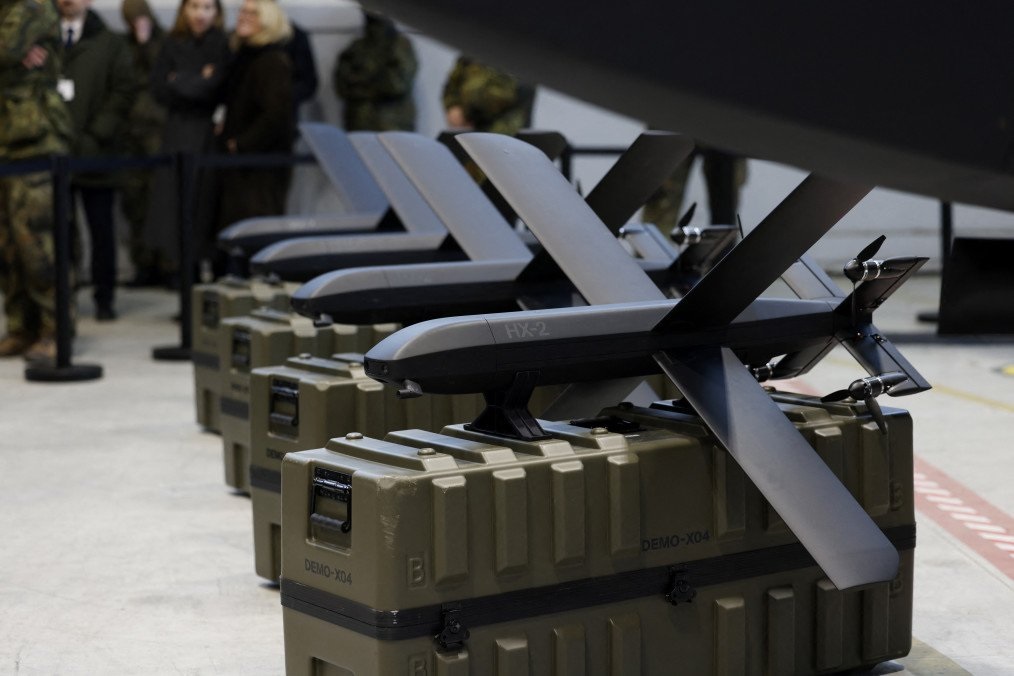
MARTINSBURG, West Virginia — European defense technology company Helsing has selected Martinsburg, West Virginia, as the location for its first manufacturing facility in the United States. The company will invest $50 million in the new plant, which will manufacture the HX-2 artificial intelligence-enabled strike drone as part of Helsing's global network of Resilience Factories focused on high-volume military production. The facility will be built in Berkeley County and marks a significant expansion of the Munich-based company's presence in the U.S. defense market. The announcement was made in coordination with West Virginia Governor Patrick Morrisey, who said the state was selected after a competitive nationwide search. Governor Morrisey said the investment reflects West Virginia's skilled workforce, dependable infrastructure, and business-friendly environment. He added that the state's ability to move projects forward quickly played an important role in Helsing's decision. The project is expected to create at least 60 full-time jobs, with an average annual salary of $125,000, making it one of the highest-paying manufacturing investments announced in the region in recent years. To support the workforce needed for the facility, the state will partner with Blue Ridge Community and Technical College and West Virginia Advance to develop customized training programs tailored to Helsing's manufacturing requirements. Once fully operational, the Martinsburg plant is expected to produce more than 2,000 HX-2 drones per month. Helsing plans to achieve initial operating capability by November, with full-rate production expected within one year. The HX-2 is a software-defined loitering munition designed for modern battlefield operations. The drone has an operational range of up to 100 kilometers (62 miles) and can reach speeds of 220 kilometers per hour. It weighs 12 kilograms and can carry a payload of up to 4.5 kilograms, including armor-penetrating shaped charges designed to engage armored vehicles and artillery. One of the system's key features is its onboard artificial intelligence. The HX-2 can navigate using visual landmarks and continue missions even when GPS signals and continuous data links are disrupted by electronic warfare, allowing it to operate in contested environments. The drone has already been deployed in combat. Helsing has delivered thousands of HX-2 drones to Ukrainian forces, where the system has been used on the front lines. The HX-2 has also been evaluated by the U.S. Army during the Project Flytrap exercise in Lithuania, where allied forces tested advanced unmanned systems. The new manufacturing facility supports broader U.S. efforts to strengthen the country's defense industrial base by expanding domestic production capacity for advanced military systems. Establishing production within the United States is expected to improve supply chain resilience while supporting future requirements of U.S. and allied armed forces. Dr. Jennifer McArdle, General Manager of Helsing US, said modern deterrence depends not only on advanced technology but also on the ability to manufacture it rapidly and at scale. "Modern deterrence requires advanced technology and the ability to produce it at speed, at scale, and in sustained volumes," McArdle said. "West Virginia stood out for its skilled workforce, speed to build, manufacturing heritage, and commitment to strengthening the U.S. industrial base. We are excited to build in Appalachia." The West Virginia announcement comes during a period of rapid growth for Helsing. One day before announcing the new U.S. facility, the company revealed it had secured $1.8 billion in new funding, increasing its total valuation to $18 billion and making it one of Europe's largest defense technology startups. The Martinsburg facility represents Helsing's first manufacturing operation in the United States and expands the company's production network as demand for AI-enabled defense technologies and unmanned systems continues to grow among NATO allies and partner nations. Source : helsing.ai
Read More → Posted on 2026-07-14 15:51:51
India
New Delhi — India has launched a ₹15,000 crore programme to develop indigenous stratospheric airships aimed at strengthening the country's border surveillance and intelligence capabilities. The project, officially known as the Airship-Based High Altitude Pseudo Satellite (AS-HAPS) programme, is being led by the Directorate of Operations (Remote) of the Indian Air Force. The initiative focuses on developing unmanned, lighter-than-air platforms capable of operating in the stratosphere at altitudes between 20 and 30 kilometres (over 65,000 feet). Flying well above commercial air traffic and weather systems, these airships are designed to remain airborne for days or even months, providing continuous surveillance over designated areas. Equipped with Advanced Surveillance Systems The AS-HAPS platforms will carry a range of advanced military payloads, including Synthetic Aperture Radar (SAR), Electronic Intelligence (ELINT), and Signals Intelligence (SIGINT) systems. They will also be fitted with electro-optical and thermal imaging sensors. These systems will enable persistent monitoring of strategic border regions, enemy airbases, and military movements from distances of up to 550 kilometres. Unlike conventional reconnaissance aircraft, which require frequent sorties, the airships are intended to maintain continuous coverage for extended periods. In addition to surveillance, the platforms are also expected to support long-range communications and intelligence-gathering missions through domestically developed sensor technologies. Approved Under Make-I Procurement Framework The Defence Acquisition Council (DAC), chaired by Defence Minister Rajnath Singh, approved the AS-HAPS programme in February 2026. The project is being implemented under the Ministry of Defence's Make-I procurement category, under which the government can fund up to 70 percent of research, development, and prototype costs for selected private industry partners. The Ministry of Defence has invited several Indian aerospace companies to participate in the programme and plans to select at least two development partners based on their technical capabilities and financial strength. The overall ₹15,000 crore allocation covers prototype development as well as the future procurement of multiple operational airship systems for the armed forces. Bridging the Gap Between Drones and Satellites Stratospheric airships are designed to operate between conventional high-altitude drones and satellites. While most high-altitude drones typically fly at around 12 kilometres, low-Earth orbit satellites operate between 500 and 2,000 kilometres above the Earth. Unlike satellites, which follow fixed orbital paths and revisit specific locations only after certain intervals, stratospheric airships can be repositioned and remain stationed over an area of interest for long durations. This allows them to deliver persistent, real-time surveillance and intelligence. They also offer lower development, launch, and maintenance costs compared with traditional satellites while providing greater operational flexibility. Built on DRDO's Earlier Demonstration The AS-HAPS programme builds on technology already demonstrated by the Defence Research and Development Organisation (DRDO). In May 2025, DRDO successfully conducted the maiden flight trial of its Stratospheric Airship Platform at the Sheopur test facility in Madhya Pradesh. Developed by the Aerial Delivery Research and Development Establishment (ADRDE) in Agra, the airship reached an altitude of around 17 kilometres during a 62-minute flight while carrying an instrumental payload. During the trial, engineers collected data from onboard sensors, evaluated envelope pressure control systems, and tested emergency deflation procedures before safely recovering the platform. The demonstration provided the technical foundation for scaling the technology into operational military-grade systems under the AS-HAPS programme. Strengthening Indigenous Surveillance Capability The AS-HAPS programme forms part of India's broader effort to expand indigenous defence technologies and strengthen long-endurance intelligence, surveillance, and reconnaissance (ISR) capabilities. By combining persistent high-altitude operations with advanced radar, intelligence, and imaging systems, the programme is expected to provide continuous situational awareness along sensitive borders while reducing reliance on conventional surveillance platforms and complementing existing satellite-based monitoring capabilities. Source : outlookbusiness
Read More → Posted on 2026-07-14 15:40:51
World
MOSCOW/TEHRAN — A Russian Tu-214PU airborne command post aircraft made a brief visit to Tehran on July 13, just hours before the United States launched a large-scale military operation against Iranian targets, according to publicly available flight-tracking data. The purpose of the Russian aircraft's visit has not been officially disclosed by either Moscow or Tehran. Russian Tu-214PU Arrives in Tehran Flight tracking data from AirNav Radar and Flightradar24 showed that the Tu-214PU, bearing registration RA-64531 and operating under the callsign RSD420, departed Moscow's Vnukovo Airport and arrived at Imam Khomeini International Airport in Tehran at approximately 07:35 a.m. Kyiv time on July 13. The aircraft remained in the Iranian capital for around 12 hours before departing at 07:08 p.m. Kyiv time. It then continued east and landed at Beijing Capital International Airport at 02:25 a.m. Kyiv time on July 14. The flight was visible through publicly available ADS-B flight tracking systems, with the aircraft traveling over the Caspian Sea before reaching Tehran. Neither Russian nor Iranian authorities have announced the purpose of the visit. Specialized Airborne Command Post The Tu-214PU is a specialized version of the Tu-214 aircraft designed to serve as an airborne command-and-control platform for the Russian government. It is operated by the Rossiya Special Flight Squadron, which transports senior Russian government officials and operates aircraft configured for state missions. Built at the S. P. Gorbunov Kazan Aviation Plant, the aircraft completed its first flight on December 28, 2018, and entered service with the Rossiya fleet during the summer of 2019. The aircraft is equipped with secure communication systems, satellite communication antennas, relay equipment, encryption units, electromagnetic pulse (EMP) protection, and anti-jamming capabilities. These systems allow government and military leaders to maintain secure communications even if ground-based infrastructure becomes unavailable during emergencies. Although it is often informally referred to as a "doomsday plane", the Tu-214PU is primarily intended to provide secure command and communication capabilities. Unlike Russia's Il-80 airborne command aircraft, it is not considered the country's primary airborne nuclear command platform. U.S. Launches Retaliatory Strikes Across Iran The Russian aircraft's departure from Tehran came only hours before the U.S. Central Command (CENTCOM) began military strikes against Iranian targets. According to CENTCOM, the operation started at approximately 11:45 p.m. Kyiv time on July 13 (about 10:15 p.m. Eastern Time) and continued for more than five hours, ending around 05:15 a.m. Kyiv time on July 14. The United States said it used precision-guided munitions to strike military facilities in Bushehr, Chabahar, Jask, Konarak, Abu Musa, and Bandar Abbas. CENTCOM stated that the operation targeted coastal defense systems, missile launchers, unmanned aerial vehicle (UAV) facilities, and maritime assets. According to the U.S. military, the objective was to reduce Iran's ability to carry out further attacks against commercial shipping operating through the region's strategic sea lanes. The command also said that more than 50,000 U.S. service members remain on combat readiness across the Middle East. Strait of Hormuz Attack Triggered Escalation The latest military escalation followed an attack on commercial shipping in the Strait of Hormuz. On July 13, the United Arab Emirates Ministry of Defence reported that Iranian cruise missiles struck two Emirati oil tankers, Mombasa and Al Bahiyah, while they were transiting the southern shipping lane through Omani territorial waters. The missile strikes caused fires aboard both vessels. One Indian crew member aboard the Mombasa was killed, while eight crew members were injured, including six Indian nationals and two Ukrainian nationals. Officials said four of the injured suffered serious wounds. The Islamic Revolutionary Guard Corps (IRGC) claimed responsibility for the attack. Iranian military officials said the tankers had allegedly disabled their navigation systems, ignored repeated warnings, and entered what Iran described as a prohibited area. Russia-Iran Defense Cooperation The Tehran visit also comes amid expanding Russia-Iran defense cooperation. The two countries signed a 20-year Comprehensive Strategic Partnership Treaty in January 2025, strengthening cooperation across defense, security, and other strategic sectors. Open-source flight records indicate that the same Tu-214PU aircraft also made a visit to Iran earlier in 2026 during another period of heightened regional tensions. Neither Moscow nor Tehran has confirmed whether the July 13 flight was connected to the subsequent U.S. military operation. Source : ndtv / airnavradar
Read More → Posted on 2026-07-14 15:27:48
World
NASHUA, N.H. — BAE Systems has been awarded a contract by Boeing to provide its AN/ALQ-250 Eagle Passive Active Warning Survivability System (EPAWSS) for the Republic of Korea Air Force (ROKAF) fleet of 59 F-15K Slam Eagle fighter aircraft. The contract supports South Korea's long-term effort to modernize its F-15K fleet and improve its ability to operate against current and emerging air defense threats. The agreement is part of a Foreign Military Sales (FMS) program managed through South Korea's Defense Acquisition Program Administration (DAPA). The broader modernization project is expected to keep the F-15K fleet operational through 2037 while improving interoperability with U.S. and allied forces. EPAWSS to Strengthen Electronic Warfare Capabilities The AN/ALQ-250 EPAWSS is an all-digital electronic warfare suite designed to replace the F-15K's legacy radar warning receivers. The system provides pilots with 360-degree threat awareness, allowing them to detect, identify, and respond to hostile radar emissions and missile launches from any direction. EPAWSS automatically manages electronic countermeasures, including the deployment of defensive systems such as chaff and flares, reducing pilot workload while improving aircraft survivability in electronically contested environments. The system is designed to operate effectively in dense electromagnetic environments where multiple radar and electronic signals are present. Part of a Broader F-15K Modernization Program The electronic warfare upgrade is one element of South Korea's larger approximately $3.1 billion F-15K modernization program, which is scheduled to continue through 2037. Earlier in 2026, Boeing received a U.S. contract worth up to $2.8 billion to lead the design and integration of avionics and mission system upgrades for the aircraft. The first upgraded aircraft, commonly referred to as the F-15K+, is expected to be delivered by late 2028. In addition to EPAWSS, the modernization package includes: AN/APG-82(V)1 Active Electronically Scanned Array (AESA) radar New mission computers Common Missile Warning System (CMWS) Updated avionics and mission systems These upgrades are intended to improve target detection, tracking, and overall mission effectiveness while enabling closer operational compatibility with South Korea's F-35A stealth fighter fleet. The upgraded F-15Ks are expected to continue performing long-range strike missions and carrying large weapon payloads alongside newer aircraft. Proven System Already in U.S. Service Rather than adopting a new or experimental system, South Korea is procuring an electronic warfare suite that has already completed testing and entered full-rate production. EPAWSS is currently being installed on the U.S. Air Force's F-15EX Eagle II and is also being retrofitted onto existing F-15E Strike Eagle aircraft. BAE Systems says the system is designed for future growth through regular software and firmware updates, allowing new capabilities to be introduced over time. Company Statement Phillip Casalegno, F-15 International Program Director at BAE Systems, said the company is working closely with Boeing, the Republic of Korea Air Force, and regional industry partners throughout the program. "We are working closely with Boeing, the ROKAF and regional industry teams to deliver the most technically advanced EW system for the F-15K aircraft upgrade. Our focus is on providing allies with EW capabilities needed to support regional stability and security." The EPAWSS systems for South Korea's fleet will be designed and manufactured at BAE Systems' facilities in Nashua, New Hampshire, and Austin, Texas. F-15K Fleet Remains a Key Part of South Korea's Air Force South Korea originally acquired 61 F-15K Slam Eagle fighter jets through procurement programs launched in 2002 and 2008. Following two aircraft losses in separate accidents, the operational fleet now consists of 59 aircraft. The F-15K remains one of the Republic of Korea Air Force's primary long-range strike platforms. It is capable of carrying a wide range of precision-guided weapons, including TAURUS KEPD 350 cruise missiles, SLAM-ER stand-off missiles, Harpoon anti-ship missiles, and various guided bombs. The latest EPAWSS contract represents another step in South Korea's effort to extend the service life of its existing fighter fleet while improving electronic warfare capability, survivability, and interoperability with allied air forces. Source : baesystems
Read More → Posted on 2026-07-14 14:55:01
U.S
SAN DIEGO — Kratos Defense & Security Solutions has received approximately $400 million in new funding from the U.S. Department of War (DoW) to support selected hypersonic systems and other classified national security programs, the company announced on Tuesday. The funding, which began arriving in June and accelerated through July, will support ongoing work on advanced defense technologies. Kratos said it could not disclose additional information about the specific programs because of security, competitive, and other operational considerations. Kratos specializes in the engineering, development, production, and integration of hypersonic systems, flight vehicles, solid rocket motors, and other high-speed defense technologies. The latest funding is expected to strengthen the company's efforts to deliver affordable, high-performance systems for the U.S. military and allied partners. Funding Expected to Support Growth According to Eric DeMarco, President and Chief Executive Officer of Kratos, the new funding is expected to improve the company's financial position while supporting future growth. DeMarco said the funding will accelerate Kratos' organic growth rate, increase operating cash receipts, and reduce customer receivables, inventory, and other assets where the company had previously invested its own resources to meet customer schedules and program requirements. He added that Kratos continues to focus on developing affordable and mission-relevant defense technologies while improving margins, generating long-term growth, and strengthening future cash flow. Following the announcement, Kratos shares (Nasdaq: KTOS) moved higher in premarket trading. The company currently has a market capitalization of approximately $8.8 billion. Focus on Hypersonic Systems Hypersonic weapons and vehicles, which travel at speeds greater than Mach 5, remain one of the highest modernization priorities for the U.S. military because of their ability to reach targets quickly while operating in demanding environments. Kratos said it is currently the only defense company delivering both propulsion systems and hypersonic flyer vehicles, providing capabilities across multiple stages of high-speed system development and testing. The company's active hypersonic and high-speed portfolio includes: Erinyes Hypersonic Flyer Dark Fury systems Zeus solid rocket motor Oriole solid rocket motor These systems support a range of defense applications, including flight testing, propulsion development, ballistic missile targets, and tactical systems. Company Highlights Manufacturing Capabilities Dave Carter, President of Kratos' Defense and Rocket Support Services Division, said the company has established itself as a leader in high-speed national security systems, including ballistic missile targets, flight test vehicles, and tactical systems. He said Kratos' ability to rapidly design, engineer, develop, test, and field systems that can be produced at lower cost differentiates the company from many traditional defense contractors. Carter also highlighted the company's Nemesis and Kraken initiatives as examples of its ongoing work in advanced high-speed systems. He said Kratos expects to receive additional hypersonic-related contract awards in the coming months. Work to Continue at Secure Facilities Kratos confirmed that work funded under the new contracts will be carried out at secure company facilities and government locations. The company said it will not release deployment schedules, technical specifications, or additional program details because the projects involve classified national security requirements. Expanding Role in Advanced Defense Programs The announcement reflects the U.S. military's continued investment in advanced aerospace and hypersonic technologies as part of broader modernization efforts. Alongside hypersonic systems, Kratos continues to develop technologies in unmanned systems, propulsion, flight testing, defense software, and other national security capabilities. Headquartered in San Diego, Kratos Defense & Security Solutions develops technology, systems, software, and products for defense, national security, and commercial markets, with a focus on reducing cost, shortening development timelines, and delivering operational capabilities more quickly. Source : kratosdefense
Read More → Posted on 2026-07-14 14:49:02
Europe
STOCKHOLM — Saab has highlighted the electronic warfare capabilities of its Gripen E/F fighter, stating that the aircraft can detect, geolocate, and electronically suppress radars operating in the S-band and L-band frequency ranges. These lower-frequency bands are commonly associated with early-warning and anti-stealth radar systems. According to Saab, this capability is provided by the Arexis Electronic Attack Jammer Pod (EAJP) rather than relying solely on the Gripen E's integrated Multi-Functional System – Electronic Warfare (MFS-EW) suite. The external pod is designed for electronic attack and escort missions, extending the aircraft's electronic warfare capabilities beyond self-protection. Arexis Pod Designed for Electronic Attack Missions The Arexis escort jammer pod is based on the same electronic warfare architecture as the Gripen E's onboard MFS-EW system but is optimized for dedicated electronic attack operations. Saab developed the pod to provide higher output power and broader coverage against lower-frequency radar systems used in modern integrated air defense networks. The pod is equipped with Gallium Nitride (GaN)-based Active Electronically Scanned Array (AESA) antennas located in its forward and rear sections. These antennas are designed to operate across the L-band and S-band frequencies, allowing the system to engage radar threats commonly used for long-range surveillance and the detection of low-observable aircraft. DRFM and Direction Finding Support Radar Suppression The Arexis pod combines Digital Radio Frequency Memory (DRFM) technology with interferometric direction finding (DF) to detect, identify, locate, and electronically counter hostile radar emitters. DRFM technology enables the system to capture incoming radar signals, process them, and transmit modified signals back to the radar. This supports a range of electronic attack techniques, including deceptive jamming and the generation of false targets. Interferometric direction finding provides precise geolocation of radar emitters, helping identify the location of enemy air defense systems during operations. Complementing the Gripen E's Integrated MFS-EW Suite The Gripen E's internal MFS-EW system remains responsible for the aircraft's core electronic warfare functions, including electronic support, electronic protection, and self-defense. The system uses multiple distributed antennas around the aircraft to provide wide-area threat detection and integrates with the fighter's AESA radar, Infrared Search and Track (IRST) system, and other onboard sensors through sensor fusion. The addition of the Arexis pod expands these capabilities by providing a dedicated electronic attack solution for missions that require suppression of enemy radar systems operating at lower frequencies. Supporting Escort and SEAD Operations Saab says the Arexis pod is specifically intended for escort and Suppression of Enemy Air Defenses (SEAD) missions. During these operations, an aircraft equipped with the pod can accompany strike packages, detect hostile radar emitters, determine their location, and electronically disrupt their operation during both the ingress and egress phases of a mission. By suppressing or degrading enemy radar performance, the system is intended to improve the survivability of friendly aircraft operating in contested airspace while supporting broader air operations. Continued Focus on Electronic Warfare Electronic warfare remains a major area of development for the Gripen E/F program. Saab has continued to expand the Arexis family with both internal and externally mounted solutions designed to address evolving radar and air defense threats. While the company has outlined the system's design and intended operational role, detailed performance data from real-world operational environments has not been publicly released. Saab has stated that the Arexis architecture is designed to address current and future threat environments and provide advanced electronic attack capabilities alongside the Gripen E/F's multi-role mission profile. Source : X
Read More → Posted on 2026-07-14 14:38:38
Europe
MINNEAPOLIS — Polaris Government and Defense, a division of Polaris Inc., has secured a $10.6 million contract from the Belgium Ministry of Defence to supply MRZR D4 tactical off-road vehicles for the country's Special Operations Regiment. The purchase marks the first call order under the NATO Support and Procurement Agency (NSPA) framework contract awarded to Polaris in September 2025. The procurement allows Belgium to acquire the vehicles through the NATO framework without conducting additional competitive trials. According to Polaris, the arrangement simplifies the procurement process, provides access to bulk pricing, accelerates deliveries, and supports standardized logistics across NATO member nations. Part of Belgium's Wider Mobility Modernization Program The MRZR D4 vehicles will replace the two-seat Groundhog all-terrain vehicles, which have been in service with Belgium's Special Operations Regiment since 2009. The order forms the main part of a broader €13.4 million mobility modernization package approved by Belgium's Council of Ministers. Under the program, Belgium will acquire 93 Polaris MRZR D4 tactical vehicles and 62 BRP Can-Am Outlander Max Pro HD7 quad bikes, with deliveries scheduled during 2026 and 2027. Compared with the older Groundhog fleet, the four-seat MRZR D4 enables an entire small operational team and its equipment to travel together in a single vehicle. This reduces the number of vehicles required for missions while improving unit coordination during operations. MRZR D4 Designed for Rapid Deployment The MRZR D4 is designed for military operations in challenging environments and offers several capabilities that support expeditionary and special operations missions. The vehicle is powered by a turbocharged three-cylinder 1.0-liter diesel engine capable of operating on standard diesel fuel as well as military aviation fuels such as JP5 and JP8. This multi-fuel capability allows the vehicle to integrate with existing military fuel supply systems. The vehicle has an estimated operating range of approximately 320 kilometers and provides around 318 millimeters of ground clearance, helping it operate across rough terrain. The MRZR D4 also features a collapsible roll cage, allowing it to be transported inside aircraft including the AW101 Merlin, CH-47 Chinook, V-22 Osprey, and various fixed-wing transport aircraft. It can also be transported by sea, supporting rapid deployment in different operational environments. Its modular design allows the platform to be configured for multiple missions, including: Personnel transport Light cargo transport Casualty evacuation Counter-unmanned aerial systems (C-UAS) Direct-fire weapon integration Intelligence, surveillance and reconnaissance (ISR) missions The platform also offers strong off-road mobility, including a one-meter fording capability, allowing it to cross shallow water obstacles. Belgian Military Highlights Operational Benefits Colonel Kristof Van Poecke, Commander of the Belgium Special Operations Regiment, said the new vehicles will significantly improve operational mobility. "With these new vehicles, we are significantly increasing our mobility and operational capabilities. They enable our operators to respond more quickly and flexibly in challenging conditions, where speed and manoeuvrability make the difference. This is an important step to maintain our operational capacity at the highest level." NATO Framework Supports Common Equipment Belgium completed the procurement through the NATO Logistics Stock Exchange (NLSE), a secure online platform that enables NATO member countries to purchase approved military equipment, spare parts, maintenance kits, and training modules. The acquisition is part of a broader NATO effort to improve interoperability by encouraging member nations to operate common equipment. The project is being carried out alongside the United Kingdom, France, Sweden, and Slovakia, which are also acquiring MRZR vehicles through the NSPA framework. Steve Canner, Senior Manager for Europe, Middle East, India, and Africa (EMEIA) at Polaris Government and Defense, said Belgium played an important role in establishing the vehicle under the NATO framework. "The Belgium Ministry of Defence helped establish the MRZR D on the framework contract, with additional partner countries including the United Kingdom. The vehicle's capabilities and commonality with other NATO nations will serve Belgium forces very well and we're proud to support them." Operating the same vehicle platform across allied militaries simplifies training, spare parts availability, maintenance, and logistical support during multinational deployments and joint operations. MRZR Platform in Global Service Polaris introduced the MRZR platform in 2012, and the diesel variants, including the MRZR D4, are now used by more than 50 military and security organizations worldwide. The vehicles have been adapted for a wide range of missions, including special operations, rapid response, medical evacuation, logistics support, counter-drone operations, and sensor integration. Polaris Government and Defense also manufactures other military mobility platforms, including the MRZR Alpha, DAGOR, MV850, and specialized military snowmobiles. The company says it continues to update the MRZR family based on operational feedback from military users. Belgium's latest procurement is expected to strengthen the mobility and deployment capabilities of its Special Operations Regiment while supporting NATO's broader objective of improving interoperability through standardized equipment across allied forces. Source : edrmagazine
Read More → Posted on 2026-07-14 14:20:06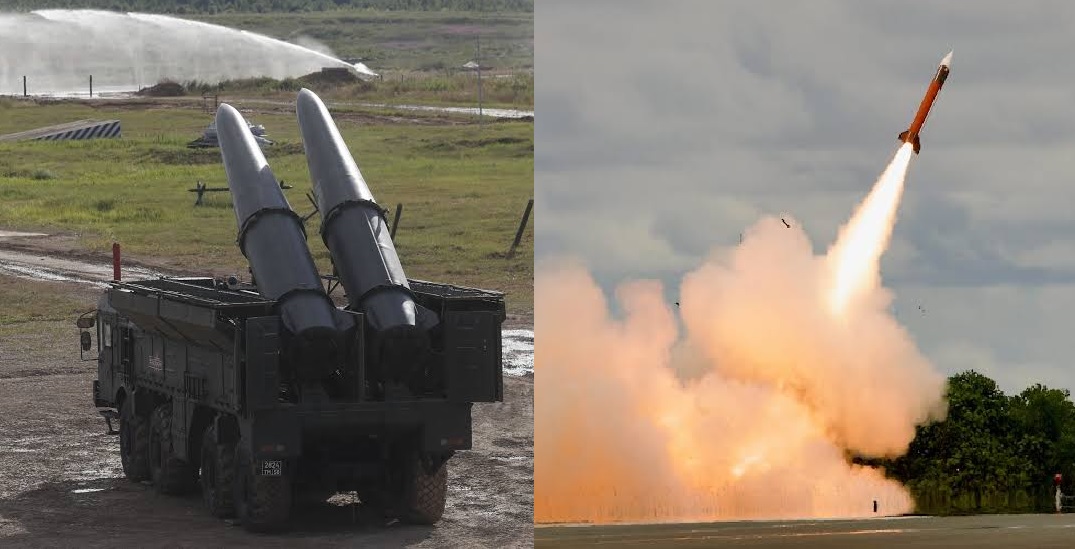
World
KYIV, Ukraine— Ukraine's air defense forces intercepted multiple Russian aerial threats during an overnight attack that included ballistic missiles, guided missiles, and large numbers of drones, according to the Air Force Command of the Armed Forces of Ukraine. The Ukrainian Air Force said the attack began at 6:00 p.m. on July 13 and continued overnight into July 14. According to the military, Russia launched 8 Iskander-M ballistic missiles, 2 Kh-59/69 guided air-to-ground missiles, and 135 strike and other unmanned aerial vehicles (UAVs) from multiple directions. According to the official statement, Ukrainian air defenses shot down or suppressed five Iskander-M ballistic missiles, both Kh-59/69 guided missiles, and 108 enemy UAVs. The intercepted drones included Shahed, Gerbera, Italmas, Banderol loitering munitions, Parody decoy drones, and other UAV types. The interceptions took place across northern, southern, eastern, and central regions of Ukraine. The reported interceptions come after Ukrainian officials acknowledged earlier this month that the country's air defenses had been unable to intercept Russian ballistic missiles during a previous large-scale attack because of a shortage of PAC-3 interceptor missiles for the Patriot air defense system. The latest operation marks the first officially reported successful interception of Russian ballistic missiles since those concerns were raised. According to the Ukrainian Air Force, the drones were launched from Orel, Kursk, Bryansk, Millerovo, and Primorsko-Akhtarsk in Russia, as well as from Russian-controlled areas of Donetsk and Hvardiiske in occupied Crimea. The Kh-59/69 guided missiles were launched from airspace over occupied Crimea. The Air Force reported that ballistic missile impacts and strikes by 25 attack UAVs were recorded at 17 locations, while debris from intercepted weapons fell at 10 additional locations. Information regarding two ballistic missiles was still being verified at the time of the update. Ukraine said the attack was repelled by fighter aircraft, anti-aircraft missile forces, electronic warfare units, unmanned systems units, and mobile fire groups of the Ukrainian Defense Forces. Ukraine Seeks Additional Patriot Interceptors The overnight attack comes as Ukraine continues efforts to strengthen its air defense capabilities against Russia's growing use of ballistic missiles. On July 9, President Volodymyr Zelensky announced that Ukraine would receive a shipment of PAC-3 interceptor missiles for its Patriot air defense systems from the United States in the coming days. Ballistic missiles remain among the most difficult aerial threats to intercept because of their high speed and flight trajectory. Ukraine currently relies primarily on Patriot air defense systems equipped with PAC-3 interceptors to defend against such attacks. Earlier in July, Ukraine's Ministry of Defense announced that the country had taken a step toward purchasing approximately 100 Patriot interceptor missiles using financing from a European Union loan. During a joint press conference with President Volodymyr Zelensky on the sidelines of the NATO summit in Ankara on July 8, U.S. President Donald Trump said the United States could consider granting Ukraine a license to manufacture missiles for the Patriot air defense system. The following day, Polish Minister of National Defense Władysław Kosiniak-Kamysz said Poland would cooperate with Ukraine on the production and maintenance of PAC-3 interceptor missiles. Polish officials also stated that the country had previously supplied five PAC-3 interceptor missiles to Ukraine following consultations within NATO. Clarification on the Official Statement The official statement issued by the Air Force Command of the Armed Forces of Ukraine refers to "Iskander-M/S-400 ballistic missiles." However, this wording appears to be technically inaccurate. The Iskander-M is a short-range ballistic missile, whereas the S-400 is a long-range air defense system, not a ballistic missile. Referring to the S-400 as a ballistic missile is therefore technically incorrect. At the time of publication, the Air Force Command of the Armed Forces of Ukraine had not issued any clarification or correction regarding the terminology used in its official statement. Source : Air Force Command of the Armed Forces of Ukraine
Read More → Posted on 2026-07-14 14:12:06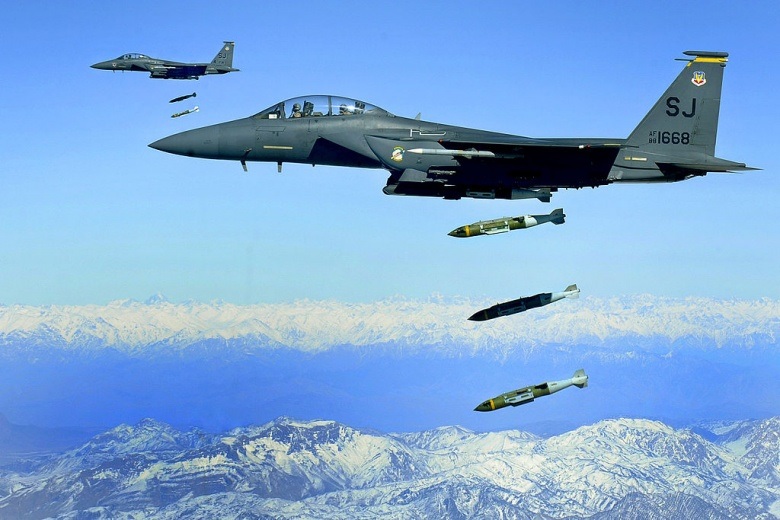
U.S
WASHINGTON — The United States could face shortages of key precision-guided munitions as the ongoing conflict with Iran continues to reduce military stockpiles, according to defense analyst Mark Cancian of the Center for Strategic and International Studies (CSIS). Cancian said the US has likely used between one-third and one-half of its key precision-guided munitions during the conflict, placing significant pressure on existing inventories. Speaking to CNN's Newsroom, Cancian said the United States has used more than 1,000 Patriot interceptor missiles during the conflict. "We have used over a thousand Patriot missiles in this current war. Our allies in the Gulf have also used a lot. Ukraine wants more so there is a tremendous demand for production," Cancian said. Thousands of Precision Weapons Used According to available estimates, US forces have struck more than 13,000 targets, with the conflict costing an estimated $28 billion to $35 billion so far. The US military has reportedly used: More than 1,000 Tomahawk cruise missiles, about ten times the annual US procurement rate. Around 1,100 Joint Air-to-Surface Standoff Missiles-Extended Range (JASSM-ER). Nearly half of its Precision Strike Missiles (PrSMs). About half of its Terminal High Altitude Area Defense (THAAD) interceptors. More than 1,200 Patriot interceptor missiles. Patriot Production Remains Limited The Patriot air and missile defense system is one of the US Army's primary air defense systems. A Patriot battery costs more than $1 billion, while each Patriot interceptor missile costs about $4 million. The United States currently produces around 600 Patriot interceptor missiles each year, far below the number reportedly used during the conflict. Cancian said demand remains high as the US, Gulf allies, and Ukraine all require Patriot interceptors. "If you went and ordered another Patriot today, you probably wouldn't get it for four or five years because of the backlog," he said. Rebuilding Stockpiles Will Take Time Analysts estimate it could take one to four years to restore US precision-guided munition stockpiles to pre-conflict levels, with additional time needed to expand inventories. The Pentagon has signed long-term contracts with defense companies to increase production of precision-guided weapons and missile defense systems. However, production remains constrained by manufacturing capacity, supply chains, and the complexity of advanced missile systems. Defense analysts say the conflict has highlighted the gap between wartime consumption and current production capacity, making stockpile replenishment a key challenge for the US defense industrial base. Source : cnn
Read More → Posted on 2026-07-14 13:27:36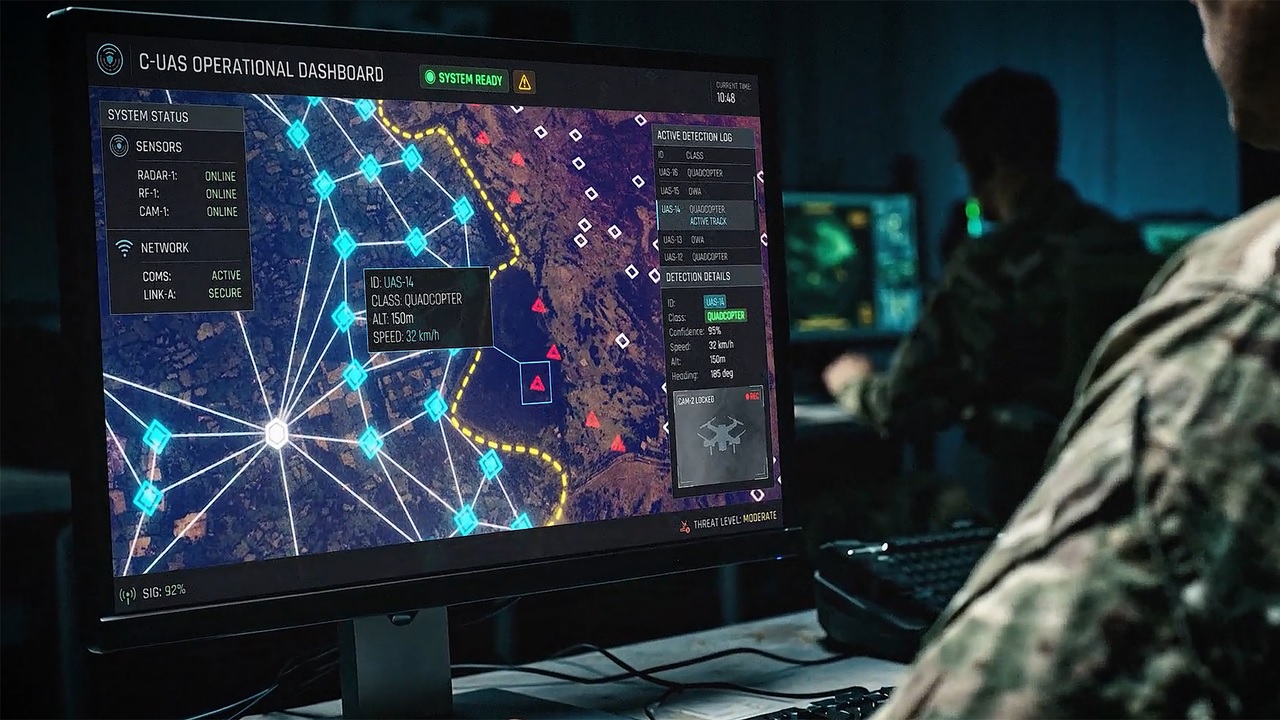
Europe
NORFOLK, U.K. — BAE Systems has completed integration and deployment testing of its Anti-Threat System (BATS), reaching a key milestone in the development of its counter-uncrewed aerial system (C-UAS). The company said the system progressed from its initial concept to field-based testing in just eight months, demonstrating an accelerated development timeline. Developed by BAE Systems' Digital Intelligence business, BATS is a scalable and modular counter-drone platform designed to detect, track, identify, and neutralize hostile uncrewed aerial systems (UAS). The system is intended to provide layered protection for military forces, critical national infrastructure, and other high-value assets facing the growing threat posed by drones. The integration and deployment trials were carried out at a secure testing facility in Norfolk in partnership with MSI-Defence Systems. During the tests, MSI integrated its advanced firing technology with the BATS platform to track airborne threats, validating the system's software-defined and modular architecture. The trials also confirmed the platform's mobility. Engineering teams demonstrated that BATS can be rapidly deployed, dismantled, and reassembled at new locations, allowing it to support changing operational requirements. In addition, the testing verified the system's data collection and analysis capabilities, enabling it to combine real-time intelligence with rapid decision-making to respond to evolving battlefield conditions. According to BAE Systems, BATS uses a sensor fusion network that combines radar, electro-optical/infrared (EO/IR), acoustic, and passive radio frequency (RF) sensors to maintain broad situational awareness. These sensors feed information into an AI-driven command and control system, which classifies threats in real time and recommends the most appropriate response based on the detected drone. "The test demonstrated exactly what BATS is designed to achieve – rapid deployment, seamless integration and the capability for fast, effective response," said Louise Heywood, Head of Strategy at BAE Systems Digital Intelligence. "Moving from concept to field-based testing in just eight months is a testament to our expertise and the agility of everyone involved. This milestone puts us in a strong position as we continue to develop the system at pace and advance to live-fire trials in August," she added. Hadyn White, Senior Military Advisor at MSI Defence Systems, said the demonstration highlighted the value of collaboration between defense companies. "The demonstration successfully showed strong collaboration and illustrated how we can defeat a variety of drone threats by integrating agile technology and expertise from across the defence ecosystem," White said. "We now have a clear way forward to provide an effective defence against drone technologies, which is crucial for modern warfare." The BATS program will now move into live-fire trials later this summer, with testing expected to begin in August. For the first time, the system will demonstrate both kinetic and non-kinetic countermeasures. Non-kinetic methods include targeted radio frequency and GPS denial, allowing hostile drones to be disrupted electronically without physical destruction. Kinetic responses involve physical interceptors designed to neutralize aerial threats directly. The upcoming trials are intended to demonstrate how BATS can select and apply different response options based on the type of drone threat encountered. The rapid development of BATS reflects the increasing demand for adaptable counter-drone systems as uncrewed aircraft become more widely used in military operations and for attacks on critical infrastructure. By combining modular software, multiple sensor types, artificial intelligence, and flexible response options, the system is designed to support military forces in detecting and countering a wide range of drone threats while remaining deployable across different operational environments. With integration and deployment testing now complete, the results from the upcoming live-fire trials are expected to further evaluate the system's operational performance and its ability to integrate kinetic and electronic countermeasures into a single layered defense capability. Source : baesystems
Read More → Posted on 2026-07-14 12:11:34
U.S
MELBOURNE, Fla. — L3Harris Technologies has been awarded a $955 million contract by the U.S. Space Force's Space Development Agency (SDA) to build 18 Accelerated Missile Defense Tranche 3 (AMDT3) satellites, supporting the United States' Golden Dome missile defense initiative. The contract, announced on July 13, 2026, is part of the SDA's broader $1.75 billion procurement program to accelerate the deployment of space-based missile tracking capabilities. Alongside the L3Harris award, Sierra Space received a $798 million contract to produce 18 complementary missile warning satellites. Together, the two companies will deliver 36 satellites, which will operate across four orbital planes and are expected to be ready for launch by the end of 2028. Strengthening Space-Based Missile Tracking The AMDT3 satellites will become part of the Proliferated Warfighter Space Architecture (PWSA), the SDA's expanding network of low-Earth orbit military satellites designed to provide continuous global missile warning and tracking. L3Harris' satellites will serve as the missile defense variant of the Tracking Layer. Each spacecraft will carry medium-field-of-view infrared sensors capable of detecting and continuously tracking missile threats, including hypersonic and ballistic missiles. The sensors are designed to generate fire-control quality tracking data, allowing information to be passed to ground-based and airborne missile defense systems to support interception operations. According to the Space Development Agency, the accelerated deployment of these satellites is intended to strengthen missile detection, identification, warning, tracking, and defense capabilities for the United States, its deployed forces, and allied nations against increasingly advanced missile threats. Builds on HBTSS Experience The new contract expands L3Harris' existing work in space-based missile tracking. The company previously developed and launched Hypersonic and Ballistic Tracking Space Sensor (HBTSS) prototypes for the Missile Defense Agency (MDA), successfully demonstrating the performance of its infrared tracking payloads in orbit. The experience gained from the HBTSS program is being applied directly to the AMDT3 satellites, helping reduce development risk while supporting faster deployment of the new tracking constellation. Production to Begin Immediately L3Harris said manufacturing of the tactical payloads will begin immediately. The satellites will be produced at the company's expanded spacecraft manufacturing facility in Fort Wayne, Indiana, while final satellite integration and testing will be carried out at its facility in Florida. Christopher Kubasik, Chairman and CEO of L3Harris, said the company had expanded its production capacity ahead of anticipated demand to support national missile defense priorities and meet the program's delivery schedule. Expanding the Tracking Layer The SDA said the new satellites are part of its effort to accelerate deployment of the Tracking Layer, a key element of the Proliferated Warfighter Space Architecture. The network is designed to provide persistent global coverage by using large numbers of satellites in low-Earth orbit rather than relying on a small number of traditional spacecraft. GP Sandhoo, a Space Force portfolio executive, said the awards accelerate deployment of the Tracking Layer to provide persistent missile warning, detection, identification, tracking, and defense capabilities for the homeland, deployed forces, and allied nations. More Than 70 Missile Defense Satellites on Order With this latest contract, L3Harris now has more than 70 missile tracking and defense satellites on order across multiple U.S. government programs. The company's portfolio includes satellites for the Missile Defense Agency's HBTSS program and the SDA's Tracking Layer Tranches 0, 1, 2, and 3, with five satellites already operating in orbit. Senator Jim Banks of Indiana welcomed the contract, stating that the continued production work in Indiana will strengthen both the country's industrial base and its next generation of space-based missile tracking capabilities. The AMDT3 program represents another step in the U.S. effort to expand its space-based missile warning and tracking network, providing continuous sensor coverage and supporting missile defense systems against evolving threats, including hypersonic and ballistic missiles. Source : l3harris
Read More → Posted on 2026-07-14 11:50:20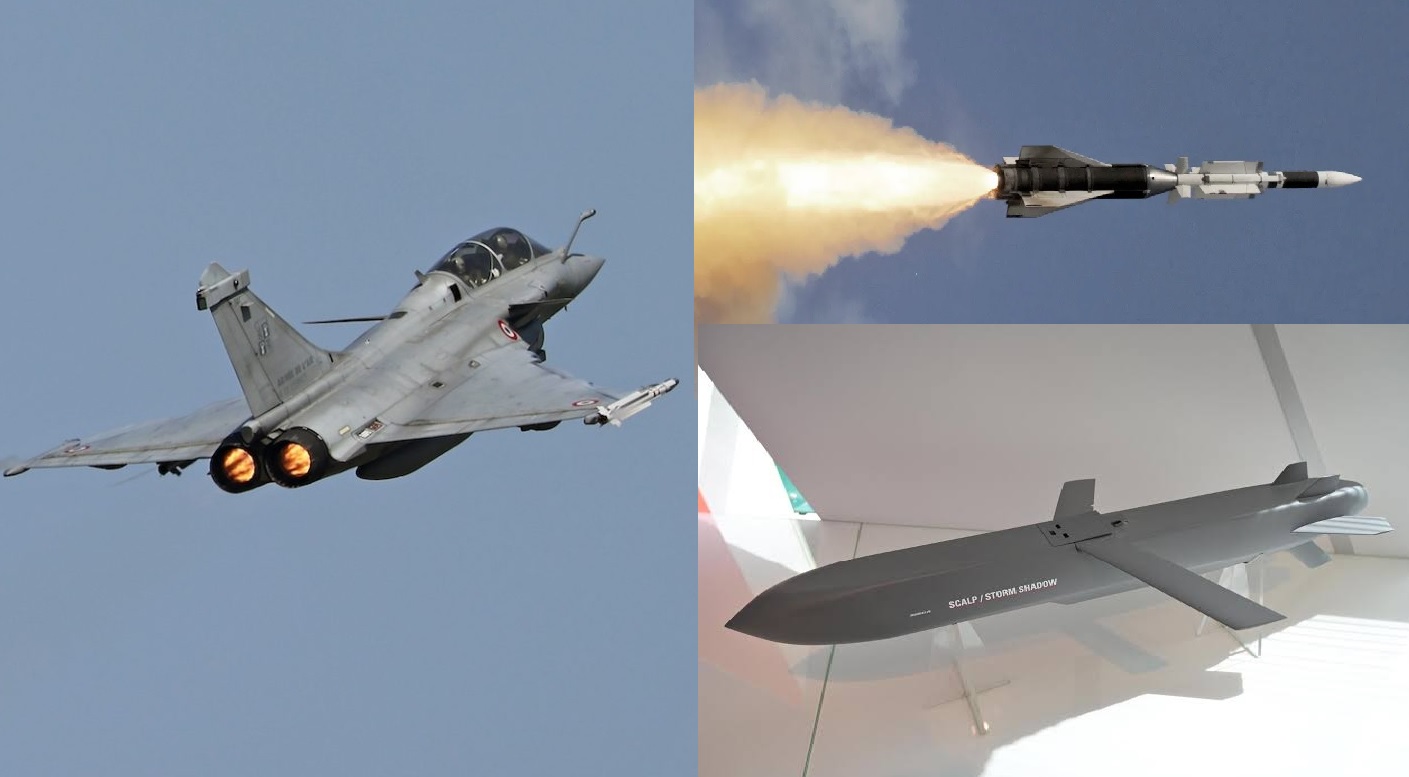
Europe
PARIS — France has approved a major expansion of its defense cooperation with Ukraine by allowing the local production of several French-designed weapons and confirming a delivery timeline for the first batch of Rafale fighter jets. French President Emmanuel Macron announced the decision on July 13 following a meeting of the Coalition of the Willing in Paris, where leaders discussed continued military support for Ukraine. Under the new agreement, Ukraine will receive licenses to manufacture Aster-30 air defense interceptor missiles, SCALP long-range cruise missiles, and AASM Hammer precision-guided bombs on its own territory. France said the move is intended to strengthen Ukraine's domestic defense industry and reduce dependence on continued deliveries of finished weapons from abroad. The decision marks the first time France has approved local production of these advanced French-designed systems in Ukraine. Macron said the agreements build on discussions held with Ukrainian President Volodymyr Zelenskyy and previous understandings reached last year. Ukraine to Produce French-Designed Weapons The licensing agreements cover three key weapon systems already used or planned for use by Ukraine. The Aster-30 is the interceptor missile used by the Franco-Italian SAMP/T air defense system, which Ukraine already operates to defend against missile attacks. Local production is expected to help maintain a more reliable supply of interceptor missiles. The SCALP is a long-range air-launched cruise missile, similar to the UK's Storm Shadow missile already in Ukrainian service. It is designed to strike high-value targets at long distances with precision. The agreement also includes the AASM Hammer, a precision-guided air-to-ground bomb used by combat aircraft for accurate strikes against military targets. Instead of relying entirely on foreign shipments, Ukraine will be able to manufacture these systems domestically under French licenses. The approach is expected to support long-term defense production while easing pressure on allied military stockpiles. The announcement comes as several partner countries increasingly focus on helping Ukraine expand its own defense manufacturing capacity rather than depending solely on external supplies. Rafale Fighter Jet Deliveries to Begin in 2028–2029 Macron also confirmed that Ukraine will receive an initial batch of 16 Rafale multirole fighter jets, with deliveries scheduled to begin between 2028 and 2029. Training for Ukrainian pilots and ground crews is expected to start in the coming months to prepare for the introduction of the aircraft. The 16 aircraft represent the first phase of a broader defense partnership. Ukraine has also signed a letter of intent expressing interest in acquiring up to 100 Rafale fighter jets over the next decade. The Rafale is capable of carrying out air defense, ground attack, reconnaissance, and precision strike missions, making it one of France's primary multirole combat aircraft. France to Supply Additional Air Defense Equipment Alongside the production licenses, Macron said France will provide additional radar systems to Ukraine and deliver next-generation SAMP/T NG air defense batteries. The new systems are intended to strengthen Ukraine's air defense network against continued missile and aerial attacks while complementing previously supplied SAMP/T batteries and interceptor missiles. European Coalition Launches Freyja Anti-Ballistic Missile Project During the Paris summit, Ukraine and several European partners also announced the formation of an Integrated Anti-Ballistic Missile Coalition. The coalition includes France, Germany, the United Kingdom, Italy, Spain, the Netherlands, Sweden, Norway, Denmark, and Ukraine, with participating countries working together to improve protection against ballistic missile threats. As part of the initiative, Ukraine is developing a new anti-ballistic missile system called Freyja in cooperation with European partners. According to President Volodymyr Zelenskyy, the system combines a new interceptor missile developed by the Ukrainian defense company Fire Point with existing European radar and command networks. Ukrainian officials said Freyja is intended to provide a lower-cost alternative to the U.S.-made Patriot air defense system. They estimate each interception could cost about $700,000, compared with approximately $3.8 million for a Patriot interceptor. Zelenskyy said the Freyja system could become operational within the next 12 months, although development and testing will continue as the coalition advances the project. Shift Toward Long-Term Defense Cooperation France's announcement follows a broader trend among Ukraine's allies to expand defense industrial cooperation. Macron noted that the United States has also moved toward allowing Ukraine to manufacture Patriot air defense interceptors under licensing agreements. The Paris summit also included discussions on future military cooperation, training, and continued support for Ukraine's defense capabilities. By combining local weapons production, pilot training, new air defense systems, and long-term industrial partnerships, France and its partners are expanding support beyond immediate military aid and helping Ukraine strengthen its domestic defense capabilities for the years ahead. Source : reuters
Read More → Posted on 2026-07-14 11:36:42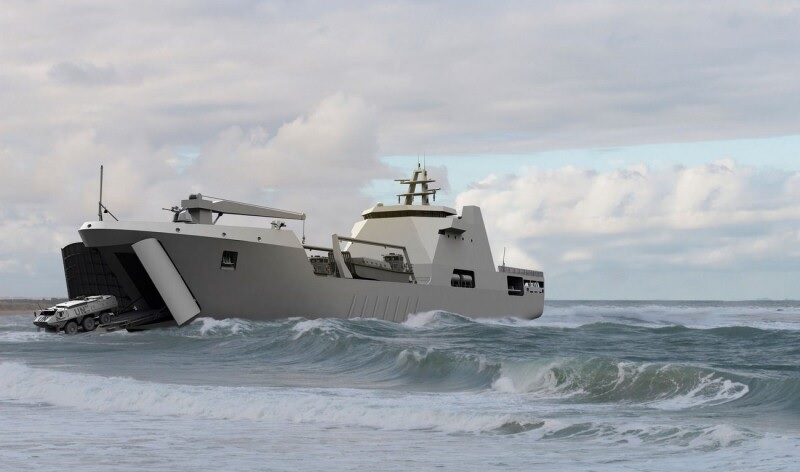
U.S
WASHINGTON, D.C. — The U.S. Navy has awarded a $2.2 billion contract to Florida-based TOTE Services LLC to manage the construction of its new Medium Landing Ship (LSM) program, marking the first time the Navy has adopted a Vessel Construction Manager (VCM) model for a major shipbuilding program. Announced on July 13, 2026, the contract could reach $2.6 billion if all contract options are exercised for the initial batch of up to eight ships. Under the VCM approach, TOTE Services will serve as the prime contractor and report directly to the Navy's Portfolio Acquisition Executive for Maritime. Rather than the Navy managing individual shipyards and suppliers, TOTE will oversee the construction process, coordinate subcontractors, and manage suppliers across multiple U.S. shipyards using commercial shipbuilding practices. According to the U.S. Navy, the new acquisition model is intended to improve cost control, construction schedules, and overall program performance while reducing government oversight. "We are changing the way we do business, and leveraging commercial best practices to improve cost, schedule, and performance," said Will Mahan, performing the duties of Assistant Secretary of the Navy for Research, Development, and Acquisition. He added that adopting the commercial contracting model reduced traditional contracting timelines by nearly 50 percent. Construction to Be Shared Across Multiple Shipyards For the first phase of the program, the U.S. Navy has already designated two shipyards to begin construction. Bollinger Shipyards on the U.S. Gulf Coast will build the lead Medium Landing Ship, while Fincantieri Marinette Marine in Wisconsin will construct the next four vessels. TOTE Services will determine the subcontracting strategy for the remaining three ships included in the initial eight-vessel package. The Navy said distributing construction across multiple shipyards is part of a broader effort to strengthen the U.S. shipbuilding industrial base, which has faced workforce shortages and limited production capacity as the service seeks to expand its fleet. During the procurement process, Crowley Government Services filed a protest, arguing that the Navy's decision to pre-select shipyards reduced the prime contractor's negotiating flexibility and increased commercial risk under the VCM model. The protest was ultimately unsuccessful. Medium Landing Ship Designed for Marine Corps Operations The Medium Landing Ship (LSM) is based on the Dutch-designed Damen LST-100 hull, a design already in service with the Nigerian Navy and also selected by Australia. Each vessel will measure approximately 300 to 350 feet in length and displace between 4,000 and 6,000 tons. The ships are designed to carry around 250 Marines and have an operational range of approximately 4,000 nautical miles (7,408 kilometers). Unlike large amphibious assault ships, the LSM has a relatively simple design and does not include the advanced defensive systems found on major surface combatants. Instead, it is intended to provide a cost-effective platform for transporting Marines, vehicles, equipment, and supplies between islands and coastal areas. The vessels are expected to fill the operational gap between small landing craft and large amphibious warships. Supporting the Marine Corps' Pacific Strategy The Medium Landing Ship is a key element of the U.S. Marine Corps' Expeditionary Advanced Base Operations (EABO) concept. Under this strategy, smaller Marine units are expected to move quickly between islands, establish temporary positions equipped with anti-ship missiles and other capabilities, and relocate before becoming vulnerable to enemy targeting. The concept relies on a larger number of smaller, mobile vessels instead of concentrating forces aboard a limited number of large amphibious ships. Congress Directed Use of the VCM Model The shift to the Vessel Construction Manager (VCM) model was directed by Congress through the Fiscal Year 2026 National Defense Authorization Act, which required the Navy to adopt the approach in an effort to stabilize the Medium Landing Ship program. The decision followed earlier procurement challenges. In 2024, the Navy canceled a previous request for proposals (RFP) after determining that submitted bids were significantly higher than expected. TOTE Services Brings Previous Government Shipbuilding Experience TOTE Services previously introduced the Vessel Construction Manager (VCM) model during the National Security Multi-Mission Vessel (NSMV) program for the U.S. Maritime Administration. The NSMV program includes five training ships for U.S. maritime academies. Three vessels have already been delivered, while the remaining two are expected within the next 12 months. According to previously released program information, the commercial management approach helped achieve construction costs significantly below initial government estimates. "This is a tremendous responsibility and a defining moment for American shipbuilding, the VCM model, and TOTE Services," said Jeff Dixon, President of TOTE Services. "The U.S. is counting on this program to succeed, and our job is clear: steward the work responsibly, cultivate the best talent and expertise, move with urgency, and deliver for the American people." Matthew Paxton, President of the Shipbuilders Council of America, said TOTE's previous work demonstrated that combining government requirements with commercial shipbuilding practices can strengthen American shipyards and support the maritime workforce. Construction Expected to Begin This Year Christopher Miller, the Navy's Portfolio Acquisition Executive for Maritime, said the service is ready to move into the construction phase. "TOTE Services will be an important partner, and we're excited to work with them to continue the momentum on this program and begin bending steel," Miller said. Initial construction is expected to begin later in 2026, with the first Medium Landing Ship scheduled for delivery in the fall of 2029. The U.S. Marine Corps ultimately plans to acquire a fleet of 35 Medium Landing Ships. However, future production beyond the initial eight vessels will depend on the successful execution, cost performance, and funding of the first phase. The contract represents a significant change in the U.S. Navy's ship acquisition process by introducing commercial program management practices into a major military shipbuilding effort while supporting expansion of the U.S. shipbuilding industrial base and advancing the U.S. Marine Corps' future operational requirements. Source : news.usni
Read More → Posted on 2026-07-14 11:25:23
Space & Technology
BENGALURU — Bengaluru-based deep-tech startup Vimag Labs has secured its fifth Indian patent for a new electric motor technology that operates without using rare-earth permanent magnets, marking a significant development for India's electric vehicle (EV) industry. The patented technology could help reduce the global automotive sector's dependence on China's dominant rare-earth magnet supply chain. The newly granted patent, titled "A Robust Rotating Transformer Excited Synchronous Motor and Its Control," protects the core architecture of Vimag Labs' Virtual Magnet Synchronous Motor (VMSM) platform. The company says the technology replaces conventional permanent magnets with a software-controlled electromagnetic system while maintaining performance comparable to existing EV motors. Rare-Earth Dependence in the EV Industry Most modern electric vehicles (EVs) use Permanent Magnet Synchronous Motors (PMSMs) because of their high efficiency, compact size, and strong performance. These motors rely on powerful rare-earth permanent magnets, primarily made from materials such as neodymium, which are embedded inside the rotor to generate torque. However, the global supply chain for these magnets remains heavily concentrated in China. According to the International Energy Agency (IEA), China accounts for approximately 91% of global rare-earth refining and processing and produces around 94% of the world's sintered permanent magnets. This concentration has made the global EV industry vulnerable to export restrictions, geopolitical tensions, and supply disruptions, resulting in higher prices and uncertainty for vehicle manufacturers. For Vimag Labs co-founder and CEO Manish Seth, the idea for developing a rare-earth-free motor emerged during the COVID-19 pandemic in 2020, when a shipment of magnets required for prototype motors remained delayed at Shanghai Port for nearly three months because of lockdown restrictions. How the Virtual Magnet Synchronous Motor Works Unlike traditional PMSMs, the VMSM eliminates physical permanent magnets altogether. Instead, the motor is built using standard copper, steel, and advanced electronics. The magnetic field required for operation is generated dynamically through specially designed copper coils controlled by proprietary software and power electronics. A key feature of the technology is its Rotating Transformer Excitation system, which transfers power wirelessly inside the motor without using brushes or slip rings. This brushless design improves reliability while reducing maintenance requirements. The company's control software continuously regulates the magnetic field in real time, effectively creating what Vimag describes as a "software-defined magnet." Because the magnetic field is generated and adjusted through software, the motor can optimize performance for different operating conditions. The company says the software architecture also enables over-the-air (OTA) updates, allowing improvements to motor performance without changing the hardware. Vimag Labs reports that its 6 kW continuous power prototype is capable of delivering 10 kW peak power with 48–58 Nm of torque, while targeting efficiency and performance comparable to conventional permanent magnet motors. Years of Engineering Behind the Technology According to the company, the patented technology represents more than 87,600 engineering hours of development. Founded in September 2025, Vimag Labs now holds five granted Indian patents, with 10 additional patent applications and 15 trademarks currently in progress. The startup has moved beyond laboratory development and is currently conducting pilot projects with established two-wheeler and passenger vehicle manufacturers. The company is also expanding the platform for light commercial vehicles, heavy commercial vehicles, and industrial systems ranging from 200 kW to 600 kW. Beyond electric mobility, Vimag is exploring applications in robotics, advanced cooling infrastructure, and defense systems. Funding and Commercial Expansion To support commercial production, Vimag Labs recently raised $5 million in a Series A funding round led by Accel, with participation from Chakra Growth Fund and Thinkuvate. The company has also signed a Manufacturing Memorandum of Understanding (MoU) with Jendamark Pvt. Ltd. to scale production of the VMSM platform. Looking ahead, Vimag plans to develop its own Application-Specific Integrated Circuit (ASIC). By integrating the drivetrain control system into a single proprietary chip, the company aims to reduce dependence on external semiconductor suppliers while lowering the electronics bill of materials (BOM) cost by nearly 90%. The company also aims to ship between 1,000 and 10,000 motor units by the end of the year. Potential Impact on China's Rare-Earth Dominance Vimag Labs' technology does not eliminate China's leadership in the rare-earth industry, but it has the potential to reduce dependence on rare-earth permanent magnets if adopted at commercial scale. Today, nearly every permanent magnet EV motor manufactured worldwide relies on rare-earth materials processed in China. If automakers begin adopting magnet-free technologies such as VMSM, demand for rare-earth permanent magnets in the EV sector could gradually decline. The impact, however, will depend on several factors, including: Successful large-scale commercial production. Proven long-term reliability and efficiency in real-world vehicles. Adoption by major global automotive manufacturers. Cost competitiveness compared with existing permanent magnet motors. In the near term, China's position in rare-earth refining and permanent magnet manufacturing is unlikely to change significantly because the country continues to dominate global processing capacity and magnet production. However, wider adoption of alternative motor technologies by multiple manufacturers could gradually reduce China's leverage over one of the EV industry's most critical supply chains. Supporting India's Self-Reliance Goals By removing the need for imported rare-earth permanent magnets and relying on commonly available materials such as copper and steel, Vimag Labs' technology supports India's "Make in India" and "Atmanirbhar Bharat" (Self-Reliant India) initiatives. If successfully commercialized, the VMSM platform could help domestic manufacturers reduce supply chain risks, improve cost stability, and strengthen India's capabilities in electric mobility and advanced motor technologies while providing automakers with an alternative to one of the industry's most concentrated global supply chains.
Read More → Posted on 2026-07-14 10:54:11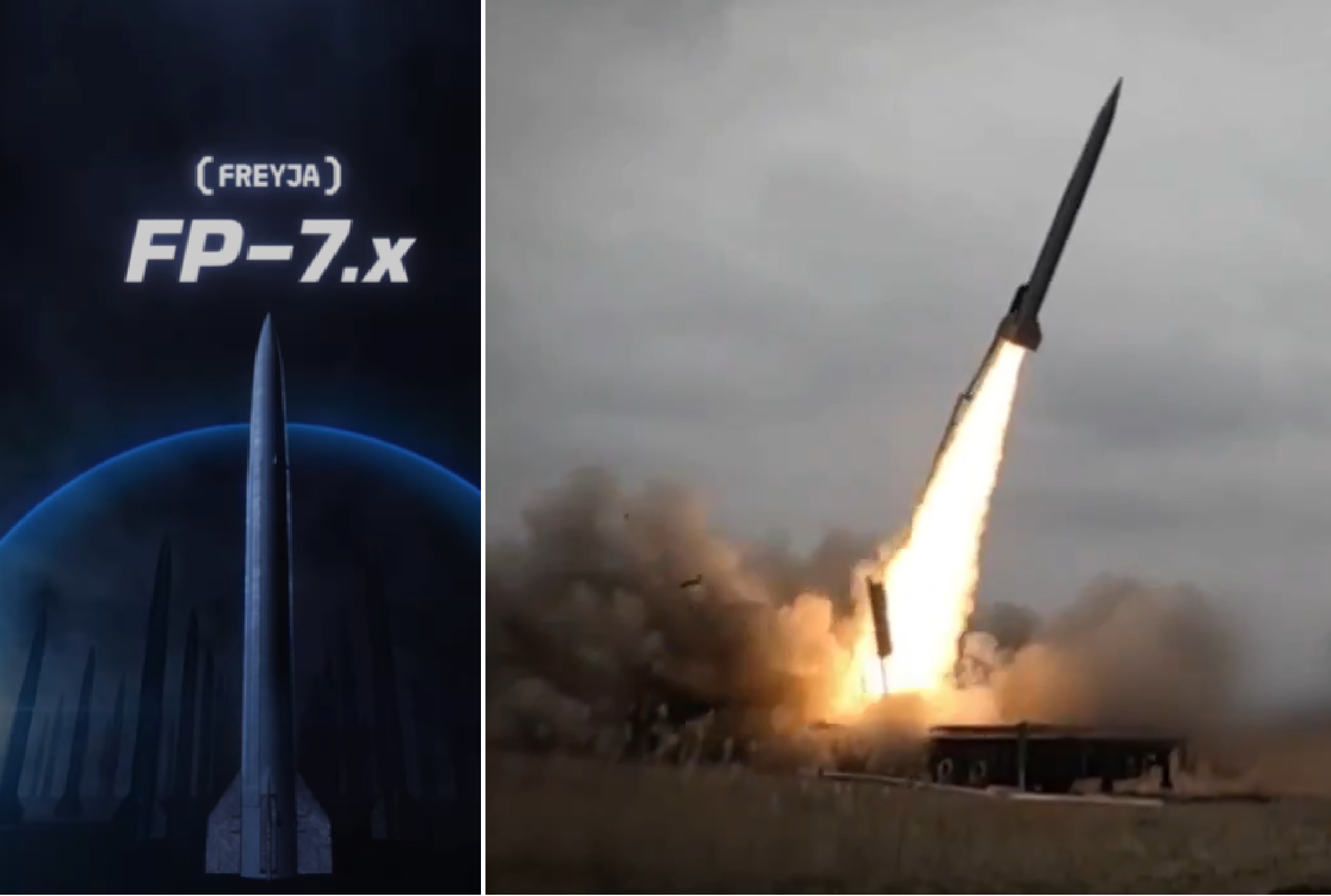
Europe
PARIS / KYIV — Ukraine and nine European partner countries have formally launched the Anti-Ballistic Missile Coalition, a multinational initiative aimed at developing and deploying the FREYJA anti-ballistic missile defense system across Europe. The agreement was announced at the Elysee Palace in Paris following a summit attended by the participating nations. The coalition includes Ukraine, Denmark, France, Germany, Italy, the Netherlands, Norway, Spain, Sweden, and the United Kingdom. According to Ukrainian President Volodymyr Zelenskyy, the coalition's flagship project will support the development and large-scale production of the FREYJA air defense system to establish a shared anti-ballistic missile defense capability across Europe. On the same day, Ukrainian defense company Fire Point publicly unveiled its FP-7.X anti-ballistic interceptor missile, the key interceptor being developed for the FREYJA system. The announcement was made through an Instagram post by the company's Chief Technology Officer, Iryna Terekh, who shared presentation materials and a promotional video introducing both the interceptor and the overall air defense concept. Alongside the video, Fire Point wrote: "FREYJA — PAN-EUROPEAN ANTI-BALLISTIC SHIELD OWNED TOGETHER. Coming soon…" During the presentation, the company described FREYJA as a pan-European anti-ballistic shield that would be jointly owned and supported by participating partner countries. The project is designed to integrate interceptor missiles, radar systems, command-and-control networks, and data-sharing technologies from multiple European defense companies into a single defensive architecture. FP-7.X Interceptor Forms the Core of FREYJA The FP-7.X interceptor has been developed by Kyiv-based Fire Point, a defense company founded in 2022 that initially focused on drones and missile systems before expanding into ballistic missile defense. According to specifications released by Fire Point co-founder Denys Shtilerman and Chief Technology Officer Iryna Terekh, the missile measures 7.25 meters in length and is constructed using lightweight composite materials, including carbon fiber, to reduce weight while improving maneuverability. The interceptor is designed to reach speeds between 1,500 and 2,000 meters per second—approximately Mach 4.4 to Mach 5.9—and intercept incoming ballistic missiles during the terminal phase of flight at altitudes of up to 20 kilometers. Fire Point says that most components of the FP-7 missile family are manufactured in Ukraine, while the overall FREYJA architecture has been designed with an open architecture that integrates with NATO-standard air defense systems and communication networks. European Defense Companies Contribute Key Technologies Rather than operating as a standalone national air defense system, FREYJA has been designed as a distributed "system of systems" that combines technologies from several European defense companies. Under the project: Fire Point serves as the prime contractor, responsible for the development and production of the FP-7.X interceptor and launcher. Germany's Diehl Defence is contributing to the missile's semi-active image infrared seeker, designed to distinguish genuine ballistic missile targets from infrared decoys, including those reportedly used by Russia's Iskander-M missile system. Sweden's Saab is supplying Giraffe 8A and Giraffe 4A radar systems. France's Thales is contributing the Ground Master 400 long-range radar. Germany's HENSOLDT is providing the TRML-4D Active Electronically Scanned Array (AESA) radar. Norway's Kongsberg is supplying the Fire Direction Centre (FDC) command-and-control system. The network is designed to exchange tactical information through NATO-standard Link-16 while using the ASTERIX protocol for secure radar data integration. HENSOLDT Agreement Supports Radar Integration In June 2026, Fire Point signed a Memorandum of Understanding (MoU) with HENSOLDT during the Eurosatory defense exhibition in Paris. The agreement covers the production, testing, and delivery of the TRML-4D radar for the FREYJA program. The AESA radar is capable of tracking approximately 1,500 air targets simultaneously, supporting long-range detection and target tracking for the missile defense network. Designed to Reduce Interception Costs One of the project's principal objectives is to lower the cost of defending against ballistic missile attacks. According to Fire Point, an interception using the FP-7.X is expected to cost approximately $700,000 per missile, compared with an estimated $3.8 million for a Patriot PAC-3 interceptor. The company says reducing interception costs is intended to improve the sustainability of missile defense during prolonged conflicts. Prototype Flight Test Completed Before unveiling the system, Fire Point conducted the first guided flight test of the FP-7.X prototype. According to the company, the missile successfully completed a guided maneuvering flight, demonstrating stable flight characteristics and controlled maneuverability. During the announcement of the successful test, Fire Point disclosed the missile's initial specifications, including a maximum speed of 2,000 meters per second, and confirmed its cooperation with Germany's Diehl Defence on the interceptor's guidance system. The successful flight moved the project beyond the conceptual stage. Fire Point expects to carry out the first operational interception tests by the end of 2027 as development of the complete FREYJA system continues. Toward a Shared European Missile Defense Network The FP-7.X evolved from Fire Point's FP-7 tactical ballistic missile, which was originally developed for ground attack missions with a reported range of up to 200 kilometers. The FP-7.X adapts that technology into an interceptor designed specifically for ballistic missile defense. The FREYJA initiative also represents a broader expansion of Ukraine's defense industry, moving beyond unmanned systems and strike weapons toward advanced missile defense technologies. Through the newly established Anti-Ballistic Missile Coalition, the participating countries plan to combine industrial capacity, financing, research, and technological expertise to accelerate development and prepare the FREYJA system for future large-scale production. According to the participating governments and Fire Point, the long-term objective is to build a jointly developed European anti-ballistic missile defense capability that integrates national technologies into a common defensive network while remaining compatible with existing NATO infrastructure.
Read More → Posted on 2026-07-13 17:15:31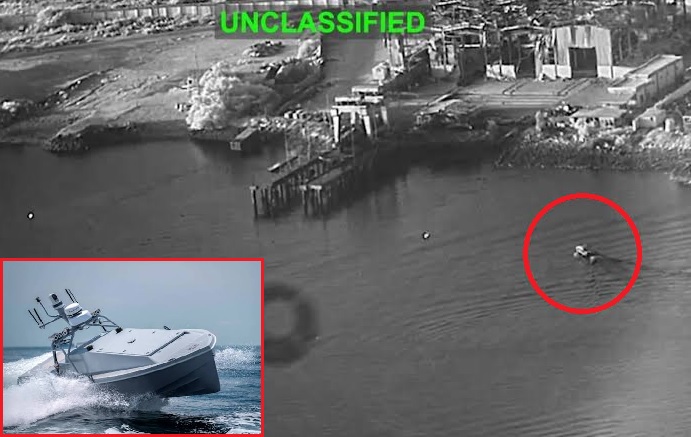
U.S
TAMPA, Fla. —The U.S. Central Command (CENTCOM) has confirmed that it used Corsair unmanned surface vessels (USVs) in combat for the first time during overnight strikes against Iranian military targets on July 12, marking the first known combat employment of the platform by U.S. forces. According to an official statement released by CENTCOM, U.S. forces launched multiple one-way attack surface drones against a submarine and ship maintenance facility at Bandar Abbas Naval Base on Iran's southern coast. CENTCOM also released video footage of the operation on its official X account. Yesterday, using multiple one-way attack surface drones, CENTCOM forces successfully struck a submarine and ship maintenance facility in Iran. Three Corsair unmanned surface vessels hit the port at Bandar Abbas Naval Base, marking the first time American forces have employed sea… pic.twitter.com/bOM2kmgRxz — U.S. Central Command (@CENTCOM) July 13, 2026 The command said three Corsair unmanned surface vessels successfully struck the naval facility, marking the first time American forces have employed sea drones in combat operations. CENTCOM stated that the strikes degraded Iran's ability to continue attacking commercial shipping. The attack was carried out using unmanned maritime systems instead of conventional crewed naval platforms, highlighting the expanding operational role of autonomous surface vessels in modern naval warfare. Corsair Unmanned Surface Vessel The Corsair is an autonomous surface vessel developed by Saronic Technologies for military maritime operations. The platform was officially launched in October 2024 as the company's largest autonomous surface vessel at the time and was designed to support missions for the U.S. Navy and allied forces. The U.S. Navy later awarded Saronic a contract worth more than $392 million to produce multiple Corsair vessels for operational use. Task Force 59, the U.S. Navy's unit responsible for integrating unmanned systems into fleet operations in the Middle East, began fielding the vessels in the region in late March 2026. Corsair Specifications According to Saronic, the Corsair has the following capabilities: Length: 24 feet (7.3 meters) Maximum speed: More than 35 knots Operational range: More than 1,000 nautical miles Payload capacity: More than 1,000 pounds (about 454 kilograms) The vessel is designed for long-duration autonomous missions and can operate under full autonomous navigation or remote human supervision. It is equipped with onboard computing, satellite communications, radar, cameras, and 360-degree passive sensing systems that support day and night operations. Previous Operational Use Before the July 12 strike on Iran, the Corsair had already been used in an operational mission. In June 8, 2026, a Corsair unmanned surface vessel operated by U.S. 5th Fleet Task Force 59 rescued two U.S. Army pilots after their AH-64 Apache helicopter crashed off the coast of Oman. According to CENTCOM, the autonomous vessel recovered the pilots from the water and transported them to a location where they were later hoisted aboard a rescue helicopter. The mission was described as the first publicly reported rescue of military personnel by an autonomous surface vessel. First Combat Use The July 12 operation represents the first confirmed combat use of the Corsair unmanned surface vessel and the first time the U.S. military has employed sea drones in a strike mission. According to CENTCOM, three Corsair USVs struck the submarine and ship maintenance facility at Bandar Abbas Naval Base, damaging infrastructure that supports Iranian naval operations. The command stated that the operation was intended to reduce Iran's ability to conduct future attacks against commercial shipping and released video footage showing the strike. Source : CENTCOM
Read More → Posted on 2026-07-13 15:28:43
U.S
WASHINGTON — The U.S. Army has begun installing Anduril Industries' counter-unmanned aircraft systems (C-UAS) at Joint Base Lewis-McChord (JBLM) in Washington state, marking the first physical deployment of the company's integrated counter-drone hardware at a U.S. military installation. The move is part of a broader effort to strengthen the protection of military bases against the growing threat posed by small unmanned aerial systems. The project is being managed by Joint Interagency Task Force 401 (JIATF-401), an Army-led organization established by the Department of War in 2025 to unify the military's counter-drone capabilities. Before the creation of JIATF-401, individual military services largely managed their own counter-drone programs, resulting in separate procurement efforts and different combinations of sensors, jammers, and interceptors. The task force now oversees the procurement, testing, integration, and deployment of counter-UAS systems under a common homeland defense strategy. JIATF-401 recently published a handbook titled "Small Drones, Big Problems," which outlines a layered approach to countering unauthorized drones and provides a common operating framework for personnel responsible for defending military installations. Army Maj. Joe Amoroso, Deputy Chief of Strategic Initiatives for JIATF-401, said it is important to establish a common foundation for counter-drone operations while working with government agencies and interagency partners to address the growing threat posed by small unmanned aircraft. Layered Counter-Drone Defense The initial installation at JBLM includes three key systems developed by Anduril Industries, with each performing a specific role in detecting, tracking, disrupting, and defeating hostile drones. SpyGlass Radar The SpyGlass system is a Ku-band phased array radar designed to detect and track multiple aerial targets simultaneously using electronically steered beams instead of traditional rotating radar antennas. According to Anduril, its onboard processing increases detection range by 25 to 30 percent compared with older radar systems, giving security personnel additional time to identify and respond to potential drone threats. Pulsar Electronic Warfare System The Pulsar system is a software-defined electronic warfare (EW) platform that detects and disrupts the radio-frequency signals used by drones for communication and navigation. The system uses edge artificial intelligence to adapt to newly emerging drone frequencies within hours rather than months. Demonstrations have shown it can effectively counter Group 1 unmanned aircraft at distances of up to 2 kilometers (approximately 1.2 miles). Anvil Interceptor The Anvil system is an autonomous kinetic interceptor designed to physically destroy hostile drones by colliding with them. It is intended to defeat Group 1 and Group 2 unmanned aircraft systems, including most commercial quadcopters and small fixed-wing drones capable of carrying cameras or light payloads. The interceptor is designed for situations where electronic warfare measures alone are not sufficient to stop an incoming drone. Faster Deployment Through Industry Collaboration The installation at JBLM was carried out through direct cooperation between government personnel and Anduril engineers. Tommy Hernandez III, Anduril's Air Defense Team Lead, and George Nguyen, Tactical Operations Engineer, worked alongside JIATF-401 personnel to install and integrate the systems on-site. This approach is intended to shorten deployment timelines by allowing government and industry teams to work together during installation and system integration, reducing the delays often associated with traditional military acquisition processes. Why Joint Base Lewis-McChord Was Selected Joint Base Lewis-McChord was selected for the first deployment because of its strategic importance within the U.S. military. Located near Tacoma, Washington, JBLM is the only Army power projection base west of the Rocky Mountains in the continental United States. The installation hosts I Corps and supports the 62nd Airlift Wing, which operates the C-17 Globemaster III strategic airlift fleet. The base plays an important role in moving troops, equipment, and supplies to the Indo-Pacific region during military operations and contingency missions. Its operational importance makes it a priority location for strengthening protection against unauthorized drone activity. Part of a Broader National Counter-Drone Strategy The deployment at JBLM is one element of a wider counter-drone strategy being implemented by JIATF-401 across the United States. In addition to installing standardized counter-UAS systems, the task force is managing a pilot program that is evaluating laser and microwave-based counter-drone technologies at five other military sites. The broader modernization effort also includes a 10-year, $642 million contract awarded to Anduril Industries to deploy counter-UAS systems across U.S. Marine Corps bases. The objective is to create a more standardized and coordinated approach to protecting military installations from increasingly capable and affordable unmanned aircraft. Growing Concern Over Small Drone Threats The widespread availability of inexpensive commercial drones has significantly changed the security environment for military installations. Small unmanned aircraft have been used extensively in recent conflicts, including those in Ukraine and the Middle East, for reconnaissance, surveillance, and attack missions, highlighting the operational impact of low-cost drone technology. Within the United States, military officials have also reported a growing number of unauthorized drone incursions near military facilities over the past decade. These incidents have increased the focus on deploying systems capable of detecting, tracking, disrupting, and, when necessary, physically intercepting drones before they can reach sensitive infrastructure. Army Brig. Gen. Matt Ross, Director of JIATF-401, said that while there is no single solution capable of addressing every drone threat, a proactive and layered defense built in cooperation with government partners can significantly reduce the risks posed by small unmanned aircraft. Source : dvidshub / defence-blog
Read More → Posted on 2026-07-13 15:09:52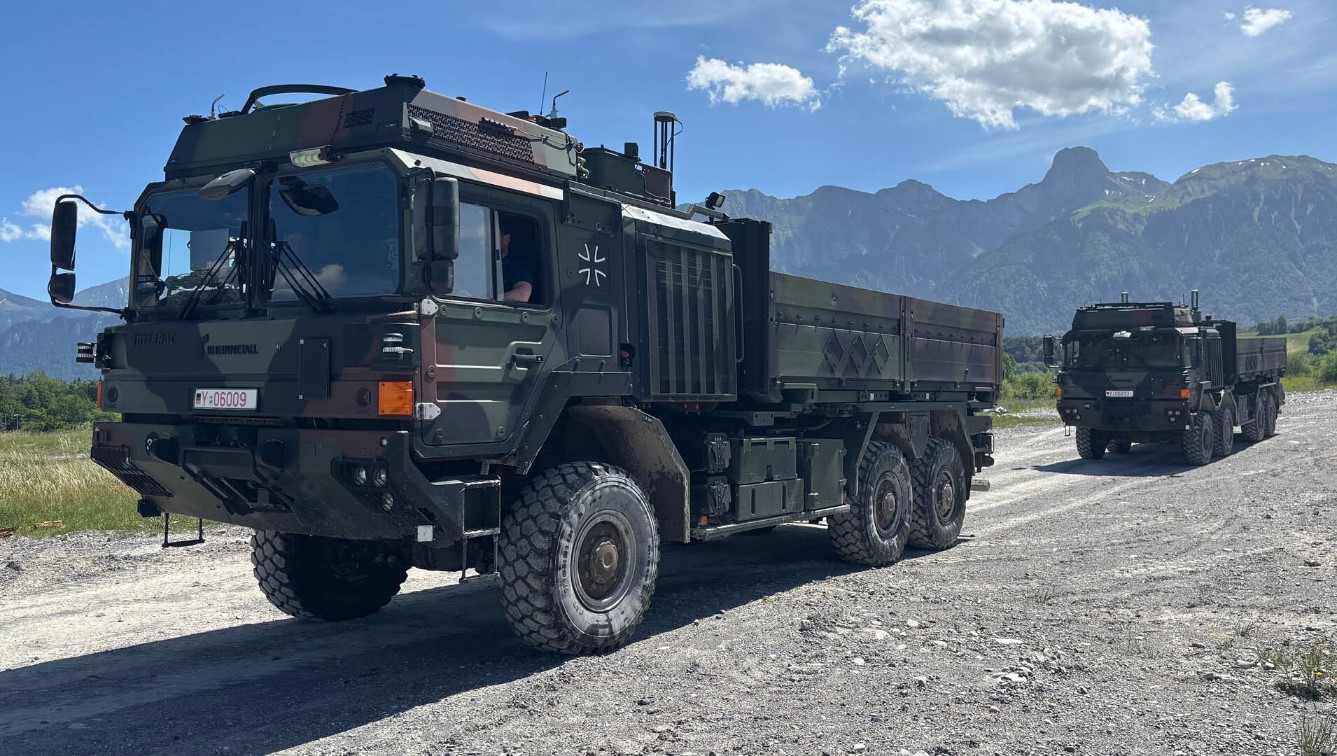
Europe
BERLIN — Rheinmetall MAN Military Vehicles GmbH (RMMV) has assumed full responsibility for the InterRoC VII (Interoperable Robotic Convoy VII) research project on behalf of Germany's Federal Office of Bundeswehr Equipment, Information Technology and In-Service Support (BAAINBw). InterRoC VII is the latest phase of the long-running InterRoC research program, which focuses on developing highly automated convoy technologies for military logistics. The project builds on earlier InterRoC demonstrations that used HX2 military trucks to test autonomous leader-follower convoy operations, where multiple vehicles travel together with minimal human intervention. Focus on Autonomous Military Logistics The primary objective of InterRoC VII is to further develop highly automated convoy control systems capable of supporting military logistics in demanding operational environments. The project is also designed to test interoperable vehicle formations, allowing different types of military vehicles to operate together safely and autonomously. Key areas of development include: Efficient automation technologies Advanced perception and decision-making functions Robust route planning for mixed (heterogeneous) vehicle formations The technologies are intended to improve the reliability and safety of military logistics operations, particularly in off-road environments and areas where communications are limited or disrupted. A major focus of the project is enabling autonomous convoy operations in GNSS-denied environments, where satellite navigation systems such as GPS are unavailable or intentionally jammed. This capability is considered important for military operations in environments affected by electronic warfare or navigation interference. HX Military Trucks Equipped With Autonomous Technology For the InterRoC VII project, RMMV is using vehicles from its established HX family of military logistics trucks. The vehicles are equipped with Rheinmetall's modular PATH sensor kit and a fully integrated drive-by-wire system, allowing software to control steering, braking, and acceleration through the vehicle's existing architecture. The PATH autonomy system is designed with an open system architecture, enabling the integration of additional sensors, artificial intelligence-based software, and mission-specific algorithms as the technology evolves. This modular approach provides a scalable platform that can be adapted for future military requirements. Driveblocks Supports AI and Environmental Perception As part of the project, Driveblocks GmbH is contributing software and artificial intelligence technologies focused on environmental perception and object classification. Its system combines camera and LiDAR sensor data with AI models to detect and understand complex three-dimensional environments. The technology is designed to operate in challenging conditions, including unstructured terrain, dense vegetation, dust, snow, and varying visibility, helping autonomous vehicles make reliable navigation decisions in difficult operational settings. Lessons From ELROB 2026 Integrated Into Project RMMV assumed responsibility for InterRoC VII shortly before achieving a top placement in the "Convoy Scenarios" category at the European Land Robot Trial (ELROB) 2026, held at the Thun military training area in Switzerland. ELROB is one of Europe's leading field trials for testing unmanned ground systems and autonomous military technologies under realistic operating conditions. According to Rheinmetall, capabilities demonstrated during the competition are being directly incorporated into the ongoing development of the InterRoC VII program. Building on Earlier InterRoC Research The InterRoC research series began around four years ago to explore technologies and operational requirements for future autonomous military logistics vehicles. Earlier project phases equipped HX trucks with autonomy kits to evaluate automated convoy operations in realistic conditions. Previous demonstrations included joint testing in Germany and the United States, where researchers validated leader-follower convoy concepts using autonomous logistics vehicles. With InterRoC VII, the research program continues to expand its focus on improving military supply chains through automation while reducing risks to personnel during logistics missions in demanding operational environments. The project also supports broader Bundeswehr efforts to modernize and digitize military mobility through the integration of autonomous technologies. Rheinmetall and BAAINBw have not disclosed financial details or a timeline for completion of the current research phase. Sources: Rheinmetall
Read More → Posted on 2026-07-13 14:56:13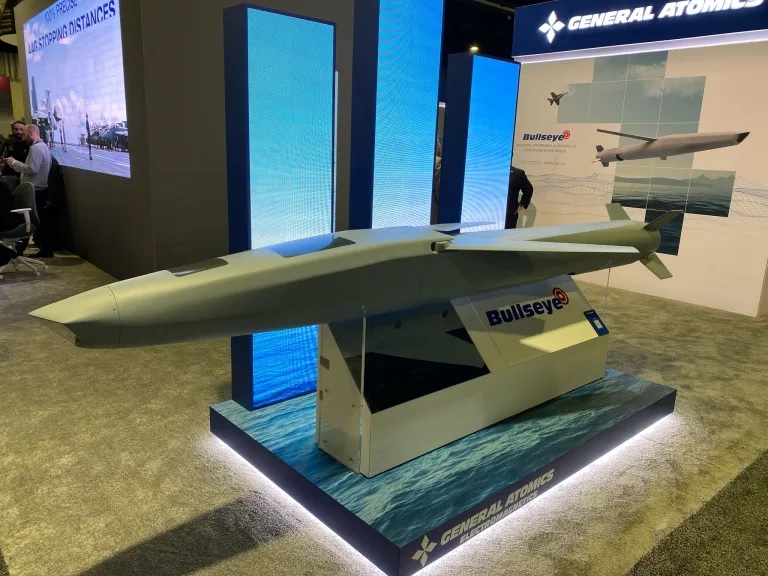
U.S
WASHINGTON — The U.S. Senate Armed Services Committee has advanced a proposal to provide $40 million for the U.S. Marine Corps to integrate and test General Atomics' Bullseye cruise missile as part of the Fiscal Year 2027 National Defense Authorization Act (NDAA). The proposed funding is allocated for the Marine Corps' technology demonstration and prototyping efforts. The initiative is intended to evaluate the missile's operational capabilities while supporting the Pentagon's broader effort to field affordable, mass-produced long-range precision weapons for future military operations, particularly in the Indo-Pacific region. The proposal must still pass the remaining stages of the congressional legislative process before becoming law. If approved in the final NDAA, the funding would enable the Marine Corps to conduct integration and demonstration activities to determine how the Bullseye missile could support future operational requirements. Bullseye Cruise Missile Designed for Long-Range Precision Strike The Bullseye cruise missile was publicly introduced by General Atomics during the Sea Air Space 2025 exhibition. The missile is derived from Rafael Advanced Defense Systems' Ice Breaker cruise missile and is planned for domestic production at General Atomics' manufacturing facility in Tupelo, Mississippi. The company says domestic production will strengthen U.S. supply chains while supporting faster manufacturing and sustained production capacity for future defense requirements. Bullseye weighs less than 1,000 pounds, measures approximately 13 feet (4 meters) in length, and is designed to engage both ground and maritime targets at ranges exceeding 300 kilometers (186 miles). The missile follows a high-subsonic, sea-skimming, and terrain-following flight profile to improve survivability in contested environments. It is equipped with an imaging infrared (IIR) seeker and is designed to continue operating in GPS-denied environments using terrain contour matching and scene-matching navigation. It also includes a man-in-the-loop capability that allows operators to abort or retarget a mission after launch when required. Focused on Marine Corps Operations in the Indo-Pacific The proposed funding aligns with the Marine Corps' effort to strengthen the capabilities of its Marine Littoral Regiments, which are designed to operate in contested maritime environments across the Western Pacific. The 12th Marine Littoral Regiment, based in Japan, has already begun fielding the Navy-Marine Expeditionary Ship Interdiction System (NMESIS) equipped with the Naval Strike Missile. Meanwhile, the 3rd Marine Littoral Regiment, based in the Philippines, has demonstrated similar long-range strike capabilities during military exercises. According to General Atomics, Bullseye is intended to provide an additional long-range precision strike option for these forward-deployed forces, supporting operations in areas where anti-access and area denial (A2/AD) systems present operational challenges. Company promotional material has also highlighted the missile's potential role in addressing current and future security challenges in the South China Sea, including scenarios involving People's Liberation Army facilities on artificial islands. Multiple Launch Options One of the key features of the Bullseye program is its ability to operate from a variety of launch platforms, providing flexibility across different military services. The missile is designed for: Air launch from fighter aircraft, including the F/A-18 Hornet. Ground launch, with integration work currently underway for the M142 High Mobility Artillery Rocket System (HIMARS) and the M270 Multiple Launch Rocket System (MLRS). Sea launch through a containerized system known as "Bullseye in a Box," which carries four missiles inside a standard shipping container. Earlier this year, General Atomics also presented concepts for deploying these containerized launch systems aboard amphibious assault ships. The approach supports ongoing U.S. Navy efforts to increase fleet firepower through modular, containerized weapon systems, providing additional flexibility for future naval operations. Supporting Pentagon Efforts to Expand Precision Weapon Stocks The Bullseye program is part of the Pentagon's broader effort to increase inventories of cost-effective, mass-producible precision-guided weapons while strengthening domestic manufacturing capacity. General Atomics has emphasized that the missile is designed for scalable production within the United States, supporting government efforts to improve supply chain resilience and maintain adequate inventories of long-range strike weapons. If the proposed funding is approved by Congress, the Marine Corps will begin integration and demonstration activities to assess Bullseye's suitability for future operations, particularly in support of expeditionary forces operating across the Indo-Pacific region. Source : navalnews
Read More → Posted on 2026-07-13 14:36:38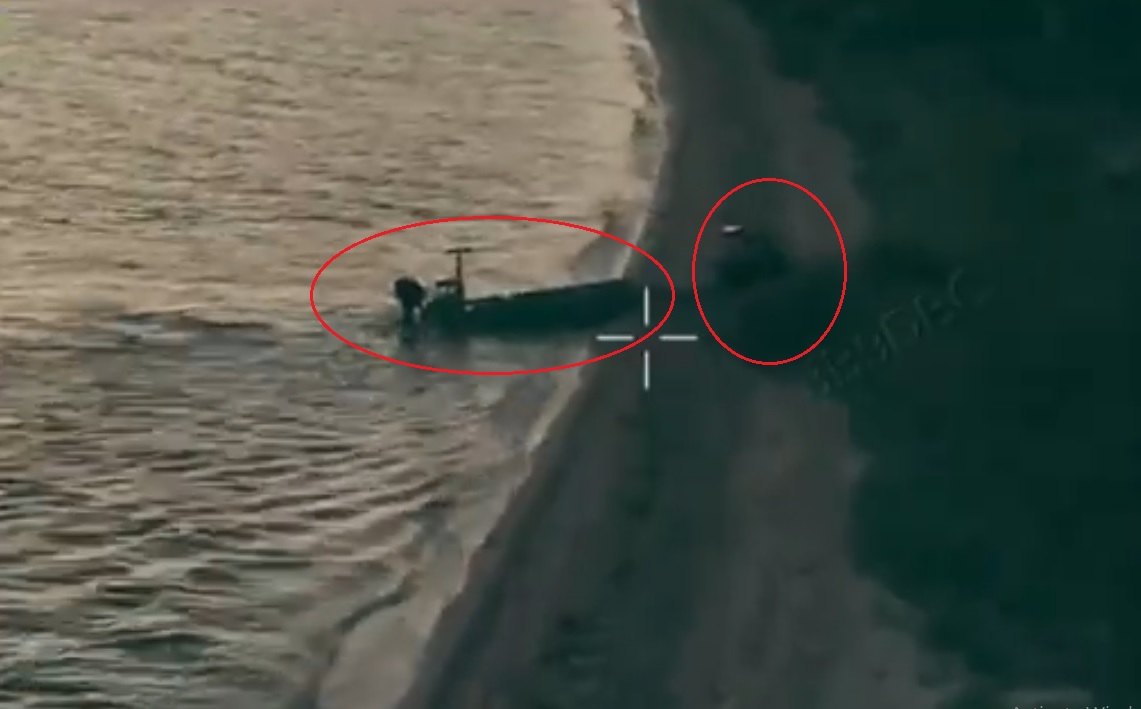
World
MYKOLAIV REGION, Ukraine — Ukrainian forces have carried out what military officials describe as the world's first known combat operation in which an unmanned surface vessel (USV) transported and deployed an armed unmanned ground vehicle (UGV) onto enemy-held territory. The mission took place on the Russian-occupied Kinburn Spit in Ukraine's southern Mykolaiv region. According to the 123rd Separate Territorial Defense Brigade, the operation was conducted by its 1st Unmanned Systems Battalion, marking a new step in the integration of different unmanned systems for frontline combat missions. Unmanned Boat Delivered Armed Ground Robot to Occupied Shore During the operation, operators remotely guided an unmanned maritime platform across the Black Sea to the occupied coastline of the Kinburn Spit. After reaching shore, the vessel successfully unloaded an armed ground robot, which then continued its assigned combat mission behind Russian positions under remote control. The brigade described the mission as the first known combat operation of its kind, stating that the robotic system was delivered by sea, landed on occupied Ukrainian territory, and employed to complete its assigned task. No soldiers. Just machines.Ukraine has carried out the world's first known combat mission in which a sea drone transported and deployed an armed ground robot behind Russian lines on the occupied Kinburn Spit. pic.twitter.com/zyJdFXWxVb — Ivan Khomenko (@KhomenkoIv60065) July 13, 2026 The operation was overseen by Colonel Oleh Makukha, commander of the 123rd Separate Territorial Defense Brigade, while Major Denys Hipik, commander of the 1st Unmanned Systems Battalion, directly coordinated the mission. In its official statement, the brigade said the operation reflects a growing focus on using unmanned systems for high-risk combat tasks in order to reduce the exposure of military personnel to enemy fire. Likely Use of the Ukrainian-Made Rys Ground Robot The Ukrainian military did not officially identify the unmanned ground vehicle used during the mission. However, footage released by the brigade indicates that it was likely the Rys (Lynx) robotic platform developed by the Ukrainian company Roboneers. The vehicle used in the operation appeared to be equipped with a PKT 7.62mm machine gun, a weapon commonly integrated into Ukrainian robotic combat platforms. The Rys family of unmanned ground vehicles is currently employed by Ukrainian forces in several roles, including: Logistics and supply transport Casualty evacuation Engineering support Direct combat support Some variants can also be fitted with specialized equipment for mine-laying and demining operations. The base version of the Rys platform is designed to carry payloads of up to 150 kilograms, while the larger Rys PRO variant can transport up to 300 kilograms. The system can also be equipped with the ShaBlya remote weapon station for armed missions. Kinburn Spit Remains a Highly Contested Area The Kinburn Spit is one of the most heavily contested coastal areas in southern Ukraine. Russian forces maintain extensive surveillance networks in the area using drones, observation systems, and artillery coverage, making conventional amphibious landings particularly dangerous. Using an unmanned surface vessel to transport an armed ground robot allows Ukrainian forces to carry out missions in these heavily defended coastal areas without placing soldiers directly at risk during the initial landing. Part of Ukraine's Expanding Use of Robotic Systems The latest operation reflects Ukraine's continued expansion of robotic systems across battlefield operations. In June 2026, Ukraine's 115th Mechanized Brigade reported using an armed unmanned ground vehicle to provide fire support while clearing Russian positions in the village of Novoplatonivka in the Kharkiv region. The Ministry of Defense has also reported a growing use of unmanned ground vehicles for logistics and casualty evacuation missions, highlighting the increasing role of robotic systems across different military tasks. A New Tactical Application for Sea Drones While Ukrainian sea drones have been widely used throughout the war against Russian naval forces—primarily for strike missions and attacks on maritime targets—the Kinburn Spit operation represents a different application. Instead of serving as a weapon itself, the unmanned surface vessel acted as a transport platform, delivering an armed ground robot directly onto occupied coastline. This effectively turned the maritime drone into an unmanned landing craft capable of inserting robotic systems into contested territory. The mission demonstrates how different categories of unmanned platforms can be combined to conduct operations in areas where conventional troop landings would face significant risks from surveillance, artillery, and drone attacks. According to the 123rd Separate Territorial Defense Brigade, the operation represents "the first known combat mission of this format in the world," reflecting Ukraine's ongoing efforts to integrate maritime and ground robotic systems into coordinated battlefield operations. Source : united24media
Read More → Posted on 2026-07-13 14:22:04Search
Top Trending in 24 Hours
-
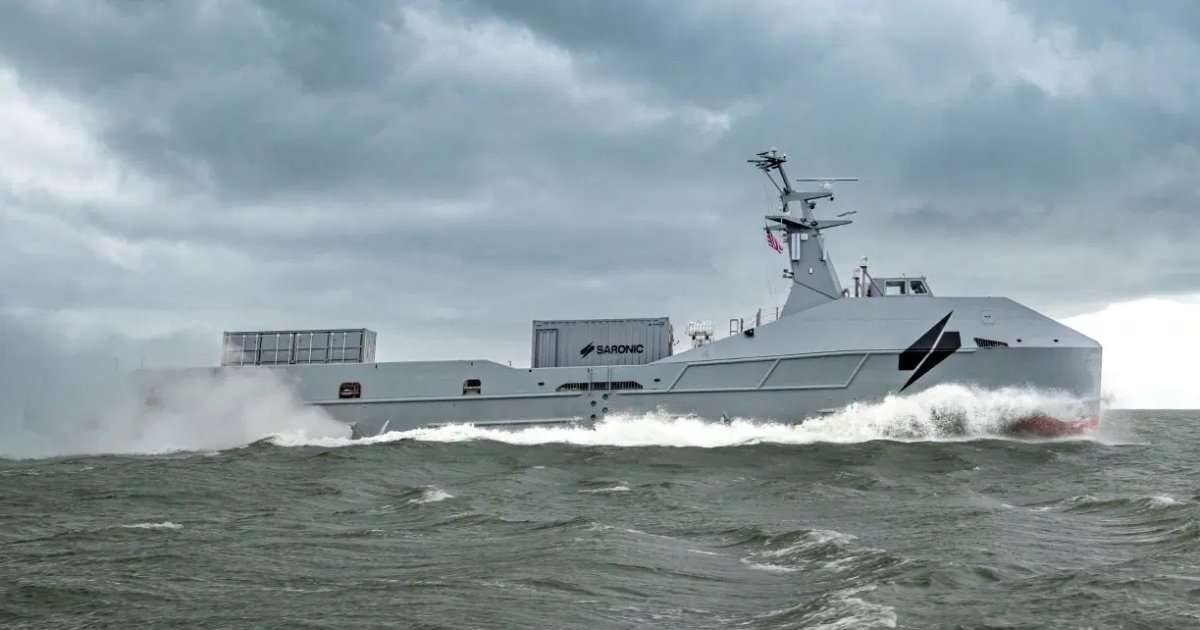 U.S. Navy Awards Production Agreements for 30 Medium Unmanned Surface Vessels, Including 10 Saronic Marauders
-
 Boeing Wins $20 Billion U.S. Navy Contract for F/A-XX Sixth-Generation Fighter
-
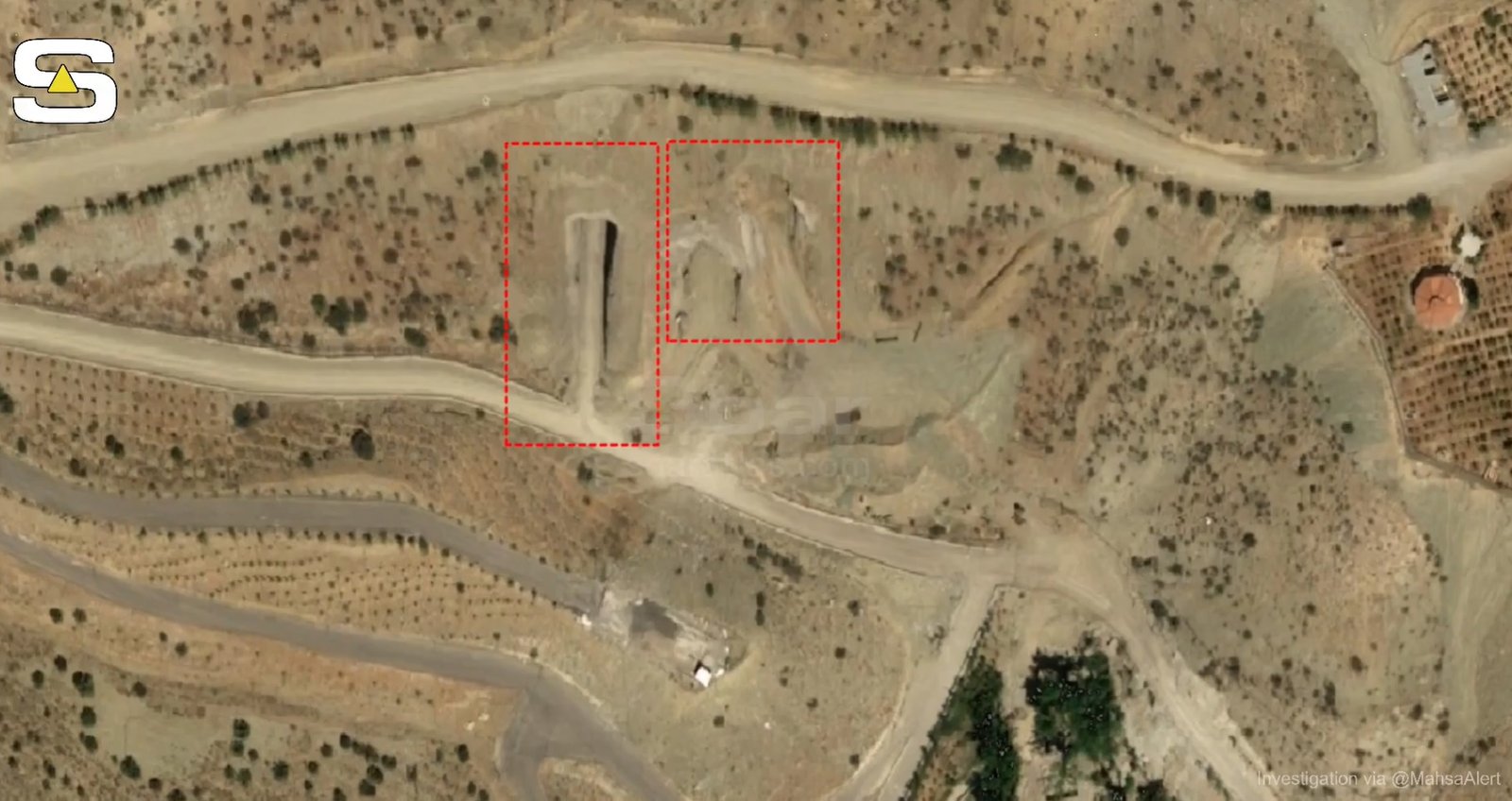 Satellite Imagery Shows Construction Changes at Hillside Site Linked to Iran’s Supreme National Security Council
-
 Flydubai Flight to Israel Diverted to Saudi Arabia After Possible Attempted Terror Attack in Cockpit
-
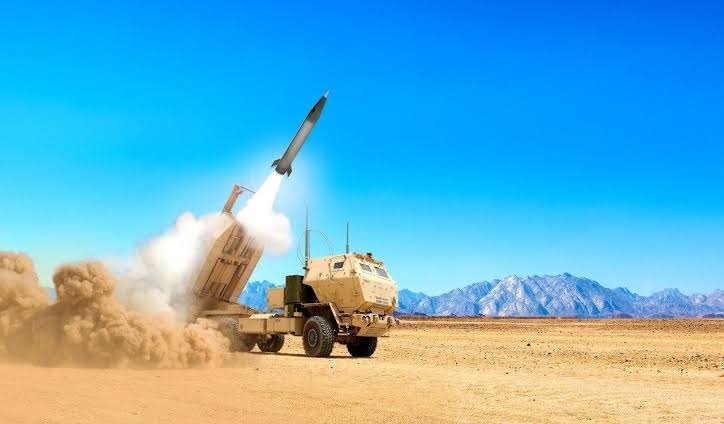 U.S. Army Selects Five Companies to Develop 1,000-Km Precision Strike Missile Prototypes
-
 NASA Adds Blue Origin’s Upgraded New Glenn 9×4 to Launch Services Contract
-
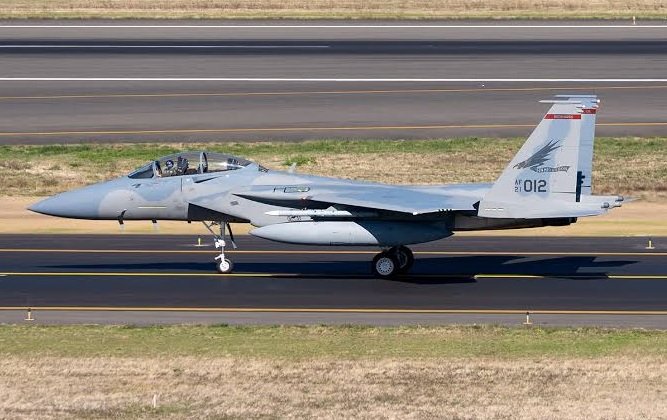 U.S. Air Force Awards Boeing $2.38 Billion Contract for 22 F-15EX Fighter Jets
-
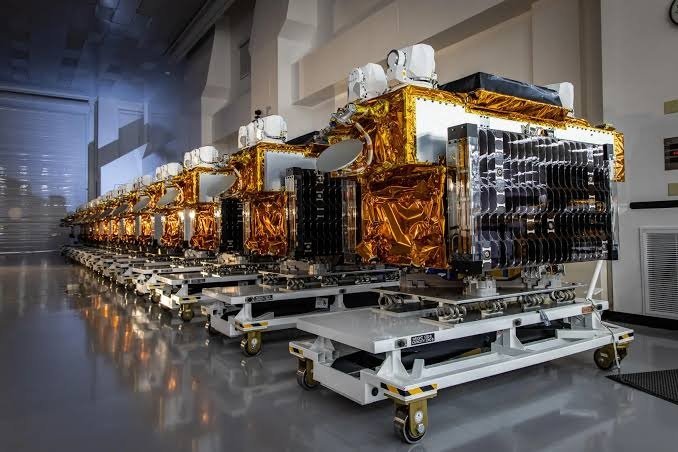 Northrop Grumman Delivers First 21 Satellites for Pentagon’s Next-Generation Military Network
Top Trending in 4 Days
-
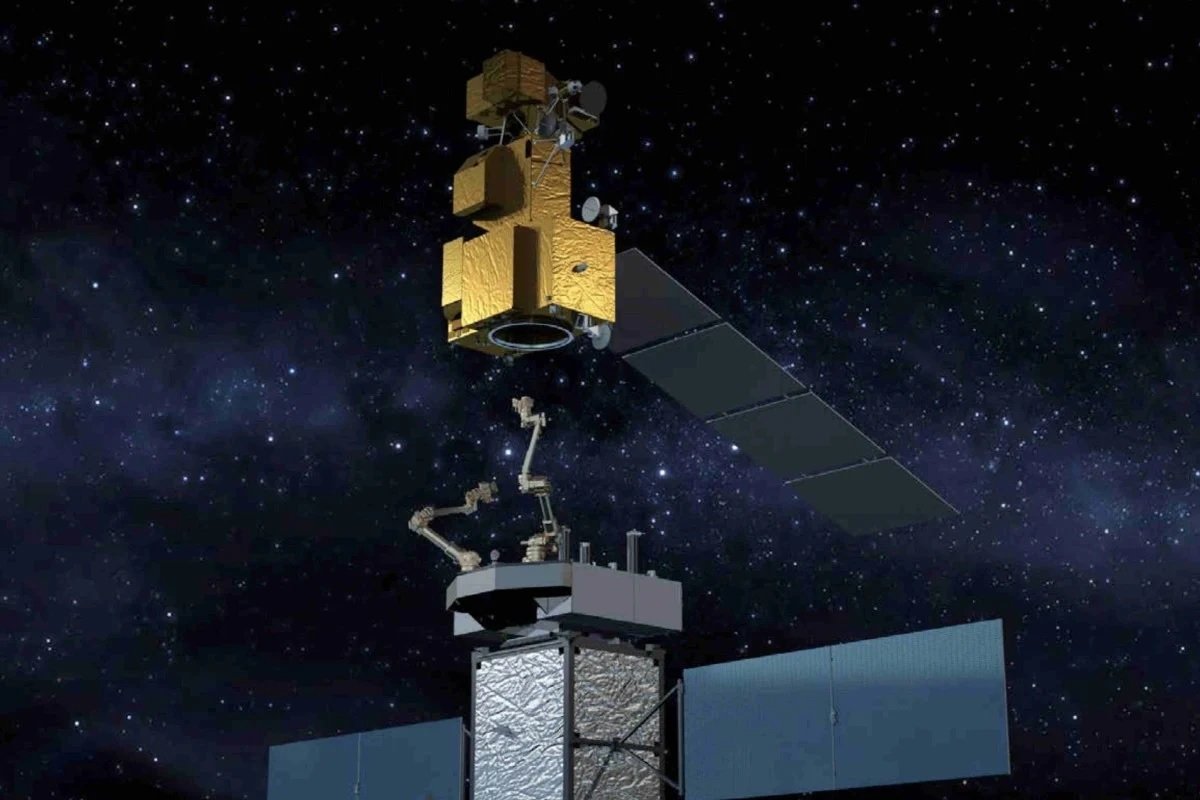 China Reports First High-Orbit Refueling of BeiDou Satellite, but Tracking Data Raise Questions
-
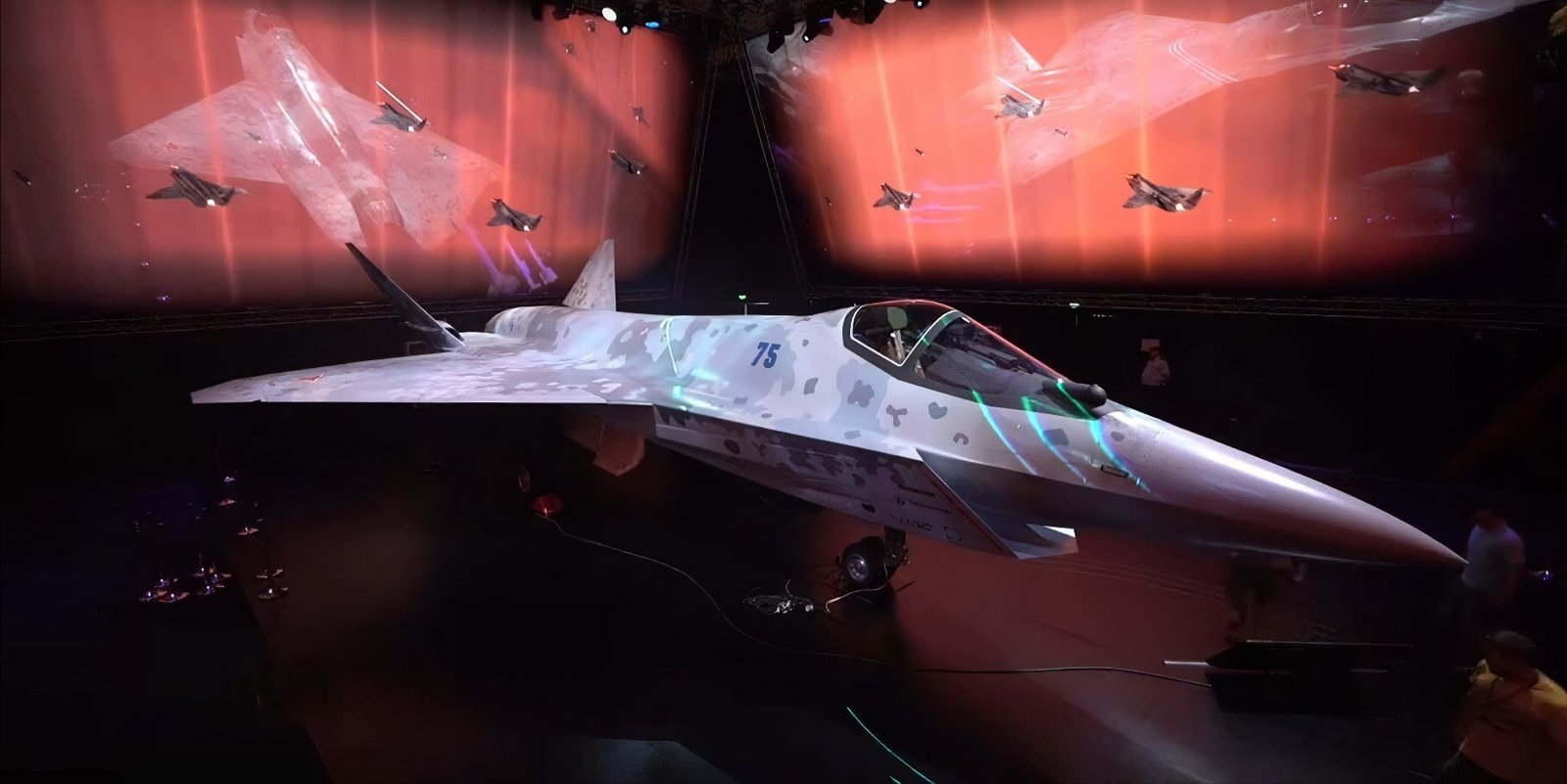 Russia Says Su-75 Checkmate Could Cost Just $25–30 Million, Flight-Hour Costs 6 Times Lower Than F-35
-
 Eight U.S. Marines Injured in Iranian Missile Strike on U.S Vessel in Strait of Hormuz
-
 UK Offers Nuclear Deterrence for Its Northern European Defence Partners
-
 U.S. and Russia Remove Human-Review Rules From Draft UN AI Weapons Framework
-
 U.S. Navy Begins Flight Testing Blackbeard Hypersonic Missile on F/A-18 Super Hornet
-
 Rheinmetall Develops Automated Reloader for Austrian Skyranger Air Defense System
-
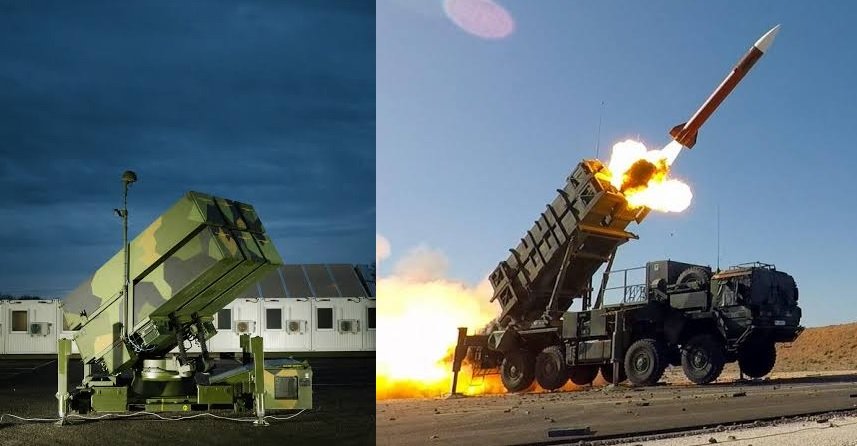 Ukraine Receives New NASAMS Air Defense System and Interceptor Missiles From U.S. and Norway
