
World
Sichuan, China — A major infrastructure embarrassment has struck China after the 758-metre-long Hongqi Bridge in Sichuan Province collapsed just months after its grand opening, raising serious questions about the country’s fast-paced construction practices and the quality of its engineering oversight. The Hongqi Bridge, part of a key national highway linking central China to Tibet, was inaugurated earlier this year as a symbol of modern connectivity across China’s mountainous southwest. But the bridge’s sudden failure — captured in viral videos showing large sections crumbling into the river below — has turned what was once a showcase of progress into a stark reminder of the risks behind rapid infrastructure expansion. Cracks, Landslides, and a Timely Closure According to Reuters and South China Morning Post, engineers detected ground movement near one of the bridge’s approach spans a day before the collapse. The slope on the eastern side of the bridge had shown signs of soil displacement, prompting authorities to close the route as a precautionary measure. Within 24 hours, the slope gave way, sending a large section of the bridge’s approach tumbling down. Fortunately, thanks to the early warning, no casualties were reported, as all traffic had been diverted. Local authorities in Maerkang, in the Garzê Tibetan Autonomous Prefecture, have since launched a technical investigation into what they described as a “ground deformation-induced structural failure.” The area lies within a seismically active zone, prone to landslides and subsidence during heavy rainfall — factors that may have contributed to the collapse. Bridge of Pride Becomes Symbol of Concern The Hongqi Bridge was touted as a triumph of Chinese infrastructure planning when it opened earlier this year. Built by the Sichuan Road and Bridge Group, the project was part of the National Highway G317, a major artery connecting Chengdu to Tibet — one of the most challenging engineering regions in the world. The bridge was designed to endure harsh mountain weather and unstable soil conditions. Yet, just months after completion, its partial collapse has shaken public confidence and renewed debates about the longevity and safety of China’s high-speed construction model. A Blow to China’s Engineering Reputation For decades, China has been hailed as a global engineering powerhouse, building the world’s longest bridges, tallest towers, and fastest rail networks. However, the Hongqi Bridge collapse exposes a vulnerability behind that image — a growing number of infrastructure failures linked to rushed timelines, regional corruption, and poor geological planning. Analysts say the incident underscores a pattern: ambitious timelines often come at the cost of structural reliability. With local governments under pressure to deliver political showcase projects, quality assurance sometimes takes a back seat. An engineer familiar with Chinese infrastructure projects told SCMP that, “The problem isn’t just with materials or design — it’s the speed and pressure to complete projects before proper environmental and soil studies are done.” The irony wasn’t lost on many observers online, who pointed out that China has struggled to replicate certain global designs, especially in regions with unstable terrain. Some critics even drew comparisons to India’s Chenab Bridge in Jammu and Kashmir, which was built under far harsher conditions but has so far remained structurally sound. Comparisons and Cautionary Lessons The Chenab Bridge, often dubbed the “world’s highest railway bridge,” spans a deep gorge in India’s Himalayas — a region far more seismically active and geologically complex than Sichuan. Its successful construction after nearly two decades of research, testing, and phased engineering stands in sharp contrast to the Hongqi Bridge’s rapid build-and-collapse story. Experts note that China’s rush to expand infrastructure in western provinces, often within months rather than years, makes projects vulnerable to terrain instability and poor drainage systems. In contrast, India’s methodical approach in high-altitude bridge design — including slope stabilization, long-term monitoring, and deep foundation anchoring — has proven more sustainable. Official Response and Investigation The Chinese Ministry of Transport has dispatched investigation teams to assess the exact cause of the failure. Preliminary reports indicate the collapse was triggered by shifting ground and landslides, but questions remain over whether design flaws or inadequate soil analysis played a role. The government has vowed to hold responsible parties accountable, and an internal review of Sichuan Road and Bridge Group’s recent projects is reportedly underway. All bridges under construction in similar terrains across Sichuan and Yunnan have been ordered to undergo emergency safety inspections. Public Reaction and Broader Impact The incident has triggered widespread debate on Chinese social media. While official outlets have tried to frame the collapse as a “natural event,” many users on Weibo have criticized the handling of public infrastructure projects, with one comment reading: “If the ground shifted, why wasn’t the bridge designed to withstand it? Nature is not an excuse for negligence.” The Hongqi Bridge’s collapse also reverberated internationally, raising doubts among nations that have signed onto China’s Belt and Road Initiative (BRI). With many of those projects being constructed in geologically unstable regions, the failure has sparked renewed calls for stricter engineering audits and independent safety oversight. The collapse of the Hongqi Bridge serves as a sobering reminder that engineering brilliance cannot be rushed or replicated without understanding the ground beneath it. Despite China’s reputation for megaprojects, the incident underscores the consequences of prioritizing speed over sustainability. While no lives were lost, the bridge’s failure is a symbolic blow to China’s claim of engineering dominance — especially when compared to similar projects abroad that have stood the test of time and terrain. As investigations continue, the Hongqi Bridge stands as a cautionary tale: building higher, longer, or faster is not the same as building smarter, safer, or stronger.
Read More → Posted on 2025-11-12 04:58:10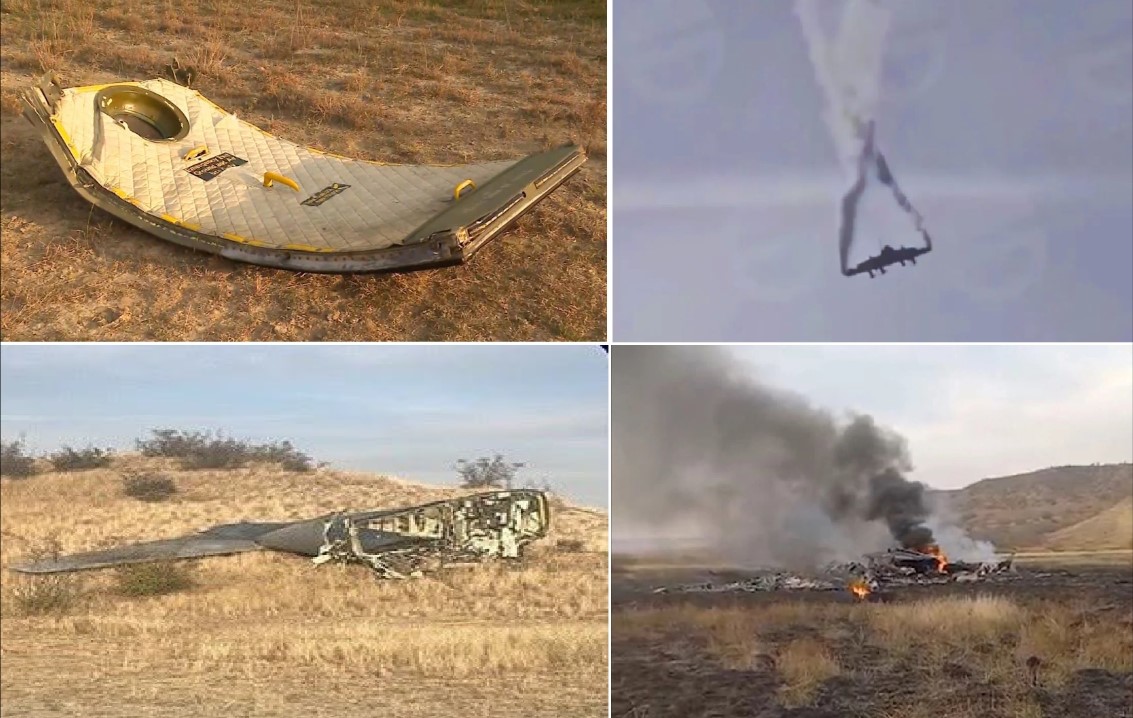
World
In a tragic aviation disaster, a Turkish Air Force C-130 military transport aircraft has crashed near the Georgia-Azerbaijan border, killing several personnel on board. The aircraft was returning to Turkey after participating in Azerbaijan’s November 8 Victory Day military parade, which marked five years since the end of the 2020 Nagorno-Karabakh war. The Turkish Ministry of National Defense confirmed that the US-made Lockheed C-130 Hercules went down shortly after takeoff from an airbase in Azerbaijan, where Turkish troops and air force units had been attending the commemorative event in Baku. The plane reportedly carried around 20 Soldiers, including flight crew and military personnel. Disappearance From Radar and Crash Site Details According to Georgia’s Civil Aviation Authority, the aircraft disappeared from radar without issuing a distress signal while flying over eastern Georgia near the town of Sighnaghi, roughly 5 kilometers (3 miles) from the Azerbaijani border. Shortly afterward, local residents reported seeing a “bright flash” followed by smoke rising from a hilly region near the crash site. Emergency services, Georgian interior ministry units, and Turkish rescue teams quickly converged on the area, where they found wreckage scattered over a wide radius. Television footage broadcast by TV Imedi and Reuters showed mangled debris, twisted metal fragments, and what appeared to be the aircraft’s door lying on open ground. The scene suggested a high-impact crash, likely caused by a sudden loss of altitude rather than an attempted emergency landing. Reactions from Turkey and Azerbaijan Turkish President Recep Tayyip Erdoğan expressed deep sorrow over the loss of Turkish servicemen, referring to them as “our martyrs.” He extended condolences to the victims’ families and vowed that the cause of the crash would be fully investigated. “Our nation grieves today for the heroes we have lost in service. May Allah have mercy on our martyrs, and may their families find strength in this difficult time,” Erdoğan said in a statement from Ankara. In a message to his Turkish counterpart, Azerbaijani President Ilham Aliyev expressed his condolences, saying he was “deeply saddened by the tragic loss of Turkish servicemen.” Aliyev emphasized that Turkey and Azerbaijan “stand together in grief, just as we stand together in brotherhood.” The U.S. Ambassador to Turkey, Jeffry Flake, also issued a statement on social media: “We are deeply saddened by the loss of life in the crash of a Turkish Armed Forces C-130. Our thoughts are with the families of the fallen and with the people of Türkiye.” Part of a Military Delegation in Baku Sources within the Turkish Armed Forces (TSK) confirmed that the C-130 had been part of a logistical support contingent deployed to Azerbaijan for the Victory Parade. The event commemorated the Azerbaijani victory in the 2020 Nagorno-Karabakh conflict, where Turkey played a significant role by providing Bayraktar TB2 drones, advisors, and training support. Turkish Air Force personnel participated in a fly-past alongside Azerbaijani aircraft during the parade, while Turkish officers attended as part of the official delegation. The crashed C-130 was reportedly carrying equipment and personnel back to Turkish bases when it met with disaster shortly after crossing into Georgian airspace. Possible Causes Under Investigation Preliminary assessments indicate that the plane lost contact with air traffic control shortly after takeoff, without sending a distress signal — a possible sign of sudden mechanical failure or power loss. A joint Turkish-Georgian investigation team has been established to examine the wreckage and flight data recorders. Local authorities said weather conditions were clear at the time of the crash, reducing the likelihood of environmental factors. Aviation experts have noted that the C-130 Hercules, though highly reliable, is an aging aircraft platform in several global fleets, including Turkey’s. Introduced in the 1950s, the model has undergone multiple upgrades but remains susceptible to wear-and-tear issues, particularly during high-frequency military operations. The Turkish Air Force operates a fleet of over a dozen C-130B and C-130E variants, many of which have logged several decades of service. In recent years, modernization programs have aimed to improve avionics and structural integrity, but some older airframes remain in use for heavy transport missions. Rescue and Recovery Efforts By evening, rescue teams from both Georgia and Turkey had secured the area. Black boxes and other flight recorders are expected to be recovered and sent to Ankara for analysis. The Georgian Interior Ministry confirmed that multiple bodies had been recovered but did not specify a final casualty figure. Turkish military transport planes were dispatched from Ankara to aid in the recovery operation and repatriate the remains of the servicemen. Emergency responders described the crash zone as difficult to access, with debris spread across uneven terrain. Local firefighters worked alongside Georgian border police and Turkish military attachés stationed in Tbilisi to coordinate the scene. A Symbolic Loss Amid Brotherhood The timing of the crash adds a layer of poignancy to the tragedy. The November 8 Victory Parade in Baku was a powerful symbol of the enduring alliance between Turkey and Azerbaijan — an event celebrating shared military success and cooperation. For Ankara, the loss of its servicemen while returning from such an event represents not only a technical tragedy but also an emotional blow to a moment of unity and pride. Defense analysts note that the incident may lead to renewed scrutiny of Turkey’s aging transport aircraft fleet and accelerate efforts to induct newer models such as the Airbus A400M Atlas, which Turkey already operates alongside the older C-130s. The crash of the Turkish Air Force C-130 Hercules near the Georgia-Azerbaijan border stands as a sobering reminder of the risks inherent in military aviation. As search and recovery teams work to determine the cause, both Turkey and Azerbaijan have entered a period of mourning for those who perished in service. The C-130, a symbol of reliability for decades, has once again shown that even the most trusted military workhorses are not immune to tragedy. For now, the focus remains on recovering the fallen and uncovering the reasons behind this devastating loss — one that has cast a shadow over two nations bound by history, brotherhood, and shared sacrifice.
Read More → Posted on 2025-11-12 04:49:46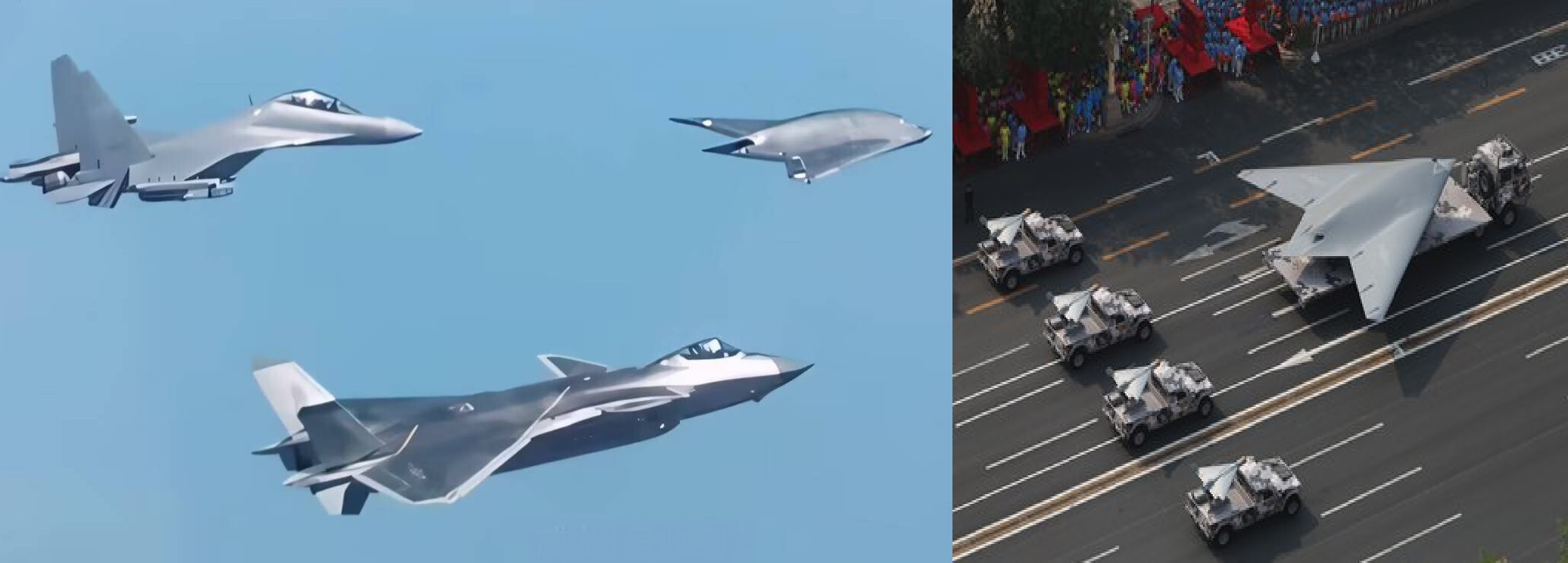
World
On November 11, 2025, China celebrated the 76th anniversary of the People’s Liberation Army Air Force (PLAAF) by releasing a short film titled “Far-Reaching Dreams.” The video, produced by the Chinese Air Force’s media division, marked a historic first — it showed the GJ-11 stealth combat drone, now officially named “Xuanlong” (Dark Dragon), flying in coordinated formation with the J-20 stealth fighter jet and the J-16D electronic warfare aircraft. The footage, lasting just a few minutes, is far more than a commemorative production. It represents the first public display of China’s most advanced air combat systems operating together — a symbolic and technical milestone demonstrating how far the PLAAF’s integration of stealth, strike, and electronic warfare capabilities has evolved. The Formation: A New Vision of Air Combat The film opens with the GJ-11 Dark Dragon taxiing from a dimly lit hangar — its angular flying-wing silhouette illuminated by the glow of runway lights. As it accelerates and lifts into the sky, the drone joins a pair of manned aircraft: the J-20 “Weilong” (Mighty Dragon) stealth fighter and the J-16D, a derivative of the J-16 multirole fighter specialized for electronic attack and radar suppression. Moments later, the J-20 launches an air-to-air missile, while the camera cuts to a ground-based HQ-20 surface-to-air missile firing sequence — symbolizing coordinated strikes between air and missile defense units. The sequence culminates with the trio flying in tight formation, framed against the rising sun — a powerful metaphor for China’s vision of next-generation networked warfare. GJ-11: From Sharp Sword to Dark Dragon Previously known as the “Sharp Sword”, the GJ-11 has undergone both renaming and capability evolution. The new name Xuanlong (Dark Dragon) aligns it with the “Dragon” naming convention of China’s stealth aircraft family — the J-20 Weilong (Mighty Dragon) and the J-35 Feilong (Flying Dragon). This rebranding subtly reinforces the image of a unified stealth fleet designed for cooperative, multi-domain operations. The GJ-11’s design reflects a classic flying-wing configuration similar to the U.S. B-2 Spirit and X-47B. Measuring approximately 14 meters in wingspan and 12 meters in length, it is optimized for low radar observability, featuring a shielded exhaust, composite construction, and serrated internal bay doors. The drone reportedly carries four to six small precision glide munitions or electronic payloads in twin internal bays, supporting both strike and reconnaissance missions. Its single turbofan engine produces roughly 50 kilonewtons of thrust, allowing subsonic cruise speeds with an estimated combat radius exceeding 1,200 kilometers and endurance of up to six hours. Such specifications position it for deep-penetration strike, electronic warfare, and high-risk reconnaissance — roles where unmanned systems can operate without exposing pilots to danger. The J-20 and J-16D: Complementary Roles The Chengdu J-20 serves as the spearhead of the PLAAF’s fifth-generation fleet. It brings long-range stealth, high maneuverability, and advanced sensor fusion — attributes that make it both a command platform and strike asset. In the film, its missile launch scene symbolizes the precision engagement component of China’s future combat packages. Meanwhile, the Shenyang J-16D adds a critical electronic warfare (EW) layer. Equipped with wideband jamming pods and radar detection equipment, the J-16D’s primary function is to neutralize enemy air defense systems, creating “blind corridors” through which stealth aircraft and drones can operate freely. Together, these aircraft form a three-tiered system — jammers suppress, stealth fighters strike, and drones scout or saturate. Symbolism and Strategy Behind the Footage The timing and content of “Far-Reaching Dreams” reveal strategic intent. The PLAAF did not release this footage at an air show or arms expo, but on its anniversary, reflecting confidence that the concept has matured beyond experimental stages. The coordinated flight illustrates China’s advancing doctrine of manned-unmanned teaming (MUM-T) — an area where the PLAAF seeks parity with the United States and Australia, both of which are developing “loyal wingman” drones such as the Boeing MQ-28 Ghost Bat. The Dark Dragon’s integration with the J-20 and J-16D demonstrates a vision of networked combat, where stealth jets act as mission commanders directing groups of autonomous drones through secure data links. In such operations, drones could extend radar coverage, perform decoy maneuvers, or carry precision munitions to overwhelm defenses. The film’s closing imagery — air and missile systems launching in unison — portrays a future in which air, space, and cyber domains are seamlessly connected under a unified command architecture. AI, Simulation, and Training Integration Alongside the film, the PLAAF released companion videos outlining its AI-driven training network, connecting live aircraft, advanced simulators, and digital “virtual forces.” This network reportedly enables mixed-reality exercises, where algorithms simulate adversaries and adapt tactics in real-time. By merging AI with flight operations, the PLAAF aims to accelerate tactical learning, allowing pilots to practice joint operations with unmanned aircraft without risking valuable assets. These systems also enable data fusion experiments, multi-drone control trials, and distributed sensor tests, laying the groundwork for future autonomous swarm coordination. Testing and Operational Progress Over the past two years, the GJ-11 has been observed conducting multiple test sorties at key facilities including Dingxin and Malan, two of China’s primary aviation testing centers. Satellite imagery and eyewitness reports suggest coordinated flight trials with J-20s, as well as endurance and altitude performance tests over plateau regions. Such activities point toward final-stage evaluations — possibly preceding limited operational deployment within select air regiments. While no official confirmation has been made, defense analysts believe combat readiness assessments are underway, focusing on data link stability, radar signature behavior, and autonomous mission sequencing. Toward Naval and Joint Applications Speculation is growing that a navalized variant of the GJ-11 is under development. Expected modifications include folding wings, reinforced landing gear, and anti-corrosion coatings — all consistent with carrier-based operations on China’s new Type-003 “Fujian” aircraft carrier. If deployed at sea, the Dark Dragon could serve as an early warning platform, decoy, or anti-ship strike drone, working alongside carrier-based fighters like the J-35. This would significantly extend the surveillance and strike range of Chinese carrier groups, supporting Beijing’s ambitions for multi-domain power projection across the First and Second Island Chains. China’s unveiling of the GJ-11 Dark Dragon, flying alongside the J-20 Mighty Dragon and J-16D electronic warfare aircraft, represents far more than a cinematic display. It signals the emergence of a new combat philosophy — one that merges stealth, electronic warfare, and autonomous systems into an integrated, networked force. Through “Far-Reaching Dreams,” the PLAAF has showcased not only its aircraft but its strategic confidence, AI-driven training, and maturing doctrine of human-machine collaboration. Whether the Dark Dragon is already combat-ready remains uncertain, but its public debut suggests that China’s airpower modernization has entered a phase where unmanned and manned platforms are no longer separate tools — but interlinked elements of a unified warfighting system. With each new reveal, Beijing is making one message clear: the future of air combat will not be fought by pilots alone, but by intelligent, connected machines flying beside them.
Read More → Posted on 2025-11-11 16:39:22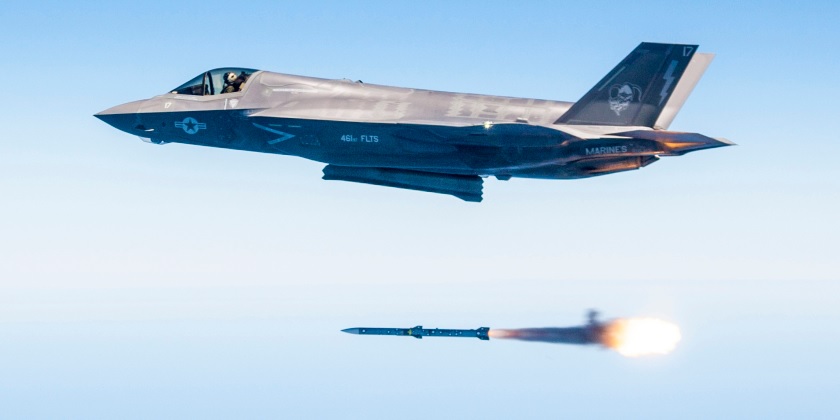
World
Greece has formally renewed its request for U.S. approval to purchase AIM-120D Advanced Medium-Range Air-to-Air Missiles (AMRAAMs) for its incoming fleet of F-35A Lightning II fighters, in a move aimed at preserving the delicate balance of airpower in the Aegean Sea as Türkiye prepares to field the Meteor missile on its Eurofighter Typhoon aircraft. The request, reported by Kathimerini, was resubmitted to Washington by Greece’s Ministry of National Defense, underscoring the country’s determination to equip its fifth-generation fighters with the latest long-range missile technology. The proposal is currently under review by the U.S. State Department and Department of Defense, as part of a broader regional arms transfer assessment. Greek defense officials have emphasized that without access to the AIM-120D, the Hellenic Air Force (HAF) may consider purchasing the European MBDA Meteor missile instead — a potential shift that would mark a deeper realignment toward European defense suppliers. Preserving Air Superiority in the Aegean For Athens, arming its F-35As with AIM-120D AMRAAMs is not just a matter of modernization, but a critical requirement for deterrence and strategic balance. Türkiye’s move to integrate the Meteor missile — with its formidable range exceeding 200 km and active ramjet propulsion — has raised alarm in Greek defense circles. Greece sees the AIM-120D, developed by Raytheon, as the only viable counterbalance. The missile offers an effective engagement range of up to 180 kilometers, advanced two-way datalink communication, and GPS-aided inertial navigation for mid-course guidance. Designed to operate in high electronic-warfare environments, it enables pilots to “fire-and-forget” while maintaining target updates in flight. Defense analysts in Athens warn that if Türkiye’s Meteor-equipped Typhoons enter service before Greece’s F-35s are fully armed, it could temporarily tilt the airpower equation in Ankara’s favor — particularly across disputed airspaces of the Aegean and Eastern Mediterranean. A senior Greek air force source told Army Recognition, “Without AIM-120Ds, our fifth-generation aircraft lose part of their strategic edge. We need a long-range engagement capability that ensures our pilots can strike first, and survive.” Washington’s Cautious Approach While the U.S. has approved the sale of twenty F-35A fighters to Greece under a €3.47 billion contract, Washington has so far taken a cautious approach to the export of the AIM-120D, which remains one of America’s most closely controlled air-to-air weapons. U.S. defense officials are reportedly weighing regional stability and export precedents before granting approval. Similar hesitations were observed during past transfers to Japan, South Korea, and Taiwan, all of which required lengthy security assurances. If denied, Greek officials have indicated that the Meteor missile — already in service with the country’s Dassault Rafale F3R fighters — could be procured for the F-35A, following a new integration agreement with MBDA. Such a step would not only maintain combat parity with Türkiye but also strengthen Athens’ alignment with European defense industries, reducing reliance on U.S. suppliers. The Missiles at the Core of the Rivalry AIM-120D AMRAAM (Raytheon, USA) Range: 160–180 km (depending on altitude and flight profile) Speed: Close to Mach 4 Features: Two-way datalink, GPS-aided inertial navigation, improved ECCM (Electronic Counter-Countermeasures) Launch weight: ~160 kg Length: 3.66 m Compatibility: F-15, F-16, F/A-18, F-22, and F-35 Meteor (MBDA, Europe) Range: 200+ km Speed: Mach 4+, powered by an active ramjet motor maintaining thrust throughout flight Guidance: Active radar seeker with data-link update Features: Large “no-escape zone,” optimized for highly maneuverable targets While the Meteor offers slightly longer range and sustained propulsion, the AIM-120D provides tighter integration with U.S. avionics and is fully certified for the F-35’s internal weapons bay, an important factor for maintaining the aircraft’s stealth profile. Greece’s Expanding Airpower Strategy The Hellenic Air Force’s modernization plan has accelerated since 2020, aiming to build a three-tiered fighter structure composed of F-35As, F-16V Vipers, and Rafale F3Rs. F-35A Lightning II: 20 aircraft on order, with deliveries starting in 2028. The first jets will remain in the U.S. for pilot training before joining the 117th Fighter Wing at Andravida Air Base by the early 2030s. Rafale F3R: 24 aircraft delivered between 2022 and early 2025, equipped with Meteor, MICA, SCALP, and AM39 Exocet missiles. F-16V Viper Fleet: 83 upgraded aircraft forming the operational backbone of the Air Force, supplemented by a planned modernization of 38 F-16 Block 50s valued at nearly €900 million. Athens has ruled out purchasing more Rafales for now, emphasizing that its combined fighter fleet provides a credible deterrent and ensures interoperability with NATO allies. Future Weapons and Next-Generation Systems Looking ahead, Greece is also expressing interest in the AIM-260 Joint Advanced Tactical Missile (JATM) — the successor to the AMRAAM being developed by Lockheed Martin. The AIM-260 is expected to offer a range exceeding 200 km, a top speed near Mach 5, and enhanced resistance to electronic warfare. The U.S. military has allocated $687 million for JATM development and procurement in FY2026, but the system is not yet export-ready. Greece’s early interest signals its desire to remain aligned with next-generation NATO capabilities once the missile becomes available for foreign sale. Additionally, Athens is exploring participation in Collaborative Combat Aircraft (CCA) programs — pairing manned fighters with autonomous drones for reconnaissance and strike missions. Discussions with the U.S. Air Force could see Greece join early development or testing phases. The HAF is also evaluating the APKWS II laser-guided rocket as a low-cost anti-drone solution, capable of converting existing 70mm Hydra rockets into guided munitions with a range of 5–8 km. Strategic Significance For Greece, securing AIM-120D approval would reaffirm its strategic partnership with the United States, solidify its position as the southern anchor of NATO’s airpower, and ensure technological parity with Türkiye. However, if Washington hesitates, Greece’s pivot toward European missile systems could reshape defense procurement dynamics across Southern Europe — deepening industrial ties with France and MBDA, while signaling a new era of strategic autonomy within NATO’s southern flank. Either way, Athens appears determined to ensure that when its F-35A Lightning II jets take to the skies in 2028, they will do so fully armed and ready to secure the Aegean — whether with Raytheon’s AIM-120D or MBDA’s Meteor.
Read More → Posted on 2025-11-11 16:27:14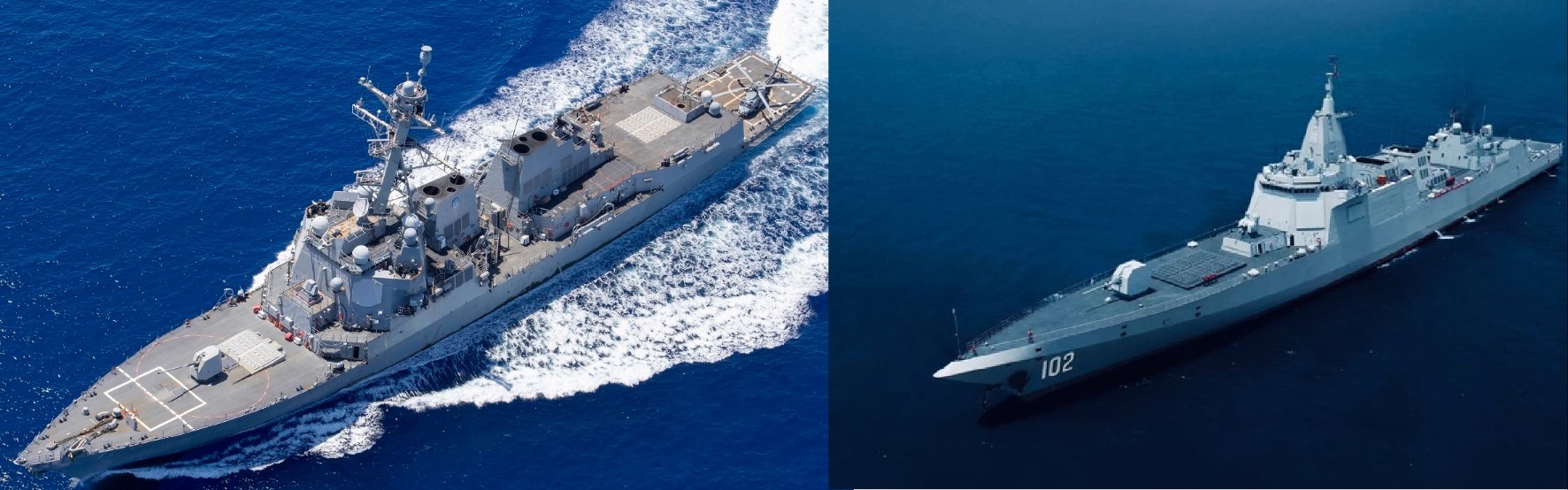
World
China’s Type 055 destroyer, known by its NATO designation Renhai-class cruiser, represents the pinnacle of Chinese naval engineering and one of the most advanced surface warships in operation today. Developed by the China State Shipbuilding Corporation (CSSC) and entering service with the People’s Liberation Army Navy (PLAN) in 2020, the Type 055 marks a decisive shift in China’s maritime strategy — from regional coastal defense to full-spectrum blue-water capability. The class is designed to escort China’s aircraft carriers, lead expeditionary task forces, and deliver multi-domain warfare capabilities — including air defense, anti-ship, anti-submarine, and land-attack missions. With its 112 universal vertical launch system (VLS) cells, advanced radar suite, and stealth shaping, the Type 055 is widely regarded as one of the most lethal surface combatants on Earth. Design and Powerplant According to open-source naval analysis, the Type 055 has a full-load displacement of approximately 12,000 to 13,000 tonnes, making it comparable in size to the U.S. Navy’s Ticonderoga-class cruisers and significantly larger than most destroyers in active service. Length: 180 meters Beam: 20 meters Speed: Approximately 30 knots Propulsion: Combined Gas and Gas (COGAG) system powered by four QC-280 gas turbines producing roughly 150,000 horsepower Crew: Around 300 personnel Its stealth-optimized hull and superstructure reduce radar cross-section, while the enclosed integrated mast conceals radar arrays, communication systems, and electronic sensors. These design elements make the ship both hard to detect and resistant to modern electronic warfare. Armament: 112 VLS Cells of Multi-Role Firepower Type 055’s combat power lies in its 112-cell Universal Vertical Launch System (UVLS) — 64 cells forward and 48 cells aft — capable of launching a diverse array of missiles. Unlike older systems limited by missile size, China’s UVLS can accommodate any missile within its inventory designed for sea launch, providing immense flexibility. Verified Weapon Types (Wikipedia and PLA open sources): HHQ-9B Long-Range Surface-to-Air Missiles: Capable of intercepting aircraft and cruise missiles at ranges up to 300 km. YJ-18 Anti-Ship Missiles: A sophisticated, dual-speed missile (subsonic cruise with a supersonic terminal sprint of up to Mach 3), with an estimated range of 220–540 km. CJ-10 Land-Attack Cruise Missiles (LACM): Long-range precision strike missile with an estimated range exceeding 1,000 km, giving the Type 055 strategic strike capability against land-based targets. Yu-8 ASROC Missiles: Rocket-launched lightweight torpedoes for anti-submarine warfare. Although not officially confirmed on Wikipedia, Chinese state-affiliated media have also featured the YJ-21 hypersonic anti-ship missile being test-launched from a Type 055 vessel — reportedly capable of speeds up to Mach 6–10 and ranges around 1,500 km. Independent verification remains limited, so these figures are treated as reported, not confirmed. Additional Armament Main Gun: 130 mm H/PJ-38 naval gun for surface and shore bombardment. Close-In Defense: Type 1130 CIWS (11-barrel 30 mm Gatling gun, firing up to 10,000 rounds/min). HHQ-10 short-range missile system for last-ditch air defense. Torpedoes: Two triple 533 mm torpedo tubes for anti-submarine warfare. Aviation: Hangar and flight deck for two Z-20F helicopters for ASW, reconnaissance, and utility missions. Sensors and Electronics The Type 055’s advanced sensor architecture rivals that of the world’s top destroyers. Primary Radar: The Type 346B Dual-Band Active Electronically Scanned Array (AESA) radar system. Mounted in a fully integrated mast for reduced radar signature. Estimated tracking range for large aerial targets: up to 450–500 km. Combat Data System: Integrated with Beidou satellite navigation and guidance, enabling real-time networked targeting and coordination with other PLAN assets. Sonar Suite: Includes a bow-mounted sonar array and a towed sonar system for long-range submarine detection. This integration allows the Type 055 to operate as both a fleet command ship and a missile-defense platform, capable of coordinating multi-layered defensive and offensive operations. Operational Role Within the PLAN, the Type 055 serves as the core escort for China’s aircraft carrier strike groups, operating alongside Type 052D destroyers and Type 901 supply ships. It provides wide-area air defense and anti-submarine coverage while extending China’s maritime strike range across the Indo-Pacific. China currently operates eight active Type 055 destroyers, with several more under construction. These vessels form part of the PLAN’s expanding blue-water fleet, which is rapidly shifting China’s naval balance from coastal defense toward sustained global presence. Comparison: Type 055 vs. U.S. Navy’s Arleigh Burke-Class Flight III Specification Type 055 (China) Arleigh Burke Flight III (USA) Displacement (full load) ~12,000–13,000 tons ~9,800 tons Length 180 m 156 m Speed ~30 knots 31+ knots VLS Cells 112 UVLS 96 Mk 41 Primary SAM HHQ-9B (300 km) SM-6 (240 km) / SM-2 / ESSM Primary ASuW Missile YJ-18 (540 km) / YJ-21 (hypersonic, reported) RGM-84 Harpoon (130 km) / LRASM (560 km) Radar System Type 346B Dual-Band AESA AN/SPY-6(V)1 AESA (Air and Missile Defense Radar) Combat Network Beidou satellite + PLAN data-link Aegis Combat System (CEC + GPS) Entered Service 2020 2023 (Flight III) The Arleigh Burke Flight III remains the world’s most combat-proven destroyer, featuring the Aegis Baseline 10 combat system and AN/SPY-6 radar, which offers unmatched ballistic missile defense (BMD) capability. However, the Type 055 surpasses it in size and missile capacity, giving the PLAN a ship capable of massive multi-role firepower. While the Burke’s edge lies in integrated BMD and combat-tested doctrine, the Type 055’s modular VLS and potential hypersonic missile compatibility give it significant offensive reach — especially in anti-ship and land-attack roles. Strategic Significance The Type 055 is more than a warship — it is a statement of intent. Its combination of long-range missiles, advanced radar, and heavy displacement enables China to project naval power deep into the Pacific and Indian Oceans. When deployed in carrier groups, it serves as the PLAN’s “shield and sword,” simultaneously protecting high-value assets and delivering precision strikes. The ship’s integration with Beidou-guided weapons and growing hypersonic arsenal places it firmly among the world’s top-tier destroyers — rivaling, and in some categories surpassing, Western equivalents in missile versatility and volume. The Type 055 Renhai-class is not just China’s most advanced warship — it is one of the most formidable destroyers on Earth. Its 112 VLS cells, sophisticated AESA radar, and potential to deploy hypersonic missiles give it a level of offensive and defensive power few navies can match. While the U.S. Navy’s Arleigh Burke Flight III remains superior in integrated combat experience and ballistic missile defense, the Type 055 demonstrates how rapidly China has closed the technological gap. As of today, it stands as a cornerstone of China’s blue-water fleet — a sleek, lethal symbol of the PLAN’s rise as a truly global maritime power.
Read More → Posted on 2025-11-11 16:22:32
World
In a landmark step toward strengthening India’s indigenous defence manufacturing ecosystem, Yantra India Limited (YIL) has signed two major strategic agreements with Hindustan Aeronautics Limited (HAL) and Bharat Dynamics Limited (BDL) for the installation of a 10,000-ton extrusion press at YIL. The facility will be capable of producing large-scale, high-strength aluminium alloy components, critical for both aerospace and defence applications. A third Memorandum of Understanding (MoU) was also signed with Mishra Dhatu Nigam Limited (MIDHANI) to establish a Metal Bank, ensuring uninterrupted availability of strategic raw materials required for national defence projects. Together, these deals mark a significant leap in India’s long-term goal of achieving self-reliance in strategic materials and high-precision engineering. HAL, BDL Commit to Strategic Backing Under the agreement, HAL has extended an interest-free advance of ₹435 crore to YIL, ensuring the timely establishment and operational readiness of the 10,000-ton press. BDL, in turn, will provide a sustained workload of 3,000 metric tonnes spread over the next ten years, guaranteeing consistent utilization and financial sustainability of the facility. The arrangement effectively creates a public-sector production ecosystem, linking YIL’s manufacturing capability with HAL’s aircraft and helicopter programs and BDL’s missile and launcher systems. This alignment ensures not just demand stability but also full integration across India’s defence supply chain — from raw material to finished product. The Power of a 10,000-Ton Press The 10,000-ton extrusion press is designed to shape large billets of high-strength aluminium alloys into critical aerospace and missile components. Such presses are capable of producing airframe beams, fuselage frames, wing spars, rocket motor casings, and launcher rails — parts that require both precision and structural integrity. Currently, India imports many of these large structural components from foreign suppliers in the United States, Russia, and Europe. The new YIL facility will drastically reduce this dependency. When commissioned, it will be one of the most powerful metal-forming machines in India, rivalling heavy-press capabilities seen only in advanced industrial nations. Why Aluminium Alloys Matter High-strength aluminium alloys are a cornerstone of modern aerospace design, balancing light weight with exceptional tensile and fatigue properties. These alloys form the structural backbone of fighter aircraft, helicopters, transport planes, and guided weapons. By enabling domestic production of such components, India can sharply reduce its import bill and control critical technologies tied to military readiness. The press will also support space, missile, and naval programs, where precision-engineered alloy sections are indispensable. The Metal Bank Initiative: Securing the Supply Chain The third MoU, signed between YIL and MIDHANI, focuses on the establishment of a “Metal Bank” — a dedicated reserve of high-grade raw materials like aluminium, titanium, and nickel alloys. The goal is to eliminate disruptions in the supply of critical metals that can stall key defence projects. The Metal Bank will not only store strategic reserves but will also manage material traceability and ensure compliance with aerospace standards. This initiative is expected to enhance India’s resilience in the face of global supply chain shocks, sanctions, or raw-material shortages. Strategic and Industrial Impact The creation of the 10,000-ton press facility and Metal Bank marks a new phase in India’s defence-industrial transformation: Indigenisation of Critical Processes – Previously, India depended on foreign forging houses for large structural parts. The new setup gives India sovereign manufacturing capability. Strengthened Public-Sector Collaboration – By pooling HAL’s financial muscle, BDL’s steady demand, and YIL’s manufacturing expertise, the deal embodies the collaborative model envisioned under Aatmanirbhar Bharat. Reduced Import Dependence – Domestic forging capability means faster delivery cycles, lower costs, and fewer vulnerabilities to export controls or geopolitical restrictions. Boost to Export Competitiveness – With indigenous production capacity, India can better position itself as a supplier of precision aerospace components to friendly nations, particularly under defence export initiatives. How India Now Compares Globally Globally, the ability to manufacture large aerospace forgings is limited to a handful of nations. United States: Home to the 50,000-ton Alcoa press, capable of producing airframe components for bombers and space vehicles. France (Aubert & Duval): Operates presses in the 14,000-ton class for Airbus and Rafale parts. China: Built a 30,000-ton press in 2012, one of the world’s largest, to support its military aircraft and space programs. Russia: Uses 10,000- to 15,000-ton presses for aircraft and missile casings at facilities in Voronezh and Samara. India’s forthcoming 10,000-ton press at YIL will make it one of the few countries capable of manufacturing aerospace-grade large structural aluminium forgings — an industrial achievement that will elevate the nation’s manufacturing status globally. A Step Toward Strategic Autonomy The YIL-HAL-BDL collaboration, backed by the MIDHANI Metal Bank initiative, represents a textbook example of how India’s public defence enterprises can jointly create strategic capability while ensuring financial and material security. It strengthens the foundation for indigenous aircraft manufacturing, supports missile and space vehicle production, and provides flexibility for future programs such as the Advanced Medium Combat Aircraft (AMCA), LCH Mk-2, and next-generation air-defence systems. With the signing of these landmark agreements, India has taken a decisive leap toward complete self-reliance in critical aerospace materials and component manufacturing. The 10,000-ton press will not only serve as a technological milestone but also as a symbol of India’s growing industrial confidence. By aligning manufacturing capability (YIL), end-user demand (HAL and BDL), and material security (MIDHANI), the initiative exemplifies a cohesive national strategy — one that ensures India can build, sustain, and defend its own advanced weapon systems without external dependence. In global terms, the new YIL press may weigh a fraction of the largest in the world, but strategically, it represents something far heavier — India’s determination to forge its own defence future.
Read More → Posted on 2025-11-11 15:52:34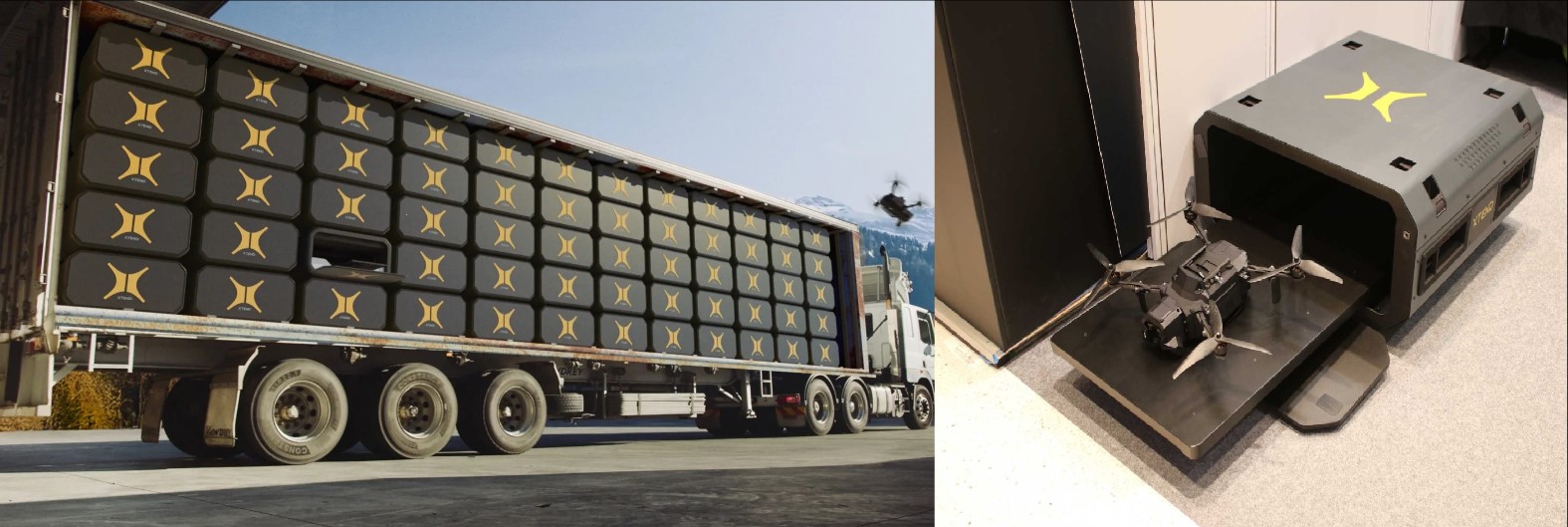
World
In a move signaling the growing importance of artificial intelligence and unmanned systems in modern warfare, XTEND Reality Inc. has been awarded a multi-million-dollar fixed-price contract by the Office of the Assistant Secretary of War (OASW) for Special Operations / Low-Intensity Conflict (SO/LIC) under its Capability Development & Innovation (CD&I) Directorate. The contract tasks XTEND with developing and delivering Affordable Close Quarter Modular Effects FPV Drone Kits (ACQME-DK) — next-generation AI-enabled one-way attack (OWA) drones that will enhance precision strike capabilities for U.S. small tactical teams. The system aims to provide a low-cost, high-effect lethality solution for close-quarters combat and irregular warfare in complex operational environments. A Leap Forward in Tactical Lethality The ACQME-DK kits are designed for precision-strike missions in dense urban environments and confined rural terrain, where traditional weapon systems are often limited. Each kit includes a modular, first-person-view (FPV) drone capable of carrying various payloads for offensive operations while maintaining a low cost-per-kill ratio. According to XTEND, these drones allow operators to neutralize high-value targets with minimal exposure, effectively bridging the gap between small-unit maneuverability and advanced precision firepower. The company emphasized that the system is already battle-proven, having been tested across multiple active combat zones, and represents an operationally mature technology, not a prototype concept. All assembly, training, and sustainment operations for the contract will take place at XTEND’s headquarters in Tampa, Florida, ensuring a domestic supply chain and rapid logistical support for U.S. forces. AI, Swarming, and Resilient Communications At the core of XTEND’s offering is a swarm-based autonomy framework that integrates multiple drones into a cohesive, AI-directed force. The company’s proprietary system, XOS, acts as the mission command backbone, merging sensors, radars, payloads, and even third-party applications into a unified operational interface. This architecture enables a single operator to control multiple drones simultaneously, using a zero-latency communication link that combines fiber-optic cable control and hardened RF signals — a dual-comms setup designed to resist jamming and electronic warfare interference. XTEND’s Co-Founder and CEO, Aviv Shapira, described the technology as a milestone for man–machine collaboration in combat: “This is the first operational system in the world that allows one operator to command and deploy swarms of AI-enabled tactical drones remotely, with resilient Fiber Optic-plus-RF dual-comms precision and zero-latency control.” He added that the system’s architecture was shaped by field experience from deployments in five conflict zones, refining the AI behaviors and human-machine interface based on real-world data. Modularity, Safety, and Tactical Innovation A standout feature of the ACQME-DK system is its Electronic Safe and Arm Device (ESAD) — a high-voltage safety mechanism that ensures secure munition arming and detonation only under authorized conditions. The ESAD is a critical differentiator, addressing the U.S. military’s growing emphasis on safety and operational control in autonomous and semi-autonomous systems. The kits also include modular vertical take-off and landing (VTOL) options, custom munitions packages, and plug-and-play AI behaviors, enabling teams to tailor drones for missions ranging from target acquisition to one-way loitering attacks. By leveraging AI-assisted controls, the system reduces the cognitive burden on operators, allowing soldiers to focus on tactical decision-making while the drone executes flight paths, targeting, and engagement parameters autonomously. XTEND’s Co-Founder and CTO, Rubi Liani, explained: “Our XOS unifies sensors, radars, payloads, and third-party apps into a single AI-driven mission backbone. It merges human intent with AI autonomy, translating mission goals into coordinated robotic action across air, land, and sea.” Supporting Special Operations and Irregular Warfare The ACQME-DK kits align with the U.S. Department of War’s strategic vision for distributed, networked warfare, where small tactical units can operate independently using organic drone swarms for reconnaissance, electronic warfare, and precision strike roles. For Special Operations Forces (SOF) and Low-Intensity Conflict (LIC) missions, these systems promise to transform how operators engage in close-quarters combat, offering precision lethality without exposing troops to direct line-of-sight threats. The drones can penetrate confined buildings, tunnels, and fortified positions, providing commanders with real-time intelligence and the ability to strike from within cover — a significant advantage in modern hybrid conflicts. A Proven Global Player XTEND Reality has steadily emerged as one of the leaders in the tactical FPV and OWA systems market, with over 10,000 systems deployed across 32 countries. The company’s platforms have seen action in multiple theaters, ranging from counterterrorism operations to full-scale conflicts. The firm’s reputation for reliability and innovation has been reinforced by its dual-comms resilience model and battle-tested ESAD safety system, both of which have gained interest from allied defense agencies seeking cost-effective and resilient drone strike solutions. With the ACQME-DK program, XTEND aims to bring its proven capabilities to U.S. small-unit operators, offering an integrated training and sustainment package that emphasizes ease of deployment, low logistics burden, and high mission flexibility. Implications for Future Warfare The contract reflects the Pentagon’s growing shift toward low-cost autonomous warfare systems, particularly for close-quarter and urban engagements where precision and survivability are paramount. By empowering small tactical units with drone-based strike capabilities, the Department of War seeks to reduce dependency on high-cost platforms and minimize soldier exposure in hostile environments. XTEND’s modular approach also supports rapid adaptation to evolving threats, allowing field units to reconfigure drones for surveillance, EW jamming, or direct attack within minutes. This flexibility is expected to make ACQME-DK a valuable asset for irregular warfare and special operations alike.
Read More → Posted on 2025-11-11 15:41:39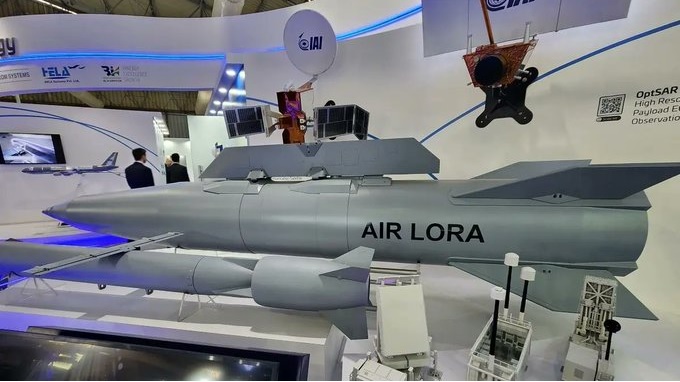
India
In a historic breakthrough for India’s defense modernization and self-reliance goals, the Ministry of Defence (MoD) has finalized a complete technology transfer (ToT) agreement with Israel for two next-generation missile systems — the Air LORA quasi-ballistic missile and the Ice Breaker smart cruise missile. This unprecedented deal grants India full access to source codes, blueprints, seeker technologies, and production methodologies, marking one of the most comprehensive defense technology transfers ever achieved with a foreign partner. According to defense sources, a confidential Indian delegation recently concluded high-level meetings in Tel Aviv, sealing the foundation for indigenous production of both systems. The agreement is set to significantly bolster India’s precision-strike capabilities while reinforcing the ‘Atmanirbhar Bharat’ (self-reliant India) initiative in defense manufacturing. Strategic Partnership and Domestic Production Under the new framework, Bharat Electronics Limited (BEL) and Hindustan Aeronautics Limited (HAL) will jointly lead domestic production efforts, supported by the Defence Research and Development Organisation (DRDO). BEL will oversee production of seekers, avionics, composite structures, and the guidance electronics for both systems. HAL will manage aircraft integration, test validation, and system optimization for India’s current and future combat platforms, including the LCA Tejas Mk1A, Su-30MKI, and TEDBF (Twin-Engine Deck-Based Fighter). DRDO will assimilate the transferred knowledge into indigenous missile programs such as the Next-Gen Cruise Missile (NGCM) and Pralay-ER initiatives. Air LORA: Quasi-Ballistic Precision Weapon Developed by Israel Aerospace Industries (IAI), the Air LORA (Long Range Artillery) is a precision quasi-ballistic missile designed for deep-strike missions and hardened target destruction. Its advanced guidance suite allows it to perform terminal maneuvers with extremely high accuracy — making it a deterrence-class weapon for India’s future strategic arsenal. Key Specifications – Air LORA: Range: 400+ km Warhead: 570 kg high-explosive or penetration-type Speed: Approx. Mach 4.5 Circular Error Probable (CEP): <10 meters Launch Platform: Air-launched from Su-30MKI, Rafale, and future AMCA aircraft Guidance: INS/GPS hybrid with terminal electro-optical seeker Flight Profile: Quasi-ballistic trajectory with in-flight retargeting capability The Air LORA’s unpredictable flight path and high terminal velocity make interception by enemy missile defenses extremely difficult. Its integration into the Indian Air Force’s strike fleet will provide India with the ability to neutralize enemy radar installations, bunkers, and C4ISR nodes deep behind enemy lines. BEL’s upcoming “Missile Electronics Integration Complex” in Bengaluru is expected to handle the production of the Air LORA’s composite airframe, precision guidance units, and terminal seekers. Ice Breaker: AI-Powered Multi-Role Cruise Missile Complementing Air LORA’s ballistic punch, the Ice Breaker — developed by Rafael Advanced Defence Systems — is an AI-enabled multi-role cruise missile built for precision strikes across land and sea domains. A successor to the proven Sea Breaker, the Ice Breaker uses machine learning algorithms for target recognition and flight optimization, allowing it to operate in GPS-denied and electronically jammed environments — a vital capability in modern warfare. Key Specifications – Ice Breaker: Range: 300+ km Weight: ~400 kg Speed: High subsonic Warhead: 150 kg multi-purpose blast/penetration Guidance: INS + EO/IR + AI-based image recognition Navigation: GPS-independent with data-link for real-time control Launch Platforms: LCA Tejas, Jaguar, Su-30MKI, TEDBF, and naval surface vessels The Ice Breaker’s low radar cross-section, adaptive flight profile, and stealth shaping make it one of the most survivable cruise missiles in its class. It can autonomously loiter, identify, and engage moving or static targets, making it ideal for complex anti-ship and ground-strike missions. HAL will integrate the Ice Breaker with Indian combat aircraft, leveraging experience gained from the Astra and BrahMos-A integration programs, while BEL will domestically produce electronic subsystems and targeting sensors. Strengthening Deterrence on Both Fronts The missile acquisition comes amid a shifting regional balance of power. China’s deployment of layered air defense systems along the Line of Actual Control (LAC) and Pakistan’s increasing use of GPS jamming and EW capabilities have accelerated India’s need for precision, long-range, and jam-resistant strike systems. During Operation Sindoor (May 2025), Israeli-made Rampage air-launched missiles demonstrated exceptional performance despite GPS interference — directly influencing India’s decision to pursue the Air LORA and Ice Breaker under a full-technology framework. These systems will not only serve as force multipliers for the Indian Air Force and Navy but will also reinforce India’s second-strike capability and strategic depth across both its northern and western theaters. Economic and Industrial Impact The overall procurement and ToT framework is estimated to be part of a $20 billion aerospace modernization package, to be submitted for Cabinet Committee on Security (CCS) approval by mid-2026. The production model envisions a secure ecosystem of public and private suppliers, ensuring no dependency on foreign manufacturing nodes. Once full-scale production stabilizes, India aims to export both missile systems to friendly Indo-Pacific and African nations, expanding its footprint as a trusted defense exporter. This approach aligns with India’s broader strategy under the ‘Make in India – Defence’ initiative, encouraging indigenous design, production, and intellectual property development. A Leap Toward Strategic Autonomy The Air LORA and Ice Breaker technology transfer marks a watershed moment in Indo-Israeli defense cooperation. Unlike earlier limited-licensing models, this agreement represents a full-spectrum ToT, enabling Indian engineers to independently replicate, modify, and innovate upon the acquired technologies. For India’s defense industry, the deal signifies a transition from dependency to capability — a move from being a buyer of systems to a producer of technologies. It also strengthens India’s long-term missile development roadmap under Mission Shakti 2.0, which seeks to create an indigenous portfolio of next-gen strike and defense platforms. The full technology transfer for the Air LORA and Ice Breaker missiles signals the emergence of India as a global missile power, capable of designing, producing, and exporting advanced precision-strike weapons. It demonstrates Israel’s strategic trust in India’s technological ecosystem and highlights how geopolitical partnerships are evolving beyond procurement into deep industrial collaboration. As production begins under BEL, HAL, and DRDO leadership, these systems will not only enhance India’s deterrence posture but also propel its defense manufacturing ecosystem into a new era of self-reliant innovation and global competitiveness.
Read More → Posted on 2025-11-11 15:29:57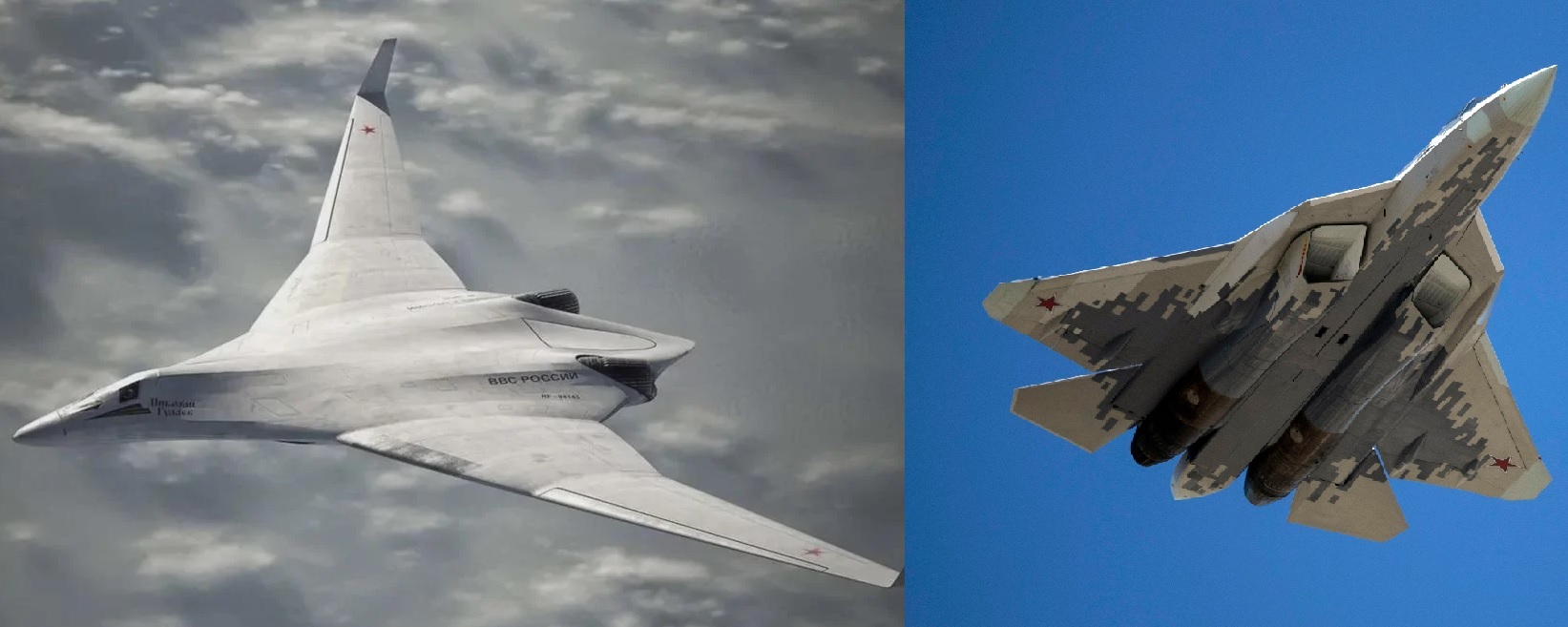
World
Russia’s top-secret PAK DA stealth bomber program — meant to replace its old Tu-95 and Tu-160 bombers — is facing serious delays. New leaked documents, reviewed by the group InformNapalm, show that Russian engineers are reusing parts from the Su-57 stealth fighter jet to keep the project alive. The leaks also reveal that Western sanctions and a shortage of modern manufacturing tools are slowing the aircraft’s progress. Production targets have now been pushed back to 2027, several years later than originally planned. Leaked Evidence of Shared Components The files, originating from OKBM, a key Russian manufacturer of aircraft hydraulic and mechanical subsystems, describe the integration of hydraulic actuators and geared hinges labeled 80RSh115 and 80RSh. These mechanisms — used to open and close internal weapon bays — are nearly identical to those developed for the Su-57 stealth fighter. In the PAK DA, these systems serve a similar purpose: operating the bomber’s large internal weapon bays while minimizing noise and radar signature. The documentation confirms a direct design lineage between fighter and bomber hardware, reflecting Moscow’s effort to standardize subsystems across platforms amid mounting resource limitations. The leak, published on November 4, 2025, also reveals that the program’s development has been slowed by European Union sanctions imposed on October 23 against OKBM, which further restricted access to precision machine tools and specialized materials. Sanctions and Tooling Bottlenecks Russia’s aviation industry has been under increasing strain since the 2022 sanctions wave that cut off access to Western industrial machinery. According to InformNapalm’s analysis, OKBM remains dependent on foreign-made CNC machines and grinding tools for precision actuator assembly. The EU’s 19th sanctions package, which blacklisted OKBM and related subsidiaries, has now severed imports of even basic metalworking accessories. This has caused production schedules for hydraulic and hinge assemblies to slide further, with the earliest subsystem readiness pushed to 2027. Insiders within Russia’s aerospace sector privately acknowledge that the lack of modern five-axis machining tools has forced manufacturers to rely on older Soviet-era equipment, resulting in slower throughput and higher defect rates. A Moscow-based aerospace analyst, speaking on condition of anonymity, said: “The sanctions are biting at the deepest level — production tooling. Without precision machining, you can’t build stealth-quality airframes. The PAK DA is suffering the same bottlenecks as the Su-57: an elegant design stuck inside an outdated industrial ecosystem.” A Project Decades in the Making The PAK DA (short for Perspektivny Aviatsionny Kompleks Dalney Aviatsii, or “Prospective Long-Range Aviation Complex”) has been under development since the late 1990s as Russia’s answer to the American B-2 Spirit and B-21 Raider stealth bombers. Initially conceived as a supersonic replacement for the Tu-160 and Tu-95MS, the project evolved in the 2010s into a subsonic flying-wing design, prioritizing range, payload, and radar invisibility over speed. The aircraft is being developed by Tupolev, with prototype assembly ongoing at the Kazan Aviation Plant. The bomber’s configuration features: A flying-wing airframe built with composite materials and radar-absorbent coatings. Two NK32-02 engines derived from the Tu-160M2, producing around 14,000 kg of thrust each in non-afterburning mode. An internal payload capacity of up to 35 tonnes, including nuclear and conventional standoff missiles such as the Kh-101, Kh-102, Kh-BD, and potentially future Kh-95 hypersonic weapons. An estimated range of 12,000–15,000 kilometers and endurance approaching 30 hours, allowing for intercontinental operations without refueling. Shared DNA with the Su-57 The reuse of Su-57 components is more than a cost-saving measure — it reflects the growing integration of Russia’s aerospace programs under industrial duress. Both aircraft rely on similar design philosophies: low observability, internal weapons storage, and modular subsystems that can be adapted across platforms. The Su-57’s internal weapon bay mechanisms, originally designed to reduce radar cross-section during missile deployment, were deemed compatible with the PAK DA’s stealth requirements. Engineers adapted the smaller fighter components into scaled-up actuator assemblies capable of handling the bomber’s significantly heavier bay doors. This convergence of design and production may simplify logistics and testing but also suggests limited innovation capacity, as existing technology is being repurposed instead of newly developed. Delays Stretch Toward 2027 The leaked files confirm that the testing phase for critical flight subsystems — including bay actuators, structural hinges, and thermal control systems — has been rescheduled through late 2026, with prototype integration planned for 2027. Originally, Russian officials hinted that the first PAK DA prototype would be ready for ground testing by 2023 and achieve a maiden flight by 2025. Those goals are now unrealistic. Insiders say that pre-production tooling, materials procurement, and component certification are lagging well behind schedule. The situation has been compounded by labor shortages across Russia’s defense industry, as skilled technicians are drawn to ongoing programs such as the Su-57 fighter and the Tu-160M2 modernization line. A Comparison with Western and Chinese Projects When compared to its Western counterpart, the U.S. B-21 Raider, the PAK DA faces a clear disadvantage. The B-21 benefits from an automated and diversified industrial base, while Russia’s program relies on a handful of specialized suppliers, all vulnerable to sanctions. China’s H-20 stealth bomber also presents competition in the same class — a flying-wing, subsonic platform optimized for endurance and low observability. While both the H-20 and PAK DA share design philosophy, China enjoys greater access to modern electronics and composite manufacturing, giving it a potential edge in development speed. Nonetheless, the PAK DA is expected to carry a larger payload and offer longer range, if Russia can overcome its production hurdles. Industrial Dependency: The Achilles’ Heel At the heart of the delays lies Russia’s dependence on precision manufacturing — an area still reliant on Western equipment. InformNapalm’s review of OKBM documents revealed contracts listing foreign machine tools from Hartford, Johnford, and Grindex brands as essential to the actuator production line. These machines were used to fabricate tight-tolerance hinge assemblies and hydraulic systems necessary for stealth operation. The sanctions regime now effectively blocks access to spare parts, software updates, and maintenance services for these tools, creating cascading disruptions across the production chain. Even with domestic support programs, Russia’s ability to scale production remains limited. The files conclude that industrial capacity — not design readiness — is the decisive factor affecting PAK DA’s timeline through the mid-2020s. A Stealth Bomber in Limbo The leaked files paint a sobering picture of Russia’s stealth bomber ambitions. While the PAK DA program continues to make incremental progress, it is constrained by technological isolation, manufacturing bottlenecks, and an overstretched defense industrial base. By reusing Su-57 fighter jet components, Moscow may have found a temporary workaround to sustain development. But the deeper reality remains: without access to advanced precision tooling and materials, Russia’s dream of fielding a next-generation stealth bomber before the end of the decade faces a turbulent flight path. In the words of one Russian defense insider: “The PAK DA is an impressive concept trapped in an outdated workshop. The design belongs to the 21st century — but the tools belong to the last one.”
Read More → Posted on 2025-11-11 12:37:24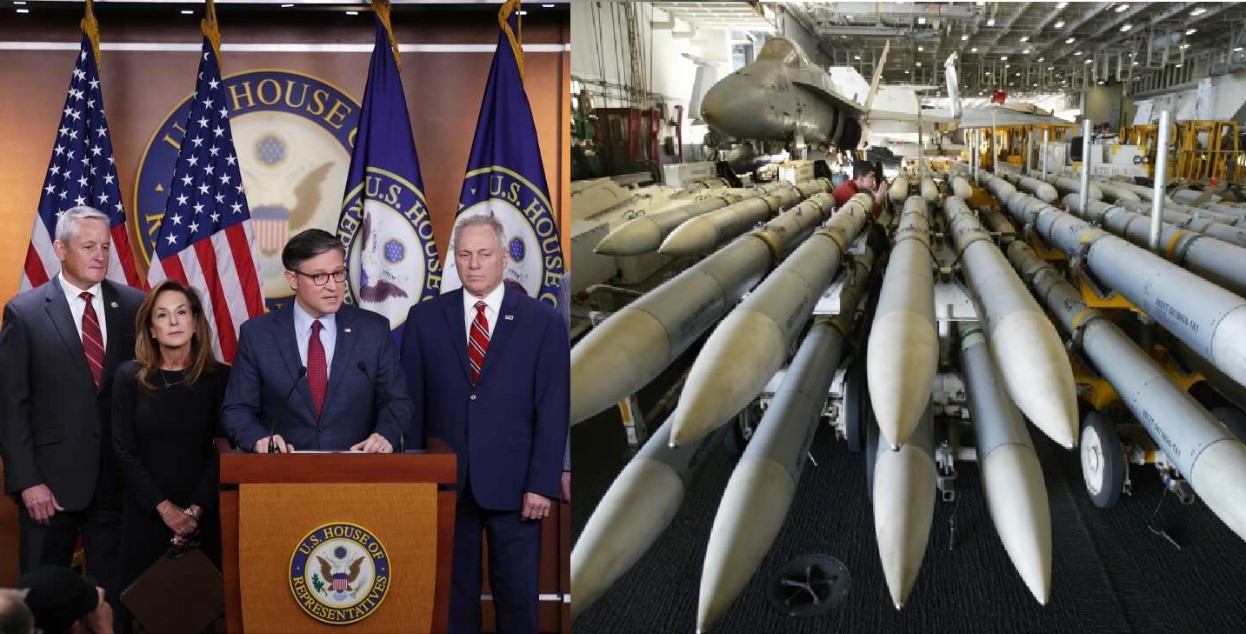
World
The ongoing U.S. government shutdown has brought parts of the American defense export machine to a standstill, delaying more than $5 billion worth of arms sales to key allies. According to an internal State Department estimate shared with Axios, dozens of major Foreign Military Sales (FMS) and Direct Commercial Sales (DCS) cases are now frozen — including shipments of AIM-120 AMRAAM air-to-air missiles, Aegis Combat Systems, and M142 HIMARS rocket launchers. The shutdown’s effect is being felt far beyond Washington. Buyers such as Denmark, Croatia, Poland, and Ukraine are among the countries facing delivery setbacks, raising fresh concerns about how domestic political gridlock in the United States can reverberate through global defense supply chains and frontline readiness. The Bottleneck at the State Department At the center of the disruption is the Bureau of Political-Military Affairs (State PM) — the key office responsible for reviewing and approving U.S. defense exports. Axios reports that the bureau is currently operating at just 25% of its normal staffing level, leaving it unable to process new export licenses or advance congressional notifications for pending FMS cases. The impact has been severe. Since October 1, only one new FMS case has been publicly disclosed — a modest military construction services package for Singapore. Normally, the bureau reviews multiple FMS and DCS proposals every week. FMS cases are jointly managed by the Department of Defense (DoD) and the State Department, but the imbalance in funding has deepened the shutdown’s impact. While the Defense Security Cooperation Agency (DSCA) — which administers FMS cases — is funded largely through administrative fees that keep part of its workforce operational, the State PM office depends on direct appropriations. When those appropriations stop, so does the work. In the case of Direct Commercial Sales, the situation is even more critical. DCS export licenses are entirely managed by State PM, meaning commercial contracts between U.S. defense manufacturers and foreign customers are effectively frozen. The $5 Billion Freeze: What’s Being Delayed The $5 billion in delayed sales reportedly includes a mix of new contracts awaiting approval and existing programs now stuck in administrative limbo. Among the affected systems are: AIM-120 AMRAAM missiles, essential for NATO air forces including those of Denmark and Croatia, as part of their fleet modernization efforts. Aegis Combat Systems, key to Poland’s naval modernization and missile-defense integration plans. M142 HIMARS launchers, among the most sought-after battlefield systems since the war in Ukraine began. These programs were expected to enter active delivery or congressional review during the current fiscal quarter. With the shutdown halting case development, production schedules may now shift by several months — potentially impacting training timelines and interoperability planning across multiple NATO militaries. Impact on Ukraine and NATO Allies The timing of the freeze could not be worse for Ukraine and its European partners. Many of the FMS and DCS programs affected are tied to NATO’s eastern defense posture — including indirect support packages for Ukraine’s armed forces. While official U.S. military aid to Kyiv is technically funded through separate appropriations, the broader shutdown has slowed new transfers, spare-parts deliveries, and maintenance approvals. Defense industry sources told Breaking Defense that several logistics contracts related to HIMARS ammunition resupply and radar components are “on pause until funding is restored.” For Poland, the delays could also affect its ambitious rearmament program, which relies heavily on U.S. technologies to expand its missile-defense coverage and integrate with the Aegis Ashore system. Denmark and Croatia, meanwhile, may face gaps in air-to-air weapon integration training if AMRAAM deliveries slip past the winter training cycle. How the Shutdown Paralyzes Defense Trade A U.S. government shutdown doesn’t simply freeze political negotiations — it halts the mechanics of defense trade at multiple layers: Staff Furloughs: Thousands of civilian staff within the State and Defense Departments are sent home, halting case management, licensing, and compliance review processes. Contractor Oversight: The Defense Contract Management Agency (DCMA) — which oversees contractor shipments and testing — cannot accept new materials during a shutdown, even when products are ready for delivery. Congressional Notification: New arms-sale cases above certain value thresholds require congressional notification before approval. With few staff working, these notifications are stalled indefinitely. Export Licensing: The State PM’s Directorate of Defense Trade Controls (DDTC) handles all DCS export licenses. Without its personnel, U.S. defense companies cannot legally deliver even pre-approved hardware abroad. In essence, the world’s largest defense export apparatus — responsible for over $80 billion in annual global arms transfers — is running at a fraction of its capacity. Ripple Effects Beyond U.S. Borders The shutdown’s impact extends beyond the immediate delays. NATO allies and Indo-Pacific partners are growing concerned about Washington’s reliability as a defense supplier, especially as geopolitical flashpoints intensify in Eastern Europe, the Middle East, and the South China Sea. European diplomats, speaking anonymously to Reuters, described the slowdown as “a wake-up call” about over-dependence on U.S. bureaucratic channels for defense cooperation. One senior defense attaché said, “If the United States cannot process arms sales due to political gridlock, it raises questions about the stability of alliance supply chains. The consequences go beyond paperwork — they affect deterrence.” Uncertain Future It remains unclear whether the $5 billion estimate covers only new cases awaiting approval or also existing shipments blocked from fulfillment. However, defense officials acknowledge that every additional week of shutdown compounds the backlog. Even after the government reopens, the State Department will need time to clear the administrative jam, meaning deliveries and contract negotiations could remain delayed well into early 2026. For now, defense manufacturers, U.S. allies, and partner militaries must wait — while Washington’s internal stalemate threatens to undercut its image as the world’s most dependable arsenal.
Read More → Posted on 2025-11-11 12:13:01
India
Washington D.C., November 11, 2025 — In a major diplomatic and economic announcement, U.S. President Donald Trump declared that the United States will cut tariffs on Indian goods by 50%, signaling what he described as a “much fairer” trade arrangement between the two nations. Speaking to reporters at the White House, Trump said Washington and New Delhi are “getting close” to sealing a new deal that will reshape bilateral trade ties strained in recent years. “We’re making a deal with India — a much different deal than we had in the past,” Trump said. “So right now, they don’t love me, but they’ll love us again. We’re getting a fair deal — just a fair trade deal. We had pretty unfair trade deals before, but we’re getting close.” Trump revealed that India’s high tariffs — which were imposed during earlier trade tensions — are being substantially reduced, partly due to India’s decision to scale back its purchases of Russian oil, which had earlier drawn U.S. scrutiny. “Right now, the tariffs on India are very high because of Russian oil,” Trump explained. “But they’ve been reduced very substantially. Yes, we are going to bring the tariffs down… At some point, we will bring them down.” A New Chapter in U.S.–India Trade Relations The announcement represents a turning point after years of economic friction between the two democracies. Relations cooled during Trump’s first term when the U.S. revoked India’s preferential trade status under the Generalized System of Preferences (GSP) in 2019, citing market access barriers. The decision affected billions in Indian exports, leading to retaliatory tariffs and a noticeable decline in bilateral trade momentum. Since then, both nations have been working to rebuild trust. The new deal — which Trump described as “a fair and balanced arrangement” — is expected to roll back some of the tariff measures and open new avenues for cooperation in energy, manufacturing, and digital trade. According to officials familiar with the negotiations, the framework could include mutual tariff reductions, expanded agricultural trade, and greater access for U.S. technology and medical equipment firms to India’s markets. Link Between Tariffs and Russian Oil The U.S. decision to ease tariffs reportedly follows India’s gradual reduction of Russian crude imports, which had surged after Western sanctions on Moscow in 2022. Washington had previously viewed India’s purchases of discounted Russian oil as a challenge to its sanctions regime. By early 2025, however, New Delhi began diversifying its oil imports, increasing supplies from the U.S., Saudi Arabia, and the UAE. Trump acknowledged this shift in his remarks, calling India’s adjustment “a positive move that strengthens our energy cooperation.” “They’ve cut Russian oil imports very substantially. That’s a big step in the right direction. So yeah, we will be bringing the tariffs on India down,” he said. This linkage underscores how geopolitics, trade, and energy have become deeply intertwined in U.S.–India relations — where strategic alignment often translates into economic incentives. Economic and Strategic Implications Analysts view the tariff reduction as more than a trade gesture — it’s a strategic recalibration aimed at reinforcing India’s position as a key U.S. partner in the Indo-Pacific. Dr. Elaine Parker, an international trade expert at the Atlantic Policy Institute, noted, “This is not just about economics. It’s about consolidating alliances. Trump’s administration sees India as central to counterbalancing China’s economic and military influence. Lower tariffs could boost U.S.–India trade by as much as 30% over the next two years.” India is currently the ninth-largest trading partner of the United States, with bilateral trade expected to exceed $200 billion in 2025. A 50% tariff cut could sharply increase exports in textiles, pharmaceuticals, auto components, and electronics — sectors where India has been seeking greater U.S. access. The deal is also expected to encourage American investments in Indian manufacturing, aligning with Prime Minister Narendra Modi’s “Make in India” and “Atmanirbhar Bharat” initiatives, which aim to position India as a global manufacturing hub. Remaining Challenges Despite the positive tone, several hurdles remain before a final deal is signed. Washington continues to press India for: Stronger intellectual property protections for U.S. companies, Market access reforms in agriculture and dairy, and Regulatory transparency in digital trade and e-commerce sectors. Meanwhile, New Delhi seeks easier visa rules for Indian professionals and relief from duties on steel, aluminum, and IT exports. Sources in both capitals say negotiators are working to finalize a phased tariff reduction roadmap, likely to be announced early next year, following consultations with business and trade representatives. A Political and Diplomatic Win For Trump, the announcement also carries political weight. Amid global concerns over trade wars and inflation, a breakthrough with India allows his administration to demonstrate progress in expanding U.S. markets while improving ties with a major Asian democracy. For India, the development is equally significant. It offers a boost to exports, reduced trade friction, and a reaffirmation of strategic trust with Washington — especially important as both nations deepen defense and technology cooperation under the Quad alliance. “It’s a fair deal for both sides,” Trump said confidently. “India will be happy, and the U.S. will be happy. We’re working on something that benefits both nations — something very big.” The U.S. decision to cut tariffs on India by half could mark the start of a new phase in one of the world’s most important bilateral relationships. What began as a transactional negotiation over trade imbalances has evolved into a strategic partnership anchored in shared economic and security interests. If the proposed agreement moves forward as signaled, it could redefine U.S.–India trade relations for the next decade — replacing friction with cooperation, and protectionism with partnership. For now, both Washington and New Delhi seem aligned on a common goal: rebuilding trust, boosting trade, and proving that diplomacy and economic pragmatism can still triumph in a divided world.
Read More → Posted on 2025-11-11 11:58:04
World
Russia’s ongoing war in Ukraine has entered a new technological and industrial chapter. What began as limited use of Iranian-supplied loitering munitions has now evolved into a vast, factory-driven campaign. Moscow is producing over 6,000 Shahed-type “Geran” drones every month, transforming the drone war into a high-volume, low-cost assault strategy designed to exhaust and overwhelm air defenses. The shift marks a turning point in modern warfare — where quantity, cost efficiency, and automation are proving as decisive as traditional firepower. Factories of War: Russia’s Drone Assembly Lines Much of this production surge is centered around the Alabuga Special Economic Zone in Tatarstan, which has become the core of Russia’s domestic drone manufacturing effort. Once reliant on Iranian imports, Moscow has now localized production of the Shahed-136, known in Russian service as the Geran-2, assembling thousands each month with an expanding network of suppliers. According to open-source intelligence, Russia has reached industrial output levels comparable to traditional weapons factories — building airframes, engines, and guidance systems on a near-continuous 24-hour cycle. Ukrainian officials estimate that by late 2024, output exceeded 6,000 drones per month, while newer data suggests Moscow could soon scale to 8,000 units monthly if supply chains remain stable. This industrialization allows Russia to unleash massive swarms of drones, sometimes exceeding 700 launched in a single night, saturating Ukrainian radar systems and forcing defenders to deplete costly interceptor stocks. The Cost Imbalance: $20,000 vs $3 Million The economics of this drone war are brutally one-sided. Each Shahed-type drone reportedly costs between $20,000 and $70,000 to produce — depending on its configuration and imported components. In contrast, the Patriot missile system, one of the West’s main defensive tools, uses interceptor missiles costing over $3 million each. The math is devastating: destroying a single drone can cost up to 150 times more than building it. Even less expensive interceptors, such as NASAMS or IRIS-T missiles, remain far pricier than the drones they target. For Russia, this imbalance is strategic. The goal is not only to strike physical targets but also to drain the financial and logistical endurance of Ukraine’s air defense network — a war of attrition fought as much through economics as through firepower. How Russia Built Its Drone Machine Russia’s journey to this industrial scale began in 2022, when it imported large quantities of Iranian Shahed-131 and Shahed-136 drones. Over time, engineers reverse-engineered the systems, adapting the design to local manufacturing capabilities. The Alabuga drone complex now functions as a hybrid assembly and innovation hub, staffed by thousands of workers — including engineers, technicians, and even students under defense training programs. The facility reportedly produces all core components domestically, except for a few imported microelectronics. Reports indicate Russia is also developing improved Shahed variants — with longer range, enhanced navigation systems, and smaller radar signatures. The drones’ modular construction allows for fast adaptation and simplified logistics, reducing the cost and time needed to repair or replace lost units. Overwhelming Defenses by Design The tactic behind these mass drone launches is simple but effective: saturation. By launching hundreds of drones simultaneously from different vectors, Russia aims to overload radar coverage, confuse targeting systems, and drain missile stocks. Even when many are intercepted, the volume ensures some reach their targets. Ukraine’s power infrastructure, logistics hubs, and ammunition depots have been repeatedly hit despite layers of air defense. The damage may be limited per strike, but the psychological and logistical toll accumulates nightly. A Ukrainian air defense officer recently described the problem bluntly: “For every Shahed we shoot down, we lose thousands of dollars. For every one we miss, we lose infrastructure. There’s no winning equation.” The Industrialization of Attrition What Russia has built is not just a drone program — it’s an industrial attrition model. By mass-producing cheap but effective weapons, Moscow can maintain constant pressure at minimal strategic cost. The economic asymmetry mirrors the Cold War’s quantity-over-quality doctrine, but with modern digital precision. Russia’s drone factories can deliver sustained firepower without draining its missile stockpiles, allowing it to preserve high-value munitions like Kalibr and Iskander for strategic strikes. Meanwhile, Ukraine and its Western partners must spend billions replenishing expensive interceptors. NATO officials privately admit that the drone war is forcing a rethink in air defense economics, with new urgency on developing low-cost anti-drone systems, from laser weapons to electronic jammers. Global Implications Russia’s industrial drone strategy is reshaping global military thinking. Its success demonstrates how cheap, mass-produced drones can challenge even the most sophisticated air defense networks. The implications go far beyond Ukraine: India, Israel, and European nations are reassessing their defense postures, recognizing that future conflicts may rely on sheer volume of unmanned systems. The Middle East and Asia are witnessing a surge in drone production programs inspired by this model — prioritizing cost-efficiency and scalability over high-end precision. Even NATO nations are shifting funding toward counter-drone research, realizing that traditional missile defense systems are too costly to sustain against swarm tactics. What Comes Next Analysts believe Russia will continue to refine its drone designs, integrating AI-assisted navigation, stealth coatings, and autonomous targeting to improve accuracy and survivability. Meanwhile, the West faces a strategic dilemma: whether to continue expending high-value interceptors or invest heavily in laser-based systems, micro-missiles, and drone-on-drone defenses to close the cost gap. As one European defense official noted, “Russia has made the drone what the tank once was — cheap, mass-produced, and devastating when used in numbers.”
Read More → Posted on 2025-11-11 11:47:14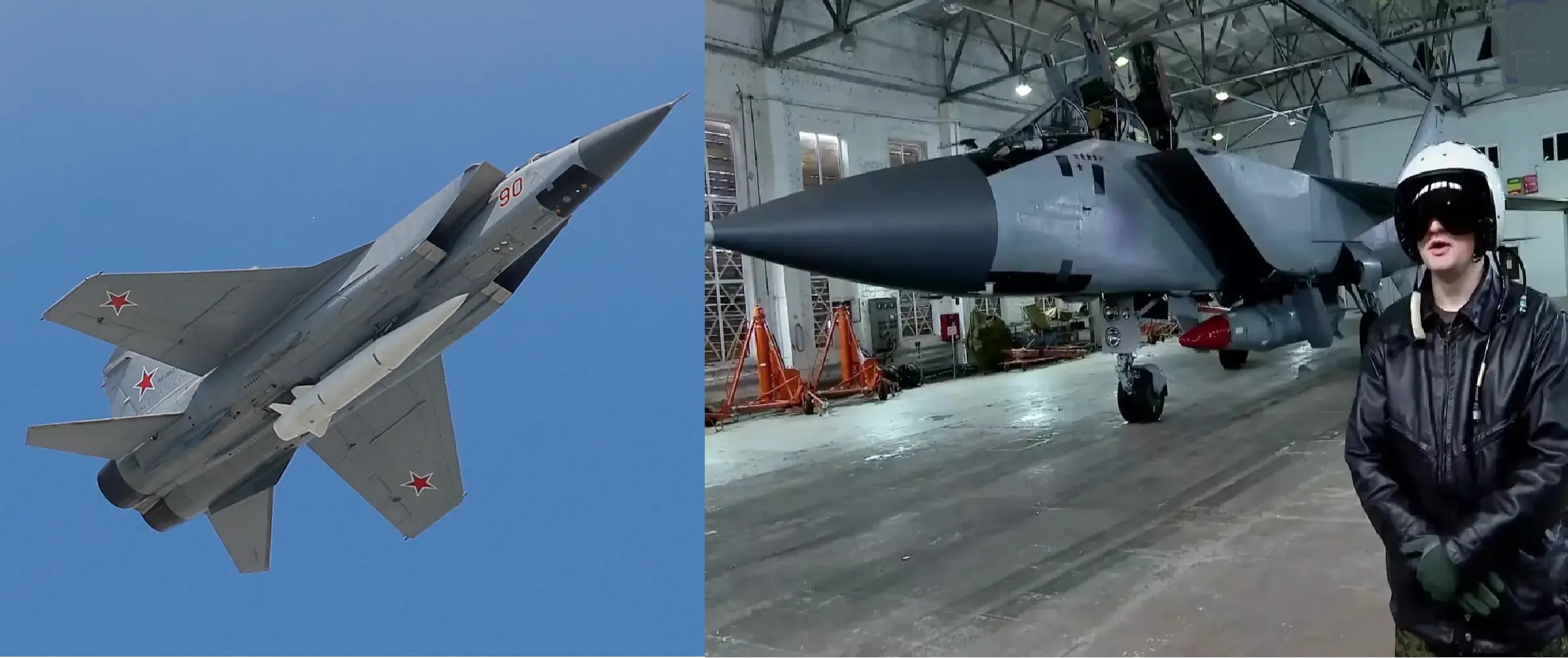
World
Russia’s Federal Security Service (FSB) claims to have thwarted an elaborate espionage operation allegedly orchestrated by Ukrainian and British intelligence agencies to hijack a MiG-31 interceptor jet equipped with a Kinzhal hypersonic missile, according to reports by RIA Novosti and other state media. The FSB stated that the operation was designed as a “large-scale provocation” that would have seen a Russian pilot fly the hijacked aircraft to a NATO airbase in Constanța, Romania, for a reward of $3 million and a promise of Western citizenship. Russian authorities said the plan was ultimately foiled before it could be executed, preventing what they called “a serious escalation attempt” by foreign intelligence services. The Alleged Plot According to the FSB’s report, Ukrainian military intelligence, allegedly backed and assisted by British operatives, sought to recruit an active Russian Air Force pilot who had access to MiG-31 aircraft stationed in central Russia. The pilot was reportedly approached through encrypted channels and promised $3 million in cash if he successfully defected with the aircraft and its missile system intact. The FSB claimed that the plan included explicit instructions for the pilot to fly toward Romania’s Black Sea coast, where he would land at a NATO airbase in Constanța. Russian media outlets said that Western planners expected the jet would likely be shot down by NATO air defenses, creating a spectacle that could be used to embarrass Moscow and frame Russia as unstable or internally divided. In a statement carried by RIA Novosti, the FSB said: “The measures taken have thwarted the Ukrainian and British intelligence services’ plans for a large-scale provocation. The intent was to steal a combat-ready MiG-31 aircraft equipped with a Kinzhal hypersonic missile and deliver it to a NATO country.” Evidence and FSB Footage Russian state television broadcast what it claimed were audio recordings, screenshots, and text messages between the recruited pilot and a man allegedly acting as a go-between for Ukrainian and British intelligence. In one clip, the intermediary could be heard discussing financial transfers and offering assistance in obtaining European citizenship once the mission was completed. The FSB did not reveal the pilot’s name, citing operational security, but said he had immediately reported the approach to his superiors. According to Russian officials, the communications were tracked, leading to the exposure of “foreign handlers operating under diplomatic and non-official cover.” What Makes the MiG-31 and Kinzhal Valuable Targets The MiG-31 “Foxhound” is one of Russia’s most capable long-range interceptor aircraft, capable of flying at speeds above Mach 2.8 and operating at altitudes exceeding 60,000 feet. Its ability to carry the Kh-47M2 Kinzhal, a nuclear-capable hypersonic missile, makes it a key part of Russia’s strategic deterrence arsenal. The Kinzhal missile, which Moscow says can travel at up to Mach 10, is designed to evade enemy radar and missile defenses while delivering precision strikes at distances of up to 2,000 kilometers. It has been used in limited numbers during Russia’s campaign in Ukraine, although Western analysts debate its “hypersonic” classification and performance claims. Given the sensitivity of the system, the successful defection of a MiG-31 equipped with a Kinzhal would have represented one of the most significant intelligence coups of the war — potentially giving NATO and Ukraine access to classified radar, propulsion, and guidance data. The Political and Strategic Context The FSB’s announcement arrives amid escalating accusations between Moscow and Western governments over covert operations and espionage. Russia has repeatedly accused Britain of directing sabotage missions, drone attacks, and cyber intrusions in support of Kyiv. For its part, London has portrayed the allegations as part of a broader Russian disinformation campaign, insisting that Moscow’s invasion of Ukraine is an “unprovoked act of aggression.” The British government has frequently warned of Russian intelligence operations aimed at destabilizing Europe, spreading propaganda, and intimidating Western allies. The alleged plot, if true, underscores the deepening intelligence shadow war between Russia and NATO — one that increasingly focuses not just on battlefield reconnaissance but also on psychological and symbolic operations capable of influencing global perception. Questions of Verification International observers have been cautious in assessing the FSB’s claims. Reuters, which cited Russian state media, noted that it could not independently verify the details of the alleged plot or the authenticity of the communications shown on Russian television. Neither Ukraine’s Defense Intelligence Directorate (GUR) nor the British Ministry of Defence has publicly commented on the accusation. Analysts say that while such recruitment attempts are plausible — given the precedent of previous defection operations during the Cold War — the story also serves Russia’s narrative of portraying Western nations as aggressors seeking to destabilize its military. Whether entirely accurate or partly propagandistic, the FSB’s announcement marks the latest chapter in an intensifying intelligence confrontation between Russia and the West. If genuine, the alleged operation would represent one of the boldest covert efforts since the start of the Ukraine war — the attempted theft of a MiG-31 interceptor armed with a Kinzhal hypersonic missile. If fabricated or exaggerated, it still achieves a powerful political effect: reinforcing Moscow’s message that Western powers are not merely backing Kyiv but directly orchestrating espionage operations inside Russia. Either way, the episode highlights a growing reality — that in today’s conflict, battles for aircraft and missiles are often preceded by battles for minds, loyalty, and information.
Read More → Posted on 2025-11-11 11:34:33
World
In a major counterintelligence breakthrough, Russia’s security agencies have dismantled a spy network linked to Pakistan’s Inter-Services Intelligence (ISI), accused of attempting to smuggle classified Russian military technologies to foreign actors. The arrest of a Russian national in St. Petersburg has brought to light a sophisticated espionage attempt targeting the S-400 air defense system and the Mi-8AMTShV/VA military transport helicopters — two of Russia’s most advanced and strategically sensitive defense assets. Espionage Uncovered in St. Petersburg According to the Federal Security Service (FSB), the suspect — a Russian national whose identity has not been publicly disclosed — was caught trying to exfiltrate secret technical documents from a defense enterprise in St. Petersburg. Investigators say the files contained blueprints, component specifications, and operational data for Russia’s next-generation Mi-8AMTShV helicopter series and the S-400 Triumf long-range air defense missile system. The Mi-8AMTShV, a modernized derivative of the legendary Mi-8 platform, is built for assault, transport, and special operations, while the Mi-8AMTShV (Arctic variant) features enhanced insulation, de-icing systems, and extended-range fuel tanks for operations in sub-zero conditions. The S-400, on the other hand, is a cornerstone of Russia’s air defense network, capable of intercepting aircraft, drones, and ballistic missiles at ranges up to 400 kilometers. The FSB said the documents were being prepared for illicit transfer to a foreign intelligence service, and early investigations have traced the coordination back to contacts linked with Pakistan’s ISI. A Wider Web of Espionage Russian media reports suggest this is not an isolated incident but part of a wider intelligence-gathering effort targeting Russia’s high-end defense programs. Investigators are probing whether ISI operatives were working directly or serving as intermediaries for a third country — possibly China or the United States — seeking to acquire S-400 technical data through proxy networks. Security analysts believe Pakistan’s ISI may have been acting as a cut-out — a middle channel for relaying intelligence to a more powerful state actor with strategic interest in Russia’s systems. The S-400, in particular, is of high interest to both China, which already operates a variant of the system, and to Western agencies, which are eager to study the radar and missile guidance architecture used to defeat stealth aircraft. A senior Moscow-based defense analyst told Kommersant that “this operation bears the hallmarks of multi-tier espionage — where smaller nations’ agencies are used to collect data that later flows into the hands of larger intelligence ecosystems.” Why the S-400 Is a Prime Target The S-400 Triumf is among the most powerful surface-to-air missile systems ever produced. It can track up to 300 aerial targets simultaneously and engage multiple threats at various altitudes. The system’s ability to detect and engage low-observable (stealth) aircraft and hypersonic targets has made it one of Russia’s most valuable exports. India, China, and Turkey have all procured variants of the S-400, making its protection a top priority for Moscow. Any breach of its classified data could compromise air defense operations globally, especially for India, which relies on the system to protect its northern borders against aerial incursions. If even partial design data or radar codes were to fall into foreign hands, adversaries could develop countermeasures to reduce the S-400’s effectiveness — a potential game-changer in modern air defense strategy. How the Operation Was Exposed According to reports from TASS and Defenseworld.net, the FSB had been monitoring unusual communications between a Russian defense employee and foreign entities for several months. The suspect allegedly used encrypted channels and offshore email accounts to coordinate with handlers abroad. When security agents intervened, they recovered digital storage devices, schematics, and transmission logs prepared for smuggling. The FSB described the operation as a “preventive strike” that stopped classified data from leaving the country. The suspect now faces charges under Article 275 of the Russian Criminal Code — “High Treason by Espionage” — which carries a sentence of up to 20 years in prison. Growing Threat to Defense Supply Chains The attempted theft highlights a broader concern within Russia’s security establishment — the growing global competition for advanced military technology. With the rapid modernization of military systems, espionage efforts increasingly focus on digital blueprints, software, and radar algorithms, rather than physical equipment. Russia’s defense supply chains, particularly those linked to export-grade systems like the S-400 and Su-30MKI, have become frequent targets for cyber and human intelligence operations. Analysts warn that such activities pose a risk not only to Russian national security but also to partner nations such as India, which rely on Russian systems for their strategic deterrence. A senior researcher from the Moscow Centre for Strategic Technologies noted, “If adversarial networks gain access to even fragments of the S-400’s electronic warfare or radar configuration, it could undermine the system’s battlefield integrity. This is not just an attack on Russia’s defense industry — it’s an attack on a shared defense ecosystem.” Implications and Aftermath Following the arrest, the Russian Ministry of Defence has reportedly tightened access protocols at several key defense production facilities, especially those linked to export contracts. India’s Defense Ministry is also monitoring developments closely, given the potential link between the targeted data and its deployed S-400 regiments. Meanwhile, Moscow’s intelligence community is exploring whether foreign agencies encouraged ISI involvement to avoid direct attribution. Some experts believe this reflects a new era of proxy espionage, where smaller intelligence services act as conduits for powerful nations seeking plausible deniability. The foiling of Pakistan’s ISI-linked spy network represents one of Russia’s most significant counterintelligence victories in recent years. By intercepting the attempted theft of classified data on the S-400 air defense system and Mi-8AMTShV helicopters, Moscow has not only safeguarded its defense secrets but also exposed the global shadow war over military technology. Whether the ISI acted independently or under the influence of a larger intelligence consortium remains under investigation. But one thing is clear — the race to access and exploit next-generation defense systems has escalated into a new front of espionage, where stolen blueprints may prove as dangerous as stolen missiles.
Read More → Posted on 2025-11-10 17:10:21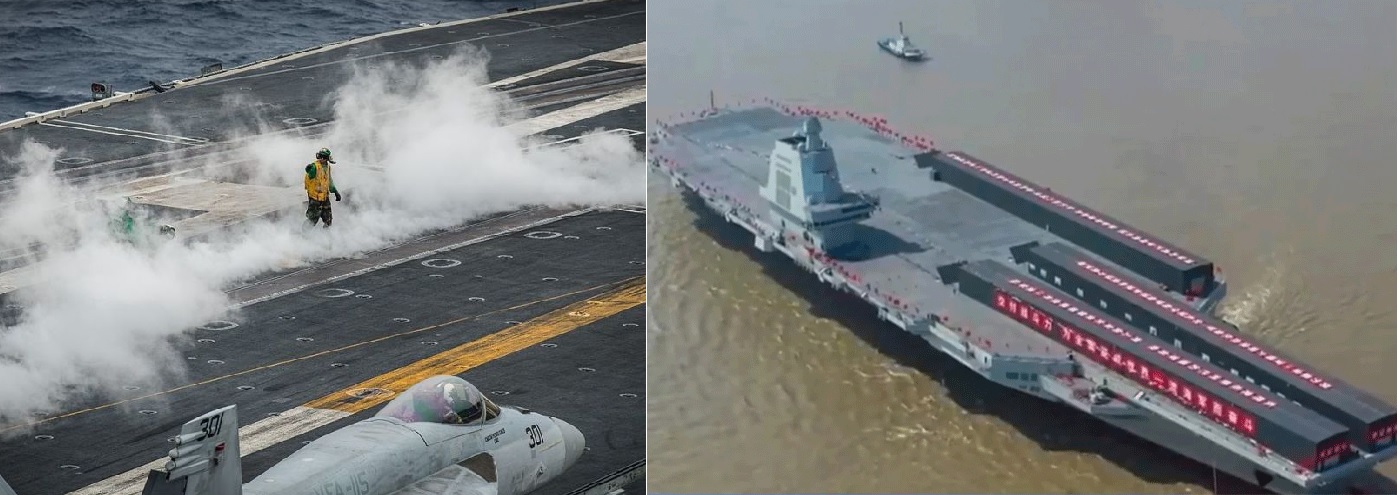
World
For over six decades, steam catapults have been the defining feature of American aircraft carriers. They have launched everything from F-4 Phantoms to F/A-18 Hornets, reliably flinging thousands of aircraft from the decks of supercarriers across the world’s oceans. Yet, as the 21st century ushered in a new era of naval technology, the U.S. Navy began developing what many considered the future of carrier aviation — the Electromagnetic Aircraft Launch System (EMALS). However, despite the initial excitement, the United States has not yet adopted electromagnetic catapult systems across its entire carrier fleet. In fact, only the USS Gerald R. Ford (CVN-78) currently uses EMALS, while the rest of the Navy’s carriers still rely on tried-and-tested steam catapults. The reasons behind this are complex, combining technical hurdles, integration challenges, financial pressures, and political oversight. The Promise of EMALS At its core, EMALS was designed to replace steam catapults with a far more efficient and modern alternative. Instead of relying on high-pressure steam, EMALS uses linear induction motors — long tracks of electromagnetic coils that create a controlled magnetic field — to propel aircraft down the flight deck. The benefits were meant to be transformative. EMALS offers smoother acceleration, reducing stress on both the airframe and pilot. It can launch a wider range of aircraft, including light unmanned aerial vehicles (UAVs) and heavy next-generation fighters. It also eliminates the need for massive boilers, complex plumbing, and heavy maintenance required by steam systems. From a design perspective, EMALS was expected to improve sortie generation rates, reduce manpower, and allow future carriers to launch both manned and unmanned aircraft seamlessly. Why the U.S. Didn’t Abandon Steam Completely Despite the advantages, the transition from steam to electromagnetic launch systems has been far more difficult than expected. While EMALS was successfully built and installed on the Ford-class carriers, its early performance fell short of expectations — and the Navy decided to proceed cautiously before committing it fleet-wide. 1. Reliability Challenges The first and foremost issue was reliability. EMALS is an incredibly complex electrical system requiring precise synchronization between its motor components, energy storage systems, and power electronics. Early testing revealed frequent system failures and inconsistent performance, leading to delays in flight operations. According to internal test reports, EMALS initially suffered mean cycles between failure rates far below Navy targets. For a carrier designed to conduct hundreds of launches per day, even minor reliability issues can quickly escalate into operational disruptions. Steam catapults, though old-fashioned, are rugged, well-understood, and proven — making the Navy hesitant to take on unnecessary risks in combat operations. 2. Power System Integration EMALS is also extremely power-hungry. Unlike steam catapults that draw power from the ship’s boilers, electromagnetic systems require enormous amounts of electrical energy storage and rapid power discharge. The Ford-class nuclear reactors were specifically designed to provide this capability, but older Nimitz-class carriers were not. Retrofitting Nimitz-class ships with EMALS would require a complete redesign of their power generation and distribution systems — an effort costing billions and requiring years in dry dock. In practical terms, it simply isn’t worth the expense or the downtime for ships already halfway through their service life. 3. Cost and Schedule Overruns EMALS became a high-profile part of the Ford-class cost overruns, with its development and integration contributing to budget escalations and schedule delays. The program became a lightning rod for criticism in Congress, where lawmakers demanded accountability for the Navy’s ambitious technology programs. Under such scrutiny, Navy leadership prioritized stabilizing performance and reducing risk before moving forward with additional EMALS-equipped carriers. The result was a slower, more conservative rollout rather than a wholesale shift. 4. Political Oversight and Public Criticism While no formal political decision stopped EMALS, Congressional oversight created strong pressure on the Navy to “prove it works before expanding it.” Lawmakers, defense analysts, and watchdog groups questioned whether it was wise to introduce multiple untested systems (EMALS, advanced arresting gear, dual-band radar) on the same ship class. The Navy, already facing criticism for delays in Ford’s readiness, decided to consolidate efforts on making EMALS reliable on CVN-78 before expanding its use to future ships like USS John F. Kennedy (CVN-79) and USS Enterprise (CVN-80). Not Abandoned — Just a Slow Transition It’s important to note that the United States did not abandon EMALS. The system is operational aboard USS Gerald R. Ford, which completed its first deployment in 2023 and launched thousands of aircraft during trials. Subsequent ships in the Ford-class — including CVN-79 and CVN-80 — are also planned to feature EMALS once reliability metrics improve. In other words, EMALS is built and in use, but it’s still in the refinement stage, not yet mature enough to justify large-scale retrofits or rapid fleet integration. Why Steam Still Rules — For Now The steam catapult remains in use not because of nostalgia, but because of practicality. It’s proven, dependable, and deeply integrated into existing ship systems. As long as Nimitz-class carriers remain the workhorses of the U.S. Navy, steam will continue to serve. Furthermore, the Navy’s next-generation carrier strategy focuses on balancing innovation with operational reliability. It has learned from the Ford-class experience that introducing too many revolutionary systems simultaneously creates unnecessary risk. The service is now pacing its modernization efforts to ensure reliability, cost efficiency, and combat readiness come first. The Global Context: China’s Challenge Meanwhile, the People’s Liberation Army Navy (PLAN) has introduced its own electromagnetic catapult on the Fujian (Type 003) carrier, signaling China’s ambition to close the technology gap. Beijing’s adoption of an EM launch system has reignited debate in Washington over whether the U.S. should accelerate its own adoption timeline. However, while China’s progress is noteworthy, its system has not yet been tested in real carrier operations. The U.S. Navy, with decades of experience in carrier aviation, is taking a deliberate, data-driven approach — preferring proven reliability over rushed technological demonstration. The U.S. Navy’s cautious handling of EMALS reflects a broader truth about military innovation: revolutionary technology must earn its place through reliability and performance, not just promise. As the Navy works through EMALS’ remaining issues, the system’s long-term advantages — reduced maintenance, improved sortie rates, and support for next-generation UAVs — will likely ensure its place in future carriers. For now, however, steam catapults remain the backbone of American naval aviation — a 20th-century invention still launching the world’s most advanced aircraft, while the electromagnetic future slowly takes shape on the deck of the USS Gerald R. Ford.
Read More → Posted on 2025-11-10 17:02:05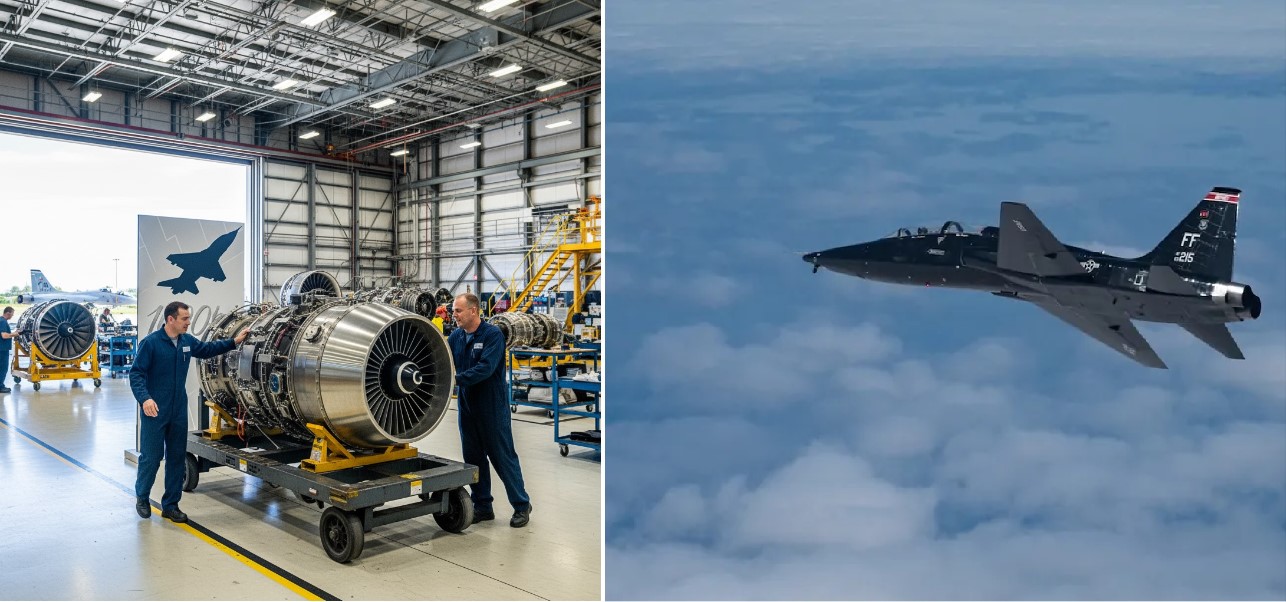
World
In a landmark achievement for American aerospace sustainment, StandardAero has announced the delivery of its 1,000th GE J85-5 turbojet engine to the United States Air Force (USAF). The milestone comes just five years after the company began supporting the engine under the Engine Regional Repair Center (ERRC) contract, marking a significant step in maintaining the readiness of the USAF’s T-38 Talon training fleet. The J85-5 engine powers the T-38, a twin-engine supersonic jet trainer that has been a vital component of U.S. and allied pilot training programs for more than six decades. Despite its vintage design, the aircraft remains the backbone of advanced pilot training, bridging the gap between basic flight instruction and modern fighter operations. A Milestone Rooted in Scale and Precision All J85-5 engines under this program are serviced at StandardAero’s Port San Antonio facility in Texas — a sprawling 810,000-square-foot site that handles five major military and commercial MRO (Maintenance, Repair, and Overhaul) programs. The facility has become one of the most capable and productive military engine repair centers in the country, with advanced tooling, digital workflow systems, and a growing workforce of skilled technicians. The company’s Aviation Mechanic Training Program, also located at Port San Antonio, trains over 200 mechanics annually, ensuring a steady stream of qualified professionals to support both military and commercial engine maintenance. This in-house capability not only bolsters the J85-5 program but also strengthens the broader U.S. aerospace sustainment workforce. Celebrating the 1,000th Engine To mark the occasion, StandardAero hosted a ceremony at the Tech Port Center in Port San Antonio. The event was led by Greg “Chappy” Chapman, Program Manager for the J85-5 line, and attended by production staff, USAF representatives, and local officials. Speaking at the event, Rick Pataky, Vice President and General Manager of StandardAero’s Military Division, emphasized the importance of the partnership: “Supporting the USAF pilot training mission is a tremendous honor. Delivering 1,000 engines in such a short timeframe is a testament to the dedication and collaboration of our entire team.” Marc Drobny, President of StandardAero’s Military, Helicopter, and Energy Division, highlighted the depth of cooperation between the company and the Air Force’s logistics and propulsion teams: “This milestone reflects the strength of our partnership with the USAF Propulsion Program Office, the Air Education and Training Command, and the 448th Supply Chain Management Wing. Together, we’ve built a resilient and transparent value chain that supports the entire J85-5 fleet, flight line, and national security.” A Legacy Engine with a Modern Role First designed in 1954 by GE Aerospace, the J85-5 remains one of the longest-serving military jet engines in continuous operation. Compact, powerful, and reliable, it originally powered aircraft such as the GAM-72 Green Quail decoy and the Northrop F-5 Freedom Fighter (N156F). Its commercial derivative, the CJ610, went on to power early Learjet models, cementing the engine’s place in both military and civilian aviation history. Despite its age, the J85-5 continues to play a crucial role in preparing new generations of fighter pilots. The engine’s service life is expected to continue well into the 2040s, with incremental upgrades and overhaul programs ensuring its performance and reliability remain at modern standards. Expanding MRO Footprint and Capabilities StandardAero’s work on the J85-5 is part of a broader engine support portfolio that includes the LEAP-1A and LEAP-1B commercial turbofan engines, serviced under the company’s status as a CFM LEAP Premier MRO Provider. The Port San Antonio site has expanded operations since March 2024, enhancing throughput and turnaround times for both military and commercial customers. Beyond Texas, the company’s Stockton, California facility handles other J85 variants, providing component repair support for the USAF J85 MISTR system since 2013. It also services the J85-21 engine for the U.S. Navy and Foreign Military Sales (FMS) partners — further underscoring StandardAero’s integral role in supporting legacy propulsion systems across multiple services. Strengthening the Air Force Training Backbone The delivery of 1,000 overhauled engines represents more than just a production milestone — it symbolizes the health of the U.S. military’s industrial base and its ability to sustain aging yet essential systems. The T-38 Talon remains central to USAF training programs, providing critical flight hours for student pilots before they transition to advanced platforms such as the F-15EX, F-16, and F-35. By maintaining a reliable pipeline of overhauled J85-5 engines, StandardAero ensures that the Air Force’s training missions continue without disruption. In an era when defense readiness increasingly depends on industrial speed and reliability, such partnerships between the private sector and the military are vital. StandardAero’s achievement highlights how legacy platforms can continue to serve effectively when supported by modern industrial practices, digitalized maintenance systems, and a dedicated workforce. As the U.S. Air Force gradually transitions to the Boeing-Saab T-7A Red Hawk, the T-38 Talon — and its J85-5 powerplant — will remain in service for at least another decade, bridging the gap between generations of training aircraft. For now, the delivery of the 1,000th J85-5 engine stands as a clear indicator that America’s aerospace sustainment ecosystem remains strong — ensuring that every aspiring pilot in the T-38 can take off with confidence, powered by an engine that has earned its place in aviation history.
Read More → Posted on 2025-11-10 16:47:04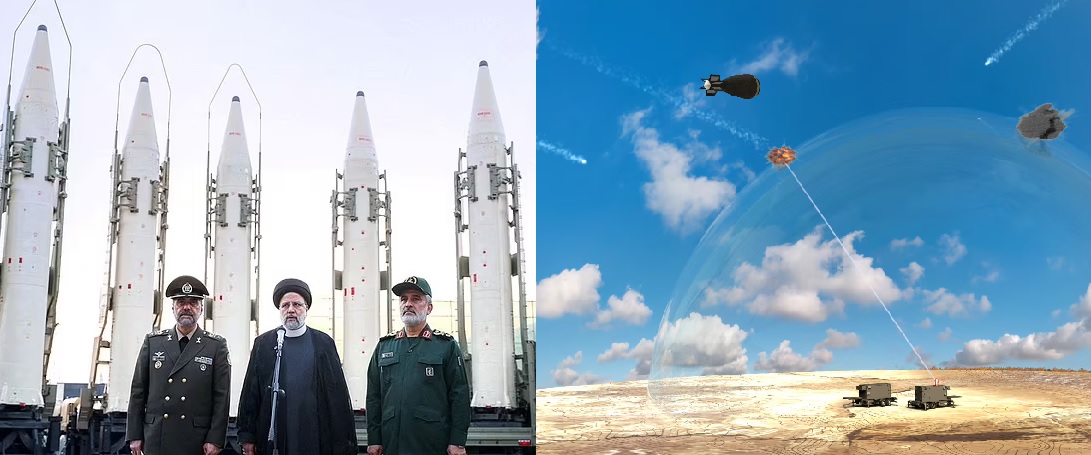
World
Tensions between Iran and Israel are once again reaching a dangerous peak. Intelligence reports cited by The New York Times warn that Tehran is preparing for a much larger and deadlier confrontation than before. Iran’s missile factories are working around the clock, and its military is reportedly building the ability to launch up to 2,000 missiles at once at Israel — a dramatic escalation compared to the 500 missiles fired over 12 days during the June 2025 clashes. This time, both countries are moving beyond ordinary military posturing. Iran is preparing for a fast, overwhelming strike, while Israel is strengthening its defenses — not only against ballistic missiles but also developing new systems to intercept hypersonic weapons, a threat that could soon enter the Middle East battlefield. Iran’s New Plan: Overwhelm, Not Contain Iran’s military planners appear to have drawn lessons from previous engagements. Instead of smaller, controlled retaliations, Tehran now aims to unleash a single, massive wave of missile fire designed to overwhelm Israel’s air defenses. The missiles Iran is producing — including Zolfaghar, Qiam, and Emad variants — have ranges of up to 2,000 kilometers, easily covering all of Israel. By launching them simultaneously, Iranian strategists hope to exhaust Israel’s interceptors and sensors, allowing some warheads to hit key targets such as military bases, energy facilities, and command centers. U.S. intelligence assessments also indicate that despite former President Donald Trump’s claim that he “destroyed” Iran’s nuclear program, most of Iran’s uranium stockpile survived and has been moved to secret underground facilities. These sites are now believed to be heavily fortified, suggesting Tehran expects airstrikes and is preparing to endure them. Israel’s Response: Stronger Shields and Smarter Weapons Israel is not waiting for the next attack to happen. The Israeli Defense Forces (IDF) have accelerated upgrades across their entire defensive network and expanded cooperation with U.S. and European partners on missile tracking and counter-hypersonic technology. The backbone of Israel’s defense remains its multi-layered air defense system, which includes: Iron Dome – intercepts short-range rockets and mortars. David’s Sling – targets medium-range ballistic and cruise missiles. Arrow 2 and Arrow 3 – intercepts long-range ballistic threats, even outside the atmosphere. After Iran’s missile attack in June 2025, Israel enhanced its radar coverage and improved coordination between defense layers. However, military officials acknowledged that a 2,000-missile salvo could test even the most advanced systems. That realization led Israel to unveil its newest weapon: Iron Beam — the first laser-based air defense system ever deployed for real-world protection. Iron Beam: The First Operational Laser Defense System The Iron Beam, developed by Rafael Advanced Defense Systems, has now entered active service, marking a historic milestone for Israel’s defense capabilities. Using a high-energy laser, the system destroys incoming rockets, mortars, drones, and short-range missiles by heating and disintegrating them mid-air. Unlike conventional interceptors, which cost thousands of dollars per missile, each Iron Beam shot costs only a few dollars of electricity. This makes it the perfect counter to the kind of mass-attack strategy Iran is preparing for — especially against cheap, numerous projectiles. Israel’s Defense Minister Yoav Gallant announced earlier this year that Iron Beam units are already deployed in southern Israel and will soon be stationed near major cities. It can neutralize threats within a 10-kilometer radius and will be upgraded to cover larger distances in future versions. “For the first time, Israel has a defense weapon that intercepts at the speed of light,” Gallant said.“Iron Beam will become a key layer in protecting the country against rockets and drones.” Next Step: Defending Against Hypersonic Missiles Beyond defending against traditional ballistic and cruise missiles, Israel is also developing systems to intercept hypersonic weapons — missiles that travel at more than five times the speed of sound (Mach 5) and can maneuver unpredictably. Iran, along with Russia and China, has shown growing interest in hypersonic technology. Iranian state media even hinted at the development of a prototype hypersonic missile in 2024. Though unverified, such announcements have alarmed Israeli and Western defense planners. In response, Israel Aerospace Industries (IAI) and the Defense Ministry’s Missile Defense Organization (IMDO) have started work on an advanced interceptor known as Arrow-4 and other classified projects aimed at tracking and neutralizing hypersonic threats. These new systems are being designed to react within seconds, combining next-generation radar sensors, AI-based tracking, and possibly laser-assisted interception. A senior Israeli defense scientist stated that Israel “cannot afford to wait” until hypersonic missiles appear in the region. “We are developing a shield for the threats of tomorrow — fast, maneuvering, and unpredictable weapons. Hypersonic interception is no longer science fiction for Israel.” If successful, Israel would become one of the first nations — after the U.S. — to possess operational hypersonic defense capability. Building a Multi-Layered Future Shield With Iron Beam now operational and hypersonic defense under development, Israel’s future air shield will consist of multiple, overlapping layers: Iron Dome and Iron Beam for short-range threats. David’s Sling for medium-range missiles. Arrow 2, Arrow 3, and the upcoming Arrow 4 for long-range and hypersonic threats. This setup is intended not only to protect against Iran but also to counter growing dangers from Hezbollah in Lebanon, militias in Syria and Iraq, and potential Houthi missile attacks from Yemen. The Countdown to Conflict Both Iran and Israel are racing toward a confrontation that many experts say is inevitable. Iran is producing more missiles and dispersing them in hidden silos, while Israel is responding with lasers, advanced interceptors, and preparations for preemptive strikes. Tehran believes that a massive missile attack can break Israel’s defenses. Israel believes that technology and speed will keep it safe. But as both sides continue to prepare, the risk of war grows by the day. As one Israeli official put it: “The next war will happen in minutes, not days — with hundreds or thousands of missiles in the air.” In the race between Iran’s missiles and Israel’s lasers, one thing is clear: the Middle East is standing at the edge of a new era in warfare — where the outcome will depend on who can strike faster and defend smarter.
Read More → Posted on 2025-11-10 16:39:02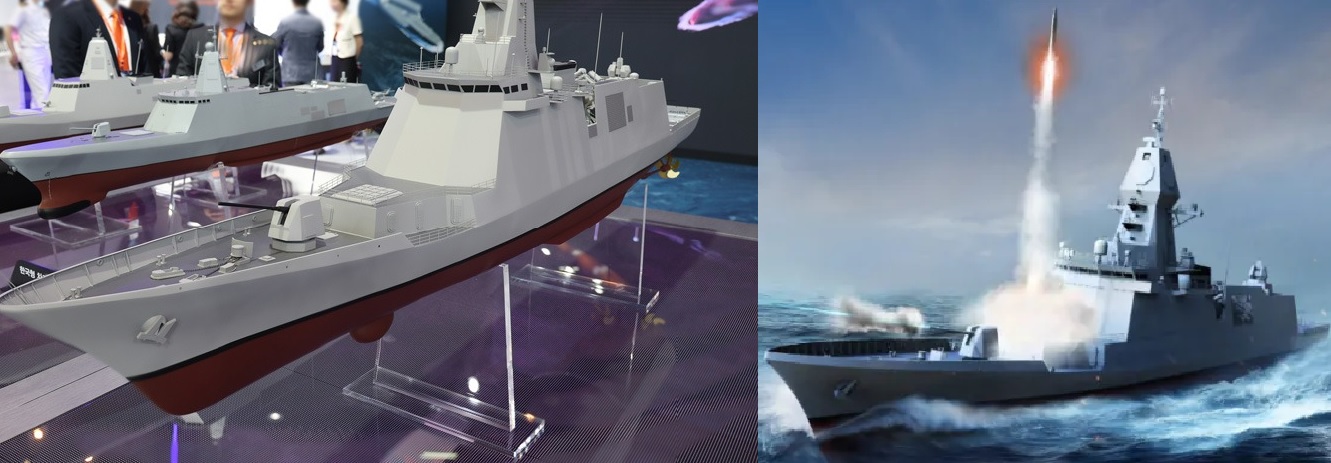
World
South Korean shipbuilder Hanwha Ocean made a major stride in its international defense outreach at the Defense & Security 2025 exhibition in Bangkok, Thailand. The company inked Memorandums of Understanding (MoUs) with three leading European defense firms — Naval Group, MBDA, and Cohort — marking a significant step toward its bid for the Royal Thai Navy’s (RTN) second-phase frigate acquisition program, expected in 2026. Strengthening the OCEAN-40F Frigate Program As part of the new MoUs, France’s Naval Group will provide its SETIS Combat Management System (CMS), while MBDA will deliver a range of naval missile systems for Hanwha Ocean’s OCEAN-40F design. The OCEAN-40F is the latest evolution of Hanwha’s export frigate lineup, specifically tailored to meet the operational needs of the Royal Thai Navy. During the same event, Hanwha Ocean also signed an MoU with British defense company Cohort, covering a comprehensive package that includes sonar systems, torpedo launcher systems, surveillance, targeting and fire-control systems, as well as communications management. This set of agreements demonstrates Hanwha’s growing willingness to integrate European technologies into its warship offerings, aiming to deliver a truly multi-domain combat platform capable of performing advanced maritime operations. A Rare Partnership: SETIS on a Non-French Hull It is relatively unusual for Naval Group to equip another shipbuilder’s vessel with its SETIS CMS. Traditionally reserved for Naval Group’s own designs, this collaboration underscores the flexibility and export-driven nature of the deal. However, there is a historical precedent — the Royal Norwegian Navy’s Skjold-class corvettes, built by Kvaerner/Umoe Mandal, also employed a Naval Group (then DCNS) CMS system, the SENIT 2000. According to defense industry sources, SETIS was chosen for Hanwha’s OCEAN-40F due to its compatibility with European missile systems, including MBDA’s VL Mica surface-to-air missiles, Simbad RC VSHORAD systems, and Exocet MM40 Block 3C anti-ship missiles. These weapons are already fully integrated with the SETIS ecosystem — unlike Hanwha Systems’ indigenous CMS, which would require extensive reconfiguration for such integration. Hanwha Ocean’s Statement: “Game Changer at Sea” In a statement released at the exhibition, Hanwha Ocean described its OCEAN-40F as the centerpiece of its naval portfolio under the theme “Game Changer at Sea – Unmatched Lethality, Seamless Combat Readiness.” “This model, proposed for the Royal Thai Navy’s second frigate program, builds upon the legacy of the 2018 delivery. The upgraded design expands from 3,750 tons to 4,000 tons, providing enhanced blue-water operational capability beyond coastal defense,”the company said in a press release. The OCEAN-40F reflects Hanwha’s extensive experience from delivering the HTMS Bhumibol Adulyadej, a DW3000-class frigate commissioned by the Royal Thai Navy in 2018. The upgraded design enhances stealth characteristics, endurance, and multi-domain adaptability. OCEAN-40F Frigate – Key Specifications Feature Details Displacement ~4,000 tons (full load) Length Approx. 124 meters Beam 14.4 meters Draft 4.3 meters Propulsion CODAG (Combined Diesel and Gas) Speed Up to 27 knots Range 5,000 nautical miles (estimated) Crew 120+ personnel Combat System SETIS CMS (Naval Group) Air Defense VL MICA surface-to-air missile system Close-In Defense Simbad RC VSHORAD system Anti-Ship Weapons Exocet MM40 Block 3C missiles Guns 76mm main gun, secondary CIWS Sensors Advanced AESA radar, electro-optical targeting, towed array sonar Other Features Integration with unmanned aerial and surface vehicles, advanced electronic warfare suite This configuration, featuring a proven European missile suite integrated through SETIS, gives the OCEAN-40F a strong balance of lethality, survivability, and situational awareness. The design also incorporates low-RCS (Radar Cross Section) architecture, a flush-deck profile, and an optimized mast structure to minimize radar and infrared signatures — aligning with global trends in next-generation stealth frigate design. Cohort Partnership: Expanding Undersea and Communication Capabilities The MoU with Cohort further reinforces Hanwha’s effort to create a complete, ready-to-fight naval ecosystem. Cohort brings decades of British expertise in sonar and torpedo launch systems, combat data handling, and communications integration. By including these systems, Hanwha aims to deliver a turnkey frigate that can operate seamlessly across surface, subsurface, and aerial domains, enhancing Thailand’s maritime surveillance and deterrence capabilities. Competing for Thailand’s Second Frigate Program Hanwha Ocean’s OCEAN-40F will compete against several major shipbuilders, including Navantia (Spain), HD Hyundai Heavy Industries (South Korea), and Turkey’s STM/TAIS consortium. Thailand’s second-phase frigate program, projected for 2026, is expected to select one design offering improved blue-water endurance, advanced sensors, and multi-role combat flexibility. Hanwha’s integration of European weaponry and combat systems, combined with Korean shipbuilding reliability, presents a compelling hybrid solution for the Thai Navy — balancing cost-effectiveness with top-tier capability. A Step Toward Global Expansion For Hanwha Ocean, these partnerships mark a turning point in its export strategy. Rather than focusing solely on indigenous technologies, the company is aligning itself with Western and European defense ecosystems, enhancing interoperability and widening its global market reach. The inclusion of the SETIS CMS and MBDA missile suite is expected to strengthen not only its Thai proposal but also future export campaigns in Southeast Asia, the Middle East, and beyond. Hanwha Ocean’s signing of MoUs with Naval Group, MBDA, and Cohort at Defense & Security 2025 underscores a strategic evolution in South Korea’s naval export approach — one that blends Korean engineering, European combat systems, and multi-domain integration. If selected by the Royal Thai Navy, the OCEAN-40F frigate could become a symbol of a new era in regional maritime partnerships — where cross-national collaboration defines the next generation of combat ships. As the competition for Thailand’s 2026 frigate program intensifies, Hanwha’s combined package of European precision and Korean shipbuilding excellence may well offer the decisive advantage.
Read More → Posted on 2025-11-10 15:43:53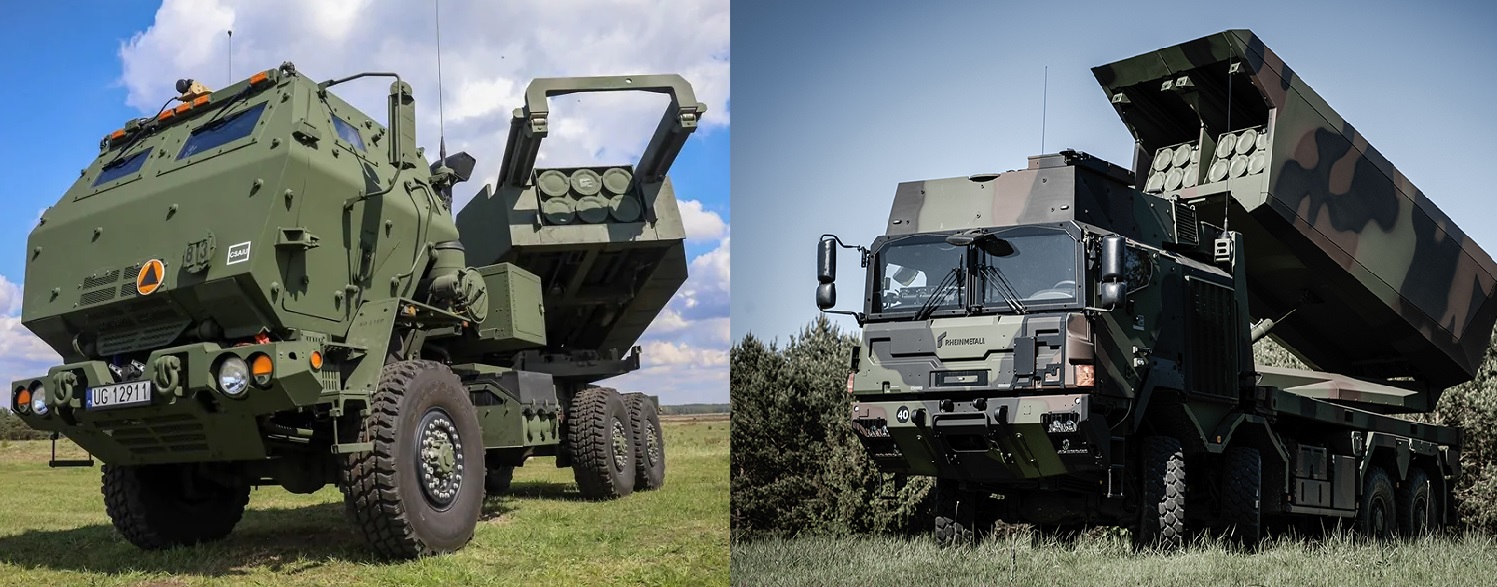
World
Lockheed Martin has announced the delivery of its 750th M142 High Mobility Artillery Rocket System (HIMARS) — a landmark achievement that underscores the system’s pivotal role in reshaping modern battlefield dynamics. The announcement, made on November 5, 2025, highlights both the pace of U.S. industrial expansion and the rising international appetite for long-range precision fires in an increasingly contested global environment. A Symbol of Modern Firepower The HIMARS launcher has become one of the defining symbols of modern precision warfare. Compact, wheeled, and deployable by aircraft, it provides the kind of “shoot-and-scoot” mobility that traditional artillery systems struggle to match. Developed by Lockheed Martin, HIMARS can fire a range of precision munitions, including the Guided Multiple Launch Rocket System (GMLRS), Extended Range GMLRS (ER GMLRS), and the Army Tactical Missile System (ATACMS). The launcher’s success lies in its adaptability — the same chassis and crew can deliver short, medium, or long-range effects depending on mission needs. The Camden, Arkansas production line, where HIMARS is built, has become the nerve center of this industrial resurgence. Over the past few years, Lockheed Martin has significantly expanded the facility, increasing output capacity to meet the U.S. Army’s demand while accommodating the growing list of international buyers. This milestone aligns with the Army’s broader Long Range Precision Fires (LRPF) modernization strategy, designed to ensure America and its allies maintain overmatch in long-range engagements. Evolving Munitions: From GMLRS to PrSM The GMLRS family remains the core of the HIMARS arsenal. Its GPS-aided and INS-stabilized rockets deliver consistent accuracy out to 70 kilometers, with options for unitary warheads against hardened targets or alternative-warhead payloads that saturate wider areas. The Extended-Range GMLRS (ER GMLRS), now entering full-rate production, stretches that reach to approximately 150 kilometers. Despite its longer range, it maintains the same precision and lethality, giving commanders a cost-effective way to strike deep targets like air-defense radars, logistics depots, and command nodes—well beyond the reach of traditional artillery. Complementing this is the new generation Precision Strike Missile (PrSM), which received Milestone C approval in July 2025, clearing it for production. PrSM replaces ATACMS as the U.S. Army’s primary theater-strike weapon, doubling launcher capacity to two missiles per pod and extending range beyond 400 kilometers. Built with a modular open-systems architecture, PrSM can be adapted for new seekers and targeting modes, including maritime and multi-domain strike options. This modularity ensures that every HIMARS launcher delivered today is a forward-compatible platform, ready to integrate future weapons as they mature. The ability to employ a wide range of effectors from a single vehicle is central to the system’s enduring appeal. Tactics and Mobility: The HIMARS Edge HIMARS’s mobility continues to be its defining tactical advantage. U.S. and NATO forces have refined High Mobility Artillery Rocket Insertion (HIRAIN) tactics — a strategy that involves airlifting HIMARS units into forward areas using C-130 or C-17 aircraft, executing precision strikes, and rapidly exfiltrating before enemy counter-battery fire can respond. These tactics have been regularly demonstrated in Europe, where HIMARS serves both as a deterrent and as a proof of the Army’s ability to conduct distributed, time-sensitive operations. The sealed pod system drastically shortens reload times, while advanced digital fire control integrates real-time data from drones, counter-fire radars, and joint sensors to generate firing solutions in seconds. In practice, this means a HIMARS battery can deliver a devastating salvo, blind enemy defenses, and disappear into the terrain — all before the adversary realizes where the attack came from. A Growing Global Footprint The HIMARS system’s reputation for reliability and precision has led to an unprecedented surge in international adoption. The system’s simplicity, interoperability, and scalability have made it a natural choice for countries seeking both deterrence and operational flexibility. Australia has already received the first of its 42 ordered systems and is pursuing an additional 48 under the LAND 8113 program, aligning HIMARS and PrSM with a land-based maritime strike role. Estonia, which took delivery of its first launchers earlier this year, has integrated HIMARS into a Baltic defense strategy emphasizing rapid fires and deception-based survivability. Taiwan has fielded initial batteries and conducted live-fire drills as part of a cross-Strait deterrence strategy, forcing the PLA to consider distributed strike threats across multiple axes. Poland continues to expand its Homar-A program, integrating HIMARS modules onto local Jelcz trucks and establishing domestic rocket production — a major step toward building Europe’s largest precision fires network. Each of these acquisitions reflects a broader trend: Allied nations are buying range, precision, and tempo, not just equipment. HIMARS offers them a scalable, interoperable platform to integrate with NATO and U.S. targeting architectures. Industrial Momentum and Strategic Impact Lockheed Martin’s Camden facility now anchors a broader push to rebuild Western industrial capacity for munitions and precision fires. Since 2022, annual launcher output has surged as part of a multinational rearmament cycle to replenish inventories depleted by ongoing conflicts and exercises. Alongside launchers, the same site produces ER GMLRS and PrSM, ensuring synchronized growth of both platforms and payloads. Every new launcher is not just a tactical tool—it’s a networked node in a global precision strike ecosystem. The modularity, connectivity, and sustained production pipeline ensure that HIMARS remains relevant for decades to come, capable of integrating AI-enhanced targeting, autonomous sensors, and future strike assets as warfare evolves.
Read More → Posted on 2025-11-10 15:35:26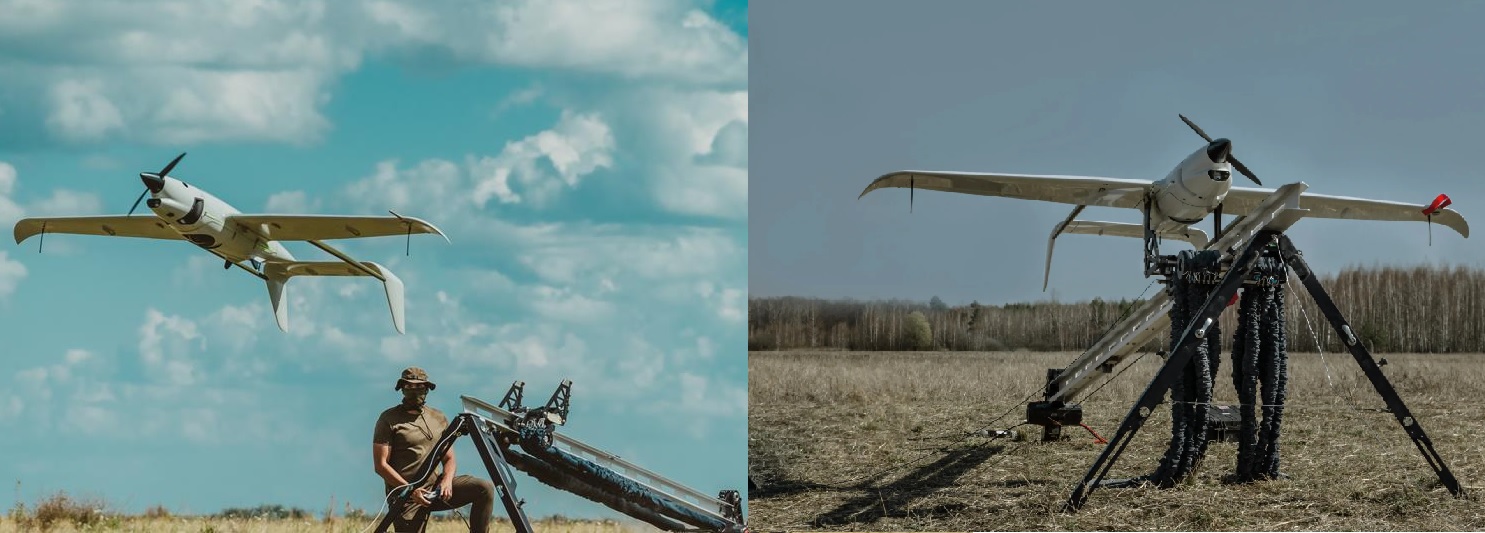
World
The British Army’s long-troubled Watchkeeper unmanned aerial system may soon have an unlikely successor — the Raybird, a combat-tested reconnaissance drone developed by Ukraine’s Skyeton company. According to Forces News reports on November 4, 2025, the Raybird is being actively promoted as a replacement for the Watchkeeper, which is set to retire in 2027. If adopted, this move could accelerate the UK’s Project Corvus program — a key effort to modernize and field affordable, long-endurance ISR (Intelligence, Surveillance, Reconnaissance) drones resilient to electronic warfare (EW). A Ready Solution for Project Corvus The UK’s Project Corvus aims to develop a new unmanned system under the Land Tactical Deep Find (LTDF) requirement — designed to locate and track enemy assets deep behind the frontline with minimal risk to personnel. Watchkeeper, once envisioned as the backbone of British Army reconnaissance, has faced recurring issues since its introduction in 2014, including technical faults, grounding incidents, and limited deployment utility. With Watchkeeper slated for retirement in 2027, the need for a replacement is urgent. Ukraine’s Raybird presents a ready and combat-proven alternative. Having logged more than 350,000 flight hours in wartime conditions, the drone has been extensively used for reconnaissance, artillery correction, and electronic warfare missions in Ukraine’s ongoing defense operations. The UK Ministry of Defence (MoD) is reportedly exploring whether Raybird could bridge the gap — offering a faster, cheaper, and more resilient capability than a new domestic development. Specifications and Technical Overview Despite its compact size, the Raybird packs advanced capabilities that align closely with the UK’s future ISR needs. Built for long-endurance missions, electronic warfare resilience, and rapid field deployment, the drone combines endurance with simplicity. Key Specifications: Manufacturer: Skyeton (Ukraine) Endurance: Up to 28 hours Maximum Range: Up to 2,500 kilometers (autonomous mode) Operational Altitude: Up to 5,500 meters Maximum Take-Off Weight: Approximately 23 kilograms Wingspan: Between 3 and 4.2 meters (variant dependent) Payload Capacity: Around 5 kilograms Communication Range: Up to 200 kilometers Deployment: Catapult-launched, parachute and airbag recovery Setup Time: 20–25 minutes Sensors: EO/IR gimbal, Synthetic Aperture Radar (SAR), and optional RF payloads for ELINT missions EW Resilience: Operable in GPS-denied or jammed environments These specifications make Raybird one of the few small UAVs capable of combining medium-endurance performance with the portability of a tactical drone. Why the Raybird Stands Out The appeal of the Raybird to the UK defense establishment lies in three major factors — combat performance, deployability, and cost efficiency. Firstly, the system has already proven its reliability in combat conditions. Ukrainian forces have relied on Raybird for years in some of the most electronically hostile airspaces in the world. This has provided invaluable data on its performance under jamming, harsh weather, and live-fire conditions — something few Western tactical drones can claim. Secondly, Raybird’s modular design allows operators to switch payloads quickly and launch with minimal infrastructure, suiting modern expeditionary warfare. Its ground crew requirement is minimal, and the system can be assembled and launched from a small open field. Thirdly, affordability plays a central role. With Western military budgets stretched and the demand for persistent ISR increasing, the Raybird presents an option that is mature, scalable, and significantly cheaper than many Western-built equivalents. The Industrial and Strategic Angle Behind the proposal is a joint UK-Ukraine venture involving Skyeton and British partner companies. The plan reportedly includes local assembly and maintenance in the UK, satisfying both operational and political requirements for domestic industrial participation. According to Janes Defence Weekly, the UK’s Land Tactical Deep Find requirement prioritizes affordability, rapid deployment, and EW survivability — all criteria that the Raybird meets. This makes it a realistic candidate for Project Corvus, which aims to deliver operational capability soon after Watchkeeper’s retirement. If the UK adopts the Raybird, it would also mark a significant deepening of defense-industrial cooperation with Ukraine — providing a pathway for Ukrainian aerospace technologies to enter the NATO market. Challenges and Unanswered Questions Despite its advantages, the Raybird faces several challenges before it could replace the Watchkeeper. Integration with the British Army’s C4ISR network (Command, Control, Communications, Computers, Intelligence, Surveillance, and Reconnaissance) would require new data links, software certification, and training. There are also concerns over airspace safety certification — an issue that long plagued the Watchkeeper program. Additionally, while Raybird has shown excellent performance in Ukraine, the UK’s operational demands and weather conditions could require adaptation. Moreover, questions remain about industrial sovereignty — whether the UK would prefer a domestically built drone or one with foreign origins, even if locally assembled. Competing systems from European or British manufacturers could also challenge Raybird’s bid. As the Watchkeeper nears retirement, the British Army cannot afford a capability gap in its tactical ISR assets. Project Corvus will likely award its first contracts in 2026, making the next year critical for testing and evaluation. Should Raybird prove its reliability, interoperability, and survivability, it could become the first Ukrainian-designed drone to enter frontline service with a NATO army — a landmark achievement for both nations. In an era where low-cost, long-endurance, and resilient ISR platforms are redefining modern warfare, Ukraine’s Raybird stands as a powerful example of how battlefield innovation can reshape the future of reconnaissance.
Read More → Posted on 2025-11-10 15:24:12Search
Top Trending in 24 Hours
-
 China Successfully Launches Zhuque-3 Rocket and Recovers Booster on Land After Orbital Launch
-
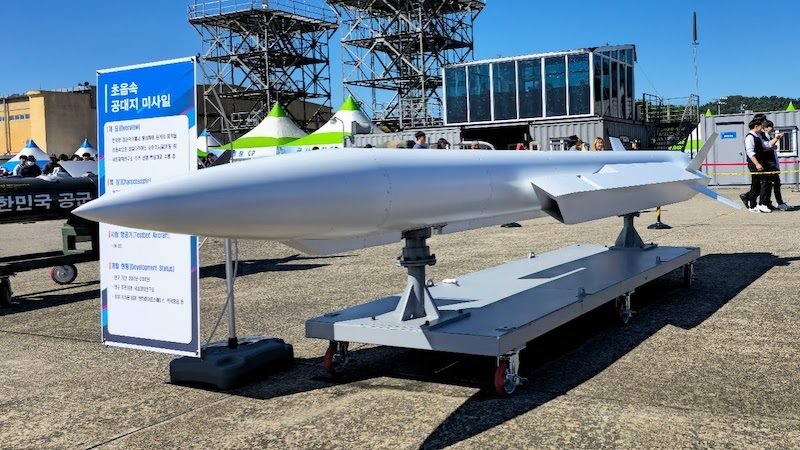 South Korea Approves Development of Next-Generation SSM-II Anti-Ship Missile and K2 Tank Upgrade
-
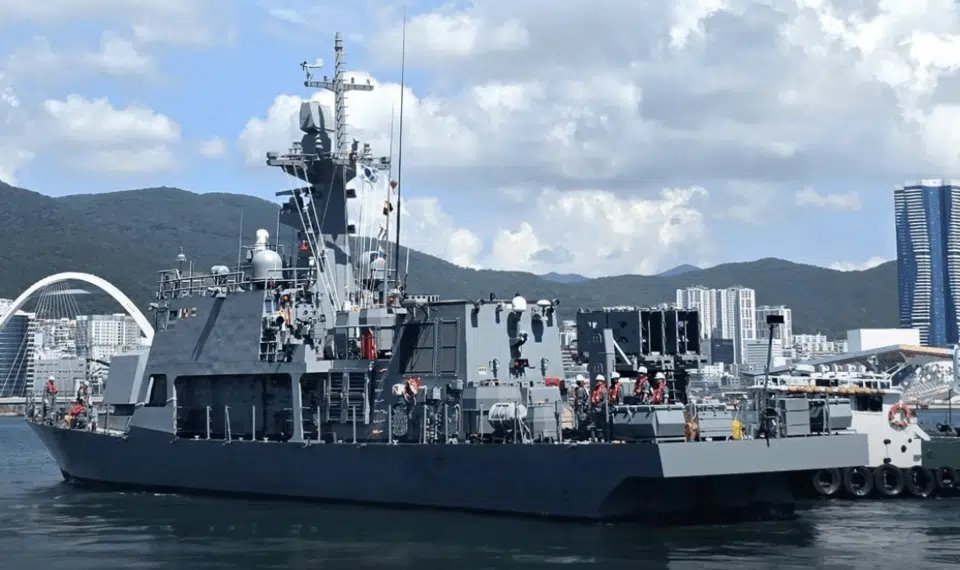 South Korea Delivers First PKX-B Batch-II Fast Patrol Craft to Navy
-
 USS Abraham Lincoln Faces Extended Deployment and Supply Challenges Linked to Iranian Attacks on Bahrain Base
-
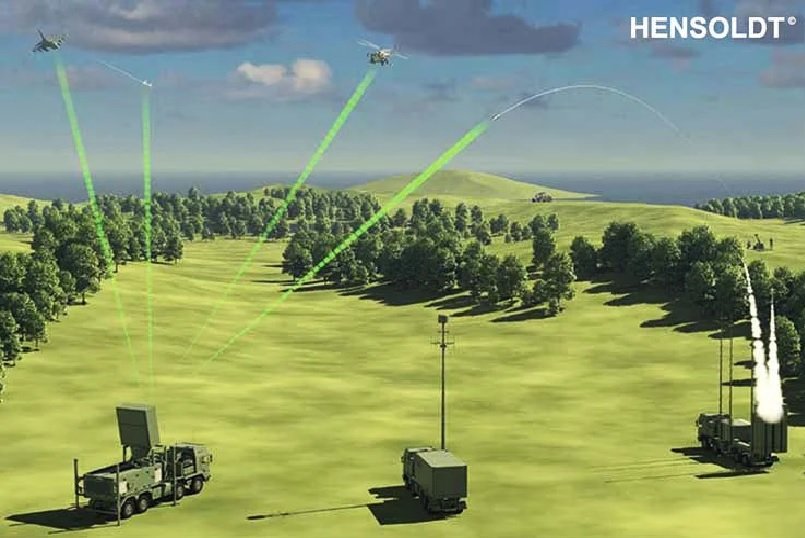 Rheinmetall Integrates HENSOLDT Twinvis Passive Radar into Skymaster Air Defence System
-
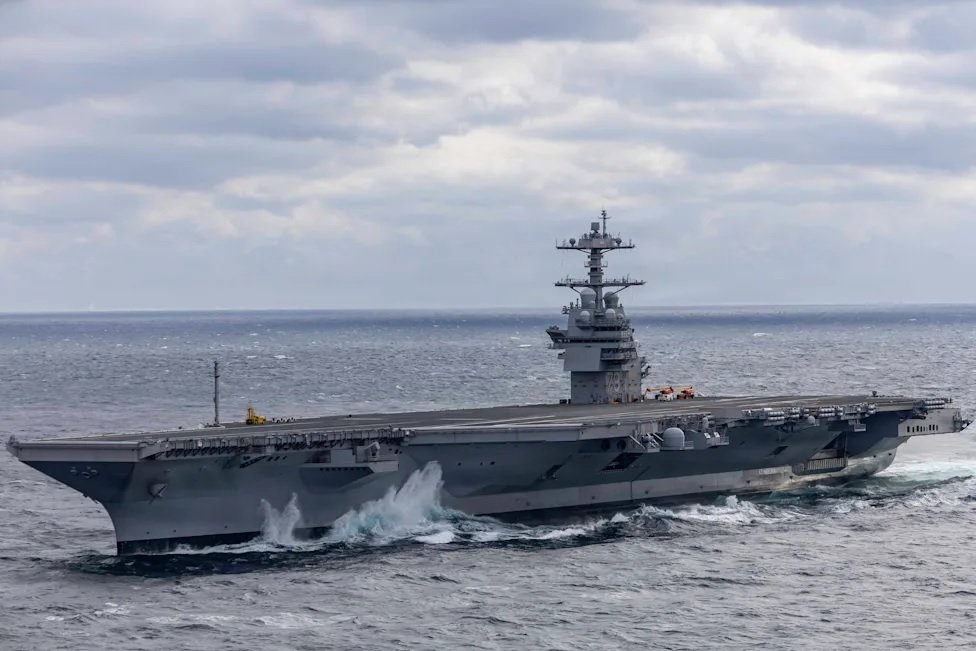 Raytheon’s SPY-6(V)3 Radar Completes Acceptance Trials on U.S. Navy’s Future Aircraft Carrier USS John F. Kennedy
-
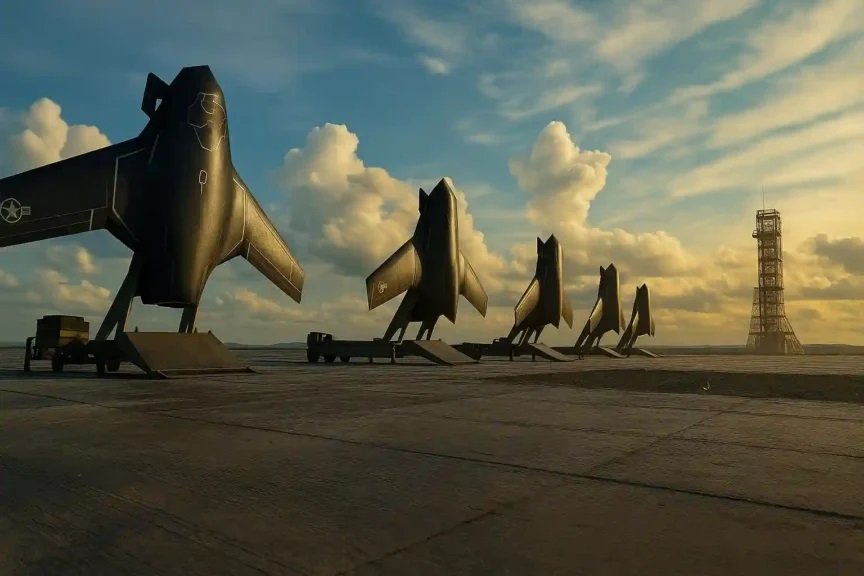 U.S. Navy Invests $50 Million in Shield AI’s X-BAT for Runway-Independent Maritime Strike
-
 UK PM Andy Burnham Reaffirms Full Support for Ukraine After Russian Warning Over British Drones
Top Trending in 4 Days
-
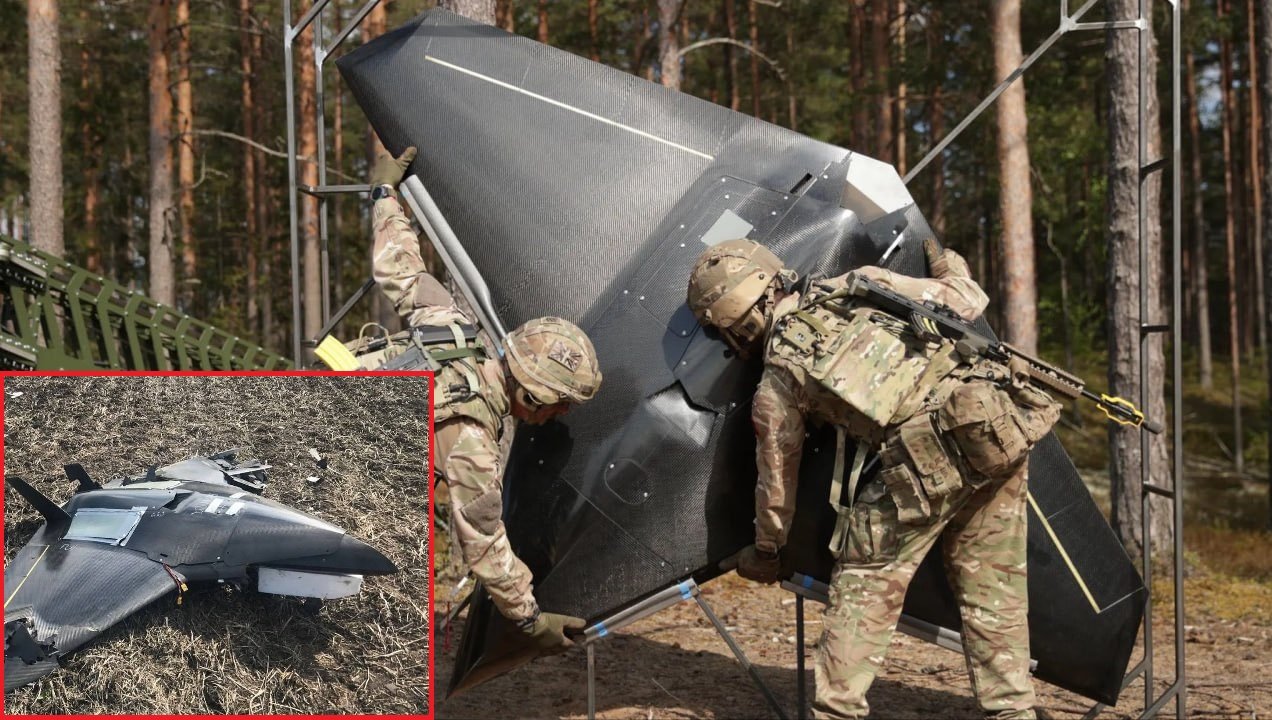 Ukraine Uses British-Made Nyan Drones in Deep Strikes Against Russian Targets
-
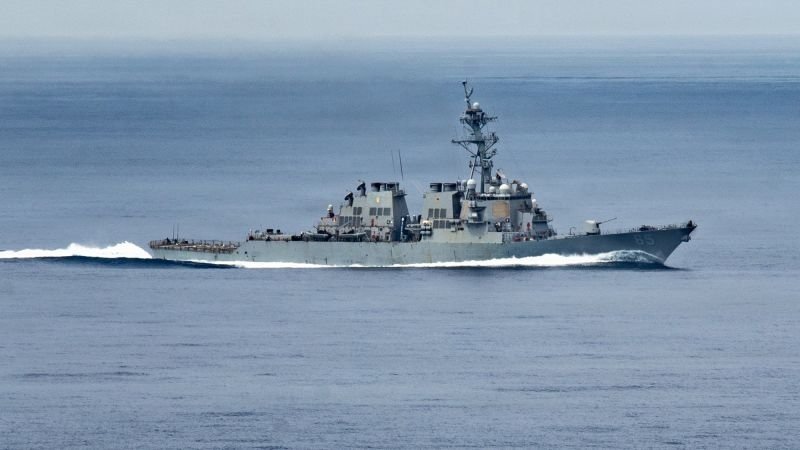 U.S. Navy Destroyer USS Benfold Spent Four Days Without Power in South China Sea After Generator Failure
-
 U.S. Navy Reviews Ford-Class Carrier Redesign as $275 Billion Trump-Class Battleship Program Advances
-
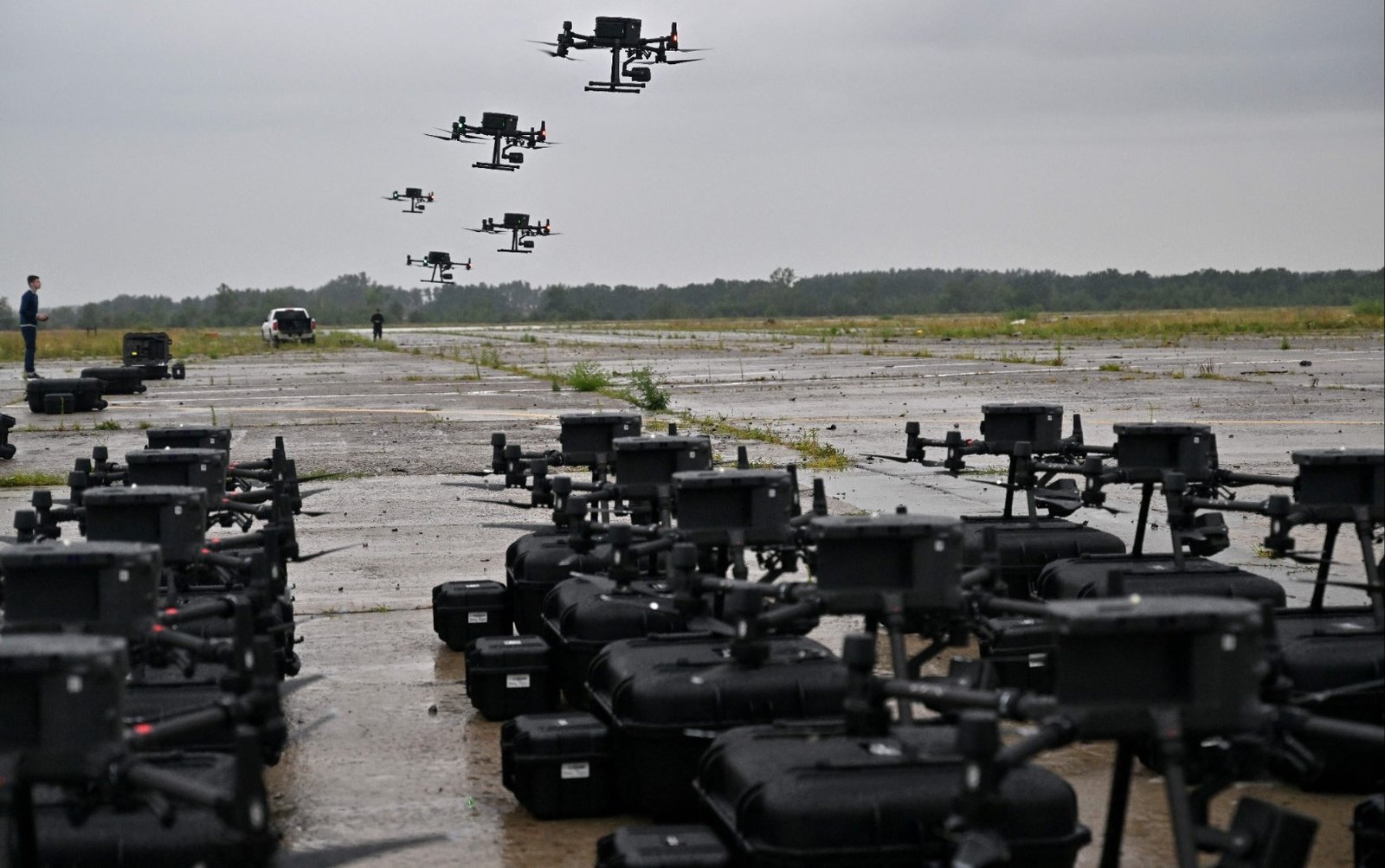 U.S. Air Force to Buy Chinese DJI Drones for Counter-Drone Training at Nuclear Missile Base
-
 Iran May Be Using Data From Fitness Apps to Track U.S. Military Personnel in the Middle East
-
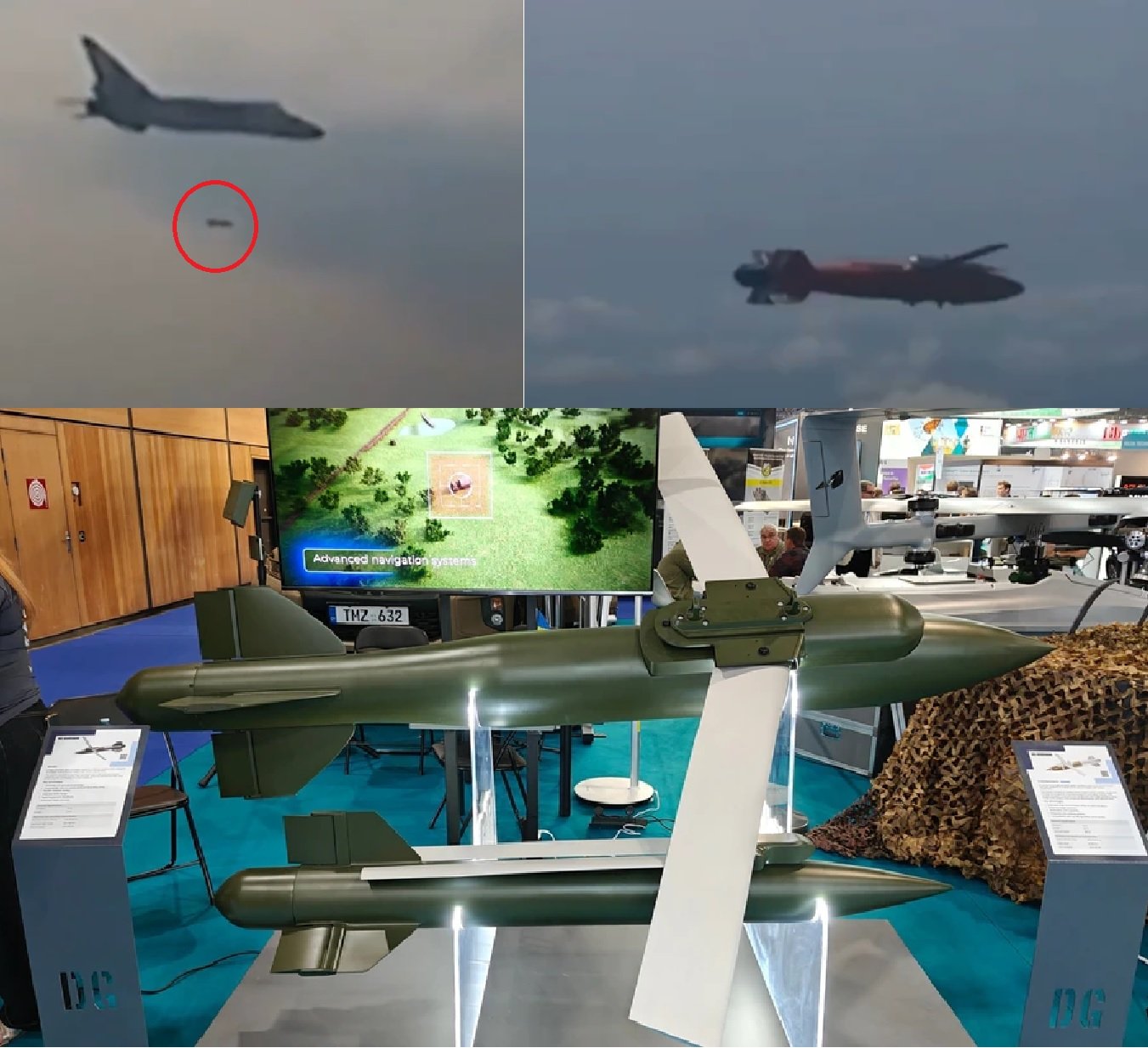 Ukraine Begins Procurement of Vyrivniuvach Guided Aerial Bomb
-
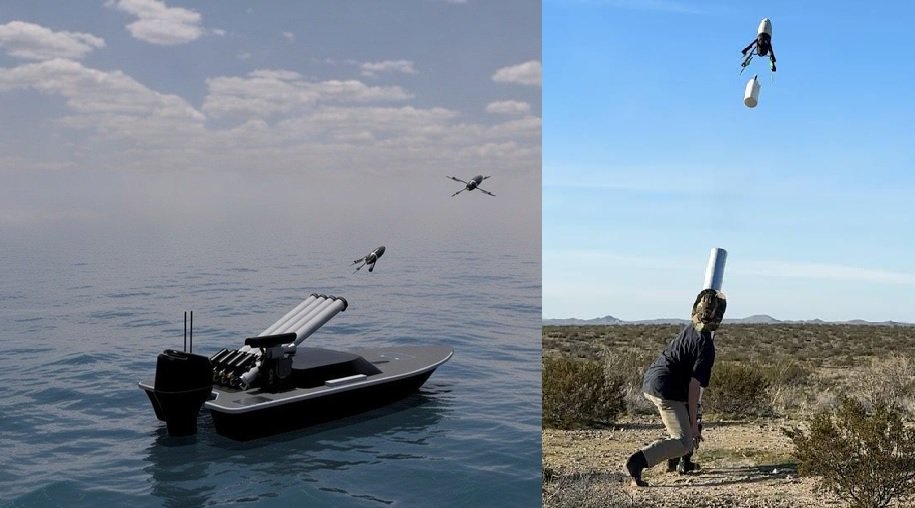 Thermopylae Aerospace Unveils SPART Tube-Launched Drone Interceptor for Group 2-3 and Turbojet UAS Threats
-
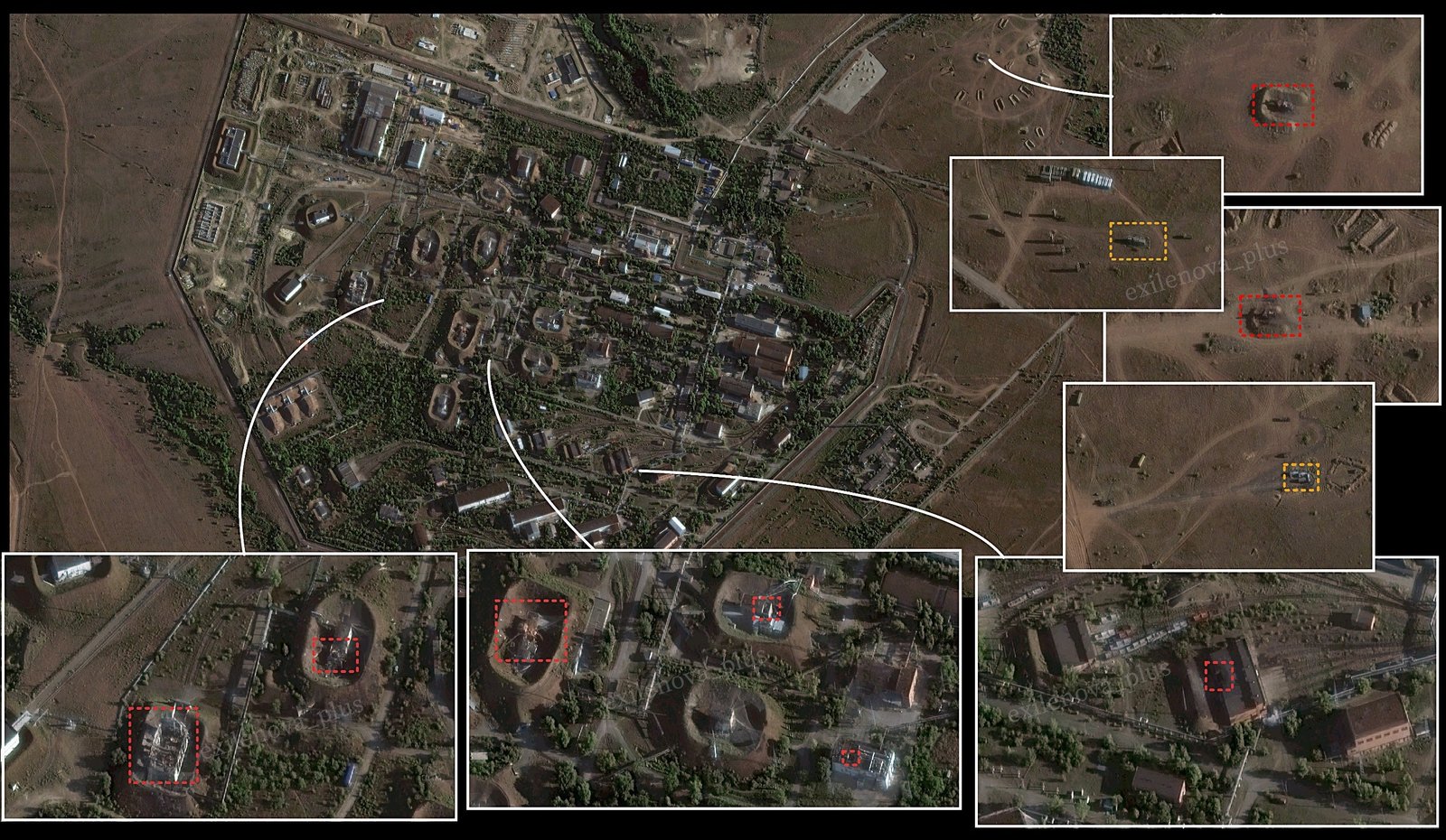 Satellite Images Show Ukrainian Drone Strike Hits Russian Rocket Fuel Plant and Air Defense Systems in Rostov Region
