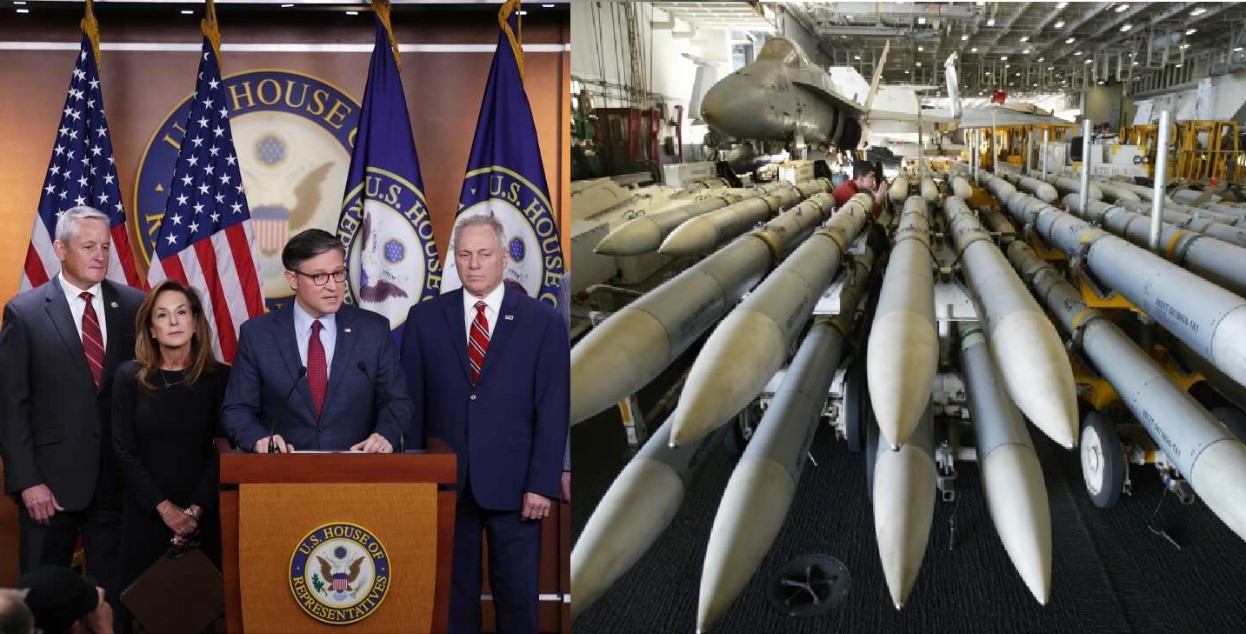
The ongoing U.S. government shutdown has brought parts of the American defense export machine to a standstill, delaying more than $5 billion worth of arms sales to key allies. According to an internal State Department estimate shared with Axios, dozens of major Foreign Military Sales (FMS) and Direct Commercial Sales (DCS) cases are now frozen — including shipments of AIM-120 AMRAAM air-to-air missiles, Aegis Combat Systems, and M142 HIMARS rocket launchers.
The shutdown’s effect is being felt far beyond Washington. Buyers such as Denmark, Croatia, Poland, and Ukraine are among the countries facing delivery setbacks, raising fresh concerns about how domestic political gridlock in the United States can reverberate through global defense supply chains and frontline readiness.
The Bottleneck at the State Department
At the center of the disruption is the Bureau of Political-Military Affairs (State PM) — the key office responsible for reviewing and approving U.S. defense exports. Axios reports that the bureau is currently operating at just 25% of its normal staffing level, leaving it unable to process new export licenses or advance congressional notifications for pending FMS cases.
The impact has been severe. Since October 1, only one new FMS case has been publicly disclosed — a modest military construction services package for Singapore. Normally, the bureau reviews multiple FMS and DCS proposals every week.
FMS cases are jointly managed by the Department of Defense (DoD) and the State Department, but the imbalance in funding has deepened the shutdown’s impact. While the Defense Security Cooperation Agency (DSCA) — which administers FMS cases — is funded largely through administrative fees that keep part of its workforce operational, the State PM office depends on direct appropriations. When those appropriations stop, so does the work.
In the case of Direct Commercial Sales, the situation is even more critical. DCS export licenses are entirely managed by State PM, meaning commercial contracts between U.S. defense manufacturers and foreign customers are effectively frozen.
The $5 Billion Freeze: What’s Being Delayed
The $5 billion in delayed sales reportedly includes a mix of new contracts awaiting approval and existing programs now stuck in administrative limbo. Among the affected systems are:
-
AIM-120 AMRAAM missiles, essential for NATO air forces including those of Denmark and Croatia, as part of their fleet modernization efforts.
-
Aegis Combat Systems, key to Poland’s naval modernization and missile-defense integration plans.
-
M142 HIMARS launchers, among the most sought-after battlefield systems since the war in Ukraine began.
These programs were expected to enter active delivery or congressional review during the current fiscal quarter. With the shutdown halting case development, production schedules may now shift by several months — potentially impacting training timelines and interoperability planning across multiple NATO militaries.
Impact on Ukraine and NATO Allies
The timing of the freeze could not be worse for Ukraine and its European partners. Many of the FMS and DCS programs affected are tied to NATO’s eastern defense posture — including indirect support packages for Ukraine’s armed forces.
While official U.S. military aid to Kyiv is technically funded through separate appropriations, the broader shutdown has slowed new transfers, spare-parts deliveries, and maintenance approvals. Defense industry sources told Breaking Defense that several logistics contracts related to HIMARS ammunition resupply and radar components are “on pause until funding is restored.”
For Poland, the delays could also affect its ambitious rearmament program, which relies heavily on U.S. technologies to expand its missile-defense coverage and integrate with the Aegis Ashore system. Denmark and Croatia, meanwhile, may face gaps in air-to-air weapon integration training if AMRAAM deliveries slip past the winter training cycle.
How the Shutdown Paralyzes Defense Trade
A U.S. government shutdown doesn’t simply freeze political negotiations — it halts the mechanics of defense trade at multiple layers:
-
Staff Furloughs: Thousands of civilian staff within the State and Defense Departments are sent home, halting case management, licensing, and compliance review processes.
-
Contractor Oversight: The Defense Contract Management Agency (DCMA) — which oversees contractor shipments and testing — cannot accept new materials during a shutdown, even when products are ready for delivery.
-
Congressional Notification: New arms-sale cases above certain value thresholds require congressional notification before approval. With few staff working, these notifications are stalled indefinitely.
-
Export Licensing: The State PM’s Directorate of Defense Trade Controls (DDTC) handles all DCS export licenses. Without its personnel, U.S. defense companies cannot legally deliver even pre-approved hardware abroad.
In essence, the world’s largest defense export apparatus — responsible for over $80 billion in annual global arms transfers — is running at a fraction of its capacity.
Ripple Effects Beyond U.S. Borders
The shutdown’s impact extends beyond the immediate delays. NATO allies and Indo-Pacific partners are growing concerned about Washington’s reliability as a defense supplier, especially as geopolitical flashpoints intensify in Eastern Europe, the Middle East, and the South China Sea.
European diplomats, speaking anonymously to Reuters, described the slowdown as “a wake-up call” about over-dependence on U.S. bureaucratic channels for defense cooperation. One senior defense attaché said,
“If the United States cannot process arms sales due to political gridlock, it raises questions about the stability of alliance supply chains. The consequences go beyond paperwork — they affect deterrence.”
Uncertain Future
It remains unclear whether the $5 billion estimate covers only new cases awaiting approval or also existing shipments blocked from fulfillment. However, defense officials acknowledge that every additional week of shutdown compounds the backlog.
Even after the government reopens, the State Department will need time to clear the administrative jam, meaning deliveries and contract negotiations could remain delayed well into early 2026.
For now, defense manufacturers, U.S. allies, and partner militaries must wait — while Washington’s internal stalemate threatens to undercut its image as the world’s most dependable arsenal.
——— End of Article ———