
U.S
TAMPA, Florida, — U.S. Central Command (CENTCOM) has announced that U.S. forces have cleared Iranian sea mines from the internationally recognized shipping lanes in the Strait of Hormuz, saying the routes are now open to commercial shipping. In a video released Thursday, CENTCOM Commander Adm. Brad Cooper said the mines had been laid months earlier by Iran’s Islamic Revolutionary Guard Corps (IRGC) in the strait’s Traffic Separation Scheme, the established routes used by international commercial vessels. Update from CENTCOM Commander: pic.twitter.com/osPbltjJ1C — U.S. Central Command (@CENTCOM) August 28, 2026 Cooper said the operation was conducted over several months by U.S. Navy divers, Navy SEALs and military aircraft from the Army, Navy, Air Force and Marine Corps. He described the conditions as challenging and dangerous but said the forces had completed the mission. “Today, international shipping lanes are open and momentum is building,” Cooper said. Nearly 1,500 Commercial Vessels Assisted Cooper said U.S. forces have provided coordinated protection to nearly 1,500 commercial vessels transiting the strait in recent months. These vessels transported nearly 750 million barrels of crude oil to global markets. At the same time, about 50,000 U.S. troops operating across the region continue enforcing a naval blockade against Iran while supporting commercial transit through the waterway. According to Cooper, Iran has exported zero oil from its shores since the blockade was resumed in mid-July. He said no vessels have entered or left Iranian ports without U.S. authorization, except for humanitarian reasons. U.S. forces have also turned back about 75 vessels attempting to breach the blockade and disabled three vessels that did not comply with U.S. orders. Commercial Traffic Still Below Prewar Levels Despite CENTCOM's announcement, commercial traffic through the Strait of Hormuz remains well below prewar levels. Before the conflict began on February 28, more than 20 million barrels of oil per day passed through the waterway, with roughly 100 to 130 vessels using the route daily. Recent shipping data shows that commodity-vessel traffic remains in the single digits to low teens on some days. The announcement follows earlier statements by President Donald Trump that U.S. forces had removed or detonated mines in international waters in the strait. Cooper's latest video provides CENTCOM's formal operational confirmation that the Traffic Separation Scheme has been cleared. Security Concerns Remain U.S. allies have privately assessed that some mines may not have been cleared. Earlier estimates from the International Maritime Organization and industry groups placed the number of mines in the historic shipping lanes at around 80, with some assessments higher. Allied officials have also warned that sea currents can move mines and that residual risks could remain outside the main monitored lanes. The International Maritime Organization and maritime information centers continue to advise vessels to exercise maximum caution in the area. Shipping companies and insurers are also conducting their own risk assessments. CENTCOM said it will continue its two main missions in the area: enforcing the blockade against Iran while supporting lawful international commercial transit through the Strait of Hormuz.
Read More → Posted on 2026-08-28 13:46:48
Europe
HELSINKI, — Sweden’s Saab has signed a contract with the Finnish Defence Forces Logistics Command for the delivery of its RBS 70 NG short-range air defence system. The initial order is valued at SEK 1.2 billion. The agreement also allows Finland to place additional orders in the future for more RBS 70 NG systems, as well as training, spare parts and maintenance equipment. Finland has operated an earlier version of the RBS 70 since 2008, designated ITO05 and ITO05M by the Finnish Defence Forces. The RBS 70 NG retains the system’s unjammable laser-guided missile and adds an automatic target tracker and built-in night capability. These improvements are intended to increase hit probability and allow operations in a wider range of conditions. The RBS 70 NG is designed for short-range ground-based air defence and can engage aircraft, helicopters, drones and other aerial threats at ranges of up to nine kilometres. Finland’s Ministry of Defence had earlier indicated that the procurement was worth approximately €108 million excluding taxes. The package is expected to include firing units, missiles, training equipment and a maintenance system, with full operational capability planned before the end of the 2020s. Training for regular personnel, conscripts and reservists is planned mainly at the Salpausselkä Air Defence Battalion of the Karelia Brigade. Görgen Johansson, head of Saab’s Dynamics business area, said: “We are proud to continue supporting Finland’s Defence Forces and contributing to keeping the nation’s skies safe. With RBS 70 NG, Finland will receive a state-of-the-art short-range air defence capability to effectively meet evolving aerial threats.” The contract continues the long-standing cooperation between Saab and the Finnish Defence Forces involving the RBS 70 family and supports Finland’s efforts to strengthen its ground-based air defence network.
Read More → Posted on 2026-08-28 13:29:41
Europe
WARSAW, — Poland does not plan to host nuclear warheads on its territory, Deputy Defence Minister Paweł Zalewski said Thursday during a briefing at NATO headquarters in Brussels. “I would like to say this very clearly and openly. Poland does not want to have nuclear warheads on its territory,” Zalewski said. His comments came in response to questions about whether a future permanent U.S. military presence in Poland could include nuclear capabilities. Zalewski said that even if the U.S. military presence is expanded, the deployment of nuclear warheads on Polish territory is not being considered. At the same time, Poland wants to remain an active participant in NATO’s nuclear deterrence system. Zalewski said participation does not require nuclear warheads to be physically stationed in Poland. Poland Seeks Greater NATO Role Defence Minister Władysław Kosiniak-Kamysz has also said Poland remains interested in NATO’s Nuclear Sharing programme and is involved in discussions about a broader European nuclear protection framework. Under NATO’s Nuclear Sharing arrangements, the United States maintains nuclear weapons in several European allied countries, including Belgium, Germany, Italy and the Netherlands. The arrangements allow participating non-nuclear allies to contribute to NATO’s nuclear deterrence mission while the United States retains control of its nuclear weapons. Poland’s position comes after several years of domestic debate about whether the country should seek a more direct role in nuclear deterrence. Earlier Calls for Nuclear Protection In April 2025, then-President Andrzej Duda said Poland should seek protection under France’s nuclear deterrence and also called for U.S. nuclear weapons to be stationed in Poland. He said the two approaches were not contradictory. In September 2025, the French Air and Space Force deployed Rafale fighter jets to Poland. The aircraft are capable of carrying ASMP missiles that can be fitted with nuclear warheads. The deployment was part of NATO efforts to strengthen air defences on the eastern flank following Russian drone incursions into Polish airspace. In February 2026, current President Karol Nawrocki went further, saying Poland should consider developing its own nuclear weapons. He described himself as a strong supporter of Poland joining a nuclear project while stressing that any such steps would have to comply with international regulations. Domestic Opposition Zalewski’s position has faced criticism from opposition figures and officials close to President Nawrocki. Marcin Przydacz, head of the president’s International Policy Bureau, called Zalewski’s remarks “strange” and “absurd” and said they were contrary to Poland’s previous policy. He argued that genuine participation in Nuclear Sharing requires hosting nuclear weapons. Former Defence Minister Mariusz Błaszczak also argued that Poland should seek full inclusion in the programme to strengthen NATO’s eastern flank. Retired Brigadier General Stanisław Koziej described the government’s position as a strategic mistake and argued that the presence of allied nuclear assets would strengthen deterrence against Russia. Zalewski defended the government’s approach, saying that deterrence comes from real domestic and allied capabilities rather than intentions. U.S. Military Presence Also Discussed During his visit to Brussels, Zalewski met U.S. Deputy Secretary of Defense Elbridge Colby. Their talks included the implementation of NATO 3.0, under which European countries would take greater responsibility for the continent’s security. Zalewski said Poland supports the approach and wants to play an active role in strengthening NATO. The two sides also discussed a possible permanent U.S. military presence in Poland. Zalewski said several locations are being considered for American bases and that a U.S. administration representative is expected to visit Poland to review Warsaw’s proposals. He said the United States has important interests in Poland and wants a permanent presence there. The discussions also concern capabilities that Poland does not yet fully possess. Zalewski said Poland would prefer decisions on the U.S. presence to come around the conclusion of Washington’s review of its military presence in Europe, although he stressed that finding practical solutions is more important than meeting a fixed deadline. Poland remains a party to the Treaty on the Non-Proliferation of Nuclear Weapons.
Read More → Posted on 2026-08-28 13:24:48
World
TEHRAN, — The war involving Iran, the United States and Israel, which began with U.S.-Israeli strikes on Iran on February 28, 2026, has placed additional pressure on an Iranian economy that was already struggling with high inflation, currency depreciation, sanctions, weak job creation and shortages of water and energy. The conflict has disrupted trade, damaged infrastructure, complicated imports and exports, and weakened household purchasing power. The effects are increasingly visible in the prices of food, medicines, household goods and other daily necessities, while businesses and workers are also facing declining demand and fewer employment opportunities. The World Bank says economic activity has been severely disrupted by the conflict, sanctions and social unrest, with import disruptions adding inflationary pressure and increasing food-security risks. Importantly, the war did not create all of Iran's economic problems. Many of the pressures were already present before February 28 because of long-running sanctions, inflation, currency weakness, structural economic problems and energy shortages. The conflict has amplified those existing problems. Food prices have risen sharply Food has become one of the most visible areas of pressure on Iranian households. According to Iran's Statistical Center, year-on-year food inflation reached about 128% in July 2026. Within major food categories, prices of oils and fats were about 261% higher, milk, cheese and eggs about 147% higher, and meat and poultry about 145% higher than a year earlier. A comparison of prices immediately before the war with prices in August shows how much purchasing power has been lost. An Al Jazeera comparison found that tomato prices had risen 71%, chicken 74% and cooking oil 177% compared with the period before the war. The result is not simply higher grocery bills. Families are changing what they buy. Some households have reduced or eliminated meat, chicken and other higher-cost foods as their incomes fail to keep pace with prices. Bread and other staples Bread remains subject to government controls and subsidies, but prices have also increased. In Tehran, regulated bread prices were nearly doubled in an official adjustment earlier this year. The cost of staple foods had already been rising before the war. The Center for Strategic and International Studies reported that wheat-flour prices had increased substantially even before the conflict, while subsidized bread shortages and long queues were already appearing in some areas. Household goods and everyday products The fall of the rial has made imported products and goods dependent on imported components significantly more expensive. The Iranian rial reached a record low of more than 2 million rials per U.S. dollar on the free market on August 26, increasing the local-currency cost of imported products and materials. This affects a wide range of everyday products, including: Smartphones and computers Refrigerators and washing machines Air conditioners and electrical appliances Spare parts and repair services Personal-care products Cleaning products Clothing and footwear Imported components used by Iranian manufacturers The problem extends beyond the original price of imported goods. Businesses also face higher costs for raw materials, transportation, replacement parts and financing. Those costs eventually reach consumers. For retailers, however, simply raising prices is not always possible because customers themselves have less purchasing power. Iranian businesses have therefore faced the difficult combination of higher operating costs and weaker consumer demand. A Tehran retailer interviewed by Al Jazeera reported that his sales had fallen by about 40% compared with the previous year. Jobs and unemployment The economic impact is also appearing in the labor market. Iran's overall unemployment rate was 9.1% in spring 2026, according to the Statistical Center of Iran, while youth unemployment reached 23.4%, 3.7 percentage points higher than a year earlier. Labor-force participation was only about 40%, meaning a large proportion of working-age people were outside the official labor force. The conflict has affected employment through several channels. Businesses dependent on imports face difficulties obtaining supplies. Manufacturers face energy and transportation disruptions. Retailers are dealing with lower sales. Tourism and other service businesses have also been affected by the wider security and economic environment. Some workers are responding by accepting longer working hours or jobs outside their professional qualifications. Reports from Tehran describe employers offering low salaries, long working hours and, in some cases, jobs without insurance. The result is a growing gap between income and the cost of basic living. Iran's minimum wage for the current Iranian year was raised by 60%, but inflation has rapidly eroded the value of that increase. The government-approved minimum wage is about 166 million rials per month, with benefits taking the total for eligible workers to less than 220 million rials. Banking and financial disruptions Iran's banking system is facing pressure from both longstanding international financial restrictions and new wartime disruptions. U.S. sanctions have restricted Iran's access to international banking and payment systems for years. Even products such as medicines, which can be exempt from sanctions under humanitarian rules, can become difficult to purchase because banks and international suppliers may be unwilling or unable to process transactions. The conflict has added another layer of disruption. Reports in 2026 have described banking disruptions following major cyberattacks, including attacks that disrupted services at several Iranian banks. Businesses have also faced difficulties obtaining credit and dealing with payment delays. The disruption makes it harder for companies to import raw materials, pay suppliers and maintain normal operations. The weakness of the rial creates another problem. When the currency loses value rapidly, businesses must pay more rials for imported goods and components, while households see their savings and salaries lose purchasing power. Medical care and medicine Healthcare is another area where the economic crisis is directly affecting ordinary people. Iran's pharmaceutical system already faced problems before the war because of sanctions, currency instability, banking restrictions and difficulties obtaining imported raw materials and medical equipment. The conflict has added transportation and supply-chain problems and has damaged parts of the health infrastructure. The price increases reported in August illustrate the scale of the problem. Compared with the period immediately before the war, Al Jazeera found that the price of insulin had increased by about 642%, paracetamol by about 93%, and baby formula by about 95%. Higher prices are only part of the problem. Hospitals and pharmacies also need reliable supplies of medicines, medical equipment and imported production materials. Restrictions on international payments can delay procurement even when the products themselves are not formally prohibited. A recent analysis published in the International Journal for Equity in Health found that sanctions and financial restrictions have affected procurement, healthcare financing, medical technology, workforce capacity and continuity of care. The 2026 conflict has increased those vulnerabilities. Humanitarian assessments reported damage to healthcare facilities and additional pressure on medical services during the fighting. Energy and transportation Iran is also dealing with electricity and energy shortages. Power disruptions existed before the current conflict, but damage to energy infrastructure and industrial facilities has made the situation more difficult. The House of Commons Library reports continuing rolling electricity blackouts and difficulties meeting domestic petrol demand. Energy shortages affect much more than household electricity bills. Factories need electricity to operate, businesses need reliable power to provide services, and interruptions can reduce production and employment. Transportation has also become more difficult because of disruptions around the Strait of Hormuz, a major route for Iranian trade. Higher shipping, insurance and transportation costs increase the cost of imported goods and can also make exports more difficult. Housing and household budgets Housing costs have also added to the pressure. Reports from Iran indicate significant increases in rents, with some households negotiating with landlords simply to limit the size of annual increases. At the same time, utilities, transportation, food and healthcare are consuming a larger share of household income. This creates a wider cost-of-living problem: even when a household continues to have employment, its real purchasing power can fall rapidly. A worker may receive a nominal salary increase, but if food, rent, medicine and transportation rise faster, the worker can still afford less than before. What has changed for ordinary Iranians? The economic impact can be summarized across several areas: Area Effect on ordinary people Food Very large increases in food prices; families reducing meat and other expensive foods Household goods Imported products and equipment becoming substantially more expensive Medicine Sharp increases in prices of some medicines and greater supply difficulties Employment Higher unemployment, particularly among young people Wages Nominal wage increases losing value rapidly because of inflation Banking Payment, credit and international transaction difficulties Healthcare Higher costs, procurement problems and pressure on medical facilities Electricity Continuing power shortages and disruptions Transport Higher costs and disruption to trade routes Businesses Higher raw-material costs combined with weaker consumer demand Currency Rial depreciation dramatically reducing purchasing power Poverty Greater risk as food inflation and import shortages reduce real incomes The conflict is worsening an existing economic crisis Iran's current economic situation therefore cannot be attributed entirely to the war. Before February 28, Iran was already dealing with international sanctions, a weak rial, high inflation, low job creation, energy shortages and structural economic problems. The conflict has added damage to infrastructure, trade disruptions, restrictions on shipping and additional pressure on imports and exports. The World Bank expects high inflation and falling real incomes to suppress domestic demand, while disruptions to imports create additional food-security risks. It also estimates that Iran's economy contracted by 2.7% in the Iranian year ending March 20, 2026, with the conflict and trade disruptions contributing to the deterioration. The IMF's July 2026 projection was for Iran's economy to contract 5.4% in 2026, assuming the conflict eventually ends, according to the House of Commons Library. For ordinary Iranians, the most immediate consequence is therefore not simply a change in one commodity's price. It is the combined deterioration in purchasing power, employment, access to healthcare, business activity and the ability to afford basic household necessities. The Iranian economy has not completely collapsed, and shops in major cities can still have supplies. But the combination of very high inflation, currency depreciation, disrupted trade and declining real incomes means that having goods available does not necessarily mean that ordinary households can afford them.
Read More → Posted on 2026-08-28 13:08:38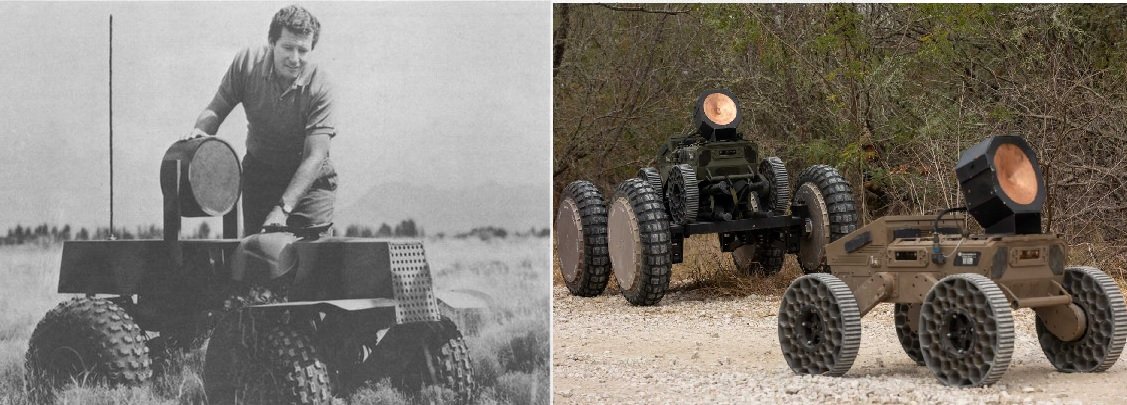
U.S
Several weapons and unmanned systems being developed or used today have design concepts that can be traced back to military research conducted during the final years of the Cold War, according to an analysis by firearms and military analyst Gatnerd on X. The analysis points to systems involving uncrewed ground vehicles, loitering munitions, ground-launched cruise missiles, fiber-optic weapons, stealth bombers and unmanned surface vessels. Gatnerd's broader point is that several ideas now receiving renewed attention were already being explored in the 1980s and 1990s. The comparison does not mean that modern systems are unchanged versions of older weapons. Current systems use newer electronics, software, sensors, materials, communications and manufacturing methods. In several cases, the relationship is better described as a revival of an earlier concept rather than a direct technical continuation. FireAnt and Sandia's 1980s Fire Ant One of the examples highlighted by Gatnerd is the FireAnt uncrewed ground vehicle developed by Swarmbotics AI. Swarmbotics describes FireAnt as an attritable, swarming, man-portable UGV that can support missions including counter-drone operations, intelligence, surveillance and reconnaissance, electronic warfare and other modular payload applications. The company's ANTS, or Attritable Networked Tactical Swarm, family combines the robotic platforms with software for coordinated swarm operations. The U.S. Army has also been testing FireAnt systems. Recent footage showed an M2A4 Bradley infantry fighting vehicle carrying five FireAnt UGVs during the Pegasus Charge 3 test exercise. The testing is examining how small robotic systems can be carried and employed with conventional Army formations. Gatnerd noted that the name and basic concept recall a different Fire Ant system tested by Sandia National Laboratories in 1987 and 1988. The Sandia Fire Ant was a small remotely operated ground vehicle based on a Honda 125 four-wheeled all-terrain vehicle. It carried a shaped-charge-type warhead and an onboard video camera, allowing an operator to control the vehicle toward a target. Later versions were also described with automatic target-recognition capabilities. The earlier project illustrates that the idea of using small unmanned ground vehicles to approach armored targets was being explored decades before today's autonomous and swarm-enabled UGV programs. Shahed-136 and the Dornier DAR Comparison Gatnerd also pointed to similarities between the Iranian Shahed-136 one-way attack drone and the West German Dornier Drohne Anti-Radar, or DAR, project from the 1980s. Dornier developed DAR as an unmanned system intended to locate and attack enemy radar installations. The aircraft used a delta-wing configuration and was designed for launch from a ground vehicle. The project was developed during the Cold War and was eventually terminated; it did not enter German service. The Shahed-136 has a broadly similar cropped-delta configuration, which has led to repeated comparisons with DAR. However, the available evidence does not establish a confirmed direct technical lineage between the two systems. Some accounts have proposed a connection through Israel's Harpy loitering munition, while other assessments treat the similarity as primarily visual and conceptual. Therefore, the DAR example is better described as a case of similar design and mission concepts rather than a confirmed direct development line from the 1980s German project to the Shahed-136. B-21 Raider and the B-2 Spirit The B-21 Raider provides a clearer example of design continuity within the U.S. bomber program. The B-2 Spirit first flew in 1989 and established the flying-wing configuration that remains associated with Northrop Grumman's low-observable bomber designs. The U.S. Air Force says the B-2's low observability comes from a combination of its flying-wing design, composite materials, coatings and other technologies. The B-21 uses the same broad flying-wing approach but incorporates substantially newer technologies and systems. Its development therefore illustrates how an aerodynamic and stealth concept originating during the Cold War can continue into a new generation of aircraft. Typhon Brings Ground-Launched Tomahawk Capability Back Another example is the U.S. Army's Mid-Range Capability, commonly known as Typhon. The Army's system uses a ground-based launcher capable of firing the Navy's Standard Missile-6 and Tomahawk Land Attack Missile. The U.S. Army successfully demonstrated a Tomahawk launch from the prototype system in June 2023, and the MRC subsequently became an operational Army capability. The concept has a Cold War predecessor in the BGM-109G Gryphon ground-launched cruise missile. The Gryphon was a ground-launched version of the Tomahawk family that entered service in Europe during the 1980s before being eliminated under the 1987 Intermediate-Range Nuclear Forces Treaty. Typhon is not a reintroduction of the Gryphon itself. Instead, it represents the return of a ground-based launch concept using modern launch equipment and existing naval missiles. Fiber-Optic Weapons Predated Today's FPV Drones Fiber-optic FPV drones have become increasingly important because their physical communication links are difficult to disrupt through conventional radio-frequency electronic warfare. The underlying idea is much older. The U.S. Army's Fiber Optic Guided Missile and Enhanced Fiber Optic Guided Missile programs were developed during the 1980s and 1990s. The EFOG-M used a fiber-optic cable connecting the missile to the launch vehicle. A camera in the missile transmitted imagery to the operator, who could use that information to select and engage targets. U.S. government documentation described a range of up to 15 kilometers. A 1987 U.S. Naval Institute account also described the earlier FOG-M concept, in which video from a missile's nose camera was transmitted to the operator through a fiber-optic cable. Today's fiber-optic FPV drones apply the same fundamental principle in a much smaller and generally less expensive form. Their use demonstrates how an older military technology can become practical on a much wider scale when combined with modern commercial electronics and unmanned platforms. OWL MK II and Early Unmanned Surface Vessels The same pattern can be seen at sea. Howard Hornsby's OWL MK II was an unmanned surface vessel developed around the late 1980s and tested extensively during the 1990s. A U.S. Marine Corps photograph from 1998 identifies the OWL MK II as a remotely controlled unmanned surface vessel developed by Navtec and Howard Hornsby for the Office of Naval Research. The platform was tested for missions including marine reconnaissance, harbor protection, minehunting and littoral anti-submarine operations. According to accounts of the program, an OWL MK II operated with U.S. Navy Detachment 1 in Bahrain from 1995 to 1997. The system did not become a major formal Navy program, but its development demonstrated that unmanned surface vessels were being considered for operational naval missions decades before the current expansion of maritime drones. Cold War Research and the Post-Cold War Period Gatnerd's comparison focuses on a broader change in military priorities. During the Cold War, the United States and its allies invested heavily in technologies intended for a potential conflict with a technologically capable peer adversary. These programs included precision weapons, stealth aircraft, unmanned systems, advanced guidance technologies and weapons designed to operate against armored formations and air-defense networks. After the Cold War ended, many major defense programs were reduced, canceled or delayed. Military operations in the following decades also placed greater emphasis on counterinsurgency and other missions rather than large-scale conventional warfare against a peer military. The renewed focus on high-intensity conventional warfare has brought some of those earlier concepts back into attention. The current systems, however, are not simply 1980s weapons reproduced with new names. Modern computing, sensors, communications, autonomy, materials and manufacturing have changed what can be achieved with many of the same basic ideas. The examples highlighted by Gatnerd therefore show more than simple technological repetition. They demonstrate that several concepts considered advanced during the final years of the Cold War remained relevant, even after the original programs were canceled or left development. As military requirements have changed again, some of those concepts are being developed with technologies that were not available when the original systems were tested.
Read More → Posted on 2026-08-28 12:39:59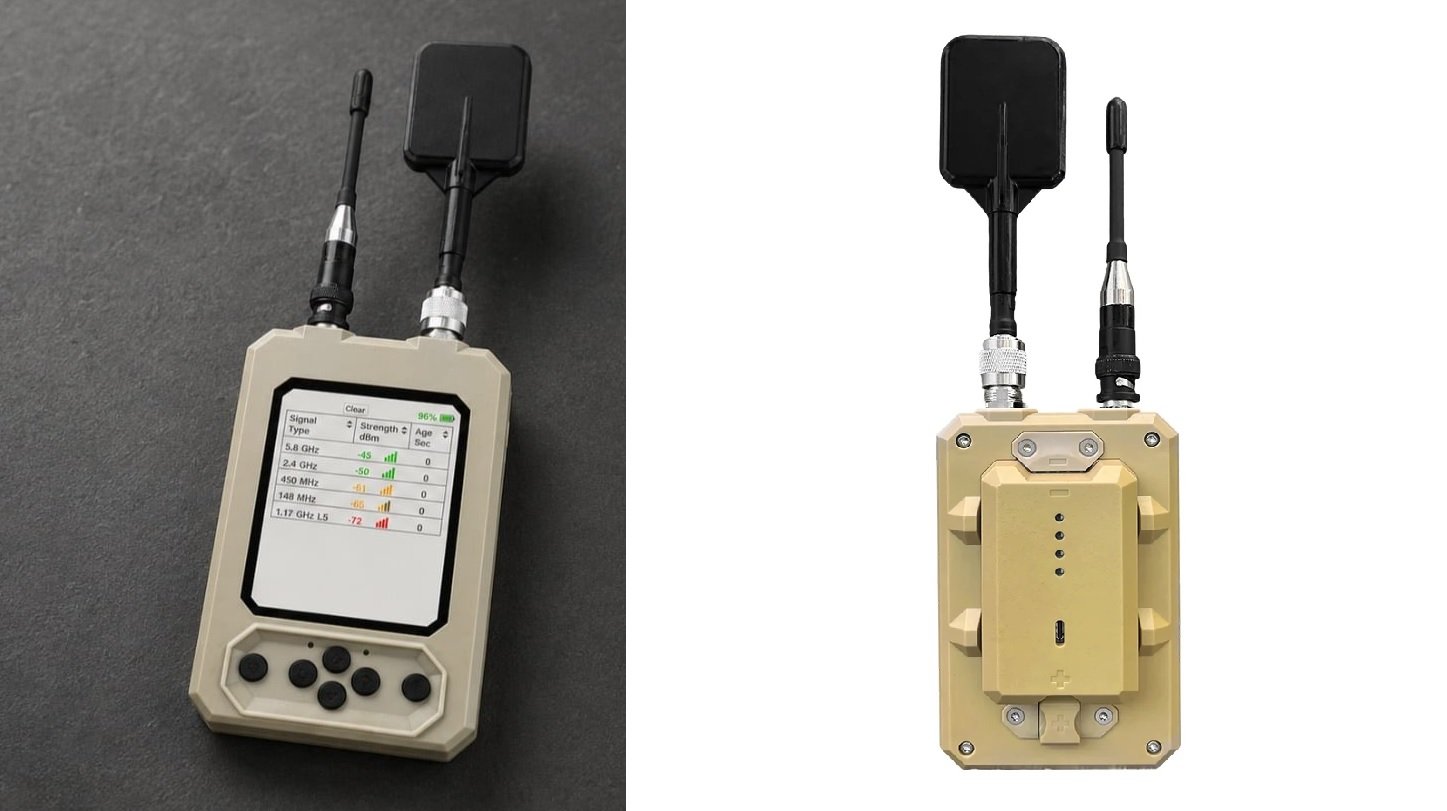
U.S
WASHINGTON, — The U.S. Army has awarded Heaviside Industries Inc. a firm-fixed-price, indefinite-delivery/indefinite-quantity contract worth up to $99 million for the procurement, fielding, upgrades and sustainment of the company’s MOTH spectrum analyzer. The contract was announced in the Department of War’s contracts listing on August 27. The contract is scheduled to run through August 27, 2031. Heaviside Industries, based in Marina del Rey, California, received the award after the Army solicited bids online and received 99 proposals. Work locations and funding will be determined through individual orders. The contracting activity is the Army Contracting Command at Aberdeen Proving Ground, Maryland. The MOTH is a compact, ruggedized tactical spectrum analyzer designed to provide soldiers with awareness of radio-frequency signals. It covers frequencies from 5 MHz to 6 GHz, allowing operators to detect radio-frequency activity associated with drones, radios and other communications equipment. The device weighs 0.99 pounds with its battery installed and measures 5.78 by 3.3 by 1.8 inches. It can be used as a handheld device or carried on a soldier’s vest. The MOTH has a 2.79-inch LCD display with 240 by 320 pixel resolution, built-in GPS, vibration notifications and a direction-finding mode. It also provides a real-time signal oscillation display. The MOTH can scan its frequency range five times per second and has a listed battery life of up to 12 hours from its 25.2 Wh battery. The device is rated IP67 for protection against dust and water and is specified to operate between 14 and 131 degrees Fahrenheit. The analyzer also supports integration with the Android Team Awareness Kit (ATAK), a digital situational-awareness system used by U.S. military personnel. The MOTH has a stated Technology Readiness Level of 9 and is NDAA compliant. Heaviside says the device is designed and manufactured in the United States. The MOTH is intended to support soldiers operating in environments where identifying radio-frequency activity is important. Soldier Systems Daily reported in July that the device can be used by Cyber Electromagnetic Activities personnel for identifying signals and obtaining line-of-bearing information, including in counter-drone applications. The publication also noted that the system is designed to be simple enough for use by personnel who may not have specialized electronic-warfare training. The MOTH is also commercially available. Lumenier lists the unit at $4,950 and says the package includes the spectrum analyzer, two lithium batteries, a USB-C charger, a custom vest pouch, a protective Pelican case, and low- and high-band antennas. The Army contract covers more than the initial purchase of the equipment. It also includes fielding, upgrades and sustainment, allowing the service to procure additional MOTH systems and receive support over the contract period through 2031. The award gives the Army a procurement mechanism for deploying the compact spectrum analyzer through individual orders rather than specifying a single quantity of systems in the initial contract announcement. The Department of War did not disclose the number of MOTH units that will ultimately be purchased under the $99 million contract ceiling.
Read More → Posted on 2026-08-28 11:53:03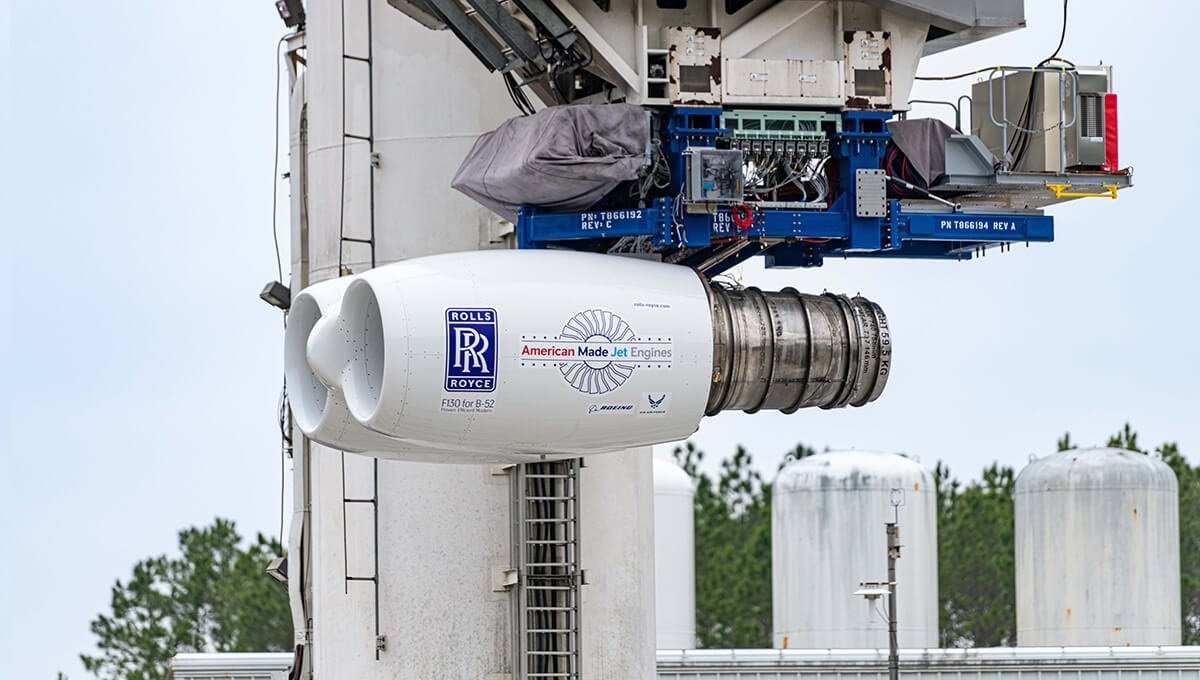
U.S
INDIANAPOLIS — Rolls-Royce has completed a decade-long, $1 billion modernization of its manufacturing, assembly and engine-test operations in Indiana. It is the company’s largest single investment in the United States and expands its capacity to support major U.S. military aviation programs. About $600 million was spent modernizing manufacturing operations at the Indianapolis campus, with that work completed in 2021. Another $400 million funded new engine-testing infrastructure, including expanded test cells in Indianapolis and high-altitude, hybrid-electric and hypersonics testing capabilities at the Purdue Aerospace District in West Lafayette. Company leaders and state officials marked the completion with a ribbon-cutting ceremony on August 27, 2026, at the Rolls-Royce Performance Building on South Tibbs Avenue in Indianapolis. “This billion-dollar investment is about more than buildings and test cells — it is about delivering for the American warfighter, on time and at the standard our customers expect. We made this investment because it was the right thing to do for U.S. national security and for the future of Rolls-Royce,” said Adam Riddle, president of Defense and chief executive of Rolls-Royce North America. Supporting U.S. Military Programs The Indiana operations will support future engines for the U.S. Air Force’s B-52 strategic bomber and the U.S. Army’s MV-75 Cheyenne, also known as the Future Long-Range Assault Aircraft. The Indianapolis site also builds and tests engines for the V-22 Osprey, MQ-25A Stingray and C-130J. Rolls-Royce has produced more than 14,000 engines at the campus since 2001, with roughly half from the AE engine family used on aircraft including the C-130J and V-22. The company also has a contract to supply 650 F130 engines for the B-52 fleet. Rolls-Royce said Indianapolis produces more of its defense products than any other company site worldwide. Jobs and Research The Indianapolis operation employs about 3,500 people, including workers represented by the United Auto Workers, and supports thousands of additional supply-chain jobs in Indiana. About 80 percent of Rolls-Royce’s U.S. defense workforce is based in the state, while more than 700 Indianapolis employees are Purdue University graduates. The company plans to hire about 100 additional engineers as work expands on the F130 and AE 1107 engines. “The engines built in Indianapolis power the aircraft our warfighters depend on, and this investment strengthens the American defense industrial base at a moment when we need it most,” said Indiana Senator Jim Banks. Rolls-Royce said it has invested more than $1.5 billion in U.S. facilities and nearly $2.5 billion in research and development over the past decade. Its U.S. operations contributed $6.2 billion to the national economy in 2024 and supported more than 30,000 jobs across 26 states, including research spillover. The company estimates that every dollar invested by the U.S. government in Rolls-Royce generates about $4 in economic returns. The Indianapolis campus also houses LibertyWorks, Rolls-Royce’s advanced propulsion research organization. It is supported by a $75 million, 10-year alliance with Purdue University covering gas turbine technology, electrical and digital systems and related research, primarily at Purdue’s Zucrow Laboratories. The modernization replaced aging infrastructure, including some facilities dating to World War II, with newer equipment and processes while production continued. The Indianapolis campus footprint was reduced from about 3 million square feet to 1.5 million square feet. The expanded test facilities provide a wider range of engine-testing capabilities at lower cost and risk, including support for sustainable aviation fuels. Rolls-Royce said the completed investment positions its Indiana operations to support growth in existing programs and future contracts.
Read More → Posted on 2026-08-28 11:22:50
U.S
FOREST, Miss., — Raytheon, an RTX business, has completed a $50 million expansion of its manufacturing facility in Forest, Mississippi. The project adds 17,000 square feet of manufacturing space and increases the site's capacity to produce electronic warfare and radar systems. The investment is expected to create 100 high-skilled jobs by 2028. Facility Expands to 445,000 Square Feet The expansion brings the Forest facility to 445,000 square feet of manufacturing space, making it one of the largest defense manufacturing locations in Mississippi. Raytheon has invested $280 million across three expansions at the facility over the past decade. Previous projects included: A 20,000-square-foot expansion completed in 2013. A 50,000-square-foot radar production and testing center completed in 2020. The latest 17,000-square-foot expansion, supported by a $50 million investment. Supporting Next Generation Jammer Production The newly expanded space will support the production, testing and integration of Next Generation Jammer Mid-Band (NGJ-MB) pods. NGJ-MB is an electronic attack system developed for the U.S. Navy and Australian government. The system is designed to deny, disrupt and degrade enemy technology, including communications and air-defense systems. Raytheon's Forest facility began low-rate initial production of NGJ-MB in 2021. The pods are used on the EA-18G Growler electronic warfare aircraft. The expanded facility will also support other airborne radar programs as Raytheon increases manufacturing capacity. Other Defense Programs The Forest Consolidated Manufacturing Center supports several radar and electronic warfare programs. Its work includes: Airborne radars for the F/A-18 and F-15. NGJ pods for the EA-18G Growler. Advanced Airborne Sensor systems for the P-8 Poseidon. Digital radar warning receivers. Sentinel ground-based radars. Other radar and electronic warfare systems. The site also includes testing ranges and calibration capabilities supporting its manufacturing and testing activities. Raytheon Expands Mississippi Workforce “Completing this expansion underscores our long-term commitment to Forest and the state of Mississippi,” said Barbara Borgonovi, president of Naval Power at Raytheon. She said the company is working with state and local partners to develop the workforce, infrastructure and capabilities needed to increase production in support of national defense programs. U.S. Senator Roger Wicker, chairman of the Senate Armed Services Committee, also highlighted the expansion and the expected addition of 100 jobs. Mississippi Governor Tate Reeves described the project as an economic development benefit for Scott County and an investment in U.S. national security. 40 Years of Operations in Forest Raytheon has operated in the Forest community for 40 years. The company says its continued capital investment in the area also supports workforce development, education and local support networks. The latest expansion increases the manufacturing footprint of the Forest site while providing additional capacity for radar and electronic warfare programs.
Read More → Posted on 2026-08-27 16:40:01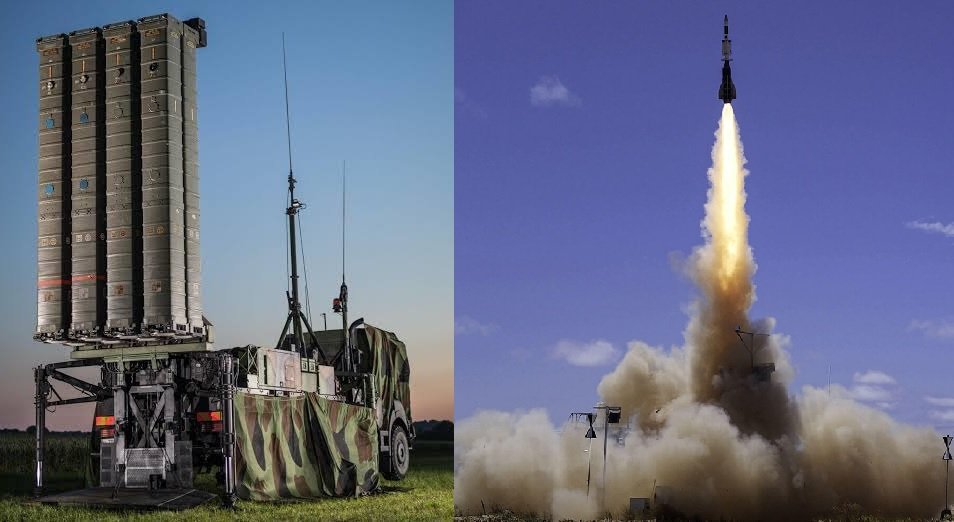
Europe
ROME — Italy is preparing its 13th military aid package for Ukraine, with a major focus on strengthening the country's air and missile defenses, according to a report published by La Repubblica on August 26. The reported package includes four SAMP/T NG air defense systems, Aster 30 interceptor missiles and seven long-range radars. Six radars would be manufactured by France's Thales and one by Italy's Leonardo. The program is estimated to cost nearly €3 billion and would be financed through European Union loans under the Ukraine Support Loan for 2026 and 2027. The new SAMP/T NG systems and related equipment are expected to be fully delivered by 2027. Italy also plans to transfer Aster 30 missiles from its existing stocks, with some deliveries expected as early as October 2026. A key part of the reported plan is the licensed production of Aster 30 B1NT missiles in Ukraine. France and Italy have agreed to allow Ukraine to manufacture the missiles locally, with the relevant agreements expected to be signed in September. Ukraine already has a contract for additional Aster 30 missiles. The B1NT variant has an engagement range exceeding 150 kilometers, according to the information reported. France is separately expected to provide one SAMP/T system and additional air-defense radars to Ukraine this autumn. It remains unclear whether these deliveries are included in the reported Italian package or are additional assistance. The plans build on a July 2026 joint declaration between France and Ukraine, under which Ukraine ordered four Franco-Italian SAMP/T NG systems. France agreed to temporarily provide two existing SAMP/T batteries until the new systems are delivered. The agreement also covered accelerated Aster 30 deliveries by October 2026 and authorization for licensed Aster 30 production in Ukraine before the end of 2026. Planned radar deliveries included Thales GM400, Ground Fire 300 and a Kronos radar. However, Italy's reported 13th package has not yet been formally approved. Defence Minister Guido Crosetto said on August 26 that no Italian military aid package had been formalised during 2026 and that a reported 13th package did not exist as a formal government act at that time. He said Italian assistance is provided in response to specific Ukrainian requests. Foreign Minister Antonio Tajani said the Defence Ministry was preparing another package that would be submitted to the parliamentary security oversight committee COPASIR before any delivery. The package is reportedly expected to be presented in September. If formally approved, the reported package would combine new SAMP/T NG systems, Aster 30 missile transfers, radar equipment and Ukrainian licensed missile production.
Read More → Posted on 2026-08-27 16:29:13
Space & Technology
XIONGAN, CHINA, — China’s commercial space sector has begun operating what Chinese authorities describe as the country’s first assembly-line-style automated satellite mass-production facility in Xiongan New Area, Hebei Province. The production line, operated by Beijing LandSpace Hongqing Technology, is designed to move satellite manufacturing from largely individual production toward higher-volume manufacturing. The facility uses robotic systems and automated stations for satellite assembly. More than 70 percent of its workstations are automated, according to Xiongan authorities. The company says the production cycle for a satellite has been reduced from about seven days using traditional methods to approximately 30 hours on the new line. The production line is designed to support the manufacture of more than 100 flat-panel communications satellites annually. The approach is intended to improve manufacturing efficiency and support the production requirements of commercial satellite communications and constellation deployments. — August 27, 2026 First Satellite Produced on the Line The first satellite manufactured on the production line is Hongqing Technology’s Honghu-03, also known as Xiongan-1. The satellite was completed and rolled off the production line on October 22, 2025. Xiongan-1 is a 541-kilogram flat-panel satellite measuring 3 meters in length, 2 meters in width and 0.4 meters in thickness. It was independently developed by Beijing LandSpace Hongqing Technology. The satellite incorporates the company’s self-developed propulsion, power and electronic systems. The satellite includes an argon-propellant electric propulsion system and is being used to conduct in-orbit verification of several technologies. These include the electric propulsion system and commercial-grade gallium nitride power devices designed for space applications. Chinese authorities said the satellite is conducting verification of more than 10 technologies described as domestic firsts. Xiongan-1 Reaches Orbit Xiongan-1 was launched on August 19, 2026, aboard the Zhuque-3 Y2 reusable rocket from the Dongfeng commercial space innovation pilot zone in Jiuquan, Gansu Province. The launch took place at 7:35 a.m. Beijing time. About 10 minutes later, the satellite separated from the rocket and entered its planned orbit. Its solar arrays deployed successfully, and telemetry data returned from the spacecraft was reported as normal. The satellite is operating at an altitude of about 500 kilometers and is carrying out its planned in-orbit technology verification activities. The launch also formed part of a major test for Zhuque-3. During the mission, the rocket’s first stage successfully completed a controlled landing and recovery on land, according to Chinese and international reports. From Satellite Manufacturing to Mass Production The automated production line applies an assembly-line manufacturing approach to satellite production. According to Hongqing Technology, the line can complete satellite assembly with substantially less manual intervention, while the overall production cycle has been reduced by about 80 percent. The company says six to eight workers can support production capacity of more than 100 flat-panel communications satellites per year. The production line occupies about 500 square meters. The facility is intended to support higher-volume manufacturing of satellites for applications including communications and satellite internet. The shift toward standardized and automated production is aimed at making it possible to manufacture satellites in larger numbers rather than treating each spacecraft primarily as an individual production project. Xiongan’s Growing Space Industry The satellite production facility is part of Xiongan New Area’s developing aerospace information and satellite internet industry. As of August 2026, the area had 69 companies connected to the aerospace information and satellite internet sector, along with nine innovation platforms. China Satellite Network Group has established its headquarters in Xiongan, while companies involved in satellite research, manufacturing, components, testing and applications have also established operations in the area. Xiongan is also developing shared satellite manufacturing and testing facilities. These facilities are intended to provide additional infrastructure for companies involved in commercial space activities and help create a production chain covering satellite development, manufacturing, testing and operation. The launch of Xiongan-1 therefore marks both the first flight of a satellite manufactured on the automated production line and the beginning of in-orbit verification for its technologies. At the manufacturing level, the facility provides Xiongan with a production system designed specifically for higher-volume satellite manufacturing, with a stated capacity of more than 100 flat-panel satellites per year.
Read More → Posted on 2026-08-27 16:22:47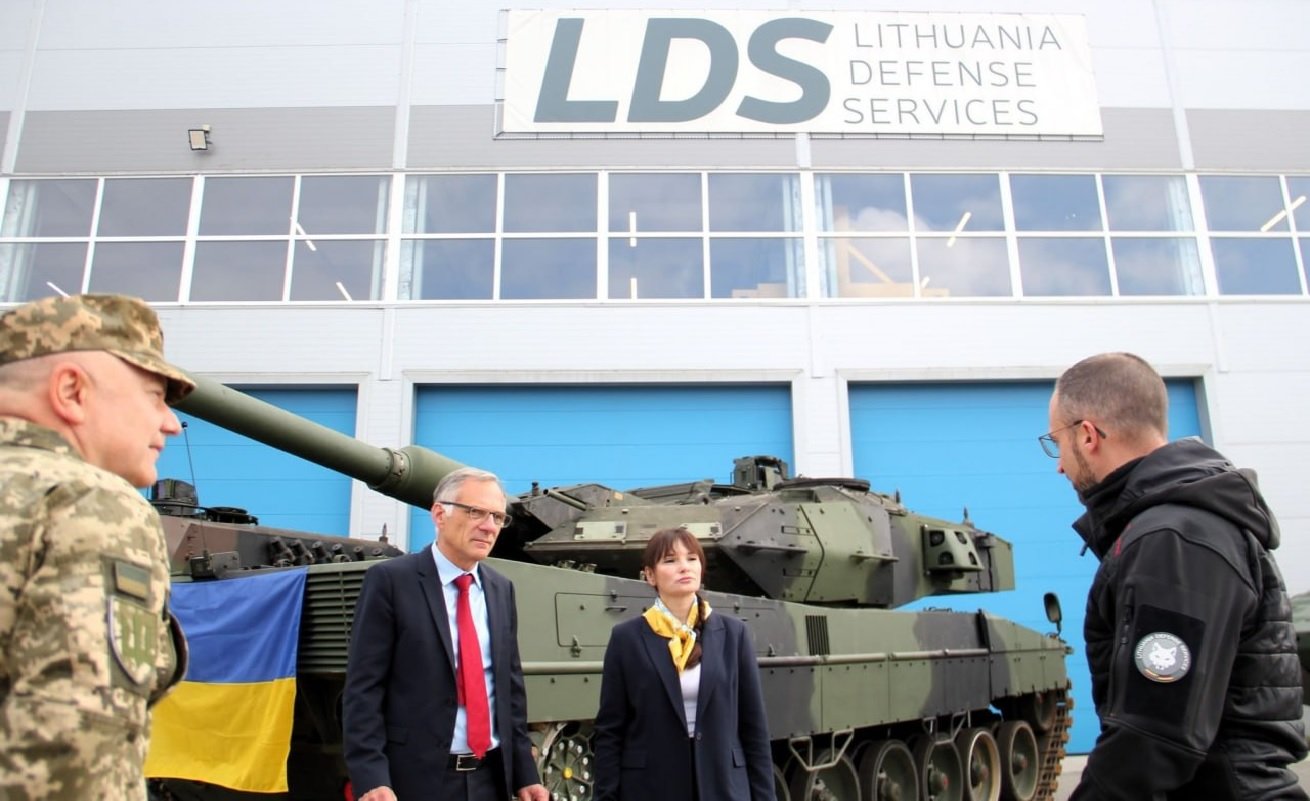
Europe
JONAVA, LITHUANIA — Lithuania Defense Services (LDS) has completed repairs on battle-damaged Ukrainian tanks and is preparing to return them to Ukraine. The vehicles include at least one German-made Leopard 2 and one Swedish Strv 122. The refurbished tanks were presented during a handover ceremony in Jonava. LDS sales and marketing director Vilius Semeška said the exact number of tanks being returned is classified. Images released by the company show at least two refurbished vehicles ready for delivery. Ukrainian Ambassador to Lithuania Olha Nikitchenko attended the ceremony and stressed the importance of returning the tanks quickly. “It is very important to us that the tanks return to the battlefield as soon as possible, because despite the era of drones, armored vehicles remain particularly important and necessary when retaking occupied territories during operations that involve these very same drones.” German Ambassador to Lithuania Cornelius Zimmermann said Germany is Ukraine’s largest bilateral partner in Europe and that Germany and Lithuania are fully funding the LDS project and the modernization of Ukrainian tanks. LDS Repair Operations LDS, a joint venture of Rheinmetall and KNDS Deutschland, was established in March 2022 to support Lithuanian and NATO forces and their equipment in the Baltic region. The Jonava facility began repairing battle-damaged Ukrainian Leopard tanks in October 2023. The first pair of refurbished Ukrainian Leopard 2 tanks was presented on December 15, 2023. LDS has also repaired PzH 2000 self-propelled howitzers and other armored vehicles. In January 2024, LDS signed a contract with Ukraine’s Ministry of Defense to improve spare-parts logistics for German armored vehicles operating in Ukraine. The facility supports several NATO-standard platforms, including Boxer Vilkas infantry fighting vehicles, PzH 2000 howitzers, the Leopard tank family and tactical transport vehicles. LDS has also signed agreements with Rafael and Rolls-Royce as it expands its range of services. Ukraine’s Leopard 2 Fleet Ukraine has received more than 100 Leopard 2 tanks in A4 to A6 variants from Western stocks and industry since 2023. According to open-source tracking by Oryx, as of August 27, 2026, 52 Leopard 2 losses have been visually confirmed, with additional vehicles recorded as damaged, abandoned or captured. The latest refurbished vehicles will add to Ukraine’s available armored fleet, although LDS has not disclosed how many tanks are included in the current handover. Lithuania Builds Leopard 2A8 Capability Lithuania has ordered 44 Leopard 2A8 tanks and is expanding its domestic infrastructure for their assembly and maintenance. A new production and maintenance complex is being built in the Kaunas Free Economic Zone. Finnish company YIT Lietuva is constructing the approximately 13,000-square-metre facility on a nearly 10-hectare site under a contract worth about €29 million. Construction began in August 2026 and is scheduled for completion in November 2027. The first tank assembled at the facility is expected in late 2028. LDS plans to invest around €50 million in the project and create about 100 jobs. The company will handle assembly, long-term maintenance, repair and readiness support for Lithuanian and potentially other NATO forces. The expansion will give Lithuania additional local capacity for heavy armored equipment while the Jonava facility continues supporting Lithuanian, NATO and Ukrainian systems.
Read More → Posted on 2026-08-27 16:15:00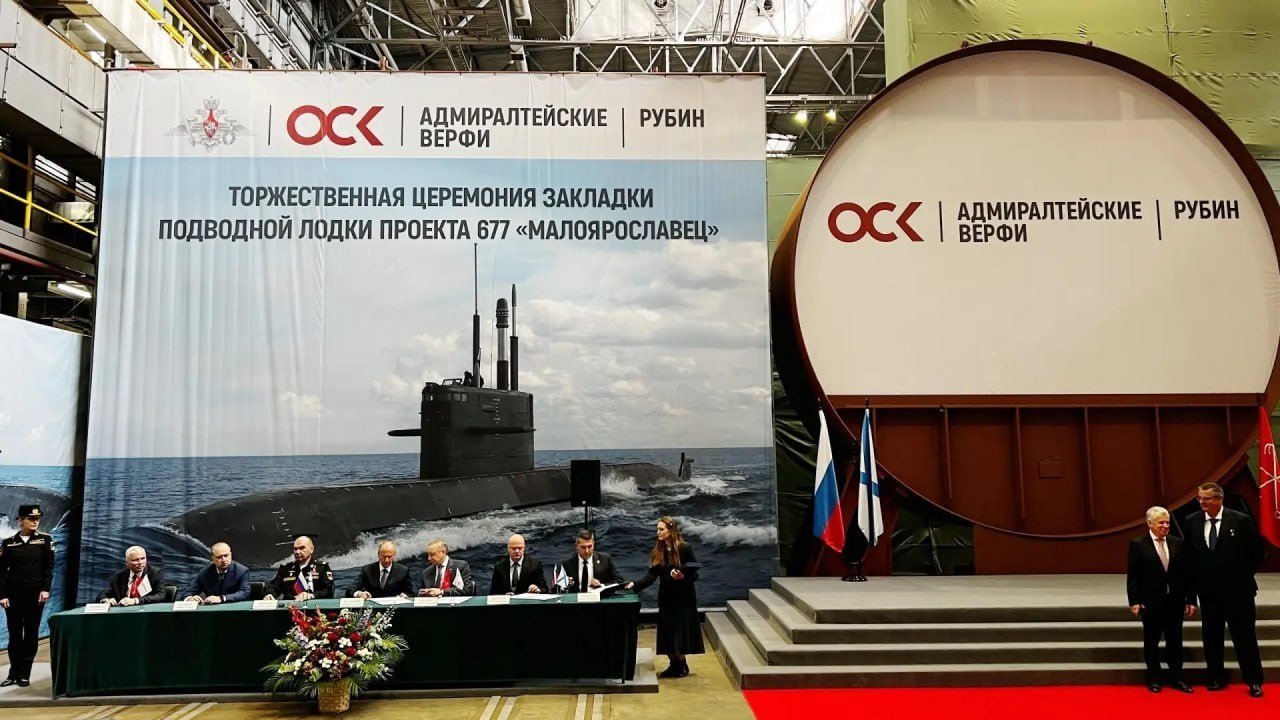
World
ST. PETERSBURG, — Russia’s United Shipbuilding Corporation (USC) has held a keel-laying ceremony for the Project 677 Lada-class diesel-electric submarine Maloyaroslavets at Admiralty Shipyards in St. Petersburg. The submarine was designed by the Rubin Design Bureau and is being built for the Russian Navy. According to USC-related reporting, Maloyaroslavets is the sixth Project 677 submarine ordered at Admiralty Shipyards and the fifth serial submarine of the class. The ceremony was attended by Nikolay Patrushev, aide to the Russian president and chairman of the Maritime Board; Russian Navy Commander-in-Chief Admiral Alexander Moiseyev; USC Director General Andrey Puchkov; St. Petersburg Governor Alexander Beglov; Admiralty Shipyards acting chief Andrey Bystrov; and Rubin Design Bureau Director General Vladimir Dorofeyev. Patrushev said that modernization of Russia’s submarine forces is among the priorities of the Navy’s development strategy through 2050. Russian President Vladimir Putin confirmed in 2025 that the Navy Development Strategy through 2050 had been approved and that its implementation is intended to support the modernization of the Russian Navy. Patrushev also expressed confidence that the Admiralty Shipyards workforce, together with partner enterprises, would complete the submarine-building program. USC chief Andrey Puchkov said the shipyard would continue modernization work alongside its current orders. Planned work includes modernization of the production and energy complex, reconstruction of the Parade Embankment and crane facilities, and reconstruction of the deep-water embankment and modernization of the machine-building workshop beginning in 2027. Modernized Project 677 Design The Maloyaroslavets is being built under the modernized Project 677 design, which was refined using operational experience from the lead submarine St. Petersburg. The updated series began with Kronstadt, which was delivered to the Russian Navy in January 2024. Velikiye Luki followed in December 2025. Two other Project 677 submarines, Vologda and Yaroslavl, were laid down on June 12, 2022, and remain under construction at Admiralty Shipyards. Project 677 submarines are diesel-electric, non-nuclear boats designed with a high level of automation. Russian sources describe the class as having an automated control system covering the submarine, its combat and technical systems, and its weapons. The boats also use acoustic protection measures and are designed for reduced underwater noise. The submarines are equipped with missile and torpedo weapons capable of engaging maritime and coastal targets. Reported specifications for the Project 677 include a length of about 66.8 meters, a beam of 7.1 meters, a submerged displacement of around 2,700 tons, a maximum submerged speed of up to 21 knots, a diving depth of about 300 meters and an endurance of up to 45 days. The crew is reported at about 35 to 36 personnel. The class is also equipped with six 533 mm torpedo tubes. The Velikiye Luki has been reported as capable of launching Kalibr cruise missiles through its torpedo tubes. Continued Lada-Class Production The keel-laying of Maloyaroslavets continues the production of the modernized Lada-class submarines at Admiralty Shipyards. The construction program follows the delivery of Kronstadt and Velikiye Luki, while Vologda and Yaroslavl remain under construction. The submarine has been named after Maloyaroslavets, a city in Russia’s Kaluga Region that holds the designation of a City of Military Glory. The naming follows the practice of giving Project 677 submarines names associated with Russian cities. The keel-laying ceremony marks the formal start of construction of another Project 677 submarine as Russia continues its program to modernize its conventional submarine fleet.
Read More → Posted on 2026-08-27 16:06:23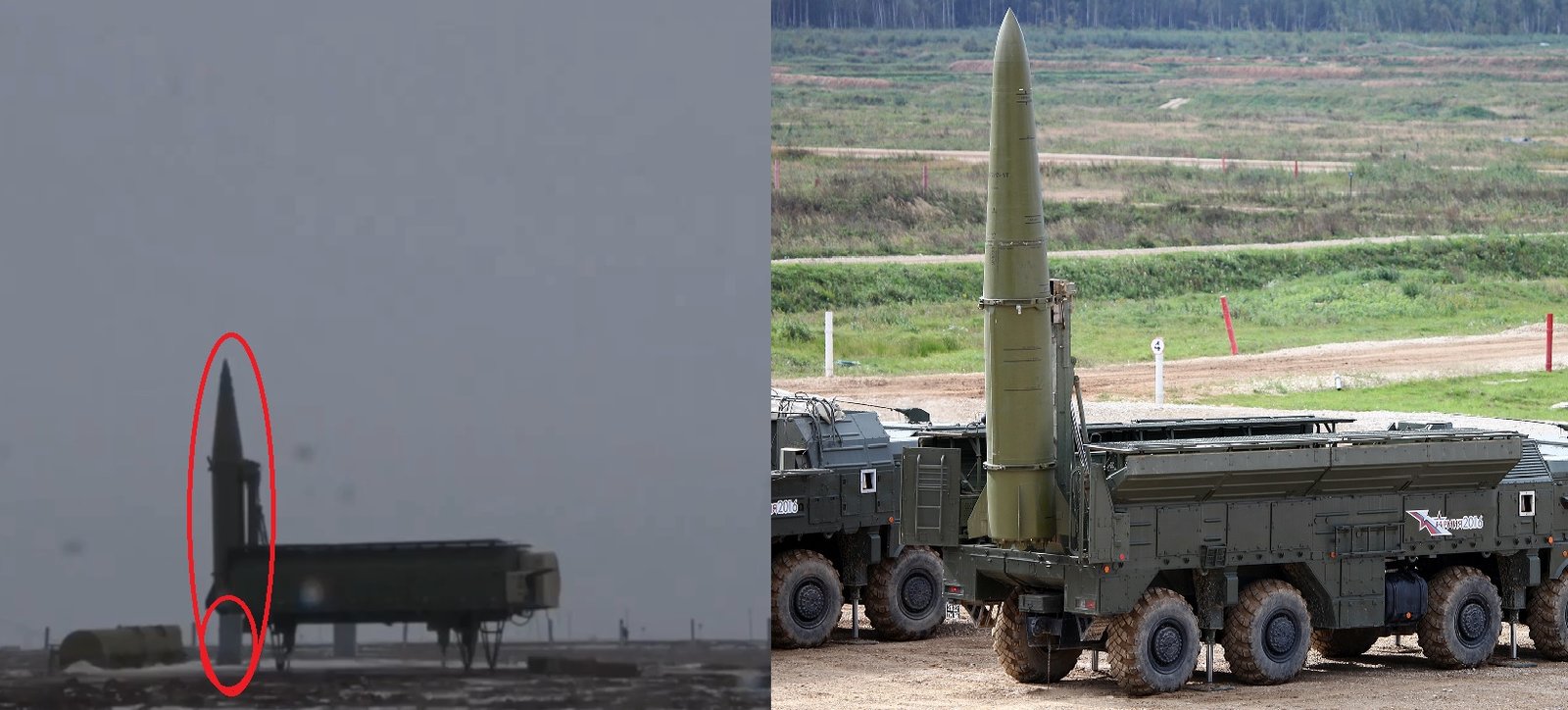
World
KYIV, Ukraine, — Russia used an upgraded 9M723-2 ballistic missile, informally known as the Iskander-1000, during a combined strike on Kyiv this summer, Ukraine’s Main Directorate of Intelligence (HUR) reported. It was the first reported combat use of the upgraded variant against the Ukrainian capital. The missile is part of the Bora-M system. According to HUR, its larger engine required a larger launcher tube and increases the range to up to 550 kilometers (340 miles), compared with about 390 kilometers (240 miles) for the standard 9M723-1 used by the Iskander-M. HUR said the remaining missile components are identical to those of the 9M723-1. The Iskander is a quasi-ballistic missile capable of maneuvering during flight, which makes it a difficult target for air-defense systems. Ukrainian aviation expert Kostiantyn Kryvolap said the difficulty of intercepting the upgraded version has not changed, while Ukraine continues to intercept Iskander missiles and target their launchers. Development of the 9M723-2 Reports about a longer-range Iskander variant first appeared in July 2024, with claims that the missile could eventually reach up to 1,000 kilometers. Unofficial reports in December 2025 claimed tests at ranges of up to 800 kilometers. HUR’s latest assessment, however, gives the 9M723-2 a range of up to 550 kilometers. In October 2025, Ukrainian sources published leaked Russian procurement documents showing an order for 18 missiles designated 9M723-2, providing evidence that the variant had entered production. Foreign Components HUR also released new information through its War&Sanctions portal on the production network for Russia’s 9M723 Iskander-M missiles. The data covers 140 identified components, 35 companies, and 108 officials and employees. The broader database also includes more than 170 components, 82 Russian and two Belarusian enterprises, and 121 items of foreign production equipment. According to HUR, only about one-quarter of the 140 components are manufactured in Russia. 63 components come from U.S. manufacturers, while eight each come from Switzerland and Belarus, four each from Germany and Taiwan, and three from China. In one guidance-system unit that processes flight data from a laser gyroscope, only five of 43 components are Russian-made. HUR has not disclosed the exact date of the summer strike, the number of 9M723-2 missiles used, or the specific targets hit. Russia continues to use ballistic missiles together with cruise missiles and drones in combined attacks against Ukrainian cities.
Read More → Posted on 2026-08-27 16:01:30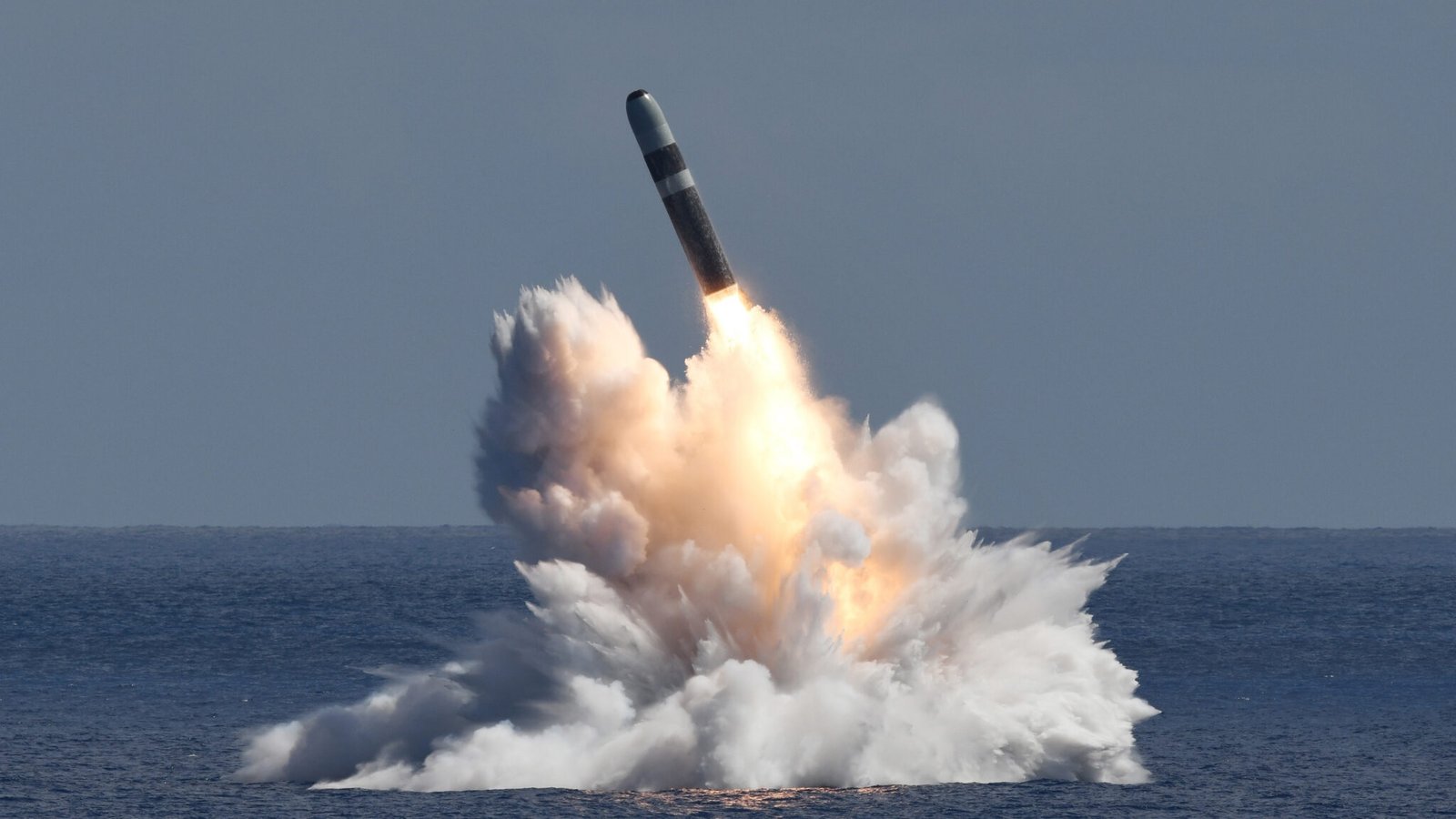
Europe
BERLIN — Germany is exploring options to provide financial and conventional military support to the United Kingdom’s Trident nuclear deterrent, according to a Telegraph report published on August 26. The discussions are part of wider efforts in Europe to strengthen its own defence capabilities and reduce reliance on the United States. Berlin is considering financial support for Britain’s nuclear programme and closer cooperation with the existing nuclear forces of Britain and France, rather than developing its own nuclear arsenal. German officials have cited the country’s wartime history as one reason for avoiding an independent nuclear capability. Possible German Support Several forms of support are reportedly being examined, including: Financial assistance: Germany could contribute to the cost of maintaining and modernising Britain’s nuclear deterrent. Faslane protection: Germany could deploy German-operated Patriot air-defence systems to protect HM Naval Base Clyde at Faslane in Scotland, which hosts Britain’s nuclear-armed submarine fleet. Industrial cooperation: German companies could potentially assist with future submarine construction, missiles or uranium-enrichment infrastructure for warheads. A British defence source questioned whether German industry currently has the specialised expertise needed for Britain’s nuclear submarine programme. However, the source described conventional air defence for Faslane as a more credible, likely and appropriate contribution. The UK is undertaking a major nuclear modernisation programme estimated at about £63 billion over coming years. It includes four new Dreadnought-class ballistic-missile submarines and development of a new warhead with the United States. Britain maintains an arsenal of around 200 nuclear warheads, which it assigns to NATO. Britain also relies on the United States for important parts of the Trident system. Trident missiles are manufactured and serviced at the US submarine base at Kings Bay, Georgia. Wider European Nuclear Cooperation Talks involving Berlin, London and Paris have reportedly intensified in recent months amid concerns about the future reliability of US security commitments under the Trump administration and the wider security situation in Europe, including Russia. Germany is also strengthening nuclear-related cooperation with France. Germany and France have established closer dialogue on nuclear deterrence, and German conventional forces are scheduled to participate for the first time in France’s Poker nuclear exercises later this year. France and the UK remain the only European countries with independent nuclear arsenals. Britain has committed its nuclear deterrent fully to NATO’s defence, while France maintains its own independent nuclear force. A UK Ministry of Defence spokesman said the nuclear deterrent remains a cornerstone of national security and protects the UK and NATO allies. A German government spokesman, however, denied that the reported talks were taking place. The discussions come alongside broader UK-Germany defence cooperation, including the Trinity House Agreement. Chancellor Friedrich Merz’s government has said Germany does not seek its own nuclear weapons but is interested in arrangements involving British and French capabilities while remaining within NATO and non-proliferation commitments. No formal agreement has been announced. Any German support for Britain’s deterrent would leave command and control of the UK’s nuclear weapons solely with London.
Read More → Posted on 2026-08-27 14:23:20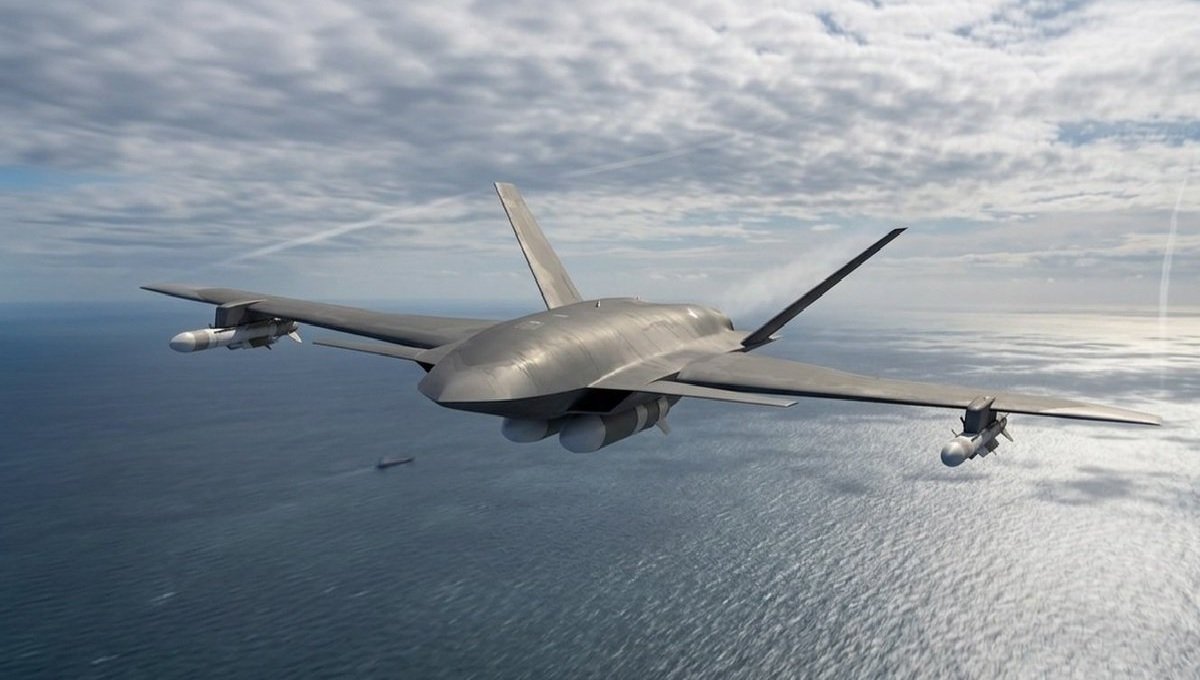
India
KOLKATA, — Kolkata-based aerospace and defence technology company AvionX Aerospace has unveiled Vajra, a Naval Collaborative Combat Air Vehicle (N-CCAV) designed as a loyal wingman drone for the Indian Navy. The platform is intended to operate alongside manned fighter aircraft, extending operational reach while reducing the exposure and workload of pilots in high-threat environments. AI-Based Manned-Unmanned Teaming Vajra is designed for Manned-Unmanned Teaming (MUM-T) and can perform air-to-air, air-to-ground and intelligence, surveillance and reconnaissance (ISR) missions. According to AvionX, it can provide ISR, electronic warfare support and precision-strike capabilities while operating with manned fighters. The drone uses an AI-driven autonomous system capable of handling complex missions with limited human intervention. Its sensor-fusion system combines data from an AESA radar, EO/IR pod and onboard electronic warfare systems for navigation, target detection and engagement. AvionX lists an AI pilot decision latency of less than 10 milliseconds and an autonomous operation time of 12 to 18 hours. Stealth and Electronic Warfare Vajra features a low-observable airframe and radar-absorbing materials. AvionX claims these features reduce its radar cross-section by approximately 70 percent, supporting operations in anti-access/area-denial (A2/AD) environments. Its electronic warfare suite includes active jamming, chaff and flare dispensers, and electronic intelligence (ELINT). The company states that the system provides more than 90 percent counter-electronic-warfare effectiveness in A2/AD conditions. Performance and Weapons The platform is powered by a 25 kN turbofan engine and has a listed maximum speed of 1,255 km/h. AvionX gives it an operational range of 3,700 km, a combat radius of 1,850 km, and 12–18 hours of endurance. Vajra is designed to carry air-to-air missiles, air-to-surface missiles and laser-guided bombs. The company says it can be launched from aircraft carriers as well as smaller naval vessels. AvionX says Vajra uses domestically developed engines, avionics and sensor systems and is being developed in line with the Atmanirbhar Bharat initiative. The company focuses on AI-enabled unmanned systems and defence command software and lists experience in UAV research, development and test flights. Vajra remains a development-stage naval loyal wingman concept, and the specifications currently available are based on information provided by AvionX.
Read More → Posted on 2026-08-27 14:16:38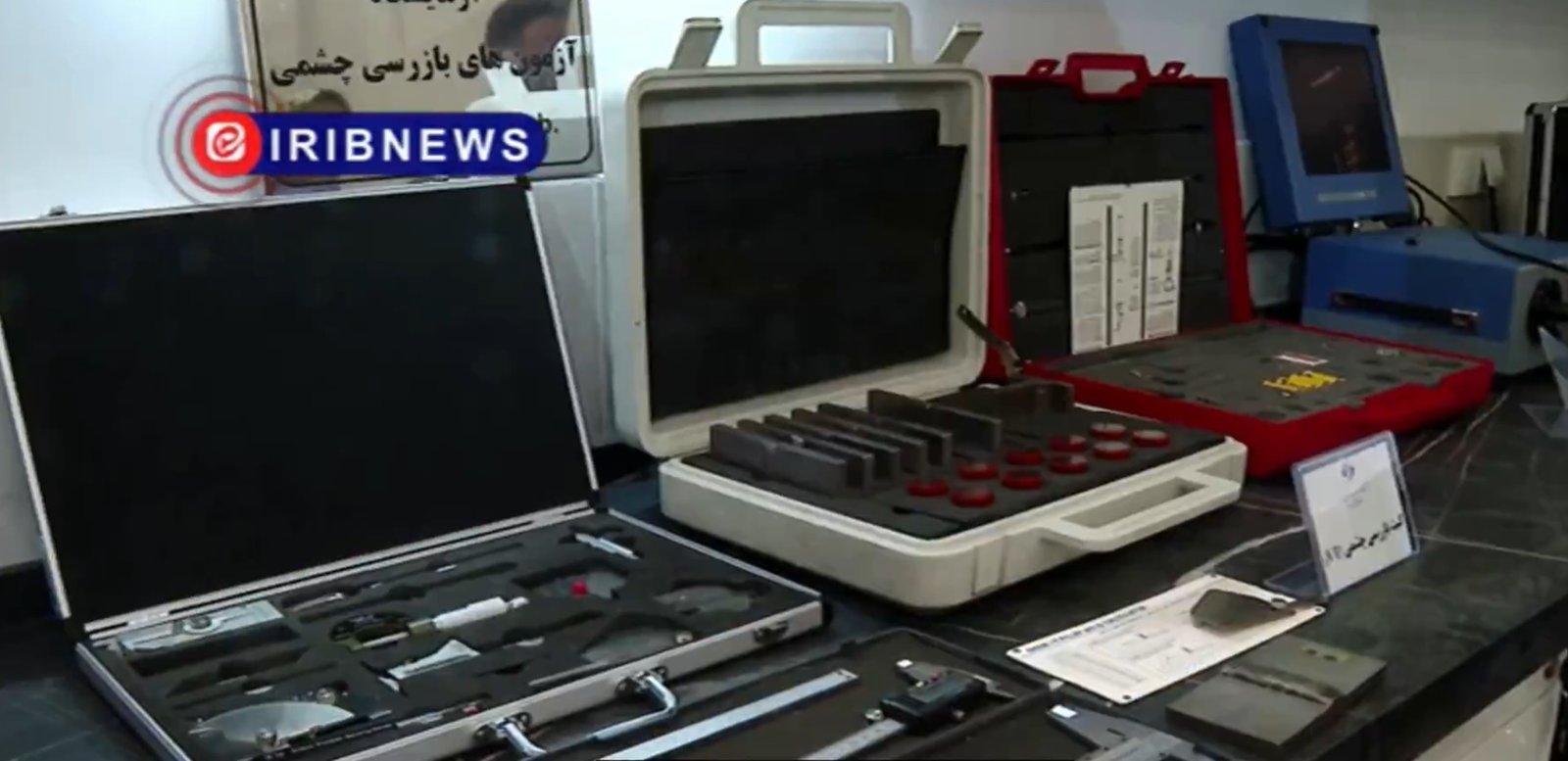
World
TEHRAN, IRAN — Iran’s Atomic Energy Organization (AEOI) has unveiled and put into operation four knowledge-based technological systems during Government Week ceremonies. State broadcaster IRIB showed the new equipment during a laboratory tour attended by AEOI chief and Vice President Mohammad Eslami and senior nuclear industry officials. The four achievements include three plasma diagnostic systems for tokamak devices and a non-destructive testing (NDT) laboratory. ❗️ IRAN UNVEILS FOUR NUCLEAR ACHIEVEMENTS — IRIB gives lab tourNew tech for science, industry & nuclear work, including equipment detecting cracks in metalAtomic chief says moved beyond ‘technology demonstration’ in nuclear fusion & entered ‘system & capability development’ pic.twitter.com/1HY7oakwXf — RT (@RT_com) August 26, 2026 Three Tokamak Diagnostic Systems The photoelectron system measures the electron temperature of tokamak plasma without direct contact by analyzing the energy and characteristics of X-rays emitted from the plasma. Iranian officials said it is intended to support future energy-producing tokamaks. The bolometry system, developed domestically for the first time, measures power lost from tokamak plasma through radiation. Such diagnostics are used at major facilities including KSTAR, EAST and JT-60U to help evaluate and optimize plasma performance. The charge-exchange system, also produced domestically for the first time, measures the temperature of ions in tokamak plasma using neutral atoms. Officials described it as an important diagnostic for modern tokamak facilities and said it is intended for future energy-producing tokamaks. Eslami said Iran's fusion research has moved beyond technology demonstration toward system development and capability building. He said fusion is a priority for future energy needs and that Iran cannot afford to fall behind countries developing the technology. NDT Laboratory The fourth project is a specialized non-destructive testing laboratory for inspection, testing, training and personnel qualification. The facility uses visual inspection, penetrant testing, magnetic-particle testing, ultrasonic testing, radiographic testing and eddy-current testing to identify cracks, defects and other problems in materials without damaging the components. The laboratory will provide NDT services to the nuclear, aviation, power, oil and gas sectors. It will also conduct training courses, personnel qualification examinations under ISO/IEC 9712, specialist consulting and digital industrial radiography for components where conventional film radiography is not practical. Eslami said the AEOI has developed these capabilities through domestic resources, knowledge-based companies and universities, reducing dependence on foreign countries. He also said sanctions and external pressure have not stopped Iran's technological development. Fusion Research Separate From Enrichment The newly unveiled systems are focused on nuclear fusion research and industrial testing, while uranium enrichment remains the main international concern regarding Iran's nuclear program. The International Atomic Energy Agency (IAEA) has reported that Iran previously accumulated uranium enriched to 60 percent U-235 and that, following attacks on Iranian nuclear facilities in 2025, the Agency lost continuity of knowledge regarding the country's current stockpile, centrifuges and some nuclear activities. The IAEA has also reported damage to nuclear facilities at Natanz, Fordow and Isfahan. Iranian officials have said inspections of attacked facilities require new arrangements. The latest AEOI announcement therefore concerns new domestic capabilities for tokamak plasma diagnostics, fusion research and industrial inspection, rather than new uranium-enrichment equipment.
Read More → Posted on 2026-08-27 14:04:40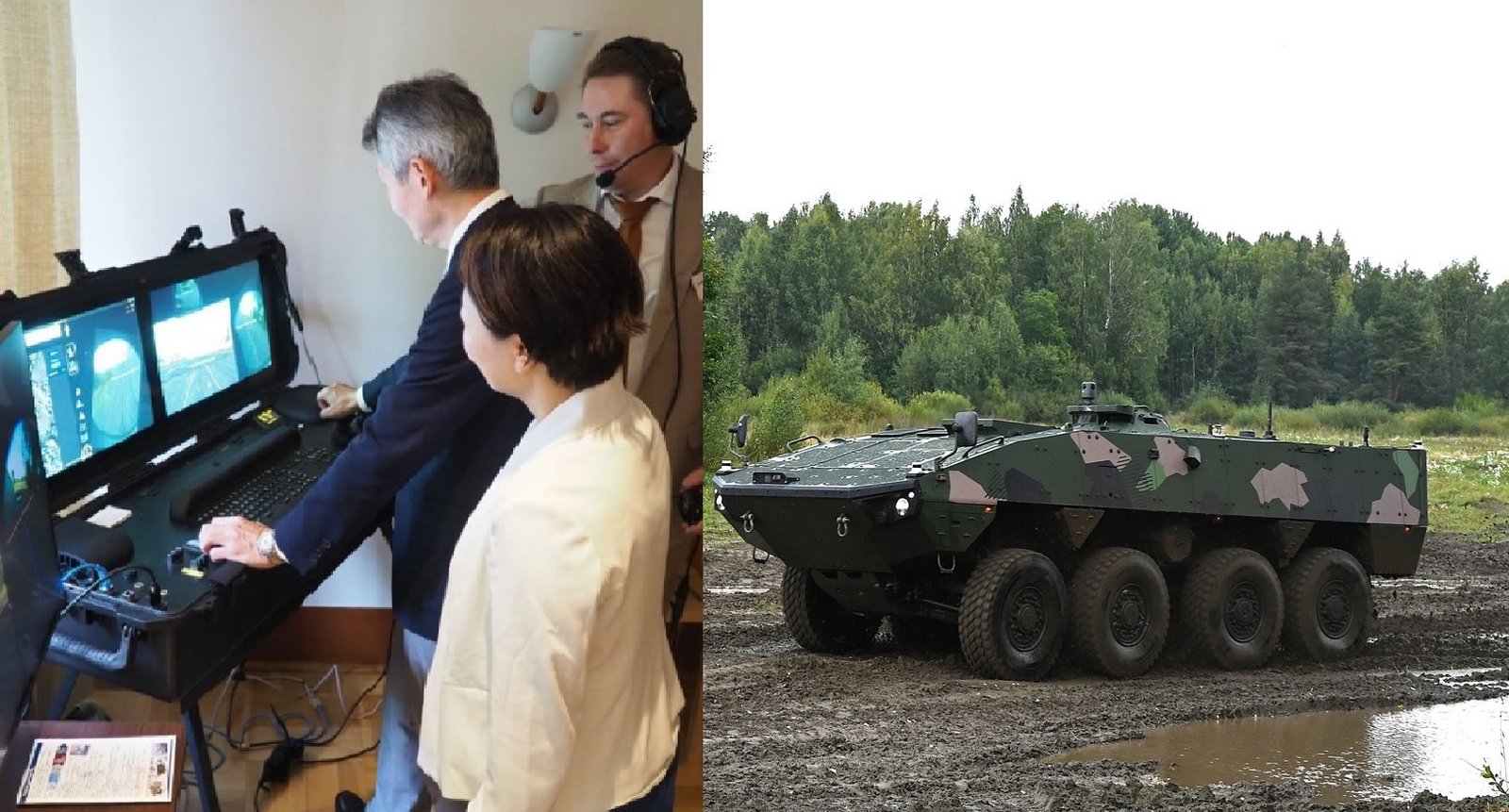
World
Tokyo, Japan — Finnish defence company Patria has successfully demonstrated the remote operation of a Patria AMV armoured vehicle in Finland from a control desk in Tokyo, covering a distance of more than 7,800 kilometres (4,847 miles). The demonstration was held on August 25–26 and hosted by the Embassy of Finland in Japan. It was organized by Patria with its Japanese manufacturing partner, The Japan Steel Works, Ltd. The AMV was located at the Parola military testing area in southern Finland, while the operator controlled the 8×8 vehicle from Tokyo. The demonstration used the AMV's integrated drive-by-wire systems and a Remote Operating Device supplied by UXV Technologies. Operational data was transferred through Telia's 5G mobile network using a virtual mobile private network with international roaming. The traffic was routed through a closed corporate network isolated from the public internet. Real-Time Situational Awareness Patria's DOME system provided real-time situational awareness, while ICEYE supplied near-real-time synthetic aperture radar (SAR) satellite data for information on the wider operating environment. Nokia provided its Real-time eXtended Reality Multimedia software and a 5G 360-degree camera mounted on the AMV. A Basemark augmented-reality helmet was also demonstrated for remote operators. SAVOX provided intercom and Voice over IP (VoIP) systems for communication between the operator in Tokyo and the ground safety team in Finland. Patria's ILIAS software monitored the vehicle's health and maintenance condition in real time. The demonstration builds on Patria's earlier remote-operation work. In 2020, the company demonstrated beyond-visual-line-of-sight remote control of an AMV 8×8 using commercial 4G and 5G networks with the University of Tampere. In April 2025, Telia demonstrated remote operation of a Patria AMV XP over nearly 100 kilometres during military exercises in Lapland using a dedicated 5G network slice. Patria has sold roughly 1,600 AMV vehicles to defence forces in Finland, Poland, Sweden, Slovenia, Croatia, South Africa, the United Arab Emirates and Japan. Japan's Ground Self-Defense Force received its first Patria AMV XP in September 2025 under the Wheeled Armored Personnel Carrier programme, with vehicles assembled locally at Japan Steel Works' Muroran plant. Patria said the remote-operation concept could support unmanned logistics, vehicle convoying and autonomous waypoint navigation. The company is also developing next-generation technologies, including AI-enabled systems, to support higher levels of vehicle autonomy. Janne Räkköläinen, Patria's Vice President, Market Area World, said the demonstration attracted a large number of attendees from Japan's Ministry of Defence and defence-related companies and reflected strong interest in Patria's remote-driving capabilities in Japan and internationally. The trial demonstrated how the AMV's modular design and drive-by-wire controls can be combined with telecommunications, satellite data, communications and situational-awareness systems for remote and future autonomous operations.
Read More → Posted on 2026-08-27 13:58:09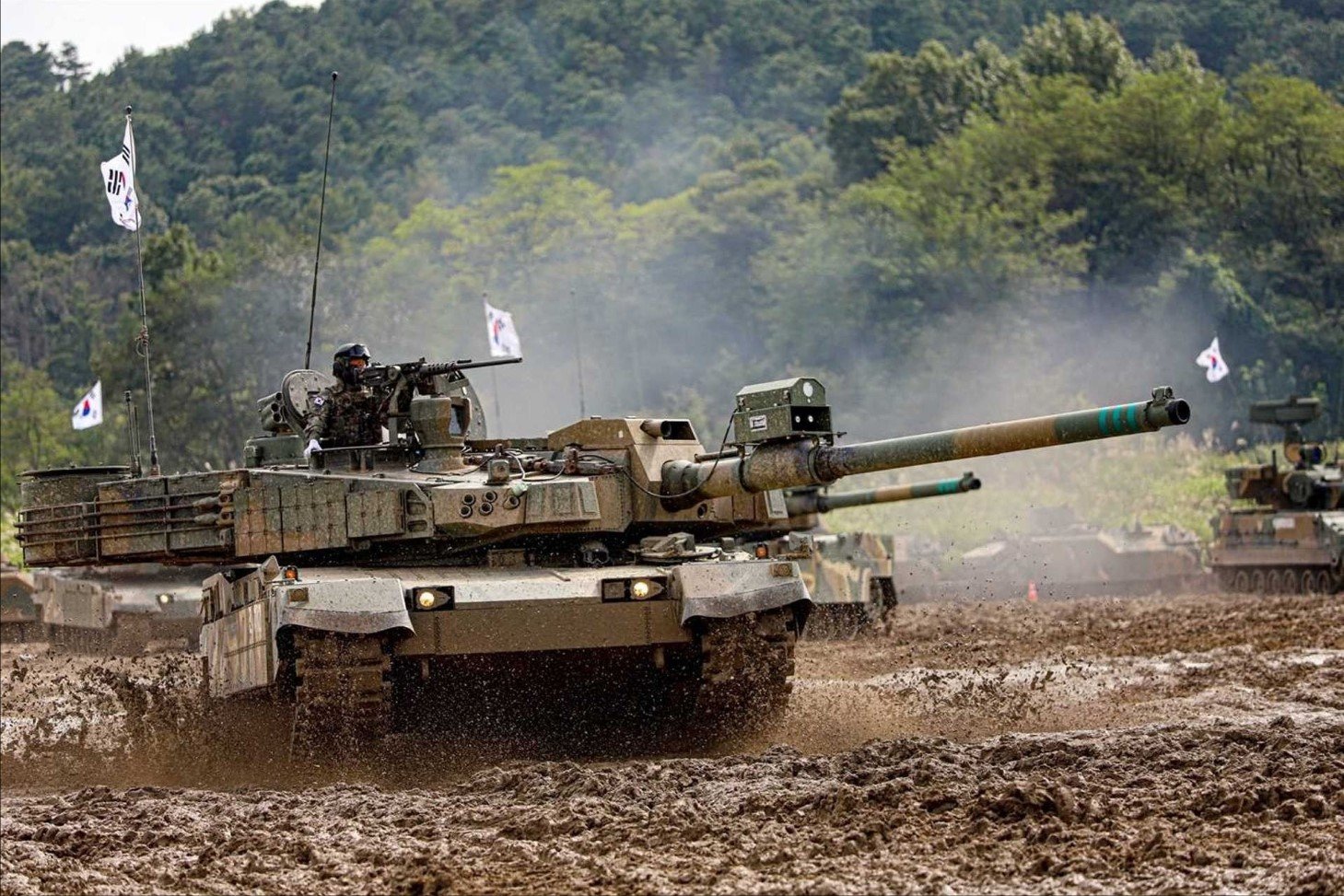
World
SEOUL — South Korea has approved a major upgrade programme for its K2 Black Panther main battle tanks, adding an active protection system (APS), electronic warfare (EW) equipment and a remotely controlled weapon station (RCWS) to improve protection against anti-armour weapons, drones and other emerging threats. The K2 Tank Performance Upgrade Project has an estimated budget of ₩3.45 trillion ($2.43 billion). The programme will run from 2028 to 2046, with development expected to finish around 2032 and the first upgraded tanks scheduled to enter Republic of Korea Army service in 2033. New Protection Systems The APS will use radar to detect incoming threats, including anti-tank missiles, rockets and drones, and intercept them. Hyundai Rotem, the K2 manufacturer, says the platform can accommodate both soft-kill and hard-kill APS configurations. South Korea has previously developed the Korean Active Protection System (KAPS) for the K2. In September 2025, Hyundai Rotem and Israel's Rafael Advanced Defense Systems also signed an agreement to cooperate on integrating the Trophy APS into the K2 family, covering integration, production, marketing, localisation and life-cycle support. The upgraded tanks will also receive EW systems for counter-drone and IED jamming. These systems are intended to disrupt radio-control signals used by drones and remotely triggered IEDs. The RCWS will allow the three-person crew to operate the secondary weapon from inside the armoured hull, reducing the need to expose themselves by opening hatches. K2 and Export Versions The K2 entered Republic of Korea Army service in 2014. The approximately 56-tonne tank is armed with a 120 mm L/55 smoothbore gun, an autoloader and a three-person crew. Existing production models use composite and reactive armour and soft-kill countermeasures. Earlier K2 batches did not receive a standard hard-kill APS because of cost considerations during the original design. The upgrade is also intended to address the capability difference between South Korea's domestic K2 fleet and export versions. Poland has ordered 360 K2 tanks under two contracts, including K2GF vehicles and the locally configured K2PL. The K2PL incorporates Polish requirements and is planned for local assembly at Bumar-Łabędy. The first 28 tanks from the second contract arrived in Poland in August 2026. South Korea's DAPA said the domestic upgrade will use technology more advanced than that currently fitted to the K2PL. The K2 has also attracted interest from Peru and Morocco. Peru has considered around 150 tanks to replace older T-55 and AMX-13 vehicles, with possible local assembly, while Morocco has reviewed a potential larger K2 purchase as part of its military modernisation. The upgrade comes as South Korea responds to changing threats on the Korean Peninsula, including North Korea's military modernisation and its recently unveiled Chonma-20 main battle tank, which appears to feature its own active protection system.
Read More → Posted on 2026-08-27 13:50:08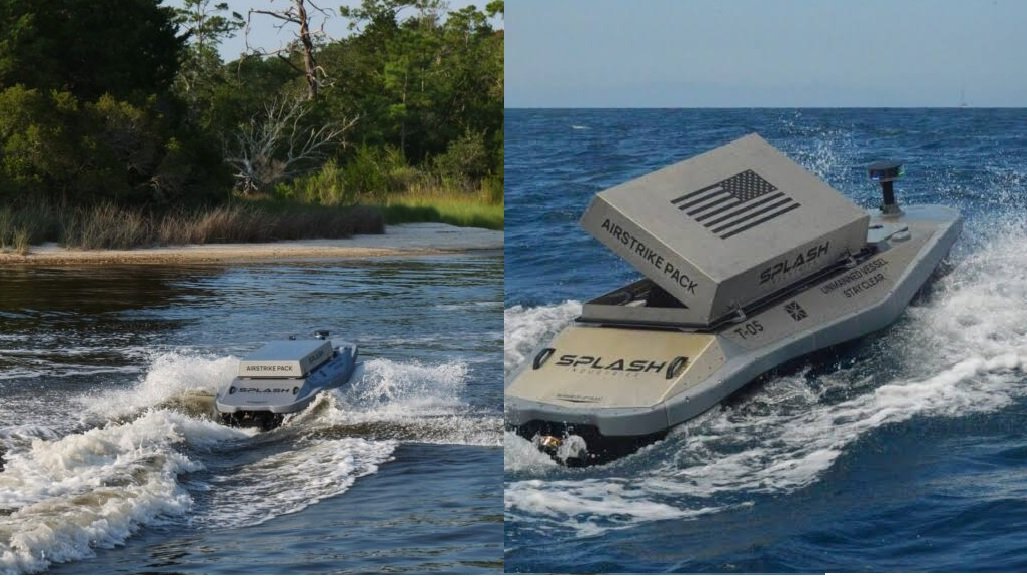
U.S
INGLEWOOD, Calif., — Splash Industries has introduced a new mission module for its Typhoon uncrewed surface vessel (USV) that allows operators to launch one-way aerial drones directly from the water. Called the Airstrike Pack, the module is designed to let operators deploy aerial assets with a single button press through the company’s proprietary command-and-control software, Splash C2. Splash Industries said the system has already been tested during a recent force-on-force exercise. The company said its vertically integrated approach, including in-house development of software and electronics, has helped keep the system rugged, easy to use and relatively low cost. Splash said the UAV deployment capability is available at about one-tenth the price of its nearest competitor. Typhoon USV capabilities The Typhoon is an 11-foot uncrewed surface vessel developed by Splash Industries for national security missions, including maritime surveillance and cargo delivery. According to the company, the vessel has a sustained speed of more than 50 knots and has exceeded 70 knots during testing. It has an operational range of more than 600 nautical miles (1,111 km) and uses a modular deck that can be configured for different payloads, including cargo and sensors. Splash Industries says the Typhoon can be assembled in about eight hours and is priced at approximately one-tenth the cost of comparable platforms. The company develops its software, electronics and sensors in-house. The Airstrike Pack adds another mission option to the Typhoon by allowing the USV to deploy one-way aerial drones from the surface. Autonomous Navy resupply demonstration The announcement follows a major milestone for Splash Industries during the Rim of the Pacific (RIMPAC) exercise near Hawaii in July 2026. During the exercise, a Typhoon USV completed what Splash Industries described as the world’s first fully autonomous underway resupply of a U.S. Navy warship. The vessel autonomously navigated open water, approached the amphibious assault ship USS Essex (LHD 2) and guided itself into the ship’s flooded well deck. Splash said the operation was completed without satellite or radio commands. The demonstration was overseen by the Naval Postgraduate School’s Consortium for Advanced Manufacturing Research and Education (CAMRE). During the same 24-hour period, the Typhoon also delivered uncrewed aerial system components manufactured aboard the USS Essex by U.S. Marine Corps personnel back to shore, according to information provided by the consortium. Funding and larger USV development Splash Industries officially emerged from stealth in July 2026 after announcing a $4.2 million seed funding round led by Ubiquity Ventures. The company said its autonomous vessels had already completed more than 10,000 nautical miles (18,520 km) of deployments across three continents. Splash co-founder and CEO Ivan Avanesov has also said the company is developing a larger uncrewed vessel called Tempest, which is being prepared for U.S. Navy testing. The Tempest is expected to have a payload capacity of 1,500 pounds (680 kg) and an operational range of 300 nautical miles (556 km). With the introduction of the Airstrike Pack, Splash Industries is expanding the Typhoon’s mission configuration beyond surveillance and cargo delivery to include the deployment of one-way aerial drones from an uncrewed surface vessel.
Read More → Posted on 2026-08-27 13:26:31
U.S
Washington — The U.S. Army has selected five companies to build and operate nuclear microreactors at five U.S. military installations under the Janus Program, with up to $2.2 billion in combined funding. The program, announced August 26, is being conducted in partnership with the Department of War Innovation Unit and aims to move advanced nuclear technology from testing into sustained operation at military sites. The contracts cover fiscal years 2027 through 2031 and use fixed-price, milestone-based Other Transaction Authority agreements. They cover design, construction and the first year of operations, with companies also expected to provide significant private investment. The Army's main target is to have at least one commercial microreactor producing usable electricity by September 30, 2028. Five Companies and Initial Sites The selected companies and installations are: Antares Nuclear, Inc. — Fort Bragg, North Carolina BWXT Advanced Technologies, LLC — Fort Campbell, Kentucky General Atomics Electromagnetic Systems — Fort Hood, Texas Radiant Industries, Inc. — Fort Benning, Georgia Westinghouse Government Services — Fort Drum, New York The five sites were selected from nine finalists identified in November 2025. The installations not selected were Fort Wainwright, Alaska; Holston Army Ammunition Plant, Tennessee; Joint Base Lewis-McChord, Washington; and Redstone Arsenal, Alabama. The Army expects that private investment combined with government funding could eventually support more than 20 microreactors across Department of War installations. Reactor Plans The planned systems will produce between 1 and 20 megawatts of electricity, depending on the design, and occupy less than five acres. They are intended to provide localized power for critical military infrastructure while remaining connected to existing commercial grids. They will not supply all of a major military installation's electricity. Radiant Industries has disclosed the largest individual award, worth up to $750 million, for 15 factory-built 1-megawatt Kaleidos microreactors by 2030, beginning with three units at Fort Benning. The transportable reactor uses TRISO fuel and is designed for about five years of operation before refueling, with a 20-year operating life. Westinghouse Government Services will provide its eVinci heat-pipe microreactor at Fort Drum. Westinghouse says the system can provide electricity for eight years without refueling and uses TRISO fuel with high-assay low-enriched uranium and passive heat-pipe cooling. The company recently completed a zero-power criticality test of the design at a National Nuclear Security Administration facility. Antares Nuclear will deploy its R1 microreactor at Fort Bragg in three-unit groups. The sodium heat-pipe-cooled reactor uses TRISO fuel and is rated from 100 kilowatts to 1 megawatt per unit. Its related Mark-0 test reactor achieved criticality at Idaho National Laboratory in June 2026. Antares plans to generate electricity from a test unit in 2027 and begin military deployments in 2028. BWXT Advanced Technologies will deploy a 20-megawatt-electric BANR reactor at Fort Campbell. The high-temperature gas-cooled reactor uses TRISO fuel and nitrogen coolant. Initial work includes site selection, Army regulatory processes and TRISO fuel fabrication. Construction is targeted for late 2028, with operations planned for the early 2030s. General Atomics Electromagnetic Systems will develop, test and conduct site planning for its GA-TES at Fort Hood. The liquid-metal-cooled reactor has a baseline output of about 5 megawatts electric and can scale to about 20 megawatts. It uses uranium-zirconium hydride fuel, natural-circulation cooling, has a 40-year design life and is modular for transport by truck or rail. Safety, Regulation and Waste The reactors will be owned and operated by the contractors, not the Army. They will be regulated by the Army rather than the U.S. Nuclear Regulatory Commission, while following environmental and safety requirements applicable to commercial reactors. The Army is aligning its regulatory processes so companies can later seek NRC approval for civilian markets. None of the reactors will use highly enriched, weapons-grade uranium. Several designs use 19.75% HALEU. Spent fuel will not be permanently stored at the installations, and the program requires nuclear waste and radiological materials to be removed from military sites within two years after a reactor shuts down. The Pentagon plans to develop a unified waste-management solution. From Project Pele to Janus Janus follows the Pentagon's earlier Project Pele, which focused on developing a portable reactor in the 1-to-5-megawatt range. Janus instead focuses on commercial reactor systems capable of providing long-duration baseload power at operational military installations. Army officials have stressed that not all five companies are expected to have operating reactors by 2028. Dr. Jeff Waksman said the Army nevertheless believes there is a practical path to having at least one reactor producing usable electricity by September 30, 2028. Army Secretary Dan Driscoll said the contracts are intended to provide safe and reliable baseload power for military installations and strengthen energy resilience. Jason Craft, Janus Program director, said the Army is leading efforts to expand nuclear capability through the program. Waksman said the broader objective is to move from experimental designs to reliable commercial hardware that can operate for years and eventually serve non-military customers. The program is also intended to strengthen the domestic industrial base for advanced nuclear energy.
Read More → Posted on 2026-08-27 13:04:37Search
Top Trending in 24 Hours
-
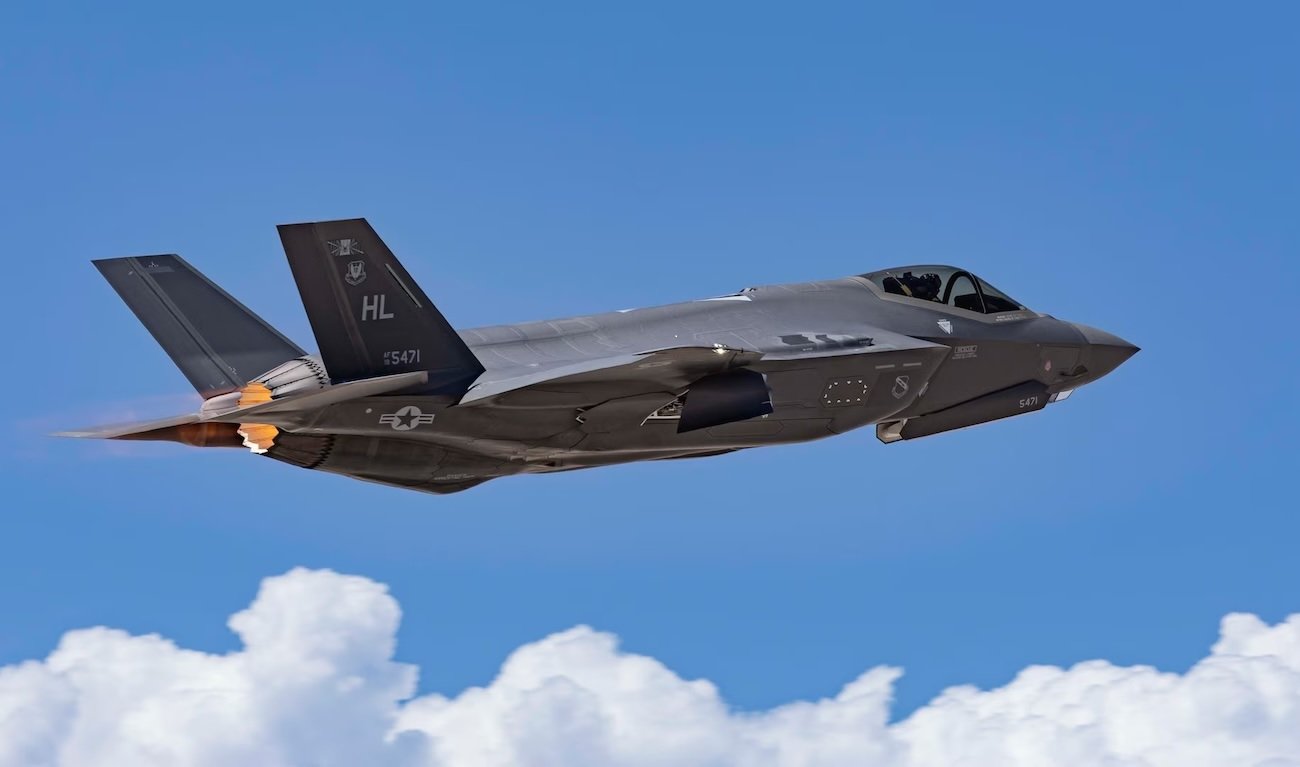 Sensitive F-35 Components Diverted to Hong Kong, Some Parts Missing
-
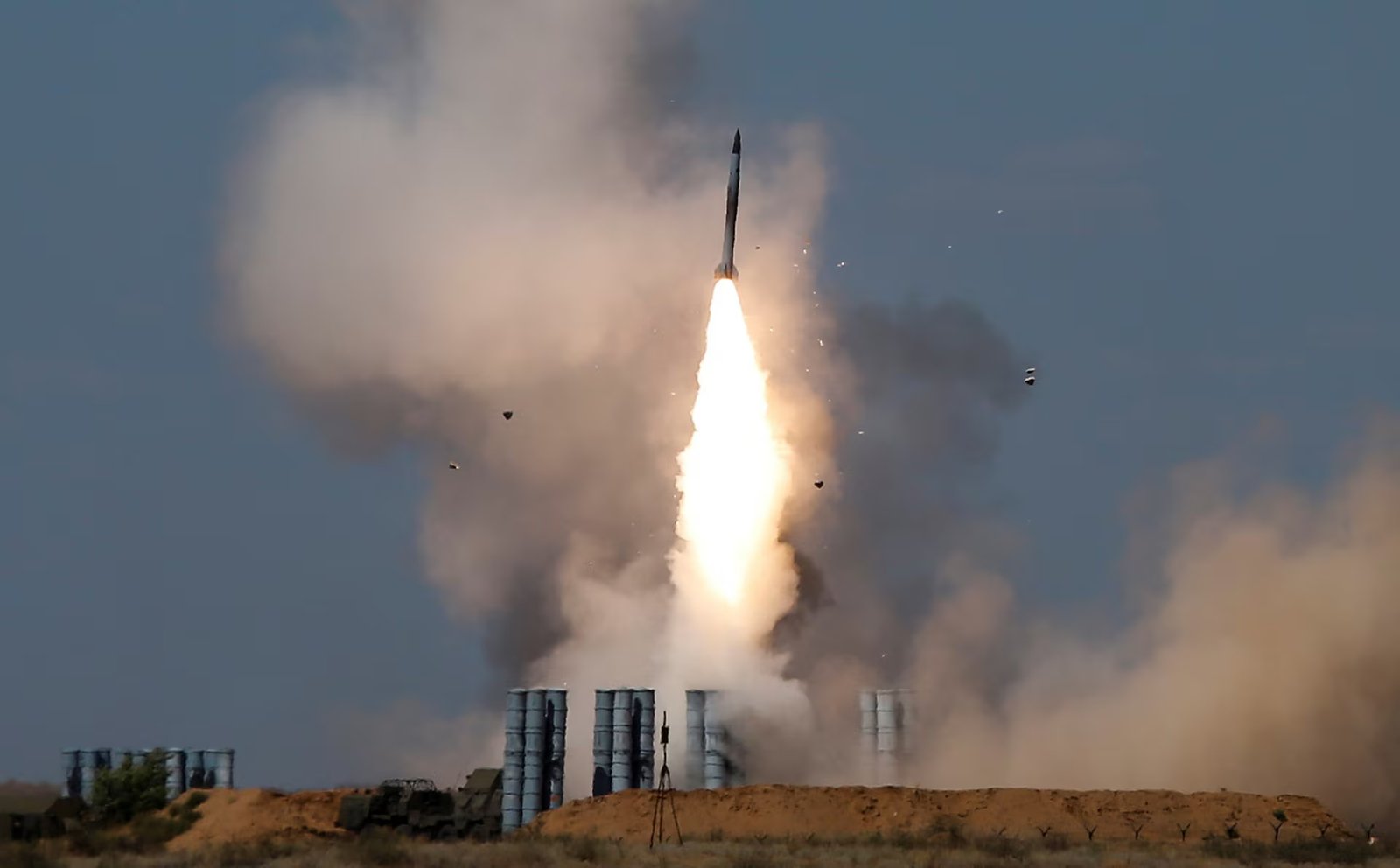 U.S. Approves Potential $2.68 Billion Air Defense Package for Ukraine Including S-300 Clone Missiles
-
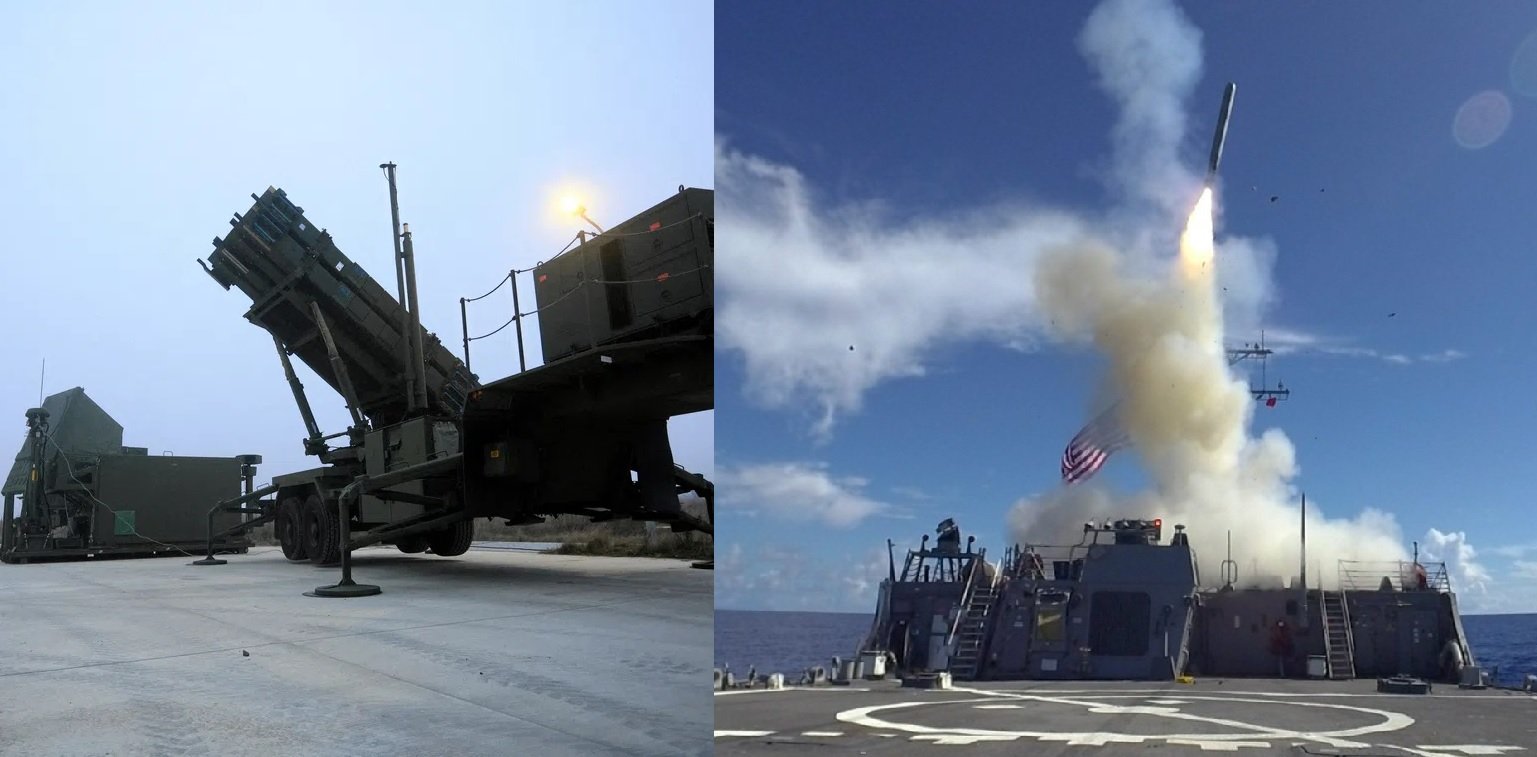 U.S. Warns Allies of Up to Five-Year Delays in Key Weapons Deliveries
-
 U.S. Secures Permanent Military Rights in Greenland in Historic Security Pact with Denmark
-
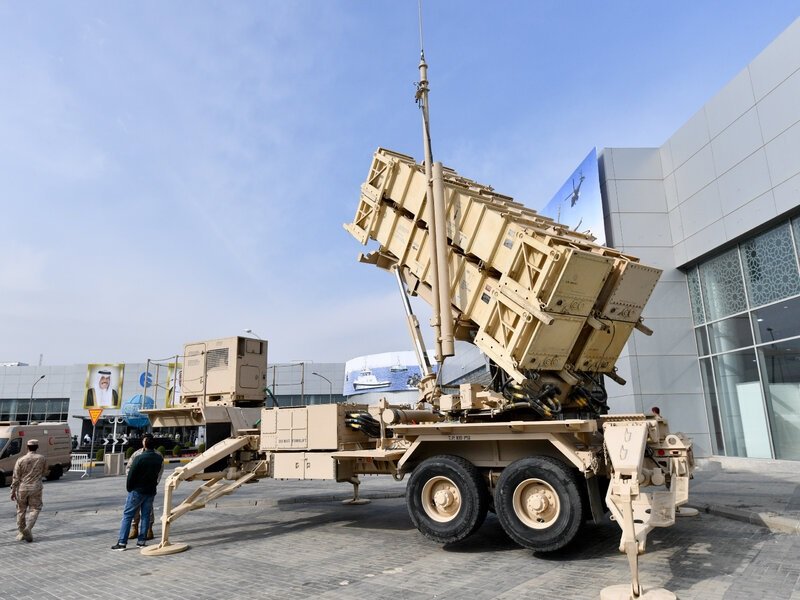 U.S. Iran War Cost Hits $43.6 Billion as Missile Interceptor Stocks Come Under Pressure
-
 Russia’s Aeroflot Orders 90 MC-21-310 Aircraft in Record Aviation Deal
-
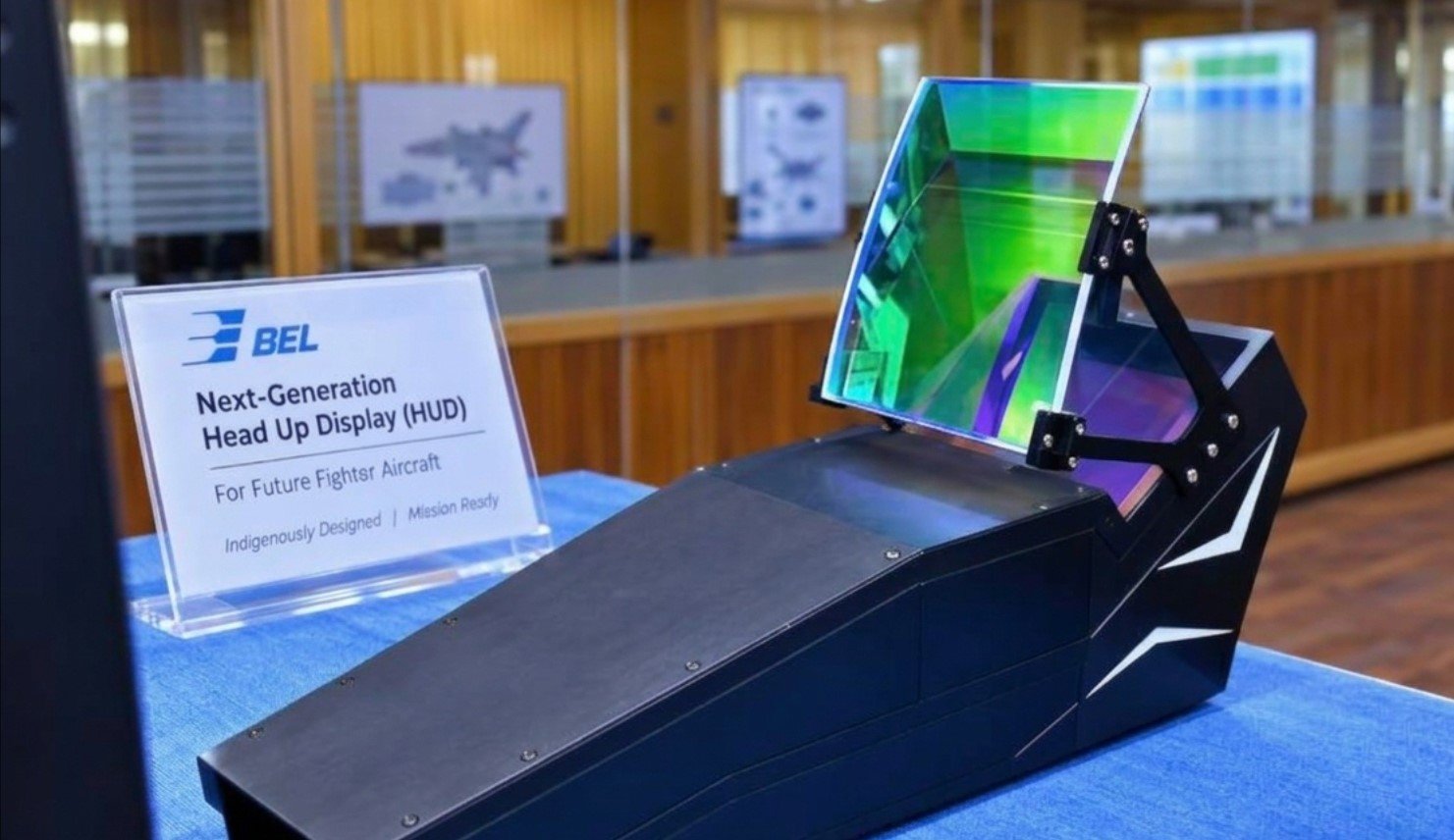 BEL Showcases New-Generation Head-Up Display, Potentially Linked to Tejas Mk2
-
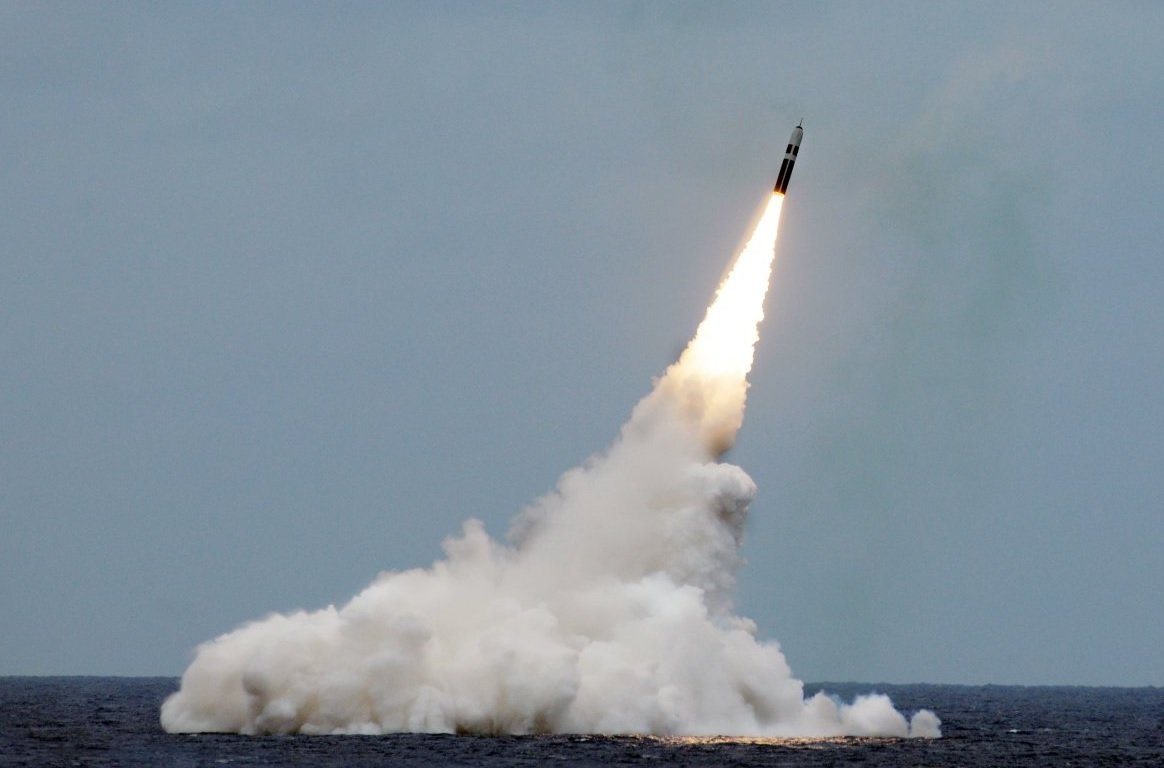 U.S. Navy Awards Lockheed Martin $76.6 Million for Continued Trident II D5LE2 Development
Top Trending in 4 Days
-
 U.S. Plans $2.8 Billion Sale of 40,000 Heavy Bombs and 20,000 I-2000 Penetrator Warheads to Israel
-
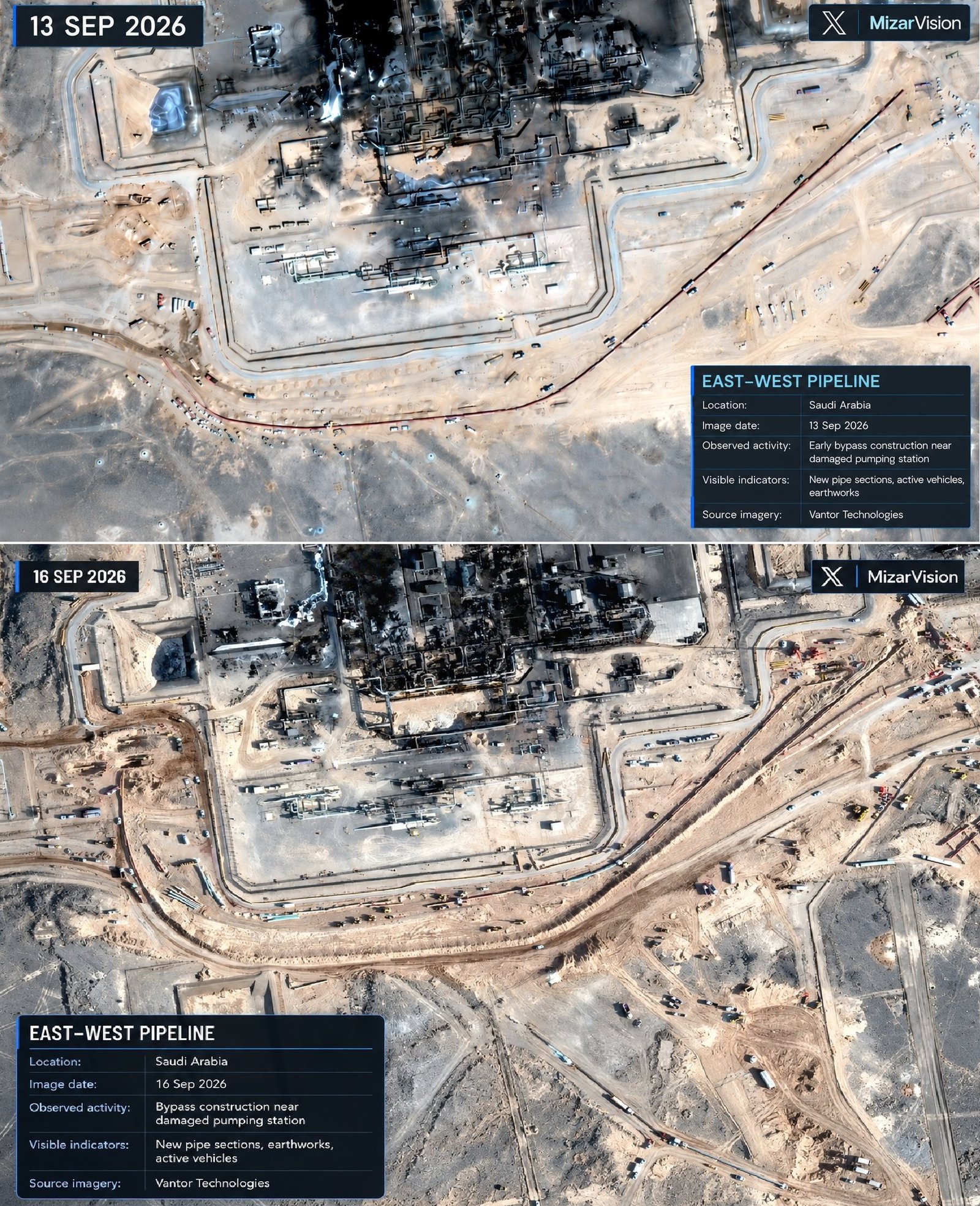 Satellite Images Show Saudi Arabia Building Emergency Bypass Around Damaged East-West Oil Pipeline Station
-
 Photos Reveal Damaged E-3 Sentry, Buildings and Vehicles at U.S. Bases in Saudi Arabia and Kuwait After Iranian Strikes
-
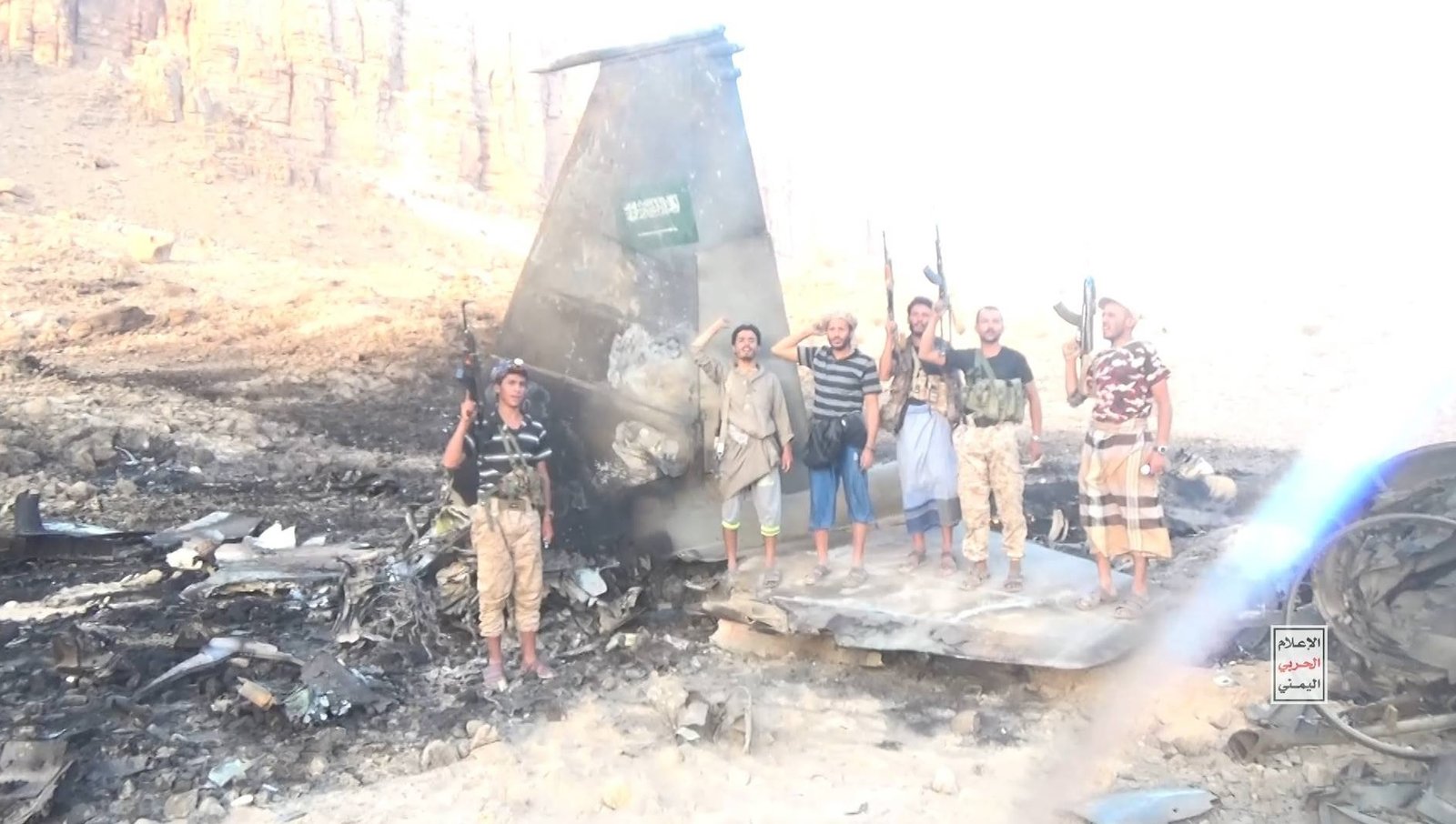 Houthis Claim Downing of Saudi F-15 and Wing Loong II Drone Over Marib
-
 Bharat Forge, Pratt & Whitney Canada to Evaluate Turboprop Engines for DRDO’s Indigenous HALE UAV
-
Sensitive F-35 Components Diverted to Hong Kong, Some Parts Missing
-
 China Privately Urges Iran to Restrain Houthis After Saudi Appeal
-
 Former Italian Navy Carrier Enters Indonesian Waters to Join Indonesian Navy as Indonesia’s First Aircraft Carrier
