
Europe
DUBLIN — Ireland has signed an acquisition order with France for five deployable long-range military radar systems manufactured by Thales, as part of a wider programme to strengthen the country’s air surveillance capability. The agreement was confirmed by Defence Minister Helen McEntee on September 18, 2026. The order was signed with France’s Ministry of the Armed Forces and its defence procurement agency, the Direction Générale de l’Armement (DGA). The overall Military Radar Programme is estimated to cost between €300 million and €500 million and has three main elements: land-based long-range primary radar, ground-based air defence systems including counter-drone capabilities, and maritime radar for naval ships. Five Thales Radars Ireland will receive five deployable Thales long-range radar systems. The precise model has not been publicly disclosed. Thales produces several long-range radar systems, including the Ground Master family. Delivery of the first systems is expected to begin in 2027, with the complete radar capability planned to be operational by the end of 2028. The locations of the five systems have not yet been made public, although strategic sites across Ireland have been examined. Building a Recognised Air Picture The primary radar systems are intended to allow Ireland’s Defence Forces to develop and maintain a complete recognised air picture of the country’s airspace. This capability is intended to provide information on aircraft operating in Irish airspace, including aircraft that are not transmitting identification signals. The Commission on the Defence Forces previously identified the development of a primary radar capability as an immediate priority. The ground-based air defence part of the programme is also progressing, including counter-unmanned aircraft systems. Some capabilities have already been introduced, while work on the maritime radar element is continuing. Minister McEntee said the acquisition keeps Ireland on track to establish a complete recognised air picture by the end of 2028 and represents further progress on a key recommendation of the Commission on the Defence Forces.
Read More → Posted on 2026-09-21 15:27:11
Europe
FORT WORTH, Texas — Germany has formally accepted its first F-35A Lightning II fighter jet from Lockheed Martin, marking the start of deliveries under its order for 35 aircraft. German Defence Minister Boris Pistorius accepted the aircraft during a ceremony at Lockheed Martin’s production facility in Fort Worth, Texas, on September 18, 2026. The aircraft is designated 35+01 and carries production number MG-01. It completed its maiden flight at the same facility on September 8. Germany’s F-35A Programme Germany ordered 35 F-35As in December 2022 as part of efforts to modernise the Luftwaffe following Russia’s full-scale invasion of Ukraine. The approximately €10 billion programme includes the aircraft, engines, mission equipment, spare parts, training and support. The F-35As are primarily intended to replace Germany’s ageing Panavia Tornado fleet, including its role in NATO’s nuclear-sharing arrangement. Germany plans to achieve full operational capability with the F-35 fleet by 2029. Pistorius highlighted the F-35A’s low-observable characteristics, advanced sensors, electronic warfare capabilities and real-time data processing. He also noted its ability to share information with other platforms and improve interoperability with the 19 other F-35 partner nations. Initial Training in the United States The first eight German F-35As will remain in the United States for pilot and maintenance training. They are scheduled to move to Ebbing Air National Guard Base in Arkansas later this autumn. The first German F-35As are expected to arrive in Germany in the third quarter of 2027, with additional aircraft following through 2029. Büchel Base Upgrades Germany plans to operate the F-35As from Büchel Air Base in Rhineland-Palatinate, home to Tactical Air Wing 33. The German government is investing approximately €2 billion to prepare the base for the aircraft. The work includes upgrades to maintenance facilities, hangars, safety systems, digital networks, runways and taxiways, along with other infrastructure required for F-35 operations and the nuclear mission. Flight-operation infrastructure is expected to be ready in 2027. German Industry Joins F-35 Production German defence company Rheinmetall is also participating in the F-35 programme. Its facility in Weeze, North Rhine-Westphalia, manufactures the aircraft’s centre fuselage sections. Rheinmetall has a contract to produce more than 400 centre fuselage sections for F-35 aircraft operated by Germany and other countries, making German industry part of the programme’s global supply chain. F-35A Fleet The F-35A is designed for multi-domain operations, combining low-observable characteristics, sensor systems, electronic warfare capabilities, precision-strike functions and real-time data processing. More than 1,350 F-35s are in service across 20 nations, with additional aircraft operating or planned in Europe. The acceptance of 35+01 begins Germany’s transition from the Tornado to the F-35A. German pilot and maintenance training will continue in the United States before the aircraft begin operating from Germany.
Read More → Posted on 2026-09-21 13:36:50
Europe
ROME — Italy is preparing to deploy naval forces to protect the passage of Italian commercial vessels through the Bab al-Mandeb Strait, as security conditions around the key Red Sea shipping route deteriorate following advances by Yemen’s Ansarallah movement, also known as the Houthis. Italian Defence Minister Guido Crosetto said Rome would not wait for a broader European Union decision before taking steps to protect Italian merchant shipping. He said Italy has the naval capabilities needed to support the safe passage of its vessels and that delays could further affect the country’s economy. Crosetto said the Italian government would assess what action is required together with the government and Parliament. He stressed that any deployment would be intended to protect merchant vessels and restore commercial shipping through the strait. Bab al-Mandeb Shipping Route The Bab al-Mandeb Strait connects the Red Sea with the Gulf of Aden and provides a major maritime route between Europe and Asia. The narrow waterway is about 30 kilometers wide at its narrowest point and is a southern gateway to the Suez Canal. Historically, around 12% to 15% of global trade has passed through the area. The security situation has changed significantly following recent advances by Ansarallah along Yemen’s western Red Sea coast. The group has captured areas including the port of Mocha and strategically located islands, including Perim, also known as Mayyun, in the Bab al-Mandeb Strait. These territorial gains have increased its ability to influence maritime traffic in the area. The Italian Navy has already conducted an escort operation in the region. The frigate Carlo Bergamini, operating as part of the EU’s Operation Aspides, escorted the Italian merchant vessel Jolly Oro, owned by Ignazio Messina & C., during its northbound passage through Bab al-Mandeb. The Italian Navy said the operation was part of Aspides’ assigned tasks. Italian officials have indicated that the focus is on protecting commercial vessels rather than conducting offensive operations. Foreign Minister Antonio Tajani said the Italian ships involved would operate within the defensive framework of Operation Aspides. Saudi Oil Supply Disruptions The shipping concerns come as Saudi Arabia faces disruption to another important route for exporting crude oil to the Red Sea. Saudi Aramco has informed at least two European refining customers that they will receive no Saudi crude deliveries next month, according to a Bloomberg report cited by Reuters. The decision follows attacks that damaged the kingdom’s East-West Pipeline, which connects oil-producing areas in eastern Saudi Arabia with the Red Sea port of Yanbu. The approximately 1,200-kilometer pipeline is an important alternative route for moving Saudi crude toward the Red Sea without using the Strait of Hormuz. Saudi authorities shut the pipeline after drone attacks damaged several pumping stations. Saudi Arabia has been working to restore the pipeline. Reports indicate that part of its capacity could return within days, while restoring full operations could take several weeks. European refiners affected by the disruption have begun looking for alternative crude supplies. Italy's Economic Concerns The developments in Bab al-Mandeb are particularly important for Italy because a significant share of its trade uses the Suez Canal route. Reuters reported that about 40% of Italy’s trade passes through the canal. Italy’s planned naval response therefore focuses on maintaining access for its commercial vessels while the security situation around the Red Sea and Bab al-Mandeb remains uncertain. The government has not yet specified the final number of warships that would be deployed.
Read More → Posted on 2026-09-18 15:35:49
Europe
LONDON — The UK Ministry of Defence (MoD) has selected TKMS ATLAS UK to develop and supply the Next Generation Countermeasure (NGCM) system for the Royal Navy’s submarine fleet. The contract value has not been disclosed. However, the programme is expected to support 80 jobs in the UK. The NGCM capability delivery and deployment programme is scheduled to span 2025 to 2032. NGCM to Protect Current and Future Submarines NGCM will form part of the Royal Navy’s Underwater Defensive Aids Suite and is designed to protect current and future submarine classes against evolving underwater threats, including modern torpedoes. TKMS ATLAS UK, a subsidiary of Germany’s TKMS group based in Winfrith, Dorset, will lead the programme. The company will use a spiral development approach, allowing the system to receive staged upgrades after its initial deployment as new threats emerge. This is intended to keep the capability effective throughout the operational lives of the submarines using it. Babcock to Support Development and Integration TKMS ATLAS UK will work with Babcock International Group, which will provide countermeasure launcher technology and submarine integration expertise. Babcock already provides through-life support for the UK submarine fleet. The two companies have conducted more than three years of joint research and development in preparation for the NGCM programme. Their design is intended to support submarine availability while making future upgrades easier to integrate. TKMS ATLAS UK will draw on its UK research into torpedo countermeasures and expertise in hydro-acoustics, sonar, underwater communications, sensor engineering and systems integration. UK Underwater Defence Capability Dr Antoni Mazur, managing director of TKMS ATLAS UK, said the company was proud to have been selected and described the contract as reflecting its longstanding role in UK torpedo countermeasure research and development. He said NGCM would strengthen the underwater defence of the UK submarine fleet while creating opportunities for future growth and exports. Phil Craig, managing director of marine programmes at Babcock, said the company was pleased to partner with TKMS ATLAS UK and combine their complementary skills and expertise to deliver the NGCM capability for the Royal Navy. Chris Bamforth, head of submarine combat systems at the MoD, congratulated TKMS ATLAS UK on winning the NGCM contract and said the MoD looked forward to working with the company to deliver the capability for the UK submarine fleet. The programme will now move into delivery, platform integration, testing and progressive capability improvements. TKMS ATLAS UK said the adaptable design will strengthen sovereign UK capability in underwater systems and support security in the North Atlantic. The contract award was announced on September 17, 2026.
Read More → Posted on 2026-09-18 14:44:58
Europe
SAN JAVIER, MURCIA — Spanish technology company Indra has unveiled DRIZZLE, a new family of autonomous interceptor drones designed to counter mass attacks by unmanned aerial vehicles (UAVs) and protect infrastructure, military convoys and deployed forces. The system was presented at UNVEX 2026, held on September 16 and 17 at San Javier, Murcia. Indra describes DRIZZLE as a low-cost, expendable hard-kill counter-drone effector designed to provide a scalable response against low-cost drone threats. High-Speed Interceptor DRIZZLE is a compact and lightweight unmanned system capable of reaching speeds of more than 400 km/h. In its standalone configuration, it has an approximate range of 80 kilometres. Indra has developed the interceptor with an onboard processing system capable of analysing information from electro-optical (EO) and infrared (IR) sensors in real time. The system is designed to discriminate threats and lock onto targets with high precision during the terminal phase of an engagement. The company is also developing a radar capability for future versions of DRIZZLE to strengthen its detection capability. Mothership Extends Range to 130 Kilometres Indra has also developed a larger, expendable mothership drone capable of carrying several DRIZZLE interceptors. According to Indra, the mothership can fly at an altitude of 30,000 feet during the first 80 kilometres of a mission before releasing the smaller interceptors. After release, the DRIZZLE interceptors can travel another 50 kilometres, giving the overall system a range of approximately 130 kilometres. Multiple motherships can also operate together and release interceptors in rapid succession. Indra says this concept is intended to create a high density of interceptors capable of saturating an adversary's defences. The mothership platforms can also serve as attack vectors after releasing their interceptor payloads. Integration With Counter-Drone Systems DRIZZLE is designed to operate as part of existing counter-unmanned aircraft systems (C-UAS). It can provide a hard-kill layer against hostile drones and can also be used as an onboard self-protection system for ground vehicles and helicopters. Indra says the system incorporates advanced target tracking and selection functions along with navigation technology intended for operation in saturated environments. The company is developing the DRIZZLE family around a fungible and expendable concept, allowing the systems to be produced and used in quantity against low-cost drone attacks. The DRIZZLE unveiling is part of a wider group of new unmanned and counter-drone capabilities presented by Indra at UNVEX 2026, alongside its TARSIS drone family and SQUALL low-cost cruise missile.
Read More → Posted on 2026-09-18 12:45:52
Europe
PARIS, France — France has awarded the CASSIOPÉE contract to Airbus Defence and Space as lead contractor, with French space company Unseenlabs serving as co-contractor, marking the start of the renewal of the country’s space-based signal intelligence (SIGINT) capability. The contract was announced by French Minister for the Armed Forces and Veterans’ Affairs Catherine Vautrin on the sidelines of the International Space Summit. CASSIOPÉE is scheduled to replace France’s three-satellite CERES constellation by 2032. The new system will form the high-performance, sovereign core of the wider CELESTE (Space Electromagnetic Capability) programme, which addresses France’s space-based electromagnetic intelligence requirements. Airbus to Lead Satellite and Ground Systems Under the contract, Airbus Defence and Space will act as the system integrator. The company will provide the satellite solution, ground segment and control centre. The satellites will use Airbus’ latest-generation S250 platform, which was most recently used for the CO3D optical satellite constellation. CO3D is a dual-use Earth-observation programme developed with France’s space agency CNES and launched in 2025. Unseenlabs, a French company specialising in radio-frequency detection from space, will contribute its expertise in mission planning, ground processing and on-board processing. It will also provide a ground segment and an intelligence payload. The partnership brings together Airbus’ established satellite-system capabilities with Unseenlabs’ experience in space-based radio-frequency detection. France’s Defence Innovation Agency has previously highlighted Unseenlabs as a French New Space company focused on observing the radio-frequency spectrum from space. CASSIOPÉE to Replace CERES The existing CERES constellation consists of three satellites launched on 16 November 2021 aboard a Vega rocket from French Guiana. The satellites operate in low Earth orbit at around 700 kilometres altitude and fly in formation. CERES collects electromagnetic signals, particularly emissions from radars and telecommunications systems, to detect, characterise and locate transmitters. Each satellite has a mass of approximately 516 kilograms. The programme was developed under the supervision of France’s Directorate-General for Armament (DGA), with Airbus and Thales as the main industrial partners. CASSIOPÉE is intended to maintain this operational capability while providing improved technical performance and faster responsiveness. Role of Space-Based SIGINT Space-based SIGINT involves collecting and analysing electromagnetic emissions from sources such as radar and telecommunications systems. This information can be used to detect, characterise and track transmitters that may be relevant to areas of strategic interest and military operations. For France, maintaining this capability is linked to its ability to conduct independent intelligence assessment, continuous strategic monitoring and operational decision-making. The CASSIOPÉE system is therefore being developed as part of France’s broader effort to maintain a sovereign space-based electromagnetic intelligence capability. Airbus and Unseenlabs Highlight Partnership Alain Fauré, Head of Space Systems at Airbus Defence and Space, said the contract contributes to France’s sovereignty and strategic autonomy and highlighted the partnership with Unseenlabs as evidence of the strength of the French space ecosystem. Clément Galic, co-founder and CEO of Unseenlabs, said the company was proud to contribute its technological and operational expertise to the programme. He described CASSIOPÉE as a combination of Airbus’ established space-industry experience and Unseenlabs’ New Space expertise aimed at providing France with a sovereign space-based SIGINT system. Unseenlabs was founded in 2015 by the Galic brothers and has developed a satellite constellation focused on detecting radio-frequency signals. The company initially focused on maritime surveillance before expanding into other areas and has launched more than 20 satellites. The CASSIOPÉE contract formally begins work on the next generation of France’s space-based electromagnetic intelligence capability under the CELESTE framework.
Read More → Posted on 2026-09-17 14:05:03
Europe
PARIS — Thales has launched HexaForce, a next-generation artificial intelligence-enhanced command and control (C2) system designed to help armed forces manage growing volumes of operational data and coordinate operations across multiple domains while maintaining national control over their information. HexaForce is designed to operate across land, air, sea, cyber, the electromagnetic spectrum, space and information operations. Its distributed architecture connects existing national and coalition systems from strategic headquarters to tactical units and is designed to continue operating when communications are severely disrupted. The system uses AI capabilities from cortAIx, Thales’ dedicated AI accelerator, which includes 800 engineers and data scientists. HexaForce integrates large language models (LLMs) and agentic AI to support mission planning, improve the operational picture, share and consolidate information, speed up decision-making, allocate effectors and support maintenance activities. AI also allows the system to automatically analyse, correlate and prioritise information from military, open-source and civilian sources. Live trials are underway, with the goal of increasing processing capacity from 100 to 1,000 targets per day. HexaForce builds on experience from Artemis.IA, a data-centric platform deployed with the French Ministry of Armed Forces since 2023. Thales said HexaForce is designed for high-intensity operations involving more than 100,000 personnel and can orchestrate assets across a force and its partners from strategic to tactical levels. Open Architecture and Interoperability HexaForce combines a core software platform with multi-domain command applications and uses an open, interoperable architecture. The system was tested during the NATO CWIX 2026 exercise, held from June 8 to 26 in Bydgoszcz, Poland. It natively supports Data-Centric Security (DCS) and Federated Mission Networking (FMN) standards. This allows nations to control incoming and outgoing data without exposing sensitive information, while integrating technology from different partners and connecting legacy systems from third-party vendors. Christophe Salomon, Executive Vice-President of Secure Communications and Information Systems at Thales, said HexaForce provides a sovereign solution for forces requiring dedicated data platforms, cross-domain interfaces with allies or faster AI-enabled multi-domain command functions. Thales said HexaForce was co-developed with armed forces through short feedback cycles and is already available. Thales has more than 85,000 employees in 65 countries and invests around €4.5 billion annually in research and development, with a focus on artificial intelligence and other critical technologies.
Read More → Posted on 2026-09-17 13:13:26
Europe
LONDON — The British Army has deployed its first passive counter-uncrewed aerial system (C-UAS) detection capability at Warminster Garrison under Project Halo Shield, a programme that moved from concept to operational deployment in less than six months. The project was funded by UK Defence Innovation (UKDI) on behalf of Army Innovation and was initiated and led by the British Army’s Experimentation and Trials Group (ETG). The deployment combines radio-frequency (RF) and optical detection technologies supplied by Dedrone, now part of US-based Axon, and Edinburgh-based Quell. Layered Passive Detection Dedrone supplied the command-and-control software, which combines information from multiple sensors into a single operational picture. Three RF sensors are used to triangulate the position of drones across the garrison, while a fourth RF sensor identifies the aircraft and its controller by detecting the signals exchanged between them. The system is passive, meaning its sensors do not transmit signals that could reveal their presence. This allows the Army to detect and track drones without using an active radar-like transmission. Quell provides the second layer through its SkySpyke optical detection system. The autonomous system provides hemispheric sky coverage and can detect, track and identify airborne objects. Its artificial-intelligence software filters detections and provides alerts and visual confirmation of objects of interest, reducing the workload for operators. 29 Drone Alerts During Initial Monitoring During its first 17 days of live monitoring, the system recorded 29 drone position alerts, with detections reaching distances of up to 5 kilometres (3.1 miles). The British Army said none of the detected drones presented a threat to the base. The Army also flew its own drones around the installation to test the system and identify potential gaps or weaknesses in coverage. The rapid deployment was supported by earlier work between the ETG and both suppliers during field demonstrations and counter-drone exercises, including Project Vanaheim and Project Flytrap. According to UKDI, this earlier testing helped establish the basis for the Warminster deployment. Detection-Only Capability for Now Project Halo Shield is currently focused on detection rather than defeating drones. The system does not currently include effectors capable of neutralising an aircraft. According to the Army, effectors are prepared for possible future integration if policy and permissions allow. The current architecture is therefore designed to give commanders a clearer picture of nearby airspace using passive RF and optical sensors. Colonel James Howard of the Experimentation and Trials Group said the project is helping improve protection at Army barracks while also supporting training. The system can be used to provide an “enemy forces” environment for Army drone pilots, allowing them to train against a detection capability. Possible Expansion to Other Army Sites The results from Warminster are being used to inform the Army's approach to wider passive drone detection. Future phases could add radar and acoustic sensors alongside the existing RF and optical systems at other garrisons. The planned combination would create a more layered detection architecture, with different sensor types providing complementary information about activity in the airspace. UKDI said Project Halo Shield has provided a foundation for considering wider deployment of passive C-UAS capabilities across UK military sites.
Read More → Posted on 2026-09-17 12:57:00
Europe
TELFORD, U.K. — Rheinmetall UK has opened a new Vibration Test Facility (VTF) at its manufacturing site in Telford, Shropshire, adding a major testing capability to the company’s UK defence engineering infrastructure. The facility is already supporting development of Challenger 3, the British Army’s next-generation Main Battle Tank. It allows engineers to recreate the vibration, movement and shock conditions military equipment experiences during operations using real-world operational data. The VTF can accommodate structures, components and integrated subsystems weighing up to 40 tonnes. It can reproduce controlled movement across three principal axes — vertical, pitch and roll — allowing engineers to conduct accelerated durability and reliability testing and collect detailed performance data. For the Challenger 3 programme, the facility provides another method of assessing how the tank and its systems respond to prolonged operational stress. It works alongside physical trials, digital modelling and other engineering analysis, helping engineers identify potential issues and make evidence-based design decisions. “The VTF gives our engineers a powerful new way to understand complex platforms,” said Rob Hunter, Vibration Test Manager at Rheinmetall UK. “We can recreate demanding operational conditions, measure how equipment responds and use that evidence to make better-informed engineering decisions.” Challenger 3 Testing Rheinmetall BAE Systems Land (RBSL) is producing Challenger 3 at the Telford site under a contract worth more than £800 million. The programme covers the upgrade of 148 Challenger 2 tanks, with the vehicles planned to enter service by the end of 2030. Earlier Challenger 3 mobility trials in 2025 covered nearly 800 km of road and cross-country driving and collected noise and vibration data. That information has supported further testing, including work using a separate turret test rig at the Telford site. Rheinmetall said the VTF was designed as a long-term UK engineering capability, rather than being dedicated to one programme. Its flexible design allows it to support future military platforms and technologies and potentially provide dynamic testing for the aerospace, automotive, rail, energy and civil engineering sectors. Hunter said: “Challenger 3 is an important application, but this is a capability we have deliberately designed with the future in mind. Its flexibility means we can adapt it to different engineering challenges, supporting future programmes and technologies while retaining critical engineering knowledge and skills here in the UK.” The facility brings together specialists in mechanical and electrical engineering, software development, testing, instrumentation and data analysis. It will also provide opportunities for apprentices and early-career British engineers and technicians to develop transferable technical skills. The VTF adds to Rheinmetall UK’s wider investment in advanced engineering, manufacturing and testing capabilities at Telford, where the company also supports Challenger 3 and Boxer production. The site is also linked to further UK defence projects, including a planned large-calibre gun barrel facility. By combining large-scale testing infrastructure with UK-based engineering expertise, the new facility is intended to support the development, testing and long-term assurance of complex defence equipment in the United Kingdom.
Read More → Posted on 2026-09-17 12:41:28
Europe
NASHUA, N.H. — BAE Systems has launched its Shadow EW family of compact electronic warfare (EW) systems designed for small airborne platforms, including drones, munitions and other attritable systems. The company announced the new systems at the AFA Air, Space & Cyber Conference in National Harbor, Maryland. Shadow EW is designed with low size, weight and power (SWaP) requirements, allowing the systems to be integrated onto smaller platforms and produced in high volumes. Three Shadow EW Variants The Shadow EW family includes three variants: Shadow EW 100: Designed for smaller drones and attritable systems, with an operating frequency range of 70 MHz–6.0 GHz. Shadow EW 120: Designed for radar electronic warfare, signals intelligence and communications intelligence, covering 5 MHz–6.0 GHz. Shadow EW 500: Provides edge-processing capabilities for Weapons Open System Architecture (WOSA) platforms and operates across 10 MHz–18 GHz. Software-Defined EW Capabilities The systems use open architecture standards and software-defined technology, allowing field upgrades through software updates as threats evolve. Shadow EW supports missions including situational awareness, targeting, deception, survivability and collaborative effects. BAE Systems said some variants can detect, identify, geolocate and track an adversary based on its radio-frequency emissions. Commercial Components and Production BAE Systems said Shadow EW uses commercial microchips for high-performance computing and supply-chain efficiency. Engineers adapted the components for the demanding conditions experienced by drones, missiles and glide bombs. The company developed the family through internal investment to support affordable, high-volume electronic warfare capabilities that can be rapidly integrated across different platforms. The systems can also operate independently or alongside existing EW suites on larger aircraft, helicopters and legacy platforms. Production will take place at BAE Systems’ facility in Cedar Rapids, Iowa, which has established high-volume manufacturing capabilities. Software development and design work will be conducted in Nashua, New Hampshire. Company Statements Josh Niedzwiecki, BAE Systems’ vice president and general manager of Electronic Combat Solutions, said some Shadow EW variants provide a single drone or munition with the ability to detect, identify, geolocate and track an emitter. He compared the capability with BAE Systems’ passive RF seeker technology used on the Lockheed Martin AGM-158C Long-Range Anti-Ship Missile (LRASM), but for a lower-cost class of system. Rebecca Cruz, director of Shadow EW products at BAE Systems, said the systems combine flexible, configurable hardware with iterative software updates to address rapidly changing threats.
Read More → Posted on 2026-09-16 15:20:22
Europe
BERLIN — German defence company Diehl Defence and Israel’s Elbit Systems have completed live-fire field trials of the SkyStriker loitering munition in Germany, demonstrating its long-range control hand-over, autonomous targeting and integration with a reconnaissance drone. The trials were conducted in early September 2026 and formally announced by both companies on September 14. 80-Kilometre Control Hand-Over SkyStriker was launched from a transport-and-launch canister before autonomously detecting and tracking a prepared target and conducting a simulated precision engagement. A key part of the trial was the system’s control hand-over capability. Ground operators successfully transferred operational control of the airborne munition over a distance of 80 kilometres (50 miles). The capability allows control of the munition to be transferred between operators during a mission through a networked command-and-control system. Integration with Skylark 1 The demonstration also tested cooperation between SkyStriker and Elbit’s Skylark 1 eVTOL reconnaissance drone. Skylark 1 identified and tracked the target area while providing real-time video and coordinate information. SkyStriker then entered the designated area and conducted the engagement. The system retains human-in-the-loop abort and retargeting functions. The companies also demonstrated mission performance in conditions where GPS and data links could be degraded or jammed. SkyStriker Specifications SkyStriker is a fixed-wing, electrically powered loitering munition designed for tactical precision strikes. Its electric propulsion provides a low acoustic and thermal signature. According to manufacturer information, the system has: Range: More than 200 km, with up to 250 km depending on configuration Endurance: More than two hours with the standard configuration Warhead: Modular 5 kg or up to 10 kg Maximum takeoff mass: Up to 50 kg Terminal attack speed: Up to 550 km/h Wind resistance: Up to 20 m/s The munition uses high-resolution electro-optical and infrared sensors for reconnaissance and target tracking. It can also perform abort, go-around and re-engagement functions when required. Multiple Launch Platforms SkyStriker can be launched from dedicated canisters, ground vehicles, aircraft and rocket artillery systems. The companies identify systems including Elbit’s PULS, EuroPULS and MARS3/MARS II as compatible launch platforms. This allows compatible artillery units to employ both rocket systems and loitering munitions. German Production Plans The live demonstration follows a strategic cooperation agreement signed between Diehl Defence and Elbit Systems at the ILA Berlin air show in June 2026. Under the agreement, Elbit Systems is responsible for system development, sensor integration and international strategic market positioning, while Diehl Defence is responsible for German manufacturing, final assembly, platform integration and qualification. The partnership is intended to establish local production capabilities in Germany if procurement orders are received. This would include German-based assembly, maintenance and supply-chain capabilities for European operators. Diehl Defence Senior Vice President Gunnar Pappert said the demonstration showed the cooperation between the companies and the requirements of modern armed forces. Marian Rachow, CEO of Elbit Systems Germany, described the trial as another milestone for SkyStriker in Europe and on the path toward production in Germany. No German procurement or production contract for SkyStriker has been announced. The companies are currently positioning the system for potential German and European requirements for long-range loitering munitions.
Read More → Posted on 2026-09-16 15:15:21
Europe
ROME — European missile manufacturer MBDA has successfully completed a validation firing of the TESEO MK2/E anti-ship missile system for the Italian Navy. The missile conducted an approximately 20-minute piloted cruise flight, validating its range and supporting the final stages of the weapon’s multi-year qualification programme. The successful test is expected to allow the programme to conclude its development phase and move into serial production within the agreed schedule. First deliveries to the Italian Navy are targeted for 2028. The test follows the first firing on 14 October 2024, which validated the missile’s updated aerodynamic design and newly developed components, including the new axial booster. The TESEO MK2/E programme began in 2021 under a contract with Italy’s National Directorate of Naval Armaments covering development, integration and qualification. A production contract was signed in 2025. The TESEO MK2/E is the latest development of the TESEO family, internationally known as OTOMAT. Developed with the Italian Navy, it is designed to provide both anti-ship and land-strike capabilities and will complement the existing TESEO MK2/A already in service. The missile is planned for the Italian Navy’s PPA multi-purpose combat ships, FREMM frigates, Horizon-class destroyers and future DDX destroyers. It will also be integrated on future FREMM EVO frigates and can be adapted for international customers. Key Capabilities The TESEO MK2/E features a new AESA radio-frequency seeker with electronic counter-countermeasures (ECCM) and an electro-optical sensor for precision engagement of sea and land targets. A two-way satellite data link allows in-flight mission control, including target updates, reassignment and mission abort. Its navigation system combines INS/GPS and a radio altimeter, supporting autonomous sea-skimming and over-land flight. The missile uses automated mission planning and can support coordinated simultaneous time-on-target (STOT) attacks. MBDA lists the missile’s key characteristics as: Range: More than 350 km at sea-skimming level Speed: High subsonic Weight: Approximately 700 kg at the start of the cruise phase Length: Less than 5 metres Launch canister length: Under 5.5 metres Diameter: 350 mm Terminal manoeuvrability: High-G Warhead: Scalable semi-piercing/high-explosive type Renzo Tosini, Executive Vice President of Sales & Business Development and Managing Director of MBDA Italia, said the result would provide Italy and the Italian Navy with a sovereign capability and could support future international opportunities for the system. He also highlighted the importance of cooperation between MBDA and the Italian Navy. The latest firing brings the TESEO MK2/E closer to completion of its qualification programme and planned production, with first deliveries scheduled for 2028.
Read More → Posted on 2026-09-16 15:10:10
Europe
SAN JAVIER, MURCIA — Spanish technology and defense company Indra has unveiled SQUALL, a new low-cost cruise missile designed for precision strikes against strategic targets at distances of more than 300 kilometers. The missile was presented at UNVEX 2026, which is being held in San Javier, Murcia, on September 16 and 17. According to Indra, SQUALL is intended to engage high-value targets in the rear area, including command-and-control centers, air defense systems and military infrastructure. The company has designed the missile for low-altitude flight, which is intended to help it avoid enemy radar detection while maintaining precision against its targets. Low-Altitude Flight and Guidance Systems SQUALL uses multiple guidance and navigation systems designed to continue operating in environments where adversaries attempt to interfere with the missile through jamming or spoofing. Indra says these capabilities are intended to support accurate target engagement even when the electromagnetic environment is contested. The missile is also designed for flexible deployment. It can be integrated with land and naval platforms and prepared for launch from ramps, containers or tactical vehicles. Designed for Both Precision and Mass Attacks A key feature of SQUALL is its lower cost compared with conventional missiles. Indra says this allows the system to be used for limited precision strikes with a small number of missiles, as well as coordinated attacks involving larger numbers of weapons. In mass-attack scenarios, SQUALL is intended to saturate enemy air defenses. Indra says the cost relationship between the missile, the targets it can attack and the interceptors required to counter it could place pressure on an adversary's military resources and economic capacity. National Supply Chain Indra has also designed SQUALL around what it describes as a reliable and resilient national supply chain. The company says the system uses components over which it maintains sovereignty and control. According to Indra, this approach is intended to support increased production during a crisis, particularly if international supply chains are disrupted or access to certain materials becomes more difficult. Part of Indra's Wider Defense Portfolio SQUALL joins Indra's existing portfolio of defense systems, which includes fixed and mobile counter-drone systems, the DRIZZLE effector drone and the TARSIS family of unmanned aircraft. Indra describes DRIZZLE as a low-cost effector designed to intercept drones and engage light targets at distances of up to 130 kilometers. The TARSIS family provides capabilities including tactical target engagement, intelligence, surveillance and reconnaissance, as well as target designation. Indra has also said that these systems are being developed to operate within a multilayered integrated air-defense architecture and a combat-cloud environment intended to improve decision-making, reaction times and information sharing. The company is progressively incorporating artificial-intelligence functions across its portfolio. UNVEX 2026 is being held on September 16 and 17 in San Javier and focuses on unmanned systems and related defense and security technologies. Indra has not released full technical specifications for SQUALL, including its speed, dimensions, warhead size or propulsion type. The company has confirmed that the missile has a range of more than 300 kilometers and is designed for surface launch from the platforms described above.
Read More → Posted on 2026-09-16 15:00:20
Europe
ORLEANS, France — European missile manufacturer MBDA is expanding its production capacity in France with plans to build a new missile production facility in Artenay, in the Loiret department near Orleans. MBDA is purchasing a 40-hectare industrial site, roughly twice the size of its main facility at Bourges Aeroport. The project is part of MBDA’s €5 billion investment program for 2026–2030, under which the company aims to increase total missile production in France by six times compared with 2023 levels by the end of the decade. Production to Start in 2027 MBDA plans a phased approach. From early 2027, it will lease and retrofit industrial premises in the nearby Ormes/Artenay area that were previously used by wind-turbine manufacturer Vergnet, which entered liquidation in early 2026. The temporary facility will allow initial component production to begin while construction of the new site continues. The main Orleans facility is scheduled to become fully operational in 2030 and will use robotics and automation to improve mechanical assembly and component handling. Aster and MICA Components The new plant will focus mainly on mechanical production and structural components for MBDA’s Aster and MICA missile families. The Aster 15 and Aster 30, developed by France and Italy through Eurosam, are used in naval and land-based air-defense systems, including SAMP/T. They are deployed by France, Italy and the United Kingdom, including aboard French and Italian naval vessels and British Type 45 destroyers. SAMP/T systems have also been supplied to Ukraine. The MICA family includes infrared and radio-frequency versions used by aircraft such as the Rafale and Mirage 2000, while VL MICA provides ground- and sea-based air-defense capability. Both missile families have experienced increased demand, including from the war in Ukraine. Selles-Saint-Denis to Continue Pyrotechnic Work Explosive production, warhead loading and other pyrotechnic activities will remain at MBDA’s existing facility in Selles-Saint-Denis, Loir-et-Cher. The site is also planned for further development of its integration and storage infrastructure. The Orleans expansion will complement capacity increases already underway at Bourges and other MBDA facilities. Orleans Selected for Space, Workforce and Logistics MBDA said the expansion outside Bourges is linked to limited space and constraints on the local labor pool at its existing sites. Orleans offers a logistics position between MBDA’s headquarters and development centers in Le Plessis-Robinson and its manufacturing sites in Centre-Val de Loire. The area also has an established industrial base in precision mechanics, metallurgy and defense-related manufacturing. Recruitment is expected to begin with several dozen operators and technicians in 2027, potentially reaching several hundred employees as production increases. MBDA has already doubled overall missile output between 2023 and 2025 and is targeting a further 40 percent increase in 2026. MBDA is jointly owned by Airbus (37.5%), BAE Systems (37.5%) and Leonardo (25%). More than €2 billion of its €5 billion European investment program is allocated to French facilities, with roughly three-quarters concentrated in the Centre-Val de Loire industrial corridor.
Read More → Posted on 2026-09-15 15:23:29
Europe
PARIS / STOCKHOLM — France and Sweden have begun engineering work to integrate France’s rocket-assisted AASM Hammer precision-guided bombs with Saab JAS 39 Gripen fighter aircraft intended for Ukraine. The development was reported by French Aid to Europe, citing French newspaper Le Figaro. The integration is being carried out by Sweden’s Saab, the manufacturer of the Gripen, and French defense company Safran Electronics & Defense, which develops the AASM Hammer. AASM Hammer Integration The work includes adapting the weapon to the Gripen’s weapon stations, weapon-management systems and digital interfaces used to transfer targeting information. The integration would allow Ukrainian Gripens to use a precision weapon already operated by Ukrainian forces. Ukraine has previously adapted the AASM Hammer for its MiG-29 fighters and Su-25 attack aircraft. The weapon is also used on French Rafale fighters. The AASM Hammer, or Armement Air-Sol Modulaire, is a modular guidance and range-extension system that converts standard unguided bombs into precision-guided weapons. It is available for 125 kg, 250 kg, 500 kg and 1,000 kg bomb bodies, including Mk 82, Mk 83, Mk 84 and BLU-109 warheads. Safran offers three main guidance configurations: INS/GPS, INS/GPS with infrared guidance, and INS/GPS with laser guidance. The system uses a solid-fuel rocket motor for additional propulsion after release. Safran states that the baseline system has a range of more than 70 km, depending on configuration and launch conditions. Safran is also developing the Hammer 250 XLR and Hammer 1000 XLR extended-range variants. Sweden’s Gripen Plans for Ukraine The AASM integration comes as Sweden expands its planned Gripen support for Ukraine. In May 2026, Sweden announced plans to provide Ukraine with 16 Gripen C/D fighters free of charge. In June 2026, Sweden and Ukraine signed a contract for 16 new Gripen E fighters, with deliveries expected to begin in early 2029. Ukraine and Saab are also discussing a potential larger arrangement involving up to 150 Gripen aircraft. Longer-term cooperation includes plans to localize Gripen production in Ukraine, including aircraft assembly and component manufacturing. The localization is not expected to begin before 2033. Ukrainian pilots and technical personnel are already undergoing Gripen-related training in Sweden. If the AASM Hammer integration is completed, Ukraine’s future Gripen fleet will have access to an additional precision air-to-ground weapon already familiar to its forces.
Read More → Posted on 2026-09-14 16:48:54Search
Top Trending in 24 Hours
-
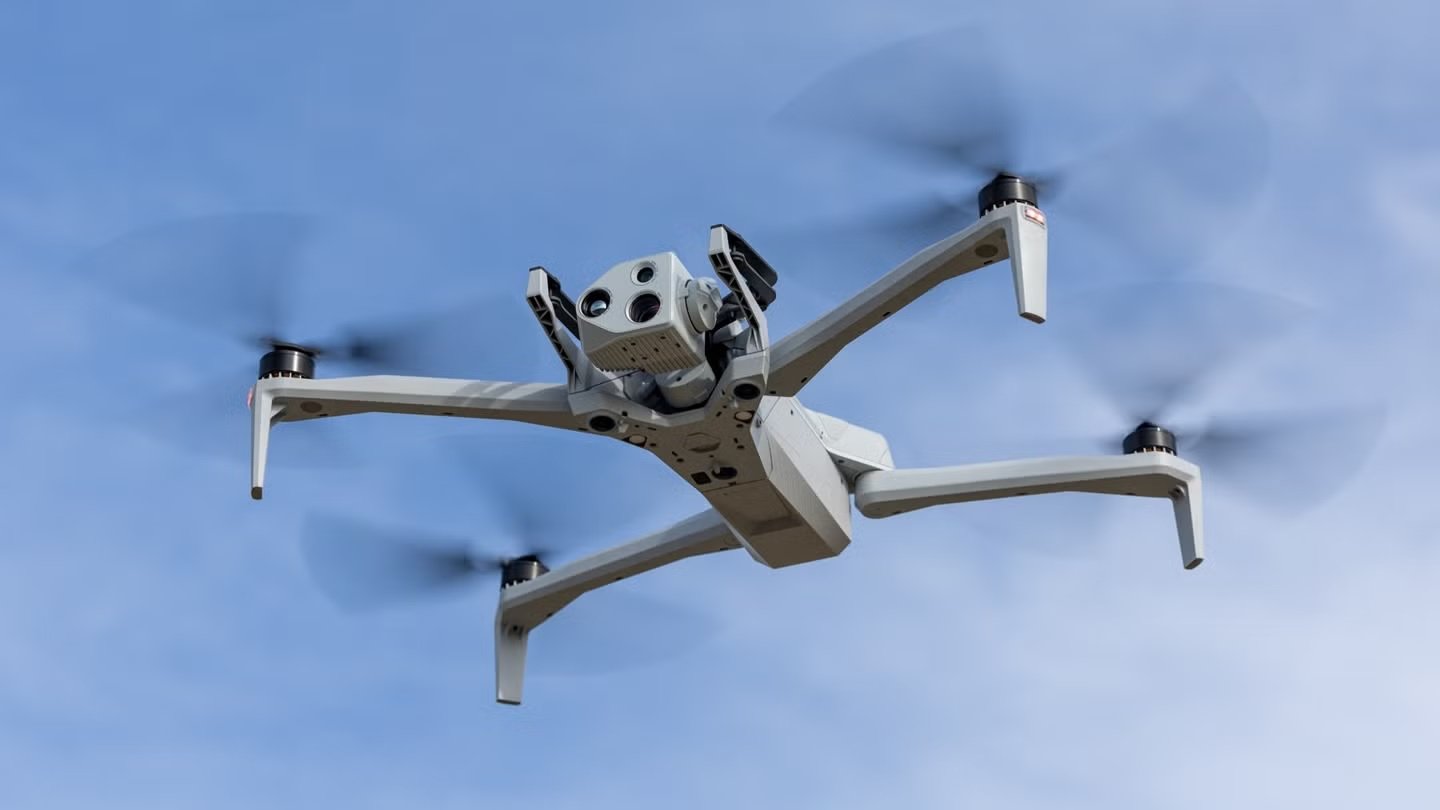 UK Ministry of Defence Opens £120,000 Tender for Skydio X10D Drones
-
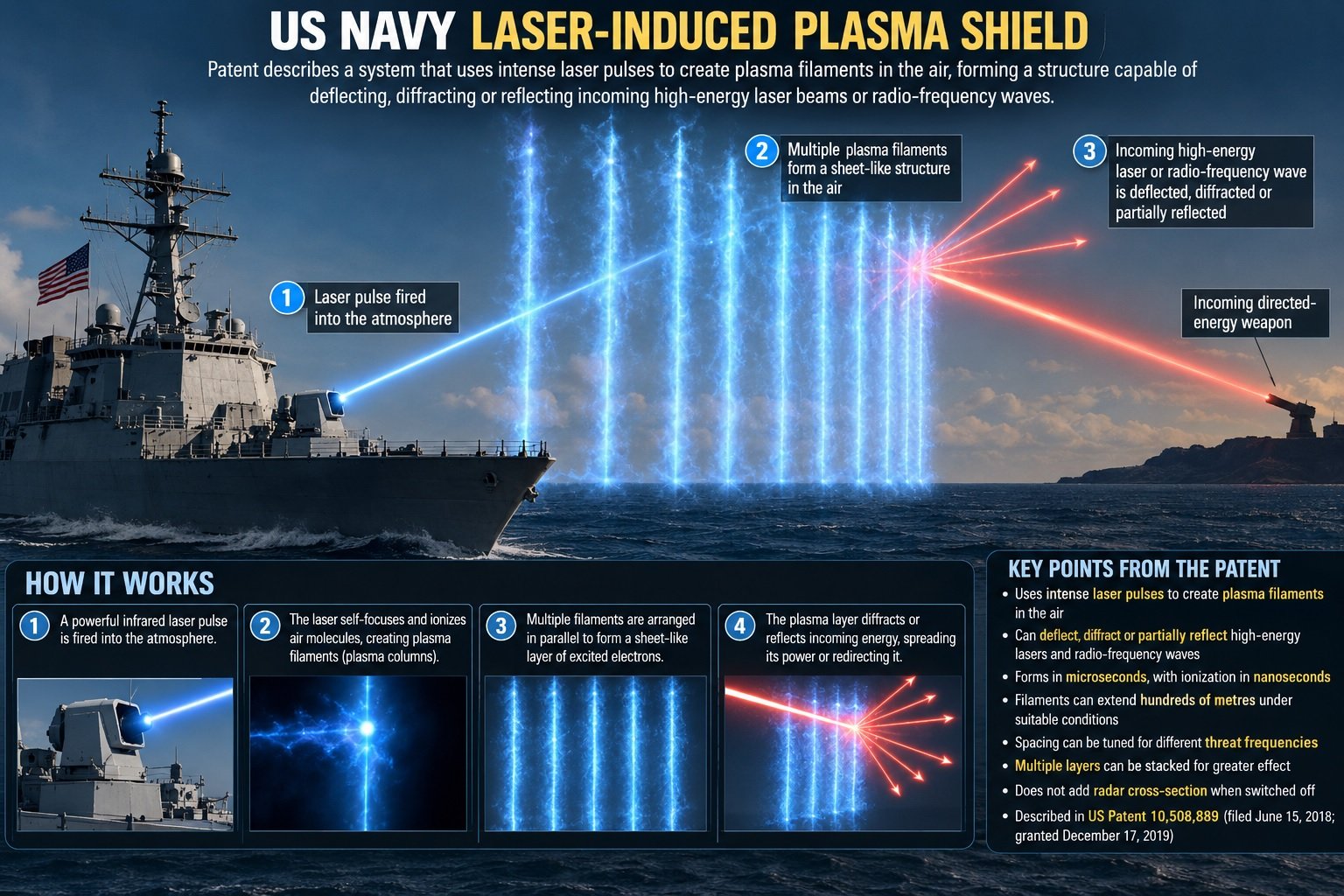 US Navy Patent Details Laser-Induced Plasma System to Deflect Directed-Energy Weapons
-
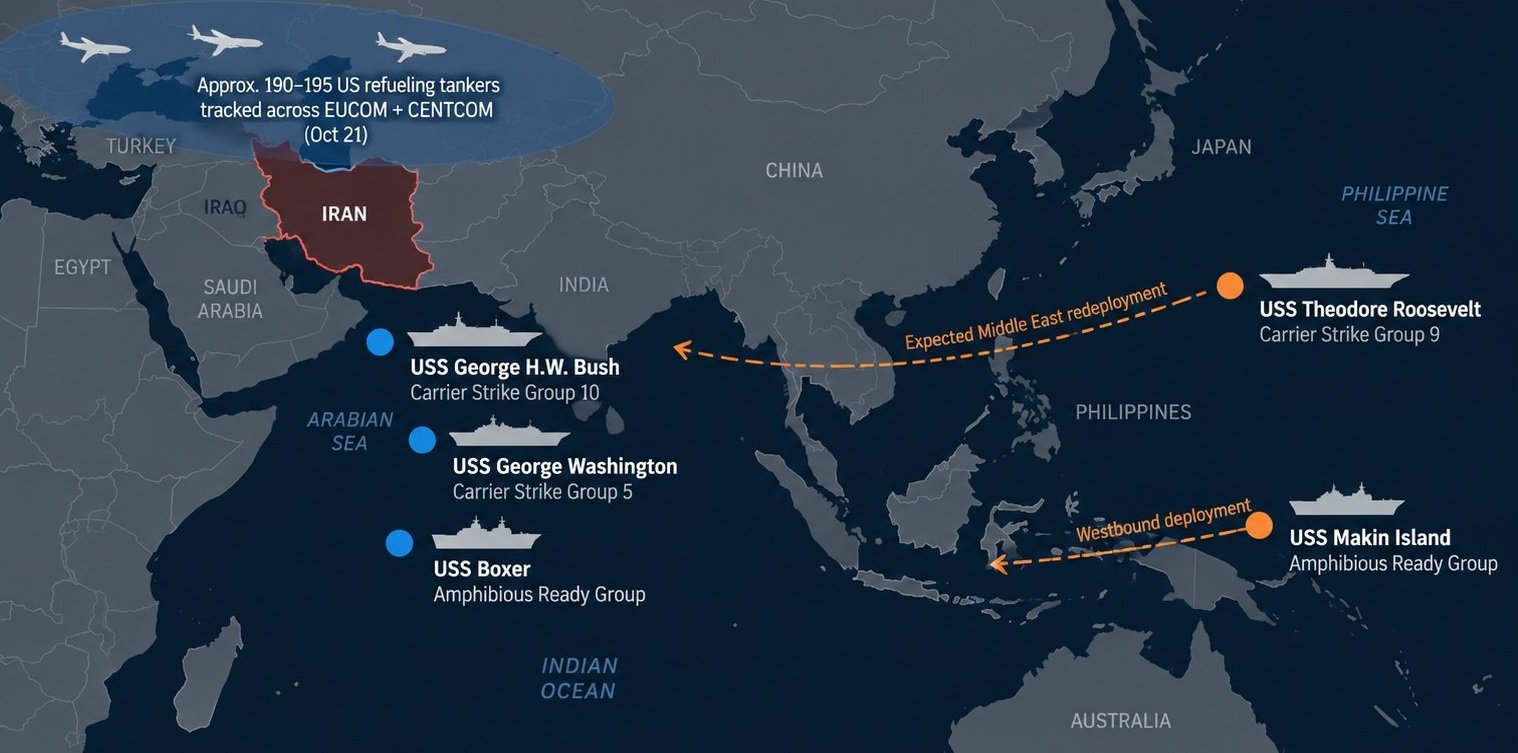 US Expands Military Buildup Near Iran with Third Aircraft Carrier and Additional Marines
-
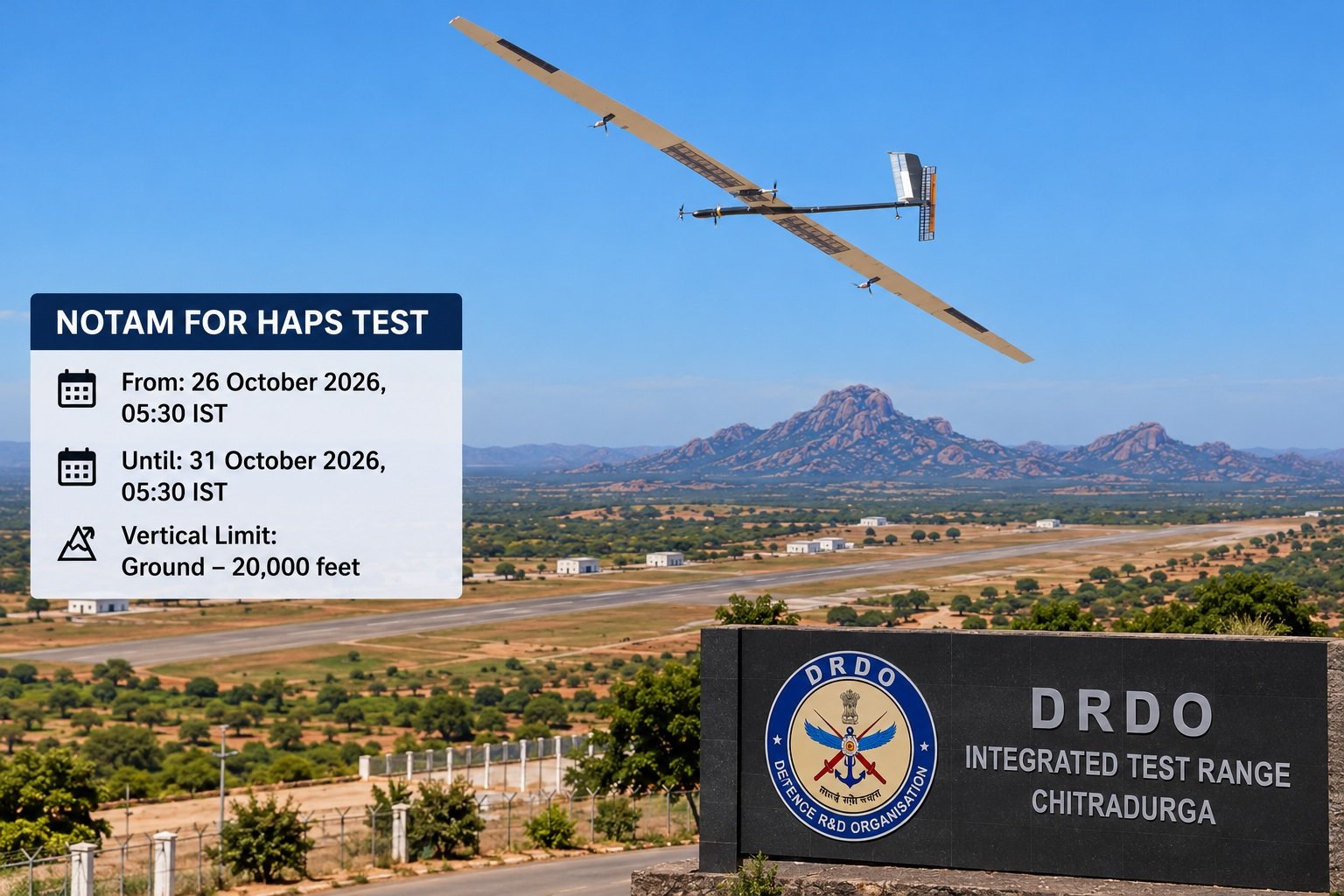 India Issues NOTAM for High Altitude Pseudo Satellite Test at DRDO Chitradurga Facility
-
 EDGE Integrates Autonomous Naval Systems in UAE-US Maritime Demonstration
-
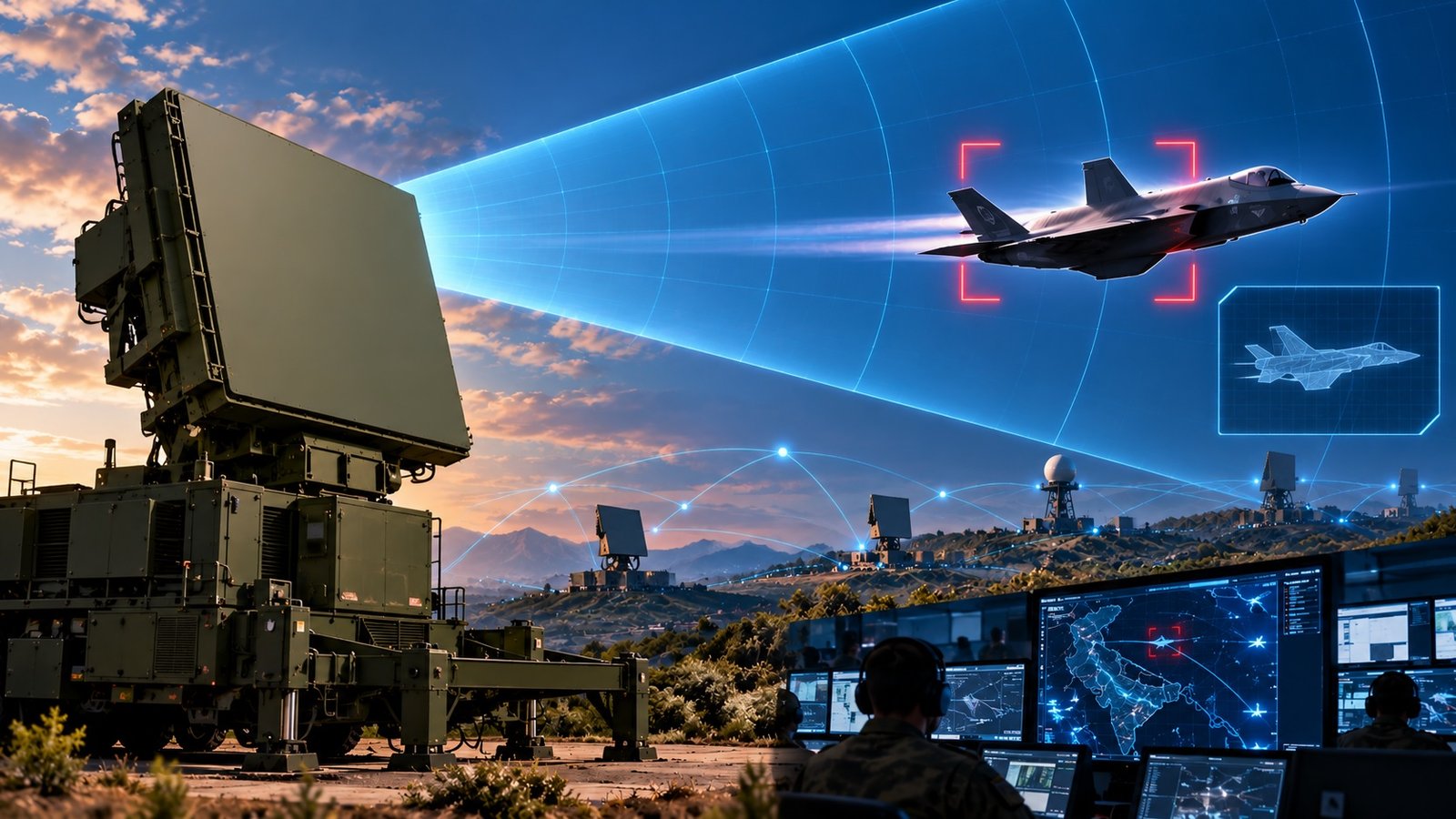 DRDO’s Arudhra Radar Reportedly Tracks F-35-Like Stealth Target in AI-Assisted Simulation: How It Works
-
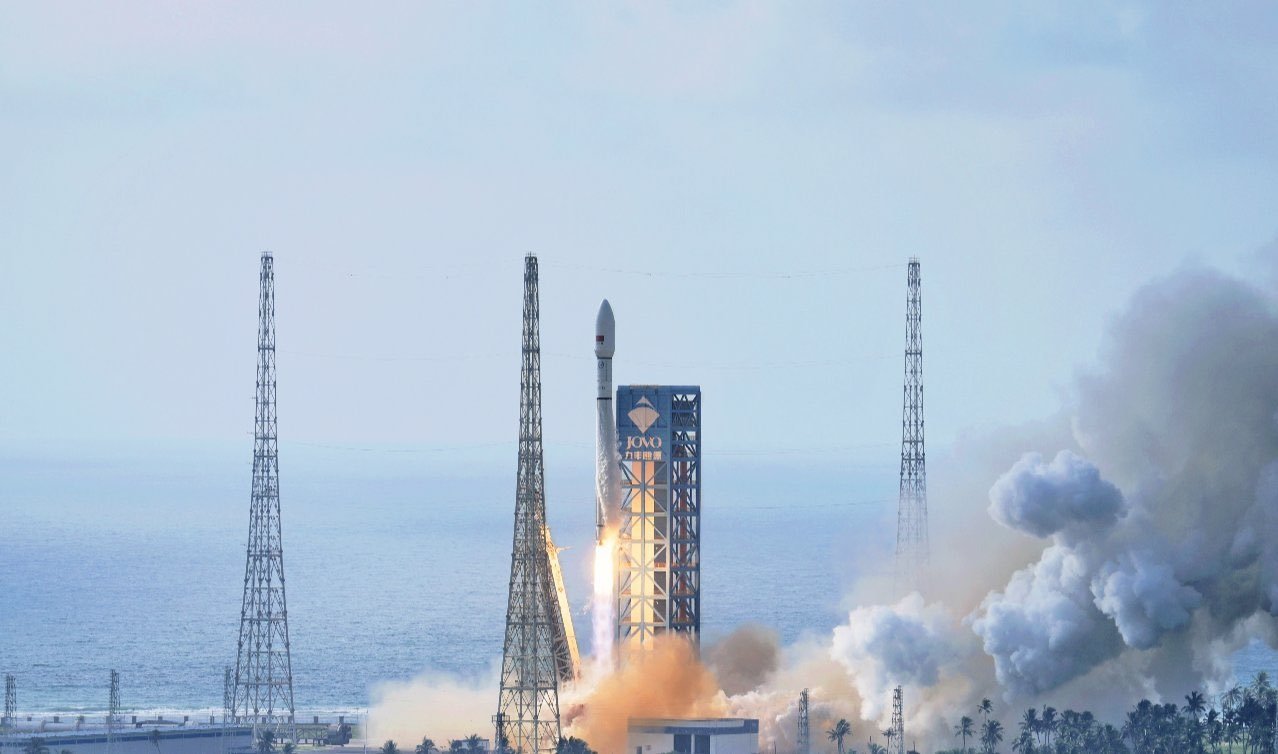 China Launches Six New Remote-Sensing Satellites into Orbit to Expand Earth-Observation Network
-
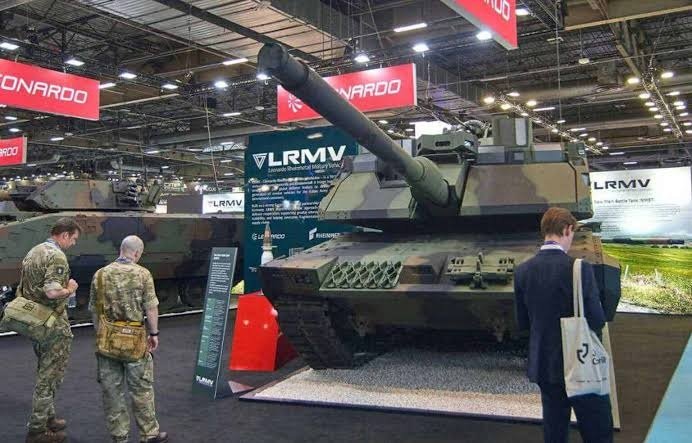 Italy Reportedly Orders 30 Panther Tanks and 48 Lynx IFVs in €3.7 Billion Deal
Top Trending in 4 Days
-
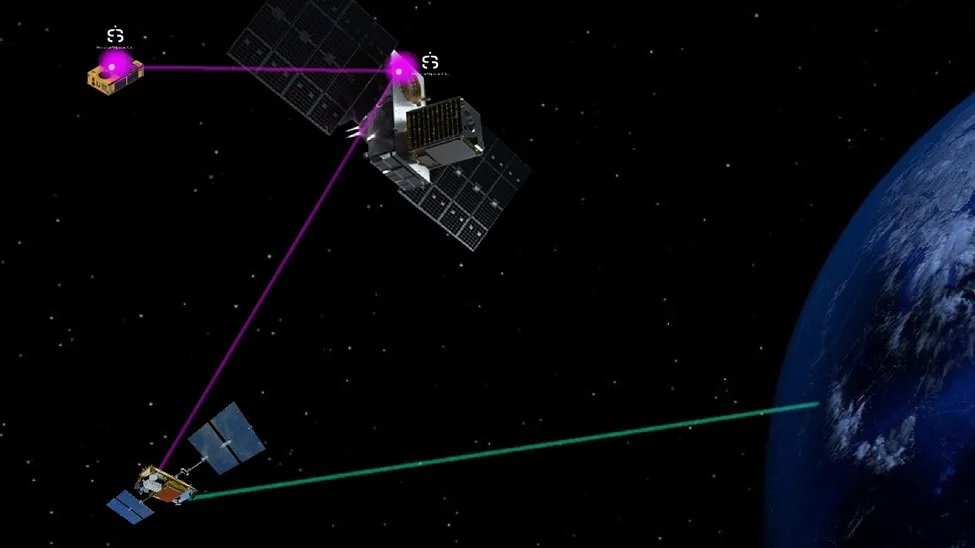 NASA Demonstrates Space-to-Space Wi-Fi Between Two Orbiting Spacecraft
-
 USS Pinckney Becomes First U.S. Navy Destroyer to Begin Phase Two Modernization with Advanced SPY-6 Radar
-
 U.S. Military to Ban Chinese Automaker BYD Vehicles from Kadena Air Base in Japan Over Security Concerns
-
 General Atomics Partners With Spirit Defense to Expand FQ-42 Vengeance Production
-
UK Ministry of Defence Opens £120,000 Tender for Skydio X10D Drones
-
 CSG and North Vector Dynamics Sign MoU to Explore European Production of CM-70 Counter-Drone Interceptor
-
 Unitree Unveils H2-X ‘Kung Fu Legend: Guardian’ Humanoid Robot for Security and Rescue
-
 Ukraine Reveals Technical Details of Russia’s New Filin Cruise Missile