
India
India is taking a bold step toward expanding its space communication capabilities. NewSpace India Limited (NSIL), the commercial arm of ISRO, has announced an ambitious initiative to involve private players in building a state-of-the-art ground station network across the country. This marks a strategic move to enhance satellite communication, tracking, and data relay services for the growing number of Indian and international low Earth orbit (LEO) satellites. A Network of 25 Advanced Antennas The proposed network will feature around 25 high-performance ground stations, equipped with dual-band and tri-band antennas. These will operate in S, X, and Ka frequency bands, ensuring robust support for telemetry, tracking, and command (TTC) operations, as well as satellite data downloads. These antennas will be designed with shaped reflector Cassegrain geometry and full motion systems, enabling precise and efficient satellite communication. Each station will be capable of supporting multiple satellite passes per day, allowing uninterrupted support for real-time satellite operations such as remote sensing, earth observation, and weather monitoring. Phased Implementation Plan NSIL plans to implement the project in a phased manner. The first two antenna systems are expected to be ready within 12 months of awarding the contract. The entire network is expected to be operational in about 20 months, providing a rapid boost to India’s satellite ground infrastructure. Strict Eligibility for Private Participation To ensure only capable firms take part, NSIL has set strict eligibility criteria for bidders. Companies must have: ISO-9001:2015 certification A proven track record in handling similar high-value space or telecom infrastructure projects This ensures high-quality execution and long-term reliability of the critical infrastructure. Supporting India’s Global Space Market Ambition This initiative is closely aligned with India’s national goal of increasing its share in the global commercial space market from the current 2% to 8% by 2033. By engaging the private sector, NSIL aims to accelerate innovation, reduce costs, and improve efficiency in space ground operations. Moreover, this project complements the government's broader push to commercialize space activities through bodies like IN-SPACe (Indian National Space Promotion and Authorization Center). IN-SPACe is also actively promoting Ground Stations as a Service (GSaaS) — a model where satellite operators can rent ground station infrastructure on a pay-per-use basis for satellite control, data reception, and tracking services. Addressing Industry Challenges Private sector entry into ground station services comes with its own set of hurdles. These include: Unclear regulatory frameworks High capital costs Spectrum licensing challenges Expensive components and infrastructure To overcome these, IN-SPACe is working to simplify regulatory procedures, provide technology transfer from ISRO, and offer access to testing and integration facilities. It is also helping startups connect with domestic and international markets to ensure commercial viability. Enabling Indigenous Capability Through Technology Transfer NSIL is already playing a major role in technology commercialization. It has transferred key technologies like the Indian Mini Satellite-1 (IMS-1) bus to private startups such as Dhruva Space and Alpha Design Technologies. These firms are now building satellite platforms and developing ground station systems, boosting India’s domestic capacity in both upstream and downstream space segments. A Strategic Leap Forward By bringing private players into the fold to build this advanced ground station network, NSIL is laying the foundation for a robust and self-reliant space ecosystem in India. This move not only strengthens the country's satellite communication backbone but also signals a new era of public-private partnership in space technology. It is a visionary step that will help India maintain a strong presence in the global space race while empowering its private sector to play a larger role in the future of space exploration and commercialization.
Read More → Posted on 2025-04-20 16:03:13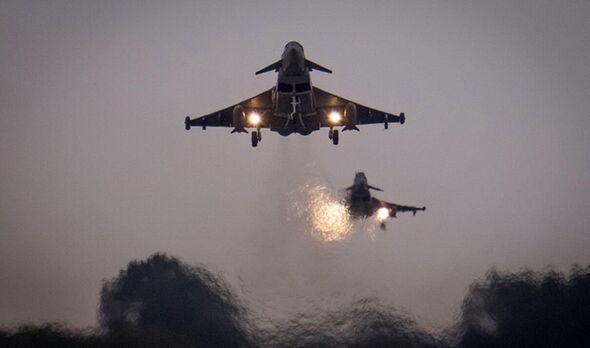
World
Royal Air Force (RAF) Typhoon fighter jets have been in action over the Baltic region this week, responding swiftly to Russian aircraft approaching NATO airspace. In just three days, RAF jets scrambled three times from Malbork Air Base in Poland as part of NATO’s enhanced Air Policing (eAP) mission — a joint effort to monitor and secure the skies over Eastern Europe. The first incidents occurred on Tuesday, April 15, 2025, when RAF Typhoons were called into action twice in a single day. The first scramble led to the interception of an Ilyushin Il-20M, a Russian surveillance aircraft that specializes in gathering communication and electronic signals. Known to NATO as the Coot-A, this aircraft often operates near sensitive areas, prompting close monitoring. Later that same day, the Typhoons intercepted two Russian SU-30MKI fighter jets, known in NATO code as FLANKER-H. These fast and powerful jets, though originally designed for air superiority, also pose a potential threat due to their advanced combat capabilities. Another intercept occurred on Thursday, April 17, when Typhoon jets once again identified an Il-20M near NATO airspace, flying over the Baltic Sea. The repeated flights of such surveillance aircraft so close to NATO territory are a concern and highlight the ongoing tensions in the region. All three intercept missions were carried out by aircrew from No. II (Army Co-operation) Squadron, which is part of the 140 Expeditionary Air Wing. This team is currently stationed in Poland on Quick Reaction Alert (QRA) duty as part of Operation Chessman, the UK’s dedicated contribution to NATO’s enhanced air policing efforts. Wing Commander Morley, who leads 140 Expeditionary Air Wing, emphasized the importance of these missions, stating, “The Royal Air Force is contributing to NATO’s collective defence and security. These scrambles are a clear demonstration of our commitment to stand alongside our NATO allies in maintaining the integrity of the airspace above the Baltic.” This deployment also marks a significant milestone as RAF personnel operate alongside Swedish forces at Malbork Air Base. Sweden, having recently joined NATO, is now participating in its first-ever enhanced Air Policing mission. The joint presence of UK and Swedish forces underlines NATO’s strengthened posture in the region, especially in the face of increased Russian aerial activity. These air policing efforts are not only routine but crucial in ensuring that NATO airspace remains secure. They serve as a reminder of the alliance’s readiness and unity in responding to any potential threats near its borders.
Read More → Posted on 2025-04-20 16:00:40
World
At first glance, the bulldozer moving across a dusty testing site in central Israel might look like any other heavy-duty machine. But as it rolls closer, one detail becomes impossible to ignore—the cabin is completely empty. No driver. No operator. Just a machine working silently on its own, guided from thousands of miles away. This is the Robdozer—Israel’s remotely controlled, unmanned version of the armored Caterpillar D9 bulldozer. Developed by Israel Aerospace Industries, the Robdozer has become a key component of Israel’s ground operations, especially since the war in Gaza erupted in October 2023. Originally used for engineering tasks like clearing roads, removing rubble, and leveling ground for advancing troops, the D9 bulldozer has long been a staple of Israel’s combat engineering arsenal. But the new robotic upgrade is reshaping how these tasks are handled—without putting soldiers in harm’s way. During the ongoing conflict in Gaza and on the Lebanese border, the Robdozer has been increasingly deployed to navigate dangerous warzones. Controlled remotely, even from locations as far away as Alabama in the United States, these machines allow Israeli forces to perform battlefield engineering without sending troops into direct danger. This technological advancement marks a significant shift in how warfare is being conducted. “The idea is to eliminate the person from the cockpit of the dozer,” said Rani, one of the lead developers of the Robdozer at Israel Aerospace Industries. “It can now do the job even better than a human,” he added. The machine doesn’t just handle simple excavation—it’s equipped to flatten terrain, build makeshift roads, and clear obstacles with remarkable precision. Though it is still controlled by human operators, future upgrades are expected to include more autonomous functions, raising ethical and legal questions that experts are already beginning to debate. Israel is not alone in exploring battlefield automation, but its military appears to be among the first to use such remote-controlled systems in active combat. According to defense analysts, this represents a major transformation in how modern wars may be fought. Robotic tools like the Robdozer are part of a wider move toward automated combat systems—vehicles and drones that operate without exposing human operators to frontline dangers. "This is the future," said John Spencer, chair of urban warfare studies at the U.S. military’s Modern War Institute. He noted that while many countries have experimented with unmanned combat machines, Israel's deployment in real-time warfare is unprecedented. However, some experts caution against over-reliance on technology. Tal Mimran, a lecturer in international law at Hebrew University, pointed to the events of October 7, 2023, when Hamas militants breached Israel’s heavily fortified border. That day underscored the need for human oversight and real-world vigilance, even with the most advanced defense systems in place. “You can build a wall that costs $1 billion, but if you don’t patrol it, someone will still get through,” Mimran warned. “We must take note of both the opportunities and the risks of technology.” As artificial intelligence and robotic systems rapidly evolve, their presence in the defense sector is growing just as fast. While these developments promise to protect lives and improve operational efficiency, they also challenge the traditional rules of war and demand careful reflection on the role of humans in future conflicts. Israel’s Robdozer may be a glimpse into the wars of tomorrow—fought with machines, guided by algorithms, but still deeply tied to human choices and consequences.
Read More → Posted on 2025-04-20 15:58:56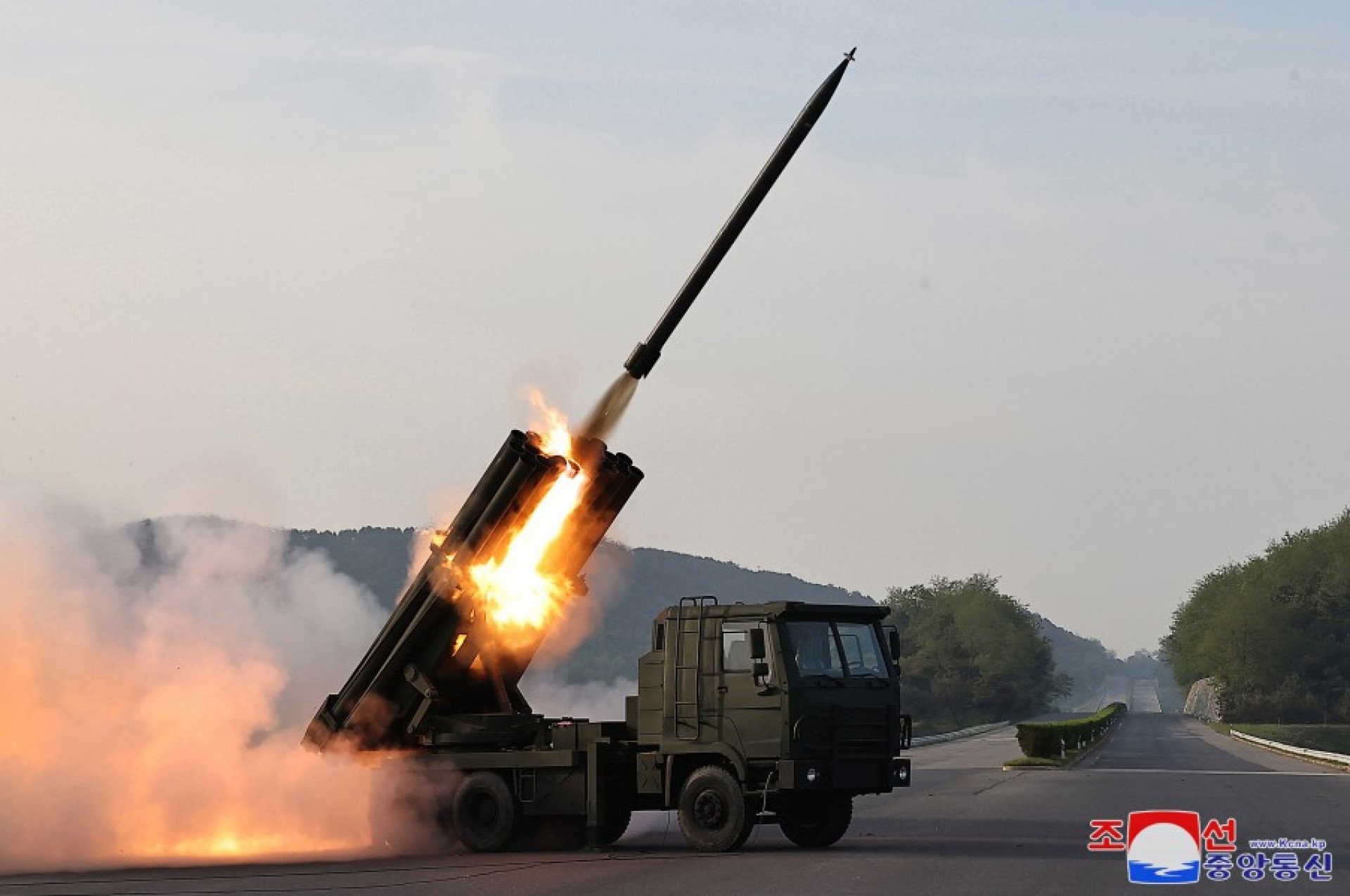
World
In a new development in the ongoing conflict between Russia and Ukraine, it has now been confirmed that Russian forces are using North Korean-made multiple rocket launch systems (MRLs) on the battlefield. This confirmation comes after Ukrainian journalist Yurii Butusov released intercepted video footage showing a North Korean M1991 240mm rocket launcher inside a Russian military hangar. North Korean M1991 Rocket Launcher: An Overview The M1991 is a North Korean multiple rocket launcher system designed to deliver overwhelming firepower against enemy targets. This truck-mounted system carries 22 launch tubes capable of firing 240mm unguided artillery rockets, and it can strike targets between 40 to 60 kilometers away. The sheer firepower of the M1991 makes it ideal for attacking fortified positions, defensive lines, and troop concentrations. Though not equipped with modern precision-guided technology, the M1991 compensates with its volume-based saturation attacks, which are designed to overwhelm defenses rather than strike with pinpoint accuracy. Its main tactical strength lies in its ability to deliver rapid and devastating salvos in a short time, making it a dangerous weapon on the frontlines. Recent Footage and Modifications The video footage intercepted by Ukrainian sources showed the M1991 system undergoing modifications in a Russian facility. Notably, Russian troops appeared to be adding protective metal screens to shield the vehicle against First Person View (FPV) drone attacks, which Ukraine has been increasingly using for precise strikes on high-value targets. This footage is the first visual confirmation of the M1991's presence in Russian service, although unconfirmed reports of its deployment had been circulating since November 2024. Strategic Implications The presence of these North Korean systems on the battlefield represents a significant development. While Russia already uses a wide variety of rocket artillery systems, the addition of the M1991 enhances its ability to launch large-scale area bombardments, even if accuracy is sacrificed. This could be particularly problematic for Ukrainian defenders facing massed infantry attacks or entrenched positions near the front lines. Additionally, this development comes on top of existing reports that North Korea has also supplied Russia with short-range ballistic missiles and conventional artillery shells, increasing military cooperation between the two sanctioned nations. As the war continues, the introduction of the M1991 highlights how global alliances and unconventional arms transfers are shaping the battlefield in Ukraine. Even older systems, when used effectively and in large numbers, can have a powerful impact on the outcome of tactical engagements.
Read More → Posted on 2025-04-20 15:56:40
India
In a significant boost to India’s defence self-reliance, the Indian Air Force (IAF) is preparing to equip its frontline Rafale fighter jets with the home-grown Astra Mk1 and Mk2 beyond-visual-range air-to-air missiles (BVRAAMs), phasing out the imported French-made MICA missiles. This move represents more than just a weapons upgrade — it reflects a strategic decision to reduce dependence on foreign suppliers while embracing indigenous capabilities that promise better performance and long-term cost savings. The Rafales, acquired from France in a 2016 deal with Dassault Aviation, currently carry the European MICA missiles as their main long-range weapon. These MICA missiles, made by MBDA, are available in both infrared and radar-guided versions, with an operational range of around 80 kilometres. While they served the IAF well initially, today’s changing battlefield demands more. In modern air combat, where threats emerge from distances beyond 100 kilometres, MICA's limited range is proving to be a drawback. Adversaries like China are already fielding next-generation missiles such as the PL-15, reportedly capable of hitting targets over 200 km away. This has raised concerns within the IAF, prompting the need for a missile system that not only matches but potentially exceeds such capabilities. Enter the Astra family of missiles, developed by India’s Defence Research and Development Organisation (DRDO) and manufactured by Bharat Dynamics Limited (BDL). The Astra Mk1, which is already operational on aircraft like the Su-30MKI and Tejas, offers a range of about 90 to 110 kilometres — already an upgrade over the MICA. It uses an active radar seeker for pinpoint targeting, and its smokeless propulsion gives it a stealthier footprint in combat. To make the Astra Mk1 compatible with Rafale jets, Dassault Aviation is overseeing the necessary software and hardware tweaks. Once this integration is complete, the Rafales will have a missile system that’s not only more capable but also developed entirely within India. Looking further ahead, the Astra Mk2 is in development and set to push the envelope even more. Expected to enter service by 2026–27, the Mk2 variant is designed for ranges between 130 and 160 kilometres. It will feature a dual-pulse rocket motor, improving acceleration and manoeuvrability in the final moments of engagement. With these enhancements, the Astra Mk2 will stand shoulder to shoulder with some of the world’s best, including the American AIM-120D and the Chinese PL-15E. Meanwhile, MBDA has proposed its latest version of the MICA, called MICA-NG (Next Generation), offering improved range — between 120 and 150 kilometres — and upgraded guidance. However, despite its improved specs, the IAF appears to favour the Astra Mk2. The key reasons: cost and self-reliance. The Astra Mk2 is expected to provide similar capabilities at a fraction of the cost of the MICA-NG, making it far more suitable for equipping a large number of fighter jets. The decision to replace imported missiles with Indian ones signals more than just an upgrade in firepower. It’s a clear message that India is ready to trust and invest in its own defence technology. With this step, the IAF not only boosts its operational edge but also contributes to the broader national goal of Atmanirbhar Bharat — a self-reliant India. By choosing Astra over MICA, the IAF is setting a precedent for future defence planning, where cost-effective, homegrown technology takes centre stage in protecting India’s skies.
Read More → Posted on 2025-04-20 15:54:21
World
Around 200 ethnic Karen people have fled from Myanmar into neighboring Thailand amid renewed fighting and instability in the eastern Karen State. Thai border officials confirmed the movement of people over Friday and Saturday, attributing the exodus to intensified bombing and unrest near the Myanmar-Thai border. Karen State, which lies along Myanmar’s eastern frontier with Thailand, has seen a surge in violence as ethnic militias continue to resist the country’s military junta. The junta came to power following a coup in 2021, and since then, various ethnic groups and pro-democracy forces have been engaged in armed conflict with military forces across the country. Major General Maitree Chupreecha, commander of Thailand’s Naresuan Force, said the recent group of Karen civilians crossed the Moei River into Thailand’s Tak province after being frightened by a drone bombing operation targeting junta troops near their villages. He noted that the movement began Friday afternoon, and more people may follow if violence continues. The Thai military's Ratchamanu Task Force has provided temporary shelter for the displaced people. Authorities are monitoring the situation closely, with plans to send the refugees back when the situation on the other side of the border becomes safe again. This is not the first time such displacement has occurred. Since the 2021 coup, thousands of people from Myanmar—many from ethnic minority groups—have crossed into Thailand, seeking refuge from airstrikes, armed clashes, and political unrest. A brief ceasefire was declared by both the junta and opposition groups in late March after a powerful earthquake devastated parts of central Myanmar, killing over 3,700 people. However, that ceasefire has not prevented renewed conflict in Karen State, especially along the highway that connects Myanmar to Thailand’s Mae Sot town. The situation remains tense, with Thai officials bracing for the possibility of more border crossings if the fighting escalates further.
Read More → Posted on 2025-04-20 15:51:57
India
India is on the verge of a major breakthrough in its journey toward developing a next-generation fighter aircraft. According to the Chairman of the Defence Research and Development Organisation (DRDO), Dr. Samir V. Kamat, the country is expected to finalize a high-profile international partnership within the next two to three months to jointly develop a powerful sixth-generation jet engine. This engine will power future variants of the Advanced Medium Combat Aircraft (AMCA), particularly the Mk2 version, which is currently in the planning stage. Dr. Kamat made this announcement during a defence event in Kurnool, Andhra Pradesh, on April 13, 2025. He stated that discussions with four leading international aerospace companies are in the final stages. These companies are believed to include Safran from France, General Electric (GE) from the United States, Rolls-Royce from the United Kingdom, and possibly NPO Saturn from Russia—all global giants in advanced engine development. The engine being developed through this collaboration is expected to deliver between 110 to 130 kilonewtons (kN) of thrust. One of its standout features will be Variable Cycle Engine (VCE) technology. Unlike conventional engines, VCEs can adapt their airflow depending on the flight condition, allowing for better fuel efficiency during cruising and more thrust during combat situations. This innovation can lead to up to 30% improvement in range and 20% better acceleration, giving India’s future jets a distinct edge. Such high-end features are crucial for staying competitive against the likes of the United States’ Next Generation Air Dominance (NGAD) program and China’s J-XX series. With global air combat capabilities rapidly evolving, India is aiming to ensure that its future aircraft can not only keep pace but also stand out in terms of speed, stealth, and advanced warfare technologies. The indigenous AMCA program, approved by the Indian government in 2024 with an initial funding of ₹15,000 crore, is a two-phase project. The AMCA Mk1 variant will use the already selected GE F414 engines (98 kN thrust), with its first flight expected around 2030 and squadron-level service likely by 2035. The more advanced AMCA Mk2, anticipated to debut around 2040, will require this new, more powerful engine to meet its high-performance goals—such as supercruise capability (flying at supersonic speeds without afterburners) and integration of futuristic systems like AI-guided drone swarms and laser-based weapons. India's Gas Turbine Research Establishment (GTRE), located in Bengaluru, will lead the Indian side of the engine project. GTRE brings valuable experience from the earlier Kaveri engine program, which achieved thrust levels of up to 81 kN. However, a sixth-generation engine is an entirely different challenge—one that will demand an estimated investment of $4–5 billion and extensive technical expertise. This is why, as Dr. Kamat emphasized, international collaboration is not just preferable but essential. A joint venture will help India overcome the complex challenges of designing such an engine while cutting down on development time and minimizing technical risks. While Safran has long been seen as a front-runner—especially following high-level diplomatic talks during Prime Minister Narendra Modi’s 2023 visit to Paris—the field remains open. General Electric already has a strong relationship with India through the F414 deal, and Rolls-Royce has shown clear interest in co-developing a 110 kN engine. NPO Saturn, with its history of working on advanced propulsion for Russian fighter jets, is also considered a formidable contender. The decision expected in the coming months will mark a defining moment for India's aerospace ambitions. A successful partnership will not only power the next generation of Indian fighter aircraft but also strengthen India's position as a leader in cutting-edge aviation technology on the global stage.
Read More → Posted on 2025-04-20 15:49:46
World
Defence technology leader V2X Inc. has landed a significant $62 million contract to continue maintaining and enhancing the COBRA DANE radar system, a critical U.S. Space Force asset located at Eareckson Air Station on Shemya Island, Alaska. This contract highlights V2X’s long-standing role in ensuring the continuous performance and technological advancement of one of the most sophisticated radar systems in America's defence arsenal. Standing at an impressive 120 feet tall with a 95-foot-wide phased-array radar face, the COBRA DANE system has the capability to detect and track objects over 2,000 miles away. Its high-powered radar can observe both ballistic missile activity and orbital movements in space, contributing significantly to the U.S. ballistic missile defence shield and space domain awareness. Originally commissioned in the 1970s, the COBRA DANE radar has since evolved into a cornerstone of national security, now operated by the U.S. Space Force. It provides real-time data on missile launches, satellite behavior, and space debris—helping protect critical infrastructure and monitor potential threats in both atmospheric and space environments. “V2X has been the trusted partner in ensuring the continuous operational readiness of COBRA DANE,” said Jeremy C. Wensinger, President and CEO of V2X. He also emphasized the company's efforts in integrating engineering upgrades to extend the radar's capabilities even further. The radar’s advanced phased-array technology allows it to scan large areas of the sky quickly and efficiently without the need for moving parts, making it highly reliable and efficient for round-the-clock surveillance. The newly awarded contract will be in effect until March 2027. During this time, V2X will provide full-spectrum mission support—encompassing system sustainment, technical upgrades, and ongoing operations support. This commitment ensures that COBRA DANE remains at peak performance, providing early warning and surveillance essential for both missile tracking and space situational awareness. In a rapidly evolving global threat landscape, V2X’s ongoing support of COBRA DANE reinforces the radar’s status as a key player in protecting U.S. interests both on Earth and in space.
Read More → Posted on 2025-04-20 15:45:53
World
Russian President Vladimir Putin has announced a short-term ceasefire in Ukraine to mark the Orthodox Easter holiday, pausing military actions for just over 30 hours. The Kremlin confirmed that the ceasefire would begin at 6 p.m. Moscow time on Saturday and last until midnight on Sunday, following Easter celebrations. Speaking during a meeting with Russia’s Chief of General Staff Valery Gerasimov, President Putin said the decision was made for humanitarian reasons. “Guided by humanitarian considerations, today from 6 p.m. to midnight on Sunday, the Russian side declares an Easter truce,” he stated. He added that all Russian troops were ordered to stop military activities during this window. However, Putin also cautioned that Russian forces should remain alert for any potential violations by Ukraine. “We assume that the Ukrainian side will follow our example,” he said, while instructing commanders to be prepared to respond to any “provocations or aggressive actions.” The Russian Defence Ministry echoed this message, stating that instructions regarding the truce had been issued to all commanders operating in the conflict zones. The ceasefire, the ministry said, would be observed “if it is mutually respected” by the Ukrainian side. Despite the temporary ceasefire, the conflict remains far from over. Just hours before the truce was to take effect, Gerasimov reported significant military gains in the border region of Kursk. He claimed that Russian forces had reclaimed nearly all of the territory that had been captured by Ukrainian troops during an incursion in August of the previous year. “In the areas of the Kursk region where Ukraine armed forces mounted an incursion, the main part of the territory is now liberated. That’s 1,260 square kilometres, 99.5 per cent,” Gerasimov said during the televised meeting with Putin. The Russian Ministry of Defence also claimed control of the village of Oleshnya, located near the Ukraine border. According to their statement, this was achieved through ongoing offensive operations by units from the “North” military group. The situation in nearby Gornal, however, remains contested, with reports of fierce fighting continuing in the area. Russian state media suggested that Ukrainian troops were still holding parts of Gornal, about 11 kilometers south of Oleshnya. The battle for full control of the Kursk region is ongoing, and there has been no official confirmation from Ukrainian authorities regarding the Russian claims. Meanwhile, the Ukrainian Air Force reported a major overnight drone assault from Russia involving 87 drones, including decoys. Of these, 33 were shot down and 36 others likely disrupted by electronic countermeasures. Russian strikes also caused damage in other parts of Ukraine. Farms in the Odesa region were hit, and fires broke out in Sumy, although emergency services managed to contain the blazes without reported casualties. Adding to the tense atmosphere, Russia’s Defence Ministry said it had intercepted two Ukrainian drones overnight as well. While the Easter ceasefire offers a brief pause in hostilities, it appears unlikely to bring about any long-term relief in the ongoing conflict. Both sides remain deeply entrenched, and even amid religious observances, the war shows little sign of slowing.
Read More → Posted on 2025-04-19 15:09:49
India
India is on the verge of a major milestone in its nuclear energy journey with the expected commissioning of its first Prototype Fast Breeder Reactor (PFBR) in Kalpakkam, Tamil Nadu, by September 2026. This reactor marks a significant advancement in the country’s ambitious three-stage nuclear programme, which aims to utilize its vast thorium reserves and minimize nuclear waste. What is a Fast Breeder Reactor? A Fast Breeder Reactor (FBR) is a type of nuclear reactor that produces more fissile material than it consumes. Unlike conventional reactors that mainly use uranium, FBRs are designed to “breed” fuel, making them highly efficient. The PFBR at Kalpakkam is a 500 megawatt (MW) reactor that uses a unique plutonium-based mixed oxide (MOX) fuel and liquid sodium as a coolant, instead of water. This technology not only recycles used nuclear fuel but also generates more fuel, making it an essential component for sustainable and long-term nuclear energy production. Key Features and Specifications Type: Prototype Fast Breeder Reactor (PFBR) Location: Kalpakkam, Tamil Nadu Capacity: 500 MW Fuel: Mixed oxide (MOX) fuel composed of plutonium and uranium Coolant: Liquid sodium Operator: Bharatiya Nabhikiya Vidyut Nigam Limited (BHAVINI) First Criticality Expected: By 2025-26 Full Commissioning: Targeted by September 2026 Why is the PFBR Important? The commissioning of the PFBR marks the beginning of the second stage in India’s nuclear programme. In this stage, the spent fuel from the existing Pressurised Heavy Water Reactors (PHWRs) is reprocessed and used in the PFBR. This not only reduces radioactive waste but also leads to energy self-sufficiency by creating more fuel than is consumed. In the third stage, India plans to use thorium-based reactors, powered by the plutonium bred in fast reactors like the PFBR. India has abundant thorium reserves, and this closed fuel cycle strategy is crucial for the country’s long-term energy needs. Recent Developments In March 2023, Prime Minister Narendra Modi observed the core loading of the PFBR, a key step before initiating nuclear reactions. The Atomic Energy Regulatory Board (AERB) has already granted permission for fuel loading, low-power experiments, and first criticality. According to the Department of Atomic Energy, the reactor is currently in the advanced stage of integrated commissioning. India's Expanding Nuclear Ambitions India’s total installed nuclear power capacity currently stands at 8.18 GW. To meet its growing energy demands, India is pursuing a Nuclear Energy Mission aiming to generate 100 GW of electricity through nuclear power. Here’s how India plans to reach that target: 7.30 GW worth of nuclear projects are under construction or commissioning 7.00 GW are sanctioned and undergoing preparatory work This will raise the total capacity to 22.48 GW by 2031-32 Beyond this: 15.40 GW will be added using indigenous PHWRs 17.60 GW from Light Water Reactors (LWRs) with foreign collaboration 3.80 GW from Fast Breeder Reactors like the PFBR Additional capacity will come from Small Modular Reactors (SMRs) and Bharat Small Reactors, in collaboration with the private sector A Vision for Energy Security The successful commissioning of the PFBR will be a historic moment for India’s nuclear energy program. It represents not just a technological breakthrough but a significant step toward energy independence, reduced carbon emissions, and efficient fuel use. By embracing advanced reactor technologies and closing the nuclear fuel cycle, India is laying the foundation for a cleaner and more sustainable energy future.
Read More → Posted on 2025-04-19 15:06:46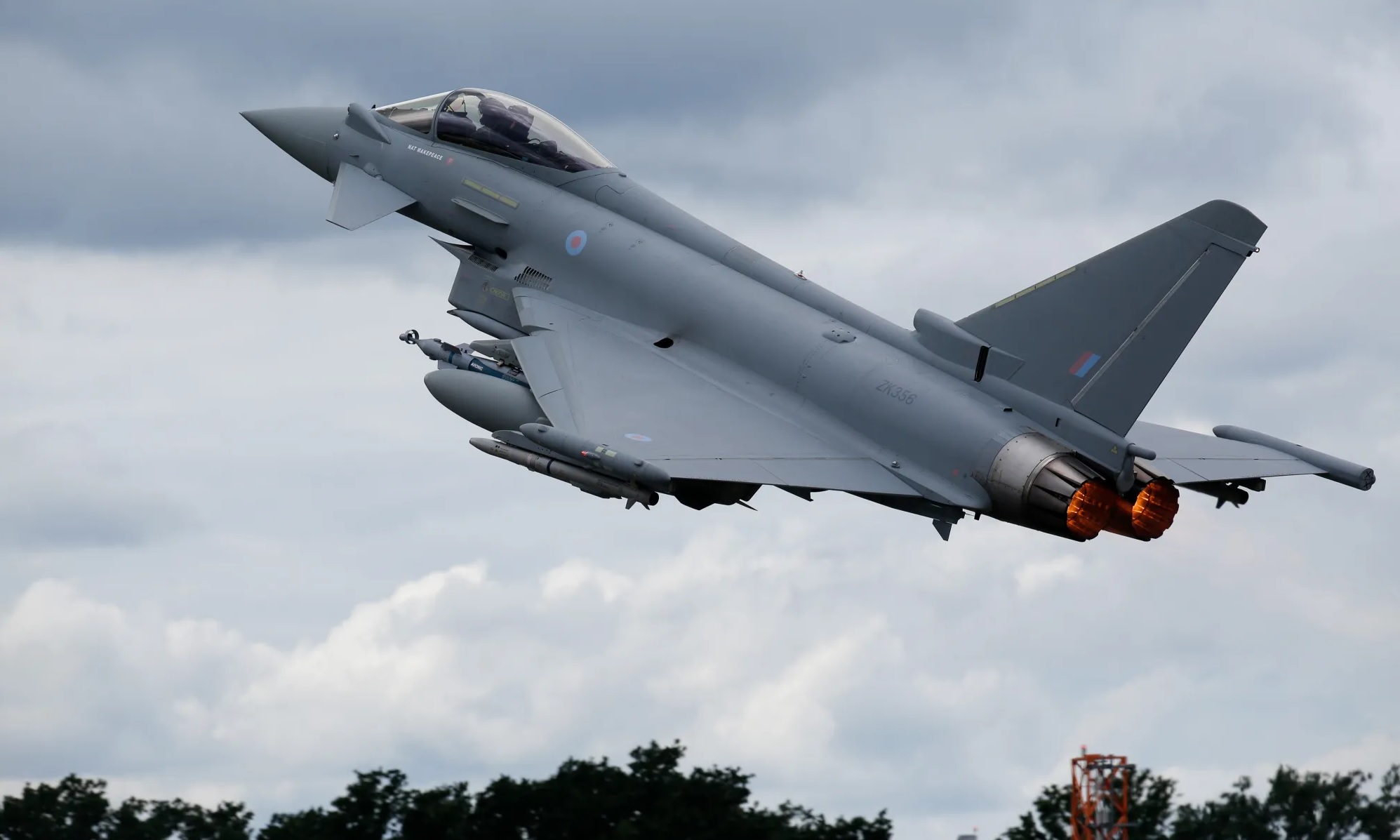
World
On April 17, 2025, Germany made a bold move that sent ripples across Europe and NATO. The country, under a caretaker government led by the Social Democrats and Greens, officially blocked the sale of around three dozen Eurofighter Typhoon fighter jets to Turkey. This decision was not just about weapons—it came against the backdrop of a serious political controversy involving Turkey’s arrest of opposition leader Ekrem İmamoğlu. Germany saw the arrest as a clear attack on democracy. Calling it politically motivated, German officials argued that moving forward with a major arms deal in such circumstances would be wrong. This marked a sharp shift in tone, especially after months of earlier progress on the deal. For Turkey, the veto is a major setback. The Eurofighters were meant to modernise its air force, especially after its removal from the American F-35 program due to its controversial purchase of Russian S-400 missile systems. Without the Typhoons, Turkey’s aging F-16 fleet continues to face strain, and its hopes of upgrading its airpower in a critical region now face serious delays. The Eurofighter Typhoon—developed by a European consortium of Germany, the UK, Italy, and Spain—is one of the most capable 4.5-generation fighters. With its high speed, powerful radar, and ability to carry various weapons, it was considered ideal for Turkey’s needs in areas like the Aegean and the Black Sea, where tensions remain high with both Greece and Russia. However, Germany’s refusal to approve the export has created internal tensions within the Eurofighter group. The UK, Spain, and Italy were in favor of the sale, citing both economic benefits and the strategic importance of keeping Turkey aligned with NATO defence standards. But because exports require unanimous approval, Germany’s stance effectively blocks the entire deal. This isn’t the first time Germany’s strict arms export rules have caused friction within the consortium. A similar situation unfolded with Saudi Arabia, showing how Germany’s emphasis on human rights can complicate business and defence agreements with other countries. The wider geopolitical impact of this decision is significant. Turkey plays a central role in NATO, acting as a bridge between Europe, the Middle East, and Central Asia. It hosts vital military bases and is deeply involved in regional affairs, from Syria to Libya. A weakened Turkish air force limits NATO’s flexibility and could tilt the balance in regions where Greece—currently upgrading its own air force with U.S. and French jets—might gain the upper hand. Inside Turkey, the German veto is likely to fuel domestic political narratives. President Erdoğan may use it to accuse the West of double standards, reinforcing his nationalist base and deflecting criticism over democratic decline. At the same time, Turkey’s opposition is using İmamoğlu’s arrest to highlight growing authoritarianism—an argument that is resonating abroad but may also deepen internal divides. Turkey doesn’t have many alternatives at the moment. Its homegrown fighter jet program, the TF-X (Kaan), is still years from being ready. Buying jets from Russia or China would create serious compatibility problems within NATO and raise political tensions with the West. For the Eurofighter program itself, losing a large deal like this could hurt its competitiveness. With the U.S. F-35 and France’s Rafale already dominating many international markets, every lost opportunity weakens the case for continuing large-scale production and future European defence cooperation. In essence, Germany’s decision to block the Eurofighter sale to Turkey shows how foreign policy based on democratic values can come into direct conflict with strategic and military needs. While it sends a clear message about Europe’s stance on human rights and democracy, it also complicates NATO’s unity and shakes confidence in Europe’s defence industry. This one decision reveals the difficult balance between ethics and alliances—and how, in global politics, the fallout can extend far beyond the fighter jets that never left the hangar.
Read More → Posted on 2025-04-19 14:58:34
World
The United States and Iran are gearing up for a second round of high-stakes nuclear talks in Rome this Saturday, just a week after what both sides described as a “constructive” initial round in Muscat, Oman. These talks mark a significant step in long-frozen diplomacy between the two adversaries, who have had no formal diplomatic relations since the aftermath of Iran’s 1979 Islamic Revolution. The discussions are being mediated by Oman and will feature Iranian Foreign Minister Abbas Araghchi and US Middle East envoy Steve Witkoff. The Rome meeting is considered especially critical as tensions over Iran’s nuclear program continue to rise, and time for a diplomatic breakthrough appears to be running out. Iran has repeatedly asserted that its nuclear activities are for peaceful purposes, despite long-standing accusations from the West that Tehran is trying to develop nuclear weapons. The United Nations’ nuclear watchdog chief, Rafael Grossi, recently stated that Iran is “not far” from the capability to build a nuclear bomb—raising the urgency of these negotiations. During his earlier presidency, Donald Trump withdrew the United States from the 2015 nuclear agreement that had imposed strict limits on Iran’s nuclear program in exchange for relief from international sanctions. Following the US withdrawal, Iran initially remained in compliance for a year but later began rolling back its commitments, significantly increasing uranium enrichment levels. It now enriches uranium to 60%, still below the 90% needed for a weapon but far beyond the limit set by the original deal. Trump, now back in office, has reinstated his "maximum pressure" campaign against Iran, reimposing sanctions and warning of possible military action if talks fail. Still, he recently remarked that he's not in a hurry to use force, adding, “I think Iran wants to talk.” In March, Trump sent a letter to Iran’s Supreme Leader Ayatollah Ali Khamenei pushing for renewed nuclear discussions. However, Iranian officials remain skeptical. Araghchi, who was a key negotiator in the 2015 deal, acknowledged a “degree of seriousness” in the first round of talks but said Iran still doubts US intentions. He emphasized that Iran would attend the Rome talks but reiterated that “unreasonable and unrealistic demands” from Washington could derail progress. One of the major sticking points remains the US desire to expand the conversation to include Iran’s ballistic missile program and its role in regional conflicts—issues Iran refuses to discuss. Araghchi has declared that Iran’s right to enrich uranium is “non-negotiable,” and Iran’s Revolutionary Guard has firmly stated that the country’s military capabilities are off limits in these talks. Iran has also warned it could withdraw from the Nuclear Non-Proliferation Treaty if the UN “snapback” sanctions are reimposed—a possibility if Iran continues to breach the 2015 agreement. The US, meanwhile, is facing pressure from allies, especially Israel, which has pledged to prevent Iran from acquiring nuclear weapons “at any cost.” US Secretary of State Marco Rubio has urged European nations to consider triggering the snapback mechanism that would automatically reinstate sanctions, a move Iran has warned against. Both sides now face a narrowing window to reach a deal. According to Grossi, the talks are at a “very crucial stage” and there is limited time left to avoid a full-scale crisis. Despite deep mistrust and sharply opposing views, the fact that Iran and the US are willing to engage in a second round of negotiations shows that diplomacy still has a chance—however slim it may be.
Read More → Posted on 2025-04-19 14:50:25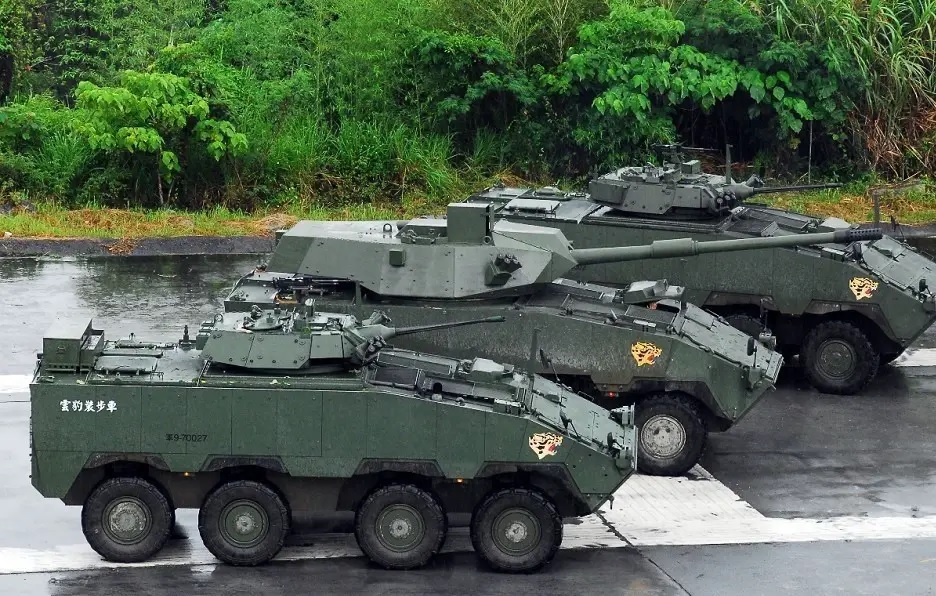
World
Taiwan’s homegrown ambition to develop a modern wheeled armored vehicle has faced a major setback. The Army has officially rejected the third prototype of the Leopard wheeled tank, effectively putting a stop to the island’s “Clouded Leopard Project” in its current form. The reason? Inadequate firepower. Why the Project Was Halted The Leopard prototype was equipped with a 105mm cannon, but the Army concluded that this caliber simply doesn't meet modern battlefield needs. Despite the vehicle’s impressive mobility and ease of rapid deployment, the firepower it brings to the fight was deemed insufficient—especially when compared to the Army’s current and incoming armored assets, like the U.S.-made M1A2T Abrams and the upgraded M60A3 tanks. The Army stated clearly: “If the Leopard’s cannon is not upgraded to 120mm, we cannot accept this vehicle for deployment.” This firm stance effectively ends the project unless major changes are made. Background of the Leopard Project The Leopard wheeled tank project began in 2019 under Taiwan’s Armaments Bureau. Three prototypes were planned: D1 and D2: Early versions that revealed design flaws. D3: A redesigned prototype aimed at addressing earlier concerns. It featured a lower profile (height reduced by 30 cm) and improved internal ergonomics for easier crew movement and reloading. Development of the D3 was carried out jointly with the National Chung-Shan Institute of Science and Technology, but it never received formal approval from the institute’s board. The project only moved forward after intervention from then-Vice Minister of Armaments Hsu Yen-pu. Interestingly, his retirement in early 2025 coincided with the arrival of Taiwan’s first batch of M1A2T tanks—possibly influencing the Army's final decision. The Financial and Strategic Fallout The Armaments Bureau invested over NT$778 million (around $24 million) into the Leopard Project. Officials are reportedly frustrated with the Army’s rejection, claiming the prototype met the exact requirements originally laid out—particularly the internal dimensions meant for ease of use by soldiers of average height. To many within the Bureau, the rejection seems like a shift in goalposts rather than a technical failure. A past audit in 2021 had already highlighted concerns, pointing out that the Army always preferred 120mm cannons. That report also criticized the Ministry of National Defense for approving the project without a clear long-term vision for its combat utility. What Happens Now? With no official orders expected, the D1 and D2 prototypes will likely remain as experimental platforms. Unless the Bureau manages to develop a new version with a 120mm cannon, the wheeled Leopard is unlikely to enter service. This decision leaves Taiwan’s military modernization plans at a crossroads—balancing between developing domestic defense systems and relying on foreign military imports.
Read More → Posted on 2025-04-19 14:46:09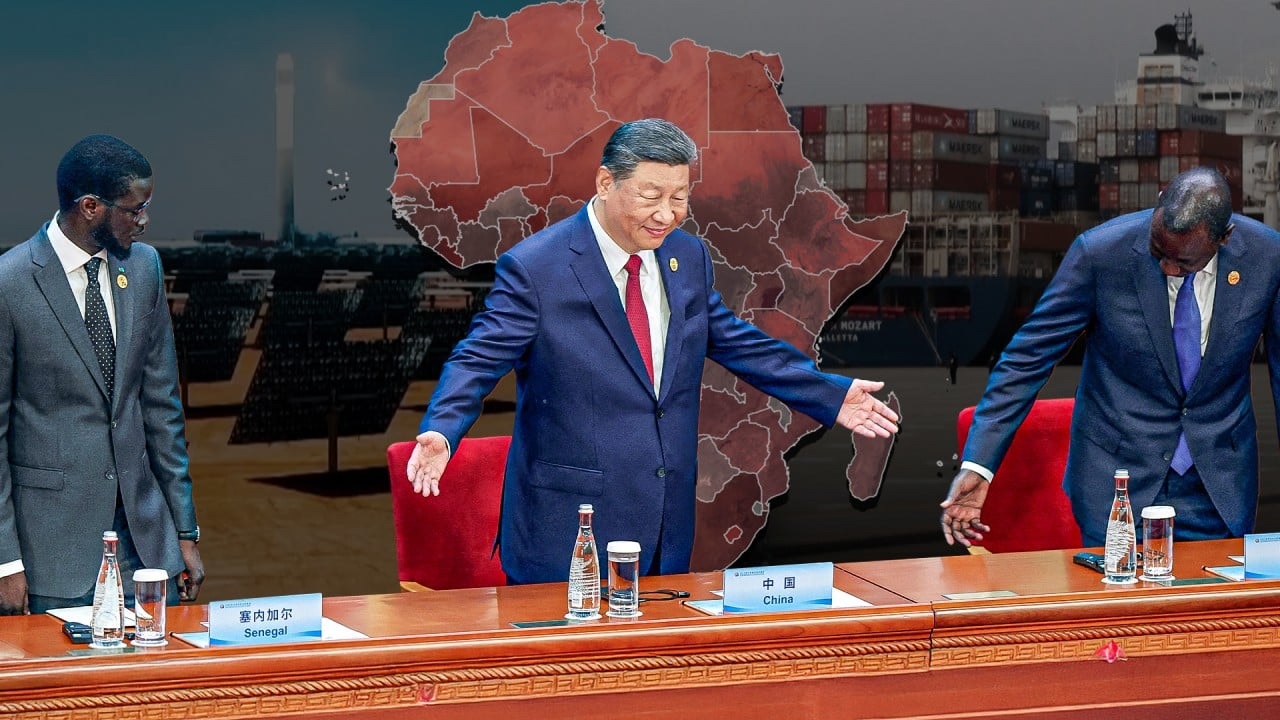
World
As the security landscape in Africa’s Sahel region shifts, China is rapidly filling a weapons supply gap left by traditional powers like France and Russia. This change has been driven by political realignments, military coups, and ongoing conflicts, allowing China to expand its military footprint in a region plagued by instability and terrorism. Burkina Faso, a country at the heart of the Sahel, offers a clear example of this shift. In 2024 alone, its ruling military junta received 116 infantry carriers and six assault vehicles from China—a striking contrast to the dwindling military assistance from France and the United States. France’s last notable shipment occurred between 2019 and 2020, and the U.S. supplied only engines in 2021. After Burkina Faso's 2022 coup led by Ibrahim Traoré, French troops were expelled, marking the end of a long-standing security partnership under France’s Operation Barkhane. Meanwhile, Russia, once a major arms supplier to West African nations like Mali and Niger, has been bogged down by its war in Ukraine. With its ability to export arms curtailed, the door opened for China to strengthen its presence. Companies like Norinco—China’s largest weapons manufacturer—have set up shop in West Africa, opening offices in Nigeria and Senegal and delivering armored vehicles to governments such as Burkina Faso’s. China’s appeal to these nations lies in more than just weaponry. It offers military hardware that is affordable, available on short notice, and tailored to local counterinsurgency needs. More importantly, unlike Western nations, China does not tie its deals to conditions related to governance or human rights reforms. For countries dealing with internal unrest and strained relations with the West, that no-strings-attached approach is attractive. In Mali, where China’s economic interests are already entrenched through ventures like lithium mining, a new deal was signed with Norinco covering not just weapons but also training and technology transfer. In Niger, China is similarly keen to strengthen military ties, as its companies invest heavily in oil and eye uranium resources. Observers note that this is not just about military hardware—it’s part of a broader geopolitical strategy. China, along with Russia, aims to fill the void left by the shrinking influence of Western powers. Even though Beijing is cautious not to openly undercut Moscow to preserve their strategic partnership, it is undeniably challenging Russia’s dominance in West Africa’s defense market. China’s growing involvement has also reached Nigeria, which signed a deal with Norinco in 2019 to fight Boko Haram and is now exploring domestic arms production with Chinese support. This partnership aligns with Nigeria’s ambitions to build its own defense industry, something China is well positioned to support through technology and investment. In the evolving security dynamics of the Sahel, China is no longer just a player—it is becoming a key power. By offering weapons without political baggage and pairing military support with economic influence, Beijing is quietly reshaping the region’s defense alliances.
Read More → Posted on 2025-04-19 14:22:00
World
Russia announced on Saturday that it has retaken Oleshnya, the second-last village in its western Kursk region that had been under Ukrainian control. The move marks a significant step in Moscow's efforts to reclaim all territory in the area after Ukraine’s surprise cross-border offensive last year. The Ukrainian military campaign, which began in August, caught Russian forces off guard and allowed Kyiv to seize more than 1,000 square kilometers of land along the frontier. The Ukrainian push had reached deep into Russian territory, with Sudja—a small but strategic town in Kursk—becoming a major forward base for Ukrainian troops. That town was recaptured by Russian forces in March. With the latest advance, Russia now controls all but one village in the region—Gornal—still held by Ukrainian troops. The Russian Defense Ministry credited its Northern Group of Troops for the operation that led to the liberation of Oleshnya. The recapture of these territories is not only symbolic but also strategic. Russian forces now find themselves back at the border, with growing momentum and a renewed ability to pressure Ukraine’s Sumy region, which lies just across from Kursk. Russian forces have already carried out smaller incursions in the Sumy area in recent weeks, raising concerns in Kyiv about a broader push. The fighting continues to carry a heavy toll on civilians. On Saturday, a Ukrainian drone strike targeted a car in the Kursk region, reportedly killing a woman and injuring a man and a child, according to local officials. With only one village remaining under Ukrainian control in Kursk, the region is on the verge of falling completely back under Russian authority, potentially opening a new phase in the conflict along this contested border.
Read More → Posted on 2025-04-19 14:19:38
World
The U.S. Army is taking a major step into the future by testing unmanned ships as part of its efforts to modernize military operations. These tests are part of a larger military training exercise known as Project Convergence Capstone 5 (PC-C5), held in April 2025 in the Indo-Pacific region. The goal is to explore how Unmanned Surface Vessels (USVs) can be used for resupply missions and other tasks without putting human lives at risk. This exercise is a key part of the Army’s ongoing push to bring advanced technology into real-world operations. It also supports the broader aim of building a more efficient and digitally connected military force. USVs are designed to operate without human crews, using artificial intelligence (AI) and advanced navigation systems to perform their missions. Colonel William “Will” C. Arnold, who leads transportation efforts at the Army’s Combined Arms Support Command, said the training helps them learn how autonomous vessels work together and how to command and control them. These vessels are not just remotely operated—they can make decisions and navigate on their own, thanks to smart systems powered by AI and machine learning. Unlike older Army watercraft, which lacked modern technology, these new USVs come with advanced sensors, real-time data sharing, and strong digital systems. This means they can adapt to changing situations, avoid obstacles, and complete missions with little or no human input—even if operators are thousands of miles away. One of the soldiers who took part in the training, Specialist Luke Ferguson from the 569th Dive Detachment, found the system easy to learn. By the second day of training, he was able to track, communicate with, and manually control the vessel when needed. Another key benefit of these unmanned ships is that they reduce the need for onboard crews. Without human fatigue or the need for rest, the vessels can stay in action longer and handle missions that would normally require a full team. The Army sees PC-C5 as a chance to test how emerging technologies like USVs can work in real combat scenarios, especially alongside allied forces. If successful, these vessels could become a regular part of military logistics, making resupply missions faster, safer, and more reliable. As the Army continues to test and improve this technology, it moves closer to creating a more agile and future-ready force. In the words of Specialist Ferguson, “If we can integrate this technology into our equipment, it would significantly streamline our operations.”
Read More → Posted on 2025-04-19 14:17:46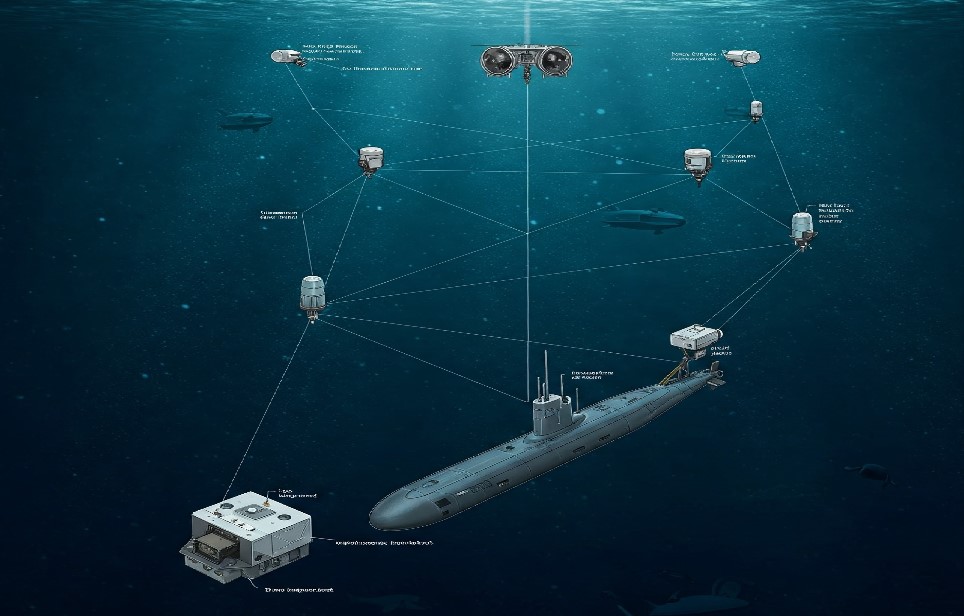
India
In a major strategic move, the Indian Navy is developing a vast underwater sensor network across key regions of the Indian Ocean to monitor and track Chinese submarine activity. This ambitious project, being carried out in partnership with the Defence Research and Development Organisation (DRDO) and private sector partners, is aimed at safeguarding India’s maritime interests amid rising underwater threats. This initiative comes at a time when Chinese submarines and research vessels are increasingly active in the Indian Ocean Region (IOR), raising security concerns. In response, India is focusing on deploying underwater sensors in critical maritime zones like the Ninety East Ridge, Bay of Bengal, and the waters around the Andaman and Nicobar Islands. These areas lie close to major global shipping routes and important sea passages like the Malacca and Sunda Straits, making them strategically vital. One area drawing particular attention is the Ninety East Ridge, a long underwater mountain range that offers ideal conditions for submarine movement. This region recently saw a month-long survey by a Chinese research vessel, triggering concerns about possible underwater mapping activities meant to aid submarine operations. The sensor network being developed will include advanced technologies such as passive and active sonar systems, magnetic anomaly detectors (MAD), and superconducting quantum interference devices (SQUIDs). Passive sonar systems will quietly listen for the sounds submarines emit, while active sonar can actively locate and track them when needed. MAD and SQUID technologies will help detect even the smallest magnetic field changes caused by submerged metal objects like submarines, providing another layer of surveillance. India’s plan mirrors the “Fish Hook Undersea Defence Line” set up by the United States and Japan in the Pacific Ocean, which uses seabed-based sensors to detect submarine activity. India hopes to build a similar early-warning system near the Andaman and Nicobar Islands, which would allow for rapid detection of any hostile submarines entering the Indian Ocean. The need for such a system has become urgent. China’s navy now operates more than 60 submarines, many of them nuclear-powered. On top of that, Pakistan is acquiring eight advanced Yuan-class submarines from China, equipped with air-independent propulsion systems that allow them to remain underwater longer than conventional submarines. These developments pose a dual threat to India from both its eastern and western flanks. India’s own submarine fleet is relatively limited, with 13 conventional diesel-electric submarines and delays in future projects like the Project 75I program, which aims to build more modern, longer-lasting submarines. Given these limitations, the new underwater sensor network is seen as an essential step to boost India's ability to detect and respond to underwater threats. Key DRDO facilities such as the Naval Physical and Oceanographic Laboratory (NPOL) in Kochi are playing a crucial role in the development of this system. NPOL has a proven track record with sonar systems like the Abhay and HUMSA-UG, and will work alongside the DRDO’s SPACE (Submersible Platform for Acoustic Characterisation & Evaluation) and Ocean Data Centre to test and fine-tune the new technology. There are also signs that India is considering deeper cooperation with international partners such as Japan and the United States. Talks are underway to explore the possibility of linking India’s sensor network with the US-Japan “Fish Hook” Sound Surveillance System (SOSUS), creating a more comprehensive and collaborative submarine detection capability across the Indo-Pacific. In essence, India’s underwater sensor network is not just about watching the seas—it’s about sending a clear signal. It reflects a broader shift in India’s maritime strategy, where cutting-edge technology, regional partnerships, and strategic foresight come together to maintain security and dominance in one of the most vital and contested regions of the world.
Read More → Posted on 2025-04-19 14:04:10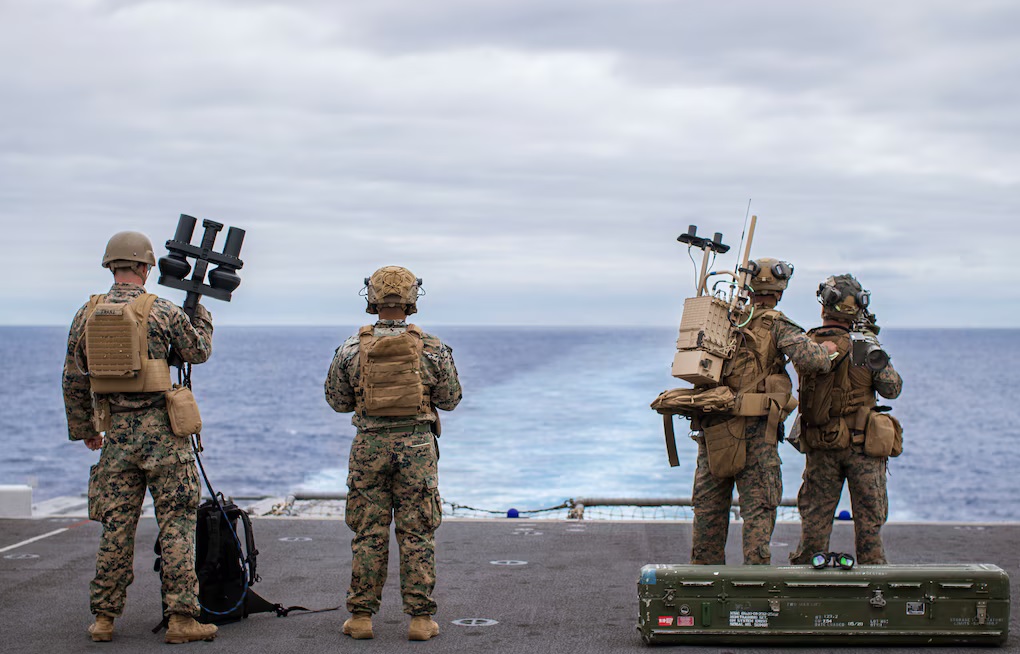
World
In 2025, the United States Marine Corps is set to begin fielding new counter-drone systems to strengthen its defence against the increasing threat posed by small unmanned aircraft systems (sUAS). These systems are designed to detect, track, identify, and neutralise hostile drones using both kinetic and non-kinetic methods, thereby enhancing the Corps’ battlefield awareness and protective capabilities. Why the Upgrade? Small drones have emerged as a serious challenge in modern warfare. Adversaries are now using these compact, low-cost aircraft for surveillance, intelligence gathering, and even direct attacks. Their small size, low radar signature, and ability to maneuver in tight spaces make them difficult to detect and eliminate using traditional air defense systems. A Marine Corps spokesperson stated, “The proliferation of small Unmanned Aircraft Systems presents a significant tactical challenge for modern military forces.” These drones can disrupt missions, compromise operational secrecy, destroy valuable assets, and pose risks to human life. What’s Being Deployed? To counter this threat, the Marine Corps is introducing a mix of dismounted counter-sUAS technologies across all elements of the Marine Air-Ground Task Force (MAGTF). These systems are: Lightweight and portable – ideal for use by small units on the move. User-friendly – requiring minimal additional training. Integrated with existing weapon systems – allowing seamless use by Marines already equipped for combat. This makes them ideal for rapid deployment in varied combat environments, particularly in contested and distributed operational settings. Key Capabilities and Specifications The upcoming counter-sUAS systems will include both kinetic options, such as small-arms-based drone shooters and anti-drone projectiles, and non-kinetic methods like: Electronic warfare systems that jam or disrupt drone signals. RF (radio frequency) detection and direction finding to locate drone operators. Electro-optical/infrared sensors for drone detection and tracking. Handheld and vehicle-mounted systems to support mobility and different mission profiles. These tools are being tailored to provide 360-degree protection, ensuring Marines can defend themselves against sUAS threats regardless of the terrain or operational complexity. Bridging the Defence Gap Currently, Ground Based Air Defense (GBAD) systems used by Low Altitude Air Defense (LAAD) and Littoral Anti-Air Battalions are effective against larger aerial threats but are not always available at the unit level. The new organic counter-drone systems will fill this crucial gap by empowering individual units with tools to handle drone threats independently. This shift in strategy supports the Marine Corps’ doctrine of manoeuvre warfare, which relies on decentralised, agile, and dispersed operations. “This decentralisation of defensive measures aligns with the Marine Corps’ emphasis on manoeuvre warfare,” the spokesperson noted. Future Readiness As drone warfare evolves, the Marine Corps is taking proactive steps to stay ahead of emerging threats. By 2025, every deployed unit is expected to have access to tailored counter-UAS capabilities, making the force more resilient, flexible, and prepared for future challenges. Incorporating this next generation of counter-drone technology ensures that Marines can operate safely and effectively in dynamic combat environments—whether in urban landscapes, coastal regions, or remote terrains. The upcoming systems will not only protect lives but also ensure mission continuity in increasingly drone-contested battlespaces.
Read More → Posted on 2025-04-19 13:58:04
World
The United States is preparing to reduce the number of troops stationed in Syria, cutting its current force to fewer than 1,000 personnel in the coming months. This move, announced by the Pentagon, marks a significant shift in America’s long-standing military role in the region. For years, U.S. forces have operated in Syria as part of a broader international mission to defeat the Islamic State (IS) group. IS gained power during Syria’s civil war, capturing large areas of Syria and neighboring Iraq in 2014. In response, a U.S.-led coalition launched an air campaign and worked closely with local forces, particularly the Kurdish-led Syrian Democratic Forces (SDF), to push IS back. Over time, IS lost most of its territory, but remnants of the group continue to carry out attacks, especially in remote areas. Now, the Pentagon says U.S. forces will consolidate into select locations within Syria as part of a “deliberate and conditions-based process.” While the exact bases have not been made public, the Defense Department emphasized that American troops will continue to carry out strikes against IS militants where necessary. This reduction in troops comes at a time when U.S. military attention is increasingly shifting elsewhere — such as targeting Houthi rebels in Yemen, who have been disrupting global shipping routes since late 2023. Additionally, U.S. forces in Syria and Iraq have faced threats from Iran-backed groups, particularly since the conflict in Gaza escalated in October 2023. Although those attacks have decreased in recent months, the situation remains volatile. Interestingly, this isn’t the first time the idea of pulling troops from Syria has been discussed. Former President Donald Trump, known for his skepticism about prolonged military engagements, had previously called for a full withdrawal. His position remained consistent even when Syria was in chaos, stating that the U.S. should avoid getting further involved in what he described as “not our fight.” At its peak, the U.S. had deployed around 2,000 troops in Syria. The Pentagon disclosed in late 2024 that this figure had doubled earlier that year, despite previously reporting only 900 troops in the country. Now, this number is expected to be cut roughly in half again, returning closer to previous levels. In parallel, Iraq — which has around 2,500 U.S. troops on its soil — is also preparing for the departure of U.S.-led coalition forces. Both Washington and Baghdad have agreed that the coalition’s mission in Iraq will end by the end of 2025 in federal Iraq, and by September 2026 in the Kurdistan region. While the U.S. may be stepping back from its physical presence in Syria, military officials stress that the fight against IS is not over. Even with fewer boots on the ground, American forces will remain active in targeting threats and supporting regional allies where needed.
Read More → Posted on 2025-04-19 13:54:34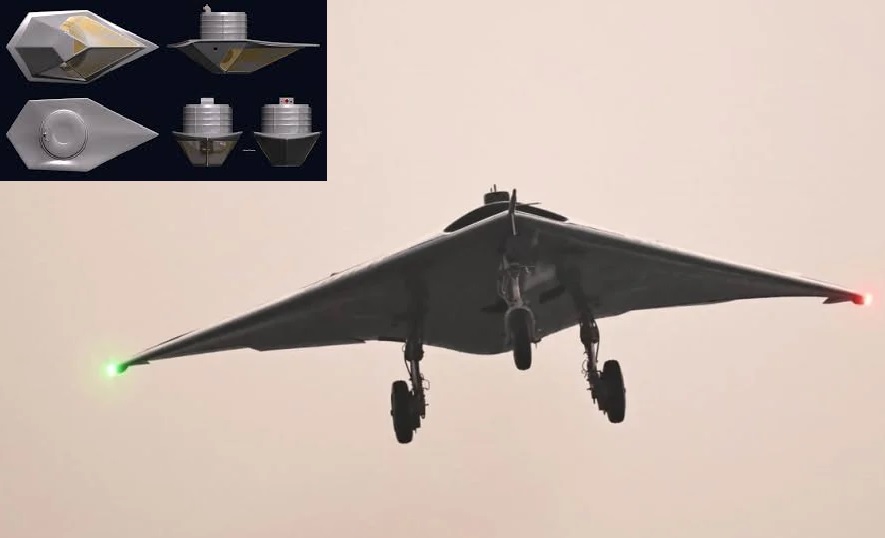
India
India’s foray into stealth unmanned combat aerial vehicles (UCAVs) marks a major leap in indigenous defense technology. Central to the combat effectiveness of these futuristic drones is the Electro-Optical Targeting System (EOTS) — a critical sensor suite that gives stealth aircraft unmatched battlefield awareness and precision strike capability. As India develops its stealth UCAV, widely believed to be the Ghatak or its more advanced variant SWiFT, the integration of EOTS is poised to be a game-changer. What is an EOTS and Why It Matters? The Electro-Optical Targeting System is a multi-sensor, turreted pod or internal module that combines infrared search and track (IRST), high-resolution imagery, laser designation, and range-finding capabilities. Unlike radar, which emits detectable signals, EOTS works passively — allowing the UCAV to remain stealthy while scanning targets. In manned aircraft like the F-35, EOTS is integrated into the fuselage to reduce radar cross-section. India is expected to follow a similar route, embedding the EOTS seamlessly into the UCAV’s underbelly or nose cone for minimal signature and maximum aerodynamic efficiency. Technical Features of an EOTS in a Stealth UCAV Though the final configuration of India's EOTS remains classified, it's expected to feature: Mid-Wave Infrared (MWIR) Sensor: Operates in the 3–5 micron range, ideal for detecting engine heat signatures from long distances. High-Resolution CCD Camera: Captures real-time visible spectrum imagery for target identification. Laser Designator and Rangefinder: Accurately marks targets for precision-guided munitions and provides exact distance measurements. Automatic Target Tracking (ATT): Locks onto moving targets, even in complex battlefields. Geolocation Capability: Determines the exact coordinates of targets without relying on external systems like GPS, enhancing autonomy and resilience to jamming. Low-Observable Aperture: The system’s housing is built with radar-absorbent materials and angled faceting to preserve stealth. Strategic Advantages in Battle 1. First Look, First Kill In the world of air combat, whoever detects first usually wins. EOTS allows the stealth UCAV to passively detect enemy aircraft, vehicles, or missile systems from long ranges without giving away its own location. 2. Stealth Synergy Traditional radar sensors, while powerful, emit signals that can be picked up. EOTS, being passive, aligns perfectly with stealth doctrine — observe without being observed. 3. Precision Strike Capability Combined with AI-assisted targeting, EOTS enables the UCAV to autonomously track and engage multiple ground and air targets using laser-guided bombs or air-to-surface missiles, even in GPS-denied environments. 4. Survivability and Autonomous Engagement In a contested environment with anti-access/area denial (A2/AD) threats, EOTS boosts survivability by allowing the UCAV to make decisions with minimal human intervention — see the threat, pick the weapon, engage, and leave. 5. All-Weather, Day-Night Operations Infrared and laser components allow India’s stealth UCAV to operate effectively in darkness, fog, or even through light obstructions like smoke — critical for missions ranging from deep strike to tactical ISR (Intelligence, Surveillance, Reconnaissance). India’s Development Ecosystem: Who’s Building It? The EOTS system for India's stealth UCAV is expected to be developed by DRDO’s Instruments Research & Development Establishment (IRDE) and Bharat Electronics Limited (BEL), possibly in collaboration with private players under the "Make in India" initiative. These systems may share lineage with those developed for the LCA Tejas Mk2 and AMCA programs. DRDO has already demonstrated compact IRST sensors and laser targeting pods like Litening, though these were externally mounted. For a stealth UCAV, a flush-mounted, multi-mode EOTS will be developed from scratch or significantly miniaturized. Comparison with Global Peers Feature India’s EOTS (Projected) F-35 EOTS China’s EOTS on GJ-11 UCAV Passive Targeting ✔ ✔ ✔ Laser Guidance ✔ ✔ Unknown Internal Mounting ✔ ✔ ✔ Infrared Imaging Mid-Wave IR Mid-Wave IR Likely Mid-Wave IR AI-Assisted Targeting ✔ ✔ Likely Conclusion: The EOTS Edge in Future Warfare As India's stealth UCAV program matures, the EOTS will be more than just a sensor — it will be the digital eye and brain of the drone, allowing it to dominate in high-threat environments where humans dare not fly. The fusion of stealth, autonomy, and EOTS will turn India's drones into invisible hunters, capable of striking deep into enemy territory with pinpoint accuracy and zero warning. By developing its own EOTS systems, India is not only enhancing combat capability but also achieving a vital leap in self-reliant defense technology. The battlefield of tomorrow will belong to those who can see without being seen — and with EOTS, India’s UCAVs are well on their way..
Read More → Posted on 2025-04-18 16:19:19Search
Top Trending in 24 Hours
-
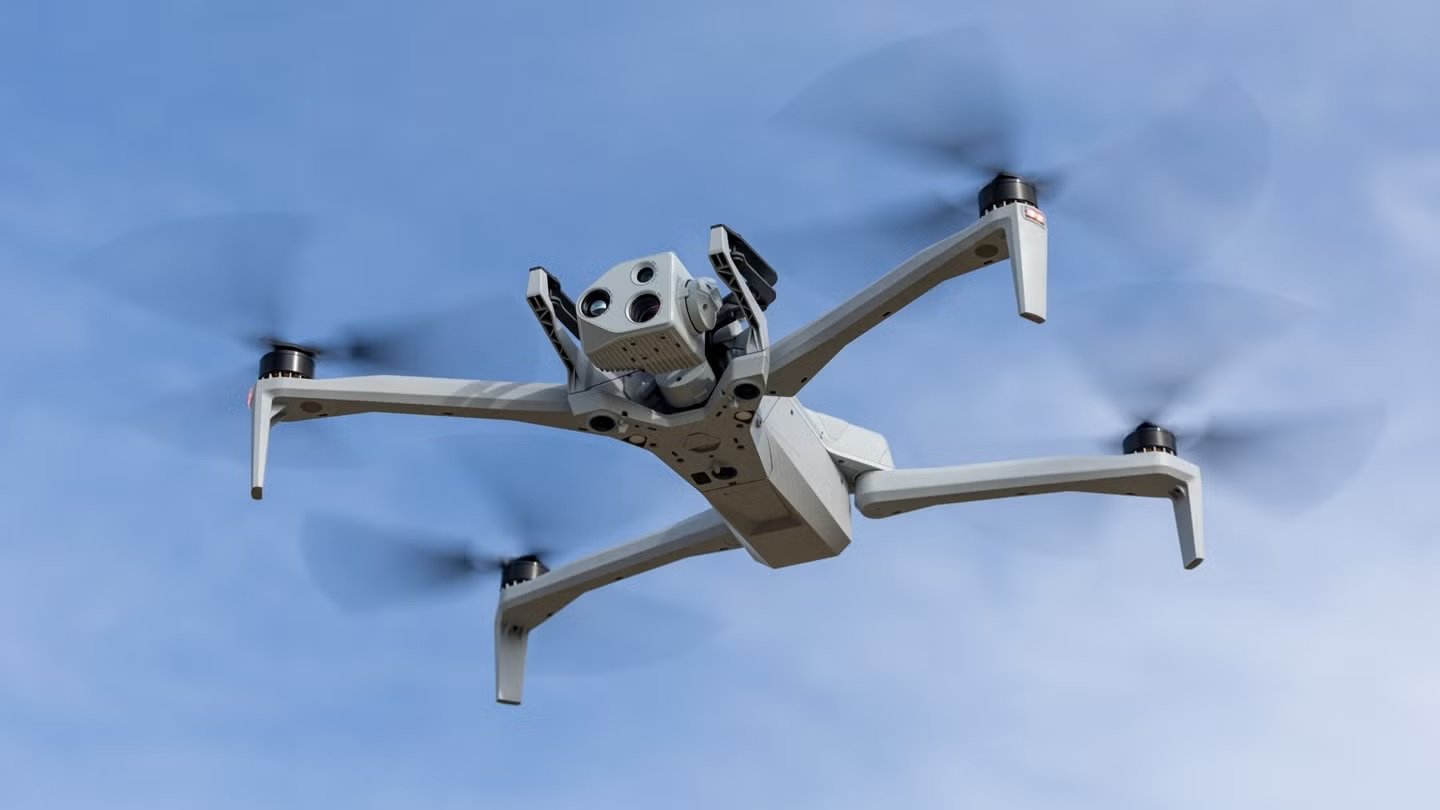 UK Ministry of Defence Opens £120,000 Tender for Skydio X10D Drones
-
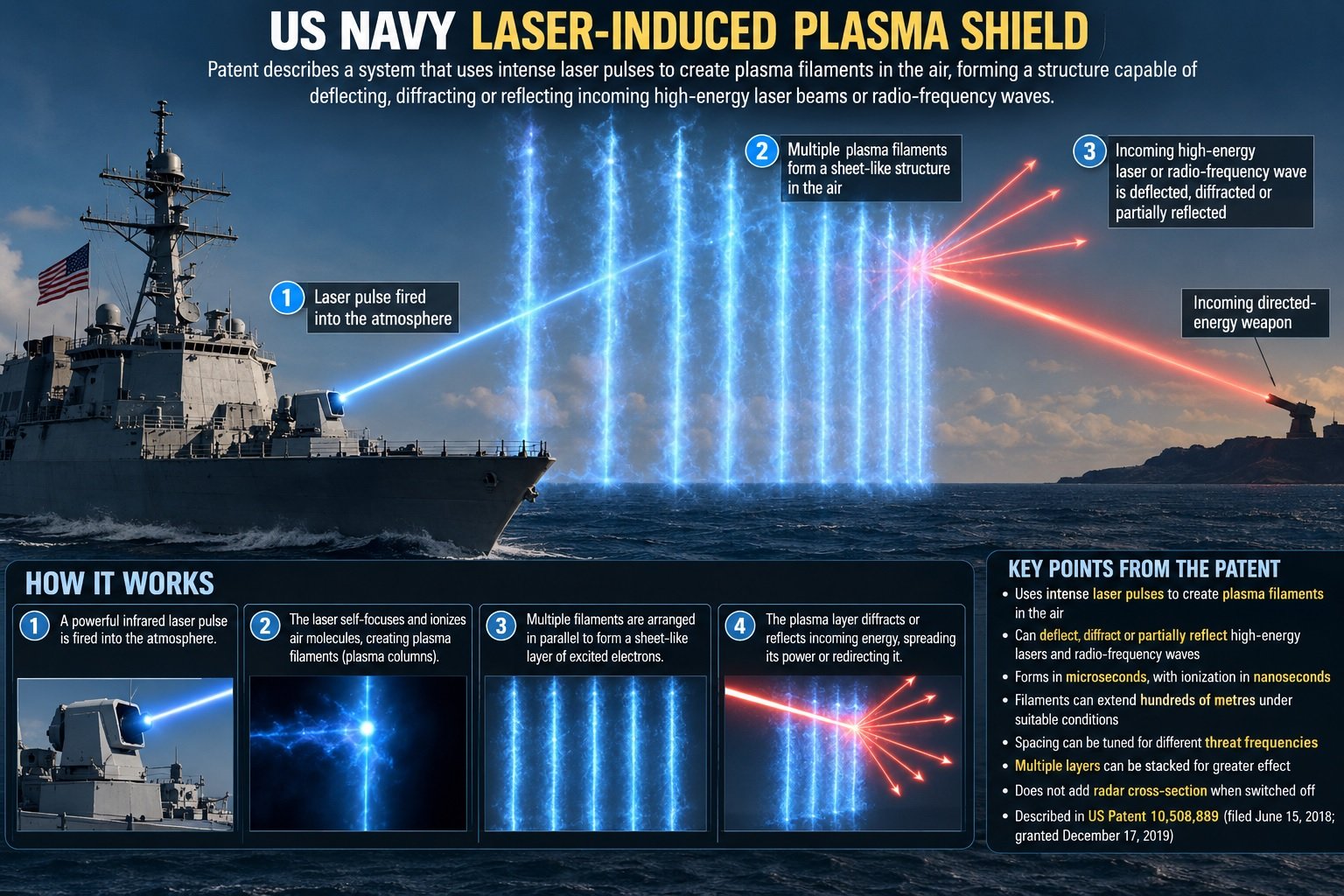 US Navy Patent Details Laser-Induced Plasma System to Deflect Directed-Energy Weapons
-
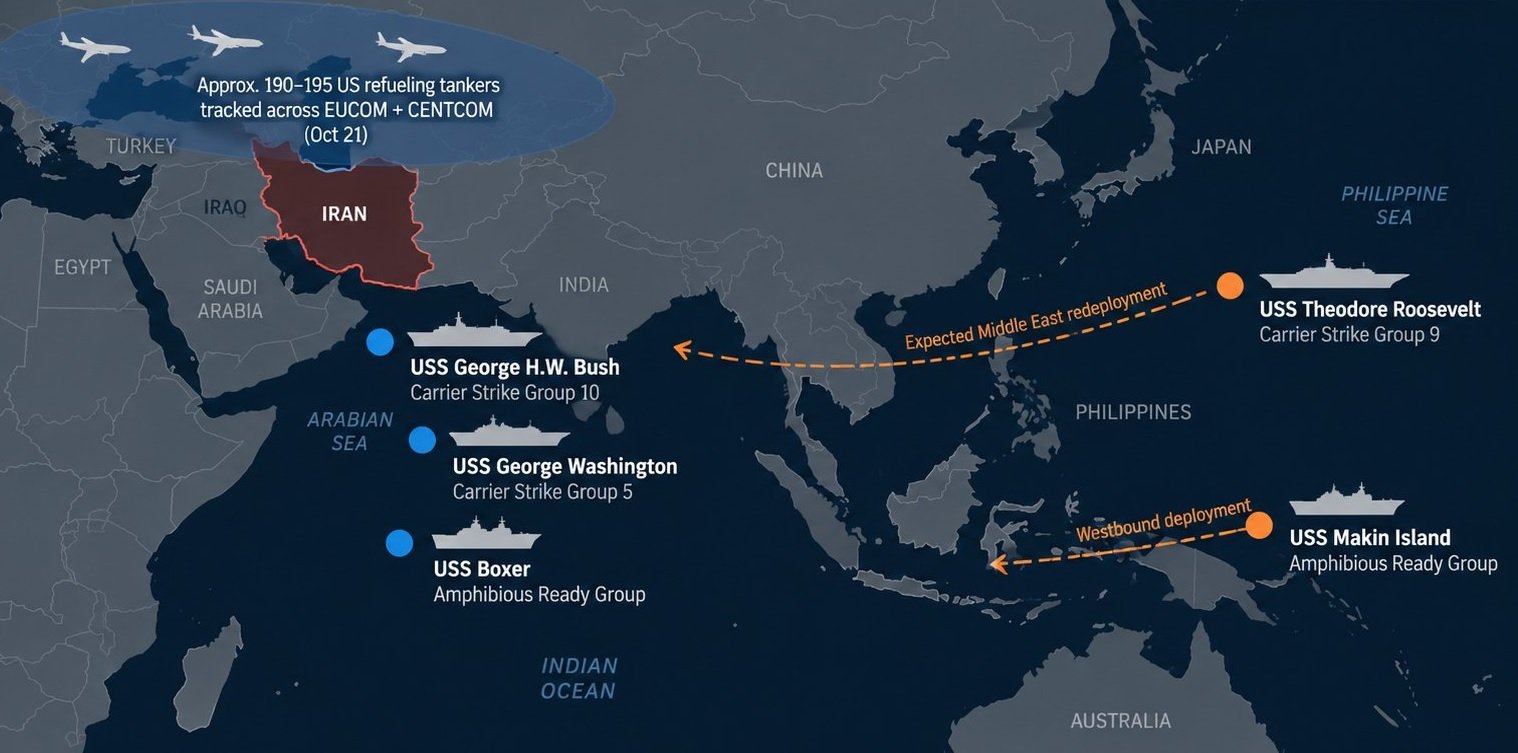 US Expands Military Buildup Near Iran with Third Aircraft Carrier and Additional Marines
-
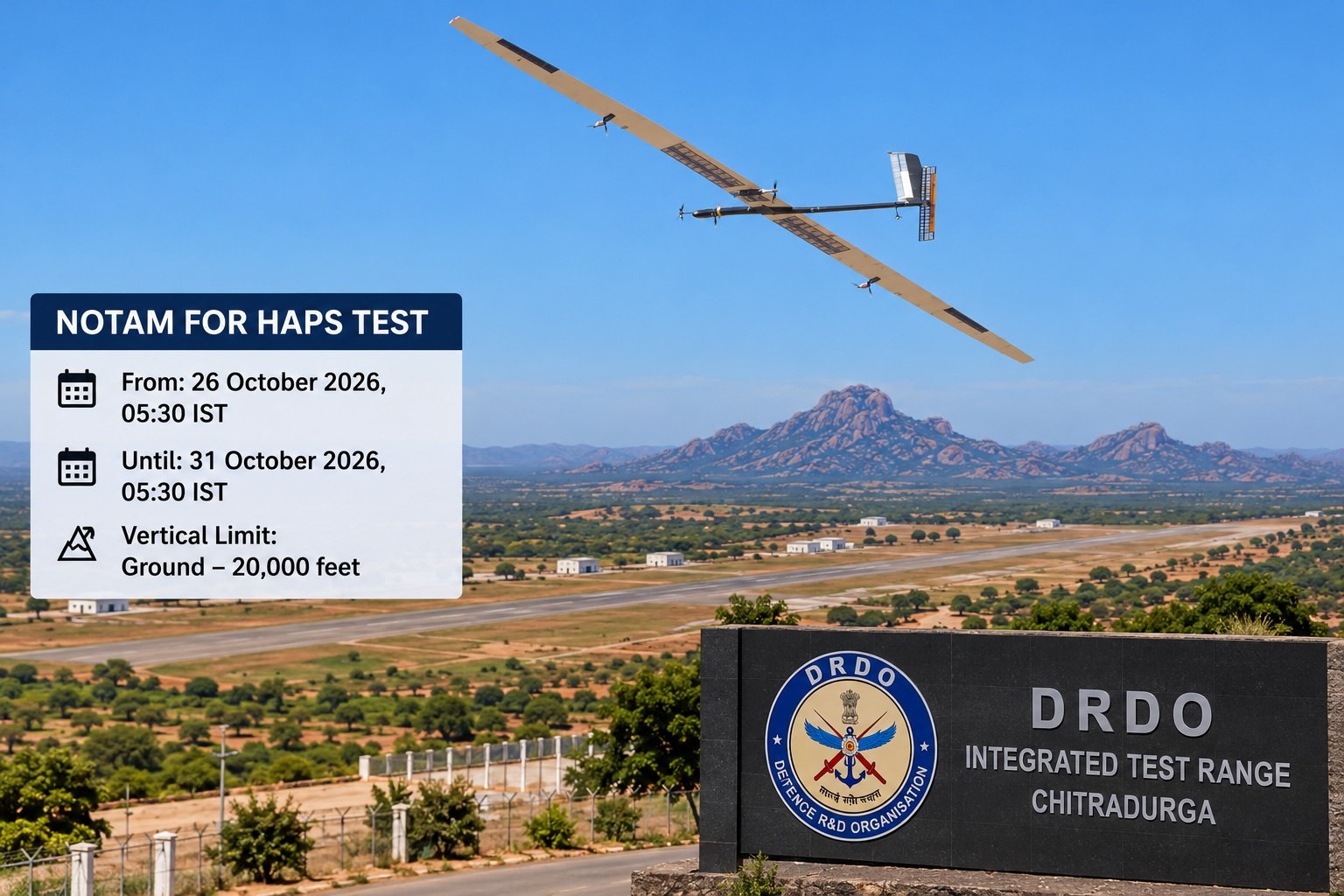 India Issues NOTAM for High Altitude Pseudo Satellite Test at DRDO Chitradurga Facility
-
 EDGE Integrates Autonomous Naval Systems in UAE-US Maritime Demonstration
-
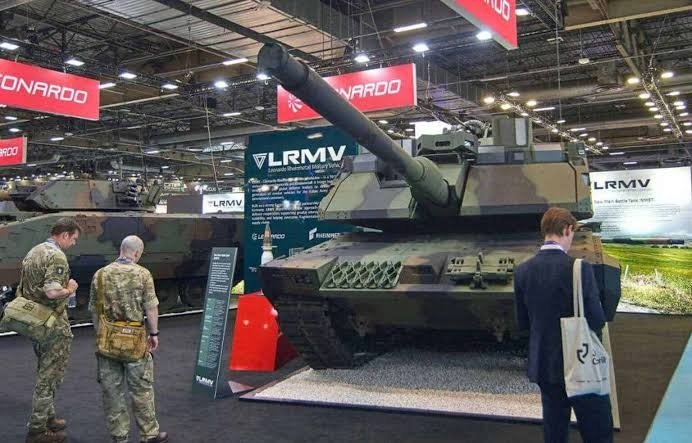 Italy Reportedly Orders 30 Panther Tanks and 48 Lynx IFVs in €3.7 Billion Deal
-
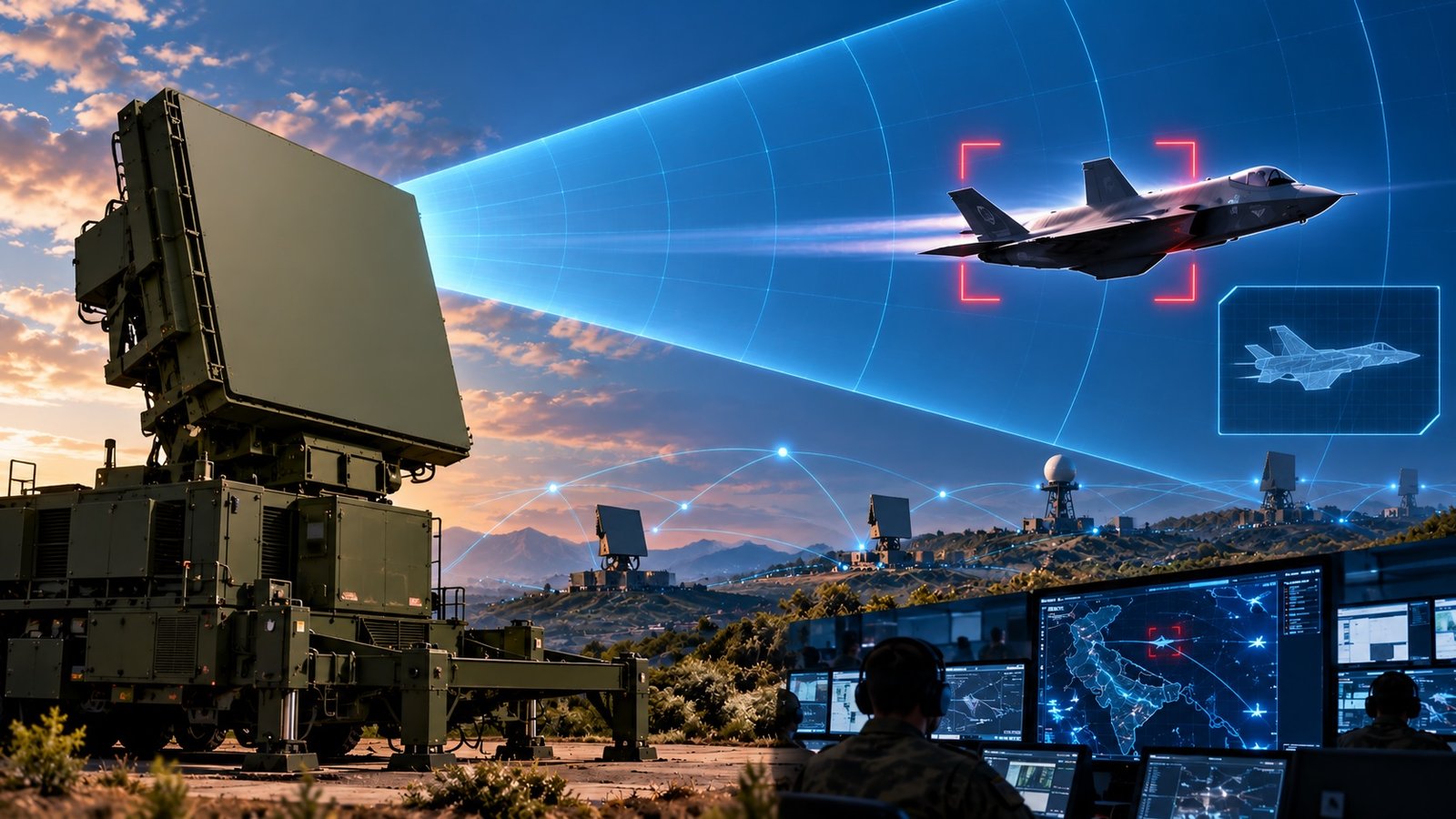 DRDO’s Arudhra Radar Reportedly Tracks F-35-Like Stealth Target in AI-Assisted Simulation: How It Works
-
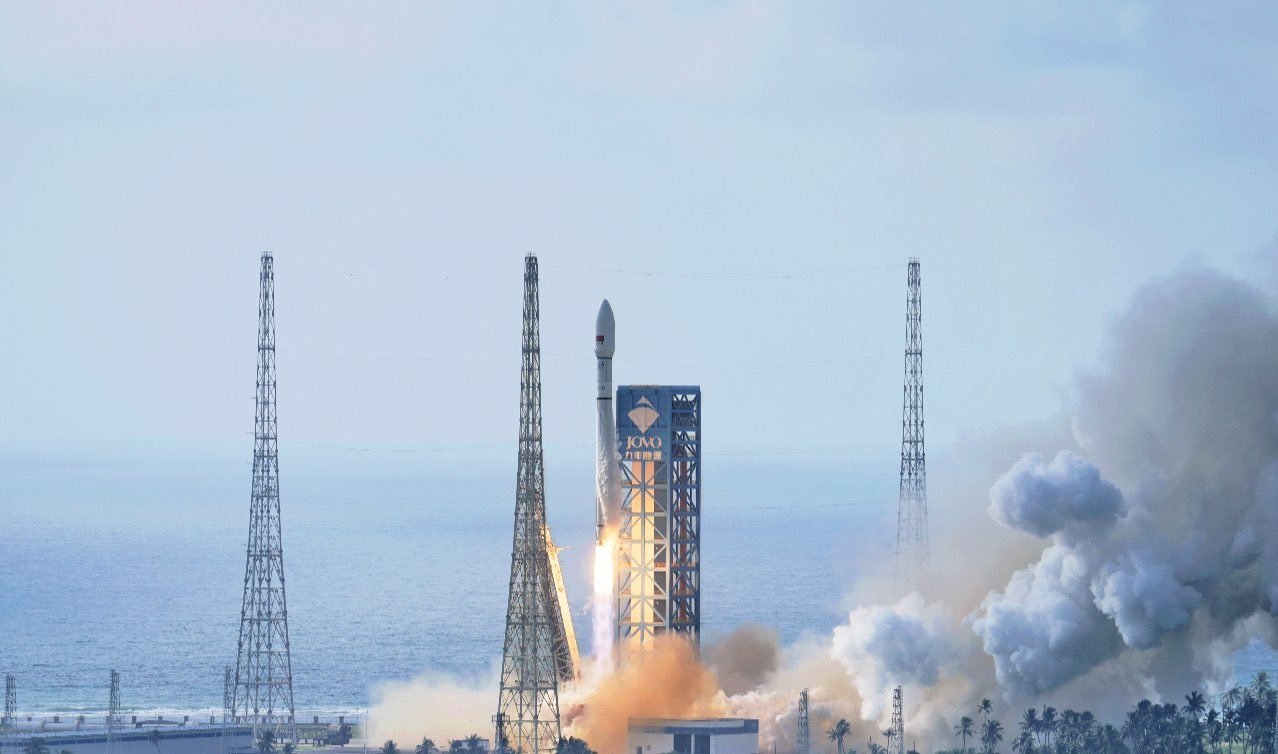 China Launches Six New Remote-Sensing Satellites into Orbit to Expand Earth-Observation Network
Top Trending in 4 Days
-
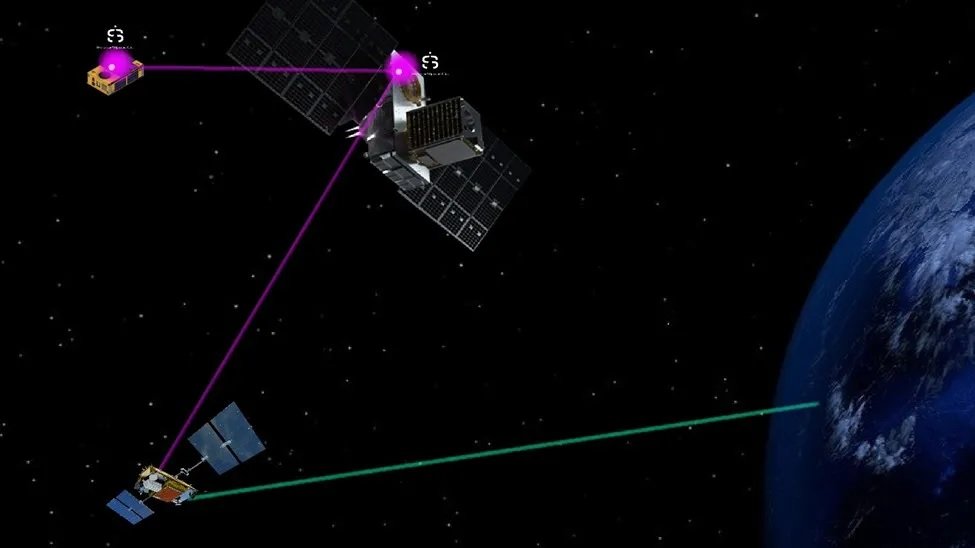 NASA Demonstrates Space-to-Space Wi-Fi Between Two Orbiting Spacecraft
-
 USS Pinckney Becomes First U.S. Navy Destroyer to Begin Phase Two Modernization with Advanced SPY-6 Radar
-
 U.S. Military to Ban Chinese Automaker BYD Vehicles from Kadena Air Base in Japan Over Security Concerns
-
 General Atomics Partners With Spirit Defense to Expand FQ-42 Vengeance Production
-
UK Ministry of Defence Opens £120,000 Tender for Skydio X10D Drones
-
 CSG and North Vector Dynamics Sign MoU to Explore European Production of CM-70 Counter-Drone Interceptor
-
 Unitree Unveils H2-X ‘Kung Fu Legend: Guardian’ Humanoid Robot for Security and Rescue
-
 Ukraine Reveals Technical Details of Russia’s New Filin Cruise Missile
