World
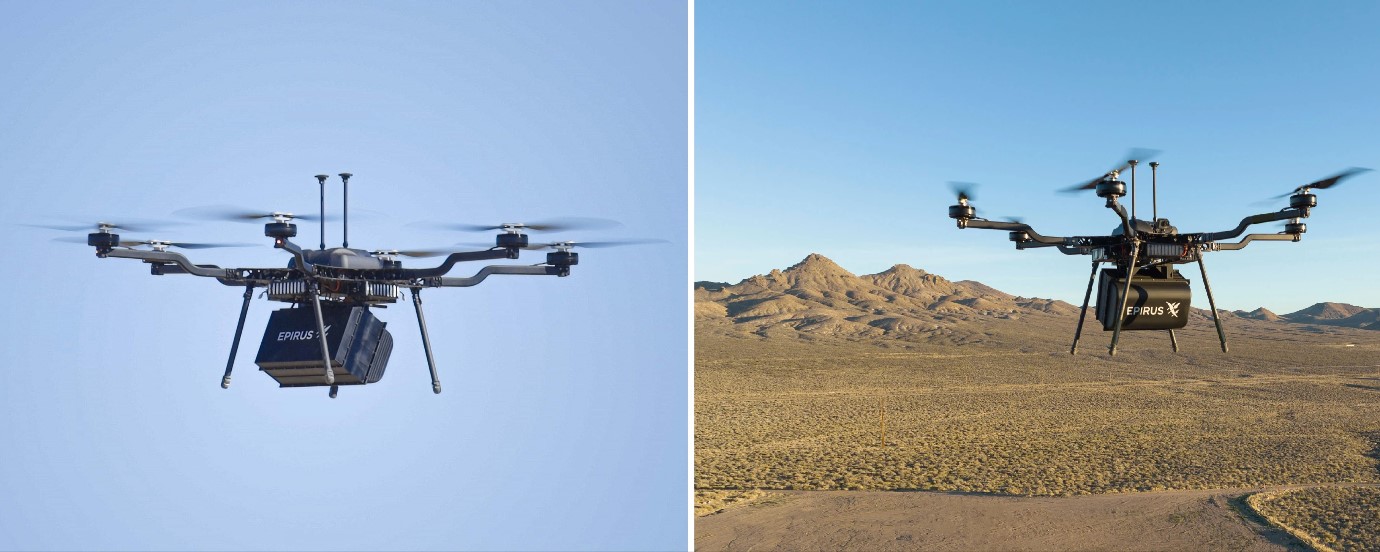
The American defence-technology company Epirus is pushing its Leonidas High-Power Microwave (HPM) Pod as a new answer to one of the hardest problems on today’s battlefields: cheap, highly manoeuvrable fiber-optic–controlled drones that shrug off traditional radio-frequency jamming. Mounted on drones, vehicles or potentially helicopters, the compact pod is designed to fry the electronics of hostile unmanned aircraft in mid-air, regardless of how they are controlled. A Backpack-Sized Directed-Energy Weapon According to Epirus and publicly available product information, the Leonidas Pod is a solid-state, software-defined high-power microwave weapon that miniaturises the company’s ground-based Leonidas system into a remarkably small form factor. The pod weighs under 50 pounds and is roughly the size of a large backpack, light enough to be man-carried or slung under a heavy-lift drone. Instead of older magnetron tubes, Leonidas uses gallium nitride (GaN) semiconductor amplifier modules to generate long-pulse microwave energy. This allows a more durable beam, lower power consumption and a system that can start up or shut down in minutes rather than hours. Epirus positions the pod as a mobile, compact counter-electronics and electronic-attack system. The pod’s open architecture is designed to integrate with existing airborne mission systems and ground fire-control networks, turning any host platform—unmanned aircraft, armoured vehicle, or potentially a helicopter—into a directed-energy node in a larger air-defence web. How Leonidas attacks drone swarms The Leonidas family is built to counter drone swarms rather than single aircraft. Instead of firing a kinetic interceptor at one target, Leonidas emits a cone or beam of high-power microwave energy that induces currents and voltage spikes in exposed electronics. Circuit boards, flight controllers and data links are overloaded, causing drones to fall out of the sky or lose control. In recent U.S. demonstrations, the ground-based Leonidas system achieved a 100% kill rate against 61 drones, including knocking down a 49-drone swarm with a single pulse of electromagnetic interference. Drones in multiple flight profiles crashed after losing their control systems, underscoring the “one-to-many” nature of the weapon. Key performance features highlighted by Epirus and independent analyses include: Near-instant effects: the microwaves propagate at the speed of light and disable electronics as soon as a target enters the field. Multi-shot, no-reload operation: as a directed-energy system, Leonidas is not limited by a physical magazine; it can engage waves of drones without rearming. High rate of fire without overheating: the solid-state design and power-management software allow rapid successive engagements. Adjustable “lethality”: operators can tailor power and beam shape in software, from selective engagement of individual drones to wide-area pulses that blanket a sector. While detailed range and power figures remain classified, Epirus says the latest generation offers more than double the range and lethality of early prototypes, and testing has shown the underlying Leonidas technology can also disable boat motors at tactically useful distances. Countering fiber-optic–controlled and autonomous drones Modern frontline conflicts have seen an explosion of FPV (first-person view) attack drones that use fiber-optic reels or highly resilient data links. These systems are notoriously hard to defeat with classic RF jamming, because the control signal does not travel through the air in the usual way—or, in the case of autonomous drones, there is no live radio link at all. Leonidas attacks the problem at a different layer. As a high-power microwave weapon, it does not care whether the drone is radio-controlled, fiber-optic-guided, or pre-programmed. It couples energy directly into the airframe’s electronics and wiring, bypassing the question of how control commands are transmitted. That makes the same pod relevant against: FPV kamikaze drones with fiber-optic spools, where jamming the link is ineffective. Autonomous loitering munitions, which fly pre-set routes. Standard RF-controlled quadcopters and fixed-wing drones, which may be hardened against jamming but not against massive electrical surges. Because the effect is purely electromagnetic, Leonidas can theoretically also disrupt other battlefield electronics: improvised explosive device triggers, vehicle control systems, or the sensors on loitering munitions, depending on power level and geometry. Epirus and U.S. Navy testing with Leonidas derivatives have already demonstrated the ability to stop small boat engines, hinting at broader anti-surface applications. Mounting on drones, vehicles and future rotorcraft The Leonidas Pod was first unveiled in early 2022 as a UAS-borne HPM system. Mounted under a heavy-lift drone, it can fly directly toward a threat axis and project a moving “bubble” of microwave energy to screen advancing troops or convoy routes. Epirus emphasises that the pod’s form factor and mounting hardware are designed for multiple platform types: On unmanned aerial vehicles, it offers high-altitude or stand-off coverage against hostile drones approaching from any direction. Integrated on armoured vehicles such as the Stryker (via the related Leonidas Mobile configuration), similar HPM arrays provide mobile short-range air defence as part of U.S. Army experiments. With its low weight and open architecture, the same pod-class system is marketed as adaptable to manned aircraft and helicopters, giving rotary-wing platforms the ability to escort formations with an onboard anti-drone “microwave shield”. In all cases, the pod can switch between standby and active modes, conserving its onboard battery while loitering and only drawing full power when a threat is detected. Extended battery life, according to the manufacturer, allows it to reach the threat, engage, and return to base without external power. Specifications and technical architecture Detailed classified parameters are not public, but open sources paint a picture of the Leonidas Pod as a highly modular HPM node: Weight & size: under 50 lb, backpack-like enclosure; small enough to fit in the back of a commercial pickup or similar military vehicle. Architecture: built around Line-Replaceable Amplifier Modules (LRAMs), allowing arrays to be scaled up or down and swapped in the field. Technology base: solid-state GaN power amplifiers, long-pulse HPM waveforms, software-defined waveform control and AI-driven power management. Coverage: narrow “pencil beam” for precision strikes or wider beam modes for area coverage; compatible with 360-degree mounting solutions on some host platforms. Power management: rapid power-up/power-down in minutes, standby modes, and thermal management aimed at eliminating overheating during repeated engagements. Epirus describes its HPM family as deliberately magazine-independent and cost-effective compared to firing expensive surface-to-air missiles at cheap drones. The idea is to reserve kinetic weapons for high-value targets while using HPM to clear out the mass of small UAVs that saturate air defences. Part of a wider Leonidas ecosystem The Leonidas Pod is only one member of a growing ecosystem of HPM systems that U.S. forces are now trialling: Leonidas Mobile, integrated on platforms like the Stryker to provide mobile short-range air defence. Leonidas ExDECS, a more compact expeditionary system geared toward the U.S. Marine Corps and other rapidly deployed forces. Leonidas H2O, a marinised variant one-third the size of the original, tested in 2024 for disabling small boat engines and countering unmanned surface vessels. Leonidas AR, a recent tracked, unmanned ground vehicle that carries a Leonidas HPM array on a General Dynamics TRX robotic chassis for autonomous counter-drone operations. The U.S. Army has already committed tens of millions of dollars under its Indirect Fire Protection Capability – High-Power Microwave (IFPC-HPM) programme to field Leonidas prototypes, some of which have been deployed to CENTCOM for real-world evaluation. A glimpse of future air defence As fiber-optic-guided FPV drones, autonomous munitions and mass drone swarms become standard tools of modern warfare, systems like Leonidas Pod signal a shift away from one-missile-per-target air defence. By collapsing multiple roles—counter-drone, counter-electronics and electronic attack—into a compact, software-defined pod that can ride on drones, armoured vehicles or eventually helicopters, Epirus is betting that high-power microwaves will become as common on the battlefield as radar and jammers are today. How quickly the Leonidas Pod transitions from demonstration videos and selected U.S. deployments to wider operational use—and whether allied militaries adopt it—will be an important indicator of how seriously armed forces are taking the “unjammable” drone threat emerging from today’s conflicts.
Read More → Posted on 2025-11-24 13:31:07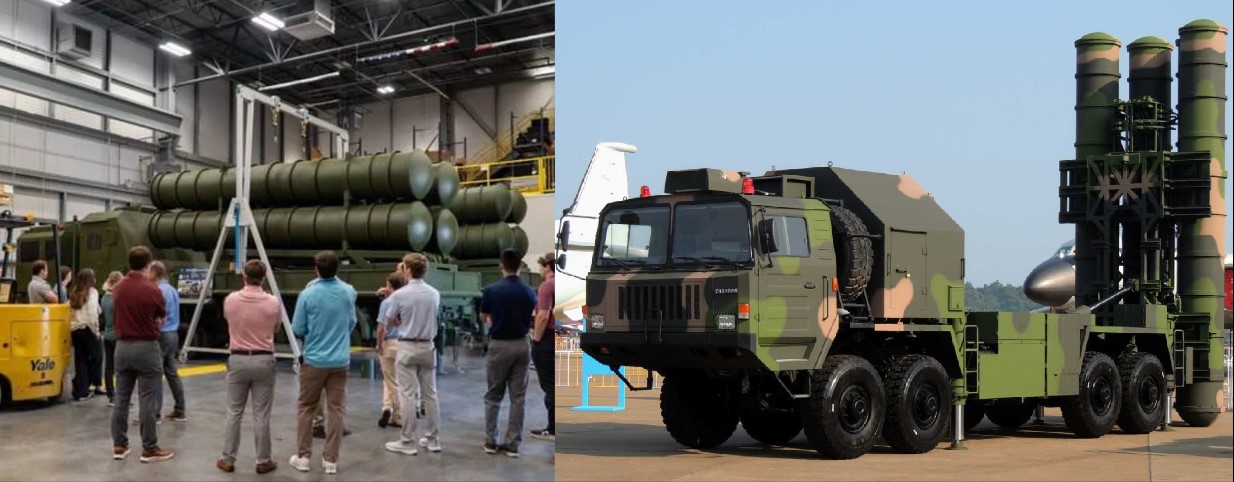
World
U.S. Marines from the 1st Radio Battalion have conducted some of their most advanced suppression-of-enemy-air-defense (SEAD) training to date, facing full-scale decoy replicas of Russian S-300 and Chinese HQ-9 long-range surface-to-air missile systems during Exercise Resolute Hunter 26-1 at Naval Air Station Fallon, Nevada. The drills—confirmed by the U.S. Department of War via DVIDS on November 21, 2025—are designed to strengthen joint kill-chain integration and prepare U.S. forces for the next generation of highly networked air defense threats. Foreign Air Defense Systems in the Nevada Desert Imagery released from Fallon shows large, foreign-profile missile launchers and radar vehicles painted in desert camouflage, closely resembling the S-300PMU2 and HQ-9/HQ-9B families. These are not simple mock-ups but full-scale, visually and electromagnetically representative decoys, capable of simulating real-world radar emissions, network signatures, and deployment patterns. The S-300PMU2 “Favourite”, designed by Russia, includes: 83M6E2 command post 64N6E2 long-range surveillance radar 30N6E2 X-band phased-array engagement radar 5P85 series launchers carrying long-range missiles Operationally, a functioning S-300PMU2 battery can threaten aircraft and low-flying cruise missiles up to 150–200 km, while tracking and engaging multiple targets simultaneously. Its architecture forms the backbone of many non-Western integrated air defense networks. China’s HQ-9 series—mirrored in other range decoys—offers a comparable threat. The HQ-9B variant has a reported engagement range of up to 300 km, tied to the modern HT233 and Type 305 phased-array radars. Export versions, known as FD-2000/FD-2000B, have proliferated across the Middle East, Central Asia, and North Africa. Why These Systems Matter: The Iran Angle The selection of S-300 and HQ-9-style targets is not coincidental. Iran received S-300PMU2 batteries from Russia in the mid-2010s and deployed them around its nuclear infrastructure, including Fordow. The semi-arid terrain of Iran’s defense sites closely resembles the Nevada training ranges. In recent years, reports have suggested that Iran has shown interest in Chinese HQ-9-class systems to complement its indigenous Bavar-373 and Khordad-15 batteries. Several regional neighbors have also evaluated these systems, making HQ-9 derivatives a likely future threat for U.S. forces. Seen in this light, full-scale decoys at Fallon represent an unmistakable rehearsal for penetrating Iranian-style integrated air defense systems—especially after Israeli strikes on Iranian nuclear and missile sites in 2025, which accelerated Tehran’s efforts to reinforce its air defense network. Marines Shift From Ground Combat to Multi-Domain SEAD Historically, disabling enemy air defenses fell to U.S. Air Force platforms such as the F-16CJ “Wild Weasel”, EC-130H Compass Call, and F-35A. But the U.S. Marine Corps is restructuring into a stand-in force, capable of operating deep inside contested zones. During Resolute Hunter 26-1, Marines practiced: Identifying foreign batteries by radar pulse characteristics Detecting network traffic between SAM components Locating camouflaged launchers via electromagnetic signatures Passing real-time intelligence to Army, Navy, and Air Force shooters Coordinating electronic warfare, cyber intrusion, and long-range missile fires The goal is to turn Marine units into forward reconnaissance and targeting nodes that help dismantle high-end SAM networks for joint aviation and naval strike forces. Joint Kill Chain Integration Takes Center Stage Resolute Hunter is one of the Pentagon’s major multi-domain intelligence and targeting exercises. This year included: U.S. Army long-range fires units Navy aviation and carrier strike elements Air Force electronic attack and ISR aircraft Space Force sensor and tracking teams The S-300 and HQ-9 surrogates allowed services to rehearse building a complete kill chain: detection, classification, geolocation, jamming, cyber disruption, and kinetic strike. Officials note the decoys can emit realistic radar waveforms and generate system-specific digital signatures, enabling analysts to work with authentic threat fingerprints. A Larger Strategic Signal The deliberate training comes as tensions with Iran remain high. Western intelligence reports warn that Iran is dispersing and upgrading its air defense assets, and accelerating deployment of modern SAMs around nuclear and missile facilities. In that context, Marines maneuvering around S-300 and HQ-9 look-alikes in Nevada is more than routine—it is a strategic rehearsal. The U.S. is preparing for high-end air defense environments in the very regions where these systems are already deployed. Fake Targets, Real Kill Chains Even if the systems on the Fallon ranges are only mock-ups, the work unfolding around them is anything but artificial. The Marines are effectively rehearsing the very data flows, targeting chains, and rapid decision cycles that would unfold in an actual fight. With every run of Resolute Hunter, the United States becomes more adept at navigating the complex world of hostile air defenses—learning how to track foreign SAM batteries, disrupt the networks that bind them, and blind the radars that make them lethal, before finally bringing the full weight of cross-domain firepower against them. The choice of S-300PMU2 and HQ-9B surrogates is no accident; it reflects the battlefield the Pentagon expects to face in the real world. As one defense official remarked, the launchers may be fake, but the kill chains being refined around them are the very ones the U.S. intends to rely on “when it matters.”
Read More → Posted on 2025-11-24 13:09:51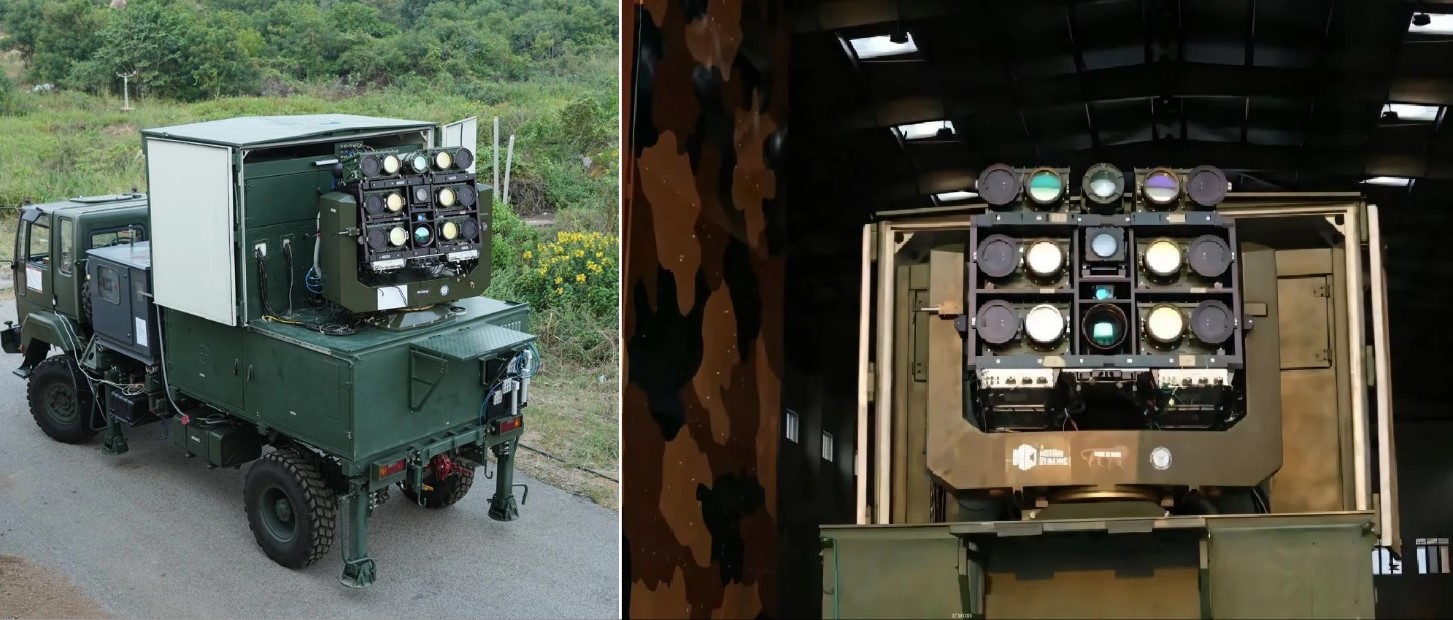
India
The Defence Research and Development Organisation (DRDO) has issued an Expression of Interest (EoI) to transfer the technology of its 30 kW Laser Directed Energy Weapon (DEW) system to Indian industry. The offer, released by DRDO’s Centre for High Energy Systems and Sciences (CHESS), includes three licences for qualified vendors. The 30 kW laser system is developed as a counter-drone platform that brings together drone-detection radar, RF sensors and EO-IR tracking equipment. It uses a high-energy laser to disable drones at a range of three to four kilometres. The system is mounted on a mobile platform and is intended for use around military bases and other sensitive areas where drone activity is a concern. The DEW has completed several field trials over the past year, showing the ability to track and neutralise different types of drones. It has been developed under DRDO’s MK-2(A) laser programme and uses a modular design in which multiple laser modules are combined to produce the 30 kW output. Offering the system for technology transfer is aimed at involving private industry in production and building domestic capability in high-energy laser systems, power electronics, optics and precision tracking. DRDO expects this step to support future manufacturing and reduce dependence on imports in this category of defence technology. The EoI invites companies to submit proposals showing their technical capacity and readiness to absorb the technology. After evaluation, DRDO will select three companies to receive licences and begin preparations for production. Initial manufacturing arrangements are expected within the next 12 to 18 months. Officials familiar with the programme indicate that DRDO is also working on higher-power laser systems in development, but the 30 kW system is the first being offered for wider industrial production. With this move, the 30 kW laser DEW becomes one of the first high-energy laser systems in India to be opened for industry participation and future large-scale deployment.
Read More → Posted on 2025-11-24 12:53:27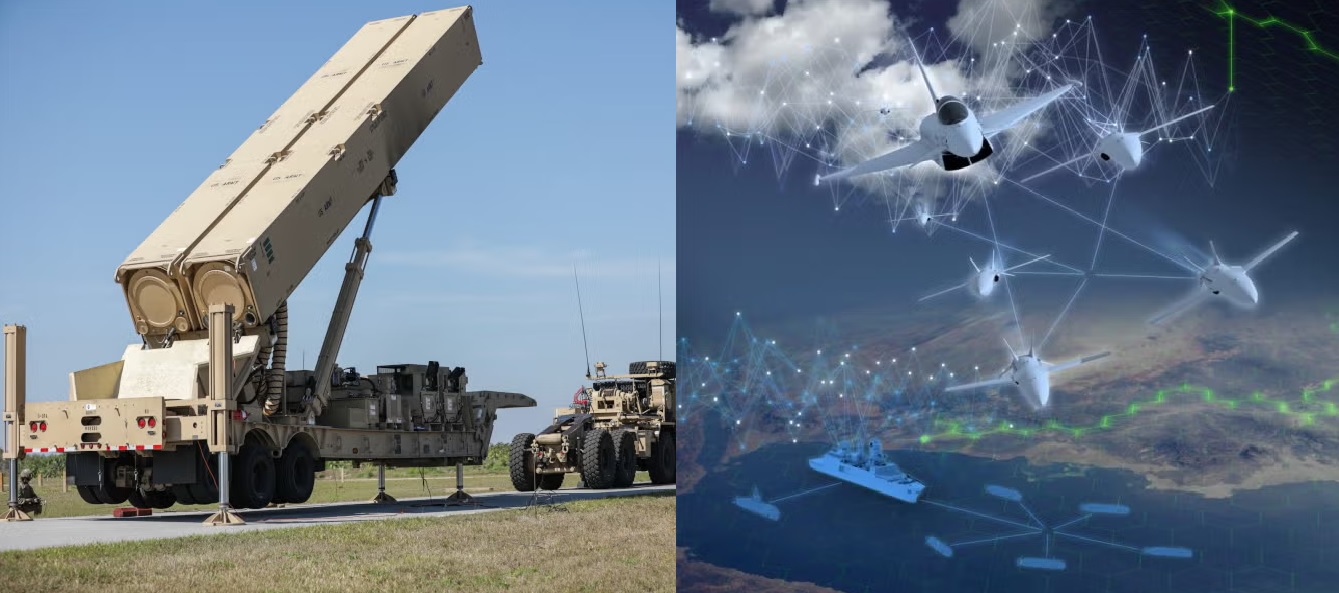
World
The U.S War Department has moved decisively into a new phase of military modernization, unveiling six critical technology priorities that officials say will shape the future of U.S. warfighting. What emerged this week was not another slow-moving reform directive, but a sharpened, urgent plan to equip American troops with cutting-edge tools right now, not in some distant planning cycle. Undersecretary of War for Research and Engineering Emil Michael framed the moment with unusual bluntness. “Our adversaries are moving fast, but we will move faster,” he said. “The warfighter is not asking for results tomorrow; they need them today.” His message was clear: technological hesitation is no longer an option. At the center of the strategy are six fields—Applied AI, Biomanufacturing, Contested Logistics Technology, Quantum Battlefield Information Dominance, Scaled Directed Energy, and Scaled Hypersonics. Each, according to defense leaders, represents not just an innovation path but a survival requirement for operating in a world increasingly shaped by near-peer military competition. AI as the Driving Engine of Modern Warfare Nothing illustrates this shift more than the renewed emphasis on applied artificial intelligence. President Donald J. Trump’s “Winning the Race: America’s AI Action Plan,” released in July, directed the department to adopt AI at unparalleled speed. Michael echoed the sense of urgency, warning that AI will be transformative only if it is deployed rapidly and broadly. Inside the Pentagon, planners describe a future where AI becomes the nervous system of military power—an invisible force running through targeting, logistics, intelligence analysis, and autonomous systems. The vision is of a battlefield where sensors, drones, satellites, and command nodes operate in synchronized motion, all moving faster than any human staff could. “When adopted rapidly, AI will fundamentally transform the department,” Michael said. It is meant to compress decision cycles, increase precision, and make the U.S. military’s response time nearly instantaneous. Biomanufacturing and the Race for Supply Security The next priority—biomanufacturing—might seem, at first glance, far removed from missiles and sensors. But the department sees it as a quiet revolution, an answer to the vulnerability of global supply chains that recent wars have exposed. Michael described biomanufacturing as a way to “harness living systems” to produce critical materials. In practice, this means using engineered organisms to create: bio-based energetic materials chemical components for explosives specialty minerals and compounds used in sensors and electronics For a military concerned about the availability of rare earth metals and chemical precursors, many of which come from China, biomanufacturing offers something priceless: control. It gives the U.S. a domestic, resilient way to produce materials that modern weapons depend on. Fighting a War Where Supplies Are Under Attack The department’s third priority—contested logistics—recognizes a simple truth of modern warfare: the U.S. can no longer assume its supply lines are safe. In a conflict with a technologically sophisticated adversary, everything from ships to ports to fuel depots could be targeted. The War Department wants to push logistics into a new era, one where resupply does not depend on vulnerable convoys or large depots. Autonomous drones, mobile micro-factories, hardened communications, and AI-driven planning tools are envisioned as the backbone of a system that must survive under attack. In the Indo-Pacific, where any conflict with China would stretch supply lines across thousands of miles, these technologies are seen not as an upgrade but as a necessity. Quantum Technologies for a New Kind of Information Warfare The fourth priority—quantum battlefield information dominance—signals an ambition to reshape how the U.S. military sees and moves within contested environments. Quantum-secured communication networks could make enemy interception nearly impossible. Quantum sensors might detect stealth aircraft, submarines, or missiles long before traditional systems can. Defense officials believe that quantum technologies could eventually become as important as radar once was in the early 20th century—something that completely transforms the character of warfare. The department’s goal is straightforward: never lose information superiority, even in the most hostile electromagnetic environments. Directed Energy Finally Moves Toward Mass Deployment For decades, high-energy lasers (HEL) and high-power microwaves (HPM) were promising research projects that never quite reached maturity. Now, the War Department is preparing to scale them across the force. Michael said the focus is on moving beyond prototypes to fieldable systems capable of engaging: drones cruise missiles swarm attacks low-cost airborne threats Directed energy offers a unique advantage: each shot costs only a few dollars, compared to tens or hundreds of thousands for conventional interceptors. In a world where drone swarms are increasingly common—from Ukraine to the Red Sea—low-cost defense has become essential. The department wants lasers mounted on trucks, ships, and airborne platforms, providing a layer of defense that is both cheap and persistent. Hypersonics: From Limited Programs to Force-Wide Capability The final pillar—scaled hypersonics—is perhaps the most strategically visible. The U.S. has lagged behind both China and Russia in fielding hypersonic weapons. The new push aims to reverse that trend by shifting from development to mass production, driving down costs and integrating hypersonic systems across multiple branches of the military. Speed, range, and survivability make hypersonics a central part of deterrence. But until now, the U.S. has produced hypersonic missiles in relatively small numbers. The War Department now aims to change that by building the industrial base necessary for large-scale fielding. A Return to First Principles: U.S. Military Superiority War Secretary Pete Hegseth framed the new strategy in stark terms. “Our nation’s military has always been the tip of the spear,” he said. Narrowing the War Department’s focus ensures that American forces remain technologically unmatched. “These six critical technology areas will ensure our warriors never enter a fair fight,” Hegseth said. “We are committed to remaining the most deadly fighting force on planet Earth.” Behind the rhetoric is a recognition that the world has changed: adversaries innovate faster, conflicts evolve faster, and technology advances faster than any bureaucracy is comfortable with. The War Department’s new plan is an attempt to catch up—and then surge ahead. In this moment, U.S. leaders believe that speed, precision, and technological daring are the only ways to secure battlefield advantage. And if the War Department has its way, the next generation of American warfighters will wield tools unlike anything seen in the last century—not eventually, but now.
Read More → Posted on 2025-11-23 17:40:20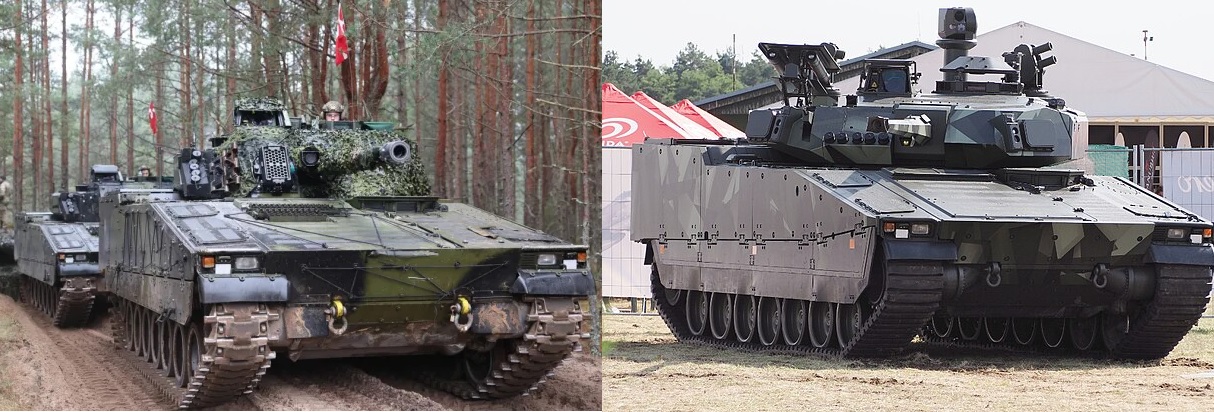
World
The Danish Ministry of Defence Acquisition and Logistics Organisation (DALO) has awarded a contract to BAE Systems Hägglunds worth approximately US$450 million for 44 additional infantry fighting vehicles (IFVs) of the CV90 Mk IIIC family. The contract covers not only the vehicles themselves, but also spares, training, logistics support and related lifecycle services. This new order builds on a 2024 framework deal for 115 vehicles, bringing the future total of CV90 Mk IIICs for the Royal Danish Army to 159 tracked IFVs. The acquisition replaces an earlier plan to perform a mid-life upgrade of Denmark’s existing CV9035DK fleet. Major General Peter Boysen, Commander of the Danish Army, explained that “the infantry fighting vehicle is an essential part of the combat power in the heavy brigade. It is therefore crucial that we acquire a consolidated fleet of vehicles as quickly as possible.” The goal is to have the full 159 vehicles fielded by the end of 2030, thereby accelerating Denmark’s plan to deploy a fully capable heavy brigade under NATO command by that timeframe. What the Deal Means By ordering 44 more vehicles, Denmark is ensuring that the forthcoming heavy brigade will operate on a single, modern tracked IFV platform, simplifying logistics, training, maintenance, and interoperability with other CV90 operators. The decision underscores Denmark’s commitment to shared defence standards within NATO. From an industrial standpoint, the move reinforces the CV90 family’s position as a standardised NATO IFV, strengthening supply-chain efficiency and cross-European military cooperation. Specifications & Capabilities of the CV90 Family While the exact Mk IIIC configuration may include Danish-specific modifications, the broader CV90 capabilities include: The CV90 is a Swedish-designed tracked infantry fighting vehicle series active since the 1990s. Weight range: 23 to 38 tonnes, depending on variant. Crew: 3, plus 7–8 dismounts. Road speed: up to ~70 km/h. Armament: 30 mm, 35 mm or 40 mm cannon, depending on version, plus 7.62 mm coaxial MG. Protection: Modular armour, mine/IED protection, and optional active protection systems (APS). The Mk IIIC is built to the same standard as the latest Dutch MLU vehicles, featuring a new turret design, improved ergonomics, situational awareness, and fire-power upgrades. For Denmark, the 159-vehicle fleet replaces the older CV9035DK vehicles, which have served for more than a decade. Operational Background & Strategic Context Denmark has real-world combat experience with earlier CV9035DKs, notably in Afghanistan, where their mine and IED protection saved lives. A catastrophic 2010 IED strike demonstrated the limits of any single system, but also helped guide later upgrades and procurement decisions. Across Europe, the CV90 is widely used by Sweden, Norway, Finland, Denmark, the Netherlands, Switzerland, Estonia, and Ukraine, with Czechia and Slovakia procuring the latest Mk IV variants. This forms a strong “CV90 club” inside NATO, supporting interoperability and shared logistics. In Ukraine, the CV90 has been described as a “force multiplier” for mechanised units due to its survivability, fire-power, and mobility. Broader Implications and Next Steps For Denmark, the new order fits within its national defence strategy to build a credible, deployable heavy brigade fully interoperable with NATO. By 2030, Denmark expects the fleet fully operational, supporting the alliance's readiness requirements in northern Europe. For BAE Systems, the deal extends the CV90’s export success, adding to more than 1,900 vehicles across 17 variants already ordered worldwide. Denmark will now move toward multi-year deliveries, integrating the vehicles into its brigade structure while phasing out older platforms. The US$450 million deal for 44 additional CV90 Mk IIIC IFVs expands Denmark’s future tracked IFV fleet to 159 vehicles and marks a major strategic shift toward a fully modern, unified mechanised platform. With procurement underway, attention now turns to delivery schedules, brigade integration, and the strengthened role these vehicles will play in NATO’s northern defence posture.
Read More → Posted on 2025-11-23 17:27:06
World
President Donald Trump said he is prepared to send the National Guard to New York City if circumstances require it, confirming that the issue was discussed during his Oval Office meeting with Mayor-elect Zohran Mamdani on Friday. The statement marks the latest development in a tense political narrative that began during New York’s mayoral campaign and has now evolved into a cautious, temporary truce. Speaking to reporters outside the White House on Saturday, Trump said the deployment remains an option but is not currently planned.“If they need it. Right now, other places need it more. We talked about that. If they need it, I would do it,” he said. Why the National Guard Became an Issue in New York Talk of sending federal troops to New York began weeks before the election, when Trump repeatedly criticized Mamdani and claimed the city would become unsafe under his leadership. Throughout the campaign, the president described the city as being in “decline,” citing concerns over crime, drug trafficking and migrant inflows. He warned that he might use federal authority—including the National Guard—if New York’s “crisis escalated.” After Mamdani’s election victory, the issue became more prominent. Trump allies hinted that the administration was reviewing options for stronger federal intervention in “high-risk urban areas,” and New York was frequently cited alongside Chicago, Los Angeles and Washington, D.C. These discussions took place even as federal courts issued rulings questioning Trump’s deployment of National Guard troops to other cities. At the same time, immigration enforcement operations intensified in New York, with federal agents conducting arrests in several boroughs. This added to speculation that the White House was preparing a broader security action involving uniformed troops. The Oval Office Meeting: From Hostility to a Sudden Reset Friday’s meeting between Trump and Mamdani was closely watched after months of bitter political rhetoric. Ahead of Election Day, Trump had labeled the mayor-elect a “communist,” questioned his background, and predicted chaos in New York under his administration. Mamdani, in turn, accused Trump of weaponizing federal power for political gain. But inside the Oval Office, the tone changed dramatically. Both sides described the conversation as unexpectedly warm, with Trump saying he and Mamdani “agreed on more than expected.” The two discussed public safety, federal funding, and how the city and White House could coordinate on economic concerns. It was during this meeting that concerns about a National Guard deployment were addressed directly. Mamdani reportedly emphasized that such a move would undermine trust in the city, while Trump suggested he would not rush into a decision unless the situation demanded it. Why a Deployment Remains a Possibility Despite the friendlier tone, the discussion reflects broader tensions between New York and the federal government. Trump has already attempted to federalize National Guard units in several major cities as part of his national crime and immigration strategy. In some cases—such as Chicago and Washington—courts have blocked or limited those deployments, prompting ongoing legal battles. For New York, the situation is especially sensitive. Any federal deployment would require justifying a significant emergency or instability, something state officials say does not exist. Governor Kathy Hochul has publicly opposed the idea of federal troops patrolling the city, and legal experts note that Trump would likely face immediate challenges if he tried to override state authority. Still, the president has kept the option open, and his remarks on Saturday indicate the White House wants to maintain pressure while avoiding an immediate clash with the incoming administration. How New York Is Responding Mayor-elect Mamdani has begun preparing for potential federal action by strengthening the city’s legal teams and coordinating closely with state leadership. He has told supporters that the city will not accept “political intimidation” and vowed to resist any unnecessary military presence. Mamdani has also stressed that New York remains safe and stable, rejecting claims that the city requires federal troops. His administration is focusing on public safety reforms, housing affordability, and immigrant community protections—issues that are expected to shape his early months in office. For now, Trump’s comments suggest a temporary pause rather than an abandonment of the National Guard idea. The administration is currently focused on crime and immigration operations in other parts of the country, where federal courts are actively reviewing the limits of presidential power. Whether New York eventually sees a deployment will depend on two key factors: How the city handles public safety and migrant issues in the coming months. How ongoing court battles shape the president’s authority to federalize state troops. The Oval Office meeting may have lowered the temperature, but the underlying political and legal tensions remain unresolved. Both sides now face the challenge of navigating one of the most sensitive federal-city relationships in the country, with the possibility of National Guard troops in New York still looming—quietly, but unmistakably—in the background. As of 23 November 2025 As of late 23 November 2025, there has been no National Guard deployment to New York City, and no formal request from either the mayor-elect or the governor. The White House has not issued any executive order or directive linked to troop movement toward New York. Federal officials say the situation remains “under review,” but insist that New York is not on the immediate list of cities being considered for federalized Guard involvement. Meanwhile, state authorities have confirmed that New York’s security environment is stable, and the city continues to operate with normal policing levels. Mamdani’s transition team has also reported “no escalation” in federal pressure since the Oval Office meeting, noting that communication with the White House has been “professional and consistent.” The issue, however, remains open-ended, with the administration signaling that the option could be reconsidered if conditions change.
Read More → Posted on 2025-11-23 17:04:00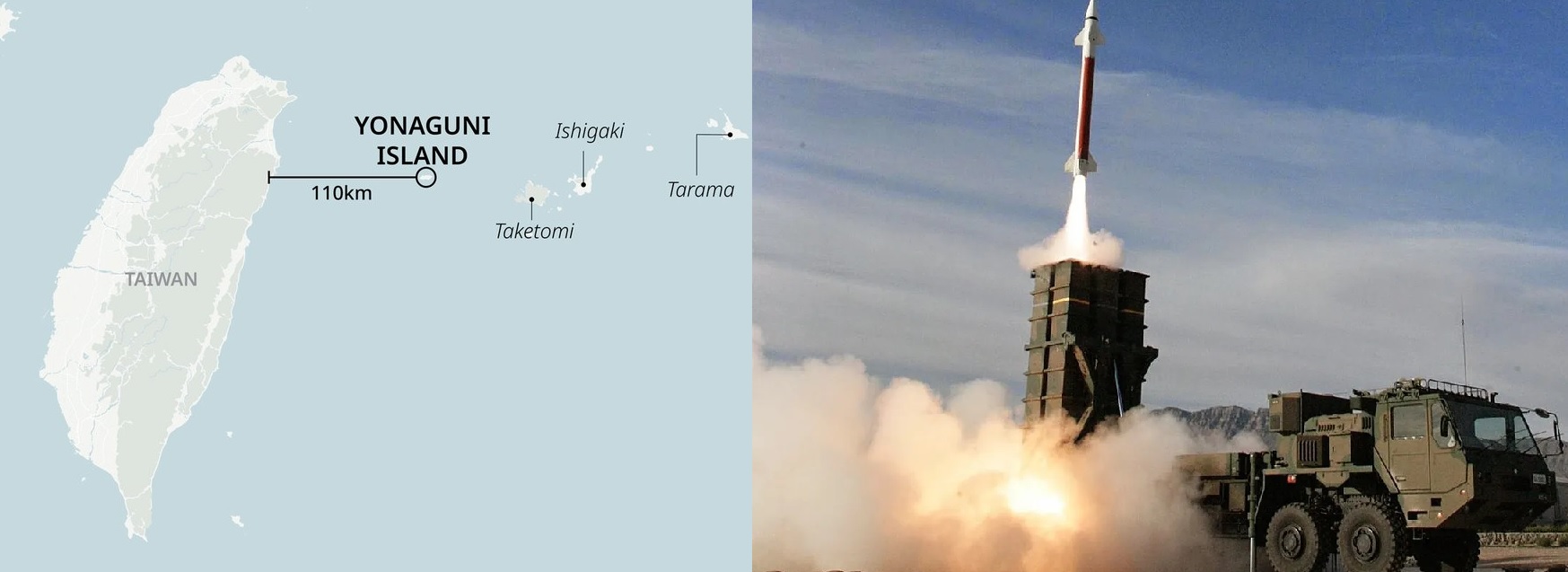
World
Japan has confirmed plans to deploy medium-range surface-to-air missiles on Yonaguni Island, a tiny outpost just about 110 km from Taiwan, in a move aimed at strengthening air defence and deterring an increasingly assertive China. The deployment is part of a wider missile and force build-up along Japan’s southwestern island chain facing the East China Sea and Taiwan Strait. A New Missile Unit on Japan’s Western Edge According to Japanese defence officials, the new unit on Yonaguni will field medium-range surface-to-air missiles (SAMs), widely understood by analysts to be variants of the Type 03 Chū-SAM or its improved version, already in service with the Japan Ground Self-Defense Force (JGSDF). Yonaguni, the westernmost inhabited island of Japan, has long been seen as a frontline observation post. A small JGSDF coastal surveillance unit was established there in 2016; now, the island is being hardened into a full-fledged air-defence node that can help shield Japanese territory and sea lanes around Taiwan. Japanese Defence Minister statements, reported by outlets citing Bloomberg and domestic media, frame the move as essential to reducing the risk of an armed attack on Japan and countering the “most severe security environment” since World War II, rather than as an escalation. Missile Specifications: Type 03 Medium-Range Surface-to-Air Missile The Type 03 medium-range surface-to-air missile (Chū-SAM) is Japan’s primary mobile area air-defence system for the Ground Self-Defense Force. Key specifications include: Type: Mobile, truck-mounted surface-to-air missile system Range: Approximately 50 km or more (some sources suggest up to around 60–100 km for improved variants) Engagement altitude: Up to about 10 km Speed: Around Mach 2.5 Missile dimensions: About 4.9 metres in length and 320 mm in diameter, with a mass around 570 kg Warhead: Approx. 73 kg high-explosive fragmentation warhead with proximity fuze Guidance: Inertial guidance with mid-course command updates, plus an active radar homing seeker in the terminal phase Sensors & fire control: The system uses a sophisticated active electronically scanned array (AESA) radar, capable of tracking up to roughly 100 targets and engaging about 12 simultaneously, including fighter jets, helicopters and cruise missiles The newer Chū-SAM Kai (improved Type 03) further enhances range, networking and the ability to counter advanced cruise missiles and some short-range ballistic or hypersonic threats, and is being progressively fielded across Japan. Deployed on Yonaguni, such a system would form a dense air-defence umbrella over key sea lanes between Taiwan and the Ryukyu islands, complicating any hostile attempt to use aircraft or cruise missiles in a Taiwan contingency. Yonaguni’s Strategic Position Near Taiwan Yonaguni Island sits on the western edge of the Nansei (Ryukyu) island chain, facing both the East China Sea and the Pacific. It is closer to Taiwan than to Okinawa’s main island, and lies near routes used by Chinese warships and aircraft transiting toward the western Pacific. The deployment on Yonaguni will tie into a lattice of new bases across the chain: Surface-to-air missile units have already been established or planned on Amami Oshima, Miyako and Ishigaki islands. Anti-ship missile batteries, including truck-mounted Type 12 surface-to-ship missiles, are positioned to cover key straits like Miyako, through which Chinese naval task forces routinely pass. U.S. forces have also conducted logistics drills to Yonaguni and are building their own “missile Marine” posture in nearby islands, further integrating the island into allied planning for a Taiwan emergency. Together, these steps are designed to create an anti-access / area-denial (A2/AD) barrier stretching from Kyushu down toward Taiwan, constraining Chinese air and naval manoeuvre in any crisis. Part of Japan’s Wider Missile and Defence Buildup The Yonaguni deployment is one element of a broader Japanese rearmament that began in earnest with Tokyo’s 2022 national security and defence strategies, which explicitly describe China as Japan’s “greatest strategic challenge.” Tokyo plans to lift defence spending to about 2% of GDP by 2027, roughly doubling the traditional 1% ceiling. Central to this shift is a focus on long-range strike and coastal defence missiles: The upgraded Type 12 surface-to-ship missile is being modified from a roughly 200 km weapon to a 900–1,200 km range standoff missile, with improved stealth shaping and in-flight retargeting via satellite links. Japan is developing Hyper Velocity Gliding Projectiles (HVGPs) – hypersonic glider weapons intended to hold Chinese ships and bases at risk at long distances. Tokyo has agreed to purchase U.S. Tomahawk cruise missiles and accelerate domestic missile deployments, including the upgraded Type 12 at bases in Kyushu, ahead of schedule. In this context, the Yonaguni SAM unit is a defensive yet highly visible symbol: it protects Japanese territory and forces, but also signals that Japan is willing to share more of the front-line burden in any Taiwan-related crisis. China’s Criticism and Taiwan’s Quiet Support Beijing has sharply criticized Tokyo’s stance on Taiwan and its expanding missile network. Chinese officials and state media have labelled Japan’s moves “destabilizing” and accused Tokyo of “interfering” in China’s internal affairs. After Japanese leaders suggested that an attack on Taiwan could threaten Japan’s own survival and justify intervention, the Chinese Consul General in Osaka posted a now-deleted threat on social media about “cutting off the head that sticks its nose into everything,” prompting a diplomatic stir. Chinese ministries later urged their citizens to reconsider travel and study plans in Japan. Taiwan, by contrast, has generally welcomed Japan’s tougher posture, seeing the Ryukyu missile belt – including Yonaguni – as a crucial backstop against a People’s Liberation Army (PLA) attempt to encircle or blockade the island. Taiwanese officials and analysts have framed Japan’s actions as part of a broader network of democracies – including the United States and Australia – seeking to complicate any Chinese military move against Taiwan. Local Tensions on a Militarizing Island On Yonaguni, reactions are mixed. The island has traditionally relied on tourism, fishing and small-scale agriculture, and many residents worry that intensified militarization could turn their home into a frontline battlefield in a great-power conflict. Reports describe how radar stations, military housing and expanded port facilities have transformed parts of the island’s landscape, even as some locals welcome the economic benefits of base construction and troop presence. Safety concerns were heightened after past incidents, such as aircraft accidents during exercises in the broader Okinawa region, which reminded residents of the risks of living next to high-tempo military operations. Memories of World War II’s Battle of Okinawa also feed fears that, in a future conflict, remote islands like Yonaguni could again bear the brunt of fighting. A Clear Signal to Beijing – and Washington For Tokyo, placing medium-range SAMs on Yonaguni Island sends multiple signals: To China, that Japanese airspace and sea approaches near Taiwan will be defended by modern, networked missile systems. To Taiwan, that Japan is serious about its oft-stated resolve to treat a Taiwan emergency as a direct security concern. To the United States, that Japan is investing heavily in its own frontline deterrent, complementing U.S. forces and easing allied planning for any Taiwan scenario. As missile launchers roll onto Yonaguni’s windswept hills, the island’s dual identity – serene tourist destination and potential flashpoint in an East Asian war – has never been more stark. The deployment of Type 03 medium-range missiles there underlines how the Taiwan question is remaking Japan’s defence posture and reshaping the strategic map of the western Pacific.
Read More → Posted on 2025-11-23 16:41:32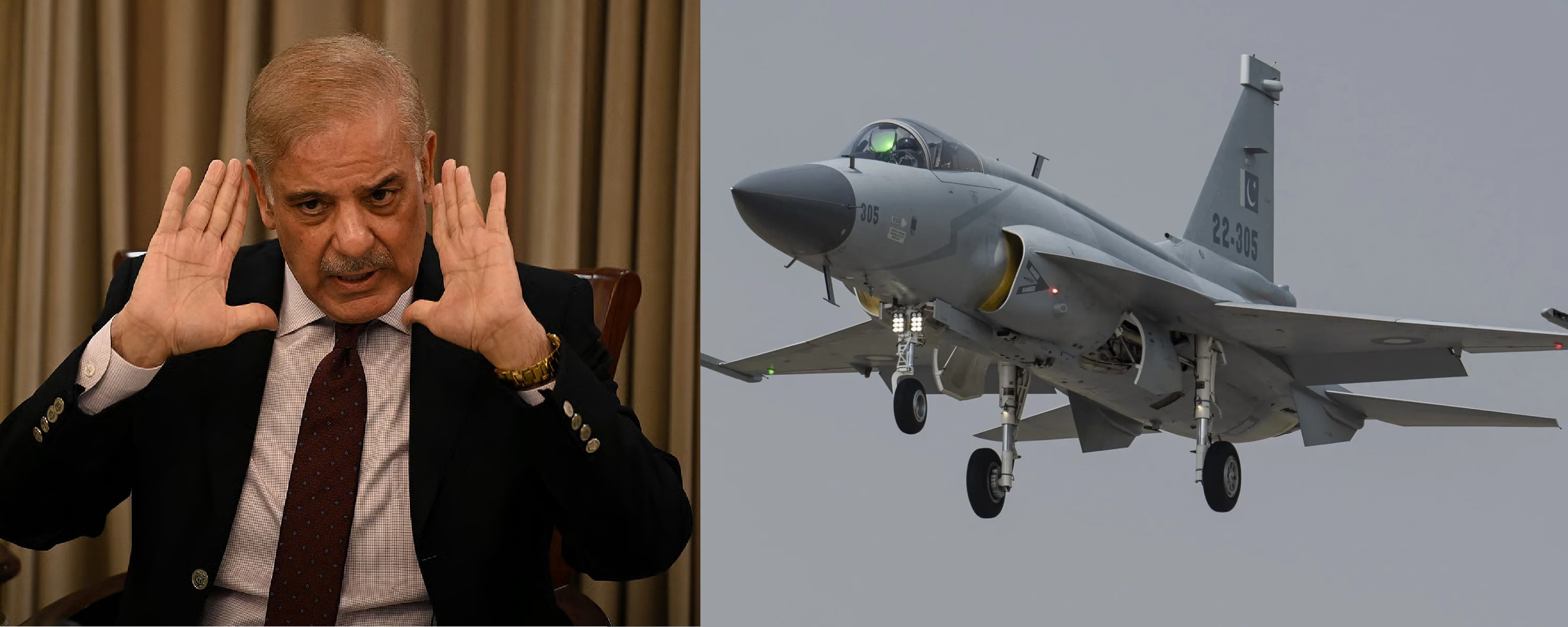
World
A serious blow has emerged for the Pakistan Air Force (PAF), as it has been compelled to divert several of its JF-17 Thunder Block III and twin-seat JF-17B jets from its own frontline squadrons to the Azerbaijan Air Force. The move, sources say, stems from slow production at the Pakistan Aeronautical Complex (PAC), engine performance issues with the Chinese-designed WS-13B, and tightening RD-93 engine supplies from Russia. According to intelligence reports monitored by Jane’s, each Block III aircraft transferred to Azerbaijan came directly out of existing PAF squadrons—rather than being newly produced export variants. One aircraft has been identified as serial number 24-322. With these transfers, the PAF is reportedly left with barely 20 operational JF-17 Block III jets in service. Production & Engine Troubles The JF-17 programme—jointly developed by PAC and China’s Chengdu Aircraft Corporation (CAC)—has long been promoted as Pakistan’s affordable, lightweight fourth-generation fighter. However, the late rollout of the Block III version has been marred. First, PAC has failed to meet its anticipated production output. Although earlier statements projected 20 or more airframes annually, PAC’s actual output remains constrained. Meanwhile, the WS-13B engine has under-performed in thrust and reliability, forcing continued reliance on the Russian RD-93. Secondly, Russia is reportedly restricting exports of RD-93 engines, worsening Pakistan’s delivery bottlenecks. The combined effect: Pakistan finds itself unable to sustain domestic force strength and fulfill export commitments at the same time. Azerbaijan Deal and Its Implications In September 2024 Pakistan announced a contract for the sale of JF-17 Block III fighters to Azerbaijan. In November 2025 Azerbaijan publicly displayed five JF-17 Block III jets—four single-seat and one twin-seat—at its Victory Day parade in Baku. At least some of those jets were confirmed to have borne Pakistani serial numbers prior to marking removal. Crucially, analysts say these aircraft did not come from fresh production lines, but directly from PAF inventory—thus diluting Pakistan’s frontline strength. Jane’s intelligence notes the diversion “straight from existing PAF squadrons.” Strategic and Operational Impact For Pakistan, the ramifications are two-fold. Operationally, a fleet of barely 20 Block III jets means thin margins for maintenance downtime, pilot training, and potential combat deployment. With engine issues and delayed production, PAF’s ability to project airpower—particularly along the eastern frontier with India—stands weakened. Strategically, Pakistan’s export drive and defence diplomacy take a hit. Diverting frontline jets to Azerbaijan may boost Islamabad’s regional defence ties, but at the expense of its own national defence readiness. Pakistan appears to be fooling Azerbaijan by offering jets that, while labelled as new export-specification aircraft, were actually taken straight from its own air force. Such shuffling raises questions about transparency, quality control, and Pakistan’s credibility as an arms exporter. Moreover, Pakistan’s decision to prioritise export over national stock underscores procurement failures and weak supply-chain management. With slow PAC production, unreliable engines, and dependence on Russia, the PAF now appears operationally compromised as regional tensions remain high. What Happens Now? Unless Pakistan addresses the root issues rapidly, the PAF may face operational shortfalls in coming months. Potential remedial steps include accelerating production, resolving WS-13B engine problems, or sourcing alternatives. For Azerbaijan, the acquisition is symbolically valuable, but whether the aircraft delivered are fully flight-ready or simply transferred second-hand remains a matter of scrutiny. The diversion of JF-17 Block III fighters from the PAF to Azerbaijan represents a major setback for Pakistan’s flagship fighter programme. It highlights production bottlenecks, engine reliability issues, and strategic mis-prioritisation. By selling from its own squadrons, Pakistan risks weakening its own defence posture while undermining its credibility as an exporter.
Read More → Posted on 2025-11-23 15:45:29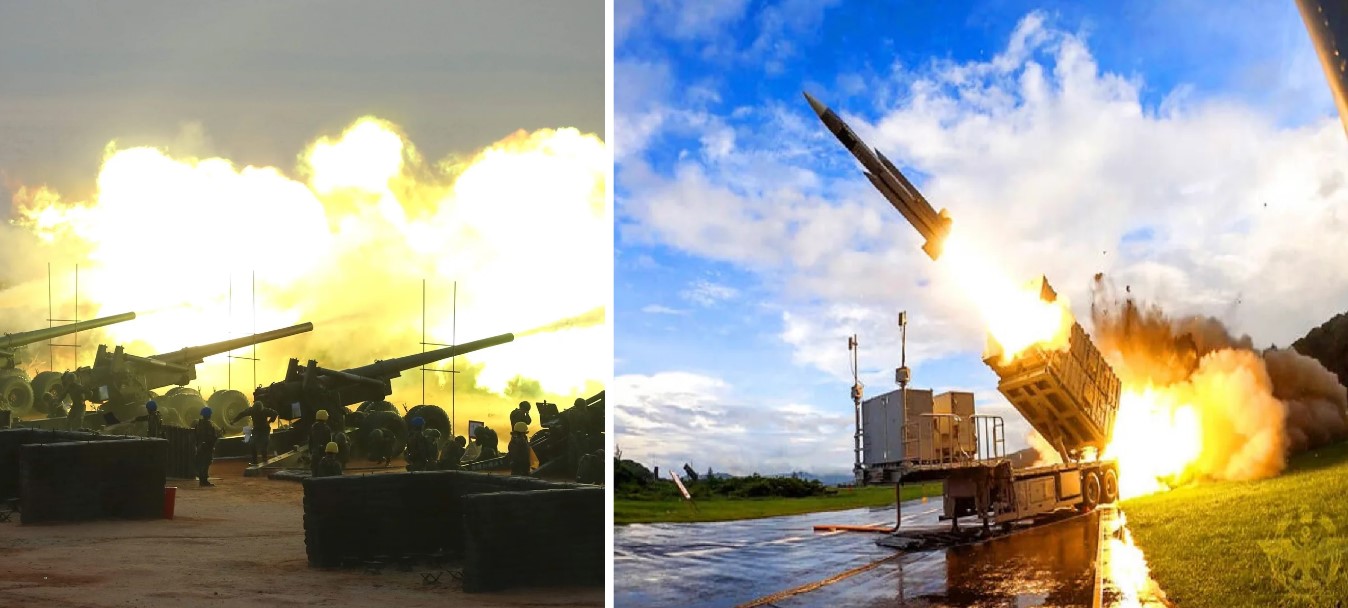
World
Taiwan’s latest 2025 National Defense Report reads less like a routine policy document and more like a sober warning wrapped in a detailed plan for survival. For the first time in years, the report lays out how the island is reshaping its military around a single, uncompromising objective: preventing the People’s Liberation Army (PLA) from ever reaching Taiwan’s shores. It is a strategy built on massed missiles, unmanned systems, hardened coastal forces, and a vast expansion of asymmetric firepower—all designed to counter a Chinese military that has grown faster and more capable than at any point in modern history. A Rising Threat Across the Strait For Taipei’s defense planners, the picture is clear. China has spent the last decade building new amphibious assault ships, enhancing naval aviation, and introducing specialized landing craft. These platforms, the report warns, have “significantly increased Beijing’s capability to conduct a large-scale invasion operation.” In the face of these developments, Taiwan is shifting away from traditional concepts of defense and doubling down on tools designed to bleed an enemy force before it can land troops. The term that appears repeatedly throughout the report is “asymmetric warfare.” Missiles: Taiwan’s First Line of Resistance The narrative begins with a sweeping expansion of missile production under the 2022–2026 Sea-Air Combat Power Improvement Plan, a $8 billion program that has quietly turned Taiwan into one of the most missile-dense territories in Asia. Across factories and bases, Taiwan has accelerated production of: Hsiung Feng III, its fastest and most lethal anti-ship missile Hsiung Feng IIE, a long-range cruise missile capable of striking targets 1,200 kilometers away Advanced Sky Bow and Sea Sword air-defense missiles These systems are being stockpiled in unprecedented quantities, equipping not only Taiwan’s air, sea and ground forces, but also its growing fleet of missile corvettes and mobile strike brigades. Defense analyst Ben Lewis notes that Taiwan’s success—or failure—may rest heavily on this capability.“Taiwan’s ability to contest PLA command of the air and sea could be the decisive measurement of whether it survives an invasion,” he told Naval News. The MND is already planning a successor program from 2026 onward, focused on strengthening resilience and deepening asymmetric firepower even further. Coastal Defense Transforms into a Kill Zone One of the most significant shifts detailed in the report is Taiwan’s effort to turn its coastline into a fortified web of sensors, missiles and unmanned systems. The Republic of China Marine Corps is at the heart of this change. Its 66th Marine Brigade is being restructured into a littoral strike formation, complete with a new drone battalion and a firepower battalion. These Marines are also being posted at strategic locations around Taipei to counter any Chinese attempt to launch decapitation strikes during the opening phase of an invasion. The Navy is undergoing an even broader transformation. In 2026, it will expand the Haifeng anti-ship missile brigades, integrating them with missile boats, maritime reconnaissance units, and shore-launch Harpoon Block II batteries. Together, these will form a new Littoral Combat Command—a force designed to create overlapping fields of fire across Taiwan’s surrounding waters. “The goal is simple,” analyst Jaime Ocon stated.“To make the 24-nautical-mile contiguous zone a deadly place for any PLA landing force.” New bases already under construction reflect this evolving approach: smaller, distributed, and built to survive long enough to fire their missiles and relocate—a strategy Taiwan has closely studied from Ukraine’s experiences. The Drone Revolution: Taiwan’s New Air Power Yet perhaps the most dramatic part of Taiwan’s defense transformation lies in the skies—specifically, in tens of thousands of unmanned systems the island now seeks to deploy. The report lays out a plan for 5,000 drones by 2028, spanning 13 variants across the Army, Navy and Air Force. But the Taiwanese government has since raised that target to 50,000, reflecting how deeply the military now sees drones as essential to survival. Already, domestic firms such as Thunder Tiger are preparing to mass-produce systems like the Sea Shark unmanned surface vessel, while U.S. companies including Anduril are supplying loitering munitions and autonomous air vehicles. Defense Minister Wellington Koo personally oversaw the test launch of an ALTIUS-600M attack drone, underscoring the priority placed on these platforms. Ocon believes Taiwan must think even bigger.“Fifty thousand drones is a great step, but honestly, we need five million.” Analyst Ben Lewis agrees that this is perhaps the most critical transformation underway.“The value of these systems cannot be understated,” he said. Drones will scout for PLA vessels, guide anti-ship missiles, swarm landing craft, deliver precision strikes, and provide real-time targeting data to Taiwan’s dispersed units. They are, in many ways, the nervous system of the island’s new defense network. A Three-Layer Defense Built to Break an Invasion The picture emerging from the 2025 report is a layered defense structure unlike anything Taiwan has attempted before. Layer One: Long-Range FirepowerCruise missiles, Harpoons, HF-series weapons—all tasked with hitting PLA vessels before they close the distance. Layer Two: Coastal Kill ZonesMissile brigades, corvettes, USVs, and littoral marine units working together to shatter amphibious landing waves. Layer Three: Drone Swarms and Asymmetric ForcesTens of thousands of drones providing eyes, precision and relentless harassment, even deep behind enemy lines. Together, these layers form a defensive web intended to complicate Chinese planning, overwhelm PLA ships, and ensure that no landing zone becomes safe. A Strategy Defined by Urgency The tone of the 2025 National Defense Report is unmistakable. Taiwan is preparing—fully, urgently, and systematically—for a scenario where China attempts to take the island by force. Every missile produced, every drone launched and every coastal unit reorganized is part of a race against time. Taiwan is not trying to match the PLA ship for ship or plane for plane. Instead, it is creating a defense structure that forces Beijing to consider whether any invasion could succeed without intolerable losses. If China has spent the decade building the tools of conquest, Taiwan is now building the tools to deny it at every step. And in the narrative laid out by Taiwan’s defense planners, that denial—layered, asymmetric, mobile, and unrelenting—may be the island’s best chance for survival.
Read More → Posted on 2025-11-23 15:24:13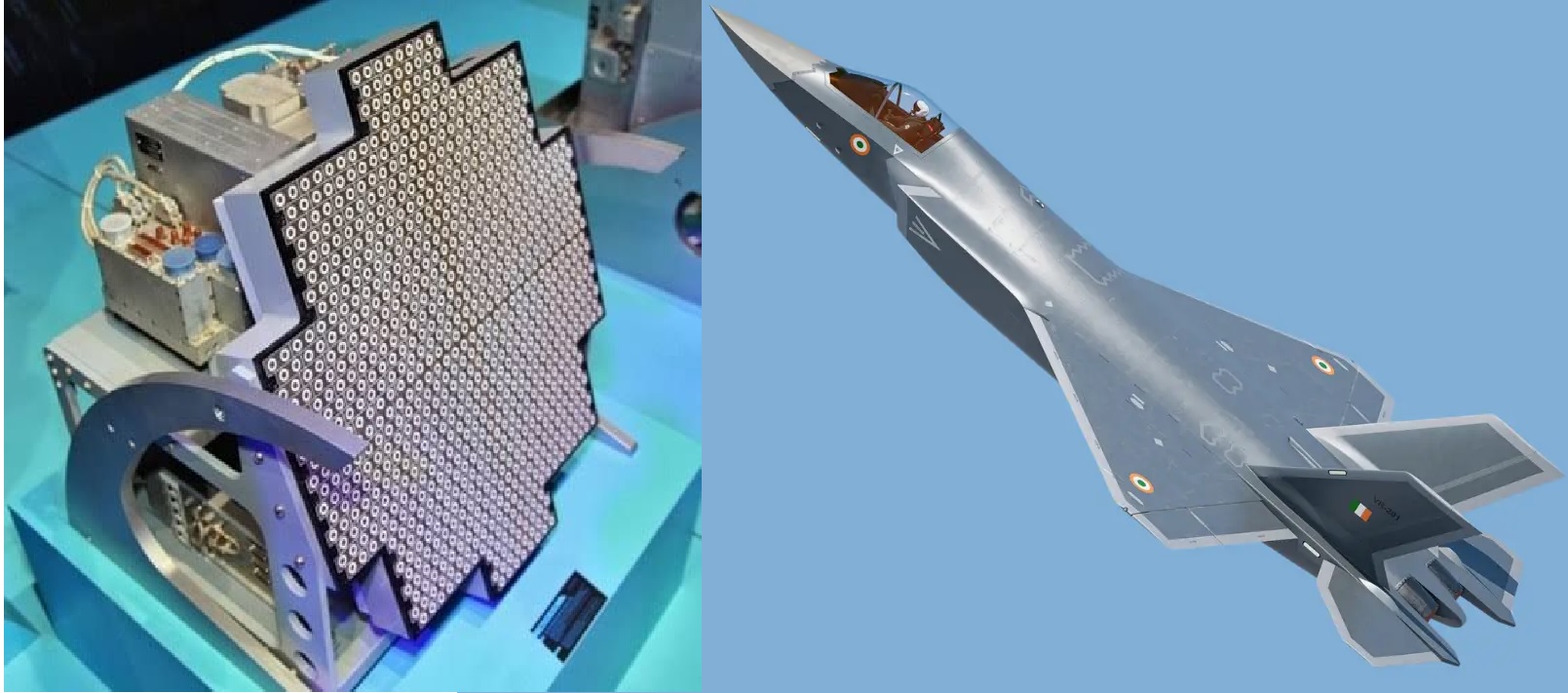
India
India’s Defence Research and Development Organisation (DRDO) has kicked off work on Photonics-based RF Memories (PRFM), a cutting-edge evolution of traditional Digital Radio Frequency Memory (DRFM) that could significantly sharpen the country’s electronic warfare (EW) capabilities against modern AESA and low-probability-of-intercept (LPI) radars. A recent DRDO tender from New Delhi explicitly seeks industry partners for the “Development of Photonics Based RF Memories (PRFM) for Jammer Systems”, with the project bid window running through December 19, 2025. If successful, PRFM-based jammers would move India from conventional electronics to light-based RF processing, delivering vastly higher bandwidth, ultra-low latency and cleaner signal replay—key ingredients for deception jamming in modern, radar-saturated battlespaces. From DRFM to PRFM: why DRDO is shifting to light Classic DRFM stores incoming radar pulses electronically, then replays modified versions to create false targets, pull tracking gates off the real aircraft (range/velocity gate pull-off), or blind the radar with tailored jamming. DRFM is already at the heart of several advanced jammer pods worldwide and underpins DRDO’s latest Tempest-type EW systems. However, as radars move to: Wideband AESA arrays Rapid frequency hopping LPI waveforms with complex modulation purely electronic DRFM hardware runs into limits in instantaneous bandwidth, dynamic range and latency. This is where Photonics-based RF Memory comes in. Instead of storing and manipulating RF signals in electronic chips, PRFM maps them onto optical carriers and uses fiber-optic or integrated photonic circuits as the storage and processing medium. Academic and industry work over the past decade has demonstrated PRFM architectures with very wide bandwidth, long, reconfigurable storage times and high signal fidelity, using fibre-based recirculating delay lines and microwave-photonics building blocks. DRDO’s new project aims to pull this kind of technology out of research labs and into operational jammer systems. How a photonics-based RF memory jammer works While DRDO has not published the detailed architecture of its PRFM system, open-source PRFM research and existing photonic EW products give a good picture of the likely approach. Signal captureThe aircraft or platform’s wideband receiver and antenna capture hostile radar emissions across a very broad frequency range (potentially tens of GHz). RF-to-optical conversionInstead of digitising directly into electronic memory, the RF signal is impressed onto a laser carrier using ultra-fast electro-optic modulators (for example, Mach–Zehnder modulators). The radar waveform is now encoded in light. Optical storage and delayThis modulated light is fed into optical delay structures—often long fibre loops or integrated waveguide loops. In many PRFM designs, a frequency-shifting recirculating delay line is used: each loop pass slightly shifts the optical frequency to prevent lasing and allows the signal to circulate many times without degrading, keeping a clean copy available for replay. Photonic signal processingWithin the optical domain, the system can: Vary the timing (range gate deception) Adjust phase and Doppler (velocity gate deception) Generate multiple delayed copies to create clouds of false targets in both range and velocity Combine different optical paths to tailor jamming waveforms Recent studies even show programmable PRFM that integrates signal storage and complex jamming pattern generation in the same photonic hardware. Optical-to-RF reconversion and transmissionWhen the jammer decides to fire, the stored optical waveforms are converted back to RF using high-speed photodetectors, amplified by power RF amplifiers, and transmitted back towards the threat radar via the jammer’s antenna. Because almost all the “heavy lifting” happens at the speed of light in passive or low-loss photonic circuits, the resultant jammer has: Nanosecond-level latency Massive instantaneous bandwidth Extremely high linearity and dynamic range —far beyond what most electronic DRFM racks can deliver. Battlefield Advantages: Smarter Deception, Tougher Survivability For Indian combat aircraft, warships and ground-based EW units, a mature PRFM-based jammer could change the electronic order of battle in several ways. 1. Beating modern AESA and LPI radarsAESA radars like those fielded by top-tier air forces use: Agile frequency hopping Randomised pulse repetition intervals Complex LPI modulation schemes to make life difficult for conventional jammers. PRFM’s huge bandwidth and fast, coherent storage means it can capture these exotic waveforms without losing detail, then replay them with surgically precise delays and phase tweaks. That lets the jammer: Generate coherent false targets that look “real” to the radar Execute advanced range / velocity gate pull-off (RGPO / VGPO) Support exotic constructs like range–velocity compound deception using multi-false-target patterns 2. Multi-threat, multi-beam jammingModern fighters may be illuminated simultaneously by: An airborne fire-control radar A ground-based surveillance radar Missile seekers with their own small AESA heads Wideband PRFM, especially when coupled with frequency-comb or multi-wavelength photonic sources, can store and process many channels in parallel, enabling a single jammer pod to handle multiple threats at once with tailored responses to each. 3. Lower size, weight and power (SWaP)Because photonic circuits can integrate many RF functions—filtering, delaying, mixing—into a small optical chip or fibre module, they are inherently attractive for fighter pods and UAVs, where every kilogram and watt matters. Companies already selling photonic-ECM systems highlight short response times in the nanosecond range and compact, modular designs for airborne, naval and ground platforms. 4. Better immunity to electromagnetic stressSince most of the processing occurs in the optical domain, PRFM modules are naturally immune to many forms of electromagnetic interference and can sit closer to high-power RF chains without the same noise floor issues that plague dense electronic systems. Where PRFM could Appear in Indian Service DRDO has not specified which platform will be first to receive PRFM-based jammers, but the agency’s broader roadmap offers hints. The organisation is already testing an airborne EW suite for the Tejas Mk1A, with plans for more sophisticated systems on future variants and the AMCA stealth fighter. India has also made significant progress on a photonic radar for fighters, UAVs and naval vessels, positioning microwave photonics as a strategic technology area. Existing DRFM-based systems, like advanced variants of the Tempest jamming suite, have laid the algorithmic and software groundwork for complex deception jamming. In that context, PRFM is the logical next rung on the ladder: first as a technology demonstrator on ground or naval EW systems with generous space and power budgets, then miniaturised into airborne self-protection pods and internal suites. Yes, I can work that in. I’ll give you a short updated version of the relevant part so you can see clearly which countries are in this game and how to mention it in your article. You don’t need to change the whole article structure — just insert a section like this near the “Battlefield advantages” or “Where PRFM could appear in Indian service” parts: Global Status Photonics-based RF memories are still an emerging technology, and no country is publicly known to have fully fielded, operational PRFM-based jammers yet. What exists today is a mix of advanced prototypes, lab demonstrators, and early military-oriented products in the broader field of microwave photonics and photonic EW building blocks. However, open-source research, patents and industry disclosures strongly suggest that several major powers are actively pursuing similar concepts: United States – U.S. defence labs, DARPA-backed programmes and industry (including major radar/EW houses) have published work on photonic RF delay lines, recirculating optical memories, and microwave–photonics-based deception architectures for next-generation electronic warfare. These are widely seen as precursors to operational PRFM-like systems, even if the final configurations remain classified. European countries (notably France, Germany, and the UK) – European universities and defence-linked research centres have worked extensively on integrated microwave photonics, optical true-time-delay networks and programmable photonic RF processors, many of which are explicitly framed for radar and EW applications. Some of these efforts are funded under EU / ESA / national defence technology programmes and could feed into future jammer suites. China – Chinese institutes and defence universities have published a steady stream of papers on photonic radar, wideband optical delay lines and optical RF storage, often highlighting their value against modern stealth targets. While details of any operational systems are opaque, the breadth of research suggests that China, too, is exploring PRFM-like capabilities for future EW systems. Israel and a few other high-end EW producers – Countries with strong electronic warfare industries (such as Israel) are heavily invested in compact, high-performance self-protection suites and are known to use microwave photonics in some subsystems. Though there is no open confirmation of a named “PRFM jammer”, it is plausible that similar ideas are being prototyped under classified programmes. In short: India is not late to the party – it is entering a small, high-tech club that is racing quietly to turn photonic RF memories from lab experiments into deployable jammers. For now, no country has openly declared an in-service PRFM jammer, but the US, Europe, China and a handful of advanced EW producers are clearly investing in the same family of technologies. DRDO’s project, therefore, is less an isolated experiment and more a bid to ensure that India is not dependent on foreign suppliers for what could become a core technology in future electronic warfare. A Quiet But Transformational Leap The PRFM tender might look like just another DRDO R&D line item, but in RF engineering terms it is a major doctrinal shift: From electronics-dominated EW to microwave photonics–driven EW From limited-band, reactionary jamming to wideband, predictive, programmable deception From platform-specific hardware to more unified, scalable photonic cores that can be reused across aircraft, ships and ground vehicles If DRDO and Indian industry can successfully turn lab-grade photonic RF memories into rugged, fielded hardware, Indian pilots and commanders will gain a far more agile electronic shield—one able to evolve against future generations of smart, networked, and stealthy sensors. For now, the project is at the competitive bid stage. But the direction of travel is clear: in the electronic battlespace over the Indian Ocean and Himalayas, light is slowly taking over from electrons as India’s most secret weapon.
Read More → Posted on 2025-11-23 14:53:16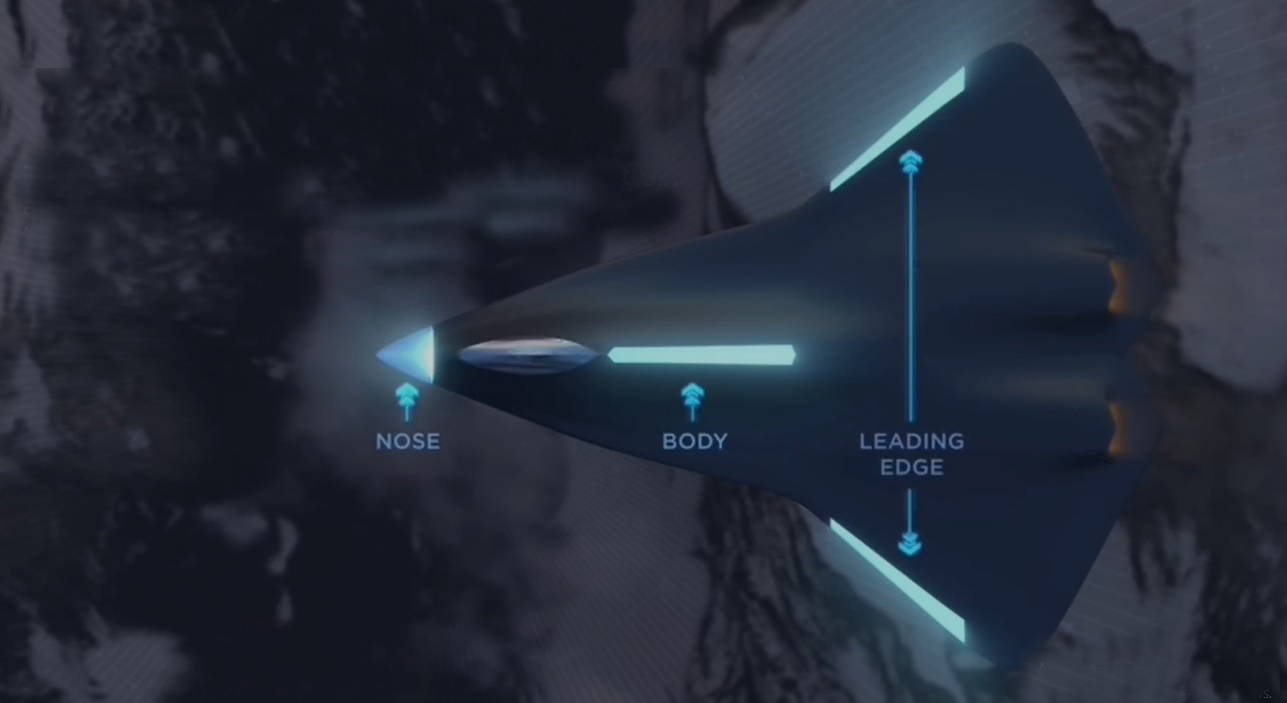
World
General Dynamics Mission Systems (GDMS) has announced a major technological milestone with the development of new ultra-wideband (UWB) radome wall designs engineered specifically for next-generation air dominance (NGAD) aircraft, collaborative combat aircraft (CCA), and advanced unmanned and manned platforms of the future. The company confirmed that it has already fabricated Initial Full-Scale Build (IFB) risk-reduction prototypes and successfully conducted radio-frequency (RF) range testing, marking a significant leap toward operational readiness. The effort is now focused on increasing both the Technology Readiness Level (TRL) and Manufacturing Readiness Level (MRL), ensuring the design can smoothly transition into upcoming high-end defense programs. Revolutionising Radome Technology for the Future Battlespace Traditional radomes—protective structures that shield radar antennas while allowing RF signals to pass—have always faced a trade-off: performance across multiple frequencies versus maintaining structural integrity and stealth shaping. General Dynamics’ new UWB radome wall technology aims to break this long-standing constraint. According to GDMS, the new design delivers “significantly broader frequency performance” compared with both legacy radomes and even the latest wideband designs. This improvement is crucial for emerging platforms that will rely on multifunction arrays (MFAs) capable of performing radar, electronic warfare (EW), communications, and targeting functions simultaneously. The company also highlighted that radome geometry can be fully customized to match any airframe while still preserving integrated sensor performance—an essential requirement for NGAD-class stealth fighters where shaping and materials determine survivability. How Ultra-Wideband Radomes Work The breakthrough comes from a re-engineered multi-layer dielectric wall structure capable of handling vastly wider frequency ranges while minimizing RF loss, distortion, and unwanted reflections. Key Principles Behind the Technology Advanced dielectric layeringMultiple composite layers with precisely tuned electrical properties allow seamless RF transmission over extremely wide bandwidths. Low-Observable (LO) integrationMaterials are optimized to maintain stealth shaping, reduce surface reflections, and avoid radar signature “hot spots.” Support for Multifunction Arrays (MFAs)Modern radars no longer transmit in narrow, predictable frequency bands. MFAs hop frequencies rapidly and cover wide spectra for:• long-range air search• electronic attack• passive detection• secure data links• target identification UWB radomes must therefore remain transparent across all these modes without degrading performance. Thermal and structural engineeringNext-gen sensors produce more heat and place greater stress on nose-cone materials. The radome supports high thermal loads and high-g maneuvers expected from sixth-generation aircraft. Why This Matters in Future Air Warfare The significance of ultra-wideband radome technology becomes clearer when looking at how profoundly it reshapes modern air combat. In the realm of electronic warfare, UWB transparency offers a decisive edge. It allows powerful onboard EW suites to operate without obstruction—letting the aircraft jam enemy radars, spoof incoming missiles, and detect low-probability-of-intercept signals with far greater confidence, all while avoiding the performance losses older radome designs often created. This advantage directly strengthens stealth target detection, a mission that next-generation platforms like NGAD must excel at. Future fighters will be expected to spot advanced stealth aircraft such as Russia’s Su-57 or China’s J-20 well before they appear on adversary sensors. By enabling radars to work across a much wider spectrum with cleaner, more consistent transmission, ultra-wideband radomes enhance range, resolution, and resilience against jamming, giving NGAD-class platforms a critical upper hand. The technology also elevates multifunction combat superiority. Modern MFAs conduct several operations at once—communications, targeting, surveillance, and electronic attack—and any limitation in the radome’s transparency can restrict these capabilities. With UWB performance, these complex systems operate smoothly even in dense electronic warfare environments, allowing the aircraft to maintain full combat effectiveness. Finally, the relevance of this technology becomes even greater in the age of AI-driven autonomy. Collaborative Combat Aircraft flying alongside NGAD fighters depend on rapid, uninterrupted data exchange. Tasks like real-time sensor fusion, high-speed data sharing, and AI-enhanced threat detection require massive bandwidth and minimal signal distortion. Ultra-wideband radomes make this ecosystem possible, becoming a foundational element of the data-rich, AI-enabled air battlespace of the future. Future Programs That Could Adopt the Technology Industry analysts suggest that this radome architecture is likely intended for: US Air Force NGAD manned platform US Navy F/A-XX future fighter Loyal Wingman / CCA swarms High-Altitude ISR aircraft Next-gen missiles or hypersonic systems As next-generation military systems move toward distributed sensing, jam-resistant networks, and multispectral tracking, a radome that supports ultra-wideband operations becomes indispensable. A Step Toward Sixth-Generation Superiority With RF testing already completed and prototype structures fabricated, General Dynamics is positioning its ultra-wideband radome as a foundational technology for the United States’ future air combat fleet. As work continues to raise readiness levels, the system could soon become standard on next-gen platforms shaping the battlespace beyond 2030. The new UWB radome design is not merely an improvement—it represents a critical enabler for the sensor-heavy, stealth-dominant, AI-connected air warfare environment of the coming decades.
Read More → Posted on 2025-11-23 14:00:10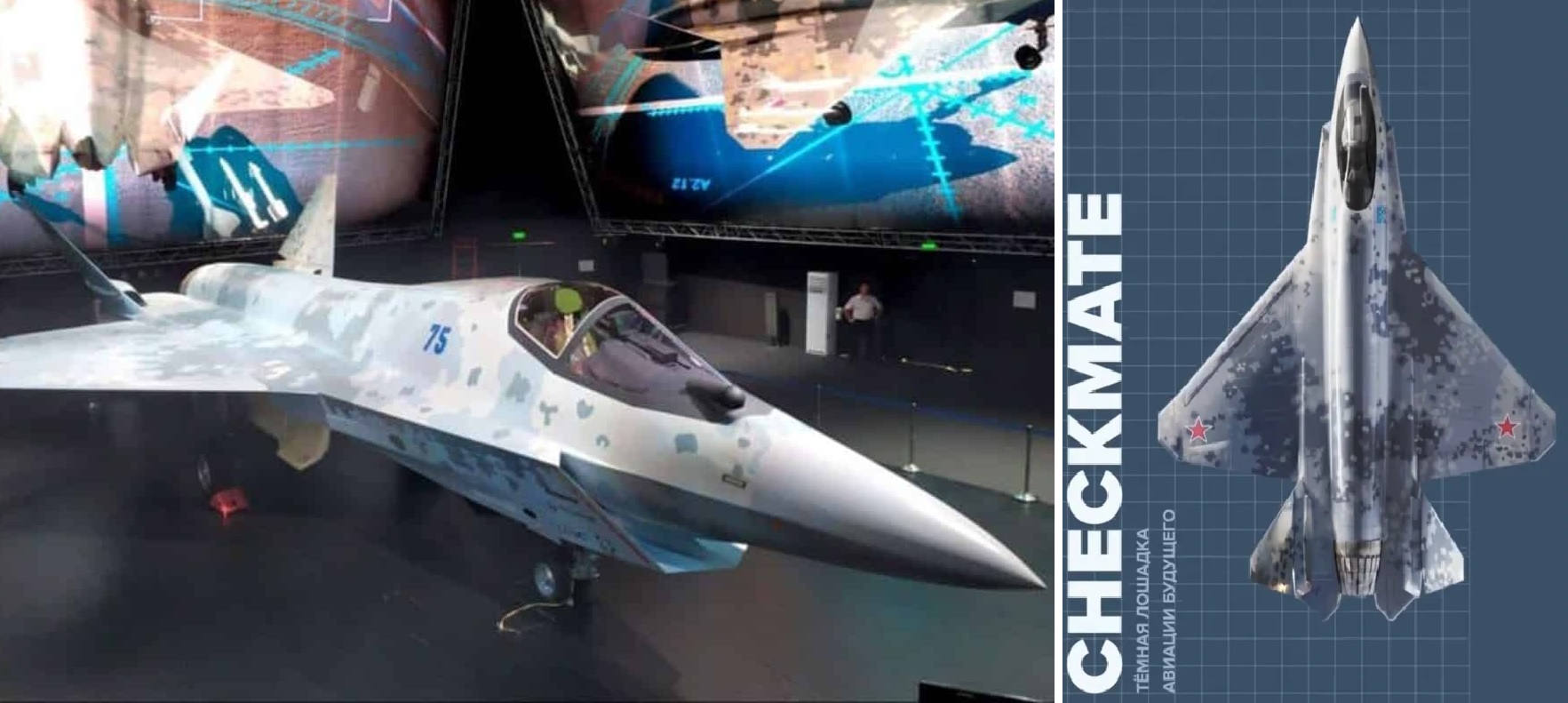
World
Russia has confirmed that it is advancing joint production of the Su-75 Checkmate stealth fighter with Belarus, marking one of the most significant steps yet in the development of the single-engine fifth-generation aircraft. The announcement came on 20 November 2025 at the Dubai Airshow 2025, where Rosoboronexport Director General Alexander Mikheev detailed the programme’s progress and expanding international industrial partnerships. According to officials, the first flying prototype is now in final assembly and undergoing bench testing, positioning the aircraft for a first flight in early 2026. This phase includes systems validation, electrical interface checks, and pre-flight structural assessments—crucial milestones after years of delays and uncertainty. Deepening Russia–Belarus Defence Integration The Su-75 Checkmate is evolving into a Union State flagship project, with Belarus playing a growing role in manufacturing avionics, electronic-warfare modules, optics, and mission systems. Minsk sees the project as an opportunity to expand high-value aerospace production and embed itself deeper into Russia’s defence-industrial supply chain. This cooperation also fits Moscow’s broader strategy of distributing production across the Union State to improve resilience under sanctions and increase export competitiveness. Technical Specifications Confirmed by Official Documentation The newly surfaced Russian brochure, featuring the Su-75 and its baseline performance characteristics, provides the clearest technical snapshot of the aircraft to date: Su-75 Checkmate – Basic Specifications (from image document) Maximum takeoff weight: 26,000 kg Maximum flight speed: Mach 1.8–2.0 Service ceiling: 16,500 m Practical flight range: 2,800–2,900 km Maximum combat load: 7,400 kg Weapon mounting points: 13 total / 5 internal bays Radar detection range (RCS 5 m² target): up to 160 km Detection range of ground/bridge target: 120 km Engine thrust: 14,500–16,500 kgf These numbers align with Russia’s plan to market the Checkmate as a lightweight, cost-effective stealth fighter, with performance falling between the F-35 and advanced 4.5-generation aircraft. Export Ambitions: A Lower-Cost Stealth Platform Russia is positioning the Su-75 as an export-friendly fighter, crafted specifically for nations seeking a more affordable path into fifth-generation aviation. The aircraft’s single-engine layout, stealth contours, and internal weapon bays are meant to deliver much of the capability of heavier platforms but at a fraction of the cost. Its design philosophy leans heavily on operational simplicity, ease of maintenance, and payload efficiency, making it attractive to air forces that cannot sustain large twin-engine fighters. With the added flexibility of modular avionics and customizable electronic-warfare suites, including systems sourced from Belarus, Russia hopes the Checkmate will appeal to a broad spectrum of buyers across Asia, Latin America, Africa, and the Middle East, especially those shut out of Western fighter programmes or seeking deeper industrial participation than NATO suppliers typically offer. Russia Offers India Full Technology Transfer (TOT) One of the most notable aspects of Russia’s export strategy is its renewed focus on India. Moscow has reiterated that New Delhi has been offered full technology transfer—a rare proposition in the world of fifth-generation fighter development. The offer goes far beyond simple procurement: it includes joint design authority, licensed production, and the freedom to integrate Indian-made sensors, electronics, and weapons into the platform. Russia has even floated the possibility of co-developing a twin-engine variant if the Indian Air Force requires it. This outreach reflects Russia’s determination to preserve its long-standing defence ties with India at a time when New Delhi is rapidly expanding its own aerospace ambitions through the Tejas Mk-2 and AMCA programmes. Challenges Yet despite the enthusiasm surrounding its progress, the Su-75 programme still faces significant headwinds. Western sanctions have placed pressure on the availability of high-end microelectronics, while the aircraft itself must still prove that its stealth characteristics, avionics, and overall performance match the claims made by its developers. The absence of any firm export orders, combined with questions about Russia’s ability to move from prototype to reliable serial production, adds further uncertainty. Financial constraints within Russia’s broader aerospace sector only complicate matters. Ultimately, the success of the Su-75’s first flight will be a crucial turning point—one that could either solidify international confidence or reinforce existing scepticism surrounding the programme’s viability.
Read More → Posted on 2025-11-23 13:38:11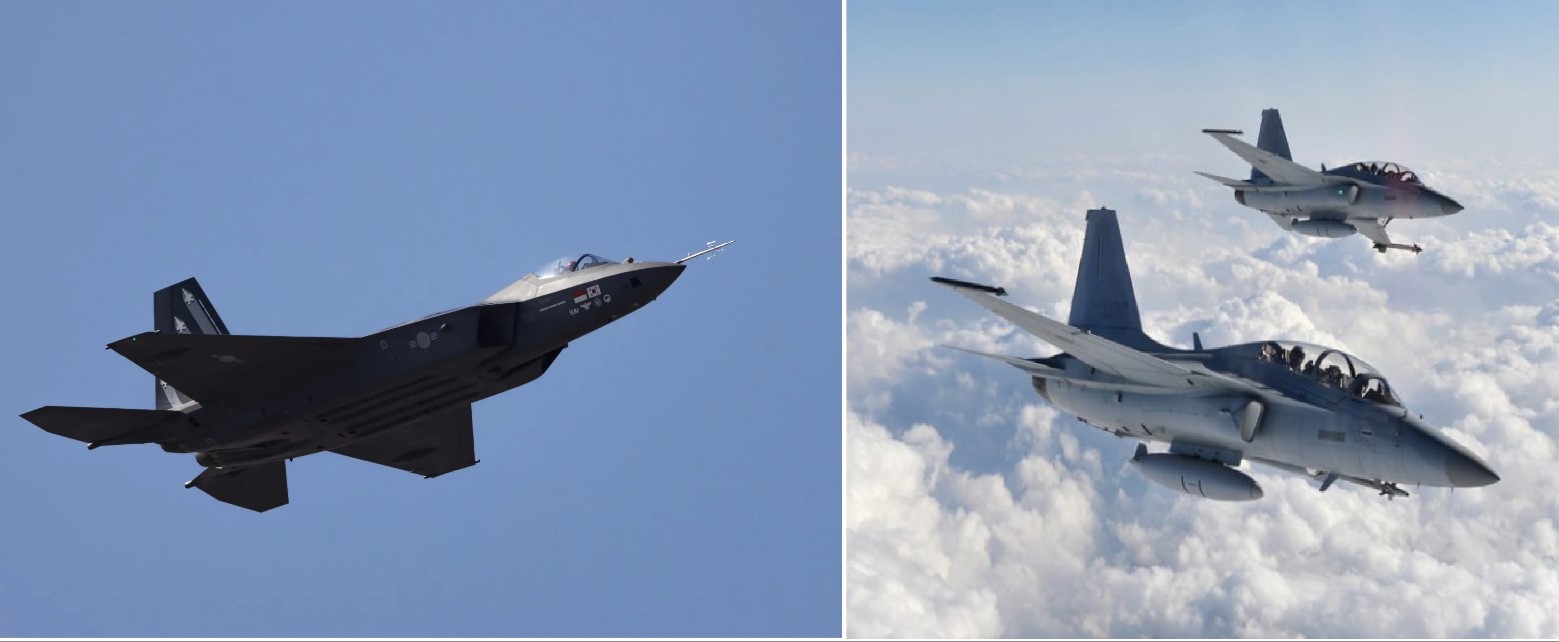
World
South Korea’s accelerating push into the global fighter jet market appears to be paying off, with the UAE reportedly on the verge of purchasing the KF-21 Boramae, while Egypt is said to be in the final phase of acquiring the FA-50 light combat aircraft. These moves follow President Yoon Suk-yeol’s recent visits to Abu Dhabi and Cairo, during which large-scale military cooperation—beyond just aircraft sales—was a central focus. The United Arab Emirates is now “very close” to signing a contract for the KF-21, South Korea’s 4.5-generation multirole fighter. Abu Dhabi’s interest builds on its already long-standing partnership with Seoul across defence technology, missile defence, nuclear power, and advanced weapons development. The UAE currently operates South Korean M-SAM-II ballistic missile interceptors and Korean strike missile systems, and the relationship has expanded into areas such as UAV development, electronic warfare systems, and counter-missile technologies. If the UAE proceeds with the KF-21 purchase, it would gain a major boost to its long-range precision strike capability and greater access to high-grade South Korean and Western air-launched missiles. The cooperation is also expected to open doors to next-generation fighter development programs and advanced UCAV integration, marking one of the most significant aerospace partnerships South Korea has ever secured in the Middle East. Egypt, meanwhile, is reportedly even closer than the UAE to finalizing its purchase of the FA-50 Fighting Eagle. Cairo has already bought South Korea’s K9 Thunder self-propelled howitzers, and the FA-50 deal is expected to include aircraft, TAipers air-to-surface missiles, and potential agreements for extended maintenance, pilot training, and technical support. The FA-50’s affordability, operational versatility, and compatibility with modern Western systems make it an attractive option as Egypt continues modernizing its diverse fighter inventory. These developments come as Saudi Arabia appears to be moving toward the U.S. F-35, though Riyadh has not disengaged from Korea. Saudi officials remain in dialogue with Seoul on future defence collaboration, including possible participation in KF-21 component production, UAV technologies, and other aerospace programs. To meet rising global demand, Korea Aerospace Industries (KAI) has expanded its production capacity for both the FA-50 and the KF-21. The FA-50 backlog continues to grow after recent large purchases from Poland and Malaysia, with several nations—including Egypt, the Philippines, and Colombia—engaged in ongoing discussions. The KF-21 has active cooperation tracks with the Philippines, Malaysia, and Saudi Arabia, all exploring long-term aerospace development partnerships. Indonesia, originally a co-developer expected to fund 20% of the KF-21 program, appears to have been relegated to the status of a general buyer after repeatedly delaying payments and failing to meet agreed milestones. While Jakarta still expresses interest in purchasing the aircraft, its influence on the program has significantly diminished. The KF-21 Boramae is designed to replace South Korea’s aging F-4 and F-5 fleets and operate alongside modern platforms such as the F-35A Freedom Knight and F-15K Slam Eagle. It is being configured to integrate advanced armaments such as the Meteor BVRAAM, AIM-120 AMRAAM, long-range precision-strike weapons, and future indigenous missiles. With multiple interested customers and expanding regional partnerships, the KF-21 is positioned to become one of the most influential Asian fighter programs of the coming decade. If the UAE and Egypt finalize their respective deals, South Korea could establish a powerful new defence triangle connecting Seoul, Abu Dhabi, and Cairo, strengthening cooperation in aviation, missile defence, and joint production. This would mark one of the largest expansions of South Korea’s defence export footprint and reinforce its status as a rising global leader in next-generation military aviation.
Read More → Posted on 2025-11-23 13:19:00
World
Germany is negotiating with Israel Aerospace Industries (IAI) to buy more Arrow 3 interceptor missiles and to extend its Heron TP drone agreement, as Berlin accelerates efforts to strengthen air and missile defence against Russia, according to reporting by Globes and European defence outlets. These talks come as Germany prepares to declare its Arrow 3 system operational, following a 2023 contract worth about $3.5 billion (nearly €4 billion) – the largest defence export deal in Israel’s history. Arrow 3: Germany Wants More Interceptors for a Regional Shield Germany’s initial Arrow 3 package, approved by the United States in 2023, covers three Arrow 3 batteries as part of the European Sky Shield Initiative (ESSI), a 24-nation project to build a layered air and missile defence network across Europe. Arrow 3 is designed to intercept ballistic missiles outside the atmosphere, forming the top tier of Israel’s multi-layered defence architecture above systems like David’s Sling and Iron Dome. Each interceptor is estimated to cost around $2 million, making it the most expensive missile in Israel’s defensive arsenal. According to the Globes report, Berlin fears its current stock of Arrow 3 interceptors is too small for a serious crisis with Russia. German planners worry that a sustained missile campaign would quickly deplete existing stocks, leaving gaps in Germany’s own defences and in the wider ESSI shield protecting much of central and northern Europe. The urgency is reinforced by the deteriorating security picture on NATO’s eastern flank. Polish army chief of staff Gen. Wiesław Kukula recently warned that Russia has “begun the phase of preparing for war” with Poland, describing Russian activity as building conditions for potential aggression on Polish territory. Follow-On Deals: A Pattern in IAI’s Export Strategy IAI’s push for follow-on Arrow 3 sales fits a familiar pattern. In 2017, India signed a $1.6 billion contract for Barak 8 air defence systems, then just a month later ordered the naval version of the interceptor in a second deal worth about $630 million. The German negotiations come during a boom period for Israeli defence exports: Elbit Systems recently secured a $2.3 billion contract with an undisclosed customer. IAI’s order backlog has reached a record $25 billion, driven by high demand for missile defence, UAVs and radar systems. The Arrow 3 sale to Germany, valued at around $3.5 billion, remains Israel’s single largest defence export deal. Heron TP: Germany Weighs Extension and New Purchases The second track of the talks focuses on Germany’s long-running use of the Heron TP unmanned aircraft. Since January 2019, German operators have trained and flown from the “Red Baron” squadron at Tel Nof air base in Israel under a nine-year, €900 million agreement. The package includes:Lease of seven Heron TP drones About €170 million earmarked for airport and airspace usage Training, maintenance and technical support embedded in the Israeli Air Force The agreement is now entering its seventh year, forcing Berlin to decide whether to extend, expand or restructure the arrangement. A senior defence official quoted by Globes said it is hard to imagine Germany walking away from Heron TP, given the platform’s operational track record and the substantial investment in German crews and infrastructure. Separately, Bloomberg reported that Germany intends to acquire three additional Heron TP drones for roughly €1 billion, a plan that remains under negotiation and requires approval from the Bundestag budget committee. Follow-up reporting suggests that the bundle combines the purchase of three airframes (around €630 million) with about €300 million in operating costs over five years, potentially expanding the German Heron TP fleet and gradually shifting from pure leasing to mixed lease-and-ownership models. Gaza Ceasefire and the Lifting of a Partial Arms Embargo The current ceasefire in Gaza has eased political pressure on German–Israeli defence cooperation. According to Globes, this is visible in Berlin’s decision to lift a partial arms embargo imposed on 8 August by Chancellor Friedrich Merz, a restriction that had slowed some approvals earlier in the conflict. With the embargo lifted, German ministries and parliamentary committees face fewer political obstacles when reviewing new Arrow 3 interceptor orders and Heron TP procurement packages. Germany’s Role as a Key Israeli Defence Partner Data from the Stockholm International Peace Research Institute (SIPRI) indicate that between 2020 and 2024, Germany accounted for about 33% of Israel’s arms imports, second only to the United States at 66%. Parallel figures from SIBAT, Israel’s defence export authority, show that: Israeli defence exports reached a record $14.795 billion in 2024, an 11.7% increase over 2023 Europe’s share of Israeli arms exports jumped from 35% to 54%, reflecting rapid rearmament and air-defence investments across the continent Within that surge, Germany stands out both as a flagship Arrow 3 customer and a major UAV client through Heron TP. The €377 Billion Question: Germany’s Long-Term Procurement Plan Your original text mentioned that Germany’s 2026 defence procurement plans total €377 billion, with €437 billion in overall spending. That wording makes it sound like a single-year budget, which is misleading. What the leaked Politico documents and follow-on reporting actually show is: €377 billion is the scale of long-term procurement projects laid out in a 39-page planning document tied to the 2026 budget cycle, not a one-year spend. In dollar terms, that procurement wishlist equates to about $438 billion. Germany’s annual defence budget for 2026 is projected at around €117 billion, roughly 2.8% of GDP, with extra flexibility provided by special funds and loosened debt rules. So the numbers are broadly right, but they describe multi-year procurement planning, not a single-year 2026 budget line. Even a small slice of that €377 billion going towards Israeli systems—additional Arrow 3 interceptors, more Heron TP drones, and potentially future Arrow 4 purchases now under discussion—would translate into multi-billion-euro revenue for Israel’s defence industry. Strategic Impact: Beyond Bilateral Trade If Germany finalises the new Arrow 3 and Heron TP agreements, the impact will go far beyond a simple buyer–seller relationship. These acquisitions would significantly strengthen Germany’s exo-atmospheric missile shield, giving Berlin and its ESSI partners far greater confidence against the evolving Russian ballistic-missile threat. They would also deepen the Bundeswehr’s operational integration with Israel’s highly advanced air- and missile-defence ecosystem, especially in areas such as training, doctrine development, and real-time data-sharing. Most importantly, the deals would reinforce Europe’s accelerating shift toward Israeli high-end defence technologies, placing systems like Arrow 3 alongside American platforms such as Patriot and THAAD as core pillars of the continent’s future air-defence architecture.
Read More → Posted on 2025-11-23 13:03:10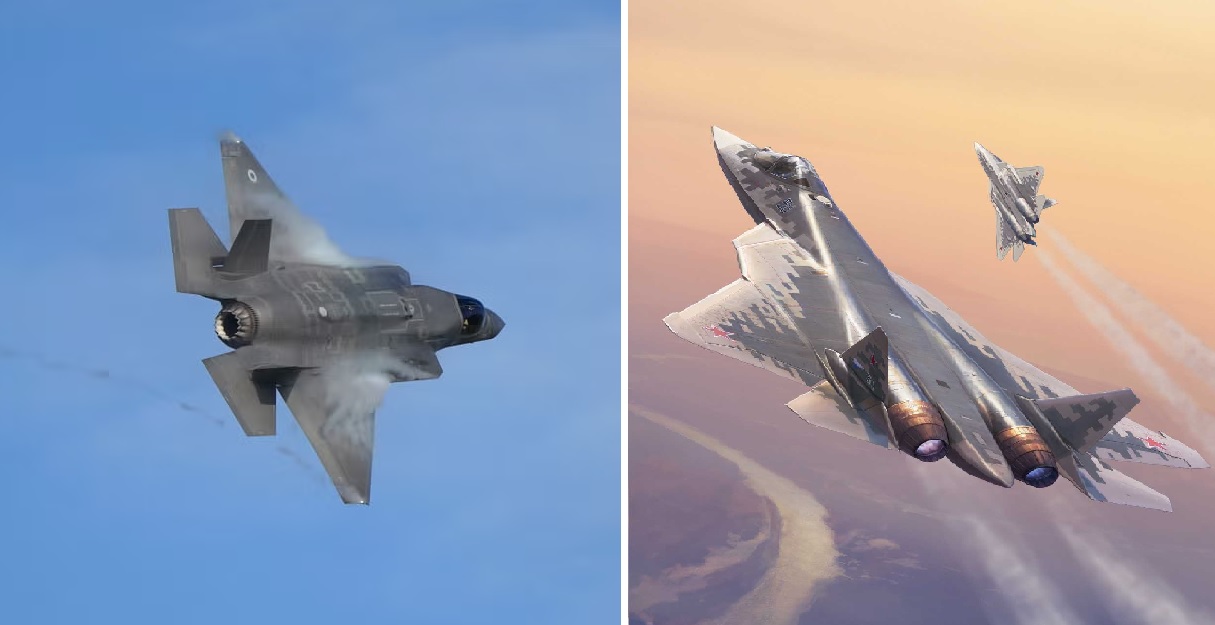
India
A quiet but intense struggle is unfolding behind the scenes as Washington and Moscow compete to sell their most advanced stealth aircraft to India. What began as standard defense proposals has gradually turned into one of the most significant arms races in recent years — not on the battlefield, but in diplomacy, technology offers, and strategic persuasion. For Russia, this is a battle it cannot afford to lose. For the United States, this may be the chance to finally break into a market long dominated by Moscow. And for India, the world’s largest democracy and one of the most important military buyers, the emerging competition presents both an opportunity and a dilemma of historic proportions. Russia’s Extraordinary Offer: A Complete Technology Transfer In the beginning, Moscow’s proposal to India for the Su-57 fifth-generation fighter was like any conventional export pitch — a package of aircraft with partial industrial involvement. But everything changed the moment former President Donald Trump publicly signaled that Washington was willing to offer the F-35 to India, something U.S. policy had avoided for years. The Russian response was immediate and unprecedented. Determined not to lose its biggest arms customer, Moscow dramatically enhanced the proposal. Instead of a basic export deal, it offered India complete control and complete access: 100% Transfer of Technology for the Su-57 airframe 100% ToT for the new AL-51 engine Indian assembly and production rights Freedom to integrate Indian or foreign weapons A joint development roadmap for future upgrades For India, which has long sought deeper industrial access to fighter production, this offer stood out as something Russia had never offered to any country before. In Moscow’s eyes, losing India — a country that operates 70% to 80% Russian-origin weapons — would not just be a commercial setback but a strategic defeat. Washington Under Pressure: F-35 Exports Expand Amid Shrinking Markets On the American side, circumstances were shifting as well. A series of cancellations and delays from European partners had placed new pressure on the F-35 program, forcing Washington to widen its export push. That is why the U.S. took steps that would have been unthinkable a few years ago. It agreed to sell the F-35 to Saudi Arabia, even at the risk of friction with Israel. Soon after, discussions began on the possibility of extending a similar offer to India. This move came not just from the desire to counter China, but from a deeper ambition: to crack open the Indian market and reduce Russian influence once and for all. But India’s demands were unlike anything the U.S. has faced in the past. New Delhi made it clear that it would accept the F-35 only under conditions similar to those granted to Israel: Full operational control The ability to install its own weapons Independence from U.S. remote restrictions Complete sovereignty over mission data Until now, Washington has not signaled whether it would meet these conditions. The S-400 Dilemma: An Obstacle the U.S. Cannot Ignore Even if the U.S. eventually agrees to India’s demands, one problem remains — the S-400 air defense system already deployed by India. American officials have repeatedly maintained that the F-35 cannot operate in airspace where Russian radars collect data. The Turkey crisis serves as the most visible example: once Turkey purchased the S-400, its F-35 deal was halted immediately. For India, this would mean operating the S-400 and the F-35 in completely separate environments, with no shared networks, no common bases, and no integrated operations. Such separation goes directly against India’s long-term integrated command approach. Analysts believe this would remain one of the most difficult barriers for any F-35 deployment in India. India’s Existing Arsenal Tilts Toward Russia Another reality complicates the American offer. India’s weapons ecosystem — missiles, radars, datalinks, EW suites, and air-defense networks — is already deeply connected to Russian-origin systems. Any new fighter must fit into this network. The Su-57, by design, integrates naturally: It can operate comfortably with S-400 batteries. It can carry Indian and Russian weapons with minimal modification. It can link into Indian and Russian command systems. The F-35, on the other hand, is known for its strict digital ecosystem. It cannot simply plug into India’s existing Russian and indigenous networks. Instead, it would function as a standalone bubble, technologically isolated from most Indian systems. For many Indian analysts, this is a decisive factor. Why Washington Is Trying So Hard Inside American strategic circles, the motivation is clear. India represents three long-term objectives: Build a stronger Asian counterweight to China Reduce the dominance of Russian technology in the Indian military Secure a major new customer for the F-35 program In each of these, India plays a central role. That is why Washington is pushing harder than ever before. But the U.S. model of tightly controlled weapon ecosystems conflicts with India’s doctrine of strategic autonomy, making negotiations challenging. Why Moscow’s Proposal Resonates More With India For India, Russia’s upgraded offer presents an exceptionally comfortable fit. The Su-57 package does not come with operational restrictions. It offers deep industrial access, the ability to integrate any weapon, and compatibility with existing systems like S-400, BrahMos, and Indian EW suites. Most importantly, it preserves India’s long-standing principle: no foreign power should dictate how Indian military assets operate. Russian officials have quietly framed their offer as the beginning of a multi-decade partnership where India becomes a co-designer, not just a customer. This vision appeals strongly to India’s aerospace ambitions. What Comes Next: A Strategic Choice for Decades India now faces one of its most consequential defense decisions in recent memory. If Washington agrees to full operational control — a major “if” — India gains access to the world’s most advanced stealth fighter. But it comes wrapped in American restrictions and the requirement to separate it from the S-400 ecosystem. If New Delhi chooses Russia’s Su-57, it gains unmatched industrial freedom, complete compatibility with its existing weapons, and a place as a co-developer in future platforms. Whichever path India takes, the decision will shape not only the Indian Air Force but also the global balance of military influence for decades. And the world is watching closely, as the U.S. and Russia fight their quiet war — not on the battlefield, but for India’s skies.
Read More → Posted on 2025-11-22 17:20:24
World
At the G-20 summit, Maxim Oreshkin, who is heading Russia’s delegation, claimed that the World Bank has given Ukraine more money than the whole of Africa combined and that African economies face “biased rejections and complicated procedures” at the World Bank and IMF. His remarks tap into a long-running grievance in the Global South about how global financial institutions treat Africa compared with politically favoured countries such as Ukraine. But World Bank data tell a more complicated story. Russia’s accusation: Ukraine over Africa Russian officials have been making this argument for months. Deputy Foreign Minister Aleksandr Pankin and Foreign Minister Sergey Lavrov have both said that the World Bank now spends more on supporting the government of Volodymyr Zelensky than on all African countries combined, and that Bretton Woods institutions are being steered by Western political priorities rather than development needs. Oreshkin’s comment at the G-20 repeats that line, adding that African economies face “biased rejections and complicated procedures” when they seek World Bank and IMF funding. His message fits into Russia’s broader diplomatic push in Africa, where Moscow portrays itself as a champion of a “fairer” global financial architecture. How much money has the World Bank mobilised for Ukraine? Since Russia’s full-scale invasion in February 2022, the World Bank Group has created a special support platform for Ukraine, channelling both its own resources and large amounts of donor money: According to the Bank’s own figures, nearly US$82 billion in financial support has been mobilised for Ukraine since 24 February 2022, with the overwhelming majority raised on behalf of other donors and partners. Earlier updates show how quickly this ramped up: about US$38 billion mobilised by late 2023, almost US$50 billion by October 2024, and then roughly US$80–82 billion by mid-2025 as additional donor funds were committed. This support is not legally “war funding” in the sense of paying for weapons or combat operations. World Bank rules explicitly prohibit financing for arms, weapons, military equipment or military infrastructure, and bar the Bank from advising on military policy. Instead, the money is used to: keep essential public services running (salaries for teachers and doctors, social protection, pensions) repair energy, transport, water and housing infrastructure damaged by Russian strikes support refugees, internally displaced people and farmers, and stabilise the financial system In practice, this financial lifeline frees up Ukraine’s own revenues for its defence effort, and Kyiv’s partners clearly see it as part of the overall war-time support package. But formally, World Bank money is for civilian budget support and reconstruction, not the war itself. How much does the World Bank give to Africa? The World Bank’s engagement with Africa is long-term and broad, covering infrastructure, health, education, agriculture and climate. Some key data points from the Bank’s own publications: The World Bank’s International Development Association (IDA) – its concessional arm for the poorest countries – has, in recent years, sent the majority of its resources to Africa. In FY2022, about 83% of IDA commitments – US$27.5 billion – went to the 48 countries of Sub-Saharan Africa. In FY2025, IDA commitments totalled US$33.8 billion, of which the Africa region received 66% (US$22.4 billion). Looking at the World Bank Group’s regional results page, in FY2025 alone the Bank approved US$26.2 billion for Sub-Saharan Africa (IBRD + IDA operations). On top of that: IFC (the Bank’s private-sector arm) committed US$11.2 billion across Africa. MIGA issued US$1 billion in guarantees. So in one financial year, Africa was the destination for almost US$40 billion in World Bank Group commitments and guarantees, a figure that does not include similar-scale flows in FY2022, FY2023 and FY2024. Over multiple years, the cumulative volume of World Bank and IDA financing to African countries far exceeds the roughly US$82 billion mobilised specifically for Ukraine since 2022. But Ukraine’s package is extraordinarily large for a single country in a short period, which is why it stands out politically. Where does the “more than all of Africa combined” line come from? When Russian officials say the World Bank spends “more on supporting Zelensky than on supporting all of Africa”, they are usually: looking at only a narrow time window (roughly 2022–2024) mixing different institutions (World Bank plus IMF and sometimes other donors) comparing Ukraine’s exceptional, crisis-driven package with annual average flows to Africa For example, Lavrov has cited a figure of US$54 billion committed by the World Bank to Ukraine since early 2022 and argued that this is about twice the annual IMF + World Bank funding for Africa over the same period. That comparison can be technically true only if : restrict the analysis to a couple of crisis years, and treat Ukraine’s one-off emergency package as directly comparable to Africa’s annual flows from these institutions. But it does not reflect the broader reality that: Africa receives the bulk of IDA resources year after year, often two-thirds or more of the total. World Bank commitments to Africa are ongoing and cumulative, whereas Ukraine’s package is a concentrated response to a major war on a middle-income country that was already an IBRD borrower. In other words, the Russian line captures a political contrast in the short term, but it is misleading if presented as a permanent structural preference for Ukraine over Africa. What do World Bank rules actually say? The World Bank formally insists that its operations are guided by economic, not political, considerations. Article IV, Section 10 of the IBRD Articles of Agreement states that the Bank and its officers “shall not be influenced in their decisions by the political character of the member or members concerned” and that only economic considerations shall be relevant. On the operational side, two sets of rules are important: No financing of war-fighting The Bank’s updated policy on fragility, conflict and violence explicitly says it “does not provide financing for arms or weapons, military equipment or infrastructure, or disarming combatants,” nor does it give advice on military or security policy. That is why money for Ukraine is channelled into civilian uses: budget support, social services, energy repairs, agriculture, housing and similar sectors. Performance-based allocation for poor countries For low-income countries (especially in Africa) that borrow from IDA, resources are distributed through a performance-based allocation (PBA) system, which takes into account population, per-capita income and an index of policy and institutional quality. This is supposed to ensure that poorer and better-governed countries get more concessional finance, though it has long been criticised for being rigid and for not fully reflecting climate and fragility needs. Ukraine, as a middle-income IBRD borrower, is being supported under exceptional crisis policies and trust funds, not under Africa’s normal IDA allocation rules. Why are African countries still angry? Even though African states receive large absolute sums from the World Bank, many leaders and analysts argue that: access to concessional finance remains too limited and too slow, especially for climate adaptation, health and infrastructure IMF–World Bank debt sustainability frameworks penalise investment in long-term development and climate resilience, pushing countries into austerity and discouraging the very spending needed for growth more than half of African low-income countries are at high risk of, or already in, debt distress, which makes it harder to qualify for new loans without tough conditions Against that backdrop, the speed and scale of the Ukraine package is seen by many in Africa as proof that when the West cares enough, the money and flexibility appear quickly – while African requests for similar treatment (for example on climate finance or debt restructuring) struggle to gain traction. That sense of double standard is what Oreshkin is tapping into when he talks about “biased rejections and complicated procedures.”
Read More → Posted on 2025-11-22 16:27:23
World
As Russia’s full-scale war against Ukraine drags on, one EU leader is openly trying to slam the brakes on European support. Hungarian Prime Minister Viktor Orbán has declared that Hungary “does not support” the European Union sending any further financial assistance to Ukraine in any form, and is instead urging Europe to back a U.S.-led peace initiative and open direct negotiations with Russia. His stance has turned Budapest into the bloc’s most disruptive voice on Ukraine and raised fresh questions about the durability of EU unity in the war. A fresh clash over money for Ukraine In recent days, Orbán has sharpened his opposition to new funding proposals from European Commission President Ursula von der Leyen, who is seeking around €135 billion in additional support linked to Ukraine, including military aid and broader financial measures. He has publicly rejected all three ideas: more money from national budgets, new joint EU borrowing, and using frozen Russian assets to finance support for Kyiv. He has described the plan as “the price of prolonging the war” and accused Brussels of pushing a financial blueprint that amounts to a written declaration that “we Europeans are going to war”. In his words, “Hungarian people’s money belongs to the Hungarian people”, and he refuses to divert funds from pensions, family support and domestic businesses to send them to Ukraine, where he claims EU controls over spending are inadequate and corruption risks are high. At the same time, Orbán has praised U.S. President Donald Trump’s emerging 28-point peace plan, saying that Europeans must immediately and unconditionally support the U.S. peace initiative and, in addition to backing Washington, “launch autonomous and direct negotiations with Russia without delay”. He argues that Brussels is fixated on financing and escalating an unwinnable conflict while Washington is at least trying to talk. A long record of blocking EU aid to Kyiv The current confrontation is not a one-off. Since 2022, Hungary has repeatedly used its veto power to slow or water down EU support for Ukraine. In December 2023, Orbán blocked a €50 billion four-year support package for Ukraine – the so-called Ukraine Facility – during a late-night summit in Brussels, even as other leaders moved ahead on opening EU membership talks with Kyiv. After weeks of pressure and intense negotiations, all 27 member states eventually agreed in February 2024 to the €50 billion facility, which includes €17 billion in grants and €33 billion in loans to support Ukraine’s budget, reconstruction and reforms. Orbán dropped his veto only after leaders added review clauses and side assurances, but he made clear that his fundamental objections remained. On the military side, Budapest has also been blocking or delaying top-ups to the European Peace Facility (EPF) – the off-budget fund the EU uses to reimburse arms deliveries to Ukraine. Since March 2023, Hungary has refused to agree to EPF tranches for Kyiv and vetoed a proposed €20 billion military support plan over four years. In early 2025, Orbán went further, warning that financing Ukraine’s war effort would “ruin Europe”, arguing that with U.S. financial support no longer guaranteed, the EU simply cannot afford open-ended commitments to Kyiv’s defence. Why Hungary is taking this line 1. Domestic politics and money pressures At home, Orbán frames his stance as a defence of Hungarian sovereignty and social spending. He repeatedly tells voters that Brussels wants to take money from Hungarian families and pensioners to “burn it in Ukraine”, and that he will not sacrifice domestic priorities to “finance the war”. This message lands in a sensitive context. Since 2022, the EU has frozen or suspended tens of billions of euros in cohesion and recovery funds for Hungary because of concerns over rule of law, judicial independence and corruption. Roughly €22 billion in cohesion funds were initially put on hold; by early 2024, about €6.3 billion in cohesion money was still frozen, and in late 2024 Hungary permanently lost around €1 billion for failing to access part of the suspended funds in time. Critics in Brussels and many analysts argue that Orbán is using his veto on Ukraine and sanctions to pressure the EU into releasing more of this blocked money – effectively turning Ukraine aid and Russia policy into leverage in a broader standoff over rule-of-law conditionality. 2. Deep energy ties with Russia Another key reason is Hungary’s entrenched dependence on Russian energy. Despite EU efforts to cut ties with Moscow, Hungary still relies heavily on Russian natural gas, crude oil and nuclear fuel. The Kremlin-backed Paks II nuclear project, under which Russia’s Rosatom is building two new reactors and providing a state loan, remains central to Budapest’s energy strategy even after the EU’s top court annulled Brussels’ previous approval of state aid for the project. Studies show that imports of Russian nuclear fuel to Hungary and Slovakia in 2024 were well above pre-invasion levels, and recent reporting highlights Budapest’s continued heavy use of Russian oil and gas compared to other EU states. At the same time, Orbán has cultivated a special relationship with Moscow and, more recently, with President Trump. In November 2025 he claimed that Trump agreed to grant Hungary an exemption from U.S. sanctions on Russian energy, underlining Budapest’s determination to preserve these energy flows even as the rest of the EU tries to phase them out. This structural dependence on Russian energy makes Hungary wary of any escalation with Russia and reinforces the government’s incentives to oppose measures – including large-scale aid to Ukraine – that deepen confrontation with Moscow. 3. Minority disputes with Ukraine Relations between Budapest and Kyiv were tense even before the full-scale invasion, largely because of the status of the Hungarian minority in Ukraine’s Transcarpathia region. Since 2015, Ukraine has introduced education and language laws that Hungary says restrict the use of Hungarian as a mother tongue in schools and public life. In March 2024, Hungary sent an eleven-point list of demands to Ukraine and EU partners, insisting on stronger guarantees for Hungarian-language education and minority rights. It has repeatedly linked its position on Ukraine’s EU accession and broader support to these issues. Tensions flared again in May 2025, when Hungary cancelled expert-level talks with Ukraine on minority rights, citing an espionage dispute and mutual expulsions of diplomats. The unresolved dispute gives Orbán another domestic justification for slowing Ukraine’s integration into European structures and for questioning continued aid. 4. Ideological positioning as the “peace camp” On a political level, Orbán is positioning Hungary as the leader of what he calls the “peace camp” in Europe, in opposition to what he describes as a “pro-war Brussels elite”. In his narrative, the rest of Europe is “marching into war” by trying to arm Ukraine to defeat Russia, while Hungary is calling for immediate ceasefire and peace talks. He has argued that continued military and financial support for Kyiv, combined with higher defence spending, will “ruin Europe”, and insists that the only sustainable solution is a negotiated settlement brokered primarily by Washington and Moscow, with the EU playing a secondary role. His public closeness to Trump and scepticism toward deeper EU integration fit neatly into this message. What it means for Ukraine and for the EU For Ukraine, Hungary’s obstruction does not yet mean that aid will stop – other EU governments have repeatedly found ways to pressure, cajole or work around Budapest to keep money flowing. The €50 billion Ukraine Facility ultimately went through, and member states have explored bilateral mechanisms and creative legal routes to bypass vetoes when necessary. But every new veto threat from Budapest complicates the picture. It delays decisions, forces difficult compromises and chips away at the image of a united European front. At a time when U.S. support is uncertain and Ukraine faces mounting battlefield and budget pressures, the prospect that one EU country might block or dilute major packages is a serious concern in Kyiv and many European capitals. Inside the EU, frustration is rising. Think-tank analysts and some politicians are openly debating whether the bloc should suspend Hungary’s voting rights on foreign-policy and budget issues if it continues to use its veto to paralyse decisions on Ukraine and Russia – a drastic step, but one that illustrates how central Orbán’s resistance has become to the wider struggle over Europe’s response to the war. For now, Hungary remains the outlier in an EU that still officially backs “Ukraine for as long as it takes”. Whether Orbán’s bet on “peace first, aid later” gains traction – or simply isolates Budapest further – will be one of the key questions for Europe as the war and the political battles around it enter yet another year.
Read More → Posted on 2025-11-22 16:00:22
World
On 17 November 2025 Canada and Germany have taken a major step toward deepening their defence and industrial partnership with the signing of a government-to-government (G2G) contract that will equip the German Navy with Lockheed Martin Canada’s CMS 330 combat management system. The agreement, facilitated by the Canadian Commercial Corporation (CCC) and Germany’s Federal Office of Bundeswehr Equipment, Information Technology and In-Service Support (BAAINBw), is valued at more than $1 billion, marking one of Canada’s largest defence exports in recent years. A Milestone in Canada–Germany Defence Cooperation Canada’s Minister of International Trade welcomed the signing, describing it as a landmark achievement that reinforces both countries’ shared commitment to collective security and advanced defence cooperation. The deal reflects a growing strategic alignment between Ottawa and Berlin as Europe accelerates military modernization in response to rising global tensions. The CMS 330, originally developed for the Royal Canadian Navy’s Halifax-class frigates, integrates a vessel’s sensors, weapons, communications and decision-support tools into a single unified platform. The system offers enhanced situational awareness and supports air, surface and subsurface warfare, making it a highly adaptable solution for modern naval operations. Strengthening Interoperability Between Allied Navies By adopting CMS 330, the German Navy will align its combat systems more closely with those of the Royal Canadian Navy. Defence officials say this will significantly improve interoperability during NATO missions, joint exercises and multilateral maritime operations. Germany is expected to deploy the CMS 330 on its next-generation F127 air-defence frigates, with possibilities for integration in future fleet upgrades. The system’s open-architecture design also allows for continuous upgrades in line with evolving mission requirements. Economic Impact and Industrial Collaboration Beyond its strategic value, the contract marks a major boost for Canadian defence exports. Ottawa emphasized that the agreement will support high-skilled jobs, drive innovation and expand Canada’s footprint in the European defence market. The partnership will involve extensive collaboration between Canadian and German industry, including integration work, component manufacturing and long-term technical support. For Germany, the acquisition ensures access to a proven, advanced combat management system at a time when Berlin is rapidly modernizing its armed forces under its expanded defence budget commitments. A Pillar of Renewed Canada–EU Security Engagement The CMS 330 contract builds on the Canada–EU Security and Defence Partnership, as well as a trilateral maritime cooperation pact between Canada, Germany and Norway signed in 2024. Canada and Germany have also deepened coordination at recent NATO summits as both nations push for stronger transatlantic defence resilience. Officials on both sides underscored that Canada and Germany share “a deep commitment to democratic values, international law and collective security,” framing the new contract as a practical expression of those principles. Installation and integration of CMS 330 on German Navy vessels will take place over the coming years, with joint working groups already in place to coordinate timelines, testing and operational certification. Analysts expect the deal to open the door for further Canadian defence technology exports, including potential future systems for European navies seeking NATO-aligned solutions. As the agreement moves toward implementation, it stands as a powerful symbol of closer Canada–Germany defence cooperation and a significant milestone in Canada’s rise as a global defence technology exporter.
Read More → Posted on 2025-11-22 15:44:15
World
London / Abu Dhabi — In a contentious exposé that has rippled across media and political circles, UAE-based strategist Amjad Taha argues that Britain’s democratic institutions are being exploited by Islamist actors bent on creating a domestic terror nexus. He claims Western compassion has morphed into strategic failure, emphasising that Arab states view Britain’s approach as “multiculturalism masquerading as security blindness”. Britain’s Democracy Under Siege, Says Taha Taha contends that the United Kingdom’s political class is bending under pressure from Islamist ideologies that inject themselves into civic and charitable infrastructures. His narrative holds that democracy—meant to ensure freedom and pluralism—is being turned into a conduit for radicalisation. In social-media posts he declares that British leaders are “bowing to Islamists who exploit democracy to turn Britain into a hub for extremism.” Recent commentary in UK media echoes his concerns. An article in Quillette asserts that while the Islamist threat in Britain is growing, official institutions show “off-the-books denial” of its scale or roots. Taha cites what he perceives as a stark double standard in Western responses: When Islamist-linked figures are active in Britain, they are treated as community activists or charitable operators; but similar actors in the UAE or other Gulf countries would be designated terrorists and jailed. He contrasts the “liberal, civilised” behaviour of Muslims in Dubai with what he sees as secrecy and extremism among some Muslim groups in London or Berlin. Arab States’ Rejection of Migrants and Islamist Networks Taha argues that many Arab nations are sharply cognisant of the threat posed by Islamist-embedded migration flows—and thus reject migrants who appear to have ideological baggage. In contrast, he says Europe’s open-arms policies are invariably labelled as compassionate, but he brands them “the suicide of the West”. He points to concrete examples: the UAE has banned the Muslim Brotherhood and Islamic Relief, two bodies often cited by Gulf states as ideological threats. He asks: if Arab states take these steps, why are Western states hesitant? Sudan, Hamas and Diplomatic Passports: A Regional Nexus Beyond the UK, Taha spotlights the case of Sudan. He asserts that following the 7 October attacks in Israel, a militant-Islamist regime in Port Sudan granted diplomatic passports en masse to members of Hamas. While independent verification is limited, US and regional sources confirm that the Muslim Brotherhood’s Sudanese branch remains influential in military, political and security domains. A US Senate hearing in 1998 already flagged Sudan’s involvement in Islamist terrorism and asylum networks. Taha uses this as a cautionary tale: when states with little oversight grant diplomatic immunity or citizenship to Islamist operatives, these individuals gain mobility and cover. In his view, Britain and other Western nations are less vigilant about equivalent flows disguised as “refugees” or “students”. Policy Failures: Europe’s Multicultural Experiment Under Strain Taha frames his critique in moral and strategic terms: He asks why women in districts such as Neukölln (Berlin) or Solingen face restrictions on dress or speech, while children in some mosques influenced by the Brotherhood reportedly learn antisemitic tropes. He asserts this isn’t multiculturalism—it’s “multiplying terrorism.” He further argues that the fear of being labelled “Islamophobic” silences legitimate critique of Islamist ideology, shielding radicalised actors in European society. This, he says, contrasts with the Gulf model, where Islamist networks are explicitly proscribed and jailed if deemed terrorist. A West at Risk? The broader question Taha poses: Is the West’s welcoming posture an expression of compassion—or a strategic failure to protect its citizenry? He argues that failing to guard against ideology is akin to “not protecting your people from evil,” and warns that tomorrow’s attacker might be a “newly naturalised citizen who was radicalised next door”. Taha urges immediate policy recalibration in Britain and the wider West: rethink citizenship criteria, reform charitable-funding oversight, rethink mosque governance, and open civic discourse on Islamist ideology. He emphasises that Arab states would prefer a party such as Germany’s Alternative for Germany (AfD) to govern rather than Western parties that, in his view, kowtow to Islamist interests. Critical Perspectives and Gaps While Taha’s assertions are forcefully made, some caveats apply. Verified public records of large-scale Islamist exploitation of democratic institutions in Britain remain contested; academic sources emphasise complexity rather than clean conspiracies. Moreover, migration and integration dynamics are influenced by a wide array of social, economic and legal factors—not simply ideological infiltration. The framing that Arab nations uniformly “reject migrants” may overgeneralise highly heterogeneous Gulf policies. Amjad Taha’s argument offers a sharply critical vantage point on the intersection of migration, Islamist ideology and Western democracy. Whether one agrees with all his specifics or not, his warnings pose pressing questions: How far should Western states allow democratic spaces to be used by ideological networks that may oppose democratic foundations? When does compassion become strategic vulnerability? And how can societies balance integration and security without sliding into illiberalism? As Britain sits at the crossroads of identity, migration and ideological challenge, Taha’s exposé serves as a provocative invitation to rethink the balance between openness and protection.
Read More → Posted on 2025-11-22 14:32:04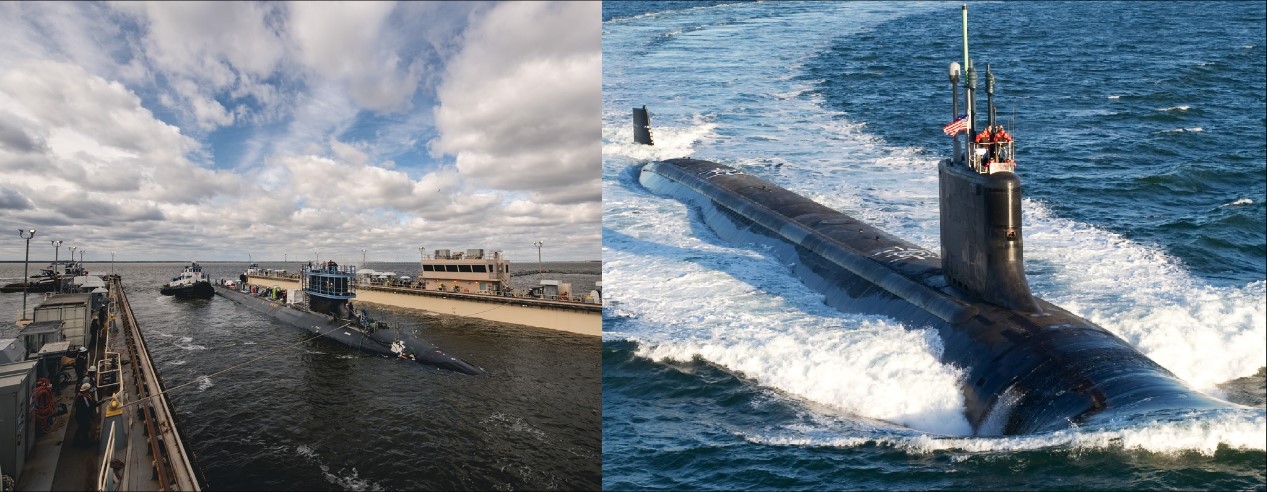
World
In a major milestone for the U.S. submarine force, Huntington Ingalls Industries (HII) announced today that its Newport News Shipbuilding (NNS) division has officially delivered the nuclear-powered fast-attack submarine USS Massachusetts (SSN 798) to the United States Navy. The delivery marks a key achievement in the ongoing build-out of the Virginia-class submarine programme. Construction and industrial partnership The USS Massachusetts is the 12th Virginia-class submarine delivered by Newport News and the 25th built overall under the teaming agreement with General Dynamics Electric Boat. More than 10,000 shipbuilders from NNS and Electric Boat participated in the construction of SSN 798, supported by thousands of suppliers across the U.S., including more than 20 suppliers from Massachusetts. NNS President Kari Wilkinson said: “Delivering Massachusetts after its rigorous sea trials is an important milestone commitment for our team this year. We are absolutely steadfast in our resolve to increase the pace of submarine construction and see this as a solid step toward our overall objective.” Key specifications and capabilities The USS Massachusetts belongs to the Virginia-class of nuclear-powered fast-attack submarines, designed for a broad spectrum of missions including anti-submarine warfare, intelligence gathering, special operations support and land-strike. Key specifications: Length: ~377 feet (115 m) Beam: ~34 feet Displacement: ~7,900 tons Propulsion: S9G nuclear reactor with unlimited range Speed: 25+ knots submerged Crew: ~135 personnel Armament: Mk-48 torpedoes, Tomahawk cruise missiles, and for newer blocks, the Virginia Payload Module Special features: stealth shaping, photonics masts, modular electronics and weapon systems The contract and production context The broader programme for the Virginia-class has been structured through multiyear contracts. According to open-source accounts, a contract valued at around US $17.6 billion was awarded in 2014 to Electric Boat for ten submarines. The class is planned to eventually reach up to 66 boats across several Blocks (I–V and potentially beyond) as part of the Navy’s undersea strategy. In the teaming arrangement, Newport News and Electric Boat alternate major assemblies: one builds certain modules, the other completes others, to maintain two ship-yards capable of nuclear submarine production in the United States. By delivering SSN 798, NNS demonstrates continued throughput in this industrial base. Significance and outlook With the delivery of USS Massachusetts, the U.S. Navy strengthens its undersea warfare capabilities at a time of increasing global naval competition. Virginia-class submarines are considered among the world’s most advanced and stealthy attack submarines, capable of executing multi-mission roles across the globe. The scale of the project — involving thousands of skilled workers and suppliers nationwide — also underscores the importance of the submarine industrial base to U.S. manufacturing and defense readiness. Following delivery, the USS Massachusetts will undergo final outfitting and preparations before commissioning, becoming the fifth U.S. Navy vessel to carry the name of the Commonwealth of Massachusetts. The delivery of USS Massachusetts (SSN 798) represents a critical milestone for both the U.S. Navy and America’s submarine-building enterprise. As the 25th Virginia-class submarine and the 12th from Newport News, the boat further strengthens the Navy’s ability to maintain undersea superiority for decades to come.
Read More → Posted on 2025-11-22 14:07:31Search
Top Trending in 24 Hours
-
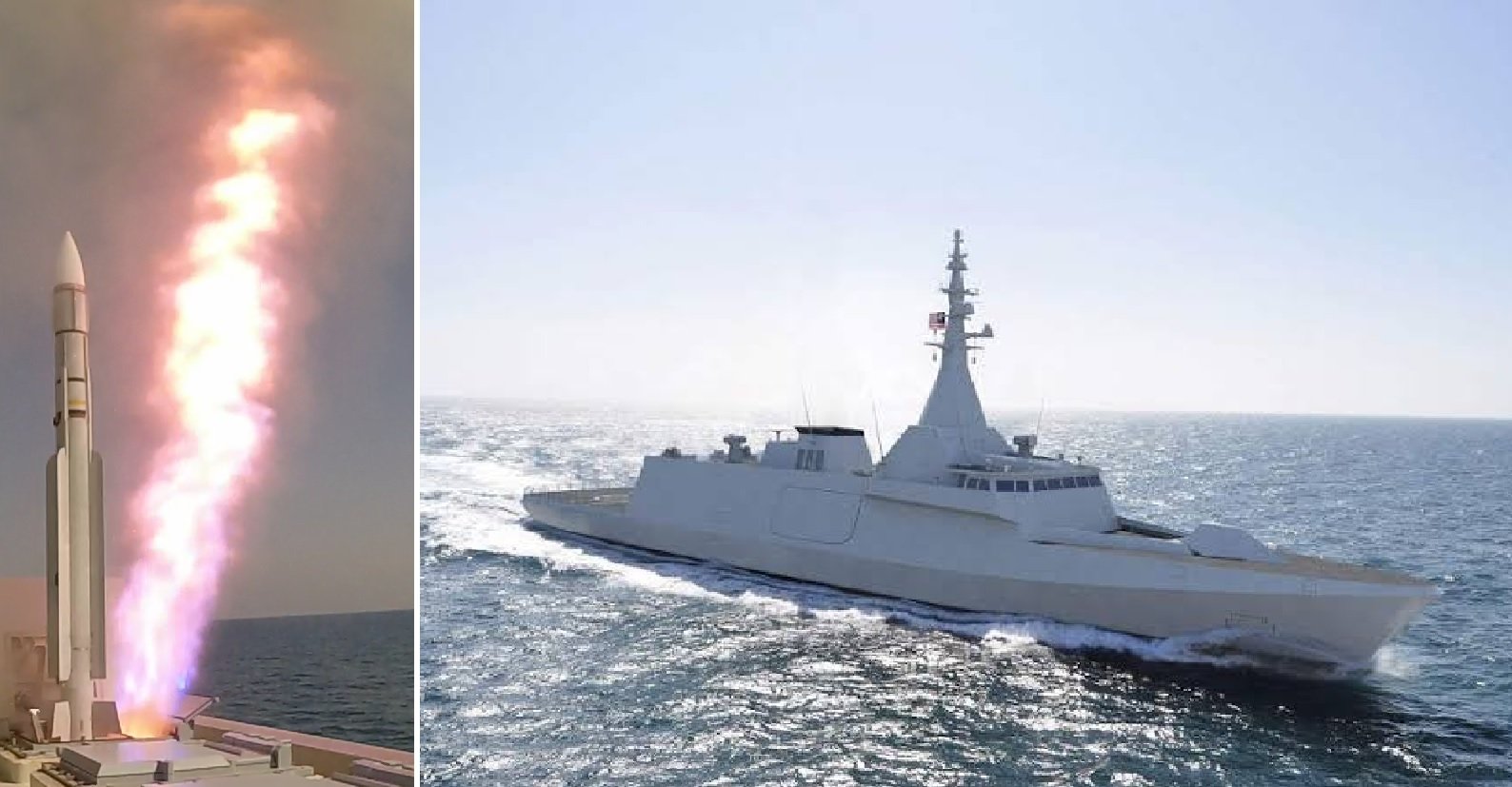 Malaysia Signs Letter of Acceptance with MBDA for VL MICA Missiles to Arm Maharaja Lela-Class Warships
-
 US-Saudi Civil Nuclear Deal Faces Early Scrutiny Over Uranium Enrichment and Trump's New Conditions
-
 U.S. Airstrikes Target IRGC Missile Base Near Taft as Overnight Strikes Hit Central Iran
-
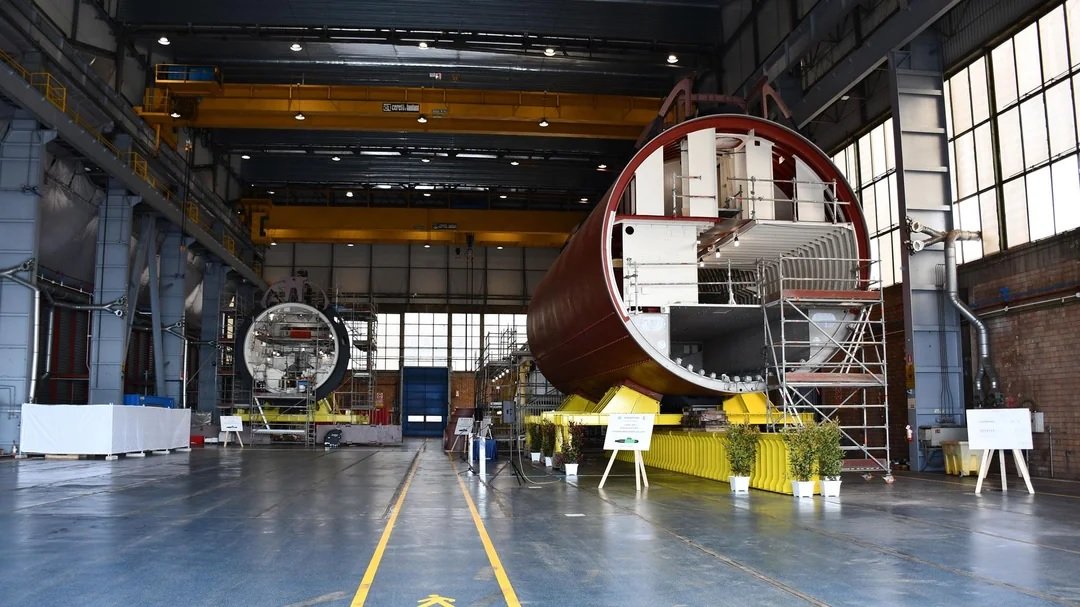 Fincantieri, OCCAR Sign €317 Million Deal to Accelerate Italy’s U212 NFS Submarine Programme
-
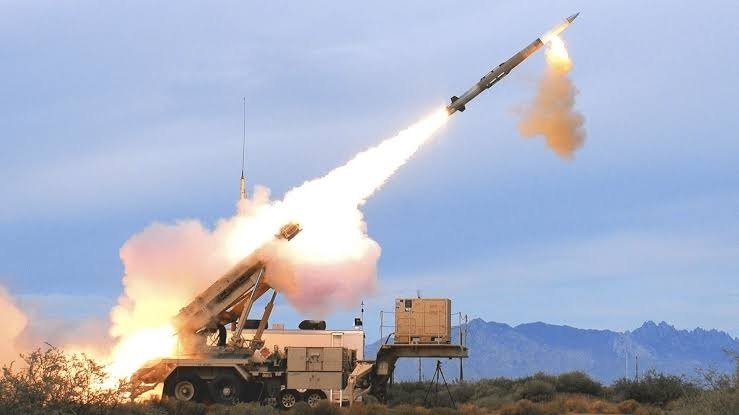 Poland Proposes Trilateral Partnership With U.S. and Ukraine to Produce Patriot Missiles
-
 Australia Commits Additional AUD 4.6 Billion to Expand Osborne Shipyard for AUKUS Submarines
-
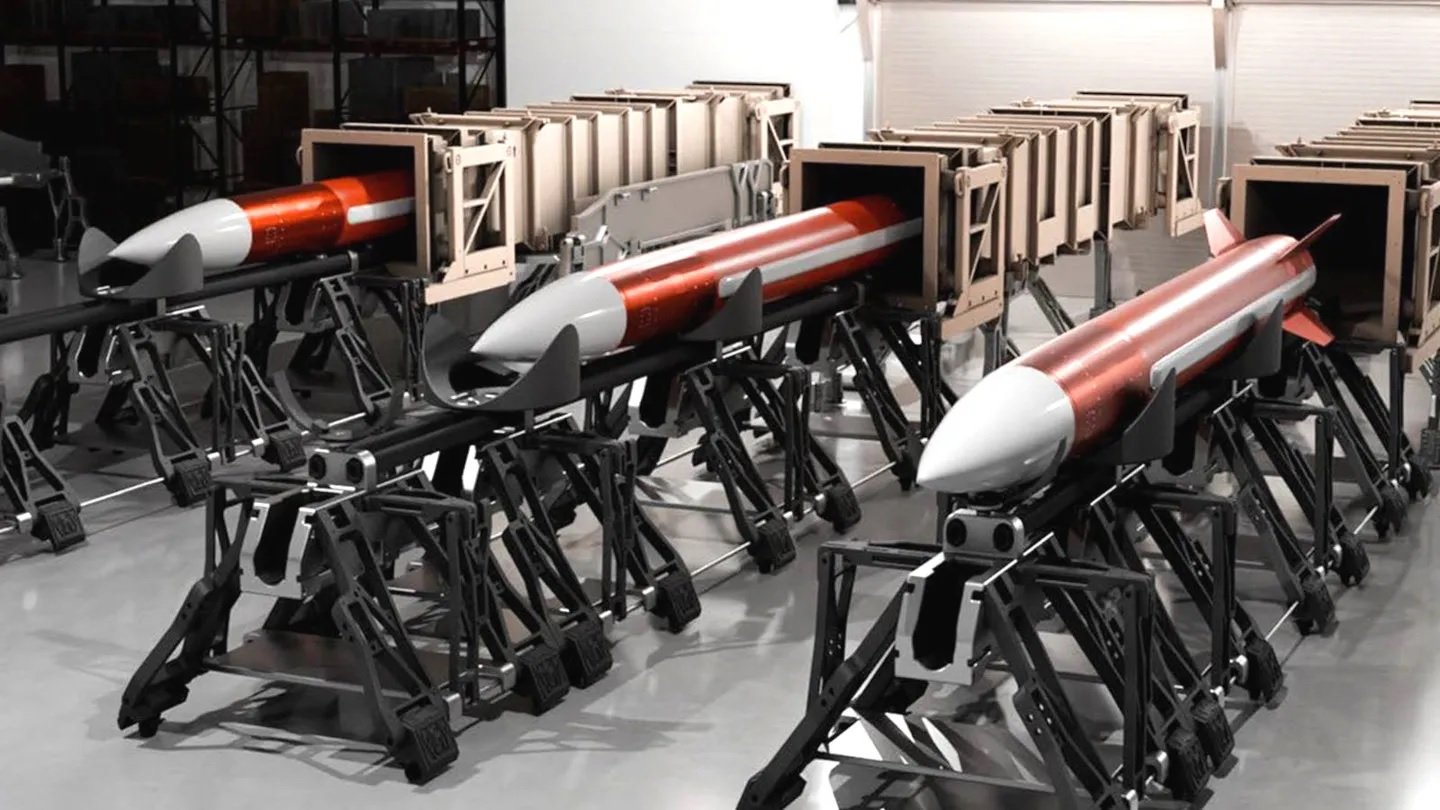 U.S. Army Revives PAC-2 Patriot Missile Production with First Domestic Order in Over Three Decades
Top Trending in 4 Days
-
 U.S. Marine Corps Selects AI-Powered Bullfrog Weapon Station for L-MADIS Counter-Drone Platform
-
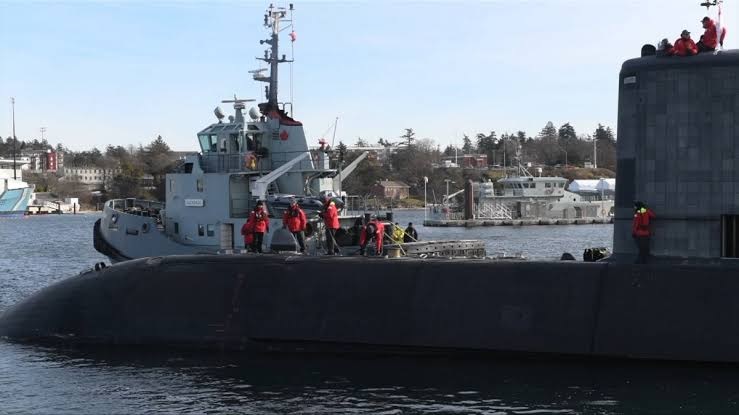 Canada Awards Babcock $1.1 Billion Six-Year Contract Extension to Support Victoria-Class Submarine Fleet
-
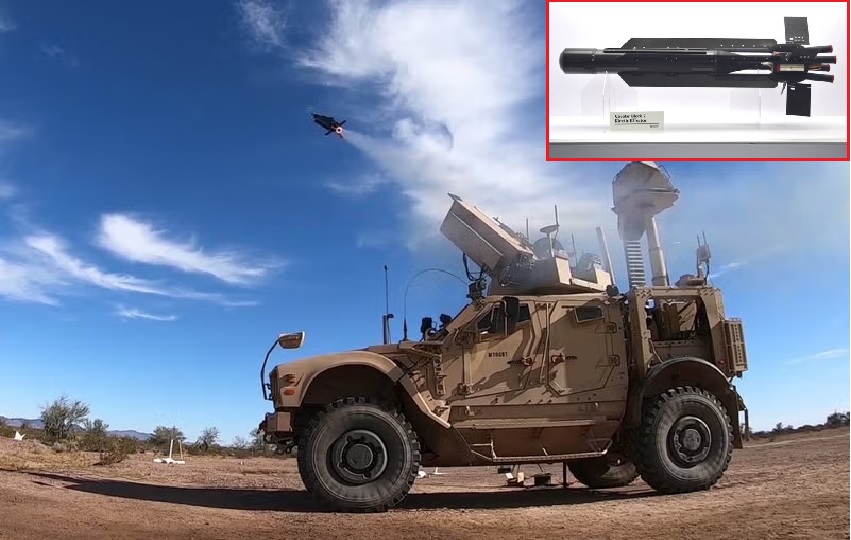 Raytheon Ramps Up Coyote Counter-Drone Missile Production After U.S. Army Reports 600 Successful Combat Intercepts During Iran Conflict
-
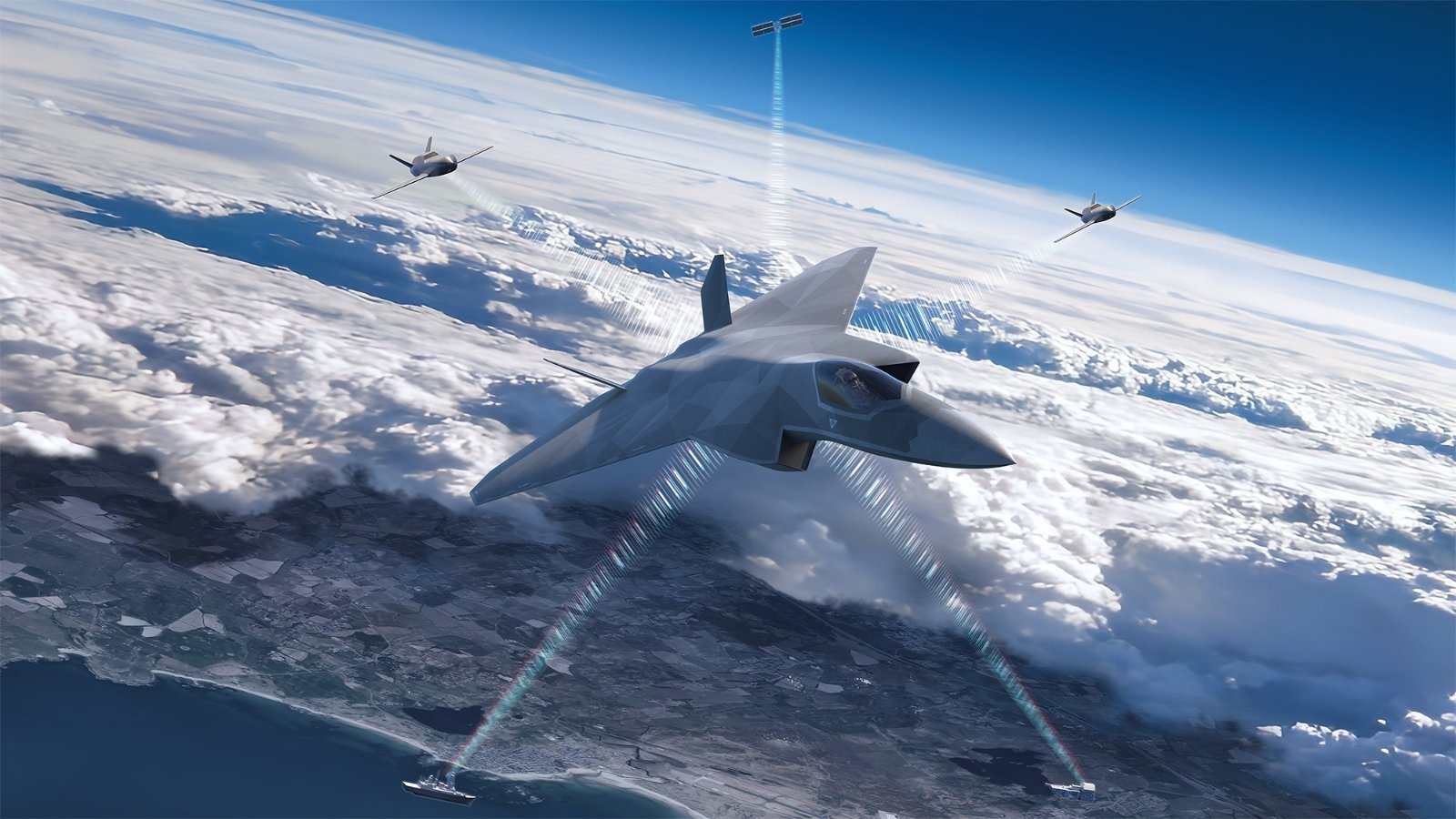 UK Awards BAE Systems £708 Million Contract Extension to Advance GCAP Sixth-Generation Combat Air Technologies
-
 Lockheed Martin Launches $9 Billion U.S. Munitions Expansion to Boost THAAD, PAC-3 and PrSM Production
-
 U.S. Navy Awards Raytheon $1.8 Billion Contract Extension for SPY-6 Radar Systems
-
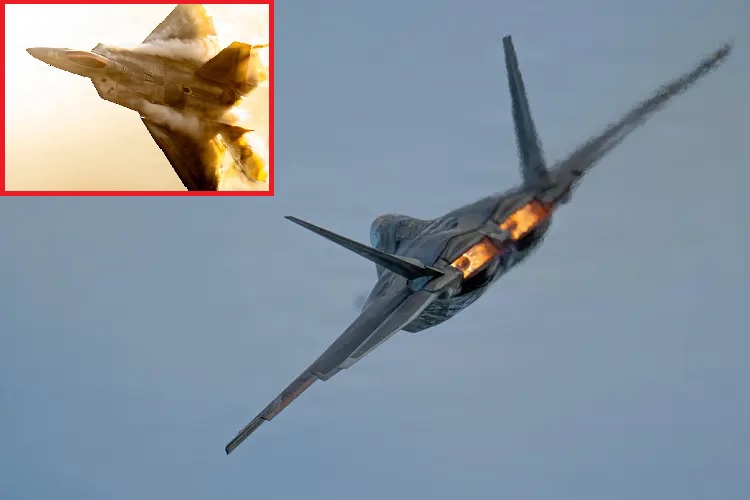 Qarbon Aerospace Returns to F-22 Program with New U.S. Air Force Sustainment Contract
-
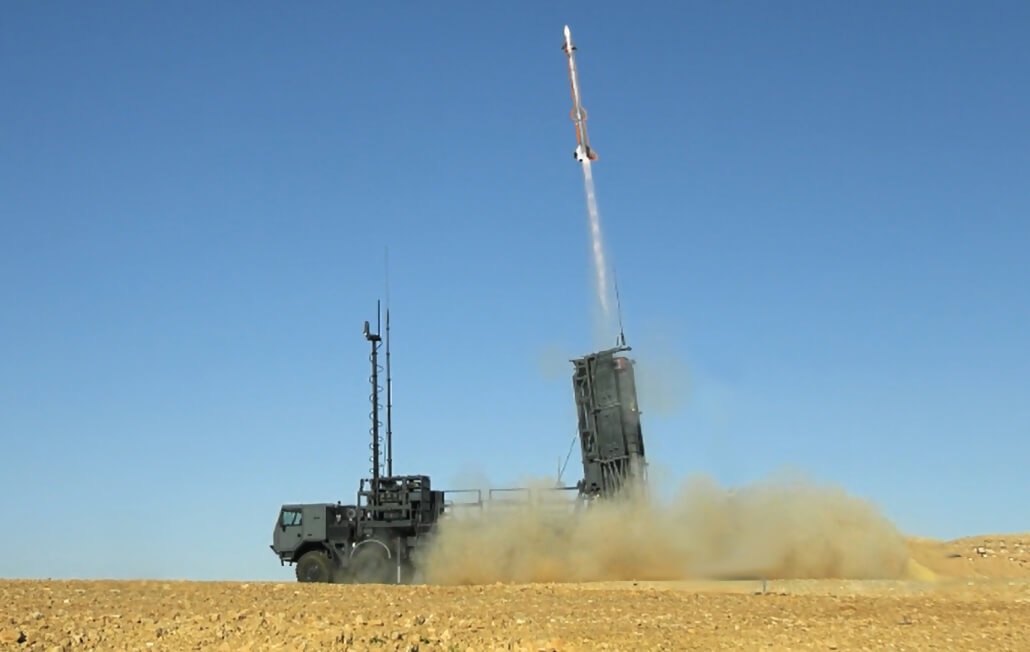 Greece Set to Approve €3 Billion Israeli Air Defense Deal for 'Achilles’ Shield' Network
