Defense News , China & Taiwan :-
In the lead-up to Taiwan crucial presidential and parliamentary
elections on January 13, the country defense ministry has accused China
of engaging in activities that pose threats to aviation safety and
psychological warfare against the Taiwanese people. Recent sightings of
balloons near or over the island have raised concerns, prompting Taiwan
to heighten its alert level.
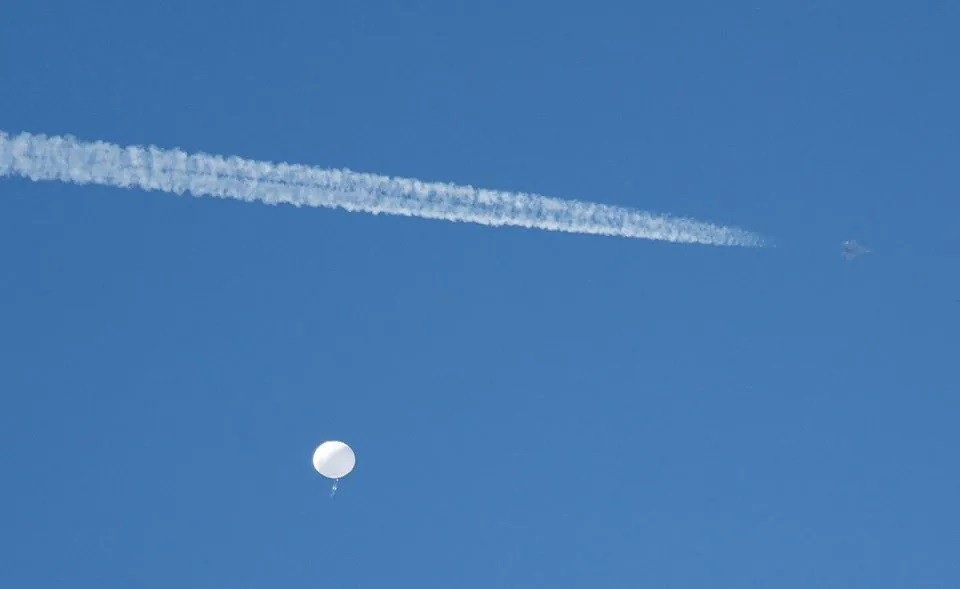
The issue of using balloons for
potential spying gained global attention in February when the United
States claimed to have shot down a Chinese surveillance balloon. China
countered, asserting that the balloon was a civilian craft that had
unintentionally drifted off course.
Taiwan remains on high alert,
alleging that China is applying both military and economic pressure in
an attempt to interfere with the upcoming elections. The fundamental
disagreement lies in China viewing Taiwan as its own territory, a claim
vehemently rejected by Taiwan government.
Over the past month,
Taiwan defense ministry has reported multiple instances of Chinese
balloons flying over the sensitive Taiwan Strait. In the past week
alone, some balloons were observed flying over Taiwan island,
particularly near major air bases, intensifying concerns.
In an
official statement, Taiwan defense ministry declared the balloons to be a
"serious threat" to international aviation safety, given their flight
paths. The ministry accused China of employing "grey zone" tactics,
characterizing the balloons as part of cognitive warfare aimed at
affecting the morale of the Taiwanese people.
Contrary to earlier
assertions that the balloons were primarily for weather monitoring, the
defense ministry now emphasizes the potential threat posed by China
actions. China Taiwan Affairs Office dismissed these concerns,
attributing them to the ruling Democratic Progressive Party efforts to
magnify threats from the mainland for electoral gains.
Taiwan
Vice President Lai Ching-te, who is also the presidential candidate for
the Democratic Progressive Party, accused China of utilizing warships,
warplanes, and fake news to "divide Taiwan." Urging voters to use their
ballots to champion democracy and freedom, Lai emphasized Taiwan
resilience against authoritarian regimes.
In a stronger-worded
statement, Taiwan defense ministry disclosed that it had detected two
additional Chinese balloons within the past 24 hours, one of which
briefly flew over the far northern tip of the island.
Amid
escalating tensions, the United States, a key supporter and arms
supplier to Taiwan, expressed concern over the rising semiconductor
powerhouse island. White House national security spokesman John Kirby,
however, refrained from commenting on the balloon issue directly,
emphasizing the U.S. support for free, fair, and transparent elections
in Taiwan.
As accusations and tensions persist, China message to
Taiwan appears clear - a subtle pre-election warning that reinforces
their vigilance and surveillance capabilities. The situation underscores
the delicate balance between the two nations and the potential for
external interference in Taiwan democratic process.
——— End of Article ———