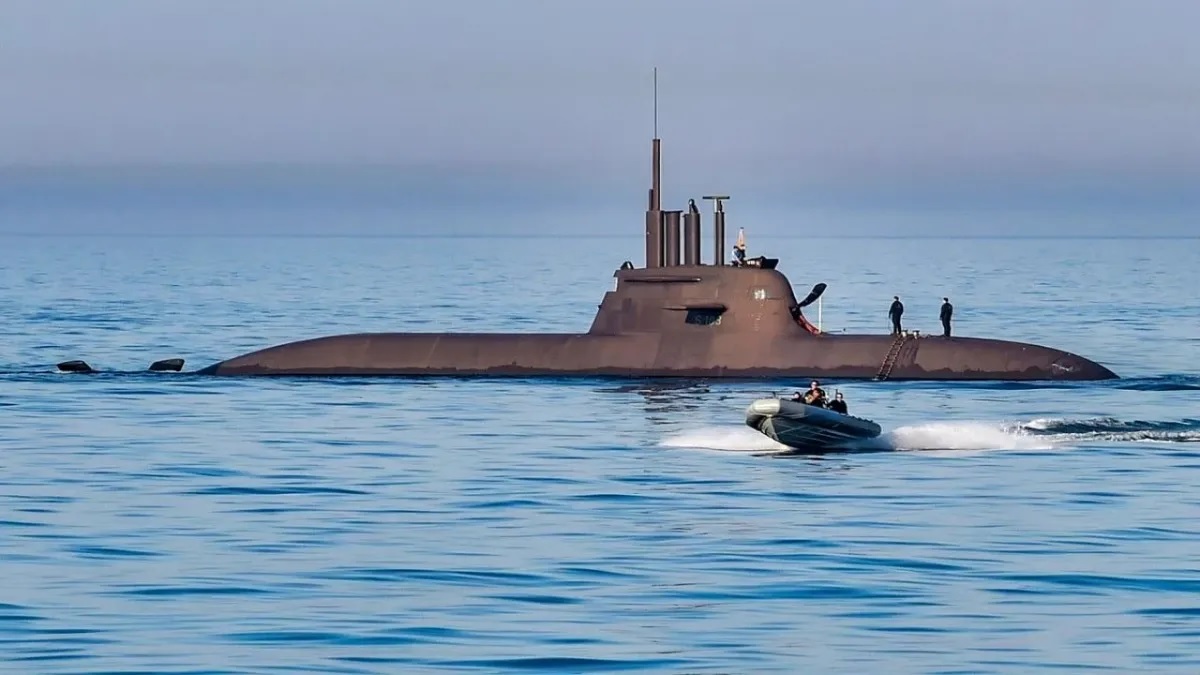
In a bold bid for India’s Project-75I submarine tender, ThyssenKrupp Marine Systems (TKMS) has made an offer that could transform India into a regional hub for submarine manufacturing. At the heart of TKMS’s proposal is the promise to build six advanced submarines in collaboration with Mazagon Dock Shipbuilders Ltd (MDL) and to create a long-term, self-sustaining submarine ecosystem in India.
CEO Oliver Burkhard of TKMS has set forth an ambitious vision that extends far beyond simply constructing submarines. Should TKMS secure the contract, the company plans to source critical components and materials from Indian suppliers, not only for the submarines built within India but also for other international submarine programs. This would position Indian suppliers on a global stage and strengthen the country’s industrial base.
TKMS’s bid centers around its U-212 submarine, a modern and highly capable platform known for its stealth and long-range capabilities. The U-212 class, already in service with the German and Italian navies, is noted for its Air Independent Propulsion (AIP) technology, which allows it to remain submerged for extended periods—an advantage in the Indian Ocean, where stealth is crucial. This feature, combined with the submarine's state-of-the-art sonar and advanced weapon systems, would give India a significant strategic edge.
One of the key aspects of the offer is the Transfer of Technology (ToT) package. This agreement, if accepted, would allow India to build the six submarines domestically while acquiring the expertise needed to design and construct its own submarines in the future. The ToT would not only increase India's defense self-sufficiency but also foster the growth of its indigenous submarine-building capabilities.
Beyond the technical benefits, TKMS is proposing a more holistic vision for India as a submarine hub. The plan would include training Indian engineers, transferring specialized manufacturing know-how, and building a sustainable supply chain. In essence, India could become a regional center for submarine maintenance, upgrades, and even exports, serving as a supplier for TKMS’s global submarine network. Such a hub would generate significant economic activity, create high-tech jobs, and further cement India’s role in the defense sector.
The estimated value of the Project-75I tender is over ₹45,000 crore (approximately $5.4 billion), making it one of the largest defense contracts in India’s recent history. TKMS’s offer, which emphasizes both technological prowess and long-term strategic benefits, is competing with other global submarine manufacturers for the contract. But Burkhard’s bold plan for local manufacturing and integration into the global supply chain could tip the scales in favor of TKMS.
With regional tensions rising and India seeking to enhance its maritime defense, the strategic importance of the Project-75I tender cannot be overstated. The Indian Navy’s push to modernize its submarine fleet comes at a critical time, and TKMS’s offer, with its potential to create lasting economic and strategic benefits, is being closely scrutinized.
As the competition intensifies, the prospect of India becoming a submarine powerhouse with the help of TKMS could play a significant role in shaping the future of the country's naval capabilities. The decision is eagerly awaited, with the outcome set to impact not just India’s defense sector, but the global submarine industry at large.
——— End of Article ———