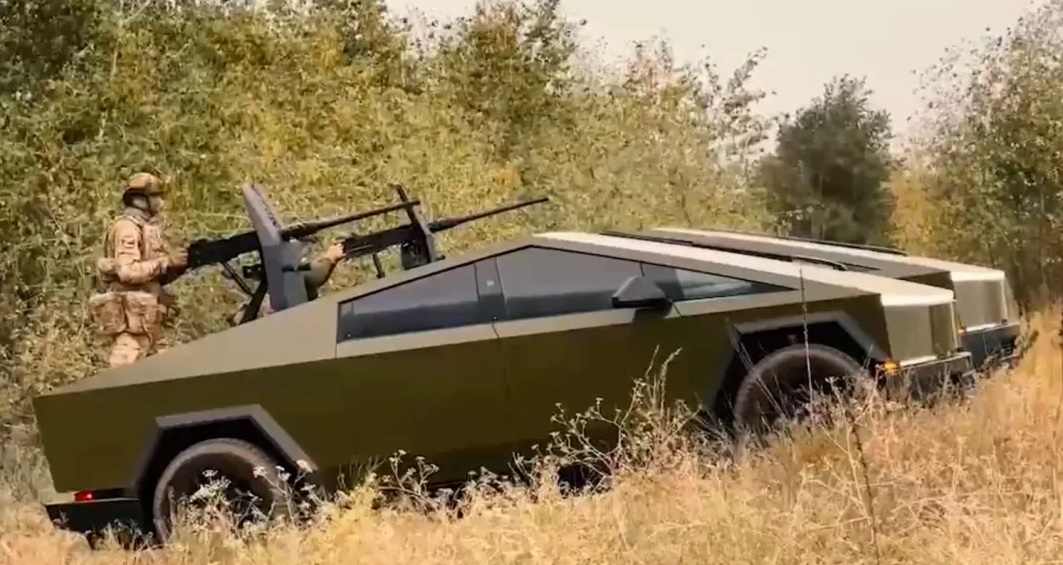
In a surprising turn of events, reports have emerged that modified Tesla Cybertrucks are being used by Russian forces in the ongoing conflict in Ukraine. The claim comes from Chechen President Ramzan Kadyrov, a key Kremlin ally, who stated that two Tesla Cybertrucks, armed with machine guns, are currently in operation in Ukraine. This news has sparked both curiosity and controversy, as the futuristic electric vehicles were never intended for military use, raising questions about their modification and functionality in a war zone.
Kadyrov’s Role and the Cybertrucks' Arrival
Kadyrov has been a vocal supporter of Russia’s so-called "special military operation" in Ukraine, and his involvement in the conflict has been both symbolic and strategic. In a recent statement, Kadyrov boasted of providing the two Cybertrucks to Russian troops, specifically those fighting in occupied Ukrainian territory. According to him, these trucks were not just ordinary electric vehicles but had been heavily modified to suit the needs of combat, including the addition of machine gun turrets.
He claimed that “mobility, convenience, and maneuverability” made the Cybertrucks particularly effective in the field. In an August video, Kadyrov demonstrated one of these modified trucks by driving it around his palace grounds, showcasing its capabilities with a mounted weapon, further fueling speculation about their actual use on the battlefield.
How Are These Cybertrucks Being Used?
While the details of how extensively these Cybertrucks are used in combat remain unclear, Kadyrov asserted that they have been sent to the frontlines in Donbas, a region of intense fighting between Ukrainian and Russian forces. He praised the trucks' performance, even going so far as to say that "Western technology" was proving itself useful against Western-backed Ukrainian forces, whom he labeled “Ukronazis,” echoing Russian state propaganda.
What makes the claim intriguing is the fact that these Cybertrucks are all-electric vehicles. Kadyrov emphasized that the vehicles have not faced issues related to remote deactivation or operational failures, which could imply that concerns over Tesla’s potential control of the trucks’ software have been addressed. The statement highlights the potential for electric vehicles in unconventional roles, though it’s unclear how they are being charged in a war zone with limited infrastructure.
Tesla’s Silence
Interestingly, Tesla has not made any public comment about Kadyrov’s claims or the reported military use of its Cybertrucks. Elon Musk, Tesla’s founder, has previously made headlines regarding his involvement in the war through the provision of Starlink internet services to Ukraine. However, the Cybertrucks being used by Russian forces complicates the picture. It remains unknown whether Tesla sold these trucks directly to any Russian intermediaries or if they were acquired and modified through unofficial channels.
Given Tesla's emphasis on sustainability and the non-military focus of its products, the company’s stance on the use of its vehicles in a conflict like this could provoke significant discussion. So far, there has been no indication that Tesla or Musk sanctioned the Cybertrucks' use in the war, and it's possible the trucks were modified without the company’s involvement.
Modified for Combat: How Effective Are Cybertrucks in War?
The Tesla Cybertruck, originally designed as a futuristic, all-electric vehicle for consumer markets, was not built with warfare in mind. However, Kadyrov’s claims suggest that with modifications, the vehicle has been adapted to fit the needs of a modern battlefield. Mounting machine guns and possibly altering the vehicle’s software and defensive capabilities would be necessary steps to transform a consumer vehicle into a combat-ready asset.
The Cybertruck’s durability and design could theoretically make it suitable for certain military applications. The vehicle’s stainless-steel exoskeleton is highly durable and resistant to damage, while its all-electric powertrain allows for quiet operation, potentially offering advantages in stealth and mobility. However, many challenges remain namely, how these electric vehicles are charged and maintained in harsh, remote environments like those in eastern Ukraine.
Without official confirmation, it is difficult to know exactly how much of Kadyrov’s claims hold true. The deployment of electric vehicles in combat is still largely experimental, and the specific conditions of their use, particularly in a conflict as complex as Russia’s invasion of Ukraine, add layers of uncertainty.
The Broader Implications
Kadyrov's move to arm Russian forces with Cybertrucks highlights an interesting intersection of consumer technology and modern warfare. While the use of electric vehicles in combat is not widespread, Kadyrov’s statements point to the increasing integration of non-military technologies in conflict zones. As war continues to evolve with new technological innovations, we could see more unexpected uses of civilian products in military contexts.
For now, the reported use of Cybertrucks remains a unique and largely symbolic gesture on Kadyrov’s part. How effective these vehicles will be in real combat remains to be seen, but their presence on the frontlines serves as a reminder of how modern technology can be adapted even in unexpected and controversial ways for military purposes.
The sight of Cybertrucks in a conflict zone adds another dimension to the ongoing war in Ukraine, blending the lines between civilian innovation and military hardware. As Kadyrov continues to promote the use of these electric vehicles, the world watches to see how and if they will truly contribute to Russia’s war efforts. Meanwhile, Tesla’s silence on the matter raises questions about the unintended consequences of its cutting-edge technology being repurposed for warfare.
——— End of Article ———