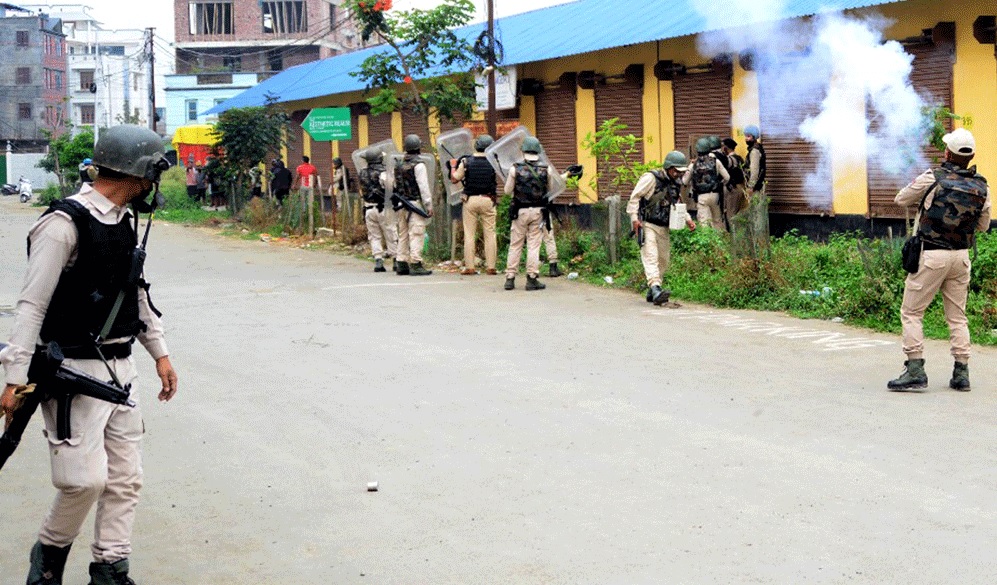
Manipur has been placed on high alert following the infiltration of around 900 well-armed Kuki militants from Myanmar, sparking immediate concern across security agencies. According to the state’s Security Advisor, Kuldiep Singh, the infiltration was detected in mid-September, prompting swift action by the government. Singh confirmed that a high-level meeting of the Security Operation Group (SOG) was held on September 18 to strategize a response. The meeting included representatives from the Indian Army, Assam Rifles, Manipur Police, BSF, CRPF, and other security agencies, all of whom discussed coordinated measures to address the potential threat.
The infiltrating militants, who reportedly crossed the border in small groups of about 30 each, are believed to be well-equipped with heavy weaponry. The authorities believe that the militants, after infiltrating Manipur’s border areas, will need food and shelter. In response, the security forces have launched combing operations to locate the militants and prevent them from establishing bases in the region.
Assam Rifles, the primary security force responsible for guarding the India-Myanmar border, has been put on high alert, tightening border surveillance. The use of modern equipment such as binoculars and anti-drone systems has also been ramped up to prevent further incursions. It was reported that about 648 bunkers, believed to be used by the militants, have been destroyed so far, and several drone attacks have been thwarted. Sensitive locations, including railways and roads, have also been placed under heightened security, and a strict ban on drones has been implemented throughout the state.
In addition to these measures, security personnel have been instructed to search for materials commonly used in militant operations, such as pipes, explosives, and other components that could be used to manufacture drones and improvised explosive devices (IEDs). During these operations, Assam Rifles apprehended a Kuki militant from Myanmar, who has since been handed over to local police. The captured militant is being processed under the Foreigners Act, and further investigations are ongoing.
One of the most alarming incidents occurred when a drone bomb attack was attempted in Koutruk, a village in Manipur. The investigation into this drone strike has been handed over to the National Investigation Agency (NIA), as the local government lacks the technological capacity to probe such advanced attacks. The authorities suspect that the militants could be planning more attacks around the end of September, further increasing the urgency of preventive actions.
These developments come at a time of heightened tensions in the region, with the Myanmar-Manipur border being a hotbed for militant activity due to the rugged terrain, which makes it difficult to monitor infiltration. The Manipur government, aware of the dangers posed by these infiltrations, has taken proactive measures to neutralize the threat before the militants can organize large-scale attacks. The involvement of multiple security agencies underscores the seriousness of the situation, as the authorities work to ensure the safety and security of Manipur’s residents.
The situation in Manipur highlights the growing threat posed by militant groups operating along the India-Myanmar border. With sophisticated tactics such as drone warfare being employed by these groups, the need for advanced surveillance and coordinated efforts between military, paramilitary, and local law enforcement has never been more critical. As the state braces for potential attacks, vigilance and prompt action remain essential in keeping the situation under control.
——— End of Article ———