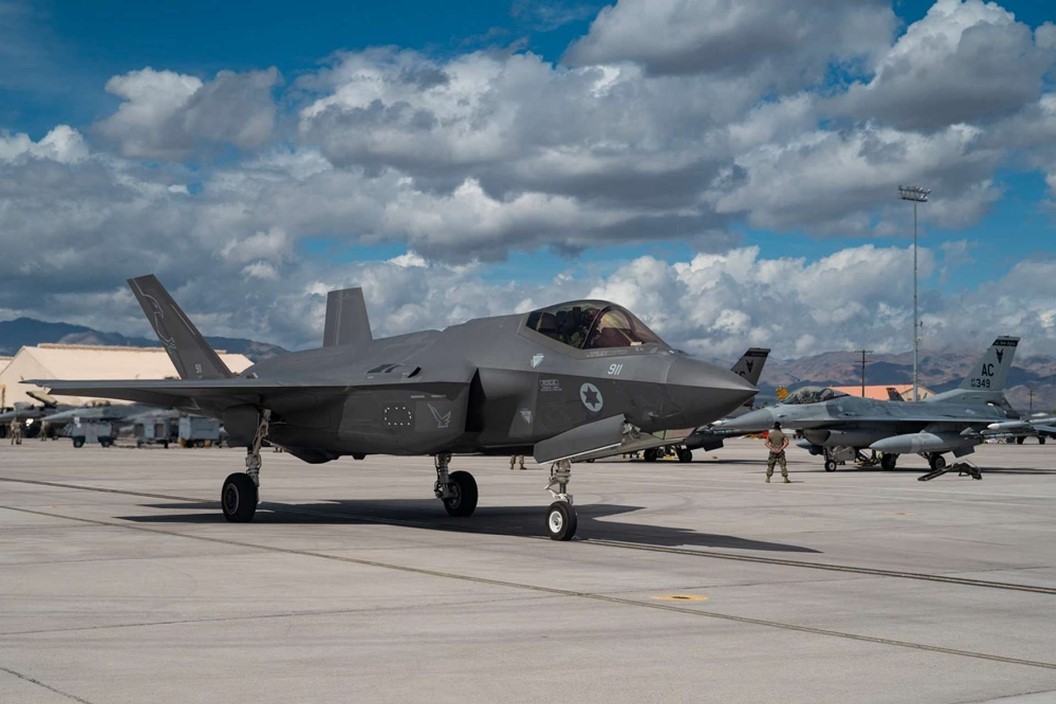
In a significant move to bolster its defense capabilities, Italy is set to acquire 25 more F-35 fighter jets, with a budget allocation of over €7 billion ($7.79 billion) for the purchase in 2024. This plan, currently awaiting parliamentary approval, is a substantial addition to Italy's ongoing defense modernization efforts. The new batch of jets will increase Italy's total F-35 fleet to 115 aircraft, positioning the nation as a major operator of these cutting-edge multi-role fighters in Europe.
The purchase is part of a broader defense strategy that not only focuses on aircraft acquisition but also on engines, equipment, and long-term logistical support, with planning extending to 2035. This holistic approach ensures that Italy's air force and navy remain operationally effective and technologically advanced for decades to come.
Expanding Italy’s F-35 Fleet
Italy initially committed to 90 F-35s, which includes 60 conventional F-35A models for the Italian Air Force and 30 short takeoff and vertical landing (STOVL) F-35B variants, split between the air force and the navy. The new order includes an additional 15 F-35As for the air force and five more F-35Bs for each branch, enhancing both services’ capabilities.
The F-35s, produced by Lockheed Martin, are renowned for their stealth technology, advanced avionics, and multi-role versatility, which includes air superiority, ground attack, and intelligence missions. Italy's existing F-35 fleet already plays a key role in NATO's defense architecture, contributing to air policing, intelligence-gathering, and joint strike operations. With this new batch, Italy is further committing to the integration of 5th generation aircraft, which brings advanced situational awareness and combat readiness.
Strategic Investments in Defense
This defense expenditure is part of a broader €9.3 billion ($10.3 billion) defense procurement program for 2024. In addition to the F-35 jets, a substantial portion of this budget—€506 million ($563 million)—has been allocated for the Global Combat Air Programme (GCAP), an ambitious next-generation fighter jet project involving Italy, the UK, and Japan. The program aims to develop a new fighter by 2035, emphasizing the growing importance of international collaboration in defense technology.
Moreover, Italy is investing €50 million ($55 million) to modify its new landing helicopter dock, the *Trieste*, to host the F-35B variants. This enables Italy to deploy these jets from sea, further expanding its operational flexibility in both the Mediterranean and global theaters.
Another notable investment is the addition of €690 million ($767 million) towards the Eurofighter program, aimed at replacing older first-tranche Eurofighter jets with newer fourth-tranche models. This aligns with Italy’s broader modernization efforts as it seeks to replace its aging fleet by 2029.
Italy’s Defense Spending Surge
Italy’s overall defense budget for 2024 is projected to increase to €20.85 billion ($23 billion), a rise from €19.56 billion ($22 billion) in 2023. This increase underscores the country’s commitment to modernizing its military and maintaining its standing as a key player in European and NATO defense structures. The decision to ramp up spending also reflects broader geopolitical tensions and the need for military readiness in an increasingly complex global security environment.
The F-35 purchase, in particular, not only boosts Italy's aerial combat capabilities but also ensures it remains technologically aligned with its NATO allies, particularly in joint operations and defense initiatives across Europe. As Italy continues to invest in cutting-edge technology and international defense collaborations, its role as a prominent defense power in Europe and beyond is solidified.
——— End of Article ———