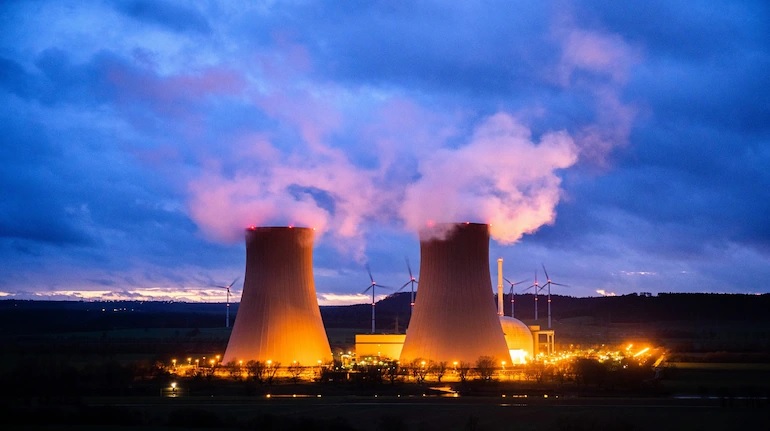
India's nuclear energy landscape has taken a significant leap forward with the Rajasthan Atomic Power Project's Unit 7 (RAPP-7) reaching the criticality milestone. Criticality marks the moment a nuclear reactor initiates a controlled fission chain reaction, the essential step that brings the plant closer to full power generation. Achieving this status on Thursday night at 10:42 p.m., the reactor, located at Rawatbhata in Rajasthan, is part of India's growing fleet of indigenous nuclear power reactors.
RAPP-7 is not just any reactor – it's part of India's ambitious series of 700 MW Pressurised Heavy Water Reactors (PHWR), a type of nuclear technology specifically designed and developed by the Nuclear Power Corporation of India Limited (NPCIL). The importance of this achievement is underscored by the fact that RAPP-7 is the third in this 16-reactor series, which NPCIL is constructing across the country. The first two reactors of this kind, KAPS-3 and KAPS-4, have already been operational at Kakrapar in Gujarat, establishing a strong precedent for India’s indigenous nuclear capabilities.
This project is part of the twin-unit RAPP-7 and RAPP-8, both designed with a combined capacity of 2×700 MW. While RAPP-7 has now moved into the operational phase, RAPP-8 is still under construction, with significant progress being made on equipment installation. NPCIL aims to bring RAPP-8 online by next year.
For now, RAPP-7 will undergo a series of stringent experiments and tests. These tests will ensure the reactor operates safely before it is connected to the national grid. The Atomic Energy Regulatory Board (AERB) plays a crucial role in this process, providing the necessary clearances as the reactor’s power output gradually increases to its full 700 MW capacity. If all goes according to plan, RAPP-7 will be generating electricity by the end of this year, offering a significant boost to India’s energy security.
The criticality of RAPP-7 not only highlights the success of India's indigenous nuclear reactor design but also underscores NPCIL’s expertise in constructing and managing large-scale nuclear projects. Rawatbhata itself is a hub for nuclear energy, already home to six reactors with a combined capacity of 1,180 MW. These new additions, RAPP-7 and RAPP-8, will significantly bolster the site’s total capacity, contributing to India's broader nuclear energy goals.
India's energy future is deeply tied to the success of these indigenous reactors. NPCIL currently operates 24 nuclear reactors with a total installed capacity of 8,180 MW. Another eight units, including RAPP-7, are under construction, which will add an additional 6,800 MW to the grid. Over the next decade, India is also planning to build 10 more reactors with a combined capacity of 7,000 MW, which will be progressively rolled out by 2032.
The criticality of RAPP-7 is not only a technical achievement but also a step toward India’s commitment to sustainable and reliable energy sources. As the country continues to ramp up its nuclear power generation, it places greater emphasis on energy self-reliance and reducing its carbon footprint. With new reactors coming up in states like Rajasthan, Gujarat, and Haryana, India’s nuclear future looks both promising and essential to meeting the growing energy demands of its population.
Once fully operational, the RAPP-7 reactor will play a pivotal role in providing clean and consistent energy to millions of homes, contributing to India’s larger efforts to combat climate change and secure a stable energy supply.
——— End of Article ———