Cuban Missile Crisis
The Cuban Missile Crisis of October 1962 stands as one of the most perilous moments in Cold War history, bringing the United States and the Soviet Union to the brink of nuclear war. The crisis, triggered by the Soviet deployment of ballistic missiles in Cuba, unfolded over two intense weeks of negotiations between US President John F. Kennedy and Soviet Premier Nikita Khrushchev. This overview explores the origins, events, and consequences of the Cuban Missile Crisis, shedding light on the geopolitical landscape of the time and its lasting impact on global relations.
The Cuban Revolution and Deteriorating Relations
The roots of the crisis trace back to the Cuban Revolution, led by Fidel Castro, who came to power on January 1, 1959, after a successful guerrilla war against dictator Fulgencio Batista. Initially cautious, US policymakers grew concerned as Castro's regime adopted anti-US rhetoric and radical policies, including an alliance with the Soviet Union. President Dwight Eisenhower severed diplomatic ties with Cuba, anticipating contingency plans to overthrow Castro. As US-Cuban relations soured, Castro turned to the Soviet Union for support, signing trade agreements and receiving military aid.
Origins of the Crisis: Bay of Pigs and Nuclear Weapon Deployment
The failed Bay of Pigs invasion in 1961, where US-supported Cuban exiles aimed to overthrow Castro, marked a turning point. Faced with the threat of further US aggression, Castro sought protection from the Soviets, leading to a secret agreement for the deployment of nuclear weapons in Cuba. Khrushchev justified this move as a means to safeguard the Cuban Revolution and alter the global power balance in favor of the Soviet Union.
The Cuban Missile Crisis Unfolds
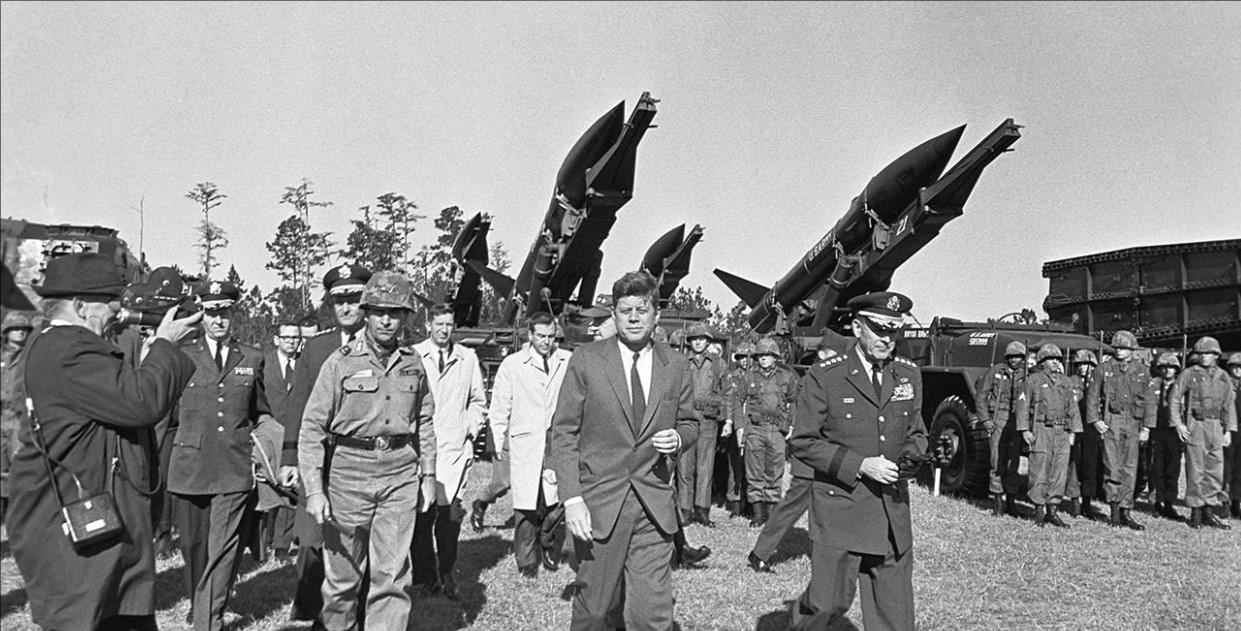
In October 1962, US U-2 spy planes discovered Soviet ballistic missile installations in Cuba, setting off what became known as the Cuban Missile Crisis. The Kennedy administration responded with a naval blockade, demanding the immediate removal of missiles. This approach risked escalation, including air strikes on Cuba and potential nuclear conflict with the Soviet Union.
Negotiating a Peaceful Outcome
Khrushchev, initially denying the missile presence and declaring the blockade an act of war, eventually suspended weapons deliveries in transit. Over approximately two weeks, Kennedy and Khrushchev engaged in intense negotiations. A key compromise involved Kennedy agreeing to remove Jupiter missiles from Turkey, and both leaders pledged non-aggression towards Cuba. However, Castro felt betrayed as his demands, such as closing the Guantanamo naval base, were ignored.
Consequences of the Crisis
Despite Soviet attempts to portray the crisis as a victory, Khrushchev faced internal criticism and was forced into retirement. His successor, Leonid Brezhnev, sought to ease tensions with the United States. Kennedy, though hailed for his statesmanship, had to grapple with the fallout from the Bay of Pigs invasion. The crisis heightened awareness of the dangers of nuclear brinksmanship, leading to the establishment of a Moscow-Washington hotline for direct communication.
Post-Crisis Developments
In August 1963, the US, Soviet Union, and Great Britain signed a treaty banning atmospheric and underwater nuclear testing. However, Kennedy's authorization of a massive arms buildup diminished the impact of the test-ban treaty, intensifying the arms race and reinforcing US strategic superiority in the Cold War.
The Cuban Missile Crisis, a pivotal moment in Cold War history, highlighted the perilous nature of nuclear brinksmanship and its potential for global catastrophe. The events surrounding the crisis reshaped the geopolitical landscape, influencing the ouster of Khrushchev, fostering improved US-Soviet relations, and contributing to arms control efforts. The legacy of the Cuban Missile Crisis endures as a cautionary tale, emphasizing the need for diplomatic solutions and international cooperation to avert nuclear threats.
——— End of Article ———