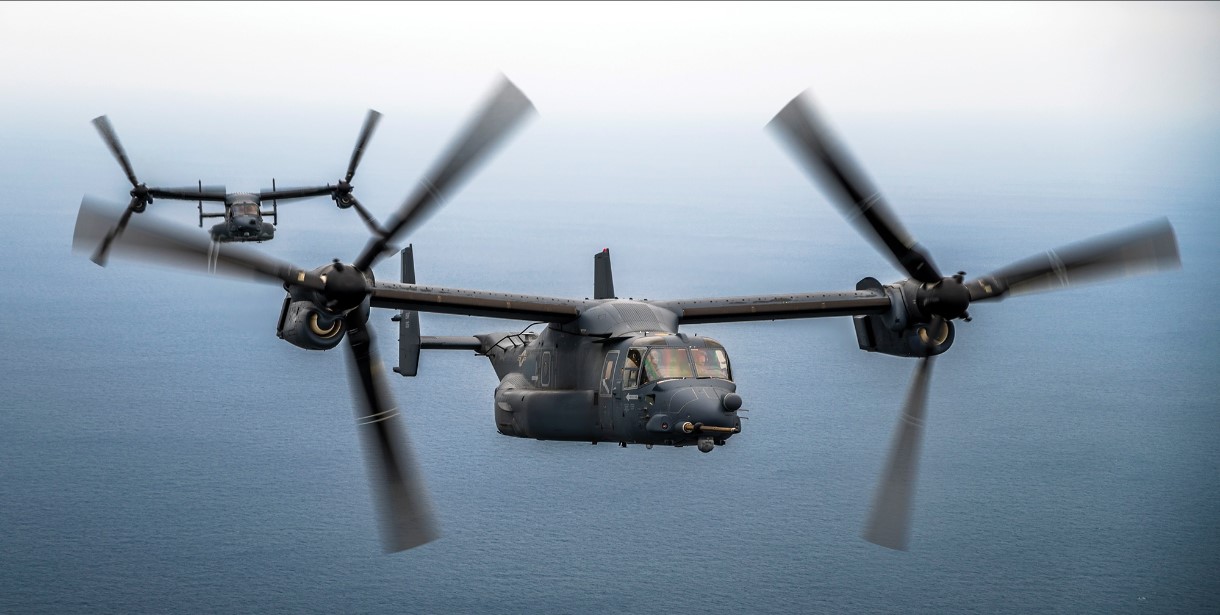
After months of grounding, the Air Force Special Operations Command (AFSOC) is preparing to deploy its CV-22 Osprey aircraft again. This decision follows the tragic crash in November 2023 off the coast of Japan, which killed eight airmen. Despite its troubled safety record, AFSOC is moving forward with missions, placing the CV-22s back into service for critical counterterrorism operations.
The CV-22 Osprey, a tilt-rotor aircraft that can take off like a helicopter and fly like an airplane, has been integral to U.S. military missions. However, it has been plagued by mechanical issues and accidents over the years. Since its introduction in 1991, the Osprey has experienced more than ten deadly crashes, resulting in the loss of 62 lives. Recent incidents, including the fatal November 2023 crash, have led to increased scrutiny of the aircraft's safety.
AFSOC grounded the entire fleet of CV-22 Ospreys following the Japan crash, citing the need to investigate the cause and ensure the safety of its personnel. An investigation determined that gear failure was responsible for the accident. Lt. Gen. Michael Conley, the AFSOC commander, assured that safety concerns have been addressed and that he is confident in the aircraft’s performance.
Speaking at the Air, Space & Cyber Conference, Conley confirmed that approximately 60% of the command's 51 Ospreys are now fully operational. The remaining aircraft are expected to return to service by late 2024 or early 2025. Despite ongoing maintenance, AFSOC is preparing to deploy the Ospreys for missions in remote regions outside of Europe and the Indo-Pacific. While the specific locations were not disclosed, these deployments are part of critical counterterrorism operations that rely heavily on the Osprey’s unique capabilities.
However, new safety protocols will be implemented to minimize risk. The CV-22s will need to remain within 30 minutes of a safe landing zone, allowing crews to land quickly in case of mechanical issues. This precaution is aimed at preventing future incidents and ensuring the safety of AFSOC personnel in high-risk environments.
Despite its operational challenges, the CV-22 remains an essential asset for the U.S. military, offering unparalleled versatility in combat and rescue missions. The aircraft’s ability to transition from vertical takeoff to fixed-wing flight allows it to reach areas that traditional helicopters or airplanes cannot. Its tilt-rotor design, while complex, gives it an edge in missions that require both speed and agility.
Nonetheless, the Osprey’s history of accidents has raised concerns. Just months before the November crash, three U.S. Marines died when their Osprey went down during a training exercise in Australia. A similar incident in Norway during a NATO drill in 2022 claimed the lives of four Marines, and another crash in California that same year resulted in five fatalities.
Lt. Gen. Conley acknowledged the weight of these losses, sharing that his time with the families of those killed had deeply affected him. He emphasized his responsibility to ensure that AFSOC’s airmen are operating the safest aircraft possible, stating, "I wouldn’t put the men and women of AFSOC back on the plane if I wasn’t confident that it could do what we needed it to do."
With ongoing maintenance and safety upgrades, AFSOC is cautiously moving forward. The Osprey will soon be back in the skies, supporting critical missions that only this versatile aircraft can handle.
——— End of Article ———