World
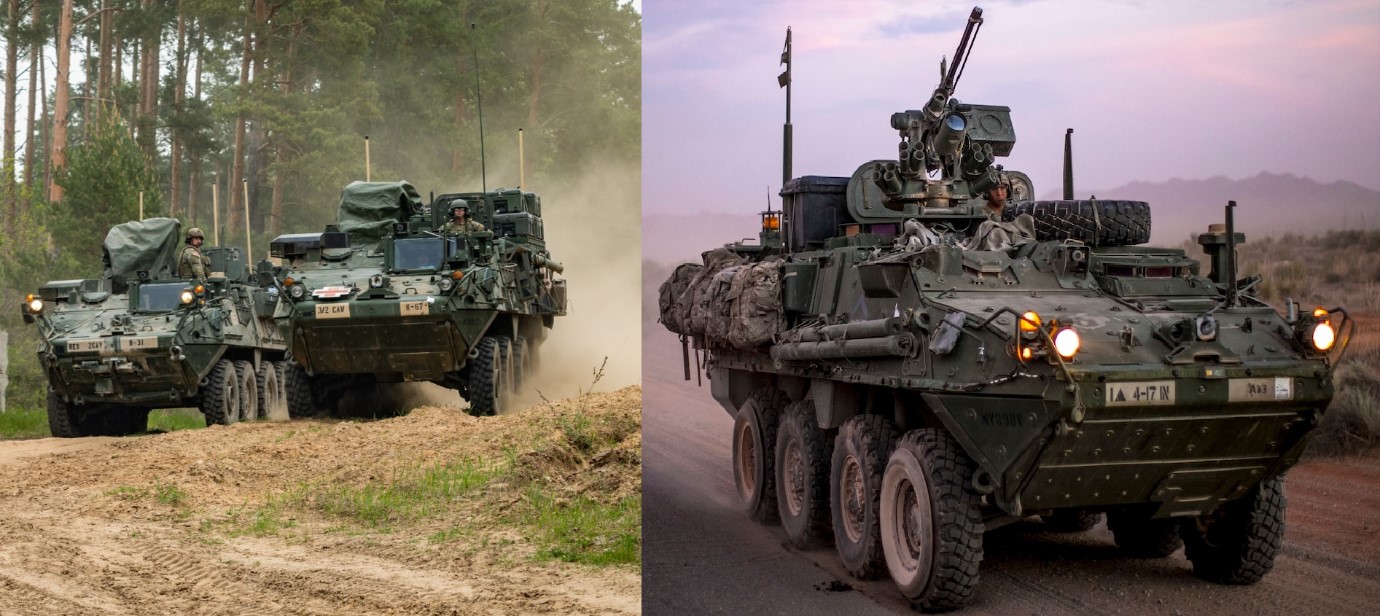
Poland is advancing toward a landmark defense agreement to acquire roughly 250 American Stryker armored personnel carriers for a symbolic price of one U.S. dollar, according to public comments by Deputy Prime Minister and Defense Minister Władysław Kosiniak-Kamysz and reporting from Polskie Radio. The vehicles would come from U.S. Army Stryker units already stationed in Europe as Washington reduces its forward-deployed Stryker footprint, offering Warsaw a rapid and cost-effective way to reinforce its mechanized formations without waiting for new production or transatlantic shipment delays. Why One Dollar? The one-dollar price is a long-standing mechanism used in defense cooperation among close allies. When equipment is no longer needed by U.S. forces—with depreciation already accounted for—Washington can transfer it at a nominal value to strengthen a partner’s military capabilities without triggering complex procurement, auction, or market-value procedures.Poland will still bear the costs of inspections, refurbishment, upgrades, transportation, and integration, but the symbolic transfer price emphasizes political solidarity and strategic alignment rather than commercial profit. A Strategic Boost for NATO’s Eastern Flank The transfer, once a technical inspection and refurbishment plan is concluded, is expected to significantly accelerate Poland’s ability to field additional mechanized units. With Poland retiring its aging BWP-1 infantry fighting vehicles and donating large numbers of legacy platforms to Ukraine, Warsaw has faced acute shortages in modern troop carriers. The Strykers—pulled from U.S. formations downsizing in Europe as force structure is realigned—would fill this gap rapidly. General Wiesław Kukuła confirmed that the Polish Armed Forces have prepared initial recommendations, with formal assessments planned through 2026. A deteriorating security environment, however, could accelerate the timeline. Stryker: A Proven, Mobile, Coalition-Ready Platform The Stryker M1126 Infantry Carrier Vehicle (ICV)—a member of the well-known 8x8 family derived from the LAV III and Piranha III—was chosen by the U.S. Army for its rapid deployment potential, enabling a full brigade to be transported within 96 hours. It carries nine infantry soldiers plus a crew of two, using a rear ramp for fast dismount and urban maneuver. The vehicle’s dimensions—6.95 m long and 2.72 m wide—are optimized for airlift via C-17, C-5, and in some configurations C-130 aircraft, offering unprecedented mobility for coalition operations. Over the past decade, Strykers have been exported to several nations including Colombia and Thailand, and more than 100 units have been supplied to Ukraine since 2023. Weapons and Protection The M1126 is armed with the M151 Protector remote weapon station, capable of mounting a 12.7 mm machine gun, 7.62 mm MG, or 40 mm automatic grenade launcher. Fully stabilized optics and a Detached Line of Sight mode allow the gunner to maintain target lock while the vehicle traverses rough ground. More recent upgrades include the CROWS-J configuration, integrating a Javelin anti-tank missile launcher with a 2.5 km range, enabling the Stryker to engage armored threats from beyond direct line of sight. Protection features include: High-hardness steel hull Ceramic add-on armor against 14.5 mm rounds and artillery fragments Afghanistan-era V-hull kits for mine and IED resistance Full CBRN overpressure system External fuel tanks to reduce risk to crew FBCB2 digital battle-management network, enabling rapid tactical data sharing Polish Modernization Strategy: Stryker, Rosomak, Borsuk Officials stress that integrating Strykers will not undermine Poland’s domestic industry. The country already fields more than 900 Rosomak (Patria AMV-based) vehicles, with the latest versions mounting the ZSSW-30 remote turret featuring a 30 mm Mk44S cannon and Spike-LR missiles. Thirty-five such upgraded units are now in service with the 21st Podhale Rifles Brigade. Additionally, the first 15 Borsuk tracked IFVs have been delivered to the 15th Mechanized Brigade in Giżycko, under a program that includes 111 initial units and may expand to 1,400 vehicles including specialist variants. Together, these platforms form a three-tiered mechanized structure: Stryker: rapid mobility, infantry lift, coalition flexibility Rosomak: medium-weight firepower and anti-tank capability Borsuk: heavy tracked survivability for high-intensity combat Digital-hardware harmonization will support full integration into NATO command architectures, enabling real-time data sharing, sensor fusion, and coordinated fires across the alliance’s eastern flank. Washington–Warsaw Alignment The near-finalized Stryker deal reinforces growing U.S.–Polish strategic alignment at a time of sustained Russian pressure. By transferring proven platforms so cheaply, Washington signals confidence in Poland’s role as a frontline land power and rapidly strengthens NATO’s defensive posture in Central Europe. For Poland, the acquisition represents a swift, low-cost injection of modern mobility at a time when equipment gaps remain significant due to donations to Ukraine and the phasing out of Soviet-era systems. If completed as expected in the second half of 2026, the one-dollar Stryker transfer will stand as one of the most symbolic—and strategically meaningful—examples of U.S. military support to a European ally in recent years.
Read More → Posted on 2025-12-06 12:23:34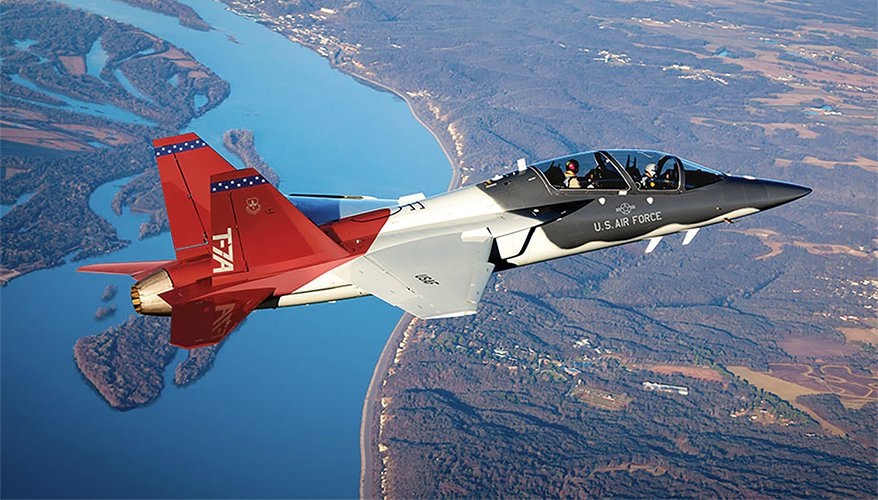
World
The U.S. Air Force has officially entered a new era of pilot training with the arrival of its first T-7A Red Hawk on 5 December, delivered to the 12th Flying Training Wing under Air Education and Training Command (AETC). The milestone marks the beginning of a sweeping modernization effort aimed at preparing pilots for the cognitive and technological demands of fifth- and sixth-generation combat aircraft. A Symbolic and Technological Leap Brig Gen Matthew Leard, Director of AETC Plans, Programs, Requirements and International Affairs, called the arrival “the first physical representation of progress within the program.” The T-7A replaces the ageing T-38 Talon, which has trained generations of American fighter and bomber pilots since the early 1960s. Costly to maintain and increasingly out of step with modern aircraft, the T-38 has been extended “multiple times,” Leard noted. “There’s an escalating cost of keeping it flyable, and it’s no longer aligned with current or future platforms.” The T-7A, developed by Boeing in partnership with Saab, is named to honor the Tuskegee Airmen. It will be assigned to the storied 99th Flying Training Squadron, the “Red Tails,” which will introduce the aircraft into the Air Force training pipeline over the next several years. Lt Col Michael Trott, commander of the 99th, said the squadron intends to continue the Tuskegee legacy of innovation. “The 99th will re-write what pilot production looks like and shape the future of pilot training for the next generation of warfighters in America,” he said. Building Pilots for a Data-Rich Battlespace According to AETC leaders, the T-7A is not just a replacement trainer—it is a complete shift in training philosophy. Maj Gen Gregory Kreuder, commander of the 19th Air Force, said that from the first day of training, new pilots will be immersed in sensor-rich, information-heavy environments similar to operational fifth-generation fighters like the F-35. “Students won’t just be learning to fly; they’ll be learning to manage information, interpret data from advanced sensors, and make critical decisions in a complex environment,” he said. “This aircraft enables us to close the gap between basic pilot training and the realities of fifth-generation plus warfare.” Leard compared the transformation to the leap from early mobile phones to today’s software-driven platforms. The T-7A’s open-architecture system allows rapid upgrades, while its fly-by-wire configuration lets instructors tailor handling characteristics to student needs. Kreuder added that traditional flying skills alone are no longer enough. “Our legacy T-38 built incredible ‘stick-and-rudder’ aviators, but it is ill-suited for the aircraft we employ today. Students must become tactical problem-solvers and be comfortable as critical nodes in a data-rich environment.” New Training Features: Virtual Integration and Ground Systems The T-7A integrates tightly with a Ground-Based Training System (GBTS) and features Live Virtual Constructive (LVC) training, allowing pilots in simulators and aircraft to operate in the same scenario. This reduces the number of required flying hours while maintaining—and in many cases improving—training quality. Leard said the LVC model offers long-term flexibility. “It’s like hardware that grows more powerful through software upgrades.” Along with the aircraft, the training system includes modern simulators, AI-enabled instruction tools, and real-time data analytics for individualized learning paths. Investing in Digital Infrastructure and Instructors AETC is investing heavily in instructor preparation, maintenance modernization, and digital ecosystems that support data-driven training. Kreuder said, “We’re empowering our Airmen to innovate and shape how we train our warfighters so they will continue to dominate in any future fight.” Programme Scale and Future Expansion The T-7 program includes 351 aircraft, 46 simulators, and an advanced training system that will eventually replace not just the T-38 but also the T-6 Texan II. Testing will continue at Edwards Air Force Base, where the T-7 has already undergone high angle-of-attack trials, climatic chamber testing, and escape-system certification. Meanwhile, the 99th Squadron will begin Type 1 maintenance and pilot training as the aircraft matures. “Training will start in parallel with aircraft envelope expansion,” Leard confirmed. Delivery Timeline and Long-Term Fleet Transition The Air Force’s fielding plan for the T-7A includes: Initial Operational Capability (IOC): August 2027, with 14 aircraft assigned to the 99th FTS. Full-rate procurement of 40–60 aircraft per year by 2033. Final deliveries by 2035–2036. The T-38 will remain operational until transition completion. Future T-7A deliveries are scheduled for: Columbus AFB – Fiscal 2027 Laughlin AFB – Fiscal 2032 Vance AFB – Fiscal 2034 Sheppard AFB – Fiscal 2035 Why the T-7A Matters The T-7A arrives at a time when the U.S. Air Force is preparing for the Next Generation Air Dominance (NGAD) era, rapid global deployments, and operations against technologically sophisticated adversaries. Modern combat aircraft rely heavily on sensor fusion, AI-assisted decision-making, and multi-domain networked warfare—skills that older training aircraft cannot adequately teach. The Red Hawk’s digital backbone, cockpit design, embedded training systems, and advanced flight characteristics are intended to shape pilots capable of transitioning seamlessly into platforms such as the F-35, F-22, B-21, and future NGAD systems. With the first T-7A now delivered, AETC leaders say the transformation of U.S. Air Force pilot training has officially begun. If you want, I can also prepare a shorter version, headline variations, or a bold-marking version for key details.
Read More → Posted on 2025-12-06 12:12:19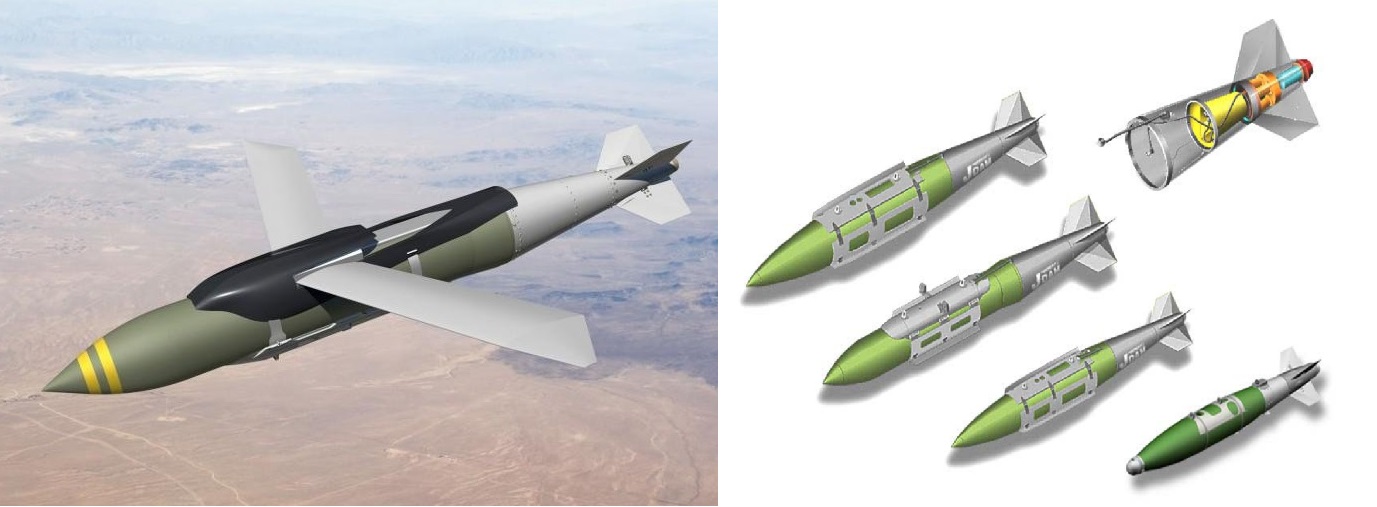
World
The United States has approved a possible Foreign Military Sale (FMS) to Canada worth an estimated $2.68 billion for a large package of precision air-strike weapons and support equipment, in a move that will significantly upgrade Ottawa’s strike capabilities and deepen U.S.–Canada defense cooperation. The approval, announced by the Defense Security Cooperation Agency (DSCA) on December 4, 2025, covers a wide mix of Small Diameter Bombs (SDB I and SDB II), Mark 80-series general-purpose bombs, and Joint Direct Attack Munition (JDAM) guidance kits, alongside spare parts, training, and technical support. Under U.S. law, this is a possible sale: the State Department’s green light and DSCA’s notification to Congress allow negotiations to proceed, but a final contract, configuration, and total value will depend on Canada’s budget decisions and the outcome of talks with industry. What Canada Is Buying According to DSCA, Canada has requested one of the largest single packages of precision munitions ever cleared for the country, including: Up to 3,108 GBU-39 Small Diameter Bomb Increment I (SDB I) – compact, GPS-guided glide bombs designed to strike fixed targets with high precision while allowing aircraft to carry many weapons at once. Up to 2,004 GBU-53/B SDB II “StormBreaker” bombs, plus 100 GBU-53 test vehicles – a newer, multi-mode guided weapon able to hit moving targets in all weather using radar, imaging infrared, laser and GPS guidance. Up to 3,414 BLU-111 500-lb general-purpose bombs and 220 BLU-117 2,000-lb bombs, part of the Mark 80-series family that can be used in “dumb” or precision-guided configurations. 146 I-2000 penetrator warheads, designed to defeat hardened or buried targets. 750 inert GBU-39 practice bombs and 100 GBU-39 guided test vehicles for training and weapons integration. 5,352 KMU-572 JDAM guidance kits, 396 KMU-556 and 140 KMU-557 JDAM kits, which transform unguided Mark 80-series bombs into GPS/INS-guided JDAMs, allowing accurate, all-weather strikes at relatively low cost. Beyond the munitions, the sale includes fuzes, practice bombs, support equipment, software, documentation, training aids, spare parts, and U.S. government and contractor technical services. These elements are critical for integrating the weapons onto Canadian aircraft, training crews, and sustaining the arsenal over time. Boeing and Raytheon (RTX) as Prime Contractors The principal contractors for the proposed sale are: The Boeing Company (Arlington, Virginia) – developer of the original SDB I and manufacturer of JDAM guidance kits. RTX Corporation (formerly Raytheon Technologies, also based in Arlington, Virginia) – prime contractor for SDB II / GBU-53/B StormBreaker and key provider of precision-guided weapons and support systems. DSCA notes that the U.S. government is not yet aware of any offset agreements associated with the deal; any industrial participation or offset package would be negotiated directly between Canada and the companies. Implementation of the sale is not expected to require additional permanent U.S. personnel in Canada and is assessed to have no negative impact on U.S. defense readiness. Boosting Canada’s Strike and Deterrence Power Washington has framed the proposed sale as an important step in strengthening both U.S. foreign policy objectives and the military capabilities of a key NATO ally. According to the DSCA notification, the package is intended to improve Canada’s credible defense posture and enhance its ability to deter aggression in an increasingly complex security environment. The transfer also aims to deepen interoperability between Canadian, U.S., and allied forces, particularly in joint air operations where common munitions and shared logistics significantly improve efficiency and mission readiness. The deal further supports Canada’s role in continental defense, including its responsibilities under NORAD, while reinforcing its contributions to NATO, peacekeeping missions, and coalition operations abroad. It arrives at a time when Ottawa is engaged in a wide defense modernization effort, including the acquisition of F-35A stealth fighters and M142 HIMARS rocket artillery, as part of a broader shift away from legacy systems toward a more advanced and flexible force structure. Once delivered, the new precision air-strike weapons are expected to be integrated into Canada’s existing CF-18 Hornet fleet and later into its incoming F-35A fighters. This will provide Canada with modern, long-range strike capabilities for both homeland defense and allied missions overseas, marking a significant upgrade in the Royal Canadian Air Force’s operational reach. What Are SDBs and JDAMs – and Why Do They Matter? The core of the package revolves around two families of weapons that have reshaped modern air warfare: GBU-39 SDB I: A 250-lb class precision glide bomb developed by Boeing. Its small size and folding wings allow a fighter like the F-15 or F-35 to carry multiple SDBs internally, hitting many targets per sortie while minimizing collateral damage. GBU-53/B SDB II “StormBreaker”: Developed by Raytheon (RTX), this advanced bomb adds a tri-mode seeker and data-link, letting it track and hit moving targets in poor visibility, including through dust, smoke, or bad weather. It is designed to be carried inside the weapons bays of the F-35. JDAM kits (KMU-572, KMU-556, KMU-557): Guidance tail kits that bolt onto standard Mark 80-series bombs, turning them into JDAMs – GPS/INS-guided munitions that are far cheaper than cruise missiles but still highly accurate. For Canada, this mix means it can tailor weapons loads to different missions: low-yield bombs for urban or limited-collateral strikes, heavier warheads for hardened targets, and a blend of SDB II and JDAMs for moving and fixed targets across a wide range of scenarios. Political and Strategic Context News of the sale comes as Ottawa faces pressure to increase defense spending and make good on long-standing NATO commitments, including the goal of spending 2% of GDP on defense. The weapons package complements Canada’s shift toward more capable air and missile forces, including participation in allied operations in Europe and the Middle East, and renewed attention to Arctic security. In Washington, the sale underscores the United States’ use of the FMS system to arm close allies with high-end U.S. munitions, deepening interoperability but also tying partners into U.S. supply chains and export controls. The proposal must now clear the U.S. Congress, which has the ability to block or condition major arms deals, and then be translated into final contracts between Canada, Boeing, and RTX. As DSCA emphasizes, the $2.68 billion figure reflects the maximum possible configuration; the final value is expected to be lower depending on what Canada ultimately orders and how negotiations conclude. If completed, however, the deal will give Canada one of the most modern precision-strike arsenals among U.S. allies—capable of supporting everything from NORAD air defense and Arctic patrols to NATO operations abroad for years to come.
Read More → Posted on 2025-12-05 17:15:54
India
India’s Defence Research and Development Organisation (DRDO) has taken a decisive step toward future aerospace warfare with its Research Centre Imarat (RCI) launching development work on Quantum Avionic Sensors, a technology widely regarded as a defining element of sixth-generation aircraft systems. The laboratory has also invited Indian industries and start-ups to collaborate on research and development, signalling an effort to build a domestic ecosystem around advanced quantum technologies. A Leap Toward 6th-Generation Avionics Quantum avionics refers to the application of quantum physics in navigation, sensing, communication and situational awareness. These systems are designed to deliver drastically higher accuracy, improved survivability, and greater resilience against electronic warfare, compared to conventional avionics. In military aviation, sixth-generation aircraft are expected to rely heavily on quantum-enhanced sensors to operate in contested environments where GPS denial, electronic jamming, and counter-stealth warfare are routine threats. RCI’s programme places India among the early movers working to operationalize quantum solutions for future air combat systems. What Quantum Avionic Sensors Can Deliver Quantum sensors use atomic-level interactions, superposition and entanglement to measure physical parameters with extreme precision. RCI’s research is expected to focus on several applications: Quantum accelerometers and gyroscopes: enabling inertial navigation systems that do not depend on GPS, offering unmatched accuracy during long-range missions. Quantum magnetometers: capable of detecting submarines, stealth aircraft or hidden metallic objects by sensing tiny changes in magnetic fields. Quantum clocks: essential for timing-sensitive systems such as secure communication networks, missile guidance and electronic warfare suites. Quantum gravimeters: potentially useful for underground structure detection or terrain mapping during low-visibility missions. Such capabilities collectively enhance an aircraft’s navigation, targeting and survivability — especially crucial for unmanned combat aircraft or loyal wingman drones expected in future Indian Air Force (IAF) fleets. DRDO Pushes for Industry Participation RCI’s announcement explicitly calls for Indian private companies and start-ups to join hands in developing indigenous quantum technologies. This aligns with the government’s broader strategy under Aatmanirbhar Bharat and the National Quantum Mission (NQM), which has earmarked thousands of crores to build quantum research infrastructure across the country. Industry collaboration is expected in key areas such as: high-precision optical and atomic systems cryogenic and vacuum technologies quantum computing algorithms for avionics miniaturization of quantum instruments for airborne platforms Start-ups specialising in photonics, microelectronics, sensor design, or AI-driven avionics could play a major role in transitioning prototypes into deployable systems. India’s Broader Quantum Push India has already initiated work on quantum communication networks, quantum key distribution (QKD), satellite-based quantum encryption tests, and quantum computing testbeds. The addition of quantum avionics marks an expansion of defence-oriented quantum applications. Global defence leaders — including the United States, UK, China and France — are also investing heavily in quantum navigation to counter the growing risk of GPS jamming on the battlefield. India’s entry into this arena suggests an ambition to secure parity with major military powers in emerging airborne technologies. Strategic Impact on India’s Future Air Programmes RCI’s work is expected to eventually integrate into India’s next-gen platforms such as the AMCA (Advanced Medium Combat Aircraft), the Ghatak UCAV, future reconnaissance UAVs, hypersonic systems and long-range precision weapons. By developing quantum avionics domestically, India could reduce reliance on foreign navigation sensors and ensure operational secrecy in critical missions. A Step Toward the Future Battlespace The launch of the Quantum Avionic Sensors initiative represents not only a technological milestone but also a strategic move to empower Indian industry and accelerate breakthroughs in future warfare capabilities. As DRDO opens the doors for collaboration, the programme could become a cornerstone of India’s sixth-generation defence ecosystem. In a battlefield shaped by electronic warfare, stealth platforms and autonomous systems, quantum avionics may well become India’s next major leap — positioning the IAF for the challenges of the mid-21st century.
Read More → Posted on 2025-12-05 17:04:54
World
The United States has privately informed European allies that it expects Europe to assume most of NATO’s conventional defense responsibilities by 2027, signalling a major rebalancing of military roles within the alliance. According to diplomats briefed on the discussions in Washington, U.S. officials warned that America may scale back its participation in NATO’s defense planning structures if Europe does not demonstrate significant progress within the coming three years. The message reflects Washington’s deepening concern that NATO’s collective defense architecture remains overwhelmingly dependent on U.S. military power. Although the United States emphasized that it will maintain its nuclear deterrent and remain committed to NATO’s core mission, the shift is clear: Europe must be prepared to handle the bulk of day-to-day deterrence, force readiness, and operational planning, areas the U.S. has dominated for decades. European officials familiar with the meetings acknowledge the political logic behind Washington’s position but describe the 2027 timeline as extremely difficult given Europe’s industrial capacity and force generation constraints. Accurate financial data underscores the scale of the imbalance. NATO’s common annual budget—funding headquarters, command systems, and shared programs—was about €3.3 billion in 2024. The United States contributed 15.8% to 16% of that amount, or roughly €520 million, a meaningful but not overwhelming share. Yet this common budget accounts for only a fraction of NATO’s real military strength. The true asymmetry lies in national defense spending. In 2024, the United States spent nearly US$997 billion on defense, according to SIPRI—representing almost 70% of all NATO members’ combined military expenditure. Through this investment, Washington provides NATO with its most advanced capabilities, including strategic airlift, satellite intelligence, missile defense systems, and forward-deployed high-end forces across Europe. European NATO members collectively spent US$454 billion in 2024, far below U.S. levels, though spending has been rising sharply since Russia’s invasion of Ukraine. A total of 18 NATO members now meet or exceed the 2% GDP defense benchmark, compared with only six members four years earlier. Despite this progress, Europe still faces major gaps in ammunition production, air defense, long-range strike systems, and the industrial base needed to sustain large-scale operations without American support. NATO has already set an ambitious long-term financial direction. In 2025, allied leaders endorsed a spending ambition that approaches 3.5% of GDP for core defense and up to 5% of GDP for broader security investments by 2035. These targets are designed to allow Europe to rebuild sufficient military power over a decade. For many European capitals, even achieving those goals by 2035 is challenging; reaching anything close by 2027 is viewed as unrealistic under current conditions. U.S. officials, however, argue that Europe must accelerate, not delay, major defense investments. The request comes as Washington faces strategic pressures elsewhere, especially competition with China in the Indo-Pacific. The war in Ukraine has also highlighted Europe’s dependence on U.S. intelligence, logistics, and industrial capacity, reinforcing the perception that Europe cannot yet act without American leadership. In the U.S. domestic political arena, debates over NATO burden-sharing have intensified, with critics arguing that allies rely too heavily on Washington’s military capabilities. This leaves NATO facing a pivotal test. If Europe cannot meet the expectations set for 2027, the United States may adjust its posture and reduce its involvement in NATO’s operational planning—a shift that could alter deterrence dynamics across the alliance’s eastern flank. European officials warn that uncertainty regarding U.S. commitments may embolden adversaries, while others view Washington’s message as a necessary catalyst for Europe to assume real strategic responsibility for its own defense. What remains clear is that the alliance is entering a decisive phase. As Washington pushes for a more balanced transatlantic defense architecture and Europe races to expand its military capabilities, the next few years will determine whether NATO can adapt to a new burden-sharing reality—or whether long-standing structural imbalances will create deeper strategic tension within the alliance.
Read More → Posted on 2025-12-05 16:53:48
World
On September 21, 2025, aerospace major Lockheed Martin — via its advanced-development arm Skunk Works — unveiled its latest ambitious project: Vectis, a next-generation stealth unmanned combat aircraft. The platform is described as a “Group 5” collaborative combat aircraft (CCA) configured to operate either independently or in tight cooperation with crewed fighters such as the F-35 Lightning II and forthcoming next-gen jets. What is Vectis And What It Promises A new paradigm in airpower. According to Skunk Works’ leadership, Vectis is not simply “another drone”: it is built as an “agile drone framework,” promising high customizability, modularity, and affordability — aimed at delivering advanced capabilities without the cost and complexity of a full-fledged manned fighter. Large, capable, and stealthy. As a Group 5 unmanned aerial vehicle, Vectis is in the weight and performance class of major drones significantly larger than many UAVs, but smaller than a conventional manned fighter like an F-16. It sports stealth-optimized design elements and a lambda/delta-wing planform with tailless configuration, giving it potentially low radar observability. Multi-role flexibility. Vectis is designed to perform a variety of mission types: precision strike, intelligence, surveillance & reconnaissance (ISR), electronic warfare (EW), air-to-air and air-to-ground combat. It can either fly solo or act as a “loyal wingman” to crewed combat jets, extending the reach and lethality of manned platforms while reducing risk to pilots. Integration & “Teaming”: Working With the F-35 and Beyond One of the core ambitions for Vectis is to integrate seamlessly into the evolving concept of “manned-unmanned teaming.” Under this doctrine — often referred to as “loyal wingman” — autonomous or remotely piloted drones accompany manned fighters, acting as sensor platforms, missile carriers, decoys, or electronic-warfare nodes. Lockheed Martin says Vectis is built with open mission architecture and common control systems that ensure compatibility with fifth-generation fighters and future next-gen jets. That means an F-35 (or another advanced jet) could command a number of Vectis drones during operations, greatly multiplying force projection while keeping human exposure to danger minimal. Survivability, Affordability And A New Drone Philosophy What distinguishes Vectis from many previous UAVs or UCAVs? Skunk Works emphasizes a triplet of characteristics: survivability, lethality, and reusability — all packaged in a system designed for cost-effective production. Rather than being a one-time “attritable” drone built to be lost in high-risk missions, Vectis is developed as a reusable, flexible asset — capable of being upgraded, reconfigured, or repurposed depending on mission demands or evolving threats. Its modular architecture aims to allow end-users (be it the U.S. military or allied partners) to tailor payloads, sensor suites, or mission systems. Moreover, because Lockheed is self-funding the initial development, rather than waiting for a direct contract (such as under the U.S. military’s official CCA program), the company can move faster to build and test prototypes — signaling confidence in the concept’s future relevance. Timeline & Where Vectis Stands Now Unveiled: September 21, 2025. Current status: Vectis is still under development; parts have reportedly been ordered, and the prototype program is underway. Expected first flight: Skunk Works is targeting the first flight within two years — potentially by 2027. Intended market: U.S. military (Air Force, possibly Navy), but also foreign allies — especially those needing a modern, flexible, stealth-capable drone wingman for their fleet of fighter jets. Strategic Significance & Broader Implications The reveal of Vectis underscores a broader shift in aerial combat doctrine: away from large fleets of crewed fighters alone, and toward mixed manned-unmanned force packages. As modern air defenses — including radar, surface-to-air missiles, and anti-access/area-denial (A2/AD) systems — become more advanced, stealthy drones like Vectis offer a way for air forces to project power while minimizing risk to human pilots. For the U.S. and its allies, Vectis could be a critical element of “air dominance” strategy — especially in theaters where long-range operations, stealth penetration, or electronic-warfare capabilities are essential. For Lockheed Martin, successful development and adoption of Vectis could help the company maintain technological edge in both manned and unmanned combat aviation. That said — Vectis is not guaranteed to succeed. The broader official Collaborative Combat Aircraft Program (CCA) run by the U.S. military reportedly did not select Vectis in its first increment — possibly due to Vectis being more capable (and more expensive) than what the first phase required. Still, Lockheed seems committed to continuing development independently. What Remains Unknown And What to Watch While Vectis’ unveiling came with impressive claims, there remain many uncertainties: Propulsion & performance details. Lockheed has not disclosed the exact engine type for Vectis, nor whether the drone will be capable of supersonic flight. The company has said that operational analysis does not point to supersonic performance as a central requirement. Range and endurance. While Lockheed indicates that Vectis’ endurance will be compatible with major theaters like the Indo-Pacific, Europe and CENTCOM, precise range, mission endurance, and payload capacity remain unspecified. Cost per unit and procurement timeline. Lockheed has declined to give concrete figures for cost per aircraft, nor confirmed any procurement orders from the U.S. or allied militaries. Operational doctrine & deployment models. How militaries will deploy Vectis — as attritable expendables, as reusable assets, as part of mixed manned-unmanned squadrons — remains to be seen. A Glimpse at the Future of Aerial Warfare The unveiling of Vectis marks a major step toward autonomous, networked air combat. With its stealth design, flexible architecture, multi-role capability, and F-35 teaming, Vectis signals a shift from purely manned fleets to hybrid human-drone air wings. If development stays on track, Vectis may redefine how nations conduct air warfare — shaping global air combat strategy for years to come.
Read More → Posted on 2025-12-05 15:59:03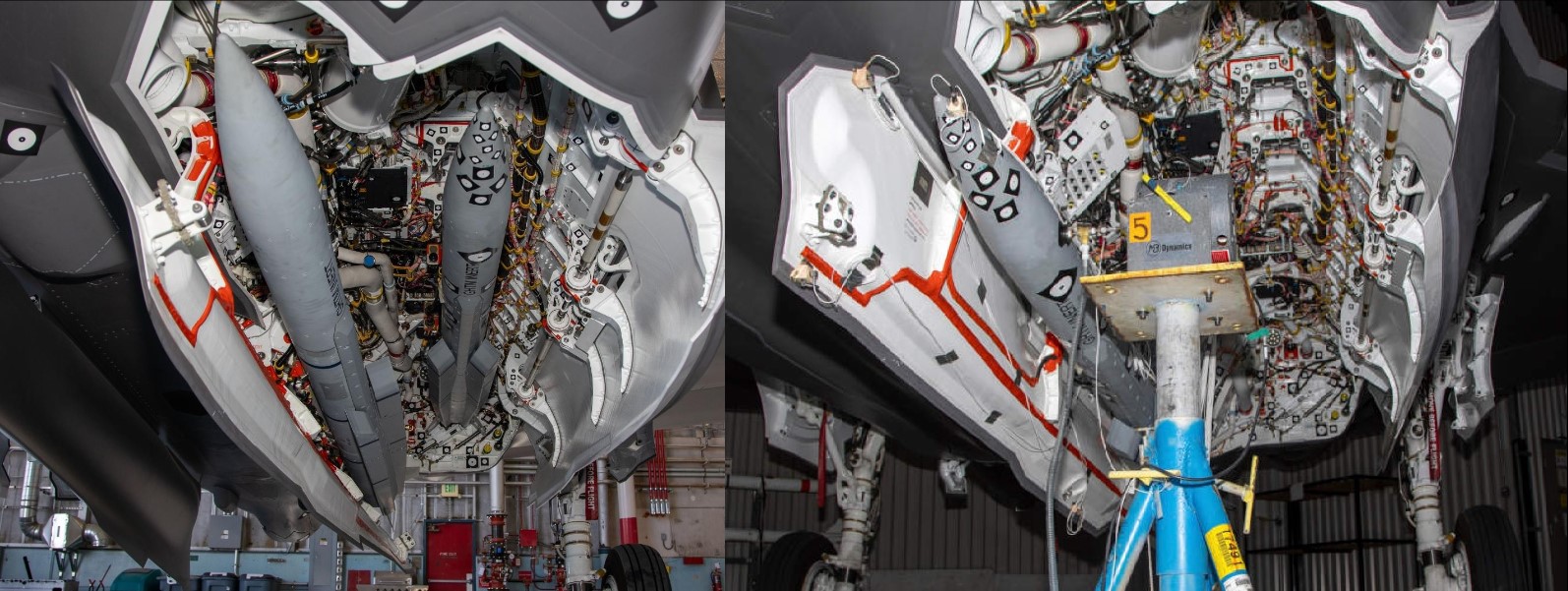
World
On 4 December 2025, European missile manufacturer MBDA confirmed that integration of the Meteor beyond-visual-range air-to-air missile on the US-built F-35A Lightning II has reached a decisive new stage, marking one of the programme’s most significant milestones to date. A series of extensive ground integration tests—conducted jointly by MBDA, Lockheed Martin, and the F-35 Joint Program Office—has successfully validated that Meteor can be safely housed and deployed from the F-35A’s internal weapons bay, a prerequisite for maintaining the aircraft’s stealth profile. The trials, carried out at Edwards Air Force Base in California, place the programme on the verge of flight testing, opening the path for full operational clearance. Beyond technical achievement, this milestone represents a major evolution in European and NATO air-combat doctrine, reinforcing long-range deterrence at a time of rising geopolitical tensions and contested airspace. A Transition from Design to Practical Integration The latest test series included ground vibration trials, fit checks, and structural response assessments, all designed to evaluate how the missile and aircraft interact as a unified weapon system. During these tests, both the F-35A and Meteor were fitted with diagnostic instruments to measure structural loads and confirm safe clearances within the weapons bay. These vibrations simulate the full range of forces the missile experiences during flight, hard manoeuvres, and aircraft operations. The checks also ensure that internal carriage does not compromise the F-35’s low-observable geometry, a central factor distinguishing the aircraft from 4th-generation fighters. Engineers report that just one final ground test remains before shifting to airborne release trials, a major leap toward certification. According to MBDA, the programme is now “one step closer” to delivering a fully integrated European long-range missile for the world’s most widely operated 5th-generation fighter. This effort builds on earlier UK-led Meteor testing on the F-35B, while Italy sponsors the F-35A integration, demonstrating the multinational nature of the programme. Norway, the Netherlands, and Denmark have also expressed strong interest, setting the stage for widespread European adoption. Meteor: Europe’s High-Energy Long-Range Interceptor At the core of this integration is Meteor itself—an advanced, network-enabled BVR missile jointly developed by six European nations: the UK, France, Italy, Germany, Spain, and Sweden. Unlike traditional missiles that rely on a single rocket burn followed by a glide, Meteor employs a unique throttleable solid-fuel ramjet, allowing continuous, adjustable propulsion throughout its flight. This provides: A dramatically enlarged no-escape zone, limiting an adversary’s ability to outrun or dodge the missile. Sustained energy at long range, ensuring lethality even during end-game manoeuvres. Mid-course updates via data link, enabling dynamic retargeting in networked combat scenarios. The missile’s active radar seeker, inertial navigation, two-way data link, and blast-fragmentation warhead make it one of the most lethal air-superiority weapons in the world. It is already operational on Rafale, Eurofighter Typhoon, and Gripen, and is now under testing with South Korea’s KF-21 Boramae. Meteor’s pairing with the F-35A—an aircraft designed to detect threats before being detected—creates a powerful long-range engagement capability unmatched by legacy systems. What Meteor Means for F-35A Operators For the F-35A, Meteor is more than an additional missile—it changes how the aircraft can fight. The F-35’s combination of AESA radar, Electro-Optical Targeting System, and passive electronic intelligence sensors generates a multi-layered detection picture. With Meteor onboard: The aircraft can engage targets at extreme ranges while maintaining stealth. Meteor’s ability to receive updates enables cooperative engagements, using data from other aircraft, drones, AWACS, or ground-based sensors. Internal carriage preserves the aircraft’s low radar signature, unlike traditional fighters that mount long-range missiles externally. F-35 formations can operate in distributed networks, engaging threats without broadcasting their position. This transforms the F-35A from a primarily strike-oriented platform into a dominant long-range air-superiority asset for NATO. Geostrategic Significance The integration reflects a broader strengthening of European defence autonomy, while still operating within the transatlantic F-35 ecosystem. With Europe supplying one of the jet’s most important air-to-air weapons, the partnership reinforces: European industrial relevance in 5th-generation warfare Interoperability across NATO A unified deterrence posture across the Baltic, Black Sea, and Arctic theatres Italy’s sponsorship and the UK’s leadership on the F-35B highlight how partner nations are leveraging their roles to shape the fighter’s future capability set. As Meteor becomes available across Europe’s F-35 operators—including Norway, Denmark, the Netherlands, Belgium, Poland and Germany—air-policing missions and quick-reaction alert strategies will be reorganised around long-range, stealth-enabled interception. The message to adversaries is explicit:any attempt to challenge NATO airspace will confront a layered system combining stealth aircraft with high-energy, long-range interceptors designed to deny escape. What Comes Next Following completion of the final ground test, the programme will transition to: Captive-carry flight tests Safe separation trials Live missile firings Full operational evaluation If airborne tests validate ground results, F-35A fleets will gain a new long-range air-combat dimension previously limited to high-performance 4.5-generation European fighters. For MBDA, Lockheed Martin, and participating nations, the achievement marks more than a technical milestone—it represents a major step toward a future in which stealth platforms, high-speed ramjet missiles, and networked combat systems operate as an integrated strike web, giving NATO decisive advantage in 21st-century air warfare.
Read More → Posted on 2025-12-05 15:39:37
India
In a significant boost to India’s combat engineering and ground operations capability, the Indian Army—working in collaboration with Bharat Electronics Limited (BEL)—has introduced the SapperScout 2.0, an Advanced Unmanned Ground Vehicle (UGV) designed to take on some of the most dangerous battlefield tasks while keeping soldiers out of harm’s way. The platform represents a major leap in the Army’s push toward autonomous and robotic systems for modern warfare. A UGV Built for the Most Dangerous Missions According to early disclosures, SapperScout 2.0 has been engineered primarily for combat engineering, infantry support and operations in hazardous zones where deploying soldiers risks heavy casualties. Its modular, rugged design enables the system to handle multiple mission profiles across terrains that would otherwise be inaccessible or too dangerous for humans. The Army highlights that the UGV is intended to reduce risk to sappers, increase operational mobility, and automate numerous high-risk engineering and reconnaissance activities. Mission Roles and Capabilities SapperScout 2.0 has been built with a wide mission envelope and multi-role flexibility: Mine Detection & Explosive Hazard Identification using GPR, metal detectors and multi-sensor fusion Payload Carriage, including ammunition, sensors, supplies or mine-laying equipment Combat Reconnaissance & ISR with real-time visual intelligence for battlefield commanders Mine Scattering, enabling safe and controlled deployment of mines Casualty Evacuation, transporting wounded personnel from high-threat zones Perimeter Security, including surveillance and intrusion alerts Weaponized or Counter-UAS Variants, supported by plug-and-play modular payloads Defence officials note that the robotics platform can be adapted for border security, urban warfare, counter-terrorism operations, and humanitarian disaster rescues. Rugged 6×6 All-Terrain Mobility The SapperScout 2.0 is built on a 6×6 independent-drive platform with articulated suspension, ensuring that all wheels maintain ground contact even over rocks, rubble, or uneven slopes. High-torque electric motors allow the UGV to climb obstacles and negotiate debris, making it suitable for deserts, high-altitude mountains, semi-urban rubble and muddy fields. Its 100–250 kg payload class allows the system to transport mines, medical stretchers, heavy supplies or detachable weapon modules. Advanced Control & Autonomy The UGV supports multiple levels of control: Remote Teleoperation, providing safe standoff distance for operators Semi-Autonomous Waypoint Navigation, where the vehicle follows preset routes Environmental Sensing, powered by LIDAR, stereo cameras and ultrasonic sensors These features enable the system to autonomously avoid obstacles, scan terrain and perform pre-programmed engineering tasks. Sensor Suite for High-Risk Detection The SapperScout 2.0 is equipped with a sophisticated sensor pack tailored for engineering roles: Ground Penetrating Radar (GPR) Metal Detection Units Multi-Sensor Fusion System for buried object detection Pan-Tilt EO/IR Camera Turret Thermal Imagers for Night Operations 360° Situational Awareness Cameras Encrypted Live Video Relay for commanders and control stations These sensors make it one of the most capable mine and hazard detection UGVs in the region. Additional Details: A Step Toward Indigenous Battlefield Robotics Defence industry sources indicate that the SapperScout 2.0 is part of a broader push toward swarm-enabled, autonomous ground systems, which the Indian Army plans to integrate into future infantry and engineering battalions. BEL is reportedly exploring: AI-based target recognition Improved battery endurance and hybrid power systems Integration of loitering munitions or anti-drone jammers Network-centric connectivity with battlefield command systems Trials for ruggedization, endurance and electromagnetic hardening are expected to continue through 2026, after which the UGV could move toward limited-series production. A New Era for Indian Combat Engineers The SapperScout 2.0 marks a major milestone in the Army’s adoption of unmanned technologies. With its robust design and broad mission range, it promises to enhance operational safety, speed and precision—particularly in minefields, urban combat and counter-insurgency environments. Defence analysts say the platform positions India among countries developing indigenous, modular UGVs capable of performing complex engineering and combat-support operations without risking soldiers’ lives.
Read More → Posted on 2025-12-05 15:06:54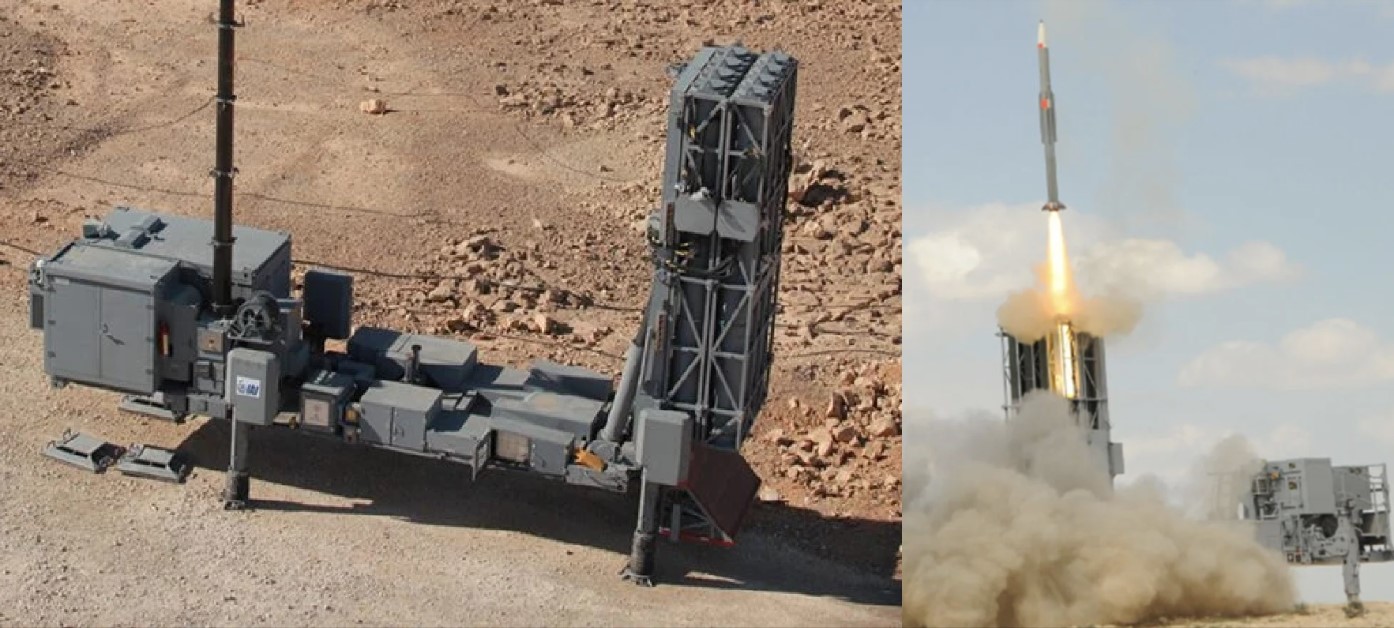
World
Israel Aerospace Industries (IAI) has formally signed a contract to supply the Royal Thai Air Force (RTAF) with the advanced Barak MX air-and-missile defence system, marking a significant expansion of Thailand’s ground-based air-defence capability and a new milestone in Israel–Thailand defence cooperation. The acquisition will provide Thailand with its first-ever medium-range air-defence system, capable of intercepting both Tactical Ballistic Missiles (TBMs) and Air-Breathing Targets at ranges of up to 150 kilometres. Thailand Steps Into the Medium-Range Air Defence Era The Barak MX is a modular, network-centric air-and-missile defence system designed to counter multiple simultaneous threats. It integrates Multi-Mission Radar, C2 (Command-and-Control), and smart launchers to form a flexible, layered defensive shield. The system uses a family of interceptors — MRAD, LRAD, and ER missiles — giving operators the ability to select the right interceptor for each situation. This architecture allows Barak MX to engage aircraft, UAVs, cruise missiles, and ballistic missiles from short to extended ranges. IAI President and CEO Boaz Levy said the agreement represents “a significant milestone for IAI in East Asia, with Thailand being a key and influential country in the region.” He added that the Barak MX will provide the RTAF with “comprehensive protection against both ballistic and aerial threats.” Levy emphasized that the system exceeded Thailand’s operational requirements, highlighting its advanced network-centric capabilities, interoperability with local command systems, and suitability for Thailand’s long-term defence framework. What the Contract Includes The procurement package for Thailand includes: Command and Control (C2) Unit Multi-Mission Radar (MMR) Barak MX Launchers Surface-to-Air Missiles (SAMs) Missile Reloading Vehicle Logistic Support Vehicle All components are mounted on high-mobility platforms, allowing rapid deployment, quick repositioning, and fast operational readiness — critical requirements for modern air defence. The deal is valued at approximately 3.44 billion Thai baht (about US $107 million) and secures a full operational battery for the RTAF. IAI is partnering with Thai Aviation Industries (TAI) to provide long-term maintenance, technical support, and local services — strengthening Thailand’s domestic capability to sustain high-end defence systems. Barak MX: A Proven, Multi-Layered Defence System The Barak MX is already in service with multiple international customers and has gained a reputation as a combat-proven, cost-efficient, and scalable solution. Designed around a multi-layered and multi-mission architecture, it allows armed forces to respond flexibly to diverse aerial threats across broad operational environments. Its “Economy of Battle” concept helps reduce long-term operational costs by using a unified launcher for all interceptor types. For Thailand — which is modernizing its Integrated Air Defence System (IADS) — the Barak MX offers: Ballistic-missile defence capability for the first time Stronger protection of air bases and national infrastructure Increased deterrence against regional missile proliferation Seamless integration with future Thai and allied systems Strategic Impact for Thailand and the Region The acquisition positions Thailand among Southeast Asia’s more advanced air-defence operators. As neighbouring countries expand missile and UAV inventories, Thailand’s deployment of the Barak MX strengthens its strategic posture and helps safeguard key national assets. For Israel and IAI, the contract enhances their footprint in East Asia and deepens ties with a country the firm considers “a key regional partner.” Thailand’s decision to acquire the Barak MX air-and-missile defence system marks a transformative step in its defence modernization. By adding a 150-km-range, network-centric, ballistic-and-aerial defence shield, the RTAF is significantly boosting its ability to confront emerging regional threats. With strong industrial cooperation, cutting-edge technology, and proven battlefield performance, the Barak MX now becomes a core pillar in Thailand’s evolving air-defence architecture. If you want, I can also create a shorter, headline-focused version or a more dramatic newspaper-style edition.
Read More → Posted on 2025-12-05 14:56:04
India
Russia’s state-owned lender Sberbank has launched the country’s first India-centric mutual fund, offering everyday Russians direct exposure to the Nifty50, India’s benchmark equity index. The product, called “First-India”, marks a significant expansion of financial ties between Moscow and New Delhi and creates a new mechanism for putting Russia’s surplus Indian rupees to productive use. The fund was unveiled in Mumbai during Sberbank CEO Herman Gref’s visit, coinciding with high-level bilateral meetings between Russian and Indian officials. The bank described the initiative as a milestone that allows Russian retail investors to track the performance of India’s top 50 listed companies through a regulated, ruble-denominated investment product. Gref said the timing aligns with India’s strong macroeconomic performance, noting the country’s status as one of the fastest-growing major economies. India’s large-cap equity market—powered by financials, technology, consumer goods, and energy companies—continues to attract global interest, with the Nifty50 serving as the primary gateway for foreign investors. A New Route for Russian Investors The First-India mutual fund, developed jointly with JSC First Asset Management, gives Russian savers a straightforward investment path that mirrors the Nifty50 index. The fund allows Russian investors to buy units domestically in rubles while gaining exposure to India’s blue-chip stocks—something previously unavailable at the retail level due to capital restrictions and market barriers. By linking directly to a widely tracked index, the product minimizes stock-specific risk and simplifies access to one of the world’s most dynamic equity markets. Recycling Rupee Surpluses Beyond investor convenience, the new fund also addresses a growing financial imbalance. Since 2022, Russia has accumulated large volumes of Indian rupees due to India’s significant purchases of discounted Russian crude and the shift toward non-dollar settlement. These rupees are difficult to repatriate because of currency restrictions. Sberbank—responsible for the largest share of Indo-Russian settlement flows—has been seeking ways to deploy these funds efficiently. The First-India fund offers a solution by channeling rupee-linked investments into Indian financial markets rather than letting the currency sit idle. The bank is also investing a portion of these rupees into Indian government securities, reinforcing its long-term exposure to the local economy. Expanding Sberbank’s Footprint in India The launch of the new fund is part of a broader push by Sberbank to strengthen its presence in India. The bank is examining plans to open up to 10 new branches, build a dedicated data centre, and expand into new sectors, including healthcare and education services. The initiative also reflects a shift in Russia’s global financial alignment. With Western markets largely inaccessible due to sanctions, Russian financial institutions are increasingly turning toward Asia and the Global South. Significance for India For India, the initiative carries several advantages: It brings long-term Russian capital into Indian equity and bond markets. It supports rupee internationalisation, aligning with New Delhi’s broader financial diplomacy goals. It reinforces the stability of the India–Russia economic partnership, even during global geopolitical turbulence. A regulated, foreign-domiciled product tied to the Nifty50 also enhances India’s image as a reliable investment destination for emerging-market partners. A New Chapter in Indo-Russian Financial Relations The First-India fund gives Russian households a simple way to participate in India’s economic expansion while providing Moscow with a practical channel to utilize its rupee holdings. For both countries, the launch marks an evolution from traditional energy and defence cooperation toward deeper financial integration—one that could shape future cross-border investment flows. Sberbank’s entry into India-focused retail investing underscores a broader trend: as Russia looks eastward for growth and stability, India’s capital markets are becoming an increasingly important destination.
Read More → Posted on 2025-12-05 14:44:47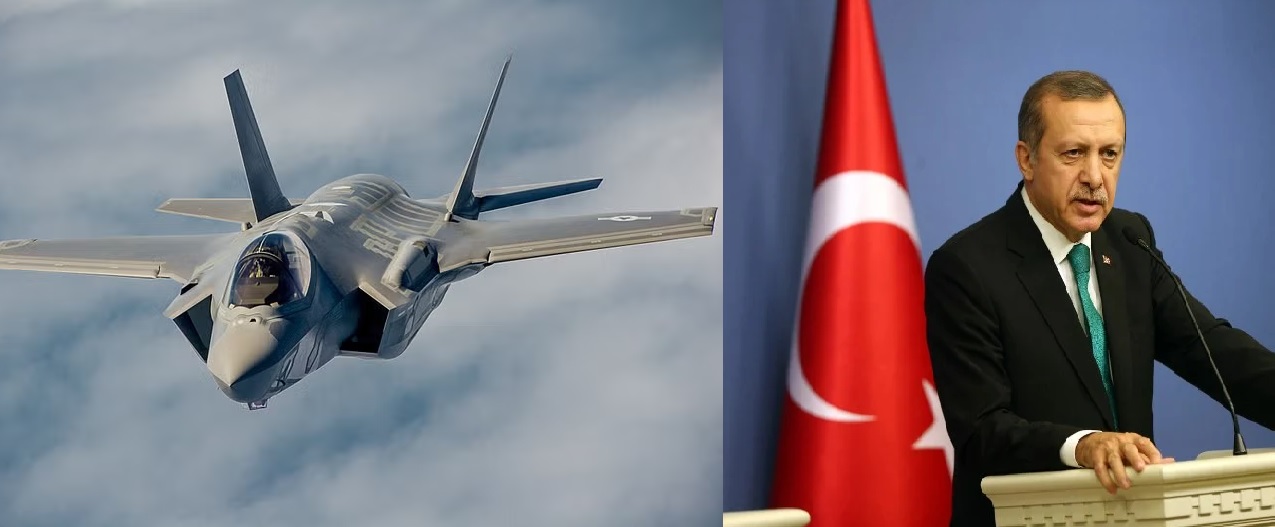
World
Türkiye is edging closer to a possible return to the U.S.-led F-35 stealth fighter program, according to U.S. Ambassador to Türkiye Tom Barrack, who says Ankara is “close” to removing the main obstacle that got it expelled in the first place: the Russian-made S-400 air defense system. In recent remarks reported in Turkish and defense-focused outlets, Barrack said Washington now views the S-400 “operability” problem as largely resolved because the system is not being used, even if it remains on Turkish soil. He added that he expects the dispute to be settled within four to six months and confirmed that Ankara is moving closer to giving up the Russian system altogether. If that optimistic timeline holds, it could open the door for Türkiye to rejoin the program it helped build—but any final decision will have to overcome legal and political resistance in Washington. From Partner to Outcast: How Türkiye Lost the F-35 Türkiye was once a core industrial and customer partner in the F-35 Joint Strike Fighter program. Turkish firms produced hundreds of components for the jet, and Ankara planned to buy at least 100 aircraft. That changed after Ankara signed a 2017 deal to acquire four batteries of the Russian S-400 “Triumf” long-range air defense system, defying repeated warnings from the U.S. and other NATO allies. Washington argued that operating S-400s alongside F-35s would give Russia a window into the jet’s stealth profile and tactics. In July 2019, the Pentagon formally removed Türkiye from the F-35 program and later imposed CAATSA sanctions on Turkish defense officials and entities over the S-400 purchase, freezing deliveries of jets and blocking further participation in the supply chain. Since then, successive U.S. administrations have repeated the same public red line: no F-35 return as long as S-400s remain in Turkish hands and potentially usable. Making the S-400 “Inoperable” – The Emerging Compromise What has changed now is not that Türkiye has physically removed the S-400s, but that it has effectively mothballed them. Turkish officials have previously said the system is non-operational and not integrated into Türkiye’s wider air defense network, even though they insist it could be activated quickly if needed. President Recep Tayyip Erdoğan has publicly stated that the S-400 can be brought online within hours, a way of signaling to domestic audiences that Ankara has not bowed completely to U.S. pressure. Behind the scenes, however, the U.S. and Türkiye have explored a range of workarounds over the past two years, including: Placing the S-400s in storage on Turkish territory under strict technical controls. Declaring key components “inoperable” or dismantled to satisfy CAATSA requirements without a politically explosive public “return” or sale to Russia. Earlier, more radical ideas like transferring the system to a third country or a U.S.-controlled sector of İncirlik Air Base were floated but never accepted by Ankara. Barrack’s latest comments suggest Washington is now prepared to treat “not being used” and possibly being sealed under agreed technical arrangements as sufficient to call the S-400 problem “solved,” even if the hardware physically remains in Türkiye for now. Political Hurdles in Washington: Congress Is Not Convinced Even if the Pentagon and the White House are inching toward a compromise, U.S. Congress remains a major obstacle. Bipartisan groups of lawmakers have pushed to permanently block Türkiye’s reentry into the F-35 program, citing not just the S-400 issue but also Ankara’s strained relations with other NATO members and its open engagement with groups like Hamas. Some members argue that allowing Türkiye back into the program with S-400s still on its territory—operational or not—would undermine the credibility of CAATSA sanctions and send the wrong message to other U.S. partners considering purchases of Russian hardware. Others worry about rewarding Ankara while disputes continue over Syria policy, Eastern Mediterranean tensions, and human rights. Any full restoration of F-35 sales, and especially any renewed industrial workshare, would require Congressional approval or at least acquiescence, meaning Barrack’s “four to six months” forecast depends on more than just technical fixes. Türkiye’s Broader Fighter Jet Strategy: F-16s, Eurofighters and KAAN Part of the urgency on both sides comes from the fact that Türkiye’s air force is aging, while Ankara is pursuing multiple parallel options. A large F-16 Block 70/72 modernization package worth tens of billions of dollars has been under negotiation, with the Trump administration signaling openness to move forward if the S-400 issue can be neutralized. In July 2025, Türkiye signed a preliminary agreement with the UK for the potential purchase of Eurofighter Typhoon jets, a move seen both as leverage in talks with Washington and as a hedge against a long-term breakdown in F-35 negotiations. At the same time, Ankara is investing heavily in its indigenous KAAN fifth-generation fighter, which Turkish officials say could be operational by around 2028, though analysts expect delays typical of complex fighter programs. For Ankara, regaining access to the F-35 would restore lost prestige, recover sunk investments in the program, and give its air force a top-tier stealth capability while KAAN matures. For Washington, keeping Türkiye anchored to Western platforms is seen as vital to NATO interoperability and to preventing Ankara from drifting further toward Russian or Chinese defense ecosystems. What Happens Next? Barrack’s prediction of a four-to-six-month window for resolving the F-35 dispute appears to reflect several converging tracks: Negotiations on how exactly the S-400s will be kept inoperable, verified, and possibly reconfigured or partially dismantled. A broader package involving sanctions relief, F-16 sales, and perhaps a phased path back into the F-35 program, contingent on milestones. A political effort by the administration to persuade skeptical lawmakers that Türkiye is again a reliable NATO partner and that the S-400 chapter is effectively closed. Even if an understanding is reached at the executive level, any return to full F-35 production work for Turkish industry is likely to be gradual, as many components originally made in Türkiye have since been re-sourced to other suppliers. For now, Barrack’s comments mark the clearest signal yet that Washington and Ankara are actively looking for a face-saving formula: one that lets Türkiye quietly step away from the S-400, resurrect its F-35 ambitions, and reset a relationship that has been stuck in a sanctions-driven stalemate since 2019. Whether the next few months deliver a genuine breakthrough—or simply another round of optimistic statements—will depend on how far both sides are willing to go on the S-400, and how much political capital the U.S. administration is ready to spend in Congress to bring Türkiye back into the F-35 fold.
Read More → Posted on 2025-12-05 13:59:25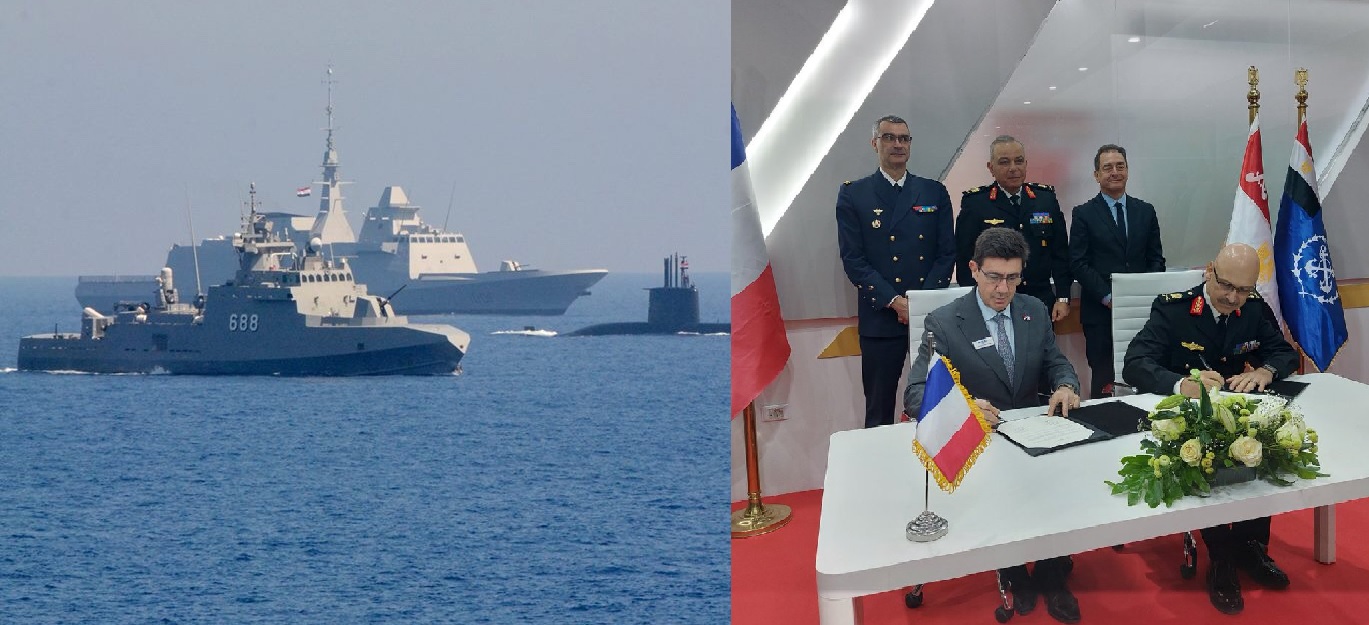
World
The Egyptian Navy has renewed its contract with French shipbuilder Naval Group for the in-service support (ISS) of the major surface combatants the company has supplied to Egypt, in a move aimed at keeping the fleet at high readiness and extending the two sides’ industrial partnership. According to Naval Group, the new agreement is an extension of the ISS contract that has been in force since 2019 and will run for another five years. Over this period, mixed teams of engineers and technicians will provide maintenance and support for seven key vessels in Egyptian service: the FREMM multi-mission frigate Tahya Misr, the two Mistral-class Egyptian Landing Helicopter Docks (E-LHDs) Gamal Abdel Nasser and Anwar El Sadat, and the four Gowind 2500 corvettes El Fateh, Port Said, El Moez and Al Ismailia. Naval Group said the renewal “strengthens their collaboration focused on fleet availability” – meaning the core objective is to keep these high-value ships at sea as much as possible, fully mission-capable and ready for deployment. What The In-Service Support Deal Actually Covers In-service support goes far beyond simple repairs. Under the renewed contract, Naval Group will be responsible for a wide spectrum of activities connected to keeping the ships at a high operational standard, including: Planned preventive maintenance on critical systems such as propulsion, combat management, sensors, weapons and mission systems. Corrective maintenance and repairs when faults occur, often with OEM (original equipment manufacturer) expertise that local yards alone may not provide. Provision of spare parts and logistics support, ensuring parts pipelines and inventories are aligned with actual usage and deployment patterns. Upgrades and modernisation packages over the life of the vessels, integrating new sensors, weapons, electronic warfare and communication suites as technologies evolve. Technical assistance and training for Egyptian Navy personnel and local industry, so more tasks can gradually be performed in-country. For Egypt, this type of long-term ISS framework is designed to avoid the “boom-and-bust” cycle of buying advanced ships and then struggling to maintain them. Instead, it locks in predictable support for complex platforms such as the FREMM frigate, which combines advanced radar, anti-submarine warfare (ASW) sonars and long-range surface-to-air and anti-ship missiles, and the Gowind 2500 corvettes, tailored for multi-mission roles in the Mediterranean and Red Sea. A Decade-Long Collaboration Now Anchored in Egypt The renewed ISS contract is the latest step in a partnership that has been developing for roughly a decade. Egypt first turned to Naval Group (then DCNS) in 2014 with a contract for four Gowind 2500 corvettes. The first-of-class, El Fateh, was built in Lorient, France, and delivered in 2017, while subsequent ships were built under a technology transfer agreement at Alexandria Shipyard. In parallel, Cairo acquired: One FREMM multi-mission frigate, Tahya Misr, delivered in 2015. Two Mistral-class landing helicopter docks, Gamal Abdel Nasser and Anwar El Sadat, delivered in 2016. To support these ships over their service life, Naval Group and the Egyptian Navy signed a first five-year ISS agreement around the time of EDEX 2018, Egypt’s defence exhibition. The French company then created a dedicated subsidiary in Alexandria – Alexandria Naval for Maintenance and Industry (ANMI) – tasked with local support for the FREMM, the two LHDs and the Gowind corvettes, and with carrying out future upgrades. The new five-year extension essentially keeps that arrangement in place and expands it. Naval Group says it will grow its Egyptian workforce, creating more local jobs in engineering, maintenance and logistics, and is in talks to bring in additional Egyptian suppliers to participate in ship support work. Focus on Fleet Availability And Future Upgrades By renewing the ISS contract, both sides are signalling that fleet availability – how often the ships are actually ready to deploy – is as important as the initial acquisition. The vessels covered by the deal form a large share of the Egyptian Navy’s modern surface fleet, used for: Securing sea lines of communication through the Suez Canal and Eastern Mediterranean. Power projection and amphibious operations via the Mistral-class LHDs. Maritime security, anti-submarine warfare and air defence in regional waters via the FREMM and Gowind classes. Recent reporting also indicates that Egypt and Naval Group have been exploring capability upgrades, particularly enhanced ASW systems for the Gowind corvettes – an area where an active ISS framework makes it easier to integrate new sensors and weapons during scheduled maintenance periods rather than as one-off projects. Naval Group’s CEO Pierre Eric Pommellet described the extension as a continuation of a “long-lasting partnership” with Egypt, under which the company not only supports the fleet but also develops Egyptian industrial and human capital in naval engineering. Strategic Signal in the Mediterranean Beyond the technical and industrial aspects, the renewed ISS contract carries a clear strategic message. For France, it confirms Naval Group’s role as a key naval partner in the Eastern Mediterranean and Red Sea, backing a regional navy that has rapidly modernised over the past decade. For Egypt, it ensures that some of its most modern ships remain combat-ready, with factory-level support and access to upgrades over the medium term rather than being left to age without proper backing. In practical terms, the deal means that for at least the next five years, the FREMM Tahya Misr, the two Mistral-class LHDs and the four Gowind corvettes will be supported under a common framework linking Egyptian crews, Alexandria Shipyard, Naval Group’s local subsidiary and the company’s engineering base in France – with the shared goal of keeping the Egyptian Navy’s flagship assets ready for operations at short notice.
Read More → Posted on 2025-12-05 13:18:04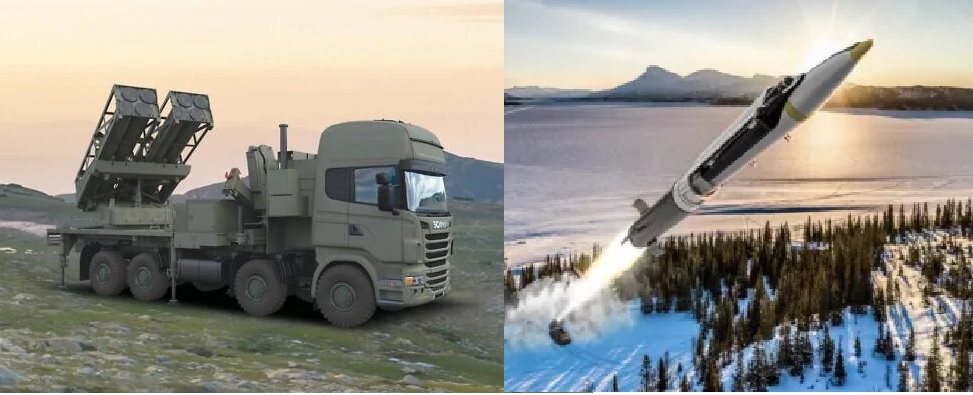
World
Greece has taken another significant step in its long-term defence overhaul, approving the acquisition of 36 Israeli-made PULS rocket artillery systems in a deal valued between €650–700 million, according to officials who spoke to Reuters. The move is part of Athens’ broader €28-billion military modernisation programme running until 2036, designed to strengthen deterrence amid ongoing tensions with Turkey. Quiet Parliamentary Approval in Closed Session A senior Greek defence official confirmed that parliament’s defence committee approved the purchase late Thursday in a closed session, underscoring the strategic sensitivity surrounding the procurement. A second official validated the decision and the projected cost range. The deal follows months of negotiations with Israel’s Elbit Systems, the manufacturer of the PULS (Precise & Universal Launching System), a highly modular rocket artillery platform capable of firing multiple munition types with ranges up to 300 km. Under the agreement, part of the system’s components will be built in Greece, supporting the domestic defence industry. Strategic Purpose: Boosting Deterrence Across the Aegean Greek officials say the new long-range rocket systems will be deployed to bolster the country’s defences along the northeastern land border with Turkey and across key Aegean islands—areas at the centre of long-standing disputes over airspace, maritime zones, and territorial rights. The acquisition significantly extends Greece’s precision-strike reach. With ranges exceeding the capacity of its existing conventional artillery, PULS enables: Rapid-response fire missions Deep-strike capability into hostile staging areas Flexible deployment on both mainland and island territories Greece’s Current Rocket Artillery and Long-Range Fire Capabilities The induction of the PULS system will modernise and significantly expand Greece’s long-range strike network, adding capabilities that surpass the range of its existing artillery assets. Greece’s current rocket and artillery fleet includes: RM-70 Multiple Launch Rocket System (MLRS) – Legacy Czech-designed 122mm rockets with ranges of 20–40 km, depending on the rocket variant. M270 MLRS – U.S.-built launchers capable of firing GMLRS rockets with ranges of 70–85 km and, after upgrades, potentially ER-GMLRS reaching up to 150 km. Greece operates around 36 units, several undergoing modernisation. 155mm towed and self-propelled artillery, including Germany’s PzH 2000, able to fire standard rounds to 30 km and assisted projectiles to 40+ km with high accuracy. Spike NLOS missiles – Recently ordered precision-strike missiles with a range of up to 32 km, offering high-value target engagement for both the Army and special units. With its modular loadout and long-range missile options, the PULS system—capable of firing rockets with ranges up to 300 km—instantly becomes Greece’s longest-range artillery asset, elevating its strike capabilities to a level comparable with the most advanced Western rocket artillery systems. Expanding Greece–Israel Defence Cooperation Athens and Tel Aviv have deepened defence and security ties over the past decade. Key cooperation points include: Joint military exercises A €1.5-billion air training centre in Kalamata operated by Israel’s Elbit Systems Ongoing discussions about a €3-billion “aerial and missile defence dome”, inspired by Israel’s multilayered Iron Dome-style protection Technology transfers and co-production arrangements The PULS procurement further embeds this partnership. Regional Context: Greece–Turkey Tensions Persist Greece and Turkey, despite both being NATO members, continue to face deep and long-standing disputes that shape Athens’ defence posture. The two countries remain divided over maritime boundaries, Exclusive Economic Zones (EEZs), and the rights to explore natural gas reserves in the Eastern Mediterranean. Tensions are further aggravated by frequent Aegean airspace violations and competing claims regarding the sovereignty of small islands and islets. The unresolved Cyprus question adds another layer of complexity to an already sensitive regional landscape. Against this backdrop, Athens’ long-term military modernisation plan—which includes new fighter jets, upgraded frigates, enhanced air defence systems, and now long-range rocket artillery—aims to ensure that Greece maintains strong readiness and deterrence in an increasingly contested security environment. Part of a Broader Decade-Long Modernisation The PULS acquisition aligns with Greece’s sweeping defence upgrades since 2020, including: 24 Rafale fighter jets from France Upgraded F-16 Viper fleet (84 aircraft) New Belharra-class (FDI HN) frigates and potential corvette purchases Expansion of UAV capabilities and counter-UAV systems Upgraded air defence networks With the PULS approval, Greece reinforces its shift toward precision-strike, high-mobility warfare, improving its posture across the Aegean and Eastern Mediterranean. A New Phase in Greek Defence Strategy The acquisition marks one of the most important artillery procurements in Greek military history. By combining new long-range capabilities with domestic manufacturing involvement and strengthened strategic alliances, Athens aims to project confidence while mitigating risks in a volatile neighbourhood. The systems are expected to be delivered and integrated over the coming years, forming a cornerstone of Greece’s evolving deterrence architecture as it advances toward 2036.
Read More → Posted on 2025-12-05 13:07:58
World
Field Marshal Syed Asim Munir has been formally appointed as Pakistan’s first Chief of Defence Forces (CDF), cementing his position as the country’s most powerful military figure under a controversial new constitutional framework. President Asif Ali Zardari on Thursday signed off on a summary sent earlier in the day by Prime Minister Shehbaz Sharif, confirming Munir’s elevation to the newly created post while he continues as Chief of Army Staff (COAS) for a renewed five-year term. The decision follows weeks of speculation and political intrigue after Pakistan’s parliament passed the 27th Constitutional Amendment, which was explicitly designed to create the CDF position and expand the powers and protections enjoyed by the serving army chief. A Transition Planned Well in Advance Munir’s new role is the culmination of a process that has been under way for months. In November, parliament approved a far-reaching amendment to the constitution by more than a two-thirds majority, creating the Chief of Defence Forces post and formally placing the army, air force and navy under the authority of a single five-star officer — the army chief himself. The amendment also: Resets Munir’s tenure: his clock starts again from the date of the first CDF/COAS notification, allowing him to serve at least until 2030, with scope for further extension under the new legal framework. Grants lifetime legal immunity to a five-star officer, currently only Munir, shielding him from prosecution even after retirement. Gives the CDF primacy over the other services and direct control of the Strategic Plans Division, which manages Pakistan’s nuclear arsenal. Supporters inside government have framed the overhaul as a move toward “unity of command” and faster decision-making in crises. Critics, however, describe it as a historic centralisation of power in the hands of one man and the institution he leads. From ‘Pending Paperwork’ to Presidential Signature In the days leading up to Thursday’s announcement, Islamabad was awash with rumours about the timing of Munir’s notification. The user-circulated narrative that the CDF notification was “only pending paperwork” broadly matched what government insiders were signalling: Law Minister Azam Nazeer Tarar and Defence Minister Khawaja Asif both said publicly that the appointment was “in process” and could be formalised at any time, explaining that procedural formalities and the prime minister’s travel schedule had caused the delay. That delay triggered unusual public mockery and speculation online, with Pakistani media and social platforms highlighting memes about whether Munir was already effectively retired or ruling without a formal title. Thursday’s presidential approval has now ended that suspense. According to official statements: Munir will simultaneously serve as COAS and CDF for five years under the new framework. His elevation is anchored in the 27th Amendment and associated service-law changes already passed by parliament and signed by the president last month. In parallel, Prime Minister Shehbaz Sharif has also approved a two-year extension for Air Chief Marshal Zaheer Ahmed Babar Sidhu, whose current five-year tenure will end in March 2026, ensuring continuity at the top of the Pakistan Air Force as the new command architecture beds in. A Reshaped Military Command Structure With the CDF post now active, Pakistan’s higher defence organisation is undergoing its biggest structural change in decades. Under the new system: The traditional post of Chairman, Joint Chiefs of Staff Committee (CJCSC) has been abolished, with the 27th Amendment and subsequent changes in Article 243 making clear that the CDF will replace the CJCSC as the central node of military decision-making. A new National Strategic Command (NSC) is being created as a four-star slot to take over nuclear command responsibilities previously vested in the CJCSC; the NSC commander will be appointed by the prime minister on the recommendation of the COAS/CDF. The federal government will define the CDF’s remit, including multi-domain integration, restructuring and “jointness” across the services, giving Munir a formal mandate to reorganise Pakistan’s war-fighting posture. The new framework effectively locks in army primacy over Pakistan’s entire military apparatus, codifying in the constitution what many analysts say has long been the de facto reality of the country’s civil–military balance. Munir’s personal trajectory underscores that dominance. Promoted earlier this year to Field Marshal — only the second in Pakistan’s history after Ayub Khan — he now combines the country’s highest rank with its most powerful operational role. Limited Institutional Space for Resistance While the user-supplied assessment notes that some resistance might exist from figures like Nawaz Sharif and sections of the officer corps, most formal centres of power have already aligned with the new setup: The amendment passed parliament with overwhelming support from the ruling Pakistan Muslim League (Nawaz) and its coalition partners; only a small group of lawmakers opposed it, while PTI-aligned members staged a walkout and denounced it as a blow to democracy. Two senior Supreme Court judges resigned in protest, calling the constitutional changes a grave assault on judicial independence. But the same amendment also enables the creation of a Federal Constitutional Court, whose composition is heavily influenced by the executive and legislature — a design critics say sharply limits the likelihood of any successful legal challenge. Legal experts and civil-rights groups argue that the package amounts to a “death knell” for an independent judiciary, warning that future constitutional disputes will be adjudicated by a court whose judges are selected under rules that favour the government and, indirectly, the military leadership. For now, however, the combination of parliamentary endorsement, presidential assent and new judicial arrangements leaves little institutional space for organised resistance to Munir’s expanded role. Many observers expect the current turbulence and online criticism to fade as the new system settles in and key appointments—such as the National Strategic Command chief—are finalised. Domestic and Regional Implications Munir’s appointment as CDF consolidates his influence at a moment when Pakistan faces serious economic strain, intensifying militant violence in border regions, and delicate relations with India and Afghanistan. The 27th Amendment and the CDF post give him: Extended control over nuclear and strategic forces, The ability to shape Pakistan’s force posture and doctrine across all services, and A tenure long enough to influence major political milestones, including the 2029 general election. International reaction to the amendment and Munir’s new role has so far been muted, with key partners prioritising security cooperation and regional stability over democratic concerns. But analysts warn that if Pakistan’s revamped command system is used to pursue a more confrontational line abroad, or to further sideline civilian institutions at home, scrutiny from foreign capitals could grow. For now, with the paperwork completed and the notification issued, Field Marshal Asim Munir stands not only as Pakistan’s army chief, but as its first Chief of Defence Forces—a single, constitutionally empowered figure at the apex of the country’s military and strategic decision-making.
Read More → Posted on 2025-12-05 12:50:21
World
Australia is preparing to send its ageing fleet of Tiger attack helicopters to Ukraine as part of a possible new military aid package, with Canberra now actively examining how many aircraft could be transferred and when they might leave Australian service, according to reports citing government sources. The discussions, first reported by ABC News, come as the Albanese government weighs fresh support for Kyiv and faces renewed pressure to make use of equipment already earmarked for retirement rather than scrapping it. From Troubled Fleet to Battlefield Asset for Ukraine Australia operates 22 Eurocopter Tiger ARH (Armed Reconnaissance Helicopter) aircraft, acquired under Project AIR 87 after a 2001 contract with Eurocopter (now Airbus Helicopters). All 22 were delivered by 2011 and form the core of the Army’s armed reconnaissance regiment. Canberra decided in 2016 to retire the Tigers early and replace them with the US-built AH-64E Apache Guardian, citing high sustainment costs, persistent reliability issues and the small global fleet that makes logistics difficult. The current plan is for Tiger operations to end no later than 2027–28, as 29 Apaches are delivered through to 2029. Although the Tigers are still in service, the Australian Defence Force has begun drawing down the fleet and scaling back investment in upgrades. That has created an opportunity: aircraft with significant remaining flight hours but limited future use in Australia could be transferred to Ukraine, where any additional attack helicopter capability is in high demand. Australian media and specialist defence outlets say officials are now working through how many of the 22 Tigers could be made available, what refurbishment would be needed, and how quickly Ukrainian crews could be trained. No final number has been announced, and the government has so far described the move as under consideration rather than a done deal. Why the Tigers are Being Replaced The Tiger ARH marked a major leap in capability for the Australian Army when it entered service in the mid-2000s. But the program ran into repeated delays and technical problems. Final Operational Capability was only declared in 2016, about seven years later than originally planned, and even then the system still had dozens of outstanding deficiencies. An Australian National Audit Office review and multiple Defence white papers highlighted recurring issues: High sustainment and maintenance costs compared with expectations. Lower than planned availability, partly due to the need to send key components back to Europe for repair. The challenge of supporting a niche European helicopter type with a relatively small global user base. These problems, combined with the desire for greater interoperability with US forces, led Canberra to select the AH-64E Apache as the Tiger’s replacement under project LAND 4503. The first Apaches arrived in 2025, with more deliveries scheduled over the next few years. For Ukraine, however, the calculation is different. Even if the Tigers are more expensive and complex to sustain than Western rivals, they would still represent a significant boost in dedicated attack helicopter capability and could be used alongside donated Western ground-based air-defence and artillery systems. What The Tiger ARH Can Do The Tiger ARH is a twin-engine, two-seat attack and reconnaissance helicopter designed for armed escort, close air support and anti-armour missions. Key characteristics include: Crew: 2 (pilot and weapons systems officer in tandem cockpit). Engines: 2 × MTR390 turboshafts, each around 870–950 kW (1,160–1,300 shp). Dimensions: overall length about 15 m, rotor diameter 13 m, height around 3.8–5.2 m depending on configuration. Weight: maximum take-off weight roughly 6,000–6,600 kg. Performance: Top speed around 290–315 km/h Combat range up to 800 km, extendable to around 1,300 km with external tanks Endurance about 3 hours in typical missions. The Australian ARH configuration is heavily armed and customised: 30 mm Nexter chin-mounted automatic cannon with several hundred rounds for close support. AGM-114 Hellfire II anti-tank missiles on wing pylons for armoured and hardened targets. 70 mm unguided rockets (Hydra or FZ) in 7- or 19-tube launchers for area suppression. Mistral or Stinger short-range air-to-air missiles for self-defence against helicopters and low-flying aircraft. A roof-mounted sight with thermal imaging, laser designator and rangefinder allows the crew to detect, identify and engage targets at long range day or night. The helicopter also carries modern communications and data links, and an electronic warfare/self-protection suite with missile warning and countermeasures. What It Would Mean For Ukraine If the transfer goes ahead, Ukraine would likely need: Training pipelines for pilots, weapons officers and ground crews, potentially conducted in Australia or at a third-country training facility. A support and spares package, since the Tiger’s complex systems and limited user base make logistics challenging. Integration with existing Ukrainian command and control, including safely employing Hellfire or equivalent missiles and coordinating with ground forces. For Kyiv, even a partial fleet – for example 12–16 airframes out of Australia’s 22 – could provide a specialised attack helicopter regiment capable of hunting armour, supporting ground offensives and conducting deep strike missions, particularly if paired with Western intelligence and targeting. For Canberra, sending the Tigers would: Demonstrate that Australia is willing to move beyond financial support and vehicles to high-end combat aviation platforms. Avoid the politically sensitive option of simply mothballing or scrapping expensive helicopters that still have usable life left. Strengthen ties with European partners who are also supplying advanced systems to Ukraine. However, officials caution that no final decision or transfer schedule has been formally announced. The government is still assessing operational risk during the transition to Apache, legal and export control issues with European partners, and the cost of preparing the helicopters for handover. A Symbolic And Practical Shift If Australia ultimately hands over its Tiger ARH fleet, it would mark the end of a two-decade experiment with a sophisticated but sometimes troubled European attack helicopter – and the beginning of a new chapter for the aircraft over Ukraine’s battlefields. For Kyiv, the Tigers would not replace the need for more air defence systems, drones and artillery ammunition. But as dedicated attack platforms with powerful sensors and precision weapons, they could give Ukrainian forces a sharper edge in contested battles along the front lines, turning retired Australian hardware into a fresh dose of combat power.
Read More → Posted on 2025-12-05 12:16:01
World
Japan has taken a major step toward fielding ship-mounted directed-energy weapons, with the confirmation that a containerized high-energy laser prototype has been installed aboard the Japan Maritime Self-Defense Force (JMSDF) test ship JS Asuka. The installation was first observed on 2 December 2025, marking the first time Japan’s naval laser technology has transitioned from land trials to maritime testing. The prototype belongs to Japan’s ongoing Electric-Drive High-Power Laser System program, overseen by the Ministry of Defense’s Acquisition, Technology & Logistics Agency (ATLA). The system, housed in two 40-ft containers, represents Japan’s most powerful laser weapon effort to date—targeting a 100-kW-class output by combining multiple domestically produced 10-kW fiber lasers. Designed to neutralize drones, mortar rounds and eventually anti-ship missiles, the system is Japan’s closest analogue to U.S. Navy HELIOS and Israel’s Iron Beam-class programs. A Significant Leap in Japan’s Directed-Energy Weapon Development Japan has accelerated research on high-energy lasers as part of a wider strategy to counter massed drone and missile attacks at low cost—particularly amid the global proliferation of UAV swarms and loitering munitions. ATLA’s R&D roadmap is split into two major laser programs: 1. Vehicle-Mounted High-Mobility Laser System (10-kW Class) • Developed from FY2021 to FY2024• Built by Mitsubishi Heavy Industries (MHI)• A truck-mounted prototype was delivered in October 2024• Publicly unveiled at DSEI Japan 2025• Intended for counter-small UAS missions within the Japan Ground Self-Defense Force (JGSDF) The JGSDF is now evaluating options for fielding an operational version, following successful trials against short-range aerial threats. 2. High-Energy “Electric-Drive High-Power Laser System” (Target: 100-kW Class) • Development period: FY2018–FY2025• Contractor: Kawasaki Heavy Industries (KHI)• Prototype delivered in February 2023• Has already completed destruction tests against drones and mortar rounds This system’s two-container architecture houses the beam director, power generation, energy storage, cooling, and command components—reflecting its role as a future shipborne weapon. Its installation aboard JS Asuka indicates Japan is preparing to conduct live at-sea firing trials, validating accuracy, stability and destructive power under real maritime conditions. Why JS Asuka? JS Asuka is JMSDF’s dedicated experimental ship, equipped with modular spaces, test points, and enhanced instrumentation for evaluating cutting-edge naval systems. The ship has previously hosted trials for Aegis radar systems, new sonar suites, and propulsion technologies. Its stable platform and instrumentation make it ideal for initial maritime testing of directed-energy weapons. Live-Fire Maritime Tests Likely Imminent On 3 December 2025, ATLA issued a solicitation for target drone operations to support maritime firing tests. The request confirms that the installation is not merely for fitting or integration checks, but part of a broader at-sea live-fire evaluation campaign. FY2025 marks the final year of the laser’s R&D phase. Officials expect: • Precision-engagement trials against maneuvering UAVs• Continuous tracking tests under ship pitch and roll• Evaluation of beam stability in sea-spray and high-humidity conditions• Integration trials with JMSDF search radars and electro-optical sensors Such trials will determine whether the system can evolve into an interceptor capable of neutralizing anti-ship missiles—Japan’s ultimate objective. Technical Challenges: Power, Cooling, and Size Directed-energy weapons demand immense electrical power. With a conversion efficiency of roughly 30%, a 100-kW laser needs: • ≥300 kW of continuous power generation• Large-scale cooling and energy-storage components These requirements are the main obstacles to deploying lasers on operational warships. ATLA is exploring miniaturization—potentially leveraging advanced commercial technologies—to make laser modules compatible with destroyers, frigates, and future unmanned vessels. Next Phase: “Research on a Shipboard Laser System” (FY2025–FY2029) Building on lessons from JS Asuka’s demonstration system, Japan has launched a new ATLA program to create an operational naval laser weapon for the JMSDF. Core Objectives 1. Laser Engagement Control System Technologies • Target identification and real-time fire control using air-search radars• Multi-beam-director coordination for 360° coverage• Engagement of steep-angle or overhead targets• Automated battle-damage assessment on irradiated threats 2. Shipboard Integration & Environmental Hardening • Stability against ship roll, pitch, and vibration• Resistance to sea spray, humidity, and salt corrosion• Compatibility with both new-construction and retrofit vessels Timeline • FY2025–FY2029: Prototype development• FY2027–FY2030: Operational demonstration trials at sea Japan hopes to field a deployable shipborne laser system by the early 2030s, aligning with major fleet modernization efforts. Strategic Context: A Race Toward Counter-UAV and Counter-Missile Energy Weapons Japan’s pursuit of high-energy laser technology unfolds amid a rapidly intensifying global race to field directed-energy weapons capable of defeating drones, rockets and next-generation missiles. Around the world, major military powers are moving from experimentation to deployment, signaling a shift toward laser-based air defense as a mainstream capability. The United States continues to expand the deployment of its HELIOS laser weapon across frontline destroyers, integrating it with Aegis combat systems for real-time fleet defense. Israel is pushing the Iron Beam system toward operational readiness after repeated demonstrations against rockets and UAVs, seeking to build a cost-effective shield against saturation attacks. China has unveiled several high-power tactical laser prototypes, indicating plans to incorporate directed-energy weapons into future land and maritime forces. India has also entered the race. The Indian Army is preparing to procure seven DRDO-developed laser weapon systems, part of a broader push to counter drone incursions, loitering munitions and future missile threats along its borders. The move reflects India’s commitment to integrating indigenous directed-energy technologies into its air-defense network. The United Kingdom recently advanced its own laser program by approving the DragonFire laser weapon for Royal Navy deployment following successful trials in which the system destroyed drone targets with precision. The UK sees DragonFire as a cornerstone of future shipborne defenses and an answer to increasingly sophisticated aerial threats. For Japan—confronting accelerating A2/AD challenges, expanding drone saturation threats, and the emergence of hypersonic missiles—the global trend reinforces the urgent need for its own laser weapon capability. Directed-energy systems offer extremely low cost per shot, deep magazines limited only by electrical power, and instantaneous engagement at the speed of light, making them especially valuable against swarming or low-cost aerial threats. Japan’s focus on precision tracking, stabilized engagement from moving ships, and automated multi-target handoff reflects a future in which high-energy lasers will augment and eventually complement traditional missile defenses. In this emerging layered architecture, lasers handle high-volume, short-range or low-cost targets, preserving interceptor missiles for complex, long-range or high-end threats. This evolution promises a more resilient, adaptable and economically sustainable defensive framework for naval operations in the Indo-Pacific. Looking Ahead With JS Asuka now hosting Japan’s most powerful laser prototype, the JMSDF is entering a decisive phase in evaluating the viability of directed-energy shipborne defenses. Successful sea trials could accelerate deployment aboard future Aegis destroyers, the new FFMs, and next-generation escort ships. Japan’s long-term ambition is clear: build a layered naval air-defense network where lasers, missiles, and electronic warfare systems operate in tandem to counter increasingly diverse and numerous threats. The upcoming months—particularly once live-fire sea tests commence—will provide the most critical data yet on whether Japan can transition high-energy laser weaponry from concept to fleet-wide capability.
Read More → Posted on 2025-12-05 11:41:47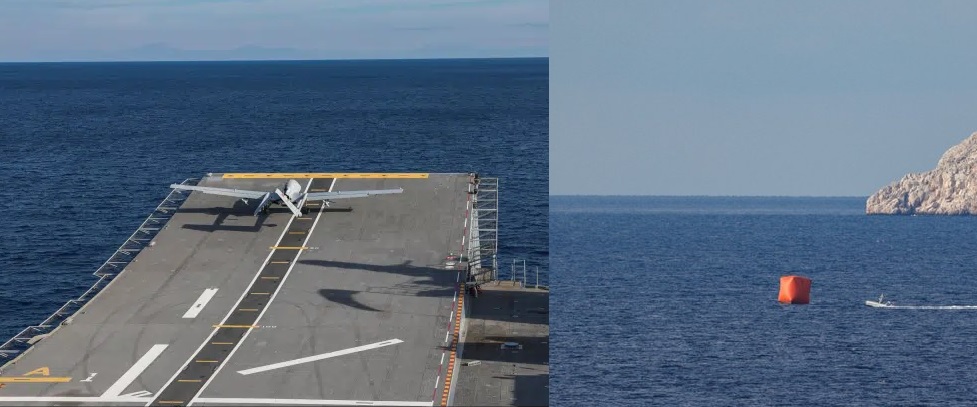
World
On 4 December 2025, The Turkish Navy has carried out a high-profile experiment in unmanned warfare, pairing an armed aerial drone with a kamikaze surface drone in a coordinated attack launched from the amphibious assault ship TCG Anadolu in the Eastern Mediterranean. According to officials and industry sources, an ASELSAN Albatros-S Unmanned Surface Vehicle (USV) successfully destroyed a sea target after being remotely controlled via the data link of a Bayraktar TB3 unmanned combat aerial vehicle (UCAV) operating from Anadolu’s flight deck on 4 December 2025. The test is being described in Ankara as a milestone for Türkiye’s emerging “drone carrier” concept and its broader unmanned naval doctrine. A One-of-a-Kind UxV Strike in the Eastern Mediterranean The demonstration took place off the Turkish coast in the Eastern Mediterranean, near Antalya, within the framework of a wider naval exercise that has seen the Turkish Navy rehearse large-scale amphibious and joint operations in the region. In the scenario, Bayraktar TB3 drones launched from TCG Anadolu, climbed out to the designated range and then shifted from a classic strike role into a command-and-control node for unmanned assets at sea. Using its onboard data link systems, one TB3 established a remote control connection with an Albatros-S “kamikaze” USV, built by ASELSAN. Commands to the USV were routed through the TB3, which effectively acted as an airborne relay and controller. Guided in this way, the Albatros-S sprinted toward a floating “killer tomato” target – an inflatable, instrumented sea target commonly used in naval gunnery and missile trials – and impacted and neutralized the objective, validating the hybrid air–sea unmanned strike concept under realistic conditions. The event was closely watched not just in Ankara but abroad. Military delegations from several NATO and partner nations – including Italy, the United Kingdom, Spain, Japan and Brazil – were present as observers, underlining foreign interest in Türkiye’s approach to drone-centric naval operations. Building on Earlier TB3 Trials from TCG Anadolu The 4 December test did not come out of nowhere. It is the latest step in an intensive, year-long campaign to turn TCG Anadolu into a drone-focused power-projection ship, following the loss of its originally planned F-35B short-takeoff/vertical-landing capability. The Bayraktar TB3, developed by Baykar, is a carrier-capable UCAV designed with folding wings for deck handling, a maximum take-off weight around 1,200 kg and the ability to carry multiple precision-guided munitions under its wings. Key milestones leading up to the latest UxV event include: Shipborne flight trials from TCG Anadolu, with TB3 prototypes taking off and landing repeatedly on the ship’s deck during the Denizkurdu 2025 and other large-scale naval exercises earlier this year. Live-fire trials at sea, in which TB3s launched from Anadolu and attacked land targets with Roketsan MAM-L and MAM-T guided munitions, as well as the indigenous KEMANKEŞ-1 loitering/mini cruise missile, during the Sea Wolf-I 2025 drills off Antalya. Those tests demonstrated the UCAV’s ability to operate as a strike platform from a ship. The new demonstration pushes the concept further by using TB3 as a networked controller of other unmanned effectors rather than just a shooter in its own right. Albatros-S: From Swarm Concept to Carrier-Linked “Kamikaze” USV On the maritime side of the experiment, the Albatros-S represents Türkiye’s frontline unmanned surface attack system. Developed by ASELSAN as a swarm-capable, high-speed USV, the platform is designed to operate alone or in groups against surface targets. Open sources describe Albatros-S as a compact but powerful craft approximately 7.2 metres long, with a beam of about 2 metres, capable of speeds up to 40 knots and ranges around 200 nautical miles depending on payload and profile. The drone carries a high-explosive warhead and is intended for “kamikaze” missions, detonating on impact with enemy vessels or high-value floating infrastructure. Previous trials in 2023 saw a swarm of eight Albatros USVs rush a 22-metre target ship off Mersin, with one warhead-equipped craft striking and sinking the vessel within minutes – a test Turkish officials presented as one of the first operational demonstrations of a USV swarm attack concept. By linking Albatros-S through the TB3 rather than controlling it directly from a shipboard console, the Turkish Navy effectively extended the USV’s command horizon, allowing the drone to be driven at much greater distances from TCG Anadolu while maintaining a robust data link. Why the Joint TB3–Albatros Strike Matters For Ankara, the 4 December exercise was about more than a single target hit. It showcased several emerging concepts at once: First, it validated the idea of TCG Anadolu as a multi-domain unmanned hub, able to launch UCAVs, coordinate sea drones and support amphibious operations from a single platform. The ship’s evolution from a traditional helicopter/amphibious carrier into a “drone carrier” is now being underpinned by repeated, public trials. Second, it demonstrated a sensor-to-shooter chain composed entirely of unmanned systems. The TB3 provided surveillance, targeting and command, while the Albatros-S served as the expendable strike element. That kind of architecture reduces risk to human crews and makes it possible to push engagements farther away from manned platforms, complicating an opponent’s defensive planning. Third, the test fits into Türkiye’s broader “Blue Homeland” maritime doctrine, which envisions a robust naval presence and deterrent posture in the Eastern Mediterranean and surrounding seas, increasingly backed by indigenous technology. Unmanned teaming like the TB3–Albatros pairing allows Ankara to field more “shooters” per ship and to scale effects more quickly and cheaply than by relying solely on conventional manned vessels. International Signalling Beyond its technical content, the demonstration was also a message to foreign navies and defence buyers. Baykar has already turned the Bayraktar TB2 and Akıncı programmes into export successes, and Turkish officials frequently note that interest in TB3 and associated naval concepts is growing. By showing that a carrier-capable UCAV can act as an airborne command node for kamikaze USVs, Ankara is effectively advertising a complete unmanned strike ecosystem – air, sea and mothership – built largely from domestic systems. For the Turkish Navy itself, the next steps are expected to include: More complex scenarios involving multiple Albatros-S craft under TB3 control, potentially reviving the full swarm attack profile tested in 2023 but now linked to a carrier-borne UAV. Integrating other unmanned platforms, such as larger USVs or future jet-powered UCAVs like Kızılelma, into the same command web. Tighter linkage between unmanned strikes and traditional assets – surface combatants, submarines and marines – in the broader framework of joint exercises in the Eastern Mediterranean. As navies worldwide look for ways to combine unmanned systems across domains, Türkiye’s 4 December test from TCG Anadolu offers a concrete glimpse of what future air–sea drone teaming might look like in real operations.
Read More → Posted on 2025-12-04 17:10:59
Space & Technology
Indian astronomers have identified a striking spiral galaxy, named Alaknanda, in data from the James Webb Space Telescope (JWST), revealing a mature, Milky Way–style system from a time when the universe was still very young. The discovery, made by researchers at the National Centre for Radio Astrophysics – Tata Institute of Fundamental Research (NCRA–TIFR), Pune, is already forcing scientists to rethink how quickly galaxies can form and organize themselves after the Big Bang. A Well-Formed Spiral in a “Baby Universe” Alaknanda lies about 12 billion light-years away and is seen as it existed when the universe was roughly 1.5 billion years old—about one-tenth of its current age of 13.8 billion years. Unlike the chaotic, clumpy shapes astronomers usually expect in such an early era, Alaknanda shows a textbook spiral structure: a bright central bulge with two clearly defined spiral arms wrapping around it, much like our own Milky Way. Estimates based on JWST data suggest that the galaxy spans roughly 30,000 light-years in diameter—about half the size of the Milky Way—and is undergoing intense star formation, creating the equivalent of about 60 Sun-like stars every year. For comparison, the Milky Way forms only a few solar masses’ worth of stars per year, making Alaknanda a genuine “star factory” in the early cosmos. Found in James Webb’s Deep View of a Galaxy Cluster The galaxy was picked out in JWST images targeting the massive galaxy cluster Abell 2744, also known as Pandora’s Cluster, a region often used as a gravitational lens to study extremely distant objects. In shorter-wavelength JWST bands, Alaknanda appears as a small but sharply defined spiral amid many foreground galaxies and cluster members. Using this deep imaging, Indian astronomers Rashi Jain and Yogesh Wadadekar analyzed the galaxy’s light and structure, identifying it as a grand-design spiral—a category reserved for galaxies with prominent, symmetric arms. Their findings have been reported in the peer-reviewed journal Astronomy & Astrophysics, putting Alaknanda firmly on the global astronomy map. The galaxy’s name, Alaknanda, draws on Indian heritage: it references the Alaknanda river in the Himalayas, and also echoes traditional Indian references to the Milky Way, underlining the link between this distant object and our home galaxy. Why Alaknanda is a Problem for Existing Galaxy Theories For decades, standard models suggested that large, ordered spirals like the Milky Way take three billion years or more to settle into stable disks with clear spiral arms. In the very early universe, galaxies were expected to be small, irregular, and frequently disturbed by mergers and violent inflows of gas. Alaknanda appears to break those rules. It shows: A well-organized disk rather than a chaotic clump. Symmetric, two-armed spiral structure. High but coherent star-formation activity, rather than a brief, explosive burst. Together, these features indicate that at least some galaxies managed to settle into mature configurations far earlier than theory allowed. If more such objects are found in JWST data, astronomers may have to revise key aspects of galaxy formation models, including how quickly dark-matter halos grow, how gas cools and settles into disks, and how frequently early galaxies collide and merge. Part of a New Trend in James Webb Discoveries Alaknanda is not an isolated case. Over the past few years, JWST has revealed surprisingly evolved galaxies at high redshifts, including massive disk galaxies and spirals like the so-called “Big Wheel” galaxy and other early Milky Way–like systems. Together, these discoveries suggest that the early universe may have been more mature, more quickly than astronomers previously believed. However, Alaknanda stands out because: It is relatively compact but strongly organized. It was discovered and characterized by an Indian team, using data from one of the world’s most advanced observatories. Its spiral arms are especially clean and prominent for such an early epoch. This combination makes the galaxy an important test case for the next generation of computer simulations and theoretical work on cosmic structure formation. A Milestone for Indian Astronomy The discovery is being hailed as a landmark achievement for Indian astronomy. NCRA–TIFR has long been associated with cutting-edge radio astronomy, including work on the Giant Metrewave Radio Telescope (GMRT), but Alaknanda showcases the country’s growing role in deep-space optical and infrared cosmology using international facilities like JWST. Scientists say that the find will: Strengthen India’s participation in major international space missions. Attract more young researchers into observational cosmology and galaxy evolution. Provide a rich data set for follow-up studies across multiple wavelengths, including future radio and X-ray observations to probe its gas, dust and central region in more detail. Further analysis of Alaknanda’s rotation, mass distribution and chemical composition is expected to reveal how such an orderly galaxy assembled so early in cosmic history—and whether it is a rare outlier or part of a much larger hidden population that JWST is only now beginning to uncover.
Read More → Posted on 2025-12-04 16:54:59
World
Ukraine’s population has shrunk from about 42 million before Russia’s full-scale invasion to fewer than 36 million today – and demographers warn it could fall to around 25 million by mid-century. What began as a military crisis is now turning into a long-term demographic emergency that could shape Ukraine’s ability to rebuild, defend itself and remain a viable modern state. Population in Free Fall Before February 2022, Ukraine’s population (within internationally recognized borders) was commonly put at around 41–42 million. Today, government and international estimates suggest that the number of people actually living in Ukrainian-controlled territory has dropped to under 36 million, once the loss of occupied regions and the mass outflow of refugees are taken into account. Official UN and World Bank datasets still show roughly 38 million residents in 2024, but these include territories under Russian occupation and do not fully reflect wartime displacement. IMF modeling, which tries to capture the impact of the war more directly, estimates that the population fell from around 41 million in 2021 to about 33.3 million in 2024 and will only slowly edge back toward 34 million in the late 2020s, even in optimistic scenarios. Looking further ahead, Ukraine’s Institute for Demography and Social Research forecasts that, if current trends persist, the population could decline to 28.9 million by 2041 and about 25.2 million by 2051. Other long-range UN projections suggest the total could keep falling toward 20 million by 2100. The scale of this contraction is unprecedented for a European country outside of outright state collapse. Births Collapse as Deaths Triple Them The most alarming trend is not only people leaving, but the collapse in births inside the country. Government and independent data show that for every child born in Ukraine today, roughly three people die – one of the most extreme birth-to-death ratios recorded anywhere in the world. In the first half of 2024, just 87,655 babies were registered, compared to 132,595 in the same period of 2021 – a drop of about one-and-a-half times. Over the same months of 2024, deaths reached around 251,000, producing the now-familiar ratio of three deaths for every birth. Behind those monthly statistics lies a collapse in the total fertility rate (TFR) – the average number of children a woman will have over her lifetime. Before the invasion, UN data already showed Ukraine hovering around 1.1–1.3 children per woman, well below the “replacement level” of 2.1 needed to keep a population stable. After 2022, the situation deteriorated sharply: the U.N. Population Division estimates the TFR dropped to about 0.9 in 2022. Ukrainian officials now speak of a historically low birth rate of roughly 0.8–0.9 children per woman, among the lowest anywhere on earth. Demographers say this steep fall is driven by several overlapping factors: War-time insecurity, with missile strikes, blackouts and mobilization making family plans feel too risky. Economic uncertainty – salaries, housing and services are under pressure, discouraging long-term commitments. Separation of couples, as many women and children moved abroad while men stayed to fight or were barred from leaving. Even if peace came quickly, such a low fertility rate will echo through the population structure for decades. Men Missing From the Future War casualties and mass emigration are reshaping Ukraine’s age and gender profile. Demographers estimate that hundreds of thousands of Ukrainians have been killed or seriously wounded since 2022, many of them young men in their 20s, 30s and 40s – the very age groups that normally form families and raise children. At the same time, millions of women and children have left. Around 5–6 million Ukrainians are registered as refugees across Europe, with more than 5.1 million Ukrainians abroad according to the Ministry of Social Policy. Many say they are unsure whether they will ever return. The result is a sharply skewed population: Women now clearly outnumber men, especially in older age groups, with fewer potential fathers in the key 20–39 age bracket. The share of people aged 65 and above is around 19–20%, making Ukraine one of the “oldest” societies in Eastern Europe by population structure. Health indicators have deteriorated as well. Average male life expectancy has plunged from about 65.2 years before the war to just 57.3 years in 2024, while women’s life expectancy has fallen from roughly 74.4 to 70.9. For comparison, before the invasion overall life expectancy in Ukraine was about 73 years. Experts warn this combination – fewer men, fewer babies, and more elderly citizens – is pushing Ukraine toward an inverted age pyramid, where each worker must support a growing number of dependents. A Looming Shortage of 4.5 Million Workers The demographic crisis is no longer an abstract statistic; it is starting to show up on construction sites, in factories and in hospitals. Ukraine’s Deputy Prime Minister and other senior officials say that the country will need an additional 4.5 million workers over the next decade to rebuild at current productivity levels. A KPMG analysis, drawing on government data, reaches a similar conclusion and warns that by 2040 the labour shortfall could reach 4.5 million if nothing changes. The sectors most at risk include: Construction and infrastructure, where vast numbers of engineers, skilled trades and machine operators will be needed to rebuild destroyed cities and energy networks. Manufacturing and metallurgy, historically pillars of Ukraine’s industrial base. Healthcare and education, which are losing staff both to emigration and to burn-out at home. Technology and services, crucial for Ukraine’s ambition to become a modern, export-oriented economy. Without enough working-age people, economists warn, even generous Western funding for reconstruction could hit a wall: there may simply not be enough Ukrainians to do the work, or to sustain a large standing army in the long run. Government Response: Baby Bonuses, Return Hubs and Migration Recognizing the scale of the problem, Kyiv has begun to treat demography as a national security issue. Key elements of the emerging strategy include: Demographic recovery plans that aim to curb emigration, attract back refugees and encourage larger families, described by officials as “no less important than tanks or air defense systems” for long-term security. Financial incentives for childbirth, including higher maternity payments and proposed “baby bonuses”, which analysts say may help at the margins but cannot fully offset insecurity and economic concerns. Support for soldiers’ families, such as state-funded fertility treatments and sperm banking programs, designed to preserve the possibility of children even if fathers are killed at the front. Return-migration “hubs” abroad, set up in EU countries to help Ukrainians with legal advice, job matching and schooling if they choose to go back. Authorities are focusing on the roughly 40% of refugees who say they are undecided. A gradual opening to foreign workers and dual citizenship, a politically sensitive step in a country that has long defined itself by ethnic and linguistic identity, but one many experts see as unavoidable if Ukraine is to fill its labour gap. Demographers caution that none of these measures will deliver quick results. Even if fertility rose sharply tomorrow, the children born this year would not enter the workforce until the 2040s. For the next two decades, Ukraine will have to manage with fewer workers and a rapidly ageing population, while still under threat from Russia. “The decisive front is the cradle” For now, the immediate priorities in Kyiv remain winning the war and securing long-term Western security guarantees. But a growing number of Ukrainian officials and experts argue that the country’s decisive battles may ultimately be fought in maternity wards, classrooms and labour-market reforms, not just on the front line. If Ukraine can stabilize its population near 34 million, as some optimistic IMF scenarios suggest, and draw back a critical mass of young families and professionals, the state may yet preserve enough economic and military strength to deter future aggression. If not, the combination of an ageing society, a shrinking tax base and a depleted army could, over time, become as dangerous as any missile salvo.
Read More → Posted on 2025-12-04 16:47:39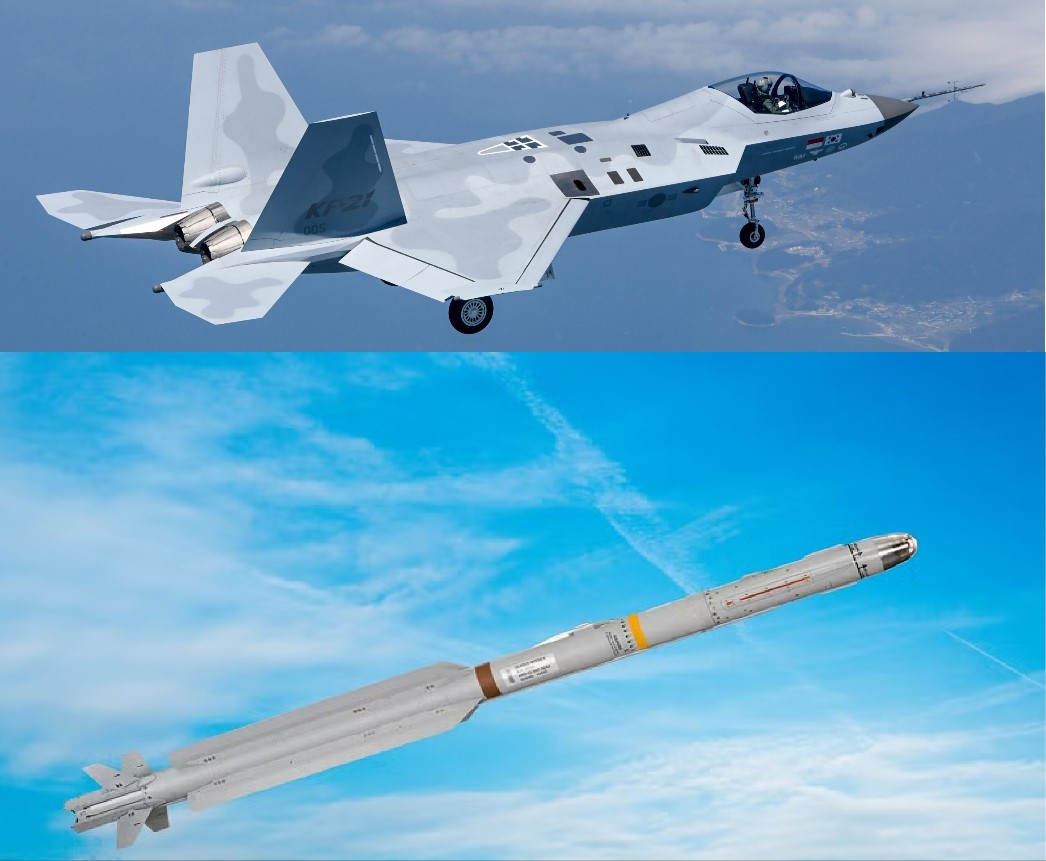
World
South Korea has approved a 435.9 billion won (USD 296 million) program to develop an indigenous short-range air-to-air missile for its next-generation KF-21 Boramae fighter jet. The decision—confirmed on 2 December 2025 by the Defense Acquisition Program Administration (DAPA)—marks the first effort to equip the KF-21 with a fully homegrown air-to-air weapon, reinforcing Seoul’s strategy to secure long-term autonomy in key defense technologies. The program, scheduled to run until 2032, is designed not only to support the Republic of Korea Air Force’s (ROKAF) operational needs but also to enhance the KF-21’s appeal in the global fighter market at a time when many countries seek capable yet affordable alternatives to high-cost Western jets. A Significant Shift in the KF-21’s Armament Roadmap At present, the KF-21 relies on foreign missiles, including the IRIS-T for short-range engagements and the Meteor for beyond-visual-range (BVR) combat. Future integration of AIM-120 AMRAAM and AIM-9X Sidewinder is also under consideration. The new missile program does not replace these weapons immediately. Instead, it establishes a parallel domestic capability that can be shaped specifically around the KF-21’s: advanced AESA radar, electronic warfare suite, helmet-mounted display system, and future stealth enhancements. This shift provides the ROKAF with a layered mix of imported, combat-proven missiles and a gradually expanding indigenous family of air-to-air weapons. For export customers, it offers a package less exposed to foreign licensing restrictions—an increasingly important factor in the Indo-Pacific and Middle East markets. ADD, LIG Nex1, and Hanwha to Lead Development The missile’s development will be led by the Agency for Defense Development (ADD), with major industrial involvement from: LIG Nex1 — seeker technology, guidance systems, datalinks, electronics Hanwha Aerospace — propulsion and airframe engineering Korea Aerospace Industries (KAI) — integration with the KF-21 test fleet These firms already collaborate on advanced missile programs such as the Cheonryong cruise missile, the TAipers missile, and the Cheongung (KM-SAM) system. Their combined experience suggests the new weapon will compete with leading Western short-range missiles. Expected Features: High Agility, Imaging Infrared Seeker, and Wide Engagement Angles Defense analysts believe the new missile will incorporate several advanced features even though DAPA has not released detailed specifications. The weapon is expected to use an imaging infrared seeker capable of resisting modern countermeasures, combined with high off-boresight engagement angles that allow the KF-21 to target enemy aircraft across extreme positions during close-range combat. Engineers are also likely to adopt agile control surfaces or thrust-vectoring technology to give the missile strong maneuverability, along with a datalink for mid-course corrections when operating in a networked environment. Most importantly, the missile will be designed from the outset to integrate seamlessly with the KF-21’s sensors, electronic warfare suite, and helmet-mounted sight. If these projections are fulfilled, the new weapon will give South Korea a sovereign alternative to systems such as the AIM-9X, IRIS-T, or ASRAAM, but without the export limitations or modification restrictions associated with foreign technology. Strategic Autonomy in a Changing Security Environment The broader security context makes this development particularly significant. North Korea continues to expand its missile testing activities, China is rapidly modernizing its air and naval forces, and regional competition among major powers is intensifying across Northeast Asia. At the same time, Europe and the United States have introduced tighter export-control policies that increasingly influence global arms transfers. Against this backdrop, DAPA has emphasized that the new missile program is essential for maintaining strategic autonomy, ensuring that South Korea can control upgrades, software changes, and export decisions without relying on foreign approval. This independence also strengthens Seoul’s leverage within its alliance with the United States and offers greater flexibility during crisis scenarios. For countries considering the KF-21—such as Indonesia, Malaysia, the Philippines, and several Middle Eastern partners—the availability of a fully domestic missile reduces the risks associated with third-party licensing or external political constraints.. Budget and Industrial Impact Although the missile program’s budget of 435.9 billion won, spread between 2025 and 2032, represents only a small portion of the KF-21’s overall 8.8 trillion won development cost, it carries substantial industrial benefits. For South Korea’s defense sector, the program secures long-term work for LIG Nex1 and Hanwha, supports high-skilled employment, and advances the country’s expertise in infrared seekers, propulsion systems, and guidance algorithms. It also strengthens the foundations for future missile exports tied to KF-21 sales. As the fighter approaches full operational capability in the early 2030s, the new missile ensures that its weapons suite evolves in parallel, optimized specifically for the aircraft’s architecture. Building a Fully Sovereign Air Combat Ecosystem This initiative is part of South Korea’s broader plan to build a fully sovereign air combat ecosystem around the KF-21. In addition to the new short-range missile, the country is pursuing a long-range air-to-air weapon, precision air-to-ground munitions, air-launched cruise missiles, and upgraded electronic warfare pods, along with future stealth-related enhancements. Together, these developments position the KF-21 not merely as a next-generation fighter but as the core of an integrated, domestically controlled combat system designed to endure and adapt over the coming decades.
Read More → Posted on 2025-12-04 15:53:11Search
Top Trending in 24 Hours
-
 NASA Demonstrates Space-to-Space Wi-Fi Between Two Orbiting Spacecraft
-
 U.S. Military to Ban Chinese Automaker BYD Vehicles from Kadena Air Base in Japan Over Security Concerns
-
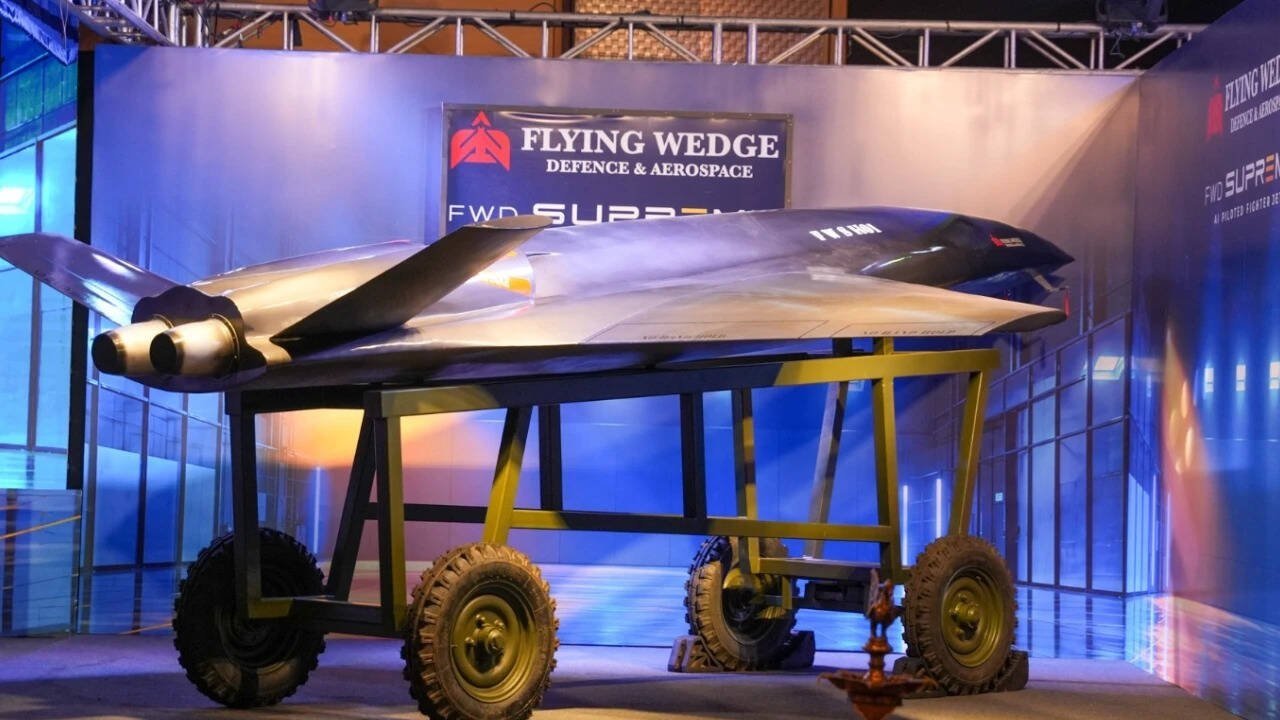 Bengaluru Startup FWDA Unveils FWD Supreme AI-Piloted Loyal Wingman Prototype
-
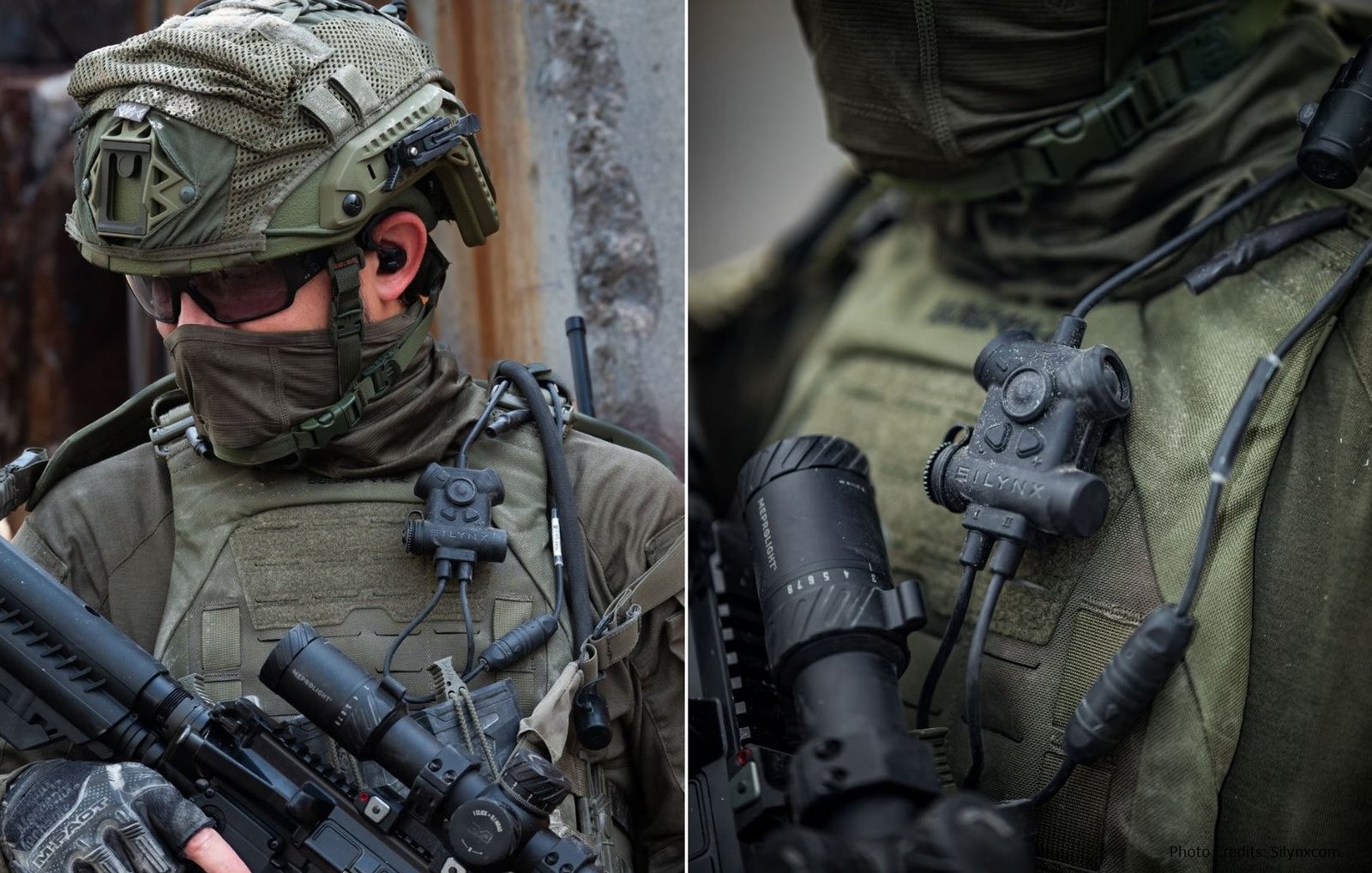 Israeli Firm Silynxcom Develops AI-Powered Wearable Drone Detection System for Soldiers
-
 U.S. Space Force Targets 2029 for Surveillance and Navigation Capabilities Near the Moon
-
 India Develops Indigenous Military AI, Expands Missile Production to Cut Costs
-
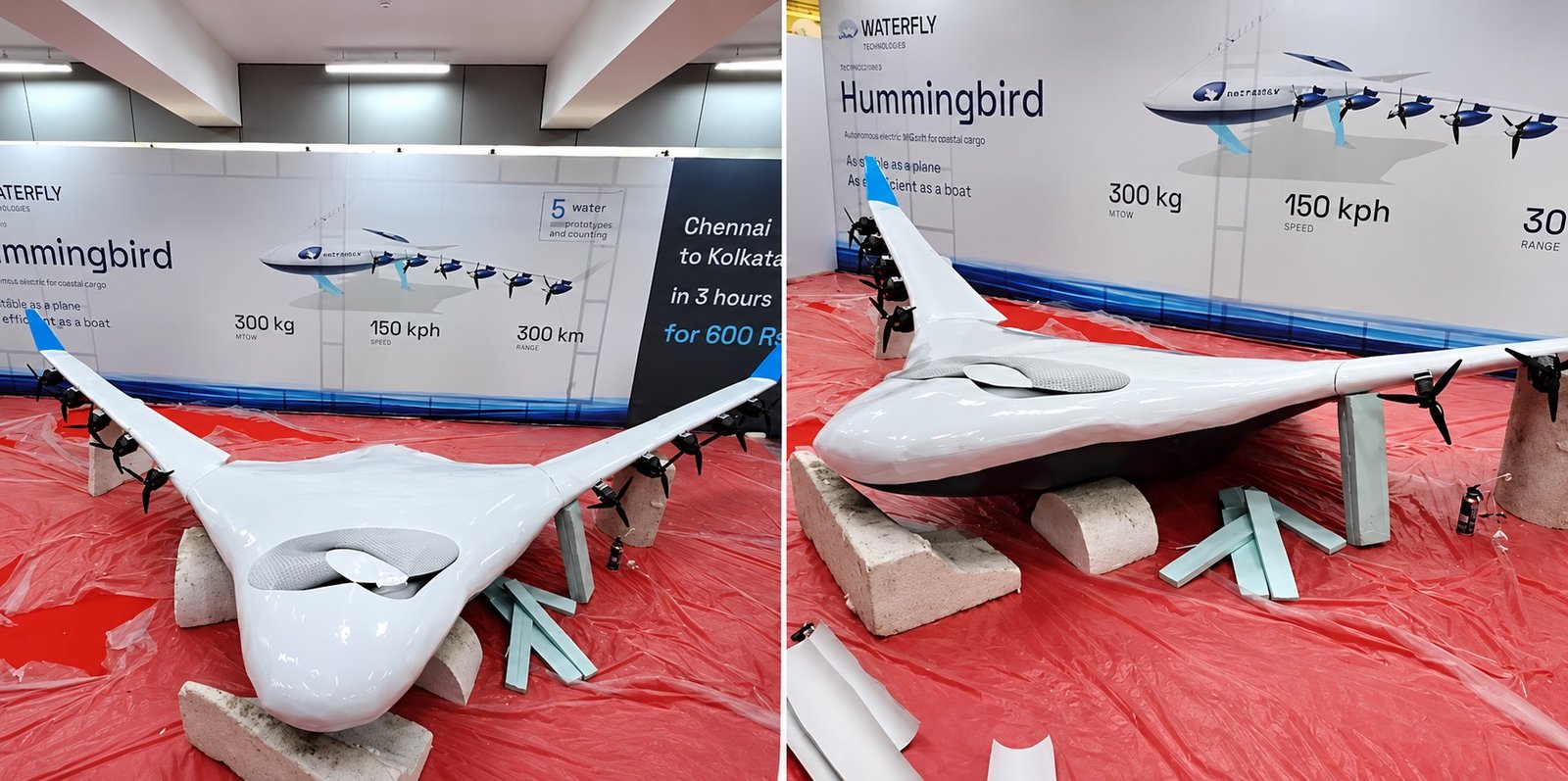 IIT Madras Startup Waterfly Technologies Plans December Ocean Trial of Hummingbird Electric WIG Craft
-
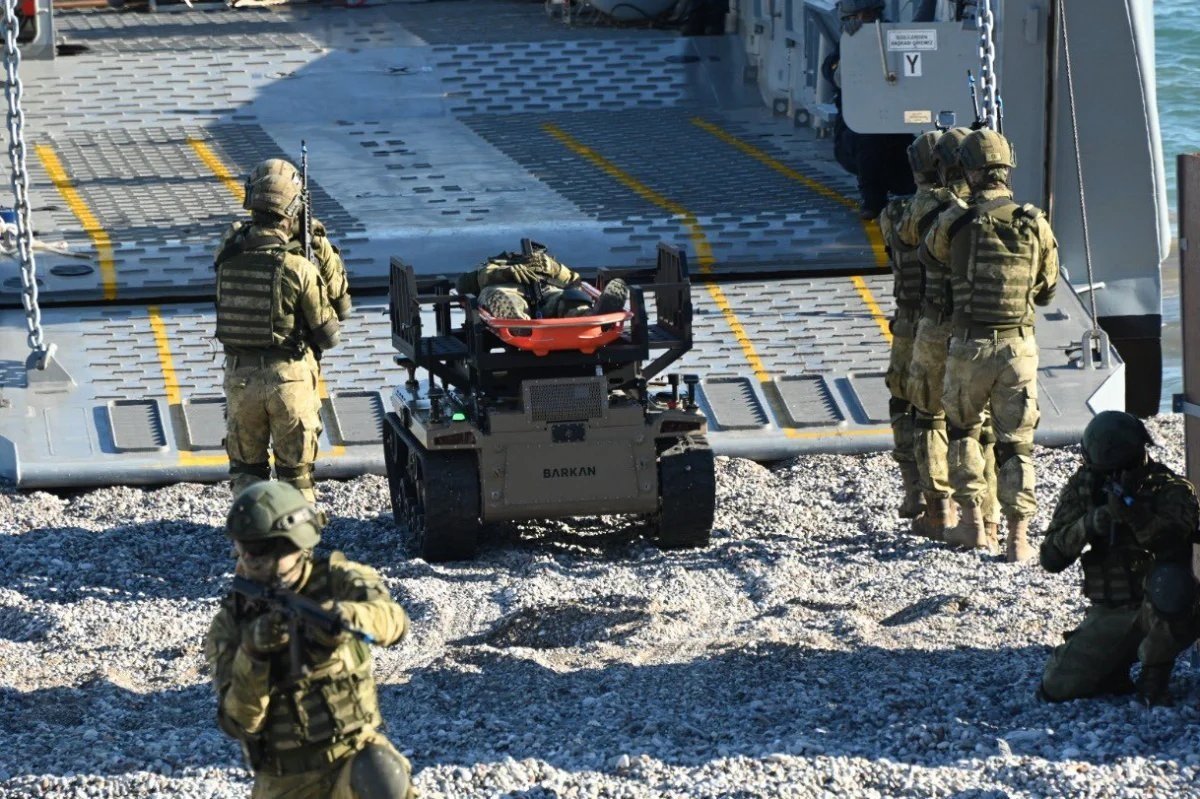 Turkish Navy Deploys HAVELSAN Barkan UGV in Amphibious Drills During TURNAs-2026
Top Trending in 4 Days
-
 NASA Sets New Artemis Milestones as SpaceX and Blue Origin Target Moon Landings in 2027–2028
-
NASA Demonstrates Space-to-Space Wi-Fi Between Two Orbiting Spacecraft
-
 USS Pinckney Becomes First U.S. Navy Destroyer to Begin Phase Two Modernization with Advanced SPY-6 Radar
-
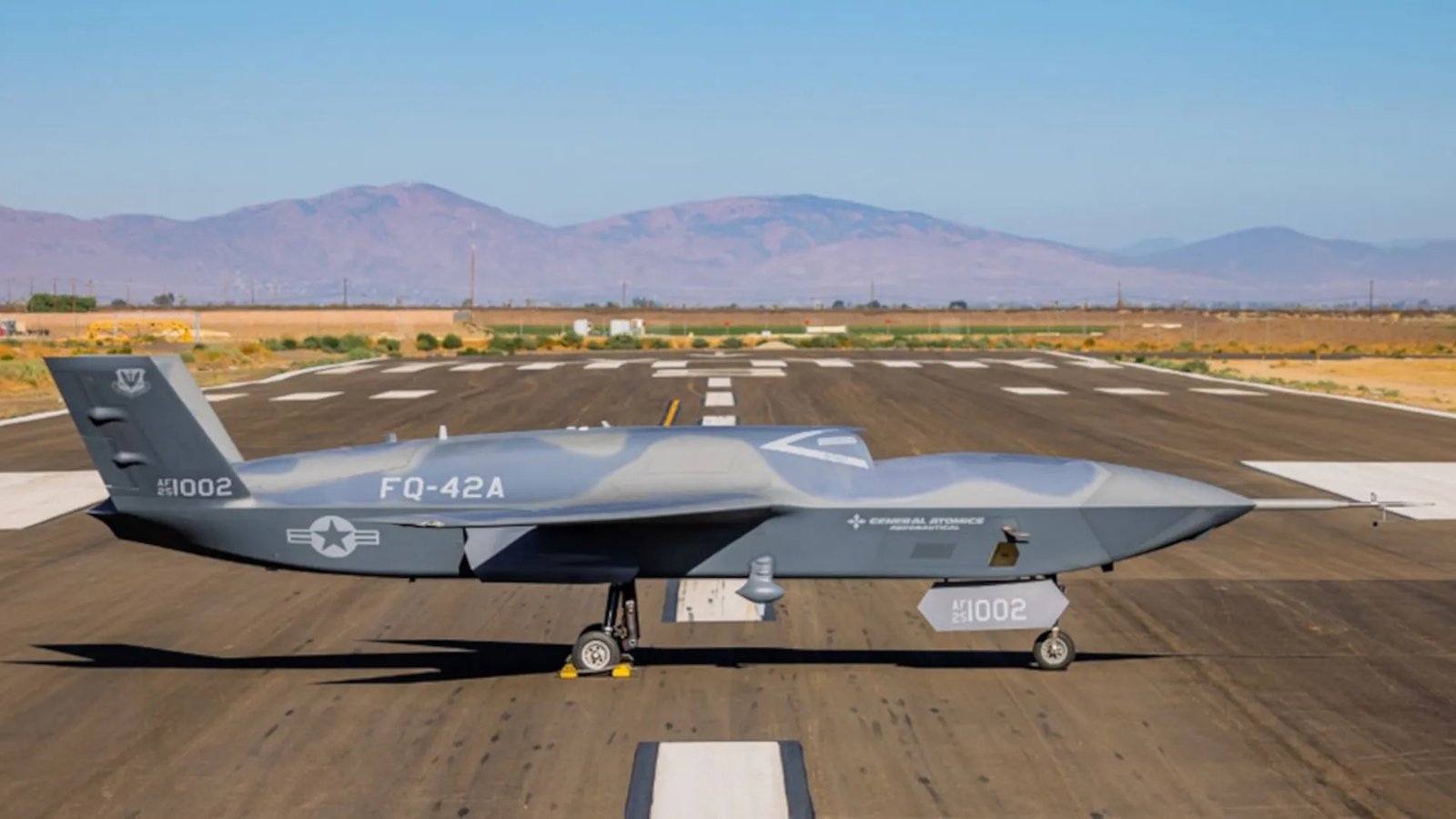 General Atomics Partners With Spirit Defense to Expand FQ-42 Vengeance Production
-
U.S. Military to Ban Chinese Automaker BYD Vehicles from Kadena Air Base in Japan Over Security Concerns
-
 L3Harris Opens ‘Arsenal of Freedom’ Rocket Motor Plant in Arkansas to Double Production Capacity
-
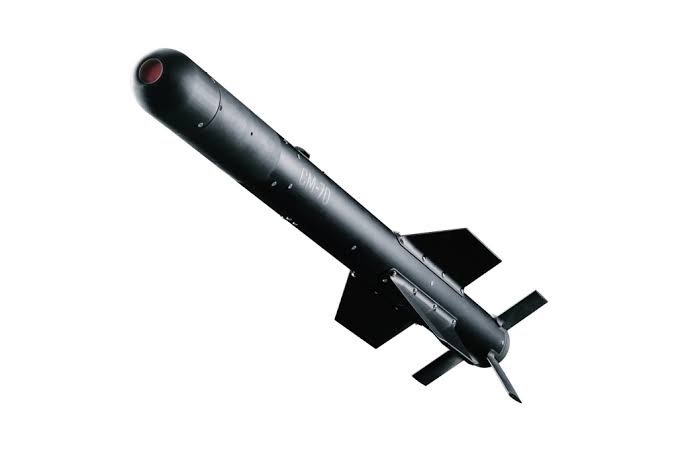 CSG and North Vector Dynamics Sign MoU to Explore European Production of CM-70 Counter-Drone Interceptor
-
 Unitree Unveils H2-X ‘Kung Fu Legend: Guardian’ Humanoid Robot for Security and Rescue
