NETANYA, Israel, — Israeli defense technology company Silynxcom Ltd. is developing an AI-powered wearable drone detection system that identifies incoming drones by their acoustic signatures and provides early warnings to individual soldiers. The company announced the project as it expands into the counter-uncrewed aircraft systems (C-UAS) market.
The prototype uses onboard artificial intelligence to analyze sounds produced by drone motors and rotors in real time. When the system recognizes a potential drone threat, it automatically alerts the wearer. Unlike conventional radio-frequency (RF) detection systems, the technology relies on sound, allowing it to potentially identify drones that do not emit detectable control signals.
This capability is particularly relevant against fiber-optic-guided first-person-view (FPV) drones, which use physical cables instead of radio-frequency links for operator control and can therefore evade conventional RF-based detection systems.
Builds on Existing Tactical Headsets
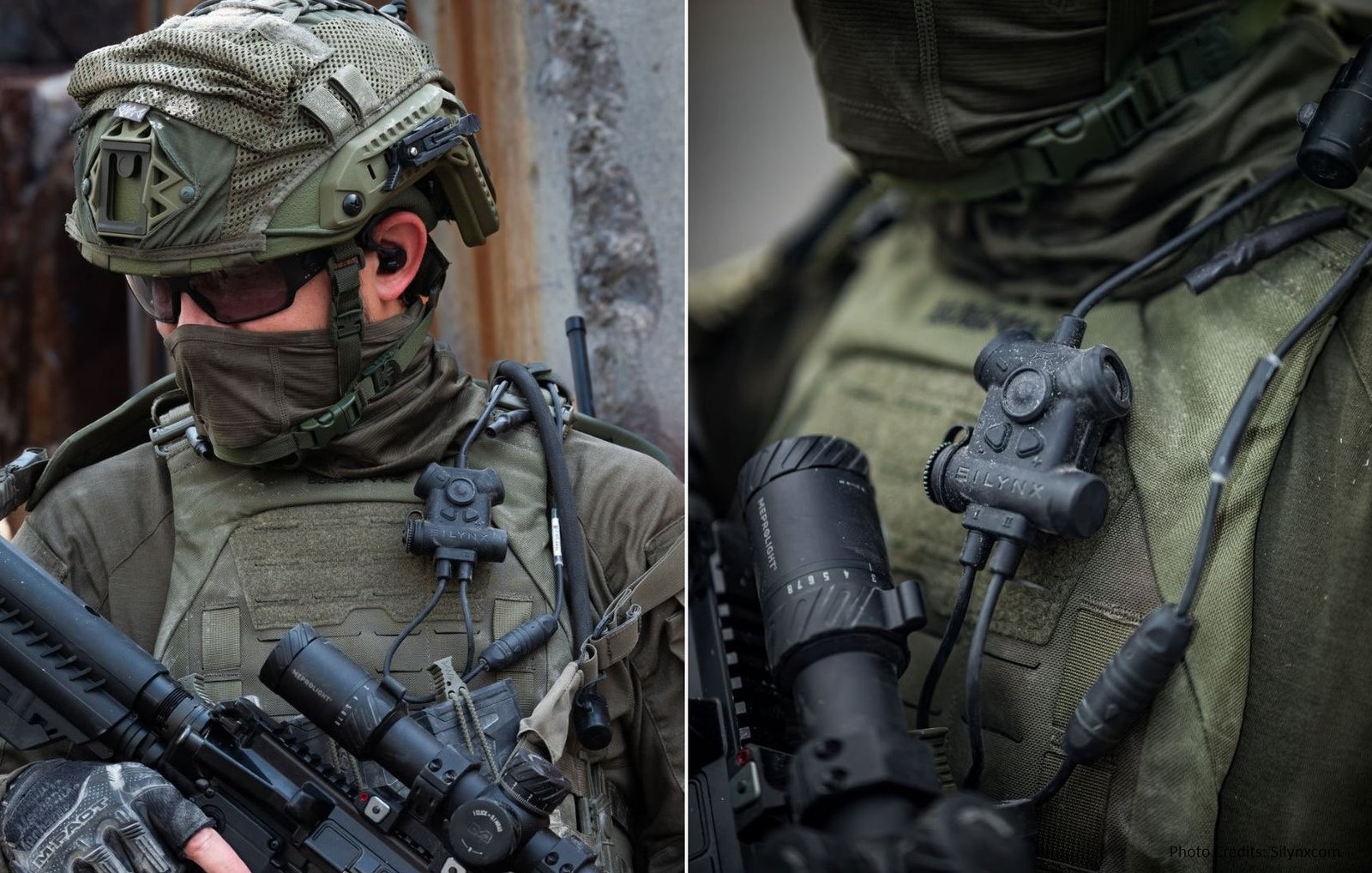
The new system builds on Silynxcom’s existing tactical communication equipment, including its CLARUS II in-ear headset. The company's earlier drone-detection feature amplifies specific frequencies associated with drone motors and rotors, helping soldiers distinguish these sounds from battlefield noise while protecting their hearing from hazardous and sudden loud sounds.
The new AI platform advances this approach by automatically recognizing potential drone signatures and issuing alerts instead of relying primarily on the soldier’s ability to hear and identify the sounds.
Mesh Network to Share Drone Alerts
Silynxcom is developing a mesh-networking capability that would connect wearable devices across a military unit. An alert generated by one soldier’s device could be shared with other connected personnel, including members of a platoon, improving shared situational awareness.
The network is designed to operate independently of existing tactical communications infrastructure, while retaining the option to integrate with standard military radio systems when required. The company is developing the platform as a standalone product.
Development Status and Company Plans
Silynxcom is establishing a dedicated counter-drone development team comprising professionals recently recruited from leading Israeli drone manufacturers. The initiative expands the company's activities beyond its established range of ruggedized tactical headsets, hearing-protection systems and military communication equipment.
Chief Executive Officer Nir Klein said conflicts in Ukraine and the Middle East have increased the need for drone-warning systems that accompany individual soldiers, particularly troops operating away from fixed-site air defenses. The company's approach aims to turn a warning detected by one soldier into shared awareness across a connected unit.
The system remains at the prototype stage. Silynxcom has not disclosed its maximum detection range, accuracy rates, performance under operational conditions or expected deployment timeline.
The company also cited market projections indicating growth in the broader counter-drone detection and interdiction sector. According to the supplied market estimate, the global market is projected to grow from $3.88 billion in 2026 to $16.45 billion by 2034. Silynxcom is listed on the NYSE American under the ticker SYNX.
——— End of Article ———