World : Global maritime security is facing one of its most serious tests in years after the United States seized a Russian-linked oil tanker, an action that has triggered sharp warnings from Moscow and raised fears of retaliation against Western commercial shipping in key European sea lanes.
Security and shipping industry sources indicate that Russia is weighing countermeasures that could include the detention or seizure of U.S.- and UK-flagged oil tankers operating in the North Sea, Black Sea, and Baltic Sea. While no formal directive has been announced, the intensifying tone of official statements has heightened concerns that a commercial shipping confrontation may be approaching.
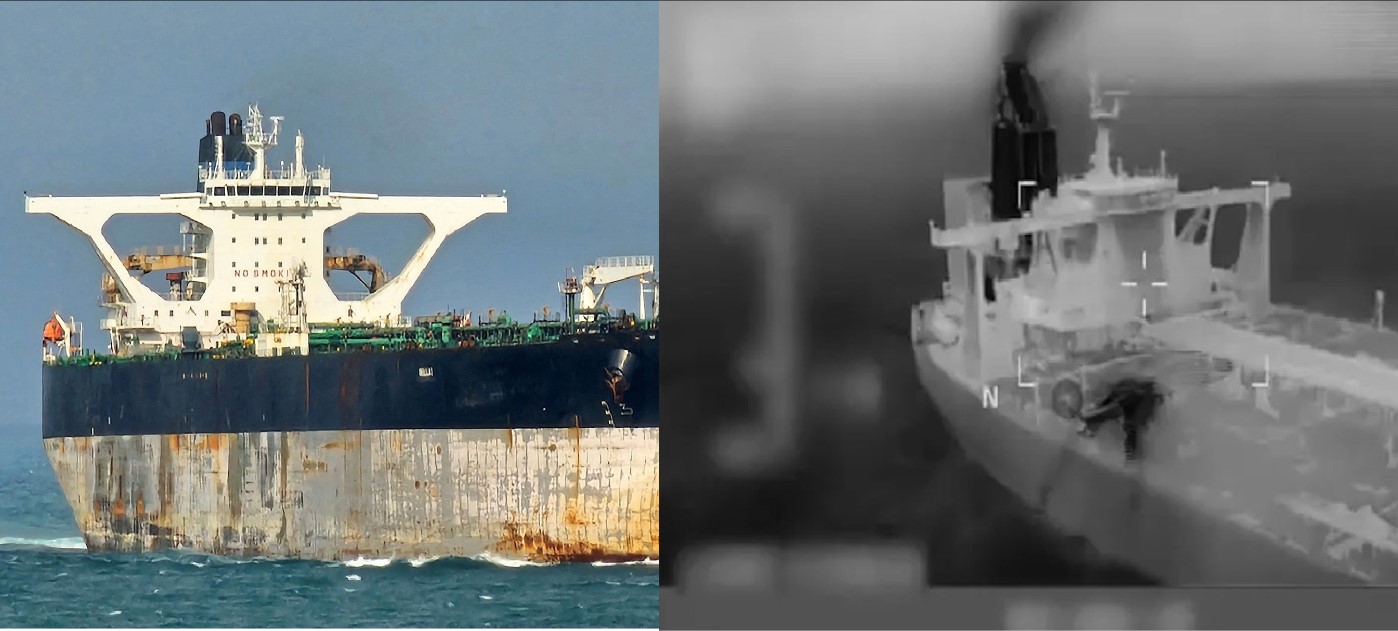
The immediate trigger was the interception and seizure of a tanker that U.S. authorities say was part of Russia’s “shadow fleet”. Washington alleges such vessels use complex ownership structures, frequent reflagging, and deceptive tracking practices to bypass Western sanctions on oil exports. U.S. officials have described the operation as a lawful enforcement action, carried out under domestic legal authority and supported by allied intelligence.
Moscow has rejected the justification outright, branding the seizure illegal and provocative. Russian officials argue that the action violated international maritime norms and freedom of navigation, and they have demanded clarification on the status of the crew and cargo. The Kremlin has portrayed the episode as evidence that Western states are prepared to use force against civilian shipping to enforce sanctions.
In the days following the incident, Russian state media and senior lawmakers issued increasingly blunt warnings that the move would not go unanswered. References to “mirror measures” and “reciprocal actions” have been widely interpreted as signals that Western-flagged vessels could face inspections or detentions in waters where Russia maintains a strong naval presence. Although the government has stopped short of confirmation, maritime risk analysts report heightened Russian naval and coast guard activity in sensitive regions.
Across Europe, the episode has sharpened anxieties within NATO and among coastal states already dealing with elevated tensions at sea. Officials privately acknowledge that any attempt to detain a U.S.- or UK-flagged tanker, even under administrative pretexts, could escalate rapidly into a diplomatic or military crisis. As a result, governments are reviewing naval patrol patterns, port security measures, and emergency response plans to protect commercial traffic.
The implications extend far beyond security concerns. The North Sea, Baltic Sea, and Black Sea are critical arteries for Europe’s energy supply, handling large volumes of crude oil and refined products. Even the perception of increased risk is unsettling shipping markets. Insurers are reassessing war-risk premiums, while ship operators consider rerouting or delaying voyages to limit exposure.
Energy analysts warn that prolonged uncertainty could add volatility to global oil prices and complicate Europe’s energy planning at a time when supply chains remain fragile. Shipping executives stress that commercial vessels, crewed by multinational sailors, are ill-suited to becoming instruments of geopolitical retaliation.
Western diplomats maintain that the tanker seizure was narrowly targeted at sanctions enforcement and not intended to provoke Moscow. Yet analysts caution that confrontations at sea are prone to miscalculation, particularly when civilian vessels and heavily armed naval forces operate in close proximity.
For now, the situation remains fluid and highly sensitive. But the message from maritime security circles is stark: the world’s most feared scenario — escalation through commercial shipping — is no longer hypothetical, and the coming weeks may determine whether restraint or retaliation defines the future of Europe’s surrounding seas.
——— End of Article ———