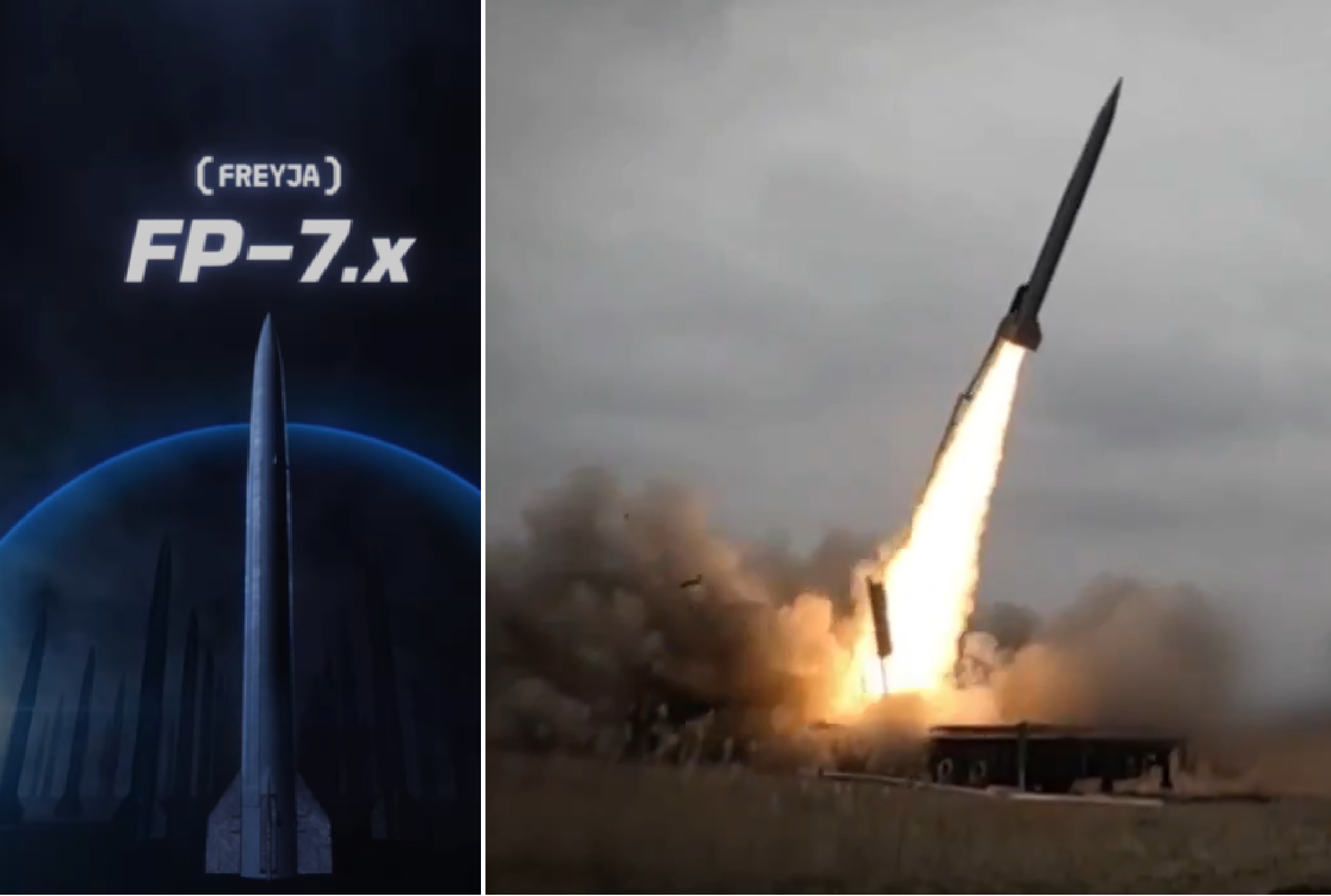
PARIS / KYIV — Ukraine and nine European partner countries have formally launched the Anti-Ballistic Missile Coalition, a multinational initiative aimed at developing and deploying the FREYJA anti-ballistic missile defense system across Europe. The agreement was announced at the Elysee Palace in Paris following a summit attended by the participating nations.
The coalition includes Ukraine, Denmark, France, Germany, Italy, the Netherlands, Norway, Spain, Sweden, and the United Kingdom. According to Ukrainian President Volodymyr Zelenskyy, the coalition's flagship project will support the development and large-scale production of the FREYJA air defense system to establish a shared anti-ballistic missile defense capability across Europe.
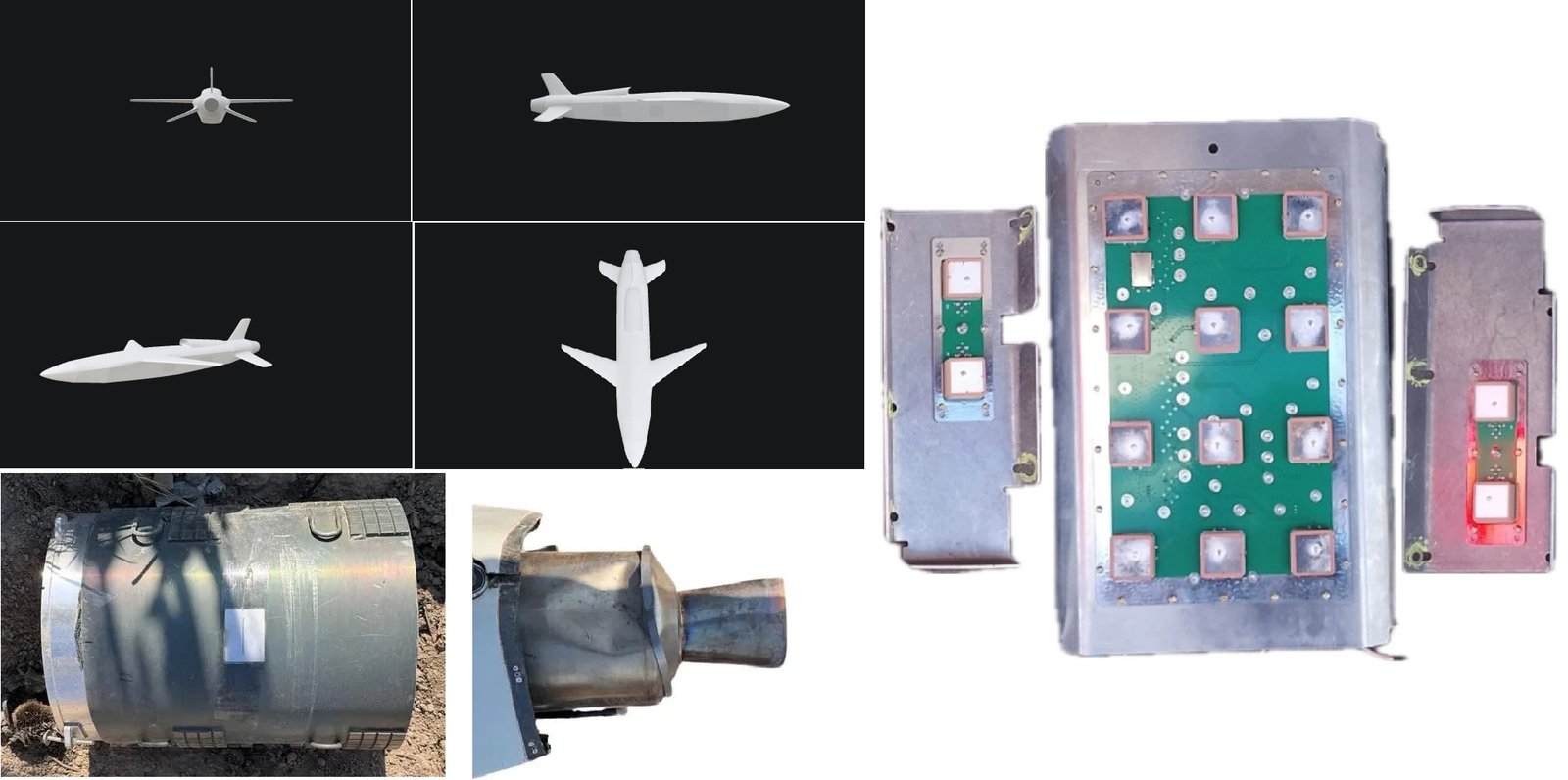
On the same day, Ukrainian defense company Fire Point publicly unveiled its FP-7.X anti-ballistic interceptor missile, the key interceptor being developed for the FREYJA system. The announcement was made through an Instagram post by the company's Chief Technology Officer, Iryna Terekh, who shared presentation materials and a promotional video introducing both the interceptor and the overall air defense concept.
Alongside the video, Fire Point wrote:
"FREYJA — PAN-EUROPEAN ANTI-BALLISTIC SHIELD OWNED TOGETHER. Coming soon…"
During the presentation, the company described FREYJA as a pan-European anti-ballistic shield that would be jointly owned and supported by participating partner countries. The project is designed to integrate interceptor missiles, radar systems, command-and-control networks, and data-sharing technologies from multiple European defense companies into a single defensive architecture.
FP-7.X Interceptor Forms the Core of FREYJA
The FP-7.X interceptor has been developed by Kyiv-based Fire Point, a defense company founded in 2022 that initially focused on drones and missile systems before expanding into ballistic missile defense.
According to specifications released by Fire Point co-founder Denys Shtilerman and Chief Technology Officer Iryna Terekh, the missile measures 7.25 meters in length and is constructed using lightweight composite materials, including carbon fiber, to reduce weight while improving maneuverability.
The interceptor is designed to reach speeds between 1,500 and 2,000 meters per second—approximately Mach 4.4 to Mach 5.9—and intercept incoming ballistic missiles during the terminal phase of flight at altitudes of up to 20 kilometers.
Fire Point says that most components of the FP-7 missile family are manufactured in Ukraine, while the overall FREYJA architecture has been designed with an open architecture that integrates with NATO-standard air defense systems and communication networks.
European Defense Companies Contribute Key Technologies
Rather than operating as a standalone national air defense system, FREYJA has been designed as a distributed "system of systems" that combines technologies from several European defense companies.
Under the project:
- Fire Point serves as the prime contractor, responsible for the development and production of the FP-7.X interceptor and launcher.
- Germany's Diehl Defence is contributing to the missile's semi-active image infrared seeker, designed to distinguish genuine ballistic missile targets from infrared decoys, including those reportedly used by Russia's Iskander-M missile system.
- Sweden's Saab is supplying Giraffe 8A and Giraffe 4A radar systems.
- France's Thales is contributing the Ground Master 400 long-range radar.
- Germany's HENSOLDT is providing the TRML-4D Active Electronically Scanned Array (AESA) radar.
- Norway's Kongsberg is supplying the Fire Direction Centre (FDC) command-and-control system.
The network is designed to exchange tactical information through NATO-standard Link-16 while using the ASTERIX protocol for secure radar data integration.
HENSOLDT Agreement Supports Radar Integration
In June 2026, Fire Point signed a Memorandum of Understanding (MoU) with HENSOLDT during the Eurosatory defense exhibition in Paris.
The agreement covers the production, testing, and delivery of the TRML-4D radar for the FREYJA program. The AESA radar is capable of tracking approximately 1,500 air targets simultaneously, supporting long-range detection and target tracking for the missile defense network.
Designed to Reduce Interception Costs
One of the project's principal objectives is to lower the cost of defending against ballistic missile attacks.
According to Fire Point, an interception using the FP-7.X is expected to cost approximately $700,000 per missile, compared with an estimated $3.8 million for a Patriot PAC-3 interceptor.
The company says reducing interception costs is intended to improve the sustainability of missile defense during prolonged conflicts.
Prototype Flight Test Completed
Before unveiling the system, Fire Point conducted the first guided flight test of the FP-7.X prototype.
According to the company, the missile successfully completed a guided maneuvering flight, demonstrating stable flight characteristics and controlled maneuverability. During the announcement of the successful test, Fire Point disclosed the missile's initial specifications, including a maximum speed of 2,000 meters per second, and confirmed its cooperation with Germany's Diehl Defence on the interceptor's guidance system.
The successful flight moved the project beyond the conceptual stage. Fire Point expects to carry out the first operational interception tests by the end of 2027 as development of the complete FREYJA system continues.
Toward a Shared European Missile Defense Network
The FP-7.X evolved from Fire Point's FP-7 tactical ballistic missile, which was originally developed for ground attack missions with a reported range of up to 200 kilometers. The FP-7.X adapts that technology into an interceptor designed specifically for ballistic missile defense.
The FREYJA initiative also represents a broader expansion of Ukraine's defense industry, moving beyond unmanned systems and strike weapons toward advanced missile defense technologies.
Through the newly established Anti-Ballistic Missile Coalition, the participating countries plan to combine industrial capacity, financing, research, and technological expertise to accelerate development and prepare the FREYJA system for future large-scale production.
According to the participating governments and Fire Point, the long-term objective is to build a jointly developed European anti-ballistic missile defense capability that integrates national technologies into a common defensive network while remaining compatible with existing NATO infrastructure.
——— End of Article ———