WASHINGTON, D.C. — March 5, 2026 : The United States Department of Defense employed the artificial intelligence model Claude, developed by Anthropic, in combination with the Maven Smart System built by Palantir Technologies to identify and prioritize military targets during the opening phase of coordinated U.S. and Israeli strikes on Iranian facilities on February 28, 2026, according to reporting by The Washington Post.
The strikes were conducted as part of a joint campaign by the United States and Israel targeting more than 2,000 Iranian sites, including bases of the Islamic Revolutionary Guard Corps (IRGC), missile storage depots, command centers and other military infrastructure. During the first 24 hours of operations, the integrated Claude-Maven system produced approximately 1,000 prioritized targets, each accompanied by detailed operational data used by military planners.
AI-Assisted Target Identification in Initial Strikes
According to defense officials familiar with the program, Claude processed multiple intelligence streams simultaneously, including satellite imagery, signals intelligence, surveillance data and reconnaissance feeds. The model analyzed these inputs to generate target lists that included precise GPS coordinates, recommended weapon systems and automatically generated legal justifications for each potential strike.
The output was delivered through Palantir’s Maven Smart System, which serves as a central analytical platform used by U.S. military commands for operational planning and intelligence analysis. The integration enabled commanders to generate target packages within hours rather than the days or weeks typically required for conventional intelligence workflows.
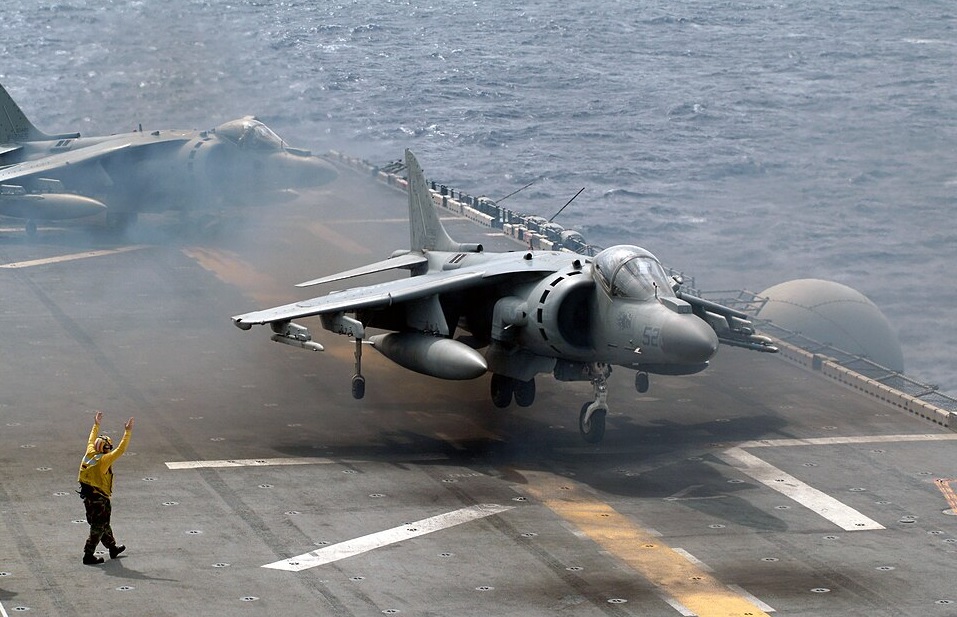
The operation was conducted under the authority of the U.S. military command structure including United States Central Command, which oversaw the regional campaign involving more than 50,000 U.S. troops, roughly 200 fighter aircraft and two aircraft carriers participating in the strikes.
Evolution of Project Maven
The Maven platform originates from Project Maven, formally known as the Algorithmic Warfare Cross-Functional Team, launched by the Pentagon in 2017 to apply machine learning to drone video analysis.
Since then, the program has evolved into Palantir’s Maven Smart System, which integrates large-scale data analytics, machine learning models and operational planning tools. The system now supports more than 25,000 users across all U.S. Combatant Commands and is used for tasks ranging from intelligence processing to cyber operations and military simulations.
Palantir holds multiple contracts related to Maven and associated defense platforms with the Department of Defense and other national security agencies. The combined value of these contracts may exceed $1 billion, with the Maven Smart System itself developed under agreements estimated at nearly $1.3 billion.
Integration of Claude Into Military Systems
Anthropic’s Claude AI was integrated into Maven in late 2024 through a partnership involving Palantir and Amazon Web Services. The integration enabled the AI model to operate inside classified military environments.
In June 2025, Anthropic introduced a government-focused version of the model called Claude Gov, designed specifically for use by national security agencies.
Claude became one of the first large-scale generative AI systems embedded in classified defense networks, providing capabilities including intelligence analysis, mission planning assistance and automated simulation of battlefield scenarios.
Dispute Between the Pentagon and Anthropic
The deployment of Claude in the Iran operations occurred amid an ongoing dispute between the Pentagon and Anthropic regarding acceptable military uses of the company’s AI models.
Anthropic had established usage restrictions prohibiting its systems from supporting mass domestic surveillance of U.S. citizens or fully autonomous weapons systems operating without human oversight. Pentagon officials reportedly viewed these limitations as ambiguous and argued that negotiating the terms of each operational use case would be impractical during active military operations.
On February 27, 2026, one day before the Iran strikes began, President Donald Trump issued an executive order instructing federal agencies to halt work with Anthropic, designating the company as a potential “supply chain risk.”
The designation is typically applied to foreign adversaries but was used in this case following disagreements over operational restrictions placed on the Claude model.
Continued Use Despite Executive Order
Despite the directive, defense officials continued using Claude during the Iran campaign. Reports indicate that the AI system remained operational on classified military networks and was employed within hours of the order being issued.
At the time of the operation, Claude was reportedly the only frontier-scale AI model operating within certain classified Pentagon networks.
Military planners used the system not only for target identification but also for intelligence summarization and simulated battle planning to assess potential outcomes of strike scenarios.
Replacement Challenges for Palantir
Following the executive order, Palantir began preparing to remove Claude from the Maven ecosystem and replace it with an alternative AI model.
According to sources cited by Reuters, the system’s architecture relies on numerous prompts and workflows built with Anthropic’s Claude Code developer framework, meaning the replacement process could require extensive redesign of internal components.
Industry analysts estimate that rebuilding the AI components and integrating another model could take several months, potentially affecting operational workflows that rely on the system.
Palantir Chief Executive Officer Alex Karp commented broadly on the issue, stating that restrictions imposed by technology companies on government uses can create operational complications for defense programs.
Pentagon Contracts With Multiple AI Providers
The Pentagon has increasingly relied on commercial AI providers for advanced analytical capabilities. In July 2025, the Department of Defense awarded contracts worth up to $200 million each to four frontier AI developers: Anthropic, OpenAI, Google and xAI.
Under the agreements, the companies provided baseline access to their AI models for defense applications.
According to defense officials, xAI accepted government requirements allowing its models to be used for “all lawful uses” across classification levels, while OpenAI and Google negotiated arrangements focused primarily on unclassified work while discussions continued regarding classified environments.
Anthropic’s restrictions on certain military uses led to the confrontation that culminated in the executive order.
Previous Operational Use of Claude
Reports indicate that Claude had been used previously in classified planning systems. During a January 2026 operation that resulted in the capture of former Venezuelan President Nicolás Maduro, the model reportedly supported mission planning through Palantir’s secure analytical platforms, though the precise role of the system remains disputed.
Proposed Autonomous Drone Swarm System
Anthropic had also pursued additional defense projects with the Pentagon. In January 2026, the company submitted a proposal worth approximately $100 million for the development of voice-controlled autonomous drone swarm technology.
The proposal described a system in which Claude would translate a commander’s verbal intent into digital commands to coordinate a fleet of drones capable of sharing target information and operating from launch to termination phases of missions.
The Pentagon ultimately rejected the proposal.
Reliability and Transparency Concerns
The growing use of large language models in military operations has raised concerns among researchers and defense analysts regarding reliability and transparency.
Large language models can generate inaccurate responses, sometimes described by researchers as “hallucinations,” in which the system produces incorrect information while appearing confident in its output.
Scholars studying military technology argue that such errors could become significant if AI systems are used to accelerate battlefield decision-making.
Elke Schwarz, author of Death Machines: The Ethics of Violent Technologies, has stated that vulnerabilities in AI systems may pose risks when used in rapidly evolving military environments.
Similarly, Mariarosaria Taddeo has noted that machine learning systems continually evolve as they process new data, which complicates the testing procedures normally required under international humanitarian law.
Historical Example of AI Targeting Errors
Previous AI-assisted targeting tools have produced documented error rates. An earlier system known as Lavender, reportedly used to identify potential militants during operations against Hamas in Gaza, analyzed large datasets including communication patterns and location history to assign threat scores.
Investigations later indicated that the system had an estimated 10 percent error rate, leading to cases where individuals were incorrectly flagged as targets.
Researchers cited in the report estimated that roughly 3,600 people may have been mistakenly identified by the system.
Calls for Regulatory Frameworks
International discussions on regulating AI in warfare are ongoing. The Review Conference of the United Nations Convention on Certain Conventional Weapons, scheduled for November 2026, is expected to examine progress toward establishing rules governing lethal autonomous weapons systems.
More than 120 countries support negotiations aimed at creating new legal instruments addressing the deployment of AI in military decision-making.
Experts advocating for transparency have argued that governments should publicly disclose the general role of AI in military operations and report when automated systems contribute to errors.
Retaliatory Cyber and Infrastructure Impacts
Following the February 28 strikes, analysts monitoring regional developments reported retaliatory actions by Iran, including drone attacks on three data centers operated by Amazon Web Services on March 2, 2026.
The strikes temporarily disrupted global access to Anthropic’s Claude system for several hours.
Expanding Role of AI in Warfare
The scale of the Iran campaign demonstrated how artificial intelligence can accelerate military planning cycles. Defense officials indicated that AI-assisted systems enabled the generation of hundreds of potential strike targets in a matter of hours rather than weeks.
The campaign reportedly resulted in more than 900 Iranian casualties, including the death of Iran’s Supreme Leader Ali Khamenei.
Officials at the Pentagon have stated that further details regarding the role of AI systems during the operation may be released during upcoming briefings by United States Central Command in the coming weeks.
——— End of Article ———