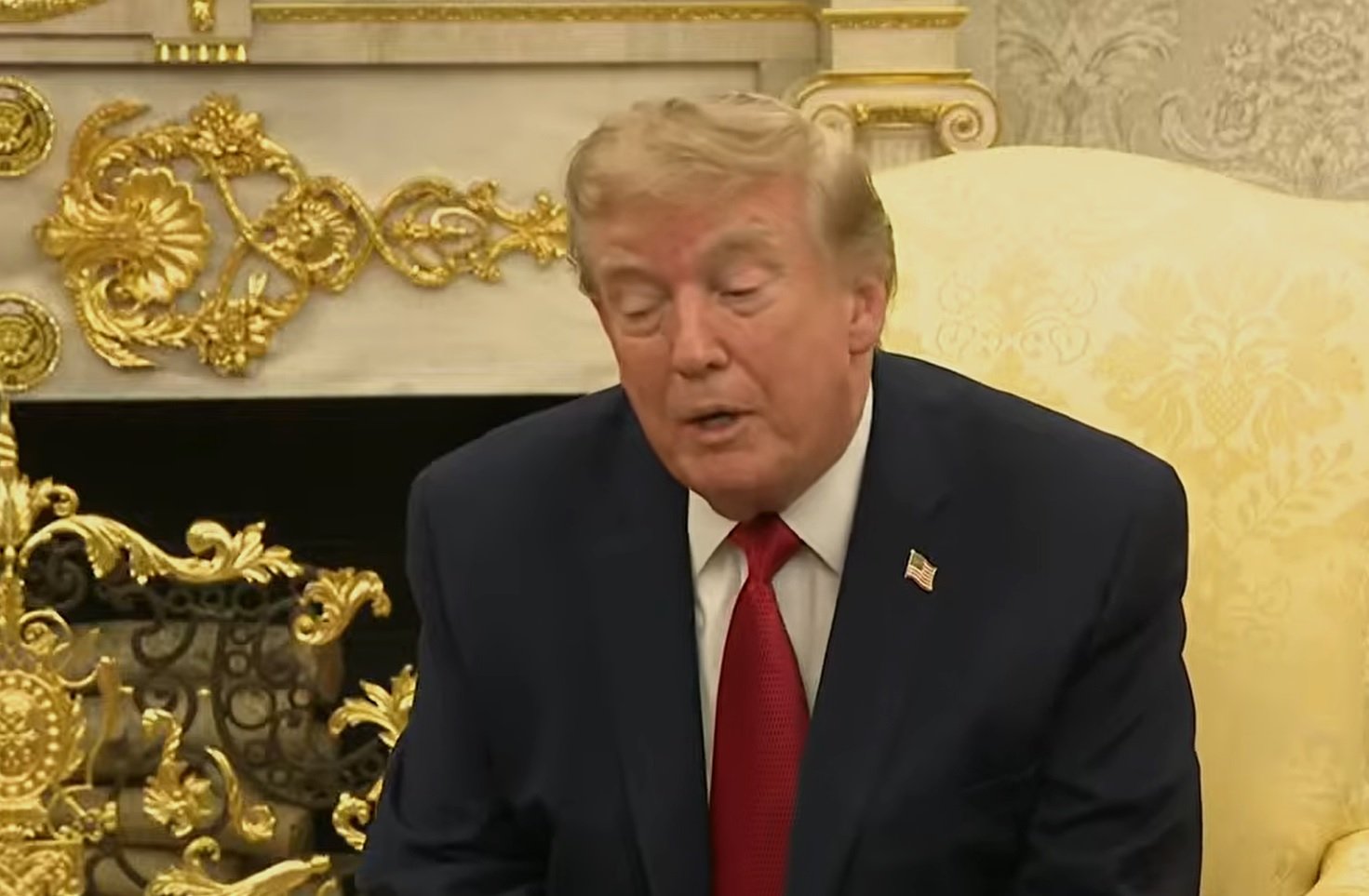
Washington / New Delhi : The United States and India have concluded a Framework Trade Agreement aimed at more than doubling bilateral trade to $500 billion by 2030, marking a significant shift in economic relations after months of tensions triggered by punitive tariffs and sharp political rhetoric from Washington.
The deal, announced this week by U.S. President Donald Trump and confirmed by Indian officials, reduces U.S. tariffs on Indian goods from 50 percent to 18 percent and sets the stage for expanded cooperation across energy, manufacturing, technology, and defence supply chains. India’s Commerce Minister Piyush Goyal described the agreement as a “landmark achievement” concluded under the leadership of Prime Minister Narendra Modi, with India’s sensitive sectors, including agriculture and dairy, remaining protected.
From Confrontation to Agreement
The agreement follows a turbulent negotiating period that began in March 2025, when formal talks were launched to expand trade ties. Those talks were repeatedly disrupted after the Trump administration imposed steep tariffs on Indian exports, escalating them to 50 percent. During that period, President Trump publicly described India as a “dead economy,” a remark that drew sharp reactions in New Delhi but did not lead to retaliatory escalation from India.
Despite the tariff pressure, Indian negotiators continued backchannel engagements while maintaining that New Delhi would not compromise on core economic interests. Officials involved in the talks said India’s position was that market access must be reciprocal and respectful, not driven by public pressure or unilateral measures.
Why Washington Shifted Course
Analysts point to a narrowing set of global trade options for the United States as a key factor behind the eventual agreement with India.
Relations with China remain strained amid an ongoing U.S.–China trade war, limiting Washington’s access to the world’s largest manufacturing ecosystem. Russia remains largely isolated from Western trade due to sanctions linked to the Ukraine conflict. While transatlantic trade between the United States and the European Union remains substantial — exceeding €1.68 trillion in goods and services in 2024 — political frictions during 2025 created uncertainty around deeper new trade initiatives with Europe.
Against this backdrop, India emerged as the only major economy with the scale, growth trajectory, and domestic demand capable of absorbing large volumes of U.S. exports while also offering long-term strategic alignment. Indian officials privately conveyed that no other market combined India’s population size, growth potential, and manufacturing ambitions at this stage.
Energy and Strategic Trade-Offs
As part of the broader understanding, President Trump said in a social media post that Prime Minister Modi had agreed to reduce India’s purchases of Russian oil and expand imports from the United States, and potentially Venezuela. Indian officials have not confirmed a complete halt to Russian oil imports but have indicated a gradual diversification of energy sources based on commercial and strategic considerations.
Energy analysts note that increased U.S. energy exports to India could help rebalance trade flows while giving New Delhi greater flexibility amid global supply disruptions.
Protecting Domestic Sectors
Commerce Minister Piyush Goyal emphasised that India maintained firm red lines during negotiations. Agriculture and dairy — politically and economically sensitive sectors — remain shielded from large-scale U.S. market penetration. Officials said this was a central condition for concluding the deal and was accepted by Washington during final-stage talks.
Goyal said technical teams from both sides are finalising the detailed legal text and tariff schedules, after which a joint statement will be issued and the agreement formally signed.
Strategic Implications
The agreement significantly improves the outlook for India–U.S. economic relations after a period of uncertainty. For Washington, it secures a long-term economic partnership with a fast-growing economy at a time when other major trade relationships remain constrained. U.S. officials and analysts acknowledge that, amid ongoing trade friction with China, sanctions-driven isolation of Russia, and limited scope for fresh large-scale agreements with Europe, the United States had few viable alternatives to engaging India at this scale.
For New Delhi, the agreement locks in market access to the world’s largest economy without conceding control over sensitive domestic sectors, reinforcing India’s position as a key economic partner capable of negotiating on its own terms. Indian officials said the outcome validated a calibrated approach that combined patience with clearly defined red lines.
Officials familiar with the negotiations said sustained pressure and prolonged uncertainty increased concerns in Washington that a continued standoff could push India further toward alternative trade and strategic partners.
Those alternatives were already taking shape. India’s parallel deepening of trade ties with Europe, including the conclusion of a major India–European Union trade agreement, strengthened New Delhi’s negotiating leverage by demonstrating that it was not dependent on a single market. Officials said this development sharpened U.S. concerns about being sidelined from one of the world’s fastest-growing large economies.
Officials on both sides said the deal reflects a pragmatic recalibration rather than a dramatic ideological shift, shaped by global trade fragmentation, geopolitical pressures, and recognition of India’s growing economic leverage. For Washington, the agreement mitigates strategic risk; for New Delhi, it confirms India’s emergence as a central node in global trade.
With the framework now agreed, attention will turn to implementation and whether the ambitious $500 billion trade target by 2030 can be achieved amid a volatile global economic environment.
Separately, India’s Ministry of External Affairs rejected media reports claiming that Ajit Doval, KC, had held a secret meeting with Marco Rubio in the run-up to the India–U.S. trade negotiations. The MEA said the reports were factually incorrect and did not reflect the actual diplomatic engagement between the two countries.
——— End of Article ———