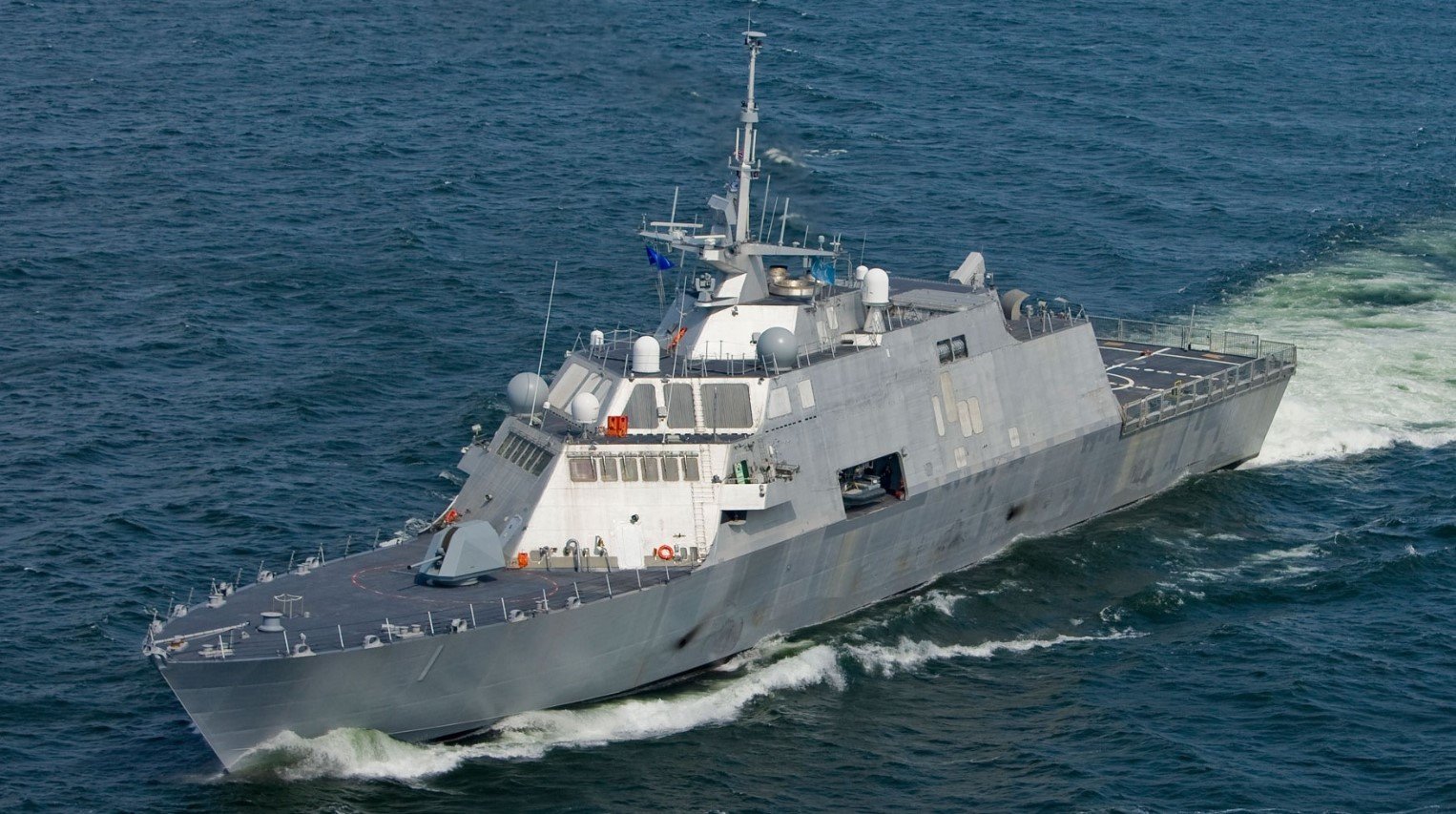
Washington, D.C. — The U.S. Navy has awarded Lockheed Martin a $73.86 million contract modification to procure, test and deliver Indra Rigel electronic warfare systems for four Multi-Mission Surface Combatant (MMSC) ships being built for the Royal Saudi Naval Forces.
The award, announced on August 12, 2026, is valued at $73,864,423 and modifies existing contract N00024-18-C-2301. It covers the electronic warfare systems for Saudi Arabia's four MMSC vessels under the U.S. Foreign Military Sales (FMS) program.
Contract and Production Details
The contract is structured as a firm-fixed-price and cost-plus-fixed-fee agreement. The entire amount is funded by the Kingdom of Saudi Arabia through the FMS program and will be obligated at the time of the award. The funds will not expire at the end of the current fiscal year.
Work will be carried out primarily in Madrid, Spain, which will account for 96% of the effort. The remaining 4% will be performed in Moorestown, New Jersey. The U.S. Navy's Supervisor of Shipbuilding, Conversion and Repair in Bath, Maine, is responsible for managing the contract.
The work is scheduled to be completed by February 2031.
Indra Rigel Electronic Warfare System
The four MMSC ships will receive Indra's Rigel electronic support measures system. The system is designed to detect and analyze radar signals from other vessels, allowing the system to identify and classify platforms and assess the level of threat they represent.
Indra says the system provides information that improves situational awareness and supports the survivability of the ships in hostile environments. The Rigel family is designed for detection, analysis, classification and identification of radar signals and can provide direction-finding information as part of its electronic support functions.
Indra is working with SAMI-AEC, a subsidiary of Saudi Arabian defense company SAMI, to deliver the systems. The cooperation builds on previous work between Indra and SAMI-AEC involving electronic defense systems for Saudi Arabia's Avante 2200-class corvettes. Indra announced the agreement to equip the four MMSC ships with Rigel systems in February 2024.
Saudi Arabia's MMSC Fleet
The four MMSC ships are a derivative of the U.S. Navy's Freedom-variant Littoral Combat Ship. Saudi Arabia signed the Foreign Military Sales case for the ships in 2017, with Lockheed Martin serving as the prime contractor and Fincantieri Marinette Marine responsible for construction in Wisconsin. The program is known as Project Tuwaiq.
Each MMSC is 118 meters (387 feet) long and has a stated range of 5,000 nautical miles. The ships are based on the Freedom-variant LCS hull and have been modified with additional combat systems for the Saudi requirement.
Their weapons and combat systems include an eight-cell Mk 41 vertical launch system configured for MBDA Sea Ceptor missiles, Harpoon anti-ship missiles, a BAE Systems Mk 110 57mm gun and a Raytheon SeaRAM system. The ships also use Lockheed Martin's COMBATSS-21 combat management system, which is built from the Aegis Common Source Library. A Saab Ceros 200 fire-control radar and Indra's Rigel electronic support measures system are among the additional systems integrated into the Saudi configuration.
Program Schedule
The first ship, HMS Saud, entered the water at Fincantieri Marinette Marine in Wisconsin on December 20, 2025. It is the first of four MMSC vessels being built for Saudi Arabia.
The MMSC program has experienced schedule delays. Naval News reported in December 2025 that the program had been affected by shipyard disruptions, workforce shortages, the time required to complete the ship design and design changes requested by Saudi Arabia.
The new Lockheed Martin contract adds the Rigel electronic warfare systems to the equipment being delivered for the four Saudi MMSC ships, with work continuing through February 2031.
——— End of Article ———