WASHINGTON — February 26, 2026 : The United States Navy has awarded Torrance, California-based Castelion Corp. a $49,998,005 firm-fixed-price contract to advance its Blackbeard hypersonic missile program into full-scale prototyping, flight testing, and early operational fielding. The contract runs through November 2027 and work will be performed in Torrance, California.
The award was issued under a previously established basic ordering agreement and executed through a Small Business Innovation Research (SBIR) Phase III pathway. The SBIR topic is aligned with a U.S. Air Force requirement focused on low-cost, highly manufacturable long-range strike production. The contracting authority for the award is the Naval Air Warfare Center Aircraft Division (NAWCAD) in Lakehurst, New Jersey.
Procurement Strategy and Program Transition
The contract marks a transition of Blackbeard from initial prototype development into structured flight-test campaigns and early operational experimentation. It reflects a broader Department of Defense procurement shift toward hypersonic systems designed for manufacturability at scale and compatibility with existing launch platforms.
Unlike high-cost strategic hypersonic weapons produced in limited quantities, Blackbeard is structured for industrial-rate output. Castelion has stated that the missile is engineered for unit costs in the hundreds of thousands of dollars and annual production volumes in the thousands once full-rate manufacturing is established.
Navy Integration Path
NAWCAD’s involvement indicates alignment with naval aviation integration and test infrastructure. The selection of this contracting activity follows the Navy’s earlier cancellation of the HALO (Hypersonic Air-Launched Offensive Anti-Surface Warfare) program due to schedule pressures and budget constraints. Blackbeard is being evaluated as a lower-cost air-launched hypersonic strike option capable of integration across existing platforms.
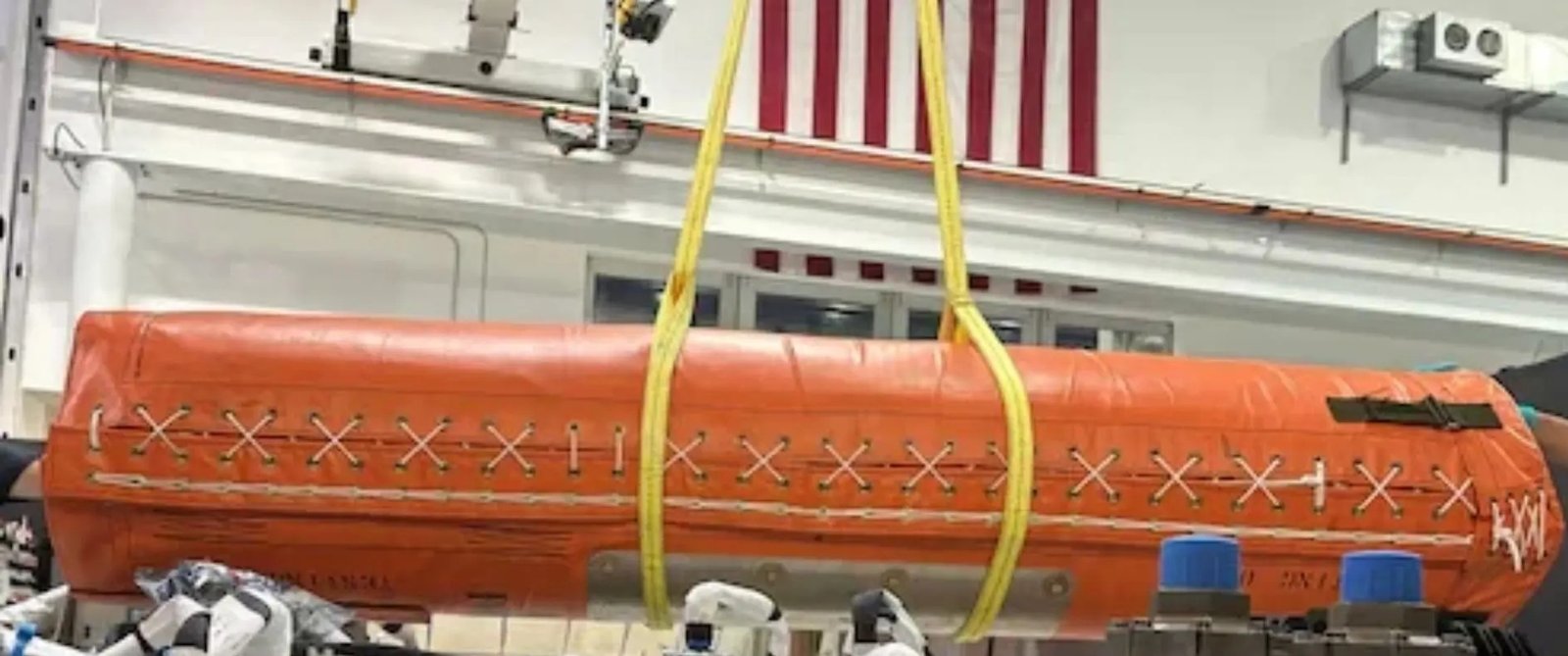
Under the current roadmap, the program plans to demonstrate an extended-range, air-launched Blackbeard variant fired from a modified MLRS-family pod. Subsequent phases will include minimum viable ground-launched prototypes equipped with flight-termination instrumentation to support upcoming HIMARS test events.
U.S. Army Integration and Budgeting
Parallel integration efforts are underway within the U.S. Army. Army budget documents identify Blackbeard Ground Launch (GL) as an interim munition compatible with existing High Mobility Artillery Rocket System (HIMARS) pods. It is also envisioned as a primary munition for the future Common Autonomous Multi-Domain Launcher (CAML), a mobile launcher platform designed to enhance survivability through rapid displacement.
The Army’s fiscal year 2026 budget includes $25 million for Blackbeard development. Documentation describes the system as delivering approximately 80 percent of the planned Precision Strike Missile (PrSM) Increment 4 capability at significantly reduced cost.
Blackbeard GL is not intended to replace the Army’s Dark Eagle Long-Range Hypersonic Weapon (LRHW). While LRHW has experienced schedule delays, it is expected to complete fielding activities in early 2026. Blackbeard does not match the velocity or range of Dark Eagle but is positioned as a cost-efficient complementary capability.
Technical Characteristics
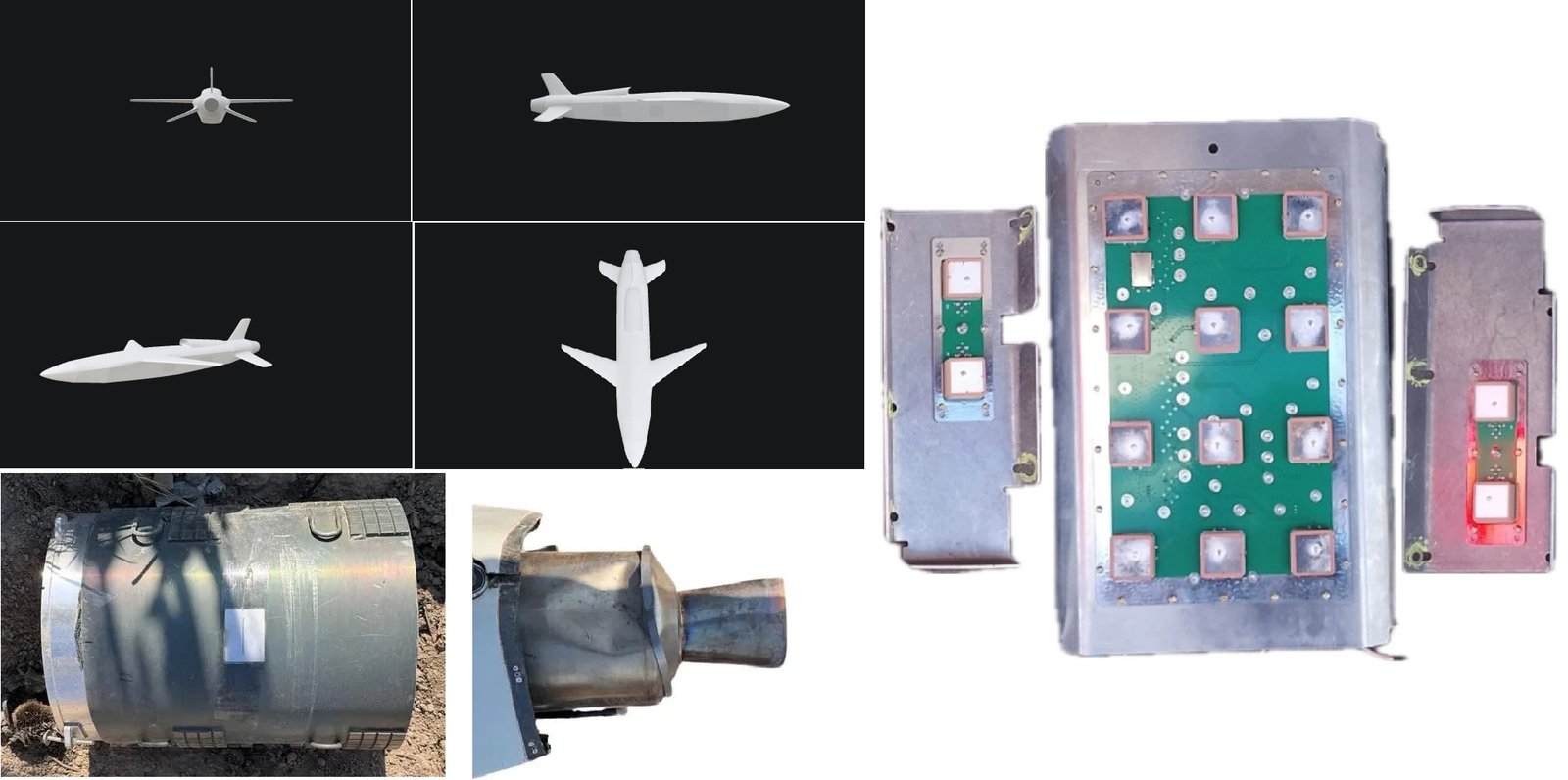
Blackbeard is described as a long-range hypersonic strike weapon capable of sustained speeds exceeding Mach 5 while maneuvering within the atmosphere. Hypersonic systems operating at these velocities and flight profiles present challenges for traditional radar tracking and interceptor engagement timelines.
Specific range and maneuverability parameters remain classified. However, Blackbeard is characterized as a seeker-based precision-fires system designed to engage hardened structures and time-sensitive moving targets, including mobile launchers and maritime assets, while operating within contested air-defense environments.
The lower unit cost profile is intended to allow operational commanders to allocate hypersonic salvos for missions such as suppression of enemy air defenses (SEAD) and distributed strike operations, rather than reserving such weapons solely for high-value strategic targets.
Company Background and Industrial Expansion
Castelion Corp., founded in November 2022, is headquartered in Torrance, California, with additional manufacturing operations in New Mexico, Texas, and California. The company was established by Bryon Hargis (Chief Executive Officer), Sean Pitt (Chief Operating Officer), and Andrew Kreitz (Chief Financial Officer), all former SpaceX executives.
Blackbeard is Castelion’s first hypersonic system. The company maintains that it is the first U.S. hypersonic missile designed from inception for continuous flight-test iteration and industrial-scale output.
In December 2025, Castelion closed a $350 million Series B funding round. The funding supports platform integration, multi-service testing activities scheduled for 2026, and construction of “Project Ranger,” a 1,000-acre solid rocket motor manufacturing and final-assembly facility located in Sandoval County, New Mexico.
Groundbreaking for Project Ranger occurred in January 2026. Initial production of Blackbeard missiles is planned to begin in 2026. The facility is designed to enable continuous output of thousands of weapons annually by vertically integrating propulsion and guidance manufacturing processes and applying commercial space-sector production methodologies to missile manufacturing.
Prior Awards and Testing Milestones
In October 2025, Castelion received multiple awards supporting integration of Blackbeard onto operational U.S. Army and U.S. Navy platforms. These agreements include live-fire demonstration activities.
The February 2026 Navy contract advances the program from prototype development into structured operational experimentation and fielding pathways. No additional platform-specific details or expanded contract terms were disclosed in the award announcement.
Strategic Context
The Department of Defense’s emphasis on affordable hypersonic mass production reflects assessments of international developments in the hypersonic domain. U.S. defense assessments identify China as possessing the leading hypersonic missile inventory, including the operational DF-17 medium-range missile equipped with a hypersonic glide vehicle capable of striking targets between approximately 1,800 and 2,500 kilometers.
Russia has also integrated hypersonic systems into its force structure, including the Kinzhal air-launched ballistic missile and the Zircon hypersonic cruise missile, both of which have been publicly demonstrated during military exercises.
Through programs such as Blackbeard, the U.S. military is pursuing expanded production capacity, accelerated testing throughput, and cross-platform integration to supplement its inventory of higher-cost strategic hypersonic weapons with scalable, lower-cost options.
——— End of Article ———