DUBAI : A broad and largely non-public military logistics operation is unfolding across the Middle East as the United States and Israel prepare for what defense analysts describe as a sustained, long-term military campaign against Iran. While public debate has focused on political signaling and diplomatic messaging, military planners and regional security specialists say the current absence of large-scale offensive action reflects unresolved operational constraints rather than a shift in policy.
According to a detailed regional military assessment by Persian analyst Shahin Modarres, U.S. and Israeli planning is based on the assumption that any direct strike on Iran would trigger immediate retaliation against Israel and American military facilities across the Middle East. The present phase, he argues, is defined by defensive preparation—specifically, efforts to protect U.S. forces and infrastructure from Iranian ballistic missiles, cruise missiles, and unmanned aerial systems before any offensive phase can be initiated.
Exposure of U.S. Military Infrastructure
At the center of the planning challenge are at least 19 major U.S. bases and strategic command centers distributed across the Gulf and the wider Middle East. Despite the scale of the American military footprint, not all of these installations are equipped with permanent, integrated air and missile defense systems capable of countering advanced ballistic threats.
Among the most significant facilities are Al Udeid Air Base in Qatar, which hosts the forward headquarters of United States Central Command; Naval Support Activity Bahrain, home to the U.S. Fifth Fleet headquarters; and Camp Arifjan in Kuwait, a critical logistics and sustainment hub for U.S. ground operations. In addition to these fixed installations, U.S. forces operate at forward locations and smaller bases in Syria, Iraq, Jordan, and several Gulf states.
Modarres notes that some of these sites rely primarily on short-range air defense systems designed to counter rockets, artillery, and drones. Such systems, while effective against limited threats, provide little protection against medium- and long-range ballistic missiles, which Iran has developed in significant numbers over the past decade.
Missile Defense Build-Up Across the Gulf
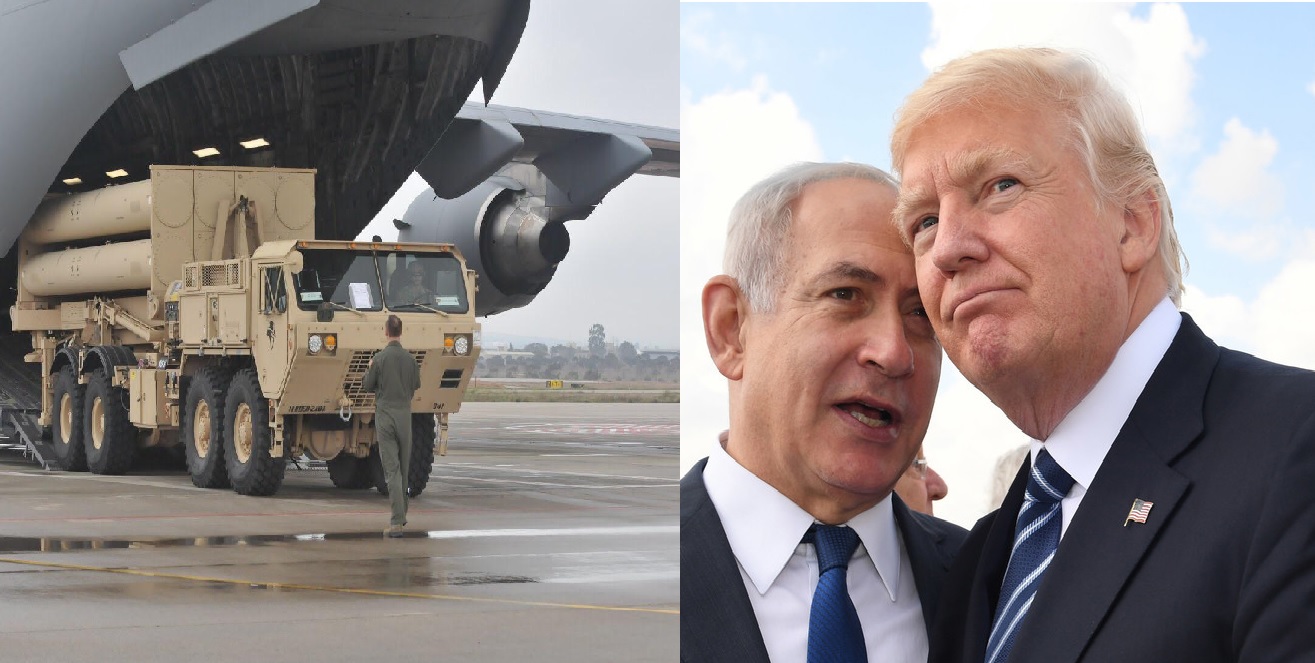
To address these vulnerabilities, the Pentagon has accelerated the deployment of Terminal High Altitude Area Defense (THAAD) batteries and Patriot missile systems throughout the region. These assets are being positioned in coordination with host nations, including Saudi Arabia, Kuwait, and the United Arab Emirates, with the goal of establishing overlapping layers of missile defense coverage for U.S. forces and key infrastructure.
Military officials and analysts emphasize that this process is technically complex. Each deployment requires the transport of launchers, radars, command vehicles, and interceptor missiles, followed by calibration, testing, and digital integration into existing command-and-control networks. Linking national and U.S. systems into a coherent, shared air defense architecture can take weeks or months, particularly in a high-threat environment.
Until this network is fully operational, any offensive action would leave multiple U.S. bases exposed to retaliatory strikes, increasing the risk of casualties and infrastructure damage during the opening stages of a conflict.
Naval and Air Assets in a Defensive Posture
Naval and air force movements in recent weeks further underscore the defensive nature of the current phase. The aircraft carrier USS Abraham Lincoln has been positioned off the coast of Oman, a location selected to reduce exposure to Iran’s coastal anti-ship missile systems while maintaining operational reach into the region. Additional air defense assets have reportedly been activated along parts of the Emirati coastline to support the protection of high-value naval units operating nearby.
At the same time, allied air forces are being configured primarily for interception and air defense missions rather than deep strike operations. U.S. F-15 fighter aircraft stationed in Jordan are tasked with intercepting incoming missiles or drones approaching from the east. British F-35 aircraft deployed to RAF Akrotiri in Cyprus are focused on defending Israeli airspace, particularly against loitering munitions and drone swarms such as Iran’s Shahed-131 and Shahed-136 systems.
According to the assessment, these aircraft are not currently postured or tasked for sustained offensive operations against Iranian territory, reinforcing the view that the present stage is preparatory rather than escalatory.
Policy Continuity and Operational Constraints
The extended military buildup has fueled speculation that the administration of Donald Trump is reconsidering its approach toward Iran. Modarres rejects this interpretation, arguing that the delay reflects operational necessity rather than political hesitation. In his assessment, the strategic intent remains unchanged, but execution is constrained by the requirements of modern, high-intensity warfare.
Military planners, he says, are effectively constructing a regional defensive framework before initiating any offensive actions. This includes missile defense coverage for fixed bases, protection of naval assets, and coordinated air defense for Israel and U.S. partners.
“The process is ongoing,” Modarres concludes, describing the current phase as one of logistics, coordination, and system integration. The timeline, he argues, is being set by the completion of this defensive architecture rather than by public statements or diplomatic developments.
——— End of Article ———