AL-HASAKAH, Syria : United States military forces have begun a phased drawdown from several major positions in northeastern Syria, marking what officials and regional observers describe as the opening stage of a broader redeployment that could culminate in a full U.S. withdrawal by mid-2026.
U.S. Forces Begin Withdrawal From Al-Hasakah Countryside
Local sources in the southern countryside of Al-Hasakah report that U.S. troops stationed at the Al-Shaddadi base are completing final evacuation procedures. Individuals familiar with the operation told Syria TV on Wednesday that the base is expected to be fully vacated within 24 hours.
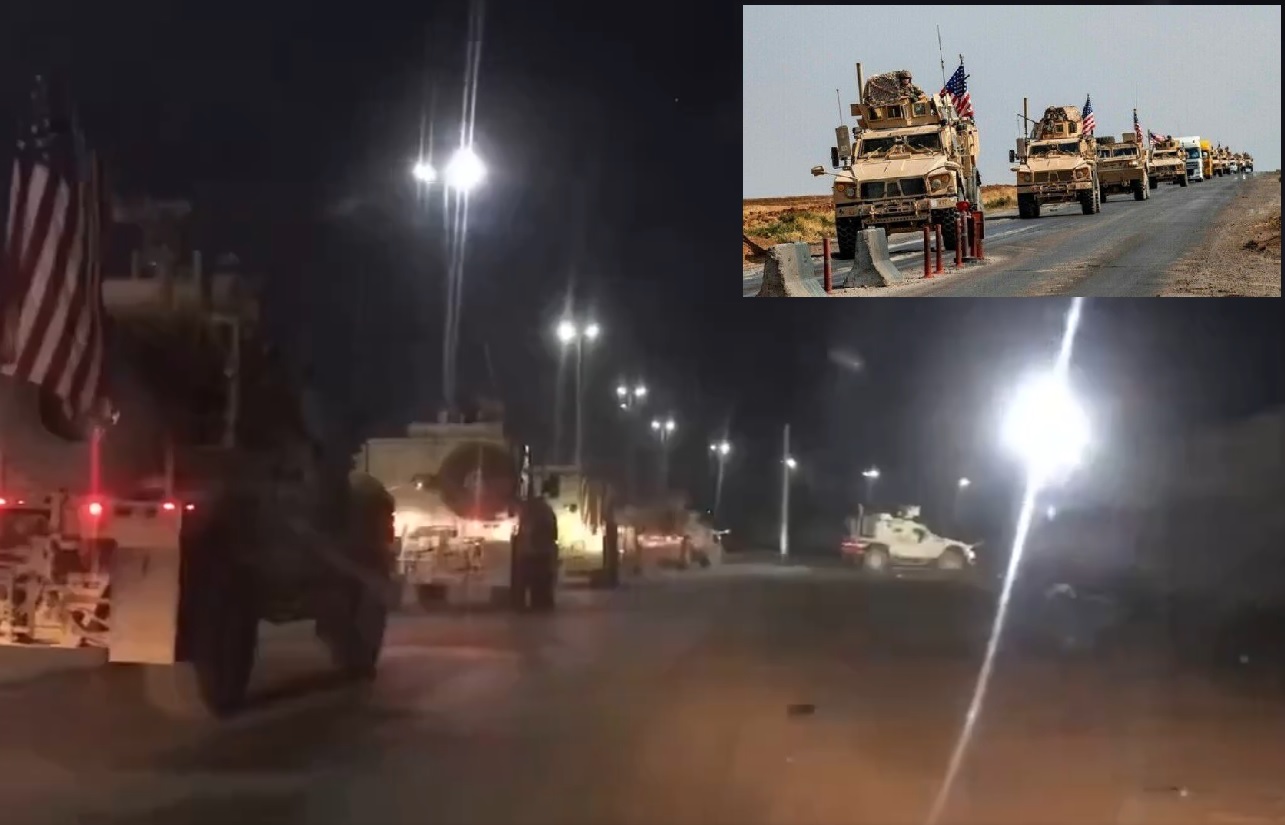
The withdrawal is being carried out through coordinated ground and air logistics. According to the Hasaka Media Center, a convoy of empty transport trucks affiliated with the U.S.-led international coalition entered Syrian territory earlier this week through the Al-Yaarabiya crossing from Iraq. The vehicles proceeded directly to Al-Shaddadi, where they were loaded with military equipment and sensitive materials destined for transfer to Iraq’s Kurdistan Region.
Video footage circulating locally shows large coalition convoys departing Al-Shaddadi and traveling eastward, with destinations reported to include Erbil.
Evacuation Operations at Kharab al-Jir Base
Simultaneous evacuation activity has also been reported at the Kharab al-Jir base, another key coalition installation in northeastern Al-Hasakah. Residents in nearby areas said intermittent gunfire and controlled explosions have been heard from inside the facility since Tuesday. These actions are believed to be part of standard procedures to dismantle or destroy infrastructure and equipment that cannot be relocated.
Late last month, heightened operational activity was observed at both Al-Shaddadi and Kharab al-Jir. The Anadolu Agency reported an increase in cargo aircraft landings at Al-Shaddadi, a development interpreted as preparation for the removal of high-value assets prior to the ground withdrawals.
Strategic Context and Policy Review
The redeployment appears to reflect a wider reassessment of U.S. military posture in Syria. According to regional reporting, Washington is reviewing its role as it increasingly identifies the new Syrian government framework as its principal counterpart in ongoing counter-terrorism efforts against ISIS.
This shift follows recent coordination arrangements between the central government and the Kurdish-led Syrian Democratic Forces, aimed at integrating military and administrative structures under state authority.
Syrian Government Expands Presence in Qamishli
As U.S. forces reduce their footprint, Syrian government security units have moved to expand their presence in areas previously administered by Kurdish authorities. On Tuesday, a convoy of internal security forces entered Qamishli, marking the first such deployment under the latest integration agreement reached last week.
Government units have taken up positions at the entrance to Qamishli airport and at key administrative buildings, preparatory steps toward assuming full operational control. During the transition, local authorities imposed a citywide curfew that remained in effect until Wednesday morning. Streets were largely empty, while Kurdish security forces maintained a limited presence as government units moved into designated locations.
Regional Implications
The concurrent evacuation of U.S. positions at Al-Shaddadi and Kharab al-Jir, alongside the expansion of Syrian government authority in Qamishli, represents a restructuring of security arrangements in northeastern Syria. The developments indicate a gradual consolidation of control under state institutions and a reduction of direct foreign military involvement, following years of divided administration and overlapping security roles.
——— End of Article ———