Washington, D.C. — March 5, 2026 — The United States conducted a scheduled test launch of an unarmed LGM‑30G Minuteman III intercontinental ballistic missile (ICBM) from Vandenberg Space Force Base in California on March 3, 2026, as tensions and military operations involving Iran continue in the Middle East. U.S. defense officials stated that the launch was part of a routine evaluation program planned years in advance and was not linked to current geopolitical developments.
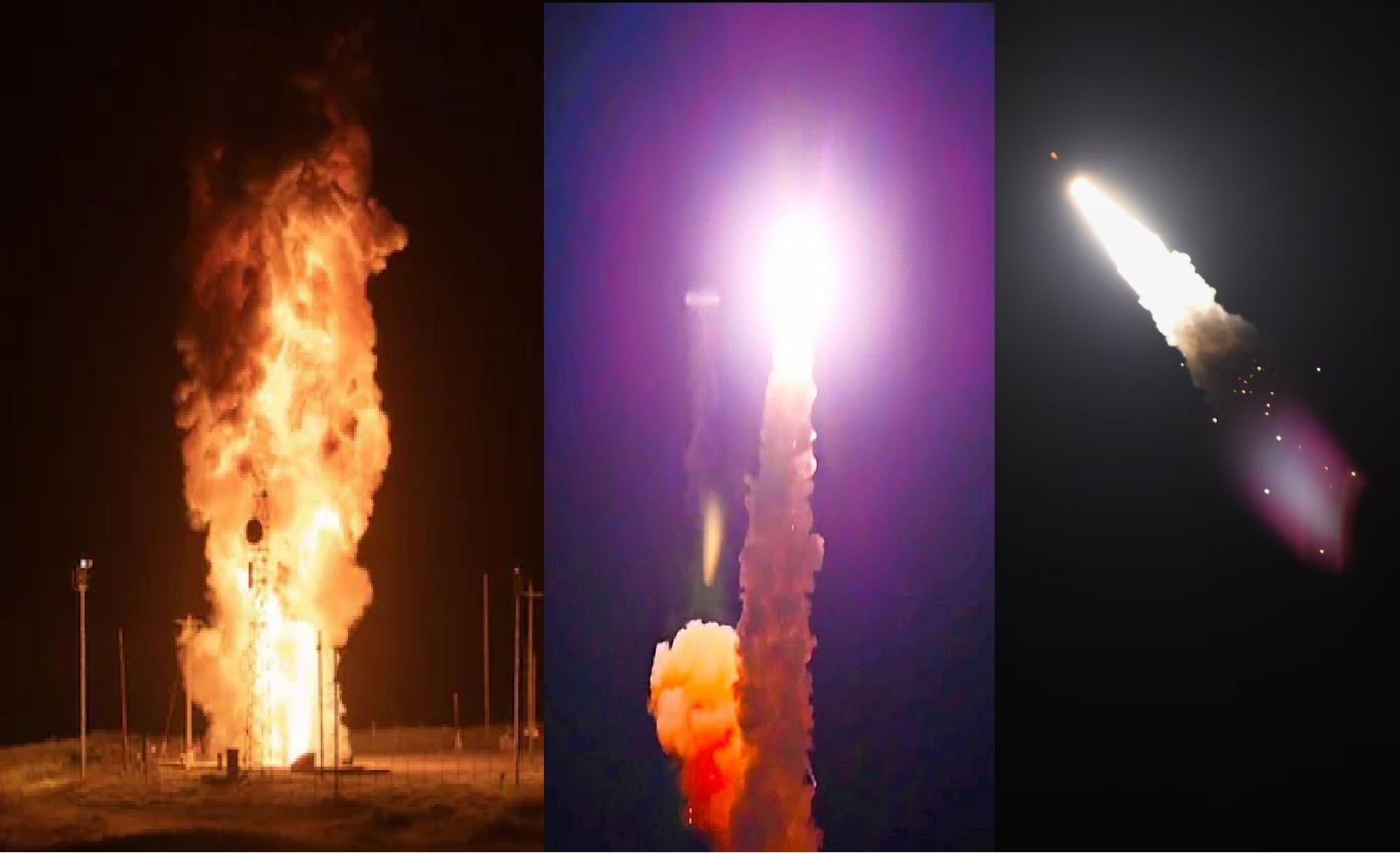
The operational test, designated GT-255, was carried out by Air Force Global Strike Command in coordination with the U.S. Space Force. The missile lifted off at 11:01 p.m. Pacific Time on March 3 from Vandenberg’s test range. After launch, the missile traveled thousands of miles across the Pacific Ocean before reaching a predetermined impact zone near Kwajalein Atoll in the Marshall Islands.
According to the U.S. military, the missile carried two unarmed test re-entry vehicles designed to collect data on system performance and targeting accuracy. The vehicles successfully reached the designated test target after traveling roughly 13,000 kilometers across the Pacific test corridor.
Test Objectives and Operational Role
Officials stated that the purpose of the launch was to verify the accuracy, reliability, and readiness of the United States’ land-based strategic missile force. Data collected during the flight will be used to evaluate the missile’s guidance systems, propulsion performance, and the deployment of multiple re-entry vehicles.
Personnel from Malmstrom Air Force Base in Montana participated in the launch operation, supporting missile preparation and test evaluation. The base is one of several installations responsible for operating the Minuteman III missile system.
The Minuteman III has been in operational service since 1970 and remains a central component of the U.S. nuclear deterrence structure. The missiles are maintained under Air Force Global Strike Command, headquartered at Barksdale Air Force Base in Louisiana.
Technical Characteristics of the Minuteman III
The Minuteman III is the only land-based ICBM currently deployed by the United States. Approximately 400 missiles are positioned in hardened underground silos across several U.S. states as part of the country’s strategic nuclear force.
The missile is designed to travel more than 13,000 kilometers (about 8,000 miles) and can reach speeds exceeding 24,000 kilometers per hour, or roughly 15,000 miles per hour. Its payload capacity allows it to carry multiple independently targetable re-entry vehicles (MIRVs), enabling a single missile to deliver several warheads toward separate targets.
Individual warheads carried by the system are estimated to have explosive yields up to 20 times greater than the atomic bomb used during the Atomic bombing of Hiroshima in 1945. For the GT-255 test, however, the missile was unarmed and equipped solely with instrumented test vehicles.
Role in the U.S. Nuclear Triad
The Minuteman III forms the land-based leg of the U.S. nuclear triad, which also includes submarine-launched ballistic missiles and nuclear-capable strategic bombers. Together, these systems are intended to ensure the United States maintains a credible deterrent by providing multiple methods of delivering nuclear weapons if required.
Routine test launches of Minuteman III missiles occur periodically as part of long-standing evaluation programs designed to verify the operational status of the missile fleet. The previous operational test took place in November 2025, according to U.S. defense officials.
Timing Amid Ongoing Conflict with Iran
The March 3 launch occurred during a period of escalating military activity involving Iran following U.S.- and Israeli-led operations that began on February 28, 2026. Pentagon officials emphasized that the Minuteman III test had been scheduled years in advance and was not conducted in response to current events.
Despite this, the test coincided with ongoing hostilities in the region. U.S. and Israeli forces have conducted strikes against Iranian military facilities, including missile infrastructure and bases associated with the Islamic Revolutionary Guard Corps. Reports indicate that more than 2,000 sites have been targeted during the campaign.
Iran has responded with missile and drone attacks against U.S. and allied positions in several countries, including Qatar, United Arab Emirates, Kuwait, Bahrain, and Saudi Arabia. As of March 4, reports indicated eight confirmed American fatalities and U.S. equipment losses estimated at $1.9 billion.
Statements from U.S. Leadership
In interviews earlier this week, Donald Trump commented on the broader conflict. During a March 2 conversation with CNN anchor Jake Tapper, Trump said that the major phase of the conflict had not yet occurred and indicated that further escalation could take place.
Similar remarks were made in an interview with Bret Baier of Fox News, where Trump suggested that the conflict could continue for several weeks. White House officials have stated that the United States currently does not plan to deploy ground combat troops, instead relying on air and naval forces for ongoing operations.
According to administration officials, the U.S. military presence involved in regional operations includes more than 50,000 personnel, approximately 200 fighter aircraft, and two aircraft carriers operating in nearby waters.
Ongoing Missile Evaluation Program
The U.S. Department of Defense stated that additional Minuteman III test launches are planned throughout 2026 to maintain confidence in the system’s performance. These launches are conducted under controlled test conditions and use unarmed payloads.
Officials noted that such evaluations are part of a long-standing program aimed at ensuring the continued safety, reliability, and operational readiness of the United States’ strategic missile forces.
——— End of Article ———