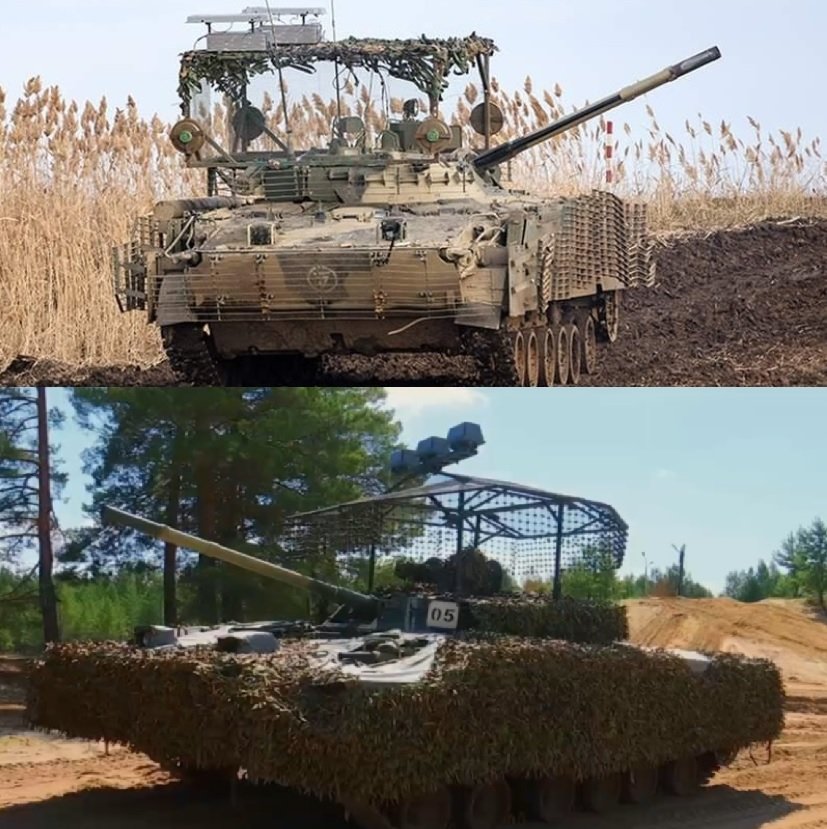
MOSCOW — Russia's state-owned defense conglomerate Rostec has delivered a new batch of upgraded BMP-3 infantry fighting vehicles (IFVs) to the Russian Armed Forces, the company announced on July 27, 2026. The vehicles were produced by Rostec's High Precision Systems division at the Kurganmashzavod plant.
According to Rostec, production and shipment volumes of the BMP-3 have increased significantly since the start of Russia's full-scale invasion of Ukraine in February 2022. The company said current output is now three times higher than previous levels, reflecting the expansion of Russia's defense manufacturing during the conflict.
Bekhan Ozdoev, industrial director of Rostec's weapons cluster and a member of the bureau of Russia's Union of Machine Builders, said production has increased every year since the conflict began and that the vehicle's design continues to evolve based on operational experience.
"Since the start of the special military operation, the volume of products shipped by High Precision Systems has increased every year. Today it already exceeds previous figures threefold," Ozdoev said. "At the same time, taking front-line experience into account, the design of combat vehicles is also changing."
He added that this year's BMP-3s have received reinforced protection for the hull bottom against mine blasts, along with improved armor fragmentation resistance on the front and rear sections.
Factory-Installed Protection Against Modern Battlefield Threats
The latest BMP-3 vehicles are leaving the factory with a range of protection upgrades that previously were often added by frontline units in the field.
According to Rostec, the upgraded vehicles feature additional protective measures covering the hull from all directions, including protection against attacks from above. The vehicles are fitted with reinforced mine protection for the hull bottom, improved fragmentation protection on the front and rear sections, and upgraded electronic systems intended to improve mobility and weapon effectiveness.
The modernized BMP-3s are also equipped with upgraded electronic warfare (EW) systems designed to counter drones and remotely guided munitions. In addition, the vehicles are fitted with cage armor intended to provide extra protection against first-person-view (FPV) drones and are equipped with "Nakidka" signature reduction covers designed to reduce thermal and radar visibility.
These upgrades reflect lessons learned from combat, where loitering munitions, FPV drones and extensive minefields have become major threats to armored vehicles.
Rostec did not disclose the number of BMP-3s included in the latest delivery, and its production figures could not be independently verified.
BMP-3 Remains Russia's Main Infantry Fighting Vehicle
The BMP-3 entered Soviet service in the late 1980s as the successor to the BMP-1 and BMP-2. It is designed to transport infantry while providing direct fire support during combat operations.
The vehicle has a crew of three and can carry up to seven soldiers. In its standard configuration, it weighs approximately 18.7 tonnes and is powered by a 500-horsepower UTD-29M diesel engine. It can reach speeds of around 70 km/h on roads and remains fully amphibious, using water jets to travel at approximately 10 km/h in water.
Its primary armament consists of a 100 mm gun capable of launching anti-tank guided missiles, a coaxial 30 mm autocannon, and machine guns. The BMP-3 has remained in continuous production for decades and has also been exported to several countries.
Kurganmashzavod, which manufactures the vehicle, is part of Rostec's High Precision Systems holding and remains Russia's primary BMP-3 production facility.
Heavy Battlefield Losses Continue
The increased production comes as Russia continues to replace armored vehicles lost during the conflict in Ukraine.
According to the Netherlands-based open-source intelligence group Oryx, which documents equipment losses using verified photographs and video evidence, at least 819 Russian BMP-3 infantry fighting vehicles have been visually confirmed as lost since 2022. Because Oryx records only visually confirmed losses, the actual number is likely higher.
Defense analysts have also noted that the BMP-3's original aluminum alloy armor, developed to keep the vehicle lightweight and amphibious, offers limited protection against modern anti-tank guided missiles, mines, precision artillery and other battlefield threats.
Kurganets-25 Program Still Delayed
Russia has been developing the Kurganets-25 infantry fighting vehicle as a future replacement for the BMP family. However, the program has experienced years of development delays and has not entered large-scale operational service.
As a result, Russia continues to rely on upgraded BMP-3 vehicles equipped with modern protection systems, including reinforced mine protection, anti-drone measures and electronic warfare equipment, while production of the long-serving platform continues to expand.
Independent analysts note that production claims released by Russian defense manufacturers are difficult to verify because of limited publicly available information on Russia's defense industry output.
——— End of Article ———