LEEUWARDEN, Netherlands — The Royal Netherlands Air and Space Force hosted an intensive phase of the multinational Weapons Instructor Course (WIC) at Leeuwarden Air Base from July 6 to July 10, bringing together allied air force personnel to improve the integration of fifth-generation aircraft into large-scale multinational air operations.
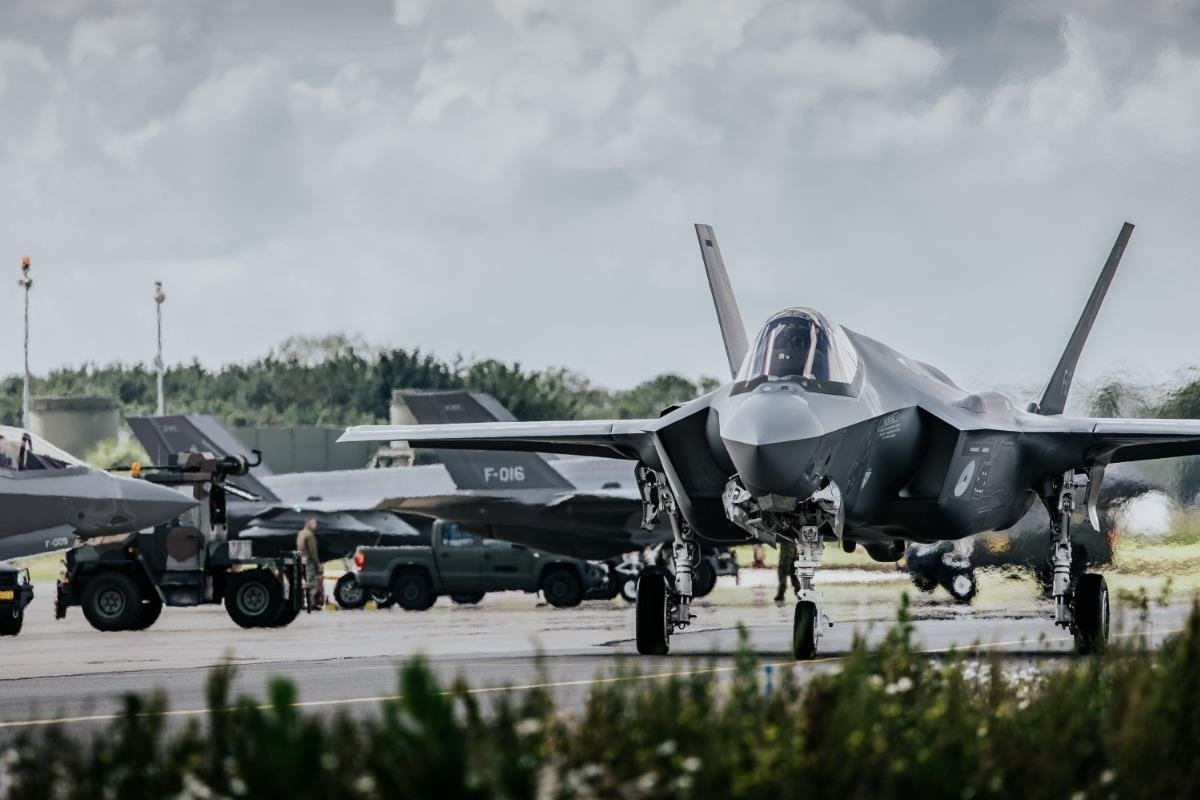
The training focused on employing the F-35 Lightning II as part of a broader multinational combat network rather than as a standalone fighter platform. The course supports NATO's ongoing efforts to improve interoperability, operational readiness and coordinated decision-making among allied forces operating in contested environments.
Four Allied Nations Participate
The Leeuwarden phase of the course brought together 24 selected participants from Belgium, Denmark, the Netherlands and Norway. The group included fighter pilots, intelligence officers, air battle managers, tactical airlift crews and ground-based air defence personnel, reflecting the multi-domain coordination required in modern air warfare.
The Weapons Instructor Course is conducted by the Weapons School of the 323 Air Combat Development Centre at Leeuwarden Air Base. Recognized as a major European center for tactical air warfare training, the base has supported advanced military aviation training since the 1950s and hosts the course every two years.
Originally established as a national training program, the Weapons Instructor Course has gradually expanded into a multinational framework that supports NATO air operations.
Large-Scale Flight Operations
During the July training phase, participants planned and led Large Force Employment (LFE) missions designed to replicate complex operational environments.
Flight operations were conducted in as many as three waves each day, with individual waves involving up to 20 military aircraft. Most sorties took place in Dutch airspace over the North Sea.
The exercises brought together multiple aircraft types and support assets, including:
- Dutch and Danish F-35 Lightning II fighter aircraft.
- Finnish Air Force F/A-18 Hornet fighter aircraft.
- Commercially operated "red air" aircraft providing adversary support to simulate realistic threats.
The Finnish Air Force contributed five F/A-18 Hornets and approximately 50 personnel during the flying phase of the exercise.
Focus on Integrated Air Operations
Rather than concentrating solely on fighter operations, the course trained participants to integrate multiple capabilities during multinational missions.
The curriculum combined fifth-generation aircraft with intelligence, command and control, electronic warfare and ground-based air defence systems. Students also learned to plan and command complex multinational air operations involving multiple aircraft and supporting assets.
According to NATO, this integrated approach is intended to strengthen interoperability and improve the speed and effectiveness of allied decision-making during coalition operations.
The use of the F-35 is particularly significant because the Netherlands, Denmark, Norway and Belgium all operate or are introducing the aircraft into their air forces, allowing them to develop common tactics and operational procedures.
Danish F-35s Join the Course
The July exercise also marked the first time Danish F-35 fighter aircraft operated from Leeuwarden Air Base as part of the Weapons Instructor Course after arriving at the base in May.
The deployment continues the long-standing operational cooperation between the Netherlands and Denmark, which previously worked together extensively while operating the F-16 before transitioning to the F-35.
Course Continues in Norway
The Weapons Instructor Course lasts approximately six months and is jointly organized by the Netherlands and Norway.
Following the academic and flying phases in the Netherlands, the program will move to Norway later this year for a large-scale final exercise. The next phase is intended to further strengthen cooperation among allied air forces across Northern Europe.
Preparing Future Tactical Leaders
Graduates of the Weapons Instructor Course earn the qualification of Weapon Instructor and return to their respective air forces as senior tactical specialists.
They are responsible for training fellow personnel, developing tactical expertise and supporting future multinational air operations within their national forces.
Finland's participation also supports preparations for the arrival of its F-35A aircraft later in 2026 while helping improve interoperability between fourth-generation F/A-18 fighters and fifth-generation F-35 aircraft during the transition period.
The Weapons Instructor Course remains an important part of NATO's efforts to enhance collective readiness by enabling allied air forces to train together using common aircraft platforms, integrated command structures and coordinated air defence capabilities for future alliance missions.
——— End of Article ———