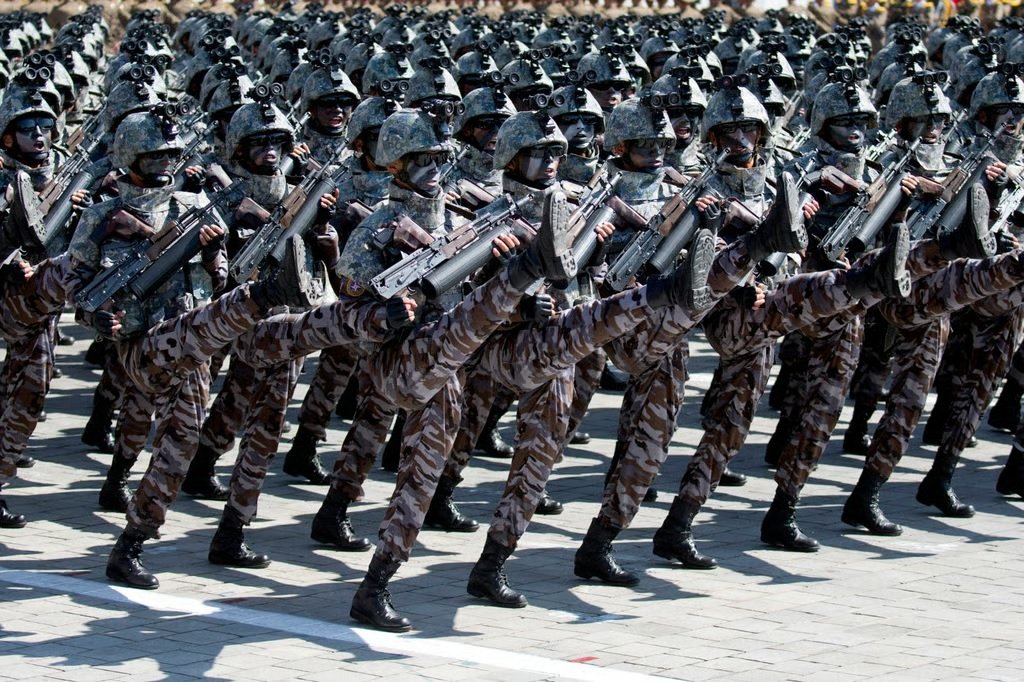
KYIV, Ukraine — North Korea is preparing to send up to 30,000 additional military personnel to Russia, according to Ukrainian President Volodymyr Zelensky. If confirmed, the deployment would be the largest foreign military deployment in the history of the Korean People's Army (KPA) and would mark another major step in the growing military partnership between Moscow and Pyongyang.
In his nightly address around July 25, 2026, Zelensky said Russia has been preparing facilities in the Voronezh region since June to receive the additional North Korean personnel. He also stated that North Korea is preparing to supply Russia with additional ballistic missile launchers. Reuters and several other international media outlets reported Zelensky's remarks.
Neither the Russian government nor North Korean authorities have officially confirmed the reported deployment.
Voronezh Identified as Main Staging Area
According to Zelensky, preparations for the new deployment have been taking place in Russia's Voronezh region, which lies near the Ukrainian border. The region serves as an important transportation and logistics hub linking Russian territory with operational areas in Kursk and the Donbas.
If the reported deployment proceeds, the additional personnel would join thousands of North Korean troops and engineers already operating in Russia.
Existing North Korean Military Presence
South Korea's National Intelligence Service (NIS) reported in late 2025 that North Korea had already transferred thousands of military personnel to Russia.
At that time, nearly 10,000 personnel were stationed near the Russia-Ukraine border for guard duties, while around 1,000 combat engineers supported mine clearance operations. By early 2026, South Korean intelligence assessed that approximately 10,000 combat troops and 1,000 engineer troops were deployed in Russia's Kursk region.
So far, North Korean personnel have mainly carried out rear-area security, border defense, engineering work, and mine clearance operations. Their deployment has also provided operational experience alongside Russian forces and exposure to modern battlefield tactics and military equipment.
Large-Scale Ammunition Supplies
North Korea has also become one of Russia's major suppliers of artillery ammunition.
Estimates indicated that more than six million artillery rounds had been delivered to Russia by the end of 2024. Later South Korean military intelligence assessments increased that figure to more than 12 million rounds, calculated as 152 mm artillery shells.
By the second quarter of 2025, nearly half of the artillery rounds fired by the Russian Army were reportedly supplied by North Korea. South Korean intelligence also assessed that at least six Russian artillery units were receiving between 50 and 100 percent of their daily ammunition from North Korean stockpiles.
Heavy Weapons Delivered to Russian Forces
In addition to ammunition, North Korea has supplied military equipment that has appeared on the battlefield.
Equipment transfers have included the 170 mm M1989 Koksan self-propelled howitzer and the Bulsae-4 anti-tank missile system.
South Korean and Ukrainian intelligence reported that more than 120 Koksan artillery systems had been delivered by early 2025. Several of these systems were later observed moving through occupied Crimea toward combat areas in the Donetsk region.
Reports also indicate that Korean People's Army artillery units equipped with 170 mm systems have operated in support roles since late 2024.
Industrial Support for Drone Production
North Korea's support has also extended to Russia's defense industry.
Reports during 2025 stated that around 5,000 North Korean industrial workers were sent to the Alabuga facility in Russia's Republic of Tatarstan, where Geran-2 attack drones are manufactured.
Later assessments referred to plans involving larger numbers of workers to help expand production at the same facility.
Military Technology Exchange
Defense analysts assess that the growing cooperation benefits both countries.
Russia receives additional manpower, artillery ammunition, military equipment, and industrial support, while North Korea is believed to be seeking access to advanced Russian military technology.
According to analysts, Pyongyang is interested in Russian assistance related to:
- Tactical nuclear warhead miniaturization
- Solid-fuel intercontinental ballistic missile (ICBM) technology
- Warhead separation technology
- Advanced military technologies
Analysts have also assessed that Russia could provide support involving advanced combat aircraft, including the Su-35 or Su-57, as well as technical assistance for North Korea's nuclear submarine program.
Manned combat aviation remains one of the areas where North Korea's domestic defense industry has limited capabilities.
Growing Military Cooperation
North Korean personnel have gained operational experience through their deployment alongside Russian forces. Reports indicate they have received information on NATO-supplied military systems and have operated in active combat zones.
However, the extent of any direct engagement between North Korean forces and NATO-linked personnel has not been independently confirmed.
If the reported deployment of up to 30,000 additional troops takes place, it would significantly expand North Korea's role in supporting Russia's military operations and further deepen military cooperation between the two countries.
As of publication, Russia and North Korea have not officially confirmed the reported troop deployment or the additional military assistance described by President Zelensky.
Source : militarywatchmagazine
——— End of Article ———