KYIV, Ukraine — Ukraine and a coalition of European partners are accelerating the development of the Freyja anti-ballistic missile defense system, with a minimum viable product (MVP) targeted for the first half of 2027 and a working prototype expected by the middle of 2027.
The multinational program was launched following the formation of an anti-ballistic coalition at a summit in Paris on July 13, 2026. The meeting brought together leaders from 10 European nations, senior European officials and representatives from major defense companies to begin coordinating the development of a new European missile defense capability.
According to Davyd Aloian, Deputy Secretary of Ukraine's National Security and Defence Council (NSDC), an international steering committee will soon begin estimating the program's research and development costs as the project moves into its next phase.
Reducing Dependence on Patriot
Ukraine currently relies heavily on the U.S.-made Patriot air defense system to intercept Russian ballistic missiles. While European systems such as the Franco-Italian SAMP/T and Germany's IRIS-T have demonstrated strong performance against aircraft, cruise missiles and drones, Patriot remains the primary system in Ukraine's inventory with a proven operational record against ballistic missile threats.
Ukrainian officials say the Freyja program is intended to strengthen Europe's missile defense capacity, reduce dependence on limited Patriot interceptor stocks, expand defense production within Europe and provide a scalable missile defense solution that participating nations can adapt to their own requirements.
Officials have also pointed to production timelines, stock availability and political factors affecting Patriot interceptor supplies as reasons for pursuing an additional European capability.
Open Architecture Design
Unlike traditional missile defense programs led by a single nation or manufacturer, Freyja is being developed as a multinational system based on an open architecture.
Ukraine will provide the launcher and interceptor missile, while European partners will contribute radar technologies, sensors, guidance systems, communications networks and battle-management software. The architecture is designed to allow participating countries to integrate nationally developed components without replacing existing equipment.
Ukrainian President Volodymyr Zelenskyy has compared the concept to "Lego blocks," describing a system in which countries can add compatible technologies developed by their own industries.
Davyd Aloian said manufacturers are developing a framework built around interchangeable components. Under this approach, a participating country could integrate systems such as a Danish Weibel radar or a Swedish Saab radar within the overall Freyja network while maintaining common operational standards.
Fire Point Leads Ukrainian Contribution
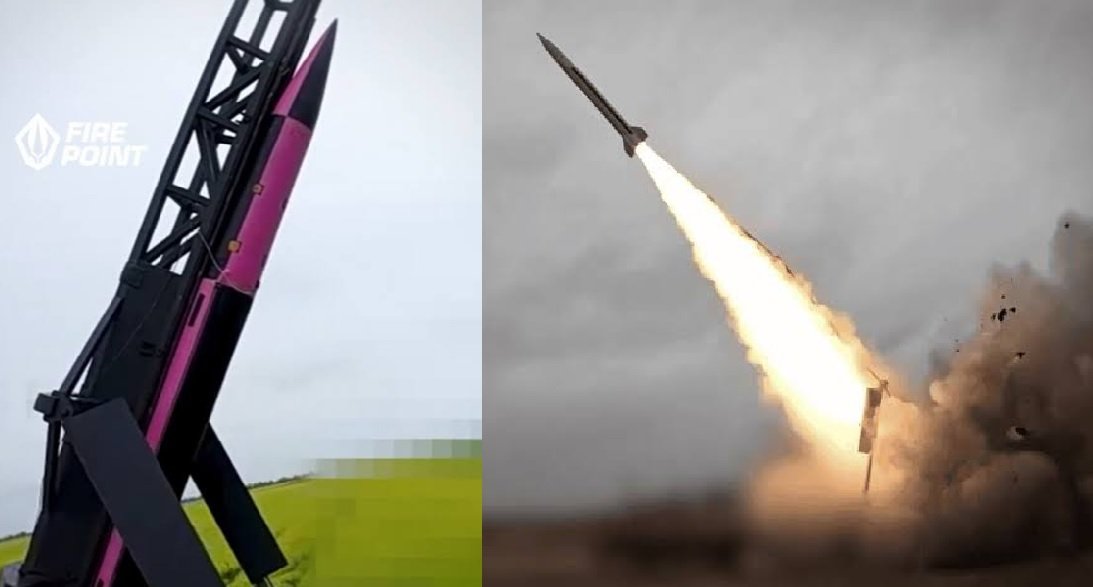
Ukrainian defense technology company Fire Point is serving as the lead industrial partner and primary design authority for the project.
The company is responsible for developing the launcher and the FP-7.X interceptor, which forms the core of Ukraine's contribution to the system. The interceptor is designed as a lower-cost alternative to existing high-end interceptors.
Fire Point has also signed a memorandum of understanding (MoU) with Germany's HENSOLDT to cooperate on radar integration. Under the agreement, HENSOLDT will provide its TRML-4D active electronically scanned array (AESA) radar, which is capable of tracking up to 1,500 targets simultaneously.
"We lacked the radars to implement FREYJA—now we have them, and we can move from concept to practical implementation of a pan-European anti-ballistic shield," said Iryna Terekh, Chief Executive Officer and Chief Technology Officer of Fire Point.
European Defense Industry Participation
Several European defense companies are contributing specialized technologies to the program rather than replacing national defense capabilities.
Confirmed participants include:
- Fire Point (Ukraine) – Launcher and FP-7.X interceptor.
- HENSOLDT (Germany) – TRML-4D AESA radar.
- Eurosam (France/Italy) – Missile defense integration expertise.
- Leonardo (Italy) – Sensor and defense technologies.
- Thales (France) – Air defense systems expertise.
- Saab (Sweden) – Radar and surveillance capabilities.
Additional companies that have participated in related discussions include Diehl Defence, Kongsberg Defence & Aerospace, MBDA, Safran and Weibel Scientific.
Coalition Members
The coalition includes Ukraine and nine founding European partner countries:
- Denmark
- France
- Germany
- Italy
- Netherlands
- Norway
- Spain
- Sweden
- United Kingdom
The Paris summit was also attended by NATO Secretary General Mark Rutte, European Commission President Ursula von der Leyen, and European Council President António Costa.
Funding and Next Steps
Ukraine is considering establishing a dedicated funding mechanism to coordinate financial contributions from partner countries and support research, development and future production.
According to Aloian, direct participation by industry alongside governments is expected to reduce bureaucratic delays and keep the coalition focused on practical implementation.
The international steering committee is expected to convene shortly to begin cost assessments and coordinate the next stage of development.
Technical Challenges Ahead
Although the program has entered an accelerated development phase, significant technical work remains before the system can become operational.
The project will require the integration of interceptor missiles, tracking radars, guidance technologies, communications systems and battle-management software developed by multiple manufacturers into a single missile defense architecture. Officials say extensive testing will be necessary to validate system performance.
Long-term operational development beyond the prototype stage will depend on testing results, sustained funding, industrial coordination and continued political support from participating governments.
Freyja Development Timeline
| Milestone | Status |
|---|---|
| Anti-ballistic coalition launched | Completed (July 13, 2026, Paris) |
| International steering committee | Expected to convene shortly |
| Minimum viable product (MVP) | Targeted for the first half of 2027 |
| Working prototype | Targeted for mid-2027 |
| Long-term operational development | To be determined following testing |
The Freyja program combines Ukraine's operational experience in defending against ballistic missile attacks with the industrial capabilities of European defense companies. Through its open architecture approach, the initiative aims to expand Europe's missile defense capacity while allowing participating nations to integrate their own technologies into a common anti-ballistic defense network.
——— End of Article ———