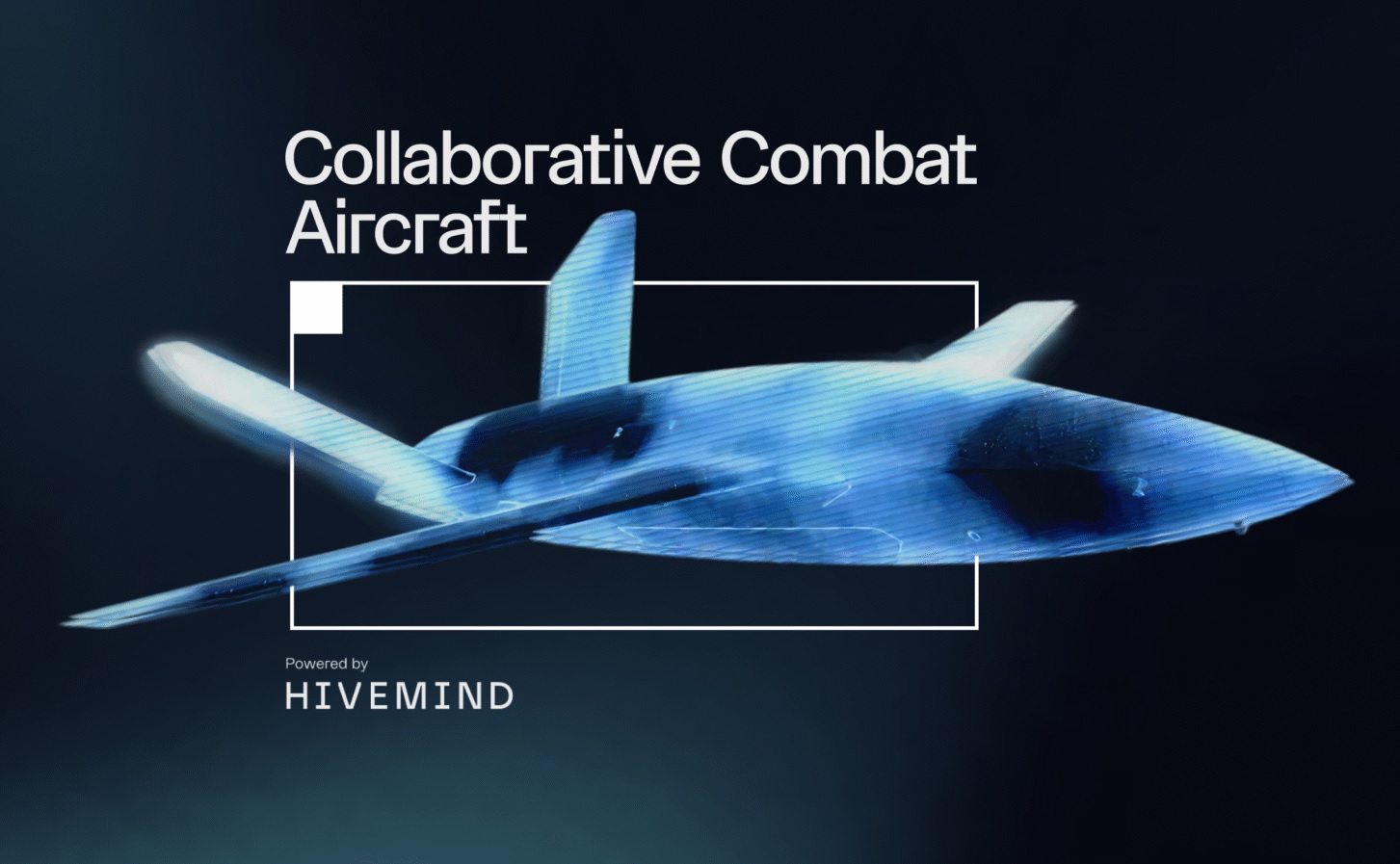
WASHINGTON : The U.S. Air Force has selected Shield AI as a mission autonomy software provider for its Collaborative Combat Aircraft (CCA) program, formally separating mission autonomy software from aircraft hardware in a major acquisition effort for the first time. The decision establishes software as a distinct and equal capability within the program’s procurement structure.
The selection followed a competitive evaluation under the Technology Maturity and Risk Reduction (TMRR) phase of the CCA initiative. The CCA program is designed to field uncrewed, AI-enabled aircraft that will operate alongside crewed fighter platforms to expand operational capacity in contested environments. These aircraft are intended to act as force multipliers, supporting missions including sensing, strike, electronic warfare, and other operational roles in coordination with piloted systems.
Integration With Anduril’s YFQ-44A Prototype
Under the current phase, Shield AI has integrated its Hivemind autonomy software onto the Fury aircraft, designated YFQ-44A, developed by Anduril Industries. The integrated system is undergoing system-level testing ahead of flight demonstrations expected in the coming months.
This integration serves as an operational test of the Air Force’s decision to decouple mission autonomy software from the physical airframe. By separating software from hardware development, the service aims to promote software competition, ensure portability across multiple aircraft platforms, reduce vendor lock-in, and maintain flexibility for future upgrades.
Hivemind Autonomy Software
Hivemind is Shield AI’s core artificial intelligence autonomy stack, designed to perform tasks traditionally executed by a human pilot or operator. The system enables uncrewed defense platforms to independently sense, decide, and act during missions.
Unlike traditional autopilot systems that rely on predefined waypoints and fixed routes, Hivemind is built to adapt in real time to changing operational conditions. The software can reroute around restricted airspace, respond to emerging threats or obstacles, and adjust mission parameters without continuous human input. The objective is to complete assigned missions safely and effectively while reducing the need for constant operator control.
Gary Steele, Chief Executive Officer of Shield AI, said the company has spent years developing and testing mission autonomy systems in operational environments and will support the Air Force as it advances autonomy within air combat operations.
Christian Gutierrez, Vice President of Hivemind Solutions at Shield AI, stated that the company has experience fielding mission-critical autonomy on complex defense systems and developing software aligned with military standards for interoperability.
Platform-Agnostic and Standards-Based Architecture
A central requirement of the CCA program is compliance with the military’s Autonomy Government Reference Architecture (A-GRA). The A-GRA framework establishes modular standards designed to ensure interoperability and enable autonomy software to operate across multiple hardware platforms.
According to Shield AI, Hivemind is fully platform-agnostic and aligned with A-GRA requirements. Prior to integration with the YFQ-44A, the company demonstrated A-GRA-compliant autonomy capabilities on several government and industry platforms, including:
-
General Atomics’ MQ-20 Avenger
-
Northrop Grumman’s Talon IQ autonomous ecosystem
-
The U.S. Navy’s BQM-177 test aircraft
-
Airbus’ UH-72A Lakota helicopter
These integrations were conducted to validate cross-platform compatibility and demonstrate the ability to deploy mission autonomy software independently of specific airframe manufacturers.
CCA Program Context
The Collaborative Combat Aircraft program is part of the Air Force’s broader modernization strategy aimed at expanding combat mass through the use of lower-cost, uncrewed aircraft operating alongside advanced fighter jets. The aircraft are expected to conduct missions in contested operational environments where survivability, distributed sensing, and rapid decision-making are critical.
The ongoing TMRR phase is focused on reducing technical risk, maturing autonomy technologies, and validating system integration prior to future production decisions. The upcoming flight demonstrations of the Hivemind-equipped YFQ-44A will provide data on system performance, integration effectiveness, and operational viability under realistic flight conditions.
By formally separating mission autonomy software from hardware development, the Air Force is implementing a procurement model intended to encourage software innovation and competition while preserving flexibility in aircraft design. Findings from ongoing testing and demonstrations will inform future acquisition decisions as the service progresses toward operational deployment of Collaborative Combat Aircraft units.
——— End of Article ———