KYIV — Russia appears to have begun equipping its Kh-101 long-range cruise missiles with a new propulsion system that includes components produced using single-crystal 3D metal printing technology, according to recent analysis of recovered missile fragments.
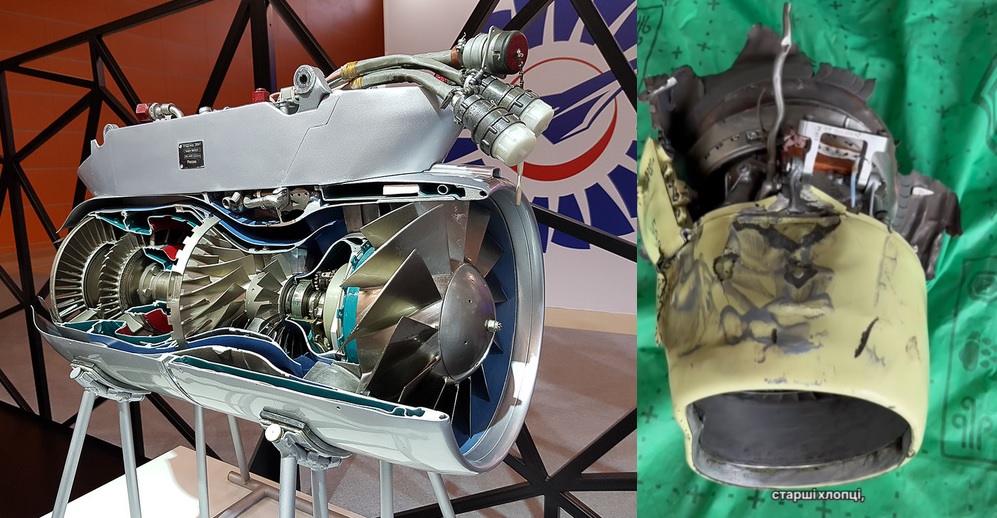
The latest findings are based on an engine fragment reportedly manufactured in late 2025. A video overview of the component was recently published by facebook user Zampotekh Omelyanovich. Specialists are expected to examine the recovered turbine blades to determine the manufacturing process used and assess how the technology was implemented.
Advanced Engine Technology
The reported engine incorporates single-crystal turbine blades produced through advanced metal 3D printing. Unlike conventional turbine blades, single-crystal components eliminate grain boundaries within the metal, improving structural strength, heat resistance, and corrosion resistance. These properties allow jet engines to operate at higher temperatures and with greater efficiency, extending service life and improving overall performance.
Historically, single-crystal turbine blade technology has been associated with a limited number of aircraft engine manufacturers, including U.S.-based General Electric and the UK's Rolls-Royce.
Analysts cited in the assessment suggest that the upgraded propulsion system could allow the Kh-101 to regain a maximum flight range of up to 5,500 kilometers while continuing to carry a heavier warhead.
Engine Upgrade Linked to Heavier Warhead
The reported engine upgrade follows significant modifications made to the Kh-101 missile since early 2024.
Russia has been equipping some Kh-101 missiles with a dual tandem warhead, increasing the explosive payload from approximately 450 kilograms to around 800 kilograms.
The larger warhead required engineers to reduce the missile's internal fuel capacity, lowering its estimated operational range from about 5,500 kilometers to roughly 2,500 kilometers. The additional weight also affected the missile's speed and flight performance.
The new propulsion system is therefore viewed as an effort to offset these performance losses by providing greater engine efficiency and restoring long-range strike capability while accommodating the increased payload.
Development Dates Back to 2017
Russia's interest in applying single-crystal technology to cruise missile engines is not new.
Reports published in 2017 indicated that Russian industry planned to introduce the technology into the TRDD-50 family of small turbofan engines, including the TRDD-50A and TRDD-50AT variants used in the Kh-55, Kh-555, and Kh-101 cruise missiles.
The research and development work has been linked to NPO Salyut and the All-Russian Institute of Aviation Materials (VIAM).
Previous Production Challenges
The reported introduction of the new engine also follows earlier indications of production difficulties.
During 2024, analysts reported that some Kh-101 missiles had been fitted with older Soviet-era R-95-300 engines instead of the standard Russian-built TRDD-50A engines. The first documented case was recorded following a missile strike on November 17, 2024, when recovered debris showed a modern Kh-101 equipped with the legacy Soviet engine.
The use of older engines was viewed by analysts as a possible indication of temporary production shortages affecting standard missile propulsion systems.
Other Recent Kh-101 Upgrades
Recovered missile debris from 2024 through 2026 indicates that the Kh-101 has undergone several additional upgrades alongside the reported engine changes.
According to available analyses, newer missiles feature an updated radar-absorbing coating on the fuselage intended to reduce radar detection range. They have also been fitted with the SP-504 active protection system, which automatically deploys thermal decoys and dipole reflectors when the missile detects approaching air defense threats.
In addition, the missile is reported to use an improved passive optoelectronic navigation system that relies on satellite imagery, helping maintain navigation accuracy in environments affected by electronic warfare and satellite navigation interference.
The reported engine development, together with the heavier warhead and other system upgrades, reflects continued modifications to the Kh-101 cruise missile based on analyses of recovered missile components and publicly available information. Independent technical examination of the newly recovered engine parts is expected to provide further insight into the manufacturing methods used.
Source : militarnyi
——— End of Article ———