WASHINGTON — The U.S. Federal Communications Commission (FCC) has approved the launch of Eärendil-1, the first satellite designed to test the ability to reflect sunlight onto selected areas of Earth during nighttime. The demonstration mission is being developed by California-based startup Reflect Orbital and is scheduled to launch later in 2026.
The FCC's authorization allows Reflect Orbital to operate the satellite's radio communications for a two-year period as part of the technology demonstration. The approval covers a single test satellite and does not authorize the company's proposed future constellation.
Demonstration Satellite to Test Space-Based Sunlight Reflection
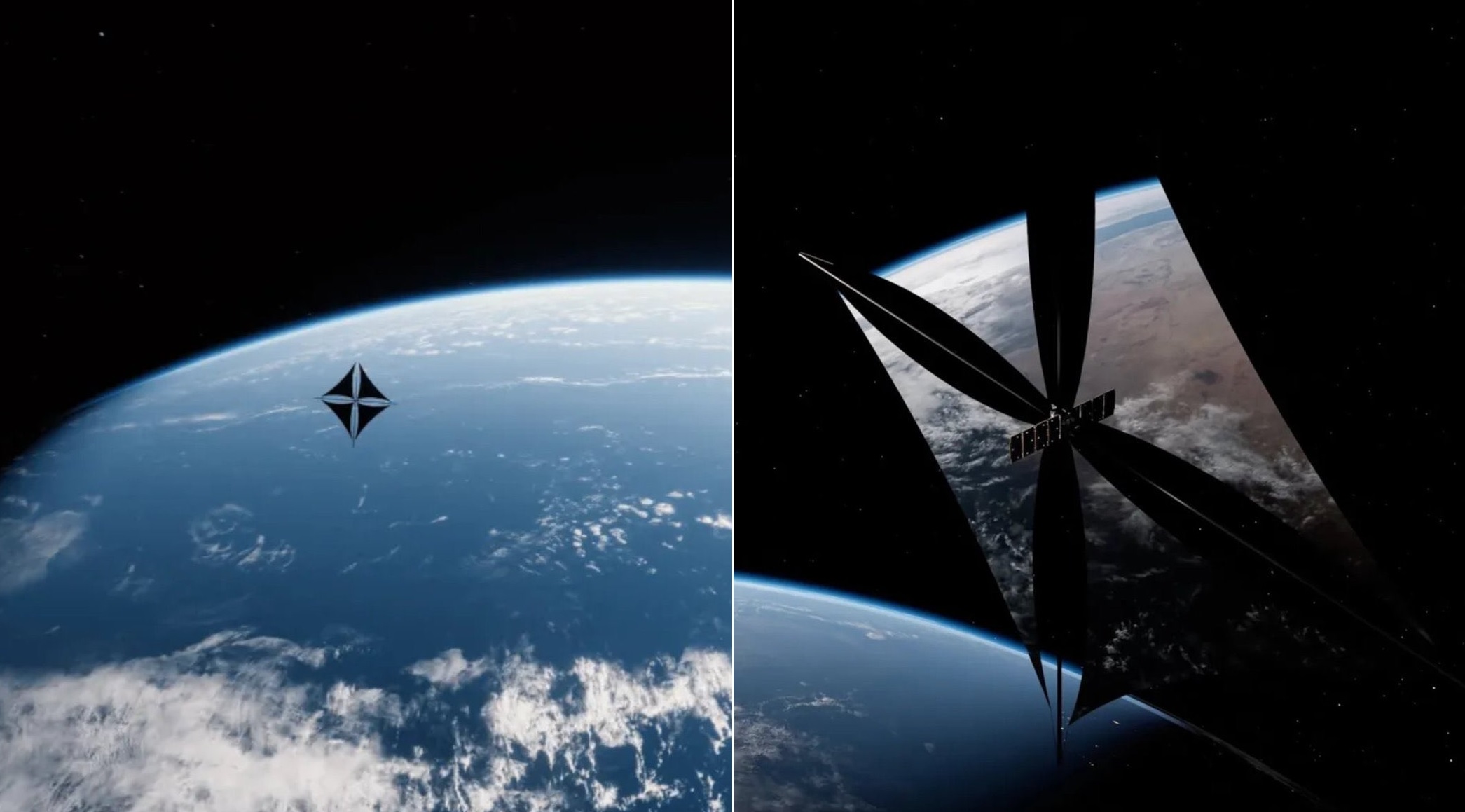
Eärendil-1 is a 142-kilogram spacecraft, about the size of a dormitory refrigerator. Once in low Earth orbit at an altitude of about 600 to 650 kilometers, it will deploy a thin-film square reflector measuring approximately 18 meters by 18 meters.
The satellite's steerable mirror is designed to redirect sunlight toward specific locations on Earth for several minutes at a time. During the demonstration, the reflected light is expected to illuminate a targeted area roughly 5 kilometers (3 miles) wide, allowing the company to evaluate the performance and control of the system in orbit.
Reflect Orbital previously tested the concept using a balloon-based mirror and says the orbital mission will provide real-world data on the technology's effectiveness.
Company Plans Larger Satellite Network
Although Eärendil-1 is only a demonstration mission, Reflect Orbital has outlined long-term plans to significantly expand the system.
The company has proposed launching up to 1,000 larger satellites between 2026 and 2028, increasing the constellation to around 5,000 satellites by 2030, and eventually deploying up to 50,000 satellites by 2035.
Future versions of the reflectors could be substantially larger than the first test satellite. According to the company, the system is intended to provide temporary illumination where it is needed rather than continuously lighting large regions.
SpaceX has been selected as the launch provider for the company's initial missions.
Proposed Applications
Reflect Orbital says the technology could provide temporary lighting for several civilian and commercial uses.
One proposed application is extending operating hours for solar farms by reflecting sunlight before sunrise or after sunset to increase electricity generation. The company also sees potential uses for search-and-rescue operations, disaster response, construction projects, agriculture, and other outdoor activities conducted at night.
The company has stated that customers could eventually request temporary illumination for approved locations through an application-based service.
Concerns Raised by Scientists and Environmental Groups
The project has drawn criticism from astronomers, environmental researchers, and environmental organizations.
Astronomers have warned that reflected sunlight from a large constellation of mirror-equipped satellites could interfere with telescope observations by increasing sky brightness and creating unwanted reflections in astronomical images. Researchers associated with observatories, including the Vera C. Rubin Observatory, have expressed concerns that such systems could make it more difficult to observe faint celestial objects.
The European Southern Observatory (ESO) has also warned that a full constellation of tens of thousands of reflective satellites could significantly increase background sky brightness at its observatories.
Environmental experts have raised additional concerns that artificial nighttime illumination could affect the natural day-night cycles of plants, animals, and ecosystems. Some critics have also questioned whether bright reflections could create visibility issues for pilots or others observing the sky.
The FCC received nearly 1,900 public comments on Reflect Orbital's application, with many expressing concerns about the project's potential impacts.
FCC Says Approval Covers Communications License Only
In its approval order, the FCC said its review was limited to authorizing the satellite's use of radiofrequency spectrum and communications systems. The agency stated that broader questions regarding impacts on astronomy and the environment fall outside the scope of its licensing authority.
The commission said authorizing the single demonstration satellite supports testing of new space technologies while limiting the approval to one spacecraft. Reflect Orbital has also said it plans to work with NASA, the National Science Foundation, and the wider astronomical community to address concerns and develop operational safeguards.
The Eärendil-1 mission is expected to provide data on whether controlled reflection of sunlight from orbit can be used for practical nighttime applications while helping regulators, scientists, and industry better understand the technology's potential benefits and challenges.
Source: spacenews
——— End of Article ———