BELGOROD : Newly released satellite imagery and open-source intelligence (OSINT) analysis have confirmed that a Ukrainian long-range missile strike in September 2025 delivered a decisive blow to a little-known but critical pillar of Russia’s military aviation industry, exposing a significant failure of Moscow’s air defenses and a deep vulnerability in its fighter jet supply chain.
High-resolution imagery, analyzed this week by the OSINT groups Cyberboroshno and Exilenova+, shows that four Ukrainian-made FP-5 “Flamingo” cruise missiles struck the Skif-M industrial complex in Russia’s Belgorod region with complete accuracy on September 23, 2025. The findings directly contradict Russian government claims that most of the incoming missiles were intercepted and reveal damage so severe that large sections of the facility remain unrepaired more than three months later.
A Strike Moscow Denied
In the immediate aftermath of the attack, Russian officials asserted that air defense systems had successfully downed three of the four missiles, acknowledging only a single impact at the site. The satellite imagery, released on January 25, 2026, tells a markedly different story.
Analysts identified four distinct penetration points on the factory’s roof, all located within an approximately 80-meter radius. The primary destruction zone, spanning roughly 25 meters, shows evidence of multiple internal collapses—damage patterns inconsistent with a lone missile strike. Additional lower-resolution imagery from January 5 indicates that large portions of the roof remain missing, with no visible signs of full-scale reconstruction.
“The spatial distribution of damage clearly indicates a four-for-four outcome,” Cyberboroshno reported. “There is no evidence to support claims of successful interception. Local air defenses appear to have been completely overwhelmed.”
The Factory Behind the Fighters
Skif-M is not widely known outside defense and manufacturing circles, but its role inside Russia’s military-industrial complex is outsized. The facility produces an estimated 70 percent of the specialized carbide cutting tools—including drills, milling cutters, and inserts—used to machine aerospace-grade titanium and aluminum.
These materials are essential for the production of Russia’s frontline combat aircraft, including the Su-34 bomber, the Su-35 multirole fighter, and the fifth-generation Su-57 stealth jet.
Defense analysts describe Skif-M as a classic industrial bottleneck. Without its tooling, downstream manufacturers face production delays, higher scrap rates, and sharply increased costs when machining complex components such as bulkheads, wing spars, and internal structural frames.
A prior assessment by the Royal United Services Institute (RUSI) had already identified Skif-M as a critical vulnerability. The factory relies heavily on imported high-precision machine tools sourced from Germany, Switzerland, and Australia—equipment that is difficult to replace under current export controls and sanctions.
“The destruction of these Western-made machines is strategically significant,” a RUSI analyst noted. “Even if the building is repaired, recreating the production capability inside it is another matter entirely.”
Sanctions and Isolation
As of January 2026, Skif-M continues to exist as a legal entity, but its operational isolation is deepening. Ukraine and the United States have formally sanctioned the company, restricting its access to international suppliers and financial systems.
Kyiv has urged European governments to follow suit, warning that gaps in the sanctions regime could allow Russia to source replacement equipment through third-party intermediaries.
Industry experts caution that even limited success in sanctions evasion would not quickly restore lost capacity. High-precision tooling production requires lengthy calibration, highly skilled labor, and specialized components that remain tightly controlled in Western markets.
The Flamingo Revealed
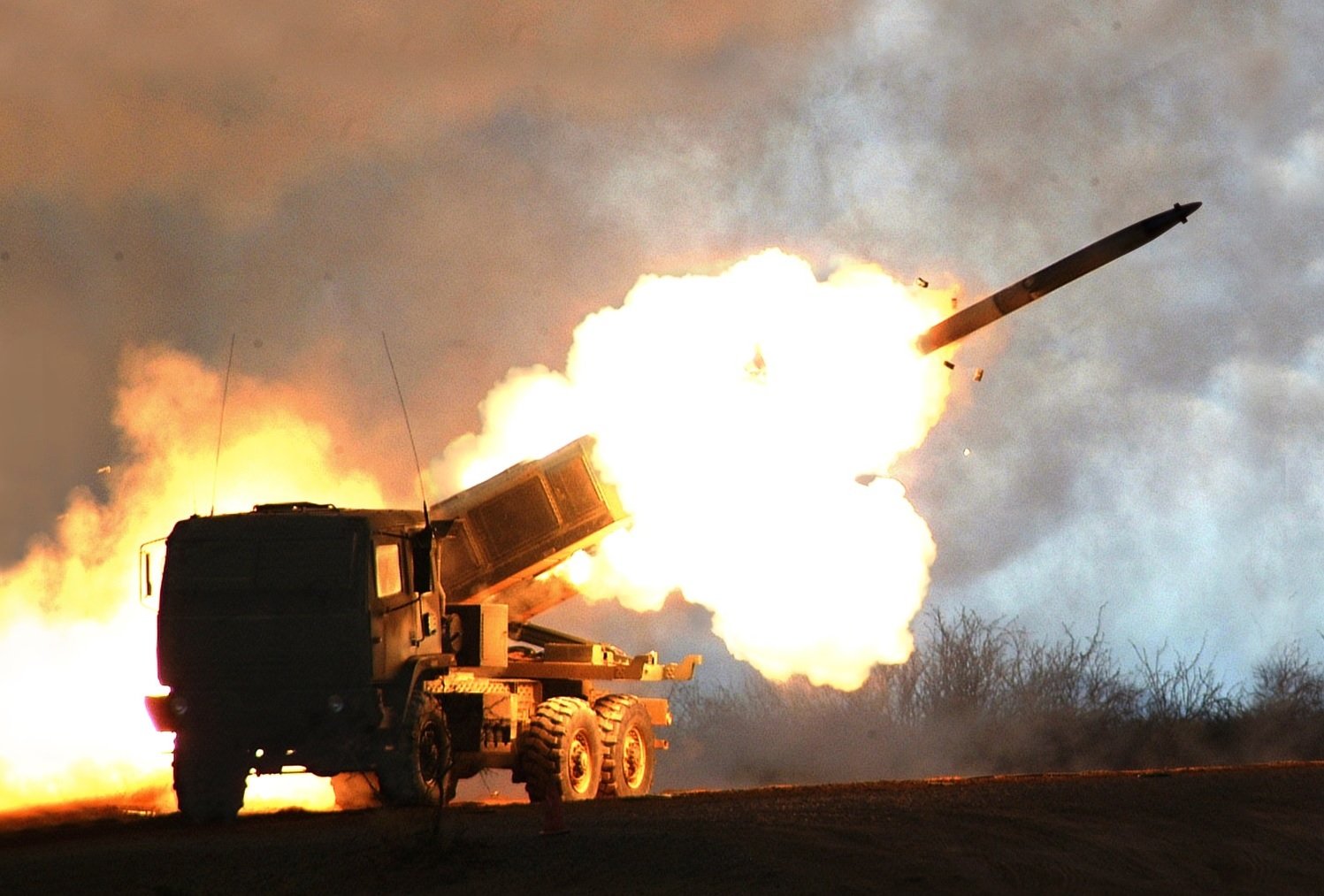
The strike marked the most consequential combat debut to date of Ukraine’s indigenous FP-5 “Flamingo” cruise missile. First unveiled publicly in August 2025, the Flamingo is a ground-launched, subsonic missile with a reported range of up to 3,000 kilometers and a massive 1,150-kilogram warhead.
Unlike Western-supplied Storm Shadow or SCALP missiles—which are air-launched and often subject to political restrictions—the Flamingo is designed for domestic mass production and sovereign employment. Ukrainian officials have described it as a simplified, cost-effective “flying bomb”, optimized for industrial targets rather than hardened bunkers.
Central to its success over Belgorod was a jam-resistant satellite navigation system equipped with a Controlled Reception Pattern Antenna (CRPA), enabling it to maintain guidance despite Russia’s dense electronic warfare environment. OSINT analysts believe this capability allowed the missiles to penetrate one of the most heavily defended regions near the Ukrainian border.
By late 2025, Ukrainian sources indicated production targets of up to seven Flamingo missiles per day, giving Kyiv a sustained long-range strike capability against targets deep inside Russian territory.
Strategic Consequences
The full impact of the Skif-M strike is expected to emerge gradually. United Aircraft Corporation (UAC)—the parent company of Sukhoi—now faces a shortage of the specialized cutting tools required to maintain production timelines, particularly for the Su-57, whose complex titanium structures demand extreme machining precision.
Without domestic replacements for Skif-M’s output, Russia may be forced to slow assembly lines, divert resources to less advanced platforms, or attempt risky workarounds that could degrade aircraft quality and reliability.
“This was not merely an attack on a factory,” an Exilenova+ analyst assessed. “It was a precision incision into the circulatory system of Russia’s most advanced weapons industry.”
As the war increasingly shifts toward long-range strikes on infrastructure and supply chains, the Belgorod operation underscores a broader strategic reality: in modern industrial warfare, disabling a single specialized node can reverberate far beyond the blast radius, reshaping military capabilities for months—or even years—to come.
——— End of Article ———