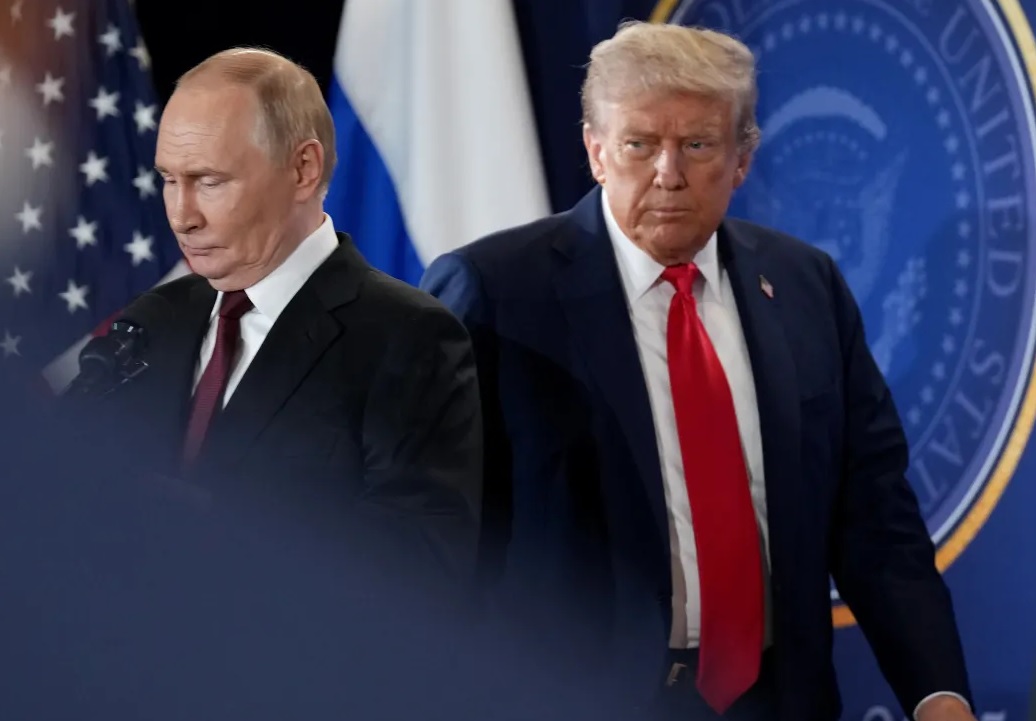
MOSCOW : Russia has formally declared that it no longer considers itself bound by the limits and obligations of the New Strategic Arms Reduction Treaty (New START), following the agreement’s expiration on February 5, 2026. The announcement marks the end of the last remaining bilateral nuclear arms control framework between Moscow and Washington.
In a statement released by the Russian Ministry of Foreign Affairs, the government said it had not received an official response from the United States to proposals aimed at preserving the treaty’s core restrictions beyond its expiration date. In the absence of such a response, Russia said it now assumes that all obligations and related commitments under the treaty have ceased to apply.
Russian Position on the Treaty’s Expiration
According to the Foreign Ministry, Moscow had sought to avoid a complete collapse of the arms control regime by proposing a temporary continuation of the treaty’s numerical limits. In September 2025, President Vladimir Putin publicly offered to maintain the existing caps on nuclear warheads and delivery systems for an additional year. Russian officials said the proposal was intended to create time and political space for negotiations on a new or updated framework.
The Ministry said that public statements and actions by the U.S. administration did not indicate a willingness to pursue this approach. As a result, Russia concluded that its proposal had been left without formal consideration.
“In the current circumstances, we assume that the parties to the New START are no longer bound by any obligations or symmetrical declarations in the context of the Treaty,” the statement said.
Implications for Strategic Arms Limits
New START was signed on April 8, 2010, in Prague by then-U.S. President Barack Obama and former Russian President Dmitry Medvedev. It entered into force on February 5, 2011, and was extended once in February 2021 for a five-year period, set to expire in 2026.
Under the treaty, both Russia and the United States were limited to 1,550 deployed nuclear warheads and 700 deployed delivery systems, including intercontinental ballistic missiles, submarine-launched ballistic missiles, and heavy bombers. The agreement also established verification measures, including data exchanges and on-site inspections, designed to provide transparency and predictability regarding each side’s strategic forces.
With the treaty now expired, there is no longer a legally binding mechanism limiting the size of the U.S. and Russian strategic nuclear arsenals or providing for mutual verification.
Russia’s Stated Next Steps
While confirming that it considers the treaty framework no longer in force, the Russian Foreign Ministry said Moscow intends to proceed cautiously. Officials said future decisions would be based on an assessment of U.S. military policy and the broader strategic environment, rather than on automatic or immediate changes to force levels.
At the same time, the statement noted that Russia reserves the right to take what it described as “military-technical countermeasures” if it identifies new or growing threats to its national security. Russian officials did not specify what actions such measures might include, but the term is commonly used to refer to adjustments in force posture, weapons deployment, or development programs.
Assessment of the Treaty’s Record
Despite the current breakdown, the Russian government offered a generally positive assessment of New START’s historical role. The Foreign Ministry said that, notwithstanding periods of tension and unresolved disputes, the treaty contributed to limiting the strategic arms race and enabled substantial reductions in nuclear arsenals over a 15-year period.
Russian officials said the agreement had served its primary purpose of promoting strategic stability during its lifetime, even as broader political relations between Moscow and Washington deteriorated.
Prospects for Future Dialogue
The Foreign Ministry said Russia remains open to discussions aimed at stabilizing the strategic situation through political and diplomatic means. Any future talks, it added, would need to be conducted on what Moscow described as an equal and mutually beneficial basis.
As of the treaty’s expiration, there is no replacement agreement in force and no publicly announced timetable for new negotiations. The U.S. State Department had not issued a detailed public response addressing Russia’s claim that its proposal for a temporary extension went unanswered.
The expiration of New START leaves the two largest nuclear powers without a formal arms control framework for the first time in decades, increasing uncertainty about the future management of strategic nuclear forces.
——— End of Article ———